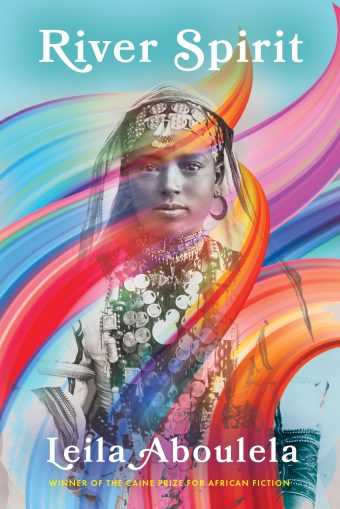
Leila Aboulela awarded PEN Pinter Prize 2025

Freedom to Write, Freedom to Read

Leila Aboulela winner of English Pen Prize 2025

Leila Aboulela, the Sudanese author who now lives in Scotland has won the English PEN Award 2025, a prize established in homage to Harold Pinter, the British playwright, screenwriter, director and actor and the 2005 Nobel Laureate for Literature:

“who in his plays uncovers the precipice under everyday prattle and forces entry into oppression’s closed rooms”

Judges praised Aboulela, the author of six novels, for her ‘nuanced and rich perspectives on themes that are vital in our contemporary world: faith, migration, and displacement’, calling her writing ‘a balm, a shelter, and an inspiration’.

The author responded:

‘I am honoured to win a prize established in memory of Harold Pinter, a great writer who continues to inspire so much loyalty and consistent high regard. For someone like me, a Muslim Sudanese immigrant who writes from a religious perspective probing the limits of secular tolerance, this recognition feels truly significant. It brings expansion and depth to the meaning of freedom of expression and whose stories get heard.’

One of the judges, novelist Nadifa Mohamed added:

Leila Aboulela is an important voice in literature, and in a career spanning more than three decades her work has had a unique place in examining the interior lives of migrants who chose to settle in Britain. In novels, short stories and radio plays she has navigated the global and local, the political with the spiritual, and the nostalgia for a past home with the concurrent curiosity and desire for survival in a new one. Aboulela’s work is marked by a commitment to make the lives and decisions of Muslim women central to her fiction, and to examine their struggles and pleasures with dignity. In a world seemingly on fire, and with immense suffering unmarked and little mourned in Sudan, Gaza, and beyond, her writing is a balm, a shelter, and an inspiration.’

The prize is awarded annually to writers resident in the UK, Ireland, the Commonwealth or the former Commonwealth. 

Former winners of the PEN Pinter Prize are Arundhati Roy (2024), Michael Rosen (2023), Malorie Blackman (2022), Tsitsi Dangarembga (2021), Linton Kwesi Johnson (2020), Lemn Sissay (2019), Chimamanda Ngozie Adichie (2018), Michael Longley (2017), Margaret Atwood (2016), James Fenton (2015), Salman Rushdie (2014), Tom Stoppard (2013), Carol Ann Duffy (2012), David Hare (2011), Hanif Kureishi (2010) and Tony Harrison (2009).

Three Novels By Leila Aboulela I Recommend

Bird Summons (2019)

Bird Summons is an excellent novel about three Muslim immigrant women living in Scotland, from different countries, who set off on a short holiday in the Scottish Highlands, to pay homage to Lady Evelyn Murray Cobbold, the first British woman convert to Islam who performed Hajj, the spiritual pilgrimage to Mecca.

Taken further outside of their comfort zones, the trip is a kind of reckoning for each of the women, a little like a road trip novel, they are stuck with each other, their forced isolation in the Highlands brings out the best and worst in each other and will leave them each transformed by the experience.

The Kindness of Enemies (2015)

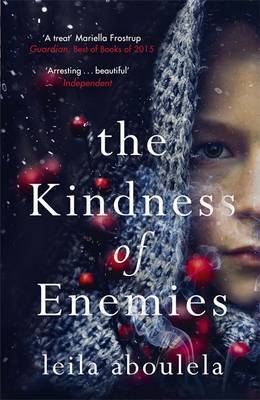
The Kindness of Enemies, is a dual narrative set in modern day Scotland and mid 1800’s Russia and the Caucasus. The contemporary character is Natasha Wilson (born to a Russian mother and Sudanese father, whose mother marries a Scot), a Scottish university lecturer whose research concerns the life of Caucasian Highlander, Shamil Imam.

The novel moves between the issues facing Natasha in her life, and the ancient conflict between Highlander mountain men lead by Shamil Imam as they resisted Tsarist Russia from expanding into their territory.

River Spirit (2023)

River Spirit is historical fiction set in 1890’s Sudan, at a turning point in the country’s history, as its population began to mount a challenge against the ruling Ottoman Empire, only the people were not united, due to the opposition leadership coming from a self-proclaimed “Mahdi” – a religious figure that many Muslims believe will appear at the end of time to spread justice and peace.

The novel tells the story of orphan siblings, Akuany and Bol, and their young merchant friend Yaseen, the friend of their father who made a promise to protect them, forever connecting them to his life. It is also a story of the Nile, of the White Nile and the Blue Nile, a symbol of twin selves, one free, one enslaved, of twin occupying forces, the Ottoman and British Empires and of the many aspects in the story where twin forces clash, mix and become something new.

Aboulela’s other novels are The Translator (1999), Minaret (2005), Lyrics Alley (2010) all three of which were longlisted for the Women’s Prize for Fiction (Orange Prize) and she has also published a short story collection Elsewhere, Home (2018).

Have you read any works by Leila Aboulela? Let us know in the comments below.

Photo by Gabriela Palai on Pexels.com

Further Reading

World Literature Today Interview: Writing as Spiritual Offering: A Conversation with Leila Aboulela by  Keija Parssinen

Guardian article: Leila Aboulela wins PEN Pinter prize for writing on migration and faith

JSTOR: Leila Aboulela and the Ideology of Muslim Immigrant Fiction by Waïl S. Hassan

Leila Aboulela, Author

Leila Aboulela grew up in Khartoum and has been living in Aberdeen since 1990. She is the author of six novels among them River SpiritThe TranslatorMinaret and Lyrics Alley, Fiction Winner of the Scottish Book Awards. Leila was the first ever winner of the Caine Prize for African Writing and her story collection, Elsewhere, Home won the Saltire Fiction Book of the Year Award.

Her books have been translated into fifteen languages, and she has also written numerous plays for BBC Radio. She is Honorary Professor of the WORD Centre at the University of Aberdeen and a Fellow of the Royal Society of Literature. 

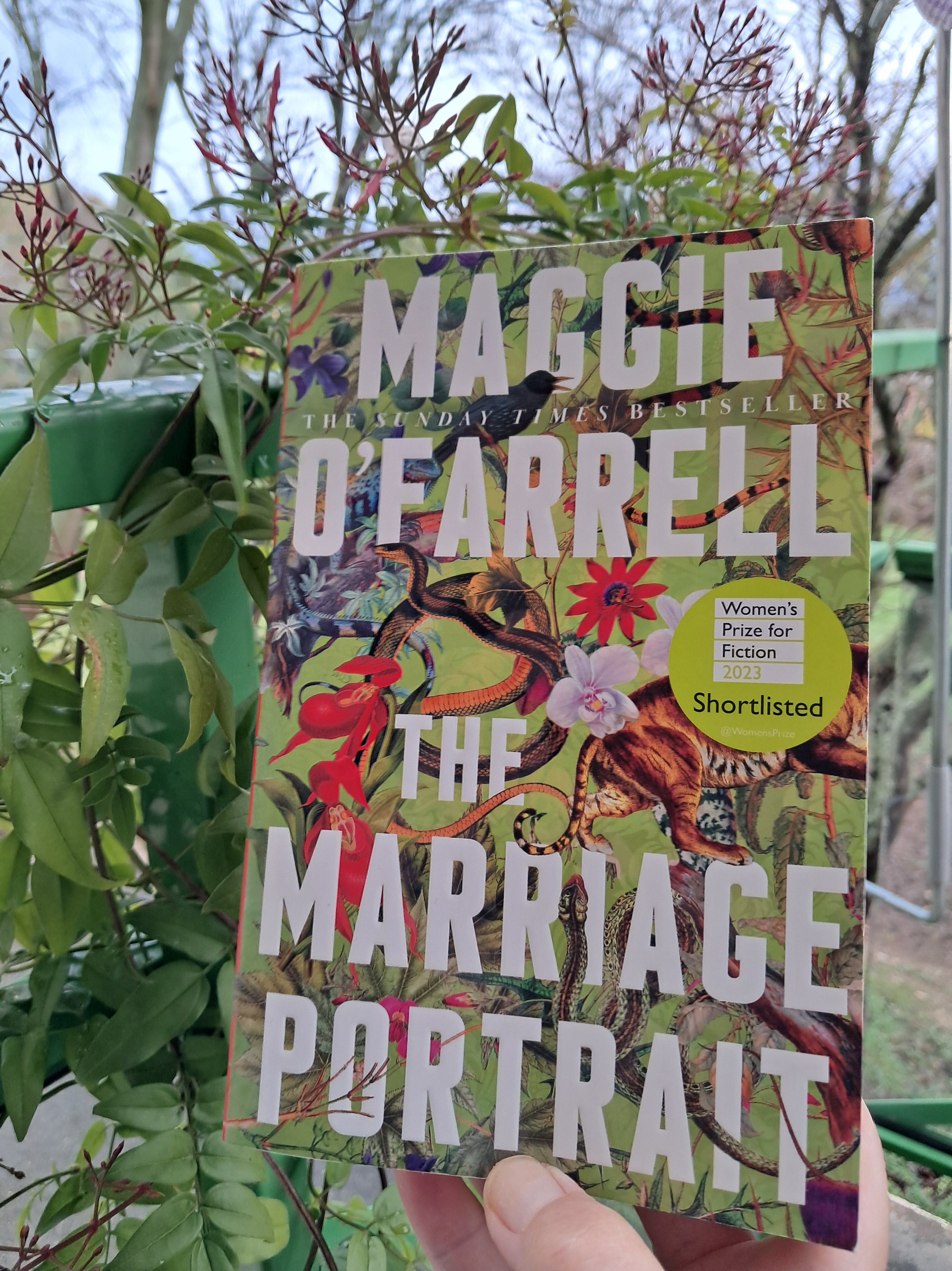
The Marriage Portrait by Maggie O’Farrell

Next book on my pile for Reading Ireland Month 2025, a brilliant work of historical fiction, set in 1540 -1561 Renaissance Italy, a gripping, excellent tale.

The Accidental Deaths of Young Wives

The Marriage Portrait opens with an historical note, prior to the opening chapter ‘a wild and lonely place’ in which our main protagonist Lucrezia de’ Medici has been brought to an isolated fortress by her husband, without her maid or usual retinue. In her state of fear, she recalls her sister-in-laws hoarse whisper ‘you will be blamed’.

Historical Note

In 1560, fifteen-year-old Lucrezia di Cosimo de’ Medici left Florence to begin her married life with Alfonso II d’Este, Duke of Ferrara.

Less than a year later, she would be dead.

The official cause of her death was given as ‘putrid fever’, but it was rumoured that she had been murdered by her husband.

Lucrezia de’ Medici, the replacement

The novel tells a story of Lucrezia of Florence, who, due to the death of her older sister Maria, becomes the intended fiance of the man her sister was going to marry, Alfonso of Ferrara, news that Lucrezia overheard before it was announced.

She had extraordinarily sensitive hearing: she could hear what was being said, sometimes, on the floor below, or at the other end of the largest state room. The palazzo was a place of strange acoustics, with sound and vibrations, whispers and footsteps journeying along the joists, behind the marble reliefs, up the spines of statues, through the bubbling waters of the fountains. Lucrezia, even aged seven, found that if she pressed the outer folds of her ear to the panelling or frame of a door, it was possible to find out all sorts of things.

Thanks to the close relationship she has with Sophia, a nurse-maid, they manage to hide her entry into womanhood at 13, delaying the pending marriage; however, by the age of 15 she becomes the new Duchess.

By the time the four eldest children of the ruling family were approaching the end of their childhood, their futures were already mapped out for them. Their parents and emissaries and secretaries and advisers had been working on these plans since the children’s births.

Life at the Palazzo Veccchio, Florence

After the creepy opening chapter in 1561, the narrative returns to 1544 Florence, the year of her conception, and subsequent chapters depict memories and events from her childhood in Florence. There is one scene where her father, orders a tiger to be brought to his palace. When the children are shown the tiger, Lucrezia lags behind and waits for it to appear from behind the darkened interior of its cage and lays a hand on it.

Photo by Bharath K. Venkatesh Pexels.com

The appearance of the tiger, its entrapment and the suppression of its nature, perhaps foretell her own future, where women of such families are traded like exotic animals, chattels born into one family to be traded into another, expected to produce heirs, to facilitate territorial occupation, to be observed, painted; rarely to express opinions or be expert at much beyond the limits of the walls they are encased by.

While her brothers have been coached and trained to rule, she sees it is only her vital will that will protect her, that will never yield.

If she is to survive this marriage, or perhaps even to thrive within it, she must preserve this part of herself and keep it away from him, separate, sacred. She will surround it with a thorn-thicket or a high fence, like a castle in a folktale; she will station bare-toothed, long-clawed beasts at its doors. He will never know it, never see it, never reach it. He shall not penetrate it.

The more time she spends around Alfonso, the less she understands of his nature, one moment tender, the next cruel and indifferent.

A Year of Wifedom and Wretchedness

The novel moves back and forth in time during that year of her marriage, telling the story of the days leading up to her marriage, the initial stay with her new husband in a country villa, then flicking forward in time to a more sombre, fortified country property where he has taken her alone, where she feels threatened by a strong premonition that she is to die, by his hand.

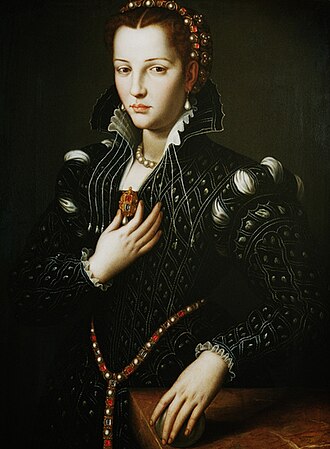
During the early days of their marriage, Alfonso engages a well known artist of a certain style of portraiture and fresco art, one that Lucrezia doesn’t particularly like – to create ‘the marriage portrait’ of his Duchess.

A note sent early to her door, in her husband’s handwriting: she is to be painted in an outfit designed to his specification, which was delivered late last night. Would she please put it on, along with the betrothal gift, and come down to the salon?

The simultaneously told timelines all converge as the portrait is unveiled and the Duchess finds herself at her most vulnerable, alone, either in the grip of madness or about to become victim to the predator.

Vividly Imagined, Underlying Suspense, a Young Woman Honoured

I was totally gripped by the story from those suggestive opening pages, the effect of beginning the story so near its end, created an underlying tension and suspicion all the way through, even as she goes into the marriage with optimism.

The character of Lucrezia is beautifully constructed and rich in visual imagery thanks to her artistic inclinations, despite the fact that she is often confined to quarters. The era of Renaissance Italy, the day to day lives, the close environment of these dynastic families is intricately portrayed and sumptuously imagined. I love that Maggie O’Farrell has resurrected this fifth child, taken so young and breathed new life into her story.

Highly Recommended if you like lush period pieces and the hidden dramas of olden day, wealthy land owners with political and societal influence and historical characters who get to show us how it might have been.

Let us know in the comments if you have read The Marriage Portrait and what you thought of it.

Further Reading

My Review of Maggie O’Farrell’s memoir, I Am, I Am, I Am, Seventeen Brushes With Death

My Review of Maggie O’Farrell’s work of Historical fiction Hamnet

My review of Maggie O’Farrell’s The Hand That First Held Mine

Author, Maggie O’Farrell

Maggie O’Farrell is a Northern Irish novelist, now one of Britain’s most acclaimed and popular contemporary fiction authors whose work has been translated into over 30 languages.

Her debut novel After You’d Gone won the Betty Trask Award and The Hand That First Held Mine the Costa Novel Award (2010). She is the author of Hamnet, winner of the Women’s Prize for Fiction 2020, and the memoir I Am, I Am, I Am, both Sunday Times No.1 bestsellers.

Her novels include After You’d Gone, My Lover’s Lover, The Distance Between Us, winner of a Somerset Maugham Award, The Vanishing Act of Esme Lennox, The Hand That First Held Mine, winner of the 2010 Costa Novel Award, Instructions for a Heatwave, This Must Be the Place and The Marriage Portrait, shortlisted for the Women’s Prize. She lives in Edinburgh.

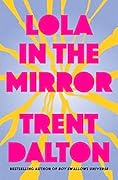
Lola in the Mirror by Trent Dalton

In 2024 I was recommended a book by a family member, who went to an event and heard the author tell the story of his childhood and this novel he wrote called Boy Swallows Universe. Barely a week after this conversation, a friend arrived in my hometown of Aix en Provence, from Australia, pressed this book into my hands and said “You have GOT to read this!”.

Yes, you guessed right, it was Boy Swallows Universe by Trent Dalton and I reviewed it here.

That book was published in 2018. I then saw there was another book about to be published called Lola in the Mirror, which some reviewers described as being even better than the debut novel. On reading about the inspiration for the novel, I decided to get a copy.

Love Stories and a Typewriter

Trent Dalton spent 17 years writing social affairs journalism across Australia. He had his own troubled childhood and upbringing, but he also witnessed and wrote about the situations of so many others, driven by the question; how was it that 120,000 people slept rough every night in one of the brightest, most fortunate countries in the world?

It is this question and the stories shared by the many people he has met over those years, that inspired him to create this latest story Lola in the Mirror.

Frank and Heartfelt

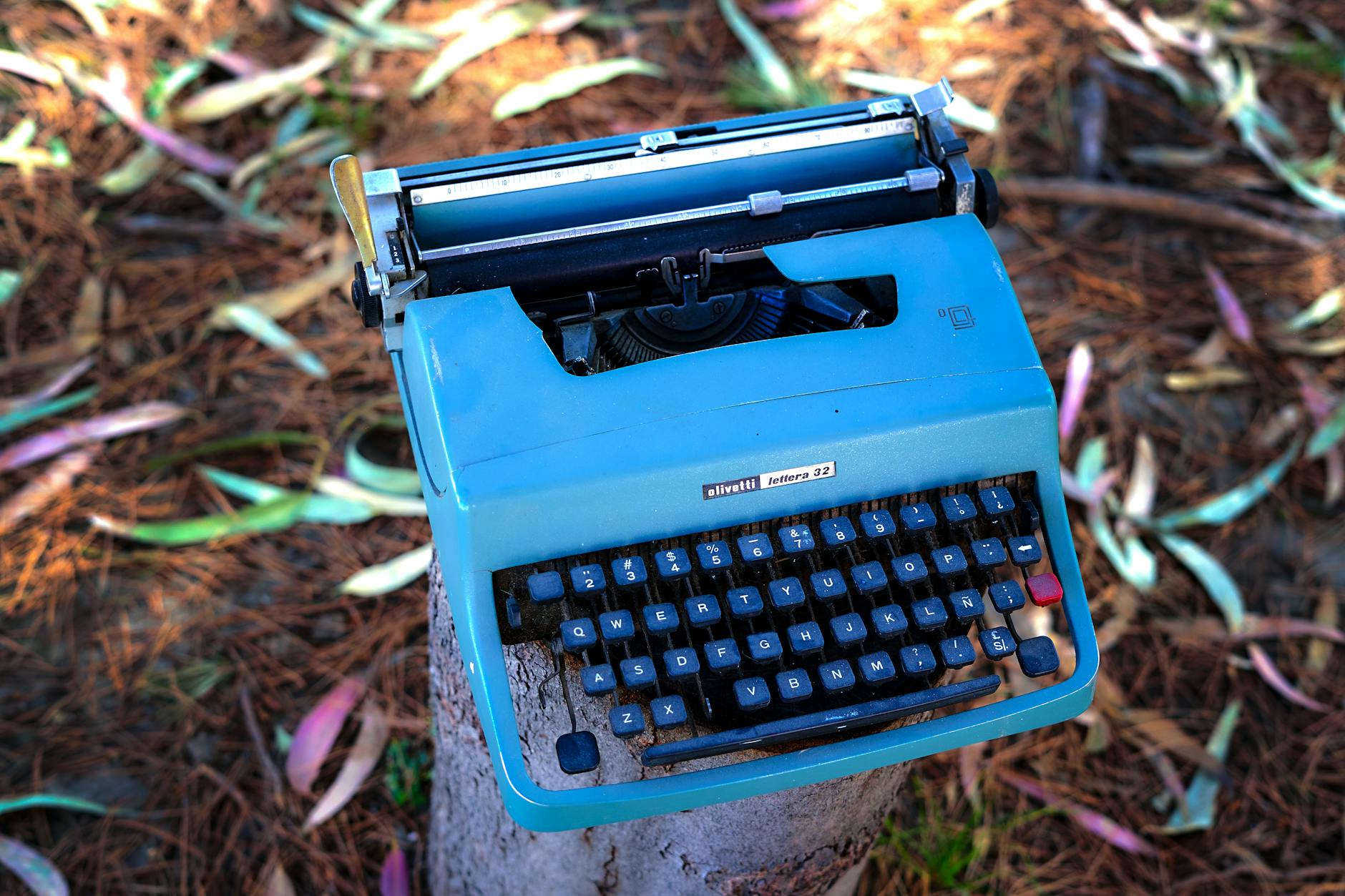
One of the people he was inspired by and wrote about, was Kathleen Kelly, the mother of a friend of his, who passed away on Christmas Day 2020. His book Love Stories is dedicated to her and prefaced with a letter written to her, typed on the sky blue Studio 44 Olivetti typewriter she bequeathed him.

In a letter to Kath, he writes of her memorial service:

Photo by Adriel Macedo Pexels.com

Greg spoke of you and your beloved Olivetti Studio 44 typewriter, the sky-blue one that you’d been tapping on since the early 1970’s, writing fiery letters about woman’s rights and human rights and doing life right to politicians and principals and popes. He spoke about the letter you wrote to the Catholic Leader in 1970, railing against Canon Law demanding the covering of women’s heads in church. You were furious and brilliant.

After the service, Greg tells Trent that his Mum cut out all the stories he wrote and made scrapbooks that documented her life and all that was important to her and that she wanted him to have her typewriter. Being the honour that it was, Dalton wanted to do something special with it, to write something filled with love and depth and truth and frankness and heart because that’s how Kath was.

I told Greg I wanted to walk through the streets of Brisbane’s CBD (central business district) for two months asking random strangers to tell me love stories. I told him I then wanted to sit two for weeks straight with the Olivetti on the corner of Adelaide and Albert streets, on the edge of King George Square, and ask random strangers to stop and tell me more love stories, and then I wanted to write about all those love stories on your beautiful Olivetti.

Those two months of listening to people tell their stories of love, loss and belonging were research for this story of Lola, frank, fearless and full of heart.

Lola in the Mirror

Lola in the Mirror is a riveting, page turning novel that gripped me from the opening pages and never let go. It is a whirlwind of risk and adventure, an exploration of friendship, loss, perseverance and the resilience of the human spirit to not give up on a dream. It is a challenging coming-of-age story of an innocent girl who desperately wants to know who she is and rise above her situation.

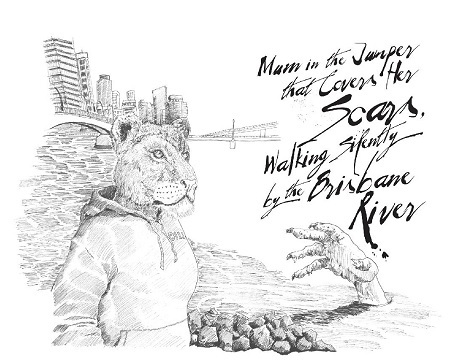
The novel opens with a black and white illustration entitled ‘Escaping the Tyrannosaurus Waltz‘, the dance of mothers and their monsters, or the dark shadow of domestic violence, something Dalton recalled about his own mother, who often had to choose between homelessness or ‘the monster’, a terrible choice faced by many women in Australia, for whom domestic and family violence is one of the leading causes of homelessness.

The artist is a 16-year-old girl, she and her mother are on the run, they have been for all her life. The girl does not know her own name, because it’s too dangerous, but her mother promises to reveal things to her soon, when she turns 18, because then she will be free to make her own choices.

Houseless not homeless

The girl does not describe herself as homeless, the two live in a van with four flat tyres parked in a scrapyard by the banks of the Brisbane River. There is a community of friends who live in similar circumstances, who look out for each other and this girl has a dream of a future life that will be different to how she lives now. For now that scrapyard home is her sanctuary, where she can dream up the best version of herself.

For a start, I ain’t homeless, I’m just houseless. Those two things are about as different as resting your head on a silk pillowcase and resting your head on a brick.

As this girl navigates her life in search of who she is, she comes across a mirror that she takes home, and after a period when the mirror cracks, something magical happens, half the mirror shows her legs and the other shows a dressed up woman in different world cities, who converses with her.

She wants to see her face, but she always has her back to her. She calls her Lola. Lola’s presence keeps her curious, keeps her coming back and looking in the mirror, gives her reason to keep dreaming. She is like a pulse on her mood, on her self-belief.

“Mirror, mirror, on the grass, what’s my future? What’s my past? … Mirror, mirror, please don’t lie. Tell me who you are. Tell me, who am I?”

The storytelling is incredible, the characters are fully formed, and the depiction of the city, the river, the bridges is visionary. You cannot read this book and not care about what happens to this girl or get hooked into wanting to know how she gets in and out of various situations. It is mystery, adventure, crime, psychological suspense and love story rolled into one. The best kind of holiday read ever.

When Life Connects With Art

Photo by Samantha Samantha Gilmore on Pexels.com

I took this book on holiday with me to Australia, figuring I would read it there and leave it behind. It is set in Brisbane which is where I flew into, although I was staying much further South. On the day I started reading, my son was due to fly back to France. I sat in the passenger seat of the car as we drove to the airport. This time, we took a different route and suddenly we were driving alongside the CBD and there were all these bridges and a glimpse of Victoria Park and the mighty river.

When I got back to my book later in the day, on page 45, I read descriptions of exactly the same places we had just driven past. It was surreal, to move from the imagined place to these live flashes of what I had just seen. It brought the story to life and for the rest of the novel, those images kept recurring. I have always been a fan of reading works set in the places I travel to, and I’m glad I read this one in situ as well.

The Artwork

Throughout the novel are a number of superb illustrations, which both tell parts of the story and also suggest a future life of the girl artist. Each drawing is followed by an imagined art critic review in a black box, as if it were being displayed at an exhibition at the Metropolitan Museum of Art, the commentary describing what the artist is representing in the illustration.

Of course, I became curious about the actual artwork and skipped to the back of the book to look up the story behind it. It’s a good one.

Trent Dalton, Author

Trent Dalton is a two-time Walkley Award-winning journalist and the international bestselling author of Boy Swallows Universe, All Our Shimmering Skies, and Lola in the Mirror. His books have sold over 1.3 million copies in Australia alone. He lives in Brisbane, Australia, with his wife and two daughters.

Lola in the Mirror is for anyone who ever felt like they were going to collapse under the weight of sorrow. The book is also for all those beautiful souls who help us carry that weight. It’s an art story. It’s a crime story. It’s a mystery novel. And it’s a life story. I hope people will read this, get to the end and realise why I wrote Love Stories and sat on a Brisbane street corner watching people and asking them about love, loss and belonging for three months.

Water by John Boyne (The Elements #1)

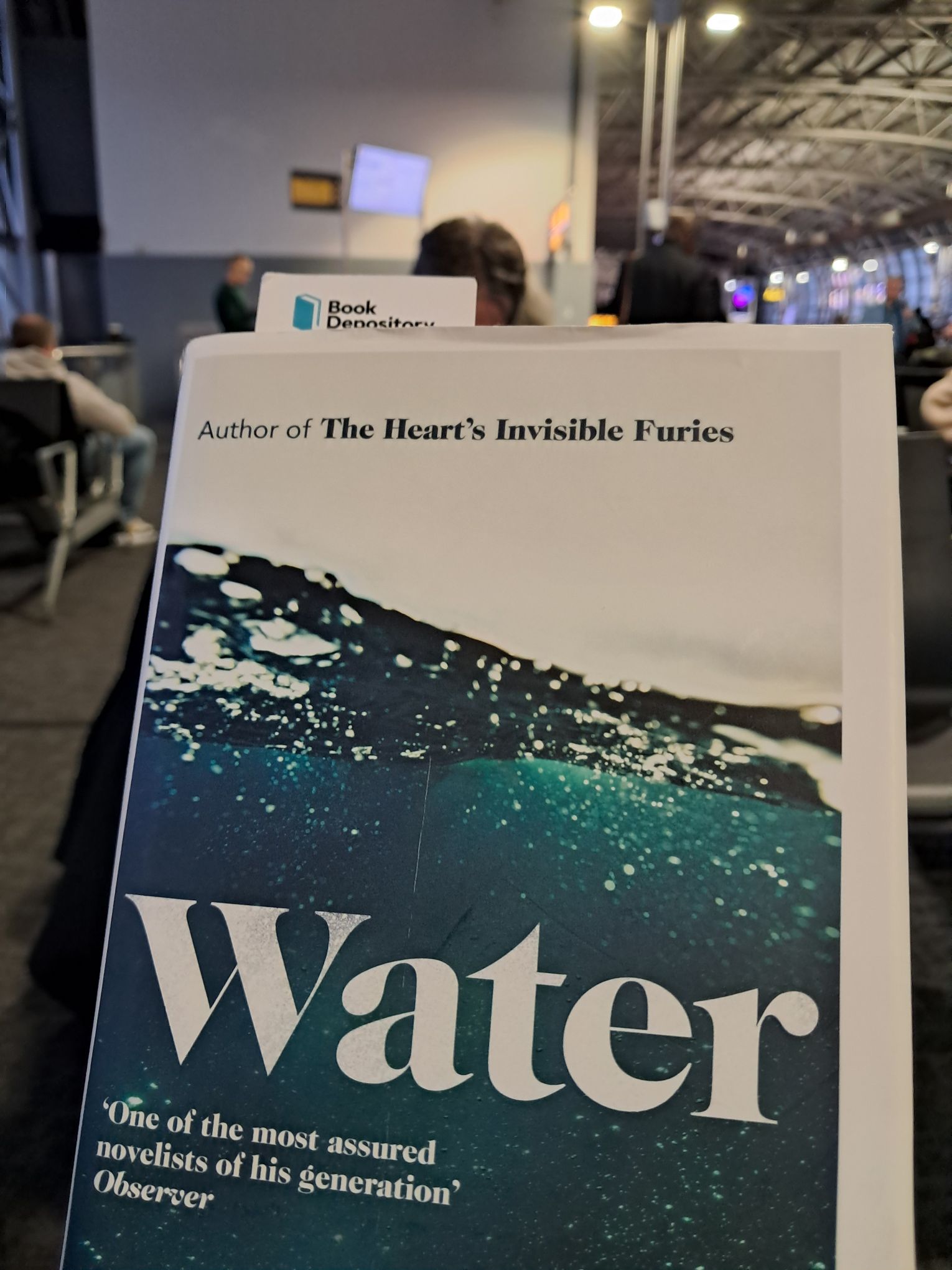
I found this beautiful hard copy of Irish author John Boyne’s short novel Water in a second hand bookstore on holiday recently. I had put too many books in my suitcase already so I shouldn’t have been buying more, but this was too tempting, especially as water was one of the great themes of my holiday.

I did leave most of the books I took with me behind, but Water was my in-flight read on my return, and a good choice as it is not too long or complicated.

The only issue I have, is that it is part of a series of four short novels, interconnected stories. Now I want to know what will happen next and I don’t have Earth or Fire on my shelves yet. Air is due to be published in May 2025.

On verra, as we say here in France. We will see.

Irish Island Stories

Water is another Irish Island story, I realise I have read a few of these kind of stories in recent times, where a character either lives on an island or goes off to spend time on an island for some reason.

In 2024, I read Hagstone by Sinead Gleeson about an artist Nell, who lives on a wild and rugged island that is also inhabited by a commune of women trying to live outside society and I also read Sophie White’s literary horror Where I End, again set on an Irish island, with a strange cast of characters with their terrible secrets. I see another one coming in 2025, June O’Sullivan’s historical fiction set in 1867, The Lighthouse Keeper’s Wife set on the extremely isolated island of Skellig Michael off the coast of Kerry.

In a sense all Irish literature is island literature, but there is something particular about setting stories on small islands with their slightly insular communities that magnify the issues the story is trying to project.

Not an island, a continent. A few favourite water pictures from my recent holiday.

Change a Name, Change a Life

When Vanessa Carvin arrives on the island, she changes her name to Willow and shaves her hair. Content to learn that the cottage she rented had no Wi-Fi or television, we understand she is someone that might be recognised and that is the last thing she wants. We do not know why, the past will be slowly revealed over the course of the novel.

When a cat saunters in and makes itself at home, she thinks of her elder daughter Rebecca and husband Brendan, though what happened to separate her from them remains a mystery.

Well, he’s surrounded by chaos now, I tell myself, wondering whether I should smile at the irony but being unable to. Although he’s technically not my ex-husband at all yet. I just think of him that way. One day, I will summon the energy to speak to a solicitor but, right now, I have had enough of the legal system to last me a lifetime, and who knows, maybe he’ll die, or be killed; which would save me both the bother and the expense.

Contemplation and Conversations

Though she has come to the island to get away, she does interact with the locals and news of her arrival travels quickly. She develops a routine and keeps checking to see if her daughter has read her messages. For some reason her elder daughter isn’t speaking to her and early on we learn that the younger daughter Emma has died.

The way the novel holds much back from the reader while we follow Willow around, in a way reflects the characters own blindness and denial around what has occurred to her family. The island becomes a refuge or escape from reality while the new name and change in appearance physical appearance create a mask behind which she has time to contemplate the events that have occurred and her own complicity.

I was never what you might call a natural mother, but I loved my daughters and did everything I could to ensure that they enjoyed a happy and secure childhood. My own had been untroubled and , having come through it without any noticeable scars, I simply emulated my own mother’s behaviour. Businesslike and efficient, without being overly sugary.

Despite this, none of the family are now together and a scandal has rocked the illusion of her foundation. Although she is there to reflect on the situation and her own role in it, she quickly finds her own form of escapism with her neighbour’s son. The conversations she has with various island inhabitants inform us on the state of the Irish psyche and proclivities, it’s own form of blindness and denial.

Her conversation with the island priest on observing a young man seeking confession is revealing:

‘When I was his age, we all had to go,’ I tell him. ‘It would have been unheard of not to. And I brought my own children too, even though I’m not a believer. So I suppose that makes me just as big a hypocrite.’

‘But something must have made you bring them,’ he insists. ‘Perhaps some part of you was hoping to receive the Spirit, even if you didn’t realise it?’

‘I brought them to keep my husband happy,’ I tell him. ‘I don’t know how much you know about Irish women, Ifechi, but that’s what we do. It’s what we’ve been doing for centuries now, and look where it’s got us.’

‘And where is that?’

‘Here. To some godforsaken island in the Atlantic Ocean, where we know no one and no one knows us.’

Complex and Conflicting Truths

John Boyne adeptly walks his character through her isolation and interactions, penetrating the dark, hidden aspects of outwardly normalised lives that are so far from it, they are no longer able to see the signs of damaging dysfunction.

Symbolically, water represents depth, the ebb and flow of life, the things we should know, that sometimes we only come to know in the stillness of being. Water can cure, purify, cleanse and provide insight. Leaving the city behind, crossing the water to an island, Willow will plunge the depths to awaken to her own role in her not seeing.

It is interesting that the author chose to inhabit the character of a woman, that adds to the theme of blindness or unknowing in the novel. That element of not seeing what is happening, and the usual repression of the feminine within the masculine.

Here an author steps into those shoes and we go there with him to see what it feels like from the inside and witness the progress that can be made by making time to sit with situations that require contemplation, resolution and healing.

Highly Recommended.

Have you read any of the novels in John Boyne’s Element series?

The Forgotten Seamstress by Liz Trenow

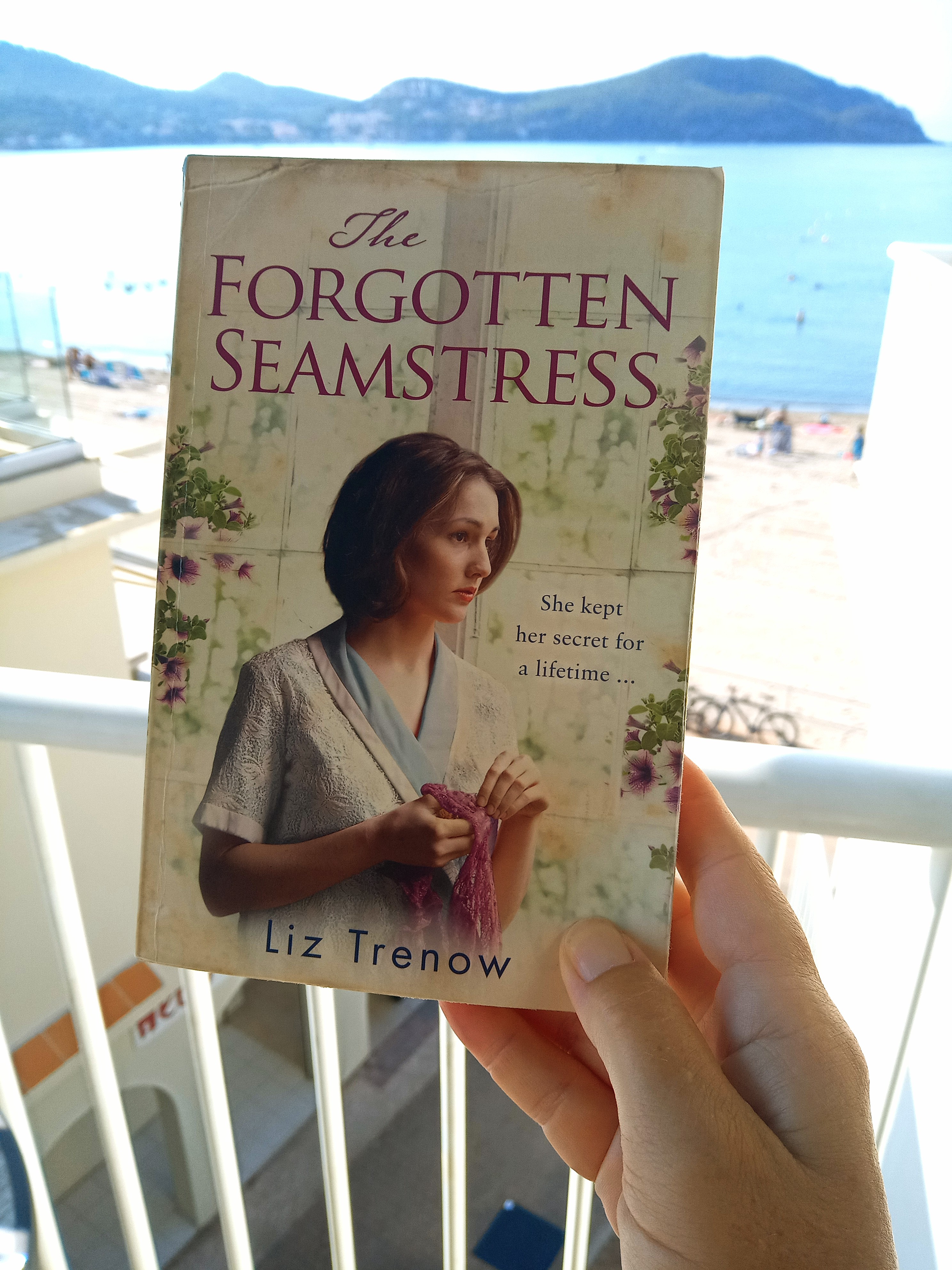
The second holiday read work of historical fiction I read was another dual narrative The Forgotten Seamstress by Liz Trenow.

Different timelines and narratives reveal the story of Maria Romano, a young orphan. She and her friend Nora, both adept at sewing, are called in one day after a grand lady visits the East End of London orphanage and admires their work.

She goes on to tell us that the grand lady who came a few months ago is a duchess and the patron of the Needlework Society and was visiting to inspect the work that the convent was doing for the poor children of the city. She was so impressed by the work Nora and me showed her that she is sending her housekeeper to interview us about going into service.

The house they are moved to, they soon discover is a royal household. Maria catches the eye of the young Prince and being young and obedient, responds when he requires her service and is unsuspecting of the trouble ahead for her, when their fun creates a dilemma for her.

A Series of Taped Interviews, 1970

An academic doing a PhD interviews patients in Helena Hall, an institutional asylum where thousands of women dwelled, recording their stories. Some speak of voices or fantasies, at least as the medical establishment puts it. Like Maria who imagined she worked for royalty and knew a prince. They called her Queenie. No one believed her story. And yet…

The transcriptions of the cassettes allow Maria to tell her story and the reader to decide whether she is a reliable narrator or not.

London 2008

In the modern day, Caroline Meadows is left a quilt by her grandmother, who spent a short time at Helena Hall. Either she or someone she knew made the quilt.

The central panel was an elegantly embroidered lover’s knot surrounded by a panel of elongated hexagons, and a frame of appliqué figures so finely executed that the stitches were almost invisible. And yet, for all the delicate needlework, the design of the quilt seemed to be quite random, the fabrics so various and contrasted it could have been made by several people, over a long period of time.

At a crossroads in her life, her relationship has ended, a job recently lost and she is coping with a mother with onset dementia who is becoming a danger to herself. It is the perfect moment for her to throw herself into the mystery of the quilt and reveal the truth behind what happened to the young Maria.

Then there is a journalist Ben, who she’s unsure about when she contacts him, is his interest in her just about the story he is chasing, or might it be something else? When the quilt goes missing, he helps her, though she remains wary.

Royal Secrets, Institutionalising Women, Lives Stolen

This was an enjoyable read of twists and turns, revelations and class punishment, the incarceration of innocent women in order to maintain the reputations of others, and the terrible expendability of babies and illegitimate children, deprived of their identities, heritage and mothers.

Tidal Waters by Velia Vidal (Colombia) tr. Annie McDermott

Women in Translation

Tidal Waters is my first August read for #WIT month. Reading Women in Translation.

What an original, good-hearted, open, vulnerable read. I’m not sure whether what I read was fictional or not, because much of what is described in the ‘letters to a close friend’ coincides with elements in the author bio inside the front cover of the book and the main character is Vel.

The Epistolary Novel

epistolary novel of letters, reading, literacy, poverty, Afro Colombian

An epistolary narrative, it is about the return to a place and finding new purpose, along with the motivation to pursue it and taking others with you – told through a correspondence that bears witness and though we don’t see the replies, we can tell that they encourage and support both the idea(s) and the woman pursuing it.

I don’t know if I mentioned this specifically, perhaps not in a letter, though maybe when we met up before I left to come and live here here for good, but part of what pushed me to make this radical life change was the need to feel that my existence had meaning, that I was spending each day doing something I cared about and could feel proud of at the end of my life. And that’s just what I found in being Seño Velia, the woman who has meetings with people about books, who tries to motivate children to love reading and books as much as she does, and who supports the teachers.

Finding Purpose and Motivation, In Community

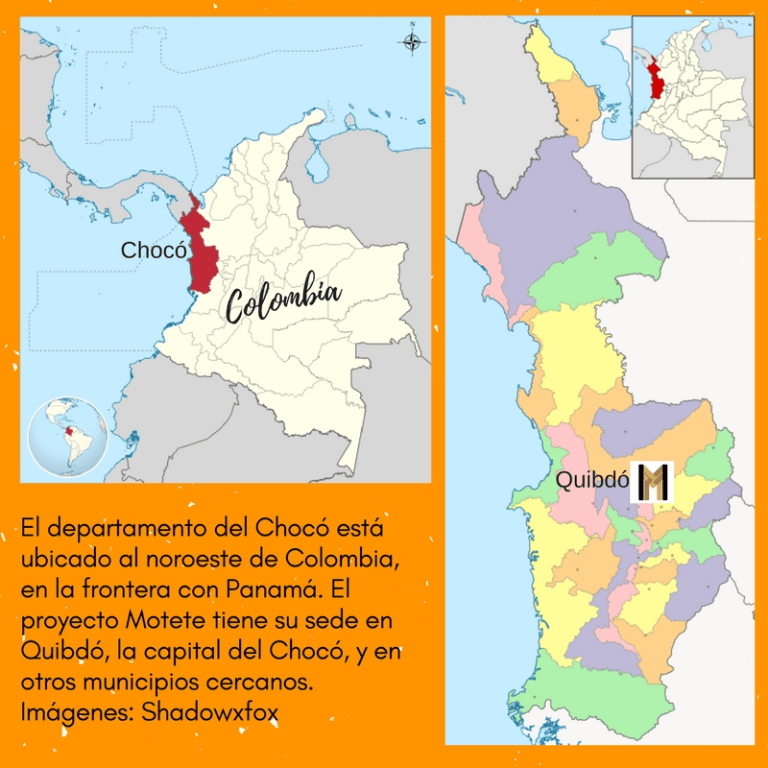
The letters span 3 years from May 2015 and they track a significant change in Vel’s life as she decides to return to Choco (to the Afro-Colombian community she was raised in) to start a new venture to bring reading, literacy and a love of books to it. The correspondence exhibits the growth and expansion of her writing, the letter becomes a safe harbour and she tests it by taking her writing to another level, stretching into a more personal yet contained arena.

Tomorrow I start a diploma in reading promotion, and with it my project, Motete. We’ve chosen three areas of Quibdo where I’ll start running the workshops.

She is taking a risk starting a new venture, but believes in it and is surrounded by extended family and connections, which facilitate her ability to reach out even further into the community and invite everyone in, to be part of or benefit from her shared love of reading.

And so this project is coming together. This basket, this Motete, is filling up. The slogan for my project is ‘Contenidos que tejen’ – contents that weave – and every day I like it more. Every day I realise that these contents are weaving fulfillment and happiness within me…

The thing is, motetes have been used to carry food for the body: plaintains, bushmeat, fish. Our is to fill them with food for the soul: art, culture, books. And just as motetes are woven by hand, I thought these new contents would also form a fabric: the fabric of society, of community, the fabric of souls.

Letter Writing

Her unnamed friend that she writes to is someone she hasn’t known long, he occupies a space between the familiar and the unfamiliar that she claims as a freedom to express herself, to be vulnerable and open, someone who has mentored and shown her how to get funding. The range of things she will write to him of, span a wide spectrum.

We never see the replies but the continuation of her own correspondence displays her life, her dealing with health problems, the double bind of her wounding and love, of being raised by doting grandparents, while having complicated relationships with a teenage mother unable to mother her and an emotionally absent father. Her later sadness and depression, helped through therapy, tears and conversations, to ways of coping and healing. Her optimism for her venture, and the community connections she creates keep her going.

I grew a lot. I learned. But most of all I tried to weave a new way of relating to my father that hurt as little as possible.

The Sea, The Sea

One of the themes is the sea, the absence of sea, the way the river meets the sea and her relationship to it. She yearns for it when it has been absent for some time, just as she yearns for the letter writer and the relief that comes in the act of writing to him.

She describes herself in her current role as being like the sea at that place where it meets the river.

I’m like the Pacific Ocean, pressing at the river with its tides to make it flow the other way, or lapping at the land when its waters rise, when it feels like gaining inches of new ground. You need strong motivation to stick to this way of life, which isn’t exactly a fight against the world, but rather the certainty of forging your own path.

An Homage to Correspondence

I loved this slender book, it’s project and generosity, its intimate sharing and platform for expanding and learning and having the courage to venture into new areas. It made me think of an exquisite title I’d forgotten about, Leslie Marmon Silko’s slim book of correspondence The Delicacy and Strength of Lace: Letters Between Leslie Marmon Silko and James Wright.

That correspondence was written when Silko was 31 years old and Wright 51. They had planned to meet in the Spring of 1980, mentioned in letters of Oct/Nov of the previous year, not knowing he would be gone before then.

They discuss her novel, his poetry, language, his travels, her adventures with animals, their speaking engagements, their mutual challenges and experiences as university professors, and soon began to share more personal feelings, as she acknowledged the tough time she was having and he shared his own experience, expressing empathy.

Velia Vidal dedicates her book:

To my recipient,
simply for being there.

and when I read about her own projects in society, her love of the sea and shared readings and efforts to help move children and young adults out of poverty, it is all the more inspirational to read these letters, understanding the difference a letter can make, to see someone take a risk and pursue something that will help others from her community, while fulfilling her own dreams and aspirations.

Highly Recommended.

Velia Vidal, Author

Velia Vidal (Bahía Solano, Colombia, 1982) is a writer who loves the sea and shared readings. In 2021 she was a fellow at Villa Josepha Ahrenshoop, in Germany.

For her book Tidal Waters she won the Afro-Colombian Authors Publication Grant awarded by Colombia’s Ministry of Culture. She is the co-author of Oír somos río (2019) and its bilingual German-Spanish edition.

She is the founder and director of the Motete Educational and Cultural Corporation and the Reading and Writing Festival (FLECHO) in Chocó, one of the most isolated, complex and neglected regions in Colombia with the highest afro-descendant population density in the country.

Vidal graduated in Afro-Latin American Studies and has a Masters in Reading Education and Children’s Literature. She is also a journalist and specialist in social management and communication. In 2022 she was included in the list of 100 most influential and inspiring women in the world by the BBC.

She writes children’s literature, fiction and non-fiction, and poetry. Her work has been translated into German, English and Portuguese.

Booker Prize for Fiction Longlist 2024

Today the longlist for the Booker Prize for Fiction 2024 was announced, 13 books, featuring three debut novels and six previously nominated writers.

It features blackly comic page-turners, multi-generational epics, meditations on the pain of exile – plus a crime caper, a spy thriller, an unflinching account of girls’ boxing and a reimagining of a 19th-century classic.

The long listed selection was chosen from 156 books published between 1 October 2023 and 30 September 2024. The Prize is open to works of long-form fiction by writers of any nationality, written in English and published in the UK and/or Ireland.

The list includes the following titles, of which I have read three (reviews linked to title):

Wild Houses by Colin Barrett (Ireland)  – A story of two outsiders striving to find themselves as their worlds collapse in chaos and violence, set in County Mayo.

Headshot by Rita Bullwinkel (US) – Funny, propulsive, obsessive and ecstatic, Headshot is equal parts subtle and intense, as it brings us to the sidelines of the boxing ring and above and beyond it.

James by Percival Everett (US) – A profound meditation on identity, belonging and the sacrifices we make to protect the ones we love, which reimagines The Adventures of Huckleberry Finn.

Orbital by Samantha Harvey (UK) – Six astronauts rotate in the International Space Station. They are there to do vital work, but slowly they begin to wonder: what is life without Earth? What is Earth without humanity?

Creation Lake by Rachel Kushner (US) – A woman is caught in the crossfire between the past and the future in this part-spy novel, part-profound treatise on human history.

My Friends by Hisham Matar (US/UK/Libya) – An intensely moving novel about three friends living in political exile and the emotional homeland that friendship can provide.

Held by Anne Michaels (Canada) – In a narrative that spans four generations from 1917, moments of connection and consequence ignite and re-ignite as the century unfolds.

This Strange Eventful History by Claire Messud (US) – charts the Franco-Algerian, Cassars’ unfolding story, in a work of breathtaking historical sweep and vivid psychological intimacy, from June 1940, as they move between Salonica and Algeria, the US, Cuba, Canada, Argentina, Australia, and France.

Wandering Stars by Tommy Orange (US) – A tender, shattering story of generations of a Native American family, struggling to find ways through displacement, addiction and pain, towards home and hope. 

Enlightenment by Sarah Perry (UK) – A story of love and astronomy told over the course of 20 years through the lives of two improbable best friends.

Playground by Richard Powers (US) – Playground explores that last wild place we have yet to colonise and interweaves profound themes of technology and the environment, and a deep exploration of our shared humanity.

The Safekeep by Yael van der Wouden (Netherlands) – An exhilarating tale of twisted desire, histories and homes – and the legacy of one of the 20th century’s greatest tragedies.

Stone Yard Devotional by Charlotte Wood (Australia) – The past comes knocking in this fearless exploration of forgiveness, grief and female friendship.

* * * * * * *

Both My Friends by Hisham Matar and James by Percival Everett were 5 star reads for me, that I highly recommend. Orbital was a unique and different read, but one that at times I felt a little disengaged from.

Plenty more to explore here, have you read any from this list that you highly recommend or are looking forward to reading?

The shortlist of six books will be announced on Monday, 16 September.

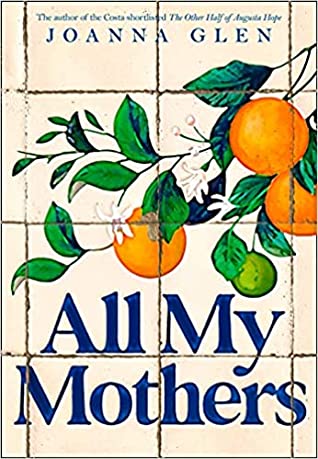
All My Mothers (2021) by Joanna Glen

I picked this book up because of its premise of a child having questions about her early life and origins, sensing she is being lied to by her parents.

A 30 Year Story from 80’s London to Córdoba

Adoption Motherhood Mothers

The book is 480 pages and most of the first half is narrated by Eva as a child or teenager. It begins as she is starting school and beginning to develop friendships. She befriends Bridget Blume and is besotted. Not just by her, but by her entire family, especially her mother who is so unlike Eva’s mother whom she calls Cherie (like her father does).

At school Eva is deeply affected by a book the teacher reads ‘The Rainbow Rained Us’, in which a rabbit throws a stone at the rainbow of Noah’s Ark breaking it apart into hundreds of multicoloured mothers who repopulate the earth with children.

The Many Colours of Mother Love

There Blue Mother stood in a mesmerising cornucopia of blues, at the edge of a turquoise sea, laughing, the wind in her hair, surrounded by her blue family.
‘Blue Mother is free and open and speaks from her heart.’
She sounded exactly like Bridget’s mother – utterly perfect.

From then on she refers to her mother as Pink Mother and Bridget’s mother as Blue Mother.

Pink Mother was sitting upright in a kind of fairy-tale bed, a bit like my mother and father’s, a four-poster, with a roof and curtainy droops around it.
No,no,no.
‘Pink Mother is delicate and feminine,’ said Miss Feast, explaining that delicate meant not strong.

When they are asked to share a baby photo, Eva becomes even more convinced than she already was, that her mother is not her mother, there is no photo of her as a baby, nothing before the age of three and a half.

The novel’s first half follows her through primary school, her developing friendship and first great loss, first the loss of a favourite teacher, then a death that will result in her friend’s family moving to another country and then abandonment by her father, who returns to Spain and rarely if ever makes contact.

Eva’s personality develops and is compromised by these losses and causes her to develop or accept superficial relationships, taking some time to realise what she lost by neglecting what has been meaningful to her.

Hispanic Studies, La Mezquita, A Headless Nun

In the second half of the novel she has started a university degree, changing locations due to the demands of her boyfriend Michael.

The pace really picks up in this half, perhaps because we have left the child narrator behind, so Eva becomes less introspective and more in charge of acting on the questions and thoughts she has and voicing some of the strong opinions she has.

When told they will spend a summer semester in Córdoba, Spain, the separation from all that is familiar and expected of her, marks the beginning of a transformation and a quest into looking for the answer to questions she has about her origins.

la mezquita the grand mosque in Cordoba, Spain
Photo Juan L. Secu on Pexels.com

The second half is something of an adventure as she develops a new friend Carrie who is interested in helping her and the two begin to consider not returning to their previous lives, to stay in Córdoba.

As Eva enters her 20’s her relationships and perspective begin to evolve, although she remains somewhat detached, circumspect and emotionally distant. With the presence of those around her, she begins to understand the complexity of being a mother, of being mothered and that judgments can change, as can people, especially when they find those relationships that are mutually nurturing.

The final third of the jumps into a second person narrative perspective ‘you’ and becomes somewhat nostalgic and didn’t work quite so well as the preceding chapters. It’s like the beginnings of a letter to a little girl who is still a baby, perhaps the thing that she had missed from her own life, being provided for another.

Writing From Experience versus Imagination or Observation

It is an interesting and captivating read, however I couldn’t help but feel as I was reading that this was imagined, rather than felt, because I am interested in books, fiction or nonfiction that come from the experience of separation.

In an interview with Carolyn Ray of JourneyWoman Bookclub, Joanna Glen shared that one of her aims was to explore the question, What is Our Deepest Longing?

I suppose the motherhood theme came next thinking what is our deepest longing that we have right from the beginning and of course a baby’s deepest longing is to gaze into the mother’s eyes and receive the gaze of love back. So I was thinking, what would be the most powerful or perhaps the saddest lack, would be not to feel that connection. That would be a very visceral fundamental lack.

She shares more about her own experience in the interview, which was the opposite of what she explores in the novel regarding the mother child connection, but brings alive the adventure of living abroad, in the town of Córdoba as a young person.

Overall, an enjoyable summer read that is likely to spark an interest in Córdoba, if like me you have never been there and one that celebrates female friendship and connection across different age groups and cultural backgrounds.

Further Reading

TripFiction Review: All My Mothers by Joanna Glen, coming of age novel mainly set in Córdoba. Aug 2021

Author, Joanna Glen

Joanna Glen’s novels include All My Mothers and The Other Half of Augusta Hope, which was shortlisted for the Costa First Novel Award and the Authors’ Club Best First Novel Award.

She and her husband live in Brighton.

James by Percival Everett

This was my third novel by Percival Everett, having very much enjoyed So Much Blue (2017) and Erasure (2001). I knew James would be quite a different premise because it is connected to the well known, classic adventure story of Huckleberry Finn.

I have a brief sense of familiarity with Tom Sawyer and Huckleberry Finn, I may have seen episodes of a television show when I was a child. I wasn’t sure if I had ever read the book it is based on. I don’t think so. Boy and the Sea Beast by Ann de Roo was more my kind of adventure story.

Set in the period just before the American civil war is about to break out, we meet Jim, a black slave, waiting outside for corn bread. Two boys, Tom and Huck are trying to play a trick on him and plan to steal something from the kitchen.

A Boy, A Young Man or an Adult

I admit that for the first 60 pages I thought Jim was a young boy too. When on page 62 he asks after his wife and child I shift my perspective. The way the two boys were interacting with him (pranking him) seemed appropriate towards another boy, not a man.

In a world where slavery exists, relationships have a perverse hierarchy, one that is demonstrated from the opening scene of the novel. When I go back and close read I see where there were signs I missed.

Jim helps collect wood and takes a risk by putting some aside (hidden) for different members of his family and community.

The weather remain unseasonably cold and I found myself pilfering wood for not only April and Cotton, but also my family and a couple of others. I was terribly concerned that the wood might be missed, and that fear worked its way into reality one Sunday afternoon.

He hears that the owner is planning to sell him to a man in New Orleans. Without waiting for morning Jim decides to escape, though he feels bad about leaving his family. He is determined to find a way to raise the funds to free his family from slavery.

“You can’t run,” Sadie said. “You know what they do to runaways.”

“I’ll hide out. I’ll hide out on Jackson Island. They’ll think I’ve run north, but I’ll be there. Then I will figure out something.”

He heads down to the river, the Mississippi, crosses to an island where he finds a safe place to rest a while. To his surprise he encounters the boy Huck, who is running from his abusive, drunkard father Pap. It is not good news, because Huck has left things in a way that people will believe him to have been murdered. And now Jim is missing.

Language and Expectations

Whenever Jim is around Huck, he speaks in a certain way, a kind of dialect. We know that Jim has had access to the house library in the past, that he can read, write and articulate, but he must suppress his ability to understand intellectually and more importantly hide his capable manner of his speech, in order to keep him safe from those whose racist ways of thinking will be threatened by a man showing superior comprehension.

When Jim gets bitten by a snake and spends a few nights in a fever, his dream time ramblings put him at risk. He starts having conversations with Voltaire and other French philosophers, a pattern that emerges whenever he enters dream state. (And typical of Everett to throw in French literary motifs – they add both comic relief and increase the danger surrounding the protagonist). His subconscious is unable to hide the knowledge he has acquired over the years.

François-Marie Arouet Voltaire put a fat stick into the fire. His delicate fingers held the wood for what seemed like too long a time.

On the inside cover there is a map of the river and the locations on his journey south where they will have different encounters, where they become separated for a while. Each time they are separated, sometimes for a significant period, they manage to find each other again.

How To Trust a Man

It is not easy for Jim to trust another man. The people he encounters may be slaves or white men, or men passing as white, or white men. Each encounter presents a situation he must navigate, an aspect of the society within which they live, how different people are.

He has withheld information from Huck that might have benefited him. He considers telling him, but fears he might be angry and betray him, causing his capture.

One of the most uncomfortable encounters he has is with a travelling minstrel show, a band of white men who put on a show and sing to people, songs that mock black people. While the man who runs that show says he does not believe in slavery, he “hires” Jim as a tenor for his show. This presents the farcical and most dangerous situation as he is be painted to be a black man as if he were a white man.

The most costly, traumatic episode for Jim comes following the help of four men he encounters at the riverside. They ask what they might bring him and he asks for a pencil. It is a most dangerous thing for an enslaved man to have on him or for another to source for him and the cost will be high. They also understand its power and want him to have it.

To Read and Write, A Subversive Act

The discovery of abandoned books and paper is one of the most significant discoveries Jim makes. It marks the beginning of a new stage in his life. He is going to write. About his life and its meaning. His first attempt is with a stick, the pencil he obsesses over and eventually acquires will bring further elucidation.

I really wanted to read. Though Huck was asleep, I could not chance his waking and discovering me with my face in an open book. Then I thought, How could he know that I was actually reading? I could simply claim to be staring dumbly at the letters and words, wondering what in the world they meant. How could he know? At that moment the power of reading made itself clear and real to me. If I could see the words, then no one could control them or what I got from them. They couldn’t even know if I was merely seeing them or reading them, sounding them out or comprehending them. It was a completely private affair and completely free and, therefore, completely subversive.

A Turning Point

There comes a point where Jim has had enough experiences and encountered sufficient people that his purpose becomes stronger and clearer and his fear dissipates. The mood is changing as groups of young people begin to amass to fight in the war. At this point he turns around and heads back north, from where he came. His purpose changes, becomes clear, his resolve strong.

It marks a shift in his relations with those around him, including Huck. He has encountered help and harm from different quarters, he has taken risks and overcome adversity. He moves from “running from” to “running towards”. His language changes and he begins to take on the character of a leader.

I thought it was an excellent novel and collection of encounters that confronted many of the issues and circumstances of the society they lived in at the time and the dangers a runaway slave had to navigate in order to seek freedom. How the journey changed him and the inevitability of violence taking a place in the life a man, not prone to violence, but brought to it by the oppression and injustice surrounding him.

I love that we are beginning to see a narrative shift in stories, in terms of the perspective from which stories are told and the nuance of character developed in those who have been sidelined or typecast.

From Book to Film, Writing Slant

I’m looking forward to what the partnership between Percival Everett and Taika Waititi will create, in bringing this story to the big screen, a creative partnership just announced this past week.

With my pencil, I wrote myself into being. James

Percival Everett, Author

author of James, Erasure, So Much Blue

Percival Everett is the author of over thirty books, including So Much BlueTelephoneDr No and The Trees, which was shortlisted for the 2022 Booker Prize and won the 2022 Bollinger Everyman Wodehouse Prize.

He has received the Hurston/Wright Legacy Award and the PEN Center USA Award for Fiction, has been a Pulitzer Prize finalist, and is Distinguished Professor of English at the University of Southern California. His novel Erasure was adapted into the major film American Fiction.

The novel James (a reimagining of Mark Twain’s The Adventures of Huckleberry Finn, told from the perspective of the enslaved Jim) was published on 11 April 2024. He lives in Los Angeles.

Women’s Prize for Fiction Shortlist 2024

The Women’s Prize for Fiction have announced their shortlist of six novels. You can view the entire longlist here.

Identity, Resilience, Migrant Experiences, Family Relationships

Many of the books depict characters who are navigating seismic changes in their identity, undergoing a process of self-reckoning and self-acceptance, with several dealing with the inheritance of trauma and the resilience of women overcoming the weight of the past.

Half of the books in this year’s shortlist explore the migrant experience through different lenses, offering moving, distinct, explorations of race, identity and family, of the West’s false promise and the magnetism of home.

The shortlist encompasses stories that both focus on intimate family relationships, as well as those that convey a sweep of history, always with an eye on the particularity of women’s experience, whether in the home or in the context of war and political upheaval.

The Shortlist

Below are descriptions of the individual titles, along with a quote from a judge, to help you discern if they might be of interest:

The Wren, The Wren by Anne Enright (Ireland) published by Jonathan Cape, 283 pgs

A psychologically astute examination of family dynamics and the nature of memory. Enright’s prose is gorgeous and evocative and scalpel sharp.

Nell – funny, brave and much loved – is a young woman with adventure on her mind. As she sets out into the world, she finds her family history hard to escape. For her mother, Carmel, Nell’s leaving home opens a space in her heart, where the turmoil of a lifetime begins to churn. Across the generations falls the long shadow of Carmel’s famous father, an Irish poet of beautiful words and brutal actions.

A consideration of love: spiritual, romantic, darkly sexual or genetic. A generational saga tracing the inheritance of trauma and wonder, it is a testament to the resilience of women in the face of promises, false and true. An exploration of the love between a mother and daughter – sometimes fierce, often painful, always transcendent.

Brotherless Night by V. V. Ganeshananthan (Sri Lanka), published by Viking, 348 pgs (see my review here)

Visceral, historical, emotional. It is 300 pages of must-read prose. A powerful book that has the intimacy of memoir, the range and ambition of an epic, and tells a truly unforgettable story about the Sri Lankan civil war.

Sixteen-year-old Sashi wants to become a doctor. But over the next decade, as a vicious civil war subsumes Sri Lanka, her dream takes her on a different path as she watches those around her, including her four beloved brothers and their best friend, get swept up in violent political ideologies and their consequences. She must ask herself: is it possible for anyone to move through life without doing harm?

Restless Dolly Maunder by Kate Grenville (Australia), published by Canongate Books, 256 pgs

[It] follows the life of Dolly, who really is restless. It begins in the 1880s in rural Australia, and it follows Dolly’s ambitions to live a bigger life than the one she’s been given.

Dolly Maunder is born at the end of the 19th century, when society’s long-locked doors are just starting to creak ajar for determined women. Growing up in a poor farming family in rural New South Wales, Dolly spends her life doggedly pushing at those doors. A husband and two children do not deter her from searching for love and independence.

Restless Dolly Maunder is a subversive, triumphant tale of a pioneering woman working her way through a world of limits and obstacles, who is able – despite the cost – to make a life she could call her own.

Enter Ghost by Isabella Hammad (Britain/Palestine), published by Jonathan Cape, 336 pgs (see my review here)

How can a production of Hamlet in the West Bank resonate with the residents’ existential issues? Enter Ghost is a beautiful, profound meditation on the role of art in our society and our lives.

After years away from her family’s homeland, and reeling from a disastrous love affair, actress Sonia Nasir returns to Haifa to visit her sister Haneen. While Haneen made a life here commuting to Tel Aviv to teach at the university, Sonia remained in London to focus on her acting career and now dissolute marriage. On her return, she finds her relationship to Palestine is fragile, both bone-deep and new.

When Sonia meets the charismatic, candid Mariam, a local director, she joins a production of Hamlet in the West Bank. Soon, Sonia is rehearsing Gertrude’s lines in classical Arabic with a dedicated group of men who, in spite of competing egos and priorities, all want to bring Shakespeare to that side of the wall. As opening night draws closer and the warring intensifies, it becomes clear just how many obstacles stand before the troupe. Amidst it all, the life Sonia once knew starts to give way to the daunting, exhilarating possibility of finding a new self in her ancestral home.

Timely, thoughtful, and passionate, Isabella Hammad’s highly anticipated second novel is an exquisite story of the connection to be found in family and shared resistance.

Soldier Sailor by Claire Kilroy (Ireland), published by Faber & Faber, 233 pgs (my review)

A full-bodied, remorseless, visceral deep dive into the maternal mind. It is ultimately a love story between Soldier, the mother, and Sailor, the son.

In her acclaimed new novel, Claire Kilroy creates an unforgettable heroine, whose fierce love for her young son clashes with the seismic change to her own identity.
As her marriage strains, and she struggles with questions of autonomy, creativity and the passing of time, an old friend makes a welcome return – but can he really offer her a lifeline to the woman she used to be?

River East, River West by Aube Rey Lescure (France/China), published by Duckworth, 352 pgs

Set in Shanghai in the 2000s, it’s a novel about reinvention. It’s original, it’s funny, and it’s sometimes heartbreaking as well.

A mesmerising reversal of the east–west immigrant narrative set against China’s economic boom, River East, River West is an exploration of race, identity and family, of capitalism’s false promise and private dreams.

Shanghai, 2007: feeling betrayed by her American mother’s engagement to their rich landlord Lu Fang, fourteen-year-old Alva begins plotting her escape. But the exclusive American School – a potential ticket out – is not what she imagined.

Qingdao, 1985: newlywed Lu Fang works as a lowly shipping clerk. Though he aspires to a bright future, he is one of many casualties of harsh political reforms. Then China opens up to foreigners and capital, and Lu Fang meets a woman who makes him question what he should settle for.

The 2024 Winners

The winner of both the Women’s Prize for Fiction and the inaugural Women’s Prize for Non Fiction will be announced on June 13th, 2024.

I have only read one from the list, Claire Kilroy’s excellent Soldier, Sailor. I’m most interested in reading V.V. Ganeshananthan’s Brotherless Night and Isabella Hammad’s Enter Ghost and am reminded that a friend recommended her debut The Parisian back in 2019 (but you know, 700+ pages).

Have you read any of these from the shortlist? Let us know what you thought in the comments below.