Having very much enjoyed her previous two novels translated into English A Girl Returned (my review) and A Sister’s Story (my review), I jumped at the chance to read her latest, winner of the 2024 Strega Prize, a novel inspired by a historic true-crime event in the 90’s, a double femicide in the mountainous region of the Abruzzo Apennines in Italy, a novel dedicated to “all the women who survive”.
Brittle or Fragile, the Impact of Events
When the novel opens, its first three chapters, just over a page each, touch on everything to come, Lucia’s daughter Amanda who has returned from Milan on one of the last trains as the pandemic shuts everything down, she stays in her room, barely eats, doesn’t talk, her phone uncharged under the bed. Lucia worries but can get nothing out of her.
Lucia visits her elderly widowed father, who lives in the house she was born, halfway between the town and the mountain. They walk up there and he reminds her all this will be hers one day too, land he owns that he no longer wants responsibility for.
An alarm signal arises from my stomach to my throat, suffocating me. “That’s impossible. You sold this land.” He tried for a long time, he confesses, without success. I’m silent for a while, in the chorus of birds. At regular intervals the cuckoo solos. “After what happened no one wanted it, I couldn’t give it away,” he says, as if to justify himself. “I don’t want it either, it’s a frightening place.” I’ve raised my voice, the last syllables echo. It will be mine of necessity, I’m his only heir.
Eighteen months before, the excitement of her daughter’s departure for Milan, the city where life would open up and happen for her, a grandfather’s pride. Now in quarantine, returned and nothing like that ambitious young woman that had left.
The Present Awakens the Past
Amanda’s reclusiveness awakens Lucia’s memories of those events of 30 years ago and throughout the novel, we learn not only what happened, but of the guilt Lucia carries for her absence and the heaviness that surviving the tragedy cost her friend, who, to make a better life left the place that held those terrible memories.
She doesn’t want to be seen in the town, people said of her, after the crime. No one mentions her anymore now. They’ve all forgotten Doralice and her story. The young people of Amanda’s age never knew her. Our parents didn’t help us stay connected.
With the memories come scenes that depict generational ways of living, ways of being, some things that stay the same, the things that change, the reasons some stay, while others leave.
Lucia recalls trying not to worry about her daughter in the city alone, allowing her her freedom, throwing herself into her work to stop herself taking the train after her. But now she questions whether she underestimated the impact of something that happened to her.
I consoled her as well as I could, from a distance. That time, I really was wrong not to get on a train. Respecting her freedom, I failed her when she needed me. Some boundaries are too subtle for an indecisive mother like me. But do the most stable parents know at every moment the truth of what to do? “Don’t worry, it will pass,” and I believed her.
Although the story is about a crime, the mystery of what happens sits alongside the portrait of a fractured family and community, all impacted by the past, burying it with silence.
Our birthplace had protected us for a long time, or maybe that had been a false impression. We grew up in a single night.
The return of Amanda, interest in the mountain property from a developer and a need for resolution, ultimately brings the community together in an act that will work to heal wounds and create momentum for a new era.
The novel is told in five parts: Amanda, The Girls, Dente del Lupo, The Flight, and The Concert in short chapters, going back and forth in time, revealing aspects of the past of Amanda (recent) and her mother (long ago), while witnessing the changed state of their present and their dual need for healing.
The slow reveal of the tragic murders, alongside understanding how it impacted our narrator, plus her own awakening to the effect of that suppressed event, from the safer distance of 30 years in the future, is skillfully blended with the present day psychological suffering of her daughter, as they move towards recovering.
I thought this was so well portrayed, blending the mystery of tragic events, with inter-generational trauma and present day personal struggles, facing the difficulty of breaking through patterns of silence and repression, of deep caring even without understanding, of the need to forgive oneself and the dedicated perseverance of familial maternal love.
Highly Recommended.
N.B. Thank you to Europa Editions UK for sending me a copy of the novel for review.
Author, Donatella Di Pietrantonio
Donatella Di Pietranonio lives in Penne, Abruzzo, where she practices as a pediatric dentist. She began publishing books in 2011, at the age of 49. In the span of a little more than a decade, she has come to the attention of Italian critics and readers, winning the Campiello Prize with her third novel L’Arminuta (A Girl Returned) in 2017. A Sister’s Story was shortlisted for the prestigious Strega Prize and The Brittle Age the 2024 winner of the Strega and Strega Youth Prize. Her short fiction has been published by Granta Italy.
Every novel I’ve read by Alba de Céspedes has been excellent and this controversial debut (at the time of its original publication in Italy, 1938) brims with the seeds of what was to come from her work, starting with this excellent, collective coming-of-age, of eight, twenty-something year old women in pre-war Rome.
I pre-ordered this novel, as she is a favourite author, of whose work I want to read everything, sharing now for WIT Month (Women in Translation).
Literature and Morality
In the informative translator’s note at the beginning of the book, Ann Goldstein shares some of the historical context within which the book became an immediate and immensely popular bestseller, despite the authorities finding the novel’s breaking of female stereotypes and suggestion of other possible pathways for women offensive.
“By the time the novel was published the fascist dictator Benito Mussolini had been in power for more than a decade. His government promoted the idea that the proper place for women was to be at home and to bear children; sposa e madre esemplare (exemplary wife and mother). While there is no overt mention of Mussolini or fascism in the novel, none of the young women conform to this female ideal. In fact, in their different ways they are challenging it, even if not intentionally or even consciously.”
Selected to win the prestigious Viareggio Literary Prize in 1939, a government order stopped it and attempted to block further editions from being published, claiming it went against ‘fascist morality’. As Margarita Diaz points out in a recent article ‘An Immoral Endeavour‘:
Vague accusations of ‘immorality’ have been, and continue to be, used by dominant institutions, governments and autocratic regimes to stifle free expression and to censor legions of books and artworks.
Women at a Turning Point
Set in Rome 1936-1938, the novel focuses on eight young women in higher education, most studying at university, who live together in convent boarding house in Rome. They have greater freedoms than school girls, with restrictions deemed appropriate for unmarried single women.
From different backgrounds they have different issues, desires and ideas about life, which they share with each other as they progress through the year and one by one prepare to leave the premises.
On the cusp of “no turning back”, concluding their theses, each must make a decision about what to do next and none of them are thinking, acting or passively accepting the route that tradition has dictated.
The mere consideration of other life avenues and the outward expression of those thoughts, the girls’ discussions with each other, in this safe and open, female community, demonstrate an important processing step in their being better informed, while equally often challenged by their peers, at this formative moment in their lives.
“In all her novels de Céspedes investigates women’s attempts to both deconstruct and construct their lives and gain a sense of themselves, as she investigated her own life.”
Throughout that year, the girls will learn more than just the subject of their thesis as they share and navigate the issues that arise, including their reactions to things some have kept secret. They attend mass and adhere to the curfew, then gather after lights out to talk about everything deemed pressing.
Their conversations and reflections often lead to scenes from the past, as the reader gains insight into each of the circumstances that lead each young woman to this place.
Xenia is the first to present her thesis and to leave and she does so under cover of night, severing her connection with the girls, choosing the least conventional path, allowing an older businessman to arrange a job for her and accommodation, introducing her to a different circle of associates. Her desires are revealed in one of the early exchanges with the girls:
“Some nights a kind of yearning grips me: I can’t close my eyes and I get worn out thinking how I’m caged in this cloister of nuns, while outside life is flowing, fortune passing by – who knows? – and I can’t take advantage of it. You have to jump into life head-long, grab it by the throat. I won’t ever go back to Veroli, anyway.”
No Two Paths
If Xenia’s failure and disappearance shakes the girls up, the fate of quiet Milly, who writes letters in braille to a blind organist rocks their world even more.
As soon as Papa found out about our meetings, he made me come to Rome. But I’m not unhappy here: I can play the harmonium and write to him with that device there, which is all holes, in the braille alphabet, made just for blind people. By now I can write well, and he reads my letters by running his fingers over them, like this, see?
Silvia is a high performing literature student, a favourite of the Professor, who asks her to do research on his behalf, which he presents to great acclaim, telling her she will go far.
Silvia had on her face the expression of servile gratitude typical of those who are accustomed to submission from birth. Who were her parents, after all? Scarcely more than peasants. Someone had always taken possession of their work without even saying “Thank you, well done.” Confused by that praise, Silvia would have liked to promise : “I won’t take my eyes off the books professor, I’ll even work at night”; but at that moment Belluzzi’s wife came in, carrying a cup of tea.
Emanuela has told everyone her parents are travelling in America, disappearing every Sunday to visit her five year old daughter she has told no-one about, just like her father had written to the Mother Superior of the boarding school she attends, saying his daughter was abroad.
Though she does not study, she is drawn into the literature group, who appreciate her vigilant, intuitive faculty:
which revealed and illuminated, in those who approached her, only the aspect of the self capable of inspiring a mutual sympathy. So each saw her own image reflected, as in a mirror; and although the mirror had many faces, it projected only the one that it animated. And this game of reflections was a continuous revelation for Emanuela, too, who saw rising from the depths of herself, and appearing on the surface, constantly new and until then unknown aspects of her personality. Illuminated from the outside, exposed by the contact with others, her true physiognomy emerged gradually, and in a surprising way, from the shadows.
Women as Masters of Themselves
Augusta is enrolled in classes but doesn’t plan to sit the exams. She stays up late writing novels and sending them out. When Emanuela asks her how long she plans to stay, she replies:
Until I’ve done something. I go back to Sardinia only for a month or two, in summer. By now, one can’t go home anymore. Our parents shouldn’t send us to the city; afterward, even if we return, we’re bad daughters, bad wives. Who can forget being master of herself? And in our villages a woman who’s lived alone in the city is a fallen woman. Those who remained, who passed from the father’s authority to the husband’s, can’t forgive us for having had the key to our own room, going out and coming in when we want. And men can’t forgive us for having studied, for knowing as much as they do.
Vinca is from Spain and during her time with the girls, she learns from the newspaper that Spain is at war and that the young man she has been seeing will go and join the fight. These and subsequent events change her trajectory.
One by one, they have their experiences and they make their own decisions, no two the same, yet all of them having been through the process of living together and sharing their developing ideas, strengthening their positions and coming to some kind of resolution about how they will live their lives.
It’s another brilliant read by this fabulous author and one can just imagine how this book would have been devoured by many women in the era it was published, providing them insight and a form of company to their own thoughts, or provoking them in their solitude as they lived out those traditional paths and dreamed of something else.
Highly Recommended.
“Emanuela took her head in her hands. “I think that at a certain point you have to stop searching and accept yourself. Find the courage not to count on others anymore, to separate from childhood even at the cost of solitude;” “It’s all a matter of courage, in life. If you have it, you do well to leave,” Augusta murmured, tapping the ashes from her cigarette.”
Alba de Céspedes (1911-97) was a bestselling Italian-Cuban novelist, poet and screenwriter.
The granddaughter of the first President of Cuba, de Céspedes was raised in Rome. Married at 15 and a mother by 16, she began her writing career after her divorce at the age of 20. She worked as a journalist throughout the 1930s while also taking an active part in the Italian partisan struggle, and was twice jailed for her anti-fascist activities.
After the fall of fascism, she founded the literary journal Mercurio and went on to become one of Italy’s most successful and most widely translated authors.
After the war, she accompanied her husband, a diplomat to the United States and the Soviet Union. She would later move to Paris, where she would publish her last two books in French and where she spent the rest of her life. She died in 1997.
Feeling a little uninspired by recent reads, I decided to check my shelves for what I had in translation, August is WIT Month and my shelves are looking a little depleted in that regard!
I spotted Guadalupe Nettel’s novel The Body Where I Was Born and remembered how much I adored Still Born (my review here) in 2023, a book that was shortlisted for the International Booker Prize 2023. It’s a compelling exploration by two women into the question of whether or not to have children and how their ideas can change as life happens and circumstances arise that can awaken feelings not born of the mind.
Why Did I Do It, Doctor?
It was the compelling style that made me want to read something else by Nettel and as I began to read The Body Where I Was Born I realised it is semi-autobiographical.
The novel is narrated from the psychotherapist’s chair and so occasionally there will an interruption where the narrator asks a question having recounted yet another episode of their childhood.
The novel is written in five parts, segmenting different parts of childhood and it is effectively a form of coming-of-age, albeit recounted to a therapist.
A Marked Childhood
As with her previous novel and writing style, I was immediately drawn into the narrative, which begins with the author recounting the consequence of having been born with a birthmark covering part of her eye.
The only advice the doctors could give my parents was to wait: by the time their daughter finished growing, medicine would surely have advanced enough to offer the solution they now lacked. In the meantime, they advised subjecting me to a series of annoying exercises to develop, as much as possible, the defective eye.
As a result, school became even more of an inhospitable environment and those measures marking her out for unwanted attention.
Condition and Correct, A Parental Institution
But sight was not my family’s only obsession. My parents seemed to think of childhood as the preparatory phase in which they had to correct all the manufacturing defects one enters the world with, and they took this job very seriously.
Our narrator ponders the harm of parental regimes and how we perpetuate onto the next generation the neuroses of our forebears, wounds we continue to inflict on ourselves.
In addition to these corrections, her parents were keen to adopt some of the prevailing ideas of the time (the seventies) about education, a Montessori school in Mexico City and a sexual education free of taboos and encouraging candid conversations.
Rather than clarifying things, this policy often made things more confusing and distressing for the children and was likely the cause of the rupture of the adults when they adopted a practice much in fashion at the time, the then-famous ‘open-relationship’.
During all the preparatory conversations I had worn the mask of the understanding daughter who reasons instead of reacts, and who would cut off a finger before aggravating her already aggravated parents. Why did I do it, Doctor? Explain it to me? Why didn’t I tell them what I was really feeling?
Separation and Abandonment
After the marriage separation their mother is interested for a while in community living, subjecting the children to another experiment, and later still sinks into a deep depression that affects them all.
Finally, in a burst of desperate willpower, she decided to exile herself. Hers was not political, but an exile of love. The pretext was getting a doctorate in urban and regional planning in the south of France.
But before they were sent to France, there was a period where their maternal grandmother – who much favoured her brother- came to live with and look after them. Full of questions about why their parents left them in this situation, the grandmother gave her usual cryptic response:
‘Since when do ducks shoot rifles?’ she’d say, meaning that children should not demand accountability from adults.
Heightened Observations, Humorous Occasions
Part II narrates the period with grandmother in charge, made all the more challenging for being in their own home, one that had held so many previously fond memories.
Doctor, this discovery, as exaggerated as it sounds, was like meeting a guardian angel, or at least a friend I could trust, which was, in those days, equally unlikely. The book understood me better than anyone else in the world and, if that was not enough, made it possible for me to speak about things that were hard to admit to myself, like the undeniable urge to kill someone in my family.
From Mexico City to Aix-en-Provence
As I began part III, I was surprised to find the two young children following their mother to the south of France, to the Jas de Bouffan quartier of Aix en Provence near the musée Vasarely.
If I was already engaged in the novel, now I was riveted. I know the quartier well and the schools she and her brother are sent to, it awakened my own memories of being an outsider at the school gate, waiting for children to exit from the well regulated school environment.
Vasarely Musée, Aix en Provence
I have no doubt that my mother sought in Aix the institution that most resembled our school in Mexico. The percentage of atypical beings was equal, or maybe even higher. But still… everything there seemed strange to me.
From From the public Freinet education at La Mareschalé to the local middle school, Collège au Jas de Bouffan, a mix of children from multiple origins, North African, Indian, Asian, Caribbean and French.
To survive in this climate, I had to adapt my vocabulary to the local argot – a mix of Arabic and Southern French – that was spoken around me, and my mannerisms to those of the lords of the cantine.
In Part IV there is a visit back to Mexico, before Part V where they are sent off to a the infamous French institution, the colonie de vacances; supervised holiday camps organised according to interests or specialities, full of young people employed as ‘camp animateurs‘ an idealised form of first employment, being paid to be on holiday, looking after tweens and emerging teens.
The French experience is so well depicted, and gives an insight into the child’s perspective of being an uncommon foreigner among a population of more common second or third generation immigrants. When it ends back in Mexico City, I find myself wishing there were a follow up novel, to find out more about a life that started in this unusual way and had all these experiences in their formative years.
The novel is so engaging, a fascinating insight into a life that delves beneath the surface of events and happenings in a family that is culturally fascinating, as it moves between Mexico City and Aix en Provence, traversing childhood and adolescence, the relationships between a girl, her peers at different ages, her parents and her grandmother.
And then there are the layers of literary references, including the reference to the title, but those I leave the prospective reader to discover for themselves.
I loved it! Highly Recommended.
Author, Guadalupe Nettel
Guadalupe Nettel (born 1973) is a Mexican writer. She was born in Mexico City and obtained a PhD in linguistics from the École des Hautes Études en Sciences Sociales in Paris. She has published in several genres, both fiction and non-fiction.
The New York Times described Nettel’s acclaimed English-language debut, Natural Histories as “five flawless stories”. A Bogota 39 author and Granta “Best Untranslated Writer” The Body Where I Was Born was her first novel to appear in English. Her work has since been translated into more than twenty languages and adapted for theatre and film. Still Born, her most recent novel, was shortlisted for the 2023 International Booker Prize and her latest collection of short stories The Accidentals tr. Rosalind Harvey was published in April 2025.
She has edited cultural and literary magazines such as Número Cero and Revista de la Universidad de México. She lives in Paris as a writer in residence at the Columbia University Institute for Ideas and Imagination.
The Little Virtues is a collection of 11 short essays by the Italian author Natalia Ginzburg, written between 1944 and 1960, originally published in 1962 as Le Piccole Virtú.
Some of the reflections were previously published in Italian newspapers and magazines. Being spread over twenty years, they span her life post-war from her late twenties until her mid 40’s, through motherhood, widowhood and her growth as a writer.
They capture reflections on life in different places she lived and visited, like the Italian countryside where she and her husband spent time while Italy was under fascist rule, to her visits to London, which she can’t help but see through a critical cultural lens and the more accepting memories of Rome and Turin.
In a way, these essays are more revealing of the character of Ginzburg than Family Lexicon (my review) her autobiography, in which she plays a lesser role to that of the greater family, one overshadowed by an opinionated father. The youngest in the family, a quiet observer and astute note-taker, Natalia once out of the shadow of that household, finds her voice and unique style, seen changing from the bucolic monotony of an Abruzzi winter, the last season of wonder before the terrible death of her husband at the age of 34 years in Rome, to her more confident final essay on those little virtues and the education of children.
An Italian Voice of Note Rediscovered
Natalia Ginzburg wrote dozens of essays, plays, short stories and novels, including Voices in the Evening, All Our Yesterdays and the autobiographical Family Lexicon, for which she was awarded the prestigious Strega Prize in 1963.
Though popular in Italy, her work was under the radar in the UK, until Daunt Books reissued this 1962 collection of essays and her autobiography, and subsequently her novels.
Her work explored family relationships, politics and philosophy during and after the Fascist years, World War II. Modest and intensely reserved, Ginzburg never shied away from the traumas of history, whether writing about the Turin of her childhood, the Abruzzi countryside or contemporary Rome—approaching those traumas indirectly, through the mundane details and catastrophes of personal life.
She was involved in political activism throughout her life and served in the Italian parliament between 1983 to 1987. Animated by a profound sense of justice, she engaged with passion in various humanitarian issues, such as the lowering of the price of bread, support for Palestinian children, legal assistance for rape victims and reform of adoption laws.
She died in Rome in 1991 at the age of seventy-five.
Notes and Quotes From A Few Essays
I read this collection back in April, as a group read, always enjoying the knowledge that others are reading the same book at the same time and sharing their feedback. I had a bit of a lull in posting reviews as I was working on another writing project, but I kept a few notes and quotes, that I’ll share here, that give a flavour of the collection.
Winter in the Abruzzi (1944) and Worn Out Shoes (1945)
It’s hard not to read these essays without considering the context, that time in Abruzzi before her husband made a prisoner of war by the Nazi’s, not knowing the beauty of that exile, these essays published in the wake of his death in February 1944. That significant absence in some way replaced by her dedication to writing and her three young children.
There is a kind of uniform monotony in the fate of man. Our lives unfold according to ancient, unchangeable laws, according to an invariable and ancient rhythm. Our dreams are never realised and as soon as we see them betrayed we realise that the intensest joys of our life have nothing to do with reality. No sooner do we see them betrayed than we are consumed with regret for the time when they glowed within us. And in this succession of hopes and regrets our life slips by.
On England, Eulogy & Lament (1960, 1961)
Eulogy and Lament (1961) is an interesting observation of cultural and geographic differences seen from the author’s Italian perspective. Some are poignant, like a tree in blossom on a street that reveals a precise plan versus the memory of a surprising random tree in Italy. Others tell of a sense of melancholy, sadness, conventionality, lack of surprise, desolation. A lack of the familiar, present in Italy, that kind of impression that one often hears from anyone visiting another country for the first time, a heightened sense of difference, of what is missing.
A timid person stays timid, an unsociable person stays unsociable. And over this initial timidity and unsociableness spreads the great, English melancholy, like an endless moor in which the eyes can find no landmark.
La Maison Volpé (1960): An abandoned place in London that doesn’t reveal its past, so the author imagines what it might have been and remembers other places that offer temptation, yet disappoint within. Of restaurants, food, lack of inspiration.
I have a feeling that when I remember London and the time I have spent here, those syllables will echo in my ear, and all London will be summed up for me in that Parisian name.
Human Relationships
Portrait of a Friend (1957) is a beautiful, sad, reflection and honour to their friend from Turin, the poet and translator Cesare Pavese, who took his own life in 1950.
And now it occurs to us that our city resembles the friend whom we have lost and who loved it; it is, as he was, industrious, stamped with a frown of stubborn, feverish activity; and it is simultaneously listless and inclined to spend its time idly dreaming. Wherever we go in the city that resembles him we feel that our friend lives again; on every corner and at every turning it seems that we could see his tall figure in its dark half-belted coat, his face hidden by the collar, his hat pulled down over his eyes.
He and I (1962): to me this reads as a portrait of an ill-fitted relationship. A collection of characteristics of two opposite people that shows their interests and lack of, and how they manage them. She relents, he insists. He travels, she follows. He gets what he wants, she compromises. A singular memory of a conversation long ago. An ironic portrayal of a second marriage that leaves a bitter taste.
My tidiness and untidiness are full of complicated feelings of regret and sadness. His untidiness is triumphant.
On Writing
My Vocation Contemplating “writing” as the one thing she is truly good at, she recalls how it developed from childhood observations and the earliest stories. The lack inherent in being happy when it comes to writing, how suffering brand mood affect the process. A contempt for the vocation when children enter her life, then the carving out of space and place for it. Transition from wanting to write like a man, the vocation as cruel master, one that has no sympathy.
My vocation has always rejected me, it does not want to know about me. Because this vocation is never a consolation or a way of passing the time. It is not a companion.
The Little Virtues (1960)
“As far as the education of children is concerned I think they should be taught not the little virtues but the great ones. Not thrift but generosity and an indifference to money; not caution but courage and a contempt for danger; not shrewdness but frankness and a love of truth; not tact but love for one’s neighbor and self-denial; not a desire for success but a desire to be and to know.”
This is how the essay opens and in it she takes on the little virtues and the great virtues and the effect of authoritarian parenting on the next generation of parents, the relationship to money that causes scarcity consciousness, an invitation to indifference, reward and punishment, homework and daydreaming, resisting hope and embracing what is, a balance between silence and words.
“And if we ourselves have a vocation, if we have not betrayed it, if over the years we have continued to love it, to serve it passionately, we are able to keep all sense of ownership out of our love for our children. But if on the other hand we do not have a vocation, or if we have abandoned it or betrayed it out of cynicism or a fear of life, or because of mistaken parental love, or because of some little virtue that exists within us, then we cling to our children as a shipwrecked mariner clings to a tree trunk.”
Overall, it is a remarkable collection that drops in on these passages of time throughout those two decades, showing us a little of how life was, what perceptions were held and charting the growth of an extraordinary writer who thought herself most ordinary.
August is the annual Women in Translation month, and I have one more novel by Natalia Ginzburg on my shelf, All Our Yesterdays, which I hope to read then.
Do you have a favourite Natalia Ginzburg or any sitting unread on your shelf to read in August? Let us know in the comments below.
The International Booker Prize 2025 longlist has been announced by this years judging panel, made up of a novelist, a poet, a translator, a critic and a songwriter, all of whom cross boundaries into other art forms. In their various ways, they are steeped in the world of words.
These are the 13 books they have chosen in the first cut, from 154 books submitted – 11 novels and two collections of short stories, translated from 10 original languages representing 15 nationalities and 11 independent publishers:
The Book of Disappearance by Ibtisam Azem (Palestine) translated from (Arabic) by Sinan Antoon
– The shocking premise of Azem’s novel can be summed up in a sentence: what would happen if all the Palestinians in Israel suddenly disappeared?
Alaa is haunted by his grandmother’s memories of being displaced from Jaffa and becoming a refugee in her homeland after the Nakba. Ariel, Alaa’s neighbour and friend, is a liberal Zionist, critical of the military occupation of the West Bank and Gaza, yet faithful to the project of Israel. When he wakes up one morning to find that all Palestinians have suddenly vanished, Ariel begins searching for clues to the secret of their collective disappearance.
That search, and Ariel’s reactions to it, intimately reveal the fissures at the heart of the Palestinian question. Between the stories of Alaa and Ariel are the people of Jaffa and Tel Aviv – café patrons, radio commentators, flower-cutters – against whose ordinary lives these fissures and questions play out.
Spare yet evocative, intensely intelligent in its interplay of perspectives, The Book of Disappearance, critically acclaimed in its original Arabic edition, is an unforgettable glimpse into contemporary Palestine as it grapples with both the memory of loss and the loss of memory.
On the Calculation of Volume I by Solvej Balle (Denmark) translated by Barbara J Haveland
– a woman is trapped in a time loop, waking up each morning to find it’s the 18th of November, again and again.The first book of a planned septology. Five books have been published in Danish so far, with translations underway in over 20 countries.
She no longer expects to wake up to the 19th of November, and she no longer remembers the 17th of November as if it were yesterday. She comes to know the shape of the day like the back of her hand – the grey morning light in her Paris hotel; the moment a blackbird breaks into song; her husband’s surprise at seeing her return home unannounced.
But for everyone around her, this day is lived for the first and only time. They do not remember the other 18th’s of November, and they do not believe her when she tries to explain. As Tara approaches her 365th 18th of November, she can’t shake the feeling that somewhere underneath the surface of this day, there’s a way to escape.
There’s a Monster Behind the Door by Gaëlle Bélem (La Réunion) translated (French) by Karen Fleetwood & Laëtitia Saint-Loubert
– in 1980s La Réunion (an overseas department of France, in the Indian Ocean), a young girl with a zest for life rises up against her jaded, bitter parents.
La Réunion in the ’80s is a place of high unemployment and low expectations, the legacy of postcolonialism. Here, a little girl makes a bid for escape from her sadistic parents’ reign of terror and turns to school for salvation. The name Dessaintes is one to reckon with. A bombastic, violent and increasingly dangerous clan, little do they know that their downfall is being chronicled by one of their own.
Rich in the history of the island’s customs and superstition and driven by a wild, offbeat humour, this picaresque tale manages to satirise the very notion of freedom available in this French territory, and perhaps even the act of writing itself and where it might lead you.
Solenoid by Mircea Cărtărescu (Romania) translated by Sean Cotter
– partly inspired by the author’s years as a teacher in Romania, spiraling into a bizarre account of history, philosophy and mathematics, with flashes of nightmarish body horror. Said to have been written in a single draft, at 627 pages, the longest book on the list.
Grounded in the reality of communist Romania, the novel grapples with frightening health care, the absurdities of the education system and the struggles of family life, while investigating other universes and forking paths.
In a surreal journey like no other, we visit a tuberculosis preventorium, an anti-death protest movement, a society of dream investigators and a minuscule world of dust mites living on a microscope slide. Combining fiction and history with autobiography – the book is partly based on Cărtărescu’s experiences as a teacher – Solenoid searches for escape routes through the alternate dimensions of life and art, as various monstrous realities erupt within the present.
Reservoir Bitches (short stories) by Dahlia de la Cerda (Mexico) translated (Spanish) by Heather Cleary & Julia Sanches
– follows the efforts of 13 memorable Mexican woman, from the daughter of a cartel boss to a victim of transfemicide, to survive against the odds.
In the linked stories of Reservoir Bitches, 13 Mexican women prod the bitch that is Life as they fight, sew, cheat, cry and lie their way through their tangled circumstances. From the all-powerful daughter of a cartel boss to the victim of transfemicide, from a houseful of spinster seamstresses to a socialite who supports her politician husband by faking Indigenous roots, these women spit on their own reduction and invent new ways to survive, telling their stories in bold, unapologetic voices.
At once social critique and black comedy, Reservoir Bitches is a raucous debut from one of Mexico’s most thrilling new writers.
Small Boat by Vincent Delecroix (France) translated by Helen Stevenson
– the fictional account of a group of migrants’ attempt to cross the English Channel in an inflatable dinghy, which results in the deaths of 27 of those on board. Told from the point of view of a French woman who received, but rejected, their desperate calls for help.
Despite receiving numerous calls for help, the French authorities wrongly told the migrants they were in British waters and had to call the British authorities for help. By the time rescue vessels arrived on the scene, all but two of the migrants had died.
The narrator of Delecroix’s fictional account of the events is the woman who took the calls. Accused of failing in her duty, she refuses to be held more responsible than others for this disaster. Why should she be more responsible than the sea, than the war, than the crises behind these tragedies?
A shocking, moral tale of our times, Small Boat reminds us of the power of fiction to illuminate our darkest crimes.
Hunchbackby Saou Ichikawa (Japan) translated by Polly Barton
– an unflinching account of sexual desire and disability about a protagonist born with a congenital muscle disorder who uses an electric wheelchair and a ventilator. Hailed as one of Japan’s most important novels of the 21st century.
Within the limits of her care home, her life is lived online: she studies, she tweets indignantly, she posts outrageous stories on an erotica website. One day, a new male carer reveals he has read it all – the sex, the provocation, the dirt. Her response? An indecent proposal…
Written by the first disabled author to win Japan’s most prestigious literary award and acclaimed instantly as one of the most important Japanese novels of the 21st century, Hunchback is an extraordinary, thrilling glimpse into the desire and darkness of a woman placed at humanity’s edge.
Under the Eye of the Big Bird by Hiromi Kawakami (Japan) translated by Asa Yoneda
– leaps back and forth across thousands of years and finds humankind on the verge of extinction, but still clinging to the impulses that make us human.
In the distant future, humans are on the verge of extinction and have settled in small tribes across the planet under the observation and care of the Mothers. Some children are made in factories, from cells of rabbits and dolphins; some live by getting nutrients from water and light, like plants. The survival of the race depends on the interbreeding of these and other alien beings – but it is far from certain that connection, love, reproduction, and evolution will persist among the inhabitants of this faltering new world.
Unfolding over geological eons, Under the Eye of the Big Bird is at once an astonishing vision of the end of our species as we know it and a meditation on the qualities that, for better and worse, make us human.
Eurotrashby Christian Kracht (Germany) translated by Daniel Bowles
– a Swiss writer named Christian, embarks on a tragicomic road trip with his wealthy, elderly mother in this tragicomic and absurd semi-autobiographical novel.
Realising he and she are the very worst kind of people, a middle-aged man embarks on a dubious road trip through Switzerland with his 80-year-old mother, recently discharged from a mental institution. Traversing the country in a hired cab, they attempt to give away the wealth she has amassed from investing in the arms industry, but a fortune of such immensity is surprisingly hard to squander. Haunted in different ways by the figure of her father, an ardent supporter of Nazism, mother and son can no longer avoid delving into the darkest truths about their past.
Eurotrash is a bitterly funny, vertiginous mirror-cabinet of familial and historical reckoning. The pair’s tragicomic quest is punctuated by the tenderness and spite meted out between two people who cannot escape one another. Intensely personal and unsparingly critical, Eurotrash is a disorientingly brilliant novel by a writer at the pinnacle of his powers.
Perfectionby Vincenzo Latronico (Italy) translated by Sophie Hughes
– an expat couple attempt to live their dream in Berlin, but find themselves beset with the dissatisfaction and ennui of the modern world.
Millennial expat couple Anna and Tom are living the dream in Berlin – in a bright, plant-filled apartment in Neukölln. They are young digital creatives, freelancers without too many constraints. They have a passion for food, progressive politics, sexual experimentation and Berlin’s 24-hour party scene. Their ideal existence is also that of an entire generation, lived out on Instagram, but outside the images they create for themselves, dissatisfaction and ennui burgeon.
Their work as graphic designers becomes repetitive. Friends move back home, have children, grow up. An attempt at political activism during the refugee crisis proves fruitless. And in that picture-perfect life Anna and Tom feel increasingly trapped, yearning for an authenticity and a sense of purpose that seem perennially just out of their grasp.
With the stylistic mastery of Georges Perec and nihilism of Michel Houellebecq, Perfection is beautifully written and brilliantly scathing.
Heart Lamp (short stories) by Banu Mushtaq (Southern India) translated (Kannada) by Deepa Bhasthi
– the author, an activist and lawyer vividly captures the extraordinary everyday lives of Muslim women and girls in southern India, in 12 stories, originally published in Kannada between 1990 and 2023.
Praised for their dry and gentle humour, these portraits of family and community tensions testify to Mushtaq’s years as a journalist and lawyer, in which she tirelessly championed women’s rights and protested all forms of caste and religious oppression.
Written in a style at once witty, vivid, colloquial, moving and excoriating, it’s in her characters – the sparky children, the audacious grandmothers, the buffoonish maulvis and thug brothers, the oft-hapless husbands, and the mothers above all, surviving their feelings at great cost – that Mushtaq emerges as an astonishing writer and observer of human nature, building disconcerting emotional heights out of a rich spoken style. Her opus has garnered both censure from conservative quarters as well India’s most prestigious literary awards; this is a collection sure to be read for years to come.
On a Woman’s Madness by Astrid Roemer (Surinamese-Dutch), translated (Dutch) by Lucy Scott
– a classic of queer literature, as electrifying today as it was when it first appeared in 1982, tells of a courageous Black woman fleeing her abusive husband to embark a new life in the Surinamese capital.
When Noenka’s abusive husband of just nine days refuses her request for divorce, she flees her hometown in Suriname, on South America’s tropical northeastern coast, for the capital city of Paramaribo. Unsettled and unsupported, her life in this new place is illuminated by romance and new freedoms, but also forever haunted by her past and society’s expectations.
Amid tales of plantation-dwelling snakes, rare orchids, and star-crossed lovers, it is also a blistering meditation on the cruelties we inflict on those who disobey. Roemer, the first Surinamese winner of the prestigious Dutch Literature Prize, carves out postcolonial Suriname in barbed, resonant fragments. Who is Noenka? Roemer asks us. ‘I’m Noenka,’ she responds resolutely, ‘which means Never Again.’
A Leopard-Skin Hat by Anne Serre (France), translated by Mark Hutchinson
– captures the love and despair of an intense friendship between the book’s narrator and his best friend from childhood, who suffers from severe psychological disorders.
A series of short scenes paints the portrait of a strong-willed and tormented young woman battling many demons, and of the narrator’s loving and anguished attachment to her. Serre poignantly depicts the bewildering back and forth between hope and despair involved in such a relationship, while playfully calling into question the very form of the novel.
Written in the aftermath of the death of the author’s little sister, A Leopard-Skin Hat is both the celebration of a tragically foreshortened life and a valedictory farewell, written in her signature style.
Newbies, First Timers and a Classic Translated
Many of the books on the list are by authors being translated into English for the first time, which is a great sign for translated fiction, indicating that publishers and reading more widely and looking further than the already known. Not surprising I haven’t read any of these and only heard of one Solenoid, which won the Dublin Literary Award in 2024. It is not one I will be reading, way too long!
I like the sound of Heart Lamp and On a Woman’s Madness, not just for their premise, but for the language and locations they hail from! The Danish novel, The Calculation of Volume 1 sounds intriguing and something of a cult following, you’ve got to bat for someone who went ahead and self-published and is now being translated into over 20 languages.
Anything on the list tempting you? Let me know in the comments below.
The International Booker Shortlist and Winner 2025
The shortlist of six books will be announced on Tuesday, 8 April.
The winning title will be announced at a ceremony at London’s Tate Modern on Tuesday, 20 May.
Seventeen years ago, the author Rosa Ribas was taken by friends to visit a strange monument to a broken era in Seseña; it was a housing development known as ‘The Manhattan of La Mancha’.
Built in 2008, it was designed to house 40,000 people in 13,500 affordable apartments – a ready made settlement emerging from the dust-bowls of remote farmland 40 kilometres from Madrid. It now looked something like between an eerie ghost town and an abandoned building site.
One representation of many, it was a stark reminder of a housing bubble, burst by a rampant, unchecked building boom bust, and a global financial crisis that created an unprecedented unemployment rate and the deepest economic recession Spain had experienced for fifty years.
“When you walked around, you’d see the blocks where people were living, the blocks that were semi-inhabited, and then all the skeletons of buildings in different stages of completion,” she said. “From one day to the next, they told the workers not to come back the following day. And it all stayed like that.”
As night fell and three lights came, the realisation that they were the only people living there spawned the idea for a novel, Lejos in Spanish, now translated by Charlotte Coombe into English, brought to us by an excellent new imprint Foundry Editions, created in 2023 out of a love of these three things:
a love for discovering and sharing new voices, a love for the Mediterranean and the people and lands that surround it, and a love of internationalism and reading across borders.
The patterns on the covers of their books have been designed to capture the visual heritage of the Mediterranean. This one is inspired by the architecture of Santiago Calatrava’s City of Arts and Sciences in Valencia. It was created by Hélène Marchal.
Far, A Novel
I loved this novel, it is evocative of this semi-abandoned place, it depicts a demarcation between the legals and the illegals, the rightful inhabitants and the opportunistic outsiders, the followers of rules, those that want to make their own, and those that fall into the cracks.
The entire development was constructed on a pile of poorly concealed sleaze, a chain of bribery, corruption, intimidation, and complicit silences. No ancient manuscripts, no mythical foundations. If these lands had been the scene of some momentous event, back when battles of conquest and reconquest were being fought all over the area, no one had bothered to record it. It was a bleak place, devoid of stories, where it was impossible to satisfy any yearnings for greatness.
The entrance to the development still shows billboards offering apartments for sale, the middle one depicting the fugitive developer Fernando Pacheco in his suit and tie, the others depicting scenes of golfing, swimming pools and cocktails, a far cry from the reality within which they sat.
The opening lines of Far stayed with me for the entire novel, they foreshadow the dénouement, a future turning point, that could even be the beginning of a follow up novel. For me it was a delightfully transgressive ending that I wasn’t even looking for, it arrived abruptly, though more regular readers of noir fiction might have seen it coming.
That night, he had no idea he was walking over a cemetery. A secret cemetery with no gravestones or crosses, and only two dead bodies. There would be three by the time he left.
The lyrical prose is clever, compelling and nothing is lost in translation.
The Lost and Fallen
We meet two unnamed characters, the first is the man we meet walking across that unconsecrated ground. He has just walked out of his office, his job, his life and is looking for a temporary refuge, when he remembers this place, this lost dream of many that one of his colleagues bought into. He needs to stay in hiding and at first is vigilant in keeping away from others, but the forced isolation and the desolate nature of the place loosen his discipline and he makes a friend in an older widower, Matias.
The second character is a woman living in one of the villas alone. Experiencing a double abandonment, she is sticking it out, she works from home and writes the minutes of the resident’s association meetings. Since the realisation that the development had truly been abandoned, the association had turned its focus onto other items.
Hegemons Harmony Hampered
Then, given the inhospitable environment, efforts became focused on the interior, on the decor of the apartments and villas. And on the “dignification” of the settlement. Swept pavements, manicured gardens. Being dressed properly in the street. “So, no more going out in your dressing gown to buy bread,” said Sergio Morales, the chairman of the residents’ association, at one of their meetings, in that jocular tone which often masks inconvenient or ridiculous orders.
In this place that promised a kind of utopia, those that bought into it begin to realise that they have become neighbours with the marginalised, as the unfinished houses become occupied by people in equally difficult, but entirely different circumstances and they don’t like it. They begin to obsess over it, becoming paranoid, arguing about whether to call the police or take care of things themselves.
The destruction of their fantasy, the deterioration of an imagined life, of people’s mental states and even their physical states, emulates the disintegration of the country’s economic situation, that contributed to the depth of suffering inflicted on the population, as millions of jobs were lost and opportunities for youth disappeared, creating a surge in racism and xenophobia.
Light Always Illuminates
And there, amid the chaos, insecurity and fear, unlikely friendships and connections develop, between the man and the widower on the unfinished side of the settlement, the woman from the deteriorating utopia on the other side and the Dominican who doesn’t ask questions, working at the petrol station.
Brilliantly told, infused with sardonic humour, it is a disturbing yet revelatory tale of what happens when severe change arrives unbidden and the effect it has on the ‘haves,’ the ‘have-nots’ and those that fall through the cracks in between.
Rosa Ribas was born in El Prat de Llobregat in 1963. She has a degree in Hispanic Philology from the University of Barcelona, and spent time in Frankfurt at the Goethe University and the Instituto Cervantes. She now lives and works in Barcelona again and the city plays a big role in her writing.
Rosa is widely considered one of the queens of Spanish noir, achieving critical and commercial success in Spain with her Dark Years Trilogy (Siruela) and her Hernández trilogy (Tusquets). Far is her first foray away from crime fiction, into a more menacing social commentary. It is her first book to be translated into English.
Translator, Charlotte Coombe
Charlotte Coombe translates works from French and Spanish into English. She was shortlisted for the Queen Sofía Spanish Institute Translation Prize 2023 for her co-translation of December Breeze by Marvel Moreno. In 2022 she won the Oran Robert Perry Burke Award for her translation of Antonio Diaz Oliva’s short story ‘Mrs Gonçalvesand theLives of Others’, and she was shortlisted for the Valle Inclán Translation Prize 2019 for her translation of Fish Soup by Margarita García Robayo.
I haven’t read much Japanese literature so when I saw Mieko Kawakami’s novel Breasts and Eggs at a booksale I picked it up, recalling it had caused much interest among readers at the time of its translation into English. It caused a significant reaction in Japan when originally published, a bestseller spurned by traditionalists.
It was a New York Times Notable Book of the Year and one of TIME’s Best 10 Books of 2020 and established the author as something of a feminist icon, exploring the inner lives of women through the ages.
A Woman’s Lot
Breasts and Eggs is set in two time periods eight years apart and centres around 30 year old woman Natsuko, a writer living in Tokyo and those two themes, Breasts and Eggs; or Appearance and Mothering.
I’m still in the same apartment with the slanted, peeling walls and the same overbearing afternoon sun, surviving off the same minimum wage job, working full time for not a whole lot more than 100,000 yen a month, and still writing and writing, with no idea whether it’s ever going to get me anywhere. My life was like a dusty shelf in an old book store, where every volume was exactly where it had been for ages, the only discernable change being that my body has aged another ten years.
Silence Speaks Volumes
In the first part of the book her sister Makiko comes to visit with her 12 year old daughter Midoriko, who has stopped speaking to her mother. She writes her responses, we read her perspective through a few journal entries, which has become the place where she has conversations she is missing elsewhere.
Unspoken Job Requirements
Makiko is an ageing hostess whose occupation demands certain expectations of looks and she has become obsessed with breast augmentation surgery to the neglect of all else. It has been the topic of conversation with her sister for the last three months. Natsuko realises she doesn’t want her advice, just a sounding board. Their mother died when the girls were teenagers from breast cancer.
…after all these years, at thirty-nine, she still works at a bar five nights a week, living pretty much the same life as our mum. Another single mother, working herself to death.
While her sister goes for a consultation Natsuko spends time with her niece and ponders women’s bodies, pains, expectations, grievances, self-judgments, societal judgments, obsessions. During the visit, the three women confront their issues, desires and frustrations, building to resolution.
When Time Is Running Out and All is On the Table
In Part Two, eight years have passed and now it is Natsuko who arrives at an age of obsession, only her focus is on eggs, or the desire to have a child and the dilemma of not being in a relationship when the age of becoming eggless is in sight.
A Making Children Medical Procedure
She begins to research alternative ways of conceiving, finding ways to learn more and to meet people she might be able to discuss her desire. In doing so she discovers there is more to the subject than just a woman’s desire, there are moral considerations she hasn’t considered, that might affect her decision.
“Neither the medical community, not the parents who undergo this type of treatment, have adequately considered how the children – and this is about the children – will eventually see themselves,” Aizawa said, in summary. “As for donors, most of them haven’t given much thought to these issues, either. For them, it’s something akin to giving blood. Legal reform has a long, long way to go, but recent attention to the child’s right to know had led more and more hospitals to suspend treatment entirely…”
The Child Who Grows Up Not Knowing Shares As an Adult
Her interest leads her to new connections that increase the depth of her understanding and options available to her. By the time she makes her decision, she will be significantly more informed and understand the situation from multiple perspectives.
I thought about what I had said, but couldn’t explain what I meant. What made me want to know this person? What did I think it meant to have me as a mother? Who, or what, exactly, was I expecting? I knew I wasn’t making any sense, but I was doing all I could to string the words together and convey that meeting this person, whoever they may wind up being, was absolutely crucial to me.
It is an interesting, thought-provoking look at the lives of women trying to find fulfillment while navigating the challenges of single motherhood, health, womanhood, reproductive rights and familial relationships in non-nuclear families.
“I try to write from the child’s perspective – how they see the world,” says Kawakami. “Coming to the realisation that you’re alive is such a shock. One day, we’re thrown into life with no warning. And at some point, every one of us will die. It’s very hard to comprehend.”
Author, Mieko Kawakami
Born in Osaka, Japan Kawakami made her literary debut as a poet in 2006 and in 2007 published her first novella My Ego, My Teeth, And the World. Heaven, translated by Sam Bett and David Boyd, was shortlisted for the 2022 International Booker Prize.
Known for their poetic qualities, their insights into the female body and their preoccupation with ethics and the modern society, her books have been translated into over twenty languages. Her most recent novel that has been translated into English is All the Lovers in the Night.
Kawakami’s literary awards include the Akutagawa Prize, the Tanizaki Prize, and the Murasaki Shikibu Prize. She lives in Tokyo, Japan.
I thought The Forbidden Notebook which I read in 2023 was excellent, but this novel is in a category of its own. This is probably the title in 2024 I was looking forward to the most and it exceeded my expectations.
Originally published in Italian in 1949 as Dalla parte de lei, this captivating new English translation by Jill Foulston was published by Pushkin Press in 2024.
Women’s Partisan Struggle in 1930’s -1940’s Italy
Alba de Céspedes (1911-1997) was a bestselling Italian-Cuban novelist, poet and screenwriter who worked as a journalist throughout the 1930’s while also taking an active part in the Italian partisan struggle and was twice jailed for her anti-fascist activities.
After the fall of fascism – Rome, considered the heart of fascism under Mussolini, was liberated in June 1944 and many felt the country had lost its basic values after 20 years of fascist government – Alba de Céspedes founded a literary journal called Mercurio, publishing many great names of Italian literature and politics, as well as Katherine Mansfield, Jean-Paul Satre, Ernest Hemingway.
Due to a lack of funding it would close in 1948, and in its final issue she published an essay by Natalia Ginzburg entitled ‘On Woman’, alongside a letter she was inspired to write in response to it. Certainly, she would have been working on the novel Her Side of The Story, at the time this essay (discussed below), was published.
Ginzburg had written of an affliction unique to women – at a time when they were often confined to the home and not considered equal under the law – that she described as “a continuous falling down a deep dark well“, a terrible melancholy typical of feminine disposition that likely originated from the age-long tradition of subjection and subjugation.
In her open letter, de Céspedes confesses that she also writes from the ‘well’Ginzburg theorises. Despite that, de Céspedes believed women’s freedom consisted of being able to go down those emotional and psychological wells, which were for her a strength, rather than a curse. ‘Every time we fall down a well’, de Céspedes wrote, ‘we descend to the deepest roots of our being human; when we come back to the surface, we carry such experiences with us that enable us to understand everything men never will — since they never fall into any well’.
In the same issue of Mercurio, de Céspedes published La donna magistrato’ (‘The Woman Magistrate’), an essay by Maria Bassino, one of the most important criminal defense lawyers at the time, addressing women’s rights to become magistrates. In her letter to Ginzburg, de Céspedes explained that those two essays were published together to denounce the injustice done to women when they were tried by magistrates who cannot understand women’s reasons to ‘kill, steal, and commit other humiliating actions’; referring to men who never experienced the depth of wells.
If we are not sure of the depth and character of the mid twentieth century well, then by the time we finish reading Her Side of The Story, we most certainly have a greater understanding of it.
An expansive coming of age tale of love and resistance, this feminist, social novel explores a young woman’s attempt to break free from society’s expectations and live life on her own terms. Amid great storytelling, it is a fearless condemnation of patriarchy and rejection of fascist ideals in a society on the cusp of witnessing social change for women.
Alessandra grows up in a bustling apartment block in 1930’s Rome with a shared courtyard, where everyone knows everyone, spending most of her time alone in the apartment in the care of Sista, while her father is at his office and her mother is out teaching piano lessons. She adores her quiet, delicate mother, who keeps to herself and treats her daughter like a friend, while despising a father she believes doesn’t deserve an elegant, cultured woman like her mother.
The women felt at ease in the courtyard, with the familiarity that unites people in a boarding school or a prison. That sort of confidence, however, sprang not so much from living under a common roof as from shared knowledge of the harsh lives they lived: though unaware of it, they felt bound by an affectionate tolerance born of difficulty, deprivation, and habit. Away from the male gaze, they were able to demonstrate who they really were, with no need to play out some tedious farce.
Alessandra looks back and recounts her childhood, adolescence and marriage, describing her experience of them all, her inner world view and how it was shaped by what she observed happening around her, everything she thought and how she responded to it all.
Though she spends much time alone, she rarely keeps her thoughts to herself, allowing the deepest parts of herself to be exposed, challenging what she does not agree with, determined to take charge of her life and live it according to her own desire, against convention.
A Rare and Faultless Admiration of Mother
The first section is focused on the mother-daughter relationship, on Alessandra’s blind faith in everything her mother is and does, including her obsession with the Pierce family, their friendship with Lydia and her daughter Fulvia upstairs and sessions with the medium Ottavia who visits the apartment block on Fridays. Invited to play at a private concert with the Pierce son Hervey joining on violin, the celebratory event witnessed by her husband, becomes a turning point.
The depictions of life in the apartments, the details of the women’s lives, the absent husbands, the affairs, the way daughter’s follow mother’s examples, the witnessing of each other’s lives, the door porter who sees and knows all, the desire for privacy and impossibility of it are all brilliantly depicted. Alessandra’s mother is a romantic with dignity, she is not interested in an affair, but is vulnerable to kind attention.
After a near expulsion from school for hitting a boy for his psychological cruelty towards another girl, she confesses what happened to her mother and worries about her father’s response.
“We can’t tell him everything. Men don’t understand these things Sandi. They don’t weigh every word or gesture; they look for concrete facts. And women are always in the wrong when they come up against concrete facts. It’s not their fault. We’re on two different planets; and each one rotates on its own axis – inevitably. There are a few brief encounters – seconds, perhaps – after which each person returns to shut him- or herself away in solitude.”
Alessandra spends a lot of time reflecting, examining the depths of her thoughts, actions and observations and how they may have come about. From her parents certainly, but she recognises something restless in herself, that seeks retribution.
I could reproach her for having subjected me to that climate of perpetual exaltation, which, above all, made me completely devoted to the myth of the Great Love and thus unintentionally led to the painful situation I find myself in today. I could reproach her, perhaps, if she hadn’t already paid for her ambitions. And now that I am forced to write about her and look into the most intimate and dramatic moments of our life together, it’s not really to accuse her of having made me what I am but to explain those of my actions which would otherwise be clear only to me.
It is Sandi’s story but it is also the story of many ordinary lives of girls and women, growing up in discordant families, with the weight of expectations, the allure and (false) promise of love, the desire to be educated, to participate in something greater than ‘the home‘, to be heard, respected and taken seriously.
“…Alba de Céspedes intended to act as the defender of women. Like Flaubert, she could say of her protagonist: Alessandra, sono io, I am Alessandra.
Rural Idealism Enforced by The Matriarch
In the second section, Alessandra is sent to live on a farm with her paternal grandmother Nonna, a grand matriarch of a traditional, religious family who surround her with examples of duties expected of her and demonstrate how they will act to facilitate them. She enjoys the natural environment and complies to a certain point, but insists on her right to further her studies, rejecting the suggestion of a well aligned matrimony.
Though this section was originally cut from the first English translation (1952) of the novel, it is restored here. The rural setting represents tradition and a connection to the land, the roots of family, hard work and lineage. Mussolini’s regime focused on rural regions to uphold goals of self-sufficiency, free Italy from “the slavery of foreign bread” and control the agricultural sector. Propaganda praised this lifestyle, much of it targeted at women and upheld by women. Nonna exemplifies and encourages the virtues of sacrifice for the greater good and giving up one’s selfish desires.
Bewildered, I observed these grave, taciturn people who had been strangers to me a few hours before, but who now embraced me within a mechanism so robust I sensed it could easily overwhelm a person.
War breaks out, she returns to Rome, to her studies, to employment, to living again with her father and meeting Francesco, the man she would truly love and believe she could have a different kind of life with. And it might be said that that is where her troubles really begin.
Love, Marriage, War – the struggle
There is so much that could be said about Alessandra’s wartime and matrimonial experience, that is better left for the reader to discover.
There is no stone left unturned in her dissection of the relationship she has with the older anti-fascist Professor, a charismatic man with a sense of justice who stands up for his beliefs, the only man she will ever truly love and her attempts to talk to him about the things that unsettle her, that she feels could be easily resolved, if only he took the time to listen. Once married, he is barely aware of or able to respond to her feelings, while she continues to try to make him understand, slowly unravelling in her persistent attempt.
The most misleading virtue of marriage is the ease with which one forgets, in the morning, everything that happened the night before. Encouraged by the clear colour of the sun’s first rays and the energy and rhythm of everyday gestures, I was always the first to turn back towards Francesco.
The novel tracks the attempt to rise above expectation and the subsequent decline into acceptance, focusing on the effect of this repression, the mental deterioration of generations of women for whom the burden of that ordinary life, of a woman’s limited lot, and the inaccessibility of how (here) she imagines it might have been, become too much to bear. She wants the reader to understand this very well, effectively making you live it alongside her.
Intense, compelling and set against that backdrop of wartime Rome and Italy coming out of a long repressed fascist era, I found it utterly riveting. Her Side of the Story is a powerful, intimate and insightful exploration of the female psyche, of the desire to be, and do, more than meet long outdated representations of women in families, society and relationships. Unputdownable, one of the best of 2024 for sure. Fans of Natalia Ginzburg and Elena Ferrante will likely enjoy this. Expect to feel unsettled.
There’s No Turning Back
Delighted to learn that her debut novel There’s No Turning Back translated by Ann Goldstein will be published in February 2025.
Highly Recommended.
Further Reading
Natalia Ginzburg’s essay ‘Discorso sulle donne’ ‘On Women’ translated by Nicoletta Asciuto, The Fortnightly Review
Alba de Céspedes (1911-97) was a bestselling Italian-Cuban novelist, poet and screenwriter.
The granddaughter of the first President of Cuba, de Céspedes was raised in Rome. Married at 15 and a mother by 16, she began her writing career after her divorce at the age of 20. She worked as a journalist throughout the 1930s while also taking an active part in the Italian partisan struggle, and was twice jailed for her anti-fascist activities. After the fall of fascism, she founded the literary journal Mercurio and went on to become one of Italy’s most successful and most widely translated authors.
After the war, she accompanied her husband, a diplomat to the United States and the Soviet Union. She would later move to Paris, where she would publish her last two books in French and where she spent the rest of her life. She died in 1997.
Fresh Dirt From the Grave is another Charco Press title, this time from Bolivia. It is a collection of six stories that unsettle the reader, navigating paths outside the norm, revealing aspects of characters, of circumstances and inclinations that pierce like a wound, while evoking expressions of love, justice and hope.
Described as where contemporary horrors and ancient terrors meet, these short stories by Bolivian author Giovanna Rivero are not my usual fare, however I chose to read it for #WITMonth and discover what the boundaries of Gothic really means.
There are six stories and the first few were tales of macabre revenge that reminded me of Yoko Ogawa’s excellent collection Revenge.
Overall an interesting, dark collection that brings out a quiet consideration in each of the protagonists as they grapple with their challenging situations and must either make a decision or give in to one made by an other.
blessed are the meek
A young woman is violated. Everyone around her seems to be denying the gravity of it. The family moves away, until the opportunity arrives to bury their grief, literally…
It shouldn’t have been her family that had to leave. But they were the ones who left.
A man survives 100 days at sea, the young apprentice companion with him does not.
Now he is meeting the mother of that young boy. She feeds him tortillas, asking him to repeat again what happened out there.
Atoning for his loss, he will atone for hers.
Tell me more, she says, pushing the plate of tortillas towards him as if she were paying him to tell the tale with that warm, fragrant dough.
it looks human when it rains
A Japanese widow in Bolivia teaches origami to women prisoners in a jail. She is curious about these so-called murderers, until she teaches them how to make a snake – and observes in the eyes of one woman, something terrifying.
She was surprised to find that she was not appalled by their crimes, their mistakes, their unbridled passions, the gross misjudgements that had led them there. Who was she to ponder their failings.
Her own past comes back to haunt her, a young woman lodger helps her in the garden, things that were buried resurface in her mind, in her life. A sense of injustice, a prickle of rage. The year of the snake had been the worst, the part she had tried to bury. Origami was a path, a light, because it never resorted to twists or curves to fix a form.
No one who had been so fortunate as to find themselves among the group of émigrés that embarked on the voyage to Brazil and Peru in 1957 before settling in Bolivia, in the eastern rainforest of Yapacani, had returned to Japan carrying the wilting flowers of the fiasco on their backs.
Socorro
“Those boy’s aren’t your husbands” says a deranged Aunt in the opening lines.
I didn’t know in that moment, what shook me more: the mad woman’s barbed remark or the cackle she unleashed as she spoke those words, which felt like a reprimand.
A woman, her husband and twin boys visit her mother and Aunt. She is an expert in mental health but being around her Aunt unsettles her in ways that her professional self finds hard to deal with. The moments of lucidity among the madness, reach in to her own hidden aspect and threaten to overwhelm her.
Donkey Skin
Two children orphaned overnight are sent to live with their French Aunt in Winnipeg, Canada. When they get to 17 years old, they plan an escape, and their world gets turned upside down again.
The only blood uncle we had left in Santa Cruz, Papa’s brother, said that children were always better off being raised near a female voice, and so without saying a word, he signed all the migration papers needed for Dani and me to leave Bolivia and his life for good. Being Bolivian is a mental illness, he told us in that good-humoured way of his, which made us forgive him for everything, even for handing us over like pets to Aunt Anita, who, when the time came to appear at the juvenile court, despite all those breath mints she slotted between her teeth, still couldn’t disguise the stench of whiskey.
Intelligent but struggling financially, students sign up for medical trials that promise to cover their debts, but at what price.
The medicinal smell that rises from Joaquin’s body like an aura has taken over our bedroom. It’ll be gone in a few days, they told him.
They ignore the corpse of a dead animal outside their window, leaving it longer than they should to address. Like the strange mark on his back that shouldn’t be there, have they left that too late as well, will he pay the ultimate price?
Pay him double or I’m leaving, I say.
Author, Giovanna Rivero
Giovanna Rivero was born in the city of Montero, Santa Cruz, Bolivia in 1972 and is a writer of short stories and novels.
She holds a doctorate in Hispano-American literature. In 2004, she studied on the Iowa Writing Program and in 2006 was awarded a Fulbright scholarship, enabling her to take a masters in Latin American literature at the University of Florida. In 2014, she received her doctorate. In 2011, she was selected by the Guadalajara Book Fair as one of the 25 upcoming stars of Latin American literature.
She is the author of the books of short stories as well as children’s books. She has published four novels: Las camaleonas (2001), Tukzon (2008), Helena 2022 (2011) and 98 segundos sin sombra (2014). Her literary work, which moves between horror literature and science fiction, is regarded as a major contribution to the renewal of the Gothic and fantastic genres in Latin America.
I read Claudia Piñeiro’s latest novel for #WITMonth. It is from the Charco Bundle 2024, a subscription where they send you nine titles, the best of contemporary Latin American fiction they are publishing throughout the year. It’s one of my absolute favourite things, an annual literary gift to me, surprise books that I haven’t chosen myself. And they are so good!
Also, it’s August. Women in Translation month. So I’m prioritising books in that category, another of my favourite things. World travel and storytelling through literature.
Claudia Piñeiro is fast becoming one of my favourite Latin American authors. This is her third book I have read. Elena Knows was Shortlisted for the International Booker Prize 2022; it was intriguing, but the next one, A Little Luck was even better. More engaging emotionally, full of suspense, an immersive read.
Review
Time of the Flies has it all. The more I consider it, I find it is literary brilliance.
A past crime, a slow burning mystery, a complicated mother daughter relationship, a developing friendship between women who are used to not trusting anyone, unwanted motherhood, a dilemma that might be an opportunity or a trap. A sociological commentary on the lives, loves, wrath and resentments of women and thought provoking references to other works of literature, from classic mythology to contemporary feminism.
Female Friendships, Fumigations and Investigations
Inés, the mother of Laura ( a role she is trying now to deny) has been released from prison 15 years after killing her husband’s lover. She has set up a pest fumigation and private investigation business with fellow friend and ex inmate Manca.
FFF (flies, females and fumigations) a business run by women for women. Non-toxic pest control.
The two friends and business partners work separately but they consult each other when a case requires it, although Inés knows more about autopsies, fingerprints, and criminal profiles than Manca does about cockroaches.
A new client makes Inés an offer that might be an opportunity or a trap, she considers whether to pursue the opportunity and Manca, her friend and business partner investigates the client and becomes suspicious when she finds there is a connection between this woman and someone Inés knows.
She curses her fate and whatever recommendation or flyer that landed her at Susan Bonar’s house in the first place to be confronted by a part of her past that she does not deny but prefers to forget.
The Collective Voice, And Medea
Then there is a collective voice of feminist disharmony that enters the narrative every few chapters to opinionate on what just happened, if there is an issue that women might have an opinion on.
It’s never a consensus, it illustrates the difficulty of any collective voice that doesn’t resonate together, and demonstrates the aspects being considered on a topic. Other voices are quoted that challenge:
“There are many kinds of feminism in the world, many different political stances within the social movement and different critiques of our culture.” Marta Lamas Acoso. I don’t agree. Me neither. I do.
Each of these chapters begins with an epigram from Medea by Euripides (a Greek tragedy/play from 431 BC), that sets the tone for the theme that will be discussed. Like our protagonist Inés, Medea too, took vengeance against her philandering husband Jason, by murdering his new wife and worse, her own two sons.
This quote below precedes a discussion on the issue of one woman killing another woman, whether that is femicide. Equally interesting quotes from Rebecca Solnit and Toni Morrison are also referred to in the text.
Chorus:
‘Unhappy woman,
Feu, feu [Ah, ah] unhappy for your miseries.
Where will you turn? To what host for shelter?’
Once you realise what the collective voice is doing, it provides a pause in the narrative and allows other voices to engage with the reader. In case you missed that a significant issue had just appeared in the text you’re going to be confronted with it here. It doesn’t distract from the story (well, yes it does initially), however the chapters are only a couple of pages long. It adds depth to the narrative making this more of a literary novel, it pushes the reader to consider the issues, which some readers may not appreciate, but it is likely they will remember.
What About Those Flies
Inés sees a fly. In her eye. It comes and goes, it is a part of her. The doctor has checked it out and explained it away, but for her, it is significant. She understands the brain’s suppression mechanism that will make it disappear.
If she had to define it, she’d say it’s the feeling that there’s something fluttering around her head that she can’t catch, that there’s something right in front of her eyes that she can’t see. But it’s definitely not a fly.
Flies ascend in the narrative, they have a champion in Inés and we will even come across numerous literary references to them, some that hold them more in esteem than others. They are also that niggle that she feels, something that wants attention that she is not seeing.
Even Manca made a contribution to my literary education. IN her efforts to encourage me to write, she gave me a novel (I don’t read novels Manca); Like Flies from Afar, by one Kike Ferrari. Manca doesn’t read either, not even the instructions on how to use her appliances, but she went to the bookstore and asked for ‘one about flies’, and the bookseller said: ‘The fly as a methaphor, right? I’ll bring you one of the best crime novels of the year.’
(…) (…) The novel has its central mystery that is slowly unravelled, while it explores the complexity of the mother daughter relationship, the effect of abandonment and absence and the promise that a new generation can bring to old wounds. (…) (…) (…)
So, Those Ellipsis’s
Though it was a slow read for me, it really got me in its grip and there was so much to consider beyond the mystery, like the collective voice, which makes the reader consider issues from different points of view.
Then there are the ellipsis’s. The pause, things left out, the reader’s imagination engaged, what are they? Pause for thought indeed. Usually present when there is dialogue, they make the reader consider why they are there. Are parts of the dialogue unimportant? Are they an invitation to imagine what was said in between? Whatever the intention of the author, the effect is to awaken the reader to their presence and make you think about the why.
By the time I finished this, I absolutely loved it, for everything. For its central storytelling, its reflective invitation, the literary references, the collective voice and its ability to keep me entertained and interested and intrigued. A quirky, enticing, novel that praises flies and finds all these intriguing literary references to them. It is a cornucopia of elements amidst great storytelling.
Actualidad Literatura: The Time of the Flies <<El tiempo de las moscas>> reviewed by Juan Ortiz
Author, Claudia Piñeiro
Born in Burzaco, Buenos Aires in 1960, Claudia Piñeiro is a best-selling author, known internationally for her crime novels.
She has won numerous national and international prizes, including the Pepe Carvalho Prize, the LiBeraturpreis for Elena Knows and the prestigious Sor Juana Inés de la Cruz Prize for Las grietas de Jara (A Crack in the Wall). Many of her novels have been adapted for the big screen, including Elena Knows (Netflix).
Piñeiro is the third most translated Argentinean author after Jorge Luis Borges and Julio Cortázar. She’s also a playwright and scriptwriter (including popular Netflix series The Kingdom). Her novel Elena Knows was shortlisted for the 2022 International Booker Prize.


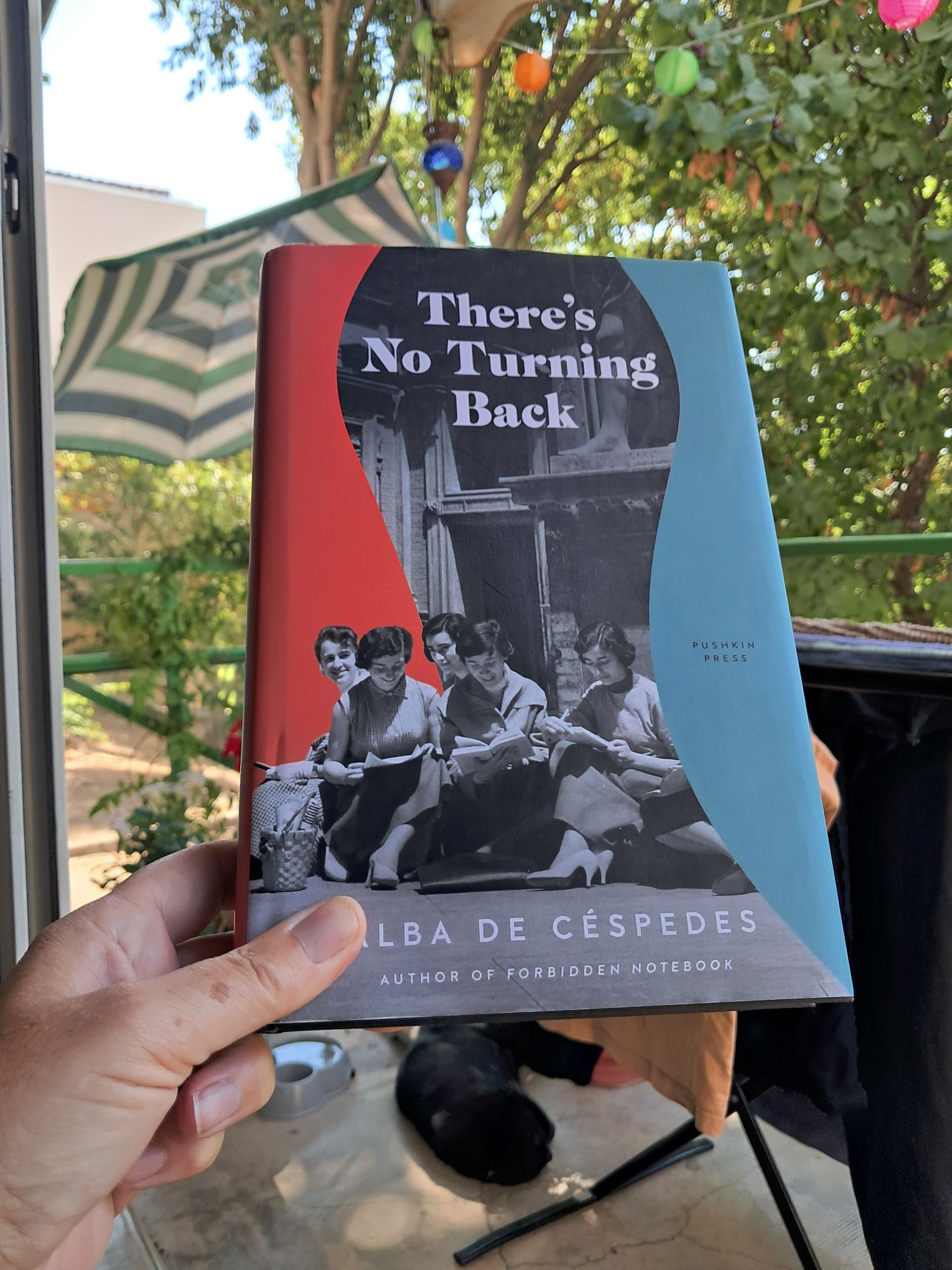
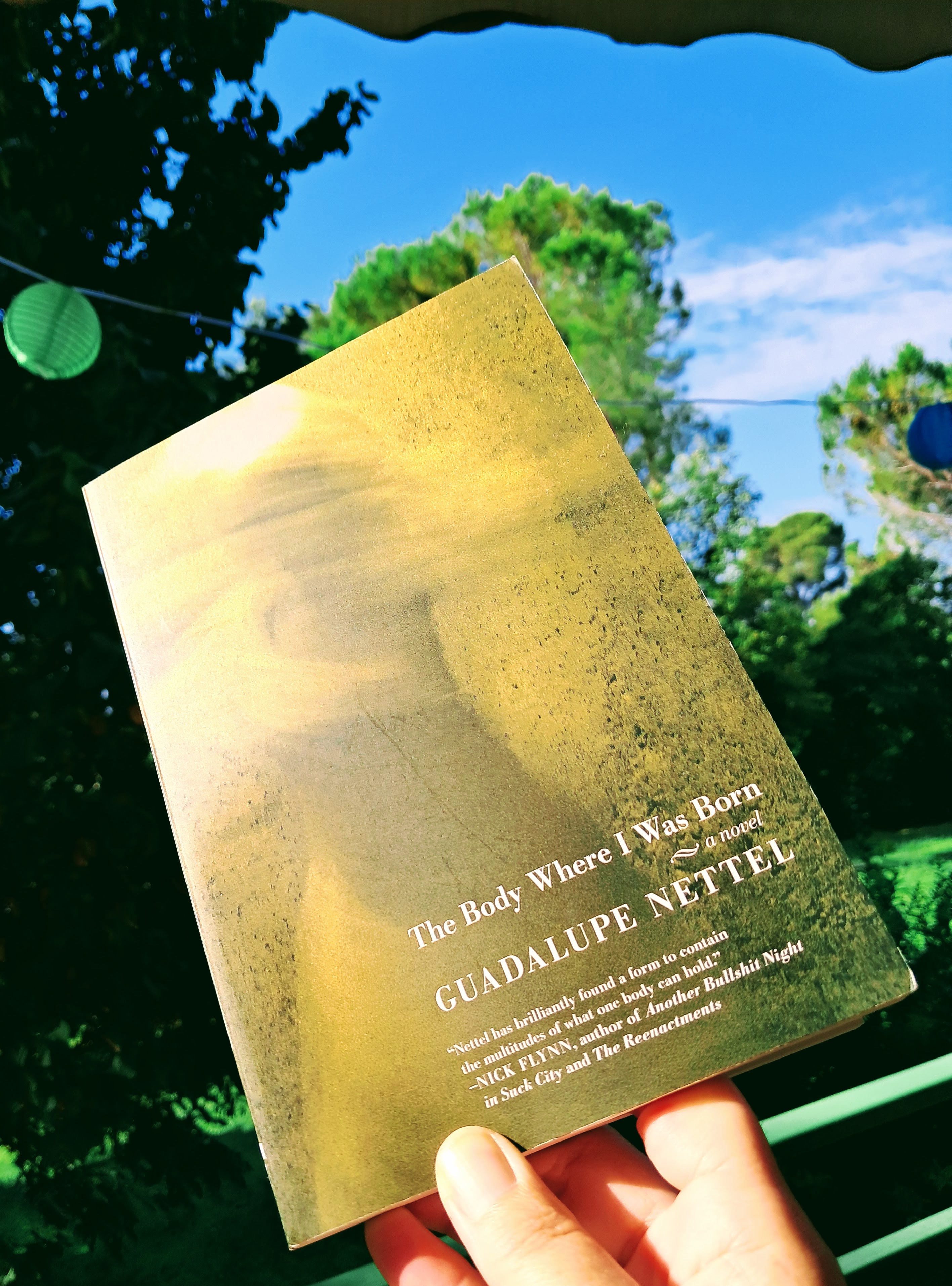
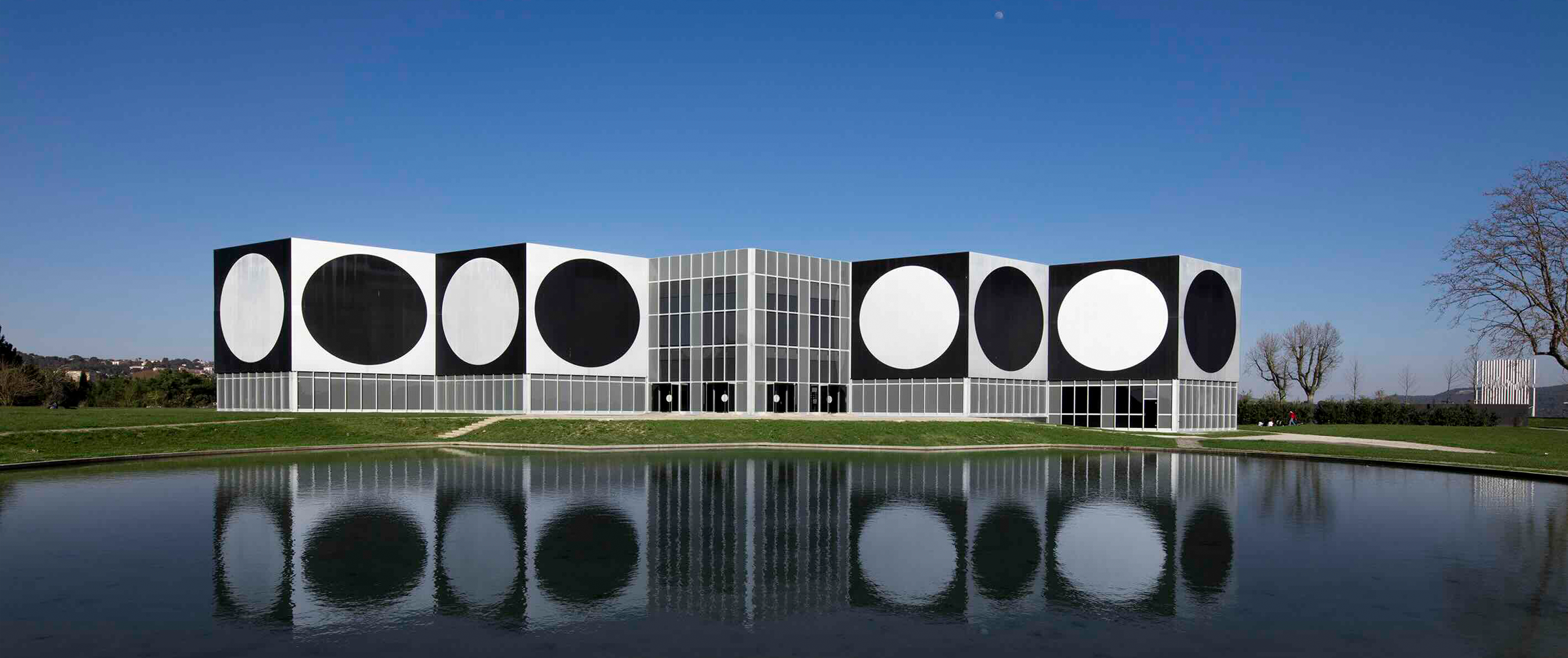




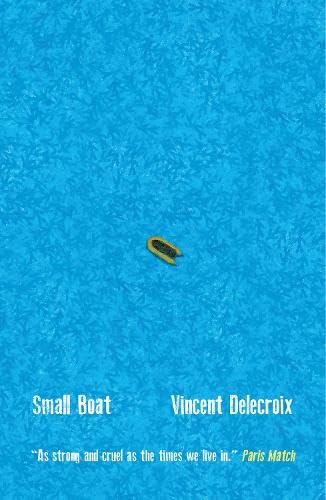


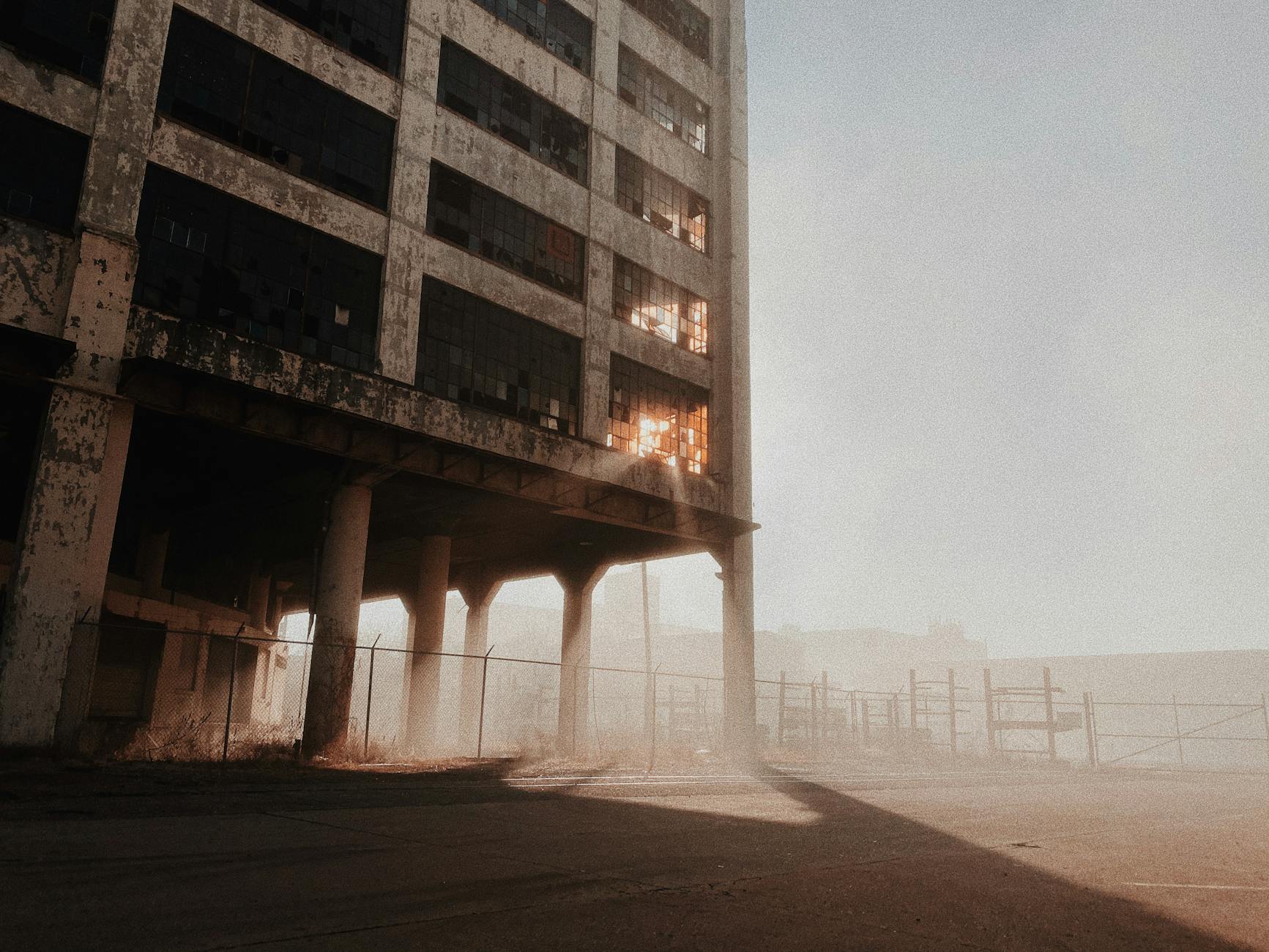

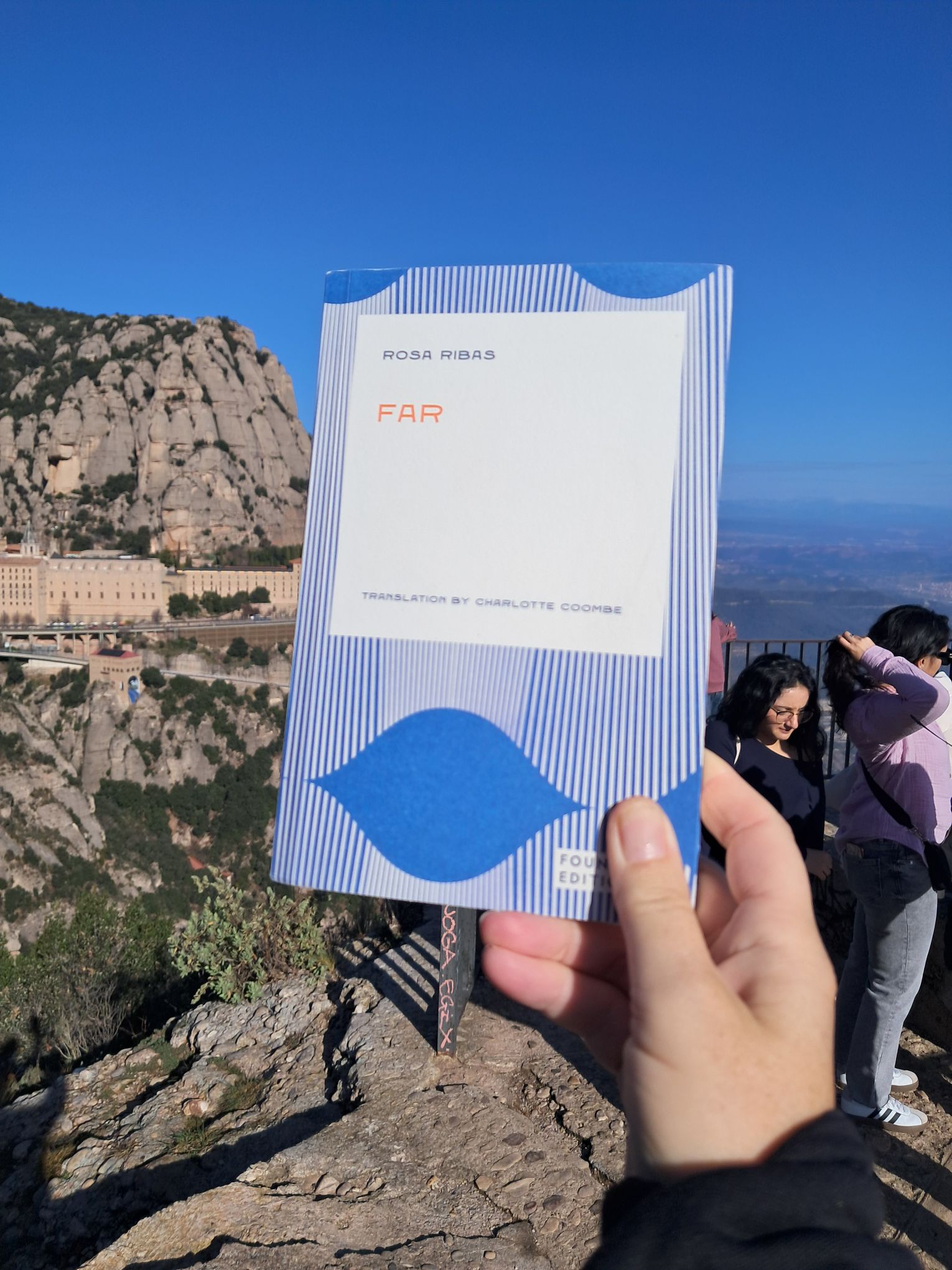


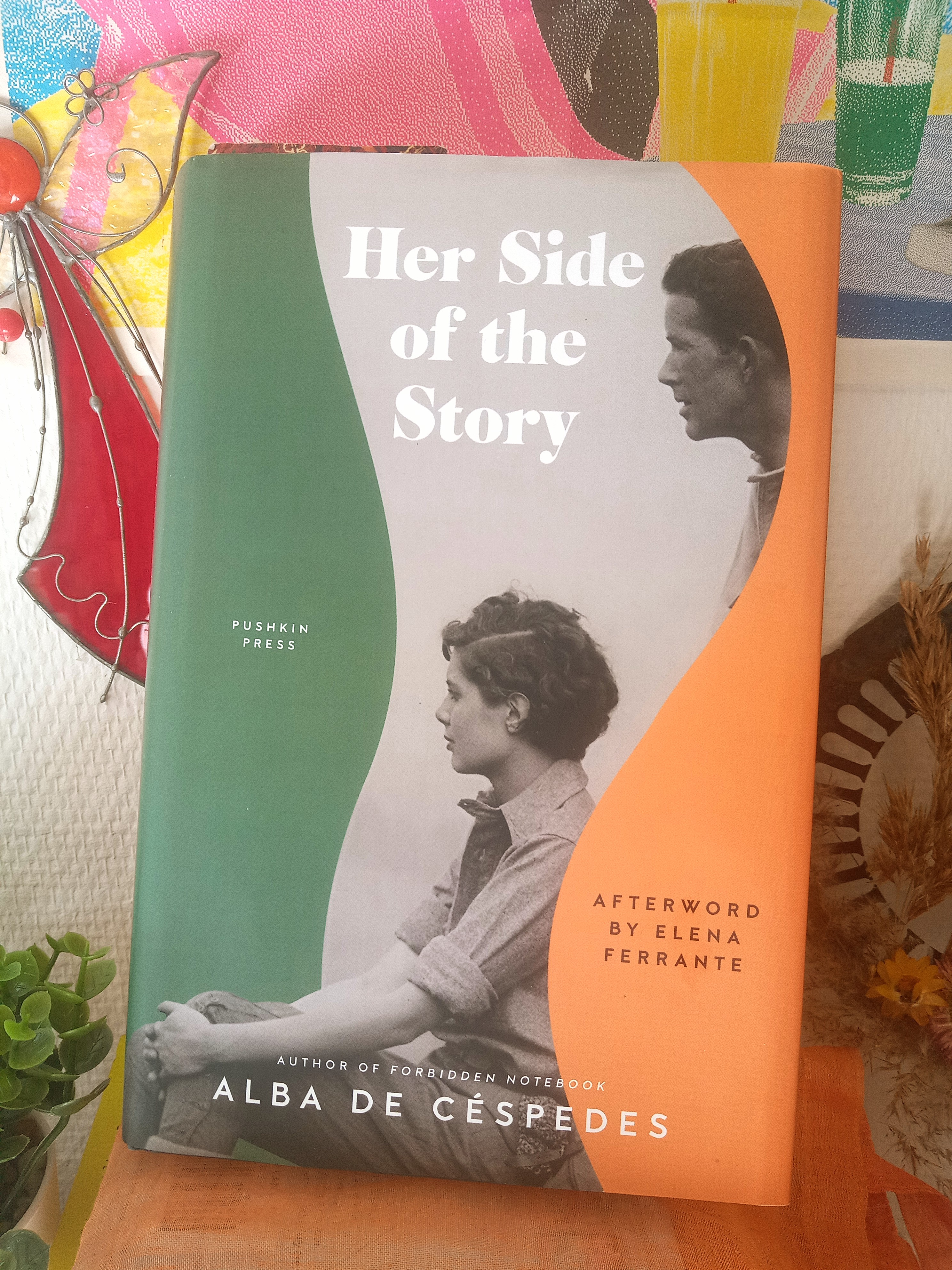

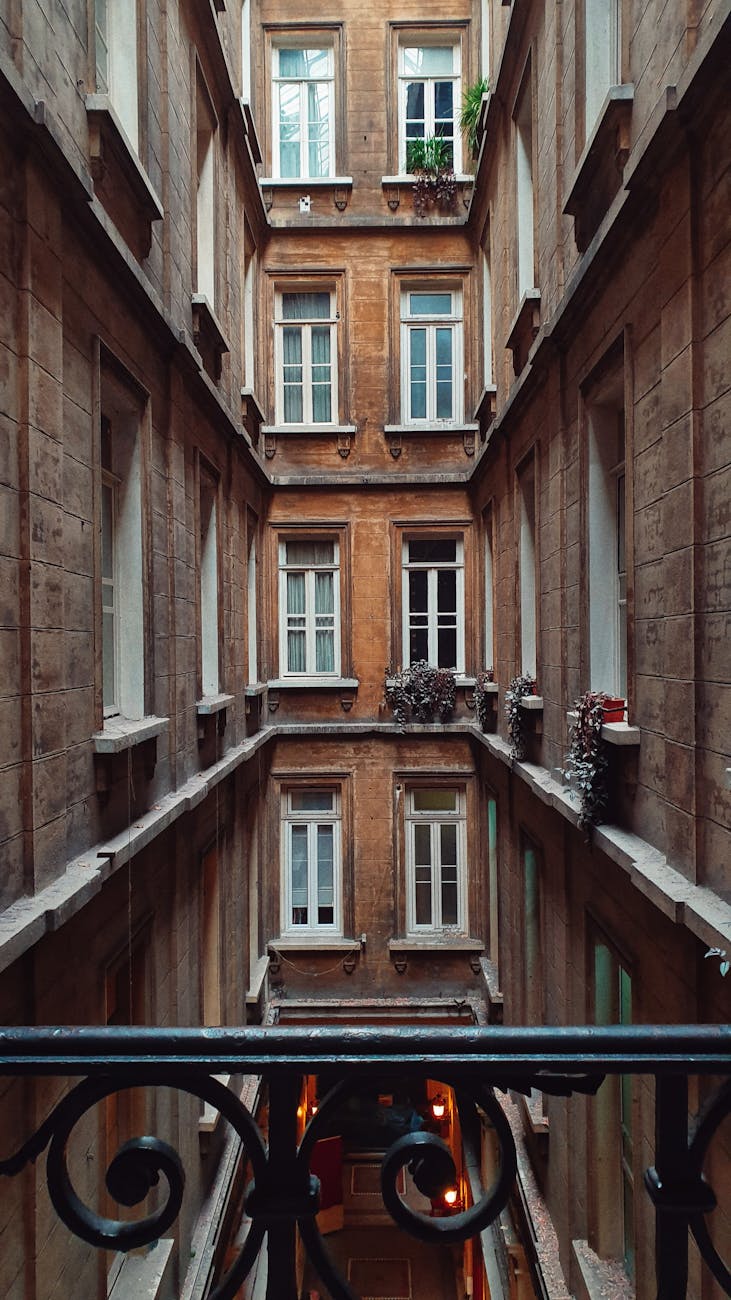
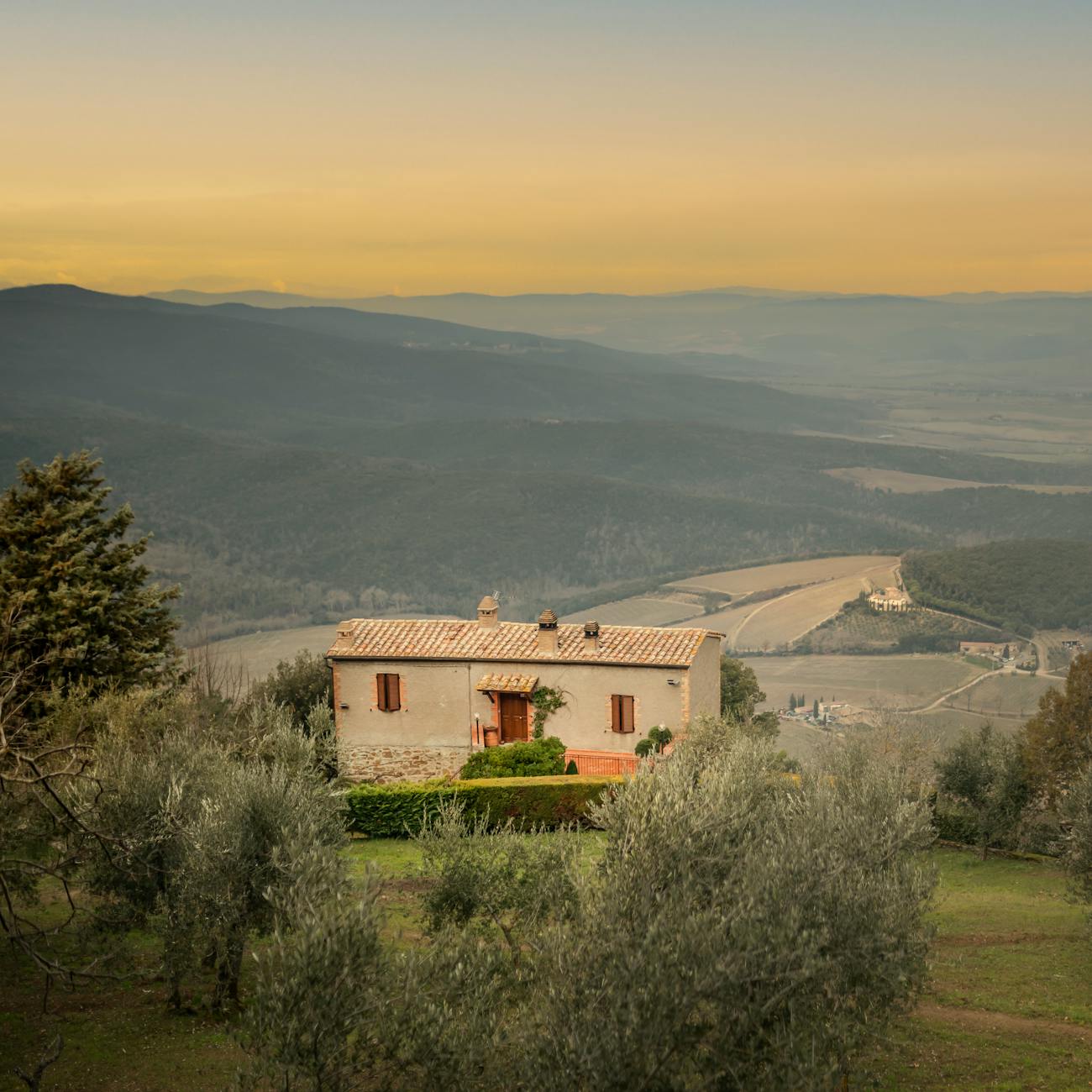


 Word by Word