Daphne’s Dilemma – Part I

Daphne is pregnant.

She is no longer my teat sucking, sun frolicking pet calf, she has matured into a fully grown cow. She doesn’t even look like my Daphne anymore – but I know it is her because I recognize the familiar black and white patchwork pelt she wears and she still walks up to me in the paddock, something no other cow will do.

I no longer feed her milk from a bottle, nor offer my hand to her once willing, hungry mouth; the welcome teat substitute she liked to suckle in a noisy rhythmic motion, her rough sand-paper like tongue producing sticky foam milk bubbles from the sides of her mouth. She is almost ready for milking now. We will be digesting the warm, nutritious contents of her udder with our Weet-Bix very soon.

CowWhen I say she doesn’t look like my Daphne anymore, it is her face that I am referring to. When she was a calf she had an eager, yearning sort of facial expression, a hungry face, hungry for her next feed and starving for my affection. Now she has a mature cow’s face – I’ve noticed that with all the calves, when they grow up they stop smiling. Something happens as their facial features mature that makes their grown up expression more like a frown than a smile, they no longer exhibit the contentedness of frolicking calves, high on powdered milk and the scent of fresh spring pastures.

So Daphne has a mature grown up look now, but despite this I know she remembers me, even though those baby calf memories of less than two years ago for me, are the equivalent of nine cow years ago for her.

Sweet scented Daphne is both my mother’s favorite fragrant, flowering shrub and the name of her mother, our Nana. I have always loved this name and thought that everyone would understand and appreciate the gesture, to name my pet calf after my very dear grandmother and something sweet-smelling and adored by my mother. Unfortunately my parents didn’t agree, though they allowed me to keep the name, they just made sure that Nana was never to learn of the esteemed honor I had gifted her.

Daphne is really fat now, she has a baby calf inside her and this morning at breakfast Dad announced she is ready to drop. At lunch there is a call from a neighbor to say he has seen a cow in distress down by the airstrip gate. Although I don’t hear the words myself, I can tell from what Dad is saying that it is my Daphne. I know because I feel this terrible pain in my chest and stomach, my heart is beating way too fast, there is a dry lump in my throat and I can’t even finish my favourite cold roast lamb and home-made chutney sandwich. I haven’t experienced a feeling like this since Annie died.

“Better go take a look” Dad says, placing the receiver of the party line telephone back on its cradle and ringing off one short to let callers know the line is free. There are few secrets in this neighborhood when four families share one telephone line and bored operators sit with nothing better to do than listen in. I imagine by tonight everyone will have heard about Daphne.

“I’m coming too” I say, pushing back my chair and getting up from the table.

“No, you stay put for now, finish your lunch and help your mother clean up first. I’ll bring ‘er up to the yards next to the shepherd’s cottage. You can meet us up there. It’s best not to have too many people around, you know they’re warrant to get a bit spooked and we don’t want ‘er taking fright and bolting off down by that big hole.”

“Alright” I mutter, slumping back in my chair, arms crossed, appetite ruined. I know what he says makes sense, though I don’t believe she will be scared off because of me. More likely those yapping dogs that never listen when you shout ‘Shut Up!’ or ‘Get in behind!’ I’d like to say, but don’t.

Animals’ giving birth is a common and natural event in the spring, although here it is more common to see thousands of sheep giving birth, not so many cows and a very large pet giving birth is a new experience for us. Pet lambs always go back into the main flock before they became adult sheep, so we never know whether they give birth or not, but despite the familiarity with animals giving birth, I am worried about Daphne.

I too have matured in these past two years, I am about to go off to boarding school in the city away from my family; I know I am old enough not to become attached to farm animals, but somewhere in a dark chamber of my mind, a closed-door of slumbering memories has drifted open and I cannot stop the rush of disturbing flashbacks which enter my mind and begin to replay that terrible thing that happened to Annie.

Daphne’s Dilemma – Part II 

This is the Story of a Happy Marriage by Ann Patchett

Ann Patchett MarriageAs a metaphor for a collection of essays that pays tribute to a life of writing, it’s an apt title, though as the title of a book that lures me towards picking it up to read the blurb and buy it, I admit to being slow to respond to this collection. It is actually a very beautiful minimal cover, the fact that it has a white background and contains only text proof it is a book targeted at existing fans of Ann Patchett, no need for seductive images or clever marketing to lure readers, this cover has the mark of confidence and attitude.

It also contains something of an illusion, the author’s name is embossed in a shiny aquatic blue, which depending on how much light you expose it to, either appears blue or black. It occurred to me while reading, that this might not be an accident, I played around with the cover, watching letters I would swear were shiny blue disappear and become matt black. Appearances are not always the truest guide, looking at things from a slightly different angle, can significantly alter perceptions. Even this title is not all that it seems and now that I have finished the book, I find it most apt.

Many of the essays have been published in other publications, as Ann Patchett describes how she grew to become a writer of fiction, something she always wanted and knew she would do, but that necessitated a slew of other jobs as well as writing non-fiction articles for magazines that would pay. As she points out in the very first lines of the book:

“The tricky thing about being a writer, or about being any kind of artist, is that in addition to making art you also have to make a living. My short stories and novel have always filled my life with meaning, but, at least in the first decade of my career, they were no more capable of supporting me than my dog was.”

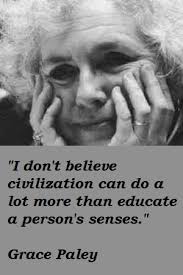
Grace PaleyWe read about the memorable story her father read to her over the telephone one Christmas, her fiction teacher Allan Gurganus who made them write a story every week for two semesters, turning them into musicians of language who learnt that a habit of regular practice leads to improvement and classes with Grace Paley, for whom support of human rights sometimes trumped attendance at class, whether that meant her disappearing to protest in Chile or being absent from a scheduled appointment having given her attention to a tearful tale from another student.

“Grace wanted us to be better people than we were, and she knew that the chances of our becoming real writers depended on it. Instead of telling us what to do, she showed us. Human rights violations were more important than fiction. Giving your full attention to a person who is suffering was bigger than marking up a story, bigger than writing a story.”

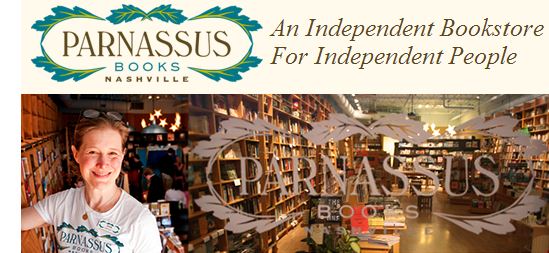
It is perhaps not until she opens her own bookstore, Parnassus Books that the influence of Grace Paley rises, as Ann Patchett becomes something of an activist herself for the plight of the independent bookstore, which she writes about ni the essay The Bookstore Strikes Back.

Parnassus Books

She writes about a legacy of separation and divorce stretching back generations, not so much present in the genes, more like evidence that we all need to experience those natural life stages that often mean a significant relationship or marriage doesn’t survive. Finding it hard to accept and taking advice from her mother to heart, she vows never to remarry. She is wedded to her work. And she has a dog. She loves.

She shares a growing love of opera, a late bloomer having discovered it almost by accident while researching her novel Bel Canto she discovers what becomes a lifelong passion, which living in Nashville, known for another type of music altogether wasn’t so easy to foster, until The Met realising that thousands of people would love to see opera regularly but couldn’t, came up with the idea of bringing it to the masses via cinema – live high-definition opera performances.

Met Opera“We watch the patrons in New York, people who have paid ten times more for tickets, and some more than that, as they make their way to their seats. Like us, the audience members on the screen stop to greet the familiar people around them, and like the audience in New York, we clap for both arias and curtain calls. We call out Brava! And Bravo! The rational mind understands the singers can’t hear us, and yet we are living so completely in our high-definition moment it is easy to forget.”

“There, in a comfortable fold-down seat with a whiff of popcorn in the air, I watched Anna Netrebko lie on her back, dangle her head down into the orchestra pit, and sing Bellini like her heart was on fire.”

And The Story of a Happy Marriage? Yes, it is an essay in the collection and one that she was endlessly encouraged to write and in the end becomes the cover title of this book, because the metaphor is all embracing of a woman who always knew what she wanted, never straying from that despite the numerous obstacles and even finds time now to give back to those who helped set her out on the path early on.

The essays stand on their own but equally form a cohesive narrative and are written as if Ann Patchett is writing to that one true friend, one of the reasons that many readers and reviewers have commented on this collection by saying they could imagine being friends with
her. And as she says in one of her books, Truth and Beauty:

“Writing is a job, a talent, but it’s also the place to go in your head. It is the imaginary friend you drink your tea with in the afternoon.”

Write A Book Review, Anyone Can Do It

GyannA little while ago I received a request from Corinne, an inspirational blogger from Mumbai in India, who shares her thoughts on keeping life simple, authentic and holistic at Everyday Gyann.

She recently started another blog called Write Tribe – Motivation and Support for Writers and Bloggers.  Write Tribe sometimes offers books for review to its followers and as Corinne is a loyal follower of Word by Word, she asked if I could write a post on How to Write a Book Review.

Write Tribe

I’m not a rule follower myself, but I decided to share my thoughts on this habit I have been practising for the last two years, as when something becomes a regular habit, there develop patterns. So I wrote 10 tips on writing a book review and then added number 11 which is to ignore the rules!

The Review Notebooks!

The Review Notebooks!

If you would like to read my thoughts on writing a book review, you can read them in Corinne’s three-part series over at Write Tribe, just follow the links below.

How To Write A Book Review – Part 1

How To Write A Book Review – Part 2

How To Write A Book Review – Part 3

Thanks again Corinne for the invitation and I hope this might encourage readers of this blog who might have been considering it, to go ahead and write a review too.

Claire

Arctic Dreams – Imagination and Desire in a Northern Landscape by Barry Lopez

“Sometimes we need a story more than food to stay alive.”

Barry Lopez

Valorie Hallorin

This quote sits on the home page of one my favourite blogs, Books Can Save A Life and it is also where I came across the non-fiction writer Barry Lopez. Not just in this quote, but in her reviews of a number of his collections, reading about Barry Lopez makes me want to read every book he has written.

From the essays I review below, it may appear he is a nature writer, but he can not be categorised so easily, he  writes about humanity and could I am sure turn his pen towards any subject and make it an engaging read.

About This Life

Valories shares this quote from her review of About This Life: Journeys on the Threshold of Memory and the following conversation gives us a flavour of the diversity of his observations and subsequent learnings about life.

In the introduction to his essay collection About This Life: Journeys on the Threshold of Memory, Barry Lopez tells of meeting a man on a plane who asked what words of advice he could pass on to his teen-age daughter, who wanted to be a writer. This is what Lopez said:

She must read, and her choices should be whatever she is drawn to.

She should read the classics, too, but she’ll have to work harder to find stories of heroism, love, and our noblest values that are written by women.

Second, she must “become someone” and “speak to us from within those beliefs.”

Third, he advised that she “separate herself from the familiar.” After exploring other places and meeting a diversity of people, she’ll know why she loves the familiar and share this knowledge through her writing.

Arctic dreamsHowever, it was her review Arctic Dreams – gathering words that had me chasing up this book, because it was not only a powerful book of nature essays, but as she says, it is a source of “the most dazzling and poetic passages about the natural world you’ll ever encounter.”

Valorie is “into words” and does Lexicon Practice, inspired by the author of The Writer’s Portable Mentor, Pricilla Long. Lexicon Practice involves compiling new words encountered in books into a notebook, noting the original sentence and creating a new one. It inspires our vocabulary which may otherwise degenerate into those overused phrases we read every day in various media. And Barry Lopez exposes us to an abundance of wonderful new words!

Arctic Dreams was originally published in 1986 and won the US National Book Award for non-fiction. It is a compilation of around 10 essays, which can be read separately, each one focusing on a different subject, as Lopez focuses on the inhabitants, visitors and four-legged, two-winged migrants of a frozen territory in the North.

Reading his work is a little like being mesmerised by a compelling narrator in a nature documentary, for it is not just the images of the animals and the landscape that are interesting, but his recounting philosophical thoughts of our interaction with nature and  local populations, whether they are polar bears, seals or Arctic peoples.

Narwhal

The Narwhal

I don’t think I have ever highlighted so many passages in one book, as I have in Lopez’s Arctic Dreams, it is a privilege to walk in his footsteps, to figuratively look over his shoulder and see inside a compassionate mind as he whispers words onto the page of this incredible collection of observations of natural life.

I recognise that change that can come over us, when we spend long enough in an environment completely foreign to our norm, long enough that our behaviour starts to change, something primal occurs and so it is no surprise to me when Lopez mentions that on his evening walks, he starts bowing to the birds he encounters. This ritual will inspire his own questions into how humanity imagines the landscapes they are in and how in turn the land shapes the imaginations of the people who dwell within it. And so he journeys into the unknown to find out.

“I took to bowing on these evening walks. I would bow slightly with my hands in my pockets, towards the birds and the evidence of life in their nests – because of their fecundity, unexpected in this remote region, and because of the serene arctic light that came down over the land like breath, like breathing.”

muskox

Musk-oxen

And so I find myself immersed in chapters that expound on characteristics and behaviour of musk-oxen, polar bears, the narwhal, the influence and importance of ice and light, the great migrations and more.

“Watching the animals come and go, and feeling the land swell up to meet them and then feeling it grow still at their departure, I came to think of the migrations as breath, as the land breathing. In spring a great inhalation of light and animals. The long-bated breath of summer. And an exhalation that propelled them all south in the fall.”

Barry Lopez has a unique voice, on the page and in person. Even you never read his words in a book, listen to him here speaking for less than two minutes about the gift of story in our lives.

Note: This book was an Advance Reader Copy(ARC) kindly provided by the publisher via NetGalley.

What Do We Read?

Photo0652

Recently there has been discussion in the media, on twitter and on various blogs about how books written by women are represented with respect to published reviews and the #readwomen2014 campaign launched as a result.

The annual survey carried out by VIDA – The Count continues to show them as  being under represented in most of the major publications that provide reviews and in translated fiction.

It made me wonder what I do read. I don’t think I have a bias towards male or female authors, but I do have a preference for cross-cultural fiction and I like to read translations, so I decided to look back over the last year and see how I fared.  As you can see below, I definitely read more female than male authors and slightly more than 2012 when 62% of the books I read were by women.

Gender 2013

In total, during 2013 I read 70 books, slightly more than the one book a week I have as an intention and 10 books more than I read in 2012.

As those who read this blog may know, I like to read cross-cultural, contemporary literature, so I read more modern than classics and I like to read around the world. What I hadn’t realised was that last year I read books by authors from 22 countries! Check out this fabulous pie chart.

Country 2013

Compared to 2012 when I only read books from 17 countries! From the US and the UK, I read exactly the same number of books (19) and a visit to Istanbul in May prompted an increase in Turkish literature (5) and three books in December helped my French literature (4) to increase, but I hope that will improve in 2014.

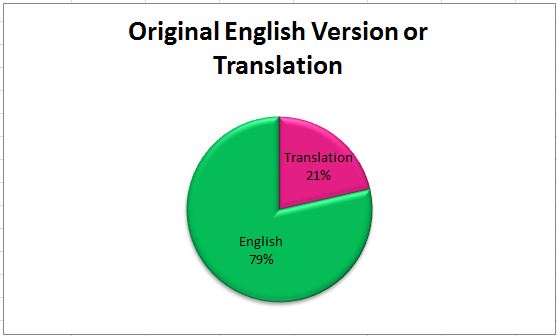
To read that widely, it is necessary to read translated work and 15 of the books I read or 21% were translated compared to only 10% in 2012. I’ve certainly travelled the world through books, I may have to start checking the globe to see which continents are missing.

Translation 2013

And what kind of books do I read? Well mostly fiction, a hefty 76% compared to 23% non-fiction and only 1% poetry, but less than 2012 when 82% of my reading was fiction and 16% non-fiction. I did read some excellent non-fiction in 2013 and hope to do the same this year.

Genre 2013

And lastly, how do I read? Yes, I have a kindle and in 2012 I read 25 books or 41% of them electronically. In 2013 that has increased to 46%, that’s 32 books on the kindle, almost half my reading! That’s thanks mostly to NetGalley who send me ARC’s (Advance Reader Copies) from the publishers that I request, which I am immensely grateful for.

E Book 2013

So now I know what I read and I think I shall just keep on doing the same, which is to be as spontaneous as possible, to engage with others who read for recommendations and keep reading around the world!

Ex Libris: Confessions of a Bibliobibuli by Anne Fadiman

This is my kind of memoir. Or non-fiction. Or essays. Collection of whatever it is we wish to call it. Vignettes.

I have to thank one of my favourite bloggers for bringing this beautiful slim volume of vignettes to my attention, literally.  And if you haven’t already been there, you must visit: Vishy The Knight, an impassioned bibliophile and meticulous reviewer of a wide range of books.

Ex LibrisAnne Fadiman has compiled this collection of eighteen essays written over a period of four years. She calls them confessions, I say they are a tribute to reading and to books. The subtitle to the book actually reads Confessions  of a Common Reader, but I think she might also be a bibliobibuli (those who read too much). One of the most preferable over indulgences I can think of.

I love that her first line is a reference to the Irish novelist John McGahern.  She shares an anecdote from his reading life that she relates to and that many of you, if you have ever been carried away with the reading of a book to the exclusion of all else, will recognise. From that first sketch we read on  continuing to delight in her bookish obsessions and hilarious family, with whom she has long shared the joy of sesquipedalians (big words).

Merging book collections with her husband only takes six years after moving in together and the difficult decisions that are required to be made as a result of deciding not to keep multiple copies and other dilemmas are hilarious and almost comforting to read.

Her attitude on how to treat a book starts off with a hilarious encounter between her brother and a hotel chambermaid  in Copenhagen, a woman who shared their passion for books but clearly sat in the opposite camp with regard to their treatment.

“To us, a book’s words were holy, but the paper, cloth, cardboard, glue, thread, and ink that contained them were a mere vessel, and it was no sacrilege to treat them as wantonly as desire and pragmatism dictated. Hard use was a sign not of disrespect but of intimacy.”

It is the smallest book ever to teach a reader so many new words and the perfect beginning of year read. A collection of entertaining, head-nodding, essays by a bibliophile. A must read for all!

Ex Libris

Sensual Delight

How differently do mental pleasures

Lead us from book to book to roam

And ever, with these ancient treasures,

How cheerful winter nights become!

*

A happy life grows warm in every limb;

And if a precious parchment you unroll,

Your senses in delight appear to swim

And heaven itself descends upon your soul.

J.W.Goethe (1749-1832)

Top Reads 2013

I thought it was impossible last year and this year seems just as difficult, unlike last years clear-cut outstanding read, which I would recommend to anyone and everyone, I’m not so confident that my Outstanding Read of 2013 has universal appeal. But I absolutely loved it and recommend it highly!

Outstanding Read of the Year

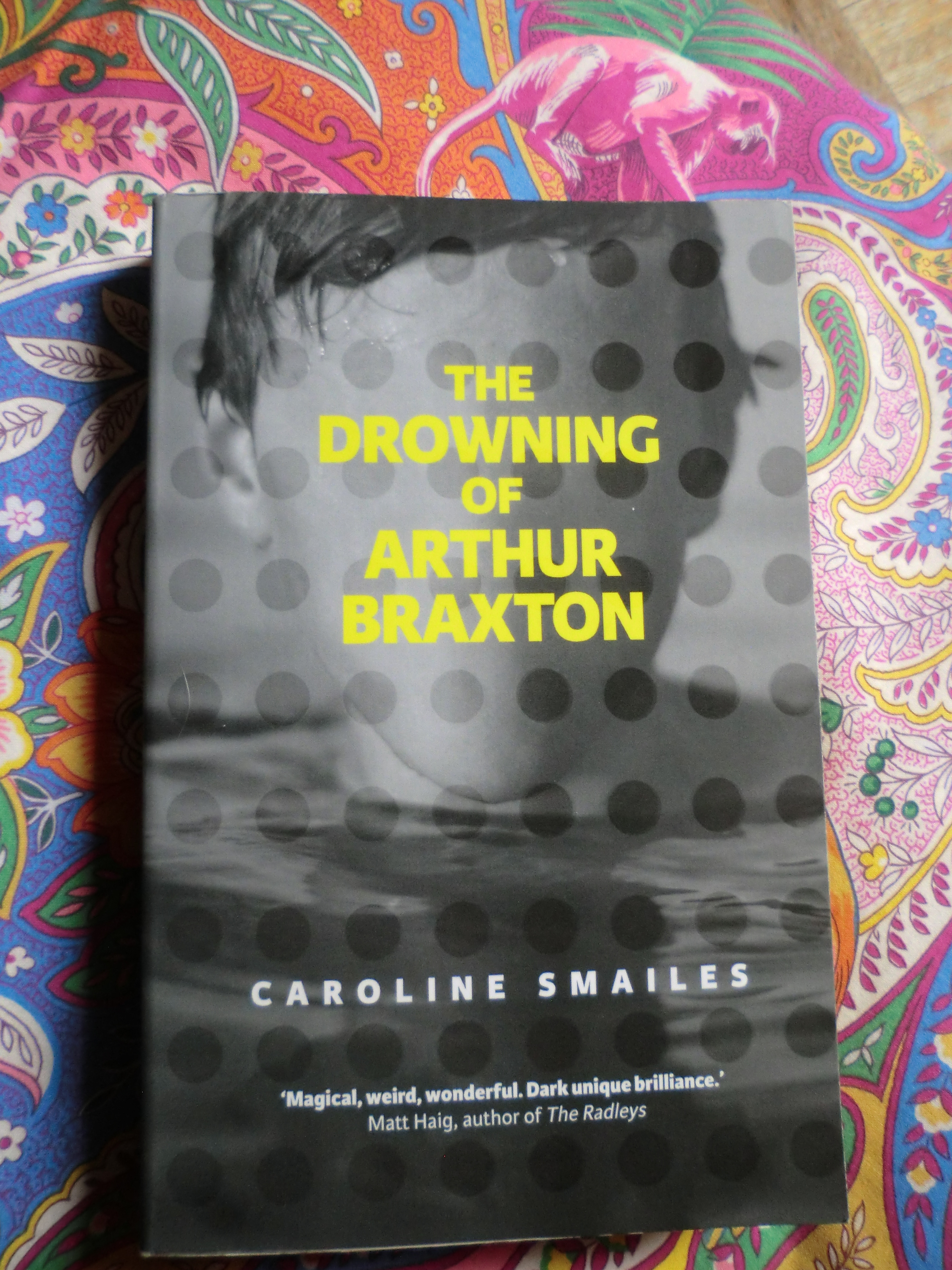
Arthur BraxtonMy outstanding read of the year, the one that stopped me in my tracks and then pulled me along at a fast pace and left me wondering what it was that was so compelling only to realise it was the originality of voice was Caroline Smailes The Drowning of Arthur Braxton.

I love that I knew nothing about it before reading it, I chose it on instinct, had never heard of the author and the book just worked its magic from the beginning . Then there was the serendipitous event occurring at the Victorian Baths where it is set, just as I was reading it – well that was the icing on the cake.

It’s a coming age story of a teenage boy who starts hanging out at an abandoned Victorian bath-house where things don’t always appear as they should, he discovers an uninhibited young woman swimming naked in the pool, the point from which all his perceptions about life begin to alter. It is strange, magical, weird and infused with hope without being in any way sentimental.  But don’t take my word for it, read it!

As for the rest, in no particular order, here are my memorable fiction and non-fiction reads for 2013.

Top Fiction

BoothThe Industry of Souls by Martin Booth was the first book of the year and a reread for me, something I rarely do, but I wanted to see if Martin Booths excellent book stood the test of time. And it sure did. I love this book and the way this author writes. The book is about a British prisoner held for many years in a Russian gulag, who decides not to return home after his release. The story is narrated on the day of his 80th birthday as he looks back and his past comes to visit him.

monster 2A Monster Calls by Patrick Ness – in all pursuits, sometimes it’s a good idea to go off piste  and for me this venture into young adult fiction was exactly that.  I picked this up in the library having recalled seeing a few excellent reviews and was intrigued by the concept of a writer picking up the threads of another writers idea and bringing it to fruition – Siobhan Dowd died tragically at the age of 47 and Patrick Ness brilliantly brings her story idea to life in this incredible, poignant tale.

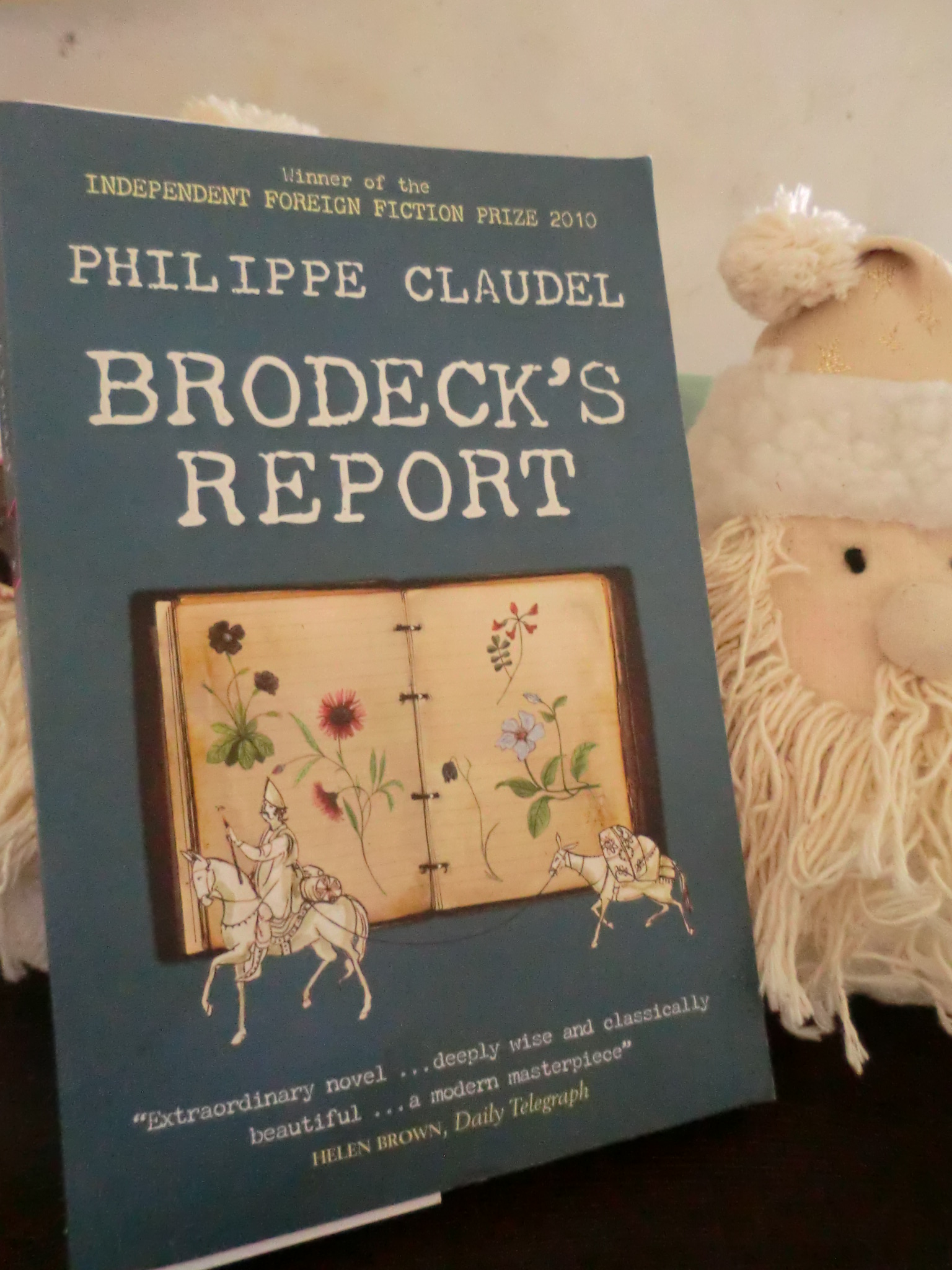
BrodeckBrodeck’s Report by Phillipe Claudel – a very recent read and his words stay with me, I feel like I want to read everything he has written. Having survived a concentration camp, Brodeck returns to his village where life resumes as before until a stranger arrives in the village unsettling the inhabitants to the point where they decide to dispose of him, Brodeck isn’t involved but is given the task of writing a report about it. He writes twin narratives, unveiling the best and worst tendencies of humanity.

HonourHonour by Elif Shafak The 4th book by this wonderful Turkish author I have read and she is becoming more known with each new book, this one being nominated for numerous prizes and Turkey being the guest nation at this years London Book Fair. Honour is a story of a poor family and follows the lives of two sisters, one who goes to live in London as an immigrant, though she will always be that girl from the village. It highlights the difficulty in straddling two worlds, especially for the next generation, who try to assimilate into the new culture, but who when vulnerable are often drawn back into the least desirable aspects of the old culture.

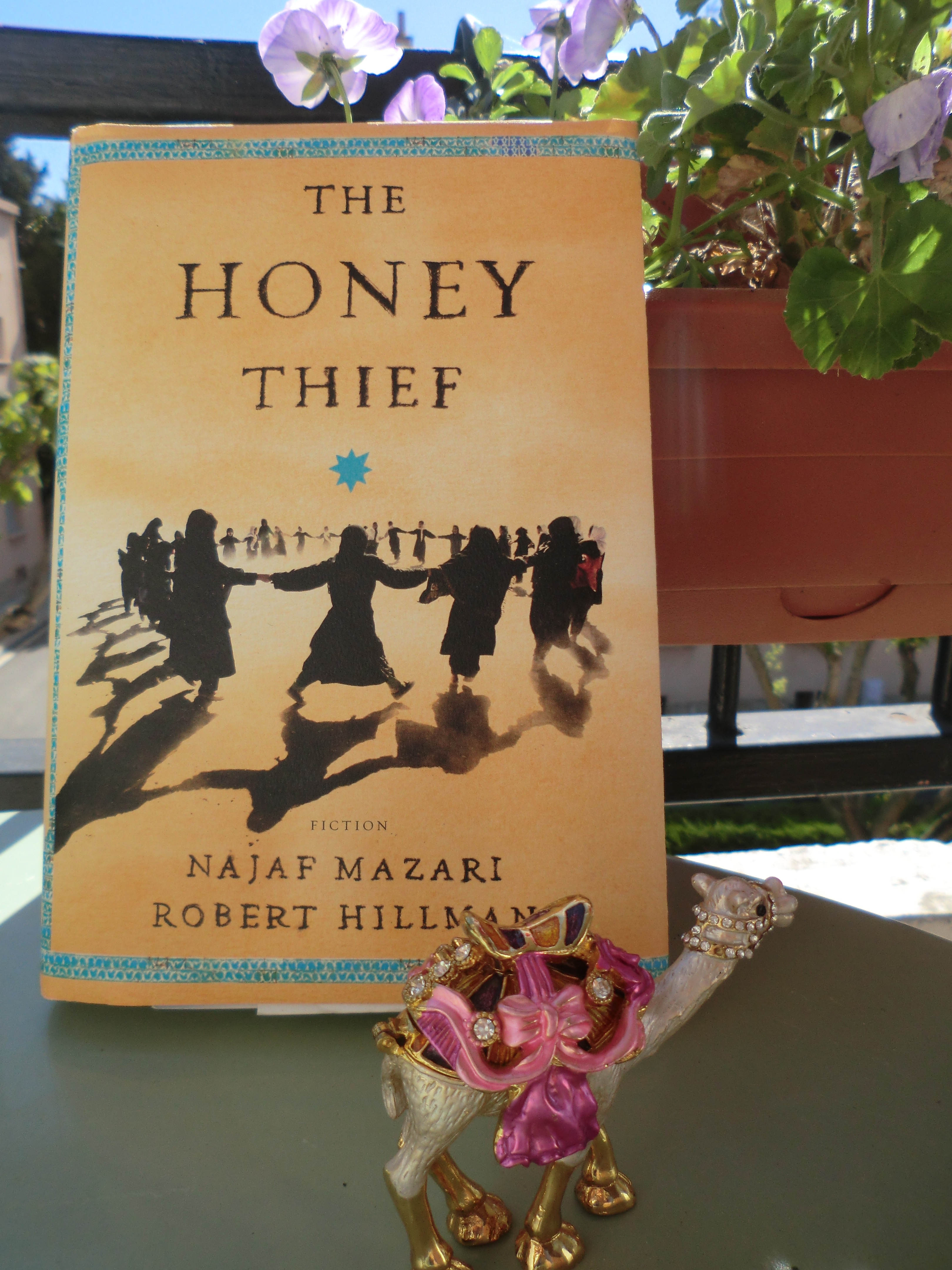
The Honey ThiefThe Honey Thief by Mazari Najaf this is an original set of short stories told by a Hazari man from Afghanistan to his Australian friend. The stories originate from an oral story telling tradition and offer a unique insight into an ancient, adaptable people, who have survived  centuries of persecution. In addition, the author shares some excellent recipes.

Shadows & WingsShadows & Wings by Niki Tulk A wonderful story about family connections, silence and our inability to bury the past. A young girl living in Australia travels to Germany to visit the birthplace of her Grandfather and to learn about his role in the war. Simultaneously, his story is narrated from when he was a boy, to when he became that young man who, like all men at that time, was drafted into war. A beautiful book, thoughtfully narrated and at times so excruciating, it is as if we are reading a personal diary, not a work of fiction. I wish more people knew about this astonishing book.

Top Non-Fiction

Hare Amber EyesThe Hare With Amber Eyes by Edmund de Waal – I am probably one of the last to have read this, since it was published two years before I picked it up, although I bought numerous copies when it did come out for family as Christmas gifts, knowing it would be an excellent read – and while it may not be to everyone’s taste, if you have any interest in European culture and history, this story of the Ephrussi’s, a Russian Jewish family from Odessa, whose two sons set themselves up in Paris and Vienna, told through the eyes and potter’s hand of the ceramicist and descendant Edmund De Waal will certainly appeal.

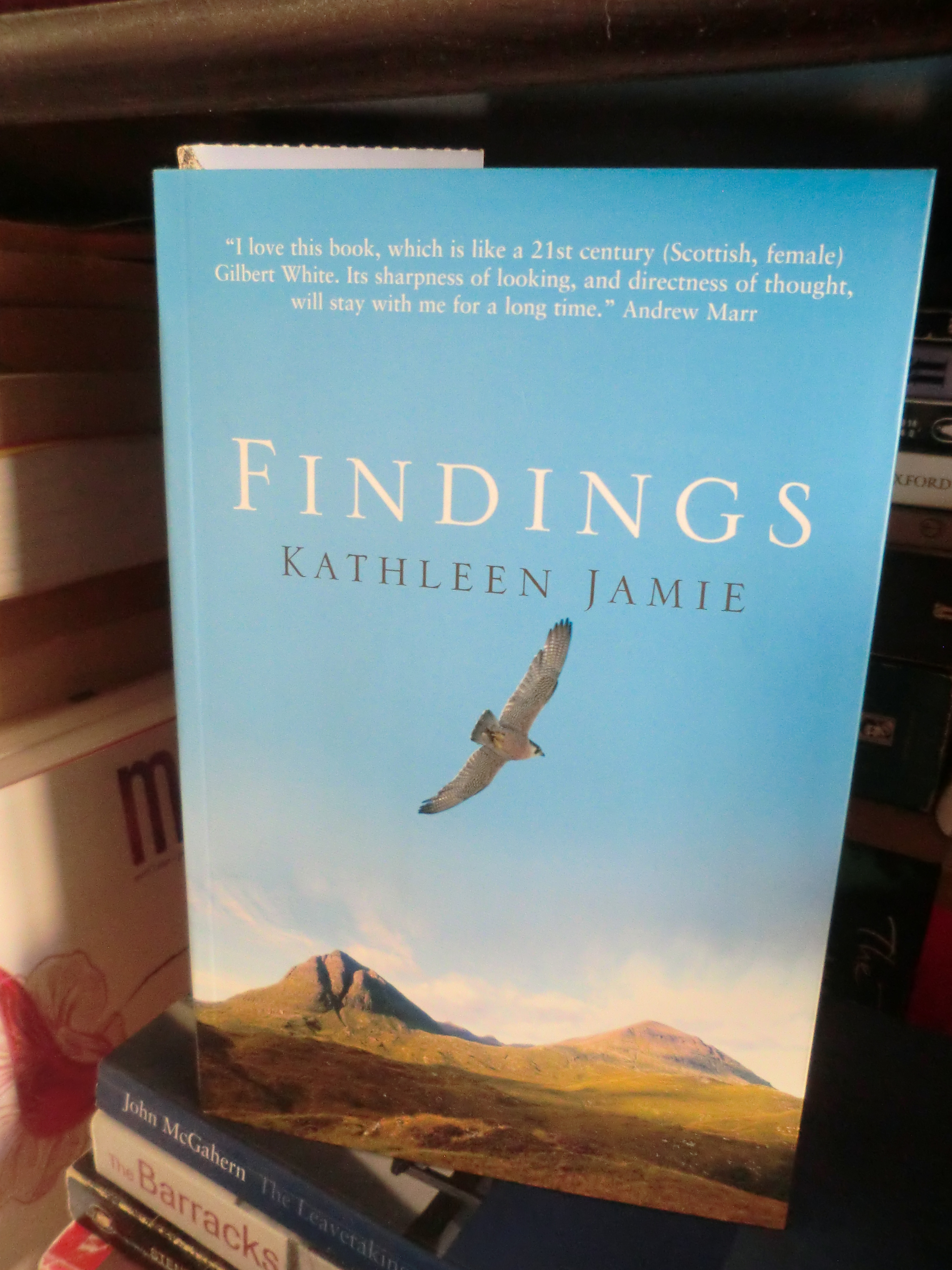
FindingsFindings by Kathleen Jamie I read this excellent collection of essays in February, a month in the northern hemisphere where many are in hibernation and there is not much to sing and dance about. Finding’s was like being in nature when we are not, the way Kathleen Jamie writes is to make us appreciate and really see without the need to label, identify or show off our knowledge. She observes with a painter’s eye and takes the reader on a similar journey, infusing the imagination with images of those forsaken Scottish  islands she visits. Brilliant winter reading.

Brain on FireBrain on Fire: My Month of Madness by Susannah Cahalan This book is a must read for anyone who knows anyone who has had any kind of brain disease or impairment. Susannah Cahalan was just an ordinary girl, working as a journalist, when in her early twenties, she started imagining things and observed herself becoming somewhat crazy. Some kind of infection got to her brain and thankfully for thousands of others, who have already benefited from the things she shares here, she lived to write about it and demystify the malfunction of the brain, something that results in thousand of incorrect diagnoses, due to the little we know about how to remedy it.

Portrait of a FamilyPortrait of a Turkish Family by Irfan Orga After a visit to Istanbul in May, I indulged in a wonderful period of reading Turkish literature and this book was a great find – a recommendation from the English bookshop in Istanbul and they weren’t wrong. It is a classic, a fabulous story of the life of one family whose destiny is changed by war – another unique insight into a culture and the intimate family life of people we don’t usually have the opportunity to witness.

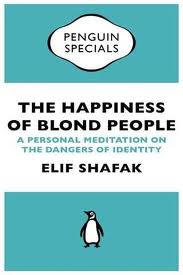
Happiness of Blond PeopleThe Happiness of Blond People: A Personal Meditation on the Dangers of Identity by Elif Shafak it’s a short but compelling essay by one of my favourite writers, a woman who was born in the East and lived many years in the West and  has a unique perspective from which to make her observations. Worthwhile reading and love these Penguin Specials, short essays are so popular here in France, it’s great to see them being made available in English too.

The Hidden LampThe Hidden Lamp: Stories from Twenty-Five Centuries of Awakened Women what better way to wind up a year of reading than with some short, poignant Buddhist stories, some only a few sentences long. This is a volume to sit near the bedside and dip in and out of, because not every message will be relevant for today. One hundred stories interpreted by another 100 wise women and we are free to interpret them ourselves. 

So what books stood out for you in 2013?

They’re Reading Thousands of Great Books Here, Cité du Livre – A Local French Cultural Centre and Library

Yesterday via a link on twitter, I read a provocative article in BBC News Magazine by Hugh Schofield entitled Why don’t French books sell abroad? It was an interesting, if superficial article, that made a few observations without going into any depth to understand the contemporary literary scene in France. It asked questions, reminded us of some old provocative stereotypes and did little to enlighten us on the subject of what excites French readers and why the English-speaking world aren’t more aware of their contemporary literary gems.

Kate from BooksKateRates, reads and blog about French literature and wrote an interesting blog post in response to the article and I have been scribbling notes since reading the original article. I plan to share them here, as it is a fascinating subject if one takes the time to research and understand it.

But firstly, I wanted to show you the library, as it offers a glimpse into  how the French absorb literature and culture and it’s one our favourite local hangouts.

Situated in what was a 14,500 sqm match factory, the library, La Bibliothèque Mèjanes, is part of the Cité du livre, a centre for the arts and culture which includes an auditorium for lectures and readings, rooms for more formal lectures, a small cinema showing themed films for 3 week periods (currently Humphrey Bogart films), a music and film lending room, adult and children’s libraries, a press room, an exhibition space (currently celebrating the centenary of Albert Camus), a café and plenty of space for research and study.

Library Press Room

Library Press Room

As we walk in through the enormous sculptures of the covers of Camus’s  L’etranger on one side and Saint-Exupéry’s Le Petit Prince and Molière on the other, we arrive in a long corridor and the reception area for borrowing and returning books.

Turn left and we head towards the reading library where outside the door is a display of books for adolescents. A quick glance at these books shows us that half of them are translated fiction, from South African, German and Hispanic authors.

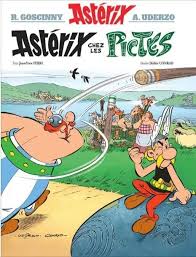
AsterixInside, we walk past displays of translated literature originating from South Africa, a tribute to Nelson Mandela, then the stacks of Bande Dessinée, the very popular hardcover graphic novels, which even today remain at the top of the French bestsellers list, right now its Asterix chez les Pictes, visiting the people of ancient Scotland!

And here are the novels, in French called romans. Rows and rows of books and you might notice something they all have in common, well, in fact, something they all lack. Colour.

Compare it to the shelf opposite which contains the English language novels. It certainly removes that whole likelihood of an impulse buy based on an intriguing cover.

The Elegance of the Hedgehog

The Elegance of the Hedgehog

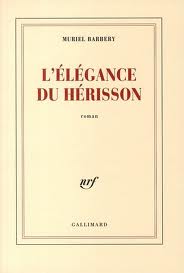
Most French literary novels are published without fancy colourful covers and while in the bookshop you might find first editions with promotional covers, there are many more with pale or cream covers without images and a black or red text title.

However, after looking around a little more, I discover that there is colour in some sections. Science Fiction and Fantasy are full of dark colours and the books covers in the section entitled Policiers (Crime) are mostly black. However, novels and poetry, even the section called American Literature pale into insignificance among a sea of white. It reminds me of one of the three principles of France l’égalitié and certainly here, all books have the same chance of being found, whether it’s from the library or in the bookshop, not just due to their bland covers, but also due to a government policy called le plan livre and the fixed price of books.

It costs €17.50 to join the library (adult) and its free for children, there is no cost for lending and no fees for late returns. 16 items (books and CD’s) and 3 DVD’s can be borrowed at any one time for a period of 3 weeks and the first renewal can be done online. The library is also full of computers providing free internet access to all members. My only complain is that its closed on Sunday and Monday. C’est la vie en France!

So what kind of books do French people read today? And is it true that nearly half of the fiction read is translated foreign fiction? And why don’t we see more books by French authors in English bookshops?  These questions and more I will talk about in the next post Reading Contemporary French literature.

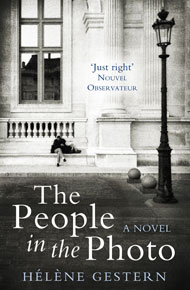
PeopleIn the meantime, if you want to know what’s popular in France and available now to read in English, check out Gallic Books, who offer the best of what’s available in French translated in English with new titles coming out every month.

I’m looking forward to reading The People in the Photo by Hélène Gestern due out in English in February 2014.  If you wish to read it in French, it’s already available with the title Eux sur la photo.

Hemingway’s Paris – A Moveable Feast

Hemingway makes me think of the debate streaming though comment threads on Goodreads.  The debate centres on the issue of discussing an author in book reviews, Goodreads suggesting that reviews focus only on the content of a book and not stray into opinions about the personality or character of the author. Hemingway

Being a book review site, it may not seem like an unreasonable request, except that the site has allowed five years of historical reviews to build up without comment, guidance or reprimand against reviews that may have crossed this line and in the meantime a strong community of reviewers has developed, spreading its roots and reviews deep into the site. Unsurprisingly, the community is now rebelling against wilful deletions of reviews. Some are threatening to abandon the Goodreads ship while its Captain is said to be sailing on oblivious to mutiny in its hold.

I think of Hemingway because in A Moveable Feast, he writes not just about himself, he reflects on writers he was acquainted with in Paris and about life in that city after the First World War. He shares exactly the kind of opinions that are forbidden to reviewers today. However, he is not writing a book review, he is writing about life.

Apart from the delightful short story A Clean Well-Lighted Place, I have not read Hemingway since the trauma of having to study The Old Man and The Sea at school. I am sorry to say that I detested this novel and although nothing of the prose has stayed with me, a kind of nausea, akin to sitting in a rocking boat with no means of rowing it, engulfs me when remembering it. I didn’t understand at the time why I reacted like this, worse than boredom, it was bereft of literary merit according to my 13-year-old standards.

Knowing now of Hemingway’s deliberate intention to strip his prose bare and understanding my love of the metaphor and habit to underline and admire the more descriptive linguistic passages, I see that we are not a good pair. But having met the writer again through the lives of Hadley Richardson in The Paris Wife and Zelda Fitzgerald in Z, I was intrigued to read his non-fiction account of life in Paris.

Ernest Hemingway,1923 Source: Wikipedia

Ernest Hemingway,1923 Source: Wikipedia

The chapters read like a series of vignettes, encapsulating the many aspects that made up his life during that time. He writes about the cafes he frequented and in particular the plight of two waiters, whom when the new management of the café decides it wants to attract a higher calibre of client, insists his employees shave their mustaches and wear a uniform. Hemingway and friend are poured overfull whiskeys by the waiter and they drink them in protest.

“They’re changing the management.” Evan said. “The new owners want to have a different clientele that will spend some money and they are going to put in an American bar. The waiters are going to be in white jackets, Hem, and they have been ordered to be ready to shave off their mustaches.”

“They can’t do that to André and Jean.”

“They shouldn’t be able to, but they will.”

Jean has had a mustache all his life. That’s a dragoon’s mustache. He served in a cavalry regiment.”

“He’s going to have to cut it off.”

He reflects on his habits as a writer and here we meet a man who was dedicated to his métier above all. He writes about his deliberate strategy to eliminate the adjective, to let the words stand alone without any qualifiers or modifiers, the naked verb. His aim is like the writing equivalent of meditation, de-cluttering the page instead of the mind. He would not have made a great meditator, as he was fearful of emptying the mind.

“I had learned already never to empty the well of my writing; but always to stop when there was still something there in the deep part of the well, and let it refill at night from the springs that fed it.”

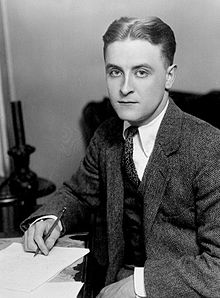
F.Scott.Fitzgerald,1921 Source: Wikipedia

F.Scott.Fitzgerald,1921 Source: Wikipedia

F.Scott Fitzgerald was a good friend. Both chapters that describe events with Fitzgerald show just how erratic his behaviour was and Hemingway suffers from having his writing discipline disrupted on a trip back to Paris from Lyon having recuperated a convertible car Scott and Zelda had abandoned due to the rain.

“I was getting tired of the literary life, if this was the literary life I was leading, and already I missed not working and I felt the death loneliness that comes at the end of every day that is wasted in your life.”

A Moveable Feast is an excellent read, sharing moments of life in Paris, we are introduced to some of Hemingway’s favourite cafés to write in, his conversations with Gertrude Stein and others about writing, up until he fell out of favour after publishing a mockery of another author’s work which she and others disapproved of, perceiving his act as disloyal to a fellow writer. He becomes a regular at the famous English bookshop Shakespeare & Co, where he is able to lend books, having no money to buy them and reads his way through Turgenev, D.H.Lawrence and Dostoevsky as well as striking up a friendship with the owner Sylvia Beach, a pleasant source of gossip as well as books.

A Hundred Thousand White Stones: An Ordinary Tibetan’s Extraordinary Journey

Kunsang Dolma might have had a more ordinary life, if it hadn’t been her turn to be the family representative at the annual ten-day prayer session at their local village temple when she was 15 years old. An event peripheral to that obligation changed the path she was on, which would have been an arranged marriage to a local boy and raising children to help with the farm work. For those of us reading it however, this is no ordinary life, but an insight into an ancient culture and one courageous woman who survives its harshness, revels in its deep, spiritual wonders and travels outside all that she knows to become the wife of an American citizen.

A Hundred Thousand White StonesThe consequence of that event sets her on the path towards becoming a Buddhist nun, something she had previously considered but had been rejected by her parents, so she and a friend decided to run away from their village to ensure it happened, without parental consent.

While she doesn’t remain a nun all her life, ironically the second major turning point in her life that moved her away from being a nun towards marriage and a life in America was not dissimilar to that which motivated her action towards pursuing a monastic life in the beginning. This is a true story, however I am reminded of all those turning points in the life of the fictitious character Ursula’s in Kate Atkinson’s Life After Life and the significant power that one event can have to alter the direction of a young woman’s life.

Tibetan farmersKunsang shares her upbringing with a quiet, practical, honest voice and it is a childhood and adolescence we see as difficult, though in the context of where she lived, a small Tibetan village, it was quite like many other villagers and something she now looks back on with appreciation and an incessant longing, having left it all behind. It is in leaving a difficult way of life and family behind us, in making it no longer attainable that the deepest yearning for that which was willingly fled, is often felt.

Her parents married at 15 which is not uncommon, however they were unable to conceive until they were 28 years old, something that came as a relief as being farmers, children are essential to their survival as future workers. Kunsang was the youngest of 8 children and by the time she was born, there were sufficient children to manage the farm work; it was this fact that enabled her to have an education.

At the time, there was no birth control, so after thirteen years without a child, it looked like they definitely weren’t going be able to have any children, which are essential to help with work on the farm. My father’s sister already had two kids and felt sorry for my parents’ situation, so when she was pregnant a third time she told my father, “Look, this is my third child. I’m going to give him to you.” The baby was twenty-two days old when my parents took him home. After that, my mother started to have her own babies. My parents always thought that my adopted brother Yula had brought them good luck.

Tibet mapKunsang eventually makes a pilgrimage to Dharamsala to see the Dalai Lama and during her time here she meets her future husband, narrating the heart-breaking, tedious administrative process they must overcome to be together and the struggles she will face even when they succeed. It is a moving story of a life we can hardly imagine and a journey that crosses many boundaries most of us will never have to traverse, to hike over terrain while risking one’s life, to encounter a revered spiritual leader, create a way to support oneself financially in a foreign country alone and to raise your children in yet another country which will become their home, but never yours.

CIMG3772Reading stories like Kunsang’s is not just an eye-opener into another culture and way of life and another way of dealing with life’s issues, it invites us to practise empathy and patience in the way we interact with foreigners in our own country. Kindness and compassion are there in abundance if we choose to offer them to others and it is stories like Kunsang’s that motivate us to want to extend it.

Note: This book was an ARC (Advance Reader Copy) provided by the publisher via NetGalley.