Sister Outsider, Essays and Speeches by Audre Lorde (1984)

Audre Lorde was a poet, academic, speaker, feminist activist, sister and mother of two, who grew up in 1930’s Harlem. She wrote 12 books and tragically passed away at the age of 58 from cancer in 1992.

I’ve had her collection of essays Sister Outsider on my list of books I wanted to read for a few years, I came across it after reading an article or blog post that put it at or near the top of books one should read if interested in feminism, gender, equality. They are the kind of books that those who studied the humanities and perhaps took women and/or gender studies will have had an awareness of and the rest have to dig a little to find out about. All that is made easier today as we are able to follow readers, writers who share articles, lists, books of interest via twitter or online reading groups etc.

And while some of Lorde’s experience will be unique to her and those who relate to her experience as a black lesbian poet and academic in America, it is both the differences and the universality of her message that interests me, her lucid prose carries the telltale markings of a poet set free from that form, of a woman with an elevated consciousness whose reflections teach us something, break through common misconceptions. She invites us to listen and learn.

The collection both begins and ends with essays that focus on her travelling outside the US, a literal perception of her as an outsider, however the main body of work centers around issues within her country of birth, where that feeling of ‘outsider’, arrives because of the way we relate to others, or how they relate to our race, identity, gender, sexual orientation, class.

TRIP TO RUSSIA

I loved this opening essay, what an amazing opportunity to travel to Moscow for a conference, an experience that affected her so deeply, she dreamed about it every night for weeks after her return. We read this and sense how little we really know about life in a country where most of what we see, read and hear is a form of propaganda our respective country’s wish us to believe, not the lives of ordinary people going to work, or the little things that might impress us, different from our own normal.

Her first observation begins with the woman in the seat in front of her on the plane, travelling alone. She assists her, noticing she wears three medals.

“Hero of the Republic medals, I learned later. Earned for hard work.

This is something I noticed all over: the very old people in Russia have a stamp upon them that I hope I can learn and never lose, a matter-of-fact resilience and sense of their place upon the earth that is very sturdy and reassuring.”

She doesn’t say much about the conference, it is the everyday differences and similarities she is interested in and notices. One evening before dinner she walks outside and enters a Metro station just to watch the faces of people coming in and out. The strangest thing she notices is that there are no Black people and the ticket collector and station manger are all women.

The station was very large and very beautiful and very clean – shockingly, strikingly, enjoyably clean. The whole station looked like a theatre lobby – bright brass and mosaics and shiny chandeliers.

And then on to Tashkent, a place of contrasts, a people, Uzbeki who are Asian and they are Russian, people she senses are warm-blooded, familiar, engaging. The old part looks to her like a town in Ghana or Dahomey, African in so many ways. She meets a woman who enlightens her on the history of the women of Uzbekistan, women who fought to who their faces and go to school, and they died for it. Different struggles, hard-earned progress, both inspirational and cautionary.

POETRY IS NOT A LUXURY

A mini four page essay full of light that I read and reread, because it ignites one’s inner creativity, I search for a passage to share and find it almost too restricting to condense her flow of thoughts into one phrase. It is this essay that demonstrates Lorde’s evolved consciousness and connection to a women’s sense of power that comes from some ancient, deep place, something that cries out to be illuminated.

It is poignant to reread this again now, in the days that follow the passing of another great woman poet, Mary Oliver, whose collection A Thousand Mornings, I recently read and I am reminded of when I read Lorde’s thoughts on the power and benefit of poetry, whether we are writing it or reading it.

For women, poetry is not a luxury. It is a vital necessity of our existence. Poetry is the way we help give name to the nameless so it can be thought. It forms the quality of the light within which we predicate our hopes and dreams towards survival  and change, first made into language, then into idea,  then into more tangible action. The farthest horizons of our hopes and fears are cobbled by our poems, carved from the rock experiences of our daily lives.

Poetry provides new ways of making ideas felt, it allows symbolism to replace that which can’t often be articulated, and it is that ancient connection to divine feminine energy that puts us back in touch with our ability to see through signs and symbols.

THE TRANSFORMATION of SILENCE into LANGUAGE and ACTION
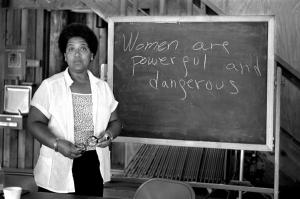
Lorde begins to address the complicit silence of women in this essay and will return to it in subsequent essays, leading up to The Uses of Anger where she challenges them into action, even if that means active listening, reading and learning, to become more aware.

In this essay she speaks of the fear of coming out of silence, because that transformation is an act of self-revelation, that seems fraught with danger.

In the cause of silence, each of us draws the face of her own fear – fear of contempt, of censure, or some judgement, or recognition, of challenge, of annihilation. But most of all, I think, we fear the visibility without which we cannot truly live.

In MASTER’S TOOLS she confronts our differences and speaks of the arrogance of discussing feminist theory without examining these and input from poor women, Black and Third World women, and lesbians, that as women we have been taught either to ignore our differences or see them as causes for separation and suspicion rather than forces for change.

It is learning how to stand alone, unpopular and sometimes reviled, and how to make common cause with those others identified as outside the structures in order to define and seek a world in which we can all flourish. It is learning how to take our differences and make them strengths.

In THE USES OF ANGER: WOMEN RESPONDING TO RACISM, though she speaks within the context of racism towards Black women, giving examples of how implicit this can be in the language of white women who don’t consider themselves racist (unconscious bias and privilege have been embedded in our societies for centuries), her dissection and exploration of the transformative power of anger goes beyond racism and has been applied to feminism and the voice of women trying to progress in other areas.

She likens anger and fear as spotlights that can be used for growth, rejecting guilt and defensiveness, pushing women to strive for better than that.

Every women has a well stocked arsenal of anger potentially useful against those oppressions, personal and institutional, which brought that anger into being. Focused with precision, it can become a powerful source of energy serving progress and change. If we accept our powerlessness, then of course any anger can destroy us.

Dr Brittany Cooper, in her book Eloquent Rage takes her work further on behalf of Black women suggesting that ultimately feminism, friendship, and faith in one’s own superpowers are what we need to turn things around, while Rebecca Traister’s Good and Mad tracks the history of women’s anger from the past to the present. She deconstructs society’s and the media’s condemnation of female emotion (notably, rage) and the impact of their resulting repercussions. These two authors, recently came together in conversation to discuss the common ground between their books, you can read more about that or listen to them by visiting this post How Sister Outsider Lead to a Chat Between Eloquent Rage and Good and Mad.

The collection ends with another visit, this time to a place that was always referred to as home, the birthplace of her mother, GRENADA REVISITED. She remembers the first time she visited in 1979, children in their uniforms carrying their shoes as they walked along the busy seafront, the main thoroughfare to school; the woman cooking fish in the market, the full moon. It was just eleven months before the political coup that ousted a 30 year regime, ‘wasteful, corrupt and United States sanctioned’.
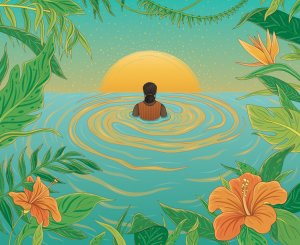
Dawn After the Tempests, created by © Gaby D’Alessandro

The second time (1983) she came in mourning following the invasion by the United States, ‘the rationalisations which collapse under weight of the facts’ details of which are shared in this piece, subtitled  ‘An Interim Report’.

Haitian writer Edwidge Danticat, (see reviews Breath, Eyes, Memory and Brother I’m Dying) visited Grenada in 2017 and though familiar with Lorde’s essay, read it afresh before landing. Her essay Dawn After the Tempests published in the New York Times pays tribute to Lorde’s visit and is a fitting follow-up.

Overall, it’s a diverse and thought-provoking collection, that continues to inspire readers and writers alike.

“[Lorde’s] works will be important to those truly interested in growing up sensitive, intelligent, and aware.” New York Times

Further Reading

Edwidge Danticat, Dawn After the Tempests, New York Times

Audre Lorde – short bio, menagerie of authors – by Juliana Brina, The [ Blank] Garden

How Sister Outsider Lead to a Chat Between Eloquent Rage and Good and Mad

Sister Outsider is something of a classic collection of essays that I first heard about some years ago, a collection that if you have any interest in issues of gender, feminism, or equality should be near the top of the list.

Audre Lordre was a poet, academic, speaker, feminist activist, sister and mother of two, who grew up in 1930’s Harlem. She wrote 12 books and tragically passed away at the age of 58 from cancer in 1992.

I have long wished to read it and was reminded of that recently, when a Goodreads Group I was invited to join and now belong to, Our Shared Shelf, a Feminist Book club created by Emma Watson, inspired by work with UN Women (dedicated to gender equality and the empowerment of women) posted a link to a video (linked below) of a conversation between two writers who have recently published books that reference Audre Lorde’s work, in particular pertaining to women, anger, and race.

Here was an invitation to listen to and participate in a dialogue about the power and consequence of women’s rage, both personal and political, a conversation across race, across cultural contexts, across the things that make us both different and the same

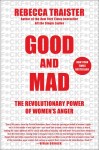
The conversation was in response to the three books chosen for the Book club’s Nov/Dec 2018 reads and online discussion, they’d chosen Sister Outsider and two recent publications Dr. Brittany Cooper’s Eloquent Rage, A Black Feminist Discovers Her Superpower and Rebecca Traister’s Good and Mad: The Revolutionary Power of Women’s Anger.

Audre Lorde was one of the foremost thinkers on the importance of understanding anger, suggesting that most women had not developed tools for facing anger constructively, except to avoid, deflect or flee from it. She wrote about women’s anger transforming difference through insight into power, how it could birth change, that the discomfort and sense of loss it often caused was not fatal, but a sign of growth.

“every woman has a well-stocked arsenal of anger potentially useful against those oppressions, personal and institutional, which brought that anger into being. Focused with precision it can become a powerful source of energy serving progress and change.”

With the rise of hard right authoritarian regimes around the world, many determined to roll back human rights – the very freedoms previous generations of angry women worked to achieve – women today are again being called to embrace their rage – its force, its potential, its messy complications.

To that end, and just as crucial as the call to angry, eloquent expression, is the responsibility – instilled by Lorde – to listen and learn, with curiosity and respect to the rage of the women around us.

On Rebecca Traister’s book:

Rebecca’s book Good and Mad will give you a deep and engaging (and sometimes enraging) historical deep dive into the way that women’s anger has been used throughout history to drive social movements, as well as how rage at the inequalities replicated within those social movements has worked to both slow them and make them stronger.

The stories will make you mad but they’ll also inspire you.


On Dr. Brittany Cooper’s book:

Brittney’s book invites the question of what it takes to meet Audre Lorde’s challenge: how do we focus our anger with precision? Through a range of personal stories about becoming a feminist, navigating friendships and romance and the white-washed shoals of pop culture, as well as contending with the limits of white feminists and the legacy of white feminism, Brittney demonstrates what it means to harness anger as a superpower.

Eloquent rage keeps us all honest and accountable with her provocative, intelligent thinking.

Unlikely to be able to read all three in the time frame, I decided I’d slow read Lorde’s essays and read the other two when paperback versions came out. In the meantime, I entered a competition asking readers who’d watched the interview between these women discussing their books, to answer the following question:

QuestionWhat surprised you about this conversation around anger and how it’s perceived differently depending on who is expressing it?

My Response: First of all I was surprised to be given the opportunity to listen to such a high calibre conversation from within the comfort of one of my favourite online dwelling places – Goodreads!

The whole conversation around the perception of anger depending on who is expressing it surprised me as it articulated what so many of us have felt, experienced, witnessed and NOT been able to articulate, and I loved that they addressed that question of voice and gave kudos to listening and learning.

It just made me want to share this with all women and read both their books! Thank you so much for bringing this opportunity to those of us far, far away to listen, I hope there will be many more.

And since I now find that I am indeed one of the winners and will eventually be receiving copies of the two books mentioned above, I am doing what I said I would do and sharing this enlightening conversation between two eloquent writer’s voices and look forward to being able to share more when I’ve read their works.

Please do have a listen to the brief conversation below that inspired this post, and if you’re interested, join in with me to read their books over the coming months. My attempt to review Audre Lorde’s essays to follow.

Click Below to Buy a Copy:

Audre Lorde’s Sister Outsider

Dr. Brittany Cooper’s Eloquent Rage

Rebecca Traister’s Good and Mad


Refuge by Terry Tempest Williams

An Unnatural History of Family and Place

Terry Tempest Williams is a writer with a deep and active interest in environmental education and conservation, Refuge is both a memoir of a period in her life when she accompanied her mother through the illness that would claim her life, and shortly after her grandmother, leaving her the matriarch of the family at the age of thirty-four.

Although this is the book she is most well-known for, I first read and reviewed her writing and encountered her mother in a more recent, and equally extraordinary book, When Women Were Birds, Fifty-Four Variations on Voice, which was written twenty years later (when the author was 54) in 2012. It was also the age her mother was, when she succumbed to the illness written about in Refuge.  I recommend it equally, they are a unique pair, in their insights, their confusion, their ultimate compassion and understanding.

Throughout the memoir, she spends time with her mother, and equally has concerns for the Great Salt Lake, which sits on their doorstep, it is the place she grew up in, a landscape and wildlife she is obsessed with, one I knew nothing about, but became increasingly intrigued by, this enormous, terminal lake with no outlet to the sea.

Great Salt Lake: wilderness adjacent to a city; a shifting shoreline that plays havoc with highways; islands too stark, too remote to inhabit; water in the desert that no one can drink. It is the liquid lie of the West.

Natives of the area speak of the lake in the shorthand of lake levels, it’s not deep, but it is vast, so it doesn’t take much precipitation for significant rises to occur. In the mid 80’s when she was writing this book (it was first published in 1991) talk on the streets of Salt Lake City was of the lake’s rapid rising, everyone had concerns, the airport, the farms, the railroad, survival.

My interest lay at 4206′, the level which, according to my topographical map, meant the flooding of the Bear River Migratory Bird Refuge.

She writes about her family history, her genealogy with its deep roots in the American West her Mormon culture has preserved and their connection to the natural world, infused with spiritual values.

The birds and I share a natural history. It is a matter of rootedness, of living inside a place for so long that the mind and imagination fuse.

As the author shares the drama unfolding within her family of which she is the eldest child and only daughter, there is always the metaphor of the lake, the simultaneous restlessness of its birds, as if they too sense change coming; she wonders if they are better adapted to it than humans.

The thirty-six short chapters each carry the name of one of the bird species that inhabits the lake environment, they may only be mentioned in one sentence, but they are all listed, noted, observed over time, throughout the pages, they represent the life cycle of species, moving on, migrating, adapting to change, dying, making way for the young.

William’s both observes beauty and dissects suffering as she observes her mother’s and her own and tries to make sense of it, through nature and her current philosophical understanding.

Tonight I watched the sun sink behind the lake; The clouds looked like rainbow trout swimming in a lapis sky. I can honour its beauty or resent the smog in this valley which makes it possible. Either way, I am deceiving myself.

Birds are entwined with local folklore, the Californian gull rescuing the Mormons in 1848 from losing their crops to crickets. They still gather to tell this story.

How the white angels ate as many crickets as their bellies would hold, flew to the shore of Great Salt Lake and regurgitated them, then returned to the field for more. We honour them as Utah’s state bird.

It’s a book where you could highlight a passage on each page, one you can open on a random page and find some meaningful, reflective passage on life, an interesting bird fact or a brief history lesson.

The writing is at times poetic, sometimes scientific, passionate and honest. There’s a perfect balance between the personal and the environment that makes it a compelling read, but also one that you’ll want to savour.

The mother and daughter get their astrology charts done and read each other’s.

“I liked the part about Terry being neat and meticulous,” teased Mother. “I remember standing in the middle of your bedroom when you were about thirteen years old. Everything in your closet was on the floor, art and school papers were piled high on your desk. I remember thinking, I have two choices here – I can harp on her every day of her life, making certain her room is straight – or I can close the door and preserve our relationship.”

As the Great Salt Lake continues to rise, a deep sadness washes over her that all has been lost.

I am not adjusting. I keep dreaming the Refuge back to what I have known: rich, green bulrushes that border the wetlands, herons hiding behind cattails, concentric circles of ducks on ponds. I blow on these images like the last burning embers on a winter’s night.

There is no one to blame, nothing to fight…Only a simple natural phenomenon: the rise of the great Salt Lake.

There is also refuge in poetry, in other writers and the book is interspersed with memorable quotes from those whose words soothe her during this period of grief, as her mother goes into decline. And so I leave this sharing of thoughts on the book here with her reading her Mother a poem one afternoon by Wendell Berry:

T H E   P E A C E  O F   W  I L D   T H I N G S

When despair for the world grows in me

and I wake in the night at the least sound

in fear of what my life and my children’s lives may be,

I go and lie down where the wood drake

rests in his beauty on the water, and the great heron

feeds.

I come into the peace of the wild things

who do not tax their lives with forethought

of grief. I come into the presence of still water.

And I feel above me the day-blind stars

waiting with their light. For a time

I rest in the grace of the world, and am free.

Highly Recommended.

A Thousand Mornings by Mary Oliver

I loved this slim collection of poems, many of which reminded me of something, or awakened something in me, it’s as if they don’t just exist on their own merit, but are pathways of invitation.

Just the title A Thousand Mornings suggests how many, many mornings Mary Oliver has passed in taking walks in nature observing creatures large and small, her shortest poem two lines about an ant; of watching the tides, there are at least three poems about the sea, the one mentioned on the back cover of the book, reminds me of a lesson whose symbol is “chop wood”, that sometimes we need to stop over thinking and tend to the ordinary and mundane.

Her title also reminds me of the benefit of writing morning pages, three pages of longhand, stream of consciousness writing, ideally practiced first thing in the morning, advocated by Julia Cameron in The Artist’s Way, as a way of awakening one’s creativity, overcoming fear or blocks.

I GO DOWN TO THE SHORE

I go down to the shore in the morning
and depending on the hour the waves
are rolling in or moving out,
and I say, oh, I am miserable,
what shall-
what should I do? And the sea says
in its lovely voice:
Excuse me, I have work to do.

***

There is a poem called If I Were on ways to dance and the joy in life it brings, which can be read superficially, but which could be and most certainly is also about writing poetry, as I am reading another book of Mary Oliver’s called Rules for the Dance, A Handbook for Reading and Writing Metrical Verse, the title of which is clearly inspired by a stanza from Alexander Pope’s brilliant, poetic essay An Essay on Criticism a controversial work that discussed and compared styles of poetry and criticism, alluding to poets and critics past and present.

‘True ease in writing comes from art, not chance,
As those move easiest who have learned to dance.’ Alexander Pope

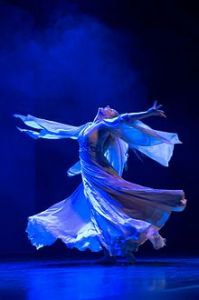
IF I WERE

There are lots of ways to dance and
to spin, sometimes it just starts my
feet first then my entire body, I am
spinning no one can see it but it is
happening. I am so glad to be alive,
I am so glad to be loving and loved.
Even if I were close to the finish,
even if I were at my final breath, I
would be here to take a stand, bereft
of such astonishments, but for them.

If I were a Sufi for sure I would be
one of the spinning kind.

***

THREE THINGS TO REMEMBER

As long as you’re dancing, you can
break the rules.
Sometimes breaking the rules is just
extending the rules.

Sometimes there are no rules.

***

There are mornings in India hinted at in After I Fall Down the Stairs at the Golden Temple and the closing poem of the collection Varanasi, which is in itself something of a response, a balm to the cry nestled within her poem A Thousand Mornings.

And finally one of my favourites:

I HAVE DECIDED

I have decided to find myself a home
in the mountains, somewhere high up
where one learns to live peacefully in
the cold and the silence. It’s said that
in such a place certain revelations may
be discovered. That what the spirit
reaches for may be eventually felt, if not
exactly understood. Slowly, no doubt. I’m
not talking about a vacation.

Of course, at the same time I mean to
stay exactly where I am.

Are you following me?

***

Click Here to Buy Mary Oliver’s A Thousand Mornings via Blackwells (free shipping)

A Long Way Home (Lion) by Saroo Brierley, Larry Buttrose (ghostwriter)

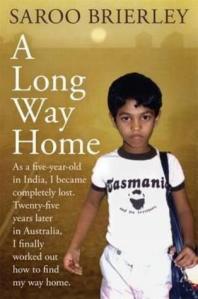
I saw the film when it was on at the cinema about a year ago and like everyone who has seen it, I thought it was extremely moving. If you don’t know the story, it’s about a 5-year-old boy who is out with his teenage brother, who has told him to wait for him at a quiet train station near their home, and feeling tired, he climbs into an empty carriage, falls asleep and when he awakes, it is moving, the carriage locked and he will be transported, far, far from his home, which he won’t see for another 25 years.
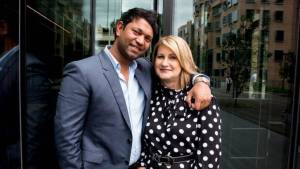
The book only confirms how incredible and moving his story is, on top of the emotion it provokes, was the amazement at how many situations 5-year-old Saroo got into that he was miraculously saved from, often by his own well-honed instinct, other times sheer luck, and occasionally, surely, divine intervention.

Like befriending the teenage boy he trusted and went home with, who would be the first person to make an intervention on his behalf that would lead him to 25 years of safety, before he could find his way back home and be reunited with his family again. In the meantime he would spend those 25 years in a middle class Australian family in Hobart, Tasmania – far from his culture and birth family, learning another language, getting an education and developing a way of life that would benefit them all by the time his story comes full circle.

It’s a bittersweet story with a thrilling beginning as he falls asleep in the wrong place at the wrong time and his life is hurtled, like a rocket capsule, into another hemisphere, with a few obstacles to overcome on the way.

It’s sad because he was a boy who became lost from his family in a large country, he had difficulty pronouncing the name of the town he came from (and even his own name) and in the city he arrived in Calcutta (Kolkata), he spent weeks riding trains hoping one of them might take him back. Nighttime brought an element of danger, and even in the day while having fun with other children in the river, danger was never far away, he would be rescued a couple of times that might have been life-threatening, had not well intended strangers come to his aid.

Saroo with his adoptive mother

The childless (through their own choice) couple that adopted him, were open and inclusive regarding his culture, furnishing his bedroom with a large map of India and items reminiscent of his country of birth, they joined an association connecting Indian families to their culture. However, unwanted memories could arrive unbidden, sometimes reconnecting with stories from India awakened his childhood trauma. He describes seeing the Hindi film Salaam Bombay:

Its images of the little boy trying to survive alone in a sprawling city, in the hope of returning to his mother, brought back disturbing memories so sharply that I wept in the dark cinema, my well-meaning parents unaware of the cause. Even sad music could set off emotional memories. Seeing or hearing babies cry also affected me strongly, but somehow the most emotional thing was seeing other families with lots of children. I suppose that even in my good fortune, they reminded me of what I had lost.

A few years later, his parents adopted another boy from India, who became his brother, the book doesn’t delve too deep into this relationship, however the film did bring out the contrast in their characters and the difficulty his parents, particularly his mother, who was a relatively quiet and calm woman, had in parenting him.

Mantosh and I were very different, partly because of the natural differences between our people, but also because of our different experiences in India. It’s one of the things that makes people who adopt children, especially from abroad, so brave: often the kids they’re taking in come with troubled backgrounds, having suffered in ways that make adjusting to their new life difficult, and which can be hard to understand and even harder to help. I was reticent and reserved; Mantosh, at least at first, was loud and disobedient. I wanted to please; he rebelled.

According to an interview, Mantosh was unhinged by the film, his protracted adoption wasn’t able to be finalised within the two month grace period the children’s home were given, so he was sent back to the large orphanage where lost or abandoned children would encounter all manner of youth, including bullies, criminals and abusers, the time he was obliged to spend there awaiting the administrative outcome scarred him physically and mentally. He didn’t have the good fortune of his brother, whose story is all the more remarkable for him having avoided abuse, though he was certainly close to encountering it, as his story shows.

“[His grandmother] couldn’t keep Mantosh in her care anymore, while he was waiting to come to Australia, once we’d accepted him. So he had to go back to [the orphanage] where he was burnt, raped, beaten, you name it. And I’m very bitter about that.” – Sue Brierley

There is most certainly a very different and equally important story to be told, if one follows Mantosh’s experience; it was interesting to listen to his mother speak on that in an interview recorded here. At least, she says, it did result in him beginning to open up more about his experiences and they were able to seek help for him, he represents the other side of adoption; the adoptive mother admitted they weren’t prepared for what it would mean to raise a child who’d been through such trauma, she didn’t have the support needed and experienced discrimination in the medical community when she did try to seek help.

When Saroo really becomes intent on tracking down his family, (another element that is much more vividly portrayed in the film) no one except his girlfriend knows how obsessed he has become, he has had periods of searching in the past, spurred on by meeting other students who grew up in India, who’d make guesses as to where he might come from based on his memories, but when, with the help of Google maps and tracing railway lines out of Calcutta, he began to spend hours every night doing his research, he kept it to himself, in ways and for reasons many adoptees will recognise.
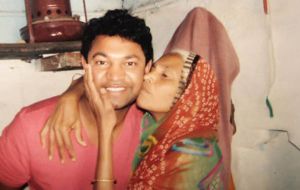
I didn’t tell many people what I was doing, not even my parents. I was worried they might misunderstand my intentions: they might think that the intensity of my search revealed an unhappiness with the life they’d given me, or the way they’d raised me. I also didn’t want them to think that I was wasting time. So even as it took up more and more of my life, I kept it to myself.

He was fortunate to have such a supportive girlfriend, he felt she would have been within her rights to feel alone in their still-new relationship, he was treading a fine line and would catch her looking at him sometimes as though she thought he was crazy. He was driven, determined and you knew he wouldn’t give up until he’d found something he recognised, the memories and maps in his head so well preserved over the years, surely he would find them if he kept going.

Perhaps to some extent sharing something so fundamental to me strengthened our connection – and that came through when we talked about what it all meant to me. It wasn’t always easy to articulate, especially as I was trying to keep a lid on my expectations, trying to convince myself it was a fascinating exercise, not a deeply meaningful personal quest.

In the book, Saroo spends a lot of time rationalising and expressing his gratitude, it’s clear he doesn’t wish to hurt anyone in his portrayal of the story, he understands he treads the line between two families in a topic that is almost a cause, that attracts fierce activism especially on the part of those who are pro-adoption, however he also acknowledges what many adoptees need to hear, the aspect that was healed in him in taking this journey, by his perseverance.

Rightly so in his case, as he wasn’t abandoned or given up in the first place. The trauma his mother must have gone through in finally accepting that he had disappeared, and what strength and love, to have believed for so long he may return, so strongly she believed it that she refused to leave the town they lived in, to join her other children and be nearer them and their families.

After being lost, I’d been lucky enough to adopted by a loving family, and not only lived somewhere else, but had become someone else from the person I might have been had I stayed in India. I didn’t just live in Australia, I thought of myself as an Australian. I had a family home with the Brierleys and had made my own home in Hobart with my girlfriend Lisa. I knew I belonged and was loved, in those places.
But finding Khandwa and my Indian family also felt like coming home. Something about being in the place just felt right. I was loved here too, and belonged, in a way I’d not thought much about beforehand and found hard to explain. This was where I’d spent my first years, where my blood was. When it was time for me to return to Hobart – a time that came around far too quickly – I felt the wrench of leaving deeply.

Buy a copy of the book via Book Depository

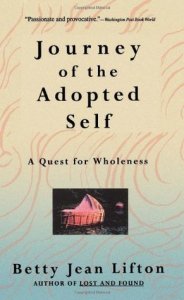
Journey Of The Adopted Self: A Quest For Wholeness by Betty Jean Lifton

I haven’t read an adoption book in many years, and in fact I have only ever read one,  one that is considered a classic in adoption literature Nancy Verrier’s The Primal Wound.

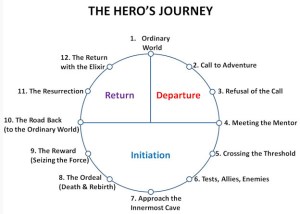
I decided I should increase my awareness and familiarity with the issues, as I’m writing down the story of – as the author, scholar and mythologist Joseph Campbell would put it – my ‘hero’s journey‘, learning who I was ‘born to‘, which is necessary if we wish to learn more about who we were ‘born to be‘, something which is neither about the family we are raised by, nor the one we are biologically related to, but that in-between place, where we carry influence from each, which once unravelled, allows us the space to detach from them both, to pursue a life we can truly claim as our own.

Journey of the Adopted Self, follows that traditional quest, and for each element in the journey, the responding to the call (the decision to search), the departure (actively seeking), meeting the mentor (finding help) crossing the threshold (making contact), the challenges + the ordeal (dealing with the aftermath), the reward (unravelling the mystery), the road back (the new ordinary life) and the elixir (the transformation and the life lesson) the authors discusses a range of issues that can arise and gives examples in brief snippets from the many case studies she has had access to as an adoption counsellor.

Each person has a unique experience, so in the journey there are many reactions likely to be encountered, but the one thing that all adoptees have in common, is that they have experienced what is referred to as the ‘pre-verbal trauma’ of separation from the mother. That may have been immediately after birth or soon after, some babies may never have been held by the mother who carried them for those nine months, others may have been for a few hours or days, or even a few months.

According to the Austrian psychoanalyst and contemporary of Freud, Otto Rank in his book The Trauma of Birth, everyone experiences significant trauma at birth and that trauma or separation from the safety of the womb is healed over time by the bond created and the physical proximity and nurturing provided by the mother, whose heartbeat, smell, voice and very being are a comfort to the baby, who has known these things without seeing them from within.

Adoption adds another layer to the trauma, as the bond with the mother who gives birth is severed and the nurturing is to be provided by another, who has not been infused with the maternal hormones of pregnancy that nature creates to ensure the mother mothers her child. The adoptive mother in her head and heart wills herself to be and provide that role and is a good substitute, but that doesn’t avoid the fact that the baby will have experienced that initial double trauma of separation, first from the womb and then from the human it was connected to that birthed it.

Because this experience happens so early in the life of a baby, it is possible the trauma can lie so deep that for some it may not rise to the surface until very much later, or it may be possible to live without realising or recognising the behaviour patterns that are a common thread to those who have experienced this at birth.

How well adoptees overcome the traumas inherent in adoption and the additional ones they encounter in their specific families will be determined by their genetic susceptibility to stress – some children have more than others – and their ability to find an empathic teacher, friend or mentor to give them emotional support.

The author describes a range of different responses her clients (adult adoptees) experienced in the many aspects of the journey. Any adoptee who reads it, is likely to resonate with a number of passages, which may relate to their own experience in navigating the triad of adoptive parents, birth parents and siblings and the adoptee themselves, in particular if they have been involved in the closed adoption system, where all ties with the biological family are severed, the child’s name changed, legally becoming another person in another family.

This book then, is about the search for the adopted self. It is not the literal search in the material world, where one sifts through records and archives for real people with real names and addresses; but rather about the internal search, in which one sifts through the pieces of the psyche in an attempt to understand who one was so that one can have a sense of who one is and who one can become. It is the quest for all the missing pieces of the self so that one can become whole.

Essentially it is a healing journey, although that may not be something consciously embarked upon, and inevitably in any kind of healing journey, there are likely to be disruptive elements as we realise and confront aspects of ourselves that we haven’t been aware of.

At a psychiatric meeting in Ireland I was asked by a young doctor whether an adoptee must search in order to heal, or whether there were other ways.
It was a very good question and one for which there is no definitive answer. “There are other ways to heal, of course,” I replied. “But if possible, finding one’s heritage is the best, for it enables the adoptee to become grounded in biological and historical reality. The very difficulty of the search is a commitment to the transformation of the self.”

It suggests that adoptive parents should also familiarise themselves with the potential issues before considering adopting a child and that it is a responsible idea to also seek help/therapy while raising an adopted child. This seems so obvious and yet, in the era my siblings and I were raised, society and the system considered us ‘a blank slate’, so old-fashioned parenting would suffice, and everything was dealt with “as if” you were an ordinary child and parents were just expected to get on with it, as if they too had not been through their own trauma that might need healing, prior to the appearance of a child. Adoption was seen as a cure-all, with no healing required.

There are so many passages I could share, however it is a book that will be personal to each reader, depending on their role, perspective and experience. I found it an insightful and helpful read, leaving me with much to reflect on.

I’ll be reading a few books on this subject in the coming months, as part of my research and writing, which is why there have been less reviews and reading of fiction. It’s not easy to read fiction while writing, even though I feel the lack, but I’ll try to keep posting, as I travel the writing path.

Buy a copy of this book via Book Depository here


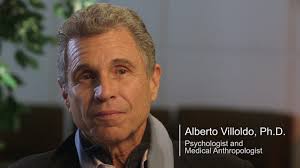
Shaman Healer Sage, How to Heal Yourself and Others with the Energy Medicine of The Americas by Alberto Villoldo

Following on from yesterday’s review of Alberto Villoldo’s The Four Insights: Wisdom, Power and Grace of the Earthkeepers, here are my thoughts on the book I followed up with.

Shaman, Healer, Sage begins in the first chapter with an extract from the Journals of the author, from his travels and training with the Inka shamans. He was apprenticed to an old Inka named Antonio Morales, who guided him and gave him the opportunity to both observe others at work – engaging in ancient healing practices – and to pursue his own personal healing.

Inka shamans practiced energy medicine for more than five thousand years, transmitting this knowledge from one generation to the next through an oral tradition.

From the practices he observed and learned, he developed his own contemporary reinterpretation, which he describes in this book, interspersed with more extracts from his journals, sharing some of the original experiences he had in the early days, when he was ignorant of what was occurring.

In the first part he talks about the belief system upon which these practices are based.

“We are luminous beings on a journey to the stars,” Don Antonio once said to me. “But you have to experience infinity to understand this.” I remember smiling when the medicine man first told me how we were star travellers who have existed since the beginning of time. Quaint folklore, I thought, the ruminations of an old man hesitant to face the certainty of his death. I believed that Don Antonio’s musings were akin to the archetypal structures of the psyche as described by Carl Jung. Antonio interpreted his myths literally, not symbolically as I did. But I didn’t challenge him then…

The mythologist Joseph Campbell used to say that reality is made up of those myths that we can’t quite see through. That’s why it’s so easy to be an anthropologist in another culture – everything is transparent to the outsider, like the emperor’s new clothes. At times I attempted to show Antonio that the emperor was naked, that he was confusing mythology for fact. That is, until I sat with him while he helped a missionary to die.”

He introduces us to the Luminous Healers, significant teachers and mentors he had during his time with the Native American shamans and puts historical references into a modern context. It is incredible that any of these beliefs and practices have survived after the destruction of the Indians by early settlers, which obliterated the spiritual traditions of most native groups. Native American shamans were reluctant to share their heritage with white people.

The Spanish conquistadors, and the missionaries who accompanied them, destroyed the healing schools in Cusco. The temples were demolished, and the churches were built on the same grounds using the original temple stones…

We imagine that the inquisition is a thing of the past, that this brutal organisation ended with the arrival of the Age of Enlightenment, and this is largely true. The Inquisition shut down its offices many years ago except in one country, Peru, the land of the Inka.

He introduces the universal concept of the Luminous Energy Field, something we each possess, surrounding the physical body, informing it.

When the vital reserves of the Luminous Energy Field are depleted through illness, environmental pollutants, or stress, we suffer disease. We can ensure our health and vitality and extend our active, healthy years by replenishing this essential fuel.

Part two provides techniques for learning the shaman’s way of seeing, for creating sacred space and practices to try out for your own personal healing. Part three continues this, describing for information purposes only, how a practitioner works with others (however he cautions against using this healing with others, something that should only be performed by a master practitioner who has undergone appropriate and comprehensive training, apprenticed to a skilled teacher. He also shares some of the dangers, which are fascinating insights in themselves.

Some of the things I found fascinating were:

  • the ‘rivers of light’, points stimulated by the healer, which Alberto discovered coincided exactly to the Chinese Acupuncture meridians.

For Maximo and other shamans in the Americas the rivers of light in the body are tributaries that flow into and draw their substances from the great luminous rivers that course along the surface of the Earth.

  • That pain and emotional trauma can leave imprints in the luminous energy field, that require extraction and illumination to be freed.
  • That imprints can be positive as well as negative, that they are active and cause us to gravitate towards situations in which they will be played out.
  • That there are generational imprints, that the energetic process of healing them often only requires only one or two sessions compared to months or years of ‘talk therapy’.
  • Intrusive energies and entities can exist in the luminous energy field.

Overall, it was an insightful read and one that definitely requires rereading, especially if the subject is new to you. I will certainly be reading it again to increase my awareness of my personal energy field, perceiving it and learning how to heal it.

Buy a Copy of Shaman, Sage Healer

via Book Depository

The Four Insights: Wisdom, Power and Grace of the Earthkeepers by Alberto Villoldo

I’ve been listening to Alberto Villoldo through some of his Hay House connections, in conversation with Intuitive, Colette Baron-Reid (see my review of her book Uncharted here) and recently watched a documentary featuring he and his wife Marcelo Lobos explaining certain rituals of the shamans, explaining them and showing them as they occurred.
Most recently I’ve been following his year long Living a Sacred Life Webinar Series, monthly hour long conversations between himself and leading shamans, mystics and contemporary spiritual teachers of the 21st century from a variety of the ancient wisdoms.

I looked at his range of books and decided that this was the one I wanted to begin with, I also have his book Shaman, Healer, Sage and although it was written earlier, it seemed more appropriate to read about the insights before diving into the healing practices. Again, I highlighted many passages in the book, but it’s so good, I passed it on immediately!

I’m attracted to his field of study because he works with energy medicine. I’ve studied the philosophy of traditional chinese medicine, in learning how to practice Acupressure and to understand the body and its disharmonies, when it is in and out of equilibrium, and the research Alberto Villoldo has done reveals something similar, a knowledge discovered by another group of people, that complements it.

The wisdom of these medicine men and women was under threat and they disappeared for a long time, only re-emerging in the 20th century to pass it on to those who could learn and share it. His methods are now being used by many therapeutic practitioners, as a complement to their existing methods of healing.

“For millennia, secret societies of Native American medicine men & women carefully guarded their wisdom teachings and acted as stewards of nature. They existed in many nations, known under different names, in the Andes and Amazon, they were “Laika”. In 1950 a group of them appeared, attending a gathering of shamans, to share their wisdom, recognising it was time, their people would need it to birth a better world.”

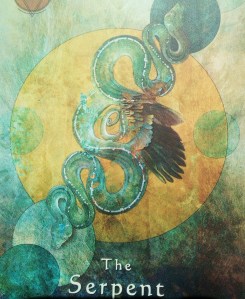
The four insights was an excellent read for me, for where I am at in my understanding, I absolutely loved it and all its insights, I was already familiar with the shamanic levels of perception, of serpent, jaguar, hummingbird, eagle, which correspond, to body, mind, soul, spirit and their associated languages.

This book expands on those themes and provides deeper explanations of how we perceive at each of these levels, what we need to understand about how we are responsible for creating the reality of each of those levels, and that we can only change our own inner perception and try to uplevel, we can never change another’s perception, except through being the role model that they might perceive and respond to without influence.

At each level of perception, different insights are shared, below are just a few phrases that relate to the large body of work that describes them in much more detail, their essence can be encapsulated in a few words, as mentioned below:

  • The Way of the Hero (serpent) body – the senses – physical reality, physical solutions – language = molecular and chemical – survival, self-preservation – reptilian brain
  • The Way of the Luminous Warrior (jaguar) mind – curious, inquisitive – mammalian brain – language = words – to express ideas, beliefs, feelings – look for cause to resolve problems, reflect
  • The Way of the Seer (hummingbird) – soul – language = image, music, poetry, dreams – neocortex – reason, visualise, create
  • The Way of the Sage (eagle), spirit – consciousness – prefrontal cortex – dreaming a new reality

There are four practices shared within each of these “Ways”, suggestions as to how we can alter our own reality, by shifting our perception into a higher realm, learning how to move up a level when necessary, to see things from that elevated perspective. It doesn’t mean we have to stay there, just to become aware of it and hopefully learn how to do it, to embrace the wisdom.

It is a practical book, so exercises are offered at each level, to take the reader through a practice to begin to become aware of the energy field and other concepts mentioned. Not everyone gets it first time, but he insists that anyone can learn how to do this, if they are interested or inclined. Having a teacher is preferable, but it can also be learned independently.

When we get stuck, particularly at the level of serpent (physical reality) and jaguar (intellectual/analytical reality), we spend a lot of time struggling with issues, yet when we succeed to shift our perception to a higher level, and practice seeing things from that perspective, we suffer less. We still have to deal with issues, but we are no longer tormented or traumatised by them, we have the opportunity – if we practice – to no longer get triggered by patterns of the past, or patterns inherited.

All levels have their place and use, and we don’t necessarily want to stay at one level, but by becoming aware of them and the gifts they offer us, we can heal aspects of ourselves and learn how to emit more light, like the luminous beings that we are.

Further Listening

Inspire Nation: Michael Sandler interviews Alberto Villoldo on How to Upgrade Your Energy Field

Excellent Books About Unforgettable Women #WomensHistoryMonth on #WorldBookDay

Today I saw the twitter hashtags #WorldBookDay and #WomensHistoryMonth prompting some interesting references to notable women, so I decided to look back at books I have read and reviewed here at Word by Word and show you a selection that highlight a few important women in our recent history, some you may not have heard of, all of whom have made significant contributions to our world. Click on the headings to read the reviews and share your recommendations.

Unbowed, One Woman’s Story, Wangari Maathai

The first woman who came to mind and whose book I want to recommend is Wangari Maathai’s Unbowed, One Woman’s Story. Kenyan and one of a group of young African’s selected to be part of the ‘Kennedy Airlift’ , she and others were given the opportunity to gain higher education in the US and to use their education to contribute to progress in their home countries. Maathai was a scientist, an academic and an activist, passionate about sustainable development; she started the The Greenbelt Movement, a tree planting initiative, which not only helped save the land, but empowered local women to take charge of creating nurseries in their villages, thereby taking care of their own and their family’s well-being.

“We worried about  their access to clean water,  and firewood,  how they would feed their children,  pay their school fees,  and afford clothing, and we wondered what we could do to ease their burdens. We had a choice: we could either sit in an ivory tower wondering how so many people could be so poor and not be working to change their situation, or we could  try to help them escape the vicious cycle they found themselves in. This was not a remote problem for us. The rural areas were where our mothers and sisters still lived. We owed it to them to do all we could.”

She won the Nobel Peace Prize in 2004, which motivated this story to be written thanks to others who pushed her to share it, thankfully, for she was an extraordinary and inspirational woman, who sadly passed away from ovarian cancer in 2011.

The Immortal Life of Henrietta Lacks, Rebecca Skloot

Henrietta Lacks is perhaps one of the most famous women we’d never heard of, a woman who never knew or benefited from her incredible contribution to science and humanity. A young mother in her 30’s, she was diagnosed with an aggressive form of cancer and despite being eligible for and receiving medical care at the John Hopkins hospital in Baltimore, a medical facility funded and founded to ensure equal access no matter their race, status, income or other discriminatory reason, she died soon after.
Before treatment, samples of her healthy and cancerous cells were taken, part of a research initiative in search of ‘immortal cells’ that could be continuously replicated. It had never been done before, until now – the newly named HeLa cells would become one of medicine’s significant advances.

Rebecca Skloot heard about the HeLa cells in biology class in 1988, became fascinated by them, she focused her research on finding out about the woman behind this important advance in medical science. This book tells her story and rightly attributes her a place in history.

Testament of Youth, Vera Brittain

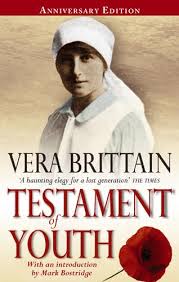
Vera Brittain was a university student at Oxford when World War 1 began to decimate the lives of youth, family and friends around her. It suspended her education and resulted in her volunteering as a VAD (Voluntary Aid Detachment) nurse. Initially based in a military hospital in London, events would propel her to volunteer for a foreign assignment, taking her to Malta and then close to the front line in France for the remaining years of the war.

Her memoir is created from fragments of her diaries, sharing the angst and idealism of youth, and later looking back from the wisdom of middle age, for she was 40 years old before her tome was published.

War changed her, she could no longer tolerate the classrooms of Oxford and the contempt of a new youth.

‘I could not throw off the War, nor the pride and the grief of it; rooted and immersed in memory, I had appeared self-absorbed, contemptuous and ‘stand-offish’ to my ruthless and critical juniors.’

She changed her focus from literature to history, in an effort to understand and participate in any action that might prevent humanity from making the same terrible mistakes that had caused the loss of so many lives. She became an international speaker for the League of Nations.

The book was made into a dramatic film of the same name in 2014.

Mom & Me & Mom, Maya Angelou

Maya Angelou is best known for her incredible series of seven autobiographies, beginning with I Know Why the Caged Bird Sings (1969), narrating her life up to the age of 17. She became a writer after a number of varied occupations in her youth.

This book was her last memoir, not one in the series, but one that could only be written from afar, from the wisdom of 80 years, when she could look back at a torturous youth, at a neglectful mother and see her with love, compassion and forgiveness.

‘Love heals. Heals and liberates. I use the word love, not meaning sentimentality, but a condition so strong that it may be that which holds the stars in their heavenly positions and that which causes the blood to flow orderly in our veins.’

Stet, An Editors Life, Diana Athill

Diana Athill OBE (born 21 Dec 1917) is someone I think of as the ordinary made extraordinary. She was a fiction editor for most of her working life, forced into earning a living due to circumstance, for while her great-grandparents generation had made or married into money, her father’s generation lost it. She clearly remembers her father telling her ‘You will have to earn your living’ and that it was something almost unnatural at the time.
War removed her chance at marriage and she appeared to reject it after that, revelling in her freedom and independence, though others suggest she was scarred by the intensity and pain of her first relationship. While the first part of the book focuses on her life, the second half recalls some of the relationships she developed with writers over the years, Mordecai Richler, Brian Moore, Jean Rhys, Alfred Chester, V.S.Naipul and Molly Keane.

The more extraordinary era of her life was still to come, for in her 80’s she began to write memoir, and achieve notable success, her book Somewhere Towards The End won the Costa Prize for Biography in 2008. Now 100 years old, she hasn’t stopped writing yet.

Further Reading:

The Guardian: Diana Athill: ‘Enjoy yourself as much as you can without doing any damage to other people’
The former editor on regrets, the advantages of old age and why she’s still writing at 100

***

Have you read any good books about notable women we might remember for #WomensHistoryMonth?

Buy a copy of one of these books via BookDepository

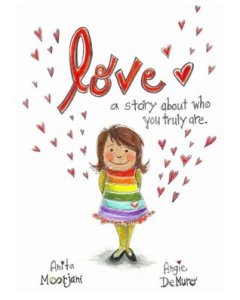
Love by Anita Moorjani & Angie DeMuro and a Poem by Derek Walcott

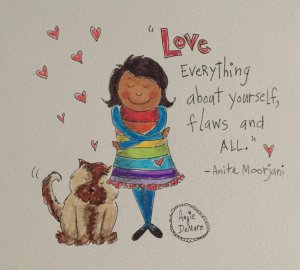
“Be your own best friend. Love yourself just as you are!”

is the message that Love: a story about who you truly are teaches children to embrace.

Anita Moorjani, author of Dying to Be Me and What If This is Heaven and illustrator Angie DeMuro have co created this book to help parents teach children how to love themselves, especially through the hard times, and to know and understand that this is something important and valuable for all of us to learn.

Within the beautifully written and illustrated pages of the book, children are taught how to have compassion and acceptance for themselves, and how to love themselves through many everyday situations. The happiness and confidence that can come from learning this ability is a gift that children, even grown-up ones, will carry with them their entire lives.

“You can’t love another unconditionally until you love yourself unconditionally, and when you truly do achieve that, you will never allow anyone to use you or abuse you.”

Anita Moorjani, What If This Is Heaven

At the end of the book is a Love Yourself Pledge, with a space to write the name of the person who has been given the book. Anita Moorjani believes her own childhood might have been changed had she had access to something like this.

Although I have not yet bought a copy for myself, this is a book that I’ve gifted, and one I recommend gifting to anyone who might have the opportunity to read to children and to impart positive messages of love and compassion in today’s increasingly stressful world.

I can’t think of any child that wouldn’t want to be exposed to something as reassuring and heartfelt as this, and it may just make a difference to some who needs to hear its message now, especially as we become more aware of the widespread silencing of victims of bullying and criticism, events or experiences that too often children are too afraid to share with parents.

It reminds me too of a wonderful Derek Walcott poem, which since today is Valentines Day, I share below for you, for not everyone can rely on another to express loving words or gestures on this day, but as Derek shares with us below, we have it in us to do that for ourselves.

So what loving thing are you doing for yourself today?

L O V E   A F T E R   L O V E

The time will come
when, with elation
you will greet yourself arriving
at your own door, in your own mirror
and each will smile at the other’s welcome,

and say, sit here. Eat.
You will love again the stranger who was your self.
Give wine. Give bread. Give back your heart
to itself, to the stranger who has loved you

all your life, whom you ignored
for another, who knows you by heart.
Take down the love letters from the bookshelf,

the photographs, the desperate notes,
peel your own image from the mirror.
Sit. Feast on your life.

Derek Walcott

 Happy Valentine Everyone!