In Ordinary Time, Fragments of a Family History by Carmel McMahon #ReadingIrelandMonth24

In Ordinary Time is one of those wonderful finds, when a number of your own disparate interests collide and someone has managed to put together a work that spans years, across two countries, reflecting on different events in their own life and the background of a country and culture’s history, with these continuous threads running through it, that make it almost seamless.

In a hybrid memoir, Carmel McMahon has written fragments of a family history, structuring them into four parts of three chapters, beginning with Part One: Imbolc: February, The Feast of Saint Brigid and ending in Part Four Samhain: January, Notes on A Return where the story comes full circle.

There are 21 black and white illustrations scattered throughout the text, ordinary photos that amplify the message and create a sense of travel through time. I looked back at the index page for each photo and scribbled my penciled note underneath it, such was the joy of words meeting image.

Full circle feels appropriate to describe a work that despite that linear structure of months and parts, is not that. Rather, it represents points on the spiral of life that goes through cycles; repeating cycles, short cycles, long cycles, interconnected and intergenerational cycles.

Each of the events that she describes in her family history have a shadow history in the culture and while she reflects on her own situation, she finds resonance in the voices of others who have gone before, in particular those whose story we might not have heard, or if we have, might not have been aware of the full picture.

Her story begins somewhere in the middle of her own self-imposed exile, living in New York City. It voyages through her experience with addiction, denial and recovery and ends with the heroine’s return, the learning and this book.

The city had not yet woken on the frigid Sunday morning of February 20, 2011, when the body of a young Irish woman was found outside St. Brigid’s Church in Manhattan’s East Village. The news reports cited alcoholism, homelessness, and hypothermia as contributing factors in her death. They said that earlier that month, on St. Brigid’s feast day she had turned thirty-five years old. They said she wanted to be an artist. They said her name was Grace Farrell.

Photo by C1 Superstar on Pexels.com

She questions whether it begins here, or in 1937 when the new Irish state ratified its constitution to reflect a strengthened church-state partnership, that would have a devastating effect on thousands of lives of girls and women and their children, and the unborn future generations who might inherit that affected DNA. All those sent to the Magdalene laundries.

In 1966, her mother would live a version of the shame that surrounded pregnancy out of wedlock, managing to avoid institutional incarceration by disappearing for a while.

Women and children were not afforded the rights of citizenship, of subjecthood, of being. They lived under threat of being erased, hidden, buried. This is why my mother tells me – halting, hesitating – that in her day it was the worst thing in the world for a girl to find herself pregnant, but worse still was for her to talk about it.

That first sister Michelle, born in London, would be knocked down outside her primary school, three months before Carmel was born. Six more children arrived after her and Michelle’s name was never spoken in their house. The legacy of silence she had been born into continued, was passed on, but not forgotten.

Or did the story begin when she had her first drink at the age of ten, at a family gathering? Feelings of inferiority and shame, dulled by the dregs of the adults drinks that replaced that unwanted feeling with one of warmth, of a circle of golden light.

McMahon left Ireland in the 1990’s and did not return permanently until the pandemic era, 2021. Ironically, it seems to this reader, the return has allowed the distance to reflect on the journey and the learning and to piece the interconnectivity of so many people’s lives past, present and future into this text.

Science has proven and is now able to show how stress and trauma can be passed on biologically from one generation to the next, we read.

We know that now. Vehicles of transportation include, according to the scholar of memory studies Marianne Hirsch, “narratives, actions and symptoms.” The stories we tell and don’t tell, the actions we take and don’t take, the symptoms expressed by a mother holding the trauma tightly to herself, because she refused to burden her children with it.

Listening to the podcast On Being, she hears Dr. Rachel Yehuda reminds listeners that:

…we are not in biological prison: experiences and events in our environment can also make positive changes to our programming. We can consciously move towards healing.

These intertwined fragments thus reveal the events, experiences and the slow realisation of all that is working on her, the understanding and the aspects that will aid the healing.

Photo by Jessie Crettenden on Pexels.com

There are the endless jobs she tries to hold down, while numbing herself nightly; the visits back home precipitated by tragedy, the road trip across America, an escape that brings her closer to understanding loss and aloneness.

The industrial ghost towns, the late spring rain, the wide, low skies. The old sadness rising. An excess of black bile, they used to say, made the melancholic personality. Freud said that mourning and melancholia are akin in that they are both responses to loss. Mourning is a conscious and healthy response to the loss of a love object. Melancholia is more complicated. It operates on a subconscious level. All the feelings of loss are present, but for what? The melancholic cannot say. This, Freud says, is a pathology.

McMahon reads and shares anecdotes and reflections on the lives of other women who immigrated before her; the young Irish immigrant Maeve Brennan who was a staff writer at the New Yorker before the disease of alcoholism colonized her life; Mary Smith, one of many Irish women used for gynecological experiments in New York hospitals in the mid nineteenth century; Grace Farrell.

After a family tragedy, she reads Anne Carson’s Nox, a book of poems created from the notebook she recorded memories and impressions of her brother, in the decade after he died.

She did this, she tells us, because a brother does not end. He goes on.

She reflects on the Famine, on the role of church and state, on the complicit silences and forgetting, on the advances that were made at the expense of the vulnerable, the now removed statues, the little known memorials of the unnamed. She acknowledges the collective impact of a nation’s traumas on individuals and families with brief insights (her own and Carl Jung’s) into a way forward, towards speaking up, sharing stories, creating meaning, allowing space for healing, for moving towards the light, to enable the passing on of a lighter legacy to future generations.

Sharing her story is part of that, not just for the writer herself, but for those who might find resonance in her journey, towards their own. And to remember the forgotten, the ordinary women like Mary Smith.

I could not put this book down, despite wishing to make it last. Though it is a collection of essays, some of which have been previously published, the threads that run through it make it read like a memoir, perfectly balancing the personal stories with the background history, questioning the effect of both on a young woman’s psyche.

Highly Recommended.

Further Reading

Guardian Review: In Ordinary Times: the trials of inherited trauma, Carmel Mc Mahon uses her own story of emigration, uncertainty and alcoholism as one thread in a wider historical tapestry

RTE Radio1 Interview: Carmel McMahon on The Ryan Tubridy Show – (18 mins) – on New York, family tragedy, drinking and the legacy of ‘pidgin emotion’

Guardian Books: Anne Enright: In search of the real Maeve Brennan

JSTOR: Owens, Deidre Cooper, Irish Immigrant Women and American Gynecology: In Medical Bondage: Race, Gender, and the Origins of American Gynecology, 89–107. University of Georgia Press, 2017. 

Carmel Mc Mahon, Author

Carmel Mc Mahon grew up in County Meath, and lived in New York City from 1993 – 2021, when she returned with her partner to renovate a house on Ireland’s west coast.

A graduate of CUNY, her writing has been published in the Irish Times, Humanities Review, Roanoke Review, Longreads and shortlisted for the Hennessy Literary Award.

A Respectable Occupation (2017) by Julia Kerninon tr. Ruth Diver (2020)

An Ode to Pope

How could I not love a miniature work of narrative nonfiction that the author quotes as having being in part inspired by the opening two lines of a poem from the 18th century English poet Alexander Pope.

The heroic rhyming couplets of Pope’s The Rape of the Lock (1712) were my optional choice for the fifth form School Certificate exam many moons ago, a memorable chapter of my own literary journey. Kerninon quotes from his Why did I write? what sin to me unknown.

Why did I write? what sin to me unknown
Dipp’d me in ink, my parents’, or my own?

Why and How I Write

une activitié respectable writing life nonfiction French literature

A Respectable Occupation is a short nonfiction narrative about how and why the French author Julia Kerninon became a writer and the necessity of reading.

I came across this book in a photo on author Kerri ní Dochartaigh’s Substack g l i m m e r s where she wrote about her favourite books of the year for 2023.

Dochartaigh is the q u e e n of referencing creative nonfiction and nature writing in her own writing. Her second memoir Cacophony of Bone is full of literary references to little known, enticing contemporary works of narrative nonfiction.

Julia Kerninon had a unique upbringing in many ways, not least because she lived in multiple countries, Canada, England and France, but also because it is as if she were raised to become a writer, more of an expectation than a desire, so she pursues it in the same way many others might pursue a career that has been held in high esteem by their parents. Only writing isn’t like law, medicine or business.

I had an incredibly heavy electric typewriter my mother had lent me, and she had glued little labels with lowercase letters onto the keys because I found capitals confusing, and I wrote lots of stories about talking animals with my friend Pete.

The Legend of Writers

She recalls a kind of bohemian childhood and the first six years where she was an only child and the focus of her mother who she admired, and how her world tilted when they became a family of 4 not 3.

An identical monument of books had saved her as well, thirty years earlier, from a hopeless childhood, and so she spread her secret before me, she explained what she loved most in the world, in a gesture that was also a potlatch, an immeasurably generous offering, which I might be expected to return one day with an even greater gift.

Her mother had been born in a small fishing village, the eldest of four, the only girl, she had learned Russian at ten in boarding school and read everything she could lay her hands on. She passed on all she could to her daughter, who did everything in her power to satisfy her, to repair her, to recompense her for the enormous effort it must have cost her to make all this known to her first child.

I read books non-stop, in a panicked frenzy, trying to catch up on lost time, trying to catch up with my mother who seemed to know everything.

If I lost a manuscript and went crazy with panic, she would just shrug with no compassion at all and explain that in any case I would have to throw away or lose lots of books before writing a single good one. The best thing that can happen to you is a house fire.

a respectable occupation Julia Kerninon typewriter
Photo by medium photoclub @ Pexels.com

At sixteen she had found a community of ‘old poets’ who met in an old biscuit factory in her hometown, a second education, after a house full of books.

At twenty she was reading Gertrude Stein‘s ill-conceived advice: If you don’t work hard when you are twenty, no one will love you when you are thirty.

She confronted her father and told him she wanted to take a gap year from her university studies. He agreed.

I thought that to be a writer, I had to train like an athlete, like a dancer, until it didn’t hurt anymore, until I didn’t ask myself any more questions. I wanted to possess that skill.

She takes herself off to Budapest for a year. Her life becomes a cycle of working hard, playing hard, then taking herself off somewhere for a year or six months to write.

She becomes a waitress in the summers, so she can write throughout the winter. She decides that to be poor is acceptable if she can be free instead and that she would learn to live alone, to be alone, to work alone, during those productive times of her life. That maybe these were not sacrifices at all, they were merely aspects of the life that she had created, that she loved.

Though she figures out how to live like this herself, she attributes this advice given to her by a much loved man:

the main thing is to have free time – you’ll obviously work out how to earn a crust somehow – but free time is something you’ll always have to scavenge, he told me earnestly.

It’s a wonderful little book, a digression of sorts, a reminder that the writing life comes in many shapes and forms, that the sharing of the various experiences can also provide inspiration to those who are on that path and that the pursuit of the occupation can also be a subject to write about, that people like reading about.

I write books because it’s good discipline, because I like sentences and I like putting things in order in a Word document. I like counting the words every night and I like finishing what I start.

A short introduction by Lauren Elkin is equally compelling, another writer whose book Art Monsters : Unruly Bodies in Feminist Art was in the photograph in Kerri Ni Dochartigh’s end of year essay.

I will leave you with one final quote from Julia Kerninon, one that applies as equally to reading as it does to writing.

I’ve been striding through literature like a field, where my footsteps flatten the grass for a moment, just long enough to see the path I’ve taken and the immensity of what is yet to be discovered.

Further Reading/Listening

An Interview with Julia Kerninon and Ruth Diver: A Respectable Occupation

#RivetingReviews: Jennifer Sarha reviews A Respectable Occupation by Julia Kerninon

Author, Julia Kerninon

Julia Kerninon is a French novelist from Brittany, whose first novel Buvard (2013) won the prestigious Prix Françoise Sagan in 2014.

Born in 1987, she holds a Ph.D in American Literature. She has been compared to French New Wave filmmaker Éric Rohmer for her sense of style and feeling for dialogue, and to Alain Resnais for the artful structure of her narratives. Most of all, her work stands out for its contagious joy, drive, exuberance.

Kerninon’s second novel, Le dernier amour d’Attila Kiss, won the Prix de la Closerie des Lilas in 2016, and her latest novel, My Devotion, won the 2018 Fénéon Literary Prize. She lives in Nantes.

Shame (1997) by Annie Ernaux, tr. Tanya Leslie

In her 2022 nobel prize lecture, I Will Write to Avenge My People, Annie Ernaux shares her motivation for writing in the particular way that is unique to her, telling us how it is at odds with the way she taught.

I had to break with ‘writing well’ and beautiful sentences – the very kind I taught my students to write – to root out, display and understand the rift running through me.

So it with this understanding, that I picked up Simple Passion (my review here) and now Shame, works of non-fiction that explore how certain pivotal events in her life affected her, by noticing her actions and reactions, how her own behaviour or perception changed.

The Origin of Shame

The book opens with a quote from Paul Auster‘s The Invention of Solitude:

Language is not truth.

It is the way we exist in the world.

The opening line begins with the pivotal event, shortly before her 12th birthday:

My father tried to kill my mother one Sunday in June, in the early afternoon.

and then describes everything she remembers about that day in a page of detail.

It was 15 June 1952. The first date I remember with unerring accuracy from my childhood. Before that, the days and dates inscribed on the blackboard and in my workbooks seemed just to drift by.

These words were written 45 years later, around 1997, when this book was first published in French, words that she tells the reader were impossible to write about, even in a personal diary, before then.

Silence Esteemed, The Seed of Unworthiness

I considered writing about it to be a forbidden act that would call for punishment. Not being able to write anything else afterwards for instance. (I felt a kind of relief just now when I saw that I could go on writing, that nothing terrible had happened). In fact, now that I have finally committed it to paper, I feel that it is an ordinary incident, far more common among families than I had originally thought. It may be that narrative, any kind of narrative, lends normality to people’s deeds, including the most dramatic ones.

Ernaux looks back at the origin of her experience of shame, awakened to it by certain moments, exploring the change(s) as she is made to feel them, in the many areas of her life within which it dwelt, sometimes just hidden behind a door, always at risk of being discovered by others.

From then on, that Sunday was like a veil that came between me and everything I did. I would play, I would read, I would behave normally but somehow I wasn’t there.

Beginning with that traumatic event, she observes the lingering effect it had on her, the strong presence it maintained, despite the fact that no one ever talked (to her) about it.

She revisits photos and news archives from that day, that time, trying to find something.

Writing an Ethnological Study of Self

While she rejects the idea of traditional therapy, it could be said that she has created her own form of it, by bringing her deepest shame to the page, as if in doing so, she is somehow sending it away, banishing it to readers.

I expect nothing from psychoanalysis or therapy, whose rudimentary conclusions became clear to me a long time ago – a domineering mother, a father whose submissiveness is shattered with a murderous gesture. To state it’s ‘childhood trauma’ or ‘that day the idols of childhood were knocked off their pedestal’ does nothing to explain a scene which could only be conveyed by the expression that came to me at the time: ‘gagner malheur‘, to breathe disaster. Here abstract speech fails to reach me.

Photo Pavel Danilyuk @ Pexels.com

This text she describes as carrying out an ethnological study of herself.

Like Simple Passion, written in short fragments, it is an engaging read that centres around the year 1952, living by the rules and codes of her world, which usually required unquestioning obedience, without any knowledge that there may be others.

The more I retrace this world of the past, the more terrified I am by its coherence and its strength. Yet I am sure I was perfectly happy there and could aspire to nothing better. For its laws were lost in the sweet, pervasive smells of food and wax polish floating upstairs, the distant shouts coming from the playground and the morning silence shattered by the tinkling of a piano – a girl practicing scales with her music teacher.

A brilliant depiction of a shattering of illusion and the origins of one girls perception of unworthiness.

As the book closes, and the year 1952 ends, her attention is caught by a film/book release.

In his novel, Fires on the Plain, published in 1952, the Japanese author Shōhei Ōoka writes: ‘All this may just be an illusion but all the same I cannot question the things I have experienced. Memories too belong in that category’.

Highly Recommended.

Author, Annie Ernaux

Born in 1940, Annie Ernaux (née Duchesne) was born in Lillebonne and grew up in Yvetot, Normandy, where her parents ran a café-grocery store in the spinning mill district.

She was educated at a private Catholic secondary school, encountering girls from more middle-class backgrounds, and experiencing shame of her working-class parents and milieu for the first time.

After a brief stint in Finchley, London, cleaning houses all morning and reading from the library all afternoon, she returned to France to study at the University of Rouen. Obtaining a degree in modern literature, she became a school teacher. From 1977 to 2000 she was a professor at the Centre National d’Enseignement par Correspondance.

Her books, in particular A Man’s Place (La Place) and A Woman’s Story (Une femme) have become contemporary classics in France. These books marked a break from the definitive novelistic form, she would continue teaching in order to never depend on commercial success.

One of France’s most respected authors, she has won multiple awards for her books, including the Prix Renaudot (2008) for The Years (Les Années) and the Marguerite Yourcenar prize (2017) for her entire body of work. The English translation of The Years (2019) was shortlisted for the Man Booker prize International and won the Warwick Prize for Women in Translation (2019).

The main themes threaded through her work over more than four decades are: the body and sexuality; intimate relationships; social inequality and the experience of changing class through education; time and memory; and the overarching question of how to write these life experiences.

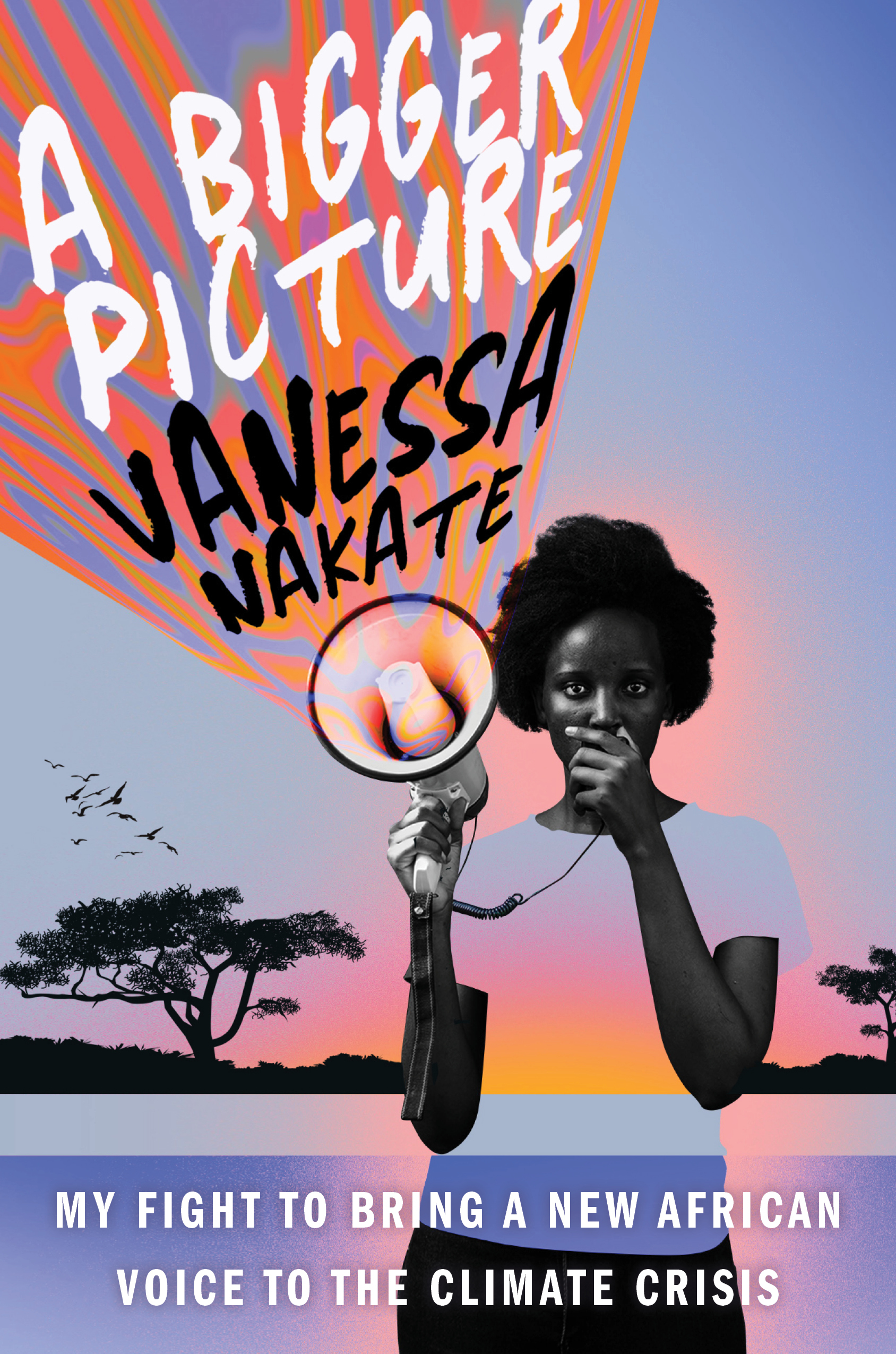
A Bigger Picture by Vanessa Nakate

My Fight To Bring A New African Voice To The Climate Crisis

Vanessa Nakate is a young Ugandan woman who became concerned about the effect of climatic conditions and change on her country and in particular the knock on effect floods, crop destruction would have on women and girls, disproportionately affected, as explained in her book.

Alternative Learning Experiences for Children

climate change literature Kenya African Voices

She decided to organise a strike, just herself, her two younger brothers (14 & 10), two visiting cousins (11 &9) and another cousin her age. It would be the six of them, holding up a few placards they made, and they would stand in four busy locations in Kampala, moving from each place after 30 minutes when her alarm went off.

“What shall we write?” Varak, the nine-year-old asked.
I wanted us to express something positive, and to ensure that my younger family members held placards they themselves would understand. We decided to pick slogans we thought wouldn’t be too threatening, and so wrote several, in English.
Trees Are Important For Us
Nature Is Life
When You Plant A Tree, You Plant A Forest
Thanks For The Global Warming (that was our sarcastic one) and
Climate Strike Now
We also drew some trees next to the letters.

Nothing dramatic happened, no one told to stop, but it was the beginning of an interest, of a young woman finding her cause and taking an action, that would lead her to learning and discovering more, to connecting with others, to finding local solutions and developing a presence and a new voice, on an international stage.

One woman stopped and told them of some trees being cut down to make way for a school, that they should be stopped. Each time Nakate went out and had the opportunity to engage or had a response on social media, it would often lead her to the next idea, it would put her in touch with others who genuinely wanted something to be done, their voices to be heard.

How One Exclusion Can Lead to Greater Inclusion

It is an excellent read, because it follows her personal journey, as a young person with little knowledge about activism and from this small spark of quiet daring (despite her anxieties, insecurities and fear of judgement), she shares her perseverance, her growing knowledge, the first invitations to attend international conferences and events, to a tipping point, when many more (including me) would hear about her – after she was cropped out of a photograph of young climate change activists including Greta Thunberg at Davos, Switzerland during the WEF (World Economic Forum) in January 2020.

My message was, and is, straightforward: People in Uganda, in Africa, and across what’s called the Global South, are losing their homes, their harvests, their incomes, even their lives, and any hopes of a livable future right now.

The Quiet Methodical, Cooperative Approach

What makes her message and her actions all the more interesting is that she takes a quiet methodical approach to doing things in her own authentic way, in a country where she is aware of both dangers and expectations, so does nothing foolhardy, acting responsibly.

However, when there is the opportunity for advancement of her cause and for manageable solutions she can implement herself, she steps up to those and has helped make life more amenable for many families already, while continuing to pursue the wider message, especially to young people, future leaders, for whom it will be better if they encounter this knowledge through their early education, than as adults already fixed in their opinions or influenced by position or power.

Since I’m always looking for solutions that reflect reality and the need to get the message out, I decided that instead of suggesting that students walk out of classes, I’d try to take the climate strikes into schools – where they could form part of the curriculum in a way that I’d wished climate change had been when I was a young girl.

The first school she approached in this way was open to this collaboration, the teachers assembled 100 students inside the compound, Vanessa Nakate gave a short speech explaining what the strike was about, in a way that could relate to and then lead them in a chant, the teachers encouraging the children to chant even louder.

What do we want? Climate justice. When do we want it? Now.

Genuine Efforts and Action Do Get Noticed

In 2019 she received an email from the UN Secretary General’s office in New York, an invitation to attend the Youth Climate Summit. Understandably, she and her parents didn’t think it was real, but it was, she would be the first person in her family to travel outside of Uganda and that would signify a new beginning in her self-appointed role.

The first half of the book is about the development of her role, the logistics of trying to attend events and to becoming involved in meaningful solutions at home, such as the Vash Green Schools Project (supports the installation of solar panels and building clean cooking stoves in primary schools) and to realising the need for self-care due to overwhelm.

Role Models and Inspiration, Making Connections

The second half gives a bigger picture of the wider issues, sharing information from others she interviewed and has been inspired by, including the late Wangari Maathai, the inspiring Kenyan woman who created the Green Belt Movement and made much progress (often hindered by men in power) who was the first African woman to win the Nobel Peace Prize in 2004 for ‘her contribution to sustainable development, democracy and peace’. Read my review of her autobiography Unbowed here.

Coincidentally COP28 is happening right now in Dubai and Vanessa Natake is there with others trying to get their message across to world leaders who have the power to phase out fossil fuels and support equitable and safe renewable energies. Her article appearing in today’s Guardian below.

I really enjoyed reading this book and learning more about how Vanessa Natake became a voice for her country and continent and inspired so many youth and adults to both learn and do more to try and halt the destruction that is affecting them all.

Highly Recommended.

Further Reading

The Guardian Opinion: At Cop28 it feels as if humanity’s shared lifeboat is sinking by Vanessa Nakate

Author & Activist, Vanessa Nakate

Vanessa Nakate is a Ugandan climate justice activist. She grew up in Kampala and started her activism in December 2018 after becoming concerned about the unusually high temperatures in her country. Inspired by Greta Thunberg to start her own climate movement in Uganda, Vanessa Nakate began a solitary strike against inaction on the climate crisis in January 2019. She founded the Youth for Future Africa and the Africa-based Rise Up Movement and spearheaded the Save Congo Rainforest campaign.

She has addressed world leaders at multiple climate summits and appeared on the cover of TIME magazine in 2021 (featuring on the Time100 Next list in 2021). She was appointed a UNICEF Goodwill Ambassador in 2022.

Nakate and her work have been featured in the New York Times, the Guardian,Yes!,Vox, Vogue, the Huffington Post, the International Women’s Forum, and the Global Landscapes Forum, and on globalcitizen.org, greenpeace.org, CNN, the BBC, PBS, and United Nations media. She lives in Kampala, Uganda.

Redemption Ground, Essays and Adventures by Lorna Goodison

A mix of memoir, poetry, life adventure and epiphanies, I loved this collection by Jamaican writer Lorna Goodison.

Bonding With the Irish Over Tea & Poetry

essays memoir creative nonfiction Jamaican literature

The opening essay ‘The Song of the Banana Man’ and ‘The Fiddler of Dooney’ totally sets the scene for the rest of the book. It is an anecdotal story of the author and her friend, excited to be in London, overhearing two ‘bobbies’ (policemen) talk about a cafe they were just passing, in a way that lured them inside.

‘Whassis then, a new tea ‘ole?’

Their schooling in Kingston, Jamaica had been heavy on all things British and European, so entering this establishment was something related to that indirect familiarity. They encounter three boys from Ireland, who ask if they are from the West Indies and they begin to banter, drinking toasts to the colonial experience, singing songs and reciting poetry.

When I play on my fiddle in Dooney,
folk dance like a wave of the sea;

The poems they chose were about ordinary people, sure of themselves, of what they did, grounding words shared by these young people, whose paths have crossed, starting out on their own journeys. The exchange lasts while they’re having their tea and comes to a natural end, upon which they part ways. The author is at the beginning of her life journey, but the lines recited by them all have staying power.

And I was not sure where I belonged or what my own purpose was in life back then…. But listening to those three Irish men recite ‘The Fiddler of Dooney’ that afternoon, maybe I’d thought yes, that’s what I’d like to be, someone whose artistry makes people dance like a wave of the sea.

A Working Class Teen Dares to Do Better

In, A Taste of Honey, she recounts the experience of seeing a movie in 1963, adapted from the play created by Shelagh Delaney (who was 18 years old when she wrote it) that moves her, that is a moment of epiphany. Being one of nine children, she relished the opportunity to go and see the film one Saturday afternoon alone.

Shelagh Delaney went to a play that she found boring, pretentious and condescending, and said to herself I can do better than that, and went home and wrote A Taste of Honey.

The film would win a BAFTA award.

A Taste of Honey showed working-class women from a working-class woman’s point of view, had a gay man as a central and sympathetic figure, and a black character who was neither idealised nor a racial stereotype. – extract from The Guardian by Dennis Barker

Goodison reflects on why she was so moved by this film, how it gave her some of her life and writing purpose and inspiration.

Shelagh was pronounced ‘ineducable’, but was able to produce work that affected me so deeply that I ended up sitting alone in a cinema after everyone else had filed out, trying hard to compose myself enough to go outside and face a world where most people would not understand why a simple thing like a Saturday afternoon matinee could make me weep as if a close friend or relative had died.

The Daffodil Drama

Writing poetry from a young age, in ‘Some poems that made me’ we read more of this early education and a different take on Wordsworth’s ‘I Wandered Lonely as a Cloud’, aka ‘The Daffodils’ poem, after she researches his childhood and life and decides to give the poet a break. See my review Lucy by Jamaica Kincaid for another reference to the daffodil drama.

Over the years I have said quite a lot about this poem, as have other writers throughout the British Commonwealth who have come to regard it as the ultimate anthem to British colonial oppression.

She will encounter may poets and poems until she arrives at the one voice that cause her to stop reading everyone else and just read his poems. In the work of Derek Walcott, who would become a friend and mentor, she found poem as a source of hope and consolation; poem as a lifeboat, anchor and safe harbour.

As she begins to think of her own place in the world, she seeks out women poets, finding nourishment in the work of Gwendolyn Brooks and other African-American fiction writers, while still searching for poetry by Caribbean women, ultimately ending up writing the poems she wanted to read and finding the right language to express them.

I learnt early in my life as a writer that if I wanted to write about my people I had to learn to listen carefully to family stories then imagine, and constantly reimagine those stories…All writer’s do this, but Caribbean writers face formidable or particular challenges because of the ways in which slavery, and then colonialism, erased or distorted so much of our lives that we have to learn to writer ourselves into the story in any way we can.

Tributes to the Mothers & Imagination

We read ‘Guinea Woman’ the poem she wrote trying to imagine a woman she had never met, her great grandmother, an elegy for her mother Doris ‘After the Green Gown of My Mother Gone Down’, and another poem entitled ‘Bedspread’ inspired by news of the home of Winnie Mandela being raided by police, where they seize personal effects including a bedspread, taken because it was in the colours of the African National Congress.

The collection takes the reader to different countries and places on her journeying, sharing both fun and pivotal moments, stories of redemption, of good souls that come to set the indebted free, of her own life crisis in New York, that preceded a change in direction, acting on a promise to herself.

A Musical Accompaniment

Like my reading experience of Bernice McFadden’s excellent The Book of Harlan, whenever Lorna Goodison mentions music, like in the vignette ‘A Part for Tarquin’, I look it up and listen while reading. This one is about her friend Bernard dragging her along to a non-party that she doesn’t wish to attend, and ends with them listening into the night to the pianist Wynton Kelly playing the Miles Davis sextet Some Day My Prince Will Come.

That was the night I began to really appreciate the genius of the Jamaican-American pianist Wynton Kelly, about whom Miles himself was supposed to have said, ‘Wynton is the light for the cigarette; without him there is no smoking.’ That night I realised that if hope has a sound it would be Wynton Kelly’s piano-playing. His hope notes were like sunbeams on the morning waves coming in at Bluefields beach.

Loved it all.

Author, Poet, Essayist, Lorna Goodison

Caribbean poet Lorna Goodison was born in Kingston, Jamaica in 1947. A painter before she turned her focus to poetry, Goodison was educated at the Jamaica School of Art and the School of the Art Students League in New York. She was appointed poet laureate of Jamaica from 2017 – 2020. In 2018, she received a Windham–Campbell Literature Prize, and in 2019, she was awarded the Queen’s Gold Medal for Poetry.

Her numerous poetry collections include Collected Poems (2017), Supplying Salt and Light (2013), Goldengrove: New and Selected Poems (2006), Controlling the Silver (2005), Traveling Mercies (2001), Heartease (1988), and Tamarind Season (1980).

She is the author of the short story collections By Love Possessed (2011), Fool-fool Rose is Leaving Labour-in-Vain Savannah (2005), and Baby Mother and the King of Swords (1990), and the memoir From Harvey River: A Memoir of My Mother and Her People (2007), which won the British Columbia National Award for Canadian Non-Fiction.

In 2019, she published Redemption Ground: Essays and Adventures

Professor of English and of Afroamerican & African Studies at the University of Michigan, Goodison divides her time between Toronto and the north coast of Jamaica.

Goodison’s image-rich and socially- and historically-engaged poems often inhabit the lives and landscapes of her Jamaican homeland. “I suspect that I might always write about Jamaica,” Goodison stated in an interview with Mosaic: Literary Arts of the Diaspora. Goodison also discussed the humor in her work, noting, “Jamaicans are very comical people, and laughter is a way of coping with life’s displeasures. Also, when you make something of it [a hard situation], it says that you are in control. There are incidences when we have no control; all we can do is make some sort of a gesture. Sometimes, the world can throw things at you that are so cruel and so devastating that you are in no position to have any kind of real response but to make a gesture. And I think that sometimes laughter is a gesture saying that you have not completely annihilated me; you have not robbed me of my ability to respond as a human being.”

Noting that Goodison often “complements her careful observation of the physical world and her fine eye for detail with a tense, lean, elliptical style” in a review of Supplying Salt and Light, Jim Hannan observed, “At their best, Lorna Goodison’s poems observe the unsavory in history and society even as they guide us firmly toward sources of redemption. With compassion and empathy, Goodison writes about human failure and triumph in large and small measures.”

Poor, A Memoir by Katriona O’Sullivan

Grit, Courage, and the Life-Changing Value of Self-Belief

Poor is the story of a young woman as she looks back at the circumstances of her birth, childhood and younger years, through the lens of having been raised by parents who were addicts. The middle sibling of five children, she would become pregnant at 15, abandoned and homeless. And then things got even worse – until she began to find the support and mentors she needed to begin the long climb out of a destiny she desperately wished to avoid.

It is a riveting read, constructed from the hopeful perspective of having by chance – in the people she met along the way – found support and been shown how to save herself and the path to higher education.

More importantly this book is essential reading for anyone considering working with children, for parents and those in higher education who might have a tendency to favour “the good, the ideal” student, to think about how we might uplift and give hope to those who might not fit that category.

Turning Points In A Life

Irish Book Awards Biography of the Year 2023

Katriona’s story pinpoints the moments in childhood that mark a life, both the good (the teacher who taught her and facilitated her being able to manage her own cleanliness) and the bad (a man her parents left her with), from which there is no turning back, but perhaps with the right resources, there can eventually be a kind of healing.

Being able to look back and identify those moments that shifted her self-worth, while often devastating to relive, enabled her to understand their impact and address them through appropriate methods, and where they were positive shifts, to cultivate gratitude.

It also highlights the many adults that let these children down.

I know my parents let us down, significantly. The blame is with them. Of course it is. But the world around us let us down too, and in a way, that is worse. Because my parents were drug addicts and that is how it all got so bad and messed up. But the people of the world around us – the police, the teachers, the social workers – they were untrustworthy. They pushed us into a corner and frightened us. How could we have grown up to do anything else but bite them back?
My parents let me down, but so did the world. And the world was where I had to live.

She is one of the few who has managed to climb out, to break a cycle; her story is shared in the hope others who identify, might find the motivation to pull themselves towards something that might bring them out of what is almost inevitable if you’ve grown up in such an environment.

I’d take a heroin addict parent over an alcoholic one any day of the week. That may seem surprising but there is a meanness in booze and horrible unpredictability that you just don’t get with heroin addiction.

Photo by Ahmed akacha on Pexels.com

It is also for those who have never known such misery, to refrain from judgement, to be open to understanding what happens to people in these situations, how they got there, the consequences and the ineffectiveness of today’s government policies in properly identifying the cause, creating and applying appropriate, sustainable solutions.

This isn’t a tale of woe is me or blame, and neither is it a story of a one-off. It is a demonstration of the difficulty of these lives, and a desire to want to change the world in a more caring and empathetic way than it is now, to search for and find and fund solutions, so that more might learn how to follow a different path, when similar struggles are present.

My education has taught me that choice is a myth: our path is set by history and it is very rare for someone to change that path. I am one of the lucky few who escaped the destiny set for me by my parents’ addiction.

Inclusivity and Diversity, We Must Do Better

She challenges educational institutions to do more to be inclusive of struggling students, to strive for the value of greater diversity. “Diversity brings power”.

Although the ‘same’ opportunities are open to people of all backgrounds, we live in a system where those coming from stable, secure childhoods do well and there is no allowance for the struggle of those who don’t. We need equity in education, not equality. If someone can’t see straight because the world is falling in around them, we need to raise them up to clearer skies…and the truth is, we are losing some brilliant minds in the trenches of poverty.

In an interview with the Guardian she expresses her fury at the rhetoric around poverty – that if someone is poor, it is their own moral failing, and if only they worked harder, they could drag themselves out of it. It is society that loses, she points out.

“We’re missing talent, vibrancy and creativity. Because I’ve been empowered, I have been able to change my life, my children’s lives. I’m not costly any more to the state. I’m not doing all of the things that happen when you live in poverty. The people who are making decisions are clearly very educated and yet they don’t seem to have the long-term lens on what investing in reducing poverty can do.”

A brilliant and engaging memoir and an important voice in support of educating children out of poverty.

Highly Recommended.

Poor has been shortlisted for two categories in the 2023 An-Post Irish Book Awards for Biography of the Year and for the Listeners’ Choice Award (winners announced 22 November).

Further Reading/Listening

Irish Times :The Women’s Podcast – Poor by Dr Katriona O’Sullivan – in conversation with Róisín Ingle

Dr Katriona O’Sullivans New Podcast POOR discusses issues relating specifically to poor systems, supports, people and process: Episode 1 Intro, Episode 2 But I Think It’s Ok to Say Fuck!

Irish Times Review: Poor by Katriona O’Sullivan, What Will You Do To Change Society For People Like This? by Lynne Ruane

Guardian Interview: Raised by addicts, abused, neglected, broke: how Katriona O’Sullivan escaped her fate by Emine Saner

Katriona O’Sullivan, Author

Dr Katriona O’Sullivan was born in Coventry to Irish parents. In 1998, at 20, she moved from Birmingham to Dublin and subsequently enrolled in the Trinity College access programme. She went on to gain a PhD in psychology from Trinity and joined its staff.

She now works as a senior lecturer in Digital Skills in Maynooth University’s Department of Psychology. She has worked with policy-makers to develop strategies around education and inclusion, and has been an invited speaker at the UN, the World Education Forum, the European Gender Action Workshop on Women and Digitalization.

Most recently, the programme she leads to improve working class girls’ access to education in STEM subjects won the Most Impactful Initiative Award at the Women in Tech Europe Awards in Amsterdam.

She is married with three children and lives in Dublin. Poor is her first book.  

“I needed encouragement to build my life and the tools to give it structure and strength. I needed tools to understand the world and how to think.

I needed an education.” Katriona O’Sullivan

Soundings, Journeys in the Company of Whales by Doreen Cunningham

Soundings is a dual narrative memoir, that recounts two journeys a woman makes, pursuing her dream to see the grey whales that migrate up the coast from Mexico where her journey begins, to the northernmost Arctic town of Utqiagvik.

The Iñupiat have thrived there, in a place periodically engulfed in ice and darkness, for thousands of years, bound closely together by their ancient culture and their relationships with the animals they hunt, most notably the magnificent and mysterious bowhead whale. I hadn’t just seen the whales there, I’d joined a family hunting crew, travelling with them in a landscape of astonishing beauty and danger.

Doreen Cunningham Whales memoir nonfiction

The book is structured so that each chapter alternates the twin journeys, the first one when she is a young BBC journalist on a sabbatical – the trip isn’t a job assignment, she is winging it, not knowing ahead of time where she might stay, or that she might join an indigenous whale hunt – to be in a position to observe the whales.

She is going there to listen, observe and with luck, participate.

The idea was that you could immerse yourself in a place and absorb more than if you were questioning people as a reporter and narrowing the world down into stories. I was supposed to take thinking time away from the relentless news cycle, open my mind and return bursting with creativity and new ideas.

The second trip is more of an escape from her current reality, that of a young single mother awarded sole custody, who can not afford to live in her home (due to high mortgage payments), reluctantly returned to her parents home in Jersey – who then decides she wants to make a return trip and provide her two-year-old son a formative experience of travel and whale watching.

I’d felt so alive then, so connected to other people and to the natural world. If only I could feel that way again and give that feeling to Max.

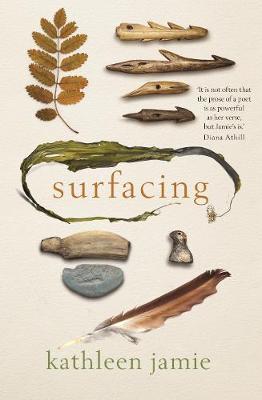
I recalled reading Scottish poet and nature essay writer Kathleen Jamie’s Surfacing, where she visits and brings alive an archaeological site Nunallaq, in the Yup’ik village in Quinhagak, Southern Alaska.

Kathleen Jamie Essays Surfacing Nature Writing

Doreen Cunnningham’s interest in whales and the environment inclines more towards the science, research and a personal desire for a sense of belonging and a large dose of wishful thinking, than the more poetic and philosophical Jamie, who went towards the tundra in search of surfaces that might reconnect us to the past. However, the two books together make informative and astonishing reading.

I told myself I would relearn from the whales how to mother, how to endure, how to live.
Beneath the surface, secretly, I longed to get back to northernmost Alaska, to the community who’d kept me safe in the harsh beauty of the Arctic and to Billy, the whale hunter who’d loved me.

Once you realise that the narrative goes back and forth, it becomes easier to stick with it, the chapters in the more recent past focus as much on the logistics of trying to travel with a child, car seat and stroller, finding kindred spirits who might assist getting her on a boat to see the whales, while doing her best to avoid those fellow travellers who look askance at a young mother, attempting the extraordinary.

As they travel, she also shares something of the challenges in the past of reporting on climate change, the reluctance to report on the environment and the habit many broadcasters had of always finding a sceptic to present an alternative view to the facts.

What was going on was that media all over the world had regularly been allowing sceptics o misrepresent science without adequately challenging them, and presenting them as though they carried equal scientific weight to mainstream climate researchers…This ‘insistence on bringing in dissident voices into what are in effect settled debates’ created what the report called ‘false balance’.

In her earlier visit, she takes time to listen to their stories, of the first ships that came in, bringing equipment, alcohol and disease. She hears of the social problems of another indigenous people, of children sent away, of PTSD, of a sense of rage and powerlessness, of a need to educate themselves in order to better represent and protect their culture and ways.

She also hears of the effect of the warming of the ocean first hand, its impact on animals, on the ice, on patterns of behaviours, of the risk to their livelihood and comes to understand the importance differences between a people who live in harmony with their environment and depend on it and those who came intent on exploiting it.

We also learn a little of her childhood experiences, of her wild pony Bramble, of an Irish granny and the songs she still sings that the whales seem to respond to. She injects enough of the personal story to keep the pace going, as the flow risks at times being overwhelmed by the facts and background research. However, as I go back and reread the passages I highlighted, I find it interesting to encounter some of this information a second time around, now that I’ve removed the expectation of a flowing narrative.

There is a something in this book for everyone, it defies genre and shows the gentle, yet vulnerable courage of a young mother persevering against the odds, seizing the reins of her life, following her intuition and going on a grand adventure with a small boy, who is perhaps more likely the greater teacher to her than the elusive whales, on motherhood.

Doreen Cunningham, Author

Doreen Cunningham is an Irish-British writer born in Wales. After studying engineering she worked briefly in climate related research at NERC and in storm modelling at Newcastle University, before turning to journalism. She worked for the BBC World Service for twenty years as an international news presenter, editor, producer and reporter.

She won the RSL Giles St Aubyn Award 2020 and was shortlisted for the Eccles Centre and Hay Festival Writers Award 2021 for Soundings, her first book.

Cacophony of Bone by Kerri Ni Dochartaigh

When I saw that Kerri ní Dochartaigh had a new book out, I was intrigued. I read her debut Thin Places  (reviewed here) in 2022, it was a tough read at times, especially as I went into it thinking it might be nature writing akin to others of the genre I’ve read. It was not. It was much darker.

At that time, nature, more than an observation, provided solace to an ever present dread and those thin places were a kind of magical opening and hint of acceptance that kept her here – just. The book trawled through a sombre northern Irish childhood into young adulthood, as the author attempted to rise out of a grasping fog towards finding their place and way in the world. To feel safe, while railing against the after-effects of trauma. From nightmares to numbness, nature was her nurturer.

Cacophony of Bone Thin Places creative nonfiction

While that book was challenging because of all it makes the reader feel, Cacophony of Bone was proof of a move forward, of a shift out of the rawness of her earlier existence and while still in the process of healing, clear signs of hope and progress and development. A relationship that comes across as more anchored and a commitment to sobriety. New circumstances that hold promise.

It began two days
after the winter solstice,
as all stories begin:
with light.

Essentially, it is a beautifully sculpted 12 month hybrid journal/memoir with splashes of poetry. It begins just as she is making a move to a one room very basic railway cottage in the middle of Ireland with her partner/lover, a couple of months before the country/world is going into lockdown. It becomes a year of noticing, of planting, growing, of collecting objects, abandoned nests, bone remnants…

To notice those things and to hold them, give my furry body over to their coming, to stop hurrying through life like a person shamed, by my female body and its traumas, by my past, by what that body could not have, what its parts could not produce.

At the beginning of each chapter before the brief, dated, diary entries, which are short poetic fragments and thoughts, there is a longer text that contemplates – a navigation of layers of loneliness, grief and gratitude, observations of birds and moths, planning, planting and harvesting a garden, recognising the importance of rituals, appreciating the constant and reliable companionship of another human being, developing connections with amazing women she has never met (yet) and embracing the comfort to be found in lines of language, the soothing power of words, the immense power and wonder of books.

Ritual finds form through the assumption that it is a means of really knowing something. Religious ceremony and personal rites of passage fill my thoughts. The gently, insistent act of repeating. How it creates equilibrium between the small and the vast, the seen and the unseen, the self and other, the part and the whole. We build myths (which are really just houses). Dwelling places built of the bones left behind by stories. We fill the gaps in the walls with ritual. We insulate it with objects.

Dreams arrive and motifs return, the days are spent reaching for meaning, walking them through, collecting and abandoning them anew.

I don’t think I have ever read a book that made me stop so often to look up references to predominantly works of creative nonfiction, poetry and memoir. It was a year of isolation, but Kerri ní Dochartaigh was able to read (and reread) from a bountiful collection of stunning literature. I admit to placing two orders with my new favourite Kenny.ie independent bookshop during the week I read the book.

It was no surprise to see mentioned the works of Doireann Ní Ghríofa and Sara Baume, it felt like these women hail from a similar soul group, literary sirens whose words lure readers not to their deaths, but to their visions and streams of conscious thought.

I find myself searching for the words of others as a means to fill the holes that the actions of (other) others have left in me.

We encounter throughout the pages Alice Oswald, Tove Jannsson, Moya Cannon, Annemarie Ni Churreain, Annie Ernaux, Terry Tempest Williams, Karine Polwart, Sarah Gillespie, Ellena Savage, Elizabeth-Jane Burnett, Rebecca May Johnson, Rebecca Solnit, Kathryn Joseph, Anne Carson, Kathleen Jamie, Anne Lamott, Richelle Kota, Alice Vincent, Lauret Savoy, Rebecca Tamas, Tania Tagaq, Emily Dickinson, Louise Erdrich, Colette Fellous, Sinéad Gleeson, Selva Almada, Katherine Mansfield, Virginia Woolf, Nancy Campbell, Elske Rahill, Octavia Bright, Alice Miller, Maggie O’Farrell, Genevieve Dutton and more…

After being alone for a long time, one starts to listen
differently,
to perceive the organic and the unexpected all around,
to brush against all the incomprehensible beauty of the material. Tove Jansson, ‘The Island’

It’s a book that follows the seasons, that reminded me of reading Alice Tucker’s A Spell in the Wild: A Year (and Six Centuries) of Magic and Sara Baume’s A Line Made By Walking, it takes some skill to keep a reader engaged in a form of nature diary, but the blend of personal story, observations of nature, literary references and the curiosity of seeing where the author will end up after the revelations of Thin Places, all made it a compelling read for me, that became increasingly absorbing the further I read.

It’s a heart laid bare, bruised but beating madly with the joy of being alive.

I’m left intrigued and curious about what will come next, although that might be quite obvious, since the end is in effect the dawn of a new beginning. A work in progress.

Highly recommended.

Further Reading

Interview: Writing Between Two Worlds, An Interview with Kerri Ni Dochartaigh

Review: The Guardian Thin Places by Kerri ní Dochartaigh review – a survivor’s story

Kerri ní Dochartaigh, Author

Kerri ní Dochartaigh’s first book, Thin Places, was published in Spring 2021, for which she was awarded the Butler Literary Award 2022, and highly commended for the Wainwright Prize for Nature Writing 2021.

Cacophony of Bone is her second book. She lives in the west of Ireland with her family.

She writes about nature, literature and place for the Irish Times, Dublin Review of Books, Caught by the River and others. She has also written for the Guardian, BBC, Winter Papers.


Grand: Becoming My Mother’s Daughter by Noelle McCarthy

A thought provoking memoir that won the Best First Book in the General Nonfiction category of the New Zealand Book Awards 2023, ‘Grand’ is a reference to the good old Irish vernacular, a bit like the way others use the word ‘fine’, when it covers a multitude of sins, lies, omissions – a word that sums up an aspect of societal tendency, used to avoid expressing what is actually occurring.

Grand Becoming My Mothers DaughterGrand, tells the story of Noelle McCarthy’s growing up in Hollymount, County Cork and the highs and lows of being around a mother, who had already lost two children before she was born and was herself never comforted by her own mother. Seeking to self-regulate through the effect of alcohol, Grand demonstrates numerous effects of having been raised under those circumstances and how a multi-faceted generational trauma passes down.

McCarthy finishes university and after a chance encounter with a New Zealander in a cafe where she worked, decides to travel to New Zealand and finds herself propelled into a media career after a stint in student radio, then becoming a sought after broadcaster and interviewer.

Though it does wonders for her freelance prospects and professional reputation, the lifestyle also pushes her deeper into addictive tendencies, denial and dysfunctional relationships, until the day arrives when she knows she has to change.

She doesn’t hold back from sharing the increasingly ugly detail of late nights, memory lapses and destructive episodes. She notices her inability to schedule morning appointments, in anticipation of planned hangovers and realises it is not normal.

I do not know, at this point, how the people I work with are able to ignore the general air of chaos that surrounds me.

There is a moment in a conversation with an experienced friend, while contemplating whether or not to attend meetings, she is confronted with a moment of choice.

I ask her: ‘What will happen if I go back to the meetings, but I’m not really an addict or an alcoholic?

She shrugs her narrow shoulders. ‘I don’t know. I guess you go for a while, and then stop because you don’t need to be there? Not that big a deal really.’

A pause. ‘ And what if I am an alcoholic, and I don’t go? What will happen then?’

She moves her spoon to one side, picks up a pair of chopsticks delicately. ‘It will get worse. Addiction is progressive.’

The feeling better part after having given up alcohol takes some time to manifest and is beautifully described in one scene by simple observations through the window of a bus. As the vehicle picks up speed, she is filled with “a fierce, clean joy that comes out of nowhere”. She is nearly 31 years old and her life is beginning anew.

The bushes that line the road are full of passionfruit vines and spiky, colourful bird-of-paradise flowers. I watch the kids in their school uniforms chugging Cokes, women at the bus stop, just normal workers going about their business, and I don’t hate them the way I used to. I am just a person among people, no better and no worse. I am nearly six months sober.

The memoir tracks her path to sobriety and to a coming to terms with who her mother is and was, and to her own ‘becoming a mother’.

Noelle McCarthy Grand

Photo by Doug Brown on Pexels.com

It’s interesting that subtitle, because to me she doesn’t “become” her mother’s daughter, if anything that is who and what she is fated to be, without healing or recognition of the generational trauma that lead to her addiction. What she does “become” is’ a mother to her own daughter’, the one role where there is an opportunity to heal from the past and choose to do things differently, to learn how to self regulate her own distorted central nervous system, in order to nurture her daughter in a way that will mitigate what they have all inherited.

It is a compelling read, a deeply honest and vulnerable account of a women in self-imposed exile, trying to live differently, dealing with her own inner demons and having a kind of love/hate relationship with her mother.

The thing that really stood out to me, something that isn’t exactly written, but that is understood, was that Noelle McCarthy was the first child, her mother was able to keep. Though she struggles as a mother, Caroline kept that daughter and loved her fiercely, so this daughter, though she has to deal with the effects of her mother’s alcoholism, she has not inherited the complex-PTSD that babies who were not ‘kept‘ are cruelly gifted with. Ironically, it appears that the mother suffered this neglect, it being suspected that her own mother, most likely suffering from post natal depression, never or rarely held her own daughter.

I want to tell her then, about the study I read about baby monkeys. The ones that don’t get touched and cuddled as much, don’t grow as well, physically or mentally.

Though the relationships are a challenge to navigate, there is a sense of knowing, a sense of belonging to both that family, those siblings and the place she grew up, that leaves the reader appreciating the importance these things contribute to the wholeness of a life.

A compelling memoir and an important contribution to literature that captures the chaos, pain and steps towards healing from alcoholism and addiction.

Noelle McCarthy, Author

Noelle McCarthy Author MemoirNoelle McCarthy is an award-winning writer and radio broadcaster. Her story ‘Buck Rabbit’ won the Short Memoir section of the Fish Publishing International Writing competition in 2020 and this memoir Grand won the Best First Book General Nonfiction Award at the NZ Book Awards 2023.

Since 2017, she and John Daniell have been making critically acclaimed podcasts as Bird of Paradise Productions.  She has written columns, reviews, first-person essays and features for a wide range of media in New Zealand including Metro, The NZ Herald and Newsroom. In Ireland, she’s provided commentary for radio and written for The Irish Times, The Independent and The Irish Examiner.

She lives in the New Zealand countryside with her husband and their daughter, and she misses Irish chocolate.

Grand Becoming my mother's daughter

All My Wild Mothers by Victoria Bennett

Motherhood, Loss and an Apothecary Garden

I loved this book, a kind of hybrid memoir that combined a passion for herbal folklore and a creative project, the building of an apothecary garden in a location where there were many obstacles to overcome, environmental and human, while exploring and healing from the loss of a loved one.

It reminded me a little of the experience of reading Helen Macdonald’s H is For Hawk, another memoir where the author takes on challenging project while navigating the tumultuous waves of grief – in that case, training a goshawk.

grief nature writing memoir motherhood loss apothecary garden

The memoir began at a moment in the author’s life when there was an unexpected death in the family; grief and coping with it, learning how to manage its lingering presence, is one of the themes she reflects on throughout the book.

At the time of this initial event, she is pregnant with her first child and as the story continues, her son becomes as much a part of the narrative as the author herself.

Victoria Bennett grew up in a large family, one that due to her father’s career, relocated countries often, that fragmented when some of the children were sent to boarding school, and even when they did settle down, did not partake in community life. They were self contained.

Used to living in places where they were outsiders, it became a way of being, even in their country of origin, England. In a conservative rural community, her mother wore hot-pants and homemade kaftans, had an art studio in the shed and had once offered to liven up a craft show with an exhibition of nudes.

Due to circumstance, Bennett and her husband move to a new social housing estate in rural Cumbria, built over what was an industrial site, a barren, rubble-filled, now rule-restricted, wasteland.

Mother and son slowly repurpose their backyard, building an apothecary garden – a construction of permaculture beauty, an appreciation of nature, an alternative education – yet encounter resistance, judgement, complaint and obstacle as subscribers to a more authoritarian rule, attempt to oppress or stamp out their initiative, unable to see the bigger picture of a more sustainable, kinder way of living in the shared world we inhabit.

wildflowers weeds apothecary garden

Photo E. BolovtsovaPexels.com

Bennett’s quest, to build an apothecary garden and educate (home-school) her son, was in part, an effort to integrate into the community, to overcome an inherited sense of not belonging, a deconditioning of learned ways. She overcomes anxiety, often lead by her son’s enthusiasm, to become more participative.

Despite her reticence, she had been raised by a feminist, ‘my mother was fierce about being fair,’ her sisters were outspoken, when Bennett discovers that her efforts to create something sustainable are being undermined by neighbours, she sets out to inform and educate them all.

“When we first moved onto the estate, the garden was a patch of newly sown grass, a thin layer of topsoil, and several metres of rock, rubble, and industrial hardcore. With no money, and only the weeds we found growing on the building site, my young son and I set out to see what we could grow. What was once a wasteland, became a haven for wildlife, and a balm for the body and soul. “

For a memoir that  navigated emotions, it had a good solid structure within which to contain the outpourings – each chapter began with a different plant, starting with the intriguing medieval, magical perception of it, including stunning yet simple black & white woodcut illustrations, the medicinal properties, a bit of folklore and where it might be found.  There followed a meandering through events, memories and reflections from Bennett’s life, that often ventured off from an aspect of the plant’s curative powers.

ALL My Wild Mothers

Photo Yan Krukau Pexels.com

Sow Thistle, Sonchus Oleraceus

Milkweed, swine thistle, turn sole, hare’s colewort, soft thistle

Hang sow thistle in the home to drive out melancholy…

Sow thistle grows abundantly on rubbish dumps, wasteland and roadsides.

All My Wild Mothers is also a reflection on motherhood, of one woman’s experience, given her own inclinations, personality and the effect of being the youngest in a family of six children. It is a celebration of the power and reward of maternal nurturing, of focusing on the development of a child according to their individual needs,

It is sensitively narrated, introspective and a tribute in particular to her sisters and her mother and a celebration of her son, for all that he teaches her, that he reflects back to her, due to the way she parents him and the way he in turn reminds her what it is to be a child, the gifts they offer having been nurtured, loved and allowed to grow into themselves authentically. He is a less conditioned mini human than most and Bennett’s articulate expression and capturing of his innocent yet profound utterances are a gift to all who read her prose.

Children can teach and remind us of so much that is simple and good in life, sadly conditioned out of us by the effect of a societal system that squashes it before it can have enough of a chance to flourish.

I absolutely loved this quiet book, that celebrates the wisdom of small children, nurtured through the early years and the symbiosis of mother and child.

Highly Recommended.

“What is grief, if not love persevering.” WandaVision

Victoria Bennett, Author

Victoria Bennet AuthorVictoria Bennett was born in Oxfordshire in 1971. A poet and author, her writing has previously received a Northern Debut Award, a Northern Promise Award, the Andrew Waterhouse Award, and has been longlisted for the Penguin WriteNow programme and the inaugural Nan Shepherd Prize for under-represented voices.

She founded Wild Women Press in 1999 to support rural women writers in her community, and since 2018 has curated the global Wild Woman Web project, an inclusive online space focusing on nature, connection, and creativity. When not juggling writing, full-time care, and genetic illness, she can be found where the wild weeds grow.  All My Wild Mothers is her debut memoir.

In 2022, her family made the difficult decision to leave the garden and follow a long-held dream of moving to Orkney, where they will discover anew what wildness will grow in a new soil.

Further Reading

For a Peek Inside the Garden + some of Victoria Bennett’s herbal potion recipes

N.B. Thank you to the publisher for the ARC (Advance Reader Copy) ebook provided via NetGalley.