The Hand That First Held Mine (2010) by Maggie O’Farrell

And we forget because we must. Matthew Arnold

The Hand That First Held Mine by Maggie O’Farrell was the winner of the former Costa Novel Award in 2010.

I read and really enjoyed O’Farrell’s memoir I Am, I Am, I Am – Seventeen Brushes With Death, the first of her books I encountered and Hamnet, which won the Women’s Prize for Fiction (2020).

I have The Marriage Portrait still to read, however I was curious to discover more of her earlier work and decided to read this one next.

Dual Narrative, Dual Timeline

This novel is narrated as two stories of two couples, one set in 1950’s/60’s that centres around Lexie, a rebellious university graduate who has been asked to apologise for using a door for men, before receiving her degree.

At home in Devon with her parents, she is about to abandon them all, the academic institution and her family for London, after Innes, a 34 yr old sports car driving art dealer, journalist, critic and self-confessed hedonist, breaks down not far from the field where she is sulking.

Innes has been in St Ives, visiting the studio of an artist whose work he’d been hoping to buy. He had found the artist rather drunk and the work far from completion. The whole excursion had been a raging disaster. And now this.

Lexie will move to London, creating an unconventional life and career in 1950’s Soho guided by her pleasure seeking lover, but with the spiteful eye of one who wishes her harm. Inne’s past will come to haunt Lexie’s future, and she will throw herself into her career, doing what she can to maintain her independence.

His father, he tells her, was English, but his mother was a mestizo from colonial Chile. Half Chilean, half Scottish, he explains, hence his Hibernian Christian name and also his black hair.

There’s much more to Lexie’s story, but to share any more of it would spoil the discovery for new readers of this compelling mystery. It is one of those novels where you know the narrative threads are going to connect and so each revelation keeps you guessing, until it eventually becomes clear.

Present Day London, Forgetting

Photo S. Chai Pexels.com

In the present day (2010) Elina, a Finnish woman in London and her boyfriend Ted, have just had a baby boy and she recalls nothing about the birth or the 3 days spent in hospital.

She tests herself, scans her mind. Has she remembered anything? Has it come back to her while she was sleeping? The birth, the birth, the birth, she intones to herself, you must remember, you have to remember. But no. She can recall being pregnant. She can see the baby here, lying in her lap. But how it got there is a mystery.

Not only has their life been turned upside down, but Ted is having memory flashes of childhood, but the images he is seeing are not like what his parents have told him. He knows what happened to Elina, but for now he is not sharing it.

Four days ago, she’d almost died.

The thought has a physical effect on him. One of disorientation and nausea, like seasickness or looking down from a high building. He has to lean his head in his hands and breathe deeply, and he feels the earlier tears crowding into his throat.

Slowly, the two of them begin to piece together the missing elements from their stories. Ted confronts his mother and finds her unhelpful. But since the birth of his son, the flashes of scenes from the past revisit him with increasing frequency.

‘Do you remember…?’ he asks, then has to break off to think. ‘A man came to the house once. And you … you sent him away. I think. I’m sure you did.’

‘When?’

‘Years ago. When I was small. A man in a brown jacket. Sort of untidy hair. I was upstairs. You were arguing with him. You said – I remember this – you said, “No, you can’t come in, you have to leave.” Do you remember that?

When Traumatic Events Awaken the Past

Everyone is being confronted with challenges and O’Farrell deftly carries the reader through them all, and keeps us puzzling over the mysteries underpinning each of their lives.

There is a level of unease and intrigue that is present throughout the narrative, that quickens the pace of readings, as we realise that not all characters are being honest or have good intentions.

Secrets, lies, infidelities, manipulative jealousies, tragedy and the unconditional love of true motherhood. The novel has emotional depth and psychological insight, while keeping up a well thought our plot.

An absolutely riveting read with brilliant storytelling and just enough withholding to allow the slow reveal of mystery and deception.

Highly Recommended.

Further Reading

The Guardian/Observer review: The Hand That First Held Mine by Maggie O’FarrellElizabeth Day enjoys a compelling novel of memory and motherhood, 25 Apr 2010

NPR review: A Moving Look At The Bonds Of Motherhood by Jessa Crispin, 27 Apr 2010

Author, Maggie O’Farrell

Hamnet The Marriage Portrait Shakespeares Wife The Hand That First Held Mine

Maggie O’Farrell is a Northern Irish novelist, now one of Britain’s most acclaimed and popular contemporary fiction authors whose work has been translated into over 30 languages.

Her debut novel After You’d Gone won the Betty Trask Award and The Hand That First Held Mine the Costa Novel Award (2010). She is the author of Hamnet, winner of the Women’s Prize for Fiction 2020, and the memoir I AM, I AM, I AM, both Sunday Times no. 1 bestsellers.

Her novels include After You’d Gone, My Lover’s Lover, The Distance Betwees US, which won a Somerset Maugham Award, The Vanishing Act of Esme Lennox, The Hand That First Held Mine, which won the 2010 Costa Novel Award, Instructions for a Heatwave, This Must Be the Place and The Marriage Portrait, shortlisted for the Women’s Prize. She lives in Edinburgh.

Boy Swallows Universe (2018) by Trent Dalton

Boy Swallows Universe is the debut novel of Australian author and journalist Trent Dalton, who shared with audiences during the promotional tour of his novel (now a 7 episode Netflix series) that the book was semi-autobiographical, 50/50 fact and fiction.

Eli “does a lot of what I would have [done if I could]. It was all wishful thinking.”

While much of what occurs is true, it reads like a crime, suspense and thriller novel, with unforgettable characters. It is set in a suburb of Brisbane in 1985 and follows a boy through dark, dangerous and at times magical teenage years, intent on changing his family’s lives.

Coming of Age Amid Drug Wars, Corruption and Crim’s

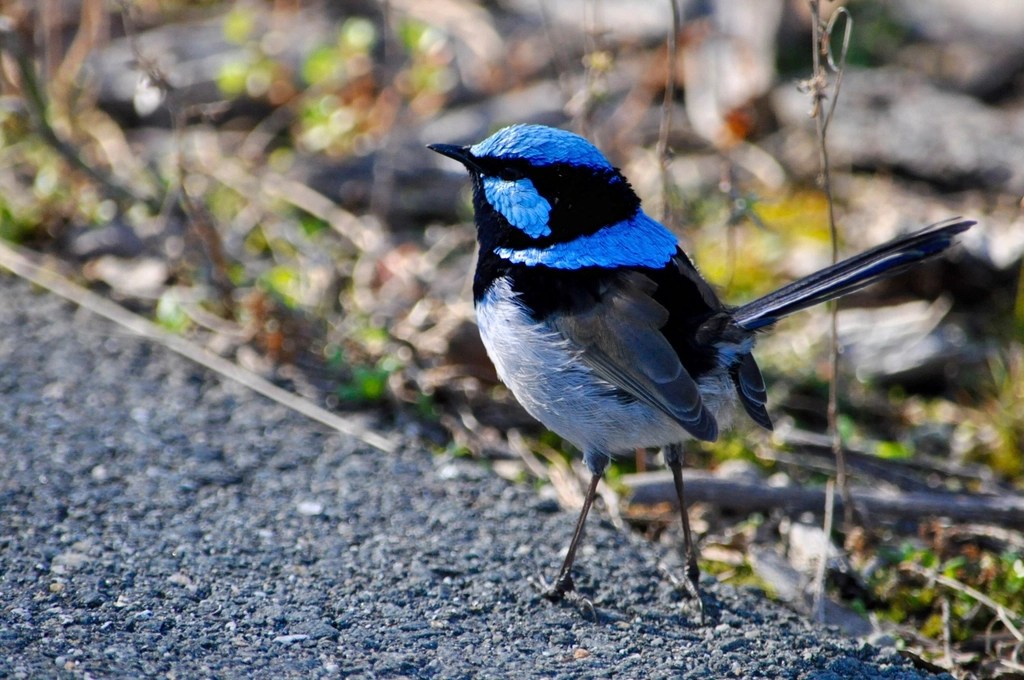
Your end is a dead blue wren.

Boy Swallows Universe Trent Dalton debut novel semi autobiographical 7 part Netflix series based on true story of the authors life growing up in Brisbane Australia

Boys Swallows Universe begins with this cryptic opening line, one of many that appear throughout the text, clues that are eventually resolved in this unique family saviour mystery.

Eli Bell is the main character, he is 13 years old; his brother August, a year older does not talk, he spells words in the air with his finger. He has not spoken since something happened in the past that Eli doesn’t remember. To do with their father. Who he also does not remember.

I can see my brother, August, through the crack in the windscreen. He sits on our brown brick fence writing his life story in fluid cursive with his right forefinger, etching words into thin air.

Finding Meaning and Escape in the Details

Their occasional babysitter Slim, a man who spent a quarter century in jail for the alleged murder of a taxi driver, has taught Eli the importance of details. It’s how he survived the hole. Creating double meanings for here (in the jail) and there (the boundless universe in his head and heart).

When he grows up Eli wants to be a crime reporter for the local newspaper. Slim writes lots of letters to his mates still in prison (using a false name) and suggests Eli can practice by writing letters as well. He has a penpal Alexander Bermudez, once sergeant-at-arms of the Rebels outlaw motorcycle gang.

Slim says a good way for me to remember the small details of my life is to associate moments and visions with things on my person or things in my regular waking life that I see and smell and touch often. Body things, bedroom things, kitchen things. This way I will have two reminders of any given detail for the price of one.

A Stupid Plan, A Secret Plan and a Well Meaning Busybody

The boys live with their mother Frankie Bell and her boyfriend Lyle. The boys get on with Lyle, although Eli has not forgiven him for getting his mother addicted to heroin. Lyle wants to save them all and has a fast track, risky idea about how to do it.

When Lyle’s plan backfires, Eli and August are thrust into survival mode and Eli takes this further with his own big secret plan by going into full on rescue mode, investigative detective, naive peacemaker, all with the aim of trying to get his family back together and his future career on track. Ironically for all the calculated risks it requires, it is his schoolteacher getting too interested in their welfare that worries him.

Mrs Birkbeck leans in closer across her desk. There’s something pious in the way she sits.

‘What I’m trying to say, Eli, is that trauma and the effects of trauma can change the way people think. Sometimes it can make us believe things that are not true. Sometimes it can alter the way we look at the world. Sometimes it can make us do things we normally would not do.’

Sly Mrs Birkbeck. Woman wants to suck me dry. She wants me to throw her a bone about my missing bone.

‘Yeah, trauma is pretty weird, I guess,’ I say.

Eli’s experience of trauma results in him having a highly intuitive subconscious, that combined with a fearless instinct for asking straight up questions push him forward on his quest. The red telephone in the secret dugout room of Lyle’s house is something of an enigma, why does it always ring when he is in there and who is the voice that responds?

A Funny, Thoughtful, Hair-Raising Life Adventure

Boy Swallows Universe is an exceptionally well told tale of a young boy Eli Bell surviving a tumultuous childhood, exposed to the effect of adults involved in drug dealing, of violent school mates, an unusual babysitter and some other hopeful, inspirational characters that make it all worthwhile.

“All of me is in here. Everything I’ve ever seen. Everything I’ve ever done. Every girl I ever kissed on a wagged school day, every punch I ever threw, every tooth I ever lost in a Housing Commission street scrap and every flawed, conflicted, sometimes even dangerous Queenslander I’ve ever come across, as the son of two of the most incredible and beautiful and sometimes troubled parents a kid could ever be born to.” Trent Dalton

This is no story of misery, it is about solidarity between brothers and the tenacity of a boy who won’t accept the way things are, he questions everything and everyone, asking forbidden questions, training himself in observing the details and taking action. Never giving up.

He is trying to save his mother, his mute brother August and himself from the terrible trauma cycles they are all stuck in. He is determined to grow up and become a crime reporter for a local newspaper and to meet the enigmatic Caitlyn Spies.

“The key characters all draw on the people I love most in the world. The most beautiful and complex people I’ve ever known, and I never even had to walk out the door of my house to find them. I just wanted to give the world a story. To turn all these crazy and sad and tragic and beautiful things I’ve seen into a crazy, sad, tragic and beautiful story.”

Brilliantly told, unforgettable characters, a wonderful balance between grounded in the dark reality of a dysfunctional family, a seedy underworld and the ethereal escape of two boys with an ability to dream and imagine their way through the darkest moments of an unsettling childhood.

So many highlighted passages, one of the reading highlights of 2024 for me. Highly Recommended.

I am looking forward to reading his nonfiction book of short stories Love Stories, created when he sat on a busy street corner with a sky-blue Olivetti typewriter and asked the world a simple question: Can you please tell me a love story?

Further Reading

New York Times review: ‘Boy Follows Universe’ follows a Gritty Coming-of-Age in 1980’s Australia by Amelia Lester, May 2019

Trent Dalton on : Why I Wrote ‘Boy Swallows Universe’ Harper Collins

This book is for the never believers and the believers and the dreamers.  This book is for anyone around the world who has been 13 years old. This book is for a generation of Australians who were promised by their parents they would be told all the answers as soon as they were old enough. Well, now you’re old enough.

Here are my answers:

  1. Every lost soul can be found again. Fates can be changed. Bad can become good.
  2. True love conquers all.
  3. There is a fine line between magic and madness and all should be encouraged in moderation.
  4. Australian suburbia is a dark and brutal place.
  5. Australian suburbia is a beautiful and magical place.
  6. Home is always the first and final poem.

Author, Trent Dalton

Trent Dalton Australia author journalist Boy Swallows Universe Lola in the Mirror Love Stories

Trent Dalton is a two-time Walkley Award-winning journalist and the international bestselling author of Boy Swallows Universe, All Our Shimmering Skies, Love Stories and Lola in the Mirror.

His books have sold over 1.3 million copies in Australia alone. He lives in Brisbane, Australia, with his wife and two daughters.

January by Sara Gallardo (1958) tr. Frances Riddle, Maureen Shaughnessy (2023)

January is a slim novella, considered to be a revelatory, pioneering masterpiece about a short period in the life of a 16-year-old Argentine girl living in a rural area, whose life trajectory is radically changed in a day. Now, for the first time, translated from Spanish into English.

Breaking the Silence, Exploring the Consequence

With echoes of Edith Wharton’s Summer , this radical feminist novel broke the silence around abortion to reshape the way women’s bodies and rights were perceived in 20th-century Argentina.

A radical feminist text, January was the first Argentine novel to represent rape from the survivor’s perspective and to explore the life-threatening risks pregnancy posed, in a society where abortion was both outlawed and taboo.

They talk about the harvest but they don’t know that by then there’ll be no turning back, Nefer thinks. Everyone here and everyone else will know by then, and they won’t be able to stop talking about it. Her eyes cloud with worry; she slowly lowers her head and herds a small flock of crumbs across the worn oilcloth.

A 16 year old girl in a predicament, not of her own making discovers she is pregnant, but not by the young man she dreams of. She is the daughter of peasant farm workers and has limited options, but will pursue them all the same, in order to try and avoid the inevitable, forced outcome that awaits her once her secret becomes known.

A pregnant teenager imagines death rather than forced marriage
Photo F.Capetillo Pexels.com

She is just of an age where she begins to notice and feel something for someone around her, but her virtue is stolen by another. Instead of imagining love, she imagines death, and wonders if this might be when her will finally see her.

She no longer cares about anything besides this thing that consumes her days and nights, growing inside her like a dark mushroom, and she wonders if it shows in her eyes as they remain fixed on her worn-out espadrilles, two little gray boats on the tile floor, or in her hands crossed in her lap, or in her hair burned by the perm.

The novella follows her panic, her attempt to find resolution without support, her symptoms, her desperation to seek absolution, her confession, her realisation of the terrible consequence, the life sentence, the marriage plot.

This thought floods her with a tide of anxiety as she remembers her secret. A sense of impotence rises to her throat, as if time has become something solid and she can almost hear its unstoppable current conspiring with her own body, which has betrayed her, tossing her to the mercy of the days.

She lives in rural Argentina, a conservative catholic environment, an unruly place for a young girl.

What will happen to her in this place that reveres the cloth, that judges and shames girls regardless of their innocence?

Further Reading

The New York Review of Books: Nefer’s Mission by Lily Meyer

The New Yorker: The Abortion Plot: A newly translated novel by the Argentinean writer Sara Gallardo provides a missing link in the history of abortion literature, by S. C. Cornell

Sara Gallardo: Recently rediscovered Argentine writer by Jordana Blejmar (University of Liverpool) & Joanna Page (University of Cambridge).

it is perhaps her abiding concern for the ‘Other’ – marginalized, solitary characters, women, animals, monsters, even elements of nature – that gives Gallardo’s literature its most powerful political dimension…

Author, Sara Gallardo

Sara Gallardo was born in Argentina in 1931 to an aristocratic Catholic family. She became a journalist in 1950 and was twenty-seven years old when her powerful debut January was published in 1958.

She grew up in Buenos Aires in a family of men so famous there are streets named after them all over Argentina (all key figures in the constitution of the Argentine nation): her grandfather Ángel Gallardo was a civil engineer and politician; her great-grandfather Miguel Cané was a journalist, senator, and diplomat; and her great-great-grandfather Bartolomé Mitre was president of Argentina from 1862-1868.

By the time she died in 1988 she had published more than a dozen books, including collections of short stories and essays. Gallardo has been compared to Lucia Berlin or Shirley Jackson.

January is considered required reading across Argentina.

Daughters Beyond Command by Véronique Olmi tr. Alison Andersen

Daughters Beyond Command is a wide ranging chronicle of 1970’s France, seen through the eyes of the Malivieri Catholic family with three daughters, living in an apartment in Aix-en-Provence. It traverses issues of family, feminism, worker’s rights, class, animal rights, amid the rapid transformation of society in the 19070’s France.

Family saga set in France against social political context of May 68 to the May 81 election

While the story follows the changing lives and events, in particular of the daughters and the mother (we don’t learn too much about Bruno, the father), it also demonstrates the shifts in society and of generations that occur through the way these daughters seek their independence. It contrasts with the way their mother harbours secrets and makes other complicit when she does share what she would prefer to hide.

Regardless of their ages or circumstances, the country and the world is changing and attitudes and behaviours are shifting and everyone is forced to reckon with the changes as they impact them in different ways, raising consciousnesses and often unable to maintain previous ways of being .

Sabine, the eldest wants to work in theatre and acting and will do everything she can to pursue that dream in Paris. Fiercely independent, she has developed an irritation around comfort and conformity.

She watched as Maria set the table under Michelle’s authority. She looked at the framed photographs of her cousins who had not yet come home.Happy times on horseback, in cars, on boats. It was like a huge advertising campaign. It filled her with rage. There had to be something behind this publicity for the life she was being shown, both here and at home, in the silver frames of photographs, or poor people’s kitchens, behind the slogans like Moulinex Sets a Woman Free, the injunctions to promote progress, comfort, and the frenzied pursuit of happiness, luxury, and family life, there was something else. Which could be neither bought nor sold.

The second sister Hélène has been seduced by the trappings and comfort of this sophisticated Parisian family. Sabine can’t understand why she chooses to spend so much time with them, a family that lives in a way beyond anything they have ever experienced. Hélène spends most of her holidays with the family who don’t have daughters; the Uncle who has taken a particular interest in her. That regular proximity changes some of her habits, including the way she speaks.

It was a betrayal of the Malivieri clan, and Sabine was astonished that her sister could flaunt her bonds of dependence so naturally.

Hélène will also leave home early and pursue an education Paris, supported by her Uncle. She is less outspoken but equally passionate, affected by moral question around the protection and rights of animals.

As time passed, a breach had come between Hélène and her parents; adaptation upon her return required quickly taking stock of her loved ones. She saw her father, whose kindness and altruism for everything he could not lavish on his family financially. She saw her mother, hard-working and attentive, doggedly managing her household, and the rare moments she seemed to cast off her condition as a housewife, when she really seemed to be her true self, were when they visited Laurence on Saturday afternoons at her bastide.

Photo by Alotrobo on Pexels.com

The student riots of May ’68 had an impact on the nation and caused both fear and admiration in these adults trying to figure out how to parent their daughters, growing up surrounded by influences they could not control.

As the lives of the daughters changes, so too does the outside world. Simone de Beauvoir and Gisèle Halimi found the movement Choisir la cause des femmes (Choose the Cause of Women) in 1971 to decriminalise abortion in France, riot police storm the Lip watch factory that had been occupied by workers for three months, forcibly removing them; there is talk and images of the horrors of Vietnam, of the desire for freedom, respect for the proletariat, and the lyrics of the Bob Dylan song The Times Are A Changin’, the death of the President Georges Pompidou.

Sabine told her his name was Bob Dylan and that his song said, more or less, that the world was changing, you had to keep your eyes open,and the parents had better watch out, their sons and their daughters were beyond their command. It was a political song.

As time passes and events happen the sisters find a way to strengthen their bond despite their differences, separating from each other and then coming together in solidarity, while their parents seem stuck in time. Agnes, the mother is unable to stop changes happening to her, which will bring about a crisis, one the two older girls question but are again met with silence.

While the novel isn’t necessarily about resolving any of the issues presented, it encapsulates the impact of changing times on the various members of the family in a way that I found interesting, having lived in France for around 19 years, but not during the era mentioned. So much of the landscape was familiar, and some of the references, but many were not.

I appreciated the story for the depiction of what it might have been like to be part of an ordinary family growing up in this town in the 1970’s and learning about the significant events that challenged and affected people’s thinking, seen from the perspective of inside France. It is these changes in the background of the family lives and the adept writing that maintains the narrative pace.

It might be set in the 1970’s but it feels as relevant today in many respects as it did for that era of change.

Further Reading

My review of Véronique Olmi’s novella Beside the Sea (2015)

Listen to Bob Dylan’s The Times They Are A Changin

Kirkus Reviews: The personal is political for Olmi’s finely drawn characters.

Litro Magazine Review: Daughters Beyond Command by Monica Cadenas

Author, Véronique Olmi

Véronique Olmi was born in 1962 in Nice and now lives in Paris. She is an acclaimed French dramatist and her twelve plays have won numerous awards. Olmi won the Prix Alain-Fournier emerging artist award for her 2001 novella Bord de Mer (beside the Sea). It has since been translated into all major European languages.

The Axeman’s Carnival by Catherine Chidgey

The Axeman’s Carnival won the NZ Book Award for Fiction in 2023. I have enjoyed a few books by Catherine Chidgey, including Remote Sympathy (my review), The Transformation and most recently Pet.

Surviving the High Country

While the novel’s hero and narrator is a common magpie, The Axeman’s Carnival is a social commentary on the struggles of carrying on family farm traditions and tending to relationships on a remote high country farm, infused with magic realism and comic relief. The author acknowledges the use of diaries belonging to her late mother-in-law, who lived on a high country sheep station.

Strong Man Chops Wood

The Axeman’s Carnival refers to a wood chopping competition, which is one of the final scenes in the novel and an event that Marnie’s husband Rob judges himself by.

He runs a hill country sheep farm in Central Otago, in the South Island of New Zealand, land that his father in part cleared of stones making it more fertile for grass, but also land that was in part lost (including his childhood home) to flooding required to create a large dam. Though he doesn’t remember the home, images of it recur often in his dreams.

The farm is struggling, they are increasingly drowning in debt and despite Marnie’s working outside the home as well as helping on the farm, her husband is volatile and easily made jealous, quick to turn his rage against his wife. When he’s not outside tending to the farm, he watches one genre of crime show.

Later he watched his crime show about beautiful dead women found in alleyways, all rucked up and staring. The man who came to look at the beautiful dead women wore a gun strapped to his side and sunglasses that were also mirrors, and he said things like This was no suicide, Trent. See the spatter patterns and The perp’s taunting us. He’s dangling the victims as bait and we’re biting.

Separation from the Family of Origin

One day Marnie acquires a fledgling magpie chick and brings it inside, despite the threats from Rob. The entire novel is narrated from the perspective of Tama, including those first memories of being lifted into her pillowed palm.

My siblings cried out as she carried me away, calling from our nest high in the spiny branches: Father! Father! Where are you? Come back! My mother called for him too, her voice frantic and afraid – but he , hunting for food, had left us all unguarded.

Can Humans Be Trusted?

Photo by Boys in Bristol Photography on Pexels.com

The bird is named Tama, he survives and grows and when she releases him, he revisits his magpie family up in the pines, but realises they seem to have disowned him due to his association with humans.

Father magpie is an expert on the faults of humans and preaches lessons to the younger generations, warning of traps and lures. When he learns what happened to his mother ‘Death by car’ and his brothers ‘Death by cold‘, he makes up his mind.

Tama, who has learned to use the cat door, returns to Marnie and begins to speak his first words. Because Tama is the narrator, we also hear his thoughts on what he is observing and see how he tries to navigate between the worlds of the two species he is entwined with, his magpie family and his human one.

My father kept his eye on me, waiting or me to betray myself. Every day he told me another bad story about humans: they wrung our necks, they ran us down, they shot us, they poisoned us.

‘Doesn’t that bother you?’ he said.

‘Yes, Father,’ I said.

‘I don’t think it bothers you. I don’t think you believe me.’

‘I believe you, Father.’

‘You still reek of her.’

Bringing the Outside World In

While Marnie is amused by Tama’s antics, her husband is irritated by his attachment to her and encroachment into their lives. But every threatening line he utters adds to the increased repository of retorts that come out of the beak of the bird.

I suppose I should have tried to behave myself – and I was wary of him, don’t get me wrong. I saw the strength in his hard hands, and I knew it could lead nowhere good. I knew he’d had a gutsful. But I couldn’t keep quiet; I was my own worst enemy.

When she creates a twitter account for the magpie, it becomes popular while being another source of disapproval by her possessive husband. Until they discover he could be a source of income and help save the farm.

The story follows the family and the impact of the internet sensation and becoming known, however none of these changes to their life or fortune transform our characters in any way. Marnie continues to try and gain approval of her husband, he remains jealous of any contact she has with others, whether around them or online. While his behaviour is checked by the presence of webcams in the home, through Tama’s eyes, we witness the relaationship unravelling with mounting dread.

Champion or Brute

The narrative builds up to the carnival where he aims to become a 10 times ‘golden axes’ champion and Marnie and her sister have a surprise planned for their husbands, which she becomes increases nervous about whether it is a good idea or not.

The novel is full of clever wise-cracking moments, thanks to the mimicking retorts of the magpie, which lighten what is otherwise a threatening environment and a serious subject. Marnie is a victim of domestic violence and the only witness, Tama the talking magpie. He is the intelligent observer and hero of the novel, even if his own authenticity has been compromised by how the humans have turned him into a money making spectacle causing him to be spurned by his own.

While the theme is covered well, including the victims tendency to make excuses for the perpetrator and the constant critical comments of a mother, ceaselessly undermining her self-worth, I was disappointed that there wasn’t real transformation or growth in the human characters. There is resolution yes, but an opportunity missed, particularly given the serious nature of the crime.

As unsettling as it is entertaining, the brilliantly written voice and antics of Tama, carry the story forward, poking fun and provoking an already tense situation, until its splintering, scorching conclusion.

Highly Recommended.

Further Reading

The Conversation review: Catherine Chidgey’s revealing, uncomfortable novels bridge worlds by Julian Novitz, 25 Mar 2024

Financial Times review: The Axeman’s Carnival — when a magpie steals the limelight

Irish Times review: An imaginative and well executed novel

New Zealand Family Violence and Economic Harm Statistics

Author, Catherine Chidgey

Catherine Chidgey is an award-winning and bestselling New Zealand novelist and short-story writer whose novels have been published to international acclaim.

Her first novel, In a Fishbone Church, won the Betty Trask Award, and was longlisted for the Women’s Prize for FictionGolden Deed was Time Out’s Book of the year, a Best Book in the LA Times Book Review and a Notable Book in the New York Times Book Review. Her fourth novel, The Wish Child (2016) won the 2017 Acorn Foundation Fiction Prize, the country’s major literary prize. 

Remote Sympathy (2021) was shortlisted for the Dublin Literary Award and the Jann Medlicott Acorn Prize for Fiction, and longlisted for the Women’s Prize for Fiction. Her most recent novel Pet (2023) was longlisted for the Dublin Literary award.

N.B. Thank you kindly to Europa Editions for providing me with a copy of the book to read and review.

The Hypocrite (2024) by Jo Hamya

I came across The Hypocrite randomly and was intrigued firstly by the Sicilian setting and secondly by its premise of being a clash of generational perspectives.

I was also intrigued, having recently read Enter Ghost by Isabella Hammad, to discover another novel with a theatre setting. It is a thought provoking novel about the family dynamics of a daughter and her parents, played out one afternoon as she lunches with her mother, while her father watches the play downstairs. It is an awakening of sorts for them all.

A Daughter Creates

A young woman Sophia, has written a play. It is set in a summer holiday house on one of the Aeolian islands of Sicily, a place she spent a month with her father, typing his dictated novel, mostly hanging out alone, quietly observing the women he bedded nightly. That was 10 years ago.

The Father Watches

literary fiction a daughter writes a play about her fathers generation referencing a holiday in Sicily

Today, her father, the (in)famous author, attends a matinee showing of his daughter’s work for the first time. He knows nothing about the play prior to being seated in the theatre. He swiftly realises that much of the set and characters are familiar to him. This might even be about him. About that holiday. He begins to feel uncomfortable.

No stories are entirely imaginary, cherub, he’d said then. Everything is always a little bit real. Sometimes you steal things from other stories and change them until they work how you like.

He wonders if the people sitting either side of him know who he is. He begins to prepare defences in his mind. He decides to interact with the young woman who had been seated next to him.

He thinks, I have never been any good at arguing. I have only ever said what is on my mind. So he asks her, without malice, whether she dislikes him because of what they’ve both watched; does his best to keep his breathing steady in the interval between his question and her answer.

Round Glasses is blunt. She disliked him before, she says. And the play is no great shakes.

The Mother Bitches

a mother and daughter eat in a theatre restaurant
Photo by Rene Terp on Pexels.com

Upstairs in the theatre restaurant, the daughter dines with her mother. She spends most of the meal talking about her ex-husband. She has re-experienced living with him for a period during lockdown. Unaware, she begins to create a scene.

The narrative shifts between the father observing the play unfold, the daughter listening to the mother complain of him and that month long holiday in the past that inspired her to write the play.

In Sicily, Sophia had looked forward to spending the longest uninterrupted time with her father she had ever had. She did not realise that she would spend most of the time alone or in the company of Anto, the nephew of the woman who cleaned the house. Her father would be absent to her, except when dictating his chauvinistic novel. She would observe and learn things.

We Are all Products of Them and Ourselves

The novel explores the unmet expectations of each character in the family trio, their deafness to each other’s desire and the clash of generational perspectives.

The contradiction of the time had been the heightened moral obligation to consider other people as a means to keeping one’s own self-interest afloat. Showing other people care meant avoiding them.

theatre stage play audience in a theatre red curtain
Photo by Monica Silvestre on Pexels.com

The scenes pass in a kind of circumambulation, one after the other, progressing onward.

Revelation comes slowly to the father seeing himself from another’s perspective, through actor’s on a stage, where he cannot interrupt or change the narrative, he is forced to bear witness.

Held To Account, Punished and Portrayed

The mother is witnessed by both the daughter and the waiter, who forces her to account for her deteriorating behaviour. This is not the family home, no dsyfunction permitted.

The daughter equally will be challenged by a random stranger in a public place.

It is not quite a reckoning, but a challenge to each of them to see what they are not seeing, to pause from the habit of inflicting a perspective on others.

The novel puts on stage personal power, public perception and creative potential and asks it audience to consider the responsibility and ambiguity of creating art, mining lives and the sanctity or not (for art) of relationships.

So who is the hypocrite?

Everyone it seems.

Further Reading

The Guardian Review: The Hypocrite by Jo Hamya review – sharp generational shame game by Miriam Balanescu, 12 May, 2024

The Guardian Interview: Jo Hamya ‘Could I just write one massive grey area?’ by Hephzibah Anderson 20 Apr, 2024

Jo Hamya, Author

Jo Hamya was born in London. After living in Miami some years, she completed an English degree at King’s College London and a Masters in contemporary literature and culture at Oxford University. She has worked as a copyeditor for Tatler, edited manuscripts published by Edinburgh University Press and Doubleday UK.

She has written for the New York Times, Guardian and Financial Times. Currently, she works as an in-house writer and archivist for the Booker Prizes and its authors and is a PhD candidate at King’s College London.

Her debut novel was Three Rooms (2021). She lives in London.

James by Percival Everett

This was my third novel by Percival Everett, having very much enjoyed So Much Blue (2017) and Erasure (2001). I knew James would be quite a different premise because it is connected to the well known, classic adventure story of Huckleberry Finn.

I have a brief sense of familiarity with Tom Sawyer and Huckleberry Finn, I may have seen episodes of a television show when I was a child. I wasn’t sure if I had ever read the book it is based on. I don’t think so. Boy and the Sea Beast by Ann de Roo was more my kind of adventure story.

Set in the period just before the American civil war is about to break out, we meet Jim, a black slave, waiting outside for corn bread. Two boys, Tom and Huck are trying to play a trick on him and plan to steal something from the kitchen.

A Boy, A Young Man or an Adult

I admit that for the first 60 pages I thought Jim was a young boy too. When on page 62 he asks after his wife and child I shift my perspective. The way the two boys were interacting with him (pranking him) seemed appropriate towards another boy, not a man.

In a world where slavery exists, relationships have a perverse hierarchy, one that is demonstrated from the opening scene of the novel. When I go back and close read I see where there were signs I missed.

Jim helps collect wood and takes a risk by putting some aside (hidden) for different members of his family and community.

The weather remain unseasonably cold and I found myself pilfering wood for not only April and Cotton, but also my family and a couple of others. I was terribly concerned that the wood might be missed, and that fear worked its way into reality one Sunday afternoon.

He hears that the owner is planning to sell him to a man in New Orleans. Without waiting for morning Jim decides to escape, though he feels bad about leaving his family. He is determined to find a way to raise the funds to free his family from slavery.

“You can’t run,” Sadie said. “You know what they do to runaways.”

“I’ll hide out. I’ll hide out on Jackson Island. They’ll think I’ve run north, but I’ll be there. Then I will figure out something.”

He heads down to the river, the Mississippi, crosses to an island where he finds a safe place to rest a while. To his surprise he encounters the boy Huck, who is running from his abusive, drunkard father Pap. It is not good news, because Huck has left things in a way that people will believe him to have been murdered. And now Jim is missing.

Language and Expectations

Whenever Jim is around Huck, he speaks in a certain way, a kind of dialect. We know that Jim has had access to the house library in the past, that he can read, write and articulate, but he must suppress his ability to understand intellectually and more importantly hide his capable manner of his speech, in order to keep him safe from those whose racist ways of thinking will be threatened by a man showing superior comprehension.

When Jim gets bitten by a snake and spends a few nights in a fever, his dream time ramblings put him at risk. He starts having conversations with Voltaire and other French philosophers, a pattern that emerges whenever he enters dream state. (And typical of Everett to throw in French literary motifs – they add both comic relief and increase the danger surrounding the protagonist). His subconscious is unable to hide the knowledge he has acquired over the years.

François-Marie Arouet Voltaire put a fat stick into the fire. His delicate fingers held the wood for what seemed like too long a time.

On the inside cover there is a map of the river and the locations on his journey south where they will have different encounters, where they become separated for a while. Each time they are separated, sometimes for a significant period, they manage to find each other again.

How To Trust a Man

It is not easy for Jim to trust another man. The people he encounters may be slaves or white men, or men passing as white, or white men. Each encounter presents a situation he must navigate, an aspect of the society within which they live, how different people are.

He has withheld information from Huck that might have benefited him. He considers telling him, but fears he might be angry and betray him, causing his capture.

One of the most uncomfortable encounters he has is with a travelling minstrel show, a band of white men who put on a show and sing to people, songs that mock black people. While the man who runs that show says he does not believe in slavery, he “hires” Jim as a tenor for his show. This presents the farcical and most dangerous situation as he is be painted to be a black man as if he were a white man.

The most costly, traumatic episode for Jim comes following the help of four men he encounters at the riverside. They ask what they might bring him and he asks for a pencil. It is a most dangerous thing for an enslaved man to have on him or for another to source for him and the cost will be high. They also understand its power and want him to have it.

To Read and Write, A Subversive Act

The discovery of abandoned books and paper is one of the most significant discoveries Jim makes. It marks the beginning of a new stage in his life. He is going to write. About his life and its meaning. His first attempt is with a stick, the pencil he obsesses over and eventually acquires will bring further elucidation.

I really wanted to read. Though Huck was asleep, I could not chance his waking and discovering me with my face in an open book. Then I thought, How could he know that I was actually reading? I could simply claim to be staring dumbly at the letters and words, wondering what in the world they meant. How could he know? At that moment the power of reading made itself clear and real to me. If I could see the words, then no one could control them or what I got from them. They couldn’t even know if I was merely seeing them or reading them, sounding them out or comprehending them. It was a completely private affair and completely free and, therefore, completely subversive.

A Turning Point

There comes a point where Jim has had enough experiences and encountered sufficient people that his purpose becomes stronger and clearer and his fear dissipates. The mood is changing as groups of young people begin to amass to fight in the war. At this point he turns around and heads back north, from where he came. His purpose changes, becomes clear, his resolve strong.

It marks a shift in his relations with those around him, including Huck. He has encountered help and harm from different quarters, he has taken risks and overcome adversity. He moves from “running from” to “running towards”. His language changes and he begins to take on the character of a leader.

I thought it was an excellent novel and collection of encounters that confronted many of the issues and circumstances of the society they lived in at the time and the dangers a runaway slave had to navigate in order to seek freedom. How the journey changed him and the inevitability of violence taking a place in the life a man, not prone to violence, but brought to it by the oppression and injustice surrounding him.

I love that we are beginning to see a narrative shift in stories, in terms of the perspective from which stories are told and the nuance of character developed in those who have been sidelined or typecast.

From Book to Film, Writing Slant

I’m looking forward to what the partnership between Percival Everett and Taika Waititi will create, in bringing this story to the big screen, a creative partnership just announced this past week.

With my pencil, I wrote myself into being. James

Percival Everett, Author

author of James, Erasure, So Much Blue

Percival Everett is the author of over thirty books, including So Much BlueTelephoneDr No and The Trees, which was shortlisted for the 2022 Booker Prize and won the 2022 Bollinger Everyman Wodehouse Prize.

He has received the Hurston/Wright Legacy Award and the PEN Center USA Award for Fiction, has been a Pulitzer Prize finalist, and is Distinguished Professor of English at the University of Southern California. His novel Erasure was adapted into the major film American Fiction.

The novel James (a reimagining of Mark Twain’s The Adventures of Huckleberry Finn, told from the perspective of the enslaved Jim) was published on 11 April 2024. He lives in Los Angeles.

My Friends by Hisham Matar

I have wanted to read Hisham Matar’s memoir The Return: Fathers, Sons and the Land in Between for some time. That book is an account of the author’s search for his father who was kidnapped and disappeared in Libya when the author was 19-years-old. That book won him the Pulitzer Prize for biography or autobiography in 2017.

I read My Friends in the last couple of weeks and since finishing it, I learned that it has won the Orwell Foundation, 2024 Prize for Political Fiction from a shortlist of eight novels.

Alexandra Harris, who chaired the political fiction panel, said:

My Friends is a work of grace, gentleness, beauty and intellect, offered in the face of blunt violence and tyranny. The shootings at the Libyan embassy in London in 1984 reverberate through the novel, defining the lives of young men who cannot risk returning to their families and their native country. Matar’s response to those gunshots is a richly sustained meditation on exile and friendship, love and distance, deepening with each page as layers of recollection and experience accrue.”

From Kings Cross Station to Shepherd’s Bush Green

My Friends is narrated between the time it takes our protagonist to farewell his friend Hosam Zowa at the Eurostar terminal at King’s Cross Station, to walk two hours plus, overland to the apartment he has lived in for the past 30 years at Shepherd’s Bush Green. Along the way he will pass points that elicit memories of the past from his youth to current middle age, bringing about a kind of reckoning, a healing.

By the end of the novel, he will have made a significant decision, long in the making.

These past years since 2011, since the Libyan Revolution and all that had followed it – the countless failures and missed opportunities, the kidnappings and assassinations, the civil war, entire neighbourhoods flattened, the rule of militias – changed Hosam. Evidence of this was in his posture but also his features: the soft tremble in the hands, perceptible each time he brought a cigarette to his mouth, the doubt around his eyes, the cautious climate in them, and a face like a landscape liable to bad weather.

The novel in a sense starts at the end, with the brief reunion and subsequent farewell of these two friends, as Hosam returns to London after spending the last five years in Libya and is en route to Paris and a new life in San Francisco.

This goodbye is the catalyst to Khaled’s long walk and reflection on the past thirty years of a compromised life that have lead to this moment.

One Fateful Decision

Young Libyan students living in exile in London afraid to return home, survive through the tenuous bonds of friendship

This was so good. Not just well written and an addictive page-turner, but an acute exploration of the effect on a young man of this one event. That event becomes a turning point in his life, keeping him away from his country and family. The longer that situation and his fear of it remains, the more it changes who he is and will become, preventing him from returning, even when he can.

Khaled is the son of a school teacher from Benghazi, Libya and when he is 18, he starts an English Literature degree at Edinburgh university on a government scholarship (having refused to find an influential relation to help the application along).

His family are proud, but his father is also cautious and has one pertinent but emphatic piece of advice for his son.

Bidding me farewell at the airport, my father held me not in his usual easy embrace but in one more constricted.

‘Don’t be lured in,’ he said, the words emanating from his very core.
‘I won’t,’ I said, assuming he meant the usual temptations that might lure a teenager.
He held my hand tightly, squeezing it harder than he had ever done before. The force frightened me. It made it seem as though I were in danger of falling. The pupils of his eyes turned small and dark and slowly, in a barely audible tone, he said,

‘Don’t. Be. Lured. In.’

A Perception of Freedom

Despite the warning, Khaled gives in easily to pressure from his friend, fellow student Mustafa, to go on a quick trip to London to attend a demonstration against the regime of Gaddafi, outside the Libyan embassy.

When government officials fire from the windows at protestors, the two boys are wounded, their lives forever changed.

Exiled.

This aspect of the novel is based on a real incident that happened on 17 April 1984 resulting in the death of 25-year-old policewoman PC Yvonne Fletcher and the injury of 11 of the 70 demonstrators.

Living in Fear

Khaled is one of the worst wounded, and spends a week or so in hospital. From the moment he awakens, he lives in fear of being associated with what has happened, of being recognised. He lives in fear for his family, of repercussions and so begins a life of suppression.

He will never speak of what happened, he will never share exactly his whereabouts or what he is doing. He lives his life in a void ahead of the stories he tells. His family think he continues to study in Edinburgh. Every conversation he has, he speaks as though someone is listening. Because they are.

The Student, The Professor, The Writer

Thanks to a connection made with Professor Walbrook who had shown an interest in him, he will eventually resume his education in London and become a teacher.

‘Tell me about your life back in Libya. I’m afraid I know very little about your country.’

‘I grew up in the same Ottoman house where I was born, in Benghazi, right in the heart of the old downtown, very close to the seafront. The house belonged to my paternal grandfather and to his father before him. Each, including my father, was born there.

In London, he will lead a low profile existence and relationships are not easy to navigate due to how much of himself he becomes adept at holding back. His friendship with Mustafa is important because of their shared history and the rupture that skewered their life trajectory. For five months after the shooting he lost touch with him, then they re-connect, Mustafa carrying the guilt of the one who influenced the other.

What I wish I could have told him then is that at that moment I believed no one in the entire world knew me better than he did. That with him I did not have to pretend. I did not have to shield myself from his concern or bewilderment. I did not have to translate. And violence demands translation. I will never have the words to explain what it is like to be shot, to lose the ability to return home or to give up on everything I expected my life to be, or why it felt as though I had died that day in St Jame’s Square and, through some grotesque accident, been reborn into the hapless shoes of an eighteen-year-old castaway, stranded in a foreign city where he knew no one and could be of little use to himself, that all he could just abut manage was to march through each day, from beginning to end, and then do it again. I did not know how to say things then, I still do not, and the inarticulacy filled my mouth. This, I now know, is what is meant by grief, a word that sounds like something stolen, picked out of your pocket when you least expect it.

A Short Story on BBC Radio

The friendship that develops with Hosam Zowa, one we are aware of from the opening pages, reappears over half way through the novel. The origins of this friendship trace back to three years before departing for Scotland.

Khaled and his family were at home listening to BBC Radio Arabic (an 85 year old broadcasting service terminated in 2023). A well known presenter interrupted the news broadcast to read a short story by a man named Hosam, a writer whose debut novel would become a salve to Khaled and Mustafa, after what happened to them in London.

It was certainly the point in time after which nothing was the same again, not for him and, although I did not know it then, not for me either.

Not long after that story was read over the airwaves, the presenter was assassinated. The writer would go into hiding.

We had met in 1995, when he was thirty-five and I was twenty-nine, and, even though we have known each other for twenty-one years, it surprised me when I heard him whisper, ‘My only true friend,’ speaking the words rapidly and with deep feeling, as though it were a reluctant admission, as if at that moment and against the common laws of discourse speech had preceded thought and he was, very much like I was, comprehending those words for the very first time, and, perhaps, also like I was, noticing the at once joyous and sorrowful wake they left behind, not only because they had arrived at the point of our farewell, but also because of how they made even more regrettable that illusive character of our friendship, one marked by great affection and loyalty but also absence and suspicion, by a powerful and natural connection and yet an unfathomable silence that had always seemed, even when we were side by side, not altogether bridgeable. I do not doubt that I have been equally responsible for this gap, but nonetheless, I continue to accuse him in the privacy of my thoughts, believing that a part of him had chosen to remain aloof. I could perceive his remoteness even in the most boisterous of times.

A Personal, Political Promenade

Over the course of his walk, the novel unfolds and Khaled reflects on how he has been in these various relationships, the safe spaces he has created for himself, a small inconsequential apartment, a girlfriend that makes no demands of him, a teaching role that he can disappear into and those two friendships that remind him who he is.

His friends however make a decision to leave and Khaled will hesitate, witnessing from afar what is happening in his home country, a place changed from that which he and his father and ancestors knew. A country in the full throes of a revolution that will play out in the public domain.

A brilliant accomplishment, navigating the alternate life of a young man in exile, witness to a unique period in history, and the things that help someone like him survive in a place that provides refuge while never quite belonging.

Highly Recommended.

Hisham Matar, Author

Hisham Matar was born in New York to Libyan parents, spent his childhood in Tripoli and Cairo and has lived most of his adult life in London. His memoir The Return was the recipient of the 2017 Pulitzer Prize. He is also the author of the novels In The Country of Men, which was shortlisted for the Booker Prize, and Anatomy of a Disappearance.

Matar is a professor at Barnard College, Columbia University. He is a Fellow of the Royal Society of Literature and an Honorary Fellow of the Royal Academy of Arts. His work has been translated into over thirty languages.

Orbital by Samantha Harvey

A Long Perspective of Earth

nature writing from space and an unexpected and profound love letter to life on Earth

Six astronauts from six countries are in a spacecraft at the International Space Station that orbits Earth two hundred and fifty miles from the edge of the planet.

We spend one day, or 16 orbits with them and find out how it is to be living on the job, while falling, though it seems like floating.

We learn about what they are doing, how they are a team and yet not, how much more difficult (or less relevant) it is to obey political allegiances when you are in orbit and look back at Earth and see her for what she really is.

Orbit 1, ascending

One of the astronauts Chie receives a message that her mother has passed away, which makes her feel emotions and reflect in ways that are not typical of the kind of human selected to spend months in space.

Since that news, they find themselves looking down at earth as they circle their way around it (meanderingly it seems, though that couldn’t be less true), and there’s that word: mother mother mother mother. Chie’s only mother now is that rolling, glowing ball that throws itself involuntarily around the sun once a year. Chie has been made an orphan, her father dead a decade. That ball is the only thing she can point to now that has given her life. There’s no life without it. Without that planet there’s no life. Obvious.

hurricane circling earth weather pattern seen from outer space
Photo by Pixabay on Pexels.com

A typhoon warning has been sent and the astronauts track its weather patterned behaviour from afar.

Roman is on his eighty eighth day of this mission. He keeps a tally of the days, to tether himself to something countable, otherwise the centre drifts.

…in this new day they’ll circle the earth sixteen times. They’ll see sixteen sunrises and sixteen sunsets, sixteen days and sixteen nights.

Each orbit passes a different continent, a different part of the ocean.

By day it is as if the Earth is uninhabited, at night, the impact of humanity is more apparent.

Separate or One

The astronauts are supposed to represent different countries and demarcations, but up there the lines are less obvious.

They have talked before about a feeling they often have, a feeling of merging. That they are not quite distinct from one another, nor from the spaceship. Whatever they were before they came here, whatever their differences in training or background, in motive or character, whatever country they hail from and however their nations clash, they are equalised here by the delicate might of their spaceship. They are a choreographing of movements and functions of the ship’s body as it enacts its perfect choreography of the planet.

A rocketship to the moon is about to be launched, these astronauts will travel much further, in a different direction, with a different purpose.

The Problem of Dissonance

Photo by Pixabay on Pexels.com

At first they are enamoured by the night views, the twinkly lights of habitation and the surface dazzle of man-made things.

That soon changes as the senses broaden and deepen and it is the daytime earth they come to love, the humanless simplicity of land and sea, the way the planet seems to breathe, to show itself, clearly.

So then come discrepancies and gaps. They were warned in their training about the problem of dissonance. They were warned about what would happen with repeated exposure to this seamless earth. You will see, they were told, its fullness, its absence of borders except those between land and sea. You’ll see no countries, just a rolling indivisible globe which knows no possibility of separation, let alone war. And you’ll feel yourself pulled in two directions at once. Exhilaration, anxiety, rapture, depression, tenderness, anger, hope, despair.

The Mystery of Las Meninas

A story told in 16 orbits that reflects on man’s inclination to explore the outer frontiers and asks why, how it might affect humanity, if at all. And ponders who is the real subject of Velazquez’s painting, Las Meninas? Above all, it is a nostalgic glance back at what we have that we don’t always seem to see.

It is an interesting and thought provoking read that brings about a single point of focus – the earth. I discovered I am very much a happily earth bound creature. The idea of space or floating in an orbiting capsule holds very little intrigue, except indeed, to further appreciate all that the Earth offers us in terms of her own nature.

Further Reading

The Guardian: Orbital by Samantha Harvey review – the astronaut’s view

Women’s Prize Fiction & Nonfiction Winners 2024

The 29th winner of the Women’s Prize for Fiction has been announced from the shortlist of six novels and on the same evening the inaugural winner of the Women’s Prize for Nonfiction from the shortlist of six books.

2024 Fiction Winner

The Women’s Prize for Fiction was won by American author, V. V. Ganeshananthan, for her deeply moving, powerful second novel, Brotherless Night (my review), which depicts a family fractured by the Sri Lankan civil war.

‘Brotherless Night is a brilliant, compelling and deeply moving novel that bears witness to the intimate and epic-scale tragedies of the Sri Lankan civil war. In rich, evocative prose, Ganeshananthan creates a vivid sense of time and place and an indelible cast of characters. Her commitment to complexity and clear-eyed moral scrutiny combines with spellbinding storytelling to render Brotherless Night a masterpiece of historical fiction.’ Monica Ali, CHAIR OF JUDGES FOR THE WOMEN’S PRIZE FOR FICTION

2024 NonFiction Winner

The Women’s Prize for Non-Fiction was awarded to Canadian bestselling writer, global activist and film-maker, Naomi Klein, for Doppelganger: A Trip into the Mirror World; her urgent, illuminating examination of our polarised society.

‘This brilliant and layered analysis demonstrates humour, insight and expertise. Klein’s writing is both deeply personal and impressively expansive. Doppelganger is a courageous, humane and optimistic call-to-arms that moves us beyond black and white, beyond Right and Left, inviting us instead to embrace the spaces in between.’ Professor Suzzanah Lipscomb, CHAIR OF JUDGES FOR THE WOMEN’S PRIZE FOR NON-FICTION

Further Reading

The Guardian Article: Judges praised Klein’s Doppelganger for its ‘courageous’ study of truth in politics and called Ganeshananthan’s Brotherless Night a ‘masterpiece’ of historical fiction by Lucy Knight

Have you read either of these books? Let us know what you thought of them in the comments below.