Summer Reads

I’m not one for compiling lists of what I am going to read ahead of time, because I value too much the freedom and spontaneity of a vast sea of choices each time I finish a book, and often the reading experience will lead me on to the next thing.

Like reading Barbara Kingsolver’s ‘Prodigal Summer’ straight after ‘The Namesake’. How could I know that after listening to the group discussing the book I would have a conversation with a local poet about the beauty of sentences and Jhumpa Lahiri’s essay and that she would tell me I must read Kingsolver’s book.  It was sitting on the shelf unread and thus I abandoned all other reading ideas and jumped straight into it.

100 years on, Titanic Belfast Museum

But I do love looking at the lists, always feeding into the mental TBR list, noting books I might wish to read or to keep an eye out for.

I could say I have intentions for summer, like the two Titanic inspired books I bought on a recent visit to Titanic Belfast, the excellent museum opened in March this year.

‘A Night to Remember’ and ‘And the Band Played On’ also seem appropriate companions to Charlotte Rogan’s ‘The Lifeboat’ which I have on kindle.

To help you decide, I wanted to share this excellent flowchart designed by Teach.com to encourage students to find a book of their choice, there are 101 books shown, inviting readers to consider fiction versus non-fiction, classic or contemporary and many other options.  I keep coming across it and there’s something appealing about viewing images of covers rather than just a list of titles, so enjoy and I hope you find something for your own summer read!


So do you plan your reads or are you open to the spontaneous?
Summer Reading Flowchart

Via Teach.com and USC Rossier Online

Gogol, The Namesake

I picked up Jhumpa Lahiri’s first collection of short stories ‘Interpreter of Maladies’ from the library recently, I seem to have read her work in reverse order, starting with her most recent collection ‘Unaccustomed Earth’ a collection of stories of the experience of second generation immigrants and moving eventually to the book that won the prize.

As I mention in one of my first (and most read) blog posts ‘Why People Don’t Read Short Stories’, it is not my habit to read a short story collection straight through, I stop and start and read them at random and so it has been with both these enticing volumes.

I noticed the bookshop book club was reading ‘The Namesake’ this month and I had just read an excellent essay by Lahiri in the New York Times called ‘My Life’s Sentences’ relating to her love of certain paragraphs in books and the construction of a sentence, so I decided to read her only novel ‘The Namesake’ which had been on the shelf since seeing the Mira Nair directed film a few years ago, which I loved.

‘The Namesake’ refers to Gogol, the Bengali son of the Ganguli family who immigrate to America, a consequence of Ashoke’s (Gogol’s father) changed outlook on life following a serious train accident, a catalyst for change that impacts and shapes the lives of all his family, an event that he does not speak of to his son until he is an adult.

The train is used as a metaphor for change in the novel, many of the significant turning points in the lives of the characters take place during a train journey, which in itself transports people physically from the familiar to a less familiar location and is an environment that one usually cannot escape from.

Not speaking about things is common among these characters, aided by the distant third person narrative which skips from the present to the past, in particular the most dramatic events are seen through the prism of the past, drawing the reader into this protective shield from potentially harmful events.

Gogol, is American, but his Russian name, his Bengali family and their culture mark him as different to many in his community. His home life is different to the average neighbourhood child and he finds himself like many children of immigrants and third culture kids, living between two worlds.
Whether we are conscious of it or not, we all grow up seeking to affirm our sense of personal and group identity, absorbing those questions of Who am I? Where do I belong? Traditionally, the family and the community reflect that notion and it is not until we step outside those comfort zones that we might question it. But for children growing up among worlds and between cultures the awareness comes much earlier.

For most of his life once he becomes aware of the differences, Gogol does what he can to minimise them, seeking out the ordinary, trying to blend in. He tries to suppress his cultural links, portrayed through his choice of girlfriend and change of name.

Jhumpa Lahiri

Like Lahiri’s short stories, which portray composites of life for immigrants of first or second generations from India, this book highlights one family’s experience, the dilemmas that each generation face which will mould their characters. We follow Gogol’s journey, try to understand it, imaging ourselves in the shoes of another, witness to the culture clash within this one family.

I consider briefly the clash of cultures within my own small family and understand the inclination to put it toward the back of mind. Writing is a good option for expressing the pathways of these experiences. I wonder if the presence of a large community from the parent culture assists or hinders integration. I find these stories leave many more questions than answers; there is no guide, just individual experience and the necessity to persevere, to survive.

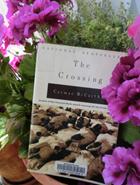
The Crossing

This is the second in the ‘The Border Trilogy’ series after ‘All The Pretty Horses’, that book being my first read of a Cormac McCarthy novel which turned me into a fan. The first book follows two young boys on their way toward Mexico to find work where they endure numerous perilous adventures including prison, first love, betrayal and death. Quite possibly the least bleak of McCarthy’s work, which may account in part for why I enjoyed it so much, but even his more downbeat work has much that I admire linguistically.

In ‘The Crossing’ we meet 16 year-old Billy who doesn’t intend to set out on an adventure, it happens almost by accident, he feels the need to put things right; three times he does so, each effort requiring him to cross the border into Mexico on a personal mission.

The first trip he attempts to return an injured, pregnant wolf he has trapped. Rather than kill her, he tries to return her to the mountains where she came from. The second journey with his brother Boyd is an attempt to retrieve stolen horses and the final crossing Billy makes alone to find his missing brother and bring him home.

To read McCarthy is to take a long, sometimes grim journey; a voyage that traverses rough terrain and encounters more evil than good ,while observing the character moulding experiences of its young male protagonist. But worthwhile for the linguistic pleasure of his descriptions and dialogue (some of it in Spanish).

What does the corrido say?

Quijada shook his head. The corrido tells all and it tells nothing. I heard the tale of the güerito years ago. Before your brother was even born.

You don’t think it tells about him?

Yes, it tells about him. It tells what it wishes to tell. It tells what makes the story run. The corrido is the poor man’s history. It does not owe its allegiance to the truths of history but to the truths of men.  It tells the tale of that solitary man who is all men. It believes that where two men meet one of two things can occur and nothing else.  In the one case a lie is born and in the other death.

McCarthy is no optimist, to take a journey into his imagination is tough and if this novel embraces anything, I think it is futility, the shadow that neutralises youthful exuberance and withers righteous intentions, that lingering threat that will keep an older, wiser man within reach of his homestead and away from the troubles that lie in wait of the restless, idealistic man on a dubious if well-intended mission.

But it is in his nature to make that attempt to set things right, not to let things be, to provoke a response and assert his rights, no matter how foolish they appear or dangerous they become.

I really enjoyed taking my time reading this novel, it is written in language I like to be immersed in and is thought-provoking along the entire journey and long after, I don’t need more than that from a good read and leave you with another favourite passage from near the end.

You look like you might have been down here a while, the man said.

I don’t know. What does that look like?

Like you need to get back.

Well. You probably right about that. This is my third trip.  It’s the only time I was ever down here that I got what I come after.  But it sure as hell wasn’t what I wanted.

The Pearl

I am content as my first foray into the work of John Steinbeck reveals that he too loves a fable, and like the best of them, lets the story speak for itself.

His short novel ‘The Pearl’ is based on a Mexican folk tale about Kino and Juana, a young couple who live a basic existence, their joy of a first baby threatened when it suffers the sting of a scorpion.
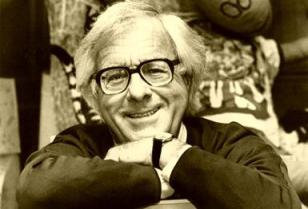
Kino is a pearl diver and on the day he most needs a miracle, the discovery of a large pearl appears at first to be the answer to the couple’s prayer. However, its discovery disturbs the community’s tranquil equilibrium, it seems too much to embrace and while it is in their possession, it wreaks only havoc.

There is a sense of inevitability with this kind of tale, we know the pearl is symbolic, and we recognise that desperate grasping, clutch of desire, laced with fear and stalked by paranoia, the fleeting hope it inspires is stifled by the more pervasive greed and jealousy which quickly degenerate into suspicion and violence.

Despite the inevitability, I read with the wilful hope of an optimist, always searching for some altruistic sign, an indication of man’s humanity, the charitable gesture of an honest person. Steinbeck leads us along on this journey, as we develop our own understanding bathing in his glorious prose.

Now Kino’s people had sung of everything that happened or existed. They had made songs to the fishes, to the sea on anger and to the sea in calm, to the light and the dark and the sun and the moon, and the songs were all in Kino and in his people – every song that had ever been made, even the ones that had been forgotten. And as he filled his basket the song was in Kino…

Taking the pearl from its natural habitat changes its symbolism, for in nature it is pure, lustrous, a thing of splendour and inspiration, it represents the transformation of something irritable (the grain of sand) into something of divine beauty (the pearl). But removing it from the sea will corrupt everything that sees, hears of, imagines or touches it; it becomes representative of greed and avarice, the longer it stays in their possession, the greater its destructive power. But will returning it to nature undo its curse?

In addition to this enjoyable story, the book opens with a foreword which reads like a letter from Steinbeck’s wife Elaine. She shares something of the joy of his writing life, his impulsive and creative attempts to construct the perfect writing environment (including building a writing room in the back seat of his Ford Station Wagon) all of which for me, created an almost familiar context from which to begin reading the great man’s work.

Onward to his next oeuvre, Tortilla Flat awaits.

The Smile by Ray Bradbury

A Short Story Set in the Future

He wrote more than 27 novels and over 600 short stories and somehow his work has never crossed my path.

As I read the Culture and Book pages of The Guardian daily, I have been reading some wonderful tributes to the writer Ray Bradbury who died recently at the age of 91. ‘Margaret Atwood on Ray Bradbury: the tale-teller who tapped into the gothic core of America’ was interesting, Atwood celebrates the author, known for his science fiction but who has shown remarkable scope and influence throughout his career. He was a story-teller; he had an active and far-reaching imagination and rejected the limitation of labels.
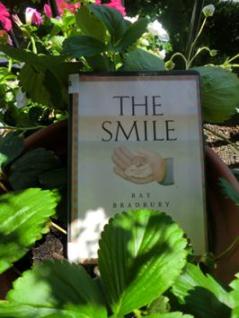
After a quick trip to our local French library yesterday, I stopped at a display table honouring Ray Bradbury and came home with his prophetic short story ‘The Smile’ the only English language work left on the display.

Set in 2061, the story is set in a square in Rome, where the boy Tom waits with an angry crowd to view the ‘Mona Lisa’. Joy has vanished from this world and people are filled with hate for everything that represents the past. Except Tom. He remembers. He represents hope. Perhaps love. Certainly appreciation.

Tom stood before the painting and looked at it for a long time.

The woman in the painting smiled serenely, secretly, at Tom, and he looked back at her, his heart beating, a kind of music in his ears.

Demi-God reawakens Classical Myths

It wasn’t the bookies favourite, but it was the bestselling book of the Orange Prize shortlist and as I discovered, Madeline Miller’s
‘The Song of Achilles’ had much to entice a multitude of readers, being a contemporary narration of an age-old tale drawn from the Greek Myths, published in the lead up to the Olympic Games and touching on issues that echo President Obama’s recent stand on equality for same-sex couples. Very 21st century then.

Inspired by Homer’s classicThe Iliad‘, Miller focuses on Achilles, the half God, half mortal son of Peleus and Thetis and his friend, the young exiled Prince, Patroclus, about whom little is known. Achilles’ mother Thetis is a sea-nymph and fears for her son’s future; she will do everything she can to protect him given his fate as the greatest warrior of his generation, and to avoid his death which it the oracles say will follow his killing of Hector.
The friendship between Achilles and Patroclus fires Miller’s imagination and the first half of the book beautifully depicts this at first distant relationship, blossom into a feverish loyalty. Not surprising to learn the author has been listening to and reading the Greek myths since she was 5 years old, a passion that carried her into studies of Greek and Latin, which comes across in this oeuvre.

Though I have only cursory knowledge of the Greek heroes, I have long been intrigued by their stories and archetypal symbolism, much in the same way I loved to learn about Maori myths and legends during my childhood; the legendary Maui, a demigod from Hawaiki, fished up New Zealand from the ocean.

I am reminded too of the child in A.S.Byatt’s ‘Ragnarök’ who relates to the Norse myths more than anything else anyone teaches her. So too, in my imagination do these legends of childhood come back to me and explain nature and humanity in a more primal way than anything else I was later taught – what we learn and how it affects us isn’t so much chosen as absorbed into our being when we are very young.

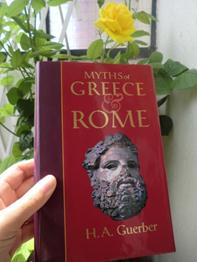
So ‘The Song of Achilles’ inspired me to pick up my ‘Myths of Greece & Rome’ by H.A.Gueber and read all the references to Achilles, Patroclus, Thetis, Peleus, Hector and more. Within its pages I found this reference to a word and metaphor we all know to refer to the tendon in the heel, but whose origin is much less known.

Thetis loved this only child so dearly, that when he was but a babe, she had carried him to the banks of the Styx, whose waters had the magic power of rendering all the parts they touched invulnerable. Premising that her son would be a great warrior, and thus exposed to great danger, she plunged him wholly into the tide with the exception of one heel, but which she held him, and then returned home.

In the original story an oracle foretells that Achilles will die from a wound in his heel after his dispatch of Hector; ultimately he will be remembered and perhaps even more renowned for this insignificant but fatal weakness, than for his epic courage and strength.

I liked this book as much for its inspiring me to look at other books and references to find out more about the legend as I did for the story itself. I came to it without much knowledge of its content and found the first half totally intriguing, reading it in one sitting. It did slow and almost lose me once they set sail for Troy and the ensuing battle scenes were a little two-dimensional, but when Patroclus found his healing abilities and tended to the wounded soldiers, the story refocused on the lead characters.  The action played off the battle field was more captivating and I was gripped throughout the last quarter.

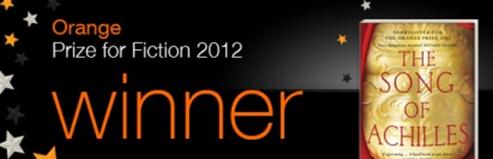
Orange Prize Winner!

As I pack my bag for a short visit to Northern Ireland tomorrow, I hesitate about only taking the kindle, having been caught out before on a 5 hour TGV train ride and a flat battery. But with the announcement that Madeline Miller has won the 2012 Orange Prize for Fiction with her debut novel ‘The Song of Achilles’, my decision is made, it has been tempting me all day and I have picked it up a few times, willing it to share its secret. So into the bag it goes.

While the international women’s writing prize will continue to be celebrated, this will be the last year that it is sponsored by the telecommunications company Orange, so we shall wait and see what name and new look next year’s prize will emerge with.

The shortlisted novels can be viewed here and my review of Ann Patchett’s ‘State of Wonder’.

So what can we expect to find within the covers of Madeline Miller’s ‘The Song of Achilles’? According to the blurb:

Greece in the age of Heroes.

Patroclus, an awkward young prince, has been exiled to Phthia to live in the shadow of King Peleus and his strong, beautiful son, Achilles. By all rights their paths should never cross, but Achilles takes the shamed prince as his friend, and as they grow into young men skilled in the arts of war and medicine, their bond blossoms into something far deeper — despite the displeasure of Achilles’s mother Thetis, a cruel sea goddess. But then word comes that Helen of Sparta has been kidnapped. Torn between love and fear for his friend, Patroclus journeys with Achilles to Troy, little knowing that the years that follow will test everything they hold dear.

Inspiration indeed in this year of the Olympics!

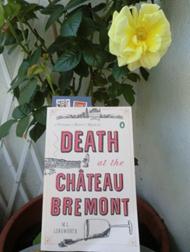
Death at the Château Bremont

There is a shelf in our local bookstore dedicated to books crossing numerous genres that have a connection with France, you will find nonfiction travelogues such as Sarah Turnbull’s ‘Almost French’ or David Sedaris’ vignettes in ‘Me Talk Pretty One Day’, funny, true, yet never denigrating the country that has become like a second home to him. You will also find English translations of popular French authors like Jean Giono and Michel Houellebecq and novels set in France.
Death at the Château Bremont fits into latter, not only set in France, but here in Aix-en-Provence. I first became aware of the title thanks to a review by Lynne at Aixcentric, an excellent and informative blog I read regularly to know what’s happening in and around the area where I live.

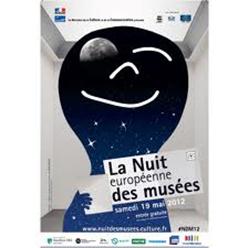
Just yesterday I read that tonight is the annual Nuit des Musées when the town’s museums are free and open from 8pm until 1am. We love this annual late night out.

Not long after that mention, the book-club that I read along with nominated it as their May read and the author M.L.Longworth who lives here in Aix-en-Provence, was invited to join us. So, a fascinating insight into the gestation of this, first in the ‘Verlaque and Bonnet Mystery’ series, which follows the lives, dramas and intrigues of Judge Antoine Verlaque and Professor Marine Bonnet, his sometime amoureuse.

It’s a mystery and in order to keep the mystery alive, I will only reveal that Étienne de Bremont falls to his death from a Château window, an investigation is requested and after some drama involving clandestine affairs, jealous siblings, polo players, Russian millionaires and a New York suicide, all will slowly be revealed.

What makes Longworth’s mystery unique is the journey. It is far from dark and gory, realms she has no apparent appetite for, however she will take you on a gastronomic excursion through the towns, vineyards and countryside of the region, visiting suspects while piecing together the connections and clues to the lives of those involved in this conspiracy. So not just a book for aficionados of mystery’s, but one for food and wine lovers and anyone who has ever dreamed of living and working in a city of culture and gastronomy in the South of France.

M.L.Longworth with Claire McAlpine

No tourist visit, this literary journey is the real thing and so agreed the group of eight women who were present to discuss the book, all sharing their favourite parts, confirming the locations the book visits and even suggesting others for the third book, which the author is working on, all suggestions were gratefully received and noted.

M.L. Longworth’s second book in the series, ‘Murder in the Rue Dumas’ will be published on 25 September 2012.

A Letter to her Sister

Hyde Park by Stella Leivadi @treknature.com

After the slow meander through Nancy Goldstone’s ‘The Maid and the Queen’, I reached for this library book because I was sure it would have pace and I am long overdue reading it, considering I gave it to my sister for Christmas two years ago.

Rosamund’s Lupton’s ‘Sister’ is set in London, from Notting Hill to Hyde Park, in a police station and St Anne’s Hospital.

It is Beatrice’s book long letter to her missing sister Tess, in which she narrates everything that took place from the moment she heard of her sister’s disappearance until now, when she will recount the entire episode as a kind of tribute to her sister. Telling a story in this way, as Ruby Soames does in her excellentSeven Days to Tell You’ makes the reading of it more intimate, there’s less use of the I and they and more than usual of the you and your. It’s almost a conversation, only the narrator speaks and you listen.

Beatrice has been living in New York and the disappearance of her sister brings her back to London and provides some distance and perspective on her own life, which will change forever as she attempts to uncover what really happened to her sister, refusing to accept the conclusions of the police and the easy acceptance of their verdict by her mother and fiancé.

As I put down the phone I saw Todd looking at me. ‘What exactly are you hoping to achieve here?’  And in the words ‘exactly’ and ‘here’ I heard the pettiness of our relationship.  We had been united by superficial tendrils of the small and the mundane, but the enormous fact of your death was ripping each fragile connection.

It being something of a mystery, I do try to second guess not just the culprit but also the twist, there always is one isn’t there? I often look for the character that is barely mentioned and I was aware that this particular narrative perspective can be the perfect conduit for the unreliable narrator. However, in this case, I neither predicted the culprit nor saw the twist right until it occurred, leaving me in admiration of Lupton’s ability to outwit and pleasantly surprise her readers.

I look forward to reading her second novel ‘Afterwards’.

Wild Horses and Flash Fiction

Its National Flash Fiction Day today in the United Kingdom, celebrating the short, short form of fiction, the art of telling a story in less than 1,000 words and more often only 150 words.

David Gaffney shares his experience of writing and being published in the form and offers these tips:

  1. Start in the middle
  2. Don’t use too many characters
  3. Make sure the ending isn’t at the end
  4. Sweat your title
  5. Make your last line ring like a bell
  6. Write long, then go short

He goes on to explain each tip, click here to reveal his words of wisdom.

And here is my attempt to tell a story in 150 words, word by word.

*

The Muster

*

I ride bareback with just a halter and lead into the midst of the herd, gently coaxing them out from under the trees. My mount quivers beneath me; fear pervades the damp atmosphere and I exhale deeply to expel it.

The sound of a gunshot spooks the stallion and the horses move. Bright sunlight extinguishes shadows as they bolt, branches cracking beneath the drum of hooves.

My father is in position. The herd veers to the right. At the river bank there is a two metre drop into the water and we do not hesitate. I grip hard with my knees and feel muscle ripple beneath me bracing itself for the jump. Something knocks my shoulder and I cry out as we plunge head first into the torrent.

“Wake up son, we’re mustering that herd of wild horses today” my father says as I open my eyes.