The Cleaner of Chartres by Salley Vickers

Cleaner of ChartresI could not miss the opportunity to read Salley Vickers new book set in the region of Beauce in central France and the well-known town of Chartres with its famous cathedral, its mysterious labyrinth (which has inspired many authors to pen stories) and an intriguing blurb of the redemptive power of love and community in the famous French town.

Agnès is found as a baby wrapped in a basket by a peasant farmer, the only clue to the parentage of the young nursling, a single turquoise earring lying in the bottom of the basket. The farmer, unsure what to do with the infant, but knowing it beyond his capability to take care of a newborn, deposits her at a convent, leaving the nuns to take care of her. Which, in their own way they do, though it does not prevent her from being judged and misunderstood by the pious community, even though it might be inferred that it was they who made her vulnerable to the events that would follow.

“Agnès is the saint to whom young women pray for husbands, and, since Jean Dupère, who had found the baby, presumed the foundling’s mother had none, he named the anonymous woman’s daughter after the saint.”

chartres_labyrinthe

The labyrinth of Chartres

The story is narrated simultaneously during two different time periods in Agnès’ life, as a young girl during her various stays in mental health institutions and as an adult in the town of Chartres, where she lives an independent life cleaning the still famous Notre-Dame cathedral as well as various other local villagers homes, characters who bring the pages to life with their flaws, foibles and fantasies, whom Vickers just manages not to let fall into becoming cliché.

There is an underlying sadness to the story, as it seems that Agnes attracts bad luck and as a reader, we can’t help wishing for a lucky break or that people around her could just be kinder or more observant of who she is as a person and not to judge people on how they look or what has been said of them.  Like Deborah Batterman’s character Charlotte in her excellent short story, Crazy Charlotte, Vicker’s shows the potential destructive power of that evil tongue, community gossip.

“Agnès had no clear idea why she had fled to the crypt, but for her, unlike Father Bernard, it was the very opposite of the haunt of the diabolical. On the contrary, it had always seemed to her a hallowed place. Old and still and unjudging.  Unjudging was what she most craved.”

Chartres CathedralWhile The Cleaner of Chartres is no comedy, Vickers depiction of a French town/village reminded me a little of Julia Stuart’s delightful book The Matchmaker of Perigord, a fabulous light read that also excels in depicting the essence of local French villagers. Some of the most enjoyable moments in reading are in the simple narration of everyday life, the interactions between two people, in particular where those meetings bring about a small positive change. So many of Agnès’ interactions have the potential for this, the fact that so few of them eventuate, makes them all the sweeter when they do.

Overall, a pleasant read, although I was a little disappointed with the ending, which I felt should have revealed more than it did.

Note: This book was an ARC(Advance Reader Copy) kindly provided by the publisher via NetGalley.

Man Booker Prize Shortlist 2013

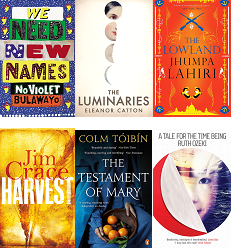
The Man Booker Prize shortlist was announced today and looks like an interesting and diverse offer, with two previous nominees*, four fabulous women writers and stories that will transport us to many far reaches of the world.

One of the judges, Robert Macfarlane had this to say:

‘Global in its reach, this exceptional shortlist demonstrates the vitality and range of the contemporary novel at its finest. These six superb works of fiction take us from gold-rush New Zealand to revolutionary Calcutta, from modern-day Japan to the Holy Land of the Gospels, and from Zimbabwe to the deep English countryside. World-spanning in their concerns, and ambitious in their techniques, they remind us of the possibilities and power of the novel as a form.’

The shortlist comprises:

2013

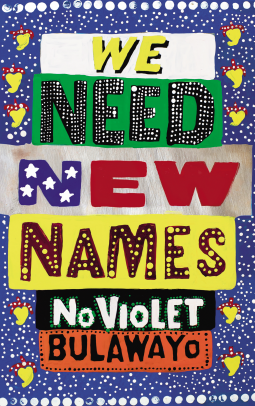
NoViolet Bulawayo We Need New Names                  my review here

Eleanor Catton The Luminaries

Jim Crace Harvest

Jhumpa Lahiri The Lowland

Ruth Ozeki A Tale for the Time Being

Colm Tóibín The Testament of Mary

I have only read Bulawayo and I’m happy to see her on the list and I’m also ecstatic to see a fellow New Zealander make the list. I can’t help but hope that Eleanor Catton wins and I’m really looking forward to reading her novel The Luminaries, which has had some fantastic reviews.

The judges have one month to re-read the shortlist and the winner will be announced on 15 October 2013 at a ceremony at London’s Guildhall.

So have you read any from the list and any guesses for a winner?

*Colm Tóibín was previously shortlisted for The Blackwater Lightship in 1999 and The Master in 2004 while Jim Crace was shortlisted in 1997 for Quarantine.

We Need New Names by NoViolet Bulawayo

I came across this title by NoViolet Bulawayo when it made the long list for the Man Booker Prize 2013.  A new voice and it comes across as fresh, bold and unique. Though I was disappointed not to see Americanah on the list, I was curious to read this book, as it had been suggested it had a similar premise, narrated from a younger character’s point of view and a different country, the protagonist, Darling, is from a rural Zimbabwean village (Ifemulu came from the Nigerian city of Lagos in Adchie’s book).

NoVioletIf there are similarities, it is that they both describe a life before and after they traverse an ocean to live in the new land, however in Darling’s case, her overstaying means that unlike Ifemulu in Americanah, she will not return, for to return having broken the rules is to limit one’s future options – all this despite the grand sacrifices that will be made, in order to live in the land of dreams, they refer to as Paradise.

Their styles are very different though, the only similarity being that geographic shift and the associated perception of another culture as an outsider.  In terms of the reading experience, I find something more in common between the voices Donal Ryan channels in The Spinning Heart and NoViolet Bulawayo’s voice of Darling.  They both have a way of portraying their characters that invokes a feeling  like someone standing too close to your face, they make you feel like you need to step back to get a better view, somewhat difficult when reading for the first time.


Review

We meet Darling with her friends as they are heading over to Budapest (a wealthier neighbourhood) to pick guavas, to relieve a few trees from the burden of their fruit, to steal.  The first half of the book follows this group of friends and their daily life in a small village, where they now live in much rougher conditions despite the promises of independence, due to the destruction of homes by a government set on destroying what is deemed unsightly or was it an act of revenge against the tide of discontent. Either way, their home is now one room, their father is absent but they have each other.

“If you’re stealing something it’s better if it’s small and hideable or something you can eat quickly and be done with, like guavas. That way, people can’t see you with the thing to be reminded that you are a shameless thief and that you stole it from them, so I don’t know what the white people were trying to do, stealing not just a tiny piece but a whole country. Who can ever forget you stole something like that?”

Running alongside the events of the children’s’ lives are the undercurrents of a changing political situation, an increasing frustration with the democratic process, the heightened anger of communities and mobs; eventually Darling is sent to America to live with her Aunt.

“When things fall apart, the children of the land scurry and scatter like birds escaping a burning sky. They flee their own wretched land so their hunger may be pacified in foreign lands, their tears wiped away in strange lands, the wounds of their despair bandaged in faraway lands, their blistered prayers muttered in the darkness of queer lands.”

zimbabwe mapAn American Dream?

America isn’t what she expects, her cousin is not like her friends, the snow and coldness are not like the village, the sky is not like the sky, her thin Aunt pacing the room exercising in front of the TV is not like her mother and her Uncle who comes home, watches sport and shouts Touchdown, unlike her father or the men from the village either.

They are  invited to a wedding, a day that might be a metaphor for the entire immigrant and cultural experience, all the misunderstandings and reminders of a past life wrapped up in one anecdote after the other, they manifest in the drive there, the interactions with guests, and those unspoken rules of engagement in a foreign culture, which Darling will be reminded of before the night is over.

Darling misses her friends and family and wishes to visit them, a topic that her Aunt either avoids or addresses in a vague manner. She will come to understand what she couldn’t know when she left, that it is unlikely she will ever return home. She consoles herself by calling.

“Well, what is happening over here is that your mother is finishing cooking istshwala and macimbis, and Sbho is standing there watching her and eating a guava. When Chipo announces this, I get a strange ache in my heart. My throat goes dry; my tongue salivates. I am remembering the taste of all these things, but remembering is not tasting, and it is painful. I feel tears start to come to my eyes and I don’t wipe them off.”

BulawayoNoViolet Bulawayo creates an unforgettable voice in her protagonist, a lens through which we witness part of what feels like an at times frightening and yet exhilarating childhood, with a naive awareness of the greater political events that will affect their futures.

The life they live is not an easy one, and it may never be as appreciated as it will become through the act of leaving it all behind, as so many do, believing they are heading towards Paradise.  But even in America, when there is a lack of guidance and care, something similar occurs, the only difference being the kinds of activities unsupervised teenagers get up to in a modern city compared to a rural town or village.

Raw and in your face, each chapter is like a scene playing out as you read from the branch of a tree,  just out of danger.  Bulawayo invokes fear and dread in the reader as we encounter each episode and in the end, we are unsure which is preferable, a half lived life in  Not Really Paradise or that volatile, explosive community, still trying to find itself in Zimbabwe.

Further Reading

Interview NoViolet Bulawayo talks to Irenosen Okojie about being a writer in diaspora, her writer’s process and the importance of the Caine Prize.

My Reviews of Zimbabwean Literature

Nervous Conditions by Tsitsi Dangarembga

The Book of Not by Tsitsi Dangarembga

This Mournable Body by Tsitsi Dangarembga

House of Stone by Novuyo Rosa Tshuma

Note:  This book was an ARC (Advance Reader Copy) provided by the publisher via NetGalley.

Americanah by Chimamanda Ngozi Adichie

My big fat summer read and it was just what I like, to get lost within pages that will attempt to navigate the slightly messy lives of flawed characters that feel like they could be real. And most of them here come close to attaining that reality.

Americanah (2)Ifemula and Obinze are university sweethearts who slip into a relationship that seems to have it all, though they have yet to conquer the career survival path of their simple lives thus they are separated in Nigeria during their studies and then by the continents of  North America and Europe as they try to establish their careers. Hardship is the one thing they seem not able to share and it drives them apart like the distance of the ocean that separates them, spanning a distance they seem unable to traverse.

Just as many young people have been doing so and continue to today, they eventually return to their home country and their roots and will re encounter each other.  Although they find their way home, will  they be able to ignore those untravelled waters they did not share? This is one of the themes the book explores.

“Somewhere in a faraway part of her mind, she wanted to lose weight before she saw Obinze again. She had not called him; she would wait until she was back to her slender self.”

I loved the book for many reasons, firstly because I remember reading and enjoying her first book Purple Hibiscus, enhanced by seeing her speak in person at a Readers Festival in Auckland where she talked about the next book she was planning to write, about a subject few at the time seemed to want to talk about – the Biafran War – that research and effort to understand a chapter in Nigerian history manifested in her Orange prize-winning novel Half of a Yellow Sun, which has since been made into a film (not yet released). Since then I have looked forward to reading her other work and interviews, as she is more than just a writer of stories.

Secondly, having a good friend from Nigeria, who made the move back after a similar number of years living abroad, who did so successfully and visiting there, participating in her marriage ceremony makes me even more curious to read the work of those who have attempted the same. There is something universal about the experience and yet unique at the same time.

Chimamanda Nogozi Adichie easily engages an audience with her observations, insights and view of the world and with Americanah it is as if she sends out another version of herself, Ifemulu, a young woman who grows up in urban Nigeria and through her studies has an opportunity to live, work and study in America.

Ifemulu’s disappointments distance her from her closest relationship because she doesn’t share them. In an effort to be heard she writes an anonymous blog and shares her experiences and observations both in America and again on her initial return to Nigeria.

She tries to remain an impartial observer, though those who know she is the author challenge her and she discovers that life often finds a way to throw at us, that which we condemn in others. But therein the greatest lessons lie and Ifemulu will do much soul-searching on her journey to fulfillment. The blog posts are interesting to read and provocative and it is great to see the form being represented in a novel, and a WordPress blog at that.

In a Lagos cafe

In a Lagos cafe

For me, books whose characters cross cultures are always interesting, just as travelling in another country and witnessing the different ways people live and interact and perceive is interesting. Whilst I could never begin to know what it would be like for a young Nigerian woman to move to live in America, I enjoyed the experience of inhabiting Adichie’s imagination, viewing Ifemulu’s life and how she tries to interpret the foreign culture she and many others have long dreamed of.

My visit to Nigeria was too short to gain any real perspective about what it might be like to live there, but the challenges are undoubtedly equally great, though completely different in nature.

It doesn’t matter which country we grow up in to think of as our own, almost any other country we immigrate to or spend time living in will invoke a feeling of strangeness, of being an outsider.

“The only reason you say that race was not an issue is because you wish it was not. We all wish it was not. But it’s a lie. I came from a country where race was not an issue; I did not think of myself as black and I only became black when I came to America.”

Twice whilst reading this novel, I felt tears well up, surprising myself at how deeply this character got under my skin, some of the burdens she carries, only gaining full recognition in the moment they are healed and those moments are powerful when they come off the page. Surprising and brilliant.

Related Reads

Stay With Me by Ayobami Adebayo

Under the Udala Trees by Chinelo Okparanta

Freshwater by Akwaeke Emezi

Red Dust Road by Jackie Kay

The Spinning Heart by Donal Ryan

Reading Donal Ryan’s The Spinning Heart is to wake up in the heart of a struggling suburban neighbourhood where overnight the fate of a significant proportion of its population has changed.

Spinning HeartLittle time elapses between the pages of the novel, sufficient to penetrate the perspective of 21 residents of this neighbourhood, a chapter each.  Rather than a plot, this one event is more of a turning point from which we survey each character from their own and multiple perspectives, gradually creating a picture of this community, where perceptions often outweigh and overrule reality.

That event is the discovery that Pokey Burke has disappeared after a dodgy property deal in Dubai halts all work on his property developments in this Irish suburb.  He has absconded from his responsibilities including all those in his employ (at least they thought they were in his employ), those who thought they were doing okay in these hard times find out that not only do they no longer have a job, they have never been registered as employees.

Donal Ryan unmasks his characters in the single chapter he gives them each to speak (ironically, no chapter is given to Pokey Burke), this is no slow build up to revealing a characters inner thoughts, they are not characters prone to thinking about various options, this is a neighbourhood in which its men rarely ponder anything, their thoughts are often aggressive, misogynistic and raw, many of them are of the act now, think later persuasion. They make for uncomfortable reading and have the reader yearning for a fictional reprieve; could we have one character to latch onto to get us through this discomfort please?

And if we find it partially, it is with Bobby, the foreman whom we meet in the first chapter, on his daily walk to check whether his father is dead yet, something he wishes for that we will come to know more about as threads of his story snake through other chapters, so that we do meet him again and are able to follow his destiny.

“But the things Dad said, and the way he said them, were so scarily unlike him, so cutting, so cruel. That’s just the way he was reared, Ger reckons. She says people’s thoughts, when their upbringing is mired in dogma, aren’t really their own. Their opinions are twisted, not reflective of what’s in their souls; their words are delivered obliquely, like light being refracted through water – you can’t see their real feelings, just as you can’t see the true position of an immersed object.”

So much of what we experience is illusion, many people and situations hide another reality, nothing is what it seems.  Deception is normal, no one wishes to dig too deep to understand, empathy is an unknown concept, we too often ignore instinct, judge quickly and crush the weak and sensitive.

A disturbing read, unputdownable at the same time as not wanting to pick it up, the anticipation that maybe there is some good that can come of the situation, keeps us reading on. These are tough times and perhaps the bad karma of a financial crisis brought about by those who practice greed, corruption and a lack of empathy brings out the worst at every layer of society. It is certainly difficult to navigate the mire and find the seeds of hope.

Booker Longlist

Man Booker Longlist 2013

Donal Ryan is one of three Irish authors longlisted for the Man Booker Prize 2013 and a debut author, who is becoming as well-known for his perseverance (his manuscript was rejected 47 times) as he is for this contemporary work which digs under the skin of small town rural Ireland.

Note: This book was an ARC (advance reader copy) kindly provided by the publisher via NetGalley.

The Mussel Feast

Revolutionary Moments

Mussel FeastThe first novella of the Peirene Press 2013 collection is Birgit Vanderbeke’s The Mussel Feast, a reference to an evening meal of a family for whom a mussel feast signifies a special celebration and provokes a familiar family ritual.

This evening however, is a an event (or a non-event) of angst-ridden anticipation, as the mother and her teenage son and daughter prepare the feast and wait for their father to return from work with news that was supposed to have been a given.

There is little action or plot, though much is revealed throughout the course of the evening via the reflections of those present, who, as the minutes and hours pass, become emboldened in their thoughts as they are allowed to run on unchecked and unchallenged by he who normally acts as judge.

Just observing how the words fill up entire pages of this novella, creating a seamless run of sentences without pause or paragraph is admirable and makes me pause in my reading to check if every page is formatted the same, And it is. The constant stream of words is synonymous with an outpouring of frustration, the way the words are presented on the page like a revolutionary act itself. No dialogue, no action, a stream of consciousness charting the psychological passage of a family through the familiar acts of a routine that will manifest in wilful rebellion.

The Mussel Feast should be a cause for celebration when the routine is adhered to. When a crack opens in the routine and the feast is spoiled, who knows what uncharacteristic behaviour may follow.

An original and thought provoking read, one I devoured easily, as promised by Peirene, it is unique in its ability to keep the reader engaged while using a narrative style that is less popular today and yet succeeds in captivating its audience.

The first of her 17 novels, I look forward to reading more of her work and would love to hear any recommendations from others who have read her work.

“I wrote this book in August 1989, just before the fall of the Berlin Wall. I wanted to understand how revolutions start. It seemed logical to use the figure of a tyrannical father and turn the story into a German family saga.” Birgit Vanderbeke

Next up in Peirene’s Revolutionary Moments series is Mr Darwin’s Gardener  by Kristina Carlson, which from the reviews I have read, already sounds just like my kind of book…

CIMG4717

Man Booker Prize Longlist 2013

Man Booker 2013 logoToday judges announced the Man Booker Dozen that have made it onto the long list for 2013. Last year Hilary Mantel won it for the second time and with a sequel, Bring Up the Bodies, which is the 2nd book in the Thomas Cromwell trilogy.

StetI have just finished reading Diana Athill’s excellent book Stet, An Editor’s Life arguably the person with the longest active memory of the history of books and publishing today, she won the Costa Prize for her most recent memoir Somewhere Near the End in 2009, when she was 93 years old. Stet, she wrote at the sprightly age of 80 shortly after retiring.

In the book she mentions the launch of the Booker Prize, mentioning that in the sixties, it was becoming more and more costly and less profitable to publish books and to compete against the bigger publishing houses. It was becoming difficult to sustain a publishing house that appealed to the more literary reader. She describes the two kinds of reader that existed, still relevant today:

People who buy books, not counting useful how-to-do-it books are of two kinds. There are those who buy because they love books and what they can get from them, and those to whom books are one form of entertainment among several. The first group, which is by far the smaller, will go on reading, if not for ever, then for as long as one can forsee. The second group has to be courted. It is the second which makes the best-seller, impelled thereto by the buzz that a particular book is really something special; and it also makes publishers’ headaches, because it has become more and more resistant to courting.

The Booker Prize was instigated in 1969 with the second group in mind: make the quality of a book news by awarding it an impressive amount of money, and hoi polloi will prick up their ears.

WBN 2013It worked for the books named, but the underlying aim to convert more people to reading did not. Not much has changed. The latest attempt to convert the population into reader, we could say is World Book Night, where publishers print thousands of books for free and they are given out on one night in the year, to people who don’t really read. Has that worked? Unlikely I think.

But onto the prize for 2013, this year’s long listed titles and authors are:

Eleanor Catton, The Luminaries

Jim Crace, Harvest

Eve Harris, The Marrying of Chani Kaufman

Jhumpa Lahiri, The Lowland

ColmTóibín, The Testament of Mary

Colum McCann, TransAtlantic – my review here

Donal Ryan, The Spinning Heart – my review here

NoViolet Bulawayo, We Need New Names – my review here

Tash Aw, Five Star Billionaire

Richard House, The Kills

Alison MacLeod, Unexploded

Charlotte Mendelson, Almost English

Eve Harris, The Marrying of Chani Kaufman

Ruth Ozeki, A Tale for the Time Being

Congratulations to all those authors and good luck to anyone hoping to read the list, I’ve only read one and I do have The Spinning Heart, so I guess that will next.

The shortlist will be announced on 11 September and the winner on 16 October.

Time to get reading!

Shoes Hair Nails, Fragments of the Whole

In October 2012 a pair of Marie Antoinette silk slippers were put up for auction on the anniversary of her execution.

Marie Antoinette silk slippers

Marie Antoinette silk slippers

I knew about it because I use BBC News texts rewritten for learning purposes to teach English to mature French students; it keeps the lessons interesting and relevant, no more “Brian is in the kitchen” or “Michelle is at the swimming pool”, now we can introduce rich new vocabulary such as guillotine, opulent, goes under the hammer, scaffold, artefacts and tyranny and more importantly, improve competence and confidence in the art of conversation and communication.

Knowing that the author Deborah Batterman had written a collection of short stories with Shoes in the title, I tweeted her a link to the Marie Antoinette story. She offered me a copy of her book and though I warned her shoes, hair and nails weren’t my thing, if she was willing to risk sending me her book, I’d read it. While I was keen to read the stories, I admit that I hesitated at the Cinderella type image on the cover, which may explain why in my reading, I began to rename the stories as I went, partly to help remember them, but also to reclaim them and give them the credit I believe they deserve.

Shoes Hair NailsThe stories are like vignettes, fragments, captured moments in time and life that feel familiar, even if the experiences are not what we know. Because in reading we inhabit the character and Batterman has a cathartic way of writing that puts us in the shoes of her protagonist, we understand implicitly what it was like to be there and to live through that experience.

She articulates instinctive, feminine sensitivities, fears, and concerns we will all recognise and yet struggle to put into words ourselves, and why bother when one can sit back with this gentle, funny and considerate collection of stories which take us to those places without the struggle to explain ourselves and may even help us feel better about facing similar issues.

Here is a glimpse into a few of the stories:

Vegas or as I think of it Last Trip to Vegas – Not wishing to acknowledge, even less to accept that Norman is at the stage where he needs care other what he can provide himself, his son Kevin takes him and the family off for a weekend trip to Las Vegas, hoping that the familiar experience will reignite those no longer charging cells in his decrepid body and somehow turn back the clock.

“Kevin argues with the doctors, reminds them of studies showing how physical stimulation helps not only the body, but the mind too. He knows Norman cannot live with us, refuses to think of any alternative. Except this one. He will take his father to Las Vegas, the place he loved more than any place on earth. The place that bombards the senses every which way you turn, every hour of the day… If the body has memory, Kevin reasons, this is the place to bring it back.”

It’s an entertaining trip and not on account of the expected offering of the casino city. It’s like Norman’s last stand and he has a whale of a time, as his family come to the realisation that they have up until now been avoiding. That there is no going back, the body is not a machine we can put in reverse, or slow motion, or pause. I loved this story and think it would make a better movie than that one about those three blokes who go to Vegas – and anyone experiencing mixed emotions with their parents going through the ageing process will appreciate the laughs and the stark realities of this tale.

kittens learningCrazy Charlotte – I think of this story as The Innocents, about a girl who wants to befriend a family living outside accepted social circles, who are the subject of gossip. She is intrigued by them all, Charlotte the mother is unlike anyone she has ever met and wants to give her children a broader education even if that means occasionally keeping them at home so they can visit an exhibition or see the birth of kittens. Charlotte isn’t crazy, but she allows one little girl to see the world through different eyes.

Nails, I think of as The Unfortunate Inheritance and it is appropriate that it also features in the title, because it is a deeply memorable story that reads like a novel and one that I could easily have kept turning the pages for and delved even deeper into all those characters with their Shimmering Reds or Deathless Velvet or whatever it was they wore on their nails, the references to nails actually reminded me a little of that “Where’s Wally?” character, the way they turned up in the most unlikely places, with regular consistency.

The protagonist moves on from a relationship and into an apartment on the 8th floor, already populated by complex, interconnected characters, whose lives and jealousies and pasts we begin to learn something of. Everyone arrives or is already ensconced with their baggage, physical and emotional, created or inherited, a stray dog, a piano, memories of a previous relationship, a past job. And sometimes an inheritance doesn’t make life any easier at all, in fact it can be lethal.

Deer Crossing2In Defensive Driving or as I recall it, Lesson 1 : The Many Effects of Deer, a woman and her husband find themselves in a random group of people, some of whom are there for similar reasons to their own, others because they have no choice. Regardless of their reasons, they all bring their many perceptions, which will be altered significantly by what occurs in lesson 1.

An inspiring collection of stories I recommend.  And even though I said I’m not into shoes, this post inspired me to seek out another book I’m going to revisit and share with you soon, more about shoes as art and inspiration, coming soon…

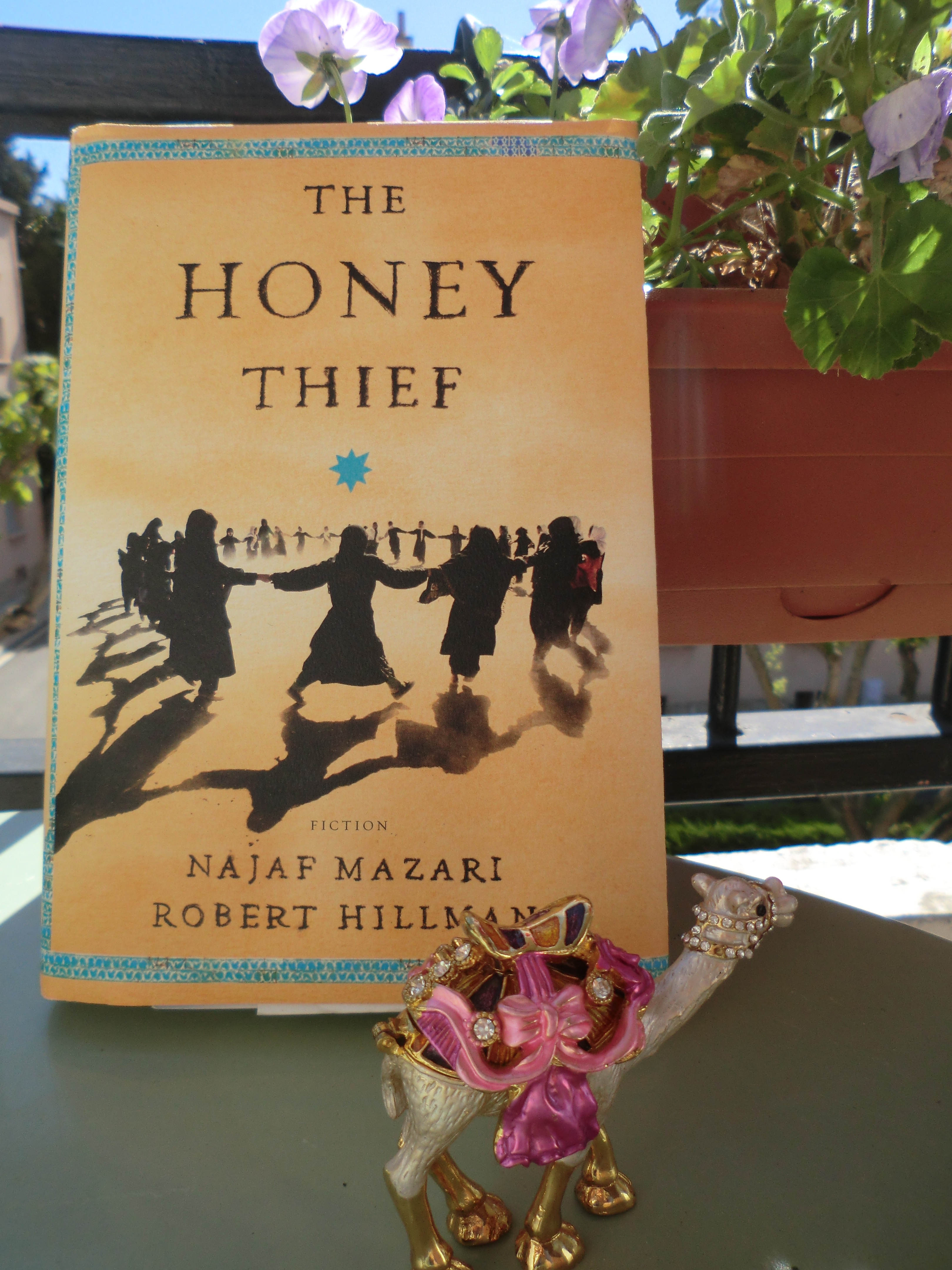
The Honey Thief Stories and Recipes by Najaf Mazari, Robert Hillman

I requested The Honey Thief to read because it appeared to offer a unique insight into a culture we know little about and about which we see and read far too much negative press.

The Honey ThiefThe book promised an alternative perspective, not because the author had lived an extra-ordinary life, but because as part of his upbringing he and others like him listened to these stories passed down and sometimes relived from one generation to the next. They are not about war, oppression, the Taliban, terrorists or western women living in a foreign culture, they are about sharing the wisdom and perspective of a people who have only experiences to share, wisdom to offer and guidance as their intent.

Sometimes stories are all that is left to be passed on to the younger generation and we are fortunate to be given this glimpse into these gifts of an ancient culture and tradition.

Ethnolinguistic map of Afghanistan ex wikipedia

Ethnolinguistic map of Afghanistan ex wikipedia

Najaf Mazari was born in Afghanistan, though he only refers to his homeland as that since he left it, because before anything he is Hazara, one of the many peoples of that vast and mountainous tract of land surrounded by six countries, Pakistan, China, Tajikistan, Uzbekistan, Turkmenistan and Iran and inhabited by more than 14 ethnic groups, separated socially and geographically.

Rather than an affinity with what we casually call Afghanistan, his loyalties are to his people and the area they have inhabited for at least 800 years, Hazarajat, although due to its’ long history of domination, they have often fled their spiritual home for the sanctuary of the mountains or other lands. But loyalty remains deep within them all, no matter where they find themselves.

Living as a refugee in Australia, Mazari with the aid of his friend Robert Hillman, shares these stories that are part of the fabric of Hazara life, stories of an oral tradition, keeping their bonds and culture alive, giving them courage and hope to continue to endure the many challenges that will face them, from family expectations to foreign visitors, to facing an enemy and offering forgiveness.

snow leopardThey know the mountains and rocks are loyal and must be respected, they read the wind and interpret the moon and understand that wars can last 100 years. We see their relationship to the mountains in the poignant story The Snow Leopard, where a visiting English photographer wishes to track and photograph the elusive creature. His first visit is unsuccessful, no one will guide him to those dangerous parts of the mountain where it is believed the snow leopard resides, as there is more than just the mountain to fear. On his second visit, he finds a guide and though unsuccessful, their journey is filled with insight, learning and a renewed respect for the mountain.

The stories share something of the way the Hazara see the world and the story The Honey Thief  brilliantly encapsulates their relationship with nature, animal life and shows how good can sometimes come from bad. The narrator shares with a boy how he became a beekeeper, caught red-handed stealing the honey, his captor observing that he wasn’t stung – thus finding his future apprentice.

Similarly this boy, whose grandfather is a wise man whom the villagers consult daily, discovers that even wise men have something to learn from young boys who like to ask lots of questions in The Wolf is the Most Intelligent of Creatures and learns that what might appear to be ill advice may in fact be the correct advice to give. This story, the very first, is sure to immediately challenge your own perceptions, something I adore in travel and delight in finding in a great tale.

Almost like fables and yet not, because all of these stories, while offering the seduction of a fable, are rooted in a realism that convinces the reader they tell of lives actually lived and not conjured up or given magical powers, a device that the common fable sometimes utilises.

The author Najaf Mazari

The narrator Najaf Mazari

And when the stories finish, we discover perhaps the greatest gift of all, one that can be referred back to and shared at home ourselves, a small collection of mouth-watering recipes with names and ingredients like Lamb Qorma, Sabzi Gosht, (lamb with spinach), Kofta Nakhod (beef & chickpeas), Boulanee (like Cornish pasties) and Chelo Nakhod (chicken & chickpea stew); surely living proof of the richness and diversity of their culinary culture and the trade that has passed between these boundaries of peoples for hundreds of years.

If you are interested in learning more, or considering reading the book, I highly recommend checking out these two excellent reviews:

  • Richard Marcus at BlogCritics – a beautiful, sensitive and concise review, how he packs so much into so few words, I’m still trying to figure out.
  • Elise Bauer at Simply Recipes – check out this short but flavoursome review and the recipe with pictures, she not only read the book, but cooked that first recipe with astounding success!

Note: This book was provided by the publisher Viking, a member of the Penguin Group US, in return for an honest review.

TransAtlantic Journeys, Real and Imagined

Colum McCann’s latest novel did well to live up to my raised expectations and has now become a symbol of a path on the journey of this blog itself. I was always keen to read McCann’s next novel, after the hype of Let the Great World Spin, which I enjoyed although I wouldn’t class it as one of my all-time favourites. TransatlanticHowever, TransAtlantic became a “must read” after I received a hardback copy in the post, in recognition of one of my reviews being profiled on The Guardian’s online book pages, where I occasionally post extracts of reviews and comment under the pseudonym RedBirdFlies. The review that was acknowledged, was Zadie Smith’s NW and you can read what the Guardian had to say about it here.
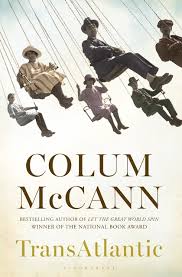
So thank you to The Guardian Books team for sending me a copy of TransAtlantic, a welcome surprise and wonderful to know that a few of these “word by words” have flown the page and landed elsewhere to an appreciative audience.

Vickers Vimy with Alcock and Brown aboard departs-Newfoundland 14 June 1919

Vickers Vimy with Alcock and Brown aboard departs Newfoundland 14 June 1919

TransAtlantic is a hybrid novel (is that an oxymoron?), in which McCann takes real historical figures, all of whom made a transatlantic journey which subsequently had a bearing on the story of Ireland and re-imagines a part of their story, interspersing the narrative with fictional characters.

He starts with Alcock and Brown in 1919, who ditched their bomb carriers, modifying the Vickers Vimy by taking war out of flight and adding more fuel than had ever been strapped to an aircraft in their attempt to cross the Atlantic non-stop.

The names sounded familiar, but I didn’t know as I began to read who they were, so looked them up and was startled to see Alcock’s date of birth and then death, the same year in which he makes this attempt – are they going to make it I asked? And is it cheating to look up a historical figure in the midst of reading a novel? Brown dies many years later, so I settle back into reading, content they are going to make it. Until I read that Alcock couldn’t swim.

Their preparation and journey are captured by a journalist Emily Ehrlich and her photographer daughter Lottie, who reappear in later chapters, two women whose family have made the crossing many times, the first family member to do so Lily, inspired by meeting Frederick Douglass, who we meet in the second chapter. In a chance encounter with Brown, Lottie asks if he will carry a letter written by her mother to an address in Cork. A letter that survives this entire novel.

Frederick Douglass 1847 by Samuel J Miller (wikipedia)

Frederick Douglass 1847 by Samuel J Miller (wikipedia)

Frederick Douglass visits Ireland while in the throw of becoming a free man, he is spreading the word against slavery, a young abolitionist, a charismatic presence, in awe of how he is received, as an equal, yet disturbed by what he sees outside the warm, accepting rooms of his well-off hosts, the onset of famine in Ireland, people living in more dire conditions, than what he has left, though they are free. It is a humbling experience, as it is for anyone meeting those worse off than they, no matter how tragic one’s own circumstance.

“He thought he knew now what had brought him here – the chance to explore what it felt like to be free and captive at the same time. It was not something even the most aggrieved Irishman could understand. To be in bondage to everything, even the idea of one’s peace.”

A young maid, Lily Duggan is inspired by his presence to abandon her employ and take a ship to America, where she meets mixed fortune, her descendants equally inspired to search for new shores, leading them back full circle to that island of her birth Ireland. It is through the women characters that the threads of narrative are interwoven and connections are made across the years, witness to, or affected by the consequences of those significant events that the men of those first three chapters represent.

These characters might represent us, the population, those that stay in a country generation after generation, some harbouring seeds of revenge, and those who leave, immigrate, seeking utopia, hoping that there does exist, a place where men and women of any race, class, religion or persuasion have an equal chance at bettering their lives.

And as McCann himself says in the interview with Jeffrey Brown:

“Women, as we know, get the short shrift in history.

It’s been largely written and dictated by men, or at least men believe that we own it, and women have really been in those quieter moments at the edge of history. But, really, they’re the ones who are turning the cogs and the wheels and allowing things like the peace process to happen.”

There is something alluring in the novelist who takes on a historical figure and imagines their past, it can bring the past to life in a more animated way; in the present when the media delves into the personal life of an important political or scientific or literary figure, it is deemed an invasion of their privacy, the cult of the celebrity. When a novelist looks back and intertwines the narrative of their accomplishment and the context of their life, their loves, and their thoughts beyond the significant reason that they have become known, it makes them whole and they become characters that we might even relate to.

Entrance to Titanic Museum, Northern Ireland

Past in the Present
Entrance to Titanic Museum, Northern Ireland

“I am partial, still, to the recklessness of the imagination. The tunnels of our loves connect, coming to daylight at the oddest moments, and then plunge us into the dark again. We return to the lives of those who have gone before us, a perplexing Möbius strip until we come home, eventually, to ourselves.”

Whist many authors safely inhabit the lives of historical figures from a distance, many years or centuries after their death, dwelling in the safety of already published and authenticated research, McCann goes one step further by taking as his third character the US Senator, George Mitchell, effectively channeling his thoughts during the day that he journeys to Northern Ireland to broker the Good Friday Peace Agreement. Clearly, this was no mean feat, as the interview comments quoted attest, but he succeeds in creating the man behind the politician, without it seeming like an invasion of his privacy.

McCann’s prose style often reduces to the minimum, he sometimes dispenses with conventions of grammar, reducing his phrases to only the words that describe or evoke the scene or emotion and it is compelling reading. He doesn’t strip beauty from language; if anything he accentuates it by removing the accessories.

I don’t wish to make comparisons, but the only other writer whose prose has that kind of addictive effect on my reading is Cormac McCarthy. They don’t strum their words in the same way, but if they were musicians, they’d both be on my playlist. They possess talent worth dwelling within.

“It is one of their beauties, the Irish, the way they crush and expand the language all at once. How they mangle it and revere it. How they colour even their silences.”

Strangford Lough, Northern Ireland

Strangford Lough, Northern Ireland