The Hope Fault by Tracy Farr

Uplevelling my blending skills

I’ve been busy doing some studies and practice in ‘Spiritual Phytoessencing’ which is all about blending essential oils which deal with disharmony in an individual’s soul. It might sound ethereal, however, it’s been quite demanding intellectually and so for the past two months my reading has had to be complementary to my studies, so I haven’t been reading any fiction.

Yesterday however, I finally finished a novel I’d been wanting to get to for a while, escaping the current heat wave happening here in the south of France, with this book, its beautiful raindrops on the cover, so enticing.

I loved Tracy Farr’s The Life and Loves of Lena Gaunt (review link) so I was looking forward to this, her next book.

Hope in a Heatwave

The Hope Fault for the most part, takes place over a long weekend as a small, extended family meet at the family beach house that has now been sold, as all their lives are moving on. They meet to pack everything up, to have one last party and to acknowledge their youngest member, the month old Baby that has yet to be given a name.

The one family member that is missing is 99-year-old Rosa, days shy of her 100th birthday, she’s in a care facility, but remembered often throughout the weekend and among the various objects that are unearthed as they pack.

The mid-section of the novel is given over to Rosa, in a unique, slow revealing way, it maps out snippets of her life from the present, through the past, snapshots that reveal the cracks, turning points and little known aspects of her life, that have unbeknownst to the group that now meets, had an impact on their lives.

Although it is ostensibly a novel about families, there are poems and letters from a geologist, which I won’t reveal, as they are part of the mystery and intrigue of the novel, but they provide an interesting connection and create one aspect of the metaphor of the ‘hope fault’, natural occurrences that disrupt and reform landscapes, families and humanity.

They also represent that aspect of the past, of our parents or grandparents lives that most of us don’t know about, things that happened before we were born, which may never have been spoken about or revealed, clues in the junk that gets thrown away, imprints often carried forward in our behaviours, the non-genetic aspects inherited within families, hidden within the stories never told, secrets never shared, loves never realised.

Knowing that Tracy Farr has lived many years in NZ, I imagine she was in part inspired by the Nov 2016 earthquake in Kaikoura, NZ, a complex 7.8 earthquake of 21 faults (some previously unknown) that ruptured the landscape in various ways, raising the seabed by more than a metre. It is thought to be part of the evolution of the boundary between the Australian and Pacific plates, underlying planetary change that can remain dormant for years, then suddenly reform, disrupt, create anew.

Kaikoura Earthquake, New Zealand Nov 2016

The fault is that unseen force that underlies what we think is a solid reality, it represents change, movement, transformation, as it has done so in the past, as it will do in the future, there for us to see in the present if we open our eyes and mind to it.

For me, this is what this story is about, change, transformation, moving on, new generations replacing old, letting go, the awkwardness and disturbance of youth as they encounter parts of themselves they don’t understand, the various manifestations of middle life, how men and women deal with it, how it impacts families and of just making the best of it all, of not judging others for their flaws.

In dealing with its faults, cracks and flaws, it’s actually a novel of quiet hope.

P.S. One little intrigue this novel does reveal, which isn’t about the storyline per se, is the connection to the authors twitter account. I’d noticed a long time ago that Tracy Farr’s twitter handle is @hissingswan and wondered what that was a reference to. In reading this novel, at least one of the reasons for this reference is revealed!  How Mister Willow came to Missus Maker, from Miss Fortune’s Faery Tales by Rosa Fortune. Read it to find out more.

P.P.S. Thank you to Gallic Books for providing me with this ARC (Advance Reader Copy).

Buy a Copy of The Hope Fault via Book Depository

If you’re interested in the book, why not Look Inside read the first few pages, click on the images or words below:

Read a Sample from The Hope Fault

The Keeper of Lost Things by Ruth Hogan

A delightful, funny, clever novel that reminded me at times of reading Joanna Cannon’s Three Things About Elsie. Certainly if you’ve read that novel, you’ll enjoy the characters in this book.

Anthony Peardew is a man who has suffered a great loss and he is also a man who obsessively collects, labels and keeps things he’s found on his wanderings, noting where he was, what time and anything else of note about the thing he has found. It is a kind of antidote to the two precious things he has lost. But there remains unfinished business, which is where the kind and unsuspecting Laura comes in.

The novel opens with an extraordinary first paragraph in which Anthony is travelling on a train towards Brighton, when an abandoned biscuit tin on the seat opposite him is teetering on the edge of the seat, and at the moment it is about to topple he catches it.

‘Lifting the lid, he inspected the contents, a pale grey substance the texture of coarse-grained sand.’

Laura works for Andrew, typing up his short stories, keeping his house tidy, arranging the cut roses from his garden, allowing him to stay locked away in his study with his work and whatever else is in there, for it is the only room in the house Laura has never been in.

We also meet Freddy the gardener and Sunshine the 19 year old neighbour who befriends Laura at an important time in her life. And Carrot, the lost dog that joins them.

Simultaneously, as we follow their story, time turns back and alternate chapters reveal Eunice’s story, on an auspicious day – a day whose importance is revealed as the book comes to an end – Eunice is being interviewed for a job at a publishers, run by Bomber, a man who as soon as she meets, she adores and knows she is destined to work for and be content with. Bomber has in insufferable sister Portia, who each year presents her brother with another tedious manuscript he refuses to publish.

As each of the lost items is mentioned, there follows a very short story which contains the lost item, these stories are written in italics, they are all captivating in their own right, and the reader wonders if these have sparked the imagination of our Keeper of Lost Things and are what he publishes. It is a novel packed full of intrigues.

Anthony’s fingers traced the edges of the jigsaw piece in the palm of his hand and he wondered whose life it had once been a tiny part of. Or perhaps not so tiny. Perhaps its loss had been disproportionately disastrous to its size, causing tears to flow, tempers to flare or hearts to break. So it had been with Anthony and the thing he had lost so long ago.

Most intriguing of all are the strange unaccountable happenings in the house, the gramophone that plays the tune in the middle of the night, the scent of roses in the house, the bedroom door locked from the inside, the clock that always stops at 12.55 Is it the haunting presence of Therese, the woman Anthony was to marry? What does she want? What is she trying to tell them?

Ruth Hogan is a natural storyteller, with an adept eye for catching nuances of character and a sense of humour that delights and entertains and provides for a reading experience that is the perfect alternative to the romantic comedy of the screen. It could even be said to be something of a cosy mystery, I mean the contents of that biscuit tin, while not of someone murdered, are suspected to be that of a ‘somebody’ and Laura the sleuth with Sunshine her sidekick make a delightful pair in their attempt to solve the mystery.

This morning I read an article by Jenni Ogden, neuropsychologist and author of A Drop in the Ocean, in Psychology Today entitled Why Do Many of Us Like Quiet Novels?, where she talks about the benefit of reading stories that:

gently meander along, taking time to savour the small, quiet moments of simply living, the often small cast of characters in the story taking their time to get to know the others in their lives and to learn more about themselves

She recommends it not just for pleasure, but for our mental and physical health. She mentions the titles below and to her collection, I would add Keeper of Lost Things and the books of Antoine Laurain The Red Notebook and The President’s Hat.

 ‘One True Thing’ by Anna Quindlen,

her memoir ‘Lots of Candles, Plenty of Cake’,

‘Crossing to Safety’ by Wallace Stegner,

‘Stoner’ by John Williams,

‘The Poisonwood Bible’ by Barbara Kingsolver,

‘Salvage the Bones’ by Jesmyn Ward

Do you have any favourite ‘quiet’ books or authors you turn to, when you need something a little gentler, more uplifting for the soul?

To Buy a Copy of any of these novels via Book Depository Click Here


Songs From the Violet Café by Fiona Kidman

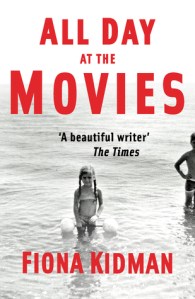
Dame Fiona Kidman is one of New Zealand’s most prolific and highly acclaimed authors. Her work has recently been brought back to light, published in the UK by Gallic Books.

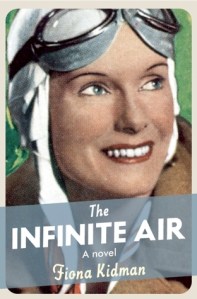
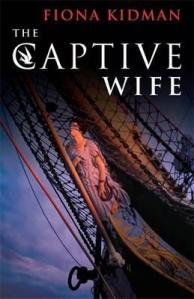
In 2016, I read her excellent novel on the life of the NZ aviator and Queen of the Skies, Jean Batten, The Infinite Air and later the same year picked up a copy of the historical fiction novel The Captive Wife, a tale of the first European woman to settle in the South Island of New Zealand, a whaler’s wife who underwent a dramatic ordeal, that Kidman imagines between the pages of her compelling novel.

Songs From the Violet Café novel begins and ends with chapters set in 2002, with independent events that take place on the same night, near each other. In Part One, an old boat laden with personal items, private notes and other paraphernalia is set alight and pushed out onto the lake, providing a spectacle for the family and their friends gathered for the occasion.

One puts in a bundle of letters; her sly smile and the nod of appreciation from the other women tell him that they are love letters. Another adds a calendar for what she says was a very bad year, someone else a stained quilt, another some yellowed school books. His wife’s best friend whispers to her son that it’s his last year’s school reports and he need never see them again.

The last Part sees nearly all the characters who worked in the Violet Café during 1963-64 on the same shores of that stretch of water, Lake Rotorua in New Zealand. They have come together again, all these years later, to commemorate the life of their patron, Violet Trench, owner.

In Part Two, it is 1943 and a boat rows across the lake with a woman and a young child. The woman is Violet and she is bringing a boy across to her first employer Hugo, a man whose wife she helped nurse through her last days before death. Now Hugo is married to Ming, a Chinese immigrant who also lost her husband, he has helped her raise her two sons and the one they have together.

‘Tell her,’ said Ming through her son, ‘that children are without price here. They are not for trade. ‘ She took the money Violet had given her earlier, and laid it on the table beside the unwashed plates.
The woman’s hand flew to her mouth. ‘I can’t take him back.’ she said.
The two little boys had thrown their arms around each other, nuzzling with tender blind-eyed butting as they shifted in their sleep.
‘The boy stays,’ Ming said, ‘but we do not buy.’

In Part Three we meet all the girls who will come under Violet’s wing, it’s 1963 and we encounter the girls through their mother’s, beginning with Jessie. About to turn eighteen, she is living in Wellington with her mother, stepfather and half-siblings, it is the day before she will leave her law studies and family behind, boarding a bus for a random northern destination, which happens to be Rotorua. Searching for food she will stumble across the café and be taken in by Violet.

Everything her mother did had a cost. Jessie didn’t know why she hadn’t seen this before. But now she understood in an instant that this was how it had always been, ever since her mother married Jock. If it hadn’t been for her, perhaps her mother might have married better the second time around. Jock, she could see, was the price her mother paid for being alone and having a child, for not always living as a war widow.

We meet Sybil and her daughter Marianne, whom Jessie shares a room with at a boarding house for a while, discovering the strange relationship this pair have, the mother sabotaging her daughter’s attempt to create a stable life for herself. Marianne also works at the café.

We meet Belle, a pastor’s daughter, who is to be married to Wallace. He’s saving for a deposit on their house and he and Belle’s father decide Belle needs a job to contribute to household expenses.

Hal and Wallace went to see the woman who ran the café. The woman was all lip and very impudent in Hal’s opinion, although Wallace rather liked her. I make the rules, she told them, and Belle will obey what I say when she comes to work at the Violet Café; she could worry about their rules when she went home. They waited for her to show them around but she didn’t, just waiting for their answer with a take it or leave it look in her eye.

There’s Ruth and Hester, the daughter she had at forty-six years of age.

A girl of quality, her mother believed. She expected her to go far. Hester would win scholarships and go to university, she too would stay clear-skinned and virginal. Instead, Hester grew more quiet and shy as one year followed another. When she was fifteen her frothy brown hair became mysteriously streaked with grey, as if she was already old.

Part Four are the years they all work in the café, where the lives of these young women under the tutelage of Violet come together, where friendships are forged, romances flourish and temptations indulged. Their relations and futures culminate in one eventful night, which will change the trajectory for nearly all of them, their coming-of-age period reaches a climatic point, from which they each will embark on the adult lives that will claim them.

Nobody called out or said goodnight or goodbye. Inside the café the phone was ringing but nobody answered it.

By Part Six it is 1980 and Jessie is in Phnom Penh working as a foreign correspondent. She has left New Zealand and is based in London, but spends most of time working in conflict zones, travelling from place to place following the scent of a story. She has left her past behind her, but will cross paths with some of those people she knew from the days at the Violet Café, learning more about what happened on that last night. The shadow of Violet still hangs over her and she find herself drawn once more into her realm, under her instruction.

It is an evocative novel, which brings that era of a small lakeside NZ town alive, showing how the young women of the time were almost stifled under the expectations of their mothers, and found a place of respite in the café run by the unorthodox matriarch Violet. For some, it wasn’t enough of a distance to rid themselves of guilt, they would leave, going far from home, far from their cultures, creating new personas to remove all trace of the past, one that despite their attempts, never really left them.

Another of Fiona Kidman’s books has recently been published in the UK, a companion novel which delves deeper into the life of Jessie’s mother Irene, from the time of her becoming a war widow to her marriage to Jock and the lives of her children, spanning the years from 1952 to 2015. You can read a review of it by Susan, over at A Life In Books.

Note: Thank you kindly to Gallic Books for providing a review copy.

A Catalog of Birds by Laura Harrington

A friend lent me this book and I recognised immediately that it was a Europa Editions book, but not one I had heard of Europa Editions are one of my favourite publishers, they always have something that will appeal to me in their annual catalog. Many of the books are of Italian origin, or translated from other European languages.

A Catalog of Birds however, is written by the American author Laura Harrington.

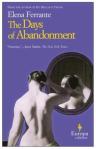
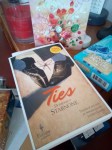
Some of the books Europa Editions have published that I’ve read and reviewed here are, that you might enjoy, are the Elena Ferrante’s Neapolitan series, starting with My Brilliant Friend and Frantumaglia, A Writer’s Journey, also by her The Days of Abandonment, the novel that is like its twin, Ties by Domenico Starnone; the World Noir title The Bastards of Pizzofalcone by Maurizio de Giovanni, Eva Sleeps by Francesca Malendri, The Man Who Snapped His Fingers by Fariba Hachtroubi, Mayumi and the Sea of Happiness by Jennifer Tseng and a new one that I have to read, which I’m really looking forward to, the French translation of Disoriental by Negar Djvadi.

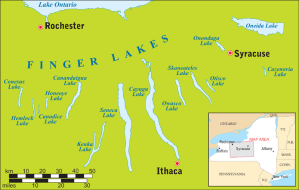
A Catalog of Birds centres around a small 1970’s community in the Finger Lakes region of New York state, an area known for its series of long, thin, deep glacial lakes, it’s high gorges and dramatic waterfalls (and today its wineries).

Despite its natural beauty, this community is affected, as every other is and has been, by the shadow of war, of young men returning from Vietnam, lost dreams, a lost innocence.

The Flynn family’s son Billy has just returned, his body covered in burns, his right arm mangled, his hearing disturbed, after surviving a helicopter crash. The day after his return, his girlfriend Megan disappears.

Megan

Megan hesitates before boarding the bus to a place she’s never been before, hesitates before accepting a ride with a stranger. Thinking of Billy, that horrible hospital, all those wrecked young men and boys. She’s in flight, in flight from it all.
Remembers Billy’s last leave. A year of training under his belt. Three days at home before shipping out to Vietnam. Both of them in the grip of something: anticipation, fear, the unknown.

Billy’s field journal

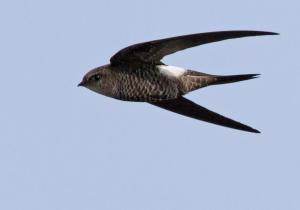
The early pages from Vietnam alternate between scenes on the base: insects, common birds, sketches of his crew; and pages where he was off the base: acres of green, rice paddies, water buffalo. There are birds Nell has never seen before, drawn as only Billy can; each of them so individual, so full of personality you expect them to sing.
Black crowned night heron
Glossy ibis
Pacific swift
There are fewer entries as the months drag on: a lone man crouched in tall burning grass, the shadow of a gunship passing over him, mountaintops ringed with clouds, ravines dark as the far side of the moon. These give way to drawings of the dead, downed helicopters, the last pages full of fire. Page after page: birds, trees, fields, burning.

Billy and his younger sister Nell have a close relationship, they know the surrounding lakes and forests like no other, they are connected to their natural environment in a way that even a highly educated academic specialising in the birds they know so well, had much to learn from.

Esme, 45 yr old ornithologist

Over the years Billy taught Esme a new way to listen, showed her how birds organise their communication, how to read body language between pairs, the meaning of their back-and-forth chat, how they check in on each other, the various warning sounds.

Nell

Billy’s journals are the thread of their childhood; his coming into his own as a naturalist, as an artist, developing his eye, his hand, his deepening identification with birds. From sketching in the field to detailed study, to painting the portraits he began to make the year before he shipped out.

Both Billy’s father Jack and his best friend Harlow, also bear and have borne the hardship of the return from war, they cope in their own way, as has Marion, Jack’s wife, waiting out the long semi-recovery, which in the early years, tests every man who dares survive war’s dark parasitic claim to their sanity. Now they must watch Billy go through the same test.

Harlow Murphy

On good days he fell right into a rhythm of forgetting, found a girl not quite so dedicated to her antiwar stance she’d forego sleeping with a vet, and then drank enough to numb his nightmares. On bad days he was rendered speechless by fury and confusion. He grew his hair long. Learned never to talk about the war.

Jack

“Did you have nightmares Dad?”
“Still do.”
The minutes tick long.
“You can’t leave it. You just end up carrying it.” He takes another swallow of Scotch. “I don’t know how to help him,” he admits. Shamed to hear the words out loud.
“Just love him.”
He looks at his daughter again, wishes it were enough, wishes he didn’t know the limits of love and hope, how little, really, can be covered over, hidden away, made whole.

Nell is too young to remember her father’s return from war, her memories are of the good times she had with her brother and his friend, of the strange feelings that engulf her, of the terrible knowledge of things she knows about Megan, of a desperation to protect her brother, to save his drawings, to bring him back to where he was, when they would go out on the lake, sit in among the trees, listen to birdsong, recognise their warnings, to just be.

Nell

Something lifts in Nell, hearing her brother laugh like that.
She looks at Harlow’s hands. They’re square and strong, the Coke bottle almost disappears in them. Thinks of picking apples in the Alsop orchard. The boys thought ladders were for sissies. Determined to keep up with them, she tried to find a handhold and a foothold to get into the tree. Harlow reached down, grabbed her forearm, pulled her up beside him.
That sudden wash of closeness as she found her footing and her balance. The smell of his skin, touching him. The sun low in the sky, the trees heavy with fruit. Hidden from the others. Light-headed. Vibrating with a feeling she didn’t know how to describe. Twelve years old. How she had wanted to kiss him.
Still does. But it doesn’t look like that’s ever gonna happen again.

Billy

He flirts with driving so fast she’ll be scared into telling him the truth, a truth he probably already knows. Feels her fear then, takes his foot off the gas.
How stupid they were; believing nothing could touch them, catch them, destroy what they had. Willfully blind to the facts, to the birds and the bees, for godsakes. Charmed, meant to be, summer of love, ain’t nothing like the real thing, baby.
He looks at Nell, thinks of how he kept Harlow away from her, but still took what he wanted with Megan. With everything. Grabbed what he wanted with both hands. Flying. The war. Intoxicated in the air. Every time he walked across the tarmac, climbed into the bird. All he’d ever wanted. More awake, more alert, more alive than anytime before or since.

This is a thought-provoking novel about the effect of war on those who were involved in it, on those closest to them, who try to nurture them through the aftermath, about the inclination to not ever to want to speak about what happened, and how that and the changed behaviour trauma causes, affects everyone.

I hope the selection of quotes above provides something of the essence of the novel, it seemed to me that they resonate more than anything I could contribute by way of the review. It is a touching novel that captures the beauty of a shared childhood, the complicity of adolescent friendship and loyalty, the struggle of families, of how they split and come back together, of love, of loss, of the difficulty of practicing forgiveness.

Buy A Catalog of Birds Here

The Long Forgotten by David Whitehouse

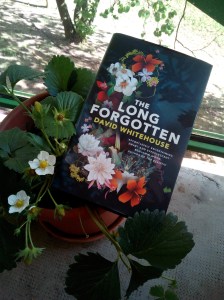
I couldn’t help but be seduced by the stunning cover (by @saraharnett) of David Whitehouse’s The Long Forgotten. The cover shows a number of rare flower blooms and the embossed outline of a whale.

Apart from being a brilliant, unputdownable read, I continuously referred back to that image on the cover with total pleasure trying to deduce which flower it was we were tracking down next.

The Long Forgotten refers to a flight that disappeared 30 years ago, and it could also refer to the list of flowers Peter Manyweathers discovered in a love letter that fell out of a botany book he was reading that lead him on an obsessive quest to find six exotic flowers that bloom in unusual and rare circumstances.

I know you think I give botany short shrift in favour of my own more lively pursuits…but you’d be wrong! I’ve done my research (you can stop laughing now) and found six flowers so unique, so fantastic that when I think of them, they could only ever remind me of you. Here to prove it is a list.

The Gibraltar Campion
Sheep-eating plant
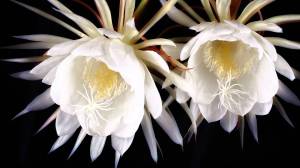
Kadupul flower
The living fossil
The Udumbara
The Death Flower

The story opens as a man in an underwater capsule has lost communication with his research station and he has 18 minutes of oxygen left, it’s an intense opening and provides a connection within the story that isn’t fully revealed until the end.

We then meet Dove, a young man living in London, a university dropout working in an ambulance call centre. Raised as a foster child, we learn of his relationship with his foster parents and an extreme fear of abandonment. He is plagued by headaches that precede the invasive memories of the rare flower-hunter, a man he never knew, leading him on his own quest to find out whose thoughts have invaded his own, and what they have to do with him.

The Kadupul Flower

Each time Dove gets a headache, we are plunged into the story of Peter Manyweather, a man who cleans houses for a living – houses of the dead. After finding the love letter, he joins a botanical etchings class, in the hope of meeting other enthusiasts and there meets and befriends a Danish academic, Dr Hens Berg, who suggests he get on a plane and go to find the flowers.

The old man snatches back his arm and presses his knuckles hard into the front of his skull, while at his feet Dove does the same. The pain is more intense than before, sharper, faster, a blade carving open the space inside him, splaying it out, and filling it with something new.

A memory of his mother.

Much of the novel occurs on these journeys, pursuing these rare blooms, and slowly uncovering the mystery of Dove’s true identity.

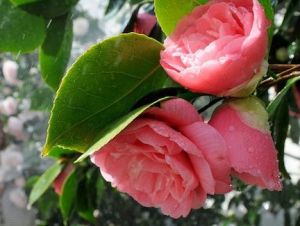
She pointed to a bright pink bloom, with so many petals it looked like a hundred camellias in one flower.

‘The Middlemist’s Red. They say there is just one in the world now, in an English country garden. There is not a single one left in China, even though it is Chinese. I think it is proof that we do not belong to a certain place, but that we belong to the world. It is a flower I cannot die until I have seen.’

Rafflesia arnoldii, the corpse flower

It’s both a mystery and an adventure story, though not in the usual sense, we’re not aware of the mystery until it begins to reveal itself to Dove, he’s not in search of himself consciously, he’s plagued by memories that are impacting his day-to-day life and by following clues to their origin, he’s hoping for relief.

Speaking about his inspiration for the story, the author shares how he came across the raffelsia – sometimes referred to as the corpse flower – fifteen years ago and how it intrigued him. This and other threads relating to the disappearance of  MH370 and an obsession with memory came together to create the novel.

It took me a long time to find a story where a corpse flower might be of use. I suppose it needed a mystery, but I didn’t have one until Malaysian Airlines Flight 370 went missing between Kuala Lumpur and Beijing, in March 2014. I wondered how long it would be before people who weren’t directly connected to MH370 forgot about it, even though it was out there, in the ocean, somewhere.

I loved the book and its many layers, the way they slowly unravel and at the same time, we are taken on a unique quest to hard to get to places, in search of these exotic flowers. It also puts an interesting spin on the idea of shared memories, of stolen memories, of things we may have heard that later we believe to be our own memories.

Middlemist Red

Click Here to Buy a Copy of

The Long Forgotten via BookDepository

Note: This book was provided as a review copy, thank you to Pan Macmillan for providing a copy.

Women’s Prize for Fiction Shortlist 2018 #WomensPrize

Today the short list was announced for the woman’s prize for fiction. From the longlist of 13 books, six books have been chosen.

The Chair of Judges Sarah Sands had this to say:

“The shortlist was chosen without fear or favour. We lost some big names, with regret, but narrowed down the list to the books which spoke most directly and truthfully to the judges. The themes of the shortlist have both contemporary and lasting resonance encompassing the birth of the internet, race, sexual violence, grief, oh and mermaids. Some of the authors are young, half by Brits and all are blazingly good and brave writers.”

I’ve actually read and reviewed three of the six chosen titles, all of which I really enjoyed, and I would like to read Sight and The Mermaid, so overall I think it’s an impressive list, even though the prize completely ignored the outstanding novel Kintu by Jennifer Nansubuga Makumbi.

The shortlist is as follows, beginning with the three I’ve read, then the two I’d like to, all six revealed here in biscuit form, made by @BiscuiteersLtd :

Meena KandasamyWhen I Hit You: Or, A Portrait of the Writer as a Young Wife  – my review here

  • a literary artwork, a portrait of a writer suffering in a four-month marriage, surviving through writing, her imagination and now looking back and turning what could have destroyed her into a blazing, unforgettable novel.

Kamila ShamsieHome Fire my review here

  • a heartbreaking tragic work, a modern retelling of Sophocles’ 5th century BC play Antigone, an exploration of the conflict between those who affirm the individual’s human rights and those who protect the state’s security, set in London, told through an immigrant family struggling to distance themselves from the patterns of their ancestral past.

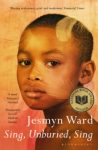
Jesmyn WardSing, Unburied, Sing – my review here

  • narrated from three points of view, 13-year-old Jojo, his mother Leonie and the spectre of a young man Richie, it’s a coming-of-age story about surviving a dysfunctional family, haunted by the past, and spirits that won’t rest.

Imogen Hermes Gowar, The Mermaid and Mrs Hancock

  • Historical fiction with a splash of magic realism, a merchant and a celebrity courtesan brought together by the arrival of a mermaid in Georgian London, 1785 – a debut novel inspired by a “real mermaid” in the British Museum.


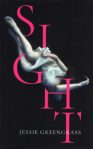
Jessie GreengrassSight

  • a woman recounts her progress to motherhood, remembering the death of her mother, and the childhood summers she spent with her psychoanalyst grandmother – alongside events in medical history – emerging into a realisation. 

Elif BatumanThe Idiot

  • a campus novel, reflecting on how culture and language shape who we are, how difficult it is to be a writer, and how baffling love is.


***

Of the three I’ve read, I think Meena Kandasamy’s stood out the most for me, in particular because I initially avoided it, and then was blown away by how the subject was so uniquely and adeptly handled. It’s a form of autobiographical fiction, some debating whether it is indeed a novel, being based in part on the author’s life.

So what do you think of the list, do you have a favourite, or one you really want to read?

Buy any of the books on the shortlist via Bookdepository

The Sealwoman’s Gift by Sally Magnusson

As soon as I read the premise for this historical novel, I knew I wanted to read it. A tale that travels from Iceland to Algiers, inspired by a true story, one that acknowledges the power of imagination and oral storytelling from within different cultures.

Described as The Turkish Raid or Tyrkjaránið, the inspiration for the novel is based on the invasion of Iceland in 1627 by pirates from Algeria and Morocco, also known as Barbary pirates (a reference to the Barbary coast, a term used by Europeans in the 16th century, referring to the coastal aspect of the collective lands of the Berber people of North Africa). They were lead by the ambitious and cunning Dutch captain Jan Janszoon van Haarlem, commonly known as Murat Reis the Younger, himself captured and “turned Turk”.

They were referred to as Turks, as Algeria was then part of the expansive Ottoman Empire. Icelandic villagers were abducted, and taken by ship to be sold as slaves in Algiers, a request for a ransom was made to the Danish King, and a few would make it back home.

Relative to its size, Iceland, the furthest north the corsairs reached, was hit particularly hard. To lose four hundred people out of a population of around forty thousand – including most of the island of Heimaey – is by any standards a stupendous national tragedy, particularly for what was at the time the poorest country in Europe. That may be one reason why Iceland has kept painfully in its collective psyche what has largely faded from the memory of other affected nations. It may also be down to the Icelandic compulsion to write. Voluminous historical narratives were written afterwards and copied by hand. It was felt important that the nation’s great trauma should be understood and never forgotten.

The Sealwoman’s Gift follows one family, Ólafur the local pastor, his relatively younger wife Asta and two of their children, all of whom are abducted, the mother due to give birth, which she does on the ship. Initially Ólafur is herded onto a different ship, perhaps due to his advanced age, however he manages to fight his way to his wife and children, allowed to do so while others are struck down for such defiance, when his ability to calm the captives is noted by the Captain.

They voyage across the sea to Algiers where their fate awaits them. While on the ship, one of the islanders Oddrún – affectionately referred to as the sealwoman, due to her insistent belief that she was a seal who came ashore and had her sealskin stolen, forcing her to remain human – has a dream, another shared prophecy, words that are usually ignored, but given their predicament and desire for escape, are this time listened to attentively.

‘I have seen Ólafur in a great palace. He is kneeling before the king.’

She also has words for Asta, referring to Gudrún, the female character in the Icelandic myth, the 13th century Laxdaela saga.

‘Do not do as Gudrún did’

It’s not possible to write too much about what happens without spoiling the discovery for the reader, suffice to say that poverty-stricken conservative Christian Icelanders arriving in the warm, lush climate of Algiers, where, although they are enslaved, many will live in ways less harsh than what they have experienced in freedom, and children will be both born and grow up within a culture and religion unlike their home country, one that some will embrace, others will defy, awaiting the response of their king to the request for a ransom.

Those that return, in turn, face the dilemma of reacclimatising to their culture and way of life, so different to what they have experienced, the memories of their time of enslavement never far from their thoughts and the judgments of those who were not caught felt in a wayward glance.

How could she have forgotten, how could she possibly not have remembered, what it is like to live for month after month with only a few watery hours of light a day,  with cold that seeps into your bones and feet that are always wet? Is it conceivable that she never noticed before how foul the habits are here?…

Can she not have noticed how the turf walls bend in on you and bear down on you until you are desperate to break out and breathe again? Only there is no roof to escape to here but just gabled grass, and the wind would toss you off it anyway if it did not freeze you first. To think she spent more than thirty winters in a house like this, yet only now is oppressed by the way the stinking fulmar oil in the lamp mingles with the stench of the animals and the meat smoking over the kitchen fire and the ripe sealskin jackets on their hook, making her sick with longing for the tang of mint and cumin and an atrium open to the sky.

While much of the Reverend Ólafur Egillson’s story is known from journals he kept, that have been transcribed and translated and kept his story and that of the islanders alive, not much is known of the fate of his wife Asta while she was captive, an interlude that the author immerses herself in through the imagination. A fragment of engraved stone is all that remains to commemorate the life of this woman who lived an extraordinary life, the details of which she took with her to the grave.

‘History can tell us no more than it does about any woman of the time in Iceland or anywhere else, unless she happened to be a queen.’

Overall, this story provides a thrilling depiction of the terror of a pirate invasion that changed the lives of 400 islanders from Iceland, their journey across seas to Algiers, the slave markets and fates of those who survived, their children and an imagining of how they may have coped as they watched their youth grow up and become part of another culture and way of life, while older Icelanders struggled with what they retained within them of their past and the changes that would envelope them in the years that followed, in a strange new land, one that despite their suffering, also offered opportunities they would never have encountered at home.

Buy a copy now via Book Depository

Free Delivery on all Calendars at the Book Depository

Note: Thank you to the publisher Two Roads, for providing a review copy.

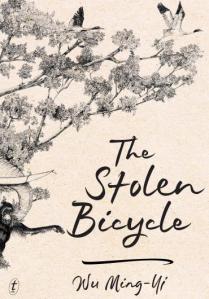
The Stolen Bicycle by Wu Ming-Yi tr. Darryl Sterk

The Stolen Bicycle by Wu Ming-yi, is one of the long listed titles for the Man Booker International 2018.

He is one of Taiwan’s most well-known authors and this is his fifth novel, the second to be translated into English. It won rave reviews in Taiwan, and the Taiwan Literary Award, following its Chinese-language release in 2016.

The narrator is the second son of a family, who desperately wanted a boy and finally had one after 5 girls. When the first son was born, the father decided there were too many girls, and almost adopted one out to a family member, events that lead up to the theft of his first bicycle.

With an extra mouth to feed, the family could barely scrape a living, and my father, who now had the son he’d always wanted, decided that five girls in the house was one too many, one more than had been allotted by fate.

However, it was a later Taiwanese ‘Lucky’ branded bike that would send the narrator off on a mission to follow all leads and meet all kinds of people, discovering many aspects of his culture and some of its history in trying track it down, the bike that disappeared along with its rider, his father. This obsession with antique bicycles takes the narrator and readers alike on a voyage deep into aspects of Taiwan’s 20th-century history and culture.

And that was how it started: my obsession with antique bicycles flowed from my missing father.

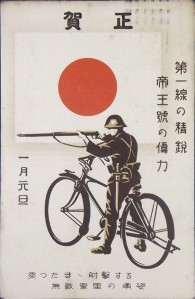
Each new encounter takes us on a new journey, as that person reveals something of their past and their knowledge of these ‘iron horses’, in fact much of the book is written as Bike Notes 1, Bike Notes II, complete with illustrations of the different era bicycles, including the infamous Japanese war bike, the ‘Silverwheel’ and the notorious ‘Silverwheel Squad’.

The worst headache was the Silverwheel Squad. The Silverwheels traced the upper reaches of rivers and rode down into the jungle to launch one surprise attack after another.

In this way, the story meanders and diverges and then hooks into a subject and follows it a long way down its tributary, only to return and take another turn, meet another collector, owner, person, and even a long-lived elephant, who knows or might have known the owner, whom the narrator will meet and solicit their story patiently awaiting the moment they might reveal the connection to the bike, that might lead to his father.

The author uses conversation, flash backs of memory, war diaries, memoir and voice recordings to create a network of literary tributaries in bringing together this ambitious, far-reaching narrative that touches so many unique aspects of Taiwan’s history, culture, development and influences.

In the beginning these diversions are interesting and promising and somewhat intriguing, they are indeed historically significant as they reveal something of the life and influences of the era in which they occurred, especially around the time of the war, seeing it from the perspective of Taiwan and Japan, especially as war involved bicycle strategy and elephants, and we learn something about the work habits of a woman creating butterfly handcrafts and how her father learned to lure butterflies en masse to capture them.

However, I admit I became somewhat fatigued by the never-ending meandering, the prolonged encounters and diversions, to the point where I began to lose interest, despite avidly not wishing to. That could have been due to the length of the book, or perhaps that it is indeed a book of obsession, not quite to the same degree as Orhan Pamuk’s The Museum of Innocence, but with something of a similar feel, in the way the reader is pulled along on the journey, not quite sure of the destination. Or perhaps it is because of how ambitious a book it is, in covering so much that is unfamiliar, opening so many threads.

It’s clear that the author very much enjoyed putting this novel together, so much so he shares some of his writing philosophy at the end of the book, and I find myself somewhat forgiving him for having drawn out his story so, although I understand how he has lost less patient readers along the way.

Wu Ming Yi

For some, life experiences drive the writing process. But for me writing novels is a way of getting to know, and of thinking about, human existence. I’m just a regular guy who has, through writing, come to understand things I couldn’t have before, concerning human nature and emotion. I write because I don’t see the world clearly. I write out of my own unease and ignorance. The ancient Greek historian Polybius put it thus: ‘The most instructive thing is remembering other people’s calamities. To stoically accept the vagaries of fate, this is the only way.’ I write novels to know how to stoically accept the vagaries of fate.

And his final words, appreciated all the more by this reader, having made it to the end.

The only necessity is to keep pedalling – quietly, composedly, no matter how thirsty you are or how difficult it may be.

To buy a copy of The Stolen Bicycle, click on the image below, my affiliate link at BookWitty.

Note: Thank you to Text Publishing for providing a review copy of the e-book to read.

Die, My Love by Ariana Harwicz tr. Sarah Moses, Carolina Orloff

Usually I read books because I am drawn to them by the premise, by the cultural setting, by an author’s intriguing background and experience which suggests to me they may have interesting insights to explore within a novel.

I hesitated about whether to read Die, My Love because of what I perceived as its intensity, I thought it might be depressing. The reviewer whom I expressed this too, responded:

I would say razor-sharp and brutally honest rather than depressing. No punches are pulled.

She was reviewing it, along with all the other titles long listed for the new Republic of Consciousness literary prize created by novelist Neil Griffiths to acknowledge and celebrate “small presses producing brilliant and brave literary fiction” published in the UK and Ireland.

When it was short listed for this prize and simultaneously long listed for the Man Booker International 2018, I decided to read it and find out, despite the earlier hesitation, similarly to the feeling I had about reading Meena Kandasamy’s When I Hit You: Portrait of the Writer as a Young Wife.

We meet a young woman, a university educated foreigner, living in the French countryside with her husband and their small child, another on the way. She is lying in the grass, in 35°C (95°F) summer heat, thinking disturbing, violent thoughts against those around her, while expressing an acute, brutal self-hatred alongside an intense uncontrollable desire.

Blonde or dark? Whatever you’re having, my love. We’re one of those couples who mechanize the word ‘love’, who use it even when they despise each other. I never want to see you again, my love. I’m coming, I say, and I’m a fraud of a country woman with a red polka-dot skirt and split ends. I’ll have a blonde beer, I say in my foreign accent. I’m a woman who’s let herself go, has a mouth full of cavities and no longer reads. Read, you idiot, I tell myself, read one full sentence from start to finish.

It’s written in an urgent stream of consciousness narrative, focused on the minutiae of her day, much of it spent waiting for her husband to return from work, observing herself by turn, in her acts of taking care of and neglecting the needs of her helpless son, fantasizing about harming herself.

I throw out the heavy nappy and walk towards the patio doors. I always toy with the idea of going right through the glass and cutting every inch of my body, always aiming to pass through my own shadow. But just before I hit it, I stop myself and slide it open.

It’s a rendition of spiralling out of control, sometimes playing the part of mother, in front of friends on the odd occasion they’re invited to a birthday party or playing the daughter in law at a family gathering, but not too hard, because it is impossible, the insanity too close to be able to sustain any form of denial for too long a period of time.

When my husband’s away, every second of silence is followed by a hoard of demons infiltrating my brain.

If she’s not going crazy from the silence, she’s targeting the weak, aggressing the overweight nurse who comes to tend to the neighbour, acting haughty with the women working in the supermarket, the pizza delivery men, the manicurists.

I yell at them in public. I like to make a scene, humiliate them, show them how cowardly they are. Because that’s what they are: chickens. How come none of them have tried to fight me? How come none of them have called the authorities to have me deported?

As a reader, I can’t help asking questions, like, what is this? Is this postpartum depression? No, this was a pre-existing condition that started before she gave birth, that continued afterwards and seems never to have ended.

Is this the result of leaving her education, her intellectual self behind? Of embracing motherhood? Of being separated from her country, culture, her family, the way of her own people? Those things are never ever mentioned, never alluded too, never missed, there is no nostalgia for the past, only a visceral disgust for the present, a desire for a future where she is taken out, extinguished.

We were only just waking up from the weekend and already we were fighting. At half past eight I let out the first scream, at nine-twenty I threatened to leave, and at nine-fifty I said I’d make his life a living hell. By ten past ten, I was standing like a ram in the middle of the road with my straw hat on, suitcase in hand and flies in my eardrums.

She reflects that even were she to get hit and killed, it would unlikely gain her sympathy, that would be saved for her poor child, left without a mother.

No one grieves for the wretched woman with scarred arms who was consumed by the misery of life.

She blames desire, calls it a destructive hunger, an alarm, ferocious.

Not even digging a hole, a pit, would be enough. It needs to be thrown into the desert and devoured by wild beasts. Desire that is.

I waver between wondering if this is something a woman would experience if the circumstances are created that deprive her of the things she needs for sustenance, or is this a woman creating what she perceives as art, an art form that is designed to shock, to provoke a response in its audience.

In an interview by Jackie Law at Never Imitate, when asked about her inspiration, Ariana Harwicz responded:

Motherhood as a form of prison, a trap, an ordinary destiny. Writing the novel was a chance to escape that.

When asked about herself:

I always say that I was born when I wrote Die, My Love. Before then, I was alive, in the same way that everybody is alive, yet for me that is not really being alive. I had recently had a baby, I had moved to live in the countryside next to a forest. I would watch the thunderstorms, I would go horse-riding, but that was not life for me. And then I wrote Die, My Love, immersed in that desperation between death and desire. Die, My Love comes from that. I wasn’t aware I was writing a novel. I was not a writer, rather, I was saving myself, slowly lifting my head out of the swamp with each line.

In a podcast with the London Review Bookshop, she expressed interest first and foremost in the question ‘What is it, to be an artist?’, her response to her own question illuminating:

An artist, is someone is willing to break tradition, convention and transgress outside the norm

This is what she succeeds in doing in Die, My Love. She pursues it with intellectual vigour, with a bold, unapologetic, Argentinian energy that busts out of convention, leaves the old form of language and expression behind, takes her literary weapons into the forest and wreaks havoc on the page and in the mind of the reader.

Note: Thank you to Charco Press, independent publisher of contemporary Latin American literature, for providing an e-book.

Buy a copy of Die, My Love from Charco Press

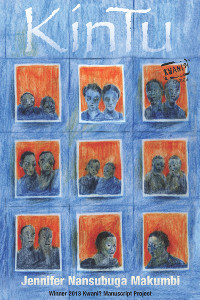
Kintu by Jennifer Nansubuga Makumbi

When I look back at my absolute favourite book of the year in recent years, there is a common theme running in which an author has written a story that comes from deep within their cultural heritage; it’s there in my favourite book of 2017 Homegoing by Yaa Gyasi, a book that reaches back to the author’s Ghanaian heritage, in Simone Schwartz-Bart’s The Bridge of Beyond and in Jamaica Kincaid’s The Autobiography of My Mother. It’s even there in Eowyn Ivey’s The Snow Child.

This is what appealed to me immediately about the prospect of reading Jennifer Nansubuga Makumbi’s Kintu. It promises to do the same thing, to take the reader from where we are at today in a culture and link it back to the past, from modern day Uganda to the era of when the region was ruled as a kingdom. And it succeeds brilliantly, in a way rarely seen in literature in the UK/US published today.

Kintu was discovered when a project called Kwani? launched a manuscript competition in 2012 to discover the best unpublished novels  by writers from across Africa, and to publish them for readers there. Ayòbámi Adébáyò’s excellent Stay With Me, was one of seven manuscripts shortlisted, it also went on to make the shortlist of the Women’s Prize for Fiction in 2017.

About the Kwani? project, one of the judges, Ellah Wakatama Allfrey said:

What we looked for as judges were manuscripts that told stories from the inside without the burden of focusing on how an imagined ‘West’ would view them.

As a result of winning that prize Kintu was published by Kwani Trust (in Kenya) before being offered to international publishers. It was published in the US (Transit Books) and the UK (One World Publications) and in March 2018 Jennifer Makumbi learned she was a recipient of a prestigious Windham Campbell Prize for Literature worth US$165,000. She is working on her second novel.

My Review:

1750 Buddu Province, Buganda

Kintu is the name of a clan, the original clan elder Kintu Kidda fell in love with Nnakato, an identical twin (the younger) and her family refuse to allow him to marry her unless he married her sister Babirye first. He refused. They resisted. He relented.

Kintu’s mind lingered on the primal conflict that led to a soul splitting into twins. No matter how he looked at it, life was tragic. If the soul is at conflict even at this remotest level of existence, what chance do communities have? This made the Ganda custom of marrying female identical twins to the same man preposterous. It goes against their very nature, Kintu thought. Twins split because they cannot be one, why keep them as such in life? Besides, identical men did not marry the same woman.
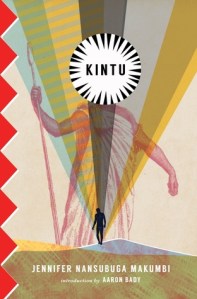
Babirye gave him four sets of twins while Nnakato was unable to conceive. When the twins, raised as if they belonged to Nnakto were adults, Nnakato finally gave birth to a son Baale. They adopted a baby boy Kalema, from Ntwire a widower who was passing through their lands, who decided to stay in gratitude to Kintu and Nnakto for raising his son in their family.

When tragedy occurs, Kintu tries to conceal it, Ntwire suspects something and places a curse on Kintu, his family and their future descendants.

The novel is structured into Book One to Book Six, the first five books focus on different strands of the Kintu clan, the first book being the original story of Kintu Kidda and his family in the 1700’s (pre-colonial era) and the latter stories are set in modern times, colonial interlopers have left their imprint, however this is not their story nor a story of their influence, except to note the impact on the kingdom.

After independence, Uganda – a European artefact – was still forming as a country rather than a kingdom in the minds of ordinary Gandas. They were lulled by the fact that Kabuku Mutees II was made president of the new Uganda. Nonetheless, most of them felt that ‘Uganda’ should remain a kingdom for the Ganda under their kubuka so that things would go back to the way they were before Europeans came. Uganda was a patchwork of fifty or so tribes. The Ganda did not want it. The union of tribes brought no apparent advantage to them apart from a deluge of immigrants from wherever, coming to Kampala to take their land. Meanwhile, the other fifty or so tribes looked on flabbergasted as the British drew borders and told them that they were now Ugandans. Their histories, cultures and identities were overwritten by the mispronounced name of an insufferably haughty tribe propped above them. But to the Ganda, the reality of Uganda as opposed to Buganda only sank in when, after independence, Obote overran the kabuka’s lubiri with tanks, exiling Muteesa and banning all kingdoms. The desecration of their kingdom by foreigners paralysed the Ganda for decades.

Each beginning of the six parts/books however narrates over a few pages, something of the story of a man named Kamu Kintu, who is seized from his home, hands tied behind his back and taken away for questioning by a group of local councillors. Overhearing someone mutter the word thief, an angry mob of villagers menace him without knowledge of the reason for his being detained and he is killed, left for dead on the road, the men who’d requested he come with them fleeing. What subsequently happens to every one of those councillors is equally mysterious, creating a thread of mystery that both links and separates the family stories that make up the novel.

We don’t find out who Kamu Kintu is or how he is connected to the families we encounter in each part, until Book Six, where the threads that tie the clan together begin to connect in the enthralling homecoming.

Throughout each family and over the years certain aspects replicate throughout the families, the presence of twins, premature death, as if the curse that was muttered so long ago continues to reverberate through each generation. Some of them are aware of the curse, remembering the story told by their grandmothers, others haven’t been told the truth of their origins, in the hope that ignorance might absolve them.

Her grandmother’s story had intruded on her again. All day at work, the story, like an incessant song, had kept coming and going. Now that she was on her way home, Suubi gave in and her grandmother’s voice flooded her mind.
Some are haunted by ghosts of the past, thinking themselves not of sound mind, particularly when aspects of their childhood have been hidden from them, some have prophetic dreams, some have had a foreign university education and try to sever their connections to the old ways, though continue to be haunted by omens and symbols, making it difficult to ignore what they feel within themselves, that their mind wishes to reject. Some turn to God and the Awakened, looking for salvation in newly acquired religions.

It’s brilliant. We traverse through the lives of these families, witness their growth, development, sadness’ and joys, weaving threads of their connections together, that will eventually intersect and come to be understood and embraced by all as the clan is brought together to try to resolve the burden of the long-held curse that may have cast its long shadow over this clan for so many generations.

One of the things that’s particularly unique about the novel, is the contrast of the historical era, 1750’s with the modern era, the historical part shows the unique way of life before the arrival of Europeans, in all its richness and detail, how they live, the power structures, the preparation for the long journey to acknowledge a new leader, the protocols they must adhere to, the landscapes they traverse. An article in The Guardian notes twin historical omissions and concludes that the novel is the better for it:

Makumbi mostly avoids describing both the colonial period, which so often seems the obligation of the historical African novel, and Idi Amin’s reign, which seems the obligation of the Ugandan novel. Kintu is better for not retreading this worn ground.

It reminded me of the world recreated by the Guadeloupean-French-African writer, Maryse Condé, in her epic historical novel Segu, another African masterpiece, set in the 1700’s in the kingdom of Segu.

I hope the success of Kintu encourages other young writers from within the vast storytelling traditions of the many African countries to continue to tell their stories and that international publishers continue to make them available to the wider reading public, who are indeed interested in these lives, cultures, histories and belief systems of old that continue to resonate in the modern-day, despite political policies and power regimes that seem to want to change them.
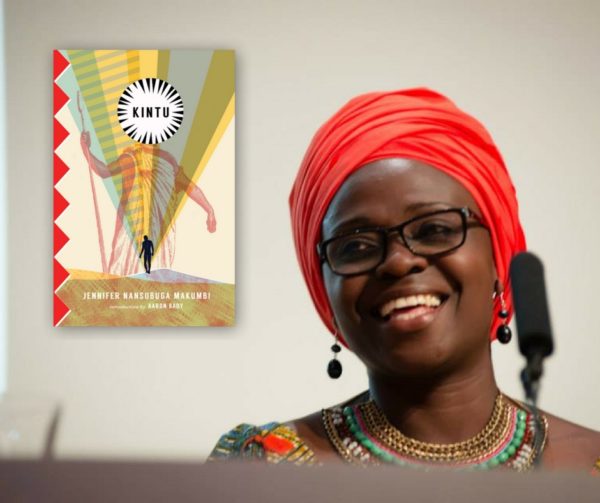
Jennifer Nansubuga Makumbi: Image from Martin Harris Centre via BrittlePaper.com

Further Reading

Brittle Paper: Essay – When We Talk about Kintu by Ellah Wakatama Allfrey

Africa In Words: Review – Jennifer Nansubuga Makumbi’s ‘Kintu’ Made Me Want to Tell Our Stories by Nyana Kakoma

The East African: Article – Kintu’s ‘Africaness’ pays off for Jennifer Makumbi by Bamutaraki Musinguzi

The Guardian: Kintu by Jennifer Nansubuga Makumbi review – is this ‘the great Ugandan novel’? by Lesley Nneka Arimah


Buy a copy of Kintu via BookDepository

Note: Thank you to the UK Publisher One World Publications for sending me a copy of the book.