
 Translated Fiction
The Man Booker International Prize, celebrates newly translated fiction into English; this years judges have now whittled their long list down to six titles, giving us this interesting and diverse shortlist below. Though you’ll find a lot of translated fiction on the pages of this blog, it’s a niche that’s dominated by small publishers, so less known and indulged by the wider reading public.
Things are changing however and readers are becoming more discerning and aware of being made to seem ignorant by publishers who’ve stuck predominantly to nationalistic loyalties. I say this personally, as I discovered when I moved to France that without even making an effort you are just as likely here to read Russian, Colombian or Japanese authors as you are French authors. 45% of their fiction is translated! 5% of ours is.
Do we really only want to be offered stories written by authors from one country, to read thoughts generated in the imagination of only one original language?
Though we are in a climate of Brexit and an era of vociferous intolerance towards multiculturalism; storytelling and literature in translation offer a quiet route to developing empathy and understanding of ‘the other’ and a reminder that we can both learn something new and find the familiar in words from elsewhere.
The prize equally awards the translator, which should boost the industry and help translators take on more projects bringing us more excellent literature from elsewhere. The shortlist includes five languages, Arabic, French, German, Polish and Spanish from six different cultures.
Bettany Hughes, chair of the 2019 Man Booker International Prize judging panel, said:
‘Wisdom in all its forms is here. Unexpected and unpredictable narratives compelled us to choose this vigorous shortlist. Subversive and intellectually ambitious with welcome flashes of wit, each book nourishes creative conversation. We were struck by the lucidity and supple strength of all the translations.’
The six titles are listed below, summaries edited from the prize’s website: click on title to purchase a copy.


Celestial Bodies by Jokha Alharthi (Oman) tr. Marilyn Booth (Arabic) Sandstone Press
Set in the village of al-Awafi in Oman, we encounter three sisters: Mayya, who marries Abdallah after a heartbreak; Asma, who marries from a sense of duty; and Khawla who rejects all offers while waiting for her beloved, who emigrated to Canada. The three women and their families witness Oman evolve from a traditional, slave-owning society, slowly redefining itself after the colonial era, to the crossroads of its complex present. Elegantly structured and taut, it tells of Oman’s coming-of-age through the prism of one family’s losses and loves.
“No matter where you are, love, loss, friendship, pain and hope are the same feelings and humanity still has a lot of work to do to believe in this truth.” Jokha Alharti
The Years by Annie Ernaux(France) tr. Alison Strayer (French) Fitzcarraldo Editions
Considered by many to be the iconic French memoirist’s defining work, a narrative of the period 1941 to 2006 told through the lens of memory, impressions past and present, photos, books, songs, radio, television, advertising, and news headlines. Local dialect, words of the times, slogans, brands and names for ever-proliferating objects are given voice. The author’s voice continually dissolves and re-emerges as Ernaux makes the passage of time palpable. Time itself, inexorable, narrates its own course, consigning all other narrators to anonymity. A new kind of autobiography emerges, at once subjective and impersonal, private and collective, a remembrance of things past.
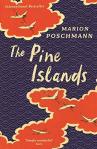
The Pine Islands by Marion Poschmann tr. Jen Calleja (German) Profile Books, Serpent’s Tail
When Gilbert, a journeyman lecturer on beard fashions awakes from a dream that his wife has cheated on him, he flees to Japan. In discovering the travel writings of the great Japanese poet Basho, he finds a purpose: a pilgrimage in the footsteps of the poet to see the moon rise over the pine islands of Matsushima. Falling in step with another pilgrim – a Japanese student with a copy of The Complete Manual of Suicide – Gilbert travels across Basho’s disappearing Japan with Yosa, one in search of his perfect ending and the other a new beginning that might give his life meaning. A serene, playful, moving story of the transformations we seek and those we find along the way.
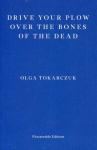
Drive Your Plow Over The Bones Of The Dead by Olga Tokarczuk (Poland) tr. Antonia Lloyd-Jones (Polish) Fitzcarraldo Editions
In a remote village in south-west Poland Janina Dusezjko, an eccentric woman in her 60s, describes the events surrounding the disappearance of her two dogs. When members of a local hunting club are found murdered, she becomes involved in the investigation. No conventional crime story, this novel offers thought-provoking ideas on perceptions of madness, social injustice against people who are marginalised, animal rights, the hypocrisy of traditional religion, and belief in predestiny.
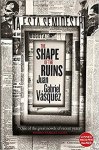
The Shape of the Ruins by Juan Gabriel Vásquez (Colombia) tr. Anne McLean (Spanish) Quercus, MacLehose Press
Pacing the dark corridors of a hospital during the birth of his twin daughters, Juan Gabriel Vásquez befriends a physician. Through him he meets Carlos Carballo, a man consumed by a conspiracy theory about the assassination of a politician Jorge Eliécer Gaitán in 1948. He tries to persuade Vásquez to write a novel about the murder, but despite repeated refusals Vásquez is drawn into the conspiracy when Gaitán’s vertebrae, stored in a glass jar at a mutual friend’s house, goes missing. Sparking a turn of events, Varquez opens up a second, darker conspiracy about the assassination of another politician, Rafael Uribe Uribe, in 1914.
“It’s a novel about past violences written at a time in which my country was trying to find some form of present peace. It turns around two political murders that shaped Colombian history in the twentieth century, and it uses them to think about the ways in which violence can be inherited: an act committed half a century ago can influence and even determine our private lives in the present. Deep down, how does political violence work? How does it change our private lives?” Juan Gabriel Vasquez
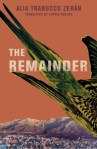
The Remainder by Alia Trabucco Zerán (Chile) tr. Sophie Hughes (Spanish) And Other Stories
Santiago, Chile. The city is covered in ash. Three children of ex-militants are facing a past they can neither remember nor forget. Felipe sees dead bodies on park benches, counting them in an obsessive quest to tally figures with the official death toll. He is searching for the perfect zero, a life with no remainder. Iquela and Paloma are also searching for a way to live on. When the body of Paloma’s mother gets lost in transit, the three take a hearse and a handful of pills up the cordillera for a road trip with a difference. Intense, intelligent, and extraordinarily sensitive to the shape and weight of words, this remarkable debut presents a new way to count the cost of generational trauma.
******
I haven’t read any of the titles shortlisted, I’ve been watching since the long list came out, the one that most intrigues me is Celestial Bodies, because it promises to highlight aspects of Oman’s history as shown through the story of three sister’s lives. While The Shape of the Ruins sounds intriguing, I’m a little wary of it seeming a little like Roberto Bolano’s 2666 another lengthy South American novel that centred around unsolved murders, that was too much for me.
I’m also intrigued by Olga Tokarczuk’s latest, she won the prize last year, though this is said to be a different and lighter read to Flights that can be read on multiple levels, with its elements of mystery, nature writing and reflective, philosophical inclinations.
So have you read any of the novels on the shortlist? Do you already have a favourite?
The winner will be announced on May 21.
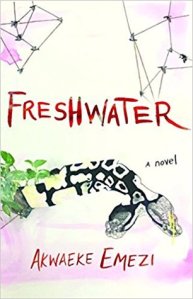 This novel is like nothing else I’ve ever read, it describes an inner world, an occupied mind, from that inside. It puts the reader in a position of imagining, perhaps even to a certain degree understanding, what it might be like to have your subconscious and conscious mind occupied by other entities, entities with a voice, with personality, that from time to time take over the body, affect behaviour, talk to you and through you.
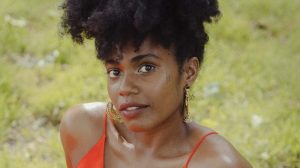 I wrote Freshwater as an analysis of sorts—the ogbanje figuring out what it is, ascribing legibility to itself. We look at our worlds through a limited range of lenses, and making this book meant choosing a different center to tell the story from, a different lens to look through.
 Between 1996 and 2012 it was known as the Orange Prize for Fiction, and between 2014 and 2017 the Baileys Prize for Fiction, the Women’s Prize for Fiction is a favourite literary award of many, awarded annually to an outstanding novel that demonstrates excellence, quality, originality and accessibility.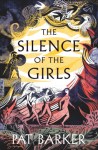


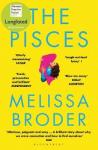


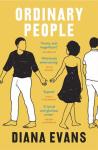
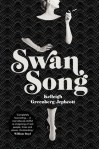
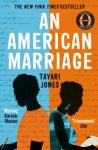


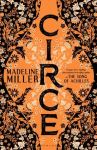

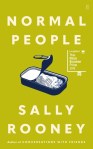
 Kwon added the book to her list based on a recommendation by writer, editor and professor Kiese Laymon, who said he’d “never read a novel that does nearly as much in so few pages,” and that the book is “as narratively beautiful as it is brutal.”
 It is a beautiful, bittersweet cornucopia of blues and reds, colours littered throughout the text alluding to a multitude of contrasts.
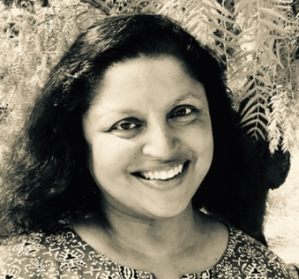 Laskar is first and foremost a poet, so while it may have been described as harrowing, it also illuminates. Her captivating prose and lyrical repetition draw the reader in, creating a desire to unravel the mystery her many literary devices allude to, to step back from the pieces and see the whole. The book’s structure is inspired by one of her favorite poetry forms, the pantoum, a Malayan folk poem or verse form. In a pantoum, a phrase is repeated throughout, subtle changes in meaning occur due to different contexts.
 The novel is a portrait of a family in London, the children of Jamaican immigrants, narrated from the point of view of the youngest child Angela (referred to also as Anne), it brings to life moments in their family life that impacted them all, through carefully realised characters, to the beginning of the decline, just after her father’s retirement.
 Aspects of the past come to light later on, were they secrets, those things family members never talked about, which end up buried and become secret-like. When an Aunt visits telling them how things are back home in Jamaica and asks about their newfound life in England, the land of opportunity, things not said are loud in their omission. If there was regret, it’s been long-buried, replaced by silence and resignation, not to be discussed.
 Further Reading
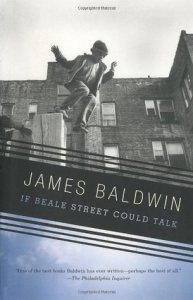 If Beale Street Could Talk is the first work by James Baldwin that I have read. It was the first work he wrote after he moved to St Paul de Vence in the south of France, where he would pass the last 17 years of his life.
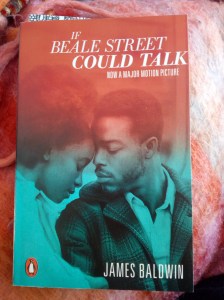 Interspersed with the regular visits, are flash-backs to childhood and the moment their friendship evolved to something deeper. Fonny takes Tish to his basement pad where he has set up a woodwork studio, his deepest passion is sculpting wood and stone, he wants to show her and for her to understand its importance to him.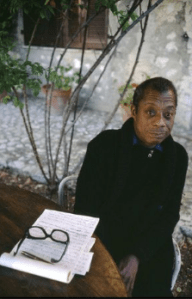
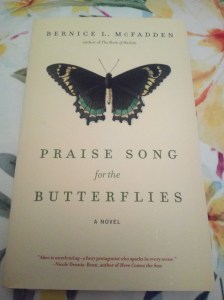 Interested in the inspiration for writing a novel, this one intrigued me; Bernice McFadden visited Ghana in 2007 and while she was there met two women who told her about a rehabilitation centre and a tradition referred to as trokosi, which they explained and suggested she write a book about, an idea she initially laughed at, but after researching the practice, a story began to emerge that she eventually pursued.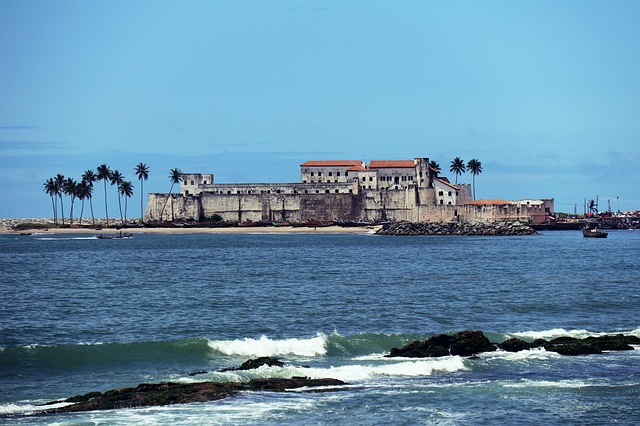
 Interested in the title, I looked up ‘Praise Song’ and learned it is one of the most widely used poetic forms in African literature; described as ‘a series of laudatory epithets applied to gods, men, animals, plants, and towns that capture the essence of the object being praised’.
 Bernice McFadden is the author of nine critically acclaimed novels including Sugar, Loving Donovan, Nowhere is a Place, The Warmest December, Gathering of Waters and The Book of Harlan (winner of American Book Award and NAACP Image Award for Outstanding Literary Work, Fiction). A four-time Hurston/Wright Legacy Award finalist, I’ll definitely be reading more of her work.
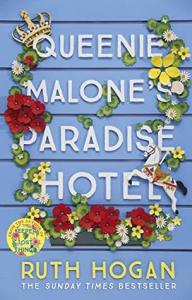 It’s described as a novel of mothers and daughters, families, secrets and the power of friendship. It’s set in Brighton and begins as Tilda returns to clear out her mother’s flat after her death. That precipitates a number of memories of her childhood, which we learn about in the alternate narrative by Tilly, her child self, whose story is told from the moment her father has disappeared, the beginning of her obsession with matches and our realisation that some of the characters she sees and interacts with can’t be seen by others.

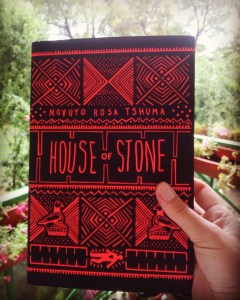
 In an interview, Novuyo Rosa Tshuma when asked about setting her novel amidst the backdrop of this massacre, said:
 It’s an accomplished novel that confronts harsh truths and pursues questions about the reinvention of a nation and the individual. A gifted storyteller who has been able to weave the essence of those personal narratives into richly formed characters that goes some way towards acknowledging a history no-one will talk about. Bereft of redemption, a feeling that pervades the narrative and one that seems to hold many in its grip today worldwide.
 I’ve been looking forward to picking this novel up, because it’s set in and around the streets and coastal inlets of Marseilles (our local city) and even ventures into Aix-en-Provence and Vauvenargues (the scene of a murder in the novel – though known locally because Picasso lived in the château there). It was originally published in French in 1995, when Izzo was 50 years old, a mere five years before his premature passing.


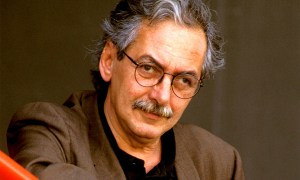 Jean-Claude Izzo when asked about the phenomenal success of his trilogy, characteristically chose to shine the light on the city he loved:
 Word by Word