Booker Prize Shortlist 2025

The winner of the Booker Prize 2005 will be announced on Monday November 10. I only read one novel from the longlist, Love Forms by Trinidad and Tobagan author Claire Adam (my review here). Initially, I perceived on the list as being too clever with the form, even if that is a characteristic of literary fiction, but then I saw two novels that fit my own preference, written by women, about lesser known cultures.

Below is a reminder of the six books on the shortlist being considered for the prize with a quote from the author and another from the judges answering different questions about each novel. You can read more interesting facts about the shortlisted authors here.

In the coming days I’ll share my thoughts on the two that I am reading, Flashlight by Susan Choi (my review here) and The Loneliness of Sonia and Sunny by Kiran Desai (my review here).

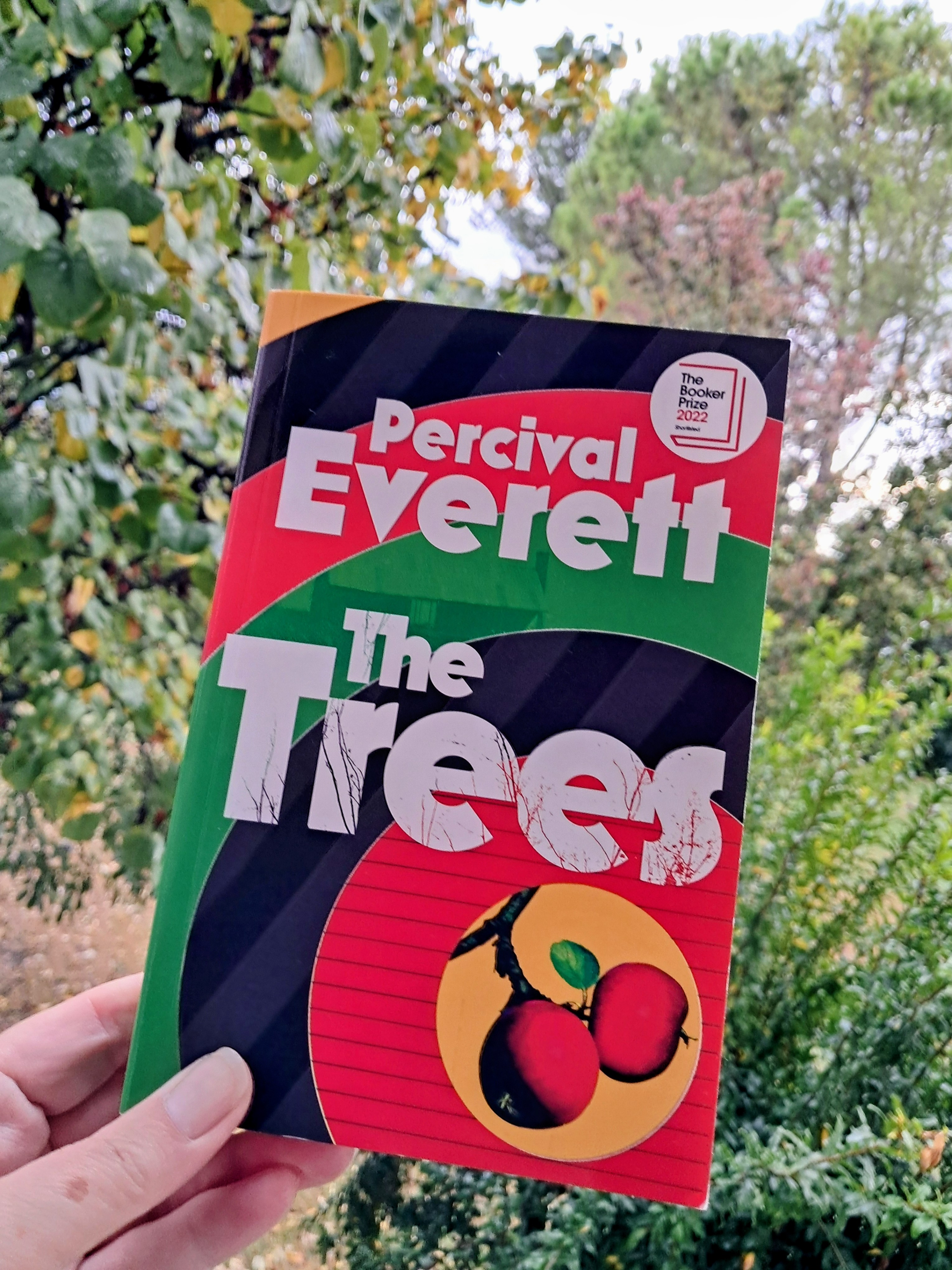
The Booker Shortlist 2025

Penned in English, these shortlisted books are worldly in settings and universal in their themes, often featuring characters living outside their familiar communities and cultures, navigating a diverse set of eye-opening challenges, exposing aspects of history and geopolitical issues from Hungary to Japan, from Venice to New York, from India to England’s West Country.  

If you click on the title of the book, you can read an extract from the novel:

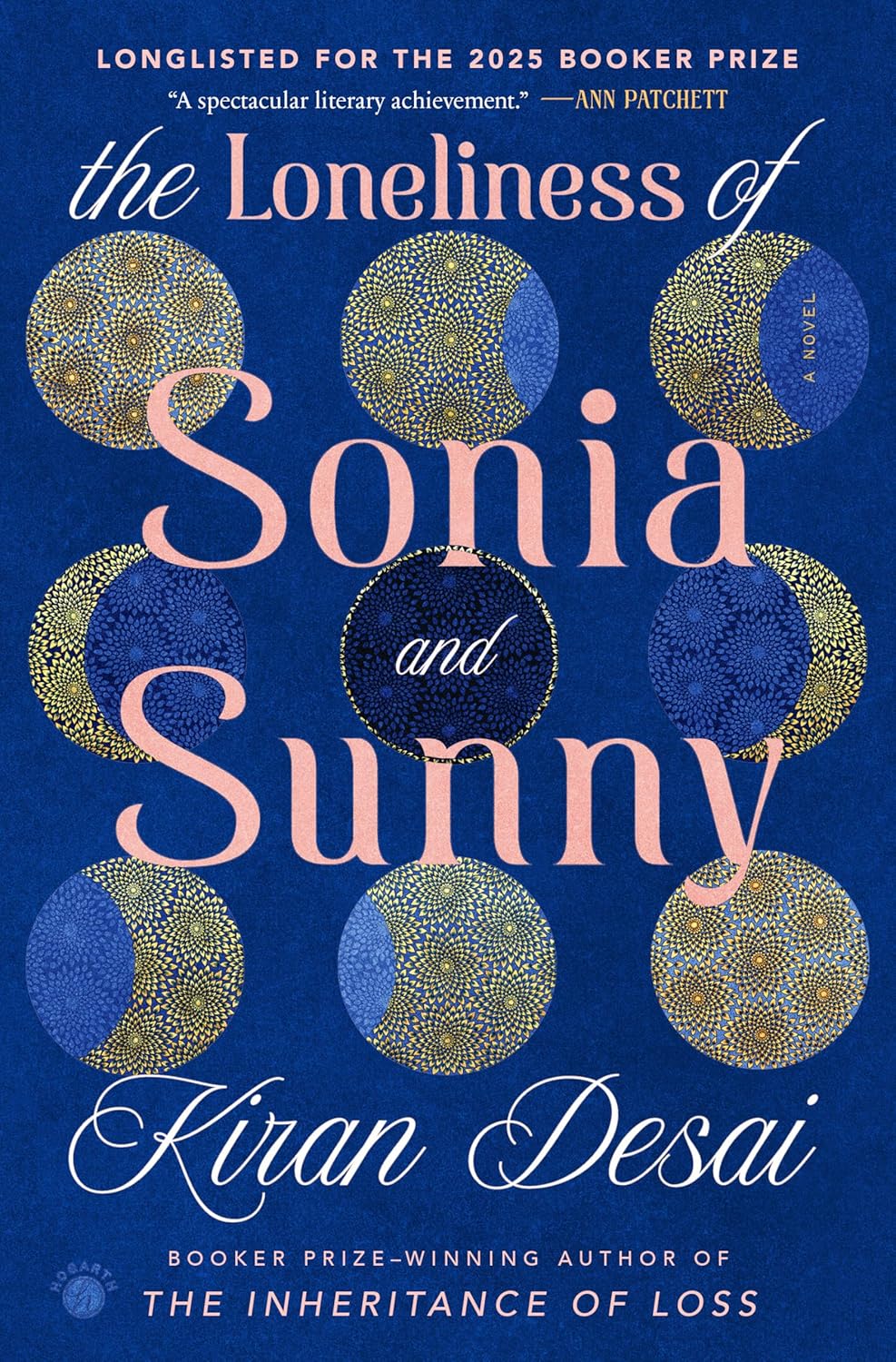
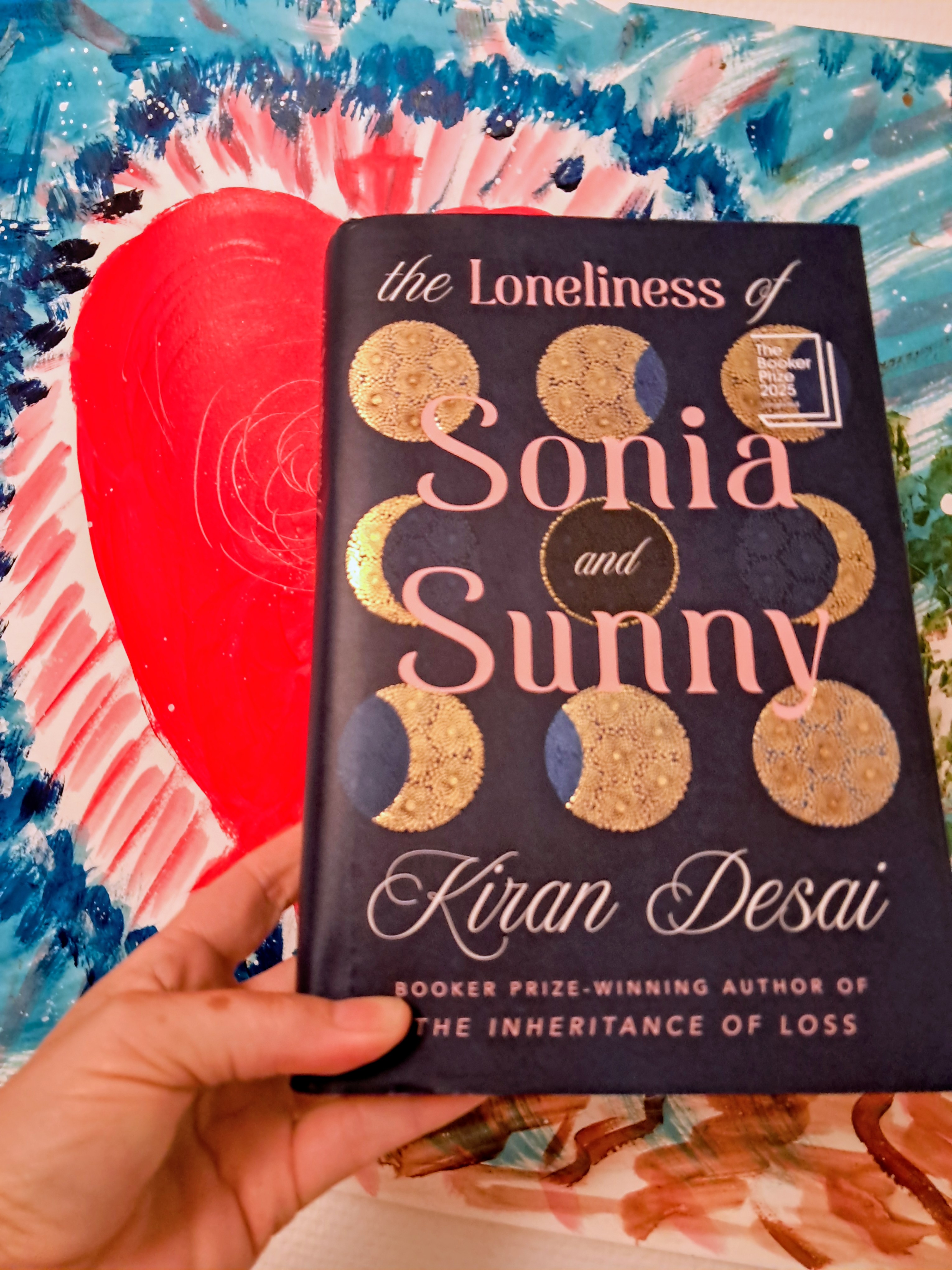
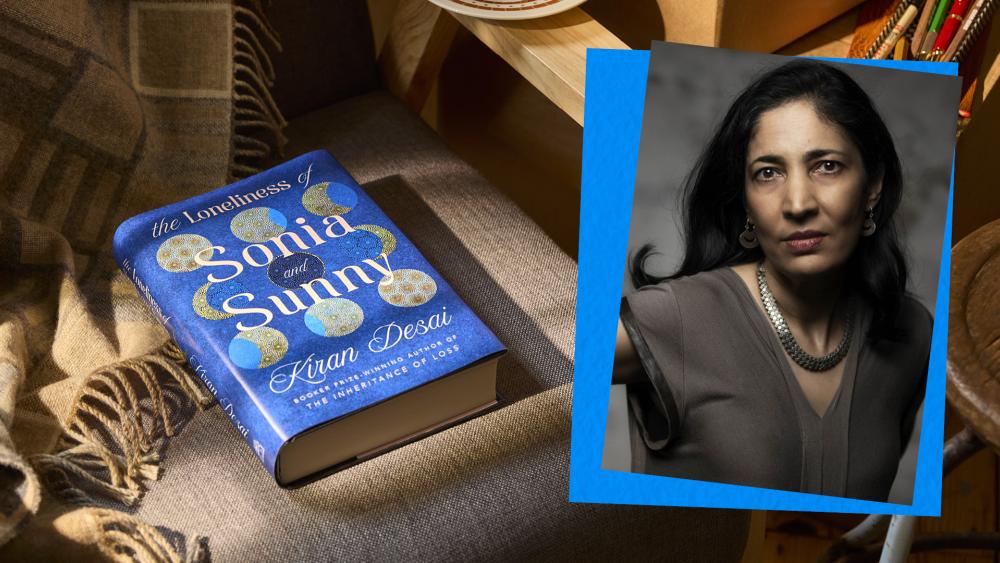
The Loneliness of Sonia and Sunny by Kiran Desai (India)

‘I wanted to write a present-day romance with an old-fashioned beauty’

The Loneliness of Sonia and Sunny is the epic tale of two young people navigating the many forces that shape their lives: country, class, race, history, and the complicated bonds that link one generation to the next. A love story, a family saga, and a rich novel of ideas, it is said to be the most ambitious and accomplished work yet by one of our greatest novelists. 

What do you think it is about this book that readers will not only admire, but really love?  

Its rich intricacies and the sheer bounty each page offers. Inter-generational family saga, sharp humour, poignant love story, state-of-the-nation novel, this book has it all. As a result, reading The Loneliness of Sonia and Sunny is an immersive, wonderful experience. 

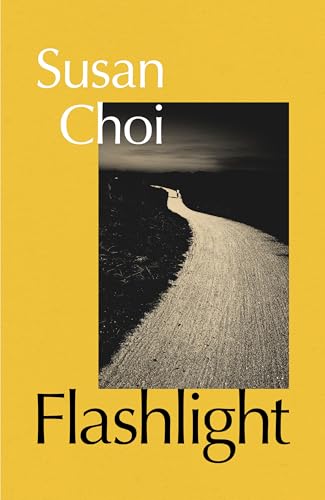
Flashlight by Susan Choi (US)

‘Reading a great book feels like being dropped onto an alien planet’

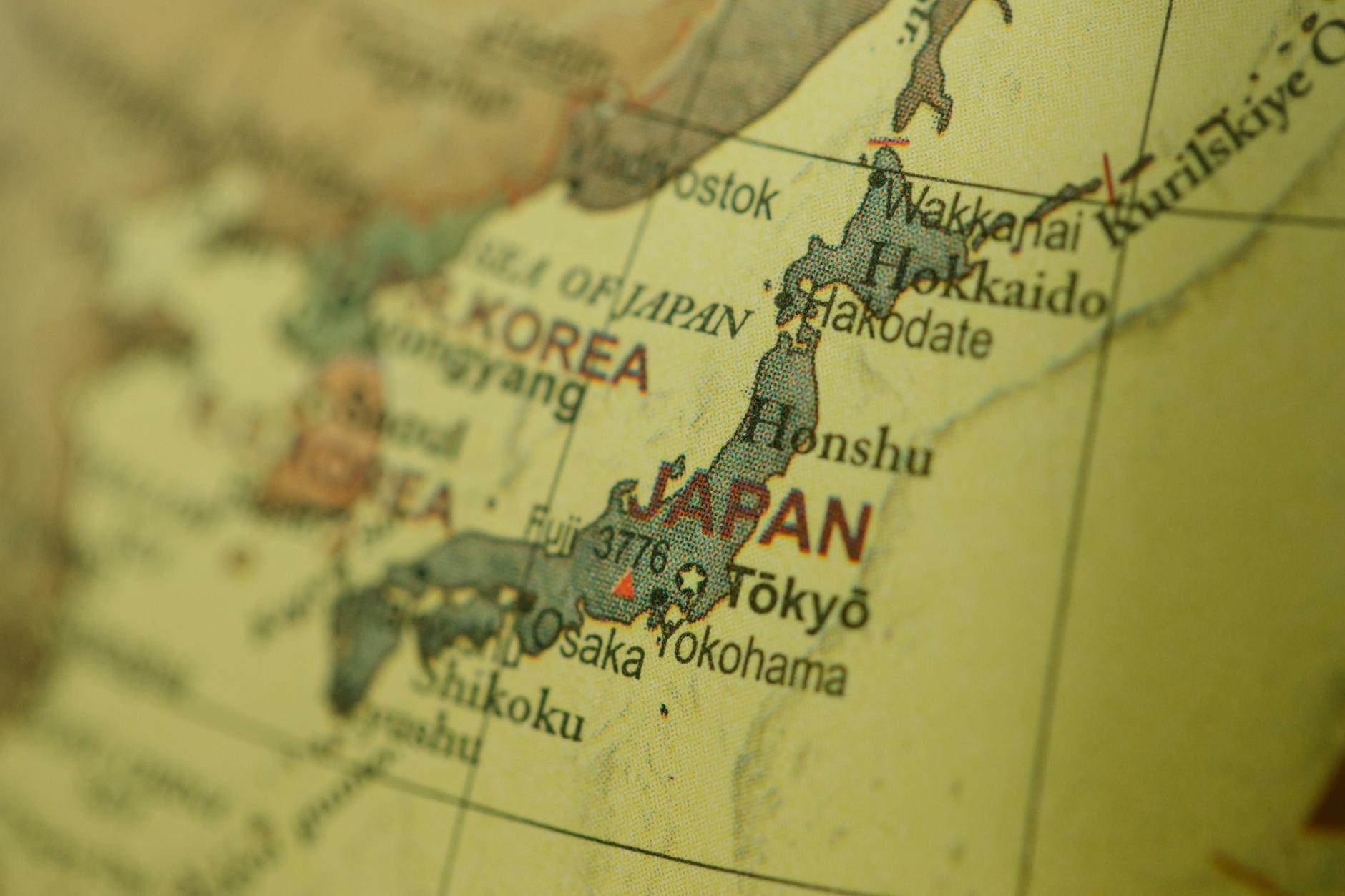
Flashlight by Susan Choi set in Japan USA and North Korea

Flashlight moves between the post-war Korean immigrant community in Japan, to suburban America, to two children trying to forge their own identities, and an eye-opening venture into the fate of those returned to North Korea, an astonishing story of one family swept up in the tides of 20th-century history. 

What do you think it is about this book that readers will not only admire, but really love?  

The scale of it, and the life-spanning trajectories of these characters of whom we get such intimate knowledge: all their drama and pain and, very occasionally, their joy. We found Flashlight to be one of those books that completely dominates your thoughts while you’re reading it. 

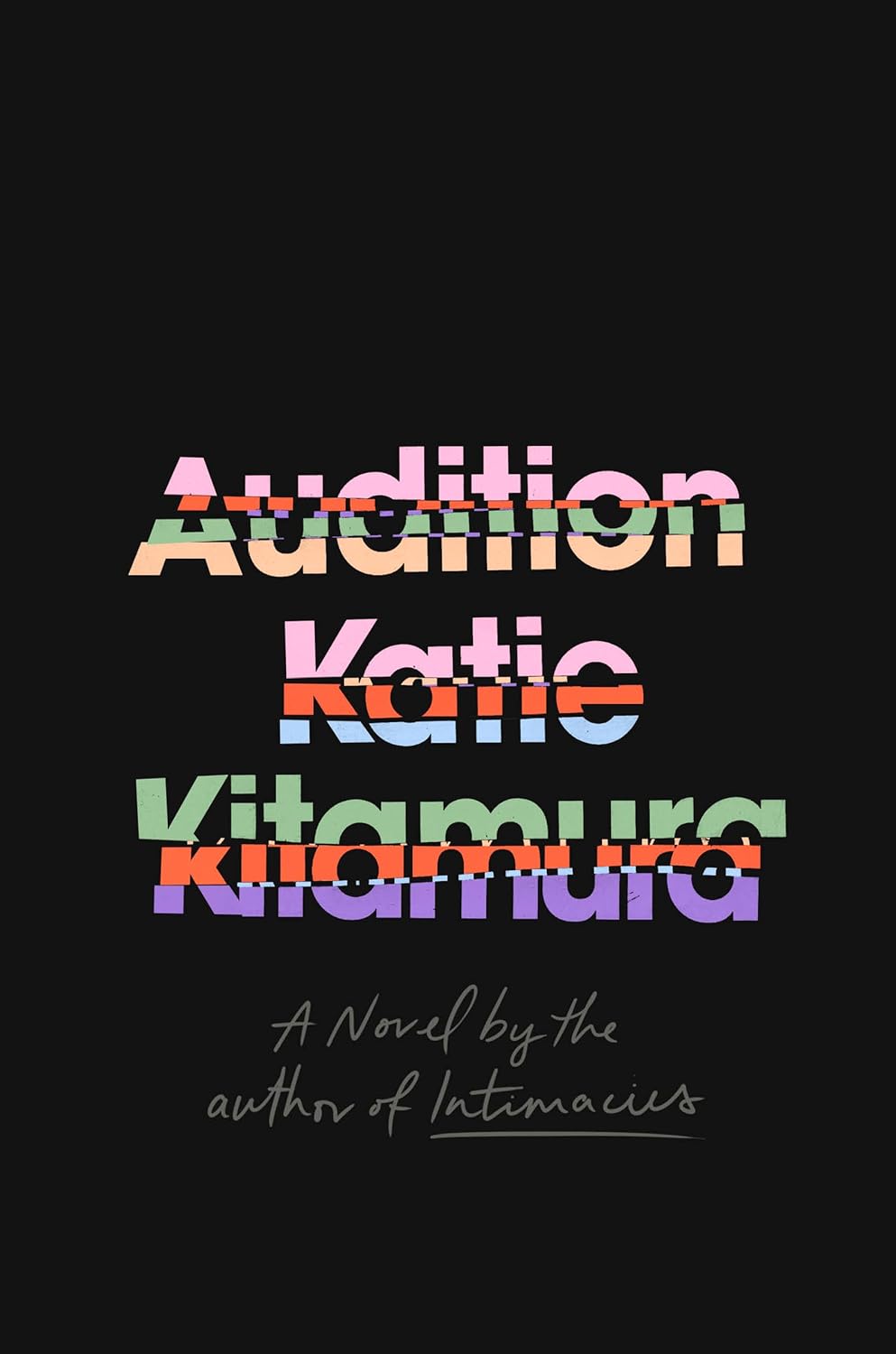
Audition by Katie Kitamura (US)

‘As a culture, we’re becoming quite bad at holding a contradiction in our heads’

– An exhilarating, destabilising novel that asks whether we ever really know the people we love. In this compulsively readable, brilliantly constructed novel, two competing narratives unspool, rewriting our understanding of the roles we play every day – partner, parent, creator, muse – and the truths every performance masks, especially from those who think they know us most intimately.

Is there something unique about this book, something that you haven’t encountered in fiction before?  

Yes, the way Kitamura transitions between supposed reality – modern-day Manhattan – and something deeper and stranger, is bracing. She doesn’t hand-hold or explain, which some might see as a kind of hostility towards the reader. We saw it as a marker of trust. 

This is a very controlled performance of a book that intentionally leaves a lot open to interpretation. We think readers will love finding others who’ve read it and talking to them about what it all might mean.  

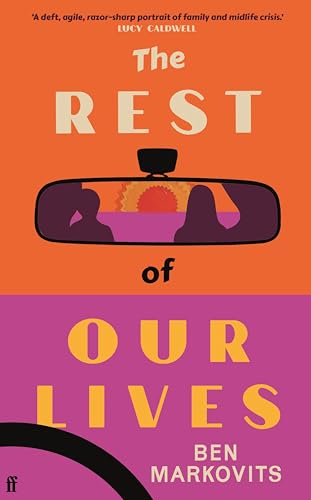
The Rest of Our Lives by Ben Markovits (US)

‘I wanted to write about a certain period of family life coming to an end’

The Rest of Our Lives by Ben Markovits

– An unforgettable road trip of a novel about a middle-aged academic whose marriage, career and body are failing him. Pitch perfect, quietly exhilarating and moving, The Rest of Our Lives is a novel about family, marriage and those moments which may come to define us.

What do you think it is about this book that readers will not only admire, but really love? 

Tom is not a literary king – he’s a dad and basketball enthusiast. We think readers will admire and enjoy high-concept analysis recounted by a ridiculously relatable narrator. 

The star of this novel is Tom’s voice: the lodestar and the ‘why now’. He is a democratic guide, he’s delightfully embarrassed, and he is as observant as he is negligent. But what’s most impressive is Markovits’ dedication to Tom as an averagely flawed human. Tom makes bad jokes, he’s a pushover, and it’s difficult to imagine being taken with him in person. 

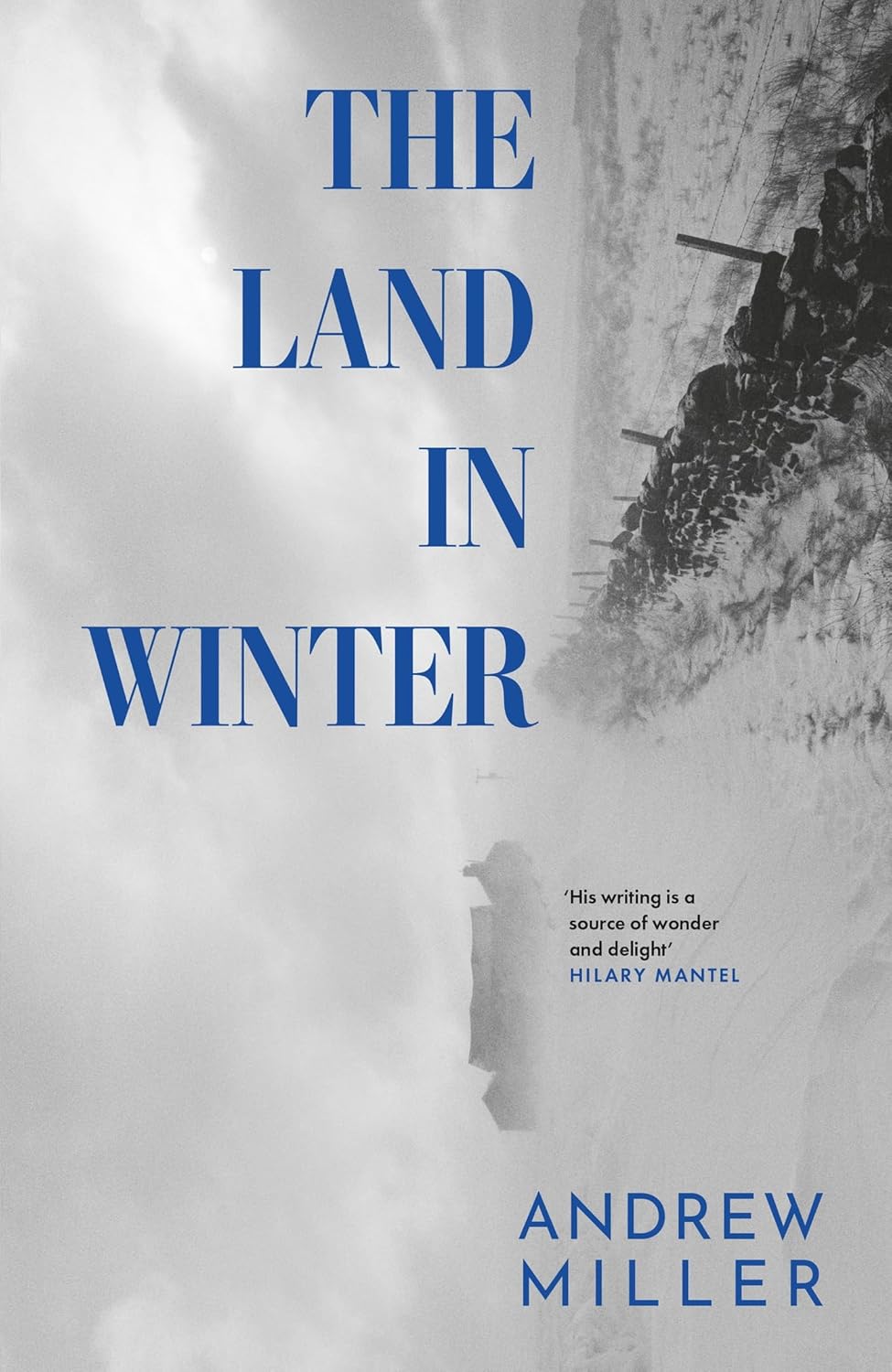
The Land in Winter by Andrew Miller (UK)

‘I’ll write anywhere, with anything, on anything’

The Land in Winter Andrew Miller Booker Prize 2025

– A masterful, page-turning examination of the minutiae of life and a dazzling chronicle of the human heart. As the ordinary cold of an English December gives way to violent blizzards, two couples find their lives beginning to unravel.  
  
Where do you hide when you can’t leave home? And where, in a frozen world, can you run to? 

Although it’s a work of fiction, is there anything about it that’s especially relevant to issues we’re confronting in today’s world?  

The novel is set during the harsh winter of 1962-63 and, given what’s been happening to the weather since then, a harsh winter would be reassuring. But the novel is about the tensions within marriage and other relationships and those tensions are the same today as they were back then. How to live: that’s the big human issue and it forms the spine of the book. 

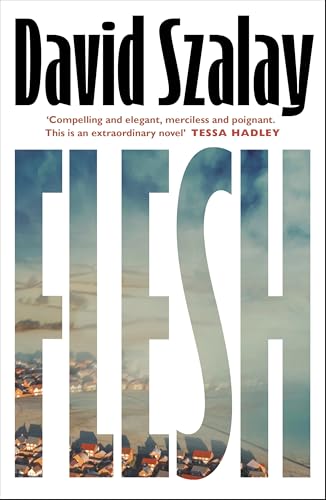
Flesh by David Szalay (Hungary-UK)

‘I wanted to write about what it’s like to be a living body in the world’

Flesh by David Szalay Booker Prize 2025

– A propulsive, hypnotic novel about a man who is unravelled by a series of events beyond his grasp. Fifteen-year-old István lives with his mother in a quiet apartment complex in Hungary. As the years pass, he is carried gradually upwards on the 21st century’s tides of money and power, moving from the army to the company of London’s super-rich, with his own competing impulses for love, intimacy, status and wealth winning him unimaginable riches, until they threaten to undo him completely.

What do you think it is about this book that readers will not only admire, but really love? 

Flesh is a disquisition on the art of being alive, and all the affliction that comes along with it, but it is also an absolute page-turner. It’s nearly impossible to put down. The emotional detachment of the main character, István, is sustained by the tremendous movement of the plot. The pace of this novel speaks to one of the greater themes; the detachment of our bodies from our decisions. 

* * * * * *

Have you read any of these novels from the shortlist? Do you have a favourite to win?

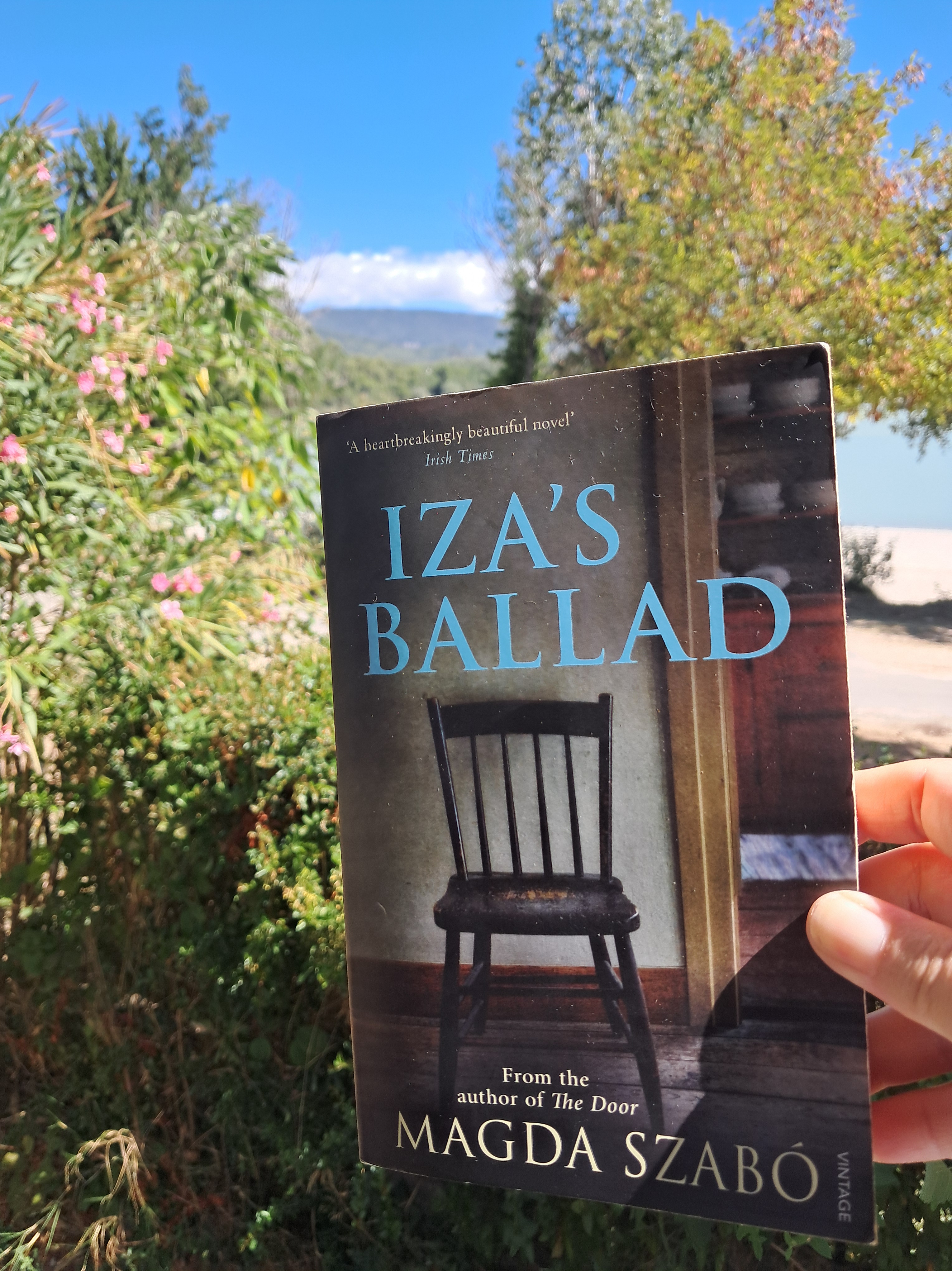
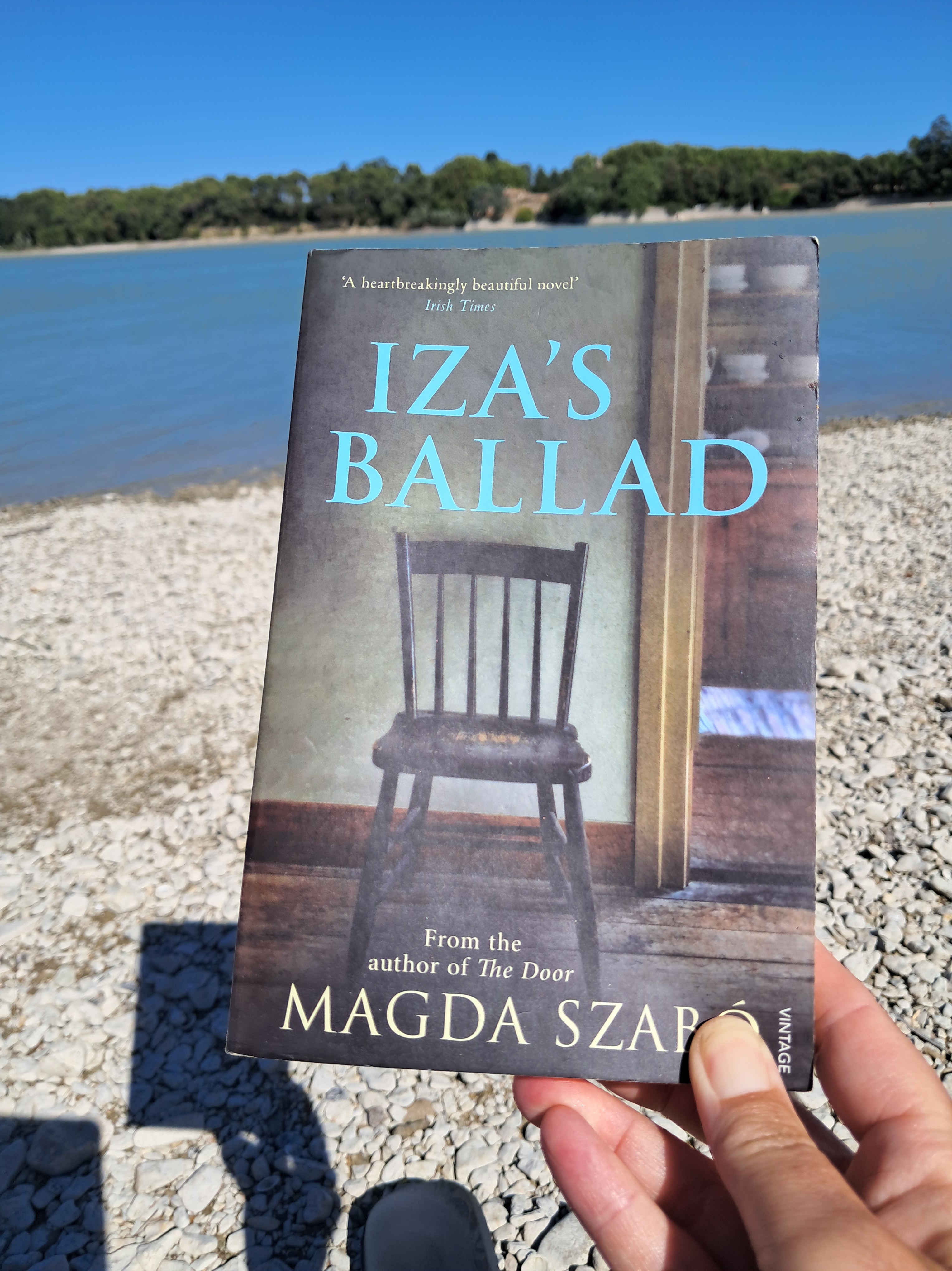
Iza’s Ballad by Magda Szabó (Hungary) tr. George Szirtes

A few catch up reviews from August 2025’s Women in Translation month. I realised I’ve mentioned them elsewhere but not here. The link above has a summary of all the novels I read during #WITMonth with links to reviews. So many of them were excellent 5 star reads, the 3 Italian novels, the Mexican, French.

Hungarian Literature in Translation

Magda Szabó’s Iza’s Ballad (2014), translated from Hungarian by George Szirtes was originally published in Hungary in 1963 and brought to English fifty years later in 2014. She was the most translated Hungarian author, brought back to popularity thanks to Len Rix’s translations of her novels Abigail (2020) and The Door (2006) and Katalin street (2017).

It is the story of traditional villager Ettie and her daughter Iza, who lives in Budapest and the sequence of events in the wake of the death of Ettie’s husband Vince, when the daughter swiftly moves her mother away from the countryside and her familiar community to the city, where everything will be taken care of.

The news arrived just as she was toasting bread.

Three years earlier Iza had sent them a clever little machine that plugged into the wall and made the bread come out a pale pink; she’d turned the contraption this way and that, examined it for a while, then stowed it on the bottom shelf of the kitchen cupboard, never to use it again.

Thrust into a Modern Era

Ettie’s grief finds no solace in the new situation, baffled by the ways of her daughter and the city, where she struggles to find her place or role to assuage her loss. Even getting outside for fresh air becomes a source of anxiety due to the confusion of not knowing the area, the traffic, the transport system. Teréz who cooks, is hostile doesn’t want her in the kitchen or cleaning, no one wants her old-fashioned coffee or help.

She understood how an old woman rapidly heading towards eighty, who had spent all her life on firm ground, coping with straight forward problems, would now feel as though her life were hanging by a thread, and she also understood the bitterness she must be feeling, a bitterness she had never articulated in words that must have been there all the time: she was, after all, an old but still active woman, and she was in mourning. Having established the nature of their relationship, Teréz wanted to show her some tenderness without endangering her own importance and position.

How Not to Age Gracefully

Photo by N. Emmert Pexels.com

Written in four parts, Earth, Fire, Water, Air, the narrative hops back and forth from present to past as we grow to understand the family, their relationships and the great divide between their generations and the lives they lead.

The story moves slowly through Vince’s illness and past and then speeds up with his demise as Ettie is literally thrust into a new era.

She was right, she was always right, it was just that old people grow fond of things that mean much more to them than the young.

A Formidable Daughter

Iza is an adept busy Doctor, divorced, childless, has a night companion and is extremely independent. Employing teréz to take care of all her domestic arrangements, she wants her mother to be looked after and not to have to do a thing, believing she should appreciate that.

Photo by J. Mahnke on Pexels.com

One activity at a time she tries to find her role, only to be continuously rebuffed. Everything is taken care of and the effect as she pulls back from one potential helpful chore after the other is a slow deterioration of all ‘joie de vivre’. Her daughter’s efficiency removes all chance of Ettie helping out and efforts to do so, create more problems, further undermining the elderly mother’s sense of well-being.

She felt as if some elemental blow had destroyed everything around her and that only now did she really know what it was to be a widow, someone absolutely abandoned.

Return to One’s Roots

book cover of Magda Szabo's Iza's Ballad Hungarian literature in translation

When she hears the headstone is ready for placement, Ettie makes plans for her return. It is quite a revelation to her for everything to feel so familiar and so strange at the same time. But her time away has hastened her decline and things don’t go as smoothly as she would have liked.

There’s so much more to the story and the backstory of the character’s that leads them to the predicament they are in by the time Ettie reaches widowhood. It’s an incredibly well portrayed depiction of the sudden transition of the aging mother from her simple village home to the modern convenience of her daughter’s third floor apartment in Budapest, and the effect that removing an elderly person from their familiar environment and from the process of transitioning can have.

Thought provoking and reflective, with an element of tension as the status quo can not be supported, it’s an excellent novel that captures an important and little acknowledged societal shift, of a dying era and of interesting mother daughter power dynamics.

Have you read any good Hungarian novels?

Further Reading

The Grande Dame: Magda Szabó – A Portrait

Author, Magda Szabó

Hungarian novelist, essayist, poet and literary translator Magda Szabó was born in Debrecen, Austria–Hungary in 1917 and died in 2007. She began her literary career as a poet and disappeared from the publishing scene in the 1950’s for political reasons, making a living teaching and translating from French to English.

She began writing novels and in 1978 was awarded the Kossuth Prize, the most prestigious literary award in Hungary. Her novel The Door won the Prix Feminina Etranger in France and the Oxford-Weidenfeld Translation Prize and made into a film starring Helen Mirren.

She lived a long, eventful life decorated with many outstanding achievements in the field of literature, with several of her books being translated into more than 40 languages.

Love Forms by Claire Adam (Trinidad & Tobago)

I first heard this recommended on the Irish Times Women’s podcast summer reads of 2025 and shortly after that it was longlisted for the Booker Prize 2025. It didn’t make the shortlist, but it was the novel I was most drawn to, given the adoption theme, but coming from a different culture than that we usually hear from.

Love

forms in the human body

Louise Glück ‘The Fortress’

Forced Relinquishment Across Seas

Love FOrms by Claire Adams longlisted Booker Prize 2025 Trindad & Tobago

A 16 year old living in relative privilege in Trinidad, has one crazy night out at carnival and months later is clandestinely bundled into various transportations, made to wait at different locations, never told where she is going, crossing the water to a hideaway in neighbouring Venezuela, where she will stay a while, give birth to her baby and return alone.

It was my father who made the arrangements. My uncle helped, since he lived down south, where all this kind of business is carried out. I’m talking south-south : down past the airport, past the swamp, past the oilfields, everything. Way down at the bottom of the island, down where Columbus landed, long ago.

Years later, 58 years old, living alone in London, unable to pick up her career in medicine, two grown sons, divorced, her family still in Trinidad, she begins to search for her lost daughter, with very little knowledge, except that memory of the trip in the dark. The rest must be imagined.

I’ve spent many hours trawling through images online, trying to find this place again.But Venezuela is a big country…Even now, over forty years later, I still don’t know exactly where I was.

Gone But Never Forgotten

Photo by W. Fortunato Pexels.com

The novel explores a certain way of living in Trinidad, a daughter made to feel shame, an event unspoken of for more than a decade, a self-exile imposed. A child never forgotten, forever part of her, out of reach.

Over the years, I’ve come across a few photos in magazines and newspapers that I’ve cut out and kept, because they look the way I imagine her to look. I have them in different ages.

Though she maintains contact with her family, there is more than just physical distance between them. There’s a loss of intimacy, of trust, a love that overnight became conditional, an imposed silence that is easier to bear from afar.

I do love my mother dearly, despite everything, but this particular issue is fraught for us. If she and I were to start talking, and I were to finally tell her the honest truth about everything I’ve felt over these past forty years? Well, I couldn’t do something like that – not now, at her stage of life.

There’s A Community Out There

Not until she begins her search and becomes familiar with the experiences of others like her, of children like the one she abandoned, does she begin to be able to understand what it is she has been feeling, a life long loss, momentarily offered the promise of being filled, as each potential contact (a woman her daughter’s age searching for their mother) raises that hope. She confides in a work colleague, a safe stranger.

‘I wasn’t going to tell you,’ I said. ‘But I guess, why not. Another person has been in touch. A girl. I mean, a woman. From the websites. As a possible, you know. Match.

He was watching me closely, and I tried to take on the right manner. Steady and controlled, hopeful but in a measured way. With a hint of detachment, as if I were talking about something at a much greater remove, of academic interest. I said she was in Italy, a town in the north, and that she was a professional person, a biochemist with a pharmaceutical company.

This was a compelling read that would create interesting discussions, with its deeply flawed characters, many terribly inhumane behaviours and the life long wounding adults commit, who care more for status and reputation than the damage heaped on women and children for being in the too common situation of being pregnant, or birthed, unwanted. It’s a conversation and narrative that has for too long been dominated by one side, so it is good to see it being explored through fiction.

This kind of story comes in so many varieties and though this one is unique, again it is driven by the shame and blame of young women, without consideration for those whose consent is never given, those future adults severed from the natural maternal bond and their lineage, conditioned into false belonging.

On the return journey, in the jeep and then in the dented, rattling airplane, I felt as if something had changed, although I couldn’t, at that stage, have fully articulated what it was. Pieces were beginning to settle in new patterns. Maybe my story wasn’t: Dawn, who made a mistake and brought shame to her family. Maybe its: Dawn, mortal woman, who took a wrong turn in life and got lost.

One of the most hopeful parts of this novel for me, was the knowledge that this character and this author, read the forums and the stories of the many humans born into this paradigm who write of their shared, common experience of how that separation affects a child, their life, their future relationships, which helps dispel the myth, that it’s a good or right thing to do, to sever any baby from its mother.

The Politics of Adoption and the Privilege of American Motherhood

Last year, I read the book Relinquished by Gretchen Sisson, a non fiction work that was the result of ten years of interviews, research and analysis of young women who had given up their babies, looking back at the impact of those decisions.

If you have any interest in the subject of family preservation, and creating conditions where families are supported not separated, read this. If you want to know the truth behind the experience of relinquishing a child (a lifelong trauma), not to mention the impact that has on the child (loving family or not), become more well informed by reading this excellent work.

Further Reading

Read an Extract from the novel ‘Love Forms’ by Claire Adam

Guardian Review: Love Forms by Claire Adam, reviewed by Julie Myerson, June 2025

Recommended Resources : Adoptee Documentaries, Adoptee Podcasts, Adoptee Books

Recent Research: Relinquished: The Politics of Adoption and the Privilege of American Motherhood by Gretchen Sisson (2024)

Claire Adam, Author

Novelist Claire Adam was born and raised in Trinidad. She was educated in the United States, where she studied Physics at Brown University, and now lives in London with her husband and two children.

Her first novel, Golden Child, published in 2019, won the Desmond Elliott Prize, the McKitterick Prize, the Authors Club Best First Novel Award and was named one of the BBC’s ‘100 Novels that Changed the World’. Adam’s second novel, Love Forms, was longlisted for the Booker Prize 2025

I wanted to explore the bond between mothers and their children. On one hand, it’s the most ordinary, mundane, taken-for-granted thing in the world… on the other hand, it’s deeply mysterious. In the case of a mother and child who’ve been separated since birth, for example, often there is a pull towards each other that lasts a whole lifetime. These are people who don’t know each other, who’ve basically never ‘met’ – and yet they yearn to be together. Why is that? Claire Adam

Brandy Sour by Constantia Soteriou (Cyprus) tr. by Lina Protopapa

Brandy Sour is a novella length book by the Cypriot author Constantia Soteriou, translated from Greek by Lina Protopapa. It won the 2023 National Book Prize in Cyprus and the author won the 2019 Commonwealth Short Story prize.

Foundry Editions, A Love of Mediterranean Literature

It was the first book published in the Foundry Editions collection of Mediterranean fiction back in 2024. This independent press was created out of a desire to discover and share new voices from the Mediterranean and the people and lands around it.

I heard about them after reading an excellent article in the Guardian entitled ‘Huge scars’: novelist finds a fractured Spain in its half-built houses about the book Far by Rosa Ribas (my review) translated by Charlotte Coombe. I sent a copy of it to a good friend in New Zealand and read it myself and loved it. I started seeing reviews for other Foundry Editions works and now I’m following their list closely.

A Turbulent History Told Through Hotel Beverages

Brandy Sour is set in the emblematic Ledra Palace Hotel, established in 1949 on Nicosia’s UN-controlled buffer zone, the Green Line that, since 1964, has divided the island into Greek Cypriot and Turkish Cypriot sectors.

It has been witness to some of the country’s significant historical events and can be considered an integral part of Cyprus’ cultural heritage and difficult past.

“The Palace was the epicentre of the island’s recent history. It was built as the promise of a new era; a haven for all nationalities, all communities. It drew people from all backgrounds: the wealthy bourgeoisie who lounged by its cerulean pool; the poorer working classes who made its beds – and its Brandy Sours…

But in 1974, it became the site of the worst battle of the war; a symbol of all that could not be allowed to fall. After the division, it was the endpoint of student demonstrations, the gathering place for those who mourned their missing.

And when the barriers finally opened, the Palace once more became a symbol of hope. Of promises that were given, but never kept. Of wounds that ran very, very deep.” Constantia Soteriou, Cyprus Mail

The book is made up of twenty two vignettes or short character studies that form an interlinked slice of life of the hotel and the many characters who have had connections to it.

From Brandy Sour to Rosebud Tea to Grape Molasses

Each character is represented by a beverage starting with the Brandy Sour : The King. Much is revealed in the opening line.

They say a barman invented the cocktail for King Farouk of Egypt in the 40’s – a dark time for the king, who is already grown and in trouble, no longer the handsome, athletic boy charming Europe with his Western manners but a heavy middle aged man facing all kinds of political headaches in Egypt – and elsewhere too – who has to conceal his fondness for alcohol.

The King asks for something that doesn’t look like a drink, with that good brandy and the lemons he likes, and the barman obliges creating a cocktail worthy of a king that wishes to deceive people, with lemonade to sweeten him and the lemons to remind him of his sorrows in a tall glass that resembles an iced tea.

We learn of the tastes of local ladies and English ladies, of the maid, the cleaner, a guerilla fighter and with every consumer of a beverage, an important anecdote relating to their predilection.

City people think that roses are only good for looking at. Village people know that flowers are also good for eating. Especially roses – those tiny pink roses, the hundred-petal roses called damask roses, the ones that climb and spread their thorns across fences and hedges.

The Doorman likes his infusion of rosebud tea in his tin mag and when he starts work at the Big Hotel he takes his tin mug and the root of a damask rose and secretly plants it in the hedge. They must be picked in August with the morning dew, or risk a bitter infusion; it helps digest the indigestible.

Coffee and How War Changes Everything

Photo by Samer Daboul Pexels.com

He always wakes at dawn and he goes to the kitchen to have his coffee prepared the way he likes it. The only coffee of the day. With lots of kaymak and no sugar. Turkish coffee – Greek coffee, he always corrects himself – with sugar is an absolute waste of coffee. It needs to be bitter. There’s no point otherwise.

After the morning ritual of the maître’d, we learn of his role as the first shots are fired and he brings the foreigners down to the basement for protection. He returns home and anxiously watches the fighting on his TV, he meets his former colleagues in a coffee shop, the maid, the cleaning lady and the doorman.

He’s taken to drinking coffee in the afternoon now, too – no sugar the way it befits funerals and grief and tragedy and death. That kind of coffee. He takes his coffee with thick kaymak and no sugar. Coffee needs to be bitter – there’s no point otherwise.

The Builder and the Grape Molasses

One of the more moving stories near the end is that of the sensitive builder who gets mouth sores when he is stressed. He can’t eat or drink, there is no medicine that can help him.

The only thing that seems to make a difference is the grape molasses an old lady whose house he fixes gives him. Grape juice molasses that you boil for hours and hours, that you boil and boil until the liquid turns thick like honey – you dab it on your lips and on your gums and it’s the only thing that can cure mouth ulcers, those little holes in your mouth.

We learn the reason for his sensitivity, for only a few have the skills he does, who know old architecture like he does, how to repair the ancient materials in the foundations, to feel and understand old houses.

Ritual, Repetition and Reassurance

In each story there is often repetition, of that which is important to the character, like the ritual of the beverage, something that is repeated, that is part of a way of life. In the same way language repeats and reassures, building connection between the ritual and the meaning and importance it brings to the community, something to be cherished. The reader too is reminded of that meaning for that character and is moved by it.

I read the book without referring to the history, but on finishing it, I wanted to know more and went looking for the wider context, as we sense the changes occurring through each character and their habits, how the hotel itself somehow embodies the collective memory of a history. Over time, it is occupied by different kinds of guests, welcome and unwelcome, civilian and military and the local people who try to accommodate them and stay safe and adjust to the new paradigm of a post-colonial, independent country and then the destabilising effect of the coup in 1974 that created a separation and dividing line between Turkish and Greek Cypriots.

It’s a beautiful, evocative tribute to a culture, a heritage and the people that have populated and passed through it, that gives pause for thought, of the essence of ritual, of the importance of even the most simple traditions and need for humans to satiate a thirst, a soulful desire.

Highly Recommended.

Further Reading

Review, Cyprus Mail: A brandy sour at the Ledra Palace by Alix Norman

Article: The Ledra Palace Hotel and the ‘difficult history’ of modern Cyprus, Cambridge University Press, Dec 2022 by Antigone Heraclidou & Theopisti Stylianou-Lambert

Have you read any of the Mediterranean fiction published by Foundry Editions? If so, do tell us about it in the comments below.

The Gowkaran Tree in the Middle of Our Kitchen by Shokoofeh Azar (Iran) tr. Anonymous

In Feb 2020 I read Shokoofeh Azar’s epic debut novel, The Enlightenment of the Greengage Tree (my review) translated from Farsi. An Iranian writer living in exile in Australia, I was excited to have the opportunity to read a brilliant work of imagination in English. It was later shortlisted for the International Booker Prize (UK), longlisted for a National Book Award for Translated Literature (US) and three Australian Book Awards including the Stella Prize.

Epic and challenging, both that novel and this latest both use elements of magic realism in a unique way to explore recent history, (that of the Iranian Revolution in 1979), while referencing mythic texts and ancient aspects of Iranian culture, which an outsider won’t necessarily pick up on them all, but how incredible a feat, to maintain a compelling plotline that explores the past and uses the metaphysical to assist with confronting situations that are painful to contemplate, creating meaning and helping to overcome trauma.

“Magical realism is not only a realm of boundless imagination, it is also a powerful literary and cultural tool for resisting dominant and imposed powers… I turn to this genre to confront authoritarian structures in Iran while celebrating the true cultural and artistic beauty of my country.”

Preserving a Culture Through Storytelling

Again in The Gowkaran Tree in the Middle of Our Kitchen, Azar writes to embrace and acknowledge family, a beautifully diverse and colourful culture, complex politics, revolution and resistance.

The novel tells a story about a Zoroastrian family with twelve children and a long, interwoven lineage, where the living and the dead are both present and absent, sometimes called on or observed when needed to understand how to navigate the present. Those living in the now are often less aware than those who came before and this connection with their heritage and family is part of the way they survive difficult times.

The story starts with the strange occurrence of a Gowkaran Tree appearing one day in their bustling kitchen, travelling up towards the ceiling, alive with bird life and firmly rooted.

No one but family can see the tree, and while making repairs, their father, a University Professor decides to build a round table around the trunk. The kitchen was their centre and beneath the walls of the old mansion lay the remains of eleven other mansions.

A big, twelve-person table. In this way the Tree of Knowledge, the Tree of Life, the Bas-Tokhmeh Tree, the Gowkaran Tree, the Tree of the Incident, became the kitchen’s centre of gravity.

The grandmother Khanom Joon tells her granddaughter (the narrator Shokoofeh) some of the old family stories, of love and storytelling and the 1,762 notebooks containing the memoirs of their ancestors. She tells her own story and that of the Ball of Light that follows her.

“Curled up in a chair, I let history go and breathed in the air of love and suddenly realised that from now on I was caught. That said, in my dreams I had seen that this madness would grip us both, neither of knowing when it began or how long it would go on. Just like this mansion and this timeless tree and the history of foreigner’s incursions and invasions in this country.”

A Heroine on a Quest, Mentors Abound

I’m not going to even attempt to describe too much of the plot, suffice to say that it is something of the heroine’s journey for the young narrator, who is in the throes of falling in love and will be sent on a quest to search for her brother Mehab, who has gone to fight in the war. A coming-of-age story in harsh times, and yet a celebration of that which continues to resist and persevere and give fruit.

The journey brings to light the terror of a country taken over by despots, and the predicaments of those who capitulate and those who refuse, the voiceless and the silenced. And throughout the Gowkaran Tree remains, rooted, alive and bringing those who remain together.

Why Trees Matter

Trees are a recurring motif in Shokoofeh Azar’s novels. Trees often live on longer than humans, just as our ancestral lineage does, they are places of refuge and transendence.

Photo by Vraj Shah on Pexels.com

The rootedness of a big tree in the middle of a kitchen is a symbol of resistance, of strength and the power of deep, familial roots. Its central presence helps preserve what is under threat – family heritage, culture and identity.

The earthy, rooted tree grounds the magical realism element, allowing the author to meander into myth and folklore without losing the connection to the aspects of the story that are firmly rooted in reality. The reader surrenders and goes with it, relieved by the presence of the Ball of Light and terrified by the danger our protagonist is exposed to on her solo journey.

Destiny and Liberty

The book is made up of 27 chapters in two parts, Part One The Womb of Destiny takes place in and around the home mansion and in Part Two The Ordeal of Liberty, our protagonist is sent out alone on her mission to overcome challenges and learn something before her return.

“The way is reached by taking it.”

Book cover of The Gowkaran Tree in the Middle of our Kitchen by Shokoofeh Azar

If you’ve read her earlier works, you’ll be prepared for how unique the storytelling is, but if you’re not a fan of magic realism, this might challenge, however for me it was worth it for the immersion in the storytelling, culture and literary tradition, even if not all the references are familiar. The occasional footnotes are helpful.

The way the plot takes the reader on the journey to save a brother, while encountering historical characters along the way reads like a blend of fable and adventure with philosophical insights mitigating the challenging obstacles required to overcome.

At 512 pages, I admit that once I was out of holiday mode, I set it aside, due to the sheer size of it. I do think it asks a lot from readers today to engage with such a massive book.

Shokoofeh Azar has developed a unique style of magic realism to narrate harsh truths about a society under political and cultural oppression, while sharing its depths of family unity, cultural heritage and dedication to resistance. Overall, I highly recommend it and look forward to where she goes next and hope for a more taut, less ambitious novel next time.

Further Reading

Review: World Literature Today : The Gowkaran Tree in the Middle of Our Kitchen by Andrew Martino

Read a great review at Tony’s Reading List

Iranian Daughters: Struggling for the Rights Their Mothers Lost in the Revolution by Sepideh Zamani

Video Conversation : After the Revolution, Edinburgh Book Festival

Shokoofeh Azar, Author

Born in Iran in 1972, the author worked as a journalist and field reporter in her country, covering human rights issues. After several arrests in connection with her work as a journalist, on advice from her family, she fled Iran in 2010 and was granted asylum in Australia, where she has lived as a political refugee since.

She is the author of essays, articles, and children’s books, and is the first Iranian woman to hitchhike the entire length of the Silk Road.

N.B. Thank you to Europa Editions for the review copy.

The Song of Youth by Montserrat Roig tr. Tiago Miller

The Song of Youth ‘el cant de la joventut’ is a slim collection of short stories written by Montserrat Roig translated by Tiago Miller, published in English in 2022 by fum de stampa press (originally published in Catalan in 1989).

It was shortlisted for the 2022 Republic of Consciousness Prize, (now rebranded the Queen Mary Small Press Fiction Prize) that rewards ‘bold and innovative’ literary fiction by small presses publishing 12 or fewer titles a year that are independent of any other commercial financial entity.

The winner of that prize in 2025 was There’s a Monster Behind the Door by Gaëlle Bélem (Ile de Reunion), translated from French by Karen Fleetwood and Laëtitia Saint-Loubert and in 2024 Of Cattle and Men (reviewed here) by Brazilian writer Ana Paula Maia, translated by Zoë Perry, published by Charco Press.

Finding and Reading Catalan literature in Catalonia

Backstory Bookstore Barcelona

When I visited the Backstory Bookshop in Barcelona, I was interested in and looking for Catalan literature that embraced something of its history in some way.

Monserrat Roig (1946-1991) was a novelist, short story writer, investigative journalist and feminist activist widely regarded as forming a central part of the Catalan canon, inspiring many other Catalonian writers to seek the intimate, personal testimonies of ordinary people, within a wider version of history guided by a strong sociopolitical engagement.

One of Roig’s many literary strengths was creating and placing subversive characters in deeply philosophical and provocative narratives, and bringing out their flawed, tender and very real aspects. It is helpful to consider this when reading her bold collection of short stories.

I’m going to mention two out of the collection that really stayed with me, The Song of Youth and Mar. Love and Ashes packs a punch, but is so short, it need not be described here.

The Song of Youth

I found it helpful to be reminded of this context, written on the back of the book.

In The Song of Youth, Montserrat Roig boldly presents eight remarkable stories that use language as a weapon against political and social “dismemory.” Her powerful and striking prose allows the important stories of those silenced by the brutal Franco regime to, at last, come to the fore. The Song of Youth is undoubtedly feminist and deeply critical but, as always, Roig’s lyrical writing gives shape, depth, and significance to the human experience.

This is how author Eva Baltasar described the collection:

The Song of Youth represents an array of lagoons in which Montserrat Roig’s most extraordinary flowers lay their roots.”

The short story collection by Montserrat Roig The Song of Youth Catalan literature translated fiction

After the first reading of each story, I felt like I was sitting at the edge of one of those lagoons, firstly appreciating the flowers, though not always seeing those roots in the deep, dark depths. And so I went back and reread them. I wrote on and around the pages, and looked up the poetic literary references and was in awe.

The opening story, The Song of Youth, reread a few times, revealed its many layers with each reading. It is magnificent. I think it is a story that needs to read quietly to concentrate, like contemplating a work of art, it won’t reveal itself at a first glimpse. However, it is perfect as it is. A celebration of dying moments and the power of memory, of a life lived courageously.

I turn my face from the ominous day,
Before it comes, everlasting night,
So lifeless, it’s long since passed away.

But shimmering faith renews my fight,
And I turn, with joy, towards the light,
Along galleries of deepest memory.
JOSEP CARNER, Absence

A woman lying prone in hospital with her eyes closed, near the end of her life, observes the white coat of the Doctor and has flashbacks to her youth, a stranger in a white shirt walked into the bar where she sat with her parents, with a decisive air. A transgression.

The men who came from the war didn’t have that air.

She opens her eyes, she is still alive. Everything as it was when she closed them. She knows the sounds. The sounds that keep them alive and the sounds that warn of encroaching death.

“They all died at daybreak. Just like the night.”

She is defiant. She is determined to remember a word. She succeeds.

It’s not easy to describe, this too is a story that needs to be experienced, to read the clues and the disjointed moments of the present and past that create the whole.

Death, Memory and Friendship

To Montserrat Blanes

Life has taught me to think but thinking has not taught me to live. HERZEN

The story MAR is the hardest hitting and most powerful – about a woman befriended, a relationship, admiration, of two people who are unalike but drawn towards each other, who go their own ways; until an accident changes everything.

…it never once occurred to me to give a name to that period of silence, madness and noise, to those moments when the hours would melt into timelessness and our intellectual friends, while watching us, would frown or raise an eyebrow.
“They’ve got some nerve,” said their suspicious eyes while they stared, unaware of their own fear.

The time they are together changes the one telling the story, she is an intellectual, always analysing everything, living in a world of opinions and judgments. While in this friendship, something shifts, changes her. The presence of this unconventional friend disturbed others, messing up the carefully compiled archives on their minds. From vastly different worlds, they each gain something powerful from being in each other’s lives. Something that unsettles others.

We hardly said a word, we certainly didn’t reinvent anything, but it was only with her that I lost my fear, the fear of revealing who I believe myself to be, that little girl I keep hidden in the deep, damp depths of my inner self.

A friendship of silences, commotion and madness

A tribute to friendship, this story originally published in 1989, was celebrated in December 2021 when a documentary was produced about Montserrat Roig and Montserrat Blanes friendship of silences, commotion and madness.

The audiovisual is made up of two narratives, the one in the short story and that told through the live voice and presence of Montserrat Blanes speaking from experience, memory and remembrance.

If you understand Catalan, you can watch and listen to the recording of “Roig i Blanes. Una amistat de silencis, enrenou i bogeria” on Youtube here.

Overall a powerful and thought provoking collection that makes me keen to read her longer fiction.

Further Reading

Biography: Amb uns altres ulls (With Other Eyes) by Betsabé Garcia (2016)

Article: Montserrat Roig : Up-close and from afar by Mercè Ibarz

“And when cancer attacked her, the hour of relentless truth that is illness brought out the self-portrait that the public persona had been hiding: a lucid, serene, combative writer and an excellent reader, who was cognisant of the fact that Franco’s dictatorship had pulled literary training up at its roots and who was, therefore, all too aware of her limits to that point and the power that, despite her illness, journalistic prose could give her.” Mercè Ibarz

Author, Montserrat Roig

Montserrat Roig (Barcelona, 1946-1991) was an award-winning writer and journalist, and the recipient of numerous prestigious prizes including the Premi Víctor Català and the Premi Sant Jordi.

Her journalistic work focused on forging a creative feminist tradition, and on recovering the country’s political history.

Her novels take similar stances, reflecting on the need to liberate women who were silenced by history.

All That Remains by Virginie Grimaldi tr. Hildegarde Serle (2025)

Contemporary French literature translated to English Virginie Grimaldi All That Remains Il nous restera ça three silhouettes mimosa flowers

We are just coming out of our second summer heatwave and in this kind of heat, where it’s 38°C (100°F) every afternoon, reading needs to be light and propulsive, because the brain just doesn’t function in the same way.

I chose to read French author Virginie Grimaldi’s All That Remains because I felt sure it would provide the sustenance I was looking for, without having to think too much.

Good-hearted, uplifting fiction, great characters and a connection with some of the best parts of French life, that help overcome universal problems that anyone might face. Positive aspects of humanity overcoming the oppressive.

I love the sprigs of mimosa on the book cover, a beautiful winter flowering shrub that thrives in difficult conditions, blooming on the coastal region of the south of France in January and February. It evokes such good feeling, symbolising new beginnings, resilience and adaptability and a sign that spring is on its way.

La Cohabitation Intergénérationnelle

In addition, when I read the premise of three generations living together, it reminded me of a news item I had seen on French television about “La cohabitation intergénérationnelle“, where residents (over 60 years) in Paris and elsewhere, at risk of needing to move out of their apartments or homes, were being matched with students (under 30 years) seeking affordable accommodation, able to be a reassuring presence, particularly at night, and share meals together.

Seeing these people on the screen, sitting talking together, feeling safer at home, having more space, companionship – able to get through those years of difficulty – well, as we say here, « Vive la France »!

Grief, Homelessness and New Beginnings

sprigs of mimosa new beginnings, resilience, surviving in difficult conditions Virgine Grimaldi All That Remains
Photo by Eva Bronzini on Pexels.com

It’s a novel about three people from three different generations, who wind up sharing an apartment together, when their needs intersect.

Jeanne (74) is recovering from unexpected widowhood and needs to do something soon to address unforeseen financial concerns, if she wants to remain in her apartment in Paris. The woman in the bakery won’t allow her to put up a notice, but fortunately someone overhears her asking.

For the past three months, Jeanne had been unweaving those habits, thread by thread. The plural had become singular. The setting was the same, the timing the same, and yet everything rang hollow. Even the melancholy had disappeared, as if her entire life had been training for the bereavement she was now facing. She was desensitized.

Iris (33) a care worker, is being evicted from her temporary studio, living out of a suitcase and in hiding from a situation that will be revealed.

“Hello Madame, I just wanted to confirm my interest in your room for rent. And please know that, if it weren’t for my tricky situation, I’d never have interrupted your conversation with the young man, who also seems in real need of a home. If you’ve not yet made your choice, I’d understand if you favour him. Regards Iris.”

Paul, a French boulangerie bakery in London and Aix en Provence patisserie

Théo (18) is an apprentice in a local boulangerie (bakery) and has just reached the age of independence. Having just bought a car for €200, he parked up outside the house with the blue shutters and thought he’d solved his accommodation woes, however his problems have just magnified.

I don’t intend to drive around in this car. I settle down on the back seat, head resting on my bag, covered with my coat. I put in my earbuds and play Grand Corps Malade’s latest song. I light the roll-up saved since this morning and close my eyes. It’s a long time since I’ve felt this good. No sleeping in the metro for me tonight. For 200 euros, I’ve treated myself to a home.

Jeanne, Iris and Théo in Paris

Each short chapter moves to the next character and within very few pages I was deeply invested in wanting to know more about each one and where the story was going. It’s a wonderful novel about perseverance and overcoming challenges and the messiness of life and finding support and comradeship in unexpected places.

I loved this book and would be not be surprised to see it being made into a film, it’s got all the good vibes and realistic issues that people f all generations have to face, and a unique but encouraging way that different members of a society can be there for those who were strangers at first.

Another #WITMonth read, highly recommended!

There is a crack in everything,

That’s how the light gets in.

LEONARD COHEN

Author, Virginie Grimaldi

Virginie Grimaldi was born in 1977 in Bordeaux where she still lives. Translated into more than twenty languages, her novels are carried by endearing characters and a poetic and sensitive pen. Her stories, funny and moving, echo everyone’s life. She is the most read French novelist in 2019, 2020 and 2021 (Le Figaro littéraire/GFK awards) and winner of the Favorite Book of the French in 2022 (France Télévisions).

N.B. Thank you kindly to Europa Editions UK for sending this copy for review.

Women in Translation month #WITMonth

Every novel I’ve read in translation this month has been exceptional. I do love August for seeing what others are reading in this category to ensure I have a future supply of excellent reads originating from elsewhere, coming from other languages.

Here’s what I hope to read this month and I’d love to hear your favourites, what you’ve read and loved or are looking forward to during WIT Month or any time!

Translation Opens World Views

Covers of books ftom the shelf of novels by women in translation

I find it such an immense privilege to have the opportunity to read a novel that was originally conceived and written in another language, that can naturally dive into perspectives from other cultures that might be completely different or universally connected.

I loved norms being challenged and insights shared, new words, cultural references, all those opportunities to expand one’s awareness.

So I gathered what I had on my shelf to read for August to share here and I am very grateful to Daniela at Europa Editions UK who sent me three excellent new publications published by Europa in 2025, which arrived just as the month started, two of which I have devoured already.

Read Around the World

The books I have chosen are by women from Mexico (translated from Spanish), Rome and Abruzzo in Italy, Barcelona (Catalan), France (French), Iran (living as a political refugee in Australia, translated from Farsi), Russia living in Berlin (translated from German) and Debrecen, Hungary.

Mexico

I started the month with Guadalupe Nettel’s (Mexico) excellent autobiographical novel The Body Where I Was Born (reviewed here) translated by J.T. Lichtenstein, a book that reads like a memoir of childhood and adolescence, but from the perspective of looking at how those various experiences she had, might have moulded her character.

The real surprise was when she and her brother join her mother to come and live here in Aix en Provence while she’s working towards a PhD. Very insightful and for me, utterly riveting. You can also read Still Born (reviewed here) shortlisted in 2023 for the International Booker, hers is a voice and style I adore.

Italy

I’ve definitely been in a phase of reading Italian women writers from the 30’s and 40’s, so of course there is more Natalia Ginzburg and Alba de Céspedes in my pile for this month.

I’ve already finished There’s No Turning Back (reviewed here) translated by Ann Goldstein, a novel of eight women entering adulthood and potential independence in the face of a society that wants women to stay traditional, and I’m looking forward to Ginzburg’s novel All Our Yesterdays about a pregnant 16 year old who marries an older family friend to save her reputation.

I recently read an excellent article about Italy’s feminist history and literature by Margarita Diaz, who after reading Elena Ferrante’s essay collection In the Margins, sought out a women’s bookstore collective, the Libreria delle Donne di Milano, whose work had been a source of inspiration for her Neapolitan novels. The bookstore occupies a unique place in the history of the Italian women’s movement, having established “an alternative genealogy of culture,” a perspective quite different to that of English speaking cultural feminism. I would love to visit this bookshop.

The Libreria delle Donne di Milano (The Milan Women’s Bookstore), on Via Pietro Calvi in the Zona Risorgimento, houses more than 7,500 carefully curated works, mostly in Italian, by 3,700 female writers from all around the world. Works by icons of Italian literature like Sibilla Aleramo, Grazia DeLedda, and Elena Ferrante sit next to translated copies of works by anglophone writers like Virginia Woolf and Jane Austen. It is a refreshing, unapologetic, women-only space, where female voices are celebrated and encouraged. 

My third Italian read, more contemporary, with a flashback to events of the 90’s is the Strega Prize 2024 winning novel The Brittle Age by Donatella Di Pietrantonio (reviewed here), also translated by Ann Goldstein.

Her novels are excellent. A Girl Returned was exceptional, and I was riveted reading this latest. Historical true crime inspired and a psychological exploration of the effect of traumatic events on the individual and community and the small actions that help heal – just brilliant.

Doesn’t that mountain look like our local Mount Saint Victoire, with the cross at the summit?

France

It being a busy and hot working summer, I was also looking for lighter reads that would be captivating and so I chose Virginie Grimaldi’s second novel All That Remains (my review here) translated by Hildegarde Serle, a story of three people whose paths cross when each is at a significant turning point. Jeanne (74) is widowed and is overwhelmed, Iris (33) has made a near-escape and is in hiding, and Théo (18) working in a boulangerie (bakery) is starting out having left a boy’s home.

I was particularly interested in this after having seen French a news item about inter generational living arrangements, where young people move in with the elderly, enabling them to stay in their own homes. This was a page turner, totally feel good, brilliant and uplifting, a perfect all year round read!

Catalan, Spain

In February, visiting Barcelona, I found my way to the BackStory Bookshop where I discovered works in Catalan translated into English. The Song of Youth (reviewed here) by Montserrat Roig (1946-1991) translated by Tiago Miller is a collection of eight stories, which I have already started and I am pencil scribbling all over, they are so, so good.

Looking back at that lower bookshelf in the bookstore, from where I obtained this volume, I wish I had bought Time of the Cherries as well, one I’ve seen reviewed by Jacqui and more recently, Goodbye, Ramona. The latter, wasn’t in the store, but I have recently found and ordered a copy. Those Fum de Stampa Press editions are gorgeous but not easy to find!

Iran

Delighted to see a new bold chunkster translated from Farsi by Shokoofeh Azar, The Gowkaran Tree in the Middle of Our Kitchen (reviewed here). This one, spanning fifty years in the history of modern Iran, is described as a lush, layered story embracing politics and family, revolution and reconstruction, loss and love amid the colourful stories of twelve children, each told against the backdrop of cultural and political change.

Having loved her earlier novel, The Enlightenment of the Greengage Tree shortlisted for the International Booker (2020) and The Stella Prize, I’m saving this 500 page epic for holiday week at the end of August.

Russia

The Hottest Dishes of the Tartar Cuisine was the second novel written by Alina Bronsky, a German novelist born in the Ural mountain area of Russia, a dark, funny novel that stars Rosalinda, the irrepressible tyrant babushka who’ll stop at nothing to keep her family from emigrating without her as the Soviet Union falls apart. She’s brutal and cunning but also induces sympathy and amusement. This has been on my shelf too long and reading this NYT interview has pushed me to want to read it.

“Sometimes I do readings and people can’t stop laughing, but I’m reading about pretty tragic things,” Bronsky says. “I think Soviet humor is a desperate humor, rather typical of very different nations, of Jewish people, Ukrainians, and of course Russians. It’s despair — just keep laughing, until you are dead.”

Hungary

Lastly another that’s been waiting a while to be picked up is Magda Szabo’s Iza’s Ballad translated by George Szirtes, about a woman whose daughter insists she leaves her countryside home after her husband’s death to move to the city of Budapest. Uprooted from her community she must make a place and a life for herself anew.

I read her novel The Door some years ago and enjoyed it, so I’m looking forward to visiting Budapest and the countryside she left for it.

Recommendations

That’s my pile of potential reads for August, let us know in the comments below if you have read any of these or what you are looking forward to.

The Brittle Age by Donatella Di Pietrantonio tr. Ann Goldstein

Having very much enjoyed her previous two novels translated into English A Girl Returned (my review) and A Sister’s Story (my review), I jumped at the chance to read her latest, winner of the 2024 Strega Prize, a novel inspired by a historic true-crime event in the 90’s, a double femicide in the mountainous region of the Abruzzo Apennines in Italy, a novel dedicated to “all the women who survive”.

Brittle or Fragile, the Impact of Events

l'età fragile The Brittle Age  Donatella Di Pietrantonio Abruzzo Europa Editions winner of the 2024 Strega Prize

When the novel opens, its first three chapters, just over a page each, touch on everything to come, Lucia’s daughter Amanda who has returned from Milan on one of the last trains as the pandemic shuts everything down, she stays in her room, barely eats, doesn’t talk, her phone uncharged under the bed. Lucia worries but can get nothing out of her.

Lucia visits her elderly widowed father, who lives in the house she was born, halfway between the town and the mountain. They walk up there and he reminds her all this will be hers one day too, land he owns that he no longer wants responsibility for.

An alarm signal arises from my stomach to my throat, suffocating me.
“That’s impossible. You sold this land.”
He tried for a long time, he confesses, without success.
I’m silent for a while, in the chorus of birds. At regular intervals the cuckoo solos.
“After what happened no one wanted it, I couldn’t give it away,” he says, as if to justify himself.
“I don’t want it either, it’s a frightening place.”
I’ve raised my voice, the last syllables echo. It will be mine of necessity, I’m his only heir.

Eighteen months before, the excitement of her daughter’s departure for Milan, the city where life would open up and happen for her, a grandfather’s pride. Now in quarantine, returned and nothing like that ambitious young woman that had left.

The Present Awakens the Past

Amanda’s reclusiveness awakens Lucia’s memories of those events of 30 years ago and throughout the novel, we learn not only what happened, but of the guilt Lucia carries for her absence and the heaviness that surviving the tragedy cost her friend, who, to make a better life left the place that held those terrible memories.

She doesn’t want to be seen in the town, people said of her, after the crime. No one mentions her anymore now. They’ve all forgotten Doralice and her story. The young people of Amanda’s age never knew her. Our parents didn’t help us stay connected.

With the memories come scenes that depict generational ways of living, ways of being, some things that stay the same, the things that change, the reasons some stay, while others leave.

Photo by Serafettin on Pexels.com

Lucia recalls trying not to worry about her daughter in the city alone, allowing her her freedom, throwing herself into her work to stop herself taking the train after her. But now she questions whether she underestimated the impact of something that happened to her.

I consoled her as well as I could, from a distance. That time, I really was wrong not to get on a train. Respecting her freedom, I failed her when she needed me. Some boundaries are too subtle for an indecisive mother like me. But do the most stable parents know at every moment the truth of what to do?
“Don’t worry, it will pass,” and I believed her.

Although the story is about a crime, the mystery of what happens sits alongside the portrait of a fractured family and community, all impacted by the past, burying it with silence.

A sacred forest in the south of France, hiking trails in forest mountain areas Italy, France

Our birthplace had protected us for a long time, or maybe that had been a false impression. We grew up in a single night.

The return of Amanda, interest in the mountain property from a developer and a need for resolution, ultimately brings the community together in an act that will work to heal wounds and create momentum for a new era.

The novel is told in five parts: Amanda, The Girls, Dente del Lupo, The Flight, and The Concert in short chapters, going back and forth in time, revealing aspects of the past of Amanda (recent) and her mother (long ago), while witnessing the changed state of their present and their dual need for healing.

The slow reveal of the tragic murders, alongside understanding how it impacted our narrator, plus her own awakening to the effect of that suppressed event, from the safer distance of 30 years in the future, is skillfully blended with the present day psychological suffering of her daughter, as they move towards recovering.

I thought this was so well portrayed, blending the mystery of tragic events, with inter-generational trauma and present day personal struggles, facing the difficulty of breaking through patterns of silence and repression, of deep caring even without understanding, of the need to forgive oneself and the dedicated perseverance of familial maternal love.

Highly Recommended.

N.B. Thank you to Europa Editions UK for sending me a copy of the novel for review.

Author, Donatella Di Pietrantonio

Donatella Di Pietranonio lives in Penne, Abruzzo, where she practices as a pediatric dentist. She began publishing books in 2011, at the age of 49. In the span of a little more than a decade, she has come to the attention of Italian critics and readers, winning the Campiello Prize with her third novel L’Arminuta (A Girl Returned) in 2017. A Sister’s Story was shortlisted for the prestigious Strega Prize and The Brittle Age the 2024 winner of the Strega and Strega Youth Prize. Her short fiction has been published by Granta Italy.

There’s No Turning Back by Alba de Céspedes tr. Ann Goldstein (2025)

Every novel I’ve read by Alba de Céspedes has been excellent and this controversial debut (at the time of its original publication in Italy, 1938) brims with the seeds of what was to come from her work, starting with this excellent, collective coming-of-age, of eight, twenty-something year old women in pre-war Rome.

I pre-ordered this novel, as she is a favourite author, of whose work I want to read everything, sharing now for WIT Month (Women in Translation).

Literature and Morality

Feminism Journal writing Womens Rights Italian Literature

In the informative translator’s note at the beginning of the book, Ann Goldstein shares some of the historical context within which the book became an immediate and immensely popular bestseller, despite the authorities finding the novel’s breaking of female stereotypes and suggestion of other possible pathways for women offensive.

“By the time the novel was published the fascist dictator Benito Mussolini had been in power for more than a decade. His government promoted the idea that the proper place for women was to be at home and to bear children; sposa e madre esemplare (exemplary wife and mother). While there is no overt mention of Mussolini or fascism in the novel, none of the young women conform to this female ideal. In fact, in their different ways they are challenging it, even if not intentionally or even consciously.”

Selected to win the prestigious Viareggio Literary Prize in 1939, a government order stopped it and attempted to block further editions from being published, claiming it went against ‘fascist morality’. As Margarita Diaz points out in a recent article ‘An Immoral Endeavour‘:

Vague accusations of ‘immorality’ have been, and continue to be, used by dominant institutions, governments and autocratic regimes to stifle free expression and to censor legions of books and artworks. 

Women at a Turning Point

Alba de Cespedes debut novel Theres No Rurning Back translated by Ann Goldstein from Italian

Set in Rome 1936-1938, the novel focuses on eight young women in higher education, most studying at university, who live together in convent boarding house in Rome. They have greater freedoms than school girls, with restrictions deemed appropriate for unmarried single women.

From different backgrounds they have different issues, desires and ideas about life, which they share with each other as they progress through the year and one by one prepare to leave the premises.

On the cusp of “no turning back”, concluding their theses, each must make a decision about what to do next and none of them are thinking, acting or passively accepting the route that tradition has dictated.

The mere consideration of other life avenues and the outward expression of those thoughts, the girls’ discussions with each other, in this safe and open, female community, demonstrate an important processing step in their being better informed, while equally often challenged by their peers, at this formative moment in their lives.

“In all her novels de Céspedes investigates women’s attempts to both deconstruct and construct their lives and gain a sense of themselves, as she investigated her own life.”

A Year In the Life

Photo by cottonbro studio Pexels.com

Throughout that year, the girls will learn more than just the subject of their thesis as they share and navigate the issues that arise, including their reactions to things some have kept secret. They attend mass and adhere to the curfew, then gather after lights out to talk about everything deemed pressing.

Their conversations and reflections often lead to scenes from the past, as the reader gains insight into each of the circumstances that lead each young woman to this place.

Xenia is the first to present her thesis and to leave and she does so under cover of night, severing her connection with the girls, choosing the least conventional path, allowing an older businessman to arrange a job for her and accommodation, introducing her to a different circle of associates. Her desires are revealed in one of the early exchanges with the girls:

“Some nights a kind of yearning grips me: I can’t close my eyes and I get worn out thinking how I’m caged in this cloister of nuns, while outside life is flowing, fortune passing by – who knows? – and I can’t take advantage of it. You have to jump into life head-long, grab it by the throat. I won’t ever go back to Veroli, anyway.”

No Two Paths

If Xenia’s failure and disappearance shakes the girls up, the fate of quiet Milly, who writes letters in braille to a blind organist rocks their world even more.

As soon as Papa found out about our meetings, he made me come to Rome. But I’m not unhappy here: I can play the harmonium and write to him with that device there, which is all holes, in the braille alphabet, made just for blind people. By now I can write well, and he reads my letters by running his fingers over them, like this, see?

Silvia is a high performing literature student, a favourite of the Professor, who asks her to do research on his behalf, which he presents to great acclaim, telling her she will go far.

Silvia had on her face the expression of servile gratitude typical of those who are accustomed to submission from birth. Who were her parents, after all? Scarcely more than peasants. Someone had always taken possession of their work without even saying “Thank you, well done.” Confused by that praise, Silvia would have liked to promise : “I won’t take my eyes off the books professor, I’ll even work at night”; but at that moment Belluzzi’s wife came in, carrying a cup of tea.

Mirroring and Reflecting

a woman holds a mirror a reflection
Photo by Tasha Kamrowski on Pexels.com

Emanuela has told everyone her parents are travelling in America, disappearing every Sunday to visit her five year old daughter she has told no-one about, just like her father had written to the Mother Superior of the boarding school she attends, saying his daughter was abroad.

Though she does not study, she is drawn into the literature group, who appreciate her vigilant, intuitive faculty:

which revealed and illuminated, in those who approached her, only the aspect of the self capable of inspiring a mutual sympathy. So each saw her own image reflected, as in a mirror; and although the mirror had many faces, it projected only the one that it animated. And this game of reflections was a continuous revelation for Emanuela, too, who saw rising from the depths of herself, and appearing on the surface, constantly new and until then unknown aspects of her personality. Illuminated from the outside, exposed by the contact with others, her true physiognomy emerged gradually, and in a surprising way, from the shadows.

Women as Masters of Themselves

Debut novel by Italian author Alba de Cespedes Theres No Turning Back, banned by Mussolini challenged female stereotypes in 1938 Italy

Augusta is enrolled in classes but doesn’t plan to sit the exams. She stays up late writing novels and sending them out. When Emanuela asks her how long she plans to stay, she replies:

Until I’ve done something. I go back to Sardinia only for a month or two, in summer. By now, one can’t go home anymore. Our parents shouldn’t send us to the city; afterward, even if we return, we’re bad daughters, bad wives. Who can forget being master of herself? And in our villages a woman who’s lived alone in the city is a fallen woman. Those who remained, who passed from the father’s authority to the husband’s, can’t forgive us for having had the key to our own room, going out and coming in when we want. And men can’t forgive us for having studied, for knowing as much as they do.

Vinca is from Spain and during her time with the girls, she learns from the newspaper that Spain is at war and that the young man she has been seeing will go and join the fight. These and subsequent events change her trajectory.

One by one, they have their experiences and they make their own decisions, no two the same, yet all of them having been through the process of living together and sharing their developing ideas, strengthening their positions and coming to some kind of resolution about how they will live their lives.

It’s another brilliant read by this fabulous author and one can just imagine how this book would have been devoured by many women in the era it was published, providing them insight and a form of company to their own thoughts, or provoking them in their solitude as they lived out those traditional paths and dreamed of something else.

Highly Recommended.

“Emanuela took her head in her hands. “I think that at a certain point you have to stop searching and accept yourself. Find the courage not to count on others anymore, to separate from childhood even at the cost of solitude;”
“It’s all a matter of courage, in life. If you have it, you do well to leave,” Augusta murmured, tapping the ashes from her cigarette.”

Further Reading

Cleveland Review of Books: An Immoral Endeavor: On Alba de Céspede’s “There’s No Turning Back” by Margarita Diaz, August 7, 2025

The Guardian: Resistance fighter, novelist – and Sartre’s favourite agony aunt: rediscovering Alba Céspedes by Lara Fiegel, Mar 2023

My reviews of Alba de Céspedes Forbidden Notebook and Her Side of The Story

Author, Alba de Céspedes

Alba de Céspedes (1911-97) was a bestselling Italian-Cuban novelist, poet and screenwriter.

The granddaughter of the first President of Cuba, de Céspedes was raised in Rome. Married at 15 and a mother by 16, she began her writing career after her divorce at the age of 20. She worked as a journalist throughout the 1930s while also taking an active part in the Italian partisan struggle, and was twice jailed for her anti-fascist activities.

After the fall of fascism, she founded the literary journal Mercurio and went on to become one of Italy’s most successful and most widely translated authors.

After the war, she accompanied her husband, a diplomat to the United States and the Soviet Union. She would later move to Paris, where she would publish her last two books in French and where she spent the rest of her life. She died in 1997.