The Dry Heart by Natalia Ginzburg tr. Frances Frenaye

I’m planning on reading a few books by the Italian writer Natalia Ginzburg, as mentioned on reviewing her excellent memoir Family Lexicon which I chose to start with, before diving into her fiction.

I start her fiction at the beginning with this brilliant, page turning feminist classic, originally penned in 1947, The Dry Heart.

Captivating right from the opening lines,

“Tell me the truth,” I said.
“What truth?” he echoed…
I shot him between the eyes.

novella Italian Literature

Natalia Ginzburg’s debut novella starts with a shot and then goes into the domestic detail that preceded that moment.

Those first lines begin halfway down the page, just a couple of paragraphs before you turn the page, where not only is the husband shot, but in the last sentence before we turn the page, she tells us,

But for a long time already I had known that sooner or later I should do something of the sort.

She then leaves the house and over the course of the day, she recalls in minute detail how she met Alberto, her husband of four years, their long drawn out courtship, her wavering feelings for him that seesaw between love and hate but never indifference, before deciding what she ought to do now.

I put on my raincoat and gloves and went out. I drank a cup of coffee at the counter of a café and walked haphazardly around the city. It was a chilly day and a damp wind was blowing. I sat down on a bench in the park, took off my gloves and looked at my hands. Then I slipped off my wedding ring and put it in my pocket.

A school teacher living in a boarding house, surrounded by different characters on the periphery of her life, she had a vivid imagination and had fantasized about marriage. Alberto hadn’t fit that image but over time that had changed.

When a girl is very much alone and leads a tiresome and monotonous existence, with worn gloves and very little spending money, she may let her imagination run wild and find herself defenceless before all the errors and pitfalls which imagination has devised to deceive her.

The novel vivdly portrays the roller coaster of her young imagination, the frustration and desire she feels, the willingness to compromise and accept a less than perfect situation, the significant step forward their marriage takes when a child comes into it, until the day she snaps.

There is no mystery, all is laid bare in captivating, enticing prose, that is direct and insistent while exploring the dark aspect of a relationship that can’t be controlled, of characters who are ill-suited yet drawn towards one another, until that spontaneous combustion of their marriage.

It’s a novella, just over 100 pages, one to dive right in, highly recommended. A feminist classic.

Brilliant.

Also reviewed earlier this year by Jacqui at JacquiWine’s Journal and Kim at Reading Matters Blog.

Natalia Ginzburg Italian literature Family Lexicon

Natalia Ginzburg, Author

Natalia Ginzburg (1916-1991) was born in Palermo, Sicily. She wrote dozens of essays, plays, short stories and novels, including Voices in the EveningAll Our Yesterdays and Family Lexicon, for which she was awarded the prestigious Strega Prize in 1963.

She was the first to translate Marcel Proust’s Du côté de chez Swann into Italian.

Her work explored family relationships, politics and philosophy during and after the Fascist years, World War II. Modest and intensely reserved, Ginzburg never shied away from the traumas of history, whether writing about the Turin of her childhood, the Abruzzi countryside or contemporary Rome—approaching those traumas indirectly, through the mundane details and catastrophes of personal life.

She was involved in political activism throughout her life and served in the Italian parliament between 1983 to 1987. Animated by a profound sense of justice, she engaged with passion in various humanitarian issues, such as the lowering of the price of bread, support for Palestinian children, legal assistance for rape victims and reform of adoption laws. 

She died in Rome in 1991 at the age of seventy-five.

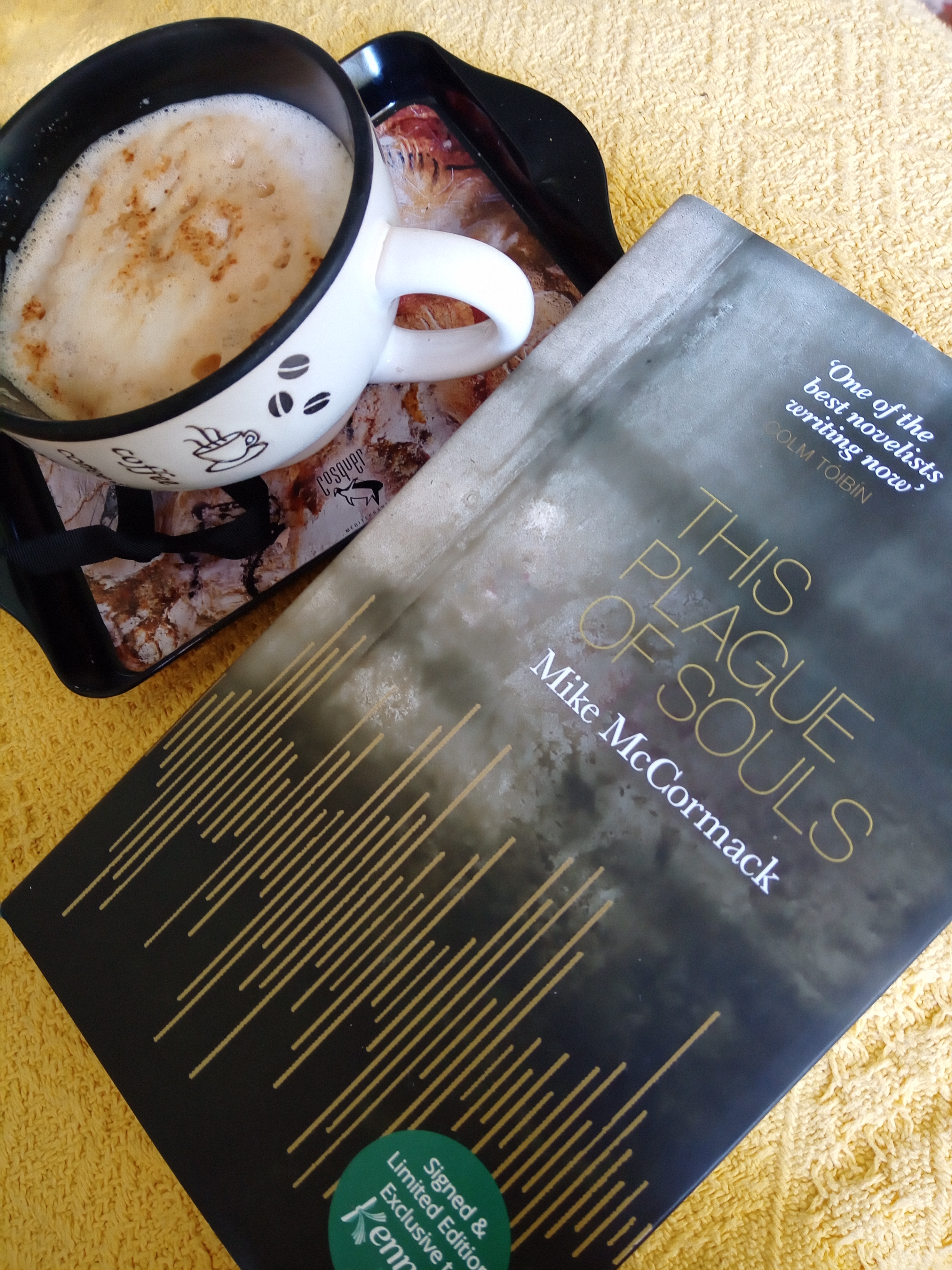
This Plague of Souls by Mike McCormack

Well, that wasn’t what I was expecting. Perhaps the first half, which felt like a different novel, one that felt familiar in an Irish rural novel kind of way, featuring a lonesome protagonist, Nealon, who has returned to the abandoned home and found it empty of his wife Olwyn and child Cuan, who hadn’t waited to hear the outcome of the charges that have kept him in prison the last 10 months.

An Old Irish Cottage of Memories

As he wanders about the house, certain objects awaken memories, of his parents, now long dead and more recently his wife Olwyn, who removed everything in the house that had belonged to them and did him a favour by cleaning and renovating it single-handedly. In protest he drags their old couch into the back lawn and just sits there.

We don’t know why he was imprisoned, what he was charged with, who his wife was, where she is.

Solar Bones Tramp Press Irish experimental fiction

The only evidence of a life or connection outside this empty cottage, is a persistent caller, who calls every day and seems to know everything about his life.

He conveniently repeats to Nealon everything he knows about him, though we don’t know if any of it is true, because the protagonist rejects everything he says, neither accepts or denies and even in the thoughts shared on the page, chooses not to think about (or the writer chooses not to share) any thoughts relating to the activities he describes.

I do not highlight one single passage until page 64 and then it is this I note, words exchanged in one of their cryptic telephone conversations:

‘I’ll tell you this: there is a great shortage of imagination out there, you couldn’t underestimate it.’
‘I wouldn’t know about that. I have noticed that there is no shortage of foolishness.’

An Alternate Reality or A Spark of Imagination?

Finally they will meet and the story becomes more surreal, at this point I thought, this is actually going to be revealed as science fiction, there is probably an alternative reality going on here – isn’t there? Because it’s starting to get kind of frustrating almost boring; but clever yes, the writing is polished, it’s relatively easy to read, but for this reader, there is nothing meaningful or all that intriguing about it, I feel the edge of disappointment ahead of me, as there are so few pages left to read. I start theorising and make up my own story about what is going on (I won’t bore you with that).

As the man says himself articulating both his conundrum and my own :

‘So I understand the architecture of the whole thing, the grandeur and ambition of the entire construct. But not the motive behind it. What is it all about? What does it hope to achieve? Is it some noble enterprise – as I hope it is – or something else entirely? Something squalid and rotten to the core.’

Scattered throughout the text are occasional sentences that hint at Nealon’s understanding, words that come from his ‘now’ wherever that is.

It took him a long time to recognise it as chaos and he wonders now how he could have mistaken it as anything else.

We have learned that in prison there was a complete lack of mind-sharpening engagement that threatened to turn in on itself and close him down, however nothing about the character thus far indicates his capability. He is a loner, just as his name indicates, Nealon – a.l.o.n.e with a capital N.

Curiosity Can Kill the Cat

Ultimately, despite his better judgement, out of curiosity or nothing better to do, or perhaps he really is interested in finding out where his wife and child are, he is lured into meeting the man, and while focusing on not really saying anything, he may have talked himself into a trap.

Photo by Jack Redgate on Pexels.com

As he travels from the West of Ireland towards the city, he becomes aware of some kind of threat looming over the country.

On the edge of insight, when it comes it may be too late. This constant feeling that he is about to realise something drives the novel forward and creates a sort of tension.

In a way, it reminded of the book I just read Margarita Garcia Robayo’s The Delivery, she uses a similar introspective technique to keep the reader from knowing exactly what is going on, however throughout the course of novel, there are many more morsels of humanity, she too is a loner, but life and love push their way in on her – you can’t escape the community.

The author who describes the novel as ‘part metaphysical thriller, part roman noir’ did ask himself the question and was aware he may alienate some readers, as he says in an interview with the Irish Times.

Would it be possible to write a book of which it would be impossible to speak, where I don’t know what happens, and how to make that artistically credible and skilful without it coming across as clueless, as an authorial failure?

Why Did I Read This?

I chose to read this book because of all the good reviews of Solar Bones, which I will still read, and also because Mike McCormack was picked up by Tramp Press, one of my favourite Irish publishers, who also publish my top two Irish authors, Sara Baume and Doireann Ni Ghriofa.

Author, Lisa McInerney’s blurb on the back cover was closest to my reading experience, when she says:

‘A darkly marvellous novel: at once intimate, domestic, and poignant, then speculative and hard-boiled and wild’

Mike McCormack, Author

Mike McCormack’s previous work includes Getting it in the Head (1995), Crowe’s Requiem (1998), Notes from a Coma (2005), which was shortlisted for the Irish Book of the Year Award, and Forensic Songs (2012).

In 1996 he was awarded the Rooney Prize for Irish Literature and in 2007 he was awarded a Civitella Ranieri Fellowship. Solar Bones (Tramp Press, 2016) won the Goldsmiths Prize, the Bord Gáis Energy Irish Book Award for Best Novel and Best Book, and the Dublin International Literary Award (previously known as the IMPAC), and was nominated for the Booker Prize.

Mike McCormack lives in Galway with his family.

The Delivery by Margarita Garcia Robayo tr. Megan McDowell

The Delivery was next up to read from my 2023 Charco Press bundle and was published on 24 October. This year’s books have been so great, I couldn’t wait to get to this one. I haven’t read her previous translated book Fish Soup, but I had heard good things about it too.

Charco Press and Latin American Fiction On a Roll

One of the earlier Charco novellas I read this year, The Remains (see my review) by Mexican author Margo Glantz (translated by Ellen Jones) just made the longlist of the Warwick Prize for Women in Translation 2023. In the same week Two Sherpas (see my review) by Sebastian Martinez Daniell translated by Jennifer Croft was longlisted for the 2024 ALA Carnegie Medals for Excellence in Fiction and Ana Paula Maia’s Of Cattle And Men, translated from the Portuguese by Zoë Perry made the 2023 Cercador Prize Finalists ( a bookseller-led prize for literature in translation).

Warning: Don’t Ignore Your Packages – The Review

A young, unapologetically self-absorbed woman lives alone, away from her family. Though loathe to form attachments, she is hyper observant of all that goes on around her; the neighbour into whose apartment she sees, the doorman sweeping below, the mother with her young son, the unreliable babysitter.

A large package arrives from her sister who told her via one of their infrequent video-calls, that she was leaving with her family on a cruise. The sisters have a complicated relationship, one she ponders.

When she notices my silence she goes quiet and sighs. I guess she, too, gets fed up with the weight of incomprehension. I guess that on top of seeming like a sister who is detached, dejected and discourteous, I also come off as an arrogant person. Kinship isn’t enough for her, either, of course it isn’t. In cases like ours, getting along isn’t a question of magic or chemistry or affinity, but of tenacity, toughness and torturous toiling.

The package, the size of a large crate stays in the hallway for two days until neighbours complain, knock on the door and push it into her seventh floor apartment. She continues to ignore it.

It’s noon; my sister must be aboard her cruise ship by now. I can just see her gazing excitedly at the array of interactive screens showing maps of the ship marked with little flags: ‘…over twenty stations of international food.’
I wonder: When my sister isn’t there, who takes care of my mother?

Farming Cows Personality Animals The Delivery On Writing
Photo by Flickr on Pexels.com

Working from home as a freelance copy writer, she meets her boss once a week. Currently working on a piece about a cow, while procrastinating over completing a grant for a writer’s residency in Holland. Here she questions whether her choice to be a writer is another act of avoidance.

And although writing is something I have done every day for years now, I again get the feeling that this thing I call ‘my job’ is nothing but another avoidance strategy. Compared to all other professions, writing is like the effort a tick makes to feed and survive among predators. I climb onto a branch, wait a long time until the herd passes, calculate the least risky distance to drop onto a fluffy mass and drink a minuscule ration of blood, which will allow me to maintain this limited but sufficient life.

Her attempts to avoid human contact threaten to overwhelm her, as increasingly she is drawn in to life around her and made to be present.

I felt I had the right to not be a trustworthy person. It was good to make that clear, even if it worked against my professional future; from now on you should be aware that assigning me a job includes the possibility that I’ll quit halfway through. That was more or less how I put it. It was the closest I would come in this business to an outburst of dignity.

The novel follows a week or so in her life and the people (and a cat) with whom she interacts, both willingly and unwillingly. Encounters that awaken memories, that cause her to explore her own responses and thoughts on them all, she avoids closeness but each situation contributes to the growing relationships between them all.

Her efforts to keep a distance stall, fail and slowly make her see her own role in running from herself, the inclination to self-sabotage.

Sometimes I feel like two people live inside me, and one of those people (the good one) keeps the other in check, but sometimes she gets tired and lowers her guard and then the other (evil) one stealthily emerges, with a mad desire to wound just for the sake of it.

It’s both introspective and funny, as her avoidance and inattention to things leads to consequences that surprise her and because we see everything from her perspective, we too have a somewhat clouded view of reality.

Her philosophical considerations and snippets of conversation give pause for thought. It’s entertaining in a surreal yet banal way, knowing that life’s reality is likely to burst the bubble she lives in eventually, yet it doesn’t stop her from continuing to ponder and escape from it.

How quickly the shell of a routine is shattered.
Any routine, however solid it may be, is obliterated by the unexpected.

Margarita García Robayo, Author

Margarita García Robayo was born in 1980 in Cartagena, Colombia, and now lives in Buenos Aires where she teaches creative writing and works as a journalist and scriptwriter.

She is the author of several novels, including Hasta que pase un huracán (Waiting for a Hurricane) and Educación Sexual (Sexual Education, both included in Fish Soup), Holiday Heart, and Lo que no aprendí (The Things I have Not Learnt). She is also the author of a book of autobiographical essays Primera Persona (First Person, forthcoming with Charco Press) and several collections of short stories, including Worse Things, which obtained the prestigious Casa de las Américas Prize in 2014 (also included in Fish Soup).

Her books have been published widely and praised in Latin America and Spain and have been translated into several languages, including Chinese, Hebrew, French, Danish and Turkish. The Delivery is her third book to appear in English after the very successful Fish Soup (selected by the TLS as one of the best fiction titles of 2018) and Holiday Heart (Winner of the English PEN Award).

Cacophony of Bone by Kerri Ni Dochartaigh

When I saw that Kerri ní Dochartaigh had a new book out, I was intrigued. I read her debut Thin Places  (reviewed here) in 2022, it was a tough read at times, especially as I went into it thinking it might be nature writing akin to others of the genre I’ve read. It was not. It was much darker.

At that time, nature, more than an observation, provided solace to an ever present dread and those thin places were a kind of magical opening and hint of acceptance that kept her here – just. The book trawled through a sombre northern Irish childhood into young adulthood, as the author attempted to rise out of a grasping fog towards finding their place and way in the world. To feel safe, while railing against the after-effects of trauma. From nightmares to numbness, nature was her nurturer.

Cacophony of Bone Thin Places creative nonfiction

While that book was challenging because of all it makes the reader feel, Cacophony of Bone was proof of a move forward, of a shift out of the rawness of her earlier existence and while still in the process of healing, clear signs of hope and progress and development. A relationship that comes across as more anchored and a commitment to sobriety. New circumstances that hold promise.

It began two days
after the winter solstice,
as all stories begin:
with light.

Essentially, it is a beautifully sculpted 12 month hybrid journal/memoir with splashes of poetry. It begins just as she is making a move to a one room very basic railway cottage in the middle of Ireland with her partner/lover, a couple of months before the country/world is going into lockdown. It becomes a year of noticing, of planting, growing, of collecting objects, abandoned nests, bone remnants…

To notice those things and to hold them, give my furry body over to their coming, to stop hurrying through life like a person shamed, by my female body and its traumas, by my past, by what that body could not have, what its parts could not produce.

At the beginning of each chapter before the brief, dated, diary entries, which are short poetic fragments and thoughts, there is a longer text that contemplates – a navigation of layers of loneliness, grief and gratitude, observations of birds and moths, planning, planting and harvesting a garden, recognising the importance of rituals, appreciating the constant and reliable companionship of another human being, developing connections with amazing women she has never met (yet) and embracing the comfort to be found in lines of language, the soothing power of words, the immense power and wonder of books.

Ritual finds form through the assumption that it is a means of really knowing something. Religious ceremony and personal rites of passage fill my thoughts. The gently, insistent act of repeating. How it creates equilibrium between the small and the vast, the seen and the unseen, the self and other, the part and the whole. We build myths (which are really just houses). Dwelling places built of the bones left behind by stories. We fill the gaps in the walls with ritual. We insulate it with objects.

Dreams arrive and motifs return, the days are spent reaching for meaning, walking them through, collecting and abandoning them anew.

I don’t think I have ever read a book that made me stop so often to look up references to predominantly works of creative nonfiction, poetry and memoir. It was a year of isolation, but Kerri ní Dochartaigh was able to read (and reread) from a bountiful collection of stunning literature. I admit to placing two orders with my new favourite Kenny.ie independent bookshop during the week I read the book.

It was no surprise to see mentioned the works of Doireann Ní Ghríofa and Sara Baume, it felt like these women hail from a similar soul group, literary sirens whose words lure readers not to their deaths, but to their visions and streams of conscious thought.

I find myself searching for the words of others as a means to fill the holes that the actions of (other) others have left in me.

We encounter throughout the pages Alice Oswald, Tove Jannsson, Moya Cannon, Annemarie Ni Churreain, Annie Ernaux, Terry Tempest Williams, Karine Polwart, Sarah Gillespie, Ellena Savage, Elizabeth-Jane Burnett, Rebecca May Johnson, Rebecca Solnit, Kathryn Joseph, Anne Carson, Kathleen Jamie, Anne Lamott, Richelle Kota, Alice Vincent, Lauret Savoy, Rebecca Tamas, Tania Tagaq, Emily Dickinson, Louise Erdrich, Colette Fellous, Sinéad Gleeson, Selva Almada, Katherine Mansfield, Virginia Woolf, Nancy Campbell, Elske Rahill, Octavia Bright, Alice Miller, Maggie O’Farrell, Genevieve Dutton and more…

After being alone for a long time, one starts to listen
differently,
to perceive the organic and the unexpected all around,
to brush against all the incomprehensible beauty of the material. Tove Jansson, ‘The Island’

It’s a book that follows the seasons, that reminded me of reading Alice Tucker’s A Spell in the Wild: A Year (and Six Centuries) of Magic and Sara Baume’s A Line Made By Walking, it takes some skill to keep a reader engaged in a form of nature diary, but the blend of personal story, observations of nature, literary references and the curiosity of seeing where the author will end up after the revelations of Thin Places, all made it a compelling read for me, that became increasingly absorbing the further I read.

It’s a heart laid bare, bruised but beating madly with the joy of being alive.

I’m left intrigued and curious about what will come next, although that might be quite obvious, since the end is in effect the dawn of a new beginning. A work in progress.

Highly recommended.

Further Reading

Interview: Writing Between Two Worlds, An Interview with Kerri Ni Dochartaigh

Review: The Guardian Thin Places by Kerri ní Dochartaigh review – a survivor’s story

Kerri ní Dochartaigh, Author

Kerri ní Dochartaigh’s first book, Thin Places, was published in Spring 2021, for which she was awarded the Butler Literary Award 2022, and highly commended for the Wainwright Prize for Nature Writing 2021.

Cacophony of Bone is her second book. She lives in the west of Ireland with her family.

She writes about nature, literature and place for the Irish Times, Dublin Review of Books, Caught by the River and others. She has also written for the Guardian, BBC, Winter Papers.


These Days by Lucy Caldwell

These Days is set over a period of a week in the life of one family with a young son and two daughters, both of whom are at significant turning points in their relationships, just as the Belfast Blitz is about to destroy much of their city.

The precariousness of life pushes both girls out of their everyday lives into confronting the very depths of who they are and what they want from life and whether or not they are prepared to conform or compromise.

Belfast Blitz World War 2

The tension of living with blacked out windows, with their father being an on-call doctor, who must rush to the hospital to deal with the casualties and Emma, a First Aid volunteer also called into the throng of destruction, heightens the situations both girls are in, creating a unique sense of urgency, and yet…

Audrey’s boyfriend, an only son, is also a doctor and the thought of possibly losing her hastens his own decisions, which Audrey responds to in that same atmosphere of heightened tension. But when she returns to work at the tax office and begins to realise how that decision is likely to change her life, she begins to question how much she really wants it. IS what she feels enough?

…She thinks of the Yeats poem: this tumult in the clouds…in balance with this life, this death…and she thinks how strange, how strange it is, the sides on which we find ourselves, the things we, really, have no choice or say in, the ways we blindly go through a life in which the grooves are already set.

Emma spends less time thinking about her decisions and future life, she is more impulsive, reckless even. Just as she is coming to the realisation of how she wants to love and live, that vision of a future life disappears right in front of her. In a cruel twist of fate, she will experience something that her own mother has long lived with, intertwined feelings of love and grief, of love at its inception, turned in an instant to memory, rather than be allowed to flourish.

Their mother too conceals thoughts of a life not quite embarked on, one cut short that re-enters her imagination now and then, that has caused her to stop believing.

But the times we live through, she thinks, as they turn onto Sydenham Avenue, have bred in us all a grim, stoical sort of endurance. After the Great War, and the civil war, and the shattering Troubles of the twenties, those hundreds of people dead…After the unemployment and the riots of the thirties, the sectarian pogroms, the chaos, the roads blockaded, the burning, only half, a quarter of a mile away…You’re not surprised by anything anymore: you shake your head and press your lips and get on with whatever else there is to be doing, make the most of things, make of what you have – what you’re fortunate, and yes, grateful to have – the best you can.

Her latent grief, a feeling that arises then recedes, removes some of the shock of what is happening around them.

It hasn’t surprised her, over the years, she sometimes secretly thinks, that the city around her should periodically erupt into barricades and flames, doesn’t surprise her that it should be obliterated now from above, because that, sometimes, is how a cold small part of her feels – just take it, take all of it, I want none of it, none of this, because none of it – how can it? – none of it matters.

As these women go about these terrible, historical days, encountering both a physical and emotional toll, they will all come to realise what is most important to them, it will mark them and change them.

It will never go away, she wants to say then. None of it does – the real or the imagined. Once you have seen those images, whether with your eyes or or in your mind’s eye, they are etched there – seared into the body. They are there forever and you can’t pretend otherwise. When they rise up, you need to try not to fight them, try not to push them away. You must just focus on the smallest, most incidental thing you can. You must make yourself breathe, and feel the current of breath through your body.

Meticulously researched, the days of the Belfast Blitz and the consequences of families, are brought to life in the pages of this novel, the lost and homeless, the children evacuated, the trauma these days will instill in the genes of future generations, yet unborn. Those familiar with the streets and surrounds of Belfast will imagine it all the more evocatively.

“My grandma didn’t like to talk about the Belfast Blitz: ‘Ach, sure, what do you want to know about all that for?’ Towards the end of her life, wracked with vascular dementia, all questions became traps, and then she couldn’t talk at all. I still wonder, even after years of researching it, what her stories might have been.” Lucy Caldwell 

The Belfast Blitz

Lucy Caldwell These Days

Due to its capacity for shipbuilding and other manufacturing that supported the Allied war effort, Belfast was considered a strategic target by the German Luftwaffe. It was also the most undefended city in Europe.

That threat became a reality in April and May 1941, with four separate attacks, causing a high number of casualties and destruction of the city and residential areas.

On Easter Tuesday, 15 April 1941, 200 Luftwaffe bombers attacked military and manufacturing targets in the city. Some 900 people died as a result of the bombing and 1,500 were injured. 220,000 people fled from the city.

In total over 1,300 houses were demolished, some 5,000 badly damaged, nearly 30,000 slightly damaged while 20,000 required “first aid repairs”.

Lucy Caldwell, Author

Born in Belfast in 1981, Lucy Caldwell is the award-winning author of four novels, several stage plays and radio dramas, and two collections of short stories: Multitudes (2016) and Intimacies (2021).  

These Days (2022) won the 2023 Walter Scott Prize for Historical Fiction.

The Booker Prize Longlist 2023

The Booker Prize longlist has been announced, featuring books from four continents, representing seven countries – Scotland, England, Ireland, Canada, America, Nigeria and Malaysia and includes four Irish writers plus four debut novelists.

You can read more about the history of the prize here.

The Judges

Novelist Esi Edugyan, twice-shortlisted for the Booker Prize, is the chair of the 2023 judging panel. She is joined by actor, writer and director Adjoa Andoh; poet, lecturer, editor and critic Mary Jean Chan; Professor of English and Comparative Literature at Columbia University and Shakespeare specialist James Shapiro; and actor and writer Robert Webb

The judges are looking for their perceived best sustained work of long-form fiction written in English, selected from entries published in the UK and Ireland between October 1, 2022 and September 30, 2023.

The Booker Dozen

The longlist of 13 books was announced on August 1, 2023 ; the shortlist of six books will follow on September 21 and the winner of the £50,000 prize will be announced on November 26, 2023.

Photo by lil artsy on Pexels.com

The 13 longlisted books explore universal and topical themes: from deeply moving personal dramas to tragi-comic family sagas; from the effects of climate change to the oppression of minorities; from scientific breakthroughs to competitive sport.

The list includes: 

  • 10 writers longlisted for the first time, including four debut novelists 
  • Three writers with seven previous nominations between them 
  • Writers from seven countries across four continents  
  • Four Irish writers, making up a third of the longlist for the first time 
  • A novel featuring a neurodiverse protagonist, written from personal experience 
  • ‘All 13 novels cast new light on what it means to exist in our time, and they do so in original and thrilling ways,’ according to Esi Edugyan, Chair of the judges
fiction

The House of Doors – by Tan Twan Eng

Based on real events, Tan Twan Eng’s masterful novel of public morality and private truth examines love and betrayal under the shadow of Empire

It is 1921 and at Cassowary House in the Straits Settlements of Penang, Robert Hamlyn is a well-to-do lawyer, his steely wife Lesley a society hostess. Their lives are invigorated when Willie, an old friend of Robert’s, comes to stay.   

Willie Somerset Maugham is one of the greatest writers of his day. But he is beleaguered by an unhappy marriage, ill-health and business interests that have gone badly awry. He is also struggling to write. The more Lesley’s friendship with Willie grows, the more clearly she see him as he is – a man who has no choice but to mask his true self.  

As Willie prepares to face his demons, Lesley confides secrets of her own, including her connection to the case of an Englishwoman charged with murder in the Kuala Lumpur courts – a tragedy drawn from fact, and worthy of fiction.  

The Bee Sting by Paul Murray (Ireland)

A patch of ice on the road, a casual favour to a charming stranger, a bee caught beneath a bridal veil – can a single moment of bad luck change the direction of a life?

Dickie’s once-lucrative car business is going under – but rather than face the music, he’s spending his days in the woods, building an apocalypse-proof bunker. His exasperated wife Imelda is selling off her jewellery on eBay while half-heartedly dodging the attentions of fast-talking cattle farmer Big Mike.  

Meanwhile, teenage daughter Cass, formerly top of her class, seems determined to binge-drink her way to her final exams. And 12-year-old PJ, in debt to local sociopath ‘Ears’ Moran, is putting the final touches to his grand plan to run away. 

Yes, in Paul Murray’s brilliant tragicomic saga, the Barnes family is definitely in trouble. So where did it all go wrong? And if the story has already been written – is there still time to find a happy ending? 

Western Lane by Chetna Maroo (Kenya/London)

Chetna Maroo’s tender and moving debut novel about grief, sisterhood, a teenage girl’s struggle to transcend herself – and squash

Eleven-year-old Gopi has been playing squash since she was old enough to hold a racket. When her mother dies, her father enlists her in a quietly brutal training regimen, and the game becomes her world.  

Slowly, she grows apart from her sisters. Her life is reduced to the sport, guided by its rhythms: the serve, the volley, the drive, the shot and its echo. But on the court, she is not alone. She is with her pa. She is with Ged, a 13-year-old boy with his own formidable talent. She is with the players who have come before her. She is in awe.  

Skilfully deploying the sport of squash as both context and metaphor, Western Lane is a deeply evocative debut about a family grappling with grief, conveyed through crystalline language which reverberates like the sound “of a ball hit clean and hard…with a close echo”

In Ascension by Martin MacInnes (Scotland)

Exploring the natural world with wonder and reverence, this compassionate, deeply inquisitive epic reaches outward to confront the great questions of existence, while looking inward to illuminate the human heart

Leigh grew up in Rotterdam, drawn to the waterfront as an escape from her unhappy home life. Enchanted by the undersea world of her childhood, she excels in marine biology, travelling the globe to study ancient organisms.  

When a trench is discovered in the Atlantic Ocean, Leigh joins the exploration team, hoping to find evidence of Earth’s first life forms. What she instead finds calls into question everything we know about our own beginnings, and leaves her facing an impossible choice: to remain with her family, or to embark on a journey across the breadth of the cosmos. 

In this strange and wonderful world, every outward journey – whether to space or the depths of the ocean – is an inward one, as Leigh seeks to move beyond her troubled childhood. In Ascension is a Solaris for the climate-change age.

Prophet Song by Paul Lynch (Ireland)

A mother faces a terrible choice, in Paul Lynch’s exhilarating, propulsive and confrontational portrait of a society on the brink

On a dark, wet evening in Dublin, scientist and mother-of-four Eilish Stack answers her front door to find the GNSB on her doorstep. Two officers from Ireland’s newly formed secret police want to speak with her husband.  

Things are falling apart. Ireland is in the grip of a government that is taking a turn towards tyranny. And as the blood-dimmed tide is loosed, Eilish finds herself caught within the nightmare logic of a collapsing society – assailed by unpredictable forces beyond her control and forced to do whatever it takes to keep her family together.

Paul Lynch’s harrowing and dystopian Prophet Song vividly renders a mother’s determination to protect her family as Ireland’s liberal democracy slides inexorably and terrifyingly into totalitarianism. Readers will find it timely and unforgettable. It’s a remarkable accomplishment for a novelist to capture the social and political anxieties of our moment so compellingly.

All the Little Bird-Hearts by Viktoria Lloyd-Barlow (England)

Viktoria Lloyd-Barlow’s lyrical and poignant debut novel offers a deft exploration of motherhood, vulnerability and the complexity of human relationships

Sunday Forrester does things more carefully than most people. On quiet days, she must eat only white foods. Her etiquette handbook guides her through confusing social situations, and to escape, she turns to her treasury of Sicilian folklore. The one thing very much out of her control is Dolly – her clever, headstrong daughter, now on the cusp of leaving home.  

Into this carefully ordered world step Vita and Rollo, a charming couple who move in next door.

Written from the perspective of an autistic mother, All the Little Bird-Hearts is a poetic debut which masterfully intertwines themes of familial love, friendship, class, prejudice and trauma with psychological acuity and wit.

Pearl by Siân Hughes (England)

Siân Hughes contemplates both the power and the fragility of the human mind in her haunting debut novel, which was inspired by the medieval poem of the same name

Marianne is eight years old when her mother goes missing. Left behind with her baby brother and grieving father in a ramshackle house on the edge of a small village, she clings to the fragmented memories of her mother’s love; the smell of fresh herbs, the games they played, and the songs and stories of her childhood.  

As time passes, Marianne struggles to adjust, fixated on her mother’s disappearance and the secrets she’s sure her father is keeping from her. Discovering a medieval poem called Pearl – and trusting in its promise of consolation – Marianne sets out to make a visual illustration of it, a task that she returns to over and over but somehow never manages to complete.  

Tormented by an unmarked gravestone in an abandoned chapel and the tidal pull of the river, her childhood home begins to crumble as the past leads her down a path of self-destruction. But can art heal Marianne? And will her own future as a mother help her find peace?

Pearl, an exceptional debut novel, is both a mystery story and a meditation on grief, abandonment and consolation, evoking the profundities of the haunting medieval poem. The degree of difficulty in writing a book of this sort – at once quiet and hugely ambitious – is very high. It’s a book that will be passed from hand to hand for a long time to come.

This Other Eden by Paul Harding (USA)

Full of lyricism and power, Paul Harding’s spellbinding novel celebrates the hopes, dreams and resilience of those deemed not to fit in a world brutally intolerant of difference

Inspired by historical events, This Other Eden tells the story of Apple Island: an enclave off the coast of the United States where castaways – in flight from society and its judgment – have landed and built a home.  

In 1792, formerly enslaved Benjamin Honey arrives on the island with his Irish wife, Patience, to make a life together there. More than a century later, the Honeys’ descendants remain, alongside an eccentric, diverse band of neighbours.  

Then comes the intrusion of ‘civilization’: officials determine to ‘cleanse’ the island. A missionary schoolteacher selects one light-skinned boy to save. The rest will succumb to the authorities’ institutions – or cast themselves on the waters in a new Noah’s Ark… 

Based on a relatively unknown true story, Paul Harding’s heartbreakingly beautiful novel transports us to a unique island community scrabbling a living. The panel were moved by the delicate symphony of language, land and narrative that Harding brings to bear on the story of the islanders.

How to Build a Boat by Elaine Feeney (Ireland) (Read my review here)

With tenderness and verve, Elaine Feeney tells the story of how one boy on a unique mission transforms the lives of his teachers, and brings together a community

Jamie O’Neill loves the colour red. He also loves tall trees, patterns, rain that comes with wind, the curvature of many objects, books with dust jackets, cats, rivers and Edgar Allan Poe.  

At the age of 13, there are two things he especially wants in life: to build a Perpetual Motion Machine, and to connect with his mother Noelle, who died when he was born. In his mind, these things are intimately linked.  

And at his new school, where all else is disorientating and overwhelming, he finds two people who might just be able to help him. 

The interweaving stories of Jamie, a teenage boy trying to make sense of the world, and Tess, a teacher at his school, make up this humorous and insightful novel about family and the need for connection. Feeney has written an absorbing coming-of-age story which also explores the restrictions of class and education in a small community. A complex and genuinely moving novel.

If I Survive You by Jonathan Escoffery (USA)

An exhilarating novel-in-stories that pulses with style, heart and barbed humour, while unravelling what it means to carve out an existence between cultures, homes and pay checks

In 1979, as political violence consumes their native Kingston, Topper and Sanya flee to Miami. But they soon learn that the welcome in America will be far from warm.    

Trelawny, their youngest son, comes of age in a society that regards him with suspicion and confusion. Their eldest son Delano’s longing for a better future for his own children is equalled only by his recklessness in trying to secure it.  

As both brothers navigate the obstacles littered in their path – an unreliable father, racism, a financial crisis and Hurricane Andrew – they find themselves pitted against one another. Will their rivalry be the thing that finally tears their family apart?

An astonishingly assured debut novel, lauded by the panel for its clarity, variety and fizzing prose. As the stories move back and forth through geography and time, we are confronted by the immigrants’ eternal questions: who am I now and where do I belong?

Study for Obedience by Sarah Bernstein (Canada/Scotland)

In her accomplished and unsettling second novel, Sarah Bernstein explores themes of prejudice, abuse and guilt through the eyes of a singularly unreliable narrator

A woman moves from the place of her birth to a ‘remote northern country’ to be housekeeper to her brother, whose wife has just left him. Soon after she arrives, a series of unfortunate events occurs: collective bovine hysteria; the death of a ewe and her nearly-born lamb; a local dog’s phantom pregnancy; a potato blight.  

She notices that the community’s suspicion about incomers in general seems to be directed particularly in her case. She feels their hostility growing, pressing at the edges of her brother’s property. Inside the house, although she tends to her brother and his home with the utmost care and attention, he too begins to fall ill… 

Study for Obedience is an absurdist, darkly funny novel about the rise of xenophobia, as seen through the eyes of a stranger in an unnamed town – or is it? Bernstein’s urgent, crystalline prose upsets all our expectations, and what transpires is a meditation on survival itself.

Old God’s Time by Sebastian Barry (Ireland) (Read my review here)

In his beautiful, haunting novel, in which nothing is quite what it seems, Sebastian Barry explores what we live through, what we live with, and what may survive of us

Recently retired policeman Tom Kettle is settling into the quiet of his new home, a lean-to annexed to a Victorian Castle overlooking the Irish Sea. For months he has barely seen a soul, catching only glimpses of his eccentric landlord and a nervous young mother who has moved in next door.  

Occasionally, fond memories of the past return – of his family, his beloved wife June and their two children. But when two former colleagues turn up at his door with questions about a decades-old case, one which Tom never quite came to terms with, he finds himself pulled into the darkest currents of his past. 

A Spell of Good Things by Ayọ̀bámi Adébáyọ̀ (Nigeria/Norwich)

A dazzling story of modern Nigeria and two families caught in the riptides of wealth, power, romantic obsession and political corruption

Ayọ̀bámi Adébáyọ̀’s breathtaking novel shines a light on the haves and have-nots of Nigeria, and the shared humanity that lives in between.  

Eniola is tall for his age, a boy who looks like a man. His father has lost his job, so Eniola spends his days running errands, collecting newspapers and begging – dreaming of a big future.  Wuraola is a golden girl, the perfect child of a wealthy family, and now an exhausted young doctor in her first year of practice. But when sudden violence shatters a family party, Wuraola and Eniola’s lives become inextricably intertwined…

A Spell of Good Things is an examination of class and desire in modern-day Nigeria. While Eniola’s poverty prevents him from getting the education he desperately wants, Wuraola finds that wealth is no barrier against life’s harsher realities. A powerful, staggering read.

* * * * * * * * * *

Have you read any of these novels, or are you tempted by any? A great many unknown authors here, which is exciting, it will be interesting to see how their stories are received by readers.

I haven’t read any of the books mentioned and I have only read two of the nominated authors, Ayọ̀bámi Adébáyọ̀’s Stay With Me which I really enjoyed and Tan Twan Eng’s The Gift of Rain and The Garden of Evening Mists.

I’m always interested in new Irish fiction, so I’ll be taking a good look at those titles and plan to read at the very least, Old God’s Time and How To Build A Boat.

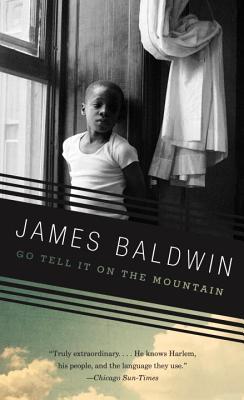
Go Tell It On The Mountain by James Baldwin

James Baldwin’s Go Tell It On The Mountain (1953) was his debut novel, a semi-autobiographical story (inspired by his own childhood in Harlem and his troubled relationship with his father), that narrates a day in the life of 14 year old John, who is the son of a fiery Pentecostal preacher Gabriel, and his second wife Elizabeth.

The Initiation

semi autobiographical novel

It is a coming-of-age story that depicts a range of thoughts, emotions and actions of this boy, while sharing the back stories of his family, culminating in a frenzied religious experience that appears to have set him on his true path.

The story is told in three parts, and though it follows the events of that one day, the three parts focus on the pasts of different characters connected to John’s family. 

Part One, The Seventh Day, is about John, it is his fourteenth birthday and he spends the day thinking about the expectations the family has of him to follow in his father’s footsteps and that he is no longer a child.

He begins to worry that he doesn’t have the same conviction as young Elisha, he feels not only unseen by his father, he feels his wrath and returns it full force in his mind – it enters his dream-life with even greater violence than the looks of disapproval he receives daily. 

The opening chapters are full of biblical language, religious fear and fervour, making it quite intense to begin with, though saved by the dialogue that brings us back to the present day.

“His father’s face, always awful, became more awful now; his father’s daily anger was transformed into prophetic wrath. His mother, her eyes raised to heaven, hands arced before her, moving, made real for John that patience, that endurance, that long suffering, which he had read of in the Bible and found so hard to imagine.”

An Act of Resistance

His mother gives him money and he uses it to attend the cinema. He begins to question his faith, and his father, noticing a rising desire for things he ought not to be thinking of:

Photo by Yuting Gao on Pexels.com
Broadway: the way that lead to death was broad, and many could be found thereon; but narrow was the way that lead to life eternal, and few there were who found it. But he did not long for the narrow way, where all his people walked; where the houses did not rise, piercing, as it seemed, the unchanging clouds, but huddled, flat, ignoble, close to the filthy ground, where the streets and the hallways and the rooms were dark, and where the unconquerable odor was of dust, and sweat, and urine, and homemade gin. In the narrow way, the way of the cross, there awaited him only humiliation forever; there awaited him, one day, a house like his father’s house, and a church like his father’s, and a job like his father’s, where he would grow old and black with hunger and toil.”

The Sins of the Father

Photo by Brett Sayles on Pexels.com

Part Two, The Prayer’s of the Saints is told in 3 parts entitled Florence’s Prayer, Gabriel’s Prayer and Elizabeth’s Prayer.

This section focuses on the past, on Gabriel’s upbringing and life, his sister Florence, her escape North and marriage, a young woman Gabriel worked with named Esther, whose life would be forever changed by their encounter. We learn of Elizabeth’s past, how she meets Richard and also travels North, their tragic story and her meeting Florence, a turning point in her life.

“And this became Florence’s deep ambition: to walk out one morning through the cabin door, never to return. Her father, whom she scarcely remembered, had departed that way one morning not many months after the birth of Gabriel.”

Everything we read here begins to explain the depth of feeling John has, often driven by events he is not aware of, including his own being, his true identity, that he does not yet know. All that has been withheld from him, the secrets people have kept, impact the lives of everyone in this extended family, often without their knowledge.

In the final part, The Threshing Floor, John has a religious experience with terrifying hallucinations, but it is an event that appears to have propelled him out of childhood and towards his calling.

Love/Hate of Parents, Escaping Reality, Awaiting the Calling

Photo by Valdemaras D. on Pexels.com

This is the third book written by Baldwin I have read and while quite different from the others, it is equally compelling. The two I have read I have linked to my reviews below, also highly recommended.

It personifies the common experience of a confused adolescent, whose situation is magnified by the love/hate he feels from one or other parent and the guilt he takes on for it, the emotional roller coaster of new exciting friendship, and the desire to escape into another reality.

The stories of the secondary characters are informative and revelatory, as they contributed to my growing understanding of the unease of the young man.

John’s narrative was convincingly portrayed to the point of it feeling like you were in his shoes and in his mind, the relentless worrying, his paranoid and angry emotions that seemed to take over him, until they culminate in his heightened ‘salvation’ experience.

These heights are a reference to the mountain, a symbol of the ascent and descent through he must pass to move closer to his God, to his own salvation, to his becoming a worthy man.

He thought of the mountaintop, where he longed to be, where the sun would cover him like a cloth of gold, would cover his head like a crown of fire, and in his hands he would hold a living rod.

Life Informs Art

In The Fire Next Time, Baldwin’s essay that first appeared in the New Yorker as Letter from a Region of My Mind, talked of his developing self-awareness as he entered adolescence and the choice he made to seek both refuge and revenge by going into the Church.

“Shortly after I joined the church, I became a preacher – a Young Minister – and I remained in the pulpit for more than three years. My youth quickly made me a much bigger drawing card than my father. I pushed this advantage ruthlessly, for it was the most effective means I had found of breaking his hold over me. That was the most frightening time of my life, and quite the most dishonest, and the resulting hysteria lent great passion to my sermons – for a while. I relished the attention and the relative immunity from punishment that my new status gave me, and I relished, above all, the sudden right to privacy.James Baldwin

Further Reading

If Beale Street Could Talk by James Baldwin

The Fire Next Time by James Baldwin

Thank you to Liz Dexter who blogs at Adventures in running, reading and working from home for the invitation to read this at the time time she was. You can read Liz’s review here.

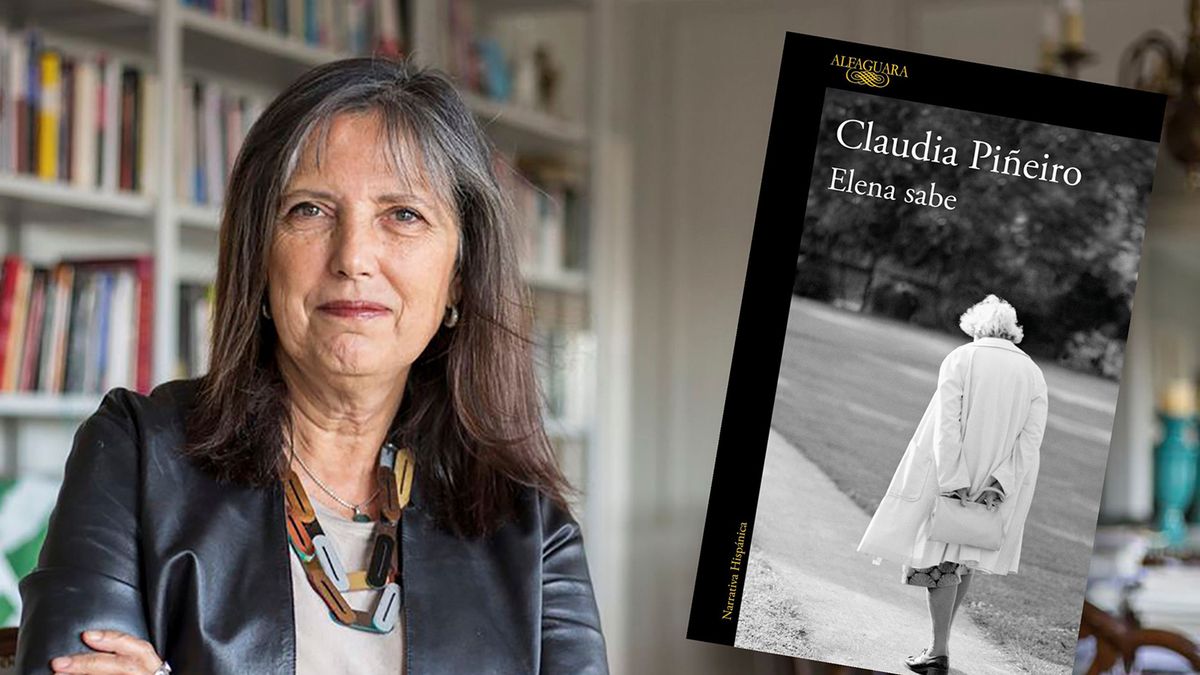
Elena Knows by Claudia Piñeiro tr. Frances Riddle

With A Little Luck now available in English, I’m catching up by reading the word of mouth sensation Elena Knows, which was shortlisted for the International Booker Prize in 2022 and won the Premio Pepe Carvalho Prize for crime fiction in 2019. According to the newspaper La Nación, Claudia Piñeiro is the third most translated Argentinean author, after Borges and Cortázar.

Claudia Piñeiro does seem like an interesting author to watch, taking the convention crime fiction genre and giving it a shake up by focusing on social issues and ethical questions, in particular related to the way women’s bodies have been and are used and abused.

Also reading this for #20booksofsummer23 and getting a head start on August’s #WITMonth, reading women in translation, because that’s my favourite corner of the reading world to be looking for literary gems!

What Does Elena Know That No One Else Seems to?

Elena has just learned her daughter Rita is dead. That it occurred on the same afternoon she booked Elena into her boyfriend’s mother’s salon for “the works”.

It was a rainy afternoon and this is the main reason Elena knows there was foul play. Because her daughter was afraid of lightning and because a mother just knows.

No one knows as much about her daughter as she does, because she’s her mother, or was her mother. Motherhood, Elena thinks, comes with certain things, a mother knows her child, a mother knows, a mother loves.That’s what they say, that’s how it is.

A Rigid Point of View

We see everything from her ‘eyes cast downward’ viewpoint, as she heads out one day to get answers from someone she hasn’t seen in 20 years.

Elena’s body is debilitated by Parkinson’s, so in between pills, she can move more easily.

Photo by RAFAEL QUATY on Pexels.com

Rita was there when he first explained the disease. Rita, who’s now dead. He told them that Parkinson’s was degradation of the cells of the nervous system. And both she and her daughter disliked that word. Degradation.And Dr Benegas must’ve noticed, because he quickly tried to explain. And he said, an illness of the central nervous system that degrades, or mutates, or changes, or modifies the nerve cells in such a way that they stop producing dopamine. And then Elena learned that when her brain orders her feet to move, for example, the order only reaches her feet if the dopamine takes it there. Like a messenger, she thought that day. So Parkinson’s is Herself and dopamine is the messenger.

The novel is told over the course of one day, in three sections: Morning (second pill), Afternoon (third pill) and Evening (fourth pill). The absence of the first pill in the narrative is a reminder as to how dependent she is on the medication and how controlling it is over her every movement, how it restricts her freedom, her vision, her ability to do anything. She is enslaved to those pills and that body.

As the pill begins to wear off, the risk of her becoming stuck increases, as her body becomes less manageable, there is no room for error or miscalculated judgement, if she is to make the journey she has planned. There are moments when she has to wait for the pill to take effect, these must be carefully timed.

Proprietary Attitudes Over Humans

She is off to get help in her attempt to investigate her daughter’s death, thinking she can use the ‘able body’ of someone she sets out on this day to meet. There is a reason why she believes that this person will help her, where no other can, and she will go to all kinds of lengths, despite the debilitating obstacles of her own body, in order to have an audience with them.

She won’t be able to do it by herself because she doesn’t have a body. Not now that the dethroned king and Herself are in charge. Even if she uses all the tricks in the book, she won’t be able to uncover the truth unless she recruits another body to help her. A different body that can act in her place. That can investigate, ask questions, walk, look directly into people’s eyes. A body that will obey Elena’s orders.

The novel explores this idea of how people impose or claim agency over another’s body and what they sentence them to, in so doing; or how they believe they “know” another just because they gave birth to or mothered them, or that God gave them some kind of right to be so knowing.

Elena’s body is in the end stages, but in her mind, she is still coming-of-age.

Claudia Piñeiro, Author

Claudia Piñeiro is best known for her crime novels, which are bestsellers in Argentina, Latin America and around the world. Four of her novels have been adapted and made into films.

As an author and scriptwriter for television, Piñeiro has already won numerous national and international prizes, among them the renowned German LiBeraturpreis for Elena Knows and the prestigious Sor Juana Inés de la Cruz Prize for Las grietas de Jara (A Crack in the Wall).

Her 8 episode series The Kingdom (2021) currently showing on Netflix, sparked controversy in 2021 for its portrayal of the Evangelical church in Argentina.

More recently, Piñeiro has become a very active figure in the fight for the legalisation of abortion in Argentina and for the legal recognition of writers as workers. Her fiction stems from the detective novel but has recently turned increasingly political, taking a broader, more critical gaze at corruption, injustice, community divisions and other dysfunctions of contemporary society. 

Further Reading

What’s On My Bookshelf: Claudia Piñeiro talks of books that inspired her career including The Little Virtues by Natalia Ginzburg, Fierce Attachments by Vivian Gornick, The Story of a Shipwrecked Sailor by Gabriel García Márquez, To the End of the Land by David Grossman, A Room of One’s Own by Virginia Woolf and The Buenos Aires Affair by Manuel Puig.

International Booker Prize Interview: Claudia Piñeiro, ‘I’ve always been very rebellious’

“I always begin writing my books with an image that acts like a trigger. I allow this image to steep in my mind, the characters then begin to speak, to reveal their conflicts. It’s like a tangled ball of wool that I unwind bit by bit. In the case of Elena Knows this image was a woman, a woman in her kitchen at home, sitting bent over in a chair waiting for the pill she’s taken to take effect so she can get up. This was the trigger image. I should also acknowledge that this diseased body of the character Elena is inspired by the body of my mother, who suffered from the same illness, Parkinson’s.  Claudia Piñeiro

Boulder by Eva Baltasar tr. Julia Sanches

Boulder is another portrait of a woman, the second of a triptych.

The narrator of Permafrost never quite cut the strings of family, choosing the path(s) of least resistance, while lamenting not having made more independent choices in her formative years.

Assured Prose Who Art in Metaphor

If the narrator of Permafrost is somewhat unsure, that of Boulder is more certain. The prose is assured, the narrative has pace, the protagonist moves towards what suits her, to freedom – until things change.

The avid descriptions and bold metaphors have me rereading and highlighting passages, like the creation of foam as a wave crashes on itself, they are as natural to the text as the paragraphs within which they roll.

An itinerant cook, she moves from place to place, island to ship, working in the kitchen. Life on the cargo ship suits her, she’s at home in turbulent seas, around those that neither desire nor reject her, a place where there was no need to pretend life had a structure. Rootless, drifting and free.

Freedom In Its Many Forms

I think I’ve discovered what happiness is: whistling the moment you wake up, not getting in anyone’s way, owing no explanations, and falling into bed at daybreak, body addled from exhaustion, and mind free of every last trace of bitterness and dust.

The boat sails up and down the coast of Chile, she rarely disembarks, the only temptation in Chaitén, for a hot shower, fresh linen, and a lurking lust for a lover. That’s where she meets Samsa.

I look at her and she fills every corner of me. My gaze is a rope that catches her and draws her in. She looks up, sees me. She knows.

They begin to see each other, though it is often months between visits. Her lover renames her Boulder.

Photo by Bren Pintelos on Pexels.com
She doesn’t like my name and gives me a new one. She says I’m like one of those large, solitary rocks in southern Patagonia, pieces of world left over after creation, isolated and exposed to every element. No one knows where they came from. Not even they understand why they are still standing and why they never break down. I tell her I’ve seen rocks like those in the middle of the ocean.

Compromise, Commitment, Cohabitation

Samsa leaves for Iceland and asks Boulder to join her, she says yes. Samsa makes decisions and Boulder adapts to them. She observes the island, the islanders, the things she doesn’t like, she finds work that gives her an escape. She observes the different way they love each other, the pull of the boats when she walks the dock alone at night.

There’s a restlessness. She starts her own business, a food truck, no boss, no employees, a small but significant and necessary freedom. Something of her own. A coping mechanism.

It’s Not An Elephant in the Room

Photo by Sindre Fs on Pexels.com

Then it happens. Samsa wants to have a baby, Boulder knows that refusing her will mean the end, so asks for more time.

The novel charts this turning point in the relationship, where one woman will become pregnant and give birth while the other tries to support and be part of something she does not feel.

It is an alternative navigation of an age old dilemma, seen through the lens of a queer relationship, a couple struggling with avoidance issues.

It’s not difficult to imagine where it is headed, or what might happen, when one person isn’t quite committed to the idea and desires freedom so strongly. Is the love of another enough sufficient when events propel their lives forward faster than the communication of important feelings around them?

Boulder’s observations and experience are like that of an outsider who can’t quite enter the familiar, of trying to overcome an obstacle of the mind, when the heart is resisting, when self destructive tendencies threaten to communicate what the voice has been unwilling or unable to.

Boulder was shortlisted for the International Booker Prize 2023.

Further Reading

Read an Extract from ‘Boulder’

Eva Baltasar International Booker Prize interview: ‘I wrote three versions of Boulder and deleted two’

“My protagonists are mirror images of myself, only more precise and always veiled. I try to discover who they are by writing, travelling to their darkest, most uncomfortable corners, which is like travelling to the darkest corners of myself, corners that are often repressed and at times denied wholesale. Being able to embark on this journey aboard a novel is as exciting as it is unsettling. It’s as if the novel had transformed into a caravel and the seas were vast but finite, teeming with monsters on the edge of the earth.” Eva Baltasar

Permafrost by Eva Baltasar tr. Julia Sanches

A Poet’s Prose

On the back page in the first sentence that describes the author, it says Eva Baltasar has published ten volumes of poetry. Permafrost is her debut novel, the first in a triptych which aims to explore the universes of three different women in the first person. It clear from the beginning this is the prose of an assured poet.

Julia Sanches triptic #1 catalan translation

I love the title, Permafrost. That deep, but necessary layer in the earth, cold and hard, it creates a foundation layer and stability, as long as conditions remain the same. Kathleen Jamie writes about it in her excellent essay collection Surfacing.

The narrator of Permafrost destabilises the reader on the opening page, with these opening lines…

It’s nice, up here. Finally. That’s the thing about heights: a hundred metres of vertical glass. I’ve settled on an edge, I live on this edge and wait for the moment when I’ll leave the edge, my temporary home.

Not only thinking about heights, but observing all the minutae that surrounds her. It seems like a suicide attempt, a theme that recurs throughout the 122 page novella, only she appears to be distracted by an ever present curiosity around the details of the new experience, something that seems incongruent with wishing to take a life.

I’ve settled on an edge, I live on this edge and wait for the moment when I’ll leave the edge, my temporary home.

Living On the Edge Creates Curiosity

The Thomas Bernhard epigram warns us ‘To be born is to be unhappy, he said, and as long as we live we reproduce this unhappiness.’

So I am surprised by the humour. Despite her melancholy nature and existential awareness, the living in the shadow of family, she makes us laugh.

She tells us her family all self-medicate. Not her, she prefers the edge.

Not for me though – best to keep moving wildly to the edge, and then decide. After a while, you’ll find that the edge gives you room to live, vertical as ever, brushing up against the void. Not only can you live on it, but there are even different ways of growing there. If surviving is what’s it all about, maybe resistance is the only way to live intensely. Now, on this edge, I feel alive, more alive than ever.

A promising child, her first crisis is graduation, after five years, there’s nowhere to go, few clues as to how to put this learning to use. So she lives in her Aunt’s apartment and rents out rooms to different women, providing herself an income and an effortless source of lovers. She spends her days reading, observing, pondering death, too curious to pursue it.

Birth and Children are Grounding

Photo by Pixabay on Pexels.com

Her meandering is interrupted by her pregnant sister and her mother, their insistence to stay close, involved, drawing her back in, keeping her that person she was. The Aunt’s phone call, she’s selling the apartment.

An au pair in Scotland, a marriage proposal in Belgium, childhood memories, fantasies, churning through relationships, occasionally one that lasts a chapter, dialogue with the sister, the mother.

A mole grows and changes form, she makes a doctor’s appointment then cancels it for a year, then follows up.

Life Can Be Insistent

Each chapter is less than two pages, sometimes the narrative skips a chapter and picks up the thread again later on. It’s an inner voyage of discovery and an outer journey of experiences to unravel what was formed by others and discover the essence of, to know who she is. As that realisation occurs, life throws an even greater challenge and responsibility her way.

I’ve realised I know myself by heart…

It is a unique work, recognisably the work of a poet, unruly, impulsive, it makes light of heavy subjects, never quite proselytising, both giving into and resisting convention, forging a way through, trying different things on, breaking out and being pulled back in. One is left wondering if she is floating with the tide or pushing through it.

Permafrost received the 2018 Premi Llibreter from Catalan booksellers and was shortlisted for the Prix Médici for Best Foreign Book in France (2020).

Next up, book 2 in the triptych, Boulder, which was recently shortlisted for the International Booker Prize 2023.