Somebody Is Walking on Your Grave by Mariana Enriquez tr. Megan McDowell #RIPxx

My Cemetery Journeys

Someone is Walking On Your Grave My Cemetery Journeys Mariana Enriquez

Argentinian author Mariana Enríqeuz is known for unconventional and sociopolitical stories of the macabre, amid contemporary Argentina. Her stories are populated by unruly teenagers, crooked witches, homeless ghosts and hungry women walking the troubled line between urban realism and literary horror.

Though I’ve seen her Gothic titles on the International Booker shortlist, an overactive imagination has constrained my curiosity to venture further until now.

When I saw that Granta were publishing a memoir-like collection of essays that chronicle her travels through graveyards of the world, steeped in history, legend and local culture, I was more than intrigued, I wanted to take that journey with Mariana Enriquez as my guide.

One Woman’s Obsession and Another’s

This is not fiction, it’s a journalistic travel diary, beginning with her first teenage encounter in Genoa, Italy, spanning years of visits and curating the experiences that came with them, and a potted history of characters she momentarily became obsessed with while visiting 21 cemeteries across four continents.

I admit that I have my own obsession with cemeteries, though not to visit them or to seek out historical characters; my interest is in the words left behind, the clues that help me recreate a lineage.

I discovered that it is possible to do that online through ‘Find a Grave’, another way to find ancestors and fill in the gaps in a family tree, creating one’s own virtual cemeteries populated with the memorials of those who came before.

Lest we forget or should we never have known and have a compulsion to awaken our soul remembering. I visit these virtual creations, solve some of their mysteries and see into the lives of those forgotten, as if they were there, tapping me on the shoulder inviting me to come and witness how it was.

A Goth Flaneur Coming of Age

From that very first essay about her journey as a 25-year-old to Italy with her mother I was hooked. Mariana Enriquez described herself as a ‘goth‘ from about the age of six years old and in her book, travels to cities and obscure locations around the world with the aim of visiting a place of rest, unravelling stories as she goes.

In her gripping, journalistic style, she shares why each graveyard was important to visit, whether part of an interesting historical aspect, or because of a particular personality, or a rumour about the strange things that allegedly happen there. It surprised me initially that many of these places require security, some even have ticket offices, because strange things can happen in broad daylight as well as the dead of night.

Each essay gives the country and location of the cemetery and the year she visited and sometimes there is a photo of a particularly interesting sculpture. In an NPR interview with Ayesha Rascoe, she expanded on her youthful inclinations and inspiration in seeking out these places of rest.

Reading Edgar Allen Poe – and then with the years, I learned that also cemeteries have a lot to say about life, about the history of the people. And then Argentina in the ’70s, the decade where I was born, had a dictatorship that made a lot of bodies disappear. Therefore, there’s a generation of people that were killed by the government, and they don’t have a grave.

I realized that that trauma, that is very engraved in my life, somehow made me feel that a grave, a tombstone – it’s something of comfort. It’s a final thing in a good way.

Death and the Maiden, Staglieno

So it begins with Death and the Maiden, Monumental Cemetery of Staglieno, Genoa in 1997 and this essay is literally the initial seduction into the collection, Mariana’s mother had enough money to take her first trip to Europe and invited her daughter along.

Genoa wasn’t her priority; when read of the places in Italy that were, I’m drawn down literary, art and historical rabbit holes in delight. But Staglieno at least had graves that featured on the cover Joy Division‘s single Love Will Tear Us Apart, even if she had never liked them.

In a public square in Genoa is where she meets the perfect goth boy playing violin, an Italian Englishman, like a creature out of Mary Shelley or Byron. Someone to accompany her on her pilgrimage.

Enzo was the most beautiful creature I had ever seen. At least for me, for my idea of beauty, which is shadowy and pale and pliant, black and blue, a little moribund but happy, more dusk than night.

Welsh Immigrants in Patagonia

When Enriquez travels to Trevelin Cemetery in Chubut, Agentina, 2009, I learn about the Welsh who left their homeland to settle in Patagonia in 1865. Having been exploited and discriminated against in the United Kingdom and fearing losing their language and identity, 153 Welsh men, women and children boarded the ship Mimosa and arrived in a place that was something of a disappointment, but became the most significant Welsh colony in Argentine Patagonia.

I learn about characters from this group, the little known history that explains the proliferation of Jones, Thomas and Evans, the foreign words on the gravestones, in a place where many today still speak Welsh.

The Mountains of San Sebastian to Rottnest Island

From English soldiers buried in forest graves on a Basque mountain near San Sebastian in Spain, I read of more minor historical events and wonder about the meaning of the words on the chapel, “Every hour wounds; the last one kills.” So many stories and mystery among the remains.

In 2007, she accompanies her Australian boyfriend Paul who works as a bike mechanic on Rottnest Island, half an hour from Freemantle in Western Australia. A stable, long distance relationship that is headed towards marriage and an outsider’s view of a curious part of the world where the lead singer of AC/DC came of age, went to jail and is buried. She wants to see his grave.

The place has a booming real estate market, houses with yards full of healing crystals and fairies, collectors of all kinds who exhibit their cabinets of curiosities in the streets, artists, musicians, and a sparse but continuously fluctuation itinerant population linked to the port – people who can be unhinged, unstable and on occasion violent.

Weirded out by the hotel-asylum they’re staying in, she takes the ferry to the island, once inhabited by the Noongar Aborginal people, also used as a prison and visits the burial grounds, unearthing more story of post-colonial and indigenous poeples.

Savannah to New Orleans to Cuba to Edinburgh

I don’t wish this make this overly long, because I feel like I could write paragraphs on every essay; they are so interesting, quirky, incredible and speak so much to the different cultures they inhabit, from a very different perspective than what anyone would usually encounter visiting a foreign country.

If you came from New Orleans, I guess you would know about the vibrant characters that inhabit it, both the living and the dead. I did not know that it is the site of the second most visited grave in American after Elvis, that of the 19th century midwife, herbalist and philanthropic Voodoo practitioner of French, Spanish and African origins Marie Laveau.

Then there was the controversy surrounding the Pietro Gualdi marble sculpture of a seated woman in a robe holding a bouquet of flowers that Dennis Hopper and Peter Fonda requested permission from the Italian Society to use in the tomb scene of Easy Rider. Suffice to say all requests since then have been denied. And Nicholas Cage’s pyramid? A pharaonoic tomb waiting for a body.

Frankfurt was brief, Cuba was fascinating and macabre and sad after the friend who hosted her became the first close associate whom death claimed. Savannah was touristy and disappointing, I mean how could the book cover of John Berendt’s novel Midnight in the Garden of Good and Evil have caused such havoc and chaos to a place of rest?

Edinburgh was crowded, full of folklore; people visiting the graves of random names J.K.Rowling chose as characters for her Harry Potter books. Bizarre comes in so many different forms, real, imagined and just because.

Taphophilia Syndrome and the Magnificent Seven

I learn a new word. Taphophile, people who are passionate about cemeteries, memorials, and the history they hold. And Taphophilia syndrome? An abnormal attraction for graves. Who knew there were so many?

The visit to London’s Highgate cemetery fascinated me because I lived so close to it for some years, yet never had an inclination to visit. Audrey Niffenegger’s Her Fearful Symmetry, set in the cemetery sat unread on my shelf for years. To read about it here and what the author encountered there was like stepping into another realm, as all these places are, existing in the in-between.

Highgate and London’s Magnificent Seven created from 1833-1841 just demonstrated to me how little the living can be aware of the cult of the dead right next door.

Day of the Dead 1-2 November

Mexico seems to be the only country that retains a feeling of celebration around the departed. Though she visits and writes of its traditions, Enriquez has never been there for the Day of the Dead, when souls return and are welcomed to their family home to eat with their living relatives.

Here in France 1 November is the public holiday Toussaint (All Saint’s Day) and there is a mass visitation to cemeteries all over the country, when families visit, tidy up, pay their respects and bring chrysanthemum’s to family graves.

The Mexican anthropologist Alfonso Alfaro said, “We are a people who maintain a privileged relationship with death.” And the art critic Luis Cardoza y Aragon wrote:

Death is a universal theme of human expression. Mexico’s feeling toward death, the familiarity, tenderness and simplicity in its treatment of death, its obsession, which it sees as neither tragic nor funereal, but rather nuptial and natal, imbued with an immediate everydayness, an imperious and serene visibility, characterized more by cascading laughter than lamentation – it all harbours the unlearned wisdom of a cosmic and playful conceptualization, as if in perpetual amazement, that is particular to Mexico.

Prague to Paris to Eva Peron and the Disappeared

Prague has its legends but is overrun by tourists; Mariana resists and admits maybe it’s because she’s not a fan of Kafka.

In Paris, I hear of the fascinating history and grisly dilemma of 12th century Holy Innocents Cemetery in the Les Halles quarter that lead to the creation of the Montmartre catacombs. And a visit down there.

Eventually the journey comes full circle to Buenos Aires, Argentina, to the aristocratic Recoleta Cemetery, where Eva Peron is buried. Described once as ‘Venice without the canals’ it has ostentatious vaults like palaces along narrow streets, where everything is above ground, a way of showing off grandeur.

Peron’s journey there is an enthralling tale of body snatching, written about in Santa Evita by Tomas Eloy Martinez. A macabre story, it is one that Enriquez shares with freinds visiting the cemetery, one she told her husband Paul on their first date, that turned into a second date, though not everyone reacts that well she admits.

The Appartition of Marta Angélica

Part of the reason to write these stories came from reflections when her friend’s mother’s remains were identified after being found in a mass grave, having disappeared thirty-five years previously, kidnapped, disappeared and presumed killed, by the military dictatorship in Argentina.

“for someone like me who grew up in a dictatorship that had the peculiarity of making bodies disappear,” the idea of a tomb and of a cemetery was overshadowed by the political trauma.

The idea of no burial, no grave, no funeral rite, that’s what’s traumatic for me.”

Thank you for patiently reading, if you made it this far.

I absolutely loved and was riveted by this book of essays. I read it over the course of a month or so, it was too interesting and thought provoking and worldwide encompassing to read too quickly. It surprised me how compelling it was, with the right blend of personal story, characters met on her travels, fascinating known and unknown history and the insights into different cultural rituals and treatment of the subject of death, burial and even the movement and perceived ownership of or control over bodies. It gives even more meaning to those letters RIP.

Highly Recommended.

Further Reading

Mariana Enríquez Essay: Notes on Craft – on writing dark fiction

NPR Interview : ‘Somebody Is Walking on Your Grave’ – a journey to cemeteries across 4 continents

Author, Mariana Enríquez

Mariana Enríquez is an award-winning Argentine novelist and journalist, whose work has been translated into more than twenty languages.

She is the author of Things We Lost in the Fire and The Dangers of Smoking in Bed, which was shortlisted for the 2021 International Booker Prize. Our Share of Night was awarded the prestigious Premio Herralde de Novela.

“People often ask me why I like to write dark fiction. Horror. Weird tales… There is something about horror and dark fiction that is familiar and homely, and at the same time, always audacious. It’s with this language that I can explain myself and explain what I worry about.”

N.B. This book was an ARC (Advance Reader Copy) kindly provided by the publisher via NetGalley.

The Little Virtues by Natalia Ginzburg tr. Dick Davis

essays on parenting italian literature women in translation memoir

The Little Virtues is a collection of 11 short essays by the Italian author Natalia Ginzburg, written between 1944 and 1960, originally published in 1962 as Le Piccole Virtú.

Some of the reflections were previously published in Italian newspapers and magazines. Being spread over twenty years, they span her life post-war from her late twenties until her mid 40’s, through motherhood, widowhood and her growth as a writer.

They capture reflections on life in different places she lived and visited, like the Italian countryside where she and her husband spent time while Italy was under fascist rule, to her visits to London, which she can’t help but see through a critical cultural lens and the more accepting memories of Rome and Turin.

In a way, these essays are more revealing of the character of Ginzburg than Family Lexicon (my review) her autobiography, in which she plays a lesser role to that of the greater family, one overshadowed by an opinionated father. The youngest in the family, a quiet observer and astute note-taker, Natalia once out of the shadow of that household, finds her voice and unique style, seen changing from the bucolic monotony of an Abruzzi winter, the last season of wonder before the terrible death of her husband at the age of 34 years in Rome, to her more confident final essay on those little virtues and the education of children.

An Italian Voice of Note Rediscovered

Natalia Ginzburg Italian literature Family Lexicon

Natalia Ginzburg wrote dozens of essays, plays, short stories and novels, including Voices in the EveningAll Our Yesterdays and the autobiographical Family Lexicon, for which she was awarded the prestigious Strega Prize in 1963.

Though popular in Italy, her work was under the radar in the UK, until Daunt Books reissued this 1962 collection of essays and her autobiography, and subsequently her novels.

Her work explored family relationships, politics and philosophy during and after the Fascist years, World War II. Modest and intensely reserved, Ginzburg never shied away from the traumas of history, whether writing about the Turin of her childhood, the Abruzzi countryside or contemporary Rome—approaching those traumas indirectly, through the mundane details and catastrophes of personal life.

She was involved in political activism throughout her life and served in the Italian parliament between 1983 to 1987. Animated by a profound sense of justice, she engaged with passion in various humanitarian issues, such as the lowering of the price of bread, support for Palestinian children, legal assistance for rape victims and reform of adoption laws.

She died in Rome in 1991 at the age of seventy-five.

Notes and Quotes From A Few Essays

I read this collection back in April, as a group read, always enjoying the knowledge that others are reading the same book at the same time and sharing their feedback. I had a bit of a lull in posting reviews as I was working on another writing project, but I kept a few notes and quotes, that I’ll share here, that give a flavour of the collection.

Winter in the Abruzzi (1944) and Worn Out Shoes (1945)

Photo by Chris F Pexels.com

It’s hard not to read these essays without considering the context, that time in Abruzzi before her husband made a prisoner of war by the Nazi’s, not knowing the beauty of that exile, these essays published in the wake of his death in February 1944. That significant absence in some way replaced by her dedication to writing and her three young children.

There is a kind of uniform monotony in the fate of man. Our lives unfold according to ancient, unchangeable laws, according to an invariable and ancient rhythm. Our dreams are never realised and as soon as we see them betrayed we realise that the intensest joys of our life have nothing to do with reality. No sooner do we see them betrayed than we are consumed with regret for the time when they glowed within us. And in this succession of hopes and regrets our life slips by.

On England, Eulogy & Lament (1960, 1961)

Eulogy and Lament (1961) is an interesting observation of cultural and geographic differences seen from the author’s Italian perspective. Some are poignant, like a tree in blossom on a street that reveals a precise plan versus the memory of a surprising random tree in Italy. Others tell of a sense of melancholy, sadness, conventionality, lack of surprise, desolation. A lack of the familiar, present in Italy, that kind of impression that one often hears from anyone visiting another country for the first time, a heightened sense of difference, of what is missing.

A timid person stays timid, an unsociable person stays unsociable. And over this initial timidity and unsociableness spreads the great, English melancholy, like an endless moor in which the eyes can find no landmark.

Photo by Efrem Efre Pexels.com

La Maison Volpé (1960): An abandoned place in London that doesn’t reveal its past, so the author imagines what it might have been and remembers other places that offer temptation, yet disappoint within. Of restaurants, food, lack of inspiration.

I have a feeling that when I remember London and the time I have spent here, those syllables will echo in my ear, and all London will be summed up for me in that Parisian name.

Human Relationships

Portrait of a Friend (1957) is a beautiful, sad, reflection and honour to their friend from Turin, the poet and translator Cesare Pavese, who took his own life in 1950.

And now it occurs to us that our city resembles the friend whom we have lost and who loved it; it is, as he was, industrious, stamped with a frown of stubborn, feverish activity; and it is simultaneously listless and inclined to spend its time idly dreaming. Wherever we go in the city that resembles him we feel that our friend lives again; on every corner and at every turning it seems that we could see his tall figure in its dark half-belted coat, his face hidden by the collar, his hat pulled down over his eyes.

He and I (1962): to me this reads as a portrait of an ill-fitted relationship. A collection of characteristics of two opposite people that shows their interests and lack of, and how they manage them. She relents, he insists. He travels, she follows. He gets what he wants, she compromises. A singular memory of a conversation long ago. An ironic portrayal of a second marriage that leaves a bitter taste.

My tidiness and untidiness are full of complicated feelings of regret and sadness. His untidiness is triumphant.

On Writing

My Vocation Contemplating “writing” as the one thing she is truly good at, she recalls how it developed from childhood observations and the earliest stories. The lack inherent in being happy when it comes to writing, how suffering brand mood affect the process. A contempt for the vocation when children enter her life, then the carving out of space and place for it. Transition from wanting to write like a man, the vocation as cruel master, one that has no sympathy.

My vocation has always rejected me, it does not want to know about me. Because this vocation is never a consolation or a way of passing the time. It is not a companion.

The Little Virtues (1960)

“As far as the education of children is concerned I think they should be taught not the little virtues but the great ones. Not thrift but generosity and an indifference to money; not caution but courage and a contempt for danger; not shrewdness but frankness and a love of truth; not tact but love for one’s neighbor and self-denial; not a desire for success but a desire to be and to know.”

Photo by Pixabay Pexels.com

This is how the essay opens and in it she takes on the little virtues and the great virtues and the effect of authoritarian parenting on the next generation of parents, the relationship to money that causes scarcity consciousness, an invitation to indifference, reward and punishment, homework and daydreaming, resisting hope and embracing what is, a balance between silence and words.

“And if we ourselves have a vocation, if we have not betrayed it, if over the years we have continued to love it, to serve it passionately, we are able to keep all sense of ownership out of our love for our children. But if on the other hand we do not have a vocation, or if we have abandoned it or betrayed it out of cynicism or a fear of life, or because of mistaken parental love, or because of some little virtue that exists within us, then we cling to our children as a shipwrecked mariner clings to a tree trunk.”

Overall, it is a remarkable collection that drops in on these passages of time throughout those two decades, showing us a little of how life was, what perceptions were held and charting the growth of an extraordinary writer who thought herself most ordinary.

Further Reading

My reviews of the novels The Dry Heart (1947), Valentino (1957), Sagittarius (1957).

Jacqui’s Review of The Little Virtues

Reading Women In Translation

August is the annual Women in Translation month, and I have one more novel by Natalia Ginzburg on my shelf, All Our Yesterdays, which I hope to read then.

Do you have a favourite Natalia Ginzburg or any sitting unread on your shelf to read in August? Let us know in the comments below.

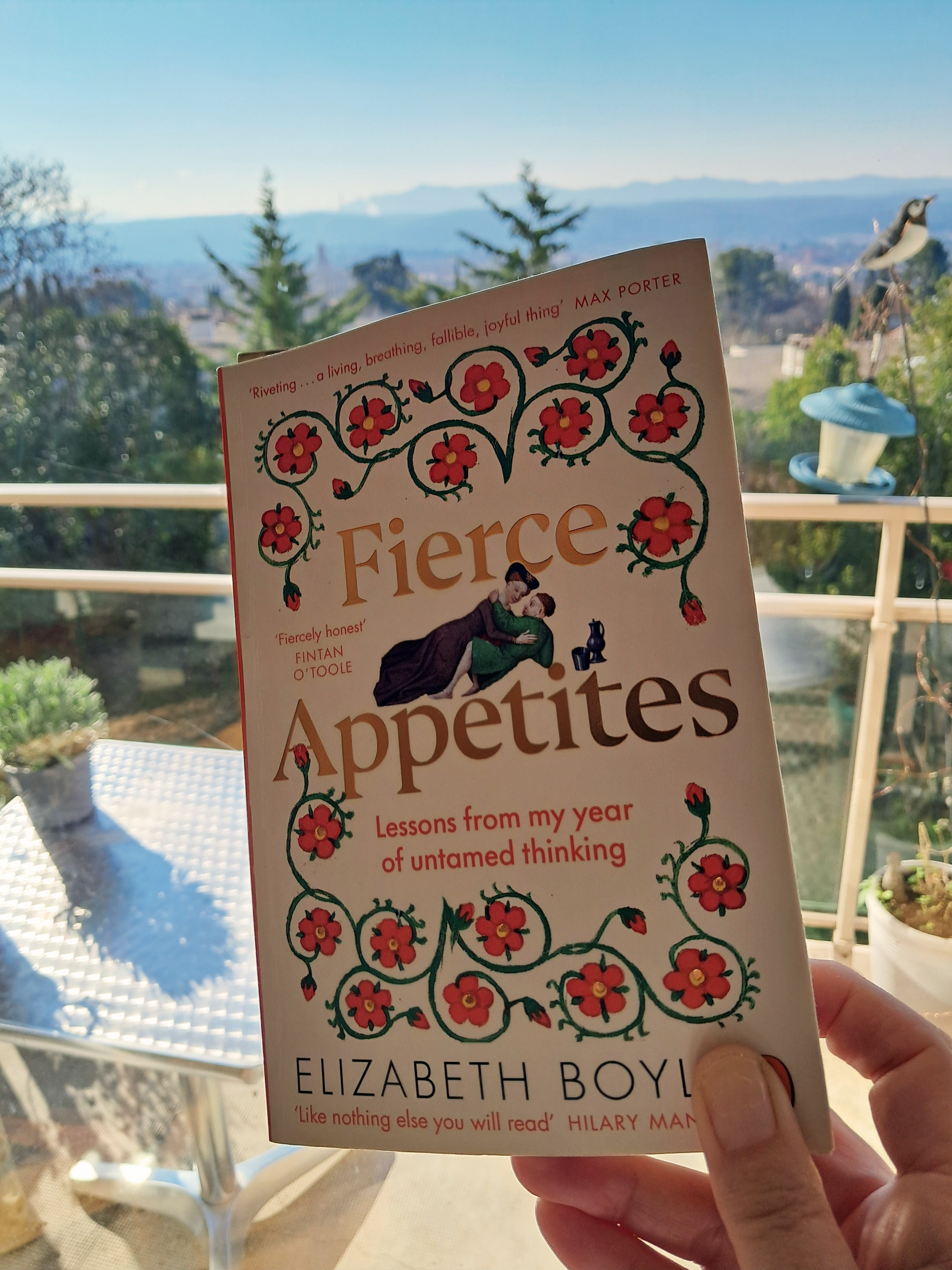
Fierce Appetites by Elizabeth Boyle

Fierce Appetites is my next read for Reading Ireland Month 2025, a nonfiction title I came across in 2022 when it was shortlisted for the Irish Book Awards Non Fiction Book of The Year. It didn’t win the award, that went to the excellent book I reviewed here, journalist Sally Hayden’s My Fourth Time We Drowned.

Lessons From My Year of Untamed Thinking

Fierce Appetites Elizabeth Boyle Medieval Irish literature The Táin Bó Cúailnge

Fierce Appetites is a hybrid memoir, written over the year following the death of the author’s father, which gives her cause to reflect on their relationship, her childhood, her role as a parent/mother, her academic profession and some of the decisions she has made over the years, both the well thought out and the impulsive, those she takes some pride in and others she regrets.

The bonds between different members of a family are explored and pondered and found in the ancient texts.

The world has always been full of stepmothers, foster-mothers, fathers who do the ‘mothering’, aunts and cousins and grandparents who take on primary caring responsibilities, adoptive mothers, institutions that rear children (for better or worse), and innumerable kinds of almost-mothers, surrogate mothers, ‘they-were-like-a-mother-to-me’s. I was reared by a stepmother who mothered me as best she could, even when I sometimes believed she was like the mythic wicked stepmother from a fairy tale, and treated her accordingly.

Writings of the Past

Alongside the memoir aspect, written in 12 chapters, months of the years, her reflections lead into a potted introduction to medieval literature, each chapter finding some connection between the personal narrative and something of the medieval history/literature texts that she is reminded of. In fact each chapter is an essay, but I read it more as an interconnected text.

There is a popular misconception that people in the Middle Ages didn’t grieve as much or as deeply as we do today. Perhaps because of the extremely high rates of infant mortality, and images in modern culture of the Middle Ages as a time of endemic warfare, people tend to think that societies became numbed to death. But the medieval literature of grief disproves that claim. People suffered from the loss of their loved ones then just as much as we do now.

Most of this was unfamiliar to me, as it would be to most people unless you had studied it in university, but that was what initially piqued my interest in the book and I found it fascinating to read about all these references and the translations of those texts and how the author demonstrates how they have something relevant to say today if you care to sit with them and interpret/reflect on their meaning or find a connection, which Elizabeth Boyle does so brilliantly.

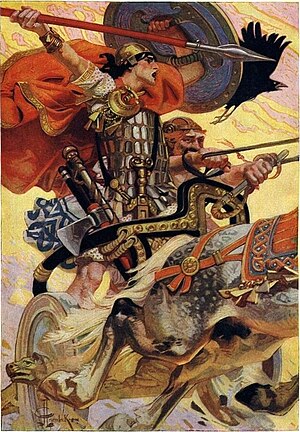
The things we fight for, and the reasons we fight for them, can be so elusive, so futile, and yet so deeply felt. Every year, I try to explain the emotional complexities of The Táin: From the Irish Epic Táin Bó Cúailnge to a new generation of students: Fer Diad and Cú Chulainn, fighting on opposite sides of a conflict and yet deeply bound by love for each other; Fergus’s divided loyalties; Medb’s myopic willingness to sacrifice her daughter for the sake of a bull.

They tell us through their stories and poems, how people lived, loved, coped and the scale of their imagination, and we reflect on how much things have or haven’t changed. Boyle not only shares her losses, she shares her excesses, yet this is not a transformational memoir, it is raw and unashamedly wicked, just like some of the characters in those ancient texts.

At the mortuary, we had been handed a NHS leaflet on dealing with grief. One of its sensible pieces of advice is not to make any major life changes in the first year of losing someone close to you. In medieval literature, characters are not given self-help pamphlets. When they suffer grief, they destroy mountains, raze kingdoms, tear their hair out and scorch the earth. I just sat numbly at the kitchen table, drinking gin and sending unwise WhatsApp messages to ex-lovers.

History Repeats

The book was written in 2020, which is also interesting because it was a year that gave many the opportunity to pursue projects like this, and also because of the political climate that gets occasionally referenced.

While Boyle lives in Ireland, she often travels to the UK to see her daughter and abroad to speak on her subject of expertise.

One of the main objections to travel in the Middle Ages was that it led to sin.

When she mentions the political situation, she does so from the point of view of a historian, and these points made from five years ago are interesting to reconsider today.

History is full of incremental improvements and revolutionary convulsions – often these are followed by reactionary backlashes in which rights are revoked, inequalities re-established.

There are so many interesting insights and observations, challenges and meandering trains of thought, I highlighted so many and could easily have spent many more hours looking up the references.

Highly Recommended, if you are curious about medieval literature and balancing family, career and personal interests.

Author, Elizabeth Boyle

Elizabeth Boyle was born in Dublin, grew up in Suffolk and returned to live in Dublin in 2013. She is a medieval historian specialising in the intellectual, literary and religious culture of Ireland and Britain. A former Leverhulme Early Career Fellow at the University of Cambridge, she now works in the Department of Early Irish at Maynooth University, where she was Head of Department for five years until 2020. 

Fierce Appetites is her debut collection of personal essays and was shortlisted for the Irish Book Awards Non Fiction Book of the Year 2022.

Reading Ireland Month 2025 Best Irish literature

Cairn (2024) by Kathleen Jamie

A Poet Writing Nature Essays

Kathleen Jamie is a poet and writer of creative nonfiction about nature. She has written three wonderful collections that I have adored. Findings (2005), my favourite, included essays about the Hebridean and Orkney Islands near her home in Fife and Peregrines nesting; Sightlines (2012) covers a fascinating archaeological dig, tales of more birds on lonely, windswept islands and a visit to the Arctic and finally Surfacing (2019) which I review here in Surfacing 1 and Surfacing 2.

Making Ripples at 60

creative non fiction essays poetry by Scottish poet and nature writer Kathleen Jamie

In Cairn, we find a collection of writings, fragments, observations and memories. Sometimes an individual observation and other times a collective witnessing of changes in the local environment. Of migratory patterns disrupted, of things once common on the horizon, now departed.

As she arrives at her 60th year, she begins to ask different questions, about the next generation and the one after that, if there will indeed be one as children question whether to bring another generation into this vastly changing world.

There is less a note of wonder and more a tone of trepidation at the precarious situation of the natural world and those being born into what will continue after we have left.

The Bass Rock and Bird Flu

It’s a while since we could turn to the natural world for reassurance, since we could map our individual lives against the eternal cycles of the seasons, our griefs against the consolation of birds, the hills. Instead there’s the sense that things are breaking, cracking like a parched field. There they are, the seabird people, among their beloved birds at the height of the breeding season, wearing hazmat suits as they pile corpses into bin bags.

Photo by Magda Ehlers on Pexels.com

Like a cairn, these short prose pieces are markers, memories, memorials or perhaps even metaphorical or literary burial mounds, tracking the thoughts and observations of an observer over the years of the natural environment, of change in both the natural surroundings and humanity. Testimonies.

‘Stones propose another sense of time, whereby the past, the deep past of the plant, proffers a meagre yet massive support to acts of human resistance…’ John Berger

A thought-provoking collection.

Further Reading

The Guardian: Cairn by Kathleen Jamie review – a wry SOS for the world

The Caught by the River Book of the Month: July 2024 Cairn by Kathleen Jamie With its bursts of beautiful brilliance, it is something akin to lightning, writes Annie Worsley

The Guardian: Scotland’s Bass Rock: world’s largest colony of northern gannets – in pictures

Author, Kathleen Jamie

Kathleen Jamie, Photo by Alan Young

Kathleen Jamie is one of Britain’s foremost writers. In 2021 she was appointed Makar, Scotland’s national poet.

Jamie resists being identified solely as a Scottish poet, a woman writer, or a nature poet. Instead, she aims for her poetry to “provide a sort of connective tissue”.  Influenced by Seamus HeaneyElizabeth BishopJohn Clare, and Annie Dillard, Jamie writes musical poems that attend to the intersection of landscape, history, gender, and language.

Her groundbreaking works of prose – Findings (2005), Sightlines (2012) and Surfacing (2019) – are considered pioneers and exemplars of new nature writing. She lives in Fife.

In Ordinary Time, Fragments of a Family History by Carmel McMahon #ReadingIrelandMonth24

In Ordinary Time is one of those wonderful finds, when a number of your own disparate interests collide and someone has managed to put together a work that spans years, across two countries, reflecting on different events in their own life and the background of a country and culture’s history, with these continuous threads running through it, that make it almost seamless.

In a hybrid memoir, Carmel McMahon has written fragments of a family history, structuring them into four parts of three chapters, beginning with Part One: Imbolc: February, The Feast of Saint Brigid and ending in Part Four Samhain: January, Notes on A Return where the story comes full circle.

There are 21 black and white illustrations scattered throughout the text, ordinary photos that amplify the message and create a sense of travel through time. I looked back at the index page for each photo and scribbled my penciled note underneath it, such was the joy of words meeting image.

Full circle feels appropriate to describe a work that despite that linear structure of months and parts, is not that. Rather, it represents points on the spiral of life that goes through cycles; repeating cycles, short cycles, long cycles, interconnected and intergenerational cycles.

Each of the events that she describes in her family history have a shadow history in the culture and while she reflects on her own situation, she finds resonance in the voices of others who have gone before, in particular those whose story we might not have heard, or if we have, might not have been aware of the full picture.

Her story begins somewhere in the middle of her own self-imposed exile, living in New York City. It voyages through her experience with addiction, denial and recovery and ends with the heroine’s return, the learning and this book.

The city had not yet woken on the frigid Sunday morning of February 20, 2011, when the body of a young Irish woman was found outside St. Brigid’s Church in Manhattan’s East Village. The news reports cited alcoholism, homelessness, and hypothermia as contributing factors in her death. They said that earlier that month, on St. Brigid’s feast day she had turned thirty-five years old. They said she wanted to be an artist. They said her name was Grace Farrell.

Photo by C1 Superstar on Pexels.com

She questions whether it begins here, or in 1937 when the new Irish state ratified its constitution to reflect a strengthened church-state partnership, that would have a devastating effect on thousands of lives of girls and women and their children, and the unborn future generations who might inherit that affected DNA. All those sent to the Magdalene laundries.

In 1966, her mother would live a version of the shame that surrounded pregnancy out of wedlock, managing to avoid institutional incarceration by disappearing for a while.

Women and children were not afforded the rights of citizenship, of subjecthood, of being. They lived under threat of being erased, hidden, buried. This is why my mother tells me – halting, hesitating – that in her day it was the worst thing in the world for a girl to find herself pregnant, but worse still was for her to talk about it.

That first sister Michelle, born in London, would be knocked down outside her primary school, three months before Carmel was born. Six more children arrived after her and Michelle’s name was never spoken in their house. The legacy of silence she had been born into continued, was passed on, but not forgotten.

Or did the story begin when she had her first drink at the age of ten, at a family gathering? Feelings of inferiority and shame, dulled by the dregs of the adults drinks that replaced that unwanted feeling with one of warmth, of a circle of golden light.

McMahon left Ireland in the 1990’s and did not return permanently until the pandemic era, 2021. Ironically, it seems to this reader, the return has allowed the distance to reflect on the journey and the learning and to piece the interconnectivity of so many people’s lives past, present and future into this text.

Science has proven and is now able to show how stress and trauma can be passed on biologically from one generation to the next, we read.

We know that now. Vehicles of transportation include, according to the scholar of memory studies Marianne Hirsch, “narratives, actions and symptoms.” The stories we tell and don’t tell, the actions we take and don’t take, the symptoms expressed by a mother holding the trauma tightly to herself, because she refused to burden her children with it.

Listening to the podcast On Being, she hears Dr. Rachel Yehuda reminds listeners that:

…we are not in biological prison: experiences and events in our environment can also make positive changes to our programming. We can consciously move towards healing.

These intertwined fragments thus reveal the events, experiences and the slow realisation of all that is working on her, the understanding and the aspects that will aid the healing.

Photo by Jessie Crettenden on Pexels.com

There are the endless jobs she tries to hold down, while numbing herself nightly; the visits back home precipitated by tragedy, the road trip across America, an escape that brings her closer to understanding loss and aloneness.

The industrial ghost towns, the late spring rain, the wide, low skies. The old sadness rising. An excess of black bile, they used to say, made the melancholic personality. Freud said that mourning and melancholia are akin in that they are both responses to loss. Mourning is a conscious and healthy response to the loss of a love object. Melancholia is more complicated. It operates on a subconscious level. All the feelings of loss are present, but for what? The melancholic cannot say. This, Freud says, is a pathology.

McMahon reads and shares anecdotes and reflections on the lives of other women who immigrated before her; the young Irish immigrant Maeve Brennan who was a staff writer at the New Yorker before the disease of alcoholism colonized her life; Mary Smith, one of many Irish women used for gynecological experiments in New York hospitals in the mid nineteenth century; Grace Farrell.

After a family tragedy, she reads Anne Carson’s Nox, a book of poems created from the notebook she recorded memories and impressions of her brother, in the decade after he died.

She did this, she tells us, because a brother does not end. He goes on.

She reflects on the Famine, on the role of church and state, on the complicit silences and forgetting, on the advances that were made at the expense of the vulnerable, the now removed statues, the little known memorials of the unnamed. She acknowledges the collective impact of a nation’s traumas on individuals and families with brief insights (her own and Carl Jung’s) into a way forward, towards speaking up, sharing stories, creating meaning, allowing space for healing, for moving towards the light, to enable the passing on of a lighter legacy to future generations.

Sharing her story is part of that, not just for the writer herself, but for those who might find resonance in her journey, towards their own. And to remember the forgotten, the ordinary women like Mary Smith.

I could not put this book down, despite wishing to make it last. Though it is a collection of essays, some of which have been previously published, the threads that run through it make it read like a memoir, perfectly balancing the personal stories with the background history, questioning the effect of both on a young woman’s psyche.

Highly Recommended.

Further Reading

Guardian Review: In Ordinary Times: the trials of inherited trauma, Carmel Mc Mahon uses her own story of emigration, uncertainty and alcoholism as one thread in a wider historical tapestry

RTE Radio1 Interview: Carmel McMahon on The Ryan Tubridy Show – (18 mins) – on New York, family tragedy, drinking and the legacy of ‘pidgin emotion’

Guardian Books: Anne Enright: In search of the real Maeve Brennan

JSTOR: Owens, Deidre Cooper, Irish Immigrant Women and American Gynecology: In Medical Bondage: Race, Gender, and the Origins of American Gynecology, 89–107. University of Georgia Press, 2017. 

Carmel Mc Mahon, Author

Carmel Mc Mahon grew up in County Meath, and lived in New York City from 1993 – 2021, when she returned with her partner to renovate a house on Ireland’s west coast.

A graduate of CUNY, her writing has been published in the Irish Times, Humanities Review, Roanoke Review, Longreads and shortlisted for the Hennessy Literary Award.

A Horse at Night, On Writing (2022) by Amina Cain

I came across this author as she is one of the many quoted in Kerri Ni Dochartaigh’s Cacophony of Bone and it fits with that book, in that it is a kind of journal presented as short essays or fragments on writing, of thoughts that occur while reading other writers’ works.

The chapters have no headings but the book has a contents page that displays from five up to nine words of the first sentence of that fragment/chapter/essay. So the first one begins:

Without planning it, I wrote a diary of sorts…

Through a Window of Words, I See

A number of them begin with referencing the work of an author/artist whose sentences or themes or art provoke her reflections, in particular Elena Ferrante, Annie Ernaux, Marguerite Duras, Rachel Cusk, Marie NDiaye. In contemplating Ernaux’s The Possession, she wonders what it is she loved exactly, alighting on its urgency, the way the narrator is taken over by something – an aspect that is often present in Ferrante’s novels.

In The Lost Daughter, when Leda goes alone…

One she refers to often The Lost Daughter, the story of a woman whose daughters are absent for the summer, she takes a holiday, not thinking of her daughters,

Introspection, Projection, Finding Direction

This leads into Cain’s contemplation of the way humans project on to other things (like the sea) and people and how the act of writing encourages this. She asks why we project at all and delves into that occupation of mind with scalpel-like precision.

She reads the diaries of Virgina Woolf, which cause her to recall 30 years of diaries of an Aunt, one entry telling her that she ‘began to keep a diary because she saw that life had mystical qualities.’

Writing about authenticity gives rise to reflections on Jean Gent’s play, The Maids and Bong Joon-ho’s film Parasite and the effect of maintaining roles, when mixed classes live under the same roof.

To have to maintain those class roles always, especially if they are enforced with any kind of degradation, is a violation of the sacredness of one’s life, and a violence all of its own.

The Feline Interruptor

Much of it was written during the pandemic, a period that encouraged introspection and in which humans didn’t always have other humans for company, after reflecting on solitude and the need for human connection and company, other creatures gain notoriety eliciting a chapter that begins:

As I write this my cat Trout whines loudly

It makes me wonder what phrase from this book Kerri Ni Dochartaigh made it into her own; I admit I didn’t have quite the same response on finishing it.

“Astounding…I was distraught when I finished.”

I found it more of an intriguing insight into the varied way writers analyse and respond to each other’s work. I related more to Aysegül Savas‘s blurb.

“Like light from a candle in the evening; intimate, pleasurable, and full of wonder.”

Rather than look at plot, character, dialogue or conflict, these reflections she describes as paying attention to the ‘accessories’, like animals, phrases that create a feeling of relaxation, pondering friendship, or the self. Even plants.

It’s something like finding meaning in other works, that intersects with where the reader/writer is on their own journey, whether that is life or a fictional landscape they are trying to create, looking for lessons that might lie between the lines of others who have gone before, whose words have elicited a response in that reader.

And we, the reader of this book, look through the window of another reader looking through the window of a writer looking at the world.

Author, Amina Cain

Amina Memory Cain is the author of the novel Indelicacy, a New York Times Editors’ Choice and staff pick at the Paris Review, finalist for the Rathbones Folio Prize and the Centre for Fiction’s First Novel Prize and longlisted for the Joyce Carol Oates Prize.

She is also the author of two collections of short stories. Her writing has appeared in Granta, the Paris Review Daily and other places.

She lives in Los Angeles with her husband.

Redemption Ground, Essays and Adventures by Lorna Goodison

A mix of memoir, poetry, life adventure and epiphanies, I loved this collection by Jamaican writer Lorna Goodison.

Bonding With the Irish Over Tea & Poetry

essays memoir creative nonfiction Jamaican literature

The opening essay ‘The Song of the Banana Man’ and ‘The Fiddler of Dooney’ totally sets the scene for the rest of the book. It is an anecdotal story of the author and her friend, excited to be in London, overhearing two ‘bobbies’ (policemen) talk about a cafe they were just passing, in a way that lured them inside.

‘Whassis then, a new tea ‘ole?’

Their schooling in Kingston, Jamaica had been heavy on all things British and European, so entering this establishment was something related to that indirect familiarity. They encounter three boys from Ireland, who ask if they are from the West Indies and they begin to banter, drinking toasts to the colonial experience, singing songs and reciting poetry.

When I play on my fiddle in Dooney,
folk dance like a wave of the sea;

The poems they chose were about ordinary people, sure of themselves, of what they did, grounding words shared by these young people, whose paths have crossed, starting out on their own journeys. The exchange lasts while they’re having their tea and comes to a natural end, upon which they part ways. The author is at the beginning of her life journey, but the lines recited by them all have staying power.

And I was not sure where I belonged or what my own purpose was in life back then…. But listening to those three Irish men recite ‘The Fiddler of Dooney’ that afternoon, maybe I’d thought yes, that’s what I’d like to be, someone whose artistry makes people dance like a wave of the sea.

A Working Class Teen Dares to Do Better

In, A Taste of Honey, she recounts the experience of seeing a movie in 1963, adapted from the play created by Shelagh Delaney (who was 18 years old when she wrote it) that moves her, that is a moment of epiphany. Being one of nine children, she relished the opportunity to go and see the film one Saturday afternoon alone.

Shelagh Delaney went to a play that she found boring, pretentious and condescending, and said to herself I can do better than that, and went home and wrote A Taste of Honey.

The film would win a BAFTA award.

A Taste of Honey showed working-class women from a working-class woman’s point of view, had a gay man as a central and sympathetic figure, and a black character who was neither idealised nor a racial stereotype. – extract from The Guardian by Dennis Barker

Goodison reflects on why she was so moved by this film, how it gave her some of her life and writing purpose and inspiration.

Shelagh was pronounced ‘ineducable’, but was able to produce work that affected me so deeply that I ended up sitting alone in a cinema after everyone else had filed out, trying hard to compose myself enough to go outside and face a world where most people would not understand why a simple thing like a Saturday afternoon matinee could make me weep as if a close friend or relative had died.

The Daffodil Drama

Writing poetry from a young age, in ‘Some poems that made me’ we read more of this early education and a different take on Wordsworth’s ‘I Wandered Lonely as a Cloud’, aka ‘The Daffodils’ poem, after she researches his childhood and life and decides to give the poet a break. See my review Lucy by Jamaica Kincaid for another reference to the daffodil drama.

Over the years I have said quite a lot about this poem, as have other writers throughout the British Commonwealth who have come to regard it as the ultimate anthem to British colonial oppression.

She will encounter may poets and poems until she arrives at the one voice that cause her to stop reading everyone else and just read his poems. In the work of Derek Walcott, who would become a friend and mentor, she found poem as a source of hope and consolation; poem as a lifeboat, anchor and safe harbour.

As she begins to think of her own place in the world, she seeks out women poets, finding nourishment in the work of Gwendolyn Brooks and other African-American fiction writers, while still searching for poetry by Caribbean women, ultimately ending up writing the poems she wanted to read and finding the right language to express them.

I learnt early in my life as a writer that if I wanted to write about my people I had to learn to listen carefully to family stories then imagine, and constantly reimagine those stories…All writer’s do this, but Caribbean writers face formidable or particular challenges because of the ways in which slavery, and then colonialism, erased or distorted so much of our lives that we have to learn to writer ourselves into the story in any way we can.

Tributes to the Mothers & Imagination

We read ‘Guinea Woman’ the poem she wrote trying to imagine a woman she had never met, her great grandmother, an elegy for her mother Doris ‘After the Green Gown of My Mother Gone Down’, and another poem entitled ‘Bedspread’ inspired by news of the home of Winnie Mandela being raided by police, where they seize personal effects including a bedspread, taken because it was in the colours of the African National Congress.

The collection takes the reader to different countries and places on her journeying, sharing both fun and pivotal moments, stories of redemption, of good souls that come to set the indebted free, of her own life crisis in New York, that preceded a change in direction, acting on a promise to herself.

A Musical Accompaniment

Like my reading experience of Bernice McFadden’s excellent The Book of Harlan, whenever Lorna Goodison mentions music, like in the vignette ‘A Part for Tarquin’, I look it up and listen while reading. This one is about her friend Bernard dragging her along to a non-party that she doesn’t wish to attend, and ends with them listening into the night to the pianist Wynton Kelly playing the Miles Davis sextet Some Day My Prince Will Come.

That was the night I began to really appreciate the genius of the Jamaican-American pianist Wynton Kelly, about whom Miles himself was supposed to have said, ‘Wynton is the light for the cigarette; without him there is no smoking.’ That night I realised that if hope has a sound it would be Wynton Kelly’s piano-playing. His hope notes were like sunbeams on the morning waves coming in at Bluefields beach.

Loved it all.

Author, Poet, Essayist, Lorna Goodison

Caribbean poet Lorna Goodison was born in Kingston, Jamaica in 1947. A painter before she turned her focus to poetry, Goodison was educated at the Jamaica School of Art and the School of the Art Students League in New York. She was appointed poet laureate of Jamaica from 2017 – 2020. In 2018, she received a Windham–Campbell Literature Prize, and in 2019, she was awarded the Queen’s Gold Medal for Poetry.

Her numerous poetry collections include Collected Poems (2017), Supplying Salt and Light (2013), Goldengrove: New and Selected Poems (2006), Controlling the Silver (2005), Traveling Mercies (2001), Heartease (1988), and Tamarind Season (1980).

She is the author of the short story collections By Love Possessed (2011), Fool-fool Rose is Leaving Labour-in-Vain Savannah (2005), and Baby Mother and the King of Swords (1990), and the memoir From Harvey River: A Memoir of My Mother and Her People (2007), which won the British Columbia National Award for Canadian Non-Fiction.

In 2019, she published Redemption Ground: Essays and Adventures

Professor of English and of Afroamerican & African Studies at the University of Michigan, Goodison divides her time between Toronto and the north coast of Jamaica.

Goodison’s image-rich and socially- and historically-engaged poems often inhabit the lives and landscapes of her Jamaican homeland. “I suspect that I might always write about Jamaica,” Goodison stated in an interview with Mosaic: Literary Arts of the Diaspora. Goodison also discussed the humor in her work, noting, “Jamaicans are very comical people, and laughter is a way of coping with life’s displeasures. Also, when you make something of it [a hard situation], it says that you are in control. There are incidences when we have no control; all we can do is make some sort of a gesture. Sometimes, the world can throw things at you that are so cruel and so devastating that you are in no position to have any kind of real response but to make a gesture. And I think that sometimes laughter is a gesture saying that you have not completely annihilated me; you have not robbed me of my ability to respond as a human being.”

Noting that Goodison often “complements her careful observation of the physical world and her fine eye for detail with a tense, lean, elliptical style” in a review of Supplying Salt and Light, Jim Hannan observed, “At their best, Lorna Goodison’s poems observe the unsavory in history and society even as they guide us firmly toward sources of redemption. With compassion and empathy, Goodison writes about human failure and triumph in large and small measures.”

Seeing For Ourselves and Even Stranger Possibilities by Suhaiymah Manzoor-Khan

Essays, Prose and a Play on Seeing

I first came across the writer Suhaiymah Manzoor-Khan in 2021, she wrote the opening essay ‘I Am Not An Answer, I Am The Question’ in Cut From The Same Cloth?Muslim Women on Life in Britain edited by Sabeena Akhtar. Her essay was about the understanding she came to while a student at the University of Cambridge where she encountered a tool for attempting to ‘unlearn’: questioning.

I realised that most feminist and anti-racist politics I had engaged with up until that point were shallowly asking the wrong questions. Most of the questions being asked were not my questions at all. So much of my educational and consciousness-raising work had been the work of answering questions posed by others.

Her book Seeing For Ourselves and Even Stranger Possibilities is an extension to the understanding she shared in that initial essay.

It is interesting to read the opening pages where she is grappling with her purpose for writing and how to begin this book, having just finished reading Annie Ernaux’s nobel lecture, where she reaches back sixty years to a diary entry and finds her opening line (her purpose for writing), in the words ‘j’écrirai pour venger ma race’ (I will write to avenge my people).

Manzoor-Khan writes about ‘the gaze of the other’ and questions whether she has anything to add to a complex and much discussed subject and finds out she does when she turns the topic on its head.

Ernaux was writing from the perspective of a higher educated French working class woman in the closing years of a writing career, while Manzoor-Khan writes from the perspective of a higher educated British Muslim woman at the beginning of hers.

Troubled by such doubts, I started to consider why being a subject rather than an object was the furthest horizon I could dream of. What lay beyond ‘seeing with my own eyes’? What if ‘seeing for ourselves’ wasn’t actually the best way to see? What could transcend the desire to be see-er instead of seen? What if I closed my eyes and did not prioritise seeing at all?

Looking into these stranger possibilities, she contemplates the how to, and finds no easy route than to go forth and try. What results is a combination of prose, poetry and a short play interspersed throughout the text; looking at the question from different angles and so too, using different genres.

Need, Want, Seeing, Overcoming

The book is structured into seven parts:

the need - how I am found
the want - how I find myself
becoming a sight - the portal of objecthood
striving to see - seeking subjecthood is a circle
escaping the cycle - even stranger possibilities
grief is a type of ghaib - love is a type of sight
a note on endings - the impossibility of concluding

The need is about clarifying intention and the want is to bear witness to an existence. This latter section opens with a poignant vignette on hoarding nineteen white IKEA boxes in the author’s room that cause her shame. On further reflection, she discovers their ‘why’, they are evidence of a life.

I am afraid to let on about this in case it becomes obvious how afraid I am to go unseen. In case it becomes obvious how powerful it is to destroy a people’s history. How catastrophic it is to leave them believing they are suspended. To eliminate their past, present and knowledge.

The Writer and The Book in Conversation

Photo by Monica Silvestre on Pexels.com

Throughout the text are acts, scenes from a short play. It is how the book opens, Act 1, a conversation between the writer and the book.

the writer: You’re not what I expected you to be.

the book: What did you expect?

the writer: You were supposed to be about seeing and being seen
About the different gazes upon us
And how to see ourselves without them

the book looks smirkingly at the writer, knowing more than her (as always).

The way these brief interludes are positioned lightens the tone of the book, giving it a different vibe, featuring characters such as the writer, the book, her head, her heart, her fear, her eyes, her soul.

Because of their brevity, the voices of those characters speak more loudly and succinctly than the more existential meanderings of the author on changing her perspective of the gaze, from ‘others’ on her to (even stranger possibilities) just the ‘one’. The many different forms that address her subject, allow the reader to consider, reflect and attempt to understand the perspective being shared.

It is a philosophical read, of short easy-reading vignettes,some that challenge more than others, of poetry and the interspersed acts and scenes of the play featuring the writer, the book, her eyes, her fear, her head, her soul. In another scene, a group of onlookers struggle with the question of being seen, of invisibility, of too much visibility, of how we are perceived by others, by ourselves, by the Divine Presence…

It is a companionable read, though not easy to review, as the author reminds us, this is a book of questions, and it is also a journey, it is not a conclusion or a set of answers, it is observations, reflections, it invites participation, it does not exist in isolation.

It puts into word the frustrations and injustice of invisibility and challenges that which is seen (the blind scrutiny) in its place.

Perhaps rather than the head, the intellect, the eyes, the judgments, we ought to perceive with the soul, if so, what might that look like?

Rather than striving to be seen, approved or understood by gazes that shrink me, all I have to do is that which brings me closer to my Maker, who sees the full context of me. Everything else is either a means to this or a diversion from it.

The book is available from its UK publisher Hajar Press, and as an ebook here.

Further Reading

The Skinny: ReviewSuhaiymah Manzoor-Khan’s cross-disciplinary book is a beautiful consideration of devotion to faith, family and politics by Paula Lacey

Suhaiymah Manzoor-Khan, Author

Suhaiymah Manzoor-Khan is a poet and writer whose work disrupts assumptions about history, race, violence and knowledge.

She is the author of Tangled in Terror and the poetry collection Postcolonial Banter; a co-author of A FLY Girl’s Guide to University; and a contributor to the anthologies Cut from the Same Cloth? and I Refuse to Condemn.

Her writing has also featured in The Guardian and Al Jazeera, and her poetry has been viewed millions of times online. She is a co-founder of the Nejma Collective, a group of Muslims working in solidarity with people in prison. She is based in Leeds and is currently writing for theatre.

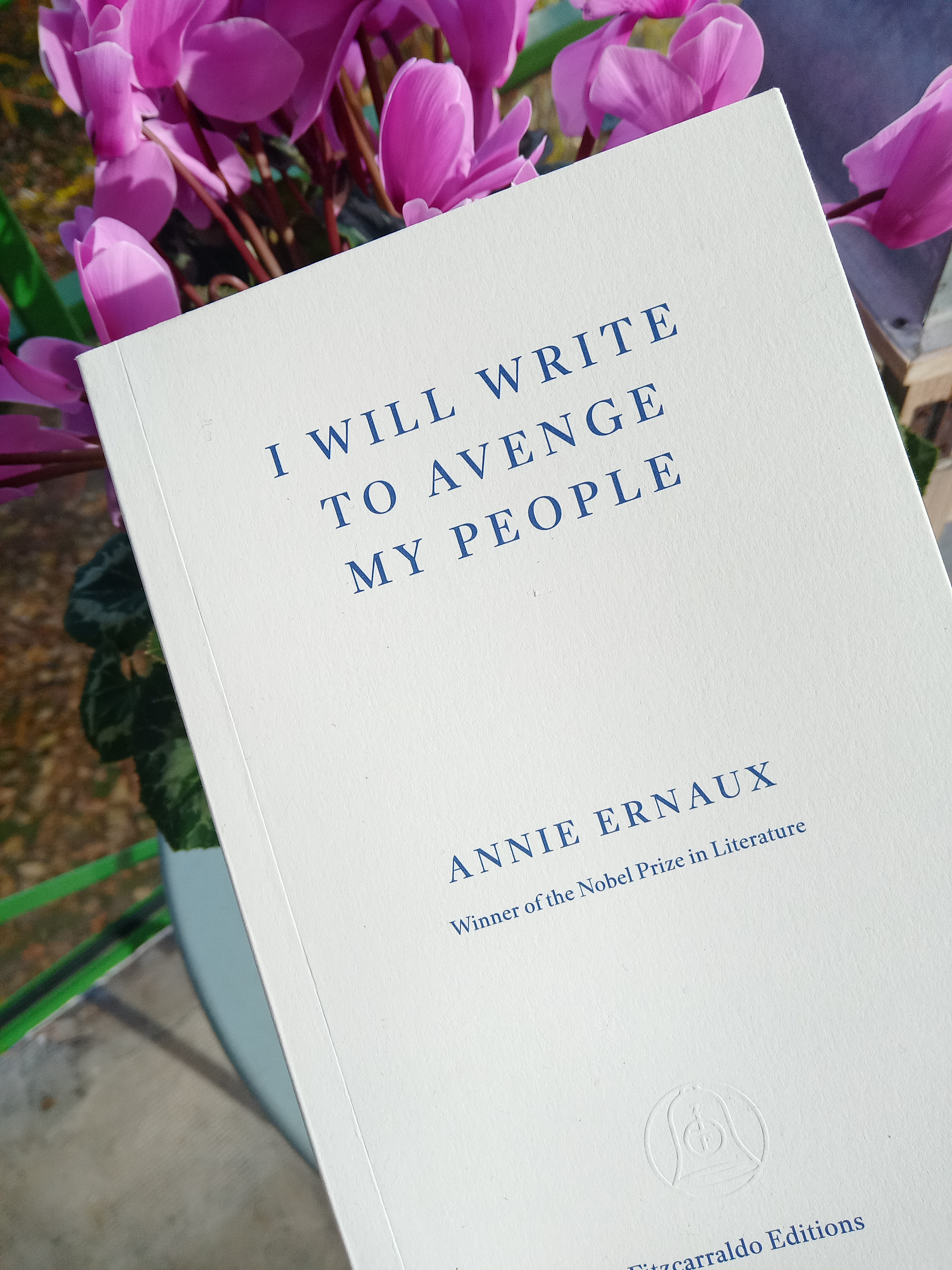
I Will Write To Avenge My People, The Nobel Lecture by Annie Ernaux tr. Alison Strayer & Sophie Lewis

Winner of the Nobel Prize in Literature 2022

In October 2022 the French author Annie Ernaux became the first French woman (the seventeenth woman) to win the Nobel Prize in Literature.

Read together, the reflections of the Nobel women reveal a diversity of ideas about what literature can do and a sense of a practitioner’s responsibility to these ideas. While the lectures vary widely in content—from Lessing’s and Gordimer’s concrete political lessons to Szymborska’s larger abstract musings to fables personal (Müller) and universal (Morrison)—each contains observations that are at once totally complex and completely true. – extract from LitHub article by Jessi Haley

The Agony and Experience of Class

The Nobel Committee recognised that ‘in her writing, Annie Ernaux consistently and from different angles, examines a life marked by strong disparities regarding gender, language and class

They awarded her the prize:

“for the courage and clinical acuity with which she uncovers the roots, estrangements and collective restraints of personal memory”

In this slim volume is the acceptance speech given by Annie Ernaux on 7 December, 2022 in Stockholm, Sweden, alongside a short biography (both translated by Alison L.Strayer). There is a brief banquet speech included, translated by Sophie Lewis.

It is a brilliant introduction to the motivation of the lifetime of work and writing by Annie Ernaux, opening with a reference to the title – alluding to the challenge of a search for the perfect opening line to her upcoming Nobel Prize lecture:

Finding the sentence that will give me the freedom and the firmness to speak without trembling in this place to which you have invited me this evening.

She doesn’t have to look far, she says, although the line she refers to – the title of her talk – is one she wrote in a diary sixty years ago.

j’écrirai pour venger ma race

It was written when she was 22 years old, the daughter of working class parents, studying literature in a faculty of sons and daughters of the local bourgeoise; an echo of Arthur Rimbaud’s cry in Une saison en enfer (A Season in Hell):

‘I am of an inferior race for all eternity.’

A young woman, the first of her family to be university educated, her youthful idealism was projected into those words.

I proudly and naively believed that writing books, becoming a writer, as the last in a line of land-less labourers, factory workers and shop keepers, people despised for their manners, their accent, their lack of education, would be enough to redress the social injustice linked to social class at birth.

Turning Away From Convention

Her first attempt at the novel was rejected by multiple publishers, but it was not this that subdued her desire and pride, to eventually seek a new form of expression.

It was life situations in which the weight of difference between a woman’s existence and that of a man was keenly felt in a society where roles were defined by gender, where contraception was prohibited and termination of pregnancy a crime.

These situations and circumstances instilled in her a pressing need to move away from the “illusory ‘writing about nothing’ of my twenties, to shine light on how her people lived, and to understand the reasons that had caused such distance from her origins.

Like an immigrant now speaking a language not their own, a class-defector, she too had to find her own language, however, it was not to found in the pages of the esteemed writers she had been studying and was teaching:

I had to break with ‘writing well’ and beautiful sentences – the very kind I taught my students to write – to root out, display and understand the rift running through me. What came to me spontaneously was the clamour of a language which conveyed anger and derision, even crudeness; a language of excess, insurgent, often used by the humiliated and offended as their only response to the memory of others’ contempt, of shame and shame at feeling shame.

Recognising that when a reader was culturally privileged they would maintain the same imposing and condescending outlook on a character in a book, as they would in real life, she sought to elude that kind of gaze and thus her trademark style evolved:

I adopted a neutral, objective kind of writing, ‘flat’ in the sense that it contained neither metaphors nor signs of emotion. The violence was no longer displayed; it came from the facts themselves and not the writing. Finding the words that contain both reality and the sensation provided by reality would become, and remain to this day, my ongoing concern in writing, no matter what the subject.

It’s an enrapturing lecture and an excellent introduction and insight into Ernaux’s particular and individual style, and wonderful that her volume of work has been recognised and celebrated at this esteemed level. You can read the lecture using the link below.

I have read one book by Ernaux, A Man’s Place and I am planning to read Shame, A Simple Passion and her masterpiece The Years.

Shame Simple Passion The Years Annie Ernaux Nobel Prize Winner 2022

Have you read any books by Annie Ernaux? Are you planning to read any?

Further Reading

The Nobel Prize Website: Annie Ernaux Nobel Lecture (Read the lecture here)

LitHub Article: A Brief History of All the Women Who Have Won the Nobel Prize in Literature by Jessi Haley

Annie Ernaux, French Author

Born in 1940, Annie Ernaux (née Duchesne) was born in Lillebonne and grew up in Yvetot, Normandy, where her parents ran a café-grocery store in the spinning mill district.

They had lost a little girl of seven before I was born. My first memories are inseparable from the war, the bombings that devastated Normandy in 1944.

She was educated at a private Catholic secondary school, encountering girls from more middle-class backgrounds, and experiencing shame of her working-class parents and milieu for the first time.

After abrief stint in Finchley, London, cleaning houses all morning and reading from the library all afternoon, she returned to France to study at the University of Rouen. Obtaining a degree in modern literature, she became a school teacher. From 1977 to 2000 she was a professor at the Centre National d’Enseignement par Correspondance.

Her books, in particular A Man’s Place (La Place) and A Woman’s Story (Une femme) have become contemporary classics in France. These books marked a break from the definitive novelistic form, she would continue teaching in order to never depend on commercial success.

One of France’s most respected authors, she has won multiple awards for her books, including the Prix Renaudot (2008) for The Years (Les Années) and the Marguerite Yourcenar prize (2017) for her entire body of work. The English translation of The Years (2019) was shortlisted for the Man Booker prize International and won the Warwick Prize for Women in Translation (2019).

The main themes threaded through her work over more than four decades are: the body and sexuality; intimate relationships; social inequality and the experience of changing class through education; time and memory; and the overarching question of how to write these life experiences.

Fitzcarrraldo Editions have now translated and published eleven of her works into English, including this booklet.

Ernaux’s work is uncompromising and written in plain language, scraped clean. And when she with great courage and clinical acuity reveals the agony of the experience of class, describing shame, humiliation, jealousy or inability to see who you are, she has achieved something admirable and enduring. – Nobel Prize Committee

Time For Outrage, Indignez-vous! by Stéphane Hessel tr. Marion Duvert

Looking Beyond the Ordinary & Expected

On a recent visit to Paris, I accompanied friends on a day-trip to the town of Épernay in the North East of Paris, 30 kilometres south west of Reims. Like Reims, it is known for its champagne houses, vineyards and the close to 50 kilometres of underground tunnels built to store their wine, a veritable underground city.

The town sits on layers of chalk, which gives those underground tunnels their unique aspect that contributes to the uniqueness of their product and why the fierce protection over the use of the word ‘champagne‘. Champagne is only ‘champagne‘ if grown and cellared and produced in the Champagne region of France. If not, its crémant, prosecco, cava, sparkling …

The archbishops of Reims controlled the town of Épernay from the 5th-10th century, it then passed to the counts of Champagne and in 1642 to the Duke of Bouillon.

 It was badly damaged during the Hundred Years’ War, and was burned by Francis I in 1544. Having been destroyed or burned more than 20 times, the town has few ancient buildings, the mansions you can see there today are mostly from the 1800’s.

The Champagne Hillsides, Houses and Cellars are on the World Heritage list for the Protection of World Culture and Heritage for all humanity.

The town also houses some 9th century manuscripts, a wine museum and archaeological artifacts.

Stéphane Hessel encourages youth to engage!

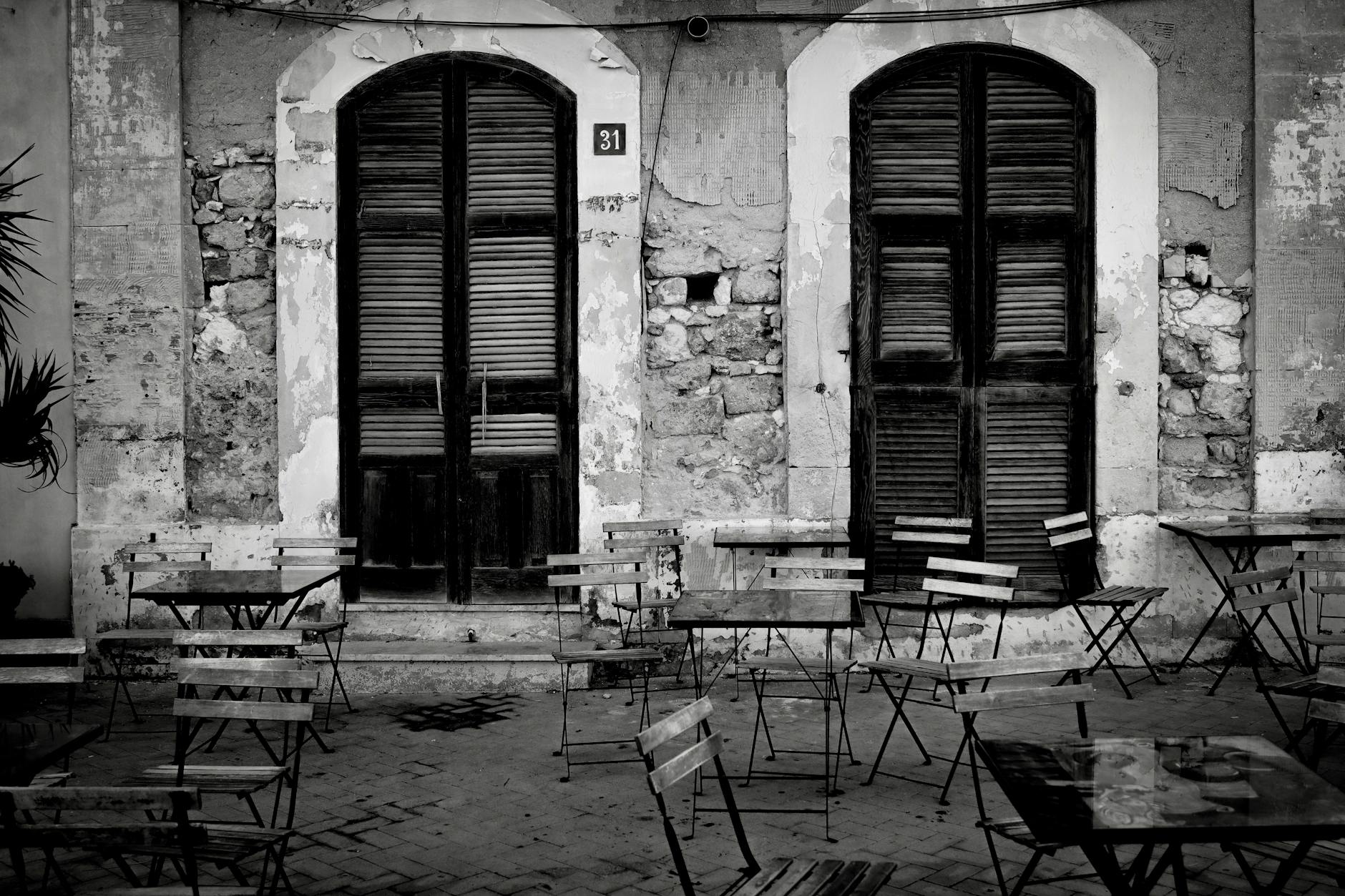
As we wandered along the famous Avenue Champagne with its palatial 19th century mansions, some of which can be visited for wine tastings, I looked for number 31 (a favourite number) to take a photo. At about the halfway point in the long, fairly sterile avenue, it was not a champagne house, but a 2,000 + student lycée (high school), named Lycée Stéphane Hessel.

I was intrigued and delighted to see the name of this institution, certain that it must have been named recently, I knew that Stéphane Hessel had died only 10 years ago.

Indignez vous Time for Outrage

The high school was named in 2013/2014 when the lycée Godart-Roger et lycée Léon-Bourgeois merged to become the lycée Stéphane Hessel, renamed in tribute to this inspirational author of a best-selling essay, written and directed specifically towards youth.

Discovering this lycée was one of the highlights of my visit, I found it brilliantly provocative that in the middle of this world famous avenue of procuring bubbles, sat a human rights activist, member of the Resistance, a voice for peace and equality, the author of a famous essay, written in his 93rd year, 3 years before his death in 2013.

It a short half hour read that has since been translated into numerous languages and sold 4.5 million copies worldwide.

I knew about it because at the Salon de Livre in Paris in 2014, there were massive queues of young people lining up to get their booklet signed by him or to listen to him talk. Journalists were intrigued and wanted to know why these young students were so interested in the words of a very old man. The response was “because he lived it” they said, unlike most who teach us about this era, this man actually lived through everything he has written about. He is authentic, we respect that.

The Essay

Stéphane Hessel wrote his essay in his 93rd year and considered himself fortunate to be able to reflect at that age on events that laid the foundation for his lifelong commitment to politics and human rights.

Born in Germany, he became French in 1939 and in 1941 fled to London and became part of Charles de Gaulle’s group of Resistance members.

He returned to France to organise communications, was captured and sent to Buchenwald, tortured and later sentenced to execution by hanging. He and two others managed to escape execution through an act of identity exchange.

He wrote of the declaration adopted by the National Council of Resistance in March 1944, a set of values and principles created to guide the nation’s modern democracy once it was freed from occupation. He reiterated the importance of many freedoms that came with the end of the war, demanding that they continue to be protected for the good of all.

It is the duty of us all to ensure that our society remain one of which we are proud, not a society wary of immigrants and intent on their expulsion or a society that disputes the welfare state or a society in which the media are controlled by the wealthy.

Find Your Reason

The basic motive of the Resistance was indignation. He addressed his young audience, reminding them of this and implores them to find their reason for indignation, to join the great course of history, to understand the Universal Declaration of Human Rights and if encountering someone who is robbed of these rights, to have empathy and them help them reclaim them.

He wrote about the rise of fascism and his understanding of the origins of it, and how young people today will find their own reasons for expressing their outrage. His indignation was born less of emotion than a desire to engage. He was influenced by the words of Jean-Paul Sartre who said “You must engage – your humanity depends on it.”

The Worst Attitude is Indifference

There are unbearable things all around us, look for them he said:

This is what I tell young people: If you spend a little time searching, you will find your reasons to engage. The worst attitude is indifference. “There’s nothing I can do; I get by” – adopting this mindset will deprive you of one of the fundamental qualities of being human: outrage. Our capacity for protest is indispensable, as is our freedom to engage.

He highlights the challenges, of grievous injustices inflicted on people deprived of the essential requirements for a decent life, the widening gap between rich and poor and the violation of basic freedoms and fundamental rights, citing Franklin Delano Roosevelt’s “Four Freedoms” and his own participation in the creation of the UN’s Universal Declaration of Human Rights.

I will never forget the crucial role played by Eleanor Roosevelt, whose great kindness and natural authority worked wonders to help reconcile the disparate personalities that comprised the commission. She was a vibrant feminist, and it is largely due to her that, for the first time, and on a global scale, the equality of men and women was inscribed without ambiguity in an official text.

His message is one of active engagement, nonviolence and hope, against injustice.

“TO CREATE IS TO RESIST.
TO RESIST IS TO CREATE.”

It is an inspiring short work, that I encourage everyone to read, its message could not be more appropriate at this time, given all that the world is currently facing.

Stéphane Hessel, Author

Stéphane Frédéric Hessel (20 Oct 1917–26 Feb 2013) was a French diplomat, ambassador, writer, concentration camp survivor, French Resistance member. Born in Germany, he became a naturalised French citizen in 1939. He became an observer of the editing of the Universal Declaration of Human Rights of 1948.

In 2011 he was named by Foreign Policy magazine in its list of top global thinkers. In later years his activism focused on economic inequalities, the Israeli-Palestinian conflict and protection for the post-World War II social vision.

His book IndignezVous! (Time for Outrage! )sold 4.5 million copies worldwide. Hessel and his book were linked and cited as an inspiration for the Spanish Indignados, the Arab Spring, the American Occupy Wall Street movement and other political movements.