The Woman’s Prize for Nonfiction longlist 2025

Today the Women’s Prize for Nonfiction longlist 2025 was announced.

16 books ranging in matter, style and genre, from agenda-setting reportage on contemporary issues alongside revisionist histories and myth-busting biographies; to memoirs of self-determination and intimate narratives that shine a light on ordinary people combine with real-life criminal cases, notorious and forgotten, whilst others defy genre-classification, weaving multiple disciplines into a compelling narrative work.

The authors nominated are from a range of professional areas and expertise, including a music icon, human rights lawyer, political adviser, marine biologist, NHS palliative care doctor and Pulitzer Prize winner.

What the Judges Said

What unites these diverse titles, that boast so many different disciplines and genres, is the accomplishment of the writing, the originality of the storytelling and the incisiveness of the research. Here are books that provoke debate and discussion, that offer insight into new experiences and perspectives, and that bring overlooked stories back to life and recognition. Amongst this stellar list, there are also reads that expertly steer us through the most pressing issues of our time, show the resilience of the human spirit, alongside others that elucidate the dangers of unchecked power, the consequence of oppression and the need for action and defiance.

Kavita Puri, Chair of Judges

The Longlist of 16 titles

Click on any title to read the longer description of the book on the Women’s Prize website.

Autocracy, Inc.: The Dictators Who Want to Run the World  (Political Science) by Anne Applebaum (Poland/US) – explains the world we live in today and how liberal democracy is currently under threat.

Embers of the Hands: Hidden Histories of the Viking Age (History) by Eleanor Barraclough (UK) – described as an accessible gateway into this period of time, it has great storytelling, it is told with extreme authority and very readable.

The Eagle and the Hart: The Tragedy of Richard II and Henry IV (History) by Helen Castor (UK) – this book is a timely study of political power focused on Kings Richard II and Henry IV who are vividly brought to life in astonishing detail. Not just a personal history but a glimpse into different music and performance.

A Thousand Threads (Memoir) by Neneh Cherry – (Sweden/Sierra Leone) – a unique portrait of a life lifved fully creatively.

The Story of a Heart (Medical Memoir) by Rachel Clarke (UK) – it tells how one family, in the midst of their grief gives the heart of their child so that another human being can survive. It is written with such compassion, it is storytelling at its best.

Raising Hare by Chloe Dalton (UK) – a charming and beguiling book that captures the unusual relationship between the author and the leveret (baby hare) that she rescues.

Ootlin (Memoir) by Jenni Fagan (UK) – moving, enlightening and at times harrowing, a read about growing up in a broke, UK care system, a memoir written like poetry.

Why Fish Don’t Exist: A Story of Loss, Love and the Hidden Order of Life (biography/memoir/science adventure) by Lulu Miller (US) – a book that defies category, combining a personal voyage of discovery with a taxonomy of fish.

Agent Zo: The Untold Story of Fearless WW2 Resistance Fighter Elżbieta Zawacka  (biography/history/WWII) by Clare Mulley (UK) – this is a masterclass of biographical writing, a gripping read, well-researched, about a woman we should know about.

By the Fire We Carry: The Generations-Long Fight for Justice on Native Land (History/True Crime/Social Justice) by Rebecca Nagle (US) – an eye-opening read, the book delves deep into a court case that reveals the forced removal of native Americans onto treaty lands in the nations earliest years.

Wild Thing: A Life of Paul Gauguin (Biography/Art History) by Sue Prideaux ( UK/Norway) – this deep dives into a phenomenal and artistic career, the pages come alive with colour and magic, with incredible storytelling.

What the Wild Sea Can Be: The Future of the World’s Ocean (science/climate/environment) by Helen Scales (UK) – a widely researched, deeply resonant account of our threatened oceans, which strikes a helpful balance between hope and pragmatism.

The Peepshow: The Murders at 10 Rillington Place (true crime/history) by Kate Summerscale (UK) – this is how history should be written, it is evocative, carefully researched and hard to put down.

Sister in Law: Fighting for Justice in a System Designed by Men (social justice/true crime) by Harriet Wistrich (UK) – this is both a harrowing and hopeful account of of Wistrich’s battles to fight injustices against women in the legal system.

Tracker (collective memoir/biography/oral history) by Alexis Wright (Australia) – explores new ways to write biography, challenging the expectations of form, whilst giving a unique glimpse into the life of someone from the stolen generation in Australia.

Private Revolutions: Coming of Age in a New China (history/biography/feminism) by Yuan Yang (China/UK) – a powerful and intimate portrait of life in modern China told through the stories of four young women.

Have You Read Any of These?

Let us know in the comments if you have any of these titles or if there are any that you are particularly looking forward to reading.

I haven’t read any, but I enjoyed Kate Summerscales’s The Suspicions of Mr Whicher, another true crime tale and Mrs Robinson’s Disgrace, so I’m sure her book will be an interesting read.

I like the sound of Private Revolutions, something new, to be delving into the modern lives of young women in today’s China and I can’t help but be interested in Agent Zo, the story of another woman in the resistance, after reading the excellent Madame Fourcade’s Secret War in 2024.

What do you think?
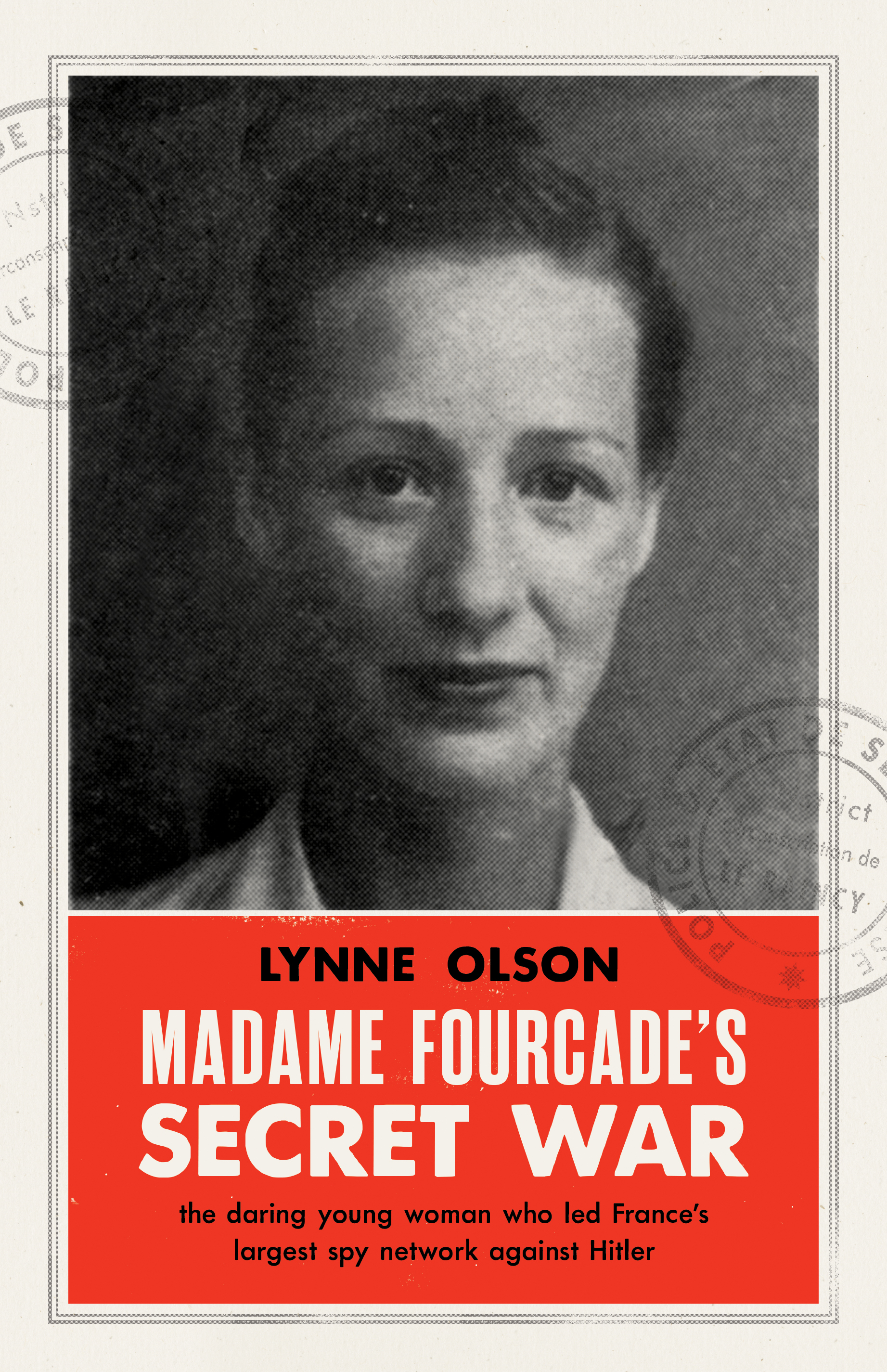
Madame Fourcade’s Secret War by Lynne Olson

The Daring Young Woman Who Led France’s Largest Spy Network Against Hitler

I became aware of this book thanks to a friend who is also interested in historical stories about women in France. I knew at once I had to read it.

While my friend was still reading it some months ago, I happened to go on a walk, following a route I have taken many times and noticed for the first time that Madame Fourcade’s name featured on one of the street signs. You can imagine my surprise and delight! She became even more of a talking point and I looked forward to getting a copy of the book (not that easy) to read.

I will say if you are interested in reading it, that the font size of the paperback version (which I read) is quite small compared to the hardback version (a copy of which I bought for a friend).

Famous French Women, A Rare Vision

Most of the street signs in France are the names of people that have featured in their recent history. However, it is very rare to come across the name of a woman. In our town Marie Curie has a street sign, but even then, she shares it with her husband. Marie Madeleine Fourcade not only has a sign all to herself, strategically placed at the top of a hill overlooking the town, but she was also the very first woman in France’s history to be given a funeral at Les Invalides, an important complex of buildings in Paris that celebrates France’s military glory.

Marie Madeleine’s father worked for a French shipping company in Shanghai. Her mother refused to stay behind in Paris, though agreed to return to Marseille for the birth of her daughter in 1909. Marie-Madeleine and her siblings grew up in Shanghai, with freedoms unheard of for the social and family circles they hailed from. Those freedoms, an early bilingual education and their return to Paris when she was 10 years old, set her up in many ways for the future role she would play, organising and ultimately leading an important French intelligence network.

As a young woman, she again lived abroad, in Morocco. She drove a car, learned to fly a plane and had a job. She rejected French society’s (and her husband’s) restrictive ideas about how women should behave. She had trained to become a concert pianist, worked at a commercial radio station and would forge her own future.

Access to Important Connections, Two Rivals

Street named after Marie Madeleine Fourcade, co founder and chef de resistance of the Alliance network 'Noah's Ark' codename hérrison, hedgehog during World War 2

Though never in the military herself, she was married briefly to a French military officer, as was her sister. She thus had opportunity to meet and observe some of the younger officers through her social connections, men who would later become important during the war years.

Two of the most prominent members of that younger group – Lieutenant Colonel Charles de Gaulle and Major Georges Loustaunau Lacau – took centre stage in the discussion on rue Vaneau, engaging in a debate that quickly escalated into a full-blown argument. It soon became obvious to Marie-Madeleine that the two officers viewed each other as rivals…

Both products of Saint-Cyr, France’s elite military academy Ecole Supérieure de Guerre, both fought and received multiple citations for bravery in WWI; they were brilliant, ambitious and egocentric. A rebellious streak put them at odds with Marshal Philippe Pétain (a French general who commanded the French Army in WW1 and would become head of what became known as the Régime de Vichy Vichy France). The rivalry between the pair would also keep them from being unified during the war years and likely impacted perceptions afterwards.

A Partnership, A Turning Point

After a discussion at one of the social events around March 1936, Loustaunau-Lacau contacted Marie-Madeleine and asked for her help in creating a journal that would argue the case for reform of the military and open the eyes of leaders to the imminent threat of Germany. The work would begin immediately.

“One of my Belgian friends has procured secret dossiers that expose the intentions of the German high command,” he said. “I need to get them quickly. Such documents must not travel by mail. You have a car. You must go to Brussels and collect them. I will pay all expenses.”

An Intelligence Network is Formed, Working Inside France

Caught up in this real life spy drama, Marie-Madeleine agreed – a decision that would radically change her life. From that moment, she wrote later, she and Loustaunau-Lacau began building an intelligence network against Nazi Germany.

Over the next two years, they would recruit informants in France, Switzerland, Belgium and Germany who passed on reports about the build up of the German armed forces. Loustaunau-Lacau adopted the codename Navarre, after Henri de Navarre, later King Henri IV of France. Given the risks they faced, that one of them might be captured or killed, Navarre insisted they share leadership of the network and when he was compromised, as promised Fourcade took the lead role.

At the same time, backbencher in the British House of Commons, Winston Churchill had created a similar private network and Charles de Gaulle decamped to London, setting up his Free French operation. Fourcade suggested they join with him.

Her mentor rejected the idea outright. In England, he said, they would be refugees, just like de Gaulle, dependent on the British for everything. At that point, almost no one in the British government, with the promising exception of Winston Churchill, took de Gaulle and his minuscule band of followers seriously.

They would resist from within.

Another Perspective of History

Founded in Vichy in Septemeber 1940 by Georges Loustaunau-Lacau and Marie-Madeleine Fourcade, the Crusade Intelligence Network (later called Alliance) moves it headquarters from Vichy to Pau in early 1941 and to Marseille later that year.

Madame Fourcade’s Secret War is a work of history, told in a compelling narrative voice, that not only focuses on the leadership role of this one extraordinary woman, but will likely expand most reader’s knowledge of what living in France under German occupation was like for the many, who vehemently opposed the way their government had capitulated to a hostile outside force, without much initial resistance.

Personally, the history I learned in school was quite different, as it was told from a very anglo-centric perspective, so the narratives stemmed from how this threat impacted the United Kingdom and their allies.

I never really understood what exactly happened within France in the lead up to the occupation, how it impacted their government and rendered the military ineffective. So many of the protections a country might normally expect when facing a hostile enemy were lacking; to go against the orders of a government (even if under occupation) was a betrayal.

Cinema Can Create Its Own Self Serving Narrative

Though there have been books and films about the war and the French resistance, little has been shown of the importance of the Alliance network and of Marie-Madeleine Fourcade’s achievements. Most of the attention has gone to stories of sabotage and escape lines, of battles and blitzes.

Saboteurs and other resistance fighters in France were certainly important after D-Day, but they did little to obstruct the Germans before then. Escape networks did heroic work in smuggling shot-down Allied airmen and others out of occupied Europe and back to freedom, but their actual contribution to victory was small.

I would certainly be interested in a cinematic development of Fourcade’s story, one that traverses France and shows a very different side to those who travelling around the country, making radio transmissions and secret flights across the channel, where they are hosted by memorable characters in this real life adventure.

Noah’s Ark and the Hedgehog

Les Invalides Paris, where Marie Madeleine Fourcade's funeral was held, the first woman in France to be commemorated there.
Les Invalides Paris

In the late 1960’s Fourcade would get her story down in a gripping memoir entitled Noah’s Ark, the name the German’s referred to their network as, after they would use codenames of animals, Fourcade’s was hérrison (hedgehog), a small animal that intelligently eluded predators.

Lynne Olson provides a thoroughly researched, immensely readable account of the creation of the Alliance, one of the original and most important resistance networks in France. From its foundation by Navarre and Fourcade to the establishment of thousands of recruits, the many dangerous activities they undertook, throughout the war, all that was able to be continued by Fourcade due to her continued leadership deserves to be more widely recognised and appreciated.

They Will Not Be Forgotten, The People

L'Arche de Noé Réseau Alliance 1940-1945 by Marie Madeleine Fourcade autobiogrpahy of her role as the leader of a French resistance during world war 2

The book is full of stories about the different people she recruited, the relationships and loyalties and daring escapades each of them went on, in order to bring their intelligence to the Alliance.

It is also, sadly, a homage to those who would be punished and killed for their roles, some, so close to the end of the war, it is excruciating to read. That Fourcade survived and was able to share her story and thus the courage and bravery and loyalty of others is a true gift to all humanity.

It’s the first time I have read an account that centres what was happening in France at this local level, with a more global scope, that renders the dangerous and delicate situation of those in the military, who were against the capitulation of their government. While in great danger to themselves, they were able to band together like-minded civilians and provide those on the outside with the information they needed to mount a significant and ultimately successful defence.

Highly Recommended!

Author, Lynne Olson

Lynne Olson is a New York Times bestselling author of nine books of history, most of which focus on World War II. Former U.S. Secretary of State Madeleine Albright has called her “our era’s foremost chronicler of World War II politics and diplomacy.”

Born in Hawaii, Lynne graduated magna cum laude from the University of Arizona. Before becoming a full-time author, she worked as a journalist, with the Associated Press as a national feature writer in New York, a foreign correspondent in AP’s Moscow bureau, and a political reporter in Washington. She left the AP to join the Washington bureau of the Baltimore Sun, where she covered national politics and eventually the White House.

Lynne’s latest book is Empress of the Nile: The Daredevil Woman Archaeologist Who Saved Egypt’s Ancient Temples From Extinction (2023).

Three of her earlier books were immediate New York Times bestsellers; Madame Fourcade’s Secret War: The Daring Young Woman Who Led France’s Largest Spy Network Against the Nazis (2019), Those Angry Days: Roosevelt, Lindbergh, and America’s Fight Over World War II (2013)and Citizens of London: The Americans Who Stood with Britain in Its Darkest, Finest Hour (2010)

Lynne lives in Washington, DC with her husband, Stanley Cloud, with whom she co-authored two books.

bell hooks: The Last Interview and other conversations

The Last Interview is a series of books each entitled, The Last Interview and Other Conversations that offers a fresh look at some of the world’s leading innovative writers and edgiest cultural figures by gathering conversations from throughout an artist’s career and collecting them in one volume. There are currently 41 books in the series and the next one coming will feature Sinead O’Connor.

Having read two of the books in bell hooks Love trilogy, All About Love and Salvation (the third book Communion, I have – but yet to read), I was interested to read these interviews. They provide more background on the author and allow for the greater understanding and depth in a subject that conversation can bring. They include an exploration of her affiliation and interest in Buddhist thought.

Overall, while the interviews are interesting, I think it is great to read the work of bell hooks, as she was quite prolific on a number of topics and a very engaging writer and thinker. If you have read all her work, this will be a bonus read and if you haven’t these interviews, some of which you can find online are a great introduction.

Meet and Read bell hooks

feminist interview bell hooks on writing criticism

bell hooks (born Gloria Jean Watkins) (1952-2021) was an African-American author, feminist, and social activist. Her writing focused on education, political theory, the interconnectivity of race, class, and gender and their ability to produce and perpetuate systems of oppression and domination.

The pseudonym she used, was the name of her great-grandmother, to honour female legacies, spelling it always in lower case letters, to focus on her works and message, about ideas and not herself.

She published over thirty books and numerous scholarly and mainstream articles, appeared in several documentary films and participated in various public lectures. Primarily through a postmodern female perspective, she addressed race, class, and gender in education, art, history, sexuality, mass media and feminism.

The bell hooks theory

She is most well known for her feminist theory that recognizes that social classifications (e.g. race, gender, sexual identity, class, etc.) are interconnected, and that ignoring their intersection creates inequality and oppression towards women and changes the experience of living as a woman in society.

On Love

nonfiction essays love effect of domination patriarchy black woman perspective

In her book All About Love, bell hooks perspective is heart lead, her definition of love leaves behind conditioned perceptions of romance and desire and the traditional roles of carer, nurturer, provider – and suggests that it might be ‘the will to do for oneself or another that which enables us to grow and evolve spiritually’ love becomes a verb not a noun.

“All too often women believe it is a sign of commitment, an expression of love, to endure unkindness or cruelty, to forgive and forget. In actuality, when we love rightly we know that the healthy, loving response to cruelty and abuse is putting ourselves out of harm’s way.”

I find her work particularly interesting as it sits alongside the work of another cultural commentator, Riane Eisler’s The Chalice and the Blade and Nurturing Our Humanity in addressing those systems of domination such as class, gender and race that interfere with our ability to commune with one another.

It is also in alignment with the work of Anita Moorjani, another heart based spiritual commentator, who wrote Sensitive is the new Strong, Dying To Be Me and What If This is Heaven?.

The Interviews – No Such Thing as Bad Publicity?

One of the interviews addresses the controversy of her decision to appear on a live talk show, something she did as a way for her to reach a different, wider audience. It was a strategy that in one sense did not work that well for her, due to the hard time she was given on the show. However, despite the public take-down, her aim was still achieved, as the silent majority who watched it from their homes, will have become more aware of who she was and the message she was trying to portray, in particular to Black women.

Photo P. Apichodilok Pexels.com

In the collection of seven interviews, stretching from early in her career until her last interview, she discusses feminism, the complexity of rap music and masculinity, her relationship to Buddhism, the “politic of domination,” sexuality, and love and the importance of communication across cultural borders.

Dominator culture has tried to keep us all afraid, to make us choose safety instead of risk, sameness instead of diversity. Moving through that fear, finding out what connects us, reveling in our differences; this is the process that brings us closer, that gives us a world of shared values, of meaningful community.
– Teaching Community: A Pedagogy of Hope, 2003

Whether she was sparking controversy on campuses or facing criticism from contemporaries, hooks relentlessly challenged herself and those around her, she inserted herself into the tensions of the cultural moment, and anchored herself with love.

For me, forgiveness and compassion are always linked: how do we hold people accountable for wrongdoing and yet at the same time remain in touch with their humanity enough to believe in their capacity to be transformed?
– in conversation with Maya Angelou, 1998

On Tough Love, Loving Environments and Community

This was an interview by Abigail Bereola for Shondaland in December 2017 on self-love, discussing why we know so little about it or how to even cultivate it, and how a lack of it has played into the patriarchal culture of workplace abuse and assault.

I think that societies begin with our small units of community, which are family — whether bio or chosen. I am often amazed when I meet people that I see have been raised in loving families because they’re so different and they live in the world differently. I don’t agree that every family is dysfunctional — I think we don’t want to admit that when people are loving, it’s a different world. It’s an amazing world. It’s a world of peace. It’s not that they don’t have pain, but they know how to handle their pain in a way that’s not self-negating. And so I think insomuch as we begin to look again at the family and challenging and changing patriarchy within family systems, irrespective of what those families are, there’s hope for love.

I have enjoyed her books considerably and the interviews extend her work into the joy of what conversation can bring. Though some of her work is clearly targeted at Black women, I believe there is value in it for all, indeed, it is necessary to read outside one’s own race, gender, culture, ethnic group and language, to understand other perspectives and the issues that others face. Sometimes we find resonance, other times, we pay attention, listen, read and learn. There is plenty to learn and consider in the writings and conversations of bell hooks.

N.B. This was an ARC (Advance Reader Copy) kindly provided by the publisher via NetGalley.

My Place by Sally Morgan

Originally published in 1987, this nonfiction title is both a mini biography (of Sally Morgan’s Great Uncle Arthur, her mother Gladys and her Nan, Daisy) and part memoir.

Sally Morgan, an Australian of Aboriginal descent, begins the book writing about her childhood from the perspective of not knowing her own identity. Thus the reader too, reads from this perspective as Sally recounts events in her life as they happen and as a child would, refrains from analysing or questioning them. Until she finds out.

autobiography memoir australia indigenousThe children at school ask about her skin colour and ethnic origin.
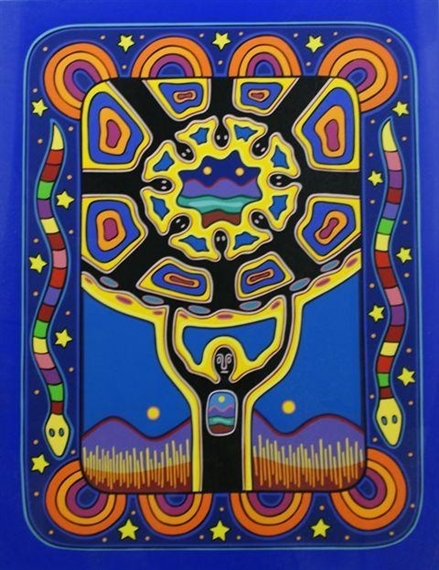
One day, I tackled Mum about it as she washed the dishes.

‘What do you mean “Where do we come from?” ‘

‘I mean what country. The kids at school want to know what country we come from. They reckon we’re not Aussies. Are we Aussies Mum?’

Mum was silent. Nan grunted in a cross sort of way, then got up from the table and walked outside.

‘Come on Mum, what are we?’

‘What do the kids at school say?’

‘Anything. Italian, Greek, Indian.’

‘Tell them you’re Indian.’

‘I got really excited then. ‘Are we really? Indian!’ It sounded so exotic.

‘When did we come here?’ I added.

‘A long time ago’, Mum replied. ‘Now no more questions. You just tell them you’re Indian.’

It was good to finally have an answer and it satisfied our playmates. They could well believe we were Indian, they just didn’t want us pretending we were Aussies when we weren’t.

At home, they live with their mother Gladys and father Bill, who is unwell and sometimes dangerous. He is a WWII war veteran of able body, suffering from what today would be diagnosed as PTSD.

Bill was a strange man, he wasn’t prejudiced against other groups, just Aboriginals. He never liked us having our people to the house. We had to cut ourselves off. I think it was his upbringing.

Bill had spent a lot of his childhood in country towns. I think that moulded his attitudes to Aboriginal people. Down South, Aboriginals were really looked down upon. Bill would have been brought up with that.

Sally Morgan My Place

Photo by Dan on Pexels.com

During those difficult years with her Dad, one of the few things Sally enjoyed about school were the Wednesday afternoon stories, listening to Winnie the Pooh, a character who lived in a world of his own and believed in magic, just like she did. While Pooh was obsessed with honey, Sally was obsessed with drawing.

My drawings were very personal. I hated anyone watching me draw. I didn’t even like people seeing my drawings when they were finished. I drew for myself, not anyone else. One day, Mum asked me why I always drew sad things. I hadn’t realised until then that my drawings were sad. I was shocked to see my feelings glaring up at me from the page. I became even more secretive about anything I drew after that.

Nan also lives with them and as Sally gets to know Nan’s brother Arthur, she learns that they are not Indian, they are of Aboriginal origin. Confronting her grandmother elicits no information at all, she refuses to speak of her past, nor of who her father was and suggests Sally forget about it.

Arthur agrees to tell his story and over a period of 3 months, in his 90’s, she records their conversations and learns about his life and a little more about his sister’s, her Nan. They are the children of an Aboriginal woman and the white stationmaster whose farm they lived and worked on.

They grew up in an era referred to as “living under the Act” when Australia had laws that not only dispossessed Aboriginal people of their land, culture and traditions, but forcibly removed their children from them, did not allow them to raise their children, in effect owned them and treated them similar to slaves. People like Nan grew up under this Act and lived their lives under the effect of the trauma it brought about. The only way they could see to protect their children was to lie about who they were and withhold their heritage from their children and grandchildren.

My Place Indigenous Voices Australia Aboriginal Heritage

Heritage by Sally Morgan (1990)

This story is Sally’s persistent endeavour to find that lineage, those lost family members and that heritage and to find out the story of her grandmother who was too scared to tell it and said she would take her secrets to the grave. To understand what it meant to belong to a heritage.

What did it really mean to be Aboriginal? I’d never lived off the land and been a hunter or gatherer. I’ve never participated in corroborees or heard stories of the Dreamtime. I’d lived all my life in suburbia  and told everyone I was Indian. I hardly knew any Aboriginal people. What did it mean for someone like me?

I absolutely loved every word of it, the way it is told, the close connection this family has to each other, the evidence of a spiritual connection to their ancestry and the spirits, even though they have not been raised with this knowledge.

The real life characters are vividly drawn, the dialogue authentic and the story’s of Arthur, Gladys and Daisy (Nan) beautifully recollected. Though it tells of a terrible time in Australia’s past, of children taken from their mothers, of slavery, abuse, fear and judgement because of skin colour, it is also a legacy for this family, a gift to the Australian nation and the world at large, to be given the opportunity to gain insight into a period of history, little known or heard from this important perspective.

Highly Recommended.

Sally Morgan, Author, Painter

Sally Morgan Indigenous Aboriginal AuthorSally Morgan is one of Australia’s best-known Aboriginal artists and writers.
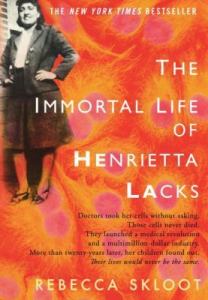
For as long as she can remember, Sally wanted to paint and write but at school she was discouraged from expressing herself through her art because her teachers failed to see the promise in her individual style. It was not until she researched her family history and discovered her Aboriginal identity that she found meaning in her images and gained the confidence to pick up her paints again.

Sally’s widely-acclaimed first book, My Place, has sold over half a million copies in Australia. Sally Morgan’s second book, Wanamurraganya, was a biography of her grandfather.

My Place won the Human Rights and Equal Opportunity Commission humanitarian award in 1987, the Western Australia Week literary award for non-fiction in 1988, and the 1990 Order of Australia Book Prize.

In 1993, international art historians selected Morgan’s print Outback, as one of 30 paintings and sculptures for reproduction on a stamp, celebrating the Universal Declaration of Human Rights.

Her children’s picture story books include Little Piggies and Hurry Up Oscar. She has collaborated with artist and illustrator Bronwyn Bancroft on several picture books including Dan’s Grampa. Curly and the Fent was written by Sally in collaboration with her children Ambelin, Blaze and Ezekiel.

Sally is the Director at the Centre for Indigenous History and the Arts at the University of Western Australia and lives in Perth.

The Immortal Life of Henrietta Lacks by Rebecca Skloot

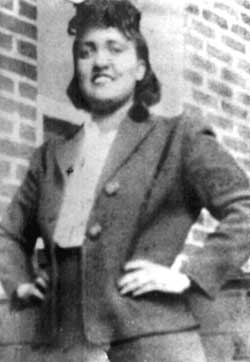
Henrietta LacksIn the same way we sometimes debate whether the story should be seen as an entirely separate entity to the writer, so too scientists perceive a sample of cell tissue as separate to the human body it was extracted from.

Except that it is not possible to extract a story from a writer’s imagination without their consent. 

Henrietta Lacks was a young mother in her early thirties when she was diagnosed with an aggressive form of cancer that would quickly take her life. She was fortunate to live close to John Hopkins hospital, built in 1889 as a charity hospital for the sick and poor, to ensure equal access to medical care for all, no matter their race, status, income or any other characteristic that might have otherwise given cause to discriminate in many of the hospitals at the time.

Before undergoing treatment, one of the Doctors took a tissue sample of both her healthy cells and the cancerous cells, as he had been doing to most patients, in an effort to try to find cells that would continue to replicate without dying – searching for the elusive “immortal” cell. It had never been done successfully with human cells.

He succeeded and the cells became known the world over – as he gave them away freely – as HeLa cells, immortal human cells that never died and could be used over and over to test for cures to disease and to observe how cells react to numerous variables, furthering science in ways unimaginable previously.

‘In culture, cancer cells can go on dividing indefinitely, if they have a continual supply of nutrients, and thus are said to be “immortal”. A striking example  is a cell line that has been reproducing in culture since 1951. (Cells of this line are called HeLa cells because their original source was a tumour removed from a woman called Henrietta Lacks.)’

Few paused to ask about the woman behind these cells, what was her story, how her family felt about the multi million dollar research industry that made great strides in science , yes, but also made entrepreneurial types wealthy in the process.

Rebecca Skloot first heard of the HeLa cells in 1988, she was 16-years-old, sitting in her biology class listening to a lecture on cell culture by her instructor Donald Defler. He described the many things that have been learned by being able to grow cells in culture, indicating that much we knew today was due to the proliferation of cells made available thanks to Henrietta Lacks.

‘HeLa cells were one of the most important things that happened to medicine in the last hundred years, ” Defler said.

Henrietta_LacksSkloot made Henrietta the subject of her research for 10 years in the creation of this thorough, respectful account of the life of Henrietta Lacks and her journey to uncover the events of the time within the context of what was the norm in her day.
In much of her location research, when she travelled to meet and interview people, she was accompanied by Henrietta’s daughter Deborah, a passionate woman, unable to find peace in her own life, until she had helped bring her mother’s story to light.

Henrietta Lacks was born in Roanoke, Virginia in August 1920, in a small shack overlooking a busy train depot, where freight cars constantly shunted to and fro. She lived there with her parents and 8 older siblings until 1924, when her mother died giving birth to her tenth child.

Her father lacked the patience for raising children, so took them all to his family in Clover, Virginia, where they farmed tobacco and split the children between those who could take them. Henrietta went to live with her grandfather, Tommy Lacks and her nine-year-old-cousin Day, left there after his birth, by his mother.

‘A twelve year old cousin and midwife named Munchie delivered him, blue as a stormy sky and not breathing. A white doctor came to the home-house with his derby and walking stick, wrote “stillborn” on Day’s birth certificate, then drove his horse-drawn buggy back to town, leaving a cloud of red dust behind.’

Their life there, became one filled with chores, waking at 4 o’clock in the morning, feeding animals, tending the family garden and then off to the tobacco fields to work.

Skloot finds out about her childhood, her marriage to Day, the 10 years they were married and had their children and the diagnosis that she kept from everyone, until it became obvious she was going to die.

It is tragic, sad and yet also a brilliant and informative story and piece of scientific medical history that reads like a novel and brings our awareness to the many who unknowingly make sacrifices for the better of others and that always present aspect of commercial vultures, hovering in the wings, recognising an opportunity to profit.

It rightly reveals and celebrates the life of the little-known woman behind those cells, Henrietta Lacks, who died at a young age from a ravaging cervical cancer, her children’s struggle, the family’s history and all that is kept from them in the name of science.

The Immortal Life of Henrietta Lacks was one of my Top 5 Non-Fiction Reads of 2015.

Victoire: My Mother’s Mother by Maryse Condé tr. Richard Philcox

Maryse Condé is the author I discovered on the Man Booker International long list, the author that stood out for me, even if she didn’t win the prize. Since discovering her, I have read and reviewed the book she recommended for those wishing to discover her work, Tales From the Heart: True Stories From my Childhoodvignettes of her life growing up as the youngest and 8th child of a civil servant (who had been a school principal when her mother married him) and school teacher in a black bourgeoise family.

I decide to follow this up with another tale Victoire: My Mother’s Mother, though publishers label it as fiction, it is based on the life and facts of her grandmother. Victoire was an illiterate, white skinned woman she never met, who worked as a highly reputable cook for a white Creole family, the Walbergs, a connection that her mother Jeanne, though raised, supported and educated by this family, appeared to reject.

VictoireMaryse Condé wrote this account in a desire to learn more of her family history, a quest that began by researching the life of Victoire Elodie Quidal, speaking to a lot of people and a project that would take three years to complete.

When she questioned her mother Jeanne, a woman with no discernible palate, incapable of boiling an egg, she was shocked to learn her grandmother had been a cook.

‘And she didn’t teach you anything, not even one recipe?’ She continued without answering the question. ‘She first worked in Grand Bourg for the Jovials, some relatives of ours. That ended badly. Very badly. Then …then she migrated to La Pointe and hired out her services to the Walbergs, a family of white Creoles, right up until she died.’

Maryse wanted answers, but that was as much as her mother would share, they never resumed the conversation, the years passed by, in a kind of chaos, however that conversation never left her curious mind and her grandmother began to seep into her imagination.

Sometimes I would wake up at night and see her sitting in a corner of the room, like a reproach, so different to what I had become.

‘What are you doing running around from Segu to Japan to South Africa? What’s the point of all these travels? Can’t you realise that the only journey that counts is discovering your inner self? That’s the only thing that matters. What are you waiting for to take an interest in me?’ she seemed to be telling me.

Victoire’s mother Eliette was a twin who died in childbirth at the age of fourteen. More than the shock of her pregnancy and sudden death, was the appearance of a child with clear eyes and pink skin. No one was aware of her having crossed paths with a white man, there were no whites in La Trielle where she lived except priests and at one point a garrison of soldiers, who’d been training in the area, before being despatched back to France.

Eliette’s mother Caldonia raised Victoire and became close to her, when most people were wary of her with her too white skin and transparent eyes. The only education she received was religious and at the age of 10, the Jovial’s requested she come and work for them in the kitchen. Given only the thankless tasks, she observed the others and began to acquire the culinary skills she would become so well-known for.

Obtaining a position as cook for the Dulieu-Beaufort family was a turning point in her life, perhaps even more so than finding herself pregnant at 16-years-old, for in this family she would meet her lifelong friend Anne-Marie, her same age, outraged at having been married off to Boniface Walberg, Victoire’s future employers and the beginning of a mysterious and enduring relationship, one that set people talking and would be seen by her daughter Jeanne (Maryse’s mother) with utmost disapproval.

Apart from a brief period when Victoire fell in love with another, causing a period of separation from her daughter, and a significant turning point in their relationship, she would stay loyal to the Walberg’s all her life. Though she could neither read or write, she accepted her life, despite suffering the disapproval of her unforgiving daughter Jeanne, who would obtain an excellent education and position, marry a man twenty years her senior, removing all risk of insecurity that she’d observed in her mother and previous generations, determined to avoid a similar fate.

In an interview with Megan Doll, in Bookslut Maryse Condé explains her desire to write about her grandmother:

Maryse Condé‘The story is, of course, about my grandmother but the real problem was my mother. I lost my mother when I was very young — fourteen and a half. And during the short time that I knew her I could never understand her. She was a very complex character. Some people — most people, the majority of people — disliked her. They believed she was too arrogant, too choleric. But we knew at home that she was the most sensitive person and I could not understand that contradiction between the way she looked and the way she actually was. So I tried to understand as I grew up and I discovered that it was because of a big problem with her own mother. She seems to have failed; she had the feeling that she was not a good, dutiful daughter. I had to understand the grandmother and the relationship between my mother, Jeanne, and her mother, Victoire, to understand who Jeanne was, why she was the way she was, and at the same time understand myself.’

Condé also finds a connection between her and Victoire through their creativity, her grandmother’s through her renowned cuisine, Condé’s through her writing. At times she almost appears to channel her grandmother, as she senses what she may have been thinking or why she reacted in a certain way,  connecting with this mysterious woman who was so different to the mother she knew, a woman equally misunderstood by the community around her.

This was the perfect follow-up to Tales of the Heart and an intriguing look into the impact of circumstances of birth of three generations of women, how the past constantly threatens and can mock one’s position in the present, somewhat explaining Jeanne’s instinct to distance herself from her illiterate mother while fulfilling her ambitions and then her guilt at having treated her mother badly, when she only wanted the best for her.

The two books I have read were translated from French into English.

Tales From The Heart, True Stories From My Childhood by Maryse Condé

I came across Maryse Condé recently via the Man Booker International Prize 2015 list of 10 nominated authors. She is third from the left in the picture below.

FinalistsNot a book prize as such, it is an award conferred on an author who has a significant body of published work, regardless of the original language it was written in, though some of it must have been translated into English.

It is from such long lists the gems are found I say, and having read about all 10 thanks to this excellent Interview: The Finalists Speak in The Guardian, I spotted my potential winner immediately. A winner in the sense that I intend to read a few of their books. The Indian writer Amitav Ghosh was the only author I’d read on this list.

One writer jumped out at me straight away and I pursued her works with little consideration for the pending award result. Maryse Condé didn’t win the prize, the Hungarian writer László Krasznahorkai did, a writer whose books intellectuals rave about, but who I’m not sure I’m ready for yet.

Tales Maryse CondéSo I took Maryse Condé’s advice and started by reading this slim volume of essays of her childhood in Guadeloupe, Tales From the Heart, True Stories From My Childhood.

She takes us right back to the beginning, to the day of her birth. Being the youngest of 8 children, the family possessed an extended collective memory and she was fortunate to have heard the story of her birth from other perspectives.

Her appearance was both a source of pride and shame for her then 43-year-old mother and 63-year-old father, proud that her body remained robust enough to support the creation of a child and shame that it publicly displayed evidence of their continued indulgence in carnal pleasures.

The first chapter Family Portrait describes her parents relationship with France:

“For them France was in no way the seat of colonial power. It was truly the Mother Country and Paris, the City of Light that lit up their lives.”

World War II wasn’t considered dark on account of all the dreadful atrocities that occurred:

“but because for seven long years they were deprived of what meant the most to them, their trips to France.”

She recounts an anecdote of a waiter in a café complimenting the family on their excellent French pronunciation, to which her parents felt indignant, considering themselves just as French as a Parisian waiter, even more so because of their higher education, manners and regular travel.

Not understanding why it mattered so, she asked her brother Sandrino:

“Could he explain my parents behaviour?” to which he replied “Papa and Maman are a pair of alienated individuals,”

a mysterious word that would rest a long time in her consciousness until she came to understand it. She realised that not only did they take no pride in their African ancestry, they knew nothing of it, however:

“They believed they were the most brilliant and most intelligent people alive, proof positive of the progress achieved by the Black Race.”

Maryse Condé

In their neighbourhood all the mothers in their circle held a profession and with it contempt for the manual work they believed had been the undoing of their own mothers. They employed a servant who, though she raised 6 children of her own would begin work at 5am to take care of the needs of the family.

We meet her best friend Yvelise, two girls who did everything together, their friendship almost destroyed by the unfortunate intervention of one of her teachers, causing a temporary rupture.

Maryse’s mother Jeanne, knew the life she didn’t wish to lead, nor her children either, she had succeeded in breaking the cycle endured by her mother and grandmother and a good education was key (and perhaps being married to a successful and much older husband). Jeanne was a school teacher, revered and feared in equal measure by those around her. Her eldest son Sandrino and her youngest child Maryse the only two children who weren’t afraid to stand up to her, the others too terrified to challenge her.

On her birthday, her favourite pupils recited compliments, gave her roses, her husband bought her jewellery and the day would culminate with a family play, a short piece of theatre written themselves, in her honour.

‘Beneath her flamboyant appearance, I imagine my mother must have been scared of life, that unbridled mare that had treated her mother and grandmother so roughly…Both of them had been abandoned with their “mountain of truth” and their two eyes to cry with.’

10-year-old Maryse asked if she could read one of her compositions for her mother’s birthday.

‘I had no idea what I wanted to write. I merely sensed that a personality such as my mother’s deserved a scribe.’

If a book of essays can reach a crescendo, this is the moment when we reach it. The moment when Maryse learns that not all lessons come from one’s parents and school teachers, some come from life itself and often when we least expect it.

In the chapter School Days , she is at school (lycée) in Paris when her French teacher asks her to present to the class a book from her island. It is a watershed moment.

‘This well intentioned proposition, however, plunged me into a deep quandary. It was, let us recall, the early fifties. Literature from the French Caribbean had not yet blossomed. Patrick Chamoiseau lay unformed in his mother’s womb and I had never heard the name Aime Césaire. Which writer from my island could I speak about? I resorted to my usual source: Sandrino.’

Sugar Cane Alley

Sugar Cane Alley

Sandrino introduces her to to a treasure. La Rue Case-Negres (Black Shack Alley) by Joseph Zobel and his hero José Hassan. It was made into an award-winning film titled Sugar Cane Alley.

It was her first introduction to a world no one up until that moment had ever mentioned; a world that highlighted slavery, the slave trade, colonial oppression, the exploitation of man by man and colour prejudice.

‘I was scared to reveal how José and I were worlds apart. In the eyes of this Communist teacher, in the eyes of the entire class, the real Caribbean was the one I was guilty of not knowing.’

These glimpses into the more significant and memorable aspects of childhood that shaped the author Maryse Condé are insightful, engaging and honest. Just as her consciousness is awakened, the vignettes finish and leave the reader desperate to know more.

I had intended to read this volume over time, but once I started reading I couldn’t stop, it is almost like reading a coming-of-age novella and at its conclusion, the writers fiction will begin. For Condé’s first novel Hérémakhonon is about a character raised in Guadeloupe, educated in Paris, who then travels to Africa in search of a recognisable past, just as she did.

‘Veronica has spent her childhood in Guadeloupe and, after a period as a student in Paris, wants to escape that island’s respectable black bourgeoisie, which she regards as secretly afraid of its own inferiority. She travels to an unnamed West African state and, while there, seeks an authentically African past with which she will be able to identify.’

Tales From The Heart is an excellent read and an intriguing introduction to the writer and her influences and will certainly make you want to read more of her work. I am very happy I have these three novels on the shelf to follow-up with only I am missing that debut novel which I really want to read now too! Very highly recommended.

Literary Works of Maryse Condé

My Other Reviews

Victoire, My Mother’s Mother 

Segu

The Story of the Cannibal Woman

A Season in Rihata

Click Here to Buy a book by Maryse Condé


Unbowed, One Woman’s Story by Wangari Maathai

WangariWangari Maathai was an exceptionally hard working, charismatic, altruist, who came from humble rural beginnings, toiling the land barehanded from a young age to become one of a group of young Africans identified as part of the “Kennedy Airlift”, provided the opportunity to gain bachelor’s and master’s degrees in the US, then completing a PhD in her native Kenya and using her education to work for the betterment of her country and people in terms of sustainable environmental practices social justice.

In addition to a senior role as a scientist and researcher at a university in Nairobi, needing to do something practical and far-reaching, she founded the sustainable tree planting initiative, The Green Belt Movement and would go on to become a responsible and practically minded activist, working to protect the natural resources and people of Kenya, through her knowledge of where to apply pressure, through her strong international network and above all the high regard in which she was esteemed by many, though sadly, that didn’t include the government of Kenya, who over many, many years continued to block her, plant obstacles in her way, arrest her and make it very difficult for her to continue in her role as an academic and to run her own business.

Wangari Maathai possessed a spirit that refused to lie down, with every setback, she gathered herself and whatever limited resources she still had, and at times this was nearly nothing and always looked towards the one step she could take, that first step towards a solution.

Wangari Maathai, Tree Hugger Extraordinaire!

Wangari Maathai, Tree Hugger Extraordinaire!

Planting a tree was both symbolic and life-sustaining. As more and more of Kenya’s forest was being deforested, underground water sources were drying up, land that had been planted with indigenous trees was being replaced with cash crops like tea and coffee, stripping the soil of nutrients and occupying land previously used to produce traditional foods for people to eat. As a consequence women began to feed their families more processed foods, requiring less energy to produce, less firewood and increasing the incidence of malnutrition.

“While I was in the rural areas outside Nairobi, I noticed that the rivers would rush down hillsides and along paths and roads when it rained, and that they would be muddy with silt. This was very different from when I was growing up. “That is soil erosion,” I remember thinking to myself. “We must do something about that.” I also observed that the cows were so skinny that I could count their ribs. There was little grass or other fodder for them to eat where they grazed, and during the dry season much of the grass lacked nutrients.”

And she took people with her, she made them part of the solution. To grow The Green Belt Movement required a large network of people to plant trees and to source and nurture seedlings. She went to the women, women like herself who grew up with their hands in the earth, she empowered them to create nurseries in their villages and tend the small trees and keep planting.

“Although the leadership of the NCWK (National Council of Women of Kenya) was generally elite and urban,  we were concerned with the  social and economic status of the majority of our members, who were poor, rural women. We worried about  their access to clean water,  and firewood,  how they would feed their children,  pay their school fees,  and afford clothing, and we wondered what we could do to ease their burdens. We had a choice: we could either sit in an ivory tower wondering how so many people could be so poor and not be working to change their situation, or we could  try to help them escape the vicious cycle they found themselves in. This was not a remote problem for us. The rural areas were where our mothers and sisters still lived. We owed it to them to do all we could.”

Tumutumu Hills nursery

Tumutumu Hills nursery

These women were already farmers, they knew how to nurture beans, maize and millet seeds, and Wangari and her team reminded them, they didn’t need a diploma to plant a tree. All they needed was their “women-sense”. These women succeeded, they showed other women what to do and became known as their “foresters without diplomas”. At every stage they looked to see if they could improve the way they did things and to overcome any obstacles the women encountered. It was a huge and sustainable success.

Unfortunately, the government for much of the 80’s and 90’s was against her, almost as if it were a personal affront, to witness a woman speak out and lead and inspire others to stand up to authority; Wangari Maathai was an advocate for proper governance and management of public resources and as soon as she heard about abuses of powers that threatened to remove public rights, she moved her supporters to action.

Through perseverance she won many battles, to save the last big public park in the middle of Nairobi, Uhuru Park from urban development, preventing Karura Forest from being given to friends and political supporters of politicians, the release of political prisoners and even the lobbying of the World Bank to forgive Kenya’s national debt which had escalated out of control. due to interest payments, despite the original loan amounts having been repaid .

“When I see Uhuru Park and contemplate its meaning, I feel compelled to fight for it so that my grandchildren may share that dream and that joy of freedom as they one day walk there.”

« Maathai and Obama in Nairobi » Source: Fredrick Onyango,  Nairobi, Kenya Wikipedia

« Maathai and Obama in Nairobi » Source: Fredrick Onyango, Nairobi, Kenya Wikipedia

Unbowed, One Woman’s Story, is an astonishing and important recollection of the life and work of Wangari Maathai. She applied herself to everything she did with vigour and heart, the opportunity to be educated, something that continues to be lobbied for so many girls in third world countries, was a major turning point and became the first of many open doorways she walked through and made the most of, not for own benefit, but always for the good of all.

It seems almost like a utopian fantasy, to imagine what the world could be like, if more women were given the opportunity to gain the necessary knowledge that could allow them to facilitate solutions to village and country problems, that allowed them to live sustainably and not in fear or poverty without understanding why. Wangari Maathai knew and practised that one person can’t change everything, it is through showing and empowering others that change happens.

She was an amazing, inspirational and practical woman, who responded to the call for help on many significant issues that would benefit all Kenyan’s and was an example to the world, rightfully acknowledged and awarded the Nobel Prize for peace in 2004. Sadly she passed away in 2011 from ovarian cancer.

“Throughout my life, I have never stopped to strategize about my next steps. I often just keep walking along, through whichever door opens. I have been on a journey and this journey has never stopped. When the journey is acknowledged and sustained by those I work with, they are a source of inspiration, energy and encouragement. They are the reasons I kept walking, and will keep walking, as long as my knees hold out.”

Wangari tells a wonderful story of how the hummingbird responds to a forest fire, in a delightful metaphor that describes exactly her attitude to life and the many challenges that surround us. It has been made into a 2 minute animated film, Dirt, narrated by Wangari Maathai and is a wonderful introduction to her faithful, persevering spirit. A wonderful short film and one of my Top Reads for 2015.

I will be the hummingbird…

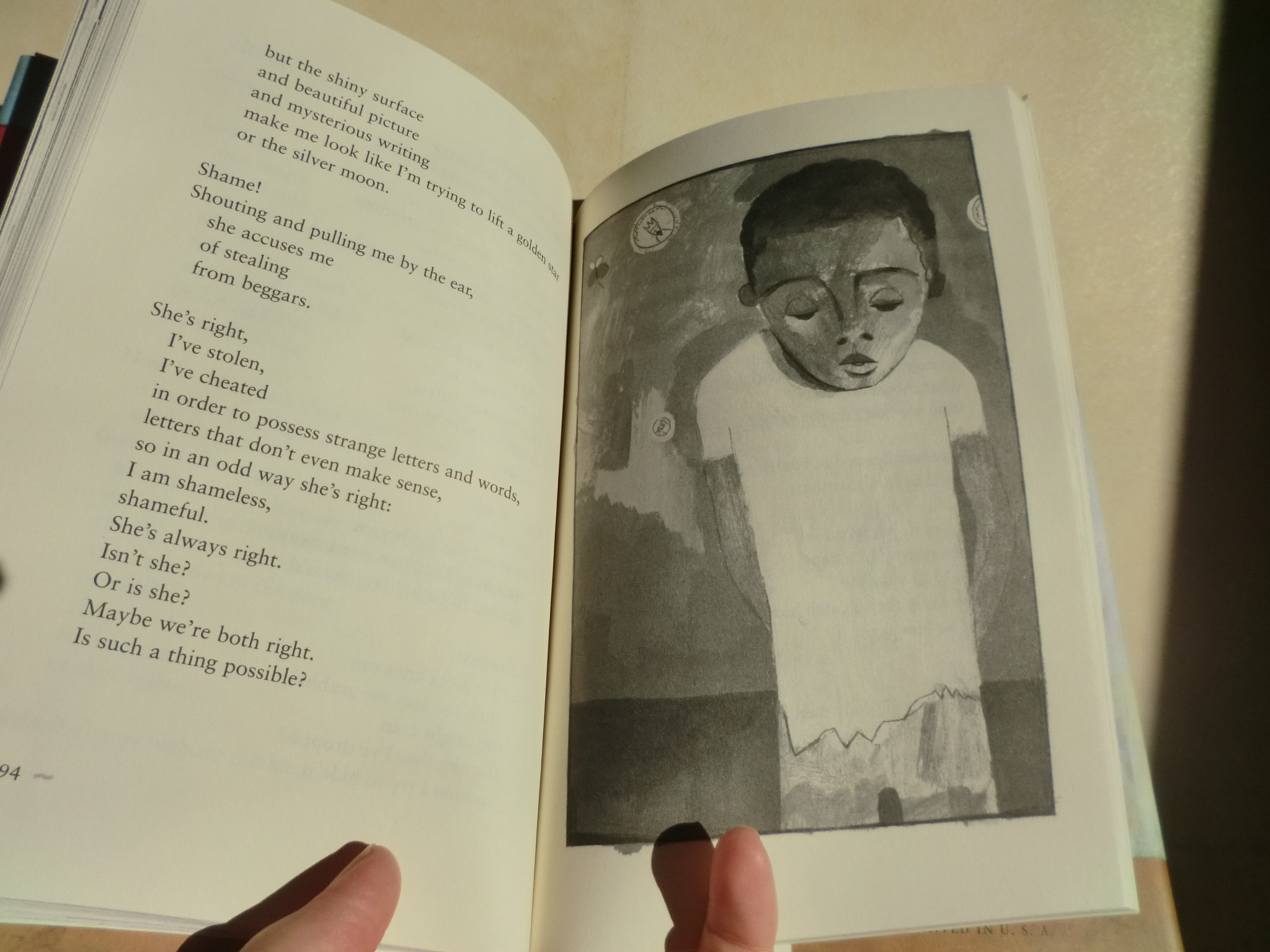
The Poet Slave of Cuba, a biography of Juan Francisco Manzano by Margarita Engle

CIMG6788Juan Francisco Manzano was born into the household of a wealthy slave-owner in Cuba in 1797.

We know details about the early years of his life thanks to a collection of his autobiographical notes being smuggled out of Cuba to England, where they were published by abolitionists who hoped to raise support for their cause.

He spent most of his childhood close to a woman who insisted he call her Mama, despite the presence of his own mother Maria del Pilar.


Imagine

how he must feel in that other home

CIMG6789where he learns the words

of verses, plays, sermons, sonnets

now he’s a parrot, not a poodle

he listens, listens, listens

repeats every sound he hears

from every book in his godmother’s library

Though he wasn’t formally educated, he had a gift for language and poetry and despite the severe punishments he endured for continuing to express joy and suffering through his words.

The other day he recited words so completely new

that I understood the verse

was his own

not borrowed, memorised,

begged from the godmother’s books

Soaring

he said

Spirit

he whispered

CIMG6790Imprisoned

he murmured

and then he went on

I only caught a  few fragments

of his rhyme of delight,

something about a golden beak

something about singing

and wishes

and hope

The woman who kept him initially allowed his mother and any unborn children to buy their freedom and promised Juan freedom on her death. It was a promise rescinded by those still living after the woman’s death, though his mother continued to try to purchase his freedom without result.

Don’t cry, my other mother, the real one, whispers

this is the end

of your sadness

now you are free!

But I am not

it’s a trick

one swift trip

to the house

of my godparents

and then to La Marquesa

instead of the long-promised

freedom.

The Marquesa is a bitter, cruel woman who even when inflicting the most grotesque punishment on Juan, still finds reason to blame him for her own suffering.

Some people can never be satisfied.

The poet-boy for instance.

Nothing is ever enough for him.

marquesaI have to tell the overseers to teach

the same lessons

over and over

locking his ankles in the stocks

tying him to the cross like Jesus.

Or tying him to a ladder laid out on the ground

face down, mouth down

so he cannot speak

except to count his own lashes out loud.

And even when this is done nine days in a row

still he bleeds and weeps,

trying to show me

that he has won

he has triumphed once again

he has proven that he can still

make me sad.

Evil child.

To find out what happens, read this wonderful story of poems, a beautiful collection and tribute to a life of an exceptional poet.

Juan Francisco Manzano didn’t stop producing spontaneous poems until very late in his life, after being arrested for trying to stir up a slave rebellion through his poetry and spending a year in prison. That experience silenced his voice forever.

His work is astonishing, bold, thought-provoking, intelligent and lengthy. Once you begin reading it you can’t stop and I can see why both his work and his story haunted Margarita Engle for so long. That she has been able to condense his experience and thoughts into this humble volume is a gift to readers young and old.

To read the English translation of some of Juan Francisco’s original work, click on this link or the image below:

Poems by a Slave in the Island of Cuba, Recently Liberated;
Translated from the Spanish, by R. R. Madden, M.D.
With the History of the Early Life of the Negro Poet, Written by Himself

Manzano

Margarita Engle is a Cuban-American poet who has published a number of books for young readers in free verse and prose poetry. She chooses interesting subjects that make me want to read everything she has written, they are an introduction to explore further the subjects she introduces. The titles alone are seductive.

The artwork in all her books is fantastic, this work illustrated beautifully by Sean Qualls.

I have read and reviewed The Wild Book, based on the life of the author’s grandmother who struggled with dyslexia, and she has other tempting titles such as:

The Surrender Tree: Poems of Cuba’s Struggle for Freedom

The Firefly Letters: A Suffragette’s Journey to Cuba

The Lightning Dreamer: Cuba’s Greatest Abolitionist

Tropical Secrets: Holocaust Refugees in Cuba

Hurricane Dancers: The First Caribbean Pirate Shipwreck