The Years by Annie Ernaux tr. Alison L. Strayer

I have had Annie Ernaux’s English translation of The Years on my bookshelf for some time now, since it was shortlisted for the International Booker Prize in 2019. It was originally published in French in 2008 (Les Années) and is considered to be her chef-d’œuvre. It is a non-fiction work that spans the years 1941 to 2006 in France.

Neither memoir or autobiography, it is a unique compilation of memory, experiences, judgments, of political, cultural, personal and collective statements and images that represent a woman living through those years.

It is bookended by descriptions of things seen that are likely never to be seen again.

All the images will disappear:

the woman who squatted to urinate in broad daylight, behind the shack that served coffee at the edge of the ruins in Yvetot, after the war, who stood, skirts lifted, to pull up her underwear and then returned to the café

the tearful face of Alida Valli as she danced with Georges Wilson in the film The Long Absence

There is no call for literary devices or beautification of language or hiding the crude, raw human elements that some may grimace at.

When Ernaux won the Nobel Prize for Literature in 2022, she gave a speech entitled I Will Write to Avenge My People in which she described deciding on and finding her writing voice, that it would not be like that used by the esteemed writers she taught her students.

What came to me spontaneously was the clamour of a language which conveyed anger and derision, even crudeness; a language of excess, insurgent, often used by the humiliated and offended as their only response to the memory of others’ contempt, of shame and shame at feeling shame.

Raised by shopkeepers/cafe owners, she considered herself a class-defector through her education alongside the sons and daughters of bourgeoise families. She would find a way through the language she used to address that betrayal, to elude the gaze of the culturally privileged reader.

I adopted a neutral, objective kind of writing, ‘flat’ in the sense that it contained neither metaphors nor signs of emotion. The violence was no longer displayed; it came from the facts themselves and not the writing. Finding the words that contain both reality and the sensation provided by reality would become, and remain to this day, my ongoing concern in writing, no matter what the subject.

For Ernaux, class mobility is a violent, brutal process and she sees it as her duty to at least attempt, via her authorship, to make amends to those she remembers, has left behind and to not hide from her own perspective, actions, behaviours.

Shame Simple Passion The Years Annie Ernaux Nobel Prize Winner 2022

Knowing that The Years was considered her masterpiece, I decided to read some of her earlier short works, to engage with her style and thus appreciate this work all the more and that has certainly been the case. I began with the book she wrote of her father La Place (A Man’s Place), then of childhood Shame, and an affair Simple Passion. I do think it is a good idea to read some of these shorter works before taking on The Years.

In effect The Years is an attempt to collate and offer a faithful account of an entire generation, as it was viewed by one woman and the collective that she was part of. The narrative therefore is written from the perspective of ‘she‘ and ‘we‘, there is no ‘I‘. It is an observation of the times passing and the inclinations of people, for better or worse.

She would like to assemble these multiple images of herself, separate and discordant, thread them together with the story of her existence, starting with her birth during World War II up until the present day. Therefore, an existence that is singular but also merged with the movements of a generation.

We read and witness the impact of school, religion, the media, politics on a generation, alongside the cultural influences, the strikes, the films, the advertising, the village gossip and children’s cruelty.

Public or private, school was a place where immutable knowledge was imparted in silence and order, with respect for hierarchy and absolute submission, that is, to wear a smock, line up at the sound of the bell, stand when the headmistress or Mother Superior (but not a teaching assistant) entered the room, to equip oneself with regulation notebooks, pens and pencils, refrain from talking back when observations were made and from wearing trousers in the winter without a skirt over the top. Only teachers were allowed to ask questions. If we did not understand a word or explanation, the fault was ours. We were proud, as of a privilege, to be bound by strict rules and confinement. The uniform required of private institutions was visible proof of their perfection.

While some aspects will be universal, it is by its nature a collective and singular memory of a life in France. That will interest some and not others, but as someone who lives in France today, it is interesting to read of the familiar and also the references to the particular, the cultural, the influences.

Between what happens in the world and what happens to her, there is no point of convergence. They are two parallel series: one abstract, all information no sooner received than forgotten, the other all static shots.

Because it is clearly written over the many, many years, it comes across as being always in the now, as if she is time travelling into the various versions of the self over the years, looking and noting down the visual memories, remembering and accessing the perspective of the time they were in.

So her book’s form can only emerge from her complete immersion in the images from her memory in order to identify, with relative certainty, the specific signs of the times, the years to which the images belong, gradually linking them to others; to try to hear the words people spoke, what they said about events and things, skim it off the mass of floating speech, that hub bub that tirelessly ferries the wordings and rewordings of what we are and what we must be, think, believe, fear, and hope. All that the world had pressed upon her and her contemporaries she will reuse to reconstitute a common time, the one that made its way through the years of the distant past and glided all the way to the present. By retrieving the memory of collective memory in an individual memory, she will capture the lived dimension of History.

L'occupation Une femme Je ne suis pas sortie de ma nuit

I found it an absolutely compelling read, filling in a lot of gaps and knowledge regarding French history that I happily encounter in this kind of format.

Highly recommended if you are interested in French cultural and personal history from a unique literary perspective.

Have you read any works by Annie Ernaux?

I have a few more shown here that I intend to read in the original French version.

Further Reading

The Guardian, Interview: ‘If it’s not a risk… it’s nothing’: Nobel laureate Annie Ernaux on her unapologetic career by Alice Blackhurst

The Guardian: Annie Ernaux: the 2022 Nobel literature laureate’s greatest works

Author, Annie Ernaux

Annie Ernaux was born in Seine-Maritime, France, in September 1940 and currently lives in Paris, France. In October 2022 she was awarded the Nobel Prize in Literature.

Annie Ernaux grew up in Normandy and studied at Rouen University, before becoming a secondary school teacher. From 1977 to 2000, she was a professor at the Centre National d’Enseignement par Correspondance. Her books, in particular A Man’s Place and A Woman’s Story, have become contemporary classics in France. The Years, shortlisted for the International Booker Prize in 2019, won the Prix Renaudot in France in 2008 and the Premio Strega in Italy in 2016. In 2017 she was awarded the Marguerite Yourcenar Prize for her life’s work.

Simple Passion by Annie Ernaux translated by Tanya Leslie

After reading Annie Ernaux’s Nobel Prize Lecture I Will Write to Avenge My People, I decide to read the slim titles Simple Passion (48 pages) and next I will read Shame (86 pages). I have already read A Man’s Place, and eventually I will get to her more lengthy masterpiece The Years.

Simple Passion was the #1 national bestseller in France for over three months when it was first published in 1991, and a celebrated scandal even in France’s liberal society. It was followed up ten years later by a second book Se Perdre (2001) (Getting Lost), which explores the affair through a series of diary notes.

In this book, Annie Ernaux observes herself throughout the life-cycle of an affair, the in-between moments of a conditional relationship, describing how that passion drew her in and ruled her, even when she took herself away from it.

She writes of this encounter with hindsight, as if observing something external to her, like a work of art, looking for some kind of truth or meaning behind the physical and mental experience, now that she has some distance from it. Her interest in writing is not to focus on the man (who could be any man) but on the obsession itself.

A Simple Passion Reveals a More Complex Humanity

The man, referred to as A, is from another country, he is married; the 18 months he is in her life, this ‘simple passion’ is depicted like an illness or a condition, she is able to see how it changes her. She studies it.

I am not giving the account of a liaison, I am not telling a story (half of which escapes me) based on a precise – ‘he came on 11 November’ – or an approximate chronology – ‘weeks went by’. As far as I was concerned, that notion did not enter the relationship. I could experience only absence or presence. I am merely listing the signs of a passion, wavering between ‘one day’ and ‘every day’, as if this inventory could allow me to grasp the reality of my passion.

A Life Suspended, Waiting for a Man

Photo by A.Piacquadio Pexels.com

She observes this condition, though she is virtually powerless to overcome or stop it, it will run its course and she will create an honest, transparent account of it, documenting the range of emotions, behaviours and instinct that run through her.

She observes how this desire becomes the lens through which she sees everything around her, how she spends her time endlessly waiting; waiting for him to call, waiting for him to arrive, waiting for the inevitable end of their association.

This endless wait reduces every other experience, as if they were lived by someone else, while magnifying the space in her mind given to thinking about him, of their time together – amid brief lucid moments of realising the insignificance of him, of the exaggerated importance she has temporarily given him.

I often wondered what these moments of lovemaking meant to him. Probably nothing more than just that, making love. There was no point looking for other reasons. I would only ever be certain of one thing: his desire or lack of desire. The only undeniable truth could be glimpsed by looking at his penis.

Fulfilling Life’s Purpose, Finding Meaning

The passion passes through a cycle from its beginning, middle, near-end and end, passing through excitement, anticipation, acceptance, moving on, overcoming towards finding meaning.

Yet it is that surreal, almost non-existent last visit that gives my passion its true meaning, which is precisely to be meaningless, and to have been for two years the most violent and unaccountable reality ever.

Written in short fragments, paragraphs, it is a hypnotic read. I have never read anything quite like it, an introspective interrogation of the self, she is able to set aside society’s judgments and write in a way that is as intimate as a journal, but in a short succinct way that has her own purpose, to better understand the human condition.

I discovered what people are capable of, in other words, anything: sublime or deadly desires, lack of dignity, attitudes and beliefs I had found absurd in others until I myself turned to them. Without knowing it, he brought me closer to the world.

The author presses forward towards fulfilling that promise made to her 22 year old self, as we learned of in her novel lecture, to interrogate her own actions, her own mind in the life she has created, having ventured far from humble beginnings. In writing to avenge her people, she writes to avenge all.

He had said, ‘You won’t write a book about me.’ But I haven’t written a book about him, neither have I written a book about myself. All I have done is translate into words – words he will probably never read, which are not intended for him – the way in which his existence has affected my life. An offering of a sort, bequeathed to others.

Poor, A Memoir by Katriona O’Sullivan

Grit, Courage, and the Life-Changing Value of Self-Belief

Poor is the story of a young woman as she looks back at the circumstances of her birth, childhood and younger years, through the lens of having been raised by parents who were addicts. The middle sibling of five children, she would become pregnant at 15, abandoned and homeless. And then things got even worse – until she began to find the support and mentors she needed to begin the long climb out of a destiny she desperately wished to avoid.

It is a riveting read, constructed from the hopeful perspective of having by chance – in the people she met along the way – found support and been shown how to save herself and the path to higher education.

More importantly this book is essential reading for anyone considering working with children, for parents and those in higher education who might have a tendency to favour “the good, the ideal” student, to think about how we might uplift and give hope to those who might not fit that category.

Turning Points In A Life

Irish Book Awards Biography of the Year 2023

Katriona’s story pinpoints the moments in childhood that mark a life, both the good (the teacher who taught her and facilitated her being able to manage her own cleanliness) and the bad (a man her parents left her with), from which there is no turning back, but perhaps with the right resources, there can eventually be a kind of healing.

Being able to look back and identify those moments that shifted her self-worth, while often devastating to relive, enabled her to understand their impact and address them through appropriate methods, and where they were positive shifts, to cultivate gratitude.

It also highlights the many adults that let these children down.

I know my parents let us down, significantly. The blame is with them. Of course it is. But the world around us let us down too, and in a way, that is worse. Because my parents were drug addicts and that is how it all got so bad and messed up. But the people of the world around us – the police, the teachers, the social workers – they were untrustworthy. They pushed us into a corner and frightened us. How could we have grown up to do anything else but bite them back?
My parents let me down, but so did the world. And the world was where I had to live.

She is one of the few who has managed to climb out, to break a cycle; her story is shared in the hope others who identify, might find the motivation to pull themselves towards something that might bring them out of what is almost inevitable if you’ve grown up in such an environment.

I’d take a heroin addict parent over an alcoholic one any day of the week. That may seem surprising but there is a meanness in booze and horrible unpredictability that you just don’t get with heroin addiction.

Photo by Ahmed akacha on Pexels.com

It is also for those who have never known such misery, to refrain from judgement, to be open to understanding what happens to people in these situations, how they got there, the consequences and the ineffectiveness of today’s government policies in properly identifying the cause, creating and applying appropriate, sustainable solutions.

This isn’t a tale of woe is me or blame, and neither is it a story of a one-off. It is a demonstration of the difficulty of these lives, and a desire to want to change the world in a more caring and empathetic way than it is now, to search for and find and fund solutions, so that more might learn how to follow a different path, when similar struggles are present.

My education has taught me that choice is a myth: our path is set by history and it is very rare for someone to change that path. I am one of the lucky few who escaped the destiny set for me by my parents’ addiction.

Inclusivity and Diversity, We Must Do Better

She challenges educational institutions to do more to be inclusive of struggling students, to strive for the value of greater diversity. “Diversity brings power”.

Although the ‘same’ opportunities are open to people of all backgrounds, we live in a system where those coming from stable, secure childhoods do well and there is no allowance for the struggle of those who don’t. We need equity in education, not equality. If someone can’t see straight because the world is falling in around them, we need to raise them up to clearer skies…and the truth is, we are losing some brilliant minds in the trenches of poverty.

In an interview with the Guardian she expresses her fury at the rhetoric around poverty – that if someone is poor, it is their own moral failing, and if only they worked harder, they could drag themselves out of it. It is society that loses, she points out.

“We’re missing talent, vibrancy and creativity. Because I’ve been empowered, I have been able to change my life, my children’s lives. I’m not costly any more to the state. I’m not doing all of the things that happen when you live in poverty. The people who are making decisions are clearly very educated and yet they don’t seem to have the long-term lens on what investing in reducing poverty can do.”

A brilliant and engaging memoir and an important voice in support of educating children out of poverty.

Highly Recommended.

Poor has been shortlisted for two categories in the 2023 An-Post Irish Book Awards for Biography of the Year and for the Listeners’ Choice Award (winners announced 22 November).

Further Reading/Listening

Irish Times :The Women’s Podcast – Poor by Dr Katriona O’Sullivan – in conversation with Róisín Ingle

Dr Katriona O’Sullivans New Podcast POOR discusses issues relating specifically to poor systems, supports, people and process: Episode 1 Intro, Episode 2 But I Think It’s Ok to Say Fuck!

Irish Times Review: Poor by Katriona O’Sullivan, What Will You Do To Change Society For People Like This? by Lynne Ruane

Guardian Interview: Raised by addicts, abused, neglected, broke: how Katriona O’Sullivan escaped her fate by Emine Saner

Katriona O’Sullivan, Author

Dr Katriona O’Sullivan was born in Coventry to Irish parents. In 1998, at 20, she moved from Birmingham to Dublin and subsequently enrolled in the Trinity College access programme. She went on to gain a PhD in psychology from Trinity and joined its staff.

She now works as a senior lecturer in Digital Skills in Maynooth University’s Department of Psychology. She has worked with policy-makers to develop strategies around education and inclusion, and has been an invited speaker at the UN, the World Education Forum, the European Gender Action Workshop on Women and Digitalization.

Most recently, the programme she leads to improve working class girls’ access to education in STEM subjects won the Most Impactful Initiative Award at the Women in Tech Europe Awards in Amsterdam.

She is married with three children and lives in Dublin. Poor is her first book.  

“I needed encouragement to build my life and the tools to give it structure and strength. I needed tools to understand the world and how to think.

I needed an education.” Katriona O’Sullivan

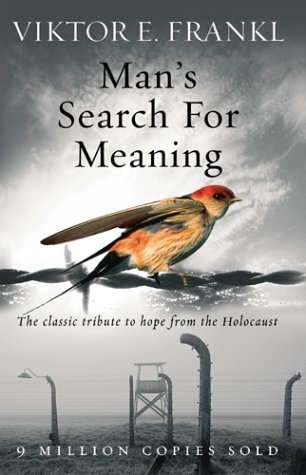
Man’s Search for Meaning by Viktor E. Frankl

This long time classic, came up in conversation last week; a friend and I were talking about the inclination for one to want to ask, know or understand the ‘why’ when something bad happens.

For me, looking back at something challenging, I have a sense that when we cease to ask or need to know the ‘why’, that is a sign we have moved past or overcome it. How we get there is another subject altogether.

classic tribute to hope from Holocaust LogotherapyMy friend then mentioned Viktor Frankl and interestingly, I learned he held a similar premise, but in the opposite direction. In terms of looking forward in life, we are likely to be more at peace and less prone to suffering if we have a ‘why’ in terms of our life’s meaning. So having our own ‘why’ is what we can focus on, looking forward, not back, at ourselves and not ‘the other’.

I decided it was time to dust off the book and retrieve it from my shelf.

In the first 100 pages Frankl shares some of his experiences and observations from being in Auschwitz and other Nazi concentration camps, with a focus on answering for himself the question of why some of them, like him, survived.

He identifies different turning points, observing the moment when some lost meaning and how those that did survive often had found a way to create it, despite the horrific circumstances.

His experience in Auschwitz, terrible as it was, reinforced what was already one of his key ideas. Life is not primarily a quest for pleasure, as Sigmund Freud believed, or a quest for power, as Alfred Adler taught, but a quest for meaning.

Frankl’s most enduring insight, one that resonates deeply:

forces beyond your control can take away everything you possess except one thing, your freedom to choose how you will respond to the situation. You cannot control what happens to you in life, but you can always control what you will feel and do about what happens to you.

meaning of life goal why purpose

Photo by Nina Uhlikova @ Pexels.com

The prisoner who lost faith in the future was doomed. Any attempt to restore a man’s inner strength had first to succeed in showing him some future goal.

Nietzsche’s words, “He who has a why to live for can bear with almost any how,” could be the guiding motto for all psychotherapeutic and psychohygienic efforts regarding prisoners. Whenever there was an opportunity for it, one had to give them a why – an aim – for their lives, in order to strengthen them to bear the terrible how of their existence.

Following this account of survival, in a short essay Frankl describes and discusses the therapy he was renowned for, one still practiced today:

Logotherapy in a Nutshell

Logotherapy focuses on the future, on the meanings to be fulfilled by a patient, a reorientation of sorts towards the meaning of a life.

Logotherapy tries to make the patient fully aware of his own responsibleness; therefore, it must leave to him the option for what, to what or to whom, he understands himself to be responsible. That is why a logotherapist is the least tempted of all psychotherapists to impose value judgments on his patients, for he will never permit the patient to pass to the doctor the responsibility of judging.

He writes of some of the methods used, citing examples as well as discussing the meaning of love and suffering.

“When we are no longer able to change a situation, we are challenged to change ourselves.”

It is a poignant read from a man who would embody his philosophy literally, leaving us with this enduring work and a therapy that is indeed a legacy and leaves us in no doubt as to the meaning and puspose of Viktor Frankl’s life.

Viktor Frankl

Man's Search for Meaning Psychology logotherapyViktor Emil Frankl, psychiatrist, was born March 26, 1905 and died September 2, 1997, in Vienna, Austria. He was influenced during his early life by Sigmund Freud and Alfred Adler, and earned a medical degree from the University of Vienna Medical School in 1930.
He founded the school of existential analysis, or logotherapy, which Wolfgang Soucek of the University of Innsbruck named “the third Viennese school of psychotherapy,” the other two being Sigmund Freud’s psychoanalysis and Alfred Adler’s individual psychology. Logotherapy was designed to help people find meaning in life.

By the time of his death, his book, Man’s Search for Meaning, had been published in 24 languages.

Further Reading

Logotherapy: How to Find More Meaning in Your Life by  Emily Waters, PsychCentral

What is Logotherapy and Existential Analysis? by Alexander Batthyány, Viktor Frankl Institute


Best Books Read in 2021 Part 3: Top 10 Non Fiction

Paris Hotel de Ville Christmas 2021

Sisters in Paris

I had hoped to issue Part 3 of My Top Reads of 2021 in December, however that didn’t happen. I put my books and blog aside for a month while my sister was visiting, to just enjoy each other’s company and the beauty of the local environment where I live.

Given the times we are currently living through, it has been a humbling gift to combine those two things, to re-connect and enjoy our surroundings, albeit mid-winter.

2022 Reading Plans of a Mood Reader

Today my friend Deidre at Brown Girl Reading called and it was like a sign from the book world, a reminder that this post was sitting here, as are the many piles of unread books. Before speaking to her I had no idea what I might read next, or in 2022.

Musée Carnavalet Me Marais Paris History Madame Sévigné de Seve

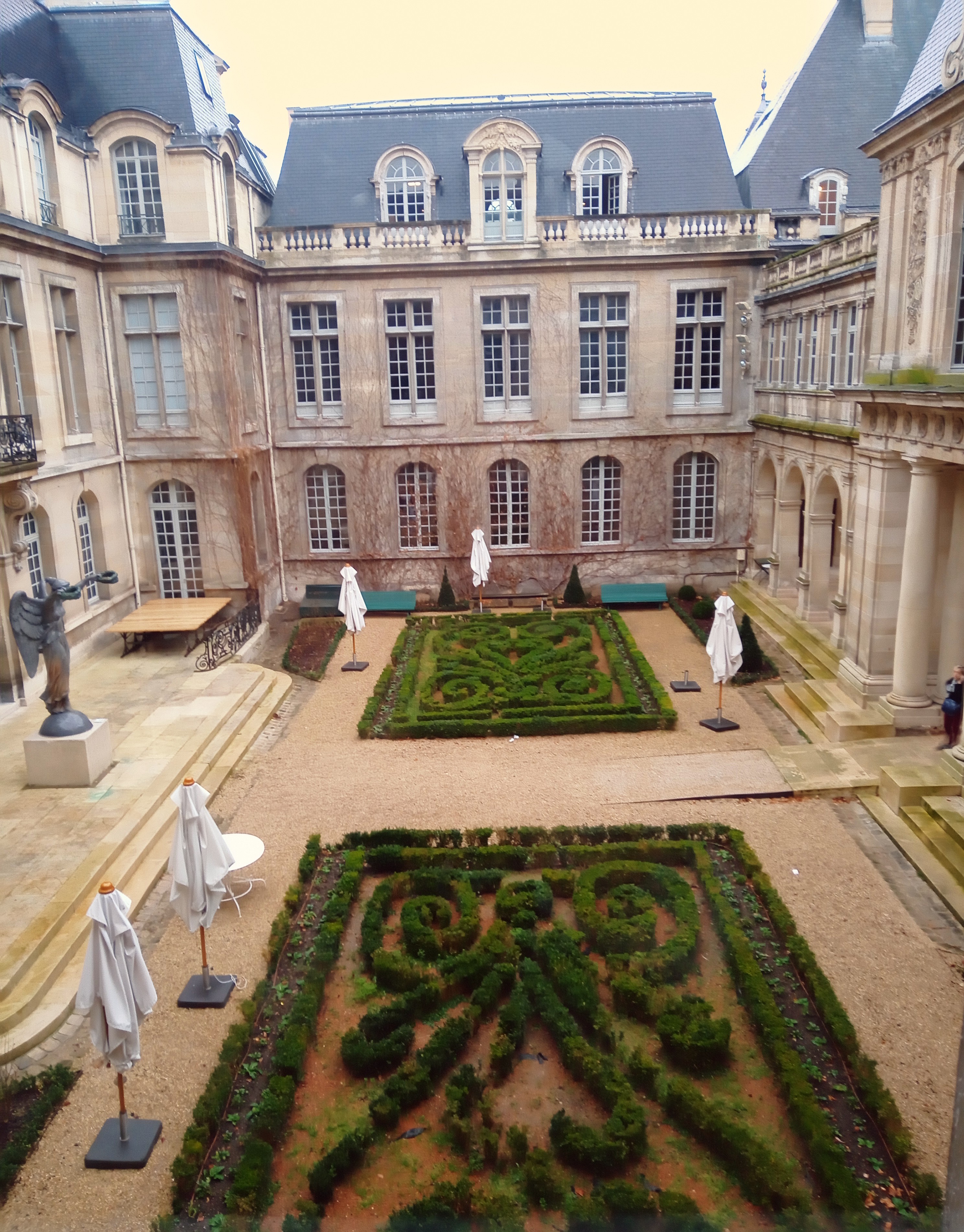
History of Paris, Musée Carnavalet

As a mood reader, I don’t tend to make plans, but as I stood in front of the shelves, I noticed that I have already accumulated some little piles of books by authors I want to read more of, like Buchi Emecheta, Gayl Jones, Mary Costello, Janet Frame; more books by Northern Irish authors, including a few more by Brian Moore.

There’s a French history written by women pile, inspired by a recent visit to the History of Paris, Musée Carnavalet. It seems something in my subconscious had indeed been planning!

Best NonFiction Reads of 2021

So, to complete there three part series, following on from Part 1: The Stats + One Outstanding Read of the Year and Part 2: Best Fiction Reads, here is my Part 3: Best NonFiction Books of 2021 and at the end, I’ve tagged on 4 books from my Spiritual Well-being collection that I read in 2021, each of them equally inspiring and nourishing.

In 2021 I read 28 works of nonfiction, so many of them were were excellent, below is a selection of those that I really enjoyed, that have stayed with me, in no particular order:

Autobiography/Memoir

To My Childresn Children Sindiwe Magona1. To My Children’s Children (1990) + Forced to Grow (1992) by Sindiwe Magona (South Africa) – discovering Sindiwe Magona was one of my reading highlights of 2021. Tired of her people being written about and misrepresented by others, she decided for the sake of generations to come, and especially for girls, to share her experience, of an enriching, loving childhood, of growing up under apartheid and overcoming racist and patriarchal challenges.

The first volume covers her life up to the age of 23, when she encounters the most challenging circumstance ever and then in Forced to Grow, from age 23-40 we learn how she finds a way not only to survive but to grow, develop and thrive, overcoming poverty, pursuing education, collaborating with empowered women, spending over 20 years serving in the United Nations. These two books are like nothing else I’ve ever read coming out of South Africa, more than a gift to her grandchildren, they are a treasure and a lesson in humility to all humanity. I’m hoping there is a third volume in the making.

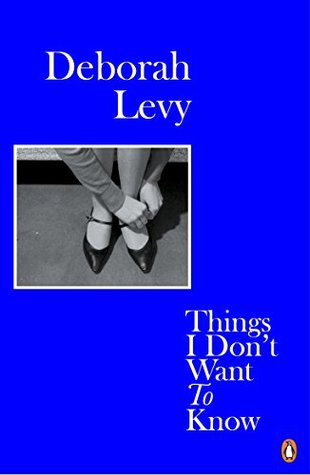
The Cost of LIving Deborah Levy memoir2. Real Estate (2021) + The Cost of Living (2018) by Deborah Levy (Creative Nonfiction) (South Africa/UK) – An author who left South Africa at the age of 9, Levy’s life and reminiscences are a world away from her birthplace and from the life of her compatriot above, though they have left a barely discernible imprint. While Magona embraces the entirety of her experience, Levy in titling her opening memoir Things I Don’t Want to Know (2013), struggles to talk about what she doesn’t want to talk about, using humour, her observation of others and a feminist lens to deflect her existentialism.

In three volumes, as she begins a new phase, unravelling from marriage into mature, independent woman, she reflects on life, her influences, her frustrations, critiquing the roles society assigns us, the way literature and cinema perpetuate them and considers the effect of disrupting them, breaking free. She observes what is going on around her while considering the wisdom of writers who came before, liberates herself from convention, while longing still for aspects of a distorted dream. Slim volumes, entertaining to read, they both inform and obscure, a life in fragments.

autobiography memoir australia indigenous3. My Place by Sally Morgan (1987) (Australia) (Biography/Memoir) – a classic of Australian aboriginal literature, Morgan writes about her childhood when her identity was hidden from her, uncovering her Aboriginal ancestry and understanding why her grandmother was so fearful of talking about the past.

Sharing what she discovered of the life stories of her mother, grandmother and great Uncle to understand why it was deemed necessary to be protected from the knowledge of who she was, she uncovers a heritage and her place in it, in this extraordinary and valuable account. An absolute must read.

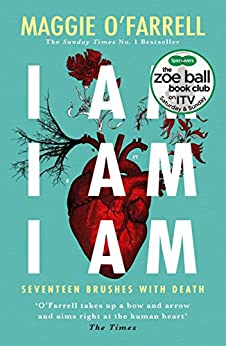
Maggie O'Farrell Memoir Near Death Experiences4. I Am, I Am, I Am, Seventeen Brushes With Death (2017) by Maggie O’Farrell (Northern Ireland/British) (memoir) – a unique memoir told through 17 encounters with death that range from the terrifying to the mundane, the memorable to the repressed.

O’Farrell finds meaning in these experiences, initially cultivating a state of fearlessness followed by the magical effect and shift in perspective that giving birth to a child brings about. A remarkable and thought provoking work using a unique structure, I thought it was brilliant.

Nature Writing

Indigenous Wisdom, Scientific Knowledge and the Teachings of Plants5. Braiding Sweetgrass by Robin Wall Kimmerer (2013) (Creative Non Fiction) (US) – In this remarkable collection of 32 essays, organised into 5 sections that follow the life cycle of sweetgrass, we learn about the philosophy of nature from the perspective of Native American Indigenous Wisdom, shared by a woman of native origin who is a scientist, botanist, teacher, mother.

Sharing scientific knowledge and going out into the forest and field, she demonstrates how close and quiet observation of plants in their habitat teach us. The most crucial lessons being learning how to give back, reciprocity and gift giving, using our imagination and intuition to reconnect with nature and understand the connection between them and us. Just stunning.

nature writing Wainwright prize6. Diary of a Young Naturalist by Dara McAnulty (2020) (Northern Ireland) – an inspired account of a year in the life of a 15 year old boy with a passion for nature and all forms of wildlife and how his connection to them assists him to navigate life mitigating the intensity and challenges of autism.

His observations are a pleasure to read, his use of language evocative and resonant in bringing the natural world he loves to life for the reader. A writer to watch, inspirational.

Justice/Social Science/History

The Fire Next Time James Baldwin7. The Fire Next Time James Baldwin (1963) (Letters) (Social Justice) (US) – a short book of just two letters, one written to his young nephew, a kind of preparation for what lies ahead of him as he will become a young black man in America and a tender description of who he sees in him, his heritage, his family connection and that he is loved, a beautiful literary gift to a young boy.

The second letter he writes to himself, Letter From a Region of My Mind – like a journal entry, he writes of his own development of his self-awareness, of the experiences that moulded him, of his choices to seek refuge and revenge in the same calling, his assessment of meeting Elijah Muhammed, leader of the Nation of Islam. Baldwin’s message is one of love, of standing up for one’s rights, of dignity and the health of one’s soul, of our responsibility to life. A gem of a book, as relevant now as when he wrote it.

Nurturing Humanity8. Nurturing Our Humanity, Riane Eisler, Douglas Fry (Austria/US) (Social Science/Cultural History/Anthropology) (2019) – The long awaited sequel to her brilliant The Chalice and The Blade (1987) which introduced Eisler’s theory on domination versus partnership models of society, this new book written in collaboration with Anthropologist Douglas Fry, explores how domination and partnership have shaped our brains, lives and futures.

They demonstrate through decades of research how we have been influenced by a system of domination that favours hierarchical structures, ranking of one over another, authoritarian parenting and leadership, fueled by fear, tamed by punishment, sustained by conditioning. They argue that the path to human survival and well-being hinges on our human capacities to cooperate and promote social equality, through empathy, equity, helping, caring and various other prosocial acts. A riveting, essential read on understanding human nature and where we are headed.

Sea People In Search of Ancient Navigators of the Pacific9. Sea People Christina Thompson (2019) (Australia/US) (History)  – I loved and was fascinated by this book, a woman curious about her husband and son’s cultural heritage, looks back at what has been written by various/mostly male historians about these ancient navigators of the Pacific and according to their own paradigm and biases, their theories on how they arrived there.

What she discovers are non-instrument navigation techniques that Europeans weren’t aware of, abilities developed by these ancient mariners that are fascinating to imagine, and that a small group seek to emulate, challenging themselves to go back in time, to think and understand the sea, the stars and nature, as their ancestors did. Fascinating and insightful.

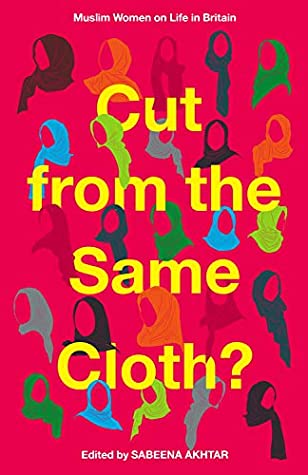
Cut From the Same Cloth Sabeena Akhtar10. Cut From the Same Cloth, Muslim Women on Life in Britain (2021) Edited Sabeena Akhtar (UK) (Essays) – this was a long awaited volume of essays, crowdfunded by many supporters, brings together the voices of 21 Muslim women of different ages, races and backgrounds, allowing them to explore their experience and spiritual perspectives, expressing them creatively.

More than mere essays, collectively, their words bust the all too common stereotypic myths of the hijab wearing woman and introduce us to a bright, humorous, passionate group of women, whose honesty and thoughts are both empowering and insightful. Though they are writing for themselves and each other, anyone interested in understanding the many diverse views of British Muslim women today, will enjoy reading this anthology.

Spiritual Well-being Reads

Finally, one of the genres I like to read is Spiritual Well-being and there is a page dedicated to those books at the top of this blog, for easy reference. They tend to be winter reads, corresponding to that time when we tend to go within and might benefit from a revisiting of inspirational words and an alternative perspective on how to co-exist with whatever it is we are dealing with in the external world.

Sensitives and Soul Purpose

The Power of Empaths in an Increasingly Harsh WorldThis year I found inspiration from two of my favourites in this field, and two new authors, all of them coming from renowned publisher Hay House.

“Every thought we think is creating our future.” Louise Hay

Anita Moorjani’s Sensitive is the New Strong (2021) (India/Hong Kong/US) is written in particular for highly sensitive empaths, with information about recognising this in oneself, learning to develop it as a strength, while understanding the importance of  how to protect your energetic body from the negative effects of the kind of world we live in today.

Rebecca Campbell What is a Soul WLetters to a Starseed (2021) by Australian intuitive and creative, now based in Glastonbury, Rebecca Campbell, who previously wrote Light is the New Black(2015) and Rise Sister Rise (2016). This latest book is for those interested in understanding more about soul purpose.

She considers the big questions that mystics and philosophers through the ages have been asking about our cosmic origins, in a much lighter way: What is the soul, where did it originate and why have we chosen to come here at this time? You’ll know if this is meant for you or not.

Archangel Guidance and Self-Worth

the female archangels Claire StoneAnother new author I picked up this year was Claire Stone and her book The Female Archangels (2021) (UK) having already read quite a few books by Kyle Gray, which I’ve found hugely beneficial in previous years to carry with me and read whenever I had to deal with stressful hospital environments, unhelpful bureaucracy, anxiety producing school meetings – an alternative to pharmaceuticals I guess!
I enjoyed reading her book, although it might be more suited to practitioners or those already in the habit of ritual, as many of her suggestions require props.

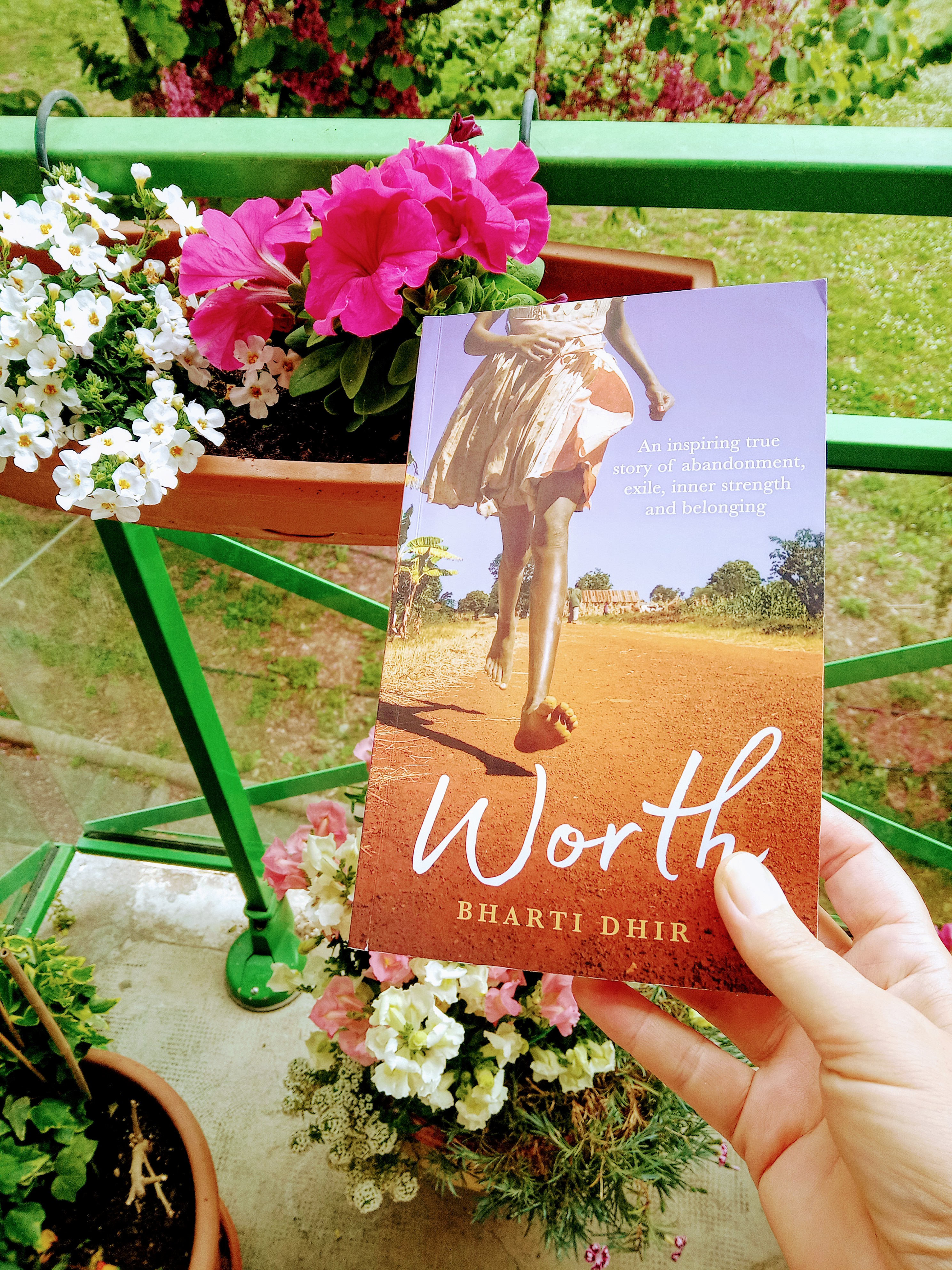
Inspirational memoir of belongingFinally, Worth by Bharti Dhir (2021) (UK/Uganda) – Bharti Dhir was abandoned as a newborn in a fruit box on the side of the road in the Uganda countryside. To this day she doesn’t know who her birth mother was, though rumours created a version of the story and the imagination of the author and reader contribute to what might have happened.

Throughout her childhood there are numerous events, situations, heath problems and challenges that Bharti and her family live through, address and overcome, some of which contribute (at the time) to diminishing her sense of self-worth. With each situation, she shares how she is able to look back with compassion and forgiveness and describe how she was able to turn all that around.

Her reflections on compassion and empathy are enlightening and model a nurturing way to embrace our humanity and practice them as acts of self-care.

 * * * * *

That’s it for 2021 nonfiction reads. Share with me your recent nonfiction favourites or thoughts on any of the above.

Happy Reading for 2022 and thank you for reading!

Claire

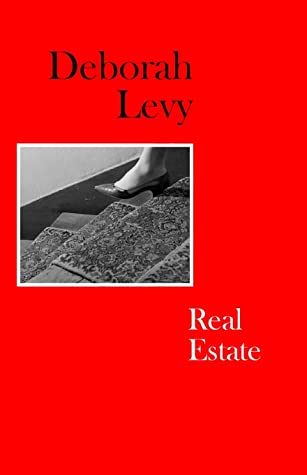
Real Estate by Deborah Levy

I read the three volumes that make up Deborah Levy’s Living Autobiography over the year, beginning with the slim Things I Don’t Want to Know, a writer in the cocoon stage of transformation, the threads wound tight. A confrontation with denial, it is equally enticing as it is uncomfortable, it reveals as it obscures trying to fit into George Orwell’s framework from his essay ‘Why I Write’.

In The Cost of Living, a more expansive narrative, the threads unravel and insights are plentiful, though some of the thinking that created the earlier restrictiveness remain.

Real Estate Deborah Levy Memoir AutobiographyAnd now the final volume, Real Estate, which might as easily have been called UnReal Estate, in tumeric coloured silk, Levy has shed the cocoon, ready to embrace a new decade, the nest empty.
I became obsessed with silk. I wanted to sleep in it and wear it and somehow knew it had healing properties. It started when a royalty cheque came in and I took it literally and began to sleep by royalty.

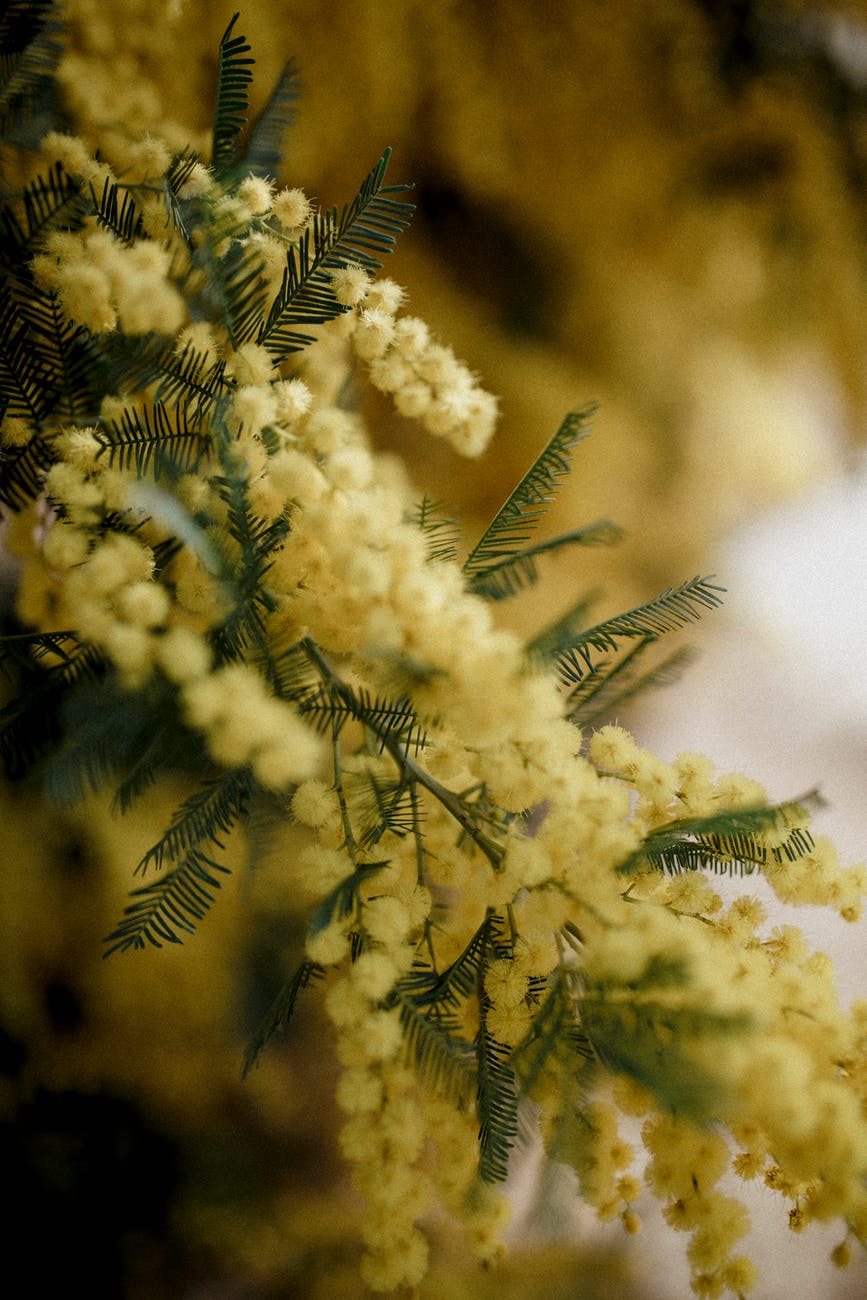
With marriage and motherhood behind her, she dreams of a home with a fountain in the garden, a mimosa tree, a place to welcome friends, unencumbered by practicalities or marital vows.

Yet in my unreal estate dreams my nest was not empty.

If anything the walls had expanded. My real estate had become bigger, there were many rooms, a breeze blew through every window, all the doors were open, the gate was unlatched. Outside in the unreal grounds, butterflies landed on bushes of purple lavender, my rowing boat was full of things people had left behind: a sandal, a hat, a book, a fishing net. I had recently added light green shutters to the window of the house.

Deborah Levy Real Estate Paris

Photo by alleksana on Pexels.com

As with the previous book, there are recurrent themes, there is a sense of humour and a search for something elusive in the idea of an appealing mature woman character. Deconstructing the stereotype of these persona, she ponders why no scripted female characters had full lives of their own.

It occurred to me that what was wrong with the scripts was that the mothers and grandmothers were always there to police the the more interesting desires of others, or to comfort them, or to be wise and dull.

Accepting a fellowship at the same time her younger daughter leaves home, she prepares to spend some months in a bare apartment in Paris, a new source of inspiration and insight, rereading and reflecting on the works of Simone de Beauvoir, Marguerite Duras and Katherine Mansfield, researching the subject of the doppelgänger.

My empty nest in Montmartre was really a version of my two writing sheds, except I could cook and sleep in it. I worked through the night on my new novel, while the sculptor downstairs worked through the night with her electric saw.

Approaching her sixth decade, somewhat in isolation brings on a melancholic reckoning, a party and as the mimosa blooms, the mood lifts.

mimosa Paris Deborah Levy Creative nonfiction

Photo Larysa Charnakal Pexels.com

It’s not easy to describe the book, being a circular narrative that moves forward at the same time revisiting themes, turning back on itself, considering different perspectives.

The combination of grit, pearls of wisdom and humour, combine in a rollicking read of interconnected thoughts and observations, the searching for and letting go of ideas, those that promise an experience and the outdated that no longer serve the purpose of finding contentedness as a mature woman.

I loved it, finishing it in two days, and all the more for having struggled through the first volume, been both delighted and frustrated by the second and arrived here, at the evolution of an observation and examination of what it means to live, to love, let go and just be.

My Place by Sally Morgan

Originally published in 1987, this nonfiction title is both a mini biography (of Sally Morgan’s Great Uncle Arthur, her mother Gladys and her Nan, Daisy) and part memoir.

Sally Morgan, an Australian of Aboriginal descent, begins the book writing about her childhood from the perspective of not knowing her own identity. Thus the reader too, reads from this perspective as Sally recounts events in her life as they happen and as a child would, refrains from analysing or questioning them. Until she finds out.

autobiography memoir australia indigenousThe children at school ask about her skin colour and ethnic origin.

One day, I tackled Mum about it as she washed the dishes.

‘What do you mean “Where do we come from?” ‘

‘I mean what country. The kids at school want to know what country we come from. They reckon we’re not Aussies. Are we Aussies Mum?’

Mum was silent. Nan grunted in a cross sort of way, then got up from the table and walked outside.

‘Come on Mum, what are we?’

‘What do the kids at school say?’

‘Anything. Italian, Greek, Indian.’

‘Tell them you’re Indian.’

‘I got really excited then. ‘Are we really? Indian!’ It sounded so exotic.

‘When did we come here?’ I added.

‘A long time ago’, Mum replied. ‘Now no more questions. You just tell them you’re Indian.’

It was good to finally have an answer and it satisfied our playmates. They could well believe we were Indian, they just didn’t want us pretending we were Aussies when we weren’t.

At home, they live with their mother Gladys and father Bill, who is unwell and sometimes dangerous. He is a WWII war veteran of able body, suffering from what today would be diagnosed as PTSD.

Bill was a strange man, he wasn’t prejudiced against other groups, just Aboriginals. He never liked us having our people to the house. We had to cut ourselves off. I think it was his upbringing.

Bill had spent a lot of his childhood in country towns. I think that moulded his attitudes to Aboriginal people. Down South, Aboriginals were really looked down upon. Bill would have been brought up with that.

Sally Morgan My Place

Photo by Dan on Pexels.com

During those difficult years with her Dad, one of the few things Sally enjoyed about school were the Wednesday afternoon stories, listening to Winnie the Pooh, a character who lived in a world of his own and believed in magic, just like she did. While Pooh was obsessed with honey, Sally was obsessed with drawing.

My drawings were very personal. I hated anyone watching me draw. I didn’t even like people seeing my drawings when they were finished. I drew for myself, not anyone else. One day, Mum asked me why I always drew sad things. I hadn’t realised until then that my drawings were sad. I was shocked to see my feelings glaring up at me from the page. I became even more secretive about anything I drew after that.

Nan also lives with them and as Sally gets to know Nan’s brother Arthur, she learns that they are not Indian, they are of Aboriginal origin. Confronting her grandmother elicits no information at all, she refuses to speak of her past, nor of who her father was and suggests Sally forget about it.

Arthur agrees to tell his story and over a period of 3 months, in his 90’s, she records their conversations and learns about his life and a little more about his sister’s, her Nan. They are the children of an Aboriginal woman and the white stationmaster whose farm they lived and worked on.

They grew up in an era referred to as “living under the Act” when Australia had laws that not only dispossessed Aboriginal people of their land, culture and traditions, but forcibly removed their children from them, did not allow them to raise their children, in effect owned them and treated them similar to slaves. People like Nan grew up under this Act and lived their lives under the effect of the trauma it brought about. The only way they could see to protect their children was to lie about who they were and withhold their heritage from their children and grandchildren.

My Place Indigenous Voices Australia Aboriginal Heritage

Heritage by Sally Morgan (1990)

This story is Sally’s persistent endeavour to find that lineage, those lost family members and that heritage and to find out the story of her grandmother who was too scared to tell it and said she would take her secrets to the grave. To understand what it meant to belong to a heritage.

What did it really mean to be Aboriginal? I’d never lived off the land and been a hunter or gatherer. I’ve never participated in corroborees or heard stories of the Dreamtime. I’d lived all my life in suburbia  and told everyone I was Indian. I hardly knew any Aboriginal people. What did it mean for someone like me?

I absolutely loved every word of it, the way it is told, the close connection this family has to each other, the evidence of a spiritual connection to their ancestry and the spirits, even though they have not been raised with this knowledge.

The real life characters are vividly drawn, the dialogue authentic and the story’s of Arthur, Gladys and Daisy (Nan) beautifully recollected. Though it tells of a terrible time in Australia’s past, of children taken from their mothers, of slavery, abuse, fear and judgement because of skin colour, it is also a legacy for this family, a gift to the Australian nation and the world at large, to be given the opportunity to gain insight into a period of history, little known or heard from this important perspective.

Highly Recommended.

Sally Morgan, Author, Painter

Sally Morgan Indigenous Aboriginal AuthorSally Morgan is one of Australia’s best-known Aboriginal artists and writers.
For as long as she can remember, Sally wanted to paint and write but at school she was discouraged from expressing herself through her art because her teachers failed to see the promise in her individual style. It was not until she researched her family history and discovered her Aboriginal identity that she found meaning in her images and gained the confidence to pick up her paints again.

Sally’s widely-acclaimed first book, My Place, has sold over half a million copies in Australia. Sally Morgan’s second book, Wanamurraganya, was a biography of her grandfather.

My Place won the Human Rights and Equal Opportunity Commission humanitarian award in 1987, the Western Australia Week literary award for non-fiction in 1988, and the 1990 Order of Australia Book Prize.

In 1993, international art historians selected Morgan’s print Outback, as one of 30 paintings and sculptures for reproduction on a stamp, celebrating the Universal Declaration of Human Rights.

Her children’s picture story books include Little Piggies and Hurry Up Oscar. She has collaborated with artist and illustrator Bronwyn Bancroft on several picture books including Dan’s Grampa. Curly and the Fent was written by Sally in collaboration with her children Ambelin, Blaze and Ezekiel.

Sally is the Director at the Centre for Indigenous History and the Arts at the University of Western Australia and lives in Perth.

The Cost of Living by Deborah Levy

This second volume of Deborah Levy’s Living Autobiography trilogy has a completely different feel to the first Things I Don’t Want to Know, stuck as that first volume was, between the parameters of George Orwell’s four motivations in Why I Write and Levy’s own resistance to engaging with aspects of her subject that were rearing up to confront her.

Things I Didn’t Want to Know But Have Discovered

The Cost of LIving Deborah Levy memoirSo we now know a little of her motivation, however now comes the struggle, as she must balance writing with the cost of living; her circumstances have changed and we are going to learn how she manages as a single, independent mother.

This time she creates her own structure, using a series of 14 interlinked vignettes, episodes within the journey of releasing herself from a life lived within what were once deemed the acceptable parameters of a societal construct “marriage”, into the undoing of and reconstruction of something like “the pursuit of” but not quite, freedom.

In the opening, a 19 year old woman character is being chatted up by a man referred to as ‘Big Silver’, he is the wrong audience for the young woman’s story, however Levy decides she is the right reader for this one:

“To speak our life as we feel it is a freedom we mostly choose not to take”.

The young woman has the audacity to interrupt the man’s narrative sharing her own poignant story, as Levy introduces us to one of the recurring themes of her book, minor and major characters.

It had not occurred to him that she might not consider herself to be a minor character and him the major character. In this sense she had unsettled a boundary, collapsed a social hierarchy, broken with usual rituals.

Using the Master’s Tools

Levy’s observations are astute, comical and laced with self-irony, questioning the role and discovering the tenacity of the woman writer, though her verse is peppered with an abundance of references hailing from the tradition of well documented and taught, dead white men.

In the opening sentence she reminds us that Orson Welles once said, if we want a happy ending, it depends on where we stop the story. His words will frame the book and are thought provoking sure, but he was also known for saying there were three intolerable things in life, cold coffee, lukewarm champagne and overexcited women.

Was this irony ?

Or was it the result of a slanted education of a certain era/affiliation. It speaks to what is being read and consumed and to an old monopoly on ideas, that rendered a canon of white men the originators of knowledge.

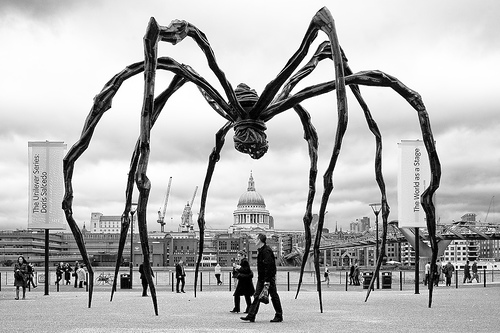
louise_bourgeois_maman

Louise Bourgeois ‘Maman’

For this reader, it was taken too far when redecorating her bedroom, upon rejecting the bright yellow, embraced too soon (overexcited), she repainted the walls white and chose to hang a portrait of Oscar Wilde, while on the same page, looked at photos of British sculptor Barbara Hepworth and French artist Louise Bourgeois that graced her fridge and wrote of them “the forms they were inventing gave them beauty without measure,” additionally sharing that the moths seem to like landing on those two.

Bourgeois had unfashionably declared that she made art because her emotions were bigger than herself.

Unable to relate to the women, it is towards Proust she inclined, when he said:

Ideas come to us as the successors to griefs, and griefs at the moment when they change into ideas, lose some part of their power to injure the heart.

Sister Outsider Speaks to Me

As I let this frustration percolate, trying to understand it, I wondered about the difference between gender politics and feminism. I admit that my annoyance has much to do with a decision to address an imbalance in my own reading when I started counting and analysing what I read and discovered too much of the same thing by the same type of people. So forgive me for projecting.

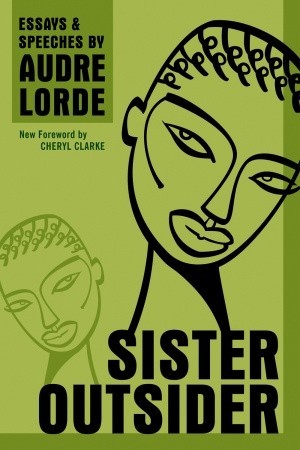
Sister OutsiderA voice repeated in my mind, ‘the master’s tools, the master’s house’ – you know when you recall a fragment of a quote but can’t quite remember it. It was the passionate sage wisdom of Audre Lorde reminding me of her essay, The Master’s Tools Will Never Dismantle the Master’s House in Sister Outsider (1984). Four pages of thought provoking, mind opening courageous speech.

“For women, the need and desire to nurture each other is not pathological but redemptive, and it is within that knowledge that our real power is rediscovered. It is this real connection that is feared by the patriarchal world.”

Audre Lorde speaks too of those standing outside the circle of this society’s definition of acceptable women and suggests that it is learning how to stand alone, unpopular, sometimes reviled, and to make common cause with others identified as outside the structures, that we can create a world in which we can all flourish.

“It is learning how to take our differences and make them strengths. For the master’s tools will never dismantle the master’s house. They may allow us temporarily to beat him at his own game, but they will never enable us to bring about genuine change. And this fact is only threatening to those women who still define the master’s house as their only source of support.”

Freedom Hurts

Freedom is not to be pursued lightly, as she discovers when she exits her marriage and Victorian home as she enters her 50’s and a 6th floor apartment with her two daughters, soon developing the physical and energetic strength to endure it.

Freedom is never free. Anyone who has struggled to be free knows how much it costs.

Each vignette explores this struggle to cope and live with this new freedom, through a series of anecdotes that allow certain themes to repeat and by the time we read Gravity, she has been loaned a shed in the bottom of a garden in which to write and is kept to task by random apples that fall on the roof.

As I begin to read The Body Electric the writing energy and pace picks up a notch, we are out of the apartment and the shed, out of her head and on the road and what a hazardous place it is, but what energy and humour it brings to the narrative. Cycling became an obsession and kept her rage off the page.

I cursed and shouted at drivers when they opened their front doors in a way that toppled me on to the road. I had road rage. Yes, I had graduated to road rage on my electric bicycle. That is to say, I had a lot of rage from my old life and it expressed itself on the road.

There is the tiresome neighbour who waits for her to arrive to tell her off about temporary parking, intent on making her life more difficult, a situation various friends are keen to advise her on. But Jean is essential to the narrative, her ability to irritate prompts the author to ponder on what a woman is, on what she should be, or not be, a question she has no time to ask Jean.

It was possible that femininity, as I had been taught it was coming to an end. Femininity as a cultural personality, was no longer expressive for me. It was obvious that femininity, as written by men and performed by women, was the exhausted phantom that still haunted the twenty-first century. What would it cost to step out of character and stop the story?

yellow flowers in brown woven basket on bicycle

Photo by Valeriia Miller on Pexels.com

And in the middle of The Black and Bluish Darkness as she is riding up the hill in the rain, comes the most tender and humorous moment, we can afford to laugh reading in the comfort of home, but imagining the scene (no spoilers) and the reminder of the underlying reality, feels a little heart-breaking – except we know she does not indulge in self-pity, and has wonderful friends to call on. She recovers well, reaching out to one of them, who arrives with a box of strawberries and runs a bath for her. There it is, that redemptive power, those good, reliable female friends that no woman can do without.

Levy further explores the lives of other role models and how they managed to write, love, being woman and further reflects on her own role model, her mother, who even after she has passed, whose loss results in Levy sometimes literally getting lost, severed from her origins, somehow manages to remain present, symbolically.

It is certainly the case that there are fewer references and tomes written by women in previous centuries that analyse the sacrifices they make to pursue their art and ideas. That freer life a writer desires comes with a cost of living and women have long been making it easier for others to manifest their dreams while either sacrificing their own, or sacrificing something else in their determination to attain them.

Making her lived experience the lens through which she observes the role of the woman writer, Levy provokes us all to think more about the choices and sacrifices we make and the balancing act required to pursue our creativity and passions.

Next Up : Real Estate!

Further Reading

Guardian Review: The Cost of Living by Deborah Levy review – a memoir and feminist manifesto

Article: Why Not Ask a Powerful Man What He’s Doing to Help Women? By Stella Bugbee

Article France Culture: Louise Bourgeois, “une femme enragée et agrippée” (1911-2010)

Review: Sister Outsider by Audre Lorde

Things I Don’t Want to Know by Deborah Levy

There are two ways of reading Deborah Levy’s slim memoir, the first in her Living Autobiography trilogy:

things-i-dont-want-to-know-deborah-levy1. just open it and start reading taking in what is actually shared at face value, a woman on the cusp of a life change, whose suppressed emotions will no longer stay down, who leaves town to try and figure them out, looks back at her childhood and adolescence for inspiration, then decides to look forward instead and begins to write (on the last page);
or,

2. consider the framework within which she writes; a response to the essay ‘Why I write’ by George Orwell, who claimed 4 chief motivations, in this order:
i. sheer egoism
ii. aesthetic enthusiasm
iii. historical impulse
iv. political purpose

which Levy moves around, addressing but not – in the following rearranged order.

i. political purpose – her feminist awakening opening, as she ponders her role and her desire, supported by poignant quotes from Simone de Beauvoir, Margurite Duras and others, culminating in a brief getaway, escape to Palma, Mallorca, reading her journal ‘Poland 1988‘ in which she witnesses a soldier’s farewell to his mother, sister, girlfriend.

What interests me (in my sheriff’s notebook) is the act of kissing in the middle of a political catastrophe.

ii. historical impulse – her white South African childhood in which her father is imprisoned and her mother sends her to stay with relatives whose political leanings are opposite to her father’s. Everywhere there are signs, reminding them of their privilege.

There was something I was beginning to understand at seven years old. It was to do with not feeling safe with people who were supposed to be safe.

iii. sheer egoism – the sadness of exile, adolescence and separation in London, England, writing on paper serviettes in a greasy spoon cafe, avoiding home life. The first tentative steps towards becoming a writer.

I was born in one country and grew up in another, but I was not sure which one I belonged to. And another thing. I did not want to know this thing, but I did know all the same.

iv. aesthetic enthusiasm – in which she has dinner with the Chinese shopkeeper, a continuation of the story  begun in the opening section – and there it is, the reflection of that kiss in the middle of a catastrophe.  I skipped forward after i. to read this section second, it being clear from the beginning that this was a framing device, I was immediately drawn to read it whole, not in parts. It’s not like other books, it doesn’t spoil the story to read the end before the middle.

At first I found it annoying, that the framework of Orwell had been used and quoted on the back of the book, while the contributions from the feminist writer’s in her opening section had so much more to contribute to her reasoning. I asked, Why not create your own framework? Then later, thought, perhaps she does, disguised as it is, within the infamous outline of the other. Making the reader try and read between the lines.

Levy places the life of a woman writer (herself) into this construct created by a male writer, his opinion on  the motives of writing – already an act of rebellion, and though it doesn’t work entirely, perhaps it was never intended to, though it may have lured some otherwise reluctant readers in.

Joan Didion Writer Essayist

Joan Didion, Author

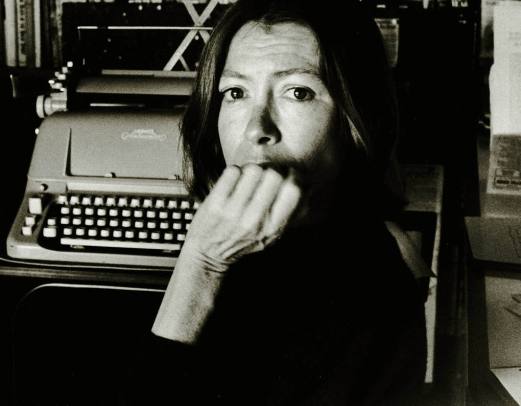
Joan Didion also wrote an essay Why I Write in 1976, prompted by the same source. Ignoring Orwell’s framework she delved immediately into sharing her flaws and inability to conform, out of which grew her own singular way of seeing, observing and recording answers to her own curious questions, the flexing of imagination.

I knew that I was no legitimate resident in any world of ideas. I knew I couldn’t think. All I knew then was what I couldn’t do. All I knew then was what I wasn’t, and it took me some years to discover what I was. Joan Didion

When Levy writes, there is an absence, a reluctance. It is admitted in the title, it stems from a childhood, continues into an adolescence and confronts her in middle age as she rides the escalator and can no longer keep it down. It threatens to overflow and engulf her.  Those things she does not want to know. That she laughs off.

It occurred to me that both Maria and I were on the run in the twenty-first century, just like George Sand whose name was also Amantine was on the run in the nineteenth century, and Maria whose name was also Zama was looking for somewhere to recover and rest in the twentieth. We were on the run from the lies concealed in the language of politics from myths about our character and our purpose in life. We were on the run from our own desires too probably, whatever they were. It was best to laugh it off.

She is left with her question. What do we do with the things we do not want to know?
She realises she can not accept her own question. She will continue to write and perhaps find the answer in the next book. I will read it and find out whether she has the courage.

In the meantime Didion persevered with hers:

Had my credentials been in order I would never have become a writer. Had I been blessed with even limited access to my own mind there would have been no reason to write. I write entirely to find out what I’m thinking, what I’m looking at, what I see and what it means. What I want and what I fear. Joan Didion

Further Reading

NY Times Review: Serrated Edges by Lisa Zeidner

Guardian Review: Kate KellawayDeborah Levy’s rich response to George Orwell’s famous 1946 essay “Why I Write” is unmissable

Deborah Levy

Deborah Levy On Writing and Living

Deborah Levy, Author

Deborah Levy is the author of seven novels: including Swimming Home, Hot Milk and The Man Who Saw Everything and a short story collection Black Vodka. She has been shortlisted for the Goldsmiths Prize and the Man Booker Prize.

She has also written for The Royal Shakespeare Company and her pioneering theatre writing is collected in Levy: Plays 1.  She has written a trilogy of memoirs, referred to as a living autobiography on writing, gender politics and philosophy. The first two volumes, Things I Don’t Want to Know and The Cost of Living, won the Prix Femina Etranger 2020. The final volume, Real Estate, was  published in 2021.

Forced to Grow by Sindiwe Magona (1992)

A Second Autobiography, From Disempowered to Empowered

After reading the first volume of her autobiography To My Children’s Children, this second volume covers South African writer, teacher and facilitator Sindiwe Magona’s life, from the age of 23 to 40, from the lowest point in her life, to one of the highest. The last chapter of the first volume Forced to Grow, becomes the title of this wonderful book.

Sindiwe MagonaFinding herself unemployed and pregnant with her third child after being pushed out of a teaching job – her husband’s parting shot as he abandons his young family, to inform her employer of his disapproval (a husband’s approval was required for a married (black) woman to be eligible to work) – she reinvents herself, creating her own work (selling sheep heads (cooked) she’d bought on credit) initially to survive, determined to reinstate herself back into the teaching profession, to extend and elevate her education and move beyond surviving to thriving.
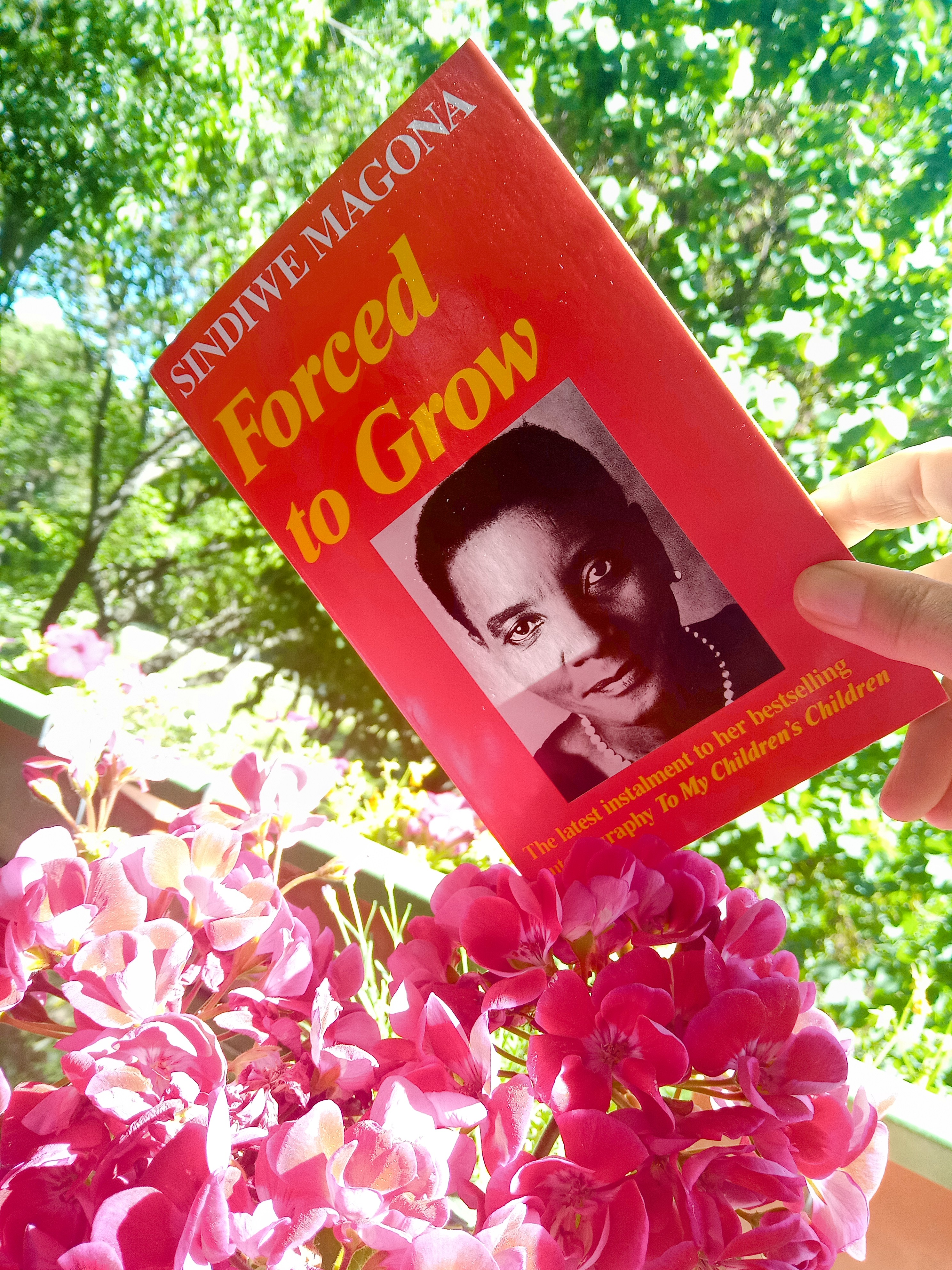
From poverty and struggle to a job offer with the UN in New York, this second volume of autobiography was hard to put down.

Overcoming Fear Through Perseverance and Self-Belief

Though she had a legal certificate to teach, she would spend four years working as a domestic servant in white women’s homes, because she was not a “breadwinner”, she had a husband. Unmarried, childless women enjoyed preferential hiring, as long as they retained that status. Ironically, she would find a way back into teaching when two unmarried teachers were forced to resign their posts, due to being “in the family way”.

I have this fear that if I ever believe that others wield power over my destiny, that I am so vulnerable, I might as well abdicate control of my life. For if I accept that, what is to stop me attributing to others all the setbacks I encounter? And once that happens, why would I do anything to get back on my own two feet? I would be virtually saying that it was beyond me to reclaim myself. I would be accepting absolute lack of control. And the Good Lord knows, I had very little control over my life as it was.

This fear, this need to go on believing I am in the driver’s seat, may be the one ingredient in my make-up I will not find easy to relinquish.

Therefore, with everything I cherished taken, broken or out of reach, I resolved I would become self-sufficient. I would work hard. I would study. I would pull myself up by my bootstraps. Yes, even though I had still to acquire the boots.

wp-1621263406986..jpgPursuing a higher level of education to offset so much else that set her back, fed into Magona’s ambition; as she achieved, her self belief grew and she pushed herself further, while assuming the role of both parents.

Moving from teaching into administration she witnessed how the country’s racist policies affect families, joining SACHED (South African committee for Higher Education) widened her circle of contact, connection, perspective & confidence.

What an inspiration Sindiwe is and what a gift to have witnessed her journey through reading; her perseverance and determination to make something more of herself, while trying to raise her children in a way to overcome the societally perceived disadvantage of being without the support or presence of the children’s father.

She sees the gift inherent in his abandonment, which is an example of how strong her mind is, she rewrites the narrative of her own life and how it will be. An errant husband is one thing, trying to create a career and attain a higher education while living within a system of apartheid and not being recognised as a citizen of your own country is impossible to imagine.

We are all the more fortunate to have been given such an insight into this personal and collective struggle and one courageous woman’s ability to work through and overcome it, in defiance of what the govt of the time wanted for the local African population.

Women Cooperating in Partnership

This volume too is an affirmation of the power and support made possible when women work in partnership, in collaboration, in community for a higher good.

The various groups she becomes part of that bring women together from different races, social classes and backgrounds and the facilitated discussions they have, both bring out her natural ability as a facilitator and leader and create a safe place for all them to develop empathy, to know each other, hear differing perspectives, challenge them, look for ways to resolve problems and how to put pressure where things need to change.

Invited to attend a meeting of a group of women who wanted change, it would create a pivotal turning point in her career.

As might be surmised, CWC (Church Women Concerned) was multi-racial, multi-denominational, inclusive of all faiths. It had members from the Christian faith, the Islamic faith and the Jewish faith. The primary objective was to build bridges, to effect reconciliation, to attempt to live lives that projected well into the future, to a time when the laws that separated us according to skin colour would be no more.

It was a fond dream put forward as a testimony of faith. We truly believed the possibility existed for apartheid to be dismantled. Therefore, it behoved us to hasten the process by living the future now.

How domination and partnership shape our brains lives and futureI was reminded of my recent read of Riane Eisler and Douglas Fry’s Nurturing Our Humanity: How Domination and Partnership Shape Our Brains, Lives, and Future, and the pockets of a Partnership System approach to living and being they promote and suggest already exist; something women are naturally capable of creating if given a chance, or are bold enough to go ahead and create these circles of connection and support anyway, as Sindiwe Magona and others did, despite the risks.

“Humans are capable of living in egalitarian social systems where neither dominates the other, where violence is minimized, and where prosocial cooperation and caring typify social life. This image is not a utopian fantasy but rather a set of potentials, if not inclinations, stemming from our evolutionary heritage.” Riane Eisler

A Third Volume of Autobiography Please

Oh I wish there was a third volume, I do hope she might be writing one, covering the last 30 years. However I also understand why since her retirement she has been writing children’s books, creating a necessary resource for children in her country and around the world, to learn, be entertained and create understanding, hope and belief in the ability for situations to change.

Highly Recommended.