
I was hesitant to start this knowing it was the last of Sara Baume’s books I had on my shelf to read. I find her work so nourishing and unique, she’s quickly become one of my favourite authors. So what joy, part way through reading this, to learn there is a novel due out in Apr 2022, Seven Steeples.
Navigating the In-Between
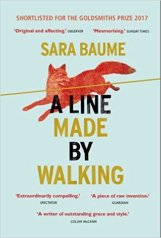 A Line Made By Walking takes place over one summer when 26 year old Frankie quits her Dublin bedsit and returns briefly to her parent’s home, before deciding to move temporarily into her grandmother’s slightly decrepit cottage that has long been on the market, since her death over a year ago.
It is a place where she can wallow and wait out a period of depression, create something meaningful, take walks, cycle and test herself on works of art. Her art school days are over, but finding meaning through artistic expression, looking for and noticing it around her, remains important, necessary.
“Why must I test myself? Because no one else will, not any more. Now that I am no longer a student of any kind, I must take responsibility for the furniture inside my head. I must slide new drawers into chests and attach new rollers to armchairs. I must maintain the old highboys and sideboards and whatnots. Polish, patch, dust, buff. And, from scratch, I must build new frames and appendages; I must fill the drawers and roll along.”
Art Creates Structure
Each chapter is titled with a different roadkill or animal species (not living) she has encountered nearby. Everything in the vicinity, plus her stream of consciousness thoughts, link together to create a seamless narrative, like the ripples of a stream bubbling over stones, moving around obstacles. Separate but part of something whole.
Photo by Bogdan R. Anton on Pexels.com
Though she is not herself at this time, Frankie creates purpose in each day, and while not under observation, makes slow progress. Her mother worries, but allows her the freedom she needs. She resists conventional treatment and takes quiet charge of her own healing.
My parents did not want me to come here to stay. They are, like everybody, fearful of being completely alone and suspicious of people who choose to be. They hesitate, like everybody, to understand how it could heal me, as I believe it can. I believe: I am less fearful of being alone than I am of not being alone.
She fixes the bicycle in the shed and establishes a routine and purpose, an affirmation of the natural order of things, that all life passes. Her grandmother, the dog, a robin, rabbit, rat, mouse, rook, fox, frog, hare, hedgehog and badger. Her photographs grace each chapter.
“Here is another rule for my project: no pets, only wild things. So it can be about the immense poignancy of how, in the course of ordinary life, we only get to look closely at the sublime once it has dropped to the ditch, once the maggots have already arrived at work.”
Artwork Word Association
Though it possesses the barest of plots, I loved it’s meandering style and waymarker structure through an incredible recollection of over seventy art installations, like rabbit holes the reader can burrow into, something Baume encourages us to do.
I urge readers to seek out, perceive and interpret these artworks for themselves.
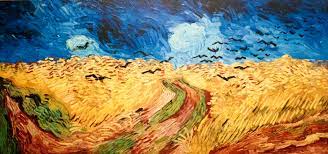 The line made by walking crops up three or four times in the novel, in reference to artworks, the first time in Van Gogh’s Wheatfield with Crows (1890) and represents the division between the field and sky, the sadness inherent in life. It was his final painting.
Having left the city behind, the narrative is as much immersed in the observations of nature around her, in the discoveries to be made on a walk, a cycle, a drive, a visit somewhere; her poetic voice making even the mundane mesmerising.
Again, the novel reads for me, as if the author is speaking, I forget there is a fictional protagonist, after reading her nonfiction Handiwork and listening to Sara Baume talk about her own art making projects, her presence is always there, lurking within the brush strokes of her characters.
Absolutely loved it.
Further Reading/Listening
Universidade de Santiago de Compostela, Spain : “An artist, first and foremost”. An Interview with Sara Baume by Margarita Estévez-Saá
Guardian Interview: Sara Baume: ‘I always wanted to be an art monster’ Feb 2017, Alex Clark
Sara Baume, Author, Visual Artist
 Sara Baume, born in 1984, was raised and now lives in County Cork, after having studied Fine Art at Dun Laoghaire College of Art, and Design and Creative Writing at Trinity College, Dublin.
Her fiction and criticism have been published in anthologies, newspapers and journals such as Irish Times, the Guardian, the Stinging Fly and Granta.
She has published two critically acclaimed novels, spill simmer falter wither (2015) winner of the Geoffrey Faber Memorial Prize and A Line Made by Walking (2017) shortlisted for the Goldsmiths Prize and a work of creative nonfiction Handiwork (2020).
“Baume’s protagonists in both her novels and short stories are solitary people, misfits of our society, mostly representatives of those human beings who find it difficult to adapt themselves to contemporary standards and conventions and who look for different ways of living or rather try to establish alternative communities of life.”
Pre-Order Seven Steeples
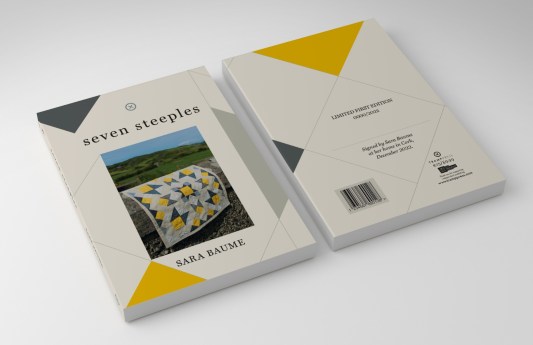
If you are interested in the forthcoming novel, it’s available to pre-order as a Limited Edition here
It is a novel about a couple that pushes against traditional expectations, moving with their dogs to the Irish countryside where they embed themselves in nature and make attempts to disappear from society.
 Written when the author was 26 years old, a similar age to her young protagonist Ursa Corrie (Corregidora) when we first encounter her. Ursa sings blues in a bar, the first paragraph of the book, reads like a piece of flash fiction, a story in 150 words. Of her marriage to Mutt in Dec 1947, his dislike of her singing after their marriage because he believed marriage changed all that.
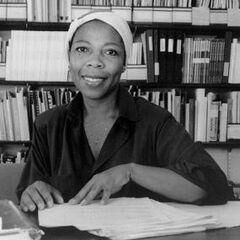 Gayl Jones was born in Kentucky in 1949. She attended Connecticut College and Brown University. She is a novelist, poet playwright, professor and literary critic.
 Here, she focuses particularly on the experience of those who are empaths, no matter where on the spectrum of empathy they sit. It explains and supports how they feel, expanding awareness and helps them understand how to cope with certain situations and why it is important that they play a larger role in our societies.
 One of the best rewards of dealing with the imbalances and disequilibrium is the creativity that awaits expression, something that is there within, buried beneath layers of issues that once addressed, reveal potential.
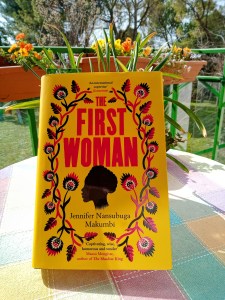 The First Woman might even have surpassed her debut novel Kintu which was fabulous and my outstanding read of 2018.
 The story is divided into five sections; The Witch (Nattetta, Bugerere, Uganda 1975), The Bitch (Kampala 1977), Utopia, When The Villages Were Young (Nattetta 1934) and Why Penned Hens Peck Each Other (1983).
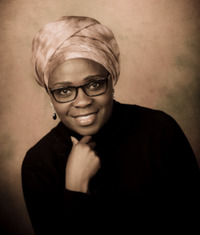 A Ugandan fiction writer, her first novel, Kintu, won the Kwani? Manuscript Project in 2013. Her second book is a collection of short stories, titled Manchester Happened (2019) for the UK/Commonwealth publication and Let’s Tell This Story Properly (US/Canada). It was shortlisted for The Big Book prize: Harper’s Bazaar.
 I’ve been aware of The Balkan Trilogy for a while and curious to discover it because of its international setting (Romania in the months leading up to the 2nd World War) though equally wary of English ex-pat protagonists living a life of privilege cosseted alongside a population suffering economic hardship and the imminent threat of being positioned between two untrustworthy powers (Russia and Germany).
 The novel becomes even more interesting and ironic when Guy decides to produce an amateur production of the Shakespearean play Troilus and Cressida, deliberately diverting the attention of his fans and followers, young and old, at a time when war is creeping ever closer and everyone else not involved in his amateur dramatics is frantic with worry. The play is the tragic story of lovers set against the backdrop of war.
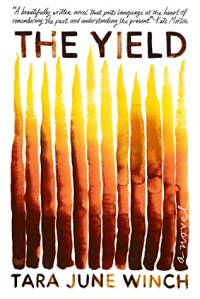


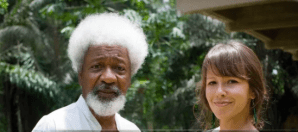 In 2008, she won


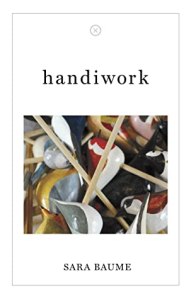 Handiwork is a pure joy to read, it’s a small book, with often only a paragraph on a page, it has a beautifully thought out structure, referencing a number of different texts that the author, who is an artist, a craftswoman clearly holds dear and memories of her father and grandfather, as family members who worked with their hands.

 Anne Heffron tells us it took her 93 days to write her book, but really it took a lifetime and she is to be commended for being able to complete it.

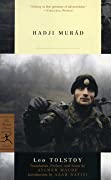 I read Hadji Murad because it was referenced in the last pages of Leila Aboulela’s excellent
 Word by Word