Summer by Edith Wharton

If ‘Ethan Frome’ is winter, so this, its companion novel is ‘Summer’, though ironically there is less a sense of the season and its metaphoric meaning; perhaps ‘The End of the Summer’ might have been a more apt title.

Edith Wharton was worldly and wealthy, speaking four languages and entertaining future American heiresses in her Paris home, her latter years lived in France. Yet as the range of her works testify, from rural Ethan Frome’  small town New England ‘Summer’ to the more social aspiring ‘House of Mirth’ and ‘Age of Innocence’ she understood and had empathy for those whose lives were lived at the opposite end of the spectrum of her own.

Charity Royall, an eighteen year old girl from the Mountain up there beyond, has been raised by a childless couple from town; she lives with her guardian Mr Royall, now a widow. She knows little and remembers nothing of her parents or that frowned upon community no one ever mentions.

Until the bold, young Architect Lucien Harnus appears, unafraid to ask questions. The more she learns while listening to Mr Royall respond to him, the more insecurity creeps into her being, though there is little outward sign of this change.

Initially we witness her wilful attitude, with which she succeeds in claiming the post of librarian against all other eligible girls in town, despite little interest in the actual job itself. She appears intelligent, adept at identifying opportunity, her questionable ancestry all but obliterated. However, she lacks a female role model and is barely on speaking terms with My Royall after his own near lapse with regard to the carnal instinct. In matters of love and the feminine, Charity is at a disadvantage. Her first experience with a young suitor is telling.

Her heart was ravaged by life’s cruellest discovery: the first creature who had come toward her out of the wilderness had brought her anguish instead of joy. She did not cry; tears came hard to her, and the storms of her heart spent themselves inwardly.

Without giving anything away of the story, the young man wins her over and she will have her summer of joy, but naïveté and a reluctance to assert herself in matters of the heart will compromise her position in this society that values and rewards tradition over love. She considers returning to her people:

There was no sense of guilt in her now, but only a desperate desire to defend her secret from irreverent eyes, and begin life again among people to whom the harsh code of the village was unknown.

It is a tragedy, as we have the impression that this is a young woman rescued from a life of little promise who could have made something of it, who should have, if she had been warned; she is as much a victim of the era she lives in as the lack of a female role model. I couldn’t help thinking about a possible sequel, one where she defies the odds and proves everyone wrong, because that is just the kind of girl she was.

In this respect the story differs from ‘Ethan Frome’ in which we are provided a glimpse into the future regarding what happens next, here Wharton has chosen to either leave that to the reader’s imagination, or her final act will be seen as sufficient evidence to predict a conventional outcome. You decide.

‘Summer’ has recently been adapted to the stage by Julia Stubbs Hughes and the play will focus on the three central characters of the novel, exploring the discovery of love and attraction in a society that restricts both.

It will be showing at the Jack Studio Theatre in South East London from 8 – 26 May 2012 if you happen to be in London. Further details can be found at ‘The Summer Project’.

Orange Prize Shortlist

From the longlist of 20 books, today a shortlist of five has been announced, for the 17th annual Orange Prize for women’s writing.

Set up to acknowledge and celebrate women’s contribution to storytelling the Award celebrates excellence, originality and accessibility in women’s writing throughout the world. It is awarded to a novel written by a woman in the English language.

Last year the award was won by Téa Obreht for The Tiger’s Wife and previous winners have included Barbara Kingsolver for The Lacuna, Andrea Levy’s A Small Island and Chimamanda Ngozi Adichie for Half of a Yellow Sun, which is currently being made into a film.

This year the shortlist includes:

Esi Edugyan                 ‘Half Blood Blues’           Canadian      2nd Novel

Anne Enright               ‘The Forgotten’                Irish             5th Novel

Georgina Harding      ‘Painter of Silence’             British         3rd Novel

Madeline Miller         ‘The Song of Achilles’         American      1st Novel

Cynthia Ozick              ‘Foreign Bodies’              American      7th Novel

Ann Patchett              ‘State of Wonder’             American      6th Novel

Short Synopses and Biographies can be read here.

The winner will be announced at an awards ceremony to be held at the Royal Festival Hall in London on 30 May 2012.

I haven’t read any on the list yet, but I have Ann Patchett’s ‘State of Wonder’ on the shelf and I have been eyeing up ‘Half Blood Blues’ for some time.

And you? Have you read any of the titles from either the short or the long list yet, or planning to?

Other People’s Stories

Recently someone asked as I live in France, was I reading any French authors, which prompted me to look on my shelves and reflect on this question. There were the two Irène Némirovsky books, ‘All Our Worldly Goods’ and ‘Fire in the Blood’ I read earlier this year and after discovering one of my French students was reading Dostoevsky’s ‘The Idiot’, one of my favourite classics and an excellent study of character, we exchanged books, he lending me Stefan Zweig’s ‘le voyage dans le passé’ (in French and an Austrian author so translated from German) while I gave him Paul Durcan’s epic poem ‘Christmas Day’.

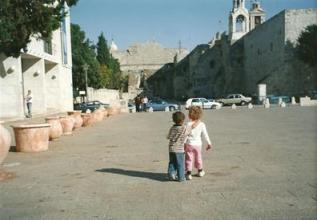
Manger Square, Bethlehem, Nativity Church beyond

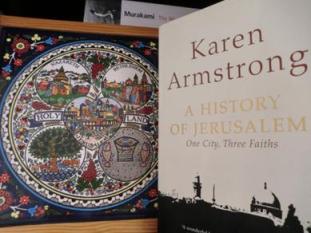
I have read a couple of Amélie Nothomb books, ‘Fear and Trembling’ a factional account of her year spent in Japan, which was very funny in an excruciating way and I adored Gustave Flaubert’s ‘Madame Bovary’, a book I’d put off reading for years and finally read it during a two month visit to Bethlehem, a welcome reward following Karen Armstrong’s
excellent but gruelling ‘A History of Jerusalem’
– One City, Three Faiths after which I had a feeling of absolute awe that there were ANY people left living in that part of the world, having endured one crusade after another as successive peoples carried out their quest to occupy that Holy Land. I also became more wide awake as to how this current generation of people carry the blue eyed gene.

I digress. Back with contemporary literature, my book buddy had mentioned Emmanuel Carrère’s ‘lives other than my own’ to me a few times and her creative writing class are about to be introduced to it, so I found a window of opportunity to read it this week. And what an extraordinary thing it is. Familiar with the phrase ‘truth can be stranger than fiction’; here I am left with the feeling that ‘truth can be as compelling as fiction’.

Emmanuel Carrère was on holiday in Sri Lanka with his girlfriend when the tsunami struck, they had been considering separating and then found themselves in a whirlwind period where the relative significance of these reflections was crushed by that incoming wave and the devastation it wreaked on others.

“Everything that has happened in those five days and was ending then, at that precise moment washed over us. A dam opened, releasing a flood of sorrow, relief, love, all mixed together.

I hugged Hélène and told her, I don’t want to break up anymore, not ever.

She said, I don’t want to break up anymore either.”

The couple return to France only to learn that Hélène’s sister is on a downward spiral with the return of a cancer that she had thought she was rid of when she was a teenager. Juliette, now in her thirties, is a juge d’instance (a judge of small claims and grievances) and has three girls, the youngest only fifteen months old. Through Juliette, Carrère meets her colleague Etienne, a cancer survivor, who shares with the author an insight into both the world of being a cancer survivor and their realm as judges in the small town of Vienne, where they strive and indeed succeed to make a difference.

What makes this recount all the more extraordinary is the sense of the author’s narcissism, long time chronicler of the tormented self, he readily admits this and while I wouldn’t say that being witness to these events resulted in an absolute cure, it certainly lead him, as the book title suggests, to explore and find some empathy in lives other than his own.

While on the French theme, I would like to mention Patricia Sands, author of ‘The Bridge Club’, another story inspired by the lives of others, Patricia is an advocate of the premise that everyone has a story to tell and she does this not only through her novel but via her blog. Each Friday she posts about France and this week, she has very kindly written a post about this blog, which you can view here. So thank you Patricia and do check out her book.

Growing up with a Wild Book

courtesy of Houghton Mifflin Harcourt Publishing Coy

Fefa is dyslexic. Reading makes her feel dizzy. She has never been a great fan of words, the letters get mixed up and make her feel anxious. The doctor has diagnosed ‘word blindness’.

    “Some children can see everything except words.

    They are only blind on paper” he says.

Fefa’s mother refuses to accept his verdict.

    “Seeds of learning grow slowly” she assures me.

She presents her daughter with a book and encourages her:

    “Think of this little book as a garden, throw wild flower seeds all over each page, let the words sprout like seedlings and then relax and watch as your wild diary grows.”

Fefa opens the book hesitantly, finds the pages blank within but wide open to her imagination, a place where she can write unobserved, in any way she wishes.

Soon Fefa is nurturing the slow transforming pages of her wild book as she would a precious flower garden, turning those awkward spiky, complex letters into words of beauty and importance.

Margarita Engle’s delightful ‘The Wild Book’ is a tribute in verse inspired by stories told to her by her maternal grandmother, a young girl growing up in rural Cuba, struggling with dyslexia. It will be enjoyed by readers of all ages, both those who struggle with and those who adore words and of course, lovers of the blank page journal everywhere.  It is a book to read and reread, silently and out loud.

“No one in my family ever throws anything away, not even an old story that can be told and retold late at night, to make the deep darkness feel a little less lonely.”

It is a magical story of a little girl coping with school, homework, older brothers, being left behind as the others go off to boarding school, of facing family threats and danger; all part of daily life on the farm and in the village, aided by a loving mother and uncle who love to recite poetry.

    “After my mother

    finishes her seascape,

    my uncle recites

    a long poem about the sky,

    where sun spirits


        ride glowing chariots,

    and there is someone

    who knows how to fly

    towards the truth

    of dreams…


        I don’t understand

    the whole thrilling verse but I love the way poetry

    turns ordinary words into winged things

    that rise up

    and soar!”

Now couldn’t we all do with a wild book…

Note: This book was an Advanced Reader Copy (ARC), provided by the publisher via NetGalley.

Is English a Friendly Language?

A bit of a cultural insight today, but one I think will interest you. I have lived in France for six years and affirming insights continue to delight me, and if you visit France for the first time, they can be a revelation and prevent a lot of frustration.
Recently, I discussed with two French students the use of “friendly” language, words and phrases that most of us use unconsciously, but for a foreign language learner, need to be emphasized – how to write or speak so that you sound friendly. It is particular to the English language (and others perhaps?) with varying degrees of importance to the British, American and other English language speaking cultures.

The French language and the way it is spoken in conversation is more direct in some respects than English (we are not talking about the length of time to make a point). Polite, yes. Friendly, no. They are not the same thing.

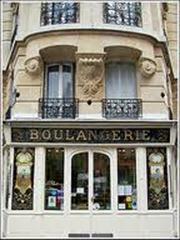
La Boulangerie, by Rita Crane

Every time you enter a boulangerie (bakery), supermarket, pharmacy, catch a bus, enter a hotel or any public place you will likely be greeted with ‘Bonjour Madame/Monsieur’ and you will also receive a farewell salutation ‘Au revoir (sounds more like ‘arve-wa’ here in the South), and ‘Bonne journée’. This is politeness and by learning these few simple French phrases, a more positive experience is likely. A smile however, is a rare and precious gift, and eye contact is not guaranteed.

For more insight on the smile, there are some interesting comments by French citizens in Elaine Sciolino’s ‘La Seduction – How the French play the Game of Life’, which infer a smile is something that must be earned, it is not a gesture offered freely to strangers, it signals the beginning of a relationship. It is not being unfriendly, it is being true. To smile at a stranger can be considered false and anyone indulging in that behaviour may even be regarded as suspicious, conduct Harold and Barbara Rhode’s were baffled by in William Maxwell’s novel The Château.

So during our lesson, we read an email text with some words underlined and then we read it a second time leaving out the underlined text. Here is a short section of the text.

Hi Patti! Thanks for your email. Your new job sounds really great – I know that you’ve wanted to work as a graphic designer for ages and ages, and now it’s finally happened! Congratulations! I’m sure you’ll do really well in the job. Well, what about my news? I arrived in Prague about a month ago. It was quite difficult at first. Of course I couldn’t speak the language, and finding a place to live wasn’t easy. Then my friend Belen and I found a lovely little flat in the old part of town. It’s quite small, but it’s full of character and we love it. I’m working as a waitress in a cocktail bar. It’s okay – I don’t suppose I’ll do it for long, but it’s a way to earn some money.

One student read the entire text and the other the shorter version. At the end, I asked what the difference was.

“The second one is more like we talk” one student responded confidently.

“Well, no.” I replied.

It is true, direct conversation sounds rude unfriendly in English and can be the cause of unintentional cultural misunderstandings when foreign language students attempt to speak in English. Equally, we should not expect our smiles and warm, friendly conversational attempts to be greeted in appreciation. We are strangers until we have been introduced, or at least until we have become regulars.

So what are those friendly words/phrases that we use? Here are some of them:

It seems that        Unfortunately         So    Luckily          In Fact     Of Course     Well      Basically     To be honest       Frankly         Anyway        Apparently     Actually       Obviously       Would you mind

Can you think of any others?

The Château

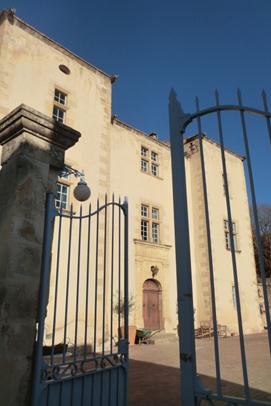
I finish William Maxwell’s 1961 classic on the last day of our two week séjour at the 16th century Château de la Loubière, what better environment to read of the travels of Barbara and Harold Rhode’s than from within the ancient walls of a majestic edifice that has saluted the sun, hosted visitors and protected its inhabitants from events we can only imagine, for centuries.
Maxwell’s Château Beaumesnil is in the north of France near Blois, where the young American couple make their acquaintance with Madame Viénot and her guests, whom they continue to encounter and attempt to befriend during their time in France, including time in Paris.

They visit France just after the end of the second world war which adds to the difficulties they encounter, though they are fortunate they speak French sufficiently well enough to be understood, though not in the manner they are accustomed to and this causes them much reflection, trying to figure out the reactions they inspire and why.


             “That’s all very interesting, but just exactly what are these two people doing in Europe?

They’re tourists.

Obviously. But it’s too soon after the war. Travelling will be much pleasanter and easier five years from now. The soldiers have not all gone home yet. People are poor and discouraged. Europe isn’t ready for tourists. Couldn’t they wait?

No, they couldn’t. The nail doesn’t choose the time or the circumstances in which it is drawn to the magnet.”

They encounter an uncertain transparency, for there are few false niceties extended, an important cultural difference causing them some consternation, however the couple make a commendable effort at developing the nearest to friendship that is possible with their hostess and her guests and bring the reader to some memorable locations and situations.

“They had hoped before they came here that a stay in the château would make them better able to deal with what they found in Paris, and instead a stay of three days in Paris had made them able, really for the first time, to deal with life at the château.”

In addition to the narration, there is another conversation about the book, which inserts itself from time to time and makes up the latter section of the book, so more than just a novel, it is as if we are witness to a conversation about the book with the author, as he indulges his experimental nature and writes as he pleases.

I guess one can never judge a château by its appearance and the white limestone exterior and cool human interior of Château Beaumesnil seem a world away from the warm terracotta tones of Château de la Loubière, as it soaks up the provençal winter sun, quietly reflecting her modest beauty on the surrounding landscape, full of warmth and the contented spirits of its past, recharging this particular visitor in the best possible way.

Today, pictures speak what words seem insufficient to describe, so I leave you with these and if you need an escape to Provence anytime soon, don’t hesitate to click on the link here for your own provençal retreat and mention you were sent by Claire.

The Snow Child

I recognise in the first two paragraphs the allure of melodic sentences, the promise of picturesque phrases that almost make music as they fly off the page like dancing quavers to craft pictures in my mind of that breath-taking, wild and unforgiving Alaskan landscape.

“Mabel had known there would be silence.”

“She had imagined that in the Alaska wilderness silence would be peaceful, like snow falling at night, air filled with promise but no sound, but that was not what she found.”

Nature’s beauty and harshness leave me in a perpetual state of wonder with an undercurrent of fear and Eowyn Ivey doesn’t waste any time bringing both these sensations to the reader. A walk across the ice river bristles with tension and though I am sure Mabel will be safe, this is only the first chapter after all, I have to pause momentarily and put the book kindle down, my heart racing as I hear imagine that ominous crack.

Mabel and Jack have left the tame pastures of Pennsylvania and the close-knit support of their child filled families to try and make a success of ‘homesteading’ in the Alaska wilderness. The daughter of a literature professor, from a family of privilege, Mabel is finding her own self-imposed exile and the never-ending grief of a stillborn child that rendered them childless, almost too much to bear.

“We needed to do things for ourselves. Does that make any sense? To break your own ground and know it’s yours free and clear.”

    “Here at the world’s edge, far from everything familiar and safe, they would build a new home in the wilderness and do it as partners, out from the shadow of cultivated orchards and expectant generations.”

On a day when Mabel, a believer who often set fairy traps as a child, was near her lowest, she and her husband Jack build a beautiful snow girl from the first winter snow, lovingly sculpted with childlike features and dressed with a blue scarf and red mittens.

“Such delicate features, formed by his calloused hands, a glimpse at his longing.”

Wakened by the cold, Jack catches a glimpse of something passing through the trees on the edge of the forest, a glimpse of a blue scarf and long blond hair flying behind it, disappearing into the trees.

The next morning the snow child has been reduced to a pile of melting snow, the mittens and scarf are gone; footprints lead from the remnant of their powdery infant, across the yard into the trees.

This is no ghost story, but I couldn’t help but make comparisons with my recent read of Susan Hill’s ‘A Woman in Black’, another character who may or may not have been real, in this story there is a genuine intrigue that carries you through some of most beautiful passages of writing both in the depiction of characters and what they experience, as well as the incredible wilderness within which they live, as we try to grasp what she is, this child of the snow.

Red Fox by John Luke

“A red fox darted among the fallen trees. It disappeared for a minute but popped up again, closer to the forest, running with its fluffy red tail held low to the ground. It stopped and turned its head. For a moment its eyes locked with Jack’s, and there, in its narrowing golden irises, he saw the savagery of the place. Like he was staring wilderness itself straight in the eyes.”

For me this story is an exquisite depiction of humanity living alongside nature and the constant to-ing and fro-ing between the seasons, trying to make progress, the necessity of humanity respecting nature and understanding the nature of fellow human beings. When we cease paying attention to either, suffering will undoubtedly follow.

A magical story that unfolds like an extraordinary dream; a unique blend of the inescapable reality of life in the wilderness, beside the quiet affirming beauty of believing in the imagination and visualising life into being.

Note: This book was an Advanced Reader Copy (ARC), provided by the publisher via NetGalley.

The Woman in Black

Long awaited and much anticipated (by me), Susan Hill’s ghost story ‘The Woman in Black’, though first published in 1983, is experiencing something of a revival with the film premiering this month and the ghost story genre currently ‘à la mode’.
Adapted to the stage in 1987, the play has been running continuously since then (it is the second longest-running play in the history of the West End of London), thus I have been eager to discover what lies between the slim covers of this intriguing book myself, since reading ‘A Kind Man’ and ‘The Beacon’ last year and becoming a fan of her books.

Knowing that Susan Hill is one of those writer’s whose work and combination of words I like to savour, I take my time and let the language wash over me, as I come to know Arthur Kipps, while he sits by the fire on Christmas Eve listening to his stepchildren narrate ghost stories. Though it is a festive occasion, a grain of discomfort winds itself between the lines on the page and there is a flicker of an unwelcome presence, a glimmer of something he does not wish to recall, despite being far removed from his past now.

The story unfolds as we are taken back to his early days as a young solicitor, journeying to the cold, misty, windswept marshes of Crythin Gifford where he must wind up the affairs of the recently deceased Mrs Alice Drablow. Ever prosaic, he takes the responsibility in his stride and tries to ignore the reluctance of locals to engage with him or have anything to do with the matters of the deceased widow and the eerie Eel Marsh House.

While I very much doubt that I will be seeing the film, though I am sure it is excellent and well-made, utilising known techniques to ensure viewers experience ever heightened tension, heartstopping anticipation and chilling unease to elicit that emotionally wrung out feeling – I say this if like me, you have an acute sensitivity to music which accentuates all those senses (I succeed in scaring those who weren’t scared by the movie), I do love how Susan Hill uses details of nature and the physical environment to keep the reader and her protagonist grounded in reality.

There is no music accompanying the reading of this book and so I too hang on to that ambiguous reality. When Arthur visits Eel Marsh House and for practical purposes stays the night (yes, he is rather stubborn), he reassures himself and us by opening all the windows, understanding the layout of the house, going for a walk, venturing out in the dark against his better instinct only to be confronted with something that may or may not be able to be explained. And it’s not just him, even Spider the companionable dog responds to the lure of noises that sound familiar but could indeed be sinister.

It’s the perfect ghost story, because so much is left up to the interpretation of the reader, you can be a believer or a non-believer and regardless come away from this story feeling intrigued, satisfied and wanting to talk to someone about how you understood it. I am already looking forward to the next Susan Hill book that comes my way.

All Our Worldly Goods by Irène Némirovsky

This is the second novel I picked up from the library, the first being ‘Fire in the Blood’ a tale of the consequence of indulging forbidden love. ‘All Our Worldly Goods’ has a similar theme but with different circumstances and this is more a story of what happened in the early 1990’s to those who preferred to make their own decisions regarding matrimony rather than follow the sage advice of their parents or in this case Grandfather. It is also a prelude to Némirovsky’s masterpiece ‘Suite Francaise’.

This is an era where marrying for love can be serious enough an outrage to find oneself disinherited. When there is only one son and heir and the family fortunes are dwindling, it is necessary that said son marries a woman with a significant and esteemed dowry. Pierre Hardelot follows his heart rather than his head and becomes estranged from his family just before being conscripted into the army to fight in the First World War.

Returning to the ruins of home © IWM (B7688)

With the onset of war, their families are forced to abandon the village, some fleeing by car, others on foot, only to eventually return to ruins, which they set about rebuilding in the hope that something as horrific and terrible as this war they have experienced can never be repeated.

However history has a habit of repeating itself, and so it does in both love and war. Another generation and an heiress banished by her family due to long standing interfamily resentments, and another son called up to war.  Fortunately death, destruction and shared traumatic experiences can provide the necessary ingredients for forgiveness, especially when strong, capable, male resources become a scarce commodity.

It is an interesting story depicting the lead up to the forced evacuations by families from the cities and provinces to find safety from the advancing invading armies, though it is dealt with lightly and there is nothing of the terror that one assumes must have consumed Némirovsky herself, knowing what her own family went through. In this story we are never confronted with the invaders and neither do we have a very real feeling for how war must have changed Pierre.

First published in 1947, five years after her death at Auschwitz, this book can now seen in context with the more recently published collection of Némirovsky’s works, unearthed by her biographers.

What the Dickens!

I couldn’t let the day pass without acknowledging that it is 200 years today since Charles Dickens, perhaps the greatest English novelist of the Victorian era, the second of eight children, was born on 7 February 1812 at Landport, near Portsmouth, Hampshire. So…
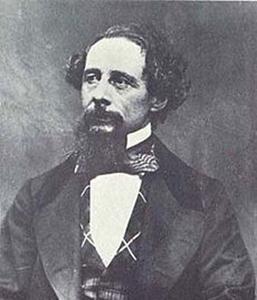
 

Happy Birthday Dickens!

Though not poor as such, the family went through difficult times and young Charles Dickens certainly experienced and saw hardship first-hand, images and memories that stayed with him and manifested themselves over and again through the pages of his life’s work.

Photo via wikipedia

I’ve yet to start one of his books this year, though I have plans to read his last novel ‘Our Mutual Friend’ and ‘David Copperfield’, the latter said to be close to his own childhood experiences and perhaps less painful for him to write than his abandoned attempt to write his own autobiography, which he found too distressing to continue.

It is a testament to his popularity that his works have never been out of print and continue to be read as much today as they did when they were serialised in publications in the 19th century.

To experience or learn more of Dickens world, there is Claire Tomalin’s recently published ‘Charles Dickens,  A Life’ , an exhibition at the Museum of London and a brilliant website where you can get completely lost in Dicken’s facts and memorabilia.

My favourite commemoration thus far, would have to be Dovegreyreaders scribbles in relation to his support and inspirational campaigning for England’s first children’s hospital, the great and wonderful GOSH, Great Ormond Street Hospital.

So, do you have a favourite Dickens novel or plan to read one this year?