International Booker Prize shortlist 2024

The shortlist for the International Booker Prize 2024 has been decided. It features novels from six countries, (Argentina, Brazil, Germany, Netherlands, South Korea and Sweden), translated from Dutch, German, Korean, Portuguese, Spanish and Swedish.

Chair of judges Eleanor Wachtel said:

‘Our shortlist, while implicitly optimistic, engages with current realities of racism and oppression, global violence and ecological disaster’

Prize Administrator Fiammetta Rocco added:

‘The books cast a forensic eye on divided families and divided societies, revisiting pasts both recent and distant to help make sense of the present’ 

Read Around the World, Other Perspectives

The International Booker Prize introduces readers to the best novels and short story collections from around the globe that have been translated into English and published in the UK and/or Ireland. Recognising the vital work of translators, the £50,000 prize money is divided equally: £25,000 for the author and £25,000 for the translator(s).

The shortlist was chosen from a longlist of 13 titles announced in March, which was selected from 149 books published in the UK and/or Ireland between May 1, 2023 and April 30, 2024, submitted to the prize by publishers. 

I have read one from the shortlist and it was excellent; Selva Almada’s Not a River (link to my review), the second of her novella’s I have read. Not having read any others on this list, I can’t really comment, but I would love to know what you thought if you have read any of these, or intend to. Brief summaries below.

The Shortlist

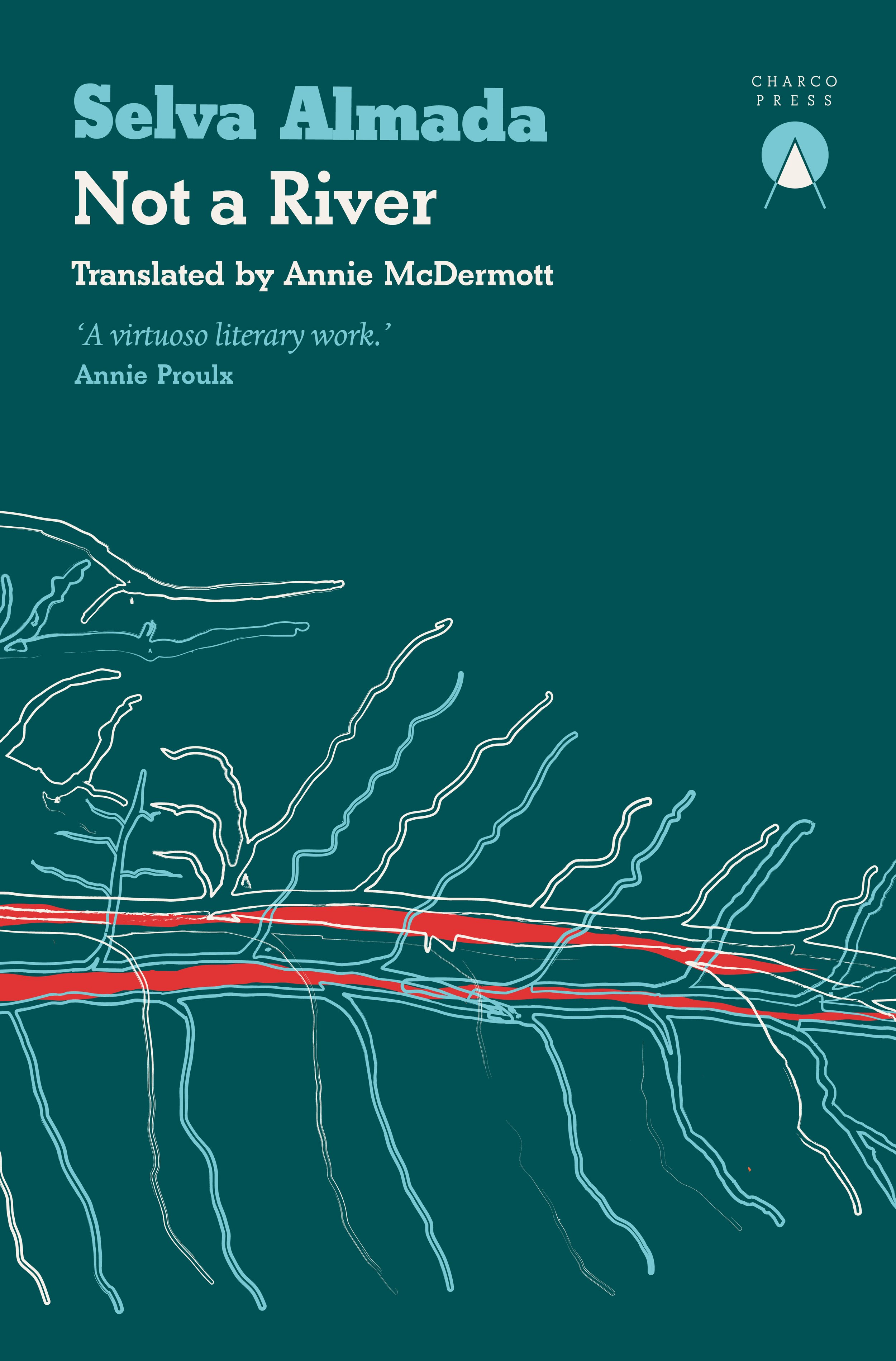
Not a River by Selva Almada (Argentina) tr. by Annie McDermott
International Booker Prize longlist 2024 Argentinian literature Spanish translation

Selva Almada’s novel is the finest expression yet of her compelling style and singular vision of rural Argentina.

Three men go out fishing, returning to a favourite spot on the river despite their memories of a terrible accident there years earlier. As a long, sultry day passes, they drink and cook and talk and dance, and try to overcome the ghosts of their past. But they are outsiders, and this intimate, peculiar moment also puts them at odds with the inhabitants of this watery universe, both human and otherwise. The forest presses close, and violence seems inevitable, but can another tragedy be avoided?

Mater 2-10 by Hwang Sok-yong (Korea) tr. Sora Kim-Russell, Youngjae Josephine Bae

An epic, multi-generational tale that threads together a century of Korean history. 

Centred on three generations of a family of rail workers and a laid-off factory worker staging a high-altitude sit-in, Mater 2-10 vividly depicts the lives of ordinary working Koreans, starting from the Japanese colonial era, continuing through Liberation, and right up to the twenty-first century. 

What I’d Rather Not Think About by Jente Posthum (Netherlands) tr. Sarah Timmer Harvey

A deeply moving exploration of grief, told in brief, precise vignettes and full of gentle melancholy and surprising humour.

What if one half of a pair of twins no longer wants to live? What if the other can’t live without them? This question lies at the heart of Jente Posthuma’s deceptively simple What I’d Rather Not Think About. The narrator is a twin whose brother has recently taken his own life. She looks back on their childhood, and tells of their adult lives: how her brother tried to find happiness, but lost himself in various men and the Bhagwan movement, though never completely. 

Crooked Plow by Itamar Vieira Junior (Brazil) tr. Johnny Lorenz

A fascinating and gripping story about the lives of subsistence farmers in Brazil’s poorest region.

Deep in Brazil’s neglected Bahia hinterland, two sisters find an ancient knife beneath their grandmother’s bed and, momentarily mystified by its power, decide to taste its metal. The shuddering violence that follows marks their lives and binds them together forever.

Kairos by Jenny Erpenbeck (Germany) tr. Michael Hofmann

An intimate and devastating story of the path of two lovers through the ruins of a relationship, set against the backdrop of a seismic period in European history.

Berlin. 11 July 1986. They meet by chance on a bus. She is a young student, he is older and married. Theirs is an intense and sudden attraction, fuelled by a shared passion for music and art, and heightened by the secrecy they must maintain. But when she strays for a single night he cannot forgive her and a dangerous crack forms between them, opening up a space for cruelty, punishment and the exertion of power. And the world around them is changing too: as the GDR begins to crumble, so too do all the old certainties and the old loyalties, ushering in a new era whose great gains also involve profound loss. 

The Details by Ia Genberg (Sweden) tr. Kira Josefsson
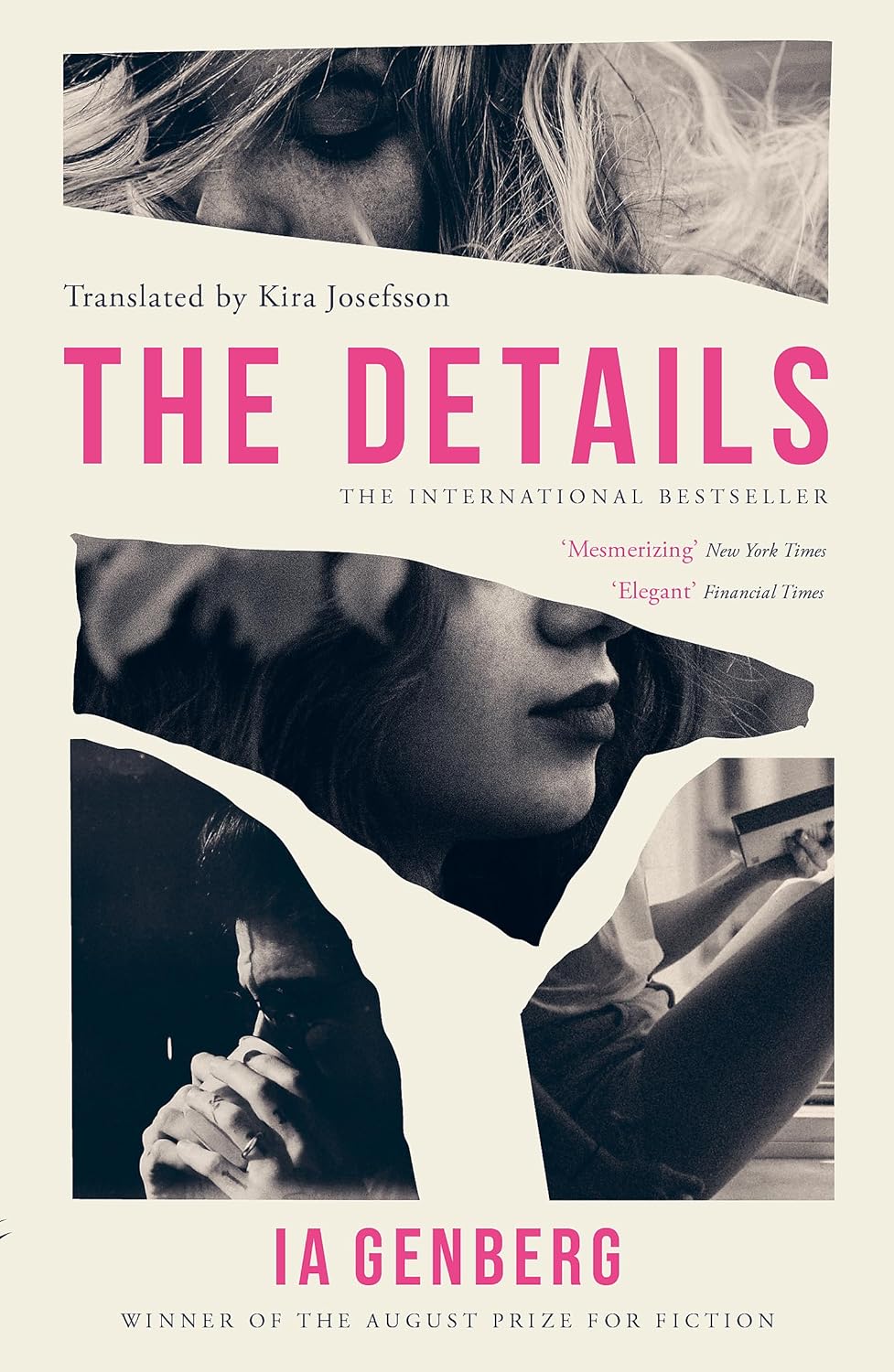
In exhilarating, provocative prose, Ia Genberg reveals an intimate and powerful celebration of what it means to be human.

A famous broadcaster writes a forgotten love letter; a friend abruptly disappears; a lover leaves something unexpected behind; a traumatised woman is consumed by her own anxiety. In the throes of a high fever, a woman lies bedridden. Suddenly, she is struck with an urge to revisit a particular novel from her past. Inside the book is an inscription: a message from an ex-girlfriend. Pages from her past begin to flip, full of things she cannot forget and people who cannot be forgotten. Johanna, that same ex-girlfriend, now a famous TV host. Niki, the friend who disappeared all those years ago. Alejandro, who appears like a storm in precisely the right moment. And Birgitte, whose elusive qualities shield a painful secret. Who is the real subject of a portrait, the person being painted or the one holding the brush?

The Winner

The International Booker Prize 2024 ceremony will take place from 7pm BST on Tuesday, 21 May. It is being held for the first time in the Turbine Hall at London’s Tate Modern.

Highlights from the event, including the announcement of the winning book for 2024, will be livestreamed on the Booker Prizes’ channels, presented by Jack Edwards. 

Ockham New Zealand Book Awards Shortlist 2024

Earlier this month the shortlists were announced for the New Zealand Book Awards 2024. All four of the shortlisted authors have won the prize before. You can read my post on the 8 novels that made the longlist here.

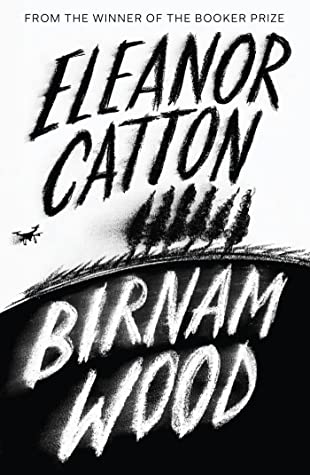
Eleanor Catton, who won the Booker Prize in 2013 for The Luminaries,(my review) is a finalist for her novel Birnam Wood (my review).

Emily Perkins, who won the Montana Medal for Fiction or Poetry in 2009 for Novel About My Wife is shortlisted with Lioness. (I read and enjoyed it, but not reviewed)

Pip Adam, who won the Acorn Foundation Fiction Prize in 2018 for The New Animals (recently read but not reviewed) is in the running with Audition. (On my bookshelf!)

Stephen Daisley, who won the first awarded Acorn Foundation Fiction Prize in 2016 for Coming Rain is a contender this year with A Better Place.

Judge’s Comment

Juliet Blyth, convenor of judges for the Jann Medlicott Acorn Prize for Fiction, says there is much to celebrate among this year’s shortlisted novels, and readers will be rewarded by the richness contained within their pages.

“These four singular and accomplished titles encompass pertinent themes of social justice, violence, activism, capitalism, war, identity, class, and more besides. Variously confronting, hilarious, philosophical, and heart-rending, these impressive works showcase Aotearoa storytellers at the top of their game.”

The Shortlist

The four novels shortlisted for the fiction prize, along with judges’ comments are:

Jann Medlicott Acorn Prize for Fiction

NZ book awards 2024 shortlist

Audition by Pip Adam, Te Herenga Waka University Press – [Science Fiction/Dystopia]

– A spaceship called Audition is hurtling through the cosmos. Squashed immobile into its largest room are three giants: Alba, Stanley and Drew. If they talk, the spaceship keeps moving; if they are silent, they resume growing.

Talk they must, and as they do, Alba, Stanley and Drew recover their shared memory of what has been done to their former selves – experiences of imprisonment, violence and misrecognition, of disempowerment and underprivilege.

A novel, part science fiction, part social realism that asks what happens when systems of power decide someone takes up too much room – about how we imagine new forms of justice, and how we transcend the bodies and selves we are given.

Judges’ Comment

Three giants hurtle through the cosmos in a spacecraft called Audition powered by the sound of their speech. If they are silent, their bodies continue to grow. Often confronting and claustrophobic, but always compelling, Audition asks what happens when systems of power decide someone takes up too much space and what role stories play in mediating truth. A mind-melting, brutalist novel, skillfully told in a collage of science fiction, social realism, and romantic comedy.

A Better Place  by Stephen Daisley, Text – [WWII visceral novel]

– a novel about brothers at war, empathy and the aftermath. Aged 19 in 1939, Roy and his twin brother Tony enlist in the NZ Infantry Brigade. They fight in Crete where Tony dies. Burdened by the loss of his brother, Roy continues to Africa and Europe.

Beautifully written, brutal, tender and visceral, A Better Place is about love in its many forms.

Judges’ Comment

The tragedies of war and prevailing social attitudes are viewed with an unflinching but contemporary eye as Stephen Daisley’s lean, agile prose depicts faceted perspectives on masculinity, fraternity, violence, art, nationhood and queer love in this story about twin brothers fighting in WW2. With its brisk and uncompromising accounts of military action, and deep sensitivity to the plights of its characters, A Better Place is by turns savage and tender, absurd and wry.

eco thriller tech billionaire New Zealand

Birnam Wood  by Eleanor Catton, Te Herenga Waka University Press – [Eco Mystery/Thriller(y)]

– an eco-thriller of sorts that considers intentions, actions, and consequences, an unflinching examination of the human impulse to ensure our own survival. Featuring green activists, politician farmer and his wife, a tech billionaire and the lone wolf investigative journalist with a past.

Judges’ Comment

When Mira Bunting, the force behind guerilla gardening collective Birnam Wood, meets her match in American tech billionaire Robert Lemoine, the stage is set for a tightly plotted and richly imagined psychological thriller. Eleanor Catton’s page-turner gleams with intelligence, hitting the sweet spot between smart and accessible. And like an adrenalised blockbuster grafted on to Shakespearian rootstock, it accelerates towards an epic conclusion that leaves readers’ heads spinning.

Lioness by Emily Perkins, Bloomsbury – [Literary Fiction/Blended Family, Second Wife Drama]

– a novel of a woman’s self doubt and shifting place in second family’s and relationships.

Trevor and Therese are a power couple living in the capital city, he is a developer and she runs a chain of fashion boutiques. That’s the exterior. At home, there is his adult family (issues) to contend with and her uncertain place in a scenario that is rapidly shifting when his deals come under scrutiny and his children make increasing demands. Increasingly, she finds refuge elsewhere, inviting another kind of risk into her precarious existence.

Judges’ Comment

After marrying the older, wealthier Trevor, Teresa Holder has transformed herself into upper-class Therese Thorn, complete with her own homeware business. But when rumours of corruption gather around one of Trevor’s property developments, the fallout is swift, and Therese begins to reevaluate her privileged world. Emily Perkins weaves multiple plotlines and characters with impressive dexterity. Punchy, sophisticated and frequently funny, Lioness is an incisive exploration of wealth, power, class, female rage, and the search for authenticity.

Winner Announced

The winners will be announced on 15 May during the Auckland Writer’s Festival.

Dublin Literary Award Shortlist 2024

Back in January, the Dublin Literary Award 2024 announced a longlist of 70 books nominated by 80 libraries including librarians and readers, from 35 countries around the world.

Six novels have now been shortlisted for the award, featuring authors who are American, Canadian, Australian, Romanian and Irish, nominated by public libraries in Romania, Germany, Jamaica, Canada and Australia.

The only one I have read, and it was a 5 star read for me is Sebastian Barry’s Old God’s Time (see my review here) I include the judges’ comments below to help you decide if you are interested in reading any of the nominated titles.

Solenoid sounds interesting and has been highly praised, but 840 pages is too grand of an ask for this reader. Praiseworthy is tempting, but again 740 pages!

The Shortlist of Six Novels

Old God’s Time by Sebastian Barry (Ireland) (literary fiction)

– Retired policeman Tom Kettle is enjoying the quiet of his new home in Dalkey, overlooking the sea. His peace is interrupted when two former colleagues turn up at his door to ask about a traumatic, decades-old case. A case that Tom never came to terms with. His peace is further disturbed by a young mother who asks for his help. And what of Tom’s wife, June, and their two children? A beautiful, haunting novel about what we live through, what we live with, and what will survive of us.

Judges’ Comments

Old God’s Time by Sebastian Barry is a book about love. It’s a world of precarious balancing, a high wire act in which the ghosts of the past intermingle with the challenges of the present. Here a retired policeman settling into a new stage in his life faces the legacy of an old case. This exploration of trauma, childhood abuse in catholic institutions, memory and the lingering impact of loss is devastating. It deftly avoids the trap of solely being one note in that regard. Barry does something clever here where he elevates the work beyond the confines of its themes into a reading experience that often feels transcendent despite the painful subject matter. It’s impossible to read this novel and not be moved by its mercurial power, the ways in which it shifts ideas of human consciousness. This is a beautiful and, in some ways, tender work. Full of heart, risk and that illusive, rare quality the best storytellers possess, it marks Barry, one of our most gifted talents as a writer who continues to invigorate the novel form. 

‘Outstanding, a revelatory and deeply affecting work. Barry’s meditation on trauma, memory and loss is a book about love that lingers in the body long after reading it.’ — Irenosen Okojie, 2024 Dublin Literary Award Judge

Solenoid by Mircea Cărtărescu, translated by Sean Cotter (Romania)

– Based on Cărtărescu’s own role as a high school teacher, Solenoid begins with the mundane details of a diarist’s life and spirals into a philosophical account of life, history, philosophy, and mathematics.

On a broad scale, the novel’s investigations of other universes, dimensions, and timelines reconcile the realms of life and art. Grounded in the reality of late 1970s/early 1980s Communist Romania, including long lines for groceries, the absurdities of the education system, and the misery of family life.

Combining fiction, autobiography and history, Solenoid ruminates on the exchanges possible between the alternate dimensions of life and art within the Communist present.

Judges’ Comments

We can imagine (it not fully grasp) a world that has, in comparison to our own, an extra dimension.” In some respects, this is the world of Solenoid. The city of Bucharest in which the narrator is a teacher and failed writer is a place in which what appears to be an abandoned factory contains unexpected caverns, tunnels and a gallery of enormous parasites, where an apparently ordinary, run-down house is built upon an electrical device that causes people lying in bed to float. By turns wildly inventive, philosophical, and lyrical, with passages of great beauty, Solenoid is the work of a major European writer who is still relatively little known to English-language readers. Sean Cotter’s translation of the novel sets out to change that situation, capturing the lyrical precision of the original, thereby opening up Cărtărescu’s work to an entirely new readership.

‘An anti-novel that for all intents and purposes should not exist but still does despite itself, thanks to the overpowering talents of the author and the translator.’ — Anton Hur,  2024 Dublin Literary Award Judge

Haven by Emma Donoghue (Ireland) (historical fiction)

– In 7th-century Ireland, a scholar/priest called Artt has a dream telling him to leave the sinful world behind. Taking two monks – young Trian & old Cormac – he rows down the river Shannon in search of an isolated spot on which to found a monastery. With only faith to guide them and drifting out into the Atlantic, the three men find a steep, bare island, inhabited by tens of thousands of birds, and claim it for God. In such a place, what will survival mean? What they find is the extraordinary island now known as Skellig Michael.

Judges’ Comments

A novel of stylistic precision yet ethical complexity, Haven tells the story of three monks in seventh-century Ireland in search of a place of retreat from worldly temptation. Their journey by boat to a barren islet allows the com- plex interaction between experience and idealism to be revealed and subtly explores the importance of evolving human bonds in shaping community. Haven’s searching treatment of authority, and the tensions between rigid beliefs and openness of thought, extend beyond interpersonal dynamics to our relationship with the natural environment. The world Emma Donoghue creates in this novel is at once strange and familiar, provoking us to think deeply about the importance of human empathy in navigating our place on this earth.

‘A novel of stylistic precision yet ethical com- plexity, Haven offers a searching treatment of authority, examining the implications of fixed beliefs for our relationships with each other and with the more-than-human world.’ — Lucy Collins, 2024 Dublin Literary Award Judge 

If I Survive You by Jonathan Escoffery (USA/Jamaica) (Short Stories)

–  In the 1970s, Topper and Sanya flee to Miami as political violence consumes their native Kingston. But America, as the couple and their two children learn, is far from the promised land. Excluded from society as Black immigrants, the family pushes on first through Hurricane Andrew and later the 2008 recession. But even as things fall apart, the family remains motivated by what their younger son calls “the exquisite, racking compulsion to survive.”

Pulsing with vibrant lyricism and sly commentary, Escoffery’s debut unravels what it means to be in between homes and cultures in a world at the mercy of capitalism and white supremacy.

Judges’ Comments

Jonathan Escoffery’s energetic novel-in-stories, If I Survive You, follows a Jamaican family living hand-to-mouth in Florida. The different members of the family search for a foothold in this new and exhausting country, each in their own way, struggling against poverty, racism, recession and hurricanes. At the heart of the story lies a deep-rooted racial ambiguity; where does one belong and is it possible to be “a little of this and a little of that” and still find your way, find your people, find a future? The story also deals with the universal condition of fatherly rejection and sibling rivalry, with a remarkable eye for perfect de- tails. The narrative is vibrant, humorous, snappy and quietly devastating; eight interlinking stories told by various voices, often from an urgent and empathetic second-person point of view, and also in Jamaican dialect, that describe how life keeps knocking the family back in their pursuit of identity and happiness.

‘A fresh voice in fiction, Jonathan Escoffery blurs the lines between the short story and the novel in a work that brings us into the lives of Jamaican-Americans in Miami. Through linked stories, the form mirrors the lives of the characters and their struggles to connect, both with their families, and with the society around them.’ — Chris Morash, 2024 Dublin Literary Non-Voting Chair

The Sleeping Car Porter by Suzette Mayr (Canada) (Historical Fiction)

– It’s 1929, and Baxter is considered lucky, as a Black man, to have a job as a porter on a train that crisscrosses the continent. He has to smile and nod for the white passengers when they call him ‘George.’ He’s obsessed with teeth, and saving up tips for dentistry school.

On this trip, the passengers are unruly, especially when the train is stranded for days – their secrets leak out, blurring with Baxter’s sleep-deprivation hallucinations. When he finds an illicit postcard of two men, Baxter’s longings are reawakened; keeping it puts his job in peril, but he can’t part with it or his memories of a certain Porter Instructor.

Judges’ Comments

An unconventional historical novel that combines meticulous research and deep imagination, The Sleeping Car Porter by Suzette Mayr takes readers on a vividly depicted train ride in the 1920’s from the perspective of a Black and queer sleeping car porter as he tries to make a life that is a little less precarious and a lot more hopeful despite the odds stacked against him. As the train travels through the rural Canadian landscape, Baxter, the porter of the title, similarly traverses the vistas of memory, the reality that surrounds him, and his hopes and visions of the future on his own interior journey of discovery and self-creation. Written in a concise yet evocative style, this slim novel combines the epic scope of history with the lift and verve of ghost stories and queer narrative, creating a quietly propulsive read that at the same time takes stock of an entire life in the space of a single train voyage.

“He drinks melting glacier, plunges his hands into the water past the point of ice just to wake himself up and calm himself down. He ascends into the vestibule, his legs shaky, his hands icy numb.”

‘You can almost taste the exhaustion and despair in this quiet, yet vivid, story of a black man working as a porter on a sleeper train in Canada in 1929. Beautifully written, melancholy but never without hope.’ Ingunn Snaedel, 2024 Dublin Literary Award Judge

Praiseworthy by Alexis Wright (Australia) (Literary fiction)

–  In a small town in northern Australia dominated by a haze cloud, a crazed visionary sees donkeys as the solution to the global climate crisis and the economic dependency of the Aboriginal people. His wife seeks solace from his madness in the dance of moths and butterflies. One of their sons, called Aboriginal Sovereignty, is determined to commit suicide. The other, Tommyhawk, wishes his brother dead so that he can pursue his dream of becoming white and powerful.

Praiseworthy is a novel which pushes allegory and language to its limits, a cry of outrage against oppression and disadvantage, and a fable for the end of days.

Judges’ Comments

Alexis Wright’s Praiseworthy is a wonder of twenty-first century fiction. This modernist more-than-an-allegory about a pernicious haze that settles over a northern Australia town yokes a painfully contemporary tale of political, social and climatic disaster to a narrative consciousness embodying 65,000 years of aboriginal survival. Intimate while epic, the family drama at its center reads like chamber music on a symphonic scale. Wright has authored a blisteringly funny book, replete with situations and speech that elicit wild laughter – a laughter through tears we may recognize from our readings of Beckett and Kafka. She has also written a beautiful one: time and again Praiseworthy delivers unforgettable images, from ‘aerial rivers’ of dancing butterflies to hordes of stinking donkeys. Startlingly original, fiercely political, uncompromising in every respect, Praiseworthy expands the possibility of the novel form.

‘Funny and fierce, Alexis Wright’s Praiseworthy is a wonder of twenty-first century fiction. This modernist more-than-an-allegory yokes a painfully contemporary tale of political, social and climatic disaster to a narrative consciousness embodying 65 000+ years of aboriginal survival.’ — Daniel Medin, 2024 Dublin Literary Award Judge

Reading From Libraries

The novels nominated and shortlisted for the Award will be available for readers to borrow from Dublin City Libraries and from public libraries around Ireland, or can be borrowed as eBooks and some as eAudiobooks on the free Borrowbox app, available to all public library users.

Have you read any of the shortlist? Are you tempted by any of these titles? Let me know in the comments below.

Where I End by Sophie White

March is Reading Ireland month and I have been in an early spring mode since mid Feb, attending to other activities, nature excursions, writing and editing projects, reading and listening to texts while reflecting elsewhere. There is a new energy present that demands it of me and I follow it contentedly.

I did write some notes on one Irish book I have read this month. I love to participate in Cathy’s March reading month, so here it is. I will continue (intend) to read Irish literature this year, although I am making writing and editing more of a priority, so there may be fewer reviews here.

Review

This was an unusual read for me, not the kind of novel I usually choose, one I selected because I admire the Irish publisher Tramp Press, who publish Doireann Ní Griofa and Sara Baume.

Where I End might be horror, but I’m not even sure since I’ve never read that genre before. It was described by the Irish Independent as

‘a truly different Irish novel. One that entwines Irish myth, the reality of human bodies, life and death, and traditional gothic horror in a macabrely beautiful and, in the end, redemptive dance.’

The novel won the Shirley Jackson Award (2023), an award that recognises ‘outstanding achievement in the literature of psychological suspense, horror, and the dark fantastic’, voted on by writers, critics, editors, and academics.

It depicts a short period in the life of a teenage daughter caring for a mute, incapacitated mother, who appears to have been that way since she was a baby. Her paternal grandmother, who also lives with them is about to start a job that will absent her from the house, allowing Aoileann a freedom and recklessness she has not until now experienced.

It reminded me of the experience of reading another Irish author, Jan Carson’s The Firecatchers because it depicts a character who has no faculty for empathy. But the feeling that it evoked was different, White’s character Aoileann compels the reader to want to stay with her and find out if there will be a transformation, a redemption, despite all the signs of foreboding.

The decision to end this thing comes on slowly, like light filling a room after a fathomless night. It began like this:

The opening line of the first chapter. We observe her as carer of ‘the thing’ which I ask myself, is that her mother? And when she occasionally uses that word, I realise, yes it is.

There is a question I have never asked. On the nights that we find her far from her bed, her ragged hands reaching towards nothing, the idea prods me. Is the bedthing trying to get away? Are we doing this to her?

This the mystery is seeded. Why does this young woman who daily cares for her immobile mother refer to her in such a way? What happened that this situation should have come about and why doesn’t anyone know what goes on here? Why do people look at her strangely and spit as she passes by?

In the opening pages before chapter one, she describes the three things that describe her limited world. My mother. My home. My house. A woman trapped inside a body, a small insular community living on an island, three women living in a house no one visits, except the man.

The islanders all share a similar look, the result of genetic material passed back and forth for so many generations – it has distilled into a distinct, unpleasant appearance. Móraí has it too. Me, less so as my mother is from the outside; Dad is the same as me – a little watered down because his father was also a mainlander.

It is a disturbing read that the arrival of a visitor, an artist with a young baby at first seems like an opportunity for growth and healing, but increasingly becomes another avenue of dysfunction, a creeping fear of what is in danger of happening.

It speaks to both the fear and allure of the outsider, of the extremes of dysfunction that a lack of maternal nurturing and love can bring and the desire to overcome and escape all of that.

The writing and descriptions were brilliant, moving between enticing literary prowess and elements of the macabre. Somehow this is balanced out in a way that made me both wary of what was coming but unable to stop turning the pages.

Very well portrayed, a haunting, compelling read.

Further Reading

Irish Times Interview, Sophie White, Where I End – a horror about a young woman’s attempts to find motherly love, and to get to the bottom of family secrets that made her who she is. Niamh Donnelly

Sophie White, Author

SOPHIE WHITE is a writer and podcaster from Dublin. Her first four books, Recipes for a Nervous Breakdown (Gill, 2016), Filter This (Hachette, 2019), Unfiltered (Hachette, 2020) and The Snag List (Hachette, 2022), have been bestsellers and award nominees. Her fifth book, the bestselling memoir Corpsing: My Body and Other Horror Shows (Tramp Press, 2021), was shortlisted for an Irish Book Award and the Michel Déon Prize for non-fiction.

Sophie writes a weekly column ‘Nobody Tells You’ for the Sunday Independent LIFE magazine and she has been nominated for Journalist of the Year at the Irish Magazine Awards, Columnist of the Year at the Irish Newspaper Awards and for a Special Recognition Award at the Headline Mental Health Media Awards.

TV adaptations of her first two novels are in development and she is co-host of the comedy podcasts Mother of Pod and The Creep Dive. In addition to writing literary horror, Sophie has written commercial fiction titles for Hachette, such as the recent My Hot Friend.

Greek Lessons by Han Kang (Korea) tr. Deborah Smith + Emily Yae Won

The first book I read by Han Kang was Human Acts and it remains my favourite, a deeply affecting novel. Her novel The Vegetarian won the Booker International Prize 2016 and she has written another book translated into English, that I have not read The White Book (a lyrical, disquieting exploration of personal grief, written through the prism of the color white).

Of Language and Loss

Korean literature women in translation

In a classroom in Seoul, a young woman watches her Greek language teacher at the blackboard. She tries to speak but has lost her voice. Her teacher finds himself drawn to the silent woman, as day by day he is losing his sight.

The novel goes back in time, slowly uncovering their stories, occasionally revisiting the present, when they are in class, until finally near the end, there is a scene where they properly interact.

Greek Lessons was enjoyable, but it took me a while to figure out which characters (unnamed) were controlling the narrative at any one time, and that didn’t really become clear until quite a way into the book, when the Korean man who teaches Greek and who had lived in Germany for some time, began to interact with the mature woman student in his class, due to a minor accident and his need for help.

Yearning for the Unattainable

Both these characters are dealing with issues, the woman has just lost custody of her 6 year old child, due to an imbalance in power and wealth between the two parents. She was mute as a child and had a special relationship with language, which has lead to her unique desire to learn to read and write in Greek. She dwells in silence, sits and stares, or pounds the streets at night, walking off the frustration she is unable to express with words.

The Greek teacher is slowly losing his sight, a condition inherited from his father. He is aware that he needs to prepare himself for a future without sight.

He recalls a lost, unrequited love and the mistakes he made. His narrative is addressed to this woman who he knew from a young age. There are letters that recount his memories, as well as the discomfort of living in another culture and his desire to return to Korea without his parents. It took me a while to realise this was a different woman.

Ultimately I was a little disappointed, because it lacked the emotive drive that I had encountered before from Han Kang. There were flashes of it, but about halfway, I lost interest and stopped reading for a while. I am glad I persevered as I enjoyed the last 30% when the characters finally have a more intimate encounter and are brought out of themselves, but I was hoping for more, much earlier on.

Reading Print Improves Comprehension

Photo: Perfecto Capucine @ Pexels.com

I did wonder too if it might have been better for me to read the printed version, when the narrator is unclear, I can flick back and forth and take notes in a way that isn’t as easily done reading an ebook.

This perspective is supported by a recent study from the University of Valencia that found print reading could boost skills by six to eight times more than digital reading. I tend to agree that digital reading habits do not pay off nearly as much as print reading.

I picked it up now after reading that it was one of Tony’s Top 10 Reads of 2023 at Tony’s Reading List. He reads a ton of Japanese and Korean fiction, so this is a highly regarded accolade from him. I would recommend reading his review here for a more succinct account of the book. I see he read a library print version.

He finds echoes of The Vegetarian ‘with a protagonist turning her back on the world, unable to conform’ and ‘the poetic nature of The White Book, often slowing the reader down so they can reflect on what’s being said’ describing the reading experience as:

a slow-burning tale of wounded souls.  Poignant and evocative, Greek Lessons has the writer making us feel her creations’ sadness, their every ache. 

In a review for The Guardian, 11 Apr 2023, Em Strang acknowledged that the book wasn’t about characters or plot, so asked what was driving the craft, identifying a courageous risk the writer took.

One answer is that it’s language itself, and the dissolution of language, which is why in parts the narrative seems to almost dissolve.

If you’re interested in reading Greek Lessons, I do recommend reading the print version.

Author, Han Kang

Han Kang was born in 1970 in South Korea. A recipient of the Yi Sang Literary Award, the Today’s Young Artist Award, and the Manhae Prize for Literature, she is the author of The Vegetarian, winner of the International Booker Prize; Human Acts; and The White Book.

Further Reading

The Guardian Article: Greek Lessons by Han Kang review – loss forges an intimate connection by Em Strang, 11 Apr, 2023

The Guardian Article: Reading print improves comprehension far more than looking at digital text, say researchers by Ella Creamer, 15 Dec 2023

N.B. This book was an ARC (Advance Reader Copy) kindly provided by the publisher via NetGalley.

Top Reads of 2023 – Part 1, Fiction + One Outstanding Read

In this post I share my Top 7 Fiction titles = One Outstanding Read of 2023, click here for Part 2, my Top 5 Nonfiction of 2023.

I have waited until this last day of December to share my Top Reads of 2023, thinking that there may be something to add in the last two weeks, sadly there wasn’t, instead there was a single book I struggled with that put me off reading, not wanting to pick it back up until yesterday.

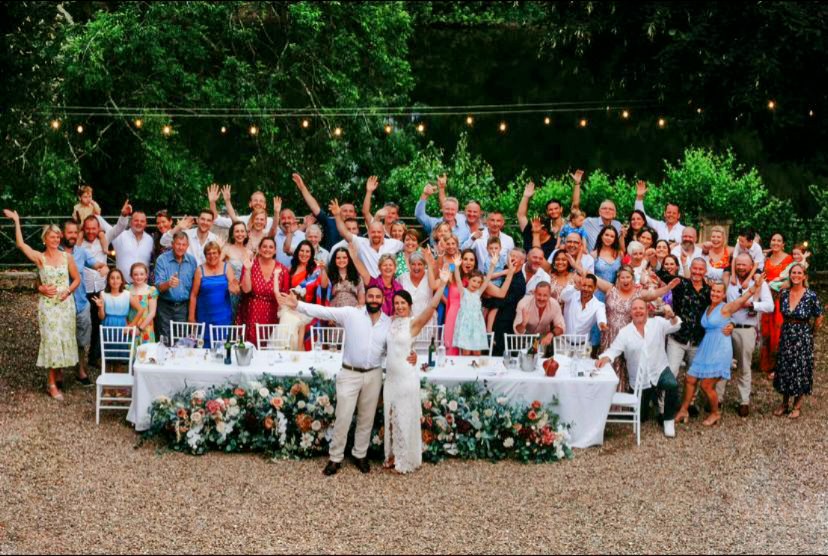
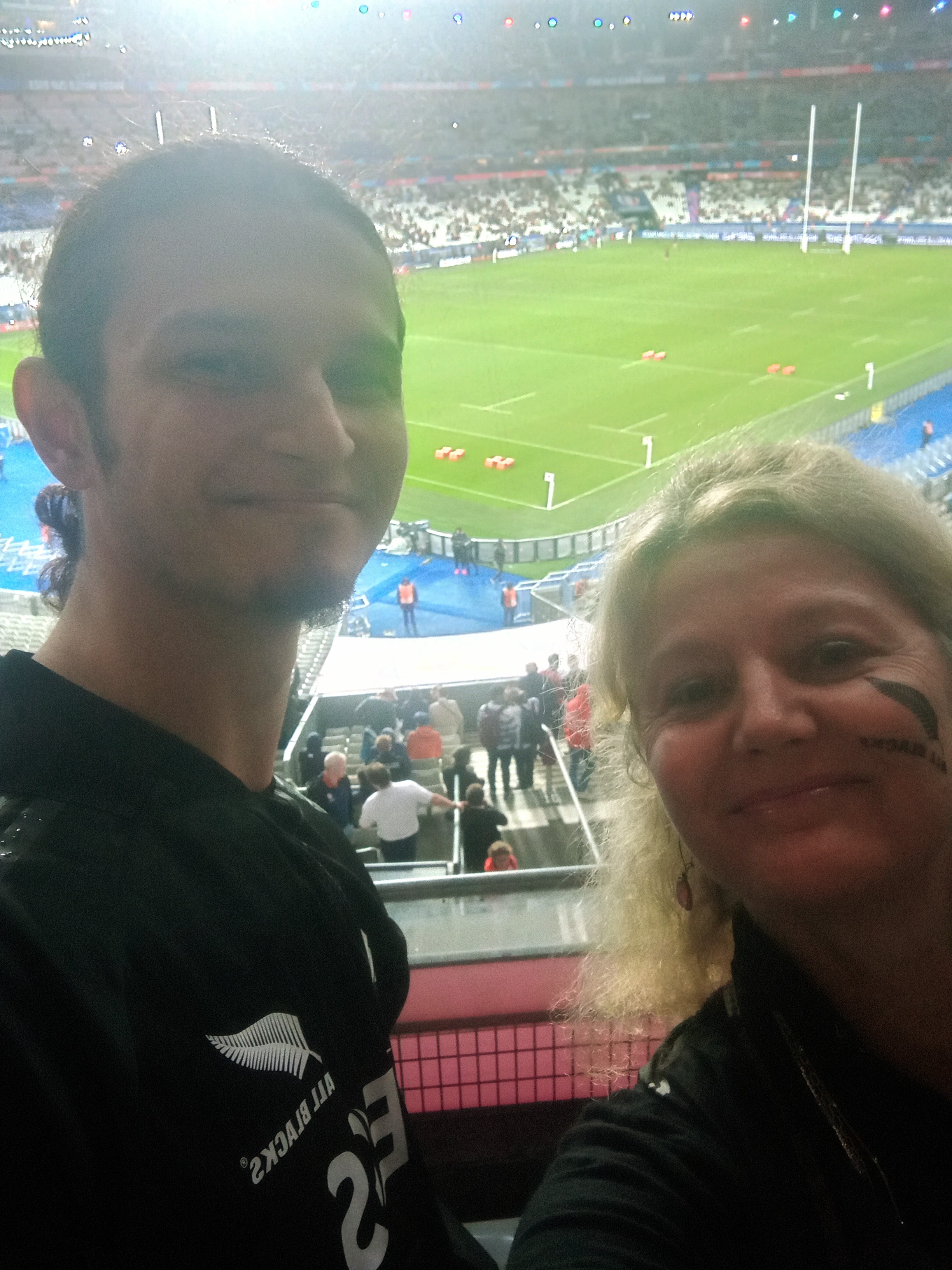
It’s been a great reading year, 68 books read despite a hiatus over the summer months when multiple humans encroached on my usual evening reading time, but it was worth it to see so many of my family and friends, visiting for the first time since 2019 thanks to wedding celebrations and a rugby world cup, here in France (with my son at the All Blacks vs Argentina semi-final, below right).

Non-Fiction Titles Continue to Ascend

Of the 68 books read, almost a third (19) were nonfiction, a recurring trend over the past few years.

I read so many excellent works of nonfiction this year, it was hard to whittle down my Top 5, as seven of the titles I read were 5 star reads.

For fiction, I’ve gone with a Top 7 but I’ll also share the other 5 star reads at the end.

Reading Around the World, A Small Island Nation Dominates

As you will know, I love to read around the world, works by authors from different countries, including in translation. And this year was no different, albeit with a lot more of the European reading from non-English language countries and Latin American featuring more prominently.

In 2023, I visited 23 countries through works of literature, with the lead country Ireland (18), with France (7), Argentina (4) and Italy (3) all in my top six destinations. I can predict that I’ll be spending more time in those literary destinations in 2024, thanks to a love of Irish literature which is indeed flourishing, a desire to read more French and Italian works and a 2024 Charco Press subscription for Latin America!

Opening Minds and Hearts Through Storytelling From Elsewhere

One of the great joys of recent years for me has been reading works originally written in other languages, translated into English and in particular, those often least favoured or likely to be published, women in translation.

What was a small niche aspect of publishing has become more popular, particularly with young adult readers, which is a life affirming trend, in an age where nationalism is so often promulgated.

In 2023 I read 22 books in translation, with seven of them 5 star reads and of my six outstanding fiction reads of the year, 3 of them were in translation.

It might take a little work to find these titles, but I’ve come to rely on my favourite independent presses, Europa Editions, Charco Press, One World Publications and more recently Daunt Books Publishing, who are reaching back to bring literary gems that deserve new light, to readers.

In this Part 1, I will share my Top Fiction Reads and Part 2 Top Non-Fiction Reads.

One Super Outstanding Read

14 novels were 5 star reads for me in 2023, so to whittle it down, I looked for those whose reading experience still stands out for me now in December. I always have one outstanding read, but this year there were seven I would describe as that, however there was that one that truly stood above them all, my Super Outstanding Read of 2023, that I read early in the year yet still feel the profound effect of reading it.

My One Super Outstanding Read of 2023 is:

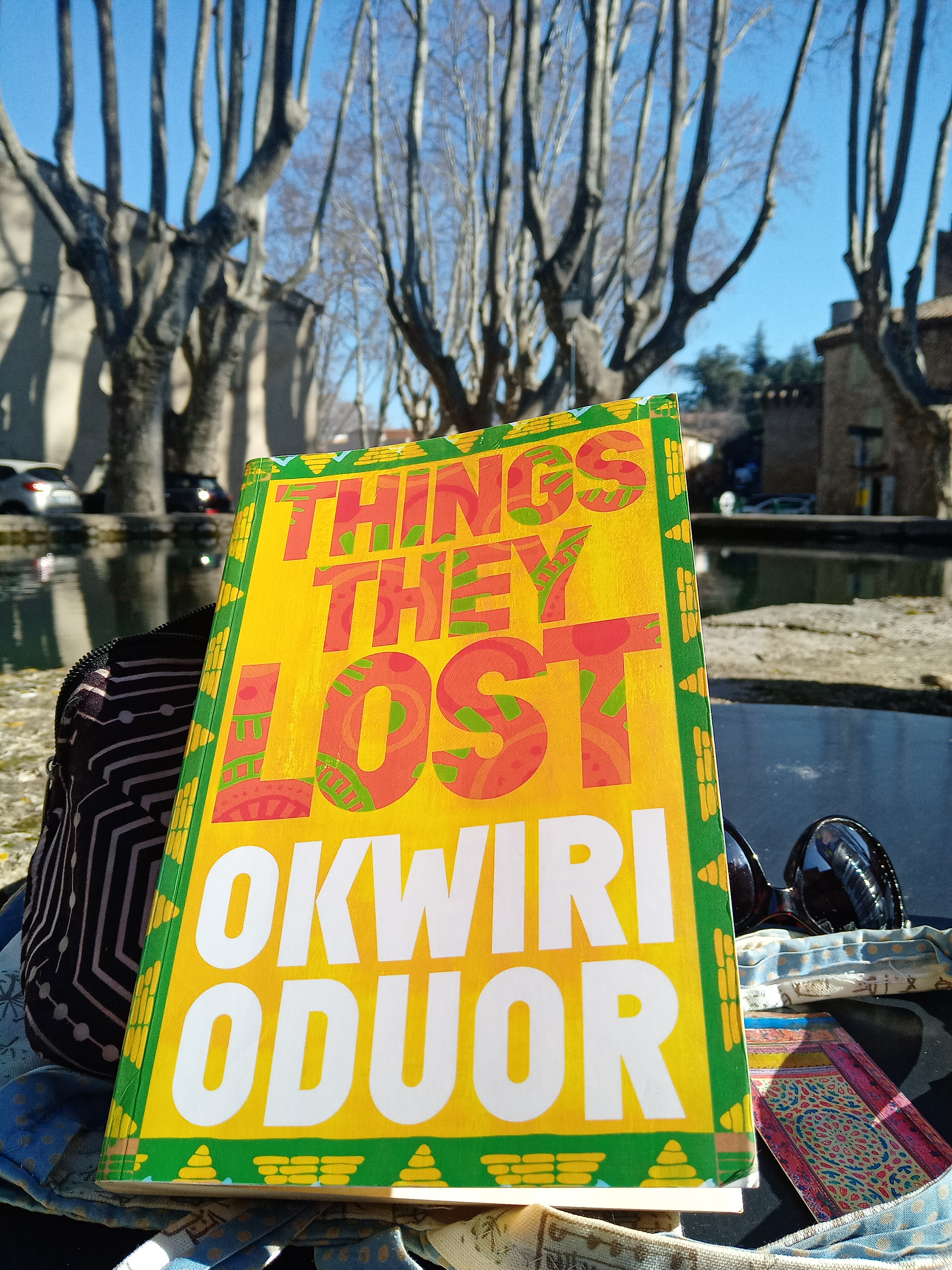
Things They Lost by Okwiri Oduour (Kenya)

Kenyan literary fiction Dylan Thomas Award 2023

This book is an absolute gem, a post-colonial, coming of age novel of a young girl Ayosa, living in a neglected house, full of aspects of the past, whose mother is often absent; she is kept company by her notebook, the radio, a couple of kind neighbours and a new friend, all of whom compensate in some way for this loss. Ayosa is omniscient, and remembers things from before she was born.

The story is told in vibrant, mesmerising prose that depicts her coming of age, the effect of abandonment and the nurturing to be found in her community, while allowing the reader to see from another perspective. In letting go of our own version of reality, we are invited to see differently, to understand anew. A story of mothers, daughters and of girls who are abandoned and alone, of girls who create family with other lonesome girls and of how death continuously permeates our lives and how poetry can redeem it.

This is a wonderful example of the richness that comes from reading stories told through the lens of a culture and mythologies other than one’s own. What Oduor accesses and how she tells this story is unique, enlightening and unforgettable. It was one of the most exhilarating reading experiences I have ever had, so new and otherworldy and insightful. A favourite author immediately. Longlisted for the Dylan Thomas Prize 2023.

A total trip, I read this in February and nothing came close to knocking it off top spot.

Top 7 Fiction

In no particular order, here are my top fiction reads of 2023, click on the title to read my review:

Japanese literature literary fiction

Child of Fortune by Yuko Tsushima (Japan) (1978), translated by Geraldine Harcourt (1986)

– I have not read much Japanese literature, but I was intrigued to read Yuko Tsushima based on reviews I had read on JacquiWine’s Blog. This novella is an immersive account of a young mother of an 11-year-old daughter, raising her alone without support and under the judgmental eye of a sister, whom the daughter increasingly prefers to be around. It is an unravelling, a period of giving in to what others think, before a quiet reassertion of her own unconventional beliefs, an honest reckoning and struggle for freedom.

Introspective, often uncomfortable, an immensely powerful read.

Nobel Prize Literature 2021 fiction

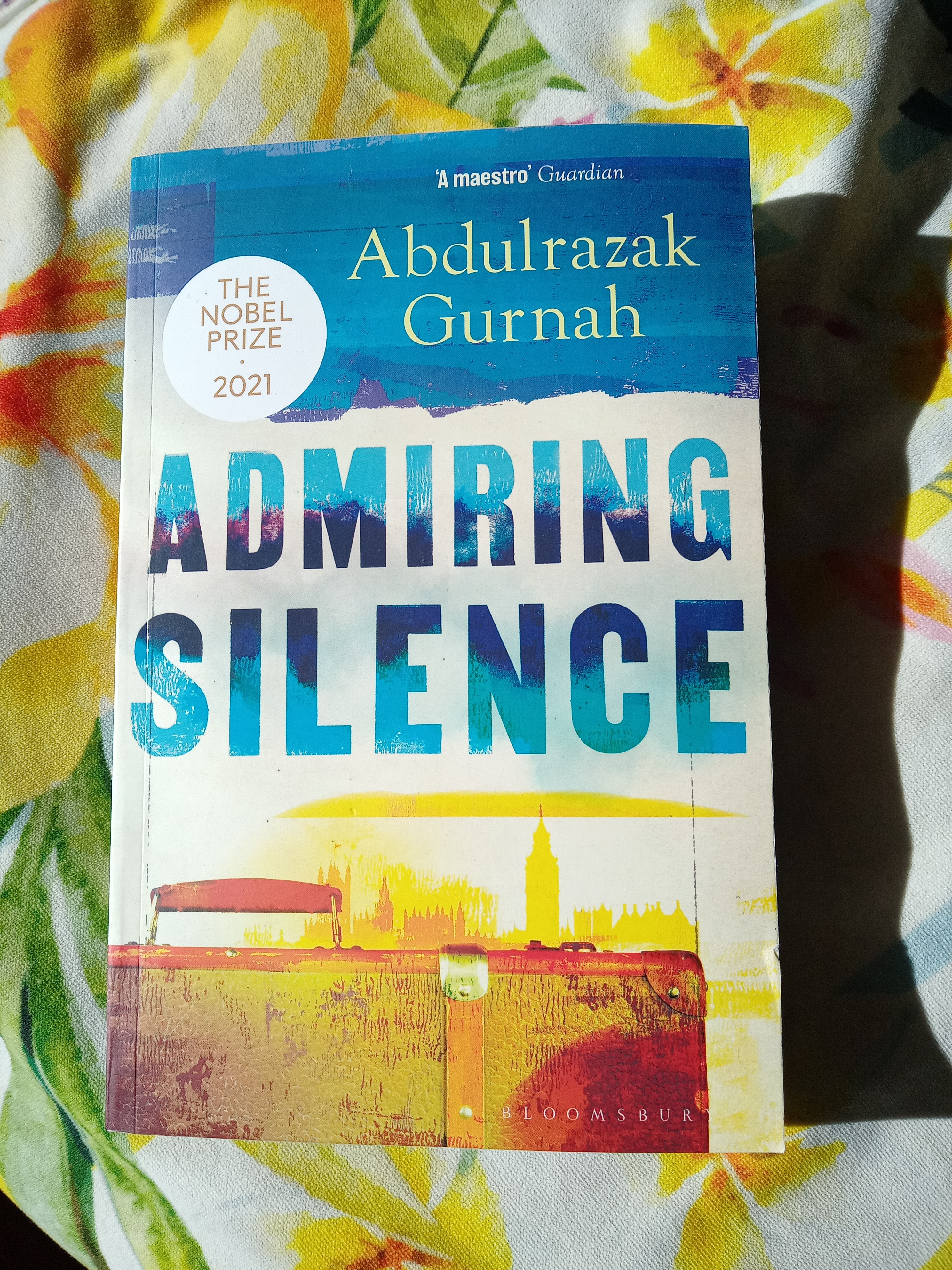
Admiring Silence by Abdulrazak Gurnah (Zanzibar/Tanzania/UK) (1996)

Gurnah won the Nobel Prize for Literature in 2021 and I chose this book to acquaint myself with his readability and discovered an insightful, erudite and humorous author from an island off the west of Africa, now based in the UK, who depicts the complexities of cross cultural relationships and the push/pull effect of having allegiances to two countries and cultures.

In this novel a young fatherless man from Zanzibar furthers his studies in England and begins to make a life there, without being totally upfront with his family about his circumstances. He observes his new life and relationships, avoiding his past, until it can no longer be ignored. 20 years after leaving, he returns.

Insightful, uncompromising yet compassionate, a chronicler of the outsider.

Italian feminist writing classic 1940s 1950s

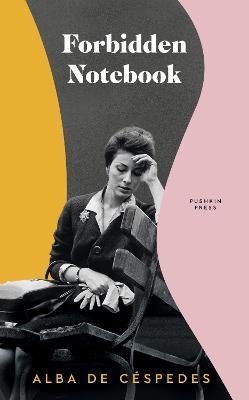
Forbidden Notebook, Alba de Céspedes (Italy/Cuba)(1952) translated by Ann Goldstein (Italian) (2023)

– this lost classic was a joy to discover and compelling to read as a middle aged working woman with two older children, begins to discover aspects of herself she has never dared to allow flourish, discovering through the act of writing in a notebook. The purchase of the notebook is her first transgressive act and the revelations within it will lead her to consider more. At first, a stranger to herself, it is revealing to witness how her thoughts and actions are often in conflict, so ingrained are society’s expectations, her will is unknown to her until she discovers it on the pages of her notebook.

A riveting, feminist awakening follows a restless rebellion from this unique Italian voice, with Her Side Of The Story (1949) coming in translation from Daunt Books Publishing in 2024.

La hija unica Mexican literary fiction Women in Translation

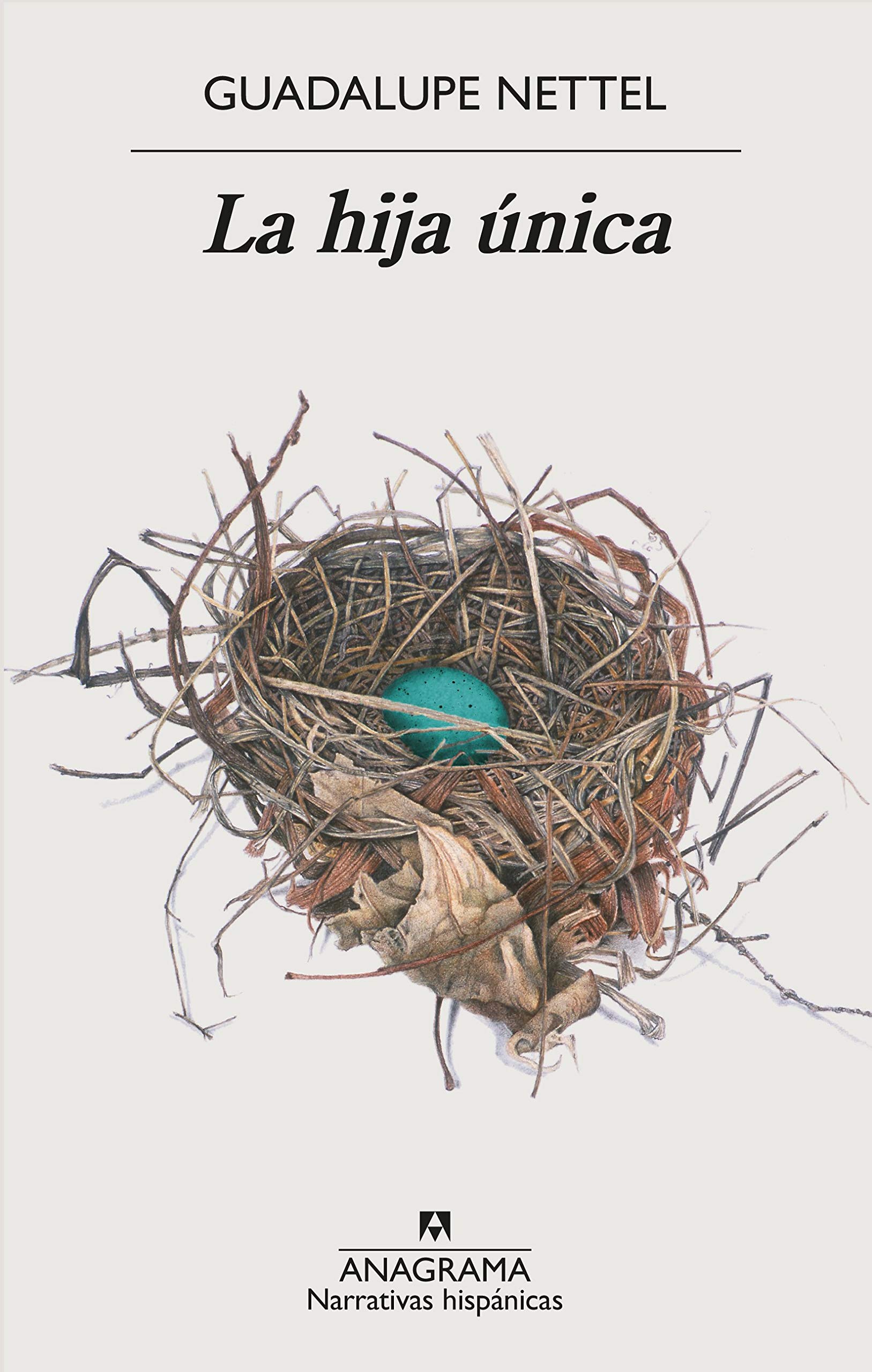
Still Born by Guadalupe Nettel (Mexico) (2020), translated by Rosalind Harvey (Spanish) (2023)

– shortlisted for the International Booker 2023, this was a standout read for me, another whose method of storytelling was so compelling, it felt like I was reading a true story; I was sure the author must have had first hand experience to have portrayed much of what I read, as it concerned a family with a child that was often hospitalised and the way their treatment by the institution made them feel.

The story is about two independent and career-driven women, friends who initially declared they did not wish to have children and how their lives change as motherhood touches in different ways.

Like Claudia Pineiros’s A Little Luck, there is a thematic subplot, this time involving a pair of pigeons with two eggs in their nest, that appear to have been subject to a brood parasite.

A riveting read, a visceral encounter of all that surrounds the decision or be or not to become a mother, a carer and how the most insistent of intentions can mould, evolve and change according to our nature and circumstances.

women in translation argentinian literature crime fiction literary fiction

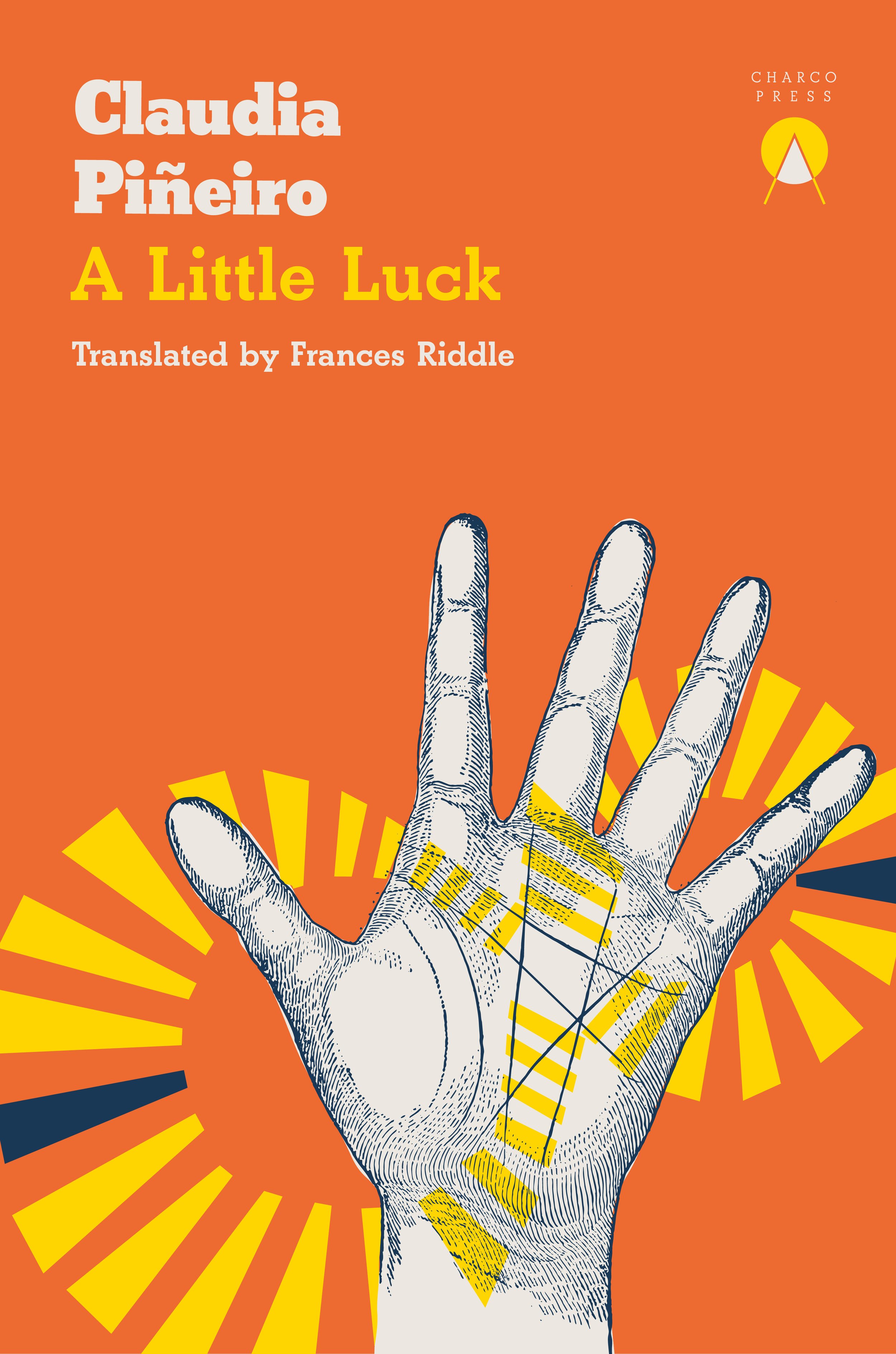
A Little Luck by Claudia Piñeiro (Argentina)(2015) translated by Frances Riddle (Spanish) (2023)

– having enjoyed Elena Knows I was keen to read more and this was absolutely stunning, intense, moving and one I could not put down. A woman returns to her home town after 20 years, in fear of what she is likely to confront. As her backstory is slowly revealed her visit provides the opportunity to reflect on the past and heal from tragic events.

A tour de force!

literary fiction Irish

Old God’s Time by Sebastian Barry (Ireland) (2023)

– clearly a writer at the height of his literary powers, this was a riveting, yet slow burning, introspective read. It observes a retired policeman’s new routine in his first year of retirement, disrupted by the investigation of a cold case, which awakens old memories of events he has no wish to revive.

The way Barry writes, we enter the declining mind of his protagonist, equally unsure of what is real and what is memory trying to re-impose itself. As the story progresses, the past comes back with a force, revealing the effect of rage and the counter effect of genuine familial love. Utterly brilliant.

Irish Book Awards 2023 motherhood literary fiction

Soldier Sailor by Claire Kilroy (Ireland) (Literary Fiction) (2023)

– a new author for me, Soldier, Sailor made quite an impression on those who read it including me. It confirms that I love to read books that make you feel the experience of the protagonist, this is a clear theme in many of my top fiction reads for 2023.

Soldier Sailor is the story of a mother (Soldier) and her son (Sailor) and the wild ride that entering motherhood takes her on, one she is little prepared for and ravaged by. Never sentimental, it takes the reader to the edge of a woman’s sanity, to coping and not coping with the onslaught of caring for an unformed, small human, a text written in the second person, addressed to that son, a sharing and a warning to him, to beware and be aware.

Motherhood as a thriller, a test of one’s sanity, the necessity of solidarity with a genuine friend.

The Special Mentions, The Other Seven

I couldn’t leave without sharing the close runners up, all of which were five star reads, that I highly recommend, I will leave you to discover them through my reviews (click on the title) below, should you be interested to learn more about their merits.

I loved the short story collection, Sambac Beneath Unlikely Skies (2021) by Heba Hayek (Gaza, Palestine) short vignettes of childhood, auto-biographical fiction; I was riveted by the debut novel The Dry Heart (1947) by Natalia Ginzburg (Italy) translated by Frances Fenaye (2021); in deep admiration of the classic debut novel Go Tell it On The Mountain (1953) by James Baldwin (US); best summer light read Lessons in Chemistry (2022) by Bonnie Gamus (US); most informative and memorable, historical fiction, The Art of Losing (2017) by Alice Zeniter (French) translated by Frank Wynne (2021); the unforgettable reflections of two men observing a fallen man in Two Sherpas (2018) by Sebastian Martinez Daniell (Argentina) translated by Jennifer Croft (Spanish) (2023); and another excellent novel in Baumish prose, from one of my all-time favourite authors Seven Steeples (2023) by Sara Baume (Ireland).

* * * * * * * *

Did any of these make your year end favourites? I hope you fins something here that might tempt your reading taste buds in 2024. Happy Reading and Happy New Year All.

A Little Luck by Claudia Piñeiro tr. Frances Riddle

women in translation argentinian literature crime fiction literary fiction

Stunning.

This was a heart-racing, thrilling and moving read that begins mysteriously as a woman returns to her home country (Argentina) following some kind of event 20 years earlier that we don’t fully learn of until almost halfway into the novel. 

Though she lived most of her early life there, her physical appearance is so radically different, no one recognises her – yet.

We are made aware, though it takes a while to reveal, that she is anxious about the possibility of seeing someone connected to that past event, that sent her into self-imposed exile.

I should have said no, that I couldn’t go, that it would have been impossible for me to make the trip. Whatever excuse. But I didn’t say anything. Instead I made excuses to myself, over and over, as to why, even though I should’ve said no, I agreed in the end. The abyss calls to you. Sometimes you don’t even feel its pull. There are those who are drawn to it like a magnet. Who peer over the edge and feel a desire to jump. I’m one of those people. Capable of plunging headlong into the abyss to feel – finally – free. Even if it’s a useless freedom, a freedom that has no future. Free only for the brief instant that the fall lasts.

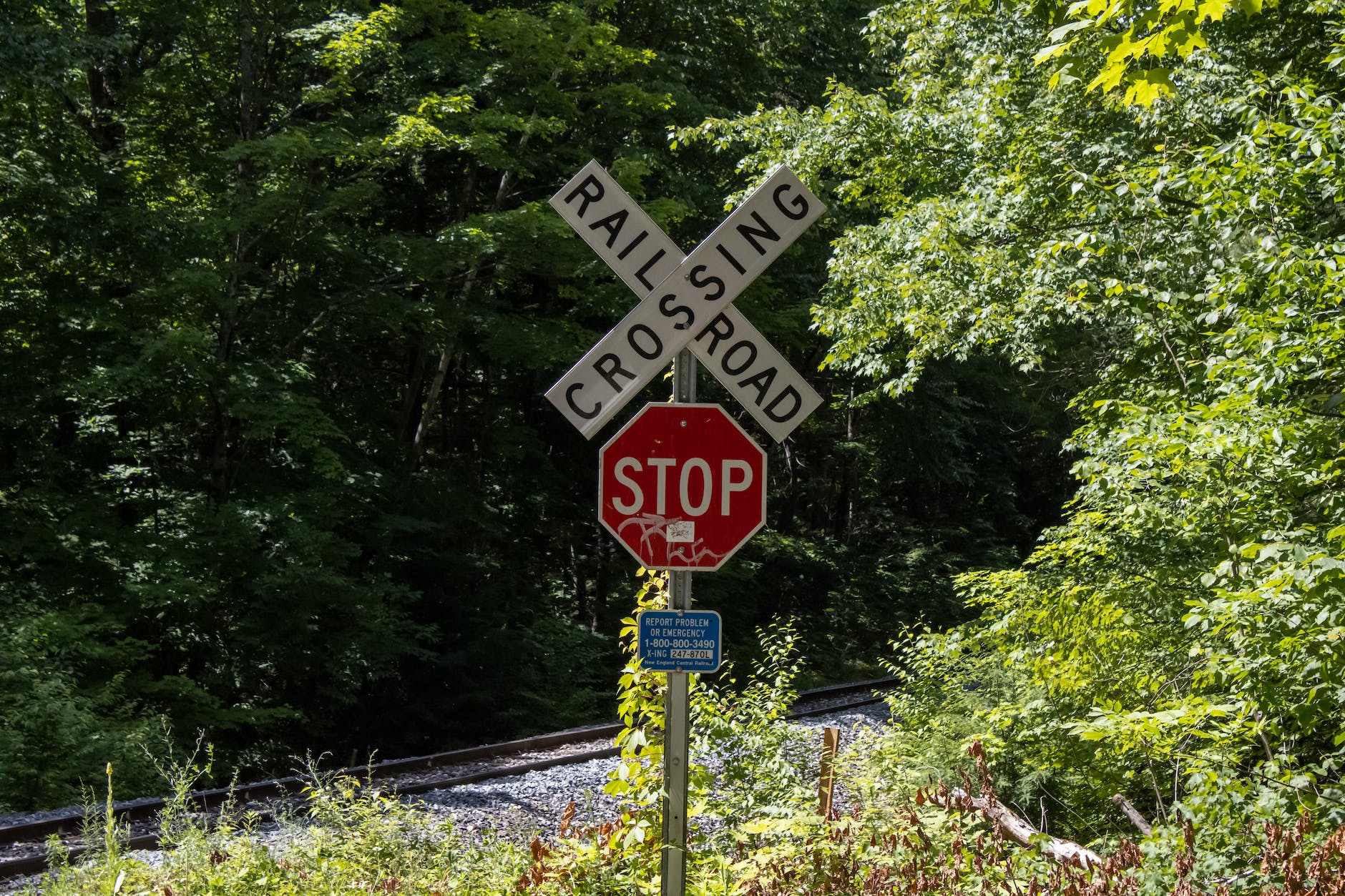
rail crossing train barrier A Little Luck
Photo Tim Dusenberry Pexels.com

As the mystery unravels, the tension mounts. Each new chapter begins with part of the backstory, then stops, this is used as a kind of repetition, as the narrator acquires the courage to reveal the full extent of the backstory.

The constant repeating of this text adds to the volume of its impact on the reader and the sense of suspense and intrigue.

The barrier arm was down. She stopped, behind two other cars. The alarm bell rang out through the afternoon silence. The red lights below the railway crossing sign blinked off and on. The lowered arm, the alarm bell, and the red lights all indicated that a train was coming.

As these events of the past some into clarity, in the present day this woman is booking into a motel, arranging to visit the school that she will consider for accreditation, we encounter the mndane reason for her visit and the extraordinary motivation behind it.

Photo by Y. Shuraev Pexels.com

Simultaneously we follow a small sub-plot drama featuring a bat. And a theme of entrapment. The story of the bat corresponds to our protagonists state of mind and how it evolves over the course of the novel. Once again she must make a life or death decision.

I’m still trapped. I must now decide whether to go out and face the task at hand or stay here and wait for the poison to kill me or the smoke to force me out.

Ultimately, it explores many themes, in a profound way, of motherhood, of domination, community judgement, condemnation and gas-lighting, of the effect of undermining a person’s self-worth, of twin aspects of abandonment, of why it might be deemed necessary and the effect it has on the one abandoned.

Do I deserve to explain why? What I mean is, do I have that right? The right to unburden myself and expect someone to listen?

Claudia Piñeiro’s Elena Knows (see my review here) I found curious; there is a similar feeling of mysteriousness as the author withholds telling all, drawing the reader in – however, in A Little Luck, she plummets the mind of the protagonist, letting us into her thoughts, showing us the events and enabling the reader to witness the reactions – allowing us to see the patterns, those all too familiar ways of subjugating a person, of the desire to blame, the withdrawal, the disappearance.

A Little Luck is also a story of healing, of kindness and finding the one person who puts the right thing in one’s way that will lead to release. In this story, a kind man finds the right stories that assist a woman to express and release suppressed emotions. And sends her on a trip.

I began to list the questions that I’d asked myself while reading Alice Munro’s story, questions posed in her words. ‘Is it true that the pain will become chronic? Is it true that it will be permanent but not constant, that I won’t die from the pain? Is it true that someday I won’t feel it every minute, even though I won’t spend many days without it?

Brilliantly conceived, after a few chapters, I absolutely could not put it down, I highlighted so many passages, and it had a surprising though satisfying, tear-jerking conclusion, definitely one of my top fiction reads of 2023. I read this in October, but found it hard to describe the intense reading experience, but I’m sharing my thoughts now, before my end of year review, where it will feature!

Highly Recommended, another fabulous title from Charco Press!

Claudia Piñeiro, Author

As an author and scriptwriter for television, Claudia Piñeiro has won numerous national and international prizes, among them the renowned German LiBeraturpreis for Elena Knows and the prestigious Sor Juana Inés de la Cruz Prize for Las grietas de Jara (A crack in the wall).

She is best known for her crime novels which are bestsellers in Argentina, Latin American and around the world. Many of her novels have been adapted for the big screen. According to the prestigious newspaper La Nación, Claudia Piñeiro is the third most translated Argentinean author, after Borges and Cortázar.

More recently, Piñeiro has become a very active figure in the fight for the legalisation of abortion in Argentina and for the legal recognition of writers as workers. Her fiction (as shown with Elena Knows) is stemmed in the detective novel but has recently turned increasingly political and ideologically committed, reflecting the active role she plays in the fight for the legalisation of abortion in Argentina and Latin America, and for the recognition of employment rights for writers..

The Booker Prize Winner 2023

Back in August the Booker Dozen 13 novels were longlisted for the Prize, which in September became a shortlist of six novels, and today a winner announced.

The judges were looking for the best work of long-form fiction, written in English, selected from entries published in the UK and Ireland between 1 October 2022 and 30 September 2023.

I read two from the longlist, both Irish novels that I very much enjoyed, Sebastian Barry’s Old God’s Time and Elaine Feeney’s How To Build A Boat. Sadly, neither made the shortlist below, but another two Irish novels did make it, The Bee Sting by Paul Murray which just won the Irish Novel of the Year and Paul Lynch’s Prophet Song.

From this shortlist of six novels, the winning novel is:

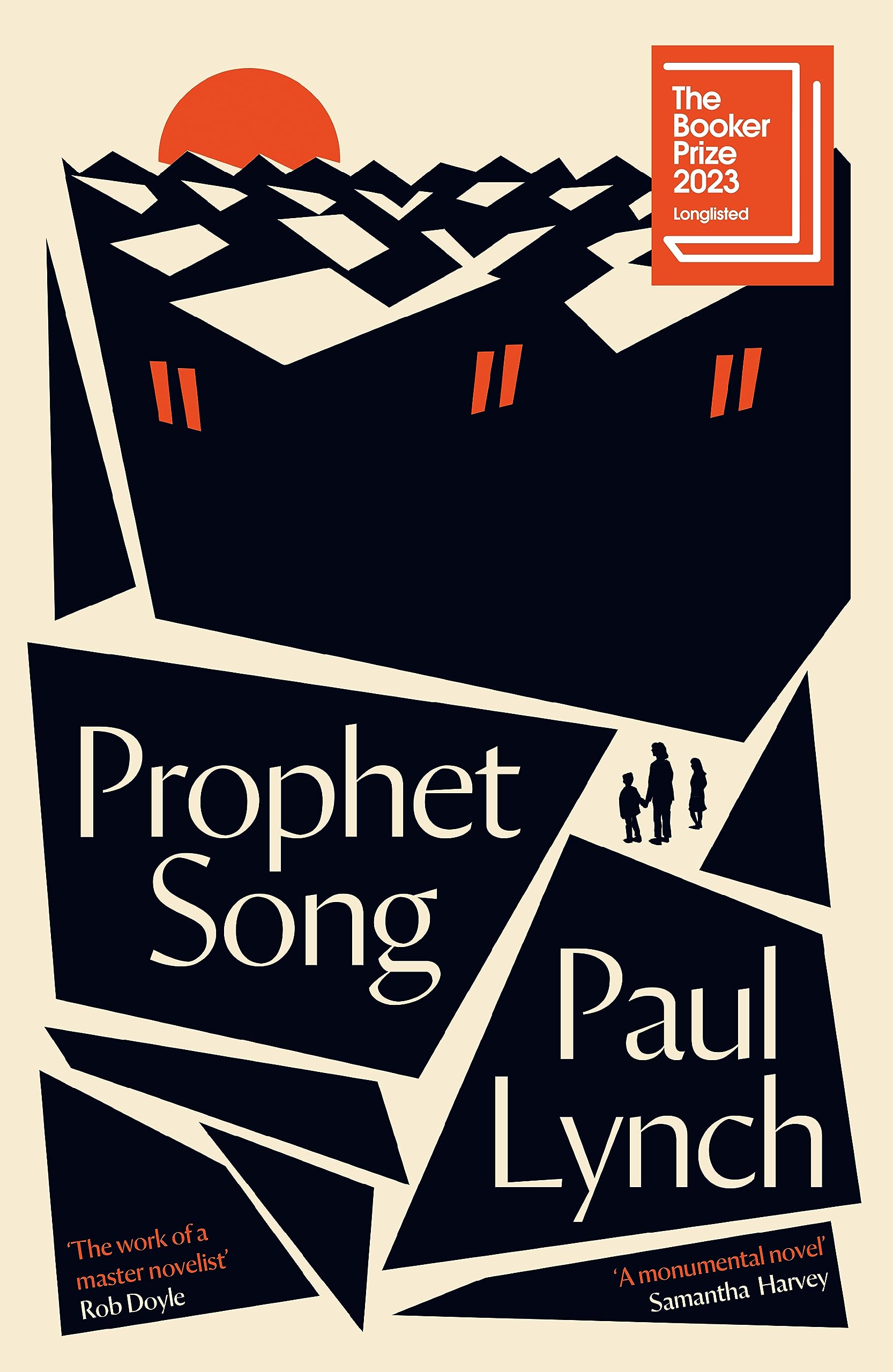
Prophet Song by Paul Lynch

Why You Should Read This Book According to the Judges

How would you summarise this book in a sentence to encourage readers to pick it up? 

Prophet Song follows one woman’s attempts to save her family in a dystopic Ireland sliding further and further into authoritarian rule. It is a shocking, at times tender novel that is not soon forgotten.  

Is there something unique about this book, something that you haven’t encountered in fiction before? 

The prose is a feast, with gorgeous rolling sentences you sink into. A stylistic gem.  

What do you think it is about this book that readers will not only admire, but really love? 

It is propulsive and unsparing, and it flinches away from nothing. This is an utterly brave performance by an author at the peak of his powers, and it is terribly moving.  

Can you tell us about any particular characters that readers might connect with, and why? 

Eilish is our guide through this relentless world, and we feel as deeply as she feels. The situations are sometimes dire, and yet she remains resilient, determined and, above all, human. She breaks our hearts. 

Although it’s a work of fiction, is there anything about it that’s especially relevant to issues we’re confronting in today’s world? 

Far from didactic, the book warns of the precarity of democratic ideals and the ugly possibilities that lie beyond their desecration. 

Is there one specific moment in the book that has stuck in your mind and, if so, why?  

Prophet Song has one of the most haunting endings you will ever read. The book lives long in the mind after you’ve set it down.

* * * * * * * * * * *

That’s a wrap, the end of the literary award season 2023.

Have you read Prophet Song, or if not, do you think you might be tempted to read it?

Soldier Sailor by Claire Kilroy

Soldier Sailor is on the shortlist for the Irish Book Awards 2023.

Cathy at 746 Books praised this one, as her pick for Novel of the Year, saying it deserved the award attention, so I decided to read it to find out what that was about.

The Clash of Fierce Love versus Stolen Identity

Irish Book Awards 2023 motherhood literary fiction

So, after an eleven year gap since the publication of her last book, following the birth of her son, Claire Kilroy has overcome her writer’s block and “angry few years”, to produce a piercing, visceral account by the unnamed narrator Soldier ravaged by new motherhood, to the child, Sailor.

Here is how the author describes her book:

Soldier Sailor is a mother talking to her sleeping child explaining what was going on during those years he was too young to understand or remember the events around him. She tells him of her love, but also of how difficult, how isolating she found it when motherhood ended her old life. Nothing much happens; one of the main characters, Sailor, has no dialogue. The whole experience is a non-event from the outside, but when you are that soldier pushing the pram, my, what a psychodrama it is.

The novel as the image depicts, zooms right in to the responsibility, the bond and the practice of being mother to a small child, to how it changes EVERYTHING. From the entering into a relationship like no other that exists and the loss of what came before it; to the very different support that a mother might need, and the unlikely place(s) she might find it.

A Mother’s Instinct to Kill

It is not a reflection, it is an act, you will read it and live it, or relive aspects of it, if you have already been there.

Do you know what I would I do for you? I hope not. What would I not do, is the question. The universe careens around us and I shield your sleeping body with my arms, ready to proclaim to the heavens that I would kill for you: that I would kill others for you, that I would kill myself. I would even kill my husband if it came down to it. I swear every woman in my position feels the same. We all go bustling about, pushing shopping trolleys or whatever, acting like love of this voltage is normal; domestic, even.That we know how to handle it. But I don’t.

Using the second person “you” addressed as a monologue to her baby son, the narrative swings between the emotional peaks of a tireless love, to violent frustration and resentment; from the misleading two second Instagram snaps sent to the elsewhere husband, to her thirty second screaming telephone rages, with only the reader, witness to and understanding the riding crescendo of events that lead from one of those events to the next. A bewildered husband, observing the peaks, oblivious.

Your sleeve is in your dinner, my husband remarked. He wasn’t there but he didn’t have to be there. He was always there when things were going wrong. Yet never there to help. The luxury, the sheer luxury of sending a last-minute message saying you wouldn’t be home that evening. It would be a decade – more – before I could do the same. What does he eat? he had texted me the one time he was left in charge?

Sons and Fathers Take Note

To read this account, especially because of the culture within which it stems from, one that for many years locked up its women who expressed too loudly their discontent, or behaved in ways considered improper, is to understand a little of what was labelled hysteria – one of the natural consequences of needs not being met. Forget the narrative arc, read this and you plunge into the subject, you become it, you feel it, you remember bits of it. The son is warned, made to understand, his future depends on it.

I was firmly in my wrong mind and liable to do anything, so off I went, down the stairs, out the door, up the drive, through the gate, along the road, overcome by a wildness that I needed to convert to movement or else risk doing something stupid, and by stupid I mean destructive because words have many meanings, Sailor, and you must deploy them with care because they can inflict real hurt.

The mother like her infant child, is reborn yet will only realise she has inhabited this new being ‘the mother who birthed‘ when it is too late, when this tiny creature she loves so fiercely and will protect with her life, claims her, and in her most challenging moments, she like him, will feel the desire to scream, to run, to escape or somehow figure out, how to make ‘the other’ understand.

What struck me as the starkest contradiction of all was that, having navigated this much of life – the volatility of youth, of love and loss, the agony and the ecstasy – the closest I had come to losing my mind was during the period known as settling down.

Friendship for Hope and Healing

motherhood Soldier Sailor Claire Kilroy
Photo by Oleksandr P on Pexels.com

This text will not speak of the quiet moments, it is the intersection of all the moments lived, of the brutal awakening that is ‘becoming a mother’ and the warning to ‘the other’ that did not give birth, who is part of the journey, to prepare for this change and get ready to adapt, to support, to listen, to learn to be ‘the friend’ she is going to need.

One day she encounters an old friend, and these follow up meets mark a turning point, to being seen again, to being understood, and something dangerous shifts, quiets. Small gestures, moments of listening, the beginning of a form of solidarity.

We were better together my friend and I. Better parents. I was anyway. I was a better mother to you when I was around my friend. But a worse wife.

We arrive at the end – where she imagines moments years down the road ahead – with a kind of relief, knowing that with age and stage, the distance between those peaks will lessen, the relationships will either adapt or crumble, that true friendships will witness and endure it all.

An utterly compelling read that you won’t want to put down.

Further Reading

The Observer Review: Soldier Sailor by Claire Kilroy review – a mother’s confession after the fight of her life by Stephanie Merritt, 12 June 2023

The Irish Times Review: Soldier Sailor by Claire Kilroy: An astute, provocative, intriguing novel about motherhood – A virtuosic set-piece late on veers so far into nightmare territory, it feels as if we’re reading a thriller by Sarah Gilmartin

Eason Novel of the Year, Interview Q & A With Claire Kilroy

Claire Kilroy, Author

Claire Kilroy is the author of five novels including Soldier SailorAll SummerTenderwire, and The Devil I Know. She was awarded the Rooney Prize for Irish Literature in 2004 and has been shortlisted for many other prizes, including the Irish Novel of the Year and the Kerry Group Irish Fiction Award.

She studied at Trinity College and lives in Dublin.

What do you hope readers will take away from your narrative?

It is so easy to dismiss a mother and her work, and a father and his – one of the main characters is a stay-at-home dad. I had no idea what minding an infant involved and had regarded it as easy, unchallenging (I am mortified to admit that), so I hope I have revealed how demanding it is, but also how rewarding, never mind how important. I hope more fathers will get involved in raising children because it changes you, it remakes you, you become more compassionate. I don’t think Trump and Putin would be the awful tyrants they are had they cared for, well, anyone. It doesn’t have to be a child, just any person or creature who needs care.    

How To Build A Boat by Elaine Feeney

How To Build a Boat is a contemporary Irish novel that deals with people in a community navigating lives complicated by things that have happened or are happening to them, in this case a 13 year old boy Jamie is starting high school and it’s clear he is being singled out by some of the mean boys (and not for his height or bright red hair).

Irish Literature literary fiction Booker Prize longlist 2023

The novel was longlisted for the Booker Prize 2023 and shortlisted for the Irish Book Awards 2023, both of which announce winners in late November.

In a way it reminded me of Sebastian Barry’s Old God’s Time, in the sense that it relates to the power of connections in the community, the unexpected and the previously unknown, that can help pave the way towards healing and the passing through of the tumultuous hallways of grief.

Old God’s Time is more introspective and focused on a single character, while How To Build a Boat gives equal weight to a number of characters, there is more dialogue and a greater sense of place, of the physical environment and dwelling places of its inhabitants.

How can I miss someone I have never met? Jamie said.
Grief was profoundly different for both humans. One felt an intense anger he had never recovered from, the other knew something was missing, a vacuum to where a mother should fit, and he had a fixed determination to fill it.

Jamie’s mother Noelle died post childbirth at the age of 15 and he is being raised by his young father Eoin and grandmother. He takes everything literally and is serious minded and ambitious.

Jamie got it. He just didn’t want to get it. Noelle had never stopped moving from the first minute he had met her on screen. She was in constant and limited motion.

His one resounding ambition is to invent/create a machine that will be in perpetual motion; in his mind it will somehow allow him to remain connected to his mother, who, though he never knew her, he visualises through the one remaining video that is left of her, competing in a swimming gala.

There had been hundreds of clips. Noelle laughing after school. Noelle walking in the woods. Noelle soaked to the skin on a picnic. Noelle pulling faces outside the cinema. Noelle painted like a Dalmatian at Halloween with a black-and-white hair wig. But after a rare night out with the soccer club, Eoin, angry and lonely and drunk in his small, dark living room, deleted the phone’s contents. After which, he placed his phone on the laminate floor of the two-up-two-down and smashed it hard under the heel of his foot. After which, he vomited. After which, he passed out until morning when he woke frantic and pacing about with a dry mouth and a pounding headache, and in a lather of sweat and overwhelmed with the desire to disappear. But Jamie woke, crept downstairs and began asking so many questions that Eoin had no choice but to recover and get on with the getting on a young boy requires. And for years after, Eoin replayed each deleted clip in his mind before he’d fall into a fretful sleep, until the clips grew so hazy and faint and there came a time when Eoin couldn’t visualise Noelle’s face at all,
and though he tried to (re)build it:
smile, red hair, eyes, freckled nose, wide shoulders
parts of her vanished until it was finally impossible to recreate her.

Yusra Mardini Butterfly The Swimmers Elaine Feeney
Photo by Heart Rules on Pexels.com

At the new school he encounters Tess (Mrs McMahon) the English teacher and Taigh (Mr Foley), the woodwork teacher, whose classroom has been built in what was the old swimming pool.

These two are also in the midst of transition; Tess is married to Paul who has little patience or empathy for his wife’s uncertainty. She has come to the end of being able to suppress her feelings and knows that running away is no longer a sustainable solution to her agitated, easily triggered mind.

They were almost a decade married now and to avoid misinterpretations in the way they communicated, they had grown polite and consistent with each other. To Tess, it was as though she had catapulted. She stopped giving Paul her point of view. And Paul stopped worrying about what ailed Tess.

Taigh has left the island where he was raised and keeps his distance from people, avoiding growing close to anyone while he adapts to his newfound independence.

The three are connected through the school and Taigh’s suggestion to Jamie that they build a currach (a traditional Irish boat with a wooden frame, over which animal skins or hides were once stretched, though now canvas is more usual).

It is a school project that a number of the boys work on and commit time to, though not necessarily supported by the very traditional, linear leadership or parents with single-minded expectations of their protege. The project in different ways facilitates consideration of the many pressures weighing on them all.

It is a heart-warming, thoughtful novel of the importance of community interactions and the power of imagination and creativity and teamwork to nurture and heal and progress the journey of everyone involved, when obstacles are removed and the way is cleared for out of the box thinking, support and the healing that can result from going with the flow.

I thought it was an excellent, enjoyable, thought provoking read of hope and optimism.

Further Reading

Elaine Feeney Booker Interview: ‘It’s impossible not to consider pain and loss when writing’

New York Times Review: Grief, Community and Boat Building in a Moving New Novel, In Elaine Feeney’s latest book, a child’s grief-driven engineering dream connects a handful of isolated citizens in a small Irish town by Sophie Ward.

The Guardian: How to Build a Boat by Elaine Feeney review – secret shame and practical woodwork by Killian Fox.

Elaine Feeney, Author

Elaine Feeney is an award-winning poet, novelist, short story writer and playwright from the west of Ireland.

How to Build a Boat, longlisted for the Booker Prize 2023, is her second novel. The 2020 debut, As You Were, was shortlisted for the Rathbones Folio Prize and the Irish Novel of the Year Award, and won the Kate O’Brien Award, the McKitterick Prize, and the Dalkey Festival Emerging Writer Award.

Feeney has published three collections of poetry, including The Radio Was Gospel and Rise, and her short story ‘Sojourn’ was included in The Art of the Glimpse: 100 Irish Short Stories, edited by Sinéad Gleeson. Feeney lectures at the National University of Ireland, Galway.  

” I am constantly imagining and reimagining this place; its socio-economics; geo-political landscape; pagan versus Christian traditions; new cultures; power and who holds it; the post-colonial effect on language, emigration, class and agriculture. Our proximity to the sea seems to energise writers.” Elaine Feeney on Ireland