
 I’ve been meaning to read this novel for some time, I remember when it was first published it was widely read by bloggers, it won a National Book Award in the US and it is covered in esteemed comments from reviews within many well-known media titles.
“Beautifully written … A powerful depiction of grinding poverty, where somehow, amid the deprivation, the flame of filial affection survives and a genuine spirit of community is able to triumph over everything the system and nature can throw at it.” DAILY MAIL
I decided to read it now before her new novel comes out in November, Sing Unburied Sing (already on the short list for the 2017 National Book Award for fiction) and because with all the hurricanes and storms acting out currently, a novel set in the twelve days leading up to Hurricane Katrina, seemed timely.
 It’s a novel about a family struggling to stay together under already challenging circumstances, about to become even more trying with a grade 5 hurricane heading their way. It is set (as is the new novel) in a fictional, rural coastal town named Bois Sauvage, Mississippi. Interestingly, the French edition of the novel is called Bois Sauvage, meaning Wild Wood, the author playing with the world savage and salvage, connected to the theme of survival.
It’s narrated from the point of view of fifteen year old Esch, the only girl in the family, their mother died after the long and difficult birth of Junior when she was eight years old. The children have adapted to living without their mother, though Esch is vulnerable in this all male environment which attracts other males, despite the protection of her brothers. She is becoming a woman, without another to guide her, and men who don’t know how to. Her only female reference is within the romantic tragic classic she is reading, referred to often throughout the text, the tragic anti-heroine Medea. Esch too is blinded by love and fearful of its outcome.
“In Mythology, I am still reading about Medea and the quest for the Golden Fleece. Here is someone I recognize. When Medea falls in love with Jason, it grabs me by my throat. I can see her. Medea sneaks Jason things to help him: ointments to make him invincible, secrets in rocks. She has magic, could bend the natural to the unnatural. But even with all her power, Jason bends her like a young pine in a hard wind; he makes her double in two. I know her.”
The father is an alcoholic and although that seems dire, the children are familiar with his habits and behaviours and seem to manage to keep out of his way when they need to and to care for him when he is a danger to himself.
For most of the novel the father is unable to do anything, he is either absent, asleep or suffering from an accident that further reduces his ability to manage his role as father. Despite this, he pays attention to the preparations for the hurricane and even if he can’t do things himself, he doesn’t give up giving instructions to his children, the one thing he won’t fail at is to keep them safe.
The other main narrative concerns the plight of one of the son’s Skeetah’s prize pit bull China, who has given birth to pups that are extremely valuable, though nothing is more valuable to him than her, he rarely leaves her side, except to get food or medicine for her or her pups. It is a struggle for him to care for them all and the approaching hurricane will test his loyalty.
In all, the strongest feeling I am left with in reflecting on this novel is the effect of the mother and of the attempt by nearly all in this situation to act like her. The children prepare food and Esch’s thoughts often linger to nurturing thoughts, a sense that magnifies as her body begins to respond to the life she carries within it.
 Although the mother is never present, her memory is held strong by Esch and fiercely through Skeetah, in his protection of China and her pups, Junior clammers for attention and affection, never having known her. They hold strong to how she made them feel and recognise that after the devastation, they can salvage what’s left and continue.
Medea is both the maiden and the mother, tender and vulnerable to love, fierce in her protection, loyal to her siblings and devastating in her revenge, she is the storm. She is the anti-thesis to the mother Esch remembers, but important for her survival, a warning against falling too far, while recognising how destabilising the emotions can be. Ward isn’t trying to recreate a version of Medea’s story, she uses it as reference, one that causes Esch to contemplate what is happening around her, even if it doesn’t always modify her behaviour, the emotions are too strong. Ultimately Medea will guide her.
As Esch, Randall and Junior walk through the debris after the hurricane has passed Esch picks up a piece of coloured glass, marbled blue and white and another that is red and a pink brick stone, remnants in the aftermath. Their friend Big Henry reminds her that he too will be there for them and it is a poignant moment for Esch, who squeezes the remnants tight in her hand:
“I will tie the glass and stone with string, hang the shards above my bed, so that they will flash in the dark and tell the story of Katrina, the mother that swept into the Gulf and slaughtered. Her chariot was a storm so great and black the Greeks would say it was harnessed to dragons. She was the murderous mother who cut us to the bone but left us alive, left us naked and bewildered as wrinkled newborn babies, as blind puppies, as sun-starved newly hatched baby snakes. She left us a dark Gulf and salt-burned land. She left us to crawl. She left us to salvage. Katrina is the mother we will remember until the next mother with large, merciless hands, committed to blood, comes.”
Though it took me a while to read it, this is a book that stays with you, that continues to work on the reader long after the water has receded. It is a lament to the lone motherless adolescent and her siblings, to the courage of victims of natures destructive forces, to the ability of survivors to regroup, find solidarity, to continue, to the destabilising highs and lows of young love. And to universal themes and heroines of the classics, the stories we turn to, that ask and answer life’s questions, challenge us, inspire us. I’m looking forward to reading her next book.
Have you read any of Jesmyn Ward’s works?

 Saunders told TIME magazine that he didn’t really want to write about Lincoln,




 Before reading Kamila Shamsie’s Home Fire, I downloaded a translation of Antigone to read, she acknowledges herself that Anne Carson’s translation of Antigone (Oberon Books, 2015) and
  “Stories are a kind of nourishment. We do need them, and the fact that the story of Antigone, a story about a girl who wants to honour the body of her dead brother, and why she does, keeps being told suggests that we do need this story, that it might be one of the ways that we make life and death meaningful, that it might be a way to help us understand life and death, and that there’s something nourishing in it, even though it is full of terrible and difficult things, a very dark story full of sadness.”
 Kamila Shamsie was born in Karachi and now lives in London, a dual citizen of the UK and Pakistan. Her debut novel In The City by the Sea, written while still in college, was shortlisted for the John Llewellyn Rhys Prize in the UK and every novel since then has been highly acclaimed and shortlisted or won a literary prize, in 2013 she was included in the Granta list of 20 best young British writers.
 The original Swing Time is a film clip of Fred Astaire dancing on stage at a cabaret, with a giant screen behind him, in which three shadow versions of himself attempt to keep up with his energy, his footwork, his dance. In the end they give up and walk off leaving him alone to continue, enrapturing his audience.

 It reminded me of
 Home Fire by Kamila Shamsie (UK-Pakistan) (Bloomsbury) –

 Ties is a novel about the short and long-term effect of the first grand infidelity, on a couple, on their adult children and even on the life of their cat.
 It’s an intriguing novel, with what I felt was a slightly bizarre and unexpected ending. The story invoked immediate comparisons with The Days of Abandonment, however the experience of reading this novel was like viewing these lives from the outside, like looking at things from a distance, provoking a more questioning response, whereas Ferrante’s novel succeeds in transporting the reader into the narrative, it’s more cathartic and slightly terrifying, as she brings you to the edge of sanity, making you sense the danger in letting that temporary instability be observed by the outside world, a situation that many women in past centuries were indeed committed to asylums for, provoked as they often were by the cool, insensitive abandonment of the patriarch.
 The shortlisted books are as follows:
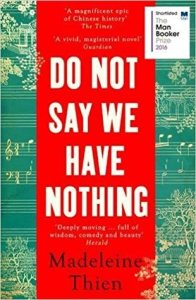
 The Dark Circle, Linda Grant

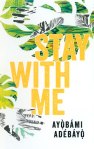 Stay With Me, Ayọ̀bámi Adébáyọ̀̀
 The Sport of Kings, C.E. Morgan
 First Love, Gwendoline Riley
 The Man Booker International Prize used to appear every two years and the authors nominated were not just writers in translation, they were from outside the UK and a nomination was for their body of work, not for one recently published book. That prize, for a translated work of fiction was called, the IFFP (Independent Foreign Fiction Prize).







 Word by Word