Conjure Women by Afia Atakora

Healing Women magic realism slavery freedomI loved how this historical novel focuses on the lives of these women, Rue her mother May Belle and grandmother Ma Doe and the community within which they live, without allowing the narrative to stray over too far into the lives and homes of those who diminished their lives.

It is set in two time periods, just before and just after the civil war, so Freedomtime from 1867 onward Surrender 1865 and Slaverytime from May 1861. In particular it inhabits the Reconstruction era, the brief hollow of time between the end of the Civil War and the beginning of the Jim Crow era, ten years that would have been strangely bittersweet, fraught with disbelief.

Mostly the narrative revolves around Rue who wasn’t taught her mother’s skills yet learned them all the same. Healing and conjuring, midwifery and herbal remedies. Setting things to right.

Other slavefolk got hired out for their washing, for their carpentering, for their fine greasy cooking. Miss May Belle was hired for her hoodooing.

“Hoodoo,” Miss May Belle used to say “is black folks currency.”

She had admitted only once, to Rue, in confidence: “The thing about curses is that you can know who you’ve wronged the most by who you fear has the notion to curse you.”

By shifting the narrative back and forth to tell the story, the reader, like Rue is kept in suspense regarding some of the terrible wrongs done to people, some on the connections and relations between people.

photography of fruits on a tray

Photo Valeria Boltneva @Pexels.com

In the slave masters house there is a young girl Varnia, who is Rue’s age and her playmate. Then there is Sarah, also of similar age, who gives birth in the opening pages to a baby born enveiled in a caul, which provokes people’s superstitions. Rue develops a connection to this baby who seems other worldly.

When the communities babies begin to suffer from a mysterious illness, they begin to distrust her and her methods and rely instead on a charistmatic travelling preacher Bruh Abel, whom Rue has strange feelings for. She hatches a plan to try and bring favour back her way, but it backfires on her and she will seek his help to restore their faith.

She’d known him for what he was then. He was a clear-water cure sweetened with nothing more than clever words a con man’s type of conjure.

Conjure Women CovrIn May Belle’s time, one of the ways to effect a conjure was to make a doll that bore a resemblance to the person and if possible to access strands of hair to entwine with whatever material was used. Varina has porcelain dolls that Rue admires and is envious of, when she discovers her mother is making a doll that faintly resembles her, she pretends not to notice she has discovered it, and will mask even further her disappointment when she misreads its purpose.

Reading this story, made me reflect on how many historical fiction narratives of slavery, civil war and early freedom are told from within the Household and the fields. And how as readers we often come to expect that. How refreshing that Afia Atakora stays with these women and tells their stories from a different vantage point, not needing to take us into the politics of their war, or the lives or agenda of those in the House.

There is one scene where Rue is present for an event that takes place inside the Master’s house and it is telling that she observes the entire scene from within a locked box, that she can lift only slightly, therefore only seeing a sliver of what takes place.

Atakora does the same to her readers, when it comes to observing slave masters and mistresses and white people in her narrative. They never take centre stage even if they still maintain the ability to commit gross acts that impact the lives of her characters.

“We tend to paint slavery in America in broad strokes. There are these pervasive singular images of overseers and cotton fields. We think of it in terms of Amendments and Proclamations and Battles. But it’s a vast 200+ years of history filled with nuance and complexity and no two experiences could have possibly been alike.”

It’s a novel that demonstrates the effect of conditioning, regardless of changed circumstances, the legacy of bondage and the aspects of genetic inheritance that refuse to be extinguished through the will of others.

“Rue-baby” Miss May Belle would’ve said, “there ain’t no easier lie to tell folks than the one they wanna believe.”

A thought provoking read that shakes up conventional storytelling and vantage points.

Further Reading

Interview: A Conversation with Afia Atakora on Conjure Women

Afia Atakora

Afia Atakora was born in the United Kingdom and raised in New Jersey, where she now lives. She graduated from New York University and has an MFA from Columbia University, where she was the recipient of the De Alba Fellowship. Her fiction has been nominated for a Pushcart Prize and she was a finalist for the Hurston/Wright Award for College Writers.


Piranesi by Susanna Clarke

I was looking forward to reading this after it won the Women’s Prize for fiction and having been tempted by her earlier work, Jonathan Strange & Mr. Norrell but put off by the length of it.

Piranesi Winner Susanna ClarkeFantasy isn’t a genre I read very often, but one I have a nostalgic feeling for, having loved it when I was a child. The problem usually being that it becomes harder to evoke the magical feeling that a child’s imagination is capable of creating. However I was willing to try and decided to read it on a day I’d have few interruptions.

I learned after finished it, that the name Piranesi, is likely to have been inspired by the 18th century Italian classical archaeologist, architect and artist Giovanni Battista Piranesi (1720-1728) and his series of 16 etchings, Carceri d’invenzione or Imaginary Prisons, depicting enormous subterranean vaults with stairs and towers and bas-relief type sculptures.

If Jonathan Strange was a riotous meeting of Austen and Dickens, then Piranesi’s pole stars are Jorge Luis Borges and CS Lewis. “I found Lewis at a very impressionable age and then he sort of organised the inside of my head,” she says. “And that’s just the way it has been ever since.”

Review

Piranesi, the main character of the novel, lives in a house that has walls and multiple levels and statues and tides and fish and the bones of 13 bodies. More than a house, this is his world. Nothing outside this house exists for Piranesi and as we read we slowly begin to imagine it ourselves.

I spent today working at my usual tasks: fishing, gathering seaweed, working on my Catalogue of Statues.

Piranesi is content, though inquisitive. There is only one other person in his world, whom he refers to as The Other. The Other calls him Piranesi.

Since the World began it is certain that there have existed fifteen people. Possibly there have been more; but I am a scientist and I must proceed according to the evidence. Of the fifteen people whose existence is verifiable, only Myself and the Other are living.

It is clear to the reader that Piranesi is more open and honest with The Other than he is with Piranesi. Thus the mystery underlying the story, about who he is and what he is withholding from Piranesi.

Piranesi keeps journals, using his own calendar creation and indexing system. These will help him understand.

The Other believes that there is a Great and Secret Knowledge hidden somewhere in the World that will grant us enormous powers once we have discovered it.

Piranesi CoverDespite Piranesi’s scientific status, he is developing a connection to the World within he lives, in which he is able to ask questions and intuit answers.

The Other warns him about things that may happen and Piranesi has to use what knowledge he has and his developing ability to sense things, to navigate this new situation. To understand messages and develop meaning from his observations that inspire those intuitive nudges.

The warning of the birds – if that was what it was – seemed on the face of it nonsensical, but I decided nonetheless to follow this unusual line of reasoning and see where it took me.

I enjoyed reading it and the slow way that the reader is made to experience something of Piranesi’s own “forgetting”, by only seeing and understanding what is around him, without an appreciation for what exists outside the world, the House, he currently resides in. And his development of that other sense that provides meaning.

This realisation – the realisation of the Insignificance of the Knowledge – came to me in the form of a Revelation. What I mean by this is that I knew it to be true before I understood why or what steps had led me there.

I loved the not knowing, and that process of beginning to understand, the sense of there being an acknowledgment of so much more than what was in the story. Of the natural world, connectedness, a sense of the divine, that all these things are seen as transgressive, the act of forgetting due to rational thought and science becoming the only true authority.

If anything, I felt it stopped short and wondered if this might not have been a longer story, had it been able to develop further, perhaps it reflects the state of where the world is, stuck in this era of rational thought, on the precipice of rediscovering ancient knowledge and intuitive power, of realising who and what we really are, our capacity if we can move beyond the current limitations. I enjoyed it in the moment of reading it, but due to the limitations and sparseness of his world, I’m not sure that it stay long with me.

Further Reading

Guardian Review – Taking on uncanny relevance this year, this austere story of one man’s isolation explores profound questions of freedom by Justine Jordan

Guardian Interview – how the celebration of solitude in Piranesi, grew from her experience of a long illness

Sugar by Bernice McFadden

I just love the way that right from the first pages Bernice McFadden’s characters jump off the page and in this case Sugar Lacey makes her grand entrance, dragging her suitcase, strutting through the small town of the deep south, Bigelow, Arkansas (1950’s) in her high heels, tight dress, brightly coloured wig and nonchalant attitude,  peering through the window of the hairdresser knowing that would be where all the talk happens, and on to number 10 Grove Street, her new abode, right next door to Pearl and Joe.

Sugar Lacey Vintage ClassicPearl has promised the Reverend to welcome this newcomer, but she wasn’t expecting the shock of seeing Sugar’s face and who it reminds her of, nor the sudden flurry of visitors who want to sit in her kitchen in case they get a peek at this unwelcome new resident, whom they’re so inquisitive of.

Was this the woman the Reverend spoke of? The woman Pearl had been asked to guide and help eventually lead into the flock? Was this her? This woman didn’t look like she’d ever spent a second in a house of worship, much less knew what one was. But there was something else too. A slither of something familiar that Pearl was yet to put her finger on.

When they do spot her, they’re certainly given more to talk about.

Sugar has grown up not knowing her family, raised by the three Lacey sisters before setting out and discovering how much tougher life is on your own. Pearl still hasn’t got over the loss of her daughter Jude and many things about her life, date from that moment, who she was before and who she is now.

When she finally plucks up the courage to go next door and introduce herself, she can’t herself from commenting on what she thinks is an unusual name, asking Sugar if that’s her nickname.

“No, that’s my Christian name. Why? Don’t you know sugar is brown first? White folks couldn’t stand the fact that something so sweet shared the same colour as the people who cut the cane, slopped the hogs and picked the cotton. So they bleached it to resemble them, and now they done gone and fooled everybody. You included.”

Pearl and Sugar develop an unlikely friendship, the one challenging the other to change perspective, enabling them both to meet somewhere in the middle, an improvement for both of them in the way they had been living their lives.

As we know, life never sits still, change and disruption often arrive uninvited and when they do Sugar must make a decision. The book closes with a few threads indicating that there could be more to come and indeed there is, Sugar being the first in the Sugar Lacey trilogy of novels.

In this wonderful debut novel, 20 years after being first published, now available in the UK, we encounter the enchanting, captivating and entertaining storytelling of Bernice McFadden, her unforgettable characters and the community that surrounds them.

McFadden is an author who I will happily read all her work, there’s something reliable and comforting when you sit down with one of her works, knowing you’re not going to want to put it down until it’s finished, but forcing yourself to do so, because you want the experience to linger.

The second novel This Bitter Earth will be published in the UK by Vintage Classics in August 2022 and sees Sugar leaving Bigelow and returning to her childhood home, where she learns the truth about her parentage: a terrible tale of unrequited love, of one man’s enduring hatred, and of the black magic that has cursed generations of Lacey women.

Bernice L. McFadden

Bernice McFaddenBernice L. McFadden is the author of ten critically acclaimed novels including Sugar, Loving Donovan, Nowhere Is a Place, The Warmest December, Gathering of Waters (a New York Times Editors’ Choice and one of the 100 Notable Books of 2012), and Glorious, which was featured in O, The Oprah Magazine and was a finalist for the NAACP Image Award.

Her most recent novel, Praise Song for the Butterflies (Jacaranda Books), was longlisted for the Women’s Prize in 2019. Sugar featured in the Richard and Judy Autumn 2021 Bookclub.

She is a three-time Hurston/Wright Legacy Award finalist, as well as the recipient of three awards from the BCALA. McFadden lives in Brooklyn, New York.

Other Works by Bernice McFadden Reviewed Here

Praise SongPraise Song For the Butterflies

– a visit to Ghana in 2007 where she met two women who told her about a rehabilitation centre and a tradition referred to as trokosi are the inspiration for this intriguing, excellent novel.

The Book of HarlanThe Book of Harlan

– one of my top reads of 2020, a truly immersive read, inspired by the lives of some of the authors ancestors and the little known history of Black Americans in Paris circa WWII.

How Beautiful We Were by Imbolo Mbue

This was a brilliant read and the kind of cross cultural, reading journey I love.

Colonialism Capitalism Africa Cameroon Literary fictionImbolo Mbue takes you back to the fictional African village, Kosawa in the 1980’s. It could be in any number of countries, a fact acknowledged by naming her characters after real towns and cities.

She tells what should be a simple story, about how the village has been affected by the interventions of outsiders and those placed in power within their own country and the people’s attempt to seek and find justice.

Mostly the story is narrated through the multi-generational members of one family, of Thula and her brother Juba, their mother Saleh, grandmother Yaya, uncle Bongo and then the third person plural (we) of The Children, Thula’s age mates. It reaches back to the 1970’s and travels through to the current day.

Seeking Justice, Inviting Retribution

The issue the village initially attempts to address is the polluting of the river and air, resulting in the poisoning of the land, the destruction of their farming way of life and the deaths of too many of their children, since this latest American corporation Pexton, arrived and began drilling for oil.

Though the villages allowed the corporation to drill for oil, based on assurances that all would be more than well for them, they suspect their problems are due to contamination created by the activities of Pexton. The corporation deny all and their paid village representative tries to downplay the gravity of their losses. Continue reading

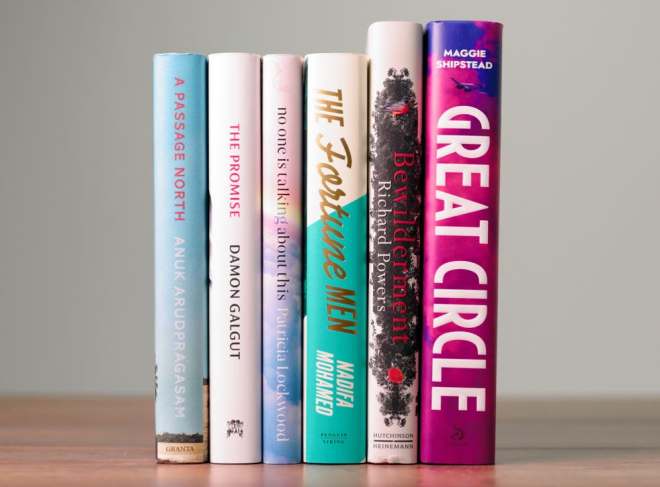
Booker Prize Fiction Shortlist 2021

Today the short list was announced for the Booker Prize for Fiction 2021.

Six novels were chosen, listed below, with summaries and judges comments sourced from the Booker Prize website.

Booker Prize Shortlist 2021

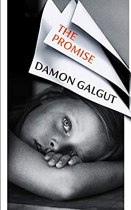
Damon Galgut, The Promise (South Africa)

The Promise Damon GalgutIn Damon Galgut’s deft, powerful story of a diminished family and a troubled land, brutal emotional truths hit home.

The narrator’s eye shifts and blinks, deliciously lethal in its observation of the crash and burn of a white South African family. On their farm outside Pretoria, the Swarts are gathering for Ma’s funeral.

The younger generation detests everything the family stands for, not least the failed promise to the Black woman who has worked for them her whole life. After years of service, Salome was promised her own house, her own land, yet somehow, as each decade passes, that promise remains unfulfilled.

What the Judges Said

“An expansive family novel that explores the interconnected relationships between members of one family through the sequential lens of multiple funerals.

Death assumes here both a closing but also an opening into lives lived. It is an unusual narrative style that balances Faulknerian exuberance with Nabokovian precision, pushes boundaries, and is a testament to the flourishing of the novel in the 21st century.

In The Promise, Damon Galgut makes a strong, unambiguous commentary on the history of South Africa and of humanity itself that can best be summed up in the question: does true justice exist in this world? The novel’s way of tackling this question is what makes it an accomplishment and truly deserving of its place on the shortlist.”

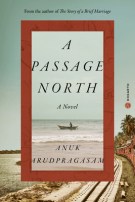
Anuk Arudpragasam, A Passage North (Sri Lanka)

A Passage North Anuk ArudpragasamAnuk Arudpragasam’s masterful novel is an attempt to come to terms with life in the wake of devastation of Sri Lanka’s 30-year civil war. As Krishan makes the long journey by train from Colombo into the war-torn Northern Province to attend a family funeral, so begins an astonishing passage into the innermost reaches of a country.

At once a powerful meditation on absence and longing, and an unsparing account of the legacy of Sri Lanka’s 30-year civil war, this procession to a pyre ‘at the end of the earth’ lays bare the imprints of an island’s past, the unattainable distances between who we are and what we seek.

What the Judges Said

“The story unfurls like smoke as our narrator sifts through memories of a lost love affair while turning over in his mind the strange death of his grandmother’s carer, a woman irrevocably damaged by the death of her young sons in the Sri Lankan civil war.

In hypnotic, incantatory style, Arudpragasam considers how we can find our way in the present while also reckoning with the past.”

Patricia Lockwood, No One is Talking About This  (US)

Noone Is Talking ABout ThisPatricia Lockwood’s sincere and delightfully profane love letter to the infinite scroll, and a meditation on love, language and human connection.

A social media guru travels the world, her entire existence overwhelmed by the internet or what she terms ‘the portal’. ‘Are we in hell?’ The people of the portal ask themselves. ‘Are we all just going to keep doing this until we die?’ Two urgent texts from her mother pierce the guru’s bubble.

As real life collides with the absurdity of the portal, she confronts a world that seems to suggest there is goodness, empathy and justice in the universe – and a deluge of evidence to the contrary.

What the Judges Said

“This is a first novel from a writer already outstanding as a poet and memoirist, and her gifts in both roles are much in evidence in this extremely funny, poignant and challenging book. Patricia Lockwood manages to tell her story in the glancing, mayfly-attention-span idiom of contemporary social media, but she uses this apparently depth-free dialect with precision and even beauty.

The drastic shift of gear in the middle of the story, the introduction of real suffering, love and loss, doesn’t break the seamless flow of wit; but the book’s triumph is in evoking so full a range of emotional discovery and maturing within the unpromising medium of online prattle.

We’re left wondering about the processes by which language expands to cope with the expansiveness of changing human relations and perceptions at the edge of extremity.”

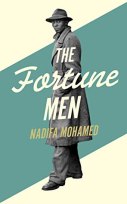
Nadifa Mohamed, The Fortune Men (Somali/UK)

The Fortune Men Nadifa MohamedNadifa Mohamed’s gripping novel about a petty criminal in Cardiff who becomes the last man to be hanged there, wrongfully convicted of murder in 1952.

Mahmood Mattan is a father, a chancer, a petty thief. Many things, in fact, but he is not a murderer. So when a shopkeeper is brutally killed and all eyes fall on him, Mahmood isn’t too worried – secure in his innocence in a country where justice is served.

But as the trial nears, it starts to dawn on him that he is in a fight for his life – against conspiracy, prejudice and the ultimate punishment. In the shadow of the hangman’s noose, he realises that the truth may not be enough to save him.

What the Judges Said

“The Fortune Men takes us to a place we haven’t encountered on the page before: the docklands of 1950s Cardiff, jostling with Somali, Welsh, Jewish, Jamaican, and Indian communities, thrown together by the tides of empire and war.

In the story of Mahmood Mattan, a Somali sailor accused of murder, Nadifa Mohamed creates a story as local as it is exhilaratingly global. Grippingly-paced and full of complex, richly-drawn characters, the novel combines pointed social observation with a deeply empathetic sensibility.

The Fortune Men demonstrates what historical fiction can achieve at its best—to get inside the head of the past—while implicitly yet urgently underscoring the present-day persistence of racism and injustice.”

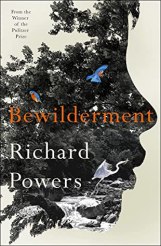
Richard Powers, Bewilderment (US)

Bewilderment Richard PowersAn astrobiologist thinks of a creative way to help his rare and troubled son in Richard Powers’ deeply moving and brilliantly original novel.

Theo Byrne is an astrobiologist. He is also the widowed father of a most unusual nine-year-old. Robin is loving, funny and full of plans to save the world. He is also about to be expelled, for smashing his friend’s face in with a metal thermos.

What can a father do, when the only solution offered is to put his boy on psychoactive drugs? What can he say, when his boy asks why we are destroying the world? The only thing to do is to take the boy to other planets, while helping him to save this one.

What the Judges Said

“Theo is a widowed astrobiologist raising a troubled nine-year-old son tagged with a ‘special needs’ label. On his mission to help the boy, Robin, he is prepared to engage with experimental treatments.

He dares to decode his son’s mind in order to save him, thereby drawing us into the claustrophobic relationship of a grieving man playing solo parent to a vulnerable child.

Theo’s determination to protect Robin from becoming a prisoner of bureaucracy, something of a high wire act of its own, is beautiful and truly inspiring. That, and his willingness to venture beyond the known world into the cosmos make this book a clarion call for us to wake up and realise what our minds might be truly capable of if we were less obedient to the status quo.”

Maggie Shipstead, Great Circle (US)

Great Circle Maggie ShipsteadThe lives of a fearless female aviator and the actress who portrays her on screen decades later intersect in Maggie Shipstead’s vivid, soaring novel.

Marian Graves was a daredevil all her life, from her wild childhood in the forests of Montana to her daring wartime Spitfire missions. In 1950, she sets off on her ultimate adventure, the Great Circle – a flight around the globe. She is never seen again.

Half a century later, Hadley Baxter, a scandal-ridden Hollywood actress, whose own parents perished in a plane crash, is irresistibly drawn to play Marian Graves. This role will lead her to uncover the real mystery behind the vanished pilot.

What the Judges Said

“A book of tremendous narrative ambition and scale, Great Circle pulled us into its vividly-created worlds—from prohibition-era Montana to wartime Britain to present-day Hollywood—and made us want to dwell in them indefinitely.

Maggie Shipstead has an extraordinary ability to conjure characters and settings so fully-realised one feels one knows them—and spills her story out in one gorgeously-crafted sentence after another.

Absorbing in the manner of the immersive realist novels of the 19th century, the book speaks to ever-present questions about freedom and constraint in womens’ lives.”

The 2021 winner will be announced on Wednesday 3 November.

Have you read any of these books? Are you tempted by any particular title?

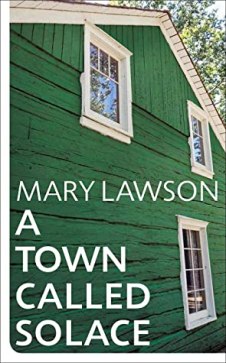
A Town Called Solace by Mary Lawson

I came across this author by chance having seen another of her books reviewed and after a period of not reading, her novel(s) sounded like something I’d quite enjoy as a way back in to reading. There were comparisons made to Anne Tyler, of whom I’ve read and reviewed a couple of novels here Ladder of Years and A Blue Spool of Thread, however having now finished I would say this offers much more beneath the surface of plot.

Booker Prize 2021 Mary Lawson CanadaWhat I wasn’t expecting was to then see this novel long listed for the Booker Prize a short while after I requested it. Doubly intrigued, as this is the only book on that list I have, I began to read.

I loved it.

Not only was it the good choice I had expected for my own personal reasons, it exceeded my expectations in so many ways.

The title is both intriguing and promising and the cover, the way it zooms in on the house in a way that shows little else around it, is such an apt metaphor for the three lives it focuses on, those three windows into their worlds, and the three time sequences it immerses in to portray them.

A character driven mystery that explores boundaries and trust, the characters and their voices are superbly portrayed, they are like closeups, snapshots of little action, complex inner worlds, all of whom have been tilted in some way and are in the process of finding their upright, their wings even; yet there is a clear, interlinked story that ties them together keeping the reader engaged and the plot moving forward at a good pace.

I came to think of these three characters, Mrs Orchard (Elisabeth), the grown up child and previous neighbour of Mrs Orchard, now adult (Liam), and 8 year old current neighbour of Mrs Orchard (Clara), as depicting narratives of past, present and future, that overlap.

When the story begins we meet Clara standing at the window of her house, watching obsessively, waiting for her sister Rose (16) who has run away from home. She is waiting for any sign of her return and is disturbed to see a strange man carrying boxes into Mrs Orchards home next door.

The Inner Journey (Anti-hero)

Rose having gone missing may appear to some as the central drama, however each of the three characters are embarking on their own inner quest that this drama brings to light. Rose and her parents are not central characters, and the mystery of Rose’s disappearance is not allowed to take over the narrative.

This may prove to frustrate some, so tuned in are we to the more dramatic story pushing in to take centre stage. Here, the larger than life character, though involved in the more dangerous narrative, is made into a secondary character, kept at a distant. It’s the Penelope versus Odyseuss dynamic again, as recently depicted in Brenda Lozano’s excellent Loop.

More than disturbed, Clara is anxious because she has the keys to the house to enable her to feed the cat Moses while Mrs Orchard is in hospital. She’d promised she wouldn’t be gone long. Through Clara’s perspective we observe how confusing childhood can be when adults put so much effort into lying and withholding truth from them. In reality, they are extra sensitive to everything outside of and beyond words, cues that enable them to feel truths, therefore making them mistrust adults, whose words deny their truth.

But she had been away long, she’d been away weeks and weeks. Clara had run out of cat food several times and had to ask her mother for money so that she could go and buy some more. (This was before Rose disappeared, when everything was normal and Clara could go wherever she liked.) She’d expected Mrs Orchard to be more reliable, and was disappointed in her. Adults in general were less reliable than they should be, in Clara’s opinion, but she’d thought Mrs Orchard was an exception.

The Lying Life of Adults

wood rooftop building construction

Photo by Renato Rocca on Pexels.com

Clara doesn’t know this yet, but Liam remembers what it was like to be that child and he is the one adult who doesn’t lie to her. But in order to gain her trust, he will be required to step outside his own comfort zone and finds himself getting involved in a community and the lives of people he had no intention of knowing. In the midst of his own mid-life crisis, this unexpected event had given him a welcome distraction, however he had planned to stay 2 weeks and leave.

By six in the evening, nightmarish northern roads notwithstanding, he was walking up the steps of Mrs Orchard’s porch, with Toronto, his career and his marriage behind him.
And now, not much more than twelve hours later, somewhat dazed and very short of sleep, he was sitting in a strange house, which he happened to own, trying to explain it all to a cop.

In an entertaining subplot to his story, his effort to fix a leaking pipe under a sink miraculously leads to him to become the builder’s labourer, in on of those familiar scenarios of “well in order to fix that, first we’re going to have to fix the roof and unfortunately…”

‘How much is all this going to cost?’

‘Materials and labour. Biggest cost is labour, but with you working for free I’ll knock a third off that.’

Liam’s narrative happens ahead of Mrs Orchard’s and Clara’s narrative occurs ahead of Liam’s. It is so subtle and yet so clever as it creates a kind of mystery within the individual story of each character. So we sometimes read of the same event later from a different perspective.

Angelic Attendants

Elisabeth is in hospital (in the past because in the present we know she has already passed away) and her narrative uses the second person (You) as she is speaking to her dead husband (of many years now), who is very present for her, a sign to the reader of how close to her own passing is likely to be. As she speaks to her husband, she is recalling a period many years ago when the boy Liam lived next door with his family. Little clues drop indicating that something happened, something only Elisabeth now remembers.

Times without number I have asked myself how it could have come to that. Now, from a distance thirty years I can see the answer clearly: little by little.

The writing is superb and atmospheric, the structure is sophisticated and yet flows with ease you could read this and be completely unaware of it. The individual voices of the characters are pitch perfect and atmosphere created, remarkable. The drama is understated yet palpable and the mundane slowly gets filled with intrigue and curiosity was the layers are revealed. And it made me laugh out loud – often, little surprises and a fabulous last laugh for the closing scene.

I don’t know if this will make the shortlist but I totally understand why it has been nominated. I’m excited to read more of her work, because this was brilliant.

Highly Recommended.

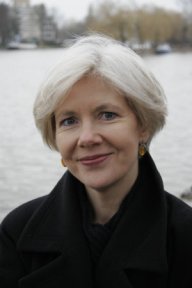
Mary Lawson, Author

Mary LawsonMary Lawson was born and brought up in a small farming community in southwestern Ontario and moved to England after graduating from McGill University with a degree in psychology.

She is the author of three previous nationally and internationally bestselling novels, Crow Lake, The Other Side of the Bridge, and Road Ends. Crow Lake was a New York Times bestseller and was chosen as a Book of the Year by The New York Times and The Washington Post, among others. The Other Side of the Bridge was longlisted for the Booker Prize.

Further Reading/Listening

Q & A Interview: In conversation with novelist Mary Lawson by Kobo

Video Interview: Reader Meets Writer, Wiley Cash interviews Mary Lawson on A Town Called Solace

N.B. Thank you kindly to the publisher Random House UK for providing a copy for review via Netgalley.

shallow focus photography of gray cat in box

Photo E.Grossgasteiger on Pexels.com

The Old Drift by Namwali Serpell (Zambia)

I read this over a period of four weeks in a group read along in July.

wp-1629985501548..jpgIt is a vast tome, that traverses generations and continents, though the thing that connects them all is the country Zambia.

The novel is book-ended by brief chapters entitled The Falls and The Dam. It begins near the infamous Victoria Falls in an area five miles above the Falls on the banks of the Zambezi River, where it’s deepest and narrowest and easiest for ‘drifting’ a body across the other side.

Here there was an old colonial settlement that came to be known as The Old Drift and an old drifter caught up in an event that sets off the intertwined narrative.

“This is the story of a nation — not a kingdom or people — so it begins, of course, with a white man.”

Split into three sections, within which there are three characters in each, from three parts of a family tree. The Grandmothers, The Mothers, The Children.

It is a sprawling saga by nature of crossing that many generations, though the stories narrow and overlap by the time it comes to the children, the differences between them nothing like the generations before them.

Drifting Across Genre

The Old Drift Namwali Serpell

Zambezi River at the junction of Namibia, Zambia, Zimbabwe and Botswana

Its a novel that also crosses genre beginning in a colonial era with European settlers, and the women they brought with them, the secrets they kept, the way they live, what is expected of them.

I enjoyed reading the first part of Sibilla and Agnes and I liked that the chapters were structured that way, that we were reading of the three grandmothers, that we knew this ahead of time.

It felt comforting to be reading inside this known framework, (for such a vast book), so while there were many characters, these women orient the reader.

While reading a section I could hold on to who the characters were however as the sections changed it was often necessary to refer back to the family tree. I enjoyed the first two sections and though I was forewarned that the ending was going to cross genre, it felt somewhat disconnected to the earlier sections and I found myself reluctant to pick it up at times.

In an interview the author when asked about this genre crossing responded that “these collisions are at the heart of the creative process.”

waterfalls

Photo Jonny Lew on Pexels.com

I wondered if it was because I read it over the course of a month, but reading weekly commentary in the ReadAlong group discussing the book, it seems many had a similar issue with the change of pace and narrative direction of the latter part of the novel. Like the river itself, the narrative drifts and wanders, swirls and eddies, then changes pace as it moves towards that vast precipice, converging for the final spill.

“with a sprawling cast that springs from Zambia, England and Italy. Over the course of three generations, Serpell follows historical figures and fictional characters as they converge on Lusaka, drawing them closer into each others’ orbit through independence in 1964, the HIV/Aids epidemic and on into a near future filled with mosquito drones and revolution” – extract from an interview with Richard Lea, Guardian

Further Reading

A Helpful Review: NPR The Old Drift’ Takes The Long View Of Human (And Mosquito) History

Interview:  Guardian Richard Lea speaks to Namwali Serpell The Old Drift ‘As a young woman I wasn’t very nice to myself’

Booker Prize Longlist 2021

Though it was announced at the end of July I wasn’t paying attention during my busy summer, but before the short list is announced on September 14, I wanted to share the long list and short summaries of the titles, as this is often where we might find something that appeals.

The panel of judges this year includes historian Maya Jasanoff (Chair), writer and editor Horatia Harrod, actor Natascha McElhone, twice Booker-shortlisted novelist and professor Chigozie Obioma, and writer and former Archbishop Rowan Williams.

I haven’t read any of the titles but I do have a copy of Mary Lawson’s A Town Called Solace, which I thought looked like a light read that I might enjoy.

“Readers of every taste and every kind of interest will find something on this list. What we tried to do was hear what the books had to say to us. We find what marks all of these books is a really distinctive voice. Some of them are very lyrical, some of them are very spare, but there is a kind of deliberate quality and attention to the writing in each of these books that makes them really distinct and special.”  Maya Jasanoff, Chair of Judges

Below are the 13 novels long listed.

A Passage North, Anuk Arudpragasam (Sri Lanka) (Granta Books)
A Passage North Anuk ArudpragasamA Passage North begins with a message from out of the blue: a telephone call informing Krishan that his grandmother’s caretaker, Rani, has died under unexpected circumstances. The news arrives soon after an email from Anjum, an impassioned yet aloof activist Krishnan fell in love with years before while living in Delhi, stirring old memories and desires from a world he left behind.

As Krishan makes the long journey by train from Colombo into the war-torn Northern Province for Rani’s funeral, so begins an astonishing passage into the innermost reaches of a country. At once a powerful meditation on absence and longing, and an unsparing account of the legacy of Sri Lanka’s thirty-year civil war, this procession to a pyre ‘at the end of the earth’ lays bare the imprints of an island’s past, the unattainable distances between who we are and what we seek.

Written with precision and grace, Anuk Arudpragasam’s novel attempts to come to terms with life in the wake of devastation, a poignant memorial for those lost and those still alive.

Second Place, Rachel Cusk, (UK/Canada) (Faber)
Second Place Rachel CuskA woman invites a famed artist to visit the remote coastal region where she lives, in the belief that his vision will penetrate the mystery of her life and landscape. Over the course of one hot summer, his provocative presence provides the frame for a study of female fate and male privilege, of the geometries of human relationships, and of the struggle to live morally between our internal and external worlds.

With its examination of the possibility that art can both save and destroy us, Second Place attempts to affirm the human soul, while grappling with its darkest demons.

The Promise, Damon Galgut, (South Africa) (Chatto & Windus)

The Promise Damon GalgutThe Promise charts the crash and burn of a white South African family, living on a farm outside Pretoria. The Swarts are gathering for Ma’s funeral. The younger generation, Anton and Amor, detest everything the family stand for, not  least the failed promise to the Black woman who has worked for them her whole life. After years of service, Salome was promised her own house, her own land… yet somehow, as each decade passes, that promise remains unfulfilled.

The narrator’s eye shifts and blinks: moving fluidly between characters, flying into their dreams; deliciously lethal in its observation. And as the country moves from old deep divisions to its new so-called fairer society, the lost promise of more than just one family hovers behind the novel’s title.

In this story of a diminished family, sharp and tender emotional truths hit home.

The Sweetness of Water, Nathan Harris (US) (Tinder Press)
The Sweetness of Water Nathan HarrisIn the dying days of the American Civil War, newly freed brothers Landry and Prentiss find themselves cast into the world without a penny to their names. Forced to hide out in the woods near their former Georgia plantation, they’re soon discovered by the land’s owner, George Walker, a man still reeling from the loss of his son in the war.

When the brothers begin to live and work on George’s farm, tentative bonds of trust and union begin to blossom between the strangers. But this sanctuary survives on a knife’s edge, and it isn’t long before the inhabitants of the nearby town of Old Ox react with fury at alliances being formed a few miles away.

Conjuring a world fraught with tragedy and violence yet threaded through with hope, The Sweetness of Water is a debut novel unique in its power to move and enthrall. An Oprah pick for her July book club and on Barack Obama’s summer reading list.

Klara and the Sun, Kazuo Ishiguro (UK) (Faber)
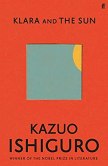
Klara and the Sun Kazua IshiguroFrom her place in the store, Klara, an Artificial Friend with outstanding observational qualities, watches carefully the behaviour of those who come in to browse, and those who pass in the street outside. She remains hopeful that a customer will soon choose her, but when the possibility emerges that her circumstances may change for ever, Klara is warned not to invest too much in the promises of humans.

In Klara and the Sun, Kazuo Ishiguro looks at our rapidly-changing modern world through the eyes of an unforgettable narrator to explore a fundamental question: what does it mean to love? Also on Barack Obama’s summer reading list.

An Island, Karen Jennings (South Africa) (Holland House Books)

An Island Karen JenningsSamuel has lived alone for a long time; one morning he finds the sea has brought someone to offer companionship and to threaten his solitude…

A young refugee washes up unconscious on the beach of a small island inhabited by no one but Samuel, an old lighthouse keeper. Unsettled, Samuel is soon swept up in memories of his former life on the mainland: a life that saw his country suffer under colonisers, then fight for independence, only to fall under the rule of a cruel dictator; and he recalls his own part in its history. In this new man’s presence he begins to consider, as he did in his youth, what is meant by land and to whom it should belong. To what lengths will a person go in order to ensure that what is theirs will not be taken from them?

A novel about guilt and fear, friendship and rejection; about the meaning of home.

A Town Called Solace, Mary Lawson (Canada) (Chatto & Windus)
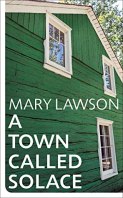
A Town Called SolaceClara’s sister is missing. Angry, rebellious Rose had a row with their mother, stormed out of the house and simply disappeared. Eight-year-old Clara, isolated by her distraught parents’ efforts to protect her from the truth, is grief-stricken and bewildered. Liam Kane, newly divorced, newly unemployed, newly arrived in this small northern town, moves into the house next door – a house left to him by an old woman he can barely remember — and within hours gets a visit from the police. It seems he’s suspected of a crime.

At the end of her life Elizabeth Orchard is thinking about a crime too, one committed thirty years ago that had tragic consequences for two families and in particular for one small child. She desperately wants to make amends before she dies. Set in Northern Ontario in 1972, A Town Called Solace explores the relationships of these three people brought together by fate and the mistakes of the past. By turns gripping and darkly funny, it uncovers the layers of grief and remorse and love that connect us, but shows that sometimes a new life is possible.

No One is Talking About This, Patricia Lockwood (US) (Bloomsbury Circus)

Noone Is Talking ABout ThisA woman known for her viral social media posts travels the world speaking to adoring fans, her entire existence overwhelmed by the internet — or what she terms ‘the portal’. Are we in hell? the people of the portal ask themselves. Who are we serving? Are we all just going to keep doing this until we die?

Two texts from her mother pierce the fray: ‘Something has gone wrong,’ and ‘How soon can you get here?’ As real life and its stakes collide with the increasing absurdity of the portal, the woman confronts a world that seems to contain both an abundance of proof that there is goodness, empathy and justice in the universe, and a deluge of evidence to the contrary.

Sincere and profane, No One Is Talking About This is a love letter to the infinite scroll, a meditation on love, language and human connection from an original voice of our time.

The Fortune Men, Nadifa Mohamed (Somalia/UK) (Viking, Penguin)

The Fortune Men Nadifa MohamedMahmood Mattan is a fixture in Cardiff’s Tiger Bay, 1952, which bustles with Somali and West Indian sailors, Maltese businessmen and Jewish families. A father, a chancer, a some-time petty thief, he is many things but not a murderer.

So when a shopkeeper is brutally killed and all eyes fall on him, Mahmood isn’t too worried. It is true that he has been getting into trouble more often since his Welsh wife Laura left him. But Mahmood is secure in his innocence in a country where he thinks justice is served.

It is only in the run-up to the trial, as the prospect of freedom dwindles, that it will dawn on Mahmood that he is in a terrifying fight for his life — against conspiracy, prejudice and the inhumanity of the state. Under the shadow of the hangman’s noose, he begins to realise that the truth may not be enough to save him.

Bewilderment, Richard Powers (US) (Hutchinson Heinemann)

Bewilderment Richard PowersTheo Byrne is a promising young astrobiologist who has found a way to search for life on other planets dozens of light years away. The widowed father of an unusual nine-year-old, his son Robin is funny, loving and filled with plans. He thinks and feels deeply, adores animals and spends hours painting elaborate pictures. On the verge of being expelled from third grade for smashing his friend’s face with a metal thermos, this rare and troubled boy is being recommended psychoactive drugs.

What can a father do or say when his son wants an explanation for a world that is clearly in love with its own destruction? The only thing for it is to take the boy to other planets, all the while fostering his desperate campaign to help save this one.

China Room, Sunjeev Sahota (UK) (Harvill Secker)
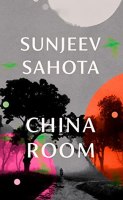
China Room Sunjeev SahotaMehar, a young bride in rural 1929 Punjab, is trying to discover the identity of her new husband. She and her sisters-in-law, married to three brothers in a single ceremony, spend their days hard at work in the family’s ‘china room’, sequestered from contact with the men.

When Mehar develops a theory as to which of them is hers, a passion is ignited that will put more than one life at risk. Spiralling around Mehar’s story is that of a young man who in 1999 travels from England to the now-deserted farm, its ‘china room’ locked and barred. In enforced flight from the traumas of his adolescence — his experiences of addiction, racism, and estrangement from the culture of his birth — he spends a summer in painful contemplation and recovery, finally finding the strength to return home. Partly inspired by the author’s family history it explores how systems of power affect individual lives and the human capacity to resist them.

Great Circle, Maggie Shipstead (US)(Doubleday)

Great Circle Maggie ShipsteadIn 1920s Montana, wild-hearted orphan Marian Graves spends her days roaming the rugged forests and mountains of her home. When she witnesses the roll, loop and dive of two barnstorming pilots, she promises herself that one day she too will take to the skies.

Years later, after a series of reckless romances and a spell flying to aid the British war effort, Marian embarks on a treacherous flight around the globe in search of the freedom she craves,  never to be seen again.

More than half a century later, Hadley Baxter, a troubled Hollywood starlet beset by scandal, is  drawn to play Marian Graves in her biopic, a role that leads her to probe the deepest mysteries of the vanished pilot’s life.

Light Perpetual, Francis Spufford (UK)(Faber)
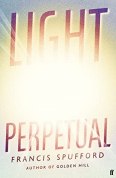
Light Perpetual Francis SpuffordLunchtime on a Saturday, 1944: the Woolworths on Bexford High Street in South London receives a delivery of aluminum saucepans. A crowd gathers to see the first new metal in ages—after all, everything’s been melted down for the war effort. An instant later, the crowd is gone; incinerated. Among the shoppers were five young children.

Who were they? What futures did they lose? Inspired by real events, written in luminous prose,  the author reimagines the lives of five souls as they pass through the extraordinary changes of the twentieth-century London.

*  *  *  *  *

That’s it, the 13 books that make up the Booker’s dozen, chosen from 158 submissions. Are there any that jump out at you, that look interesting?

I’m intrigued by Sri Lankan author Anuk Arudpragasam’s novel, I’m always going to be more interested in stories that are set within another culture and I recall wishing to read his first novel, though I never did. Bewilderment seems to be receiving unanimously high praise by those who’ve had the chance to an early copy, but I really have no idea what will make the short list, watch this space to find out!

“Many of them consider how people grapple with the past—whether personal experiences of grief or dislocation or the historical legacies of enslavement, apartheid, and civil war. Many examine intimate relationships placed under stress, and through them meditate on ideas of freedom and obligation, or on what makes us human.”
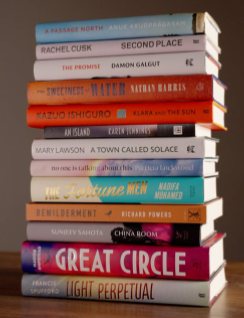
Booker Longlist 2021

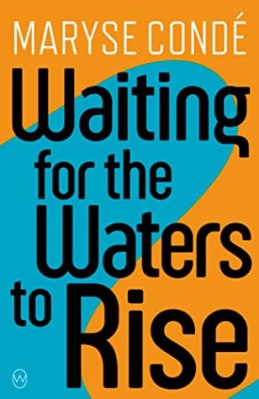
Waiting for the Waters to Rise by Maryse Condé (2021) tr. Richard Philcox

This story (originally published in French in 2010 as En attendant la montée des eaux) follows the character of Babakar, a Doctor from Segu, Mali who delivers babies. In the opening chapter while it pours with rain outside, he is called to attend a birth of a young woman he does not know but recognises, who does not survive the birth. Understanding that the man who accompanies her Movar, is not the father, he claims the baby as his own, seeing it as a sign, a return.

It does occasionally trouble him, what he has done and sure enough, one day Movar returns and tells him of the promise made to the young mother, to return her child to her family in Haiti, from where she had fled. The novel begins in Guadeloupe and moves to Haiti, while also travelling to other places through the backstories of the adjacent characters.

Waiting For the Waters to Rise Maryse CondeThough the story follows Babakar, each time we encounter a new character, there is this digression into their backstory(s), so we learn of all these male characters stories, Babakar (in Mali and the often present apparition of his mother Thécla Minerve), Movar, (in Haiti) Fouad (in Lebanon, though being Palestinian he dreams of the poetry of Mahmoud Darwich) who all come together in Haiti, and underlying the visit, this search to find family and learn why the young mother had fled.

Although the story is about the search for Anais’s (the baby) family, for all that this is an employed man raising a young baby on his own, she was remarkably absent, as were her carers, creating a bit of a disconnect, considering the entire motivation for this grand journey was supposedly her well-being, or the pursuit of this promise. The baby seemed to pose no great inconvenience, which seemed strange, the story centred solely on the male characters.

With so much of the novel told in backstory, there was a lot of ‘telling’ and I found myself reading over parts of those narratives quite quickly as they didn’t seem to progress or relate to the story itself. Perhaps there was something universal in the stories of the three main men, in the collapse of their earlier lives that found them seeking solace in each others company, but it didn’t work for me as well as I had hoped.

The family that Anais came from had its own complicated history and political associations, but was less in the foreground.

It was interesting, having just read Love, Anger, Madness: A Haitian Trilogy by Marie Vieux-Chauvet, to be back in Haiti and to understand more of the references and pick up on the atmosphere of the location, the unpredictability and quasi-fear around certain people, never quite knowing if they are safe or not and that metaphor of the title, suggesting disaster not far off.

close up water drop photography

Photo by PixabayPexels.com

As the novel came to a close, those waters began to rise and there is yet another opportunity to enter into an interesting story as the two characters make a plot direction changing decision and enter into an aspect of the story we will never know. And what about the baby, I wonder, not for the first time?

Maryse Condé is a Guadeloupean author writing in French, the author of many novels including the historical fiction masterpiece Segu and I, Tituba Black Witch of Salem.

She remains a favourite author and I’m looking forward to reading more of her work, last year’s Crossing the Mangrove was just brilliant as were her childhood essays in Tales from the Heart: True Stories from My Childhood.

Loop by Brenda Lozano tr. Annie McDermott

wp-1629982535768..jpgI picked up Loop for WIT (Women in Translation) month and I loved it. I had few expectations going into reading it and was delightfully surprised by how much I enjoyed its unique, meandering, playful style.

It was also the first work of fiction I have read, after a nine week pause, while I have been working on my own writing project, so its style of short well spaced paragraphs, really suited me. I highlighted hundreds of passages, an indicative sign.

Change. Unlearning yourself is more important than knowing yourself.

It was helpful to listen to the recent Charco Press interview linked below to understand that it is a kind of anti-hero story, inspired by her thinking about The Odyssey’s Penelope while her lover Odysseus is off on his hero’s quest – of the inner journey of the one who waits, the way that quiet contemplation and observation also reveal understanding and epiphanies.

Odysseus, he of the many twists and turns. Penelope, she of the many twists and turns without moving from her armchair. Weaving the notebook by day, unravelling it by night.

Penelope and OdysseusThe narrator is waiting for the return of her boyfriend, who has travelled to Spain after the death of his mother.
His absence coincides with her recovery from an accident, so she has a double experience of waiting, a greater opportunity to observe the familiar and unfamiliar around her, to see patterns, imagine connections, dream and catastrophise.

Childhood is so uncertain, so distant. It’s almost like childhood is the origin of fiction: describing any past event over and over to see how far away you are getting from reality.

And then there is her quiet obsession with notebooks, with the ideal notebook, another subject that evolves in her pursuit of it. It’s thought provoking, funny, full of lots of literary and musical references, which I enjoyed listening to while reading and quite unlike anything else I’ve read. And a nod to Proust. The dude.

I was left with a scar. I think telling stories is a way of putting a scar into words. Since not all blows or falls leave marks, the words are there, ready to be put together in different ways, anywhere, anytime, in response to any fall, however serious or slight.

Random observations over time create patterns and themes, eliciting minor epiphanies.

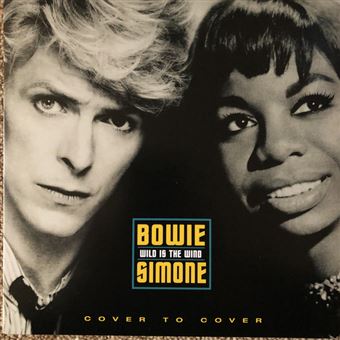
Wild-Is-The-WindA celebration of the yin aspect of life, the jewel within. And that jewel of a song, sung by both David Bowie and Nina Simone, Wild is the Wind.

…the present is also, as its name suggests, a gift. It doesn’t suggest longing or loss. It’s just a present, a gift, a time with no strings attached which is totally ours, to use however we want, however we please. There are days when I find the future overwhelming, with all the bright lights and commotion.

I highly recommend it if you enjoy plotless narratives that make you think and see meaning in the ordinary. And relate to the little things.

Dwarf things. Small things. Little things in relation to the norm. Insignificant things. Things with different dimensions. Curiously, the stories I like the most are made up of trivialities. Details. Trifles. These days, people look to what’s big. The big picture, big sales figures, success. Bright lights, interviews, breaking news. Whatever’s famous. Importance judged by fame. Maybe small things are subversive. Living on a modest scale compared to the norm. Maybe the dwarf is the hero of our time.

Brenda Lozano Author LoopBrenda Lozano is a novelist, essayist and editor. She was born in Mexico in 1981.

Her novels include Todo nada (2009), Cuaderno ideal (2014) published in English as Loop and the storybook Cómo piensan las piedras (2017). Her most recent novel is Brujas (2020).

Brenda Lozano was recognized by Conaculta, Hay Festival and the British Council as one of the most important writers under 40 years of age in Mexico and named as one of the Bogotá 39, a selection of the best young writers in Latin America.  She also writes for the newspaper El País.

Further Information

On Charco Press’s Instagram IGTV page there is a video interview with Brenda Lozano for WIT Month where she speaks about the process of translation as a part of the art of writing, about her influences as she wrote Loop and about how she has taken the story of Penelope and Odysseus as inspiration.

Don’t be alarmed if this isn’t going anywhere. Don’t expect theories, reliable facts or conclusions. Don’t take any of this too seriously. That’s what universities are for, and theses, and academic studies. Personally, I like cafés, bars and living rooms. Not to mention comfortable cushions. So nice and cosy.