Demi-God reawakens Classical Myths

It wasn’t the bookies favourite, but it was the bestselling book of the Orange Prize shortlist and as I discovered, Madeline Miller’s
‘The Song of Achilles’ had much to entice a multitude of readers, being a contemporary narration of an age-old tale drawn from the Greek Myths, published in the lead up to the Olympic Games and touching on issues that echo President Obama’s recent stand on equality for same-sex couples. Very 21st century then.

Inspired by Homer’s classicThe Iliad‘, Miller focuses on Achilles, the half God, half mortal son of Peleus and Thetis and his friend, the young exiled Prince, Patroclus, about whom little is known. Achilles’ mother Thetis is a sea-nymph and fears for her son’s future; she will do everything she can to protect him given his fate as the greatest warrior of his generation, and to avoid his death which it the oracles say will follow his killing of Hector.

The friendship between Achilles and Patroclus fires Miller’s imagination and the first half of the book beautifully depicts this at first distant relationship, blossom into a feverish loyalty. Not surprising to learn the author has been listening to and reading the Greek myths since she was 5 years old, a passion that carried her into studies of Greek and Latin, which comes across in this oeuvre.

Though I have only cursory knowledge of the Greek heroes, I have long been intrigued by their stories and archetypal symbolism, much in the same way I loved to learn about Maori myths and legends during my childhood; the legendary Maui, a demigod from Hawaiki, fished up New Zealand from the ocean.

I am reminded too of the child in A.S.Byatt’s ‘Ragnarök’ who relates to the Norse myths more than anything else anyone teaches her. So too, in my imagination do these legends of childhood come back to me and explain nature and humanity in a more primal way than anything else I was later taught – what we learn and how it affects us isn’t so much chosen as absorbed into our being when we are very young.
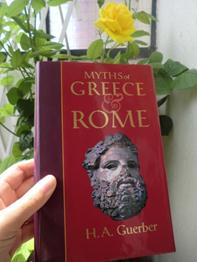
So ‘The Song of Achilles’ inspired me to pick up my ‘Myths of Greece & Rome’ by H.A.Gueber and read all the references to Achilles, Patroclus, Thetis, Peleus, Hector and more. Within its pages I found this reference to a word and metaphor we all know to refer to the tendon in the heel, but whose origin is much less known.

Thetis loved this only child so dearly, that when he was but a babe, she had carried him to the banks of the Styx, whose waters had the magic power of rendering all the parts they touched invulnerable. Premising that her son would be a great warrior, and thus exposed to great danger, she plunged him wholly into the tide with the exception of one heel, but which she held him, and then returned home.

In the original story an oracle foretells that Achilles will die from a wound in his heel after his dispatch of Hector; ultimately he will be remembered and perhaps even more renowned for this insignificant but fatal weakness, than for his epic courage and strength.

I liked this book as much for its inspiring me to look at other books and references to find out more about the legend as I did for the story itself. I came to it without much knowledge of its content and found the first half totally intriguing, reading it in one sitting. It did slow and almost lose me once they set sail for Troy and the ensuing battle scenes were a little two-dimensional, but when Patroclus found his healing abilities and tended to the wounded soldiers, the story refocused on the lead characters.  The action played off the battle field was more captivating and I was gripped throughout the last quarter.
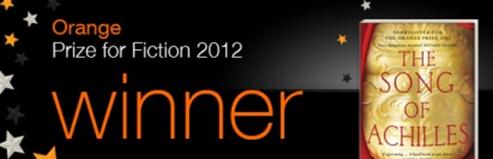
Orange Prize Winner!

As I pack my bag for a short visit to Northern Ireland tomorrow, I hesitate about only taking the kindle, having been caught out before on a 5 hour TGV train ride and a flat battery. But with the announcement that Madeline Miller has won the 2012 Orange Prize for Fiction with her debut novel ‘The Song of Achilles’, my decision is made, it has been tempting me all day and I have picked it up a few times, willing it to share its secret. So into the bag it goes.

While the international women’s writing prize will continue to be celebrated, this will be the last year that it is sponsored by the telecommunications company Orange, so we shall wait and see what name and new look next year’s prize will emerge with.

The shortlisted novels can be viewed here and my review of Ann Patchett’s ‘State of Wonder’.

So what can we expect to find within the covers of Madeline Miller’s ‘The Song of Achilles’? According to the blurb:

Greece in the age of Heroes.

Patroclus, an awkward young prince, has been exiled to Phthia to live in the shadow of King Peleus and his strong, beautiful son, Achilles. By all rights their paths should never cross, but Achilles takes the shamed prince as his friend, and as they grow into young men skilled in the arts of war and medicine, their bond blossoms into something far deeper — despite the displeasure of Achilles’s mother Thetis, a cruel sea goddess. But then word comes that Helen of Sparta has been kidnapped. Torn between love and fear for his friend, Patroclus journeys with Achilles to Troy, little knowing that the years that follow will test everything they hold dear.

Inspiration indeed in this year of the Olympics!

A Love of Words and Music

I have been struggling a little to finish ‘The Maid and the Queen’, what with school holidays, the French presidential elections (which I voted in for the first time), working on promoting my Aromatherapy business and socialising more than usual, including attending an excellent concert of the cult singer/artist ‘Camille’ at Le Silo in Marseille on Friday.

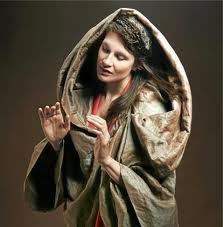
Camille

No one song can possibly represent what a performance by this artist represents, she sings, uses her voice and body as an instrument, dances barefoot in her sacking dress and easily extracted volunteers from the audience to participate.  She is total inspiration, if you would like listen, here is a sample ‘Mars is no Fun’.

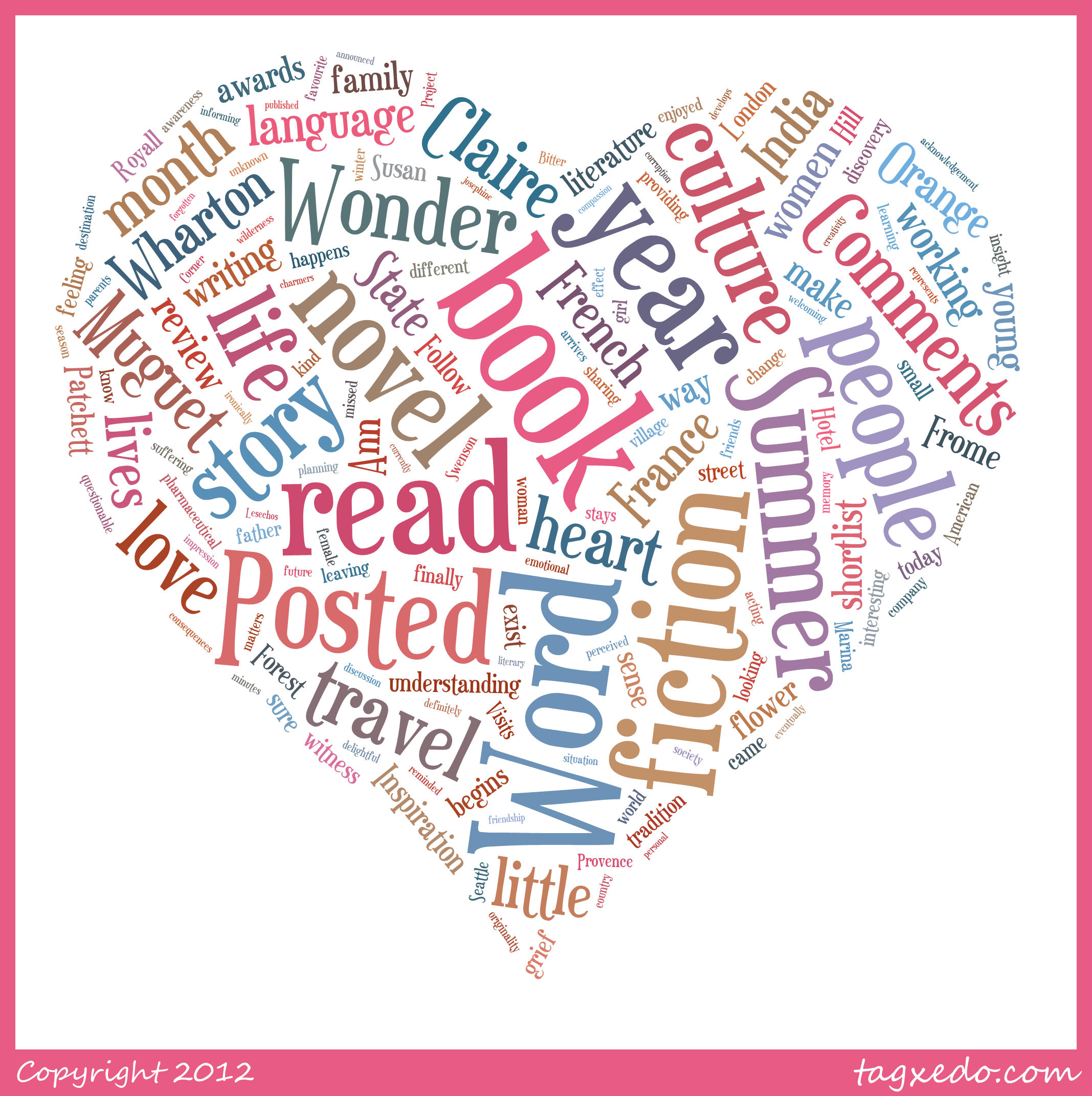
So no book chat today, instead I will share a fun word cloud tool that I discovered thanks to Elodie at  ‘Commuting Girl’ called Tagxedo into which you can copy any text or enter your blog or website name and the tool will analyse the content and show you which are the most popular words and how often they are used.

So Voila! For this blog ‘Word by Word’, here is an image of the most common words used and I am delighted that the word ‘Word’ is indeed such a dominant feature.

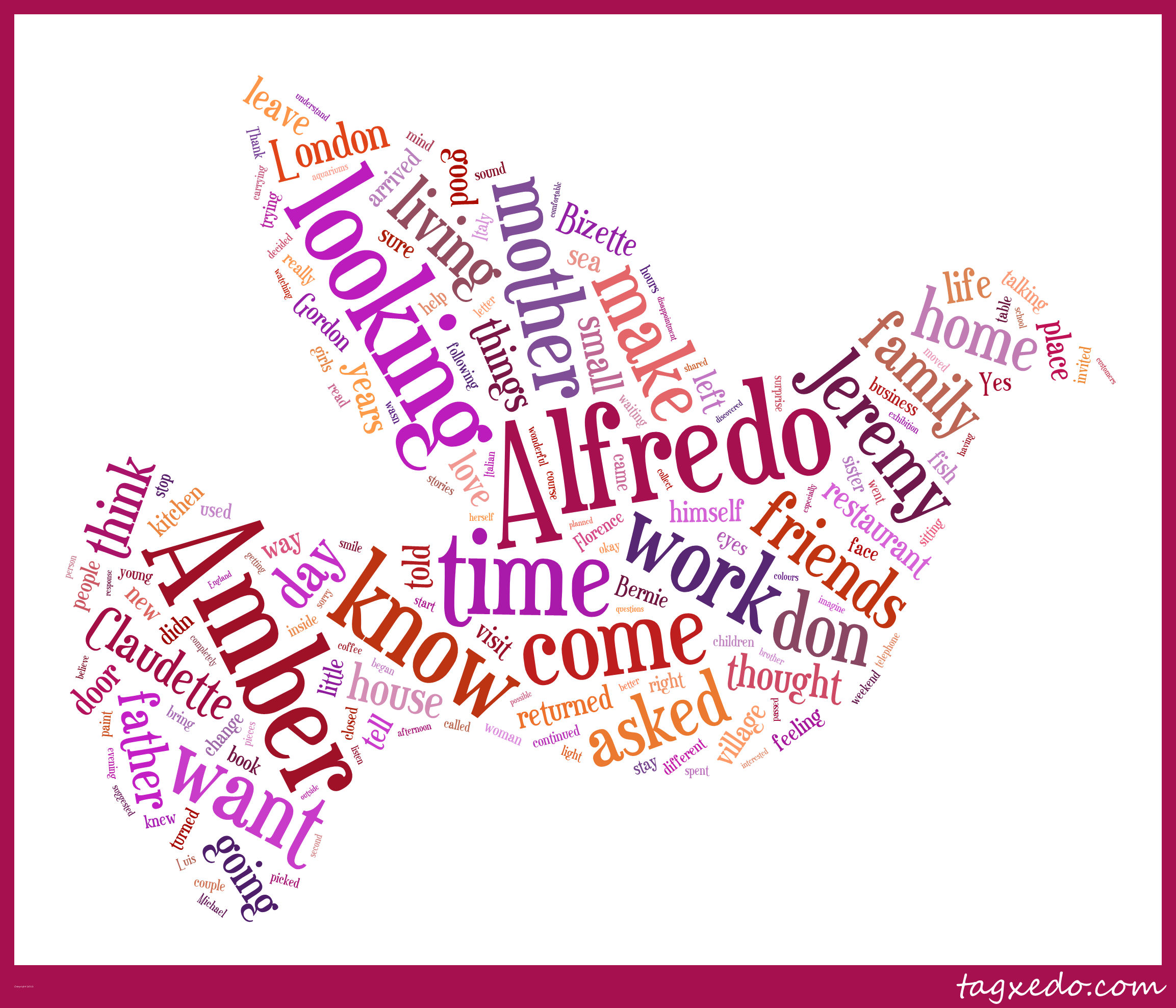
Intrigued, I decided to put the text of my ‘sitting on the shelf’ novel as I have always wondered which words I might be over using.  So I am not going to say anything more about the novel, except that it is called ‘A Piece of the Mosaic’ and here is a clue to what lies within.

So what does your blog, novel, poem,story look like?

Hotel on the Corner of Bitter and Sweet

Meet 'Noisette' our mischievous cat

This book was chosen by a local book club, although I didn’t make it to the discussion, but I like to read along anyway especially as they introduce me to books that I am often not aware of; so far it is thanks to this group that I read La Seduction – how the French play the game of life, and Abraham Verghese’s wonderful Cutting for Stone’
one of my favourite reads this year. Next month it is ‘Death at Chateau Bremont’, which is going to be a rather special read as it is set here in Aix-en-Provence. The author M.L. Longworth is from Toronto but now works between Paris and Aix, how she arrived in France is also an interesting story.

Jamie Ford’s debut novel ‘Hotel on the Corner of Bitter and Sweet’ is a wonderful story of childhood friends in Seattle, second generation immigrants caught up in the brutal reality of being perceived as untrustworthy, having the skin of an enemy. The discovery of personal effects of Japanese families in the basement of an abandoned hotel, stir up memories for Henry and lead him on a search into the not quite forgotten past.

It seems there is unavoidable suffering, whether due to ethic origin or some other thing that cast children as being different from their peers. Henry is one of those stuck in the middle, not like his parents and not like his peers; he’s an in between, a third culture kid. He wears a badge his father gave him that reads ‘I am Chinese’, what it really means is ‘I am NOT Japanese’ for it is 1942 in Seattle and anyone who looks Japanese is being sent away to a special ‘camp’.

This little badge actually existed and belonged to the author’s father; inspiring him to write this story after learning his father wore it following the bombing of Pearl Harbour. Equally, The Panama Hotel still stands today, at the heart of what was once the thriving community of Nihonmachi, Seattle’s Japantown.

Jamie Ford depicts Henry’s friendship with Keiko and the jazz player Sheldon with understanding and compassion. Whether it is facing bullies at school and in the street or the emotional demands of his well-wishing parents, Henry exhibits both courage and stubbornness, leaving the reader content that he is not to become one of life’s victims, he makes choices and will find his way.

An interesting insight into what how it is be from your own country but not look like your fellow countrymen and women. A fascinating and thought-provoking read.

Orange Prize Shortlist

From the longlist of 20 books, today a shortlist of five has been announced, for the 17th annual Orange Prize for women’s writing.

Set up to acknowledge and celebrate women’s contribution to storytelling the Award celebrates excellence, originality and accessibility in women’s writing throughout the world. It is awarded to a novel written by a woman in the English language.

Last year the award was won by Téa Obreht for The Tiger’s Wife and previous winners have included Barbara Kingsolver for The Lacuna, Andrea Levy’s A Small Island and Chimamanda Ngozi Adichie for Half of a Yellow Sun, which is currently being made into a film.

This year the shortlist includes:

Esi Edugyan                 ‘Half Blood Blues’           Canadian      2nd Novel

Anne Enright               ‘The Forgotten’                Irish             5th Novel

Georgina Harding      ‘Painter of Silence’             British         3rd Novel

Madeline Miller         ‘The Song of Achilles’         American      1st Novel

Cynthia Ozick              ‘Foreign Bodies’              American      7th Novel

Ann Patchett              ‘State of Wonder’             American      6th Novel

Short Synopses and Biographies can be read here.

The winner will be announced at an awards ceremony to be held at the Royal Festival Hall in London on 30 May 2012.

I haven’t read any on the list yet, but I have Ann Patchett’s ‘State of Wonder’ on the shelf and I have been eyeing up ‘Half Blood Blues’ for some time.

And you? Have you read any of the titles from either the short or the long list yet, or planning to?

A Rhyme for the Odes (Mu’allaqat)

No one guided me to myself. I am the guide.

Between desert and sea, I am my own guide to myself.

Born of language on the road to India between two small tribes,

adorned by the moonlight of ancient faiths and an impossible peace,

compelled to guard the periphery of a Persian neighbourhood

and the great obsession of the Byzantines,

so that the heaviness of time lightens over the Arab’s tent.

Who am I? This is a question that others ask, but has no answer.

I am my language, I am an ode, two odes, ten. This is my language.

I am my language. I am words’ writ: Be! Be my body!

And I become an embodiment of their timbre.

I am what I have spoken to the words: Be the place where

my body joins the eternity of the desert.

Be, so that I may become my words.

No land on earth bears me. Only my words bear me,

a bird born from me who builds a nest in my ruins

before me, and in the rubble of the enchanting world around me.

I stood on the wind, and my long night was without end.

This is my language, a necklace of stars around the necks

of my loved ones.

– extract from ‘A Rhyme for the Odes’

by Mahmoud Darwish, from the collection ‘Unfortunately, It Was Paradise’

(13 March 1941 – 9 August 2008)

The Château

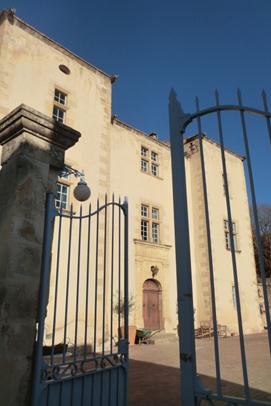
I finish William Maxwell’s 1961 classic on the last day of our two week séjour at the 16th century Château de la Loubière, what better environment to read of the travels of Barbara and Harold Rhode’s than from within the ancient walls of a majestic edifice that has saluted the sun, hosted visitors and protected its inhabitants from events we can only imagine, for centuries.
Maxwell’s Château Beaumesnil is in the north of France near Blois, where the young American couple make their acquaintance with Madame Viénot and her guests, whom they continue to encounter and attempt to befriend during their time in France, including time in Paris.

They visit France just after the end of the second world war which adds to the difficulties they encounter, though they are fortunate they speak French sufficiently well enough to be understood, though not in the manner they are accustomed to and this causes them much reflection, trying to figure out the reactions they inspire and why.


             “That’s all very interesting, but just exactly what are these two people doing in Europe?

They’re tourists.

Obviously. But it’s too soon after the war. Travelling will be much pleasanter and easier five years from now. The soldiers have not all gone home yet. People are poor and discouraged. Europe isn’t ready for tourists. Couldn’t they wait?

No, they couldn’t. The nail doesn’t choose the time or the circumstances in which it is drawn to the magnet.”

They encounter an uncertain transparency, for there are few false niceties extended, an important cultural difference causing them some consternation, however the couple make a commendable effort at developing the nearest to friendship that is possible with their hostess and her guests and bring the reader to some memorable locations and situations.

“They had hoped before they came here that a stay in the château would make them better able to deal with what they found in Paris, and instead a stay of three days in Paris had made them able, really for the first time, to deal with life at the château.”

In addition to the narration, there is another conversation about the book, which inserts itself from time to time and makes up the latter section of the book, so more than just a novel, it is as if we are witness to a conversation about the book with the author, as he indulges his experimental nature and writes as he pleases.

I guess one can never judge a château by its appearance and the white limestone exterior and cool human interior of Château Beaumesnil seem a world away from the warm terracotta tones of Château de la Loubière, as it soaks up the provençal winter sun, quietly reflecting her modest beauty on the surrounding landscape, full of warmth and the contented spirits of its past, recharging this particular visitor in the best possible way.

Today, pictures speak what words seem insufficient to describe, so I leave you with these and if you need an escape to Provence anytime soon, don’t hesitate to click on the link here for your own provençal retreat and mention you were sent by Claire.

The Tiger’s Wife by Téa Obreht

Although I live in France, speak the language and love to read, I confess I don’t read nearly enough in French and admit I am holding any intent in that direction in abeyance for a while, comfortable with the certain knowledge that I will indulge the desire eventually. The last novel I bought in French was a translation of The Life of Pi’ by Yann Martel, a gift for my friend B, so she could read it in her ‘langue maternelle‘. It is serendipitous then, that she bought me ‘The Tiger’s Wife’ for Christmas, another novel with an unforgettable feline presence. We will share the experience of our respective tigers soon, the discussion sure to cross both languages.

And so to Téa Obreht’s debut novel and Orange prize winning ‘The Tiger’s Wife’.

I do enjoy traversing cultures and storytelling whose origins are unfamiliar, requiring an open mind and suspension of judgement. Obreht brings us to a land that has been split in two, where crossing a border causes suspicion and having the wrong accent or name can be dangerous.

Natalia is a young doctor who travels with her friend Zora across a hostile border to bring medicine to an orphanage. On her way she learns that her dying Grandfather has followed her and passed away in a neighbouring village. His personal effects, including his copy of ‘The Jungle Book’ that he always keeps with him are missing; Natalia takes a detour during her visit to retrieve them, enabling her family to render their funereal rituals in peace.

A  simple story, there is little depth to the living characters, we don’t spend much time with or get to know Natalia’s mother, grandmother or her travelling companion Zora. The contemporary story outline is a frame within which to retell stories and reflect on memories the grandfather shared with Natalia, presented as flashbacks.

However, this is where Obreht’s narrative really shines, when the deathless man appeared everything came into focus and I was hooked. The grandfather’s encounters and conversations with the deathless man are curious and engaging. We meet the equally legendary villagers of Galina where he grew up and in a fable-like manner, we learn how the background of these characters led to their subsequent behaviour and the role of the Tiger’s wife.

We encounter village rumour, superstition, stories and incidents where truth and the imagination make equal contribution to the version passed on or ‘dug up’ in the present day. The stories often feature a well-intended, admirable type such as Luka, the butcher’s son and Dariša the bear hunter, transformed by events which see their nature change, the humble youngster becoming a wife-beater, the caring turning brutal, the compassionate victimised.

Framing stories within another story can be distracting, particularly when we have a preference for one over the other and when the narrative voice changes; it reminds me of the Rumi scholar and novelist Elif Shafak’s book The Forty Rules of Love’ which I adored for the most part, the fable like story of the dervish Shams unfolds like an exotic journey; the contemporary story within which it was framed didn’t work so well, though I do recommend the book.
I hope more novelists succeed in crossing cultures and bringing into the light their stories, myths and family legends with creative inspiration.

Lest we forget.

Memorable Reads in 2011

It has been a memorable 2011 both in reading and sharing, one of my aspirations this year having been to learn how to create a blog.

What joy it has brought, the creation, the writing, the reading, the sharing and the community of readers and wonderful like-minded souls who comment and share and have opened their worlds to me. I didn’t expect or foresee all the joy and wonderful interaction that would come from creating a virtual entry into my world of books and reading and that this would lead me to so many others.

So thank you to all those who follow this blog, my wish for 2012 is that the inspiration and motivation we provide each other will long continue.

To rank anything would be torturous, and even to list favourites is near impossible, so I will mention some memorable reads in no particular order and no doubt regret those I have left out later.

muze 62

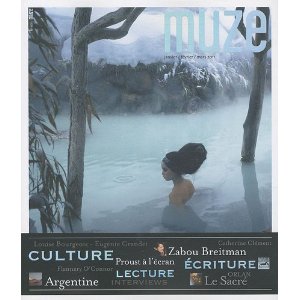
1. Muze No.62    ҉   not a big consumer of magazines, in February I discovered this volume at Le Mans TGV station. The words CULTURE, ECRITURE, LECTURE jumped out at me, then Louise Bourgeois – Eugénie Grandet, Proust à l’écran, Flannery O’Connor, Argentine and Le Sacré excited me and the cover just melted my heart. It did not disappoint, I now have another favourite magazine (and a most enjoyable way to improve my French).

2. Fear and Trembling by Amélie Nothomb    ҉   Recommended by mon amie B, this was my first foray into popular French fiction. A hilarious account, said to be based on the author’s experience of a year working in Japan, you end up thinking she’s either a saint or a masochist as she fails to integrate into the work environment.

3. The Children’s Book by A.S.Byatt   ҉   having not read her work for a long time, I was pulled into this Edwardian world of potters, ceramics, the Victoria & Albert museum and the varying sensitivities of children. A mesmerising and colourful journey.

4. Seven Days to Tell You by Ruby Soames   ҉   will remain with me always as a turning point, the first book I read prior to publication, fear and delight combining to produce this review.

5. The Diving Pool, The Housekeeper + The Professor by Yoko Ogawa   ҉   I will remember 2011 for discovering Yoko Ogawa’s short story collection in Oxfam, introducing me to her gripping and evocative style, followed by the poignant and memorable novella ‘The Housekeeper and Professor’.

6. Gift from the Sea by Anne Morrow Lindbergh   ҉   this classic collection of ‘coming of middle age’ essays published in 1955, stays with me because it arrived the day my daughter was admitted to hospital and was one of my choices of books to accompany me during those challenging two weeks.

7. The Lacuna by Barbara Kingsolver   ҉   the ten year wait club, I recall awaiting Louis de Berniere’s ‘Bird without Wings’, one of my all-time favourite books and this year there was Jeffery Eugenide’s long awaited ‘The Marriage Plot’ and Kingsolver’s ‘The Lacuna’ which I loved and review here.

8. A Kind Man by Susan Hill   ҉   shortly after reading an author’s interview in Mslexia and a subsequent visit to Daunt Books in Marylebone, I couldn’t help but be tempted (and indulged, thank you G) by Susan Hill’s ‘A Kind Man’. I respected her attitude and perspective in the interview and instinctively savoured each page of this fable-like novella. I then read ‘The Beacon’ confirming Hill as a writer I know I will continue to read, happy there is a lengthy backlist.

9. The Many Lives & Secret Sorrows of Josephine B by Sandra Gulland    ҉    my first blog review and wonderful memories of two trilogies shared with my best book reading buddies C and M.

And finally, no memorable list could be complete without mentioning the companionship of:

10. Mslexia   ҉   the quarterly magazine for women who write and more often women who juggle at least one or more jobs, a family and numerous responsibilities but who find 2, 5, 10, or just any hours to dedicate to writing, they are all an inspiration to me and I love to read all those who succeed in becoming published through its pages. An inspiration, a writing prompt and always a great read.

Happy New Year Everyone!

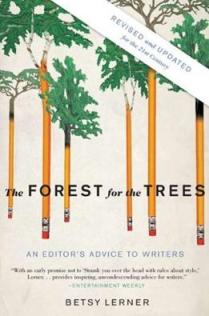
The Forest for the Trees – An Editor’s Advice

Reading books on writing is a little like panning for gold. Most of what we read washes away, some of it is interesting to consider but doesn’t necessarily gel and then occasionally we find a gem.
Unlike gold, one woman’s gem doesn’t necessarily guarantee universal approval and when I recall the books I thought were fantastic ten years ago, I realise now how far I have moved on, now those same inspirational pages from yesteryear elicit nothing more than nostalgic fondness, no longer capturing the thinking place I am at today.

I remember with absolute clarity coming across Dorothea Brande’s 1934 classic ‘Becoming a Writer’ during the period I enrolled in my first creative writing class with writers Maggie Hamand and Henrietta Soames at the Groucho Club in London and how it seemed to speak to me and contain all the questions and doubts I had at the time. There is definitely gold in this book for someone starting out on the writing path, though I have given my volume wings and allowed its pages an airing by passing it on rather than let it languish on the shelf unread.

‘The Forest for the Trees’ was recommended on writer Sandra Gulland’s blog and I’d just finished reading the Josephine Bonaparte trilogy, so I jumped in and bought it on impulse. Divided into two sections Writing and Publishing, is a little misleading, the first half reading more like a psychological analysis of writer behaviours, who are the ambivalent, the natural, the wicked child, the self-promoter, the neurotic or touching fire, along with numerous anecdotes to validate these suppositions. Whilst I have no doubt, the author has come across each of these stereotypes, I found the labelling patronising and found myself wondering about the hidden majority who don’t fit so clearly into these headings – or do I just need to get out more to meet these people? Tell me writers, do you identify with one of these labels?

The frequent references to Truman Capote created a distance that was difficult to bridge and too many of the examples seemed like exceptions; I admit I was searching for the paragraph that I could identify with, an example of someone who seemed like an ordinary person, the kind that might convince the reader that to write successfully and be published is possible. It’s the cult of the celebrity factor again, with hindsight one can look back and select anecdotes about writers who were the exception rather than the rule. Disillusioned, I blame my market research background where the anecdote has little credibility and witnessing the propensity of politicians and tabloids to use them in the place of verifiable evidence.

The main message in the second half was: be respectful and patient with your editor and publicist, they’re all juggling multiple balls, you don’t really understand what goes on behind the scenes, if you did, you’d leave us to get on with the job. This debate is likely to continue with the advent of electronic publishing and the industry having to redefine its role and prove its value, however I found this section more insightful and it did highlight many of the strengths and weaknesses of the publishing process.

If you are looking for a tongue in cheek attempt at writer’s psychological profiles, interesting and funny anecdotes and an inside look at one editor’s career path, then this will entertain. We can also learn much about the industry by keeping up with writer’s blogs and online communities, which without a doubt reflect the situation of writers today, whether persevering towards it or already succeeding to be published.