The Faraway Nearby by Rebecca Solnit

After spending a few months with me in London some years ago, a very good friend was about to return to New Zealand and was making some major changes in her life, both personal and in her career. She wasn’t entirely sure what job she wanted to do, but knew it would be in the great outdoors. She loved to travel and she loved nature. I organised a subscription to Wanderlust Travel magazine for her, an inspiration of amazing photography, fabulous ideas for out-of-the-way places to visit and best of all, a link to exciting jobs for those who love to travel across cultures, to be outdoors and meet people.

Milford-Track2

Life on the Milford Track

She completed a diploma, training in the skills required to become an outdoor guide and now works for the Department of Conversation as a guide on the Milford Track, this last season she was based in a lodge, only accessible by helicopter or a few days walk in. She is now living her dream job and it is indeed just like those jobs offered in the pages of that inspiring magazine.

Fast forward a few years and I come across a book called Wanderlust : A History of Walking by Rebecca Solnit. I was interested in it, though stronger was the feeling that I should send it into that remote wilderness to my friend, it seemed to describe where she had arrived at. So I did. I then forgot about the book until I saw the name Rebecca Solnit come up recently on NetGalley, she had a new book coming out The Faraway Nearby. Here is the book I will read I thought and requested it.

Some weeks later while in London one Saturday, I discovered The London Literature Festival was on and at 3.30pm, I could attend a talk by Rebecca Solnit speaking about her book The Faraway Nearby. Serendipity? I bought a ticket, a hardback copy of her book and went to listen to the author, curious, though I had never read a word of her writing.

FarawayThe book is good, but Rebecca Solnit’s ability to captivate an audience is spectacular. I’m almost sorry to admit it, but the live version was even better than the passive written version, which I really enjoyed, the reading experience enhanced significantly by the additional anecdotes and philosophical meanderings of Solnit in person, as she spoke without pause, the voice of a poet.

The talk was hosted by the literary critic Alex Clark, who suggested that the media coined her book not a memoir, but an anti-memoir. Part anti-memoir and part matremoir, it starts with her recounting the gift of 100 pounds of apricots from her mother, one of the few gifts she ever received from her mother and not disconnected from the fact that her mother is undergoing something of a personality change since her Alzheimer’s diagnosis. She lays them out on her bedroom floor, wanting to appreciate their abundance, but instead embraces a soon to be dissected anxiety.

“The fruit on my floor made me start to read fairy tales again. They are full of overwhelming piles and heaps that need to be contended with, the roomful of straw the poor girl in Rumpelstiltskin needs to spin into gold overnight, the thousand pearls scattered in the forest moss the youngest son needs to gather in order to win the princess, the mountain of sand to be moved by teaspoon. The heaps are only a subset of the category of impossible tasks that included quests, such as gathering a feather from the tail of the firebird who loves at the end of the world, riddles, and facing overwhelming adversaries.”


Nature essays, how stories create the narrative of our lives, philosophical meanderings, her chapters weave in and out of many subjects, flitting here and there, as she recounts pieces of a year that passed whilst her mother was regressing. She contemplates and then makes an escape to Iceland, mentions friendships and her passion for visual art, the occasional Buddhist legend, Frankenstein, Mary Shelley and her mother Mary Wollstonecraft, pain and leprosy likening her narrative to a Russian matryoshka doll, even going so far as to repeat chapter names in reverse, once she arrives at the hard core (the doll that has no doll).

“My story is a variation on one I’ve heard from many women over the years, of the mother who gave herself away to everyone or someone and then tried to get herself back from a daughter.”

ApricotsThere are many anecdotes, insights and great lines throughout the narrative, however Solnit stops short of going too deep into her subject, she observes the apricots and watches how they change, just as she does her mother, but stops short of looking too deep into the past, of really describing their relationship and how they were with each other, it is implied, not described.

I understand this reluctance, for that percentage of women out there who had the kind of relationship with their mother that Solnit did, there will be many nods of the head in recognition of what she says without having to go into detail. For the rest, it may seem superficial or even harsh, but they are the words of a mature 58-year-old women, who admits:

“If I had written about her earlier, the story would have had the aura of the courtroom, for I had been raised on the logic of argument and fact and being right, rather than the leap beyond that might be love.”

At the end of the talk, a few people asked questions and at the last minute, but too late I put up my hand, my question deemed to remain silent. Or so I thought. As everyone left the Purcell Room, a woman called Helena sitting next to me who was also visiting from the country for the day, asked me what I had been going to ask. And so I told her – and had a delightful conversation, just as interesting as it might have been, had I asked the author.

The question I wanted to ask was:

Did she believe that a challenging relationship could be a gift, that it could bring her something that she may not otherwise have developed in herself, had it been otherwise?

I suspect the answer is yes, that these relationships do give people something that can be used proactively, if self-awareness is developed to prevent regressing into the negative aspects or effects of those childhood and adulthood experiences. She may not have been able to fix her mother, but it may not be a coincidence that Rebecca Solnit is outspoken and active in terms of her support of nature, the environment, politics and art.

“I didn’t have much sympathy either; it was not that I refused to give it, but that there was none in my equipment yet, perhaps because I had experienced so little of it.”

Note: This book was an Advance Reader Copy provided by the publisher via NetGalley.

The Dervish by Frances Kazan

DervishSo what is a dervish you might ask? And why does Frances Kazan use it as her book title?

“Are the Sufis and the dervishes the same?” I asked.

“The two are like the threads on a loom. She replied. “Different colours, varying textures interwoven together to make a single carpet of immeasurable beauty.”

Perhaps it symbolises the unknown aspect, that thing just beyond our rational ideas, the reason we do certain things that can’t be explained. Not quite insanity, but on the way towards it and yet it is also that part of our nature that makes us feel most alive, that promises to make life interesting. When we choose not to indulge it, our lives, in consequence are more predictable, more balanced and much less exciting.

The protagonist of Frances Kazan’s novel Mary is an artist who lives in New York and is looking back on that period in her life just after she became a young widow, her husband was killed in France in WWI in the Battle of the Somme. Restless in New York, she responds to her sister’s invitation to join them in Istanbul where Connie’s husband works for the American consulate. In the last days of her time in Istanbul, the dervish becomes her sole subject to draw and paint, something about these mystical humanists resonating within her psyche and manifesting in her drawings.

220px-Edib_Halide

Halide Edib

The story is set in the dying days of the Ottoman Empire post World War I, the country is occupied by the British which has spawned the establishment of the Turkish Nationalist movement. While the Americans are Allies of the British, they aren’t directly involved and therefore must exercise cautious diplomacy with whom they make friends. They have tentative relations with Turkish nationalists, but political tensions in the city are high and the two sisters have been warned to stay close to the consulate.

Unlike her sister who listens to that advice, Mary refuses to stay behind the protective walls of the embassy; a new city that embraces so many languages and cultures beckons her. These daring excursions result in her becoming witness to the murder by a British officer of the young son of Turkish Nationalist and to her being wanted for questioning by the British Army.

This encounter is a turning point in her visit, after which she befriends the Turkish novelist and feminist political leader Halide Edib Adivar who supported Mustafa Kemal (later Ataturk) in the resistance against the occupation of their country by a foreign power and she will also meet and more than befriend the father of the young man who was killed.

“I was born in the harem, in the same room as my mother and her mother before her. Once upon a time we felt safe within those old walls; I fear we dwelt in illusion.”

Mary’s is with Halide and her husband Dr. Adnan, who has been appointed as Minister of Health in recent elections, when they hear there is to be a coup d’etat, which put them all in danger and forced them to flee. It also resulted in a warrant for Mary’s arrest and set her off on an overland adventure with her friends.

Mustafa Kemal Ataturk

Mustafa Kemal Ataturk

France Kazan has written this story around a subject that is clearly one of her passions in life, the history of the Ottoman Empire and many of the characters are real historical figures themselves. Not just a scholar of Turkish studies and an admirer of Halide Edib, but her late husband the film-maker Elia Kazan, was born in Istanbul. In his book and film by the same title, America America, he tells how, and why, his family left Turkey and moved to America.

It is an entertaining read, not too burdened with political and historical recounting. I found it a little difficult to believe the somewhat complicated relationship between Mary and Mustafa Pasha, and her decision to stay when her sister and husband decided to leave. Perhaps grief makes us less sensitive to risk and more inclined to reckless adventure.

And those whirling dervishes? I will leave the last words to Rumi:

Rumi, the founder of the Mevlevi Order in the 13th century said the dancing dervishes represent the solar system and the planets that revolve around the sun. At the same time that they are immersed in their own microcosmos, they create new worlds and make contact with eternity.

The fact that humans can join the choreography of the cosmos by dancing to its rhythm is an awareness that humanity has had since ancient times. One can say that all dance, in a certain way, is yielding the body to the earth’s movement. Slowly, as the body sways and the blood rhythm changes, consciousness also changes. With the revolution paralleling that of the cosmos, the mind assumes a freedom from the earthly bondage. It would be as though the mind begins to concentrate on the depth of existence on its own, while the body has been given away to the earth.

Note: This book was an Advance Reader Copy (ARC) provided kindly by the publisher via NetGalley.

Ottoman Distractions

Sultanahmet (Blue Mosque)

Sultanahmet (Blue Mosque)

Greetings from a vibrant and bustling Istanbul.

There is too much opportunity to observe, appreciate, participate and marvel at this wonderful city situated where Europe meets Asia and where on every corner there lies evidence of humanity’s incredible vision going back many hundreds and thousands of years, one must put down the books and just dwell in its presence.

So no update on reading, though I do have some reading related pictures to share and I have bought two books to add to my Turkish literature collection. Not far from Sultanahmet (the Blue Mosque) is a bookshop with an enticing window showing off its collection of English translated works, works by Turkish authors written in English and any writer, whose work focuses on the area.

The owner’s brother was quick to recommend Louis de Bernières Birds Without Wings, which I told him was already in my top all-time favourite reads and of course Elif Shafak and Orhan Pamuk’s works are all there.

Portrait of a FamilyHe then handed me Portrait of a Turkish Family and promised with stalwart confidence that this little masterpiece would replace my current favourite. Sales-speak or the truth, I shall soon find out.

PatasanaI was actually looking for a copy of A Memento of Istanbul, by Ahmet Ümit, a writer I have not read before, master of the Turkish thriller and after Turkey’s profile at the London Book Fair, watch out for more from this author. I was interested in this particular book as it is said to highlight seven significant attractions introducing something of the city’s rich culture and history. They only had one book left in English by this writer, Patasana, so A Memento can wait, this is where I shall start. Thrilled already!

Istanbul is a fabulous city to visit and the children and I have totally fallen for the historic part of town. I am sure we will be back and would recommend it to you all if you ever have the opportunity to visit.

Some of the highlights:

Shadows & Wings by Niki Tulk

Shadows & WingsLara’s father works abroad and early on in the story when Lara is seven, she and her sister learn he isn’t coming back home to Australia. She is close to her grandfather Opa, though realises a little late that there is much about his life that she doesn’t know, questions she never asked him, a subject her mother won’t speak of.

At his death, her great-aunt passes her the contents of an old wooden box, objects wrapped carefully and put away, never to be looked at; they will prompt her to travel to Germany to uncover his role in the second world war.

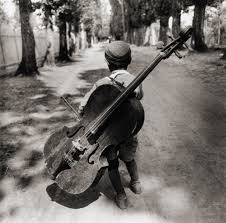
celloAt this point, we go back to the 1930’s to a small village in Germany where Tomas (Opa) and his friend Gustav live, Tomas’ father repairs violins, cellos and similar musical instruments and although initially Tomas doesn’t wish to play, when Gustav becomes interested and starts taking lessons, Tomas’ rekindles his love for the cello and will pursue music with the same determined passion his father had wished he would pursue a profession.

In school they are wary of the bullying Hans and his troop of followers and avoid them as much as they can, observing as they become teenagers their joining up a young Nazi youth group, something Tomas and Gustav avoid, but as 1939 approaches it will become impossible not to join their country’s ranks.

The story of the boys in their youth reminded me of David Mitchell’s excellent novel Black Swan Green and Niki Tulk successfully captures that essence of survival developed by children on and off the playground, only here for many, those playground antics would escalate to being drafted into Hitler’s Wehrmacht, and a war with repercussions and psychological consequences that would continue into subsequent generations.

Lara’s grandfather arrived later, a thin half-man on a ship that emptied its human cargo unsympathetically into a bright and bristling land. Here, not long enough after the Second World War, those who bore in their eyes another hemisphere were received with cool politeness. It was not their accents so much as their eyes – they held a silence that made others who had grown up here suddenly feel they needed to defend themselves. Tomas had discovered Lara’s grandmother like a familiar face in this country.

Lara’s search into her grandfather’s past and meeting Anton and friends in Berlin brings those repercussions forward to the present day. Lara’s own fragility and insecurities threaten to undermine her search and if it weren’t for Anton, her patient guide and new-found friend, we are left with the impression that her endeavour may quite well have failed. Her journey seemed at times so realistic, she seemed so ill-prepared and at times insensitive to what she might encounter by knocking on the doors of strangers, that it felt as if I were reading non-fiction. Unnerving yet totally believable.

The book falls into three main sections, Lara growing up in Australia with her mother and grandparents, Tomas as a boy and young man in Germany and finally Lara at 22-years-old on her extended visit to Germany.

albatross

An albatross in flight Photo: Wikipedia

Interspersed throughout the third person narrative, is Tomas’ journey on the boat between Europe and Australia and these short entries of a page or two entitled The Gift of Birds, The Gift of Time, Memory and Dreams provide some of the more poignant passages, they are the pages I returned to and reread a second time, some even a third.

They are written in the first person, at times focused on the present,  on the passage across the ocean and the words of a man making the same voyage who is knowledgeable about birds and their habits, and at other times they describe remnants of his dreams, regrets, the past, all that he intends to leave behind him when he disembarks. They provide a reflective counterpoint to the harsh reality of daily life in Germany as a young man, a life which drove him towards an activity he had no ambition for. These pages rebuild hope and show us the man he was.

“The cycle of the ages is the foundation.”

The man who loves birds stares into his fingers, deep in thought. “They recede, they advance… and the pattern of migration adjusts and adapts over many thousands of years. They are,” he adds, “in tune with the ages, whereas we consider only our own lifetimes. We are short-term thinkers, unfortunately.”

It is a thought-provoking story of the depths to which we go to protect our loved ones from the horrors of the past and suggests that silence isn’t always the route towards salvation, that memories and guilt often live on in subsequent generations, that a deprivation of family knowledge can lead to an obsession to fill in the gaps.

It reminds us that our elders are a source of great learning and that we shouldn’t wait until after they have gone to understand what life has taught them. It cautions us not to judge that which we haven’t experienced and to beware of what we might find when we go digging into the past of those who have tried to bury deep the horrors that return to them only in their sleep.

Thank you Niki for providing me with a copy of your book, not only a great story, but beautifully printed and music to accompany composed together and played by Niki on cello and her husband Mark on piano.

Shadows & Wings – the 5 track EP.

Giveaway – enter the draw to win one of two digital copies of Shadows & Wings

Australian Literature Month – April is Australia Literature Month,  visit Reading Matters to find out more.

Mom & Me & Mom by May Angelou

Maya Angelou starts her conversation book by mentioning something people often ask, how it is that she became the women she is, a question she says she has been tempted to respond to using lines quoted from Topsy, the young black girl in Uncle Tom’s Cabin who said, “I dunno, I just growed.”

Mom Me MomInstead, Angelou has written this thought-provoking tribute, sharing a slew of matriarchal experiences among the many others already shared in her remarkable series of autobiographies, to highlight a little of how she did become that brave, sensitive, adventurous and caring women she is, in part due to the grandmother she loved and the mother she came to adore.

It is a story written with utmost compassion and forgiveness, for this is a woman whose mother admitted when she and her husband separated that she could not mother young children, so sent them to live with their grandmother for ten years. Angelou closes the prologue reminding us that love heals and throughout the book will prove that kindness is the greatest gift we can ever give and foster in others.

Love heals. Heals and liberates. I use the word love, not meaning sentimentality, but a condition so strong that it may be that which holds the stars in their heavenly positions and that which causes the blood to flow orderly in our veins.

Vivian Baxter, Maya Angelou’s mother, was the eldest of a large family of mostly boys, for whom threats, intimidation and violence were a part of their way of their life and this petite force was often at the forefront of their skirmishes. Their father encouraged tough boy talk and tasked his daughter with ensuring the boys didn’t soften. Little wonder that after falling in love, marrying and realising that it was a mistake, they were also unable to agree on who should raise their toddlers, they separated and sent the children to their father’s mother in Stamps, Arkansas. Maya was three and Bailey five-years-old.

Ten years later, when their grandmother felt that Bailey had grown too old for Arkansas, when he had reached a dangerous age for a black boy in the segregated South, it was arranged for them to return to their mother in California. Bailey was enthusiastic, Maya much less so. It would be difficult, but for all her flaws, their mother knew how to communicate with her children and didn’t push her mother status on them. Maya decided she would call her ‘Lady’ and her mother’s response to this is one of many small pleasures Angelou offers up in her book.

Maya has a baby very young, without the foundation of a loving relationship, however with the love and support of her mother, this event in no way prevents her from pursuing her life’s dreams and ambitions.

I thought about my mother and knew she was amazing. She never made me feel as if I brought scandal to the family. The baby had not been planned and I would have to rethink plans about education, but to Vivian Baxter that was life being life.

Some years later deciding to marry Tosh tested the mother daughter relationship, Vivian didn’t try to stop her daughter from making what she thought was a mistake, but she chose to leave San Francisco, not wishing to witness the fallout. Like any young women living off the heady ambiance of newly married love, Maya wished to prove her mother wrong.

To begin with she continued doing all the things she loved, the things that made her Maya Angelou, seeing her friends, attending a dance class, going to church and speaking freely about God. However her activities slowly became issues between the young couple, so she stopped them in an attempt to maintain peace between herself and her husband.

At first the dimness is hardly noticeable but not alarming. Then with a rush, the light is vanquished by darkness.

This gem of a book, complete with gorgeous photos, is a wonderful addition to her already masterful collection of autobiographies and chronicles that one relationship that runs through our entire lives, that with our mother. It may not always be easy, but Angelou shares those moments that tested and ultimately strengthened the love and respect they had for each other. She accomplishes it with incredible honesty and selflessness, something that shines through in the brief interview I have linked here. What a wise and loving soul she is.

Interview – Learning to Love My Mother: Maya talks about her mother with a BBC interviewer.

“Exercise patience with yourself first, so you can forgive yourself for all the dumb things you do. Then exercise patience with your children.”

Buy a Copy of Mom & Me & Mom via Book Depository

Note: The book was an Advance Reader Copy (ARC) provided by the publisher via NetGalley.

Ignorance

It was the book I read following Michéle Robert’s novel Ignorance that gave me something to reflect on regarding the meaning of that loaded word she uses as her title.

In Maya Angelou’s latest autobiography Mom & Me & Mom (review pending), she speaks of ignorance and quotes her mother:

She said, “Ignorance is a terrible thing. It causes families to lose their centre and causes people to lose their control. Ignorance knows no binds. Old people, young people, middle-aged, black, white can all be ignorant .

An apt epigram for this war-time novel set in occupied France.

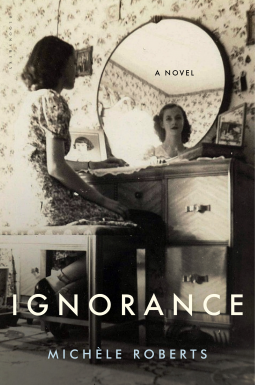
IgnoranceTwo young girls from a rural village are sent briefly to live in a local convent, Marie Angèle because her mother is about to have a baby and Jeanne, because her mother is unwell and in hospital. Marie Angle is the daughter of local middle class grocers, Catholic and raised with something of a sense of entitlement and superiority over her lesser friend Jeanne, whose mother, a widow converted to Catholicism when she married, but lives in a community that rarely allows her to forget her Jewish past. Marie Angèle expects to inherit half of her parent’s shop, she expects that the well-connected young Maurice, the man who can obtain anything during wartime will do the right thing by her.

I could hide my ignorance most of the time, because if he felt like talking he just wanted me to listen. One day, however, parked in the woods, he said : talk to me….I left Jeanne out of these tales. We’d been thrown together as children, purely by accident, we’d had a sort of friendship for a certain time, but we couldn’t mix now. I preferred to concentrate on positive things. That was how we were getting through the war.

Jeanne rarely thinks of her friend, she knows she is loved by her mother, observes their second class status in the way the nuns treat her compared to her friend, their quickness to judge and to listen to gossip as if it were fact. She is not ignorant of the activities that take place in the house where she works, but she like her mother is realistic about her opportunities, she doesn’t allow herself willingly to be taken advantage of, she learns from her past, though it will be insufficient to save her from the consequences of the misguided morals of her childhood friend.

Marie Angèle however, believes  that Jeanne, by working in such an establishment has thus become one of them, a common tart, she believes the village gossip, judges her former friend’s improved dress and appearance.  She portrays her own husband as a man unrecognisable as the same man Jeanne describes as one of the clients of that establishment. Even when confronted with an inkling of this truth, the wife’s inclination is not to question her husband, but to seek revenge against the bearer of the message, a penance that will continue to be paid into the next generation, as Marie Angèle manipulates control of Jeanne’s daughter Andrée and both their futures.

Womens prize logoThe novel is split into sections which view life in overlapping time periods from the perspectives of the two girls which couldn’t be more different, in particular on the part of Marie Angèle concerning not just her friend, but the plight of other families that must go into hiding. Towards the end there is also a section given to Andrée, Jeanne’s daughter and another from Dolly, one of the nuns, complicit in an act of betrayal.

The simple narrative structure exposes the ruinous attitudes, religious hypocrisy and shamelessly uninformed  morality of the ignorant and how it continues to be perpetuated by gossip, fed by jealousy and fueled by ill intention. It reveals that destructive instinct humanity sometimes imposes on the weak and those who are different from the rest. Devastating.

Ignorance is on the long list for the Women’s Prize for Fiction 2013. The short list will be announced on April 16. Will this title be on it I wonder?

Note:  This book was an Advance Reader Copy (ARC) provided by the publisher via NetGalley.

What We Expect When We Don’t Expect Much From Love: Stories by Ludmilla Petrushevskaya

LudmillaThere Once Lived A Girl Who Seduced Her Sister’s Husband, And He Hanged Himself. The title itself is intriguing, though if you have read the author before, you will recognise the tendency, she is the bestselling author of There Once Lived A Woman Who Tried To Kill Her Neighbour’s Baby.

I took the book with me on a recent visit to London, as my alternative to the kindle, since I have been caught out a couple of times with that little machine dying on me even though the battery wasn’t run down. I have since discovered the 20 second rule. When the kindle fails to come to life when it should, hold it in the on position for 20 seconds to reboot it. Like many gadgets today I’m not sure these things are designed to last, not as long an old-fashioned book anyway. And I have Penguin to thank for sending me a bona-fide book!

The blurbs quote Chekov, Poe, Beckett, Tolstoy and various others to entice you in, making promises that will no doubt encourage dissent; it is a tall order to be compared to literary greats. I haven’t read all those greats, but there is one collection I am reminded of, not because she writes like him, but because the voice is clear from story to story and at the end I am left with the notion that “there is consistency in that voice” and “she says it how it is”.

Carver LoveIf Ludmilla Petrushevskaya reminds me of any writer, it is Raymond Carver and his collection what we talk about when we talk about love. Ironically, when pulling this volume off the shelf, I also find tucked in its last page, a boarding card for a flight from Marseille to London, dated June 2008.

So back to the book.

Seventeen episodes of attempts at love or connection with another, in all their dysfunction, set within the context of post revolutionary Russia when private ownership of housing was forbidden and many family apartments were divided and sub-divided and the space people came to occupy diminished, along with many of their hopes and expectations of each other.

By 1972, when Petrushevskaya published her first story, Moscow was ringed with concrete buildings containing these overcrowded units where the majority of these love stories take place.

Born in 1938 in Moscow, Ludmilla Petrushevskaya never knew family life. Evacuated with her mother to Kuibyshev during the war, she was left there in the care of her aunt and grandmother while her mother returned to Moscow to attend college. Members of the family of “an enemy of the people”, they were treated as pariahs – and were slowly starving. At age eight, Petrushevskaya began to run away from her temporary home and spend summers as a street beggar. Her mother returned after four years and brought her back to Moscow, where they were officially homeless. As a young girl there, Petrushevskaya and her mother lived under a desk in her insane grandfather’s room, while occasionally renting cots in nearby communal apartments. It was an unsettled, unhappy childhood, one experienced without the consolation of siblings.” Extract from Introduction by translator Anna Summers

The stories are collected into four sections, the first A Murky Fate contains stories of characters who consider entering relationships that are flawed or doomed, in readiness for a chance at that diminished flutter of something that may resemble love. It is not to be moved by these circumstances that we read these stories, it is to bear witness to another’s reality. They are uncomfortable, fatalistic and near-true.

She’ll wait for his long-distance call in a phone booth at the post office. For ten prepaid minutes they’ll become one soul again, as they did over the twenty-four prepaid days of their vacation. They’ll shout and cry across thousands of miles, deceived by the promise of eternal summer, seduced and abandoned.

As we read the stories, our own expectations are so low for these women, that it is possible to experience our own small pleasure in expecting nothing and finding delight in an obscure change in their fortune, even if only for a short period.

I mentioned to a friend that it was as if I was sitting across the table from the writer listening to an oral narration of people she knew, that it reminded me of other tables I have sat at, listening to stories of other women from different cultures and how they found themselves living in this or that country or city, so often lead by the allure of love or the promise of an improved lifestyle.

dollsEach community, era, culture has its stories to share, it disappointments to shed and its eternal hope for future generations, that they may do better. Reading these stories is like reading another chapter in the evolution of humanity and reminds us that we have a long way to go before arriving near any kind of nirvana.

…the day is burning its last, and Milgrom, eternal Milgrom, sits in her little pensioner’s room like a guard at the museum of her own life, where there is nothing at all but a timid love.

Note: This book was kindly made available by the publisher.

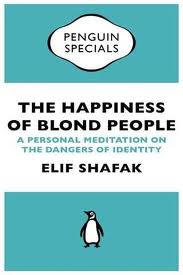
The Happiness of Blond People – A Personal Meditation on the Dangers of Identity by Elif Shafak

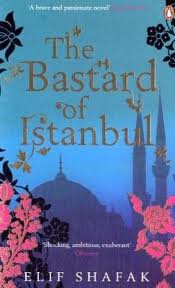
011312_1324_TheTigersWi2.jpgBastard of IStanbulElif Shafak writes great stories and as this essay illustrates, she both lives and has already lived an interesting life between East and West; experiencing different cultures and absorbing the influence of a high achieving, single parent mother and her superstitious, story-telling grandmother in a untypical but enriching, matriarchal upbringing.

ElifShafak Ask EbruBilun Wiki

Elif Shafak, Publicity shot by Ebru Bilun – wikipedia

As a young pupil she learnt what it means to be on the receiving end of prejudiced comments, introducing her to the clichéd stereotypes cast about by those who might never have experienced but seemed “to know” what it meant to be Turkish, that false responsibility, those who leave will all take on, for the actions of government or other citizens, on behalf of their maternal country and people.

Elif Shafak has inherited and nurtured a healthy imagination and studied many of the great philosophers, with a particular interest in Rumi, sometimes witnessed through her novels and now combines her knowledge with first-hand observations of how cultural differences are perceived in this short book.

The title of the essay was inspired by a conversation overheard at the Rotterdam airport in the Netherlands between Turkish fathers, one despairing of the difficulty of living in proximity to his downstairs neighbour.  She developed a habit of calling the police each time his children made too much noise playing in the apartment, causing his family much stress and anxiety, because the police invariably arrived with sirens blazing – makes me wonder what story she told the police, and thankful that my neighbour isn’t so bad after all!

The man finishes by asking his friend in earnest, how it is that blond children are so quiet and well-disciplined, introducing us to Shafak’s reflections on identity, cultural difference and the inherent, almost unavoidable angst of first generation immigrants worldwide.

The immigrant must be prepared to swallow his share of humiliations every day. He has to accept that life will treat him with disrespect and that he’ll be smacked and jostled with undue familiarity.

Happiness of Blond PeopleShe discusses the perception that happiness can be found in the West, less likely to have to deal with war, warlords, tribal conflict, poverty, corruption, human-rights violations or major natural disasters and the equally ingrained counter-assumption that life in the East is more real and less degenerate than in the West: where society is so selfish and individualistic that communal and family ties have virtually disappeared, unable to support a person, especially the elderly, in a time of need.

A secondary-school student I met in Ankara during a literary event put this to me in a slightly different way. “If you are young, it is better to live in the West than in the East,” he said. “But if you are old, then it is better to be in the East than in the West, because we respect our elders, whereas they don’t. In Europe I have seen old ladies in supermarkets buying one courgette, one carrot, one tomato, one bunch of parsley. Have you ever seen a Muslim woman doing that? No! We always buy at least half a kilo, if not more, because we cook for the entire family.”

What seems to be missing in the immigration experience is often lack of community, the lack of acceptance or gesture of kindness and therefore difficulty in integration, families are often not made to feel welcome (except among their own kind) which then encourages them to live separately and to maintain their own traditions and cultural perceptions and habits, rather than merging with the new country and culture. It can also breed resentment, particularly if it wasn’t a mutual decision to leave or even a choice, as in times of war.

It is often true that it must take at least one generation to normalise integration, but in more closed communities whose occupants themselves have little curiosity for the outsider or have not travelled and come to understand how and why things are done differently, with an altogether different logic elsewhere, this separation is at risk of continuing into multiple generations, especially where there are clear physical differences between people that can provoke prejudice, judgement or even worse, racism.

HonourFor me, most of the time I enjoy being confronted with those genuine mind-bending situations that require one to figure out how people came to see or do something in a way so different from our own – with the exception of violent or inhumane acts, but even behind those practices, there is a story to be told and a history to be understood, which doesn’t make it right, but can assist us to at least consider these practices in context, something Elif Shafak explores in her latest gripping novel ‘Honour‘.

An immigrant myself, I understand many of the isolating factors inherent in such a status, especially when it is necessary to learn a new language. Whilst it is not easy to participate in a traditional society with its many rituals and social codes, it is more likely that an immigrant will find success and contentment in creating a business or activity of their own, something unique that is or will be valued, than putting themselves up against their compatriots and being disappointed time after time, especially if living outside the larger multicultural cities.

This is a short read and a refreshing, open-minded perspective, from a woman who interacts with people in both the East and the West, always interesting to read and listen to.

In this life, if we are ever going to learn anything, we will be learning it from those who are different from us. It is in the crossroads of ideas, cultures, literatures, traditions, arts and cuisines that humanity has found fertile grounds for growth.

The Industry of Souls by Martin Booth

010413_1256_TheIndustry1.jpgI’ve given away numerous copies of Martin Booth’s The Industry of Souls over the years and repurchased it for my bookshelf, just in case I wished to reread it.

But the truth is, I am not a rereader. I never go back, not even for this book which I’ve always named as my all-time favourite book. Until now. Could I continue to say this is my favourite book, when so many reading years have passed and it becomes nothing more than a nostalgic memory of being uplifted by something I can no longer quite define?

So on the first day of the New Year I decided to reread it to see. 010413_1256_TheIndustry2.jpgAnd felt all the discomfort of why that activity is not for me, glances at the bookshelf seeing all those titles I’ve neglected and not yet read, feeling the fear of this highly praised book no longer living up to my own expectations, the scepticism of being transported a second time when I knew what would pass, the memory of that paragraph about the soporific wasp, trapped in a spider’s web, snipped free by its wise eight-legged captor, a paragraph that I cut and paste and send to appreciative friends, long before the convenience of a blog, wondering if I would now view it with less than the perfection status I had granted it when first encountered.

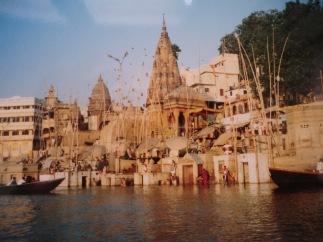
CIMG3662It is true, there is nothing like gazing at a splendid view, arriving in a new city, country, or place, reading a book or meeting someone for the very first time and experiencing that element of the unknown. It’s the sense of adventure, the openness to being shocked, moved, delighted, surprised, uplifted, disappointed or merely comfortable with a familiar voice telling a new story. It reminds me of a quote (now those snippets I do reread) from one of my travel journals during a three month back-packing sojourn around India, Nepal, Vietnam and Thailand, daily living in the face of the unknown.
“In the face of the unknown, man is adventurous. It is a quality of the unknown to give us a sense of hope and happiness. Man feels robust, exhilarated. Even the apprehension that it arouses is very fulfilling. The new seers saw that man is at his best in the face of the unknown.”

An extract from The Fire From Within by Carlos Castaneda

Reading is unique in that it allows us to rest in the safety of our environment, yet allows us to visit such extraordinary places and/or observe the heights, the depths and the edge of humanity. Primo Levi does it in If This is a Man: The Truce, Vaddey Ratner In the Shadow of the Banyan and Jackie Kay in Red Dust Road to name just a few.

The Industry of Souls takes place on the 80th birthday of Alexander Bayliss, a British citizen arrested for spying in the Soviet Union in the early 1950’s, who after 20 years in a Soviet labour camp, the gulag, settles in the small Russian village of Myshkino, with no inclination to return to his roots.

It was all a part of the process of rehabilitation, of making us come to appreciate that Mother Communism, that buxom, grinning, snag-toothed wench dressed in a pair of dark blue overalls, with a scarf around her head and biceps like Popeye the Sailorman, would provide for us. She was our succour and our saviour as well as our slave-mistress and superintendent.

On this day as he makes his round of the village and his friends, he remembers both his time in the village over the years and significant events of that period in the gulag, including with his friend Kirill, to whose village he returned in fulfilment of a promise. And at the end of today he will receive another visitor, a connection from that past, he long ago left behind.

For now, there is much to offer in the reading present, but having reread this favourite, I have no regrets and I hope to have encouraged a few of you to seek it out, it is well worth sinking into its depths.

It is the industry of the soul, to love and to hate;

To seek after the beautiful and to recognise the ugly,

To honour friends and wreak vengeance upon enemies;

Yet, above all, it is the work of the soul to prove

It can be steadfast in these matters…

Top Reads 2012

A near impossible task. I read so many fabulous books this year and hate to choose, however there was one outstanding read for me, that pushed all my buttons in terms of use of language, enticing me into the story, reading in wonderment at the writer’s ability to exceed my greatest reading desires.

Outstanding Read of the Year

123112_1428_TopReads2011.jpgThat book was Eowyn Ivey’s The Snow Child and coincidentally, just today our Scottish friend over at TheOnlyWayIsReading wrote a magnificent review, especially poignant for male readers. Inspired by a Russian fairytale of an older childless couple who cut family ties and move to the Alaska wilderness, it is a journey of navigating the internal elements and external forces in life, where love, hope and the imagination are equally necessary for survival as the more practical resources.

Top Fiction

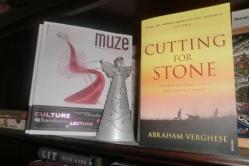
010212_1323_CuttingforS1.jpgThe year started on a high note and I’ll never forget New Year’s Day 2012 gripped by the powerful and realistic storytelling of Abraham Verghese, in his epic Cutting for Stone, absolutely brilliant.

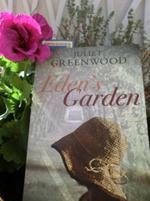
123112_1428_TopReads2013.jpgEden’s Garden is a wonderfully inspired novel set in Cornwall and Wales, following the lives of two women a decade apart, Carys returns to her hometown in Wales to take care of her mother and becomes drawn towards the garden and statues of Plas Eden and a man from her past, while Ann in Victorian London, is at a turning point in her life, destitute, far from her aristocratic past.

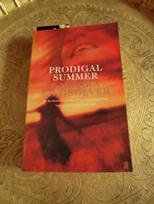
123112_1428_TopReads2014.jpgProdigal Summer was a fantastic and hot summer read, I can’t believe this book sat on my shelf for years and circumnavigated the globe with me before I finally turned its pages.

In the Shadow of the Banyan, is a fictionalised account of a period in the life of Vaddey Ratner, difficult childhood years in Cambodia under a tyrannical regime, losing members of her family, she recalls them in this heart-breaking but uplifting story which pays tribute to those who never made it and shows tremendous compassion in doing so.

Rebecca was my classic treat of the year, thanks to Joanne at The Book Jotter who sent me a copy as part of World Book Night, this has to be the most compelling, page turning classic I have read and I look forward to following it up with watching the Hitchcock film sometime soon.

Top Non-Fiction

Red Dust Road crossed my path after reading a captivating interview about the poet Jackie Kay in The Guardian, inspiring me to read this memoir about the discovery of her birth parents, who could not have been more different from the liberal, Scottish open-hearted parents she was raised by. A fabulous story, so eloquently shared and a joy to learn that it has made the World Book Night list for the UK in 2013.

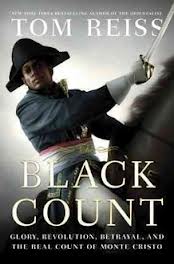
The Black CountThe Black Count was a surprise read, as I prefer historical accounts fictionalised, they tend to be more compelling and the learning aspect easier to remember than non-fiction accounts, however Tom Reiss keeps the reader interested and has written an excellent account of the revolutionary hero, General Alex Dumas – the son of a San Domingan(Haitian) slave and French nobleman. Sold into slavery himself by his father, he eventually makes it to France and rises to become a General in the French revolution, a contemporary of Bonaparte (though no friend of his), his story inspiring his son to write countless novels, including The Count of Monte Cristo.

123112_1428_TopReads2019.jpgWhen Women Were Birds – Fifty Four Variations on Voice was my introduction to the work of Terry Tempest Williams, recommended by Cassie (whose review was so great, it prompted a response by the author), and gifted to me by my best book buddy and very dear friend CKC. The author is 54, the age her mother was when she passed away and left her daughter her journals. In this book, Tempest writes 54 short vignettes, trying to understand the enigma of that maternal gesture.

123112_1428_TopReads20110.jpgIf This Is A Man: A Truce – it seems appropriate to finish with this book, recommended by our Scottish friend who has just finished The Snow Child, he wrote a moving review, that left me with no other choice than to get hold of this book and read this all important humane work by Primo Levi, writing of that inhumane experience, a concentration camp and leaving us with much to think about.

There were so many memorable others, La Petite Fille de Monsieur Linh, my first read of an adult book in French; Murakami’s trilogy 1Q84, the Titanic anniversary books, my late discovery of the joys of John Steinbeck and Ray Bradbury, the tribute to Edith Wharton’s 150th anniversary with Ethan Frome and Summer, a couple more from firm favourites Susan Hill and Irène Némirovsky.

And for you? What books stood out for you in

2012?