Baileys Women’s Prize for Fiction 2016 Winner #BaileysPrize

After looking at the six titles shortlisted for the Baileys Women’s Prize for Fiction and after listening to Eric at Lonesome Reader discussing the six titles in-depth, it comes as no surprise to me that this years winner is:

the extraordinary debut, a novel of literary humour and insight:

The Glorious Heresies

by Lisa McInerney


Further Reading/Watching


Baileys Women’s Prize for Fiction 2016 #BaileysPrize

Baileys logo 2016The other literary event that has been progressing while I was offline is the Baileys Women’s Prize for Fiction.

I wrote about the announcement of the Baileys 2016 Longlist here, and below are the six titles with short summaries that made up the shortlist announced in early May.

The winner of the prize will be announced Wednesday 8th June, 2016.

Cynthia Bond: Ruby – Heart-breaking tragedy and graphic abuse in lyrical prose, Ruby escapes her past in the 1950’s for New York only to have to return, sending her into a kind of madness. Tortured souls and the redemptive power of love, not for the faint-hearted.

Anne Enright: The Green Road – the story of Rosaleen, Irish matriarch of the Madigan family, and her four children, spanning 30 years, three generations and told from the perspective of each child. Having left Ireland they all return when mother announces she is to sell the family property. The battles we wage for family, faith, and love, told through an acute insight into the sibling characters and the landscape they call home. Bookies favourite.

Lisa McInerney: The Glorious Heresies – consequences of a messy murder and cover up continue to reverberate in the lives of five misfits who exist on the fringes of Ireland’s post-crash society. Dark humour explores Irish 20th C attitudes to sex, family and forces the reader to empathise. A debut that might just topple the rest with its originality, wit and insight.

Elizabeth McKenzie: The Portable Veblen – Set in Palo Alto, amid the culture clash of new money and old values,  amid the threat of looming wars. Quirky, humorous, contemporary family saga with a protagonist who believes squirrels are talking to her.

Hannah Rothschild: The Improbability of Love – Satire of the London art world amid a character getting over a broken heart, the discovery and mystery of an old painting, a lost masterpiece by an 18th C French artist, a melange of entertaining stories, voices, characters, points of view. Another quirky entry, bit of a ‘love vs couldn’t finish (or even start) it’ novel. Divides readers.

Hanya Yanagihara: A Little Life – follows the complicated relationships of four men over decades in NYC, their joys and burdens, Jude’s journey to stability, scarred by a horrific childhood with its prolonged physical and emotional effects. More tortured souls and a big, fat read.  A 5 star rating, readers often hesitate to recommend.

An alternative shortlist can be viewed here, the result of the Shadow Jury of bloggers, coordinated by Naomi at The Writes of Women.

It includes three of the titles that made the official shortlist and today they announced their winning novel, one that didn’t make the official shortlist, Kate Atkinson’s sequel to Life After Life, A God in Ruins:

God in Ruins

Watch this space for the announcement of the official winner:

Man Booker International Prize 2016 #MBI2016

MBI 2016 LogoWhile adrift from the internet and with little time to read and review, I missed this literary event, which I’ll still mention as it’s one of the literary highlights of the year for readers of world and translated fiction like me.

The prize is timely as it coincides with an increasing trend for reading translations, up 96% since 2001 though still only counting for 7% of fiction sold in the UK.

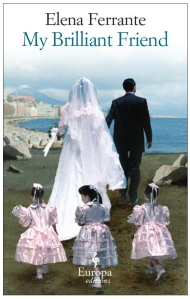
My Brilliant FriendThe most popular literature languages translated into English in 2015 were French, Italian, Japanese, Swedish and German while the top-selling author was Elena Ferrante, with her all-consuming, Neapolitan series of four books: My Brilliant Friend, The Story of a New Name, Those Who Leave and Those Who Stay and The Story of the Lost Child.

So, from the Man Booker longlist of 13 books reviewed here, the six titles below made the shortlist for the Man Booker International Prize in 2016:

José Eduardo Agualusa (Angola) Daniel Hahn, A General Theory of Oblivion – On the eve of Angolan independence an agoraphobic woman bricks herself into her apartment for 30 years, living off vegetables and the pigeons she lures in with diamonds, burning her furniture and books to stay alive, writing her story on the apartment’s walls.

Elena Ferrante (Italy) Ann Goldstein, The Story of the Lost Child – book four in the Neapolitan saga of two friends, Lena and Lila, now adults, returning to their childhood town, dealing with life as mother’s, lovers, surviving an earthquake, tragedies of nature and humanity.

Han Kang (South Korea) Deborah Smith, The Vegetarian – Yeong-hye, seeking a more ‘plant-like’ existence, decides to become a vegetarian, prompted by grotesque recurring nightmares. In South Korea, where vegetarianism is almost unheard-of and societal mores are strictly obeyed, Yeong-hye’s decision is a shocking act of subversion.

As her rebellion manifests in ever more bizarre and frightening forms, Yeong-hye spirals further and further into her fantasies of abandoning her fleshly prison and becoming – impossibly, ecstatically – a tree. Fraught, disturbing, and beautiful, The Vegetarian is a novel about modern day South Korea, but also a novel about shame, desire, and our faltering attempts to understand others, from one imprisoned body to another.

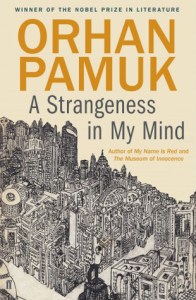
Orhan Pamuk (Turkey) Ekin Oklap, A Strangeness in My Mind – the story of Mevlut, the woman to whom he wrote three years’ worth of love letters, and their life in Istanbul. Mevlut Karataş sells boza (a traditional mildly alcoholic Turkish drink) in Istanbul and wishes for love and riches. He doesn’t have the best of luck (falling in love with a woman and accidentally eloping with the sister) as he ages, attempts to discover what is missing from his life.

Robert Seethaler (Austria) Charlotte Collins, A Whole Life – Andreas lives his whole life in the Austrian Alps, arriving as a boy taken in by a farming family. A man of few words, when he falls in love with Marie, he has friends light her name at dusk across the mountain. When she dies in an avalanche, pregnant with their first child, Andreas’ heart is broken. He leaves the valley just once more, in WWII – and is taken prisoner in the Caucasus – returning to find modernity has reached his remote haven.

Yan Lianke (China) Carlos Rojas, The Four Books – In the ninety-ninth district of a sprawling labour camp, the Author, Musician, Scholar, Theologian and Technician are undergoing Re-education, to restore their revolutionary zeal and credentials. In charge of this process is the Child, who delights in draconian rules, monitoring behaviour and confiscating treasured books.

Divided into four narratives, echoing the four texts of Confucianism and the four Gospels of the New Testament, The Four Books tells the story of one of China’s most controversial periods, demonstrating the power of camaraderie, love and faith against oppression and the darkest possible odds.

And the Man Booker International 2016 winner was:

South Korean writer Han Kang’s The Vegetarian translated by Deborah Smith.

Vegetarian

I haven’t read The Vegetarian, but was stunned by Han Kang’s Human Acts which I read earlier this year, and reviewed here. She is a remarkable writer and thinker and it’s brilliant that her work is being recognised and will find its way to a wider audience. I highly recommend reading her work, if you are interested in extraordinary minds trying to make sense of the most troubling aspects of humanity.

To purchase any of the above titles, click here:

Buy One of These Books Here

Paint Your Wife by Lloyd Jones

I have been missing writing reviews lately and won’t be back to it for a little while yet, but here is a link to my most recent review, which I wrote for BookBrowse, along with a short article that goes beyond the book and looks into a related subject.

Paint Your WifeThe book I reviewed was Lloyd Jones Paint Your Wife.

Lloyd Jones is a New Zealand writer, most well-known for his novel Mr Pip which made the Booker Prize shortlist and won the Commonwealth Writer’s Prize.

Paint Your Wife is the story of the inhabitants of a small community, living in a town that has lost its charm and begins to rediscover it, when one of its citizens displays portraits of the towns women that he painted while their husbands were away at war.

It is a charming, fascinating insight, a kind of domestic novel, but from the male perspective and a tribute to picking up a paintbrush and pausing for some hours to actually observe what it is that is in front of you.

Pierre-Bonnard-The-Bathroom

Pierre Bonnard, The Bathroom

The accompanying article is about a number of well-known artists mentioned in the book, who painted their wives.

One in particular, whom the character Alma was fascinated by, the French artist Pierre Bonnard, only ever painted his wife from memory, something Alma aspired to.

Here is the link to my review at BookBrowse, the complete review will only be available for a short time for non-members, so check it out soon. It’s in This Weeks Top Picks, currently.

Click on the title to go to the review:

Book Review, Paint Your Wife

To buy a copy of the book, you can find it by clicking here:

Paint Your Wife by Lloyd Jones


Lloyd Jones recently wrote a memoir about his family history, called A History of Silence, there is a link to an extraordinary radio interview below, I am really looking forward to reading it and shall be writing more about him here in the near future.

A History of Silence

Links

Radio Interview – Uncovering the Mystery of his Family’s Past

The Buddha in the Attic by Julie Otsuka

Buddha in the AtticBuddha in the Attic is a unique novella told in the first person plural “we”,  narrating the story of a group of young women brought from Japan to San Francisco as “picture brides” nearly a century ago.

In eight chapters, that read like a rhythmical chant, it traces the brides’ lives, beginning at the point of departure after leaving their predictable village lives, to the much-anticipated, though often frightening, boat journey and their arrival in San Francisco.

Some of us were so dizzy we could not even walk, and lay in our berths in a dull stupor, unable to remember our own names, not to mention those of our new husbands. Remind me one more time, I am Mrs. Who?

It recounts their first nights as new wives, the hard manual labour in new fields, cleaning house for white women, their struggles to master the language and understand the culture, to experiences in childbirth, as mothers, raising children who will lose their heritage and history, though continue to be marked by it, with the terrifying arrival of war and it damning label of them as the enemy.

At night we sat in our kitchens with our husbands as they pored over the day’s papers, scrutinizing every line, every word, for clues to our fate. We discussed the latest rumours. I hear they’re putting us into work camps to grow food for the troops.

Julie Otsuka has created a unique and original way to narrate the collective story of these Japanese mail order brides and their many experiences around common themes, we imagine the narrator as one of them, though we do not know which of the experiences are hers, as she balances them equally, one beside the other, in repetitive, elegiac prose.

This collective storytelling in effect brings our perception of them together, creating a sense of community, despite the suffering. It s as if, through sharing their experiences in these paragraphs, they become stronger, better able to cope, the author bringing them together. The “we” narrative unites them, we read and feel for them as a group, as if they are together. Otsuka brings them together in a lyrical expression of tasks, sufferings, looks, sighs, memories.

Apart from the initial boat ride over the seas from Japan to the US, there is little joy, they discover they are the lowest of low in the pecking order, equivalent to slaves, seen as quiet and submissive, hard workers.  Some take it in their stride, others will fall by the wayside.

They admired us for our strong backs and nimble hands/ Our stamina. Our discipline. Our docile dispositions. Our unusual ability to tolerate the heat, which on summer days in the melon fields of Brawley could reach 120 degrees. They said that our short stature made us ideally suited for work that required stooping low to the ground. Wherever they put us they were pleased. We had all the virtues of the Chinese – we were hardworking, we were patient, we were unfailingly polite – but none of their vices – we didn’t gamble or smoke opium, we didn’t brawl, we never spat. We were faster than the Filipinos and less arrogant than the Hindus. We were more disciplined than the Koreans. We were soberer than the Mexicans. We were cheaper to feed than the Okies ad Arkies, both the light and the dark. A Japanese can live on a teaspoonful of rice a day. We were the best breed of worker they had ever hired in their lives.

041812_1115_HotelontheC2.gifAnd as if it couldn’t get any worse, war happens, and they discover they are the enemy, they are regarded suspiciously and in time sent away.

This part is narrated by “them”, the communities within which they have existed alongside, though never really been a part of, certainly not appreciated – at least not until the Orkies and Arkies move in, who are not quiet and hard-working like the Japanese.

It is a soulful lament, a long sad narrative of a life of toil and disappointment that is endured, a disappearance that is unwarranted, a tribute to those who dreamed of a better life, who travelled across an ocean believing they would find it only to be betrayed bitterly.

041812_1115_HotelontheC1.jpgIt reminded me, not in style, but in subject of Jamie Ford’s The Hotel on the Corner of Bitter and Sweet, a story of childhood friends in Seattle, second generation immigrants caught up in the brutal reality of being perceived as untrustworthy, having the skin of an enemy.

Their plows weighed more than we did, and were difficult to use, and their horses were twice the size of our horses back home in Japan. We could not harness them without climbing up on orange crates, or standing on stools, and the first time we shouted out to them to move they just stood there snorting and pawing at the ground. Were they deaf? Were they dumb? Or were they just being stubborn? “These are American horse,” our husbands explained. “They don’t understand Japanese.” And so we learned our first words of horse English. “Giddyap” was what you said to make the horse go forward, and “Back” was what you said to make it back up. “Easy” was what you said to make it slow down, and “Whoa” was what you said to make it stop. And after fifty years in America these would be the only words of English some of us could still remember by heart.

Julie Otsuka speaks here (in English) about the inspiration behind Buddha in the Attic, which won the French Prix Femina Etranger 2012 translated as Certaines n’avaient jamais vu la mer for the French edition.

Baileys Women’s Prize for Fiction LongList 2016 #IWD2016

Baileys logo 2016Today is International Women’s Day, this year the theme is #PledgeForParity and the Baileys Women’s Prize certainly does a lot to advance that challenge, with their ambition to bring the best women’s writing and female storytellers to ever-wider audiences.

In selecting the following 20 titles for the longlist the Chair of Judges Margaret Mountford shared that:

“We had a hugely enjoyable and stimulating meeting, as there were a great many strong novels in contention. We are delighted with the quality, the imaginative scope and the ambition of our chosen books, a longlist which reflects the judges’ interests and tastes. We hope readers will enjoy the variety of outstanding work on offer.”

Half the longlist are debuts, they represent seven nationalities, four previous shortlisted authors and the first Zimbabwean author to be longlisted for the prize.

The longlisted books are as follows:

Kate AtkinsonA God in Ruins – Teddy, would-be poet, heroic World War II bomber pilot, husband, father, and grandfather, whom we met in her previous book Life after Life navigates the perils and progress of the 20th century.

Shirley BarrettRush Oh! – Australia 1908, Mary supports her father’s boisterous whaling crews during a harsh season, while caring for five brothers and sisters in the wake of their mother’s death.

Cynthia Bond: Ruby – Heart-breaking tragedy and graphic abuse in lyrical prose, Ruby escapes her past only to have to return and it doesn’t sound as pretty as she is.

Geraldine Brooks: The Secret Chord – a retelling of the story of King David, one I’ve read and reviewed.

Becky Chambers: The Long Way to a Small, Angry Planet – the first in a sci-fi series, a martian woman, an alien pilot and a pacifist captain, humanity a minor player in this fun and sometimes dangerous adventure.

Jackie Copleton: A Dictionary of Mutual Understanding – A woman opens the door of her Philadelphia home to a badly scarred man claiming to be her grandson, who perished nearly forty years ago during the bombing of Nagasaki, with a collection of sealed private letters…

Rachel Elliott: Whispers Through a Megaphone – Miriam, who whispers, hasn’t left the house in 3 years, and today has had enough, she will venture out. Ralph discovers his wife doesn’t love him and runs away. They meet.

Anne Enright: The Green Road – the story of Rosaleen, Irish matriarch of the Madigan family, and her four children, spanning 30 years and three generations. The battles we wage for family, faith, and love.

Petina Gappah: The Book of Memory – Memory, an albino woman imprisoned in Harare, Zimbabwe, has been convicted of the murder of her adopted father. A tale of love, obsession, the relentlessness of fate, the treachery of memory.

Vesna Goldsworthy: Gorsky – A modern Gatsby set amongst contemporary London’s über-rich Russians.

Clio Gray: The Anatomist’s Dream – Born with a defect, abandoned by parents, he joins a carnival, finding friendship among an assortment of ‘freak show’ artists, magicians and entertainers, then meets someone who recommends a cure.

Melissa Harrison: At Hawthorn Time – four lives, the importance of community, our relationship to nature, belonging and the freedom of the unknown, contemplative, for fans of compelling nature writing.

Attica Locke: Pleasantville – legal thriller set during a dangerous game of shadowy politics, a missing girl, election night, a tussle for power, sounds like a TV series, oh yes, she writes those too.

Lisa McInerney: The Glorious Heresies – a messy murder affects the lives of five misfits who exist on the fringes of Ireland’s post-crash society. Dark humour explores Irish 20th C attitudes to sex, family.

Elizabeth McKenzie: The Portable Veblen – Set in Palo Alto, amid the culture clash of new money and old values,  amid the threat of looming wars. Humorous, contemporary family saga with a cute squirrel cover!

Sara Nović: Girl at War – Zagreb, summer of 1991. Ten-year-old Ana is a carefree tomboy playing in the streets of Croatia, civil war breaks out, tragedy, guerilla warfare, the world child soldiers, a daring escape plan.

Julia Rochester: The House at the Edge of the World – Father of teenage twins falls off a cliff,drunk, soon after their lives separate, they return, delving into the past, their grandfather’s mysterious, painted family record created over an ordnance chart, a lyrical journey through character ad mystery of family.

Hannah Rothschild: The Improbability of Love – A character getting over a broken heart, the discovery and mystery of an old painting, a lost masterpiece by an 18th C French artist, a melange of entertaining stories, voices, characters, points of view.

Elizabeth Strout: My Name is Lucy Barton – Lucy is visited by her mother, whom she hasn’t spoken to in years, while recovering from an operation, a story of family, damaged relationships, unspoken childhood events, coming to terms with the past, navigating the future, keenly observant, deeply human, unforgettable.

Hanya Yanagihara: A Little Life – follows the complicated relationships of four men over decades in NYC, their joys and burdens, Jude’s journey to stability, scarred by a horrific childhood with its prolonged physical and emotional effects.

*******

Voila! The final list of 20 novels, I have only read one and it wasn’t my cup of tea, there are lots of new names in the list for me, as well as the familiar. Elizabeth Strout’s new novel looks promising, At Hawthorn Time looks like my kind of book, I’m intrigued by The Book of Memory and Anne Enright’s is bound to be great reading and writing and I’m definitely going to read Kate Atkinson’s follow-up novel eventually.

For a more comprehensive short review of al these titles, check out the link to The Irish Times article below:

No idea who will win but this is the gems are!

Which book(s) appeals to you from the list?

Further Reading:

Article in Irish Times: Lisa McInerney and Anne Enright on Baileys Women’s Prize for Fiction longlist

Purchase A Book:

If you wish to buy one of the above books, you can do so via the Book Depository link below, with who I have become affiliated.

Buy One of These Books at Book Depository

Georgia: A Novel of Georgia O’Keeffe by Dawn Tripp

I’ve loved Georgia O’Keeffe’s paintings since I stumbled across them one weekend in an art gallery in Chicago and felt the effect of them, rather than saw them as such, for they are indeed imbued with feeling and when you see one of her large canvases with its bold visual statement, well for me anyway, you can’t help but be moved by it, struck dumb by it, to stop and appreciate how this artist communicated something deep within you, without words or reality. I felt it almost like a punch, I didn’t quite understand what it was, but I wanted to know who is was that had created that effect on me.

Although I bought a beautiful book about her paintings, it was something less intellectual and more personal I was after. I found a very old, yellowed copy of Laurie Lisle’s Portrait of an Artist: A Biography of Georgia O’Keeffe.

It provided an excellent framework of her life, her childhood and introduction to art, her various shows, her marriage and need for solitude and her eventual move to that part of the world that most resonated with her, New Mexico.

However, O’Keeffe comes off as a rather distant, aloof character, seen from the outside, rather brusque, detached. The biography filled in her life, but left me still wanting to know who she was, sure there was much more to her that we would benefit from knowing.

One of the things that makes Georgia O’Keeffe such an interesting character is not just her work, but her essence, her self-knowledge and ability to act upon it, to ensure that she lived in a way that allowed her art to express itself in an authentic way. When she wasn’t able to do this, her mental health declined, however she knew how to resolve it and in acting accordingly, lived to the age of 98.

She married the well-known gallery owner and photographer, Alfred Stieglitz, something of a scandal as she was 25 years his junior and he left an unhappy marriage for her, but she never collapses into the relationship, they find a way of supporting each other, that also allows them be individuals and to pursue (most of) their own ambitions wholeheartedly.

Inevitably there would always be compromise, Stieglitz accepted that O’Keeffe needed to spend a portion of the year in New Mexico without him and O’Keeffe had to accept that Stieglitz did not want to become a father again.
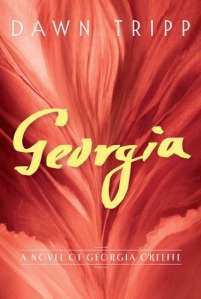
GeorgiaWhich all leads me on to say it was with quiet anticipation to learn that Dawn Tripp had the courage, respect and admiration for O’Keeffe to decide to venture into creating a work of fiction, that attempts to channel the voice of Georgia O’Keeffe. What might she have really been thinking if it was her voice relating the story of this life and not someone from the outside.

Georgia: A Novel of Georgia O’Keeffe does exactly that.

Dawn Tripp similarly came across her story through her art, after seeing an exhibition of her abstractions at the Whitney Museum of American Art in 2009. She had been aware of her work, but experienced something different that day.

As early as the fall of 1915, at twenty-nine-years old, she was creating radical abstract forms when only a handful of artists were bold enough to explore this new language of modern art. Her abstractions of that time – and those she continued to create throughout her life – were ambitious, gorgeous shapes of colour and form designed to express and evoke emotion, and they were stunningly original.

It provokes in the author, a desire to want to know this woman, the artist, the creator of these stunning works and why she was not recognised for the visionary power of these abstractions during her lifetime. There were excerpts from letters as part of the show:

The language of those letters was sharply intimate, vulnerable, complex. O’Keeffe’s letters revealed a woman of exceptional passion, a rigorous intelligence, and a strong creative drive. Her letters had a raw heat that felt deeply aligned with the abstract pictures I was seeing on the walls, but at odds with the image of O’Keeffe I’d grown up with: the aged doyenne of the Southwest, poised and cool, holding the world at arm’s length.
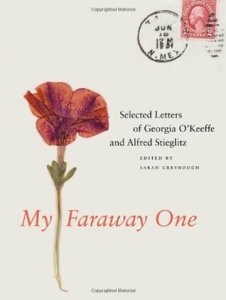
My Faraway OneWhen the novel was almost complete, the correspondence of O’Keeffe and Stieglitz was published, having been sealed for twenty-five years after her death.

It was a pleasure to read this novel that attempts to get inside that mind and share something that feels more genuine in terms of what her work intended, than the easy reference that so many of the male critics of the time jumped to, insinuating the sexual by responding to the visual elements of Stieglitz’s nude photos of her and the soft interior of her giant flowers, rather than the essence of life itself pushing forth.

This is the Georgia O’Keeffe I’ve wanted to know, and suspected existed, from someone who has tried to absorb her childhood, upbringing and place in the world, attempting to understand what she was trying to express and how it was both uplifted and repressed by the decisions she made.

To explore those initial choices, few of which were her own, the effect of Steiglitz managing and directing her career, their relationship, her need for a child, their life between New York and Lake George until the moment when she allows herself to visit New Mexico with her friend Beck and begins an annual pilgrimage to a place that will eventually consume her entirely and become her home, both physically and spiritually.

We see O’Keeffe as a young independent woman, learn about her family background, their vulnerability to TB, the shock of meeting Stieglitz’s wife and family, the abundance of material wealth and food, she so close to nature – and yet so attracted to him, his mind and his person.
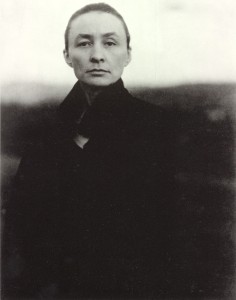
Georgia O'Keeffe, 1920

Georgia O’Keeffe, 1920

She resents her art being seen through his lens of her, by the critics, that association with gender, the feminine. The thing that builds her up, blinds them to the work as she sees it. She seeks solitude. She resists being photographed, unable to convince through other means. By the time Stieglitz divorces, Georgia is lacklustre on marriage.

Her mental decline from accepting it all, the inevitable, necessary turning point, turning away from her husband, though forever connected to him.

Dawn Tripp has us completely immersed in a perception of the life of Georgia O’Keeffe that feels as real as if it were the artist herself speaking, though we all know how private she was, and through this novel we understand that need even more so.

People can be sceptical of the fictional biography, but when it is well researched, and the author has found the appropriate voice, and treats the subject with respect and understanding, it brings history alive and makes it accessible to a much wider audience than the more traditional, detached form of narrative.

I highlighted so many paragraphs and sections in the book, it would make the review too long to show them. All the better to discover the words for yourself.

Absolutely brilliant, loved it.

Notes on the Paintings Depicted
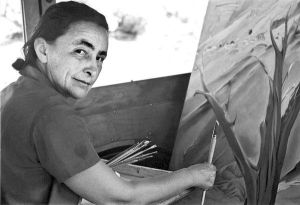
OKeeffe painting“Pink Tulip”, 1926, Georgia O’Keeffe, oil on canvas, 36” x 30”
The Baltimore Museum of Art, Bequest of Mabel Garrison Siemonn, in memory of her husband George Siemonn.
©Georgia O’Keeffe Museum

Georgia O’Keeffe, Untitled (City Night) (Untitled – Night city), Seventies © 2009 Georgia O’Keeffe Museum / © Georgia O

Georgia O’Keeffe White Iris, No. 7 (White Iris # 7), 1957 © 2009 by Georgia O’Keeffe Museum / © Georgia O

Georgia O’Keeffe, “Ram’s Head White Hollyhock and Little Hills,” 1935, Oil on canvas, 30 x 36 in. Brooklyn Museum, New York.

Click on the link to buy this book.

Buy Georgia: A Novel at Book Depository

Note: The book was an ARC (Advance Reader Copy) kindly provided by the publisher via Netgalley.

Two Serious Ladies (1943) by Jane Bowles

Bellezza who reviews at Dolce Bellezza (click on words or image below to visit) and reads a lot of interesting literary and translated fiction, recently invited me to join her and a few others to read Two Serious Ladies by Jane Bowles.

DolceBellezza

I didn’t know anything about the book, but I liked the idea of a January readalong, the last one I participated in was Pushkin’s Eugene Onegin in January 2014 and it became one of my Top Reads of 2014!

Background

Jane Bowles was married to the composer, writer and translator Paul Bowles (author of the 1949 classic, post-colonial alienation and existential despair novel The Sheltering Sky). They were part of avant-garde literary circles in their home town of New York and adopted homes of Paris, Mexico and Tangiers, known as well for their bohemian lifestyle as their literary success’.

Two Serious LadiesJane Bowles (born in New York City, Feb 1917) wrote one novel, a play and six short stories. The novel Two Serious Ladies, though panned at the time, (critic Edith Walton writing in the Times Book Review didn’t understand it, calling it ‘senseless and silly’), became regarded as a modernist, cult classic, helped when Tennessee Williams named it his favourite book.

She was famous as the enigmatic and entertaining half of a celebrated couple, for her near permanent writer’s block, her daring attitude to life, and her provocative relationships with women.

Both husband and wife, though dedicated to each other, indulged same-sex relations with others outside their marriage; notable was the relationship Jane Bowles developed with Cherifa, a Moroccan peasant, the only woman in Tangier to run her own market stand. They are photographed; Jane, wearing a white, sleeveless short dress walks on the arm of Cherifa, cloaked in a black niqab, wearing dark sunglasses (said to carry a knife beneath her robes for protection). See the photo in The New Yorker article linked below.

Review

Two Serious Ladies introduces us to two characters Christina Goering, daughter of a powerful industrialist, now a well-heeled spinster, adrift and bored with her comfortable, predictable existence and Frieda Copperfield, married to a man who pursues travel and adventure, dragging his wife (who funds this insatiable desire) out of her comfort zone, to the untouristed, red-lit parts of Panama, where she finds solace and digs her heels in, at the bar/hotel of Madame Quill, befriending the young prostitute Pacifica.

Christina, referred to as Miss Goering and Frieda, Mrs Copperfield, acquaintances, meet briefly at a party and will come together again briefly at the end, both having had separate life-changing adventures, driven by a latent, sub-conscious desire to radically change their situations, both of which come about in a random, haphazard way.

Miss Goering invites a companion Miss Gamelon, to move into her comfortable home and at the party where she encounters Mrs Copperfield, she meets Arnold. Though she doesn’t particularly like either of these characters, when she decides to sell her palatial home and move to a run-down house on a nearby island, they agree to come with her. Neither are enamoured of her decision, to remove them from her previous comforts, which they were quite enjoying.

“In my opinion,” said Miss Gamelon, “you could perfectly well work out your salvation during certain hours of the day without having to move everything.”

“The idea,” said Miss Goering, “is to change first of our own volition and according to our own inner promptings before they impose completely arbitrary changes on us.”

Once on the island, still restless, she abandons her invitees and takes the ferry to the mainland, opening herself up to whatever random encounters await her, as if seeking her destiny or some kind of understanding through a series of desperate and reckless acts.

Jane Bowles

Jane Bowles

Mrs Copperfield seems less to seek out the depraved, than be attracted by a perceived sense of belonging, she spurns the comfortable, pretentious trappings of the Hotel Washington, declines to go walking in the jungle with her husband and instead takes the bus back to the women she has met at the Hotel les Palmas whom she feels an affinity with, despite their lives of poverty and prostitution being so far removed from her own. She recognises they possess a kind of freedom and strength she lacks; in their presence, she begins to feel energised and empowered.

It is a strange book at first, it requires finishing and reflecting upon to figure out what it was all about. It is recounted in a straight forward style, we observe the actions of the two women without reflection on their part, making it necessary to unravel their intentions, which inevitably becomes a matter of reader interpretation, to find the meaning, if indeed there is any.

For me, it was clear the women lacked something significant in their lives, in their existence, even if they were unable to articulate it or even search appropriately for it, they sensed something missing in their lives of privilege and sought it among the downtrodden. They were experiencing an existential crisis.

In terms of style, the writing has been described as elliptical prose, a term I looked up, coined in 1946 by Frederick Pottle who used elliptical to refer to a kind of pure poetry that omits prosaic information, providing the possibility of intensity through obscurity and elimination.

@Jimthomsen on twitter asked the same question and got this response:

Meaning, there’s much that isn’t said or thought or written and more that might be implied, discovered between the lines. A form of literary diet perhaps? I do prefer plain language.

Bowles takes two female characters from a similar social class (similar to her own) dissecting a woman’s presence and existence in society in a form of confrontational daring that was liable to elicit both scorn and eye-brow raising in her own time and continues to provoke a certain amount of bemusement in our own.

“I know I am as guilty as I can be, but I have my happiness which I guard like a wolf, and I have authority now and a certain amount of daring, which I never had before.” – Mrs Copperfield

Reading it alongside the life of Jane Bowles, was a pleasure, I enjoyed reading it and taking the extra time to understand the context within which it was written.

Thanks Bellezza for the invitation, I look forward to reading everyone else’s reviews!

Links

The Madness of Queen Jane – Article in The New Yorker, by Negar Azimi June 12, 2014

A Short Biography of Jane Bowles by Millicent Dillon

Other Reviewers Reading & Reviewing Two Serious Ladies – Scott, Frances, Dorian, and Laurie

Charming Billy by Alice McDermott

Charming Billy was the last book I read, as 2015 came to a close and a fitting end it was, as it opens at the funeral and wake of a man called Billy, a man who over-comforted himself with drink, for reasons that everyone present was happy to speculate on, most of them coming to the conclusion , that he’d never got over the fiancée that returned to Ireland with his ring and a promise to join him soon.

Close friends and family come together to mourn and remember Billy, this man of Irish descent who fell for Eva one summer, who promised himself to her and sent her the money he’d borrowed from his new boss, so she could return to him after she went back to Ireland.

It had been a short romance, but one that everyone present at his wake had an opinion on, yet no one appeared to have known the full truth of what really transpired. This becomes even more clear as the novel progresses towards the memory of Billy’s trip to Ireland about 30 years later, truth confronting him in a way grief could not.

Charming BillyThe novel unfolds and weaves like threads in a tapestry, as characters share their understanding of Billy, their memories of his charm and inclinations and what they knew about the short-lived romance with the Irish girl Eva.

They debate whether Billy’s demise and descent into alcoholism was part of who he was or the consequence of the heartbreak he had endured over the years, despite his marriage to Maeve, the widow, like wallpaper adorning the kitchen, witnesses all, but sits quietly in the background of this narrative.

“There was tremendous affection in Billy’s eyes, or at least they held a tremendous offer of affection, a tremendous willingness to find whomever he was talking to bright and witty and better than most.”

Slowly it creates a picture of a life and all lives, how they are formed, changed, steered by certain events, fractured by grief, sustained by community, vulnerable to and comforted by addiction, driven by faith, seduced by deception.

‘In the arc of an unremarkable life, a life whose triumphs are small and personal, whose trials are ordinary enough, as tempered in their pain as in their resolution of pain, the claim of exclusivity in love requires both a certain kind of courage and a good dose of delusion.’

Much of the novel is narrated by the daughter of Dennis, Billy’s cousin. Dennis was close to Billy, they were together when that summer when they met the two girls Mary and Eva, at Dennis’s mother and stepmother’s holiday home, a place Billy would never return to, perhaps due to those memories, and a location that provides something of a twist near the end.

A nostalgic tale, imbued with sadness, post war expectations and a new world Irish charm, it carries a sense of stepping back in time, of being on the threshold of a new modern era, Billy, one of the last links to a bygone era.

It read like a tapestry, one story viewed through various perspectives, so we go over events again and again, as seen by numerous characters, like colourful threads in a tableau.

I picked this book up from the library after it had been highly recommended to me, I have another of her books on the shelf Someone, a 1920’s Irish-American coming-of-age portrait of a woman’s life through childhood, adolescence, motherhood and old age.

Have you read any of Alice McDermott’s work?

The Gift of Stones by Jim Crace

The Gift of StonesFrom whispering muse to the gift of stones, this was the second book I read in 2016, one of Jim Crace’s earlier philosophical works, telling the tale of a village of stone workers, who live a simple life working stone into weapons, which are then traded with passers-by for food and other essentials, which they are not able to provide for themselves, in the arid landscape within which they reside. It is a livelihood they think little about, it is all they know.

A boy’s destiny is changed after he is injured in the arm by an arrow. The arrow is a symbol of change and both opens and closes this short, though provoking novella.

The injury becomes a turning point for a boy, his arm partially amputated, making him unable to follow in the village tradition, he must find another way of contributing to his community. His predicament is a foretelling of what is to come, but first he alone must learn to adapt.

He ventures outside, further from the village than anyone has ever been, near the sea and the heath, bringing them tales of beyond, discovering the allure and power of imagination. Experiencing things and feelings he has never encountered.

Already an orphan living with his uncle in a stone age village of people who work with flint, his injury turns him into a storyteller, inspired by his walks along the coastline towards the heath where he meets a woman with her baby living alone in a hut. He discovers how to captivate and amuse an audience, to take their minds off their day-to-day torments.

‘The paradox is this – we do love lies. The truth is dull and half-asleep. But lies are nimble, spirited, alive. And lying is a craft.’

He brings the woman back to the village, however she isn’t welcomed by the villagers, set in their ways. She too symbolises the lessons they must learn, though they will realise this much too late. When he tells the villagers her history, a truth, they become bored and turn away.

‘Quite soon they found it far too dark and cold to listen to my father any lore. They peeled away before the tale was done, unmoved by my father’s portrait of the widow and her child on the heath, her struggles not to die, her hardships, grief and hunger, the slaughter of the geese, the crushing of her hut. Quite soon there were no cousins left to hear my father’s tale. His audience – excluding bats and mother – had crept away, unamused and angered by the venom in his voice.

My father stood alone and startled – for now he understood the power of the truth.’

flint arrow head

It is a philosophical tale of unrequited love, abandonment, survival and the heralders of change, how communities react to the necessity to adjust, and to those who are different, outsiders.

It touches on the role of imagination and storytelling, not just as entertainment and a craft, but as those who foresee change, create invention, imagine other ways of life.

Poignant and intriguing, given the era within which it is set and a kind of tribute to the greater importance of storytelling within society.