
I was looking for a light, uplifting read after a bit of a stressful period in January; I had enjoyed The Keeper of Lost Things, and seeing Ruth Hogan had a new novel coming out, decided it would be the one.
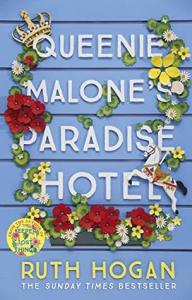 It’s described as a novel of mothers and daughters, families, secrets and the power of friendship. It’s set in Brighton and begins as Tilda returns to clear out her mother’s flat after her death. That precipitates a number of memories of her childhood, which we learn about in the alternate narrative by Tilly, her child self, whose story is told from the moment her father has disappeared, the beginning of her obsession with matches and our realisation that some of the characters she sees and interacts with can’t be seen by others.
As an adult, Tilda is wary of people, not certain who to trust and not entirely comfortable with who she is. While clearing out her mother’s home, she comes across a box containing diaries, which may finally explain some of the mysteries surrounding her childhood, in particular her absent father and the reason her mother sent her away from the only place she ever really felt at home and loved, Queenie’s Paradise Hotel in Brighton.
It’s in Part Two that we discover who Queenie is and the role of the Paradise Hotel, it is here we are introduced to an eclectic cast of characters, almost pity we didn’t meet them earlier on, as they provide much of the entertainment, colour and humor in the novel.

It’s an entertaining read, a dual narrative of Tilly and her grown up self Tilda, where one attempts to fill in the gaps of the other, so we spend half the novel not quite knowing what happened to Tilly, her father, her mother, why they had to move, and who Queenie was.
Eventually the mysteries are resolved and there is also a love interest, though the character development of Daniel is the weakest of the cast. One of the more endearing characters is Eli, the dog. It’s not difficult to know who the inspiration for this was, as Ruth Hogan revealed in an interview:
I believe in ghosts. When my first dog died, I know that his spirit stayed with me for so long as I needed him. I also know how ridiculous that sounds, but you’ll just have to take my word for it. My family background is Irish on my dad’s side, and he says that my writing, love for tea and potatoes, and believing in ghosts is his legacy.
I found it hard to be as drawn into this novel as her previous work due to the child narrator, there was something too naive about her that made her more of a construct and less of an authentic character for this reader.
I liked the premise of the story, and the exploration of a character that was herself afraid of showing her authentic self to people because of her differences. It made me wonder how many people really do go through life like this, having experiences outside of what is perceived and accepted as being normal while they are young, whether it’s hearing voices, seeing things others don’t, or just possessing knowledgeable beyond their years, and how it stunts their growth to have that denied or suppressed, told it’s wrong, or worse medicated or locked up for it. It’s what made the Paradise Hotel so special and had the potential to have made this an even more poignant read.
Thought provoking and well intended, even if it didn’t quite reach the same level of satisfaction for me as her earlier work, her love of Brighton, the pier, which she describes as her happy place, is evocative and endearing.

I love the simple pleasures of a traditional British seaside resort, like walking on wooden piers, eating vinegar-soaked chips out of newspaper, riding on the carousel horses and paddling in chilly waves. And I particularly like to do these things in winter, when the crowds have gone home. Ruth Hogan
N.B. This book was an ARC (Advance Reader Copy) kindly provided by the publisher via NetGalley.
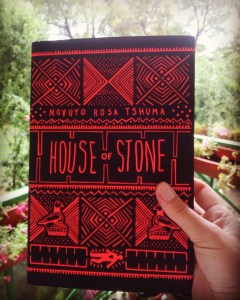
 In an interview, Novuyo Rosa Tshuma when asked about setting her novel amidst the backdrop of this massacre, said:
 It’s an accomplished novel that confronts harsh truths and pursues questions about the reinvention of a nation and the individual. A gifted storyteller who has been able to weave the essence of those personal narratives into richly formed characters that goes some way towards acknowledging a history no-one will talk about. Bereft of redemption, a feeling that pervades the narrative and one that seems to hold many in its grip today worldwide.
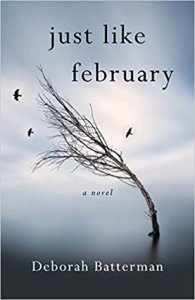 Just Like February by Deborah Batterman is a novel that is immersed in nostalgia for the past, for the innocence of childhood and the reluctant awakening of the adolescent, of the fragility of love, the need for forgiveness, the pain of judgement.


 I am in awe. It is no easy read, for it is written in a kind of double, triple speak, depicting a life and set of circumstances that is constantly in check, a circumventing of self. It describes from the inside how one young woman navigates daily life in a community that has drawn so many convoluted, coded lines of behaviour, that lives by so many unspoken, rigidly enforced violent rules, that has morphed into something so far from authenticity, that only the very ‘different’, appear able to, or indeed risk, living life true unto themselves, except those who left the country forever, their tale not told here, those that got away.
 ‘Middle sister’ as she is referred to, thinks in a kind of coded language full of uttered phrases that substitute for a more succinct opinion, so that even the reader must enter into this “insinuating” talk to understand her thoughts, for nothing is stated plainly, just as nothing is observed or clarified as it really is. And we get good at it, at this revealing what is really being said, even beginning to see the humor in it, when none of it really is funny, there’s too much death, tragedy, sadness, ridiculousness. It’s not a life, it’s a trap.
 Bitter Orange is less mysterious and though it is set in 1969, it has something of the feel of a timeless classic, with its setting in a dilapidated English mansion, with two characters employed by the new, absent owner to make a report on the inventory and architecture of the interior and garden, people interested in old things from the past, haunted by them in fact.
 Once settled into her attic room, France spies her housemates, Cara the carefree young woman, who it soon becomes clear is tormented by something and Peter the older lover of antiquities, a man who more than admires, wishes to possess all that he finds alluring.
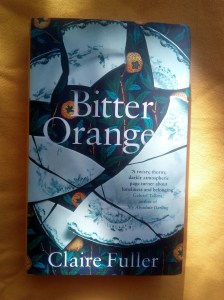 For me, it didn’t have the same captivating atmosphere, characterisation and thought-provoking aspects present in Swimming Lessons, which is my favourite of the three books and was a five-star read for me last year, however it excels in demonstrating the murky depths of people, who are often not what they seem on the surface, and even when unravelled and revealed may not be telling things as they really are or were. Yes, watch out for the unreliable narrator,.
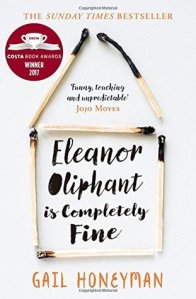 So used to her self imposed isolation and predictable life is she, that she seems shocked when a new employee Raymond from IT, whom she calls when her computer freezes one morning, initiates conversation with her outside the office, speaking to her as if she might be just like the others.
 I did find the character of Eleanor a little difficult to believe in, the long years of solitude followed by a relatively sudden transformation seem to occur too easily and quickly, however if I were to suspend judgement on the authenticity of the character and the speed of her life change, which wasn’t hard to do, then it becomes a kind of coming-of-age novel about a young woman overcoming a traumatic past and demonstrates (a little too conveniently) the healing that can come from genuine friendship and being part of a family and community and a functional workplace (if there is such a thing).
 Hanna has one daughter, Johanna, a name that carries its own story and past, before she is even born, one of the reasons she is closer to her father in her early years. Johanna would also have one daughter Anna, it is she who begins to narrate this story, she visits her mother in hospital, desperate to get answers to questions she has left it too late to ask.
 The first half of the book is dedicated to Hanna and her life and this is where the novel is at its best, immersed in the struggle of Hanna’s early years, its tragic turning point and the situation she is forced to accept as a result. Circumstances that will become buried deep, that nevertheless leave their impression on how she is in the world and impact those daughters indirectly.
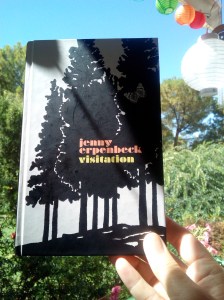 I’ve attempted to read Visitation about four times and never succeeded in getting past the first few chapters, but this year I persevered as I felt I hadn’t given it a fair chance.
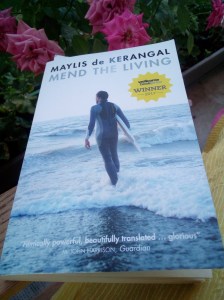 Although I’ve read reviews and seen this book appear often over the last year, and knew I really wanted to read it, I couldn’t remember what is was about or why.
 The British translation (by Jessica Moore) is entitled Mend the Living, broader in scope, it references the many who lie with compromised organs, who dwell in a twilight zone of half-lived lives, waiting to see if their match will come up, knowing when it does, it will likely be a sudden opportunity, to receive a healthy heart, liver, or kidney from a donor, taken violently from life.
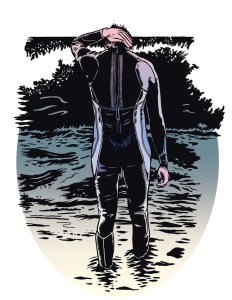 The translator Jessica Moore refers to her task in translating the authors work, as ‘grappling with Maylis’s labyrinthe phrases’, which can feel like what it must be like to be an amateur surfer facing the wave, trying and trying again, to find the one that fits, the wave and the rider, the words and the translator. She gives up trying to turn what the author meant into suitable phrases and leaves interpretation to the future, potential reader, us.



 Word by Word