The Paris Wife by Paula McLain

Dreams, Illusion, Reality

Reading The Paris Wife I rapturously turned the pages, captivated in a cathartic way in the character of Hadley Richardson, whose story and perceptions I became absorbed with, whose life and relationships I was invested in as a reader and also as someone who has lived in France for six years. Yet at the end I was left feeling somewhat deceived.

‘The Paris Wife’ explores a brief passage in the life of 28 year old Hadley Richardson, from shortly after the death of her mother, when she meets and after a brief courtship, marries the much younger Ernest Hemingway, until their separation and subsequent divorce.

Hemingway is a 21 year old war veteran and struggling journalist with his eyes set on Rome, until the writer Sherwood Anderson, convinces them the future lies in Paris.

The young couple embark on their journey, Hadley doing her best to support her husband and not burden him with her own insecurities. Neither glamorous nor ambitious, she is honest and good and able to provide Hemingway with an emotional foundation and stability that he has not been able to garner since his return from war, or perhaps earlier, when the arrival of a baby brother shattered the illusion of a special bond he believed he had with his mother. It is a pattern that will be repeated in his life, the attempt to recreate a safe, protective feeling akin to childhood with a woman, only for it to fall apart.

Cracks Begin to Appear

It is not long before cracks appear, Hemingway’s foreign assignment to Turkey bring back feelings of despair, displacement and the nightmares of war; walking in the rain, death, sickness and desperation in the air, his esteem low, he brings himself lower by acting on it. We learn this period was preceded by his breaking the ‘exclusive’ work contract with his employers without informing them – signs of a divide within himself – and Hadley’s discomfort with his dishonesty feeds the more paranoid of her instincts.

While in Paris, Hemingway spends his days writing, initially rejecting the cafés with their posing artists, though soon overcomes his distaste and discovers the joy of café life once they develop their own circle of friends.

Sunrise or Sunset?

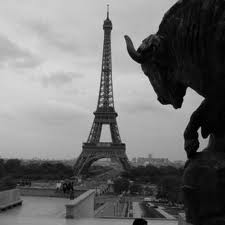
Hemingway’s obsession with corrida (bullfighting) result in numerous visits to Spain accompanied by friends and these sojourns become the basis of his novel ‘The Sun Also Rises’ about a group of expatriates who travel from Paris to the Festival of Fermin in Pamplona.

One of the most striking and memorable moments supports a comment by Hemingway scholar Jamie Barlowe that Hadley Richardson “was a ‘true’ woman and not a ‘new’ woman of the early 19th century” and shows both how removed she was from their group and the reverence Hemingway held for her.

Hemingway dedicated ‘The Sun Also Rises’ to Hadley and although she was there in person and recognises much of what happens in the novel, she is the one person from their circle that does not exist between its pages. She is hurt by the exclusion, though spared the humiliation. She was at a loss in the company of Lady Duff, whom Hemingway models the female character on, a honey pot of a woman who, oblivious to the neurotic attentions of the men, was present with a much ignored fiancé and drooled over by Hemingway and Harold who end up in fisticuffs over misplaced jealousies. Hadley’s recognition and special moment come in the most romantic and gory of gestures, when the much admired matador Cayetano Ordóñez makes eye contact with her from the bullring and publicly gifts her the rare token of the bull’s ear, bloody and warm from the soon to be sacrificed animal.

The deception is that the story and the author’s interest continue only as long as she is married to Hemingway, a mere six years, effectively cancelling her out as a character so soon, no longer interesting without the crutch of an infamous husband. Did her life cease to hold interest or meaning beyond those years; are we really only interested in her because she was married to Ernest Hemingway? Sadly it appears so, deceived because it is true, we are to be concerned with her only for the duration of her marriage to Hemingway, despite having come to know her sufficiently to want to know more. She has become a victim of the modern cult of the celebrity, famous only for being linked with someone famous.

I think back to another wife of a famous man I reviewed recently ‘The Many Lives and Secret Sorrows of Josephine Bonaparte‘. Josephine starts out as a modest character named Rose Tacher whom we are introduced to many years and one marriage before she meets Napoléon Bonaparte; we are fortunate that interest in her isn’t restricted to her marriage to Bonaparte, we are already hooked into her character and have completed an entire novel before Bonaparte even enters the scene.
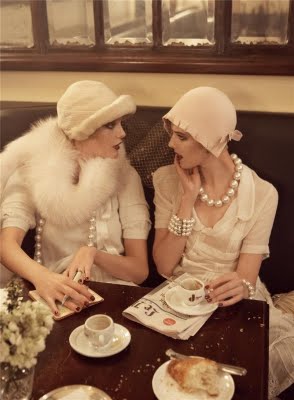
Despite the deception, I recommend ‘The Paris Wife as an alternative, behind the scenes look at the 1920’s lives of the group Gertrude Stein called ‘the lost generation’ and also at the inspiration and experiences that influenced much of Ernest Hemingway’s work penned during this era.

But perhaps most of all because McLain introduces us to a woman we can relate to and empathise with, someone we can imagine as a friend or confidante, who aspires to the same things that so many women yearn for, because she allows us to imagine and feel what it must have been like to harbour such simple and honest ambitions while navigating a fresh marriage in a new city and foreign country and culture.

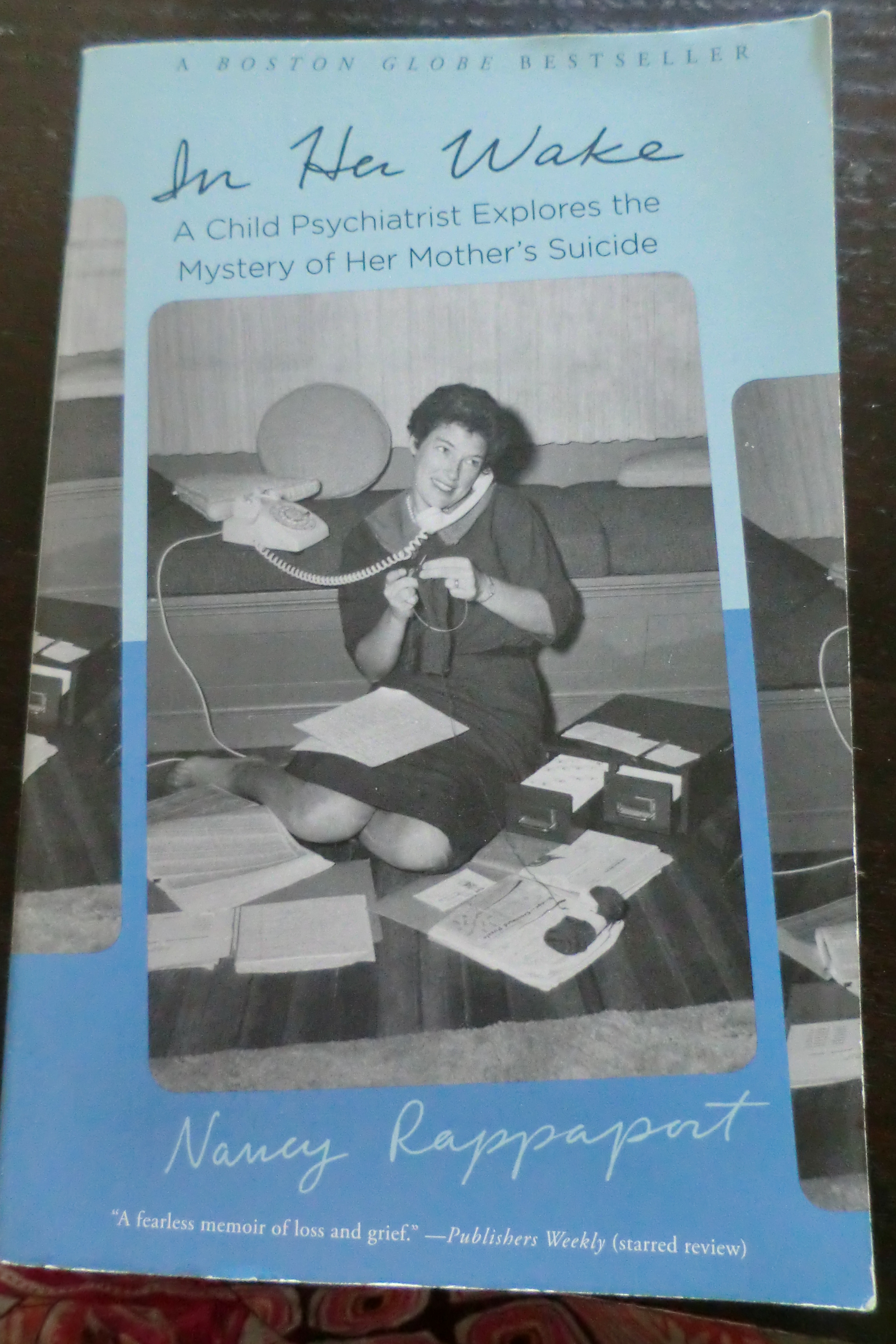
In Her Wake, Nancy Rappaport – exploring the mystery of a mother’s suicide #memoir

In 1963, Nancy Rappaport was 4 years old and the youngest of six children when her mother, an ambitious woman who balanced raising a large family, organising regular society events and political campaigning, committed suicide in the wake of a heart-wrenching custody battle.

Nancy now has three grown children of her own and has written this book both as a daughter needing to find answers and as a professional child psychiatrist, bringing together her education, experience, the wisdom of years and a compassionate perspective to narrate this compelling memoir of an extraordinary life whose end was sad and tragic.

From a childhood in which the nurturing love of a mother was ruptured so abruptly, through adolescence and early adulthood where the subject of her mother appears to have been taboo, it is extraordinary and something of a blessed gift that Nancy comes across a trunk of belongings that has virtually been in hiding or at best forgotten all these years. It is a credit to her father and stepmother that it wasn’t destroyed and so Nancy in her quest to know her mother better, gains access to lists, notes, notebooks, a journal and astonishingly, the manuscript of a complete novel. At last, she begins to gain a first-hand insight into who her mother really was, aside from all that had been written publicly and most importantly she begins to piece together how her mother was thinking in the time leading up to her death.

Rappaport follows leads like a master sleuth hesitating to question herself only briefly in pursuing her mother’s former lover, an estranged best friend and a former confidante of her grandmother, to unearth as much information surrounding the events of that period during her parents’ marriage and subsequent divorce. Little by little, she draws back the carefully drawn veil of secrecy, though not entirely without getting her fingers burnt.

It’s tempting to search for the villain and it could be said that each of the main characters in this true story are tried out and tested in that role, but none endure. Such is the faculty of being human, perhaps we all have the potential if pushed sufficiently but here we find few heroes or villains, just victims, bystanders and those trying to do their best under the circumstances.

It is a bold move to publish a family story when so many are touched by past events and family ties remain tenuous. Nancy suffers the expected consequences to a certain extent though she tries to navigate her way with compassion and empathy as much as she can. It’s a difficult and interesting topic, to write a version of the truth that recalls the faded memories of real life characters, while respecting those who wish to remain silent.

In my reading of this courageous memoir, some of the lessons come not from digging in the past or even from the professional perspective, but from Nancy’s own children, who are a constant reminder of the present that we live in and the role and responsibility of a mother to her children, doing her best, learning as she goes, loving them above all so that they have the best chance to be loving, caring and successful people themselves and that no matter what anyone says or does or whatever the circumstances, a mother will maintain that role whether she is fulltime, part time, at a distance or just a faded memory.

Why People Don’t Read Short Stories

Publishers have difficulty persuading readers to buy short story collections.  Many readers love them, but more readers avoid them, preferring the novel.  Why is this?  Fiction writer Tessa Hadley suggests it is because in our culture, readers have grown used to the habit of the novel, we can pick up a novel and put it down time after time, when it opens we re-enter its world, escaping our own for a while.  There’s something discontinuous about our reading relationship with short stories.  At the end of each story we are thrown out of that world created by the chosen words of the author enhanced by our imagination, back into our surroundings without leaving a thread; we then enter another story and begin to build a new picture of characters, place and situations.

Reflecting on this now, I wonder if that is why I liked Alice Hoffman’s ‘Blackbird House’ so much, because of the subtle connection between the stories which kept me wanting to go back for more.  Or was it the writer’s style? I love this book, a unique set of short stories that traces the lives of various occupants of an old Massachusetts house over a span of 200 years, witnessing change in each family through their loved ones and the lives they live inside Blackbird House.

I like reading short stories, especially in between reading novels or other more lengthy works of non-fiction.  There are some short stories in particular that I adore, like the Italian writer Italo Calvino’s ‘The Enchanted Garden’ from his collection of short stories ‘Difficult Loves’.  Giovannino and Serenella discover an opening in a hedge leading them into a quiet garden of flower beds, eucalyptus trees and gravel paths, it’s like a mini version of Frances Hodgson Burnett’s ‘The Secret Garden, still a favourite today.  And then there’s A.S.Byatt’sStone Woman’ from her ‘Little Black Book of Stories’ the haunting tale of a woman witnessing her own gradual metamorphosis into stone; befriending an Icelandic stone carver she returns to East Iceland, the place that will become her final resting place.

Mini-gateaux, Bechard, Aix en Provence by Maki

For me, an avid reader, short stories are like the contents  of extravagant chocolate boxes or the pick n mix gâteaux at Béchard on the Cours Mirabeau here in Aix en Provence.  When I’m into reading short stories, I don’t just take one collection, I take three or four and then read a story or two from each collection, so I sample more than one writer at a time.

Why do I do this?  Well firstly, because for me short story collections are like ‘1001 Nights’, I don’t want the collections to end, so I slow down the process to savour the stories.  Secondly, I like to sample writers from different countries, so today I might read from Nigerian writer Ben Okri’s collection Stars of the New Curfew’ set in the teeming street of Lagos, or ‘Sandpiper’ Egyptian writer Adhaf Soueif’s collection about women finding themselves in countries other than their own, where language, culture and love create confusion.

The collection I have now remind me that I love to travel through books both to foreign destinations and through the minds of writers from different countries and cultures as well as returning to the familiar vernacular of my country of birth.

In addition to those mentioned I might dip into Elliot Perlman’s (Australian) ‘the reasons I won’t be coming’, Alice Munro’s (Canadian) ‘Friend of my Youth’; Janet Frame’s ‘The Lagoon’, Keri Hulme’s ‘Stonefishand ‘The Stories of Frank Sargeson’ (New Zealand writers), Indian writer Chitra Banerjee Divakaruni’s ‘Arranged Marriage’ and Jhumpa Lahiri’s ‘Unaccustomed Earth’ or Raymond Carver’s ‘What we talk about when we talk about love’ which reminds me I want to read the Japanese writer Haruki Murikami’s ‘What I talk about when I talk about running’. Then there are the slim classics Dubliners’ by James Joyce who needs no introduction and Grace Paley’s ‘The Little Disturbances of Man’.  And I’m happy to say, I’ve almost managed not to finish any of them – except Hoffmann’s ‘Blackbird House’ which reviewers describe as “not quite a novel and not quite a short story collection’ so I guess that one doesn’t count.  And I plan to read it again anyway.

In this time pressed world, one would think that short story collections are poised for a revival; after all, what better antidote for the tired, overworked individual who remembers nostalgically the enjoyment they used to get from a good book – short stories are perfect!

As writer Jonathan Falla said “Good stories are not literary fast food, made on the cheap; they are intense with a flavour that expands to fill the mind.”  The short story allows us in a short space of time to understand and consider momentous things, grand dilemmas.  Short stories pull us into their world and shake us up.

Do you read short stories?  What’s your favourite collection?

www.theshortstory.org.uk

http://www.americanshortfiction.org/

Secret Gardens and the Imagination

This week I find myself rereading an old-time classic out loud.  I am being reacquainted with Frances Hodgson Burnett’s ‘The Secret Garden’ as I read it aloud to my 9 year daughter while camping out for 10 days with her in the paediatric ward of the hospital.  My French is being elevated to yet another level as we undertake a rapid apprenticeship in living with Type 1 diabetes, which after a rushed call to the hospital, we discovered was the cause of her giant fatigue and unquenchable thirst.

Both of us seeking an escape, we embark on our journey towards the secret garden with 9 year old Mary Lennox, who finds herself removed from an exotic life in India and living with a rarely seen and allegedly cantankerous Uncle, in a grand old manor on the moors of England after both her parents succumb to cholera.

We are a couple of chapters into the book and my daughter is feeling a little deceived.  “There’s no secret garden” she says, “and what does it mean, gloomy”.  I have to admit that for a story chosen to perk up an ailing child, the first few chapters are somewhat gloomy indeed.

The Secret Garden in the daytime...

At this point my daughter decides to take the matter into her own hands and here you can see her first attempt at creating a secret garden of her own.  The joy and allure of a great book title, it inspires the imagination before we have even arrived at the promised treasure the book beholds.

Young Mary has been both pampered and neglected in her former colonial life so England is something of a shock, where staff speak to her as an equal and expect her to be somewhat independent.  But this newfound freedom will lead her to discover the enchanted garden and to make new friends, not just of the human variety.

Needless to say, this wonderful book is about transformation in many guises, the human spirit, the magic and healing power of gardens, the wonder of birds and animals and the joy that acts of kindness engender.  It worked wonders for us both.

The Secret Garden at night...

The Lacuna by Barbara Kingsolver

‘Lacuna.’

I love it when a book introduces a new word and uses it sufficiently that you know it’s not fleeting knowledge, something you know for a day and have difficulty recalling a week later.  When that new word is the title of the book, there’s a pretty good chance you will remember it.

Deep water soloA ‘lucuna’ is a space or a void, a deep underwater cave, something hidden, unknown; already we see its metaphorical potential and Barbara Kingsolver puts it to good use in this excellent novel which intertwines the fictional story of 12 year old Shepherd, through historical events of Mexico and the US in the 1930’s and 40’s, including time spent in the household of Diego Rivera and Frida Kahlo and their controversial houseguest Leon Trotsky.

A fan of the film ‘Frida’ beautifully depicted by , I’d met these characters on screen and found them good company in Kingsolver’s story of Shepherd whose socially aspiring Mexican mother ditches her emotionally cool civil servant husband to return to “Isla Pixol” an island off the coast of Mexico.

Shepherd’s skills learned in the kitchen of his island home lead him to mixing plaster for Diego Rivera’s murals “It’s like making dough for pan dulce” where he joins the household as cook and typist for Rivera, his artist wife, Frida Kahlo, and later for their guest, the exiled Communist leader Trotsky.

In this incendiary, revolutionary household, Shepherd listens and observes as egos roar and quake. Baking all day, he records the dramas of this entourage by night, along with his first novel, an epic of the Aztec empire.  In 1940, when Trotsky is assassinated, Shepherd leaves Mexico, spooked by newspaper articles denouncing his employers and friends.

The story unfolds through Shepherd’s diaries and letters as well as actual newspaper cuttings that reflect the selectively reported half-truths and lies used to justify hatred towards “them”: first the fascists, then the Reds.  And it seems anyone can become one of “them.”

Media madness and political upheaval follow,  then Violet arrives in Shepherd’s life to help record his stories.  She chances across a new gap – a long-vanished diary, Shepherd’s excuse for not finishing a memoir.

The Lacuna is multi layered, beautifully written and for me a joy to read.  Though some have struggled to get into it, I recommend you persevere and partake in this extraordinary journey through wonderfully depicted characters, and the conscious landscapes of Kingsolver’s world.

An Ode to Love or a Dear John?

Now that I have taken the bold step to create a blog, I guess it should come as no surprise that I am subsequently contacted out of the blue by a new author who has asked me to review her book, ‘Seven Days to Tell You’ due for publication on June 1st 2011.  So here it is and thanks again Ruby.

‘Seven Days to Tell You’ could be renamed ‘Seven Days to Figure It Out’ except that it is sure to take less than seven days to read because once you start, this book has a way of hooking you in and stirring your curiosity in an unputdownable kind of way.  It shifts and changes in time and point of view, keeping you wondering and guessing through its many twists and turns.

 Ruby Soames first novel succeeded the vote of bookclub readers whose opinion influences which novels are chosen for publication by Hookline Books and I can see why this riveting, page turning novel was enjoyed by so many and undoubtedly hotly discussed.

Kate is a paediatric doctor not given to wild, spontaneous acts, so surprises some and generates envy in others when she marries the wild, charming and mysterious Marc, a Frenchman she meets during a brief encounter at the end of an otherwise disappointing holiday.  She appears to have proven the doubters wrong, until one day three years into their marriage, Marc disappears without trace.

After three fruitless years searching for him, Kate is beginning to rebuild her life when she wakes one morning to find the familiar form of her errant husband in bed beside her.  He asks for seven days to prove his love, seven days to spend together before she makes her inevitable decision.

Soames doesn’t give anything away and is adept in her use of the unusual second person viewpoint in much of the narrative, which makes reading her story a little like reading a private letter or prying into someone’s journal; it’s not written to you the reader, it addresses Marc and like eavesdropping on a conversation, you find yourself trying to fill in the gaps to figure out what’s not being said.  It is only through the more reliable interactions with other characters that the truth begins to emerge. 

Often unpredictable, you will want to discuss this book and the relationship it describes with your friends, the intrigue it arouses continues long after the last page is turned.

Josephine Bonaparte’s Miraculous Life & Words from a Pioneer Woman

Joesphine Bonaparte

Historical fiction doesn’t usually sit on my reading pile, but ‘word of mouth’ great books certainly do and it is due to the latter that I found myself recently devouring not just one but two historical fiction trilogies.

‘These is My Words’ is inspired by author Nancy Turner’s family memoirs of her great grandmother Sarah Prine, an astonishing, wilful and unforgettable pioneering woman who seeks a living in the harsh, untamed lands of the Arizona Territory circa late 1800’s.  She encounters love too briefly and loss too often, wrestles against nature’s wrath and must deal with unpredictable neighbours.  From the oral tales of her great-grandmother Turner has created three volumes which recount the trials and triumphs of Sarah Prine’s memorable life, reminding us of the oft forgotten dreams, challenges and incredible tales of survival of those who came before us.

So ‘Sarah Prine’ is finished but the experience of one courageous woman left a taste for more, so after reading a chance review we (my book buddy and I) decide on the Josephine B trilogy.  Here was a chance to read about a significant period in French history through the eyes of a woman I knew little about – and what an exceptional woman and colourful life to discover.

From humble island roots growing up on a plantation in Martinique, more familiar with village superstition than the courts and noble families of Paris; it is only the forbidden predictions of a Voodoo witchdoctor that hint at the majestic life that awaits Rose Tacher (Josephine Bonaparte).

Written as a collection of journal entries, Sandra Gulland has created a series that sweeps you through the late 1700’s and early 1800’s of Republican and Monarchist France as opinion and favourability flip flop between the two, and it appears as though no one can make up their mind whether indeed it will be a Republic, an Empire or a combination of both.

Each book is as good as, if not better than its precedent and the astonishing amount of research that went into the series and the compassion with which Gulland handles her characters leaves them well etched in your mind.

These is My Words, Sarah’s Quilt, A Star Garden by Nancy E Turner

The Many Lives & Secret Sorrows of Josephine B, Tales of Passion- Tales of Woe, The Last Great Dance on Earth by Sandra Gulland

A London Love Affair

Being in London always gives me a kick of inspiration, it nourishes the creative spirit and wakes up certain senses that tend to be otherwise dormant .

One New Change

Revisiting the City of London

There is a feeling of doing, ideas aren’t just discussed, they move and become reality, its not a place to ponder, one has to act to keep up with the mad pace and survive. But you will be rewarded for it.

Daunt Books in Marylebone

Coffee in Marylebone and browsing in Daunt Books.

Bliss.

www.dauntbooks.co.uk