The weird and enigmatic world of 1Q84

Haruki Murakami’s work was introduced to me by my Uncle, he is a designer and as such, in my eyes at least, is often at the leading edge of new trends. He gave me Dance, Dance, Dance to read and off I went twirling and spinning into the world of this unique author who takes you in and out of reality with such ease, you soon fall into his writing’s magic – at least if you allow yourself to just go with it.

I was a little unsure after the first novel, it was so unlike anything I’d ever read, but I was curious to know how he continued and whether there was some common thread among his novels, so I went for his well-known classic The Wind-up Bird Chronicle next.

In this volume Toru Okado is looking for a job, and while living through this in-between stage, in between jobs – his wife doesn’t return home one day thus he enters into a strange period where each of his interactions take on questionable qualities as he tries to navigate his days and understand what is happening around him.

If it sounds somewhat surreal, it is – but then aren’t those periods in life when we are neither here or there, in between one thing and another?  He finds an empty well in a yard near his apartment and enters it, just to dwell. Revelations come to him from people, from being in the well and from situations he encounters, even reading about this world and its strangeness almost normalises it, we adapt to it as readers.

Revelations came to me also, weird dreams of deep wells and immersing in blue pools of water and seeing things clearly.

And so to 1Q84, my beach read this summer. 1Q84 is an alternative world (and there we have the reference to George Orwell’s 1984 another alternative world). Murakami by now I have discovered is a creator of these worlds that look and feel exactly as the world we know, they are inhabited by the same characters, their protagonists have the same life, but reality has been altered somewhat and they usually spend the story trying to discover what that is and why things have suddenly changed.

Having now read three of his works, I have found in each of them a kind of ascent or descent involved in entering this parallel universe; in Dance, Dance, Dance it was the lift/elevator, in The Wind-up Bird Chronicle it was a descent to the bottom of the well and now in 1Q84 Aomame climbs down an expressway stairwell to street level, which seems to have been the portal to 1Q84 (although Janáček’s sinfonietta playing in the taxi may have had something to do with it).
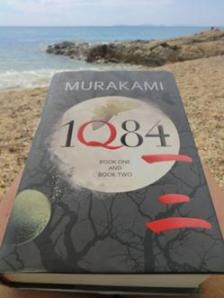
Aomame is a loner, growing up in a Jehovah’s Witness family she had no real friends and rejected her family’s way of life early on. The one true friend she did have later in life met a tragic end which changed Aomame’s life; she couldn’t save her friend but through her skills and work she ensured that many other women were saved from a similar fate.

In alternate chapters we meet Tengo, an aspiring writer who agrees to edit and improve a book that has been nominated for an award. Naively he agrees, though he also feels something is compelling him to become involved against his better judgement. The stories of Aomame and Tengo follow a similar trajectory, there are many parallels between the two, not just their previous lives, but in the way events seem to happen simultaneously.

By the conclusion of Book Two Aomame’s and Tengo’s worlds are coming together again (as they did when the two were 10 years old). Tengo realises he too is in 1Q84 and it all has some link to the book he has edited, a world of two moons, where The Little People exist and the purpose of their air chrysalis has not yet become clear.

After 623 pages, I must now read Book Three to learn what happens next and tie up the threads of the story which certainly feel as if they are working towards some kind of weird revelation.

For a surreal trip, one almost guaranteed to affect your dream-life, pick up a Murakami if you dare, he is strangely addictive.

Death off The Lifeboat

Post my visit to Belfast in Northern Ireland and the Titanic Museum, followed by reading Walter Lord’s A Night to Remember and Christopher Ward’s The Band Played On I have continued with this reading theme with Charlotte Rogan’s novel The Lifeboat, which felt like reading the next chapter of a Titanic story, the one that hasn’t been written to my knowledge, the story of what might have occurred had the lifeboats and their inhabitants been left overfull to roam the high seas.

 Set in the summer of 1914, the story centres around Grace Winter, a 22 year widow; right from the beginning we understand she is one of three women being held in prison while on trial for a crime that is alleged to have occurred while they were afloat on a lifeboat after the sinking of a grand ocean liner they were travelling to New York on.

Thirty-nine people started out in the boat, but a lot less than that survived under somewhat suspicious circumstances. As the trial progresses, to aid her defence her lawyer asks her to record the days as she remembers them in a kind of journal, and so simultaneously we too read her re-enactment of what she perceives happened as if it were happening now.

At the same time it occurred to me – and it must have occurred to Mr Hardie as well – to wonder if Rebecca was the victim of some sort of natural selection and to think that if she had fallen overboard, maybe it was for the best.

Having suffered one family tragedy already and seeing their prospects dwindle after the death of their financially troubled father, Grace’s aspirations had been in the ascendant after marriage to the young, successful Henry, although all is not clear around this, it is a subject she neglects to delve into in great detail and neither subsequently do we hear much of either her own family or her in-laws. Only her ruthless determination to marry the already engaged Henry, rather than follow her sister’s example and seek a governess role or other employ. Marriage was to be her saviour and Grace exhibits ambition had used her resources stealthily to achieve it.

It is an interesting premise, the concept of floating at sea for days on end, death never far from seducing some, and destroying others in dramatic fashion. This story pits men against women, the strong against the weak and the cunning against the calculating. I did wonder about its authenticity when they decide very early on, in the first hours to abandon a child clinging to some debris, it is clear the child will perish and even if the boat is hopelessly overfull, it is hard to accept that women in particular could be so in shock as to allow such a young soul to be left.

Later, Hannah stamped her foot against the floor of the prison van and cried, “What is this, a witch trial? Is the only way to prove our innocence by drowning?”


Note: This was an Advance Reader Copy (ARC) provided by the publisher via NetGalley.

When Women Were Birds: Fifty-Four Variations on Voice

Firstly I have to thank my blog buddy Cassie for recommending this glorious oeuvre to me, her blog review is written with such passion and awe, she even inspired the author Terry Tempest Williams herself, to leave a wonderful appreciative comment.

When she wrote this book, Terry Tempest Williams was fifty four years old, the age her mother was when she finally succumbed to a cancer that first perched threateningly within her breast in her late 30’s, then a young mother of four children.

Raised in a Mormon family and heritage it perhaps should not have been such a great surprise when Terry’s mother informed her that like previous generations of women, she had left her daughter a collection of carefully preserved, beautiful cloth bound journals. A tradition yes, but a legacy, this daughter of words knew nothing of until that revelatory moment.

In Mormon culture, women are expected to do things: keep a journal and bear children. Both gestures are a participatory bow to the past and the future. In telling a story, personal knowledge and continuity are maintained. My mother kept her journals and bore four children: a daughter and three sons. I am her daughter, in love with words.

One month after her mother’s passing, Terry Tempest Williams felt ready to receive their wisdom and sat quietly opening one after the other absorbing their blessed pure message. She opened the journals to discover that the pages were blank. Every. Single. One.

Word by word, the language of women so often begins with a whisper.

I am leaving you all my journals…

Terry Tempest Williams creates an opportunity and uses those pages to reflect on the legacy her mother has left her and fills the pages with fifty four vignettes, fifty four variations on voice. She comes to understand many things about the blank page and the infinite possibilities this offers, the things her mother’s gesture may have meant. She indulges her imagination and shares a flock of realisations:

My Mother’s Journals are an expanding and collapsing universe every time they are opened and closed.

My Mother’s Journals are a gesture and a vow.

My Mother’s Journals are a collection of white handkerchiefs.

My Mother’s Journals are an obsession.

Part way through writing these short chapters, Williams attended a family event, which unhinged something inside. Restless, she came home and wrote a list, a list of the things she had been writing about in these pages and struggled to find a connection. Her list looked like this:

Great Salt Lake                      Mother

Bear River Bird Refuge             Family

Flood                                  Cancer

Division of Wildlife Resources    Mormon Church

Circling both lists, it seemed as if nothing connected them. Until she wrote the letters TTW underneath; then the exercise became apparent. It is she who connects these subjects, it is within her that they reside and it is through her voice on the page that we share an intimate and creative journey, like observing the beauty, the wonder and constantly evolving shape of a murmuration. A privilege to witness.

This is a book to slow read, to re-read and to ponder. This book is in every one of us. Whether we create our list first or mid way through as TTW did.

A Murmuration – click here to see two women and the most amazing flock of birds ever. Spectacular.

Man Booker Prize 2012 Shortlist

Quiet on the blog front while life enters an extremely busy period here with La Rentrée and a working visit to London; I have a few summer reads still to review, so hope to add those as I find time.
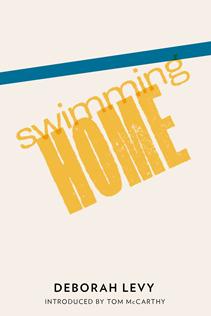
Well the Bookies are favouring Hilary Mantel and Will Self, a couple of Scottish authors are bagging it for being “based on the conceit that upper-class Englishness is the cultural yardstick against which all literature must be measured”, but the reading public are generally enthusiastic and optimistic for a unique collection of literary fiction in the Man Booker Prize this year.

Speculation aside, the judges have concluded their re-reading and literary debate and announced this morning the following shortlist:

Tan Twan Eng, The Garden of Evening Mists (Myrmidon Books)

Deborah Levy, Swimming Home (And Other Stories)

Hilary Mantel, Bring up the Bodies (Fourth Estate)

Alison Moore, The Lighthouse (Salt)

Will Self, Umbrella (Bloomsbury)

Jeet Thayil, Narcopolis (Faber & Faber)

“After re-reading an extraordinary longlist of twelve, it was the pure power of prose that settled most debates. We loved the shock of language shown in so many different ways and were exhilarated by the vigour and vividly defined values in the six books that we chose – and in the visible confidence of the novel’s place in forming our words and ideas.” Peter Stothard, Chair of Judges

The 2012 shortlist includes two debut novels, three small independent publishers, two former shortlisted authors and one previous winner. Of the six writers, four are British, one Indian and one Malaysian.

I have not yet read any of the list, but I now have Deborah Levy’s Swimming Home in my possession and plan to read it on the flight home tomorrow.

Watch this space!

In the Shadow of the Banyan

Early morning in Hanoi, Vietnam

The countries, culture and people of Vietnam, Cambodia, Burma and the surrounding area interest me. Vietnam was the first country I travelled solo in and while I was there, in addition to the cultural immersion, I also enjoyed reading the works of two local authors, which I purchased from a street vendor, Bao Ninh’s The Sorrow of War and Duong Thu Huong’s Paradise of the Blind, both of which are excellent.

We learn a little how they live, what they eat and how a soldier deals with the aftermath of war. These occasional books translated into English provide an important insight into real experiences and a way of thinking that cannot be portrayed by any other than those who were raised there. Their experiences often cause us to question our own perspective, our knowledge, and beseech us to see things from another point of view. It is a joy therefore to come across a publisher of who said:

When I came to S&S, I told everyone here I wanted to publish books that deepen the cultural conversation and take readers to places they couldn’t otherwise go. – Jonathan Karp, Simon & Schuster

This is certainly the case with Vaddey Ratner’s In the Shadow of the Banyan, narrated from the perspective of 7-year-old Raami, a girl whose experiences reflect the author’s own, though she has chosen to fictionalise her story.

 It isn’t so much the story of the Khmer Rouge experience, of genocide, or even of loss and tragedy. What I wanted to articulate is something more universal, more indicative, I believe, of the human experience our struggle to hang onto life, our desire to live, even in the most awful circumstances. – Vaddey Ratner

Lest we forget, Hanoi, Vietnam

The daughter of royalty, although a failed, corrupt democracy ruled, she and her family were evicted by the revolutionary Khmer Rouge, a marginal guerrilla group – whose leaders were from the same intellectual class as Ratner’s well-educated father, however who held radical ideals to transform the social fabric by destroying traditional family, social and wealth connections and creating an experimental collective.

Their revolution took the form of putting the population into work camps in living conditions worse than peasants. Whether driven by fear, paranoia or disillusionment, they ruthlessly continued to seek out and judge people as the enemy, a definition that moved and changed like the current in the Mekong itself until through murder, disease or starvation scholars estimate that as many as a third of the population (1-2 million) died. The regime was finally overthrown by the Vietnamese military in January 1979.

Ratner tells the story of Raami, physically challenged from a polio defect which shortened one of her legs, her experience during the period of exile with her parents and sister, how she survived the extreme living and working conditions and what it taught her along the way. She remembers the stories and poems that her father shared with her and they continue to be a source of strength for her throughout her life.

“Do you know why I told you stories Raami?” he asked. I shook my head. I knew nothing, understood nothing.

“When I thought you couldn’t walk, I wanted to make sure you could fly.” His voice was calm, soothing, as if it were just another evening, another conversation.

“I told you stories to give you wings, Raami, so that you would never be trapped by anything – your name, your title, the limits of your body, this world’s suffering.”

It is a humbling story and frightening to perceive, yet dealt with by Ratner in a way that allows us to acknowledge and attempt to understand something of the seemingly never-ending cycle of oppression, idealism, revolution and the dangers inherent when revolutionary intent is hijacked by power, destroyed by paranoia and becomes tyrannical, while preserving the few special moments that continue to pass between people despite the danger posed by their selfless acts.

Terrible as it is and damaged as they are, it is those who survive and who are still able to maintain some belief in the human spirit and humanity that bring one of the few gifts that such terror evokes. It is a price no person would ever wish to pay.
For all the loss and tragedy I have known, my life has taught me that the human spirit, like the lifted hands of the blind, will rise above chaos and destruction, as wings in flight.

The author has succeeded in taking this sad chapter in her country’s history and showing us some of its beauty and culture, sharing memories and thoughts that can never be erased and putting them into a new form, this literary work, which we are privileged for it to be shared in English.

In a sense it leaves us puzzled and perplexed, just as witnessed in Aminatta Forna’s The Memory of Love, yet another tyrannical regime that loses its way to the detriment of its people. The stories can be shared and passed on, but they also represent a kind of grief for a way of life now lost to future generations.

Note: This was an Advance Reader Copy (ARC) provided by the publisher via NetGalley.

The Memory of Love by Aminatta Forna

When I was gifted my kindle by my kind, book-loving Aunt,  Aminatta Forna’s The Memory of Love was one of the preloaded titles I looked forward to reading.

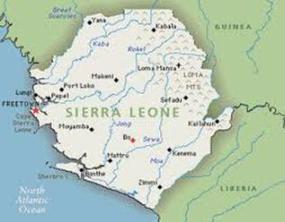
Aminatta Forna was born in Scotland and raised in Sierra Leone, the country where most of this story takes place. She is the daughter of a former Sierra Leonean cabinet minister and dissident, murdered by the state in 1975. She has written the story of three men, whose lives intersect briefly, and who come into contact with each other at the Freetown Central Hospital.

Dr Adrian Lockhart, recently arrived from London has responded to a request to an overseas posting for a government-sponsored psychologist specialising in PTSD (post-traumatic stress disorder), his thoughts and actions suggesting he may be in the midst of a midlife crisis, needing some distance from his life to see it for what it really is. Life in Sierra Leone may allow but doesn’t appreciate such self-centred indulgences and Dr Kai Mansaray, a young local surgeon gives him an honest portrayal of just how people like him are perceived, lacking sufficient equanimity to see it for himself. Despite the frankness, the two become friends and seek out each other’s company with increasing frequency.

Both men experience love and its aftermath, its vulnerability, its brief joy, its destruction and the memory of it, as if it were real, even when it no longer exists.

 For death takes everything, leaves behind no possibilities, save one – which is to remember. He cannot believe with what intensity one can continue to love a person who is dead. Only fools, he believes, think that love is for the living alone.

In addition to his post at the hospital, Adrian helps out at the mental hospital and recognises Agnes, one of his former patients (one visit patients – they visit once and never return).

The people his colleagues sent to him were outpatients mostly, the ones with whom the doctors could find nothing wrong. And afterwards each of his new patients made the same request for medicines, to which Adrian explained he was not that sort of doctor. A nod of acceptance, rather than understanding. None of them ever returned.

Agnes is discharged before Adrian sees her and he becomes intent on trying to resolve the cause of her illness, a fugue, or temporary amnesia, and in doing so he will come too close to the sick, ugliness of the country’s past conflict where sometimes amnesia may be the only respite one has from a brutal reality.

We also meet Professor Elias Cole, an old history professor who taught at Freetown university before and after the 1969 coup, his position afterwards, somewhat elevated than it was previously. He has an obsessive fixation on Saffia, the wife of another Professor, whom he befriends and becomes caught up with unknowingly, leading to an interrogation and a spell in prison, which will change both their lives. He encounters Adrian in the hospital, near the end of his life, seeking an audience to share his story before it is too late. Adrian listens and realises there is more to Professor Cole’s story than he is letting on.

This is a multi-layered story that reveals itself with each encounter, that hints at the traumatic events and psychological destruction of a nation, depicting the constant struggle for survival in a post-war era and the love it’s citizens have for their country despite the difficulties and horrors of the past. There is sacrifice in staying and pain in leaving; there is no real escape, both will suffer, albeit in different ways.
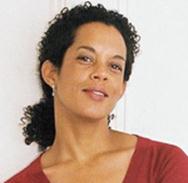
The author, Aminatta Forna

I really enjoyed this book, it was a pleasure to read and consider its characters and what they represented, I loved it for the questions it posed in the mind of the reader, leaving us to come to our own conclusions, for every question could have had an equally valid, if opposite answer, such is life and the characters who inhabit our own reality, there are those who will stand up even it means they will be sacrificed and those who will remain quiet and flourish.

It is as if there are no answers, there are just the decisions we make, that both we and the generations that follow then need to live with and understand.

I recommend listening to this powerful discussion between the BBC’s Bola Masuor and Aminatta Forna on the BBC World Service talking about both The Memory of Love and The Devil that Danced on the Water, the book she wrote about her search for the truth of her father’s fate after he was seized by secret police and later killed.

When you do nothing, what do your children inherit?

*

The plain fact of the matter is that any group will remain potentially conscienceless and evil until such a time as each and every individual holds himself or herself directly responsible for the behaviour of the whole group – the organism of which he or she is part. We have not yet begun to arrive at that point. – from the work of M. Scott Peck, People of the Lie

Buy The Memory of Love via Book Depository


Dinah, her Mothers and a woman named Ruth

Aix Yoga Center Teachers

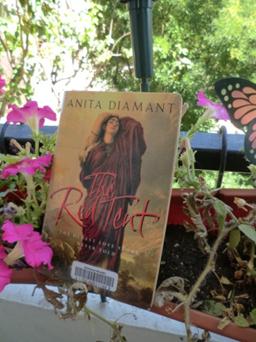
‘The Red Tent’ was published nearly 15 years ago but only came to my attention a couple of weeks ago through one of those wonderful connections that sometimes occur out of the blue when you are least expecting it.

The hilltop village of Villeneuve

Recently I met Jaci, an Aix Yoga Centre teacher, who organised a day at her home in Villeneuve, two hours of yoga in the morning, a shared lunch and aromatherapy massage in the afternoon. The first lady who came to see me for a treatment wasn’t doing yoga, she arrived with her well-used hiking poles, out of the hills of Forcalquier, having decided that a 90 minute walk before a 90 minute massage would be a good idea.

Yoga in a Mongolian yurt in Villeneuve

And so I met Ruth, a wonderful free-spirited woman with long flowing blonde dreadlocks, originally from Tuscon, Arizona, living in a farmhouse up in the fertile hills of Provence, where she lives with her French husband and two daughters.

As I worked away, I casually mentioned my very dear friend and book buddy CKC, who also comes from Tuscon and had she by any chance read Nancy E. Turner’s excellent trilogy ‘These is My Words’, a story about the author’s grandmother Sarah Prine, pioneer woman from the same area?

Well, from there we traded book titles and discovered we loved the same books and both went away with a “you MUST read” recommendation, mine to her being Sandra Gulland’s trilogy on the life and sorrows of Josephine Bonaparte and hers to me, Anita Diamant’s ‘The Red Tent’, “My daughters and I loved that book” she said.

The Red Tent

Dinah is the only daughter of Jacob, who fathered 12 sons by four wives who were sisters. It is from her perspective that we are told her mother Leah’s stories, her own story in the land of her birth and her exile in Egypt.

 “If you want to understand any woman, you must first ask about her mother and then listen carefully. Stories about food show a strong connection. Wistful silences demonstrate unfinished business.”

Aromatherapy Massage in ‘The White Tent’

And in ‘The Red Tent’, that place set aside for women to inhabit during their monthly cycle, secrets of womanhood were shared and passed down the generations, the clan of Jacob.

The book is epic, taking us through the joys and sorrows of births, miscarriages, barrenness, jealousies, betrayals, the vivid and revelatory dreams of sisters seeking insight and forgiveness.

We meet Rachel, whose presence was as powerful as the moon; it was her beauty that lured Jacob into the family fold, her body emitting the scent of fresh water, filling the dusty hills where they live with the promise of life and wealth.

Leah, Dinah’s mother and herself mother to seven sons, her twin coloured eyes, generous height and fertile womb giving her unique status.

Zilpah, daughter of an Egyptian slave, a few months younger than Leah, milk-sisters and playmates since childhood, who said she remembered everything that happened to her, including her own birth.

Bilhah, last born of the sisters, another daughter of a slave who ran off when she was young – tiny, dark, the silent one.

It is the women we come to know and understand and whose stories we follow, as they navigate life, love, marriage, heartbreak, living in a caravan of tents with a father they no longer respect, now creating their own large family, trying to better themselves until one tragic episode arrives to undo it all.

And for that, if you haven’t done so already, you will just have to find a copy of this ambitious, riveting tale of the lives of these women living in ancient times.

“If you sit on the bank of a river, you see only a small part of its surface. And yet, the water before your eyes is proof of unknowable depths. My heart brims with thanks for the kindness you have shown me by sitting on the banks of this river, by visiting the echoes of my name.”

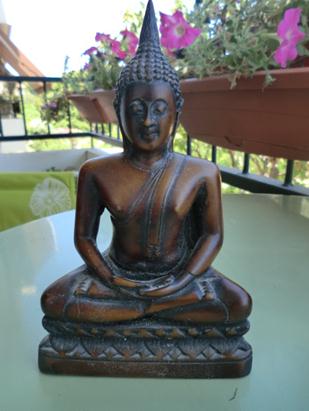
Thomas Jefferson – Lessons from a Secret Buddha

This is a delightful and simple novella that views the life and achievements of one of America’s great role models through the principles of Buddhist thought, a man who wished only to be remembered for three achievements, author of the Declaration of American Independence, of the statute of Virginia for Religious Freedom and Father of the University of Virginia. He was President from March 1801 – March 1809.

Suneel Dhand has created a Buddhist guru whom he connects to Jefferson’s mother, and who then begins to correspond with the young man when he is a discontented, overweight child. The letters introduce him to seven ancient principles of Buddhism and the Eastern way of life and we then witness Jefferson’s own lifestyle change as he becomes vegetarian, more interested in books and develops a greater awareness of how thoughts, actions and behaviours position a man.

When we take an in-depth look at all of his lifestyle practices we see that Tom practiced very Eastern ways of living, different from his fellow countrymen. In many ways he was a well-being guru, centuries ahead of his time.

Most of my knowledge of the role Thomas Jefferson played in American society comes from having seen the excellent HBO TV series ‘John Adams’ and the awe with which he was regarded by both John Adams and Benjamin Franklin as they encouraged him to pen the Declaration of American Independence.

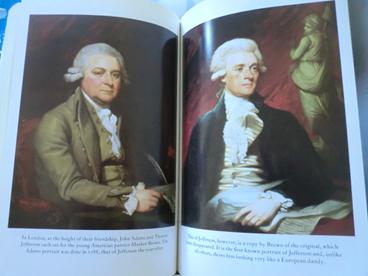
Portraits of John Adams and Thomas Jefferson by American painter Mather Brown 1788

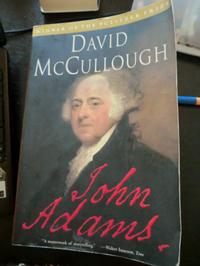
The series is based on David McCullough’s Pulitzer prize-winning biography ‘John Adams’, a volume I have on the shelf and will one day set to and read as well.

As Abigail Adams would confide to Jefferson, there had seldom been anyone in her husband’s life with whom he could associate with “such perfect freedom and unreserve” and this meant the world to her.  If you haven’t seen the series, here are some of Jefferson’s greatest moments played by the British actor Stephen Dillane.

A surprising little book, one that is full of good sense and relevant to today while reminding us of the extraordinary man Thomas Jefferson was and the major contributions he made not just to American history but also to humanity.

Today millions continue to be inspired by Thomas Jefferson, the genius who galvanized his people to freedom. A truly enlightened soul indeed – and that, without ever requiring any lessons from a Secret Buddha.

Note: This is an Advance Reader Copy (ARC) provided by the publisher via NetGalley.

The Coward’s Tale

Laddy Merridew comes to spend time with his Gran in an old Welsh mining town in Vanessa Gebbie’s ‘A Coward’s Tale’. Not happy with his lot, lost in the in-between, here where he doesn’t feel like he belongs so starts skipping school and there, the home he has come from that is breaking apart and will never be as it was and what’s worse, is requiring him to make decisions he feels incapable of making.

Laddy comes to the town statue outside the public library to listen to the local beggar Ianto Jenkins tell and trade stories for a coffee or a bite to eat and this part of his day passes pleasantly for hearing and learning about the descendants and ancestors of the town, all of whom have in some way been touched by the tragedy at the Kindly Light coalmine one September morning back then.

 ‘We’re meant to be doing coal mines in history.’

‘History, now, is it?’

‘They make it boring though. Not like your stories. You make it like it is still happening, in your head anyway.’

And the beggar shakes that head. ‘It is. And sometimes Maggot, I wish it wasn’t.’

Ianto Passchendaele Jenkins narrates the stories that link present day inhabitants back to their ancestors, two generations previous, showing that one is rarely ever completely free of the past and the sins of the fathers are often witnessed albeit in a new form, in the actions of those living today. From Baker Bowen to the Woodwork Teacher, Halfwit and the Deputy Bank Manager, the Deputy Librarian and the Undertaker and the Piano Tuner, Ianto shares their tales with warmth and compassion until finally one of his characters, the Collier, Peter Edwards share’s the beggar’s story, ‘The Coward’s Tale’.

Like young Laddy who no longer knows whether what his parents say is true or not, so too with the beggar’s tales, which captivate cinemagoers waiting in the queue, keeping him talking by topping up his coffee supply, the author making use of the words may and will to imagine what people may do and if so what that means they will do. Only Laddy searches for clarification, the others are happy to be mesmerised and encourage him with edible gifts.

‘For my breakfast? I will tell a story for breakfast? An egg. How about a nice egg?’

Once I got into the tales and understood the framework, I enjoyed the book, but I admit it took three attempts before the stories managed to carry me away with their rhythmic, poetic prose. However they are splendid tales and told with a unique captivating voice that puts the reader right in that square with all the other listeners, empathizing with each of the characters that the adored Ianto Jenkins brings to life for them.

Finally I am reminded of another set of tales of life in a small French village in Julia Stuart’s The Matchmaker of Perigord, which was a favourite a few years back, which I also recommend as a compelling, humorous summer read.

Note:This book was an Advanced Reader Copy (ARC), provided by the publisher via NetGalley.

Frieda’s Unlikely Inheritance

Suzanne Joinson’s A Lady Cyclist’s Guide to Kashgar, is a novel that intertwines the lives and stories of Frieda, in modern-day London and Eva, part of a missionary group with her sister Lizzie and their companion Millicent in 1920’s Kashgar, in the western part of China.

“Why do you want to bring it?” Lizzie asked, but I don’t think I answered her. I did not tell her that it was my shield and my method of escape; or that since the first time I pedaled and felt the freedom of cycling, I’ve known that it is the closest I can get to flying.

Eva has taken her bicycle and is penning a guide to cycling which seems to interest her more than missionary activities, excerpts of which grace the beginning of each Kashgar chapter and whose meanings could be interpreted to have wider meaning than just cycling.

What the Bicycle Does: Mounted on a wheel, you feel at once the keenest sense of responsibility. You are there to do as you will within reasonable limits; you are continually called upon to judge and to determine points that before have not needed your consideration, and consequently you become alert, active, quick-sighted and keenly alive, as well to the rights of others as to what is due yourself.

Eva and her companions have travelled to the ancient Silk route city of Kashgar in the hope of converting lost souls, but seem to find only trouble, not helped by the questionable motivations of each of the individuals that make up the group. Tolerated but unwelcome, they find themselves ostracized and seen as bringing bad luck during a time of political and religious unrest.

In London Frieda lives a solitary existence, her work demanding her to travel constantly which keeps her from becoming too involved in any social sense when she is at home – that and her choice of relationship which assists in putting a halt on her progression. But two things occur that may offer not just distraction, but a divergence in her life, with which she has a growing frustration and sense of wanting to change. The arrival of a young Yemeni artist on her doorstep with skills in drawing birds like the long-tailed variety he draws on her wall and the arrival of a letter informing her of her responsibilities regarding the death of a person who has named her next of kin.

The letter prompts her to consider making contact with her mother whom she has not seen since she was seven years old and Tayeb, the young artist is able to help her decipher the Arabic script in a notebook she finds that now belongs to her. He also knows how to take care of an owl that seems to have fallen into her care.

The book wasn’t quite what I was expecting, perhaps due to the title and the mention of the Silk Road, these things are mere markers which entice our interest while the story takes us on another journey altogether, the bicycle more of a metaphor for a journey and the things one is likely to encounter and is required to consider. I enjoyed the story and in particular the contemporary story which provides the framework.

Here the birds’ journey ends, our journey, the journey of words, and after us there will be a horizon for new birds. – extract from Mahmoud Darwish’s poem ‘Here the Birds’ Journey Ends’.


Note: This book was an Advanced Reader Copy (ARC), provided by the publisher via NetGalley.