
 Seduced by the cover and the promise of something a little different from her norm (having read ‘Possession’ and ‘The Children’s Book’), I picked this up in its beautiful hardback form and for once allowed the impulse a rare indulgence.
Part of The Myths series, which includes Margaret Atwood’s, ‘Penelopiad’, the publisher Canongate invited select writers to retell a myth in their own way and this is A.S. Byatt’s contribution.
Ragnörak is a Norse myth, the story of how things came to be and how they and world are destroyed after a series of conflicts, revenge takings, mutations and natural disasters. Byatt’s version is neither a short story or novel, more of an insight into the myth, the perspective of a thin young girl in wartime, an immersion into the created world and its end, concluding with the author’s thoughts on myths.

Yggdrasil, the imagined world
Coming to it without knowledge of the mythological background, I found myself immediately immersed in life forms that grew and transformed, creatures that came into existence, hunted, survived, wrapped their tentacles around and invaded trees, forests, lakes, streams, oceans and the planet.
Strange but alive, it is a kind of living nightmare; the young girl (who I immediately came to think of as the author as a young girl) tries to understand and make sense of the world around her, while rereading her ‘Asgard and the Gods’ stories that invade her imagination and develop her awareness and understanding of belief or disbelief as it turns out.
She did not believe the stories in ‘Asgard and the Gods’. But they were coiled like smoke in her skull, humming like dark bees in a hive.
The pages are infiltrated with images of nature in abundance, colours, textures, millions of living things and creatures, moving, sliding, digging, squirming, biting and gulping, with an omnipresent sense of foreboding. The Gods celebrate as they always do with fighting and shouting, self-destruction an ever threatening accomplice. Jörmungandr, the angry, sensuous, snake with an insatiable appetite is particularly haunting and memorable.
In her ‘Thoughts on Myths’ at the end, Byatt notes the difference between fairy tales and myths, the former giving the reader the pleasure of recognizing repeated variations on similar narrative patterns, while myths often torment, puzzling and haunting the mind who reaches into them.
We are reminded of the world we live in and the corruption, contamination, pollution and ultimate destruction of the living organism we inhabit and can only wonder if we too are destined for such a fiery end. For me, it was more of a beginning, another entry point into the mysterious and meaningful realm of ancient mythology.
Further Reading:



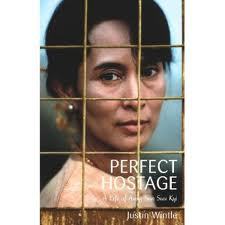 I picked up Justin Wintle’s book ‘Perfect Hostage’ Aung San Suu Kyi, Burma and the Generals, believing it a biography, mislead perhaps by the striking portrait which graces the cover and select testimonials describing it as so. In fact, I would call it a historic treatise of Burma and while of significant interest in itself, I did find it frustrating that it took close to 200 pages to encounter Aung San Suu Kyi within its covers. Though there is depth in the historical account, I found the reverse to be true in terms of the author’s evocation of Aung San Suu Kyi, in fact I found many of his comments patronising and uncomfortable:
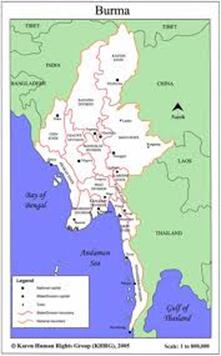 However, letting go of the expectation of an exquisite biography and seen as the historical treatise that it is, I find a thorough and detailed account of a remarkable country and ethnic melting pot of people who have long been subject to tyrannical rule. Sitting between India in the west and China in the east with borders that touch so many countries, Tibet, Laos, Thailand, Bangladesh, it is not surprising that it comprises so many ethnic groupings and hill tribes and has encountered so much conflict. It has a unique history of rising to great prominence and descending into chaos, as each successive victor sought to impose their will.
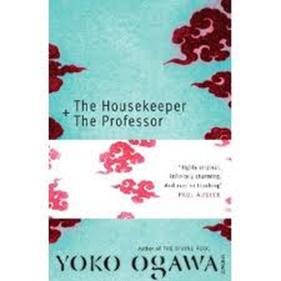 Having recently discovered and read Yoko Ogawa’s
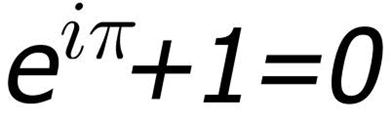 The housekeeper arrives each morning and introduces herself as if they have never met. Slowly, she and her ten year old son, whom the Professor refers to as Root – a reference to the square root sign and his hair, are drawn into the Professor’s reduced world where numbers reign supreme and the two visitors begin to understand the magic and meaning behind what they had always thought of as ordinary numbers.
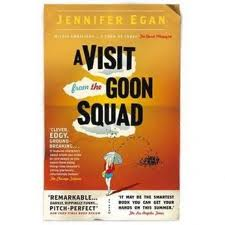 ‘A Visit from the Goon Squad’ by Jennifer Egan (winner of the Pulitzer prize for fiction 2011) was recommended in a comment on my post
  A novel or a set of stories, each chapter is separate yet connected by the barest of threads to the previous, sufficient to surmise a pattern, although like many creations, the complete picture does not become clear until the work is finished. It reminds me of six degrees of separation, that we are all connected and that even when we are, there are gaps in history’s, we only ever know part of a person’s story.
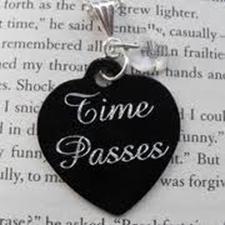 Which reminds me, the goon squad; as Bosco says on page 134 ‘Time’s a goon, right?’ and so too I believe that a visit from the goon squad is just this, time passing and the oft harshness of reality.
 If you have never read Italo Calvino this may be a misleading book to start with, it’s certainly not reminiscent of his short stories and I believe it is unlike his other novels, but it has a kind of cult status in that it
 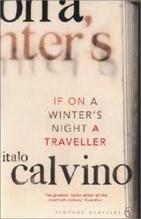 I enjoyed the diversions, although I was disappointed that he was unable to find a way to leave the sex of the reader neutral, having been almost convinced he might well be speaking to me, it becomes clear he is speaking to his male readers, political correctness not in full swing in the early 1980’s when this was published. But I readily forgive him, especially when assured by Lorna Sage, author of the memoir ‘In Bad Blood’ who wrote in the Observer:
 Playful, impossible to label, is it a…, it is a question, a poem, a collection of stories, a novel and a conversation with Italo Calvino. The author imposes himself and his voice within the pages and we as the reader also become involved in the action as Calvino switches into the second person narrative. If I were an academic I would probably be littering this text with a lot of technical terms describing the literary tools Calvino plays with, literature students are likely to come across it, or at least they did in the past, as David Mitchell, author of ‘Cloud Atlas’ reminisces about
 In the early 19th century, French psychiatrist Philippe Pinel coined the term ‘manie sans delusion’ referring to the one per cent of the population that appeared normal on the surface but lacked impulse controls and were prone to outbursts of violence. In 1891 it became known as ‘psychopathy‘.
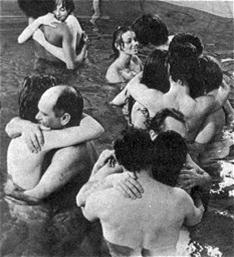 He presents a look into a field that has had its share of experimental and controversial programs, practices and institutions as well as its staunch adversaries such as the Scientologists, who continue their campaign to discredit the profession and individuals within it to this day.
 It’s an imprecise malady with no known cure and involvement best avoided if one encounters anyone with an overabundance of the suggested characteristics, and while we might think it shouldn’t take a neurologist or a psychiatrist to point that out, to be human is not always to be logical or to follow common sense, especially while under the spell of a charming, manipulative liar.
 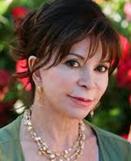 Isabel Allende.
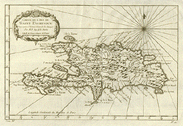 bookish path, just as ‘Island Beneath the Sea’ did recently, spotted on my book buddy’s shelf while feeding her son’s cat Oscar.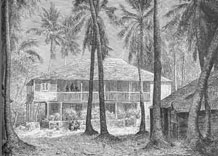


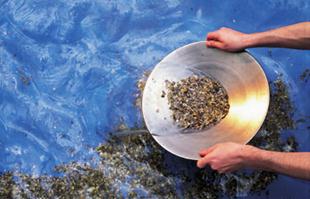 Reading books on writing is a little like panning for gold. Most of what we read washes away, some of it is interesting to consider but doesn’t necessarily gel and then occasionally we find a gem.
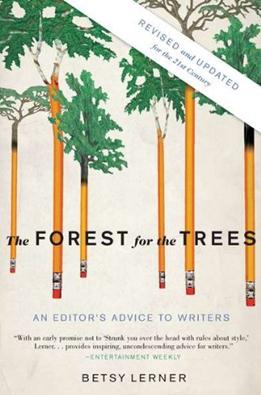 ‘The Forest for the Trees’ was recommended on writer
  If you are looking for a tongue in cheek attempt at writer’s psychological profiles, interesting and funny anecdotes and an inside look at one editor’s career path, then this will entertain. We can also learn much about the industry by keeping up with writer’s blogs and online communities, which without a doubt reflect the situation of writers today, whether persevering towards it or already succeeding to be published.
  Word by Word