Growing up with a Wild Book

courtesy of Houghton Mifflin Harcourt Publishing Coy

Fefa is dyslexic. Reading makes her feel dizzy. She has never been a great fan of words, the letters get mixed up and make her feel anxious. The doctor has diagnosed ‘word blindness’.

    “Some children can see everything except words.

    They are only blind on paper” he says.

Fefa’s mother refuses to accept his verdict.

    “Seeds of learning grow slowly” she assures me.

She presents her daughter with a book and encourages her:

    “Think of this little book as a garden, throw wild flower seeds all over each page, let the words sprout like seedlings and then relax and watch as your wild diary grows.”

Fefa opens the book hesitantly, finds the pages blank within but wide open to her imagination, a place where she can write unobserved, in any way she wishes.

Soon Fefa is nurturing the slow transforming pages of her wild book as she would a precious flower garden, turning those awkward spiky, complex letters into words of beauty and importance.

Margarita Engle’s delightful ‘The Wild Book’ is a tribute in verse inspired by stories told to her by her maternal grandmother, a young girl growing up in rural Cuba, struggling with dyslexia. It will be enjoyed by readers of all ages, both those who struggle with and those who adore words and of course, lovers of the blank page journal everywhere.  It is a book to read and reread, silently and out loud.

“No one in my family ever throws anything away, not even an old story that can be told and retold late at night, to make the deep darkness feel a little less lonely.”

It is a magical story of a little girl coping with school, homework, older brothers, being left behind as the others go off to boarding school, of facing family threats and danger; all part of daily life on the farm and in the village, aided by a loving mother and uncle who love to recite poetry.

    “After my mother

    finishes her seascape,

    my uncle recites

    a long poem about the sky,

    where sun spirits


        ride glowing chariots,

    and there is someone

    who knows how to fly

    towards the truth

    of dreams…


        I don’t understand

    the whole thrilling verse but I love the way poetry

    turns ordinary words into winged things

    that rise up

    and soar!”

Now couldn’t we all do with a wild book…

Note: This book was an Advanced Reader Copy (ARC), provided by the publisher via NetGalley.

The Book of Lost Fragrances

A family steeped in the history and tradition of fragrance and essences, the son Robbie desperate to keep the flailing ‘House of l’Etoile’ alive, though he lacks the natural olfactory talent of his sister Jac, who is busy chasing the origins of myths (though unlike her brother does not believe in them), while trying to forget her one great love, the archeologist Griffin.

“Jac wanted to help people understand that stories existed as metaphors, lessons and maps – but not as truths.”

M.J.Rose’s The Book of Lost Fragrances’, brings all three to Paris on the trail of an elusive scent that may have the power to provoke memories of past lives, a holy grail for Buddhist’s whom Robbie is determined will have the fragments of a piece of pottery that retains some remnant of the transporting blend, at a time when there is the threat of Chinese regulations mandating the registration of all reincarnates. And it just happens that the Dalai Lama is in town on a low key visit, as is Xie, the kidnapped Panchen Lama.

His Holiness the 14th Dalai Lama of Tibet

Through episodes that take us from past through to present, we begin to understand what connects the l’Etoile family with Cleopatra, a French nun named Marie-Geneviève and discover what secrets lie beneath the city, navigating the catacombs of Paris.

I can well imagine it as a film, instant travel to some stunning, majestic locations many only dream of visiting, overlaid with suspense, adventure and exotic travel back in time, however for me the book skimmed hurriedly through passages, even to the point of multiple sentences beginning with past verb tenses, as if they were to be fixed later, I found this annoying and it interrupted the flow.

“He’d been moved from the intensive care unit to a regular room. Was sleeping. Had been since she’d arrived a half hour before. She was waiting for him to wake up. Because she needed him to do something.”

All the elements are there, it just didn’t engage me as much as I had hoped it would, also due to a tendency to over explain, it is an historical account but may have worked better if the characters had informed us of some of that history rather than the narrator.

After revelling recently in the joy of Eowyn Ivey’s exquisitely constructed sentences and reading Jhumpha Lahiri’s excellent essay on Sunday entitled ‘My Life’s Sentences’ which I wholeheartedly concur with, it could just be that I had unreasonably high expectations of this exotic historical, biographical mystery. That recent foray into the realm of magical literary realism with its own excellent dose of believable suspense, did mean that next reads were likely to suffer the after effect. The snowy wilderness of Alaska, Faina, Mabel and Jack and The Snow Child’ remain indelibly marked on my reading brain.

My Magic Elixir's on Show

I did love finding out what was in the mysterious elixirs, being someone who likes to mix and make essential oil potions myself in my work, I have an intense interest in essences, aromas, their energetic, spiritual, chemical and healing properties and the synergy of a personalised blend. Just like Cleopatra!

One of my Flairesse Personal Blends

Finding the perfect blend to help an individual maintain their equilibrium is one of my specialties. Past life regressions? No one has asked me yet and if they do, I may just refer them to a hypnotherapist.

Note: This book was an Advance Reader Copy provided by the publisher via NetGalley.

Is English a Friendly Language?

A bit of a cultural insight today, but one I think will interest you. I have lived in France for six years and affirming insights continue to delight me, and if you visit France for the first time, they can be a revelation and prevent a lot of frustration.

Recently, I discussed with two French students the use of “friendly” language, words and phrases that most of us use unconsciously, but for a foreign language learner, need to be emphasized – how to write or speak so that you sound friendly. It is particular to the English language (and others perhaps?) with varying degrees of importance to the British, American and other English language speaking cultures.

The French language and the way it is spoken in conversation is more direct in some respects than English (we are not talking about the length of time to make a point). Polite, yes. Friendly, no. They are not the same thing.

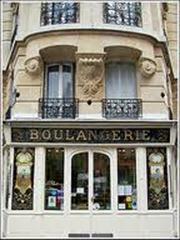
La Boulangerie, by Rita Crane

Every time you enter a boulangerie (bakery), supermarket, pharmacy, catch a bus, enter a hotel or any public place you will likely be greeted with ‘Bonjour Madame/Monsieur’ and you will also receive a farewell salutation ‘Au revoir (sounds more like ‘arve-wa’ here in the South), and ‘Bonne journée’. This is politeness and by learning these few simple French phrases, a more positive experience is likely. A smile however, is a rare and precious gift, and eye contact is not guaranteed.

For more insight on the smile, there are some interesting comments by French citizens in Elaine Sciolino’s ‘La Seduction – How the French play the Game of Life’, which infer a smile is something that must be earned, it is not a gesture offered freely to strangers, it signals the beginning of a relationship. It is not being unfriendly, it is being true. To smile at a stranger can be considered false and anyone indulging in that behaviour may even be regarded as suspicious, conduct Harold and Barbara Rhode’s were baffled by in William Maxwell’s novel The Château.

So during our lesson, we read an email text with some words underlined and then we read it a second time leaving out the underlined text. Here is a short section of the text.

Hi Patti! Thanks for your email. Your new job sounds really great – I know that you’ve wanted to work as a graphic designer for ages and ages, and now it’s finally happened! Congratulations! I’m sure you’ll do really well in the job. Well, what about my news? I arrived in Prague about a month ago. It was quite difficult at first. Of course I couldn’t speak the language, and finding a place to live wasn’t easy. Then my friend Belen and I found a lovely little flat in the old part of town. It’s quite small, but it’s full of character and we love it. I’m working as a waitress in a cocktail bar. It’s okay – I don’t suppose I’ll do it for long, but it’s a way to earn some money.

One student read the entire text and the other the shorter version. At the end, I asked what the difference was.

“The second one is more like we talk” one student responded confidently.

“Well, no.” I replied.

It is true, direct conversation sounds rude unfriendly in English and can be the cause of unintentional cultural misunderstandings when foreign language students attempt to speak in English. Equally, we should not expect our smiles and warm, friendly conversational attempts to be greeted in appreciation. We are strangers until we have been introduced, or at least until we have become regulars.

So what are those friendly words/phrases that we use? Here are some of them:

It seems that        Unfortunately         So    Luckily          In Fact     Of Course     Well      Basically     To be honest       Frankly         Anyway        Apparently     Actually       Obviously       Would you mind

Can you think of any others?

A Rhyme for the Odes (Mu’allaqat)

No one guided me to myself. I am the guide.

Between desert and sea, I am my own guide to myself.

Born of language on the road to India between two small tribes,

adorned by the moonlight of ancient faiths and an impossible peace,

compelled to guard the periphery of a Persian neighbourhood

and the great obsession of the Byzantines,

so that the heaviness of time lightens over the Arab’s tent.

Who am I? This is a question that others ask, but has no answer.

I am my language, I am an ode, two odes, ten. This is my language.

I am my language. I am words’ writ: Be! Be my body!

And I become an embodiment of their timbre.

I am what I have spoken to the words: Be the place where

my body joins the eternity of the desert.

Be, so that I may become my words.

No land on earth bears me. Only my words bear me,

a bird born from me who builds a nest in my ruins

before me, and in the rubble of the enchanting world around me.

I stood on the wind, and my long night was without end.

This is my language, a necklace of stars around the necks

of my loved ones.

– extract from ‘A Rhyme for the Odes’

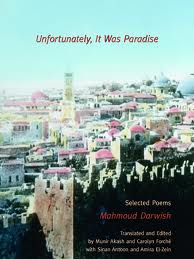
by Mahmoud Darwish, from the collection ‘Unfortunately, It Was Paradise’

(13 March 1941 – 9 August 2008)

The Château

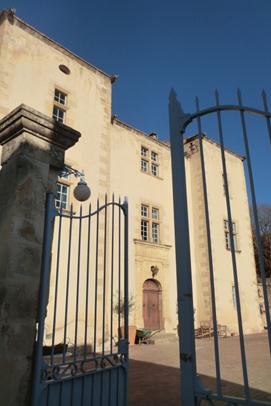
I finish William Maxwell’s 1961 classic on the last day of our two week séjour at the 16th century Château de la Loubière, what better environment to read of the travels of Barbara and Harold Rhode’s than from within the ancient walls of a majestic edifice that has saluted the sun, hosted visitors and protected its inhabitants from events we can only imagine, for centuries.

Maxwell’s Château Beaumesnil is in the north of France near Blois, where the young American couple make their acquaintance with Madame Viénot and her guests, whom they continue to encounter and attempt to befriend during their time in France, including time in Paris.

They visit France just after the end of the second world war which adds to the difficulties they encounter, though they are fortunate they speak French sufficiently well enough to be understood, though not in the manner they are accustomed to and this causes them much reflection, trying to figure out the reactions they inspire and why.


             “That’s all very interesting, but just exactly what are these two people doing in Europe?

They’re tourists.

Obviously. But it’s too soon after the war. Travelling will be much pleasanter and easier five years from now. The soldiers have not all gone home yet. People are poor and discouraged. Europe isn’t ready for tourists. Couldn’t they wait?

No, they couldn’t. The nail doesn’t choose the time or the circumstances in which it is drawn to the magnet.”

They encounter an uncertain transparency, for there are few false niceties extended, an important cultural difference causing them some consternation, however the couple make a commendable effort at developing the nearest to friendship that is possible with their hostess and her guests and bring the reader to some memorable locations and situations.

“They had hoped before they came here that a stay in the château would make them better able to deal with what they found in Paris, and instead a stay of three days in Paris had made them able, really for the first time, to deal with life at the château.”

In addition to the narration, there is another conversation about the book, which inserts itself from time to time and makes up the latter section of the book, so more than just a novel, it is as if we are witness to a conversation about the book with the author, as he indulges his experimental nature and writes as he pleases.

I guess one can never judge a château by its appearance and the white limestone exterior and cool human interior of Château Beaumesnil seem a world away from the warm terracotta tones of Château de la Loubière, as it soaks up the provençal winter sun, quietly reflecting her modest beauty on the surrounding landscape, full of warmth and the contented spirits of its past, recharging this particular visitor in the best possible way.

Today, pictures speak what words seem insufficient to describe, so I leave you with these and if you need an escape to Provence anytime soon, don’t hesitate to click on the link here for your own provençal retreat and mention you were sent by Claire.

The Snow Child

I recognise in the first two paragraphs the allure of melodic sentences, the promise of picturesque phrases that almost make music as they fly off the page like dancing quavers to craft pictures in my mind of that breath-taking, wild and unforgiving Alaskan landscape.

“Mabel had known there would be silence.”

“She had imagined that in the Alaska wilderness silence would be peaceful, like snow falling at night, air filled with promise but no sound, but that was not what she found.”

Nature’s beauty and harshness leave me in a perpetual state of wonder with an undercurrent of fear and Eowyn Ivey doesn’t waste any time bringing both these sensations to the reader. A walk across the ice river bristles with tension and though I am sure Mabel will be safe, this is only the first chapter after all, I have to pause momentarily and put the book kindle down, my heart racing as I hear imagine that ominous crack.

Mabel and Jack have left the tame pastures of Pennsylvania and the close-knit support of their child filled families to try and make a success of ‘homesteading’ in the Alaska wilderness. The daughter of a literature professor, from a family of privilege, Mabel is finding her own self-imposed exile and the never-ending grief of a stillborn child that rendered them childless, almost too much to bear.

“We needed to do things for ourselves. Does that make any sense? To break your own ground and know it’s yours free and clear.”

    “Here at the world’s edge, far from everything familiar and safe, they would build a new home in the wilderness and do it as partners, out from the shadow of cultivated orchards and expectant generations.”

On a day when Mabel, a believer who often set fairy traps as a child, was near her lowest, she and her husband Jack build a beautiful snow girl from the first winter snow, lovingly sculpted with childlike features and dressed with a blue scarf and red mittens.

“Such delicate features, formed by his calloused hands, a glimpse at his longing.”

Wakened by the cold, Jack catches a glimpse of something passing through the trees on the edge of the forest, a glimpse of a blue scarf and long blond hair flying behind it, disappearing into the trees.

The next morning the snow child has been reduced to a pile of melting snow, the mittens and scarf are gone; footprints lead from the remnant of their powdery infant, across the yard into the trees.

This is no ghost story, but I couldn’t help but make comparisons with my recent read of Susan Hill’s ‘A Woman in Black’, another character who may or may not have been real, in this story there is a genuine intrigue that carries you through some of most beautiful passages of writing both in the depiction of characters and what they experience, as well as the incredible wilderness within which they live, as we try to grasp what she is, this child of the snow.

Red Fox by John Luke

“A red fox darted among the fallen trees. It disappeared for a minute but popped up again, closer to the forest, running with its fluffy red tail held low to the ground. It stopped and turned its head. For a moment its eyes locked with Jack’s, and there, in its narrowing golden irises, he saw the savagery of the place. Like he was staring wilderness itself straight in the eyes.”

For me this story is an exquisite depiction of humanity living alongside nature and the constant to-ing and fro-ing between the seasons, trying to make progress, the necessity of humanity respecting nature and understanding the nature of fellow human beings. When we cease paying attention to either, suffering will undoubtedly follow.

A magical story that unfolds like an extraordinary dream; a unique blend of the inescapable reality of life in the wilderness, beside the quiet affirming beauty of believing in the imagination and visualising life into being.

Note: This book was an Advanced Reader Copy (ARC), provided by the publisher via NetGalley.

State of the Nation or just A Dinner Party

Having come to the end of Sebastian Faulks ‘A Week in December’, a title reminiscent of Ian McEwan’s similarly named ‘Saturday’, I’m not convinced of its label as the ‘state of the nation’ novel of the 21st century, though it does provide an interesting glimpse into the media focus of the first decade.  It is the week before Sophie Topping is to hold a dinner party for her politician husband and during the days leading up to the event, we observe the lives of some of the guests and the issues confronting them, real and imagined.

Jenni Fortune isn’t one of the dinner party guests; she is a London underground train driver with a court case pending over a jumper (suicide) survivor, whose parents are claiming negligence. Representing her case, Gabriel is one of the few non-millionaire/billionaires attending the dinner party (not quite a typical dinner party then). Jenni spends her evenings in an online ‘parallel universe’, while Gabriel’s brother Adam lives in a psychiatric facility with what seem like very real voices, a remnant of his recreational drug induced schizophrenia.

John Veals is a fortunes trader living in another alternate universe, one that will have a greater impact on the world, though none of it traced back to him. He is a deal maker for the thrill of it and oblivious to much else that doesn’t impact on his game. Like the film ‘The Inside Job’, it is disturbing to absorb such blind obsession without heed for its devastating consequences. His reclusive son Finn is fine tuning his own fascination for gambling, participating in a fantasy football team, while his mother, more concerned with appearances, is reluctant to intrude on her son’s perceived need for privacy.

A second generation Pakistani family, their fortune made in lime pickle, will also be present; their son Hassan has been given everything but feels like an outsider. Searching for purity, he judges how others spend their lives and is disappointed with himself when he experiences reluctant joy in the same things. He finds solace with a group of young Muslim radicals, while Finn finds it with expensive drugs, reality TV and his football.

Through the lives of these dinner guests, we observe how people communicate and interact; many have lost their social graces and ability to openly and honestly connect or to even know each other. People live in different worlds, yet in the same world, disconnected. Similarly, global interconnectedness has become a complex mirage of companies, names, contracts and invisible links between banks, traders, importers, middle men, the many who work in the in-between world where nothing is actually made or produced, but where vast fortunes are skimmed off before the reality of this invisible transactional world is exposed, too late seen for the bluff that it was which will then be paid for by those in the real but mundane economy who will lose their jobs, pay higher taxes, while the government bails out those all-important ‘bonus winning’ gamblers bankers.

Ironically, just as I finished reading this, I hear on the news that HSBC, who has been fined £10 million by the FSA for mis-selling financial products to elderly and disabled clients, has decided to hit back on bonuses. One almost wonders if it is a public relations strategy, such little faith we have left in these grandiose institutions.

I haven’t mentioned the snarky book reviewer, indeed references to books abound and you will be endlessly entertained finding parallels between the worlds these characters inhabit. It offers an insight into a few not quite typical London characters, the makings of a terrorist and the arrogance of the financial markets.

And now, a welcome escape into magic realism and the snows of Alaska, watch this space for ‘The Snow Child’ coming soon…

The Woman in Black

Long awaited and much anticipated (by me), Susan Hill’s ghost story ‘The Woman in Black’, though first published in 1983, is experiencing something of a revival with the film premiering this month and the ghost story genre currently ‘à la mode’.

Adapted to the stage in 1987, the play has been running continuously since then (it is the second longest-running play in the history of the West End of London), thus I have been eager to discover what lies between the slim covers of this intriguing book myself, since reading ‘A Kind Man’ and ‘The Beacon’ last year and becoming a fan of her books.

Knowing that Susan Hill is one of those writer’s whose work and combination of words I like to savour, I take my time and let the language wash over me, as I come to know Arthur Kipps, while he sits by the fire on Christmas Eve listening to his stepchildren narrate ghost stories. Though it is a festive occasion, a grain of discomfort winds itself between the lines on the page and there is a flicker of an unwelcome presence, a glimmer of something he does not wish to recall, despite being far removed from his past now.

The story unfolds as we are taken back to his early days as a young solicitor, journeying to the cold, misty, windswept marshes of Crythin Gifford where he must wind up the affairs of the recently deceased Mrs Alice Drablow. Ever prosaic, he takes the responsibility in his stride and tries to ignore the reluctance of locals to engage with him or have anything to do with the matters of the deceased widow and the eerie Eel Marsh House.

While I very much doubt that I will be seeing the film, though I am sure it is excellent and well-made, utilising known techniques to ensure viewers experience ever heightened tension, heartstopping anticipation and chilling unease to elicit that emotionally wrung out feeling – I say this if like me, you have an acute sensitivity to music which accentuates all those senses (I succeed in scaring those who weren’t scared by the movie), I do love how Susan Hill uses details of nature and the physical environment to keep the reader and her protagonist grounded in reality.

There is no music accompanying the reading of this book and so I too hang on to that ambiguous reality. When Arthur visits Eel Marsh House and for practical purposes stays the night (yes, he is rather stubborn), he reassures himself and us by opening all the windows, understanding the layout of the house, going for a walk, venturing out in the dark against his better instinct only to be confronted with something that may or may not be able to be explained. And it’s not just him, even Spider the companionable dog responds to the lure of noises that sound familiar but could indeed be sinister.

It’s the perfect ghost story, because so much is left up to the interpretation of the reader, you can be a believer or a non-believer and regardless come away from this story feeling intrigued, satisfied and wanting to talk to someone about how you understood it. I am already looking forward to the next Susan Hill book that comes my way.

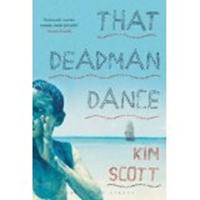
That Deadman Dance

Bobby Wabalanginy is a young Noongar Aborigine boy who loses his parents and thus spends more time than most among the ‘Horizon people’, those who came to his land on ships from somewhere beyond the horizon. A happy boy, his people believe that family includes the fish, birds and animal-life who communicate messages like the wind and the sky, all of whom they read with ease whilst the newcomers marvel at their abilities, as if it is by chance that they can predict the turning of the flames of a raging fire.

Bobby befriends Mr Cross who is trying to tame a piece of land in order to bring his wife and children to join him. Mr Cross teaches Bobby English and learns some of the protocols of respect between Aborigine people and begins to understand the logic of their ways. After his death, Bobby continues his lessons with Mrs Chaine and her twins, Christine and Christopher.

‘these men from the ocean horizon or wherever it is they come from, they do not leave even when the rains come and that wind blows across the water right into their camp.’

Kim Scott evokes the simplicity of Aboriginal life and their close affinity to nature and the environment, they are part of the natural habitat and leave little trace of their inhabitancy though they are adept trackers and can see things others can’t. The European’s bring a different way of being and a different relationship to the land, its climate and tendencies, they seek to tame it and turn it into something that resembles that which they are familiar with, thus they impose their will and their ways.

“we learned your words and songs and stories, and never knew you didn’t want to hear ours…”

Killer Whales by Badlydrawnstickman at behance.net

As the settlement grows, more people visit, interactions with itinerant whalers herald the beginning of their semi-dependency on the horizon people, who use their labour and reward them by trading food and goods, this becomes a turning point, because the whaling era comes to an end and the indigenous people are then without resources, they begin to resent that these people take their land as if they own it, use their animal brothers and then punish them for wanting to take a sheep or something else in return.

Tolerance degenerates into mistrust, laws are imposed and the European colonials assert their perceived superiority, enforcing these new rules by making an example of Bobby and others, throwing them in jail. They ensure his silence for anything he may have seen which would imply law breaking by the colonialists.

The old man snorted his contempt for Bobby’s song: those foreign words, that horizon people’s bleached and salty tongue and prickles of strange melodies. There are too many whales ashore, he said and too many people from all around, and do not greet us when they arrive or say goodbye when they leave. We are pressed by strangers from the sea now, and from inland too.”

It is a book that meanders, on plot and when it attempts to delve into a character, which it never really succeeds in doing, though Bobby is the common thread throughout. Some characters are memorable while others churn in a sea of names making the briefest of appearances. The story slows down and drifts aimlessly midway, seeming almost to lose its way, a reflection of what was happening to the population, lost in confusion.

Image courtesy of Nambassa Trust & Peter Terry

While not everyone may have the patience for this literary walk-about, Scott’s book touches something deep within, it is a window into the Aborigine people’s incredible relationship with the natural environment, how song and dance communicate knowledge and wisdom down the generations, something that if we ever knew it, has long been lost in our own western cultures, which have become less rooted in our landscape and surroundings as we seek to infuse each location we inhabit with known familiarity.

“he came alive in the Dead Man Dance and gathered together all the different selves. …It was like Bobby was them, was showing their very selves, inside their heads and singing their very sound and voices:…”

In my own virtual meanderings, I came across Cultural Survival and learned that it was only in 2007 that the United National General Assembly adopted the Declaration on the Rights of Indigenous Peoples which includes:

the right to live on and use their traditional territories; the right to self-determination; the right to free, prior, and informed consent before any outside project is undertaken on their land; the right to keep their languages, cultural practices, and sacred places; the right to full government services, and, perhaps most significant, the right to be recognized and treated as peoples.

It is sad it has taken this long for the hard work of many for this to become a Human Right, and there is much to do to continue to maintain it. I hope this book, quite apart from being an entertaining read, will help to increase awareness of the rights and cultural heritage of the many indigenous populations worldwide.

I am reminded in closing of the wonderful music of Yothu Yindi, an appropriate complement to the unique voices channelled by Kim Scott in this book ‘That Deadman Dance’ and winner of the Commonwealth Writer’s Prize for the South East Asia and Pacific region. Do click through and listen to the powerful and beautiful ‘Tribal Voice’

Note: This book was an Advanced Reader Copy (ARC), provided by the publisher via NetGalley.

All Our Worldly Goods by Irène Némirovsky

This is the second novel I picked up from the library, the first being ‘Fire in the Blood’ a tale of the consequence of indulging forbidden love. ‘All Our Worldly Goods’ has a similar theme but with different circumstances and this is more a story of what happened in the early 1990’s to those who preferred to make their own decisions regarding matrimony rather than follow the sage advice of their parents or in this case Grandfather. It is also a prelude to Némirovsky’s masterpiece ‘Suite Francaise’.

This is an era where marrying for love can be serious enough an outrage to find oneself disinherited. When there is only one son and heir and the family fortunes are dwindling, it is necessary that said son marries a woman with a significant and esteemed dowry. Pierre Hardelot follows his heart rather than his head and becomes estranged from his family just before being conscripted into the army to fight in the First World War.

Returning to the ruins of home © IWM (B7688)

With the onset of war, their families are forced to abandon the village, some fleeing by car, others on foot, only to eventually return to ruins, which they set about rebuilding in the hope that something as horrific and terrible as this war they have experienced can never be repeated.

However history has a habit of repeating itself, and so it does in both love and war. Another generation and an heiress banished by her family due to long standing interfamily resentments, and another son called up to war.  Fortunately death, destruction and shared traumatic experiences can provide the necessary ingredients for forgiveness, especially when strong, capable, male resources become a scarce commodity.

It is an interesting story depicting the lead up to the forced evacuations by families from the cities and provinces to find safety from the advancing invading armies, though it is dealt with lightly and there is nothing of the terror that one assumes must have consumed Némirovsky herself, knowing what her own family went through. In this story we are never confronted with the invaders and neither do we have a very real feeling for how war must have changed Pierre.

First published in 1947, five years after her death at Auschwitz, this book can now seen in context with the more recently published collection of Némirovsky’s works, unearthed by her biographers.