Reading Contemporary Latin American Fiction

‘cruzar el charco’

It seems appropriate to begin this post with a word, since this reading and writing adventure takes place word by word, across time and continents. Our word for today is charco which means puddle in Spanish and is also a colloquialism in some Latin American countries referring to the Atlantic Ocean.

And cruzar el charco means crossing the puddle, a way of referring to when someone is leaving the country, taking a trip somewhere far from home, across the ocean.

And this is what I have decided to do in 2019, to take a literary trip across the ocean to Latin America, and I’ll be doing that with the help of Charco Press, a small press based in Edinburgh, creating a bridge of cultural discovery for us to access the richness of that new world with a guide to contemporary literature authors that will likely be unfamiliar to us all.

We select authors whose work feeds the imagination, challenges perspective and sparks debate. Authors that are shining lights in the world of contemporary literature. Authors that have won awards and received critical acclaim. Bestselling authors. Yet authors you perhaps have never heard of. Because none of them have been published in English.

Until now.

Photo by Pixabay on Pexels.com

So this year I have taken a subscription with Charco Press, so I don’t choose the books, I will read whatever they publish in their catalogue in 2019.

This will mean it’s not necessarily going to be something I might ordinarily read, I’ll be reading across borders and outside my comfort zone. But what a journey. No vaccinations required, no need for language classes, although we may still learn a few words along the way.

I have already read the first book and my review will be coming shortly, however, below are summaries of the six books I’ll be reading from this part of the world this year, in case you’d like to join me. As I read them, I’ll link my reviews back to this summary post.

Do let me know if any of these titles interest you, or whether you’ve read any other books published by Charco Press that you have enjoyed.

Click on the title to visit the Charco bookstore.
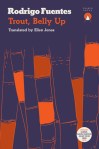
Trout, Belly Up by Rodrigo Fuentes (Guatemala) (tr. Ellen Jones)

In this highly original collection of interconnected short stories, the Guatemalan countryside is ever-present, a place of timeless peace yet also riven by sudden violence. The stories provide glimpses into the life of Don Henrik, a good man struck time and again by misfortune, as he confronts the crude realities of farming life. Over the course of these episodes we meet merciless entrepreneurs, hitmen, drug dealers and fallen angels, all wanting their piece of the pie. Told with precision and a stark beauty, in a style that recalls Hemingway, Trout, Belly Up is a unique ensemble of beguiling, disturbing stories set in the heart of the rural landscape in a country where violence is never far from the surface.

Feebleminded by Ariana Harwicz (Argentina) (tr. Annie McDermott & Carolina Orloff)

In Feebleminded, Harwicz drags us to the border between fascination and discomfort as she explores aspects of desire, need and dependency through the dynamics between a mother and her daughter, searching through their respective lives to find meaning and define their own relationship.

Written in a wild stream of consciousness narration in the best tradition of Virginia Woolf and Nathalie Sarraute, and embedded in a trend of elusive violence so ingrained in contemporary Latin American fiction, Feebleminded follows the pair on a roller coaster of extreme emotions and examinations into the biographies of their own bodies where everything – from a childhood without answers to a desolate, loveless present – has been buried.

Told through brief but extremely powerful chapters, this short lyrical novel follows Die, My Love (my review here) as the second part in what Harwicz has termed an ‘involuntary trilogy’.  An incredibly insightful interrogation on the human condition, desire and the burden of deep-rooted family mandates.

The Wind That Lays Waste by Selva Almada (Argentina) (tr. Chris Andrews)

The Wind That Lays Waste begins in the great pause before a storm. Reverend Pearson is evangelizing across the Argentinian countryside with Leni, his teenage daughter, when their car breaks down. This act of God – or fate – leads them to the home of an aging mechanic called Gringo Brauer and his boy named Tapioca.

As a long day passes, curiosity and intrigue transform into an unexpected intimacy between four people: one man who believes deeply in God, morality, and his own righteousness, and another whose life experiences have only entrenched his moral relativism and mild apathy; a quietly earnest and idealistic mechanic’s assistant, and a restless, sceptical preacher’s daughter. As tensions between these characters ebb and flow, beliefs are questioned and allegiances are tested, until finally the growing storm breaks over the plains.

Selva Almada’s exquisitely crafted début, with its limpid and confident prose, is profound and poetic, a tactile experience of arid landscapes, heat, squat trees, broken cars, sweat-stained shirts, and ruined lives. The Wind That Lays Waste is a philosophical, beautiful, and powerfully distinctive novel that marks the arrival in English of an author whose talent and poise are undeniable.

Loop by Brenda Lozano (Mexico) (tr. Annie McDermott)

Loop is a love story narrated from the point of view of a woman who waits for her boyfriend Jonás to return from a trip to Spain. They met when she was recovering from an accident and he had just lost his mother. Soon after that, they were living together. She waits for him as a sort of contemporary Penelope who, instead of knitting only to then un-knit, she writes and erases her thoughts in a notebook: Proust, a dwarf, a swallow, a dreamy cat or David Bowie singing ‘Wild is the Wind’, make up some of the strands that are woven together in this tapestry of longing and waiting.

Written in a sometimes irreverent style, in short fragments that at points are more like haikus than conventional narrative prose, this is a truly original reflection on love, relationships, solitude and the aesthetics and purpose of writing.

An Orphan World by Giuseppe Caputo (Colombia) (tr. Sophie Hughes & Juana Adcock)

In a run-down neighbourhood, in an unnamed seaside city with barely any amenities, a father and son struggle to keep their heads above water. Rather than being discouraged by their difficulties and hardship, they are spurred to come up with increasingly outlandish plans for their survival. Even when a terrible, macabre event rocks the neighbourhood’s bar district and the locals start to flee, father and son decide to stay put. What matters is staying together. This is a bold poignant text that interplays a very tender father-son relationship while exposing homosexuality and homophobia with brutal honesty. With delicate lyricism and imagery, Caputo is extremely original and creative producing a tale that harmoniously balances violence, discrimination, love, sex and defiance, demonstrating that the he is a storyteller of great skill.

An Orphan World is about poverty, and the resourceful ways in which people manage to confront it. At the same time, it is a reflection about the body as a space of pleasure and violence. Perhaps above all else, An Orphan World is a brutally honest love letter between a father and son.

Adventures of China IronThe Adventures of China Iron by Gabriela Cabezón Cámara (Argentina) (tr. Iona Macintyre & Fiona Mackintosh)

(* China. Pronounced ‘cheena’: designation for female, from the Quechua. Iron: The English word for Fierro, reference to the gaucho Martín Fierro, from José Hernández’s epic poem.)

This is a riotous romp taking the reader from the turbulent frontier culture of the pampas deep into indigenous territories. It charts the adventures of Mrs China Iron, Martín Fierro’s abandoned wife, in her travels across the pampas in a covered wagon with her new-found friend, soon to become lover, a Scottish woman named Liz. While Liz provides China with a sentimental education and schools her in the nefarious ways of the British Empire, their eyes are opened to the wonders of Argentina’s richly diverse flora and fauna, cultures and languages, as well as to its national struggles. After a clash with Colonel Hernández (the author who ‘stole’ Martín Fierro’s poems) and a drunken orgy with gauchos, they eventually find refuge and a peaceful future in a utopian indigenous community, the river- dwelling Iñchiñ people.

Seen from an ox-drawn wagon, the narrative moves through the Argentinian landscape, charting the flora and fauna of the Pampas, Gaucho culture, Argentinian nation-building and British colonial projects.

In a unique reformulation of history and literary tradition, Gabriela Cabezón Cámara, with humour and sophistication, re-writes Martín Fierro from a feminist, LGBT, postcolonial point of view. She creates a hilarious novel that is nevertheless incisive in its criticism of the way societies come into being, and the way they venerate mythical heroes.

***********

Some promising, diverse explorations across this puddle, I do hope you might join me at one of these destinations!

Further Reading: Exposing the UK to Contemporary Latin American Literature
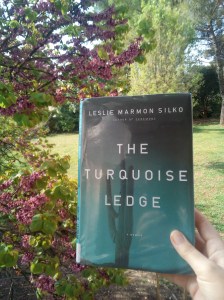
The Turquoise Ledge (2010) by Leslie Marmon Silko

I loved this book. I chose it because I wanted to visit the natural landscape of Tucson through the eyes and insights of a lyrical nature writer.  I was also looking for the perfect birthday present for someone who knows that landscape well, to transport them back there, reignite something without having to travel.

And of course, being curious I had to read it first, it was far too big a temptation and we are the kind of friends you can do that with, indulge the gift before giving it – and I know I give something of myself by doing this, the pages ear-marked where I was stopped, moved, given pause for thought. I know how those traces of the previous reader intrigue, they add mystery where usually there is none.

Leslie Marmon Silko was born in Albuquerque in 1948 into a family of Laguna, Cherokee, Mexican and Anglo ancestry.

She wanted to be a visual artist, but rebelled against perspective and realism, so pursued an English major initially,  published a bestselling novel Ceremony, and after a misdiagnosed ectopic pregnancy, experienced a life-changing moment, leaving her old life, marriage, teaching behind and moved to Tucson in 1978 just two months after surgery.

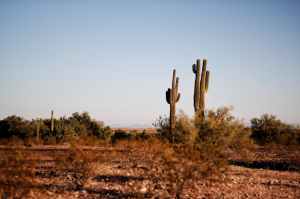
In The Turquoise Ledge, she pieces together this colourful, magical yet natural, narrative of thirty years living in the Tucson Mountains, on the edge of Saguaro National Park, in a ramshackle house, equally inhabited by creatures of the desert, a pandemonium of parrots and her pack of mastiffs, who like her, develop immunity to certain venomous dangers and survive the extreme climate. The desert terrain and all its wonderful beings, including the weather won her heart and it shows on every page.

The book is divided into five parts entitled Ancestors, Rattlesnakes, Star Beings, Turquoise and Lord Chapulin although there are elements of all those things throughout the text, as they are all integrated and woven into the life she lives, the habitat she dwells within and the landscape she walks over, studies and is a part of.

Though it is memoir, the author recognises that some aspects of memory are remembered vividly and others, even recent memories involve and invoke imagination. She has learned to tap into her subconscious, searching for truths not facts; she is a writer, a poet and an artist. Though she uses words, she is creating a self-portrait.

“We learn to ignore the discrepancies between our memory of an event and a sister’s memory. We can’t be certain of anything.
Fortunately my subconscious remembers everything I need. Whatever I can’t recall, later comes back to me as I write fiction. I make myself a fictional character so I can write about myself.”

She recalls interactions with family members and elders from her childhood, those often defining moments when a child observes more than just an event but is absorbing a cultural influence, hearing a people’s myths and songs, observing family superstitions.

Though she never spoke the Laguna language after the age of five that her great-grandmother A’mooh had spoken and wonders why that was, her great Aunts would ensure she knew of the hummah-hah stories, traditional Laguna stories that reveal the Laguna spiritual outlook toward animals, plants and spirit beings, a viewpoint that had become at odds with her great grandmother’s staunch conversion to the Presbyterian church.

I never felt alone or afraid up there in the hills. The hummah-hah stories described the conversations coyotes, crows and buzzards used to have with human beings. I was fascinated with the notion that long ago humans and animals used to freely converse. As I got older I realised the clouds and winds and rivers also have their ways of communication; I became interested in what these entities had to say. My imagination became engaged in discovering what can be known without words.

In these now forty years that have passed since she came to live here, the effect of bulldozers and the urban sprawl of Tucson have destroyed acres and acres of pristine desert habitat and left some species in danger of extinction and others to seek refuge elsewhere.

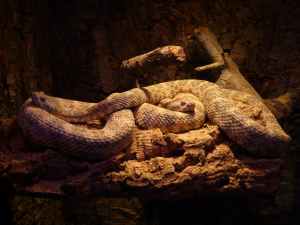
The old ranch house and the sheds and outbuildings are home to pack rats and deer mice accompanied by gopher snakes, racer snakes and rattlesnakes that eat them. So in the beginning, I got to know the snakes and pack rats because we were neighbours. I began to keep notes on my encounters.

Photo by Pixabay on Pexels.com

So many encounters, that by the time you finish reading this section, you too may be converted to considering if not accepting that we should all live in closer proximity to our reptilian brethren. Silko and the snakes become familiar, she learns how to be around them and they learn that she is not a danger. In one of the most symbiotic relationships I have ever read about, this woman and these creatures live in this space together, her in the house, them under it and many anecdotes of those fascinating encounters that she handles with such poise and reverence.

Over time the rattlesnakes will get to know you and your pets. They learn human and dog behaviour and seem to understand the timing of our daily routines; they try to avoid encounters with us at all cost. A few times I’ve been very early or very late with my outdoor chores and I’ve surprised snakes that didn’t expect me at that time of day.

And then there is the heat, I learn that as the heat expands the air molecules they are thinner and less buoyant, no longer able to carry the particles of dust. The seasons are rain and no rain. When the temperature exceeds 112°F/44°C, the air smells of wood and bark just before they burst into flame.

The heat boils the sky to a deep blue. No traces of clouds, only the deepening blue as the air becomes crystal clear. The angle of the Sun causes the light to have the luminescence of a blue flame. The Sun is seated in the north corner of Time.

Photo by Yigithan Bal on Pexels.com

We learn about the unique geology of the Tucson Mountains that explains the formations, rocks and stones that appear on her walks in the arroyo (dry creek bed) her fascination with turquoise, with the Nahua people, the Nahuatl language and Tlaloc, the Nahua God of Rain, to whom she occasionally chants her own original rain prayer. And Lord Chapulin, who you’ll meet if you decide to read this, a living creature and the subject of one of her portrait paintings.

This book took me on a voyage to a place I’ve never been that seemed like another planet, Earth and yet not like the corners of Earth I’ve known. I wonder how someone can live in the heat of the desert like this (without air conditioning) and keep animals, or live alongside wildlife and observe them the way she does, in tune with the ancestors, the star beings, the rattlesnakes, rain chants and an ancient language she predicts is going to make a comeback.

I was enchanted by her endearing tales, her lyrical observations, nuggets of natural and peoples’ history, her love of the local environment and I hope the man with the machine desecrating the arroyo reads her book and stops being such an idiot.

Highly Recommended.

Buy a Copy of The Turquoise Ledge by Leslie Silko

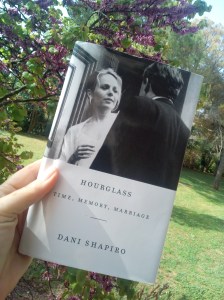
Hourglass – Time, Memory, Marriage by Dani Shapiro

I’ve not read any of Dani Shapiro’s previous works, this short book was passed to me by a friend and read in an afternoon. I enjoyed reading it, though I couldn’t say I related to it. It’s a very personal observation of a marriage, of the passage of time, a woman observing herself change, reflecting on her inclinations and trying to understand herself, her husband and their evolving relationship. As the title indicates, it’s a reflection on time passing, on memory and on marriage. It’s full of nostalgia for moments passed, brought back to life as she picks up journals from girlhood and her earlier life and quotes from them, in particular, from her honeymoon spent in France. She wonders about the woman she was then. She worries about the lack of a plan, despite being in her fifties and her husband almost sixty. She shares these anxious moments, as she begins to lose a little faith in the words her husband has uttered in the past, words that gave her reassurance “I’ll take care of it”. Anyone who has lived with that kind of comfort will likely relate, but inherent within it lies a deep vulnerability, a fissure, a unassuageable fear of loss. It is here her words pierce the fabric of living, when they illuminate the cracks in the facade, opening a small window into that anxiety-inducing perception of reality that sees itself as separate. It is that undercurrent of misplaced fear that disconcerts me, for there is no hint of resolution, little evidence of a desire to go within and face the abyss, to heal it. She remains focused on that which is external and therein perhaps lies the problem. Maybe that is a memoir still to come, when she will embark on the inner journey and learn to listen to her own guidance, to the whispers of her soul that are capable of reassuring her more than anyone or anything on the outside. Something that marriage appears to protect us from, at least until menopause, a subject she doesn’t mention but one that can also unravel our perceptions of the life structures we’ve created in our minds.

Photo by Tom Fisk on Pexels.com

It is a work of quietly observed transformation, the writer is trying to observe herself from both without and within, she has a long experience of observing from a distance and now she feels the pull to go within, yet it’s as if she has only just begun to put her toe in the river. She is aware of the pull of the river and quotes from Virginia Woolf:
The past only comes back when the present runs so smoothly that it is like the sliding surface of a deep river. Then one sees through the surface to the depths…But to feel the present sliding over the depths of the past, peace is necessary. The present must be smooth, habitual. For this reason – that it destroys the fullness of life – any break… causes me great distress; it breaks; it shallows; it turns the depths into hard splinters. As I say to L[eonard]: “What’s there real about this? Shall we ever live a real life again?
She recalls that she used to tell her students that to write good memoir, the kind that would be of interest to the disinterested reader, the writer had to have some distance from the material, not to write from feelings but from the wisdom and insight of retrospect.
But like every fixed idea, this one has lost its hold on me as years have passed and the onrushing present – the only place from which the writer can tell the story – continues to shift along with the sands of time. Our recollections alter as we attempt to gather  them. Even retrospect is mutable. Perspective, a momentary fragment of consciousness. Memoir freezes a moment like an insect trapped in amber. Me now, me then. This woman, that girl. It all keeps changing. And so: If retrospect is an illusion, why not attempt to tell the story as I’m inside of it?  Which is to say: before the story has become a story?

Photo by Jordan Benton on Pexels.com

And so as her reflections come to an end, they indicate that she may be at another beginning.
Somewhere, a clock ticks. Sand pours through the hourglass.  I am no longer interested in the stories but rather, what is underneath the stories: the soft, pulsing thing that is true. Why now?  What is this insistence?  All of me – the whole crowd – wants to know.
I am left intrigued to know what she will write next, where her inner journey will take her, when she lets go of looking through the lens of marriage, time and memory and observes life through a newly expanded awareness.

Man Booker International Prize shortlist 2019

Translated Fiction

The Man Booker International Prize, celebrates newly translated fiction into English; this years judges have now whittled their long list down to six titles, giving us this interesting and diverse shortlist below. Though you’ll find a lot of translated fiction on the pages of this blog, it’s a niche that’s dominated by small publishers, so less known and indulged by the wider reading public.

Things are changing however and readers are becoming more discerning and aware of being made to seem ignorant by publishers who’ve stuck predominantly to nationalistic loyalties. I say this personally, as I discovered when I moved to France that without even making an effort you are just as likely here to read Russian, Colombian or Japanese authors as you are French authors. 45% of their fiction is translated! 5% of ours is.

Do we really only want to be offered stories written by authors from one country, to read thoughts generated in the imagination of only one original language?

Though we are in a climate of Brexit and an era of vociferous intolerance towards multiculturalism; storytelling and literature in translation offer a quiet route to developing empathy and understanding of ‘the other’ and a reminder that we can both learn something new and find the familiar in words from elsewhere.

The prize equally awards the translator, which should boost the industry and help translators take on more projects bringing us more excellent literature from elsewhere. The shortlist includes five languages, Arabic, French, German, Polish and Spanish from six different cultures.

Bettany Hughes, chair of the 2019 Man Booker International Prize judging panel, said:

‘Wisdom in all its forms is here. Unexpected and unpredictable narratives compelled us to choose this vigorous shortlist. Subversive and intellectually ambitious with welcome flashes of wit, each book nourishes creative conversation. We were struck by the lucidity and supple strength of all the translations.’

The six titles are listed below, summaries edited from the prize’s website: click on title to purchase a copy.

Celestial Bodies by Jokha Alharthi (Oman) tr. Marilyn Booth (Arabic) Sandstone Press

Set in the village of al-Awafi in Oman, we encounter three sisters: Mayya, who marries Abdallah after a heartbreak; Asma, who marries from a sense of duty; and Khawla who rejects all offers while waiting for her beloved, who emigrated to Canada. The three women and their families witness Oman evolve from a traditional, slave-owning society, slowly redefining itself after the colonial era, to the crossroads of its complex present. Elegantly structured and taut, it tells of Oman’s coming-of-age through the prism of one family’s losses and loves.

“No matter where you are, love, loss, friendship, pain and hope are the same feelings and humanity still has a lot of work to do to believe in this truth.” Jokha Alharti

The Years by Annie Ernaux(France) tr. Alison Strayer (French) Fitzcarraldo Editions

Considered by many to be the iconic French memoirist’s defining work, a narrative of the period 1941 to 2006 told through the lens of memory, impressions past and present, photos, books, songs, radio, television, advertising, and news headlines. Local dialect, words of the times, slogans, brands and names for ever-proliferating objects are given voice. The author’s voice continually dissolves and re-emerges as Ernaux makes the passage of time palpable. Time itself, inexorable, narrates its own course, consigning all other narrators to anonymity. A new kind of autobiography emerges, at once subjective and impersonal, private and collective, a remembrance of things past.

The Pine Islands by Marion Poschmann tr. Jen Calleja (German) Profile Books, Serpent’s Tail

When Gilbert, a journeyman lecturer on beard fashions awakes from a dream that his wife has cheated on him, he flees to Japan. In discovering the travel writings of the great Japanese poet Basho, he finds a purpose: a pilgrimage in the footsteps of the poet to see the moon rise over the pine islands of Matsushima. Falling in step with another pilgrim – a Japanese student with a copy of The Complete Manual of Suicide – Gilbert travels across Basho’s disappearing Japan with Yosa, one in search of his perfect ending and the other a new beginning that might give his life meaning. A serene, playful, moving story of the transformations we seek and those we find along the way.

Drive Your Plow Over The Bones Of The Dead by Olga Tokarczuk (Poland) tr. Antonia Lloyd-Jones (Polish) Fitzcarraldo Editions

In a remote village in south-west Poland Janina Dusezjko, an eccentric woman in her 60s, describes the events surrounding the disappearance of her two dogs. When members of a local hunting club are found murdered, she becomes involved in the investigation. No conventional crime story, this novel offers thought-provoking ideas on perceptions of madness, social injustice against people who are marginalised, animal rights, the hypocrisy of traditional religion, and belief in predestiny.

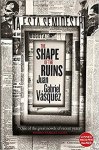
The Shape of the Ruins by Juan Gabriel Vásquez (Colombia) tr. Anne McLean (Spanish) Quercus, MacLehose Press

Pacing the dark corridors of a hospital during the birth of his twin daughters, Juan Gabriel Vásquez befriends a physician. Through him he meets Carlos Carballo, a man consumed by a conspiracy theory about the assassination of a politician Jorge Eliécer Gaitán in 1948. He tries to persuade Vásquez to write a novel about the murder, but despite repeated refusals Vásquez is drawn into the conspiracy when Gaitán’s vertebrae, stored in a glass jar at a mutual friend’s house, goes missing. Sparking a turn of events, Varquez opens up a second, darker conspiracy about the assassination of another politician, Rafael Uribe Uribe, in 1914.

“It’s a novel about past violences written at a time in which my country was trying to find some form of present peace. It turns around two political murders that shaped Colombian history in the twentieth century, and it uses them to think about the ways in which violence can be inherited: an act committed half a century ago can influence and even determine our private lives in the present. Deep down, how does political violence work? How does it change our private lives?” Juan Gabriel Vasquez

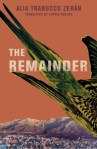
The Remainder by Alia Trabucco Zerán (Chile) tr. Sophie Hughes (Spanish) And Other Stories

Santiago, Chile. The city is covered in ash. Three children of ex-militants are facing a past they can neither remember nor forget. Felipe sees dead bodies on park benches, counting them in an obsessive quest to tally figures with the official death toll. He is searching for the perfect zero, a life with no remainder. Iquela and Paloma are also searching for a way to live on. When the body of Paloma’s mother gets lost in transit, the three take a hearse and a handful of pills up the cordillera for a road trip with a difference. Intense, intelligent, and extraordinarily sensitive to the shape and weight of words, this remarkable debut presents a new way to count the cost of generational trauma.

******

I haven’t read any of the titles shortlisted, I’ve been watching since the long list came out, the one that most intrigues me is Celestial Bodies, because it promises to highlight aspects of Oman’s history as shown through the story of three sister’s lives. While The Shape of the Ruins sounds intriguing, I’m a little wary of it seeming a little like Roberto Bolano’s 2666 another lengthy South American novel that centred around unsolved murders, that was too much for me.

I’m also intrigued by Olga Tokarczuk’s latest, she won the prize last year, though this is said to be a different and lighter read to Flights that can be read on multiple levels, with its elements of mystery, nature writing and reflective, philosophical inclinations.

So have you read any of the novels on the shortlist? Do you already have a favourite?

The winner will be announced on May 21.

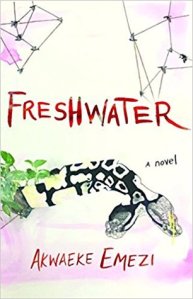
Freshwater by Akwaeke Emezi

This novel is like nothing else I’ve ever read, it describes an inner world, an occupied mind, from that inside. It puts the reader in a position of imagining, perhaps even to a certain degree understanding, what it might be like to have your subconscious and conscious mind occupied by other entities, entities with a voice, with personality, that from time to time take over the body, affect behaviour, talk to you and through you.
Reality is depicted from their perspective, giving full voice to the multiple entities, birthed (through traumas) at different times during the life of Ada (her name though her father told her just meant ‘precious’, in its truest form, meant, the egg of a python), who was born a girl (though doesn’t stay one) in Nigeria and educated in America, where much of the narrative takes place.

We become aware of their presence from the opening pages, before they are awakened within Ada, in a chapter that is utterly compelling as we come to realise who the ‘we‘ is that is narrating much of the story. And ‘we‘ is not the only non-human narrator.

These personalities inhabit a place (referred to in the text as the marble room) within the body/mind, they lie dormant until they are awakened, they keep each other company in that space, they co-habit this one body and constantly justify their existence and inclinations and sometimes act out on them, though they too seem capable of evolving, just as their human needs to and does. And just in case you think this is sounding like fantasy or science fiction, it’s not, this is a semi-autobiographical novel, much of it corresponds to the author’s experience and perceived reality of the world.

These multiple entities exist, they are not illusions or metaphors, they have names and characteristics that manifest into different behaviours through human ‘Ada’ who simultaneously suffers from them, is supported by them, at times is even dependent on them. They are one, but with many aspects that from the external perspective risk being judged as something labelled otherwise depending on the country/culture – such as personality disorder or schizophrenia due to our limited view in defining other states of being. When one entity is more present, Ada’s way of being in the world alternates between her human personality and that of the other presence, whether it’s we, Asughara, or Saint Vincent.

Ogbanje by Akwaeke Emezi

From the perspective of Nigerian ontology (philosophical study of the nature of being), Ada (as the author also self-identifies) may be perceived as ‘ogbanje‘, a child that usually doesn’t live long and is often reborn into the same family. It is believed that these children recognise the difficulty of living in this world and choose to leave it, only on arriving at the gates of heaven they’re denied entry, they’re judged as being lazy and indolent and are sent back to try again. When they are present in the world, they often have particular psychic abilities and/or an other-worldliness about them, they’re believed by some to be possessed, they don’t particularly enjoy the dense, limited human body and experience.

Ogbanje (noun): An embodied spirit passing as human, who transitions rapidly between birth and death, i.e. possessing the ability to ‘come and go’.

Only the child Ada is saved from a death that might have sent her back by her father, a modern Igbo man with medical training from the Soviet Union and years of living in London. He did not believe in anything superstitious that might have made him view the scene he rescued her from as anything other than death. In rescuing her, he prevents the entities from leaving.

He had no idea what he had done.

Akwaeke Emezi depicts these influences and describes being human as a temporary vessel for this other kind of presence which until Ada understands and accepts it, she will continue to suffer as if she is one and not all of them. The ability to make them so real to the reader, to create what feel like real characters from them, is astounding.

“All the madnesses, each and every blinding one, they can all be traced back to the gates. Those carved monstrosities, those clay and chalk portals, existing everywhere and nowhere and all at once. They open, things are born, they close. The opening is easy, a pushing out, an expansion, an inhalation: the dust of divinity released into the world. It has to be a temporary channel, though, a thing that is sealed afterward, because the gates stink of knowledge, they cannot be left swinging wide like a slack mouth, leaking mindlessly. That would contaminate the human world – bodies are not meant to remember things from the other side. There are rules. But these are gods and they move like heated water, so the rules are softened and stretched. The gods do not care. It is not them after all, that will pay the cost.”

At one point Ada seeks out a therapist and at first her entities don’t notice, they are not always present, but they’d told her to keep them inside her head, in the marble room, so no one could see them.

So when she started looking up her “symptoms”, it felt like a betrayal – like she thought we were abnormal. How can we be, when we were her and she was us? I watched her try to tell people about us and I smiled when they told her it was normal to have different parts of yourself.

The entities try to fulfill their destiny (to return to their spirit siblings) and thus sabotage Ada’s attempts to live a human life with minimal suffering. It’s a constant challenge to navigate life, until they learn to live in harmony and she understands her purpose after an encounter with a historian, who tells her what she needs to accept.

“The name that was given to you has many connotations, you hear?” He wore glasses and spoke in a rush of words. “The python’s egg means a precious child. A child of the gods, or the deity themself. The experiences you’ve had suggest that there is a spiritual connection, which you need to go and learn about. Your journey will not be complete until you do that.” He leaned back and folded his arms. “There is nothing more anybody can tell you. It’s important for you to understand your place on this earth.”

Truly an astounding, transparent work that takes an understanding of the being part of human into another dimension. The way it seamlessly moves from the material to the immaterial, combining human and spiritual aspects of selves, on a journey to assemble some way of living with them both, in a world where the majority live within and perceive only one aspect and dimension, a world indeed, where it can be dangerous to articulate this alternate reality.

I thought it was brilliant, definitely a 5 star read for me and truly deserving of being on the Women’s Prize for Fiction longlist.

A debut novel said to have an autobiographical slant, this is how Akwaeke Emezi brilliantly articulates what the writing of it meant to them in an interview with Ms. magazine:

I wrote Freshwater as an analysis of sorts—the ogbanje figuring out what it is, ascribing legibility to itself. We look at our worlds through a limited range of lenses, and making this book meant choosing a different center to tell the story from, a different lens to look through.

Once that shift was made, it came with such clarity—the world finally making sense. Being a strange thing in a human world and not knowing what you are is immensely difficult, and I think Freshwater walks us pretty intimately through what living in that space feels like.

Highly Recommended.

Further Reading

New Yorker: A Startling Debut Novel Explores the Freedom of Being Multiple by Katy Waldman

Interview: The Ms. Q&A: Akwaeke Emezi on Freshwater and Finding Home by Taliah Mancini

N.B. Thank you to publisher Grove Atlantic for providing a review copy.

Buy a copy of Freshwater via Book Depository

Women’s Prize For Fiction 2019 Longlist

Between 1996 and 2012 it was known as the Orange Prize for Fiction, and between 2014 and 2017 the Baileys Prize for Fiction, the Women’s Prize for Fiction is a favourite literary award of many, awarded annually to an outstanding novel that demonstrates excellence, quality, originality and accessibility.
The Prize has recently evolved to charitable status as The Women’s Prize Trust and now invites anyone who wishes to contribute to its ongoing success, to support it through their donation lead Patron Scheme, which offers varying levels of participation and reward.

Their charitable objectives seek to honour & celebrate the widest possible range of women’s voices and stories from all over the world by:

  • shining a spotlight on overlooked and forgotten women’s stories
  • promoting gender equality
  • supporting literacy, research and educational initiatives to help inspire the readers & the writers of tomorrow
  • providing a year-round digital platform for women’s voices and offering a range of live events, encouraging debate between readers & writers.

After passionate discussion, the judges of 2019 have come up with the following longlist of 16 novels, the Chair, Professor Kate Williams had this to say:

“I am thrilled to share this longlist – sixteen incredible books by a diverse group of women, from the UK and countries across the world, all brilliant stories that sweep you into another world. Each of them have been a privilege to read, and they have taken us into places a million miles from each other, exploring the lives of women and men in so many different but utterly compelling ways.”

I have copied the book summaries below from the Women’s Prize website  and provided title links to Book Depository, if you wish to buy a book (with free shipping). Personally, I have read two, the excellent Man Booker Prize winning Milkman by Anna Burns (my review here) and Bernice McFadden’s Praise Song for the Butterflies (my review here), which I enjoyed so much, I ordered her historical fiction novel The Book of Harlan.

The Greek myth retellings seem to be in the ascendant, I like that they’ve chosen empowered female heroines, I have a copy of Freshwater, which from the moment I read its premise I’ve wanted to read, so I’ll definitely be reading that.

I’ve read Mexican born author Valeria Luiselli’s essays Sidewalks her novel stands out, as it was born of her experience as a volunteer court interpreter for children – the “illegal aliens” helping them with intake questionnaires that might establish a case for asylum for them, the subject of another essay collection Tell Me How It Ends: An Essay in 40 Questions. In Lost Children Archive, she tells the story of one family, though don’t expect a straight forward narrative, as I recall from reading her previously, she’s an introspective, philosophical meanderer interested in spaces, voids and the edges of things, not a traditional storyteller.

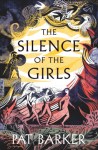
The Silence of the Girls by Pat Barker – There was a woman at the heart of the Trojan war whose voice has been silent – till now. Briseis was a queen until her city was destroyed. Now she is a slave to Achilles, the man who butchered her husband and brothers. Trapped in a world defined by men, can she survive to become the author of her own story?Discover the greatest Greek myth of all – retold by the witness history forgot.

Remembered by Yvonne Battle-Felton – It is 1910 and Philadelphia is burning. The last place Spring wants to be is in the rundown, coloured section of a hospital surrounded by the groans of sick people and the ghost of her dead sister. But as her son Edward lays dying, she has no other choice. There’re whispers that Edward drove a streetcar into a shop window. Some people think it was an accident, others claim that it was his fault, the police are certain that he was part of a darker agenda. Is he guilty? Can they find the truth? All Spring knows is that time is running out. She has to tell him the story of how he came to be. With the help of her dead sister, newspaper clippings and reconstructed memories, she must find a way to get through to him. To shatter the silences that governed her life, she will do everything she can to lead him home.

My Sister, the Serial Killer by Oyinkan Braithwaite – When Korede’s dinner is interrupted one night by a distress call from her sister, Ayoola, she knows what’s expected of her: bleach, rubber gloves, nerves of steel and a strong stomach. This’ll be the third boyfriend Ayoola’s dispatched in, quote, self-defence and the third mess that her lethal little sibling has left Korede to clear away. She should probably go to the police for the good of the menfolk of Nigeria, but she loves her sister and, as they say, family always comes first. Until, that is, Ayoola starts dating the doctor where Korede works as a nurse. Korede’s long been in love with him, and isn’t prepared to see him wind up with a knife in his back: but to save one would mean sacrificing the other

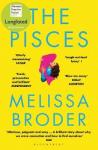
The Pisces by Melissa Broder – Lucy has been writing her dissertation for nine years when she and her boyfriend have a dramatic break up. After she hits rock bottom, her sister in Los Angeles insists that Lucy dog-sit for the summer. Staying in a gorgeous house on Venice Beach, Lucy can find little relief from her anxiety – not in the Greek chorus of women in her love addiction therapy group, not in her frequent Tinder excursions, not even in Dominic the dog’s easy affection. Everything changes when Lucy becomes entranced by an eerily attractive swimmer while sitting alone on the beach rocks one night. But when Lucy learns the truth about his identity, their relationship, and Lucy’s understanding of what love should look like, take a very unexpected turn.

Milkman by Anna Burns – In this unnamed city, to be interesting is dangerous. Middle sister, our protagonist, is busy attempting to keep her mother from discovering her maybe-boyfriend and to keep everyone in the dark about her encounter with Milkman. But when first brother-in-law sniffs out her struggle, and rumours start to swell, middle sister becomes ‘interesting’. The last thing she ever wanted to be. To be interesting is to be noticed and to be noticed is dangerous. Milkman is a tale of gossip and hearsay, silence and deliberate deafness. It is the story of inaction with enormous consequences.

Freshwater by Akwaeke Emezi – Ada was born with one foot on the other side. Having prayed her into existence, her parents Saul and Saachi struggle to deal with the volatile and contradictory spirits peopling their troubled girl.When Ada comes of age and heads to college, the entities within her grow in power and agency. An assault leads to a crystallization of her selves: Asughara and Saint Vincent. As Ada fades into the background of her own mind and these selves – now protective, now hedonistic – seize control of Ada, her life spirals in a dark and dangerous direction.Narrated from the perspectives of the various selves within Ada, and based in the author’s realities, Freshwater explores the metaphysics of identity and being. Feeling explodes through the language of this scalding novel, heralding the arrival of a fierce new literary voice.

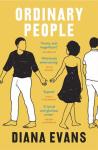
Ordinary People by Diana Evans – South London, 2008. Two couples find themselves at a moment of reckoning, on the brink of acceptance or revolution. Melissa has a new baby and doesn’t want to let it change her but, in the crooked walls of a narrow Victorian terrace, she begins to disappear. Michael, growing daily more accustomed to his commute, still loves Melissa but can’t quite get close enough to her to stay faithful. Meanwhile out in the suburbs, Stephanie is happy with Damian and their three children, but the death of Damian’s father has thrown him into crisis – or is it something, or someone, else? Are they all just in the wrong place? Are any of them prepared to take the leap?

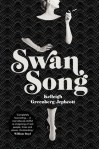
Swan Song by Kelleigh Greenberg-Jephcott – In the autumn of 1975, after two decades of intimate friendships, Truman Capote detonated a literary grenade, forever rupturing the elite circle he’d worked so hard to infiltrate. Why did he do it, knowing what he stood to lose? Was it to punish them? To make them pay for their manners, money and celebrated names? Or did he simply refuse to believe that they could ever stop loving him? Whatever the motive, one thing remains indisputable: nine years after achieving wild success with In Cold Blood, Capote committed an act of professional and social suicide with his most lethal of weapons . . . Words.

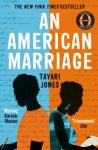
An American Marriage by Tayari Jones – Newlyweds Celestial and Roy are the embodiment of the American Dream. He is a young executive, and she is an artist on the brink of an exciting career. Until one day they are ripped apart by circumstances neither could have imagined. Roy is arrested and sentenced to twelve years for a crime Celestial knows he didn’t commit.Devastated and unmoored, Celestial finds herself struggling to hold on to the love that has been her centre, taking comfort in Andre, their closest friend. When Roy’s conviction is suddenly overturned, he returns home ready to resume their life together.A masterpiece of storytelling, An American Marriage offers a profoundly insightful look into the hearts and minds of three unforgettable characters who are at once bound together and separated by forces beyond their control.

Number One Chinese Restaurant by Lilian Li – The popular Beijing Duck House in Rockville, Maryland has been serving devoted regulars for decades, but behind the staff’s professional smiles simmer tensions, heartaches and grudges from decades of bustling restaurant life.Owner Jimmy Han has ambitions for a new high-end fusion place, hoping to eclipse his late father’s homely establishment. Jimmy’s older brother, Johnny, is more concerned with restoring the dignity of the family name than his faltering relationship with his own teenaged daughter, Annie. Nan and Ah-Jack, longtime Duck House employees, year to turn their thirty-year friendship into something more, while Nan’s son, Pat, struggles to stay out of trouble. When disaster strikes and Pat and Annie find themselves in a dangerous game that means tragedy for the Duck House, their families must finally confront the conflicts and loyalties simmering beneath the red and gold lanterns.

Bottled Goods by Sophie van Llewyn – When Alina’s brother-in-law defects to the West, she and her husband become persons of interest to the secret services, causing both of their careers to come grinding to a halt.As the strain takes its toll on their marriage, Alina turns to her aunt for help – the wife of a communist leader and a secret practitioner of the old folk ways.Set in 1970s communist Romania, Sophie van Llewyn’s novella-in-flash draws upon magic realism to weave a tale of everyday troubles, that can’t be put down.

Lost Children Archive by Valeria Luiselli – A family in New York packs the car and sets out on a road trip. A mother, a father, a boy and a girl, they head south-west, to the Apacheria, the regions of the US which used to be Mexico. They drive for hours through desert and mountains. They stop at diners when they’re hungry and sleep in motels when it gets dark. The little girl tells surreal knock knock jokes and makes them all laugh. The little boy educates them all and corrects them when they’re wrong. The mother and the father are barely speaking to each other. Meanwhile, thousands of children are journeying north, travelling to the US border from Central America and Mexico. A grandmother or aunt has packed a backpack for them, putting in a bible, one toy, some clean underwear. They have been met by a coyote: a man who speaks to them roughly and frightens them. They cross a river on rubber tubing and walk for days, saving whatever food and water they can. Then they climb to the top of a train and travel precariously in the open container on top. Not all of them will make it to the border.

Praise Song for the Butterflies by Bernice L. McFadden – Abeo Kata lives a comfortable, happy life in West Africa as the privileged nine-year-old daughter of a government employee and stay-at-home mother. But when the Katas’ idyllic lifestyle takes a turn for the worse, Abeo’s father, following his mother’s advice, places her in a religious shrine, hoping that the sacrifice of his daughter will serve as religious atonement for the crimes of his ancestors. Unspeakable acts befall Abeo for the fifteen years she is enslaved within the shrine. When she is finally rescued, broken and battered, she must struggle to overcome her past, endure the revelation of family secrets, and learn to trust and love again.

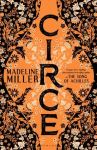
Circe by Madeline Miller – In the house of Helios, god of the sun and mightiest of the Titans, a daughter is born. But Circe has neither the look nor the voice of divinity, and is scorned and rejected by her kin. Increasingly isolated, she turns to mortals for companionship, leading her to discover a power forbidden to the gods: witchcraft.When love drives Circe to cast a dark spell, wrathful Zeus banishes her to the remote island of Aiaia. There she learns to harness her occult craft, drawing strength from nature. But she will not always be alone; many are destined to pass through Circe’s place of exile, entwining their fates with hers. The messenger god, Hermes. The craftsman, Daedalus. A ship bearing a golden fleece. And wily Odysseus, on his epic voyage home.There is danger for a solitary woman in this world, and Circe’s independence draws the wrath of men and gods alike. To protect what she holds dear, Circe must decide whether she belongs with the deities she is born from, or the mortals she has come to love.

Ghost Wall by Sarah Moss – Teenage Silvie and her parents are living in a hut in Northumberland as an exercise in experimental archaeology. Her father is a difficult man, obsessed with imagining and enacting the harshness of Iron Age life. Haunting Silvie’s narrative is the story of a bog girl, a young woman sacrificed by those closest to her, and the landscape both keeps and reveals the secrets of past violence and ritual as the summer builds to its harrowing climax.

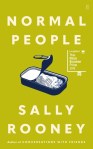
Normal People by Sally Rooney -Connell and Marianne grow up in the same small town in rural Ireland. The similarities end there; they are from very different worlds. When they both earn places at Trinity College in Dublin, a connection that has grown between them lasts long into the following years. This is an exquisite love story about how a person can change another person’s life – a simple yet profound realisation that unfolds beautifully over the course of the novel. It tells us how difficult it is to talk about how we feel and it tells us – blazingly – about cycles of domination, legitimacy and privilege. Alternating menace with overwhelming tenderness, Sally Rooney’s second novel breathes fiction with new life.

******

So have you read any of these or are you planning to?

Further Reading

Interview Valeria Luiselli: ‘Children chase after life, even if it ends up killing them’
by Emma Brockes, the Guardian

The Atlas of Reds and Blues by Devi S. Laskar

I discovered this debut novel after seeing an article on Electric Lit by author R.O. Kwon 48 Books By Women and Nonbinary Authors of Color to Read in 2019. I recognised many, but a new name that jumped out at me was debut author Devi S. Laskar.

Kwon added the book to her list based on a recommendation by writer, editor and professor Kiese Laymon, who said he’d “never read a novel that does nearly as much in so few pages,” and that the book is “as narratively beautiful as it is brutal.”

If that wasn’t enough, Nayomi Munaweera, author of the excellent Island of a Thousand Mirrors, and What Lies Between Us said:

“Devi S .Laskar has written a beautiful, harrowing fever dream of a novel. This is a book that insists on no uncertain terms and despite horrific institutional and everyday racism that South Asian Americans are indeed Americans. This is a book I have been waiting a very long time for. A monumental achievement.”

Before telling you about the novel, I’ll just share that I found it masterful. I hadn’t meant to read it too quickly, but I was so entranced and captivated by it, by the voice, by the structure, by its fierce intelligence and grasp of so many aspects, that I couldn’t help myself but read it in two sittings. However, I recommend you take your time, as it deserves close reading.

I’ve since looked at it again and tried to analyse what the author has done, how this novel, that is also an essay, a social commentary, a dual narrative of one characters perspective, past and present, works. It’s a stunning piece of literature, thoroughly deserved of the praise mentioned above. I would love to see it make tonight’s shortlist for the Women’s Fiction Prize 2019.

Review

The Atlas of Reds and Blues takes place over the course of a morning. In the opening line, a woman we will come to know as The Mother has just been shot in her driveway:

Now this fainting, this falling, this landing so ungainly.

A working mother whose husband is often away on business moves her family from Atlanta to the suburbs, discovering not much has changed since her childhood in a small Southern town.

She embodies a second generation American experience, viewed through vivid snippets of her working and family life, looking back, recounting memories that have lead to this moment. It is told by one character but in a dual narrative, (1) the semi-conscious present moment, a stream-of-consciousness awareness of what she sees, hears, smells, feels and wonders, lying there unmoving and (2) short chapters of the past, both recent as The Mother and further back as the Real Thing, daughter of Bengali immigrants. All the characters are referred to with labels such as Baby Sister, Middle Daughter, her hero, man of the hour, similar to Anna Burns’s Milkman.

The present moment narrative arrives in short staccato-like bursts, sometimes a sentence, maybe two, a snatch of dialogue, an unbidden memory, a flash of blue sky, a moment of lucidity. This a more lengthy example:

“She closes her eyes and a kaleidoscope appears, the blue of the sky giving way to the red pulse of pain near her stomach…The pain is less when she doesn’t give in to the light show. But the light show is hard to ignore: every time she opens or closes her eyes, the blues and blood reds are reinvented; she is witnessing the continents shifting, the tectonic plates of years shifting and crashing into each other.”

It is a beautiful, bittersweet cornucopia of blues and reds, colours littered throughout the text alluding to a multitude of contrasts.
Though ostensibly a novel, on closer rereading, I wonder if it has elements of an essay, something I have a heightened awareness of at the moment, after attending a wonderful talk last week by writer Jennifer Delahunty entitled ‘The Art and Power of the Personal Essay, from Montaigne to Zadie Smith’.

Asked about the difference between the essay and an Op-Ed (Opinion Editorial) she described the essay as posing a question the writer is able to explore without necessarily positing an opinion, the intention being to encourage engagement with the subject by the reader.

Our protagonist lying bleeding on her driveway, poses questions that the ensuing chapters serve to explore. She uses the symbol of the doll to illustrate the complexity of being non-white growing up in America and thus poses her question.

Like children, most dolls are made only to be seen, put on display. Real live dolls are taught to remain stoic, bear witness in silence, no matter how the consumer judges. The radio dispatcher squawks and a policeman’s voice describes her: Black hair. Brown skin. Gray sweatpants. Brown T-shirt. Flip-flops.

The dispatcher’s voice drawls.  “Is she Black?” A lawn mower sputters to life nearby and drowns out the policeman’s reply.

Third Monday of May 2010. When you put American clothes on a brown-skinned doll, what do people see? The clothes? Or the whole doll? Or only the skin?

Fifty or so pages later, another reference:

The question can be stripped bare, a striped white line on the highway separating those stuck in traffic from those who are flying down the road: Has anything of significance changed in the last forty-three years?

There is a section entitled Inciting Incidents:

…in which the narrator attempts to decide which particular incident set her on the path of this particular life story, concrete driveway and all, without sprinkling regret and bitterness over everything upon which she stews, without uttering the word no…

Fourteen potential inciting incidents follow, thought-provoking turning points in the Mother’s life, incidents that culminate over time, leading to resistance or acceptance. The first time they read as more experiences, the second time I read more closely looking for the incident, seeing the accumulation of “isms” she has encountered as a woman of colour in the workplace, a neighbour, wife, sister and mother to daughters in today’s America.

What does it mean truly, to be invisible? Her stillness, her ability to remain calm while high-decibel insults are hurled inches from her face and ears. To pretend nothing has been said. To pretend deafness. Or her chameleon’s ability to blend in, a nondescript body in a dark blouse and black jeans leaning against the pay phone at the hospital waiting room, or standing outside the courtroom’s double doors or by the fire engine at the crime scene, yellow do not cross tape isolating one place from its larger context. To pretend the oak tree across the street’s steadfast patience, to pretend paralysis. To watch but pretend blindness. Never look anyone on the eye. Or maybe restraint. Knowing her lack of reaction is the only thing keeping her alive, over and again. Knowing the first time she hits back is the last time she’ll ever have the opportunity to do so.

Laskar is first and foremost a poet, so while it may have been described as harrowing, it also illuminates. Her captivating prose and lyrical repetition draw the reader in, creating a desire to unravel the mystery her many literary devices allude to, to step back from the pieces and see the whole. The book’s structure is inspired by one of her favorite poetry forms, the pantoum, a Malayan folk poem or verse form. In a pantoum, a phrase is repeated throughout, subtle changes in meaning occur due to different contexts.

 “This book is one giant pantoum because the beginning is the end, and she’s considering things over and over.” Devi S. Laskar

It was also partly inspired by a raid on her home, where a gun was pointed at her and she experienced her life flash in front of her eyes.

Almost impossible to review, it is a thought-provoking, unique novel that I haven’t stopped thinking about long after finishing it. Brilliant. Highly Recommended, likely to be one of my favourite reads of 2019.

Buy a Copy of The Atlas of Reds and Blues via Book Depository

N.B. Thank you kindly to Counterpoint Press for sending me a copy to review.

Every Light in the House Burnin’ by Andrea Levy

Sadly the wonderful author Andrea Levy, well-known for her Orange Prize winning novel Small Island (2004), passed away on February 14, 2019. I remember reading it when I lived in London and the joy of a new literary prize that highlighted exactly the kind of stories and authors I liked to read. Her fifth novel The Long Song (2010) was shortlisted for the Man Booker Prize and won the Walter Scott Prize for historical fiction. It was turned into a 3 part television adaptation, screened in Dec 2018.
Andrea Levy’s debut novel Every Light in the House Burnin’ reads like an intimate portrayal of family life, so much so that it felt like reading about the author’s childhood, clearly she drew from it. Capturing the essence of family life from perceived childhood injustices that many will recognise, to the humorous anecdotes a clash of cultures brings, when children are raised in a different country to their parents, she immerses into family life and reimagines those poignant moments that shaped her. From the Guardian Obituary, her family description reads like an addendum to the novel.

Her father, Winston Levy, travelled to Britain on the Empire Windrush in 1948, and was joined six months later by his wife, Amy (nee Ridguard), who had been trained as a schoolteacher in Kingston, Jamaica. Both parents were of mixed race. Her father’s Jewish father emigrated to Jamaica after the first world war and converted to Christianity, and her mother was descended from William Ridsguard, a white plantation attorney who had a child with his black housekeeper. Both parents came to England expecting greater opportunities, but found that their qualifications were rejected.

The novel is a portrait of a family in London, the children of Jamaican immigrants, narrated from the point of view of the youngest child Angela (referred to also as Anne), it brings to life moments in their family life that impacted them all, through carefully realised characters, to the beginning of the decline, just after her father’s retirement.

In one scene Anne is left with her father during their holiday at the beach, her mother and other siblings have gone out. Her father has spent most of the holiday lying on the couch, not at all tempted by the sandy beaches or the sea, but Anne is persistent. Reluctantly he agrees.

I smiled as I watched my Dad haul himself from the sofa. I waited for fifteen minutes before my Dad emerged from his bedroom. He was dressed in his grey suit. The only sign that he was about to take part in a leisure activity and not have a day at work was that he was not wearing a tie and had the top button of his shirt undone.

The challenges have only just begun. Anne wants to sit in the sun, an idea her father rejects, suggesting a secluded spot further back, where the ice cream hut has created the only shade on the beach. Initially he relents to sit in her spot, but refuses to join her in the water, too cold. After her swim, as she lies down to enjoy the warmth of the sun, a shadow looms over her.

‘You shouldn’t sit in the sun too long. You want to turn red like those English people – you shouldn’t sit in the sun’
‘Everybody else’ –
‘Cha’, my dad insisted before I had time to finish. ‘We’re not like everybody else.’

The story turns towards their encounter with the father’s decline and the navigation of the NHS health service, a lack of knowledge, the pain and difficulties encountered as a result, resolved only when the daughter pushes and insists on their behalf. Alternate moments of perseverance and giving up, driven by a need, pushed back by intimidation and shame. Here, Anne offers to visit the Doctor to ask for stronger pain medication.

‘But,’ my mum began, ‘but you can’t just go and see him. He’s a busy man. He might not see you.’ Her voice said ‘go’ and ‘don’t go’ at the same time.

Aspects of the past come to light later on, were they secrets, those things family members never talked about, which end up buried and become secret-like. When an Aunt visits telling them how things are back home in Jamaica and asks about their newfound life in England, the land of opportunity, things not said are loud in their omission. If there was regret, it’s been long-buried, replaced by silence and resignation, not to be discussed.

There are many light and humorous moments, interspersed with the reality of the struggle the family has in fitting in, within a culture where there are expectations about how to do things and underlying racism or indifference toward outsiders. They do their best to integrate, to pass on their stoic values to their children, who only realise as they become adults how difficult it had been for them.

I knew this society better than my parents. My parents’ strategy was to keep as quiet as possible in the hope that no one would know they had sneaked into this country. They wanted to be no bother at all. But I had grown up in its English ways. I could confront it, rail against it, fight it, because it was mine – a birthright.

It was a beautiful beginning to her literary career, a fictional novel that paid tribute to her parent’s and siblings lives, that demonstrates the empathy Levy had for her characters and the pure gift of storytelling that would take her on to deserved critical acclaim. Highly Recommended.

Further Reading

Buy an Andrea Levy Novel via Blackwells (free shipping)

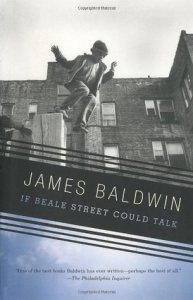
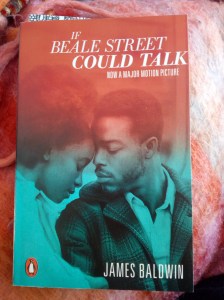
If Beale Street Could Talk by James Baldwin

If Beale Street Could Talk is the first work by James Baldwin that I have read. It was the first work he wrote after he moved to St Paul de Vence in the south of France, where he would pass the last 17 years of his life.
He also wrote his first two novels at the beginning of his literary career, Go Tell It on the Mountain and Giovanni’s Room, along with his best-known collection of essays, Notes of a Native Son during a nine-year period he lived in Paris.

When Jordan Elgrably of The Paris Review asked why he left the United States said:

I was broke. I got to Paris with forty dollars in my pocket, but I had to get out of New York. My reflexes were tormented by the plight of other people. Reading had taken me away for long periods at a time, yet I still had to deal with the streets and the authorities and the cold. My luck was running out. I was going to go to jail, I was going to kill somebody or be killed. My best friend had committed suicide two years earlier, jumping off the George Washington Bridge.

He found it increasingly difficult to be a witness to life in America so perhaps France provided him the distance from which to write. With Beale Street he was able to immerse in a love story, bringing out the emotional bonds that keep a family together, that give them something extra, to not just survive, but overcome the harsh, unjust realities of everyday life in America for black people.

The novel revolves around childhood sweethearts, 19-year-old Tish and 22-year-old Fonny. We meet them as she visits him in prison.

I don’t know why people always look down when they talk through a telephone, but they always do. You have to remember to look up at the person you’re talking to.

I always remember now, because he’s in jail and I love his eyes and every time I see him I’m afraid I’ll never see him again. So I pick up the phone as soon as I’m there and I keep looking up at him.

Interspersed with the regular visits, are flash-backs to childhood and the moment their friendship evolved to something deeper. Fonny takes Tish to his basement pad where he has set up a woodwork studio, his deepest passion is sculpting wood and stone, he wants to show her and for her to understand its importance to him.
After asking her to marry him, they’d looked for loft space together, they were planning a future together, when suddenly robbed of it by a false accusation.  His alibi’s are discredited and he sinks into despair, but for her visits.

Though heartbroken, she is emboldened by her family, by the adamant support of her sister, who finds them a good lawyer, her mother, who travels to Porto Rico to confront the accuser, and her father, who works extra shifts to raise funds for Fonny’s bail.

It is the words, actions and support of the family that keep everyone from falling apart, they are a stalwart to Fonny especially, as his family crack under the pressure of a mother converted to a conservative faith prone to judgement and disappointment, more concerned about her own reputation than the innocence of her son.

It is interesting that Baldwin chose to narrate the novel from Tish’s perspective, and though it may have provoked criticism, it is perhaps one injustice that he sought to right – allowing the voice of a young black woman to rise and be heard.

Sharon, her mother, was a fabulous character. So in touch with her deepest roots, she is able to appease her daughter when she fearfully shares news of her pregnancy:

‘Tish’, she said, ‘when we was first brought here, the white man he didn’t give us no preachers to say words over us before we had our babies. And you and Fonny be together right now, married or not, wasn’t, wasn’t for that same damn white man. So let me tell you what you got to do. You got to think about that baby. You got to hold onto that baby, don’t care what else happens or doesn’t happen. You got to do that. Can’t nobody else do that for you. And the rest of us, well, we going to hold on to you. And we going to get Fonny out. Don’t you worry. I know it’s hard – but don’t you worry. And that baby be the best thing that ever happened to Fonny. He needs that baby. It going to give a whole lot of courage.’

Right there, the mother reinforces stability in their lives and I can’t help but be aware of the contrast, having just read the memoir An Affair With My Mother of a baby conceived within a culture that shame(s)d its daughters for pregnancy outside of wedlock, destroying lives, dividing families, creating unnecessary drama. This action and steadfast support by Sharon is a protest against the inherent culture and inherited religious beliefs, over which love and the family bond will prevail. It is a powerful matriarchal triumph, one that reaches far back in ancestral memory.

So the family encounter difficult circumstances and yet their ability to be there for each other sees them though and even Fonny is swept up in this wave of support, nourished by it, even though he has moments of sliding into darkness, as is human. By contrast, his family is fragmented, the mother and daughters reject the offer of unity offered by Joseph and Sharon, the father Frank gets it and tries to support them, to be part of this newly extended family, but without the strength of an unconditional bond within his own, he is left vulnerable.

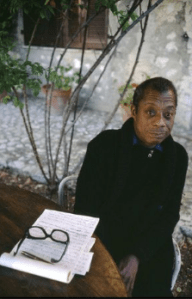
James Baldwin in France

I think Baldwin succeeds if it was his intention to write about the powerful effect of love and family, in their ability to carry each other through difficult times, when they refuse to resort to blame (of themselves or others) or judgement, when they hold each other up and decide to be a force together and not give in to destructive tendencies.

I’ve just seen the film at our local cinema. It’s challenging to watch to a film you are still reflecting on reading.

In a recent interview, Director Barry Jenkins talked about Baldwin’s work:

I chose Beale Street because I felt the novel, more than any of his other works, represented the perfect blend of Baldwin’s dual obsessions with romance and social critique, as sensual a depiction of love as it is a biting observation of systemic injustice.

I thought the movie was a beautiful and moving depiction of the story, although my big takeaways from the book about that family bond, (especially the mother to the daughter) weren’t as strong in the film. Some of the most important lines I’d noted (and went back to check) were taken from the mother and given to the father, which surprised me, as it shifted the dynamic and removed what for me had been a significant and empowering statement coming from the mother (supported by the father). Passing those lines to the father risked putting the mother back into a supporting role, and lessened the matriarchal force Baldwin imbued her with.

The other significant moment in the book for me, which I’m not sure comes across in the film with quite the same impact, is a moment near the end where there is a change in Fonny, observed here by Tish, which you’ll have to read to find out more:

“- something quite strange, altogether wonderful, happens in him…”

All the more reason, even if you’ve seen the film, to get a copy of the book! And all that said, I’d recommend both without hesitation.

Buy a Copy of Beale Street via Book Depository

Have you read James Baldwin? Do you have a favourite?

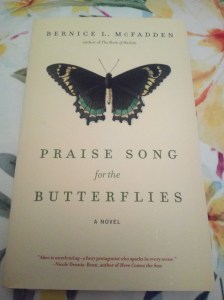
Praise Song for the Butterflies by Bernice L.McFadden

I’ve been aware of Bernice McFadden’s name as a writer I might enjoy, so when I saw her latest novel Praise Song for the Butterflies chosen as the monthly read by the Literary Fiction by People of Colour group on Goodreads, I decided to read along in February, to benefit from the opportunity to engage with other readers and to see their questions being answered by the author, about some of the choices she made while writing the book.

Interested in the inspiration for writing a novel, this one intrigued me; Bernice McFadden visited Ghana in 2007 and while she was there met two women who told her about a rehabilitation centre and a tradition referred to as trokosi, which they explained and suggested she write a book about, an idea she initially laughed at, but after researching the practice, a story began to emerge that she eventually pursued.
The novel is set in a fictional nation of Ukemby (avoiding comparison with the geography and customs of a specific African country), the first two pages provide a brief history of this fictional land, with its recent colonialist history, new schools, a period of outlawing African God worship or speaking local languages and their subsequent independence, freeing people to  openly practice older customs and traditions.

Shrine  slavery was one of the  traditions that ascended from the darkness back into the light.

A slim 3 page chapter entitled AFTER New York City 2009,  sets the reader on edge wondering what happened to lead to that collision of events, as the first provocative sentence opens with:

On the morning of the day she killed him, the sun sat high and white in a sky washed clean of clouds by an early-morning downpour.

From there we move into BEFORE, Port Masi, Ukemby  1978 – 1985. The novel gripped me from its opening pages and made me not want to do anything but stay with young Abeo as if to hasten her escape from the wretched situation superstition put her in.

We know from the blurb that she is going to be sacrificed by her father, under pressure from his mother, to atone for a curse believed to have been passed down from their ancestors.  Until that moment, it seems impossible, given the early success and education of her parents, I read those initial pages, wondering what it could be that changed the good fortune of this happy family.

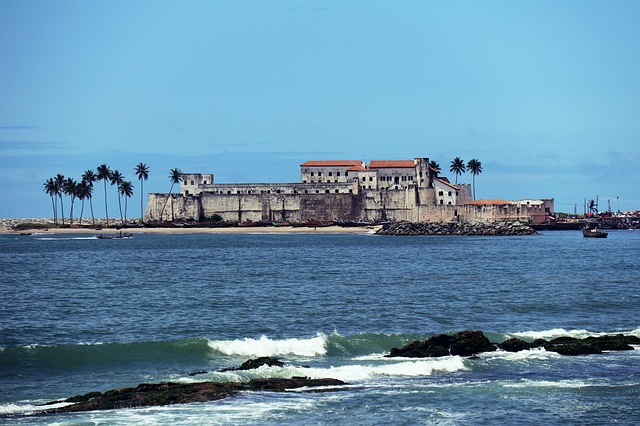
When Aunt Serafine comes to visit from New York, the family take a trip across the border to Ghana, and visit the slave castle. After debating whether or not it is appropriate to take young Abeo, her mother relents and she joins them. A sense of foreboding lurks as they descend into the dark interior of the castle, her imagination running rife.

What struck fear into her young heart  was the history that lay beyond the wooden panels and brass hardware. Morris had revived history and little Abeo was finding it hard to distinguish between the now and what had been.  Morris reached for the door handle and Abeo’s breath caught in her throat.  She ordered her eyes to close, but they refused, and so she  braced herself for the vision of the ship bobbing on the ocean, its deck teeming with shackled cargo.

Elmina, Slave Castle, Ghana

It’s when things go wrong, when the family’s luck changes and the son comes under the undue influence of his mother (I recall this similarly in Ayobami Adebayo’s excellent Stay With Me ) that relationships get tested, families risk disintegrating and wives become disempowered.

When Abeo’s family falls on hard times, her father, in his desperation begins to doubt himself and the system that should bring justice. Instead he is lead to follow the old ways, thinking it will bring him peace of mind. In an impulsive moment, seized by and giving in to terror, he does the unthinkable, delivering his daughter to a religious shrine.

It was 1985; Abeo was nine years, seven months and three days old.

I worried the story was going to depict brutality, especially after recently reading House of Stone, where Novuyo Rosa Tshuma exposes the reader to the graphic horror of Gukurahundi, in newly independent Zimbabwe, however I was relieved to discover that McFadden spares us the terror if not the cruelty, we imagine what happened, though thankfully there’s no visceral portrayal. One reader asked why she chose to spare readers this, suggesting her method was more like leading a reader by the hand to the truth rather than holding them by the head to something too awful to take in.

In my earlier works I was much more graphic with my descriptions of horrific events. I think pulling back from that had much to do with me seeing so much violence against Black people on the news and social media platforms. Subjecting my character, myself or the reader didn’t seem to serve anyone involved.

Interested in the title, I looked up ‘Praise Song’ and learned it is one of the most widely used poetic forms in African literature; described as ‘a series of laudatory epithets applied to gods, men, animals, plants, and towns that capture the essence of the object being praised’.

It becomes a form of metaphor, the butterfly a symbol of transformation and rebirth;  in the novel Duma, the oldest of the priest’s sons rips a newspaper to shreds, intending to ignore what has been read inside it, the pieces are picked up by a gust of wind, catching the girls’ eyes, seen as butterflies. Though an illusion, it signifies a turning point, a sign of hope, of liberation, they are experiencing life in one form and soon will transform.

Duma folded the newspaper and looked directly into his father’s milky eyes. “It means the government has outlawed what we do here, . It means no more trokosi.

Abeo glanced up and for one fleeting moment her spirit soared. Indeed, at that distance, the bits of newspaper did appear to be a cluster of white butterflies. Abeo watched until the air went still and the false butterflies dropped out of sight.

It was 1998 and Abeo was twenty-two years old, eight months and seventeen days old.

The characters are well depicted, the surroundings set the reader’s imagination alight, we’re taken on a journey, introduced to a terrifying ritual that morphs into another form of traditional domination, however there are shining lights, hope has been gifted a role to play and Abeo has been permitted to interact with it.

I loved the natural, gifted storytelling of this novel, the historical exploration and psychological insight and in particular that she was able to create a scenario that showed us what a healing transformation might look like in the form of resilience.

Bernice McFadden is the author of nine critically acclaimed novels including Sugar, Loving Donovan, Nowhere is a Place, The Warmest December, Gathering of Waters and The Book of Harlan (winner of American Book Award and NAACP Image Award for Outstanding Literary Work, Fiction). A four-time Hurston/Wright Legacy Award finalist, I’ll definitely be reading more of her work.

This is a story of survival and triumph.  I want people to understand that their circumstances don’t always, and shouldn’t always, define their entire lives.

Further Reading

Ancestral Roots:  Bernice L. McFadden sings an enslaved black woman’s song, Interview by Evette Dione

“The interest is not the fact of slavery, the interest is what happens internally, emotionally, psychologically, when you are in fact enslaved and what you do in order to transcend that circumstance.” Toni Morrison

Have you read any novels by Bernice McFadden? Do you have a favourite?