The House on Via Gemito by Domenico Starnone (Italy) tr. Oonagh Stransky

That was quite an experience.

Starnone writes a work of fiction about the man his father was (we can assume it is autobiographical since his father’s name was Federico and he painted an artwork titled ‘The Drinkers’ which is in part featured on the cover). It is an attempt to tell the story of a man he spent his childhood in fear of and his adulthood trying not to be like.

Reconstructing a Life, Walking the Streets

In the novel, the narrator is the eldest son Mimi, who lives in Rome but has returned to Naples some time after the death of his father and is reconstructing memories, by walking the streets where they lived, visiting certain places to evoke other memories, like the hospital where his mother was when her husband could no longer deny her illness; the church where he made his first communion; the council offices, where he hopes to find some of his father’s paintings, including ‘The Drinkers’. Every location existed in service to his father’s existence and memories.

He was certain that both great and small events had a common thread: the mystery of his destiny. And he constantly tried to prove it to himself, his relatives, his friends, and to us children by weaving a vibrant pattern in which the only events that were true were the ones vitally connected to him. Consequently, all the names of cities and buildings and roads, all of geography, served merely to create a map of his needs, and this was how they were to be remembered.

Though the novel is about the man, the title refers to a street where they lived for a while and the use of street names rather than diary entries or even artworks, inscribes the neighbourhood into history, creating a different kind of legacy, one that will last longer than any man or work of art. A diary would be too intimate, a street map a kind of canvas.

Portrait of a Narcissist Father Via His Eldest Son

It is also about his own boyhood, however the character of the father overshadows the son, his wife, his wife’s family, in fact anyone in proximity to him. This is because he considers himself superior. According to himself. He makes it one of his main purposes in life to remind everyone around him of that fact. He can not be taken down or made to think he is anything less than how he perceives himself.

It’s true, he was lazy. He was arrogant. He was blowhard. He was all those things, and the first to admit it. He felt he had the right to be lazy, arrogant, and a blowhard – to anyone who busted his balls. He was born to be a painter, not a railroader.

The son walks familiar streets of Naples, streets he never strolled with his father – but knew intimately from his adolescence – as a way to navigate anecdotes about the way his father lived his life, the things he said (mostly insults about everyone else), the things he did (working for the railroad as a clerk, beating his wife, painting artworks) and his opinions about various matters. He walks and remembers. He walks and imagines anew.

A Determined Artist Perseveres

historical fiction Paris 1939 Domenico Starnone House on via gemito
Photo by Pixabay on Pexels.com

Federi is passionate about art and believes he possesses great artistic talent, but the art world is full of shit people who nominate their friends for prizes, then their friends create prizes and nominate those friends, therefore keeping him out of these circles. He blames everyone for his lack of success that he continues to strive for. Beginning with his own father who refused to educate him, in fact his parents abandoned him at a young age and sent him to live with his grandmother.

He becomes a working class man, who sees the most beautiful woman who he takes for a wife, raises four sons and a daughter and spends his free time at home painting or pursuing opportunities to advance his art.

A Literary Triptych

The book is in three sections. The first section ‘The Peacock’ introduces the character and is the part of the book where you might abandon, because it isn’t yet clear why it might benefit any reader to be subject to this psychological demonstration of one of the most extreme versions of the societal system of domination at work. The patriarchy thrives under this system, as Riane Eisler showed in her work The Chalice and the Blade: Our History, Our Future and Nurturing Our Humanity: How Domination and Partnership Shape Our Brains, Lives, and Future and the portrait this novel creates shows how someone who lives according to this conditioning impacts those in his proximity. Cycles of trauma, neglect and narcissism eroding relationships in pursuit of validation, not love.

A Masterpiece Created at All Cost

Much of the source material is inspired by journals his father kept, which trigger memories and dates of events he participated in. The artworks themselves are a kind of journal, a record of themes in his life. Part Two ‘The Boy Pouring Water’ is the most compelling and significant section, it documents the process of creating the largest, most significant art work he would do. ‘The Drinkers’ required the son to pose as the boy pouring water, other members of the family sat for him and the local fruit and vegetable seller.

The anxiety the young son would feel when he realises that there is a problem in the image, between the character holding out the glass and where he is pouring from will cause contortions of magnitude in him, to try and avoid the disaster he sees coming. His father never sees it and we think for a moment that the drama has been averted, alas no – disaster arrives at the height of his short-lived pleasure.

So why do we want to read a novel about an egomaniac? And one that was originally published just over 20 years ago.

It is both a psychological example of the effect a man with no empathy and worse, a need to belittle, insult and induce fear in people, can have on a family. It is set against a backdrop of 1960’s Naples, post WWII, a place where allegiances often changed, both in the halls of power and on the street, depending on how ‘enemies or allies’ treated the people.

It is the historical context and the journey of a working class man trying to break into the establishment of artists, who despite his unruly personality, perseveres and participates as much as is possible for someone who won’t allow himself to be intimidated. Everything is a struggle, he will fight to the end. Art ‘wasn’t fun, it was war’.

Fortunately as the years passed, I developed a strategy for blocking out his words. Using this technique, which I perfected as a teenager, the angrier he grew when telling the stories of his life and the reasons for his actions, the thicker the fog grew in my head, allowing me to think about other things. It helped establish a distance between us. It curbed the desire to kill him.

Fatherhood in Another Era, Produce, Punish, Protect

In the final part ‘The Dancer’ the humiliation of the son comes full circle as he enters adolescence and tries to impress a girl Nunzia and his father gives him terrible advice about what to do with women. As if things couldn’t get any worse, we learn that young girl has been abused by an Uncle and the son lies waiting for his fathers verdict.

The book ends with a scene that makes the reader pause to reflect on how reliable the narrator is, like the father, he too has the ability to exaggerate, to curate anecdotes and perspective.

Once I got into this, which didn’t take very long, I found it both shocking and compelling to read, the dedication by a son to honoring the passage of a man who made his boyhood hell. Thus he provides a kind of validation beyond the grave, but doesn’t hold back from focusing on the many flaws alongside the talent. It is the many layers that make it something of a classic, the psychological profile and repeat patterns of the man, the making of an artist and the impact on family and the social history of a city.

Highly Recommended.

The House on Via Gemito is a marvellous novel of Naples and its environs during and after the Second World War. The prism for this exploration is the relationship between the narrator and his railway worker / artist father – an impossible man, filled with cowardice and boastfulness. His son’s attempt to understand and forgive him is compelling; we are held through the minutiae of each argument and explosion, each hope and almost-success.’ International Booker Judges

Further Reading

New York Times Review June 2023: My Father The Frustrated Artist

A Reading Guide – The House on Via Gemito, International Booker Prize 2024

Read An Extract from the Opening Chapter here

To see the artwork of Federico Starnone visit https://starnone.it/gallery2/

Author, Domenico Starnone

About the author

Domenico Starnone is an Italian writer, screenwriter and journalist. He was born in Naples and lives in Rome

He is the author of 13 works of fiction, including First ExecutionTies, a New York Times Editors Pick and Notable Book of the Year, and a Sunday Times and Kirkus Reviews Best Book of the Year, Trick, a Finalist for the 2018 National Book Award and the 2019 PEN Translation Prize, and Trust. 

The House on Via Gemito won Italy’s most prestigious literary prize, the Strega in 2001 and was longlisted for the International Booker Prize 2024.

Not a River by Selva Almada (Argentina) tr. Annie McDermott

Not a River has just been shortlisted for the International Booker Prize 2024.

Opening Lines and Book Covers

International Booker Prize longlist 2024 Argentinian literature Spanish translation

I read the opening line and let it tell me as much as possible about the story I am about to read.

“Enero Ray, standing firm on the boat, stocky and beardless, swollen-bellied, legs astride, stares hard at the surface of the river and waits, revolver in hand.”

It’s a Charco Press title, so there is always a thought provoking abstract image on the cover, that never fails to contribute to the understanding of what the book has to say. This one shows twin rivers, fed by tributaries, running red.

It is clear that will be blood, death, perhaps menace and/or violence – and more than one episode. Just as the water of the smaller channels has no choice but to flow into the main river, so too the intent of a man standing firm, awaiting his prey. But who/what else will the river claim?

To Understand Any Story We Circle Back

Not a River tells a story, not in a linear way, but in a circular fashion, beginning with two men El Negro and Enero and a boy Tilo, on a fishing trip; circling back to a previous trip when Eusubio was with them, slowly revealing the memory that is acting on both men and what happened to their friend. The fishing trip is further disturbed by a visit from ‘a local’ whose questions unsettle the trio.

The second tributary/narrative follows Siomara and her two daughters Lucy and Mariela. The girls are entering womanhood, the mother is becoming more protective.

Photo V. Bagacian Pexels.com

Siomara was in one of those phases she sometimes went through, when she was grouchier than usual. Saying no to everything and dealing out punishments and bans for no reason. All because she could see how the two girls were growing, how little by little they were slipping away, how sooner or later they were going to leave her as well.

She lights fires as a way to deal with her emotions, she has done so since she was a girl. She seems to be lighting them a lot recently.

Sometimes she thinks the fire talks to her. Not like a person does, not with words. But there’s something in the crackle, the soft sound of the flames, as if she could almost hear the air burning away, yes, something, right there, that speaks to her alone…
Come on, you know you want to.
It says.

Again the story turns on itself, something has happened here too, sometimes the mother is living in the past, the present too much for her. The girls hear about a dance and plan to go.

Lucy wants to be a hairdresser. She wants to give other woman those moments of peace her mother seems to feel when she is doing her hair.

The narrative moves back and forth like the tide, people in the community are connected and affected by events that occur at the river. Paths cross, fates intertwine. It is necessary to let go of needing to know whether we are in the past or the present. If certain events happened before or after others. We accept each part of the story’s mosaic, see how they fit together, until all the pieces have been laid.

A summer like this one. Twenty years back, a summer like this one. The same island or the next one along or the one after that. In the memory it’s all just the island, with no name or exact coordinates.

The longer the men stay in the forest, the more uneasy they feel about what they have done, what has happened in the past and how unwelcome and out of place they feel. Invited to a dance, they leave their campsite for the evening.

Dreams and a Queue for the Healer

Photo by Pixabay on Pexels.com

Enero has a disturbing dream, twice.

Eusubio looked at him and thought for a moment.
We need to go see my godfather. He knows about this stuff.
He said.

Mariela also has a dream, she tells her sister Lucy about it.

And what happened in the dream?
I don’t know, like I say I just had a kind of flashback. It was weird, there were lights and sirens.

There is a sense of the repetitive cycles of the generations, girls hide from their families, they grow up to become a mother who can’t help but try and prevent their child from repeating the same mistakes. To keep them safe.

She pretends not to hear. Still just about strong enough to resist. But for how much longer.
One day, she knows she will answer the fires’s call.

In less than 100 pages, Not a River depicts disparate elements of a broken community, marginalised families, their efforts to bond, heal, escape, punish, revel and cope with the aftermath of it all.

Selva Almada’s paragraphs are like brushstrokes on a canvas, each one contributes to the story and is necessary in order to see beyond it.

The characters in my novel, men and women who live on what the river can provide, are a reflection of what the neo-liberalism of the 1990s has done to Argentina: impoverishing it, condemning a significant part of its citizens to poverty and marginalization.

Selva Almada

Highly Recommended for fans of thought provoking literary fiction.

Further Reading

Tony’s Reading list – review of Not a River

Booker Prize Website: Q & A with Author & Translator

My review of The Wind that Lays Waste

Selva Almada, Author

Selva Almada is considered one of the most powerful voices of contemporary Argentinian and Latin American literature and one of the most influential feminist intellectuals of the region.

Compared to Carson McCullers, William Faulkner, Flannery O’Connor, Sara Gallardo and Juan Carlos Onetti, Almada has published several novels, a book of short stories and a book of journalistic fiction. She has also published a film diary, written on the set of Lucrecia Martel’s film Zama, based on Antonio di Benedetto’s novel.

She has been a finalist for the Medifé Prize, the Rodolfo Walsh Award and of the Tigre Juan Award. Her work has been translated into French, Italian, Portuguese, German, Dutch, Swedish and Turkish. 

Not a River (shortlisted for the Vargas Llosa Prize for Novels) is her fourth book to appear in English after The Wind that Lays Waste (Winner of the EIBF First Book Award 2019), Dead Girls (2020), and Brickmakers (2021).

International Booker Prize shortlist 2024

The shortlist for the International Booker Prize 2024 has been decided. It features novels from six countries, (Argentina, Brazil, Germany, Netherlands, South Korea and Sweden), translated from Dutch, German, Korean, Portuguese, Spanish and Swedish.

Chair of judges Eleanor Wachtel said:

‘Our shortlist, while implicitly optimistic, engages with current realities of racism and oppression, global violence and ecological disaster’

Prize Administrator Fiammetta Rocco added:

‘The books cast a forensic eye on divided families and divided societies, revisiting pasts both recent and distant to help make sense of the present’ 

Read Around the World, Other Perspectives

The International Booker Prize introduces readers to the best novels and short story collections from around the globe that have been translated into English and published in the UK and/or Ireland. Recognising the vital work of translators, the £50,000 prize money is divided equally: £25,000 for the author and £25,000 for the translator(s).

The shortlist was chosen from a longlist of 13 titles announced in March, which was selected from 149 books published in the UK and/or Ireland between May 1, 2023 and April 30, 2024, submitted to the prize by publishers. 

I have read one from the shortlist and it was excellent; Selva Almada’s Not a River (link to my review), the second of her novella’s I have read. Not having read any others on this list, I can’t really comment, but I would love to know what you thought if you have read any of these, or intend to. Brief summaries below.

The Shortlist

Not a River by Selva Almada (Argentina) tr. by Annie McDermott

International Booker Prize longlist 2024 Argentinian literature Spanish translation

Selva Almada’s novel is the finest expression yet of her compelling style and singular vision of rural Argentina.

Three men go out fishing, returning to a favourite spot on the river despite their memories of a terrible accident there years earlier. As a long, sultry day passes, they drink and cook and talk and dance, and try to overcome the ghosts of their past. But they are outsiders, and this intimate, peculiar moment also puts them at odds with the inhabitants of this watery universe, both human and otherwise. The forest presses close, and violence seems inevitable, but can another tragedy be avoided?

Mater 2-10 by Hwang Sok-yong (Korea) tr. Sora Kim-Russell, Youngjae Josephine Bae

An epic, multi-generational tale that threads together a century of Korean history. 

Centred on three generations of a family of rail workers and a laid-off factory worker staging a high-altitude sit-in, Mater 2-10 vividly depicts the lives of ordinary working Koreans, starting from the Japanese colonial era, continuing through Liberation, and right up to the twenty-first century. 

What I’d Rather Not Think About by Jente Posthum (Netherlands) tr. Sarah Timmer Harvey

A deeply moving exploration of grief, told in brief, precise vignettes and full of gentle melancholy and surprising humour.

What if one half of a pair of twins no longer wants to live? What if the other can’t live without them? This question lies at the heart of Jente Posthuma’s deceptively simple What I’d Rather Not Think About. The narrator is a twin whose brother has recently taken his own life. She looks back on their childhood, and tells of their adult lives: how her brother tried to find happiness, but lost himself in various men and the Bhagwan movement, though never completely. 

Crooked Plow by Itamar Vieira Junior (Brazil) tr. Johnny Lorenz

A fascinating and gripping story about the lives of subsistence farmers in Brazil’s poorest region.

Deep in Brazil’s neglected Bahia hinterland, two sisters find an ancient knife beneath their grandmother’s bed and, momentarily mystified by its power, decide to taste its metal. The shuddering violence that follows marks their lives and binds them together forever.

Kairos by Jenny Erpenbeck (Germany) tr. Michael Hofmann

An intimate and devastating story of the path of two lovers through the ruins of a relationship, set against the backdrop of a seismic period in European history.

Berlin. 11 July 1986. They meet by chance on a bus. She is a young student, he is older and married. Theirs is an intense and sudden attraction, fuelled by a shared passion for music and art, and heightened by the secrecy they must maintain. But when she strays for a single night he cannot forgive her and a dangerous crack forms between them, opening up a space for cruelty, punishment and the exertion of power. And the world around them is changing too: as the GDR begins to crumble, so too do all the old certainties and the old loyalties, ushering in a new era whose great gains also involve profound loss. 

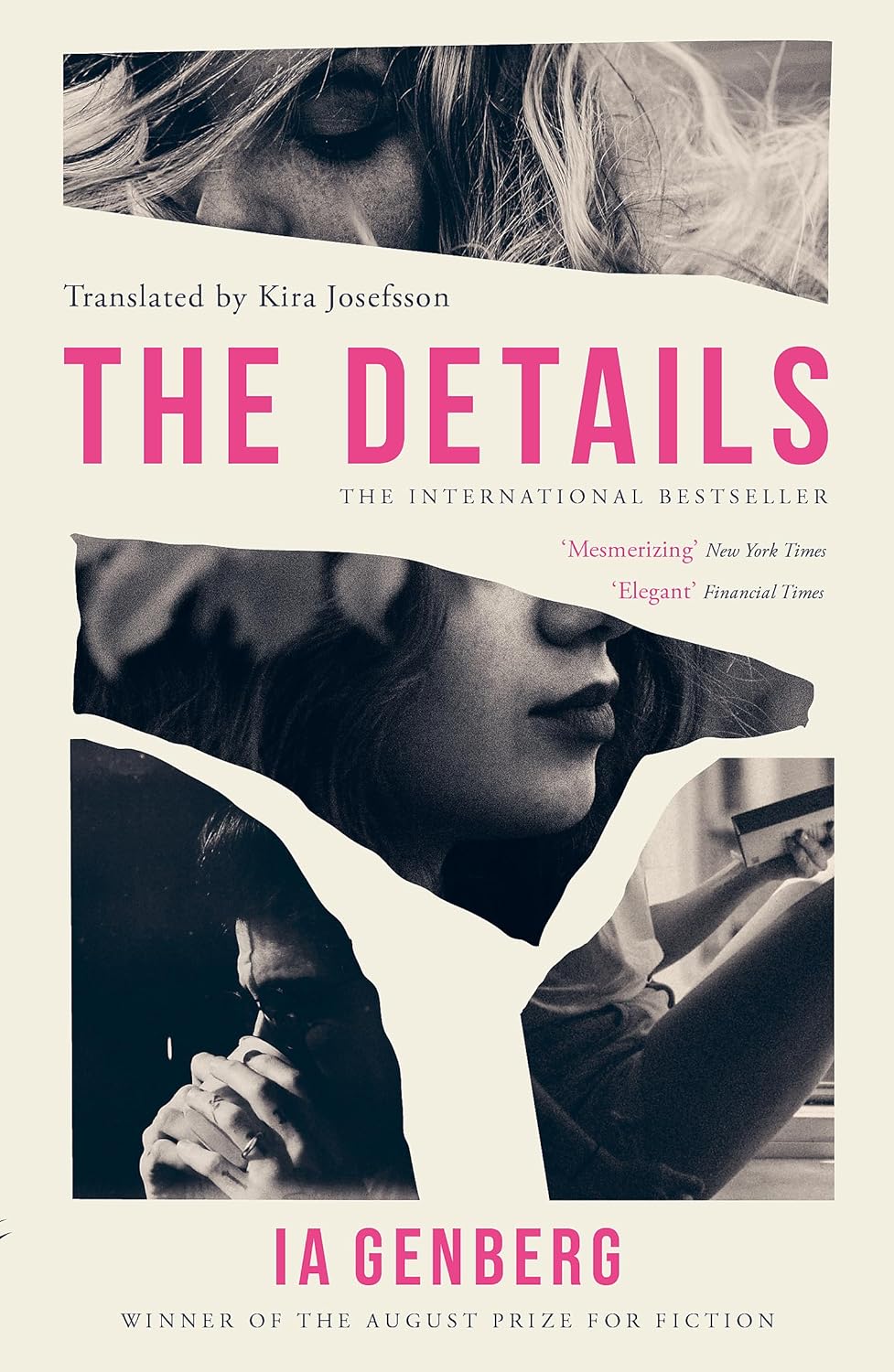
The Details by Ia Genberg (Sweden) tr. Kira Josefsson

In exhilarating, provocative prose, Ia Genberg reveals an intimate and powerful celebration of what it means to be human.

A famous broadcaster writes a forgotten love letter; a friend abruptly disappears; a lover leaves something unexpected behind; a traumatised woman is consumed by her own anxiety. In the throes of a high fever, a woman lies bedridden. Suddenly, she is struck with an urge to revisit a particular novel from her past. Inside the book is an inscription: a message from an ex-girlfriend. Pages from her past begin to flip, full of things she cannot forget and people who cannot be forgotten. Johanna, that same ex-girlfriend, now a famous TV host. Niki, the friend who disappeared all those years ago. Alejandro, who appears like a storm in precisely the right moment. And Birgitte, whose elusive qualities shield a painful secret. Who is the real subject of a portrait, the person being painted or the one holding the brush?

The Winner

The International Booker Prize 2024 ceremony will take place from 7pm BST on Tuesday, 21 May. It is being held for the first time in the Turbine Hall at London’s Tate Modern.

Highlights from the event, including the announcement of the winning book for 2024, will be livestreamed on the Booker Prizes’ channels, presented by Jack Edwards. 

Penelope Unbound by Mary Morrissy (2023)

I bought this in anticipation of learning more about the life of Norah Barnacle, the wife of James Joyce, having already enjoyed the experience that Nuala O’Connor created in her wonderful novel Nora: A Love Story of Nora and James Joyce. O’Connor succeeds in creating a well rounded character and depicts the precarious situation this young couple endure, trying to survive on meagre freelance writings living as expats in a tumultuous Europe.

I knew that this would be different, because Mary Morrissy takes a significant turning point in their relationship and changes everything that happens to them beyond that day. After they have left/eloped from Dublin, been to Paris and now arriving in Trieste, Italy to begin their lives anew. This reimagined period in their lives covers a mere ten years, from their arrival in Trieste on 20 October, 1904 to their return to Dublin on 15 June 1915.

A Sliding Doors Moment

Norah Barnacle James Joyce Irish literature

Norah has enough experience to know what she doesn’t want and had already given Jim (the way she refers to James) a few ultimatums, one of them is not to leave her stranded, having been stood up before. So how long will a young woman wait, suitcase in hand, in a foreign country before deciding that she has been left?

This is the point where the author diverges from historical fact and after more than 9 hours waiting at the station, allows Nora to depart with someone other than the man she refers to as her husband Jim.

She’d thought of telling him how she waited for Jim, ten whole hours outside the railway station in Trieste, like a fool, the darkness falling and she weak from hunger, and still no sign of him. And not a farthing on her. Abandoned.

The novel begins four years later, in June 1916, back in Dublin; a day when we learn she is the owner of a boarding house and she leaves to go and wait outside a concert hall. We learn that the day before a man has come calling for her. Before the details of what this is about or who it is that visited – was it Jim or was it a foreign man she is clearly no longer with? It takes 40 pages, with many, many flashbacks – for her to descend the stairs to learn who is/was waiting for her, a clue to why she was waiting outside the concert hall. Snippets of the present, long swathes of memory.

She was Mrs Norah Smith now – that’s how she’d signed the contracts of sale, with the H back in her name that Jim Joyce had made her drop. She was Norah, after Hanorah, her grand-aunt. And she wasn’t going to let anyone from her past put her down.

Train approaching station tracks red light
Photo by Jerry Wang on Pexels.com

The novel then goes back 10 years to the train station in Trieste and the intervening story unfolds. Despite having not waited for him, Jim is never far from her thoughts and much about her new life causes her to relive episodes of their short time together.

Penelope ‘Unbound‘ did create an expectation that she might therefore create a life where she acquired some independence, perhaps some may perceive that she did. She remains bound to a household, perhaps even more so, due to her inability to speak the language and never entirely accepted by its inhabitants, apart from the one who rescued her.

Empowerment or Good Fortune?

The fact that it takes that many pages for the reader to learn what happens to Norah is the reason I don’t go into detail here, because that is the mystery at the centre of the story and the only true departure from historical fact. That realisation is for the prospective reader to wonder about and to discover themselves.

Her predicament in being tied to one person and household, dependent on him for everything, will ultimately provide her her liberty, because he will have created an unsustainable predicament for himself. But did Norah take charge of her destiny, or was she left with no choice?

She doesn’t know why but she finds her temper flaring. These men and their principles. With the Other Fella, it was marriage and how he couldn’t put a ring on her finger because of Mother Church, for crying out loud. But it was less of the church and more of the mother, if you asked Norah. His own poor ma was afflicted by that wastrel she married, and Jim said he had the same streak in him, and he’d only do the same to her. And why couldn’t you just stop yourself, she asked him, but she got no reply.

A Season or a Lifetime

The Paris Wife Norah Barnacle James Joyce

For me, the most significant decision she would make, was at the moment the second man abandons her, leaving her with some means. What she decides to do from that moment forward, is the true moment of ‘Penelope Unbound’, however it marks the end of the novel, not the beginning of her story.

As too often happens (I remember a similar feeling reading Hadley Richardson’s story in The Paris Wife), when the significant other (the famous writer, the man) exits the narrative, the story ends. Is the story more interesting learning how she came to obtain her independence, or what she might do, once she gets it?

And after all those years apart, we will wonder, do soulmates always find each in the end, even when they can not be together?

Further Reading

Guardian Review: Penelope Unbound by Mary Morrissy, masterly alternative life of Norah Barnacle by John Banville

My review of Mother of Pearl by Mary Morrissy

Author, Mary Morrissy

Dublin born Mary Morrissy is the author of three novels, Mother of Pearl, The Pretender and The Rising of Bella Casey, and two collections of stories, Lazy Eye and Prosperity Drive. Her short fiction has been anthologized widely and two of her novels have been nominated for the Dublin Literary Award. Her debut, Mother of Pearl was shortlisted for the Whitbread Award and she is the recipient of a Hennessy Literary Award.

She is a journalist, a teacher of creative writing and a literary mentor. She blogs on art, fiction and history at marymorrissy.com

Girl in the Tunnel: My Story of Love and Loss as a Survivor of the Magdalene Laundries by Maureen Sullivan (2023)

This excellent memoir for me, was the anti-dote to the shortcomings I had with Claire Keegan’s Small Things Like These.

My Story of Love and Loss as a Survivor of the Magdalene Laundries

Keegan’s novel does everything except go inside the establishment to find out who is in there, why and how they are being treated. Instead it focuses on one man who is portrayed as kindly and empathetic. That man will make a righteous action, whereas the author commits the sin of omission, maintaining a societal silence that continues to bind, in neglecting to shift the narrative gaze towards anything related to those unjustly incarcerated inside. Like standing to one side at the scene of a car accident, choosing to gaze at the sheep in the fields opposite.

Girl in the Tunnel is a memoir of childhood. Of a girl from a large blended family, who is removed from abuse and sent to one of Ireland’s notorious Magdalene laundries. Maureen Sullivan’s second paragraph of her Author’s Note in the front of the book speaks volumes.

It might surprise you, or it might not, to know that there are people still pushing me to stay silent. There are people who want this book kept from your hands. People who say to me in the street, ‘Would you not get over it?’ People who tell me to shut up about it – they defend men and they defend the Catholic Church.
But this is my story to tell and this is how I remember it.

Maureen was not even a teenager when she was taken from her school, from her family, from her loving Granny, without being told where she was going, only that she was to attend a new school and would have to live there. None of her questions were ever answered. She would be deposited at the Magdalene laundry in New Ross, County Wexford run by the Order of the Good Shepherd nuns. Stripped of her possessions including the new pencil case her mother bought her as she was leaving, she was thrown into forced labour, washing clothes, pressing linens and scrubbing floors, forbidden an education or contact with any of the children who attended the school there.

I changed most of the names in this book – my abuser, relatives, locals and the nuns – because I’m not out to hurt or for revenge. I wrote this book because I was silenced as a child when I was the victim of abuse and I was silenced by society when I left the laundry. I want people to know what happened. This is my history, but it’s also the history of this country.

Someone recently said to me that a great opening line of a book can foreshadow the entire story. When I go back and read the first line of Maureen’s memoir, I find so many of the reasons for what happened to her, there in that line.

I never knew my father, John L. Sullivan, but there was a photograph of him on the wall in my grandmother’s house.

Maureen’s mother was married, nineteen and pregnant with Maureen when her father died suddenly leaving two young sons and an unborn daughter. They lived with her Granny, her father’s mother, the only person in her life who ever spoke of the father she never knew. But her Granny was poor and her mother quickly married and created a new family with another man, Marty Murphy, who from very early on took out all his frustrations on the dead man’s children.

My brother’s and I were terrified of Marty from day one. He didn’t restrain himself and lost his temper in a second, sometimes for nothing you could place, and he would go for you, even in his boots, and his kicks would hurt for days. He really hated us. Or he hated himself, maybe, for what he couldn’t stop doing to us, but either way living with Marty was like living with the devil himself. We suffered every single day.

Photo T. Miroshnichenko Pexels.com

Maureen describes their lives in incredible and evocative detail. Being so poor and having so little, when she describes the few tender and joyous moments, they stand out in the narrative, as they clearly did in her mind as that child.

The way it is written is absolutely captivating, not because of the misery or injustices, but because of the emotional intelligence exhibited. It is so honest and evocative of the way a child would experience things, except that Maureen has grown up and is able to express the questions and thoughts she had as a child. But she does so, with an understanding of where her country and society is today and how it was then. Nevertheless, there is no excuse for the cruelty and lack of basic human rights she experienced. There is a lot that remains hidden and denied to this day.

It’s hard to imagine the reasons for people behaving as they did, given how fast Ireland has progressed, and it’s hard to imagine how my mother thought things through. I know now she had no choices – women were the property of their husbands. Their bodies belonged to the men they married, their children did too.

When Maureen responds to the kind voice of her favourite teacher at school and opens up to her questions, she believes that she is going to rescued, perhaps even go to live with her Granny. This idea of being with her Granny was so powerful, she told her everything.

So I told on him. I told on Marty. I sat there in that room with a chocolate in my mouth and an open heart and talked about it.

When her mother arrives after being called in by the school and sees Maureen sitting in the hallway, she asks her why she is not in class. And worse.

As she went by me, she turned and said, ‘Oh Maureen, what have you done?’ She knocked on the office door and disappeared through it.
What had I done?

That same day she would be removed and taken to the laundry. She would also be told that she had a new name. They all did.

For years I couldn’t figure out why our names were changed in the Magdalene laundries. What reason had they? A number would have made more sense to me if they wanted us to be nothing and nobody. But a number is a way to trace us, and it would have been unique. It would have been remembered and displayed somewhere. By changing our names they made sure, not that we struggled on the inside, but that on the outside we had no way to identify or find each other. And how could we stand as a witness to what went on there if there was nothing to say we had been there at all? We didn’t exist.

Magdalene laundries rosary factory
Photo Trac Vu on Pexels.com

Maureen describes all the work they do in the laundry by day and then the work they must do at night, in the tin boxes. It is revelatory and will not leave any reader unaffected.

Merely describing the day to day activities and routine of their lives, and who they were not – (at the time she was in New Ross none of the women there were pregnant), is captivating. A 1911 census referred to them as “inmates”, at New Ross they were referred to as penitents.

It means a person who seeks forgiveness for their sins. There were no sinners in New Ross. Just victims, victims of the patriarchy, victims of misogyny.

The tunnel was the long corridor that separated the sleeping area and the children’s school from the laundry. Every so often she would be locked in there. When the men in suits arrived.

Photo by R. Asmussen Pexels.com

Those men in suits were likely state inspectors. They were sent around to all of the Magdalene laundries in Ireland to check on conditions.

People like Maureen were not supposed to be in the laundry being used as child labour, so they were hidden.

Maureen’s story is an important record of the historical treatment of girls and young women in Ireland, and a testament to the proliferation of abuses in households and the historic risk of speaking out.

Sharing their stories can change things. Last year, one of the best books I read was another memoir Poor: Grit, courage, and the life-changing value of self-belief by Katriona O’Sullivan. That book has had and continues to have a significant impact in changing societal attitudes.

Perhaps more tellingly, as Justice for Magdalenes Research’s book notes, there were never any Magdalene laundries for men. There were no corresponding church-run rehabs for the men who abandoned their families, nor for those who put girls and women in those situations that landed them in institutions. RENÉ OSTBERG, National Catholic Reporter

Highly Recommended.

Further Reading

Book: Ireland and the Magdalene Laundries: A Campaign for Justice – the long battle for justice

Essays: A Dublin Magdalene Laundry: Donnybrook and Church-State Power in Ireland

Article: National Catholic Reporter: Book details long battle to get justice for Ireland’s Magdalene survivors by René Ostberg, April 30, 2022

Resources: Justice for Magdalene Research : A Resource for People Affected by and Interested in Ireland’s Magdalene Institutions

Resource: One In Four, Ending the Trauma of Childhood Sexual Abuse – Programs for Adult survivors

International Booker Prize Longlist 2024

On 11 March the longlist for the International Booker Prize 2024 was announced. It was a notable celebration for Latin American fiction, with authors representing Brazil, Argentina, Peru and Venezuela on the list. 

The 13 novels cover 10 different languages, Spanish, Italian, Swedish, German, Albanian, Portuguese, Dutch, Korean, Polish and Russian. They span multiple genres and generations, as well as personal and national histories, oppressive regimes and the shadow of colonialism. Though they may seem unfamiliar, many have been bestsellers in their home countries.

Take the Quiz!

If you are not sure which of these books might be your style, you can do what I did, and take their quiz!

-> Quiz: which book from the International Booker Prize 2024 longlist should you read?

I’ll let you know which book they have recommended I read at the end of this post. If you take the quiz, let me know in the comments below which book came up for you.

The 13 Novels on the Longlist

The 13 books chosen by this year’s judges represent the best in translated fiction, published in the English language in the UK and Ireland selected from 149 books published between 1 May 2023 and 30 April 2024.

I have two on my shelf already, but not the one the quiz recommended I should read!

The titles are listed below with a description and the judges’ comment: 

Not a River by Selva Almada (Argentina), tr. Annie McDermott (Spanish) (#1 on my shelf)

– Selva Almada’s novel is the finest expression yet of her compelling style and singular vision of rural Argentina. 

Three men go out fishing, returning to a favourite spot on the river despite their memories of a terrible accident there years earlier. As a long, sultry day passes, they drink and cook and talk and dance, and try to overcome the ghosts of their past. But they are outsiders, and this intimate, peculiar moment also puts them at odds with the inhabitants of this watery universe, both human and otherwise. The forest presses close, and violence seems inevitable, but can another tragedy be avoided?

Not A River moves like water, in currents of dream and overlaps of time which shape the stories and memories of its protagonists. Enero and El Negro have brought their young friend and protégé Tilo on a fishing trip along the Paraná River in Argentina. The island where they set up camp pulses with its own desires and angers, tensions equal to those of the men who have come together on its shores. Alongside the story of these grief-marred characters, the author offers those of the women of the town – and what luck to root for or mourn them: the mother whose ever-growing fires engulf us, her two flirtatious, youth-glowed daughters, and the almost-mythical manta ray who becomes one of the guardians and ghosts of this throbbing, feverish novel.’ 

Simpatía by Rodrigo Blanco Calderon (Venezuela), tr. Noel Hernández González & Daniel Hahn (Spanish)

– A suspenseful novel with unexpected twists and turns about the agony of Venezuela and the collapse of Chavismo. 

Set in the Venezuela of Nicolas Maduro amid a mass exodus of the intellectual class who have been leaving their pets behind. Ulises Kan, the protagonist and a movie buff, receives a text message from his wife, Paulina, saying she is leaving the country (and him). Ulises is not heartbroken, but liberated by Paulina’s departure. As two other events end up disrupting his life even further, Ulises discovers that he has been entrusted with a mission – to transform Los Argonautas, the great family home, into a shelter for abandoned dogs. If he manages to do it in time, he will inherit the luxurious apartment that he had shared with Paulina.

‘In this realistic allegory set in Caracas during Nicolás Maduro’s dictatorship, we meet Ulises, a former orphan who is desperate for a sense of purpose and belonging. His wife has just announced by text message that she is leaving him and his father-in-law has willed him Los Argonautas, a house of accumulating secrets and mythologies. Much like that of Jason of the Argonauts, Ulises’ inheritance is contingent on the completion of a task: to transform the house into a veterinary clinic and kennel for the stray dogs left behind by the elites who have fled the city. Within the madness and austerity of political corruption and historical revisioning, Ulises devotes himself to one of the saner choices left to him: complete the task by saving the dogs, with the help of his Medea-like lover, Nadine, and the leftover animal rescue and house staff. In doing so he simultaneously creates a chosen family and a practice of care that is a stronger balm for the heart than sympathy.’

Kairos by Jenny Erpenbeck (Germany), tr. Michael Hofmann

– An intimate and devastating story of the path of two lovers through the ruins of a relationship, set against the backdrop of a seismic period in European history. 

Berlin. 11 July 1986. They meet by chance on a bus. She is a young student, he is older and married. Theirs is an intense and sudden attraction, fuelled by a shared passion for music and art, and heightened by the secrecy they must maintain. But when she strays for a single night he cannot forgive her and a dangerous crack forms between them, opening up a space for cruelty, punishment and the exertion of power. And the world around them is changing too: as the GDR begins to crumble, so too do all the old certainties and the old loyalties, ushering in a new era whose great gains also involve profound loss. 

‘An expertly braided novel about the entanglement of personal and national transformations, set amid the tumult of 1980s Berlin. Kairos unfolds around a chaotic affair between Katharina, a 19-year-old woman, and Hans, a 53-year-old writer in East Berlin. Erpenbeck’s narrative prowess lies in her ability to show how momentous personal and historical turning points intersect, presented through exquisite prose that marries depth with clarity. She masterfully refracts generation-defining political developments through the lens of a devastating relationship, thus questioning the nature of destiny and agency. Kairos is a bracing philosophical inquiry into time, choice, and the forces of history.’ 

What I’d Rather Not Think About by Jente Posthuma (Netherlands), tr. Sarah Timmer Harvey (Dutch)

– A deeply moving exploration of grief, told in brief, precise vignettes and full of gentle melancholy and surprising humour. 

What if one half of a pair of twins no longer wants to live? What if the other can’t live without them? This question lies at the heart of Jente Posthuma’s deceptively simple What I’d Rather Not Think About. The narrator is a twin whose brother has recently taken his own life. She looks back on their childhood, and tells of their adult lives: how her brother tried to find happiness, but lost himself in various men and the Bhagwan movement, though never completely. 

‘A deeply moving exploration of grief and identity through the lives of twins, one of whom dies by suicide. Posthuma delves into the surviving twin’s efforts to understand and come to terms with the loss of her brother, examining the profound complexities of familial bonds. Posthuma navigates delicate themes with sensitivity and formal inventiveness, portraying the nuances of the twins’ relationship and the individual struggles they face. The author skilfully inflects tragedy with unexpected humour and provides a multifaceted look at the search for meaning in the aftermath of suicide. What I’d Rather Not Think About stands out for its empathetic portrayal of love, loss, and resilience.’  

Lost on Me by Veronica Raimo (Italy), tr. Leah Janeczko

– Narrated in a voice as wryly ironic as it is warm and affectionate, Lost on Me seductively explores the slippery relationship between deceitfulness and creativity.

Vero has grown up in Rome with her eccentric family: an omnipresent mother who is devoted to her own anxiety, a father ruled by hygienic and architectural obsessions, and a precocious genius brother at the centre of their attention. As she becomes an adult, Vero’s need to strike out on her own leads her into bizarre and comical situations. As she continues to plot escapades and her mother’s relentless tracking methods and guilt-tripping mastery thwart her at every turn, it is no wonder that Vero becomes a writer – and a liar – inventing stories in a bid for her own sanity.

‘A funny, sharp, wonderfully readable novel in which a fresh, playful voice takes us to the heart of an obsessive, unpredictable family. This engaging book tells the story of a young writer finding her special place where the “most fragile, tender, and comical parts” of herself come dazzlingly to life in wild escapades and moments of unexpected reflection.’ 

The House on Via Gemito by Domenico Starnone (Italy), tr. Oonagh Stransky (#2 on my shelf)

– Narrated against the vivid backdrop of Naples in the 1960s, The House on Via Gemito has established itself as a masterpiece of contemporary Italian literature.

The modest apartment in Via Gemito smells of paint and white spirit. The living room furniture is pushed up against the wall to create a make-shift studio, and drying canvases must be moved off the beds each night. Federí, the father, a railway clerk, is convinced of possessing great artistic talent. If he didn’t have a family to feed, he’d be a world-famous painter. Ambitious and frustrated, genuinely talented but full of arrogance and resentment, his life is marked by bitter disappointment. His long-suffering wife and their four sons bear the brunt. It’s his first-born who, years later, will sift the lies from the truth to tell the story of a man he spent his whole life trying not to resemble.

‘The House on Via Gemito is a marvellous novel of Naples and its environs during and after the Second World War. The prism for this exploration is the relationship between the narrator and his railway worker / artist father – an impossible man filled with cowardice and boastfulness. His son’s attempt to understand and forgive his father is compelling; we are held through the minutiae of each argument and explosion, each hope and almost-success.’ 

Crooked Plow by Itamar Vieira Junior (Brazil), tr. Johnny Lorenz (Portuguese)

– A fascinating and gripping story about the lives of subsistence farmers in Brazil’s poorest region.

Deep in Brazil’s neglected Bahia hinterland, two sisters find an ancient knife beneath their grandmother’s bed and, momentarily mystified by its power, decide to taste its metal. The shuddering violence that follows marks their lives and binds them together forever. 

‘Bibiana and Belonisía are two sisters whose inheritance arrives in the form of a grandmother’s mysterious knife, which they discover while playing, then unwrap from its rags and taste. The mouth of one sister is cut badly and the tongue of the other is severed, injuries that bind them together like scar tissue, though they bear the traces in different ways. Set in the Bahia region of Brazil, where approximately one third of all enslaved Africans were sent during the height of the slave trade, the novel invites us into the deep-rooted relationships of Afro-Brazilian and Indigenous peoples to their lands and waters – including the ways these communities demand love, gods, song, and dream – despite brutal colonial disruptions. An aching yet tender story of our origins of violence, of how we spend our lives trying to bloom love and care from them, and of the language and silence we need to fuel our tending.’  

The Details by Ia Genberg (Sweden), tr. Kira Josefsson

– In exhilarating, provocative prose, Ia Genberg reveals an intimate and powerful celebration of what it means to be human. 

A famous broadcaster writes a forgotten love letter; a friend abruptly disappears; a lover leaves something unexpected behind; a traumatised woman is consumed by her own anxiety. In the throes of a high fever, a woman lies bedridden. Suddenly, she is struck with an urge to revisit a particular novel from her past. Inside the book is an inscription: a message from an ex-girlfriend. Pages from her past begin to flip, full of things she cannot forget and people who cannot be forgotten. Johanna, that same ex-girlfriend, now a famous TV host. Niki, the friend who disappeared all those years ago. Alejandro, who appears like a storm in precisely the right moment. And Birgitte, whose elusive qualities shield a painful secret. Who is the real subject of a portrait, the person being painted or the one holding the brush?

‘Ia Genberg writes with a remarkably sharp eye about a series of messy relationships between friends, family and lovers. Using, as she says, “details, rather than information”, she gives us not simply the “residue of life presented in a combination of letters” but an evocation of contemporary Stockholm and a moving portrait of her narrator. She has at times a melancholic eye, but her wit and liveliness constantly break through.’  

White Nights by Urszula Honek (Poland), tr. Kate Webster

– A highly artistic study of death encapsulated in moving stories set in Poland’s Beskid Mountains region.

White Nights is a series of thirteen interconnected stories concerning the various tragedies and misfortunes that befall a group of people who all grew up and live(d) in the same village in the Beskid Niski region, in southern Poland. Each story centres itself around a different character and how it is that they manage to cope, survive or merely exist, despite, and often in ignorance of, the poverty, disappointment, tragedy, despair, brutality and general sense of futility that surrounds them.

‘A haunting series of interconnected stories set in a small town in the Beskid Mountains of Poland, a place enveloped by the continuous daylight of the summer months. Through a cast of characters each facing their own existential crises, Honek crafts a narrative mosaic that explores themes of isolation, identity, death, and the longing for connection. The book’s strength lies in its ability to capture the intense, dreamlike quality of its setting, where the natural phenomenon of “white nights” serves as a backdrop for the characters’ introspective journeys. White Nights is a dark, lyrical exploration of the ways in which people seek meaning and belonging in a transient world.’ 

Mater 2-10 by Hwang Sok-yong (Korea), tr. Sora Kim-Russell & Youngjae Josephine Bae

– An epic, multi-generational tale that threads together a century of Korean history. 

Centred on three generations of a family of rail workers and a laid-off factory worker staging a high-altitude sit-in, Mater 2-10 vividly depicts the lives of ordinary working Koreans, starting from the Japanese colonial era, continuing through Liberation, and right up to the twenty-first century. 

‘A sweeping and comprehensive book about a Korea we rarely see in the West, blending the historical narrative of a nation with an individual’s quest for justice. Hwang highlights the political struggles of the working class with the story of a complicated national history of occupation and freedom, all seen through the lens of Jino, from his perch on top of a factory chimney, where he is staging a protest against being unfairly laid off.’ 

A Dictator Calls by Ismail Kadare (Albania), tr. John Hodgson

– A fascinating meditation on Soviet Russia, authoritarianism, power structures and a period of great writers. 

In June 1934, Joseph Stalin allegedly telephoned the famous novelist and poet Boris Pasternak to discuss the arrest of fellow Soviet poet Osip Mandelstam. In a fascinating combination of dreams and dossier facts, Ismail Kadare, winner of the inaugural International Booker Prize, reconstructs the three minutes they spoke and the aftershocks of this tense, mysterious moment in modern history. Weaving together the accounts of witnesses, reporters and writers such as Isaiah Berlin and Anna Akhmatova, Kadare tells a gripping story of power and political structures, of the relationship between writers and tyranny. 

‘The core of this brilliant exploration of power is an analysis of 13 versions of a three-minute telephone conversation between the Soviet dictator Joseph Stalin and the novelist Boris Pasternak in 1934. Each of these is an attempt to understand or justify Pasternak’s troubling, ambiguous response from a slightly different point of view. The book begins with what seem like autobiographical memories of Kadare’s time as a student in Moscow, setting a tone which hovers continually between fiction and non-fiction, between what is real and what is invented. Kadare explores the tension between authoritarian politicians and creative artists – it is a quest for definitive truth where none is to be found.’

The Silver Bone by Andrey Kurkov (Ukraine), tr. Boris Dralyuk (Russian)

– Inflected with Kurkov’s signature humour and magical realism, The Silver Bone crafts a propulsive narrative that bursts to life with rich historical detail. 

Kyiv, 1919. The Soviets control the city, but White armies menace them from the West. No man trusts his neighbour and any spark of resistance may ignite into open rebellion. When Samson Kolechko’s father is murdered, his last act is to save his son from a falling Cossack sabre. Deprived of his right ear instead of his head, Samson is left an orphan, with only his father’s collection of abacuses for company. Until, that is, his flat is requisitioned by two Red Army soldiers, whose secret plans Samson is somehow able to overhear with uncanny clarity. Eager to thwart them, he stumbles into a world of murder and intrigue that will either be the making of him – or finish what the Cossack started.

‘A surprising book from Ukrainian novelist and journalist Andrey Kurkov, The Silver Bone is a crime mystery set in 1919 Kyiv during a time of chaos, shifts of power and random violence in the aftermath of war. But amidst the brutality is Kurkov’s sense of irony and absurdism. A young engineering student sees his father cut down by Cossacks and, moments later, a sabre cuts off his own right ear. He manages to catch it and keep it in a box, where it can still hear for him, wherever he is. Inspired by real-life, post-First World War Bolshevik secret police files, Kurkov’s novel creates an atmosphere that ranges from 19th century Russian literature to the immediacy of the current war in Ukraine, though it was initially published before Putin’s invasion.’ 

Undiscovered by Gabriela Wiener (Peru), tr. Julia Sanches (Spanish)

– A provocative, irreverent autobiographical novel that reckons with the legacy of colonialism through one Peruvian woman’s family ties to both colonised and coloniser. 

Alone in an ethnographic museum in Paris, Gabriela Wiener is confronted with her unusual inheritance. She is visiting an exhibition of pre-Columbian artefacts, the spoils of European colonial plunder, many of them from her home country of Peru. Peering through the glass, she sees sculptures of Indigenous faces that resemble her own – but the man responsible for pillaging them was her own great-great-grandfather, Austrian colonial explorer Charles Wiener. In the wake of her father’s death, Gabriela begins delving into all she has inherited from her paternal line. From the brutal trail of racism and theft Charles was responsible for, to revelations of her father’s infidelity, she traces a legacy of abandonment, jealousy and colonial violence, and questions its impact on her own struggles with desire, love and race in a polyamorous relationship. 

‘A compelling search for identity that explores the complicated relationship between the person you want to be and the stories of the past that might have made you. This is an exploration of colonialism’s surprising effects on a writer investigating her antecedents and ancestors starting from a display case of Peruvian artefacts in Paris and ending in a story of family, love and desire.’ 

The Shortlist

The shortlist of six books will be announced on 9 April 2024.

The winning title will be livestream announced at a ceremony on Tuesday 21 May 2024.

My Quiz Result

Photo by cottonbro studio on Pexels.com

When I did the quiz for the first time, it came up with the result Undiscovered by Peruvian author Gabriela Wiener.

I did it a second time and I must have changed one of my answers and it came up with Not a River by Selva Almada. I have previously read and enjoyed one of her earlier novels The Wind That Lays Waste (my review here).

The good news is that I do have Not a River on my shelf because it is part of my Charco Press 2024 bundle, so I’ll be reading it next.

Many of these authors are new to me, though I have read Jenny Erpenbeck’s Visitation and Domenico Starnone’s Ties.

I will be looking out for Undiscovered to see if that quiz really does have any insight into my reading preferences! What book did it tell you to read? Let me know in the comments below.

Women’s Prize Nonfiction Shortlist 2024

In 2024 The Women’s Prize created a new prize to raise the profile and awareness of women authors writing nonfiction.

They began with a list of 16 titles, from gripping memoirs and polemic narratives, to groundbreaking investigative journalism and revisionist history. It featured seven debut writers, two international bestsellers, two poets and five journalists. You can see the longlist here.

From Sixteen to Six Titles

The longlist has now been whittled down to six books covering a broad range of subjects – from life writing, religion, art and history, to AI, social media and online politics. What links them is an originality of voice and an ability to turn complex ideas and personal trauma into inventive, compelling and immersive prose.

“Our magnificent shortlist is made up of six powerful, impressive books that are characterised by the brilliance and beauty of their writing and which each offer a unique, original perspective. The readers of these books will never see the world – be it through art, history, landscape, politics, religion or technology – the same again.” Suzannah Lipscomb, Chair of Judges

The six titles shortlisted are:

Thunderclap: A Memoir of Art and Life and Sudden Death by Laura Cumming (UK) (Art History & Grief)

‘We see with everything that we are’

On the morning of 12 October 1654, a gunpowder explosion devastated the Dutch city of Delft. The thunderclap was heard over seventy miles away. Among the fatalities was the painter Carel Fabritius, dead at thirty-two, leaving only his haunting masterpiece The Goldfinch and barely a dozen known paintings. The explosion that killed him also buried his reputation, along with answers to the mysteries of his life and career.

What happened to Fabritius before and after this disaster is just one of the discoveries in a book that explores the relationship between art and life, interweaving the lives of Laura Cumming, her Scottish painter father, who also died too young, and the great artists of the Dutch Golden Age.

This is a book about what a picture may come to mean: how it can enter your life and change your thinking in a thunderclap.

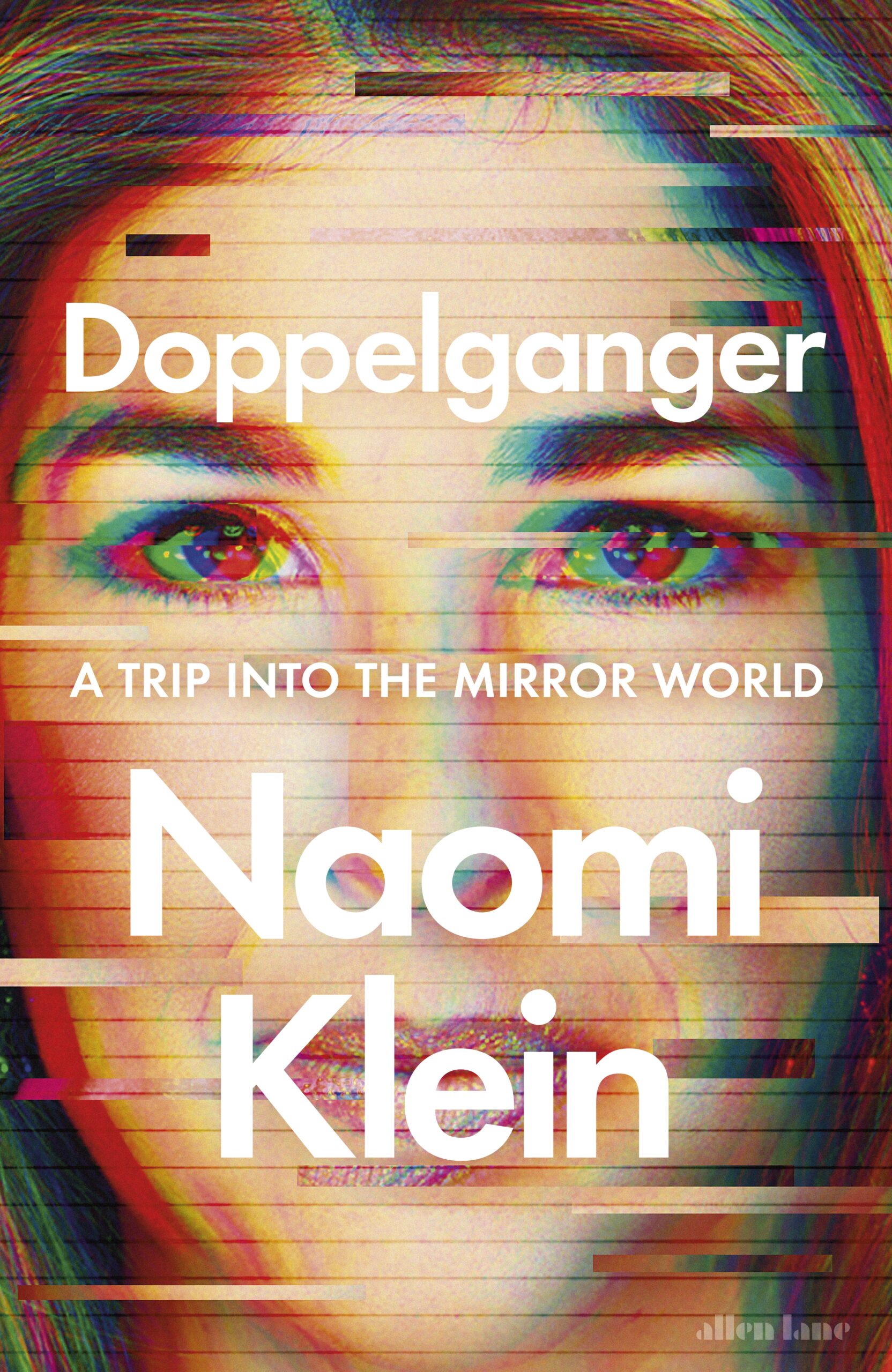
Doppelganger: A Trip Into the Mirror World by Naomi Klein (Canada) (Mistaken Identity)

– When Naomi Klein discovered that a woman who shared her first name, but had radically different, harmful views, was getting chronically mistaken for her, it seemed too ridiculous to take seriously. Then suddenly it wasn’t. She started to find herself grappling with a distorted sense of reality, becoming obsessed with reading the threats on social media, the endlessly scrolling insults from the followers of her doppelganger. Why had her shadowy other gone down such an extreme path? Why was identity – all we have to meet the world – so unstable?

To find out, Klein decided to follow her double into a bizarre, uncanny mirror world: one of conspiracy theories, anti-vaxxers and demagogue hucksters, where soft-focus wellness influencers make common cause with fire-breathing far right propagandists (all in the name of protecting ‘the children’). In doing so, she lifts the lid on our own culture during this surreal moment in history, as we turn ourselves into polished virtual brands, publicly shame our enemies, watch as deep fakes proliferate and whole nations flip from democracy to something far more sinister.

This is a book for our age and for all of us; a deadly serious dark comedy which invites us to view our reflections in the looking glass. It’s for anyone who has lost hours down an internet rabbit hole, who wonders why our politics has become so fatally warped, and who wants a way out of our collective vertigo and back to fighting for what really matters.

A Flat Place by Noreen Masud (Pakistan/UK) (Nature Writing Memoir)

– Noreen Masud has always loved flat landscapes – their stark beauty, their formidable calm, their refusal to cooperate with the human gaze. They reflect her inner world: the ‘flat place’ she carries inside herself, emotional numbness and memory loss as symptoms of childhood trauma. But as much as Britain’s landscapes provide solace for suffering, they are also uneasy places for a Scottish-Pakistani woman, representing both an inheritance and a dispossession.

Pursuing this paradox across the wide open plains that she loves, Noreen weaves her impressions of the natural world with the poetry, folklore and history of the land, and with recollections of her own early life, rendering a startlingly strange, vivid and intimate account of a post-traumatic, post-colonial landscape – a seemingly flat and motionless place which is nevertheless defiantly alive.

All That She Carried: The Journey of Ashley’s Sack, a Black Family Keepsake by Tiya Miles (US) (History)

– In 1850s South Carolina, Rose, an enslaved woman, faced a crisis: the imminent sale of her daughter Ashley. Thinking quickly, she packed a cotton bag with a few items. Soon after, the nine-year-old girl was separated from her mother and sold. Decades later, Ashley’s granddaughter Ruth embroidered this family history on the sack in spare, haunting language.

That, in itself, is a story. But it’s not the whole story. How does one uncover the lives of people who, in their day, were considered property? Harvard historian Tiya Miles carefully traces these women’s faint presence in archival records, and, where archives fall short, she turns to objects, art, and the environment to write a singular history of the experience of slavery, and the uncertain freedom afterward. All That She Carried gives us history as it was lived, a poignant story of resilience and love passed down against steep odds.

Code Dependent: Living in the Shadow of AI by Madhumita Murgia (India/UK) (Technology)

– What does it mean to be human in a world that is rapidly changing thanks to the development of artificial intelligence, of automated decision-making that both draws on and influences our behaviour?

Through the voices of ordinary people in places far removed from Silicon Valley, Code Dependent explores the impact of a set of powerful, flawed, and often exploitative technologies on individuals, communities, and our wider society. Madhumita Murgia, AI Editor at the FT, exposes how AI can strip away our collective and individual sense of agency – and shatter our illusion of free will.

AI is already changing what it means to be human, in ways large and small. In this compelling work, Murgia reveals what could happen if we fail to reclaim our humanity.

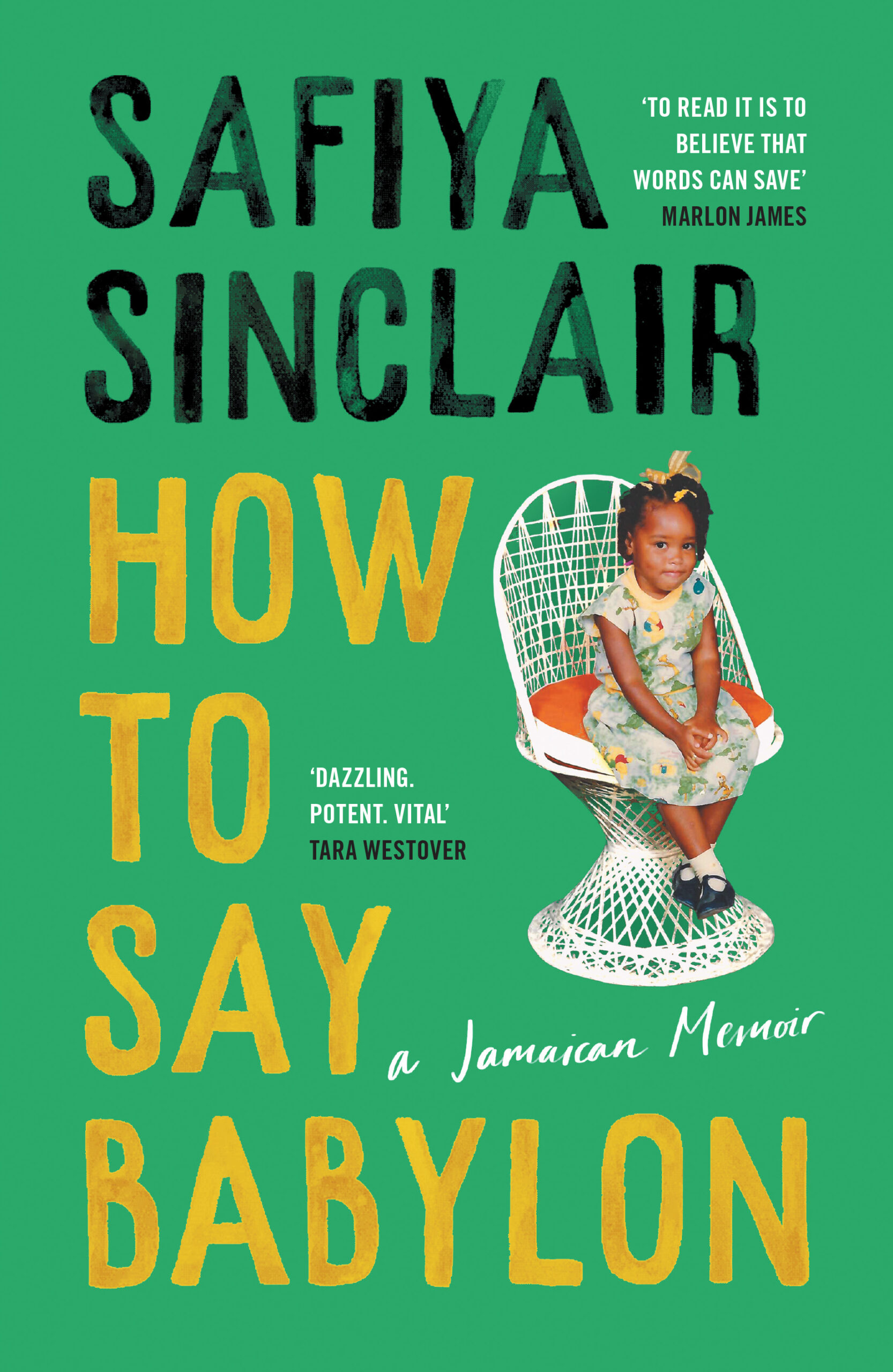
How to Say Babylon: A Jamaican Memoir by Safiya Sinclair (Jamaica) (Memoir)

There was more than one way to be lost, more than one way to be saved.

Born in Montego Bay, Jamaica, where luxury hotels line pristine white sand beaches, Safiya Sinclair grew up guarding herself against an ever-present threat. Her father, a volatile reggae musician and strict believer in a militant sect of Rastafari, railed against Babylon, the corrupting influence of the immoral Western world just beyond their gate. To protect the purity of the women in their family he forbade almost everything: nowhere but home and school, no friends but this family and no future but this path.

Her mother did what she could to bring joy to her children with books and poetry. But as Safiya’s imagination reached beyond its restrictive borders, her burgeoning independence brought with it ever greater clashes with her father. Soon she realised that if she was to live at all, she had to find some way to leave home. But how?

In seeking to understand the past of her family, Safiya Sinclair takes readers inside a world that is little understood by those outside it and offers an astonishing personal reckoning. How to Say Babylon is an unforgettable story of a young woman’s determination to live life on her own terms.

The Winner

The winner will be announced on the 13th of June 2024.

Have you read any of these titles? Anything here interest you? Leave a comment below letting us know if you have read or intend to read any of these titles.

Ockham New Zealand Book Awards Shortlist 2024

Earlier this month the shortlists were announced for the New Zealand Book Awards 2024. All four of the shortlisted authors have won the prize before. You can read my post on the 8 novels that made the longlist here.

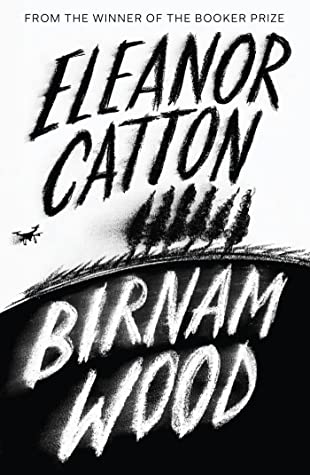
Eleanor Catton, who won the Booker Prize in 2013 for The Luminaries,(my review) is a finalist for her novel Birnam Wood (my review).

Emily Perkins, who won the Montana Medal for Fiction or Poetry in 2009 for Novel About My Wife is shortlisted with Lioness. (I read and enjoyed it, but not reviewed)

Pip Adam, who won the Acorn Foundation Fiction Prize in 2018 for The New Animals (recently read but not reviewed) is in the running with Audition. (On my bookshelf!)

Stephen Daisley, who won the first awarded Acorn Foundation Fiction Prize in 2016 for Coming Rain is a contender this year with A Better Place.

Judge’s Comment

Juliet Blyth, convenor of judges for the Jann Medlicott Acorn Prize for Fiction, says there is much to celebrate among this year’s shortlisted novels, and readers will be rewarded by the richness contained within their pages.

“These four singular and accomplished titles encompass pertinent themes of social justice, violence, activism, capitalism, war, identity, class, and more besides. Variously confronting, hilarious, philosophical, and heart-rending, these impressive works showcase Aotearoa storytellers at the top of their game.”

The Shortlist

The four novels shortlisted for the fiction prize, along with judges’ comments are:

Jann Medlicott Acorn Prize for Fiction

NZ book awards 2024 shortlist

Audition by Pip Adam, Te Herenga Waka University Press – [Science Fiction/Dystopia]

– A spaceship called Audition is hurtling through the cosmos. Squashed immobile into its largest room are three giants: Alba, Stanley and Drew. If they talk, the spaceship keeps moving; if they are silent, they resume growing.

Talk they must, and as they do, Alba, Stanley and Drew recover their shared memory of what has been done to their former selves – experiences of imprisonment, violence and misrecognition, of disempowerment and underprivilege.

A novel, part science fiction, part social realism that asks what happens when systems of power decide someone takes up too much room – about how we imagine new forms of justice, and how we transcend the bodies and selves we are given.

Judges’ Comment

Three giants hurtle through the cosmos in a spacecraft called Audition powered by the sound of their speech. If they are silent, their bodies continue to grow. Often confronting and claustrophobic, but always compelling, Audition asks what happens when systems of power decide someone takes up too much space and what role stories play in mediating truth. A mind-melting, brutalist novel, skillfully told in a collage of science fiction, social realism, and romantic comedy.

A Better Place  by Stephen Daisley, Text – [WWII visceral novel]

– a novel about brothers at war, empathy and the aftermath. Aged 19 in 1939, Roy and his twin brother Tony enlist in the NZ Infantry Brigade. They fight in Crete where Tony dies. Burdened by the loss of his brother, Roy continues to Africa and Europe.

Beautifully written, brutal, tender and visceral, A Better Place is about love in its many forms.

Judges’ Comment

The tragedies of war and prevailing social attitudes are viewed with an unflinching but contemporary eye as Stephen Daisley’s lean, agile prose depicts faceted perspectives on masculinity, fraternity, violence, art, nationhood and queer love in this story about twin brothers fighting in WW2. With its brisk and uncompromising accounts of military action, and deep sensitivity to the plights of its characters, A Better Place is by turns savage and tender, absurd and wry.

eco thriller tech billionaire New Zealand

Birnam Wood  by Eleanor Catton, Te Herenga Waka University Press – [Eco Mystery/Thriller(y)]

– an eco-thriller of sorts that considers intentions, actions, and consequences, an unflinching examination of the human impulse to ensure our own survival. Featuring green activists, politician farmer and his wife, a tech billionaire and the lone wolf investigative journalist with a past.

Judges’ Comment

When Mira Bunting, the force behind guerilla gardening collective Birnam Wood, meets her match in American tech billionaire Robert Lemoine, the stage is set for a tightly plotted and richly imagined psychological thriller. Eleanor Catton’s page-turner gleams with intelligence, hitting the sweet spot between smart and accessible. And like an adrenalised blockbuster grafted on to Shakespearian rootstock, it accelerates towards an epic conclusion that leaves readers’ heads spinning.

Lioness by Emily Perkins, Bloomsbury – [Literary Fiction/Blended Family, Second Wife Drama]

– a novel of a woman’s self doubt and shifting place in second family’s and relationships.

Trevor and Therese are a power couple living in the capital city, he is a developer and she runs a chain of fashion boutiques. That’s the exterior. At home, there is his adult family (issues) to contend with and her uncertain place in a scenario that is rapidly shifting when his deals come under scrutiny and his children make increasing demands. Increasingly, she finds refuge elsewhere, inviting another kind of risk into her precarious existence.

Judges’ Comment

After marrying the older, wealthier Trevor, Teresa Holder has transformed herself into upper-class Therese Thorn, complete with her own homeware business. But when rumours of corruption gather around one of Trevor’s property developments, the fallout is swift, and Therese begins to reevaluate her privileged world. Emily Perkins weaves multiple plotlines and characters with impressive dexterity. Punchy, sophisticated and frequently funny, Lioness is an incisive exploration of wealth, power, class, female rage, and the search for authenticity.

Winner Announced

The winners will be announced on 15 May during the Auckland Writer’s Festival.

Dublin Literary Award Shortlist 2024

Back in January, the Dublin Literary Award 2024 announced a longlist of 70 books nominated by 80 libraries including librarians and readers, from 35 countries around the world.

Six novels have now been shortlisted for the award, featuring authors who are American, Canadian, Australian, Romanian and Irish, nominated by public libraries in Romania, Germany, Jamaica, Canada and Australia.

The only one I have read, and it was a 5 star read for me is Sebastian Barry’s Old God’s Time (see my review here) I include the judges’ comments below to help you decide if you are interested in reading any of the nominated titles.

Solenoid sounds interesting and has been highly praised, but 840 pages is too grand of an ask for this reader. Praiseworthy is tempting, but again 740 pages!

The Shortlist of Six Novels

Old God’s Time by Sebastian Barry (Ireland) (literary fiction)

– Retired policeman Tom Kettle is enjoying the quiet of his new home in Dalkey, overlooking the sea. His peace is interrupted when two former colleagues turn up at his door to ask about a traumatic, decades-old case. A case that Tom never came to terms with. His peace is further disturbed by a young mother who asks for his help. And what of Tom’s wife, June, and their two children? A beautiful, haunting novel about what we live through, what we live with, and what will survive of us.

Judges’ Comments

Old God’s Time by Sebastian Barry is a book about love. It’s a world of precarious balancing, a high wire act in which the ghosts of the past intermingle with the challenges of the present. Here a retired policeman settling into a new stage in his life faces the legacy of an old case. This exploration of trauma, childhood abuse in catholic institutions, memory and the lingering impact of loss is devastating. It deftly avoids the trap of solely being one note in that regard. Barry does something clever here where he elevates the work beyond the confines of its themes into a reading experience that often feels transcendent despite the painful subject matter. It’s impossible to read this novel and not be moved by its mercurial power, the ways in which it shifts ideas of human consciousness. This is a beautiful and, in some ways, tender work. Full of heart, risk and that illusive, rare quality the best storytellers possess, it marks Barry, one of our most gifted talents as a writer who continues to invigorate the novel form. 

‘Outstanding, a revelatory and deeply affecting work. Barry’s meditation on trauma, memory and loss is a book about love that lingers in the body long after reading it.’ — Irenosen Okojie, 2024 Dublin Literary Award Judge

Solenoid by Mircea Cărtărescu, translated by Sean Cotter (Romania)

– Based on Cărtărescu’s own role as a high school teacher, Solenoid begins with the mundane details of a diarist’s life and spirals into a philosophical account of life, history, philosophy, and mathematics.

On a broad scale, the novel’s investigations of other universes, dimensions, and timelines reconcile the realms of life and art. Grounded in the reality of late 1970s/early 1980s Communist Romania, including long lines for groceries, the absurdities of the education system, and the misery of family life.

Combining fiction, autobiography and history, Solenoid ruminates on the exchanges possible between the alternate dimensions of life and art within the Communist present.

Judges’ Comments

We can imagine (it not fully grasp) a world that has, in comparison to our own, an extra dimension.” In some respects, this is the world of Solenoid. The city of Bucharest in which the narrator is a teacher and failed writer is a place in which what appears to be an abandoned factory contains unexpected caverns, tunnels and a gallery of enormous parasites, where an apparently ordinary, run-down house is built upon an electrical device that causes people lying in bed to float. By turns wildly inventive, philosophical, and lyrical, with passages of great beauty, Solenoid is the work of a major European writer who is still relatively little known to English-language readers. Sean Cotter’s translation of the novel sets out to change that situation, capturing the lyrical precision of the original, thereby opening up Cărtărescu’s work to an entirely new readership.

‘An anti-novel that for all intents and purposes should not exist but still does despite itself, thanks to the overpowering talents of the author and the translator.’ — Anton Hur,  2024 Dublin Literary Award Judge

Haven by Emma Donoghue (Ireland) (historical fiction)

– In 7th-century Ireland, a scholar/priest called Artt has a dream telling him to leave the sinful world behind. Taking two monks – young Trian & old Cormac – he rows down the river Shannon in search of an isolated spot on which to found a monastery. With only faith to guide them and drifting out into the Atlantic, the three men find a steep, bare island, inhabited by tens of thousands of birds, and claim it for God. In such a place, what will survival mean? What they find is the extraordinary island now known as Skellig Michael.

Judges’ Comments

A novel of stylistic precision yet ethical complexity, Haven tells the story of three monks in seventh-century Ireland in search of a place of retreat from worldly temptation. Their journey by boat to a barren islet allows the com- plex interaction between experience and idealism to be revealed and subtly explores the importance of evolving human bonds in shaping community. Haven’s searching treatment of authority, and the tensions between rigid beliefs and openness of thought, extend beyond interpersonal dynamics to our relationship with the natural environment. The world Emma Donoghue creates in this novel is at once strange and familiar, provoking us to think deeply about the importance of human empathy in navigating our place on this earth.

‘A novel of stylistic precision yet ethical com- plexity, Haven offers a searching treatment of authority, examining the implications of fixed beliefs for our relationships with each other and with the more-than-human world.’ — Lucy Collins, 2024 Dublin Literary Award Judge 

If I Survive You by Jonathan Escoffery (USA/Jamaica) (Short Stories)

–  In the 1970s, Topper and Sanya flee to Miami as political violence consumes their native Kingston. But America, as the couple and their two children learn, is far from the promised land. Excluded from society as Black immigrants, the family pushes on first through Hurricane Andrew and later the 2008 recession. But even as things fall apart, the family remains motivated by what their younger son calls “the exquisite, racking compulsion to survive.”

Pulsing with vibrant lyricism and sly commentary, Escoffery’s debut unravels what it means to be in between homes and cultures in a world at the mercy of capitalism and white supremacy.

Judges’ Comments

Jonathan Escoffery’s energetic novel-in-stories, If I Survive You, follows a Jamaican family living hand-to-mouth in Florida. The different members of the family search for a foothold in this new and exhausting country, each in their own way, struggling against poverty, racism, recession and hurricanes. At the heart of the story lies a deep-rooted racial ambiguity; where does one belong and is it possible to be “a little of this and a little of that” and still find your way, find your people, find a future? The story also deals with the universal condition of fatherly rejection and sibling rivalry, with a remarkable eye for perfect de- tails. The narrative is vibrant, humorous, snappy and quietly devastating; eight interlinking stories told by various voices, often from an urgent and empathetic second-person point of view, and also in Jamaican dialect, that describe how life keeps knocking the family back in their pursuit of identity and happiness.

‘A fresh voice in fiction, Jonathan Escoffery blurs the lines between the short story and the novel in a work that brings us into the lives of Jamaican-Americans in Miami. Through linked stories, the form mirrors the lives of the characters and their struggles to connect, both with their families, and with the society around them.’ — Chris Morash, 2024 Dublin Literary Non-Voting Chair

The Sleeping Car Porter by Suzette Mayr (Canada) (Historical Fiction)

– It’s 1929, and Baxter is considered lucky, as a Black man, to have a job as a porter on a train that crisscrosses the continent. He has to smile and nod for the white passengers when they call him ‘George.’ He’s obsessed with teeth, and saving up tips for dentistry school.

On this trip, the passengers are unruly, especially when the train is stranded for days – their secrets leak out, blurring with Baxter’s sleep-deprivation hallucinations. When he finds an illicit postcard of two men, Baxter’s longings are reawakened; keeping it puts his job in peril, but he can’t part with it or his memories of a certain Porter Instructor.

Judges’ Comments

An unconventional historical novel that combines meticulous research and deep imagination, The Sleeping Car Porter by Suzette Mayr takes readers on a vividly depicted train ride in the 1920’s from the perspective of a Black and queer sleeping car porter as he tries to make a life that is a little less precarious and a lot more hopeful despite the odds stacked against him. As the train travels through the rural Canadian landscape, Baxter, the porter of the title, similarly traverses the vistas of memory, the reality that surrounds him, and his hopes and visions of the future on his own interior journey of discovery and self-creation. Written in a concise yet evocative style, this slim novel combines the epic scope of history with the lift and verve of ghost stories and queer narrative, creating a quietly propulsive read that at the same time takes stock of an entire life in the space of a single train voyage.

“He drinks melting glacier, plunges his hands into the water past the point of ice just to wake himself up and calm himself down. He ascends into the vestibule, his legs shaky, his hands icy numb.”

‘You can almost taste the exhaustion and despair in this quiet, yet vivid, story of a black man working as a porter on a sleeper train in Canada in 1929. Beautifully written, melancholy but never without hope.’ Ingunn Snaedel, 2024 Dublin Literary Award Judge

Praiseworthy by Alexis Wright (Australia) (Literary fiction)

–  In a small town in northern Australia dominated by a haze cloud, a crazed visionary sees donkeys as the solution to the global climate crisis and the economic dependency of the Aboriginal people. His wife seeks solace from his madness in the dance of moths and butterflies. One of their sons, called Aboriginal Sovereignty, is determined to commit suicide. The other, Tommyhawk, wishes his brother dead so that he can pursue his dream of becoming white and powerful.

Praiseworthy is a novel which pushes allegory and language to its limits, a cry of outrage against oppression and disadvantage, and a fable for the end of days.

Judges’ Comments

Alexis Wright’s Praiseworthy is a wonder of twenty-first century fiction. This modernist more-than-an-allegory about a pernicious haze that settles over a northern Australia town yokes a painfully contemporary tale of political, social and climatic disaster to a narrative consciousness embodying 65,000 years of aboriginal survival. Intimate while epic, the family drama at its center reads like chamber music on a symphonic scale. Wright has authored a blisteringly funny book, replete with situations and speech that elicit wild laughter – a laughter through tears we may recognize from our readings of Beckett and Kafka. She has also written a beautiful one: time and again Praiseworthy delivers unforgettable images, from ‘aerial rivers’ of dancing butterflies to hordes of stinking donkeys. Startlingly original, fiercely political, uncompromising in every respect, Praiseworthy expands the possibility of the novel form.

‘Funny and fierce, Alexis Wright’s Praiseworthy is a wonder of twenty-first century fiction. This modernist more-than-an-allegory yokes a painfully contemporary tale of political, social and climatic disaster to a narrative consciousness embodying 65 000+ years of aboriginal survival.’ — Daniel Medin, 2024 Dublin Literary Award Judge

Reading From Libraries

The novels nominated and shortlisted for the Award will be available for readers to borrow from Dublin City Libraries and from public libraries around Ireland, or can be borrowed as eBooks and some as eAudiobooks on the free Borrowbox app, available to all public library users.

Have you read any of the shortlist? Are you tempted by any of these titles? Let me know in the comments below.
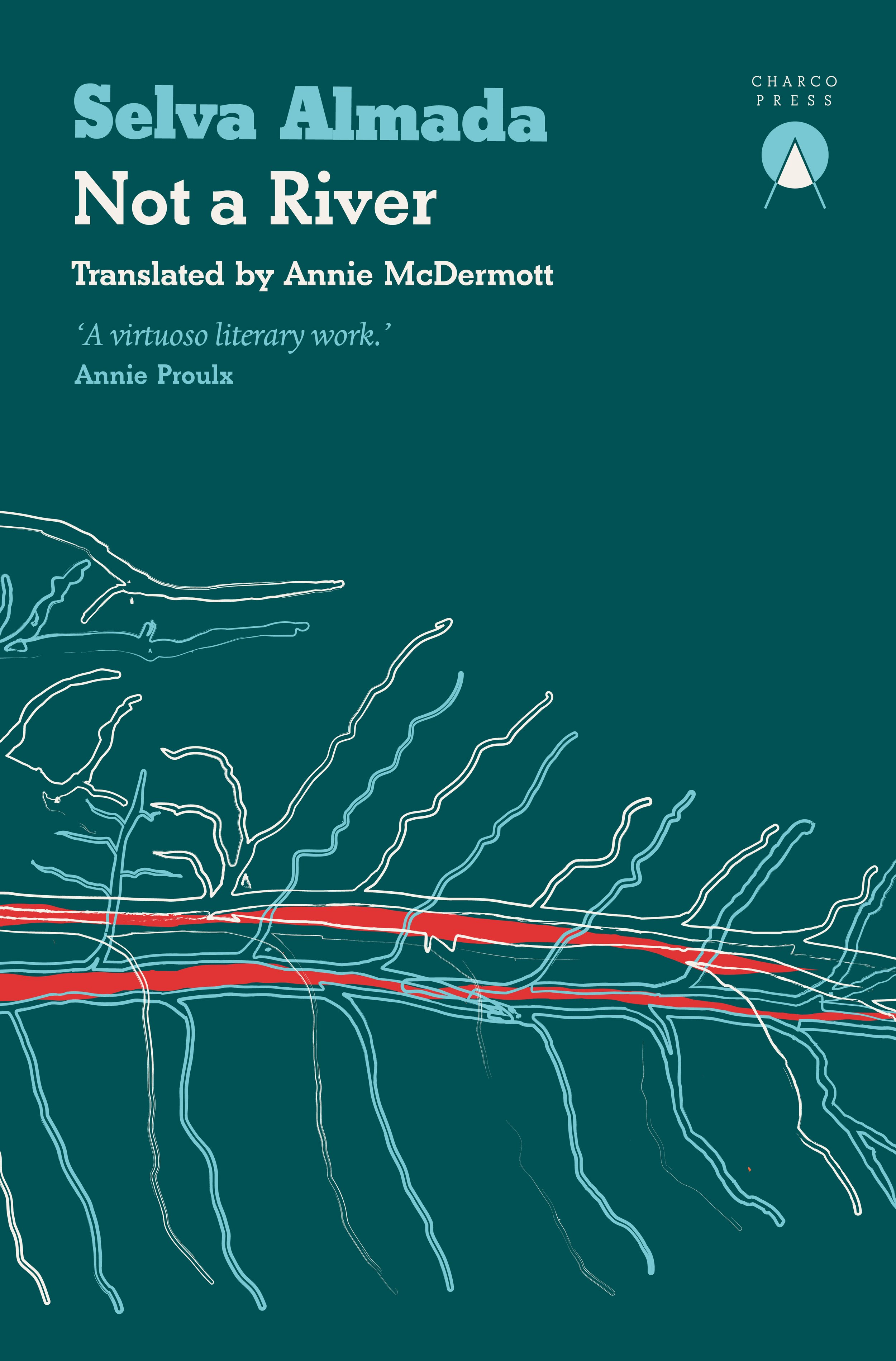
In Ordinary Time, Fragments of a Family History by Carmel McMahon #ReadingIrelandMonth24

In Ordinary Time is one of those wonderful finds, when a number of your own disparate interests collide and someone has managed to put together a work that spans years, across two countries, reflecting on different events in their own life and the background of a country and culture’s history, with these continuous threads running through it, that make it almost seamless.

In a hybrid memoir, Carmel McMahon has written fragments of a family history, structuring them into four parts of three chapters, beginning with Part One: Imbolc: February, The Feast of Saint Brigid and ending in Part Four Samhain: January, Notes on A Return where the story comes full circle.

There are 21 black and white illustrations scattered throughout the text, ordinary photos that amplify the message and create a sense of travel through time. I looked back at the index page for each photo and scribbled my penciled note underneath it, such was the joy of words meeting image.

Full circle feels appropriate to describe a work that despite that linear structure of months and parts, is not that. Rather, it represents points on the spiral of life that goes through cycles; repeating cycles, short cycles, long cycles, interconnected and intergenerational cycles.

Each of the events that she describes in her family history have a shadow history in the culture and while she reflects on her own situation, she finds resonance in the voices of others who have gone before, in particular those whose story we might not have heard, or if we have, might not have been aware of the full picture.

Her story begins somewhere in the middle of her own self-imposed exile, living in New York City. It voyages through her experience with addiction, denial and recovery and ends with the heroine’s return, the learning and this book.

The city had not yet woken on the frigid Sunday morning of February 20, 2011, when the body of a young Irish woman was found outside St. Brigid’s Church in Manhattan’s East Village. The news reports cited alcoholism, homelessness, and hypothermia as contributing factors in her death. They said that earlier that month, on St. Brigid’s feast day she had turned thirty-five years old. They said she wanted to be an artist. They said her name was Grace Farrell.

Photo by C1 Superstar on Pexels.com

She questions whether it begins here, or in 1937 when the new Irish state ratified its constitution to reflect a strengthened church-state partnership, that would have a devastating effect on thousands of lives of girls and women and their children, and the unborn future generations who might inherit that affected DNA. All those sent to the Magdalene laundries.

In 1966, her mother would live a version of the shame that surrounded pregnancy out of wedlock, managing to avoid institutional incarceration by disappearing for a while.

Women and children were not afforded the rights of citizenship, of subjecthood, of being. They lived under threat of being erased, hidden, buried. This is why my mother tells me – halting, hesitating – that in her day it was the worst thing in the world for a girl to find herself pregnant, but worse still was for her to talk about it.

That first sister Michelle, born in London, would be knocked down outside her primary school, three months before Carmel was born. Six more children arrived after her and Michelle’s name was never spoken in their house. The legacy of silence she had been born into continued, was passed on, but not forgotten.

Or did the story begin when she had her first drink at the age of ten, at a family gathering? Feelings of inferiority and shame, dulled by the dregs of the adults drinks that replaced that unwanted feeling with one of warmth, of a circle of golden light.

McMahon left Ireland in the 1990’s and did not return permanently until the pandemic era, 2021. Ironically, it seems to this reader, the return has allowed the distance to reflect on the journey and the learning and to piece the interconnectivity of so many people’s lives past, present and future into this text.

Science has proven and is now able to show how stress and trauma can be passed on biologically from one generation to the next, we read.

We know that now. Vehicles of transportation include, according to the scholar of memory studies Marianne Hirsch, “narratives, actions and symptoms.” The stories we tell and don’t tell, the actions we take and don’t take, the symptoms expressed by a mother holding the trauma tightly to herself, because she refused to burden her children with it.

Listening to the podcast On Being, she hears Dr. Rachel Yehuda reminds listeners that:

…we are not in biological prison: experiences and events in our environment can also make positive changes to our programming. We can consciously move towards healing.

These intertwined fragments thus reveal the events, experiences and the slow realisation of all that is working on her, the understanding and the aspects that will aid the healing.

Photo by Jessie Crettenden on Pexels.com

There are the endless jobs she tries to hold down, while numbing herself nightly; the visits back home precipitated by tragedy, the road trip across America, an escape that brings her closer to understanding loss and aloneness.

The industrial ghost towns, the late spring rain, the wide, low skies. The old sadness rising. An excess of black bile, they used to say, made the melancholic personality. Freud said that mourning and melancholia are akin in that they are both responses to loss. Mourning is a conscious and healthy response to the loss of a love object. Melancholia is more complicated. It operates on a subconscious level. All the feelings of loss are present, but for what? The melancholic cannot say. This, Freud says, is a pathology.

McMahon reads and shares anecdotes and reflections on the lives of other women who immigrated before her; the young Irish immigrant Maeve Brennan who was a staff writer at the New Yorker before the disease of alcoholism colonized her life; Mary Smith, one of many Irish women used for gynecological experiments in New York hospitals in the mid nineteenth century; Grace Farrell.

After a family tragedy, she reads Anne Carson’s Nox, a book of poems created from the notebook she recorded memories and impressions of her brother, in the decade after he died.

She did this, she tells us, because a brother does not end. He goes on.

She reflects on the Famine, on the role of church and state, on the complicit silences and forgetting, on the advances that were made at the expense of the vulnerable, the now removed statues, the little known memorials of the unnamed. She acknowledges the collective impact of a nation’s traumas on individuals and families with brief insights (her own and Carl Jung’s) into a way forward, towards speaking up, sharing stories, creating meaning, allowing space for healing, for moving towards the light, to enable the passing on of a lighter legacy to future generations.

Sharing her story is part of that, not just for the writer herself, but for those who might find resonance in her journey, towards their own. And to remember the forgotten, the ordinary women like Mary Smith.

I could not put this book down, despite wishing to make it last. Though it is a collection of essays, some of which have been previously published, the threads that run through it make it read like a memoir, perfectly balancing the personal stories with the background history, questioning the effect of both on a young woman’s psyche.

Highly Recommended.

Further Reading

Guardian Review: In Ordinary Times: the trials of inherited trauma, Carmel Mc Mahon uses her own story of emigration, uncertainty and alcoholism as one thread in a wider historical tapestry

RTE Radio1 Interview: Carmel McMahon on The Ryan Tubridy Show – (18 mins) – on New York, family tragedy, drinking and the legacy of ‘pidgin emotion’

Guardian Books: Anne Enright: In search of the real Maeve Brennan

JSTOR: Owens, Deidre Cooper, Irish Immigrant Women and American Gynecology: In Medical Bondage: Race, Gender, and the Origins of American Gynecology, 89–107. University of Georgia Press, 2017. 

Carmel Mc Mahon, Author

Carmel Mc Mahon grew up in County Meath, and lived in New York City from 1993 – 2021, when she returned with her partner to renovate a house on Ireland’s west coast.

A graduate of CUNY, her writing has been published in the Irish Times, Humanities Review, Roanoke Review, Longreads and shortlisted for the Hennessy Literary Award.