Daphne’s Dilemma – Part I

Daphne is pregnant.

She is no longer my teat sucking, sun frolicking pet calf, she has matured into a fully grown cow. She doesn’t even look like my Daphne anymore – but I know it is her because I recognize the familiar black and white patchwork pelt she wears and she still walks up to me in the paddock, something no other cow will do.

I no longer feed her milk from a bottle, nor offer my hand to her once willing, hungry mouth; the welcome teat substitute she liked to suckle in a noisy rhythmic motion, her rough sand-paper like tongue producing sticky foam milk bubbles from the sides of her mouth. She is almost ready for milking now. We will be digesting the warm, nutritious contents of her udder with our Weet-Bix very soon.

CowWhen I say she doesn’t look like my Daphne anymore, it is her face that I am referring to. When she was a calf she had an eager, yearning sort of facial expression, a hungry face, hungry for her next feed and starving for my affection. Now she has a mature cow’s face – I’ve noticed that with all the calves, when they grow up they stop smiling. Something happens as their facial features mature that makes their grown up expression more like a frown than a smile, they no longer exhibit the contentedness of frolicking calves, high on powdered milk and the scent of fresh spring pastures.

So Daphne has a mature grown up look now, but despite this I know she remembers me, even though those baby calf memories of less than two years ago for me, are the equivalent of nine cow years ago for her.

Sweet scented Daphne is both my mother’s favorite fragrant, flowering shrub and the name of her mother, our Nana. I have always loved this name and thought that everyone would understand and appreciate the gesture, to name my pet calf after my very dear grandmother and something sweet-smelling and adored by my mother. Unfortunately my parents didn’t agree, though they allowed me to keep the name, they just made sure that Nana was never to learn of the esteemed honor I had gifted her.

Daphne is really fat now, she has a baby calf inside her and this morning at breakfast Dad announced she is ready to drop. At lunch there is a call from a neighbor to say he has seen a cow in distress down by the airstrip gate. Although I don’t hear the words myself, I can tell from what Dad is saying that it is my Daphne. I know because I feel this terrible pain in my chest and stomach, my heart is beating way too fast, there is a dry lump in my throat and I can’t even finish my favourite cold roast lamb and home-made chutney sandwich. I haven’t experienced a feeling like this since Annie died.

“Better go take a look” Dad says, placing the receiver of the party line telephone back on its cradle and ringing off one short to let callers know the line is free. There are few secrets in this neighborhood when four families share one telephone line and bored operators sit with nothing better to do than listen in. I imagine by tonight everyone will have heard about Daphne.

“I’m coming too” I say, pushing back my chair and getting up from the table.

“No, you stay put for now, finish your lunch and help your mother clean up first. I’ll bring ‘er up to the yards next to the shepherd’s cottage. You can meet us up there. It’s best not to have too many people around, you know they’re warrant to get a bit spooked and we don’t want ‘er taking fright and bolting off down by that big hole.”

“Alright” I mutter, slumping back in my chair, arms crossed, appetite ruined. I know what he says makes sense, though I don’t believe she will be scared off because of me. More likely those yapping dogs that never listen when you shout ‘Shut Up!’ or ‘Get in behind!’ I’d like to say, but don’t.

Animals’ giving birth is a common and natural event in the spring, although here it is more common to see thousands of sheep giving birth, not so many cows and a very large pet giving birth is a new experience for us. Pet lambs always go back into the main flock before they became adult sheep, so we never know whether they give birth or not, but despite the familiarity with animals giving birth, I am worried about Daphne.

I too have matured in these past two years, I am about to go off to boarding school in the city away from my family; I know I am old enough not to become attached to farm animals, but somewhere in a dark chamber of my mind, a closed-door of slumbering memories has drifted open and I cannot stop the rush of disturbing flashbacks which enter my mind and begin to replay that terrible thing that happened to Annie.

Daphne’s Dilemma – Part II 

The Hidden Lamp edited by Florence Caplow

Stories from Twenty-Five Centuries of Awakened Women

The Hidden LampThe Hidden Lamp is a rich source of feminine wisdom, a compilation of one hundred stories, some a mere paragraph long, each one chosen by one woman and commented on, sharing a contemporary perception of how that text speaks to her.

We as readers have the opportunity to receive the wisdom of the original text, reflect on it ourselves, observe the comments of the woman who has chosen to share it with us, often with a personal anecdote in this unique collection of twenty-five centuries of awakened women – those who in Buddhist terms have gained enlightenment.

Most well-known Zen stories or koans (according to American Zen Master, poet and author Zoketsu Norman Fischer) come from three collections Blue Cliff Record (12th C), The Book of Serenity (12th C), and The Gateless Barrier (13th C) and are an almost exclusively male domain.

In this collection, we find the long missing stories of women, shared in a unique collaborative style between its editors and commentators. Many of those interpreting the texts are Zen teachers and many others come from a wide range of Buddhist traditions and lineages, lending the collection an open-minded virtue, accessible to all, whether male or female, and regardless of knowledge of Buddhism philosophy and practice.

“Koans are powerful and succinct stories, most often about encounters between Zen teachers and students. They can be playful and humorous, mysterious, opaque or even combative.”

It is an invitation to consider what has been said, to ponder it and respond ourselves.

Reading the stories make fables seem like children’s stories. These excerpts often require an extraordinary stretch of the imagination to understand and there will be some we are simply not ready to interpret.  For those who have studied them, their revelations have often taken months or even years to realise.  Thanks to the commentaries, we can at least read of another’s insight although this does not in all cases necessarily bring clarity. We must accept that we are not yet ready for their learning.

Joko Beck

Charlotte Joko Beck

One of the first stories came from Peg Syverson’s reflection after listening to Joko Beck* give a talk. A young man raised his hand and bluntly asked “Are you enlightened?” to which she replied “I hope I should never have such a thought!”

Peg Syverson shared that she had thought of this exchange many times since she first heard it, that many of the things this teacher of hers said, surprised her. She likened it to another story of a Japanese master Nan-in, serving tea to a professor, pouring the tea until the cup filled and then overflowed, and still he continued to pour until the professor said, “It is overfull! No more will go in!”

“Like this cup”, said Nan-in, “you are full of your own opinions and speculations. How can I show you Zen unless you first empty your cup?”

The responses are often unexpected and penetrating. Their meaning isn’t obvious on first reading, they require us to look at the question, and at what those who ask are bringing along with the question. Syverson recounts her own audience with Joko, the question she was required to ponder and respond to, then despite several weeks of contemplating an answer, when she gave it, would receive another insightful, thought-provoking response, which upon reflection, changed the nature of her relationship with her son, the subject of her initial question. The clarity of the teacher’s mind in responding so succinctly is astonishing.

The answers seem nearly always to require that you go away and reconsider the exchange, eventually revealing the answer that perhaps was always within you. It is a kind of active learning, rather than the passive receipt of an interpretation and response, which can easily be set aside or forgotten.

The Hidden Lamp is not a book to read in one sitting, it is a reference to draw on now and then and a rich source of ancient feminine wisdom and modern thought, whose content is valid for one and all. Some of the names of the women in the book will be well-known and others less so, however their contributions might as well be nameless, as it is the story that brings the richness to the reader, the reputation of all the contributions having already been established.

His Holiness the 14th Dalai Lama of Tibet

His Holiness the 14th Dalai Lama of Tibet

Personally I always have at least one text of Buddhist thought/philosophy on the bedside table, I find them a quiet source of intellectual wisdom that easily resonates with my own world view.

Whether it’s a collection like this or one of the many excellent works of the Dalai Lama, or the pocket books of Pema Chodron, they all share a wisdom that comes from the practice of kindness, empathy and altruism while providing a prism of compassion through which to observe our everyday thoughts and encounters. A kind of preventative medicine for the mind, these awakened beings have spent years pondering the nature of suffering and both their practices and their words are a thoughtful guide and nurturing remedy to all negative emotion or thought.

* Joko Beck (American, 1917 – 2011) was a pianist and mother of four, who began Zen practice in her 40’s, founded two schools and wrote two books Everyday Zen: Love and Work and Nothing Special: Living Zen.

Note: This book was an Advance Reader Copy(ARC) provided by the publisher via NetGalley.

Alice Munro wins Nobel Prize for Literature

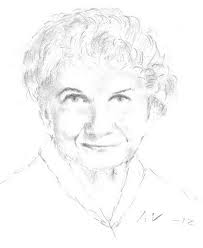
Alice MunroShe was a favourite to win the prize, but appears not to have been aware of being nominated, no doubt she has been enjoying her retirement from writing fiction announced earlier this year.

Alice Munro is the 13th women to have won the Nobel Prize for Literature, news to which according to the Guardian, she is said to have responded “Can this be possible? Really? It seems dreadful there’s only 13 of us.”

Not just a resounding win for a short but growing list of women writers finally being recognised, but a victory for readers and writers of the short story, Munroe’s strength and preference.

Could it be a sign that the short story is making a comeback? It is something I wonder about in one of my very first blog posts entitled Why People Don’t Read Short Stories which is a tribute to the form and a reminder of the joy short story collections can bring.

short stories

Alice Munro

aliceBorn: July 10 1931, Wingham, Ontario, Canada

Educated: 1949-51 University of Western Ontario

Books:     1968 Dance of the Happy Shades

1971 Lives of Girls and Women

1974 Something I’ve Been Meaning to Tell You

1978 Who Do You Think You Are?

1983 The Moons of Jupiter

1986 The Progress of Love

1990 Friend of My Youth

1994 Open Secrets

1996 Selected Stories

1998 The Love of a Good Woman

2001 Hateship, Friendship, Courtship, Loveship, Marriage

2004 Runaway

2006 The View from Castle Rock

2009 Too Much Happiness

2012 Dear Life

Further Reading:

Feature Article Alice Munro: Riches of a double life, the Master of the contemporary Short Story, Guardian 2003

Shoes Hair Nails, Fragments of the Whole

In October 2012 a pair of Marie Antoinette silk slippers were put up for auction on the anniversary of her execution.

Marie Antoinette silk slippers

Marie Antoinette silk slippers

I knew about it because I use BBC News texts rewritten for learning purposes to teach English to mature French students; it keeps the lessons interesting and relevant, no more “Brian is in the kitchen” or “Michelle is at the swimming pool”, now we can introduce rich new vocabulary such as guillotine, opulent, goes under the hammer, scaffold, artefacts and tyranny and more importantly, improve competence and confidence in the art of conversation and communication.

Knowing that the author Deborah Batterman had written a collection of short stories with Shoes in the title, I tweeted her a link to the Marie Antoinette story. She offered me a copy of her book and though I warned her shoes, hair and nails weren’t my thing, if she was willing to risk sending me her book, I’d read it. While I was keen to read the stories, I admit that I hesitated at the Cinderella type image on the cover, which may explain why in my reading, I began to rename the stories as I went, partly to help remember them, but also to reclaim them and give them the credit I believe they deserve.

Shoes Hair NailsThe stories are like vignettes, fragments, captured moments in time and life that feel familiar, even if the experiences are not what we know. Because in reading we inhabit the character and Batterman has a cathartic way of writing that puts us in the shoes of her protagonist, we understand implicitly what it was like to be there and to live through that experience.

She articulates instinctive, feminine sensitivities, fears, and concerns we will all recognise and yet struggle to put into words ourselves, and why bother when one can sit back with this gentle, funny and considerate collection of stories which take us to those places without the struggle to explain ourselves and may even help us feel better about facing similar issues.

Here is a glimpse into a few of the stories:

Vegas or as I think of it Last Trip to Vegas – Not wishing to acknowledge, even less to accept that Norman is at the stage where he needs care other what he can provide himself, his son Kevin takes him and the family off for a weekend trip to Las Vegas, hoping that the familiar experience will reignite those no longer charging cells in his decrepid body and somehow turn back the clock.

“Kevin argues with the doctors, reminds them of studies showing how physical stimulation helps not only the body, but the mind too. He knows Norman cannot live with us, refuses to think of any alternative. Except this one. He will take his father to Las Vegas, the place he loved more than any place on earth. The place that bombards the senses every which way you turn, every hour of the day… If the body has memory, Kevin reasons, this is the place to bring it back.”

It’s an entertaining trip and not on account of the expected offering of the casino city. It’s like Norman’s last stand and he has a whale of a time, as his family come to the realisation that they have up until now been avoiding. That there is no going back, the body is not a machine we can put in reverse, or slow motion, or pause. I loved this story and think it would make a better movie than that one about those three blokes who go to Vegas – and anyone experiencing mixed emotions with their parents going through the ageing process will appreciate the laughs and the stark realities of this tale.

kittens learningCrazy Charlotte – I think of this story as The Innocents, about a girl who wants to befriend a family living outside accepted social circles, who are the subject of gossip. She is intrigued by them all, Charlotte the mother is unlike anyone she has ever met and wants to give her children a broader education even if that means occasionally keeping them at home so they can visit an exhibition or see the birth of kittens. Charlotte isn’t crazy, but she allows one little girl to see the world through different eyes.

Nails, I think of as The Unfortunate Inheritance and it is appropriate that it also features in the title, because it is a deeply memorable story that reads like a novel and one that I could easily have kept turning the pages for and delved even deeper into all those characters with their Shimmering Reds or Deathless Velvet or whatever it was they wore on their nails, the references to nails actually reminded me a little of that “Where’s Wally?” character, the way they turned up in the most unlikely places, with regular consistency.

The protagonist moves on from a relationship and into an apartment on the 8th floor, already populated by complex, interconnected characters, whose lives and jealousies and pasts we begin to learn something of. Everyone arrives or is already ensconced with their baggage, physical and emotional, created or inherited, a stray dog, a piano, memories of a previous relationship, a past job. And sometimes an inheritance doesn’t make life any easier at all, in fact it can be lethal.

Deer Crossing2In Defensive Driving or as I recall it, Lesson 1 : The Many Effects of Deer, a woman and her husband find themselves in a random group of people, some of whom are there for similar reasons to their own, others because they have no choice. Regardless of their reasons, they all bring their many perceptions, which will be altered significantly by what occurs in lesson 1.

An inspiring collection of stories I recommend.  And even though I said I’m not into shoes, this post inspired me to seek out another book I’m going to revisit and share with you soon, more about shoes as art and inspiration, coming soon…

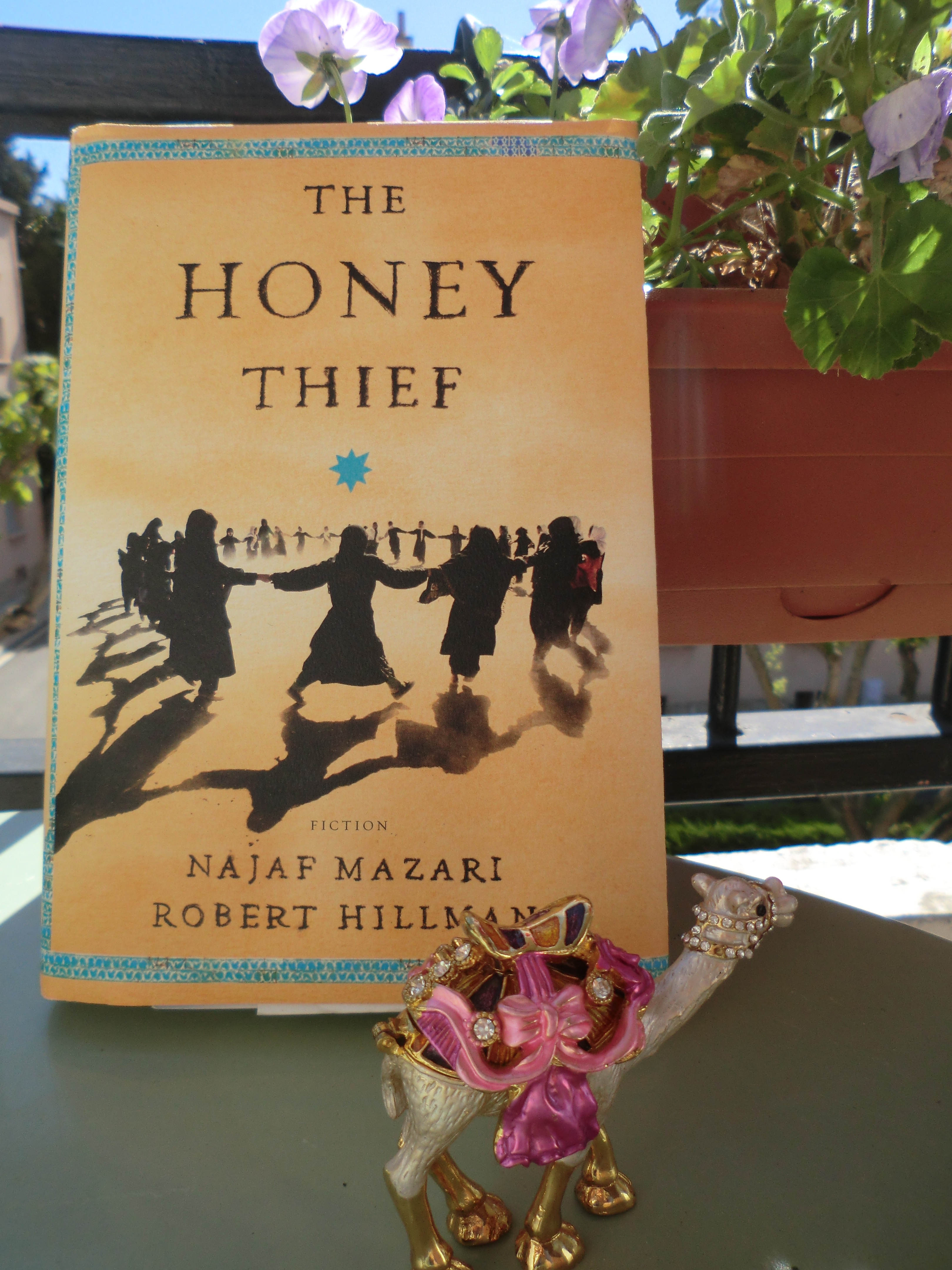
The Honey Thief Stories and Recipes by Najaf Mazari, Robert Hillman

I requested The Honey Thief to read because it appeared to offer a unique insight into a culture we know little about and about which we see and read far too much negative press.

The Honey ThiefThe book promised an alternative perspective, not because the author had lived an extra-ordinary life, but because as part of his upbringing he and others like him listened to these stories passed down and sometimes relived from one generation to the next. They are not about war, oppression, the Taliban, terrorists or western women living in a foreign culture, they are about sharing the wisdom and perspective of a people who have only experiences to share, wisdom to offer and guidance as their intent.

Sometimes stories are all that is left to be passed on to the younger generation and we are fortunate to be given this glimpse into these gifts of an ancient culture and tradition.

Ethnolinguistic map of Afghanistan ex wikipedia

Ethnolinguistic map of Afghanistan ex wikipedia

Najaf Mazari was born in Afghanistan, though he only refers to his homeland as that since he left it, because before anything he is Hazara, one of the many peoples of that vast and mountainous tract of land surrounded by six countries, Pakistan, China, Tajikistan, Uzbekistan, Turkmenistan and Iran and inhabited by more than 14 ethnic groups, separated socially and geographically.

Rather than an affinity with what we casually call Afghanistan, his loyalties are to his people and the area they have inhabited for at least 800 years, Hazarajat, although due to its’ long history of domination, they have often fled their spiritual home for the sanctuary of the mountains or other lands. But loyalty remains deep within them all, no matter where they find themselves.

Living as a refugee in Australia, Mazari with the aid of his friend Robert Hillman, shares these stories that are part of the fabric of Hazara life, stories of an oral tradition, keeping their bonds and culture alive, giving them courage and hope to continue to endure the many challenges that will face them, from family expectations to foreign visitors, to facing an enemy and offering forgiveness.

snow leopardThey know the mountains and rocks are loyal and must be respected, they read the wind and interpret the moon and understand that wars can last 100 years. We see their relationship to the mountains in the poignant story The Snow Leopard, where a visiting English photographer wishes to track and photograph the elusive creature. His first visit is unsuccessful, no one will guide him to those dangerous parts of the mountain where it is believed the snow leopard resides, as there is more than just the mountain to fear. On his second visit, he finds a guide and though unsuccessful, their journey is filled with insight, learning and a renewed respect for the mountain.

The stories share something of the way the Hazara see the world and the story The Honey Thief  brilliantly encapsulates their relationship with nature, animal life and shows how good can sometimes come from bad. The narrator shares with a boy how he became a beekeeper, caught red-handed stealing the honey, his captor observing that he wasn’t stung – thus finding his future apprentice.

Similarly this boy, whose grandfather is a wise man whom the villagers consult daily, discovers that even wise men have something to learn from young boys who like to ask lots of questions in The Wolf is the Most Intelligent of Creatures and learns that what might appear to be ill advice may in fact be the correct advice to give. This story, the very first, is sure to immediately challenge your own perceptions, something I adore in travel and delight in finding in a great tale.

Almost like fables and yet not, because all of these stories, while offering the seduction of a fable, are rooted in a realism that convinces the reader they tell of lives actually lived and not conjured up or given magical powers, a device that the common fable sometimes utilises.

The author Najaf Mazari

The narrator Najaf Mazari

And when the stories finish, we discover perhaps the greatest gift of all, one that can be referred back to and shared at home ourselves, a small collection of mouth-watering recipes with names and ingredients like Lamb Qorma, Sabzi Gosht, (lamb with spinach), Kofta Nakhod (beef & chickpeas), Boulanee (like Cornish pasties) and Chelo Nakhod (chicken & chickpea stew); surely living proof of the richness and diversity of their culinary culture and the trade that has passed between these boundaries of peoples for hundreds of years.

If you are interested in learning more, or considering reading the book, I highly recommend checking out these two excellent reviews:

  • Richard Marcus at BlogCritics – a beautiful, sensitive and concise review, how he packs so much into so few words, I’m still trying to figure out.
  • Elise Bauer at Simply Recipes – check out this short but flavoursome review and the recipe with pictures, she not only read the book, but cooked that first recipe with astounding success!

Note: This book was provided by the publisher Viking, a member of the Penguin Group US, in return for an honest review.

A Winter Book by Tove Jansson

Too many days have passed in a fog and even this is hard to write, because I had already written and lost it, so peeking out from the blur of la grippe (flu), I hope I find the inspiration that assisted me first time round.

A Winter BookI came across a review for Tove Jansson’s A Winter Book after spending an evening reading Katie Metcalfe’s sublime poetry here.

Metcalfe is a young contemporary poet from Teesside, in the North of England, who churns out poetry at an astonishing rate and has an abundant talent for getting to the heart of it, all of it, any of it, whatever it is she chooses to write about in that heart-felt way that only poetry can do.

Inspired by the Arctic and snowy landscapes, it was no wonder a book like Jansson’s would appeal to her. And something about it appealed to me too, a collection of tales to read in winter, semi-autobiographical bite sized vignettes of another creative spirit.

The Moomin Family

Tove Jansson (1914-2001) was not known to me, but will be known to many as she was the author of the children’s fantasy Moomin books. The Moomins are a family of pale, rotund trolls with large snouts, resembling hippopotamuses. Sniff, Snufkin, Moominmamma, Moominpapa and more, they live in Moominvalley in the forests of Finland and have lots of adventures.

Jansson was awarded the Hans Christian Andersen Award for her lasting contribution to children’s literature in 1966.

Her first collection of stories for adults The Summer Book was published in 1972, and this more recent collection spans her writing career, like seaside keepsakes gathered over the years. I now have The Summer Book, but shall make that a seasonal read as well.

The daughter of creative parents, her father a sculptor and her mother an illustrator, Jansson’s own imagination has been given full rein and it comes out in her first stories, which are told from the perspective of a girl, whom I am sure was the author herself. In fact all through the book, I was left more with a feeling of reading non-fiction than anything else. This selection draws from five collections presenting the best of her short fiction.

In one story entitled Snow, she writes of a girl and her mother being snowed in, the light slowly disappearing as the windows are covered up and expresses her delight in having escaped the outside world, warm in the safe and secure presence of her cheerful mother.

“..we have gone into hibernation. Nobody can get in any longer and no one can get out!”

I looked carefully at her and understood that we were saved. At last we were absolutely safe and protected. This menacing snow had hidden us inside in the warmth for ever and we didn’t have to worry a bit about what went on there outside.

Jansson spent every summer living and working on a tiny island off the coast of Finland, returning to Helsinki for the more difficult months and clearly spent many summers in boats and on the island during her childhood. Another memorable story was The Boat and Me, she is given her first boat at twelve-years-old and wastes no time in asserting her new-found independence, taking the boat out along the coast to look at her favourite spots from another perspective, with little regard for the hours that pass by or the hearts that might be fretting.

I go slowly, hugging the shore, into each creek and out round each headland; I mustn’t miss anything out because it’s a ritual. Now I’m about to see my territory from the sea for the first time, that’s important.

I pulled up the anchor-stone and rowed straight out into the path of the moon. Of course the moon’s path is lovely as a picture in calm weather, but when it’s rough, it’s even more beautiful, all splinters and flakes from precious stones like sailing through a sea set with diamonds.

And at that very moment Dad turned up…

Tove SquirrelBut my favourite story has to be the one that follows, in a section entitled Travelling Light, signifying the latter years, where annoyance is more likely the emotion of choice to greet uninvited guests in place of the enthusiasm or delight of her more youthful years. Even when that guest is an island-hopping squirrel.

Either I am incredibly gullible or this story will teach you something new about the intelligence of squirrels, as a reader I was right there with squirrel and hoping for the best, while Jansson was lining up his escape options, ill inclined to do anything to encourage the lonesome animal to stay.

She didn’t care about squirrels, or fly fishermen, or anyone, but just let herself slip down into a great disappointment and admit she was disappointed. ‘How can this be possible?’ she thought frankly. ‘How can I be so angry that they’ve come at all and then so dreadfully disappointed that they haven’t landed?’

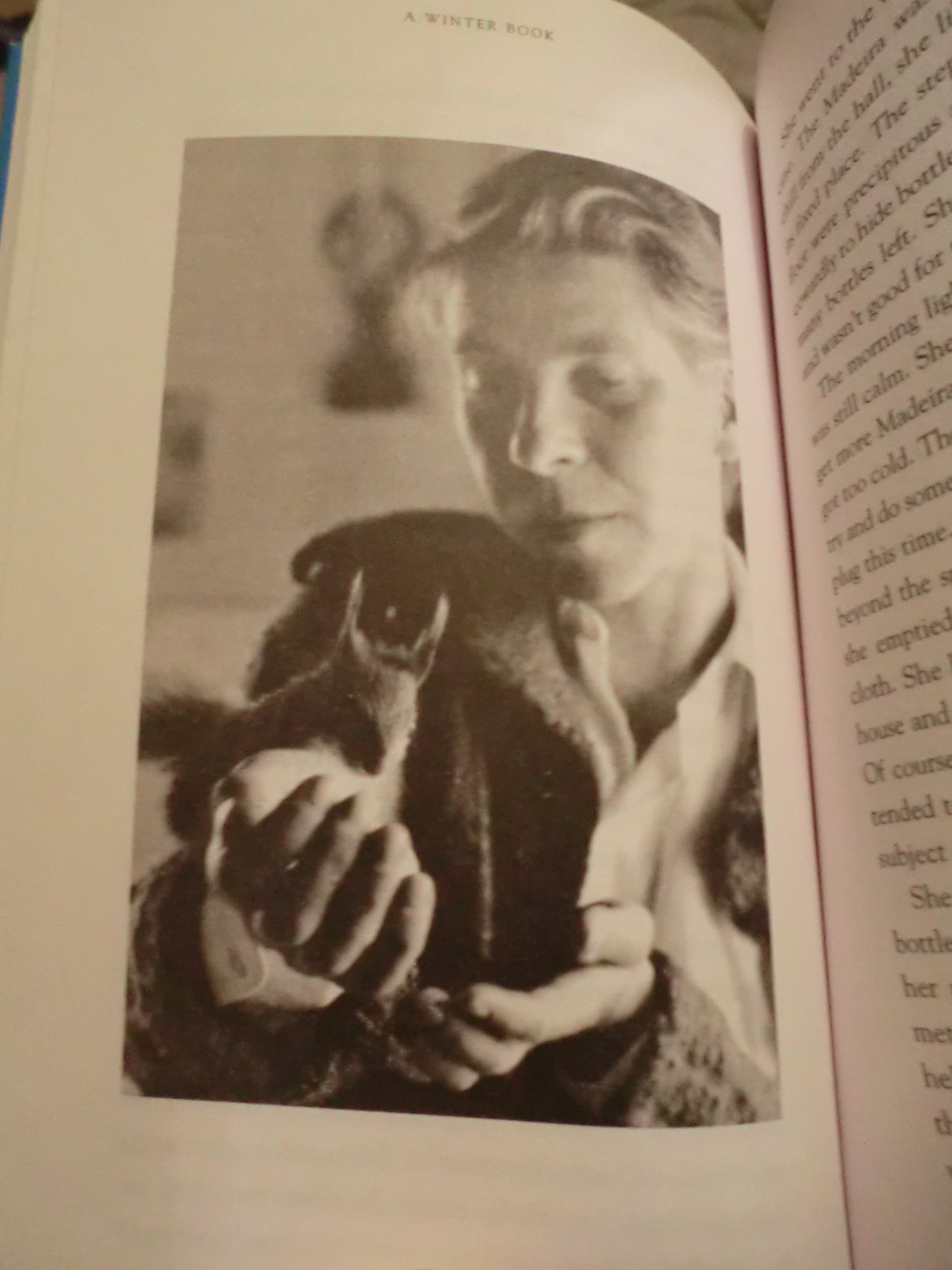
Not just a quiet, honest collection of stories, but containing wonderful black and white photos that add to the atmosphere the author evokes and make us feel the heaviness and significance of that final story, Taking Leave, the last visit, when the nets have become too heavy to pull, the boat too difficult to handle, the sea too unpredictable for two aging women. It is with a quiet sadness but knowledge that many happy hours were spent, that we turn the last page on that final visit.

What We Expect When We Don’t Expect Much From Love: Stories by Ludmilla Petrushevskaya

LudmillaThere Once Lived A Girl Who Seduced Her Sister’s Husband, And He Hanged Himself. The title itself is intriguing, though if you have read the author before, you will recognise the tendency, she is the bestselling author of There Once Lived A Woman Who Tried To Kill Her Neighbour’s Baby.

I took the book with me on a recent visit to London, as my alternative to the kindle, since I have been caught out a couple of times with that little machine dying on me even though the battery wasn’t run down. I have since discovered the 20 second rule. When the kindle fails to come to life when it should, hold it in the on position for 20 seconds to reboot it. Like many gadgets today I’m not sure these things are designed to last, not as long an old-fashioned book anyway. And I have Penguin to thank for sending me a bona-fide book!

The blurbs quote Chekov, Poe, Beckett, Tolstoy and various others to entice you in, making promises that will no doubt encourage dissent; it is a tall order to be compared to literary greats. I haven’t read all those greats, but there is one collection I am reminded of, not because she writes like him, but because the voice is clear from story to story and at the end I am left with the notion that “there is consistency in that voice” and “she says it how it is”.

Carver LoveIf Ludmilla Petrushevskaya reminds me of any writer, it is Raymond Carver and his collection what we talk about when we talk about love. Ironically, when pulling this volume off the shelf, I also find tucked in its last page, a boarding card for a flight from Marseille to London, dated June 2008.

So back to the book.

Seventeen episodes of attempts at love or connection with another, in all their dysfunction, set within the context of post revolutionary Russia when private ownership of housing was forbidden and many family apartments were divided and sub-divided and the space people came to occupy diminished, along with many of their hopes and expectations of each other.

By 1972, when Petrushevskaya published her first story, Moscow was ringed with concrete buildings containing these overcrowded units where the majority of these love stories take place.

Born in 1938 in Moscow, Ludmilla Petrushevskaya never knew family life. Evacuated with her mother to Kuibyshev during the war, she was left there in the care of her aunt and grandmother while her mother returned to Moscow to attend college. Members of the family of “an enemy of the people”, they were treated as pariahs – and were slowly starving. At age eight, Petrushevskaya began to run away from her temporary home and spend summers as a street beggar. Her mother returned after four years and brought her back to Moscow, where they were officially homeless. As a young girl there, Petrushevskaya and her mother lived under a desk in her insane grandfather’s room, while occasionally renting cots in nearby communal apartments. It was an unsettled, unhappy childhood, one experienced without the consolation of siblings.” Extract from Introduction by translator Anna Summers

The stories are collected into four sections, the first A Murky Fate contains stories of characters who consider entering relationships that are flawed or doomed, in readiness for a chance at that diminished flutter of something that may resemble love. It is not to be moved by these circumstances that we read these stories, it is to bear witness to another’s reality. They are uncomfortable, fatalistic and near-true.

She’ll wait for his long-distance call in a phone booth at the post office. For ten prepaid minutes they’ll become one soul again, as they did over the twenty-four prepaid days of their vacation. They’ll shout and cry across thousands of miles, deceived by the promise of eternal summer, seduced and abandoned.

As we read the stories, our own expectations are so low for these women, that it is possible to experience our own small pleasure in expecting nothing and finding delight in an obscure change in their fortune, even if only for a short period.

I mentioned to a friend that it was as if I was sitting across the table from the writer listening to an oral narration of people she knew, that it reminded me of other tables I have sat at, listening to stories of other women from different cultures and how they found themselves living in this or that country or city, so often lead by the allure of love or the promise of an improved lifestyle.

dollsEach community, era, culture has its stories to share, it disappointments to shed and its eternal hope for future generations, that they may do better. Reading these stories is like reading another chapter in the evolution of humanity and reminds us that we have a long way to go before arriving near any kind of nirvana.

…the day is burning its last, and Milgrom, eternal Milgrom, sits in her little pensioner’s room like a guard at the museum of her own life, where there is nothing at all but a timid love.

Note: This book was kindly made available by the publisher.

Revenge by Yoko Ogawa (Japan) – Eleven Dark Tales

RevengeWow! Those of you who have been reading this blog long enough to remember my post on Why People Don’t Read Short Stories may remember that they are something I usually savour, rarely devouring an entire collection in one sitting, but Yoko Ogawa breaks the mould and her newly published book Revenge is full of hooks and devices that stopped me putting it aside and saw me instead ploughing on to read one after the after.

Like a curious sea creature taking the glistening bait, after reading the first story, I dove into the next, caught in the deft grip of Ogawa’s clever and haunting narration, each story carrying the slimmest thread into the next, sufficient to keep the reader interested and more than that, inquisitive to continue and see what she would come up with next.

I first read Yoko Ogawa last year, attracted by her slim collection of three stories contained within The Diving Pool and then her novella The Housekeeper + The Professor, they are very different books, so I was interested in how this collection would compare.

tristes revancesShe has written prolifically over the years and much of her work has been translated into French, very little thus far in English, though perhaps that will change as her short stories are increasingly appearing in contemporary English language publications. The Nobel Prize winning author Kenzaburō Ōe when speaking about her work said:

‘Yoko Ogawa is able to give expression to the most subtle workings of human psychology in prose that is gentle yet penetrating.’

Revenge is an apt title, there are traces of it in every story, calculated revenge, obsessive revenge, inexplicable revenge and cold-blooded revenge. Each story exists on its own, but I read it like a novel, not wanting to pause between titles and feeling right from the end of the first story a tightness in the solar plexus and realisation that I had been holding my breath.

It’s not just the story, it’s awe at how she can write in such an engaging way, where very little actually happens, but we begin to understand more about what is going on in the mind of the character from all the little details she gives, creating a growing image in our own minds, just before she delivers the final blow. And even when we don’t know much about a particular character, someone on the periphery perhaps, not important to the story, chances are we are about to find out more about them in the next story. And so we read on to find out if we guessed right or if she will insert some other connection.

I share this from the blurb, which encapsulates something of these stories in a more concise manner than I ever could:

An aspiring writer moves into a new apartment and discovers that her landlady has murdered her husband. Years later, the writer’s stepson reflects upon his stepmother and the strange stories she used to tell him. Meanwhile, a surgeon’s lover vows to kill him if he does not leave his wife. Before she can follow-through on her crime of passion, though, the surgeon will cross paths with another remarkable woman, a cabaret singer whose heart beats delicately outside of her body. But when the surgeon promises to repair her condition, he sparks the jealousy of another man who would like to preserve the heart in a custom tailored bag. Murderers and mourners, mothers and children, lovers and innocent bystanders—their fates converge in a darkly beautiful web that they are each powerless to escape.

Ogawa is certainly not the first writer to do this, to infuse stories with their subtle threads and connections, Alice Hoffman does it with Blackbird House, Colum McCann did it with Let The Great World Spin and I believe Cloud Atlas (which I have not read) has something that makes it too, more like vaguely connected stories than a novel.

jigsawRevenge isn’t a complicated kind of clever though, there’s no need to question or ponder too deeply over it, the links are clear, but it will leave you wondering how she does it, how she maps out those stories and creates those links. It’s like a jigsaw puzzle with multiple subjects, the letters R E V E N G E scratched across the surface.

Note: This book was an Advance Reader Copy (ARC) provided by the publisher via NetGalley.

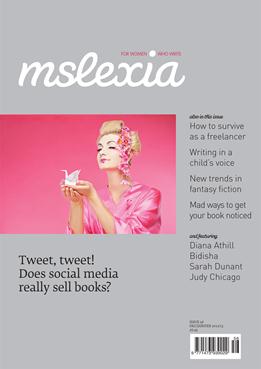
mslexia – for women who write

I’ve been subscribing to mslexia magazine for a few years now and since it is both a great stimulant to the writing process as well as an excellent source of reading recommendations and a directory of sorts, I thought I’d share a little about it.

Mostly I like it, because it doesn’t feel in any way elitist, this is a kind-hearted, generous resource, contributed to and read by ordinary women who like to write, including many who like me, don’t participate in this activity as a job, but manage to scribble away for a few hours each week – read this and you realise you are part of a large, like-minded community of women who believe in making the impossible possible.

It might be published in the United Kingdom, but it has a very international flavour and inclusive attitude, important when you live outside your country of birth and don’t write in the language of your country of residence and want to participate.

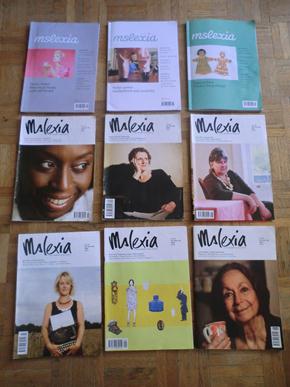
mslexia (ms = woman, lexia =words) is a quarterly publication with feature articles on some aspect of writing (and open to idea submissions), an interview with a published writer, featured short stories or poetry written to the issue theme, or winning entries from the regular competitions they run.

It was Issue 48 in Jan/Feb/Mar 2011 that introduced me to the writer Susan Hill, just as her short novel A Kind Man was being released and I’ve since read three more of her books.

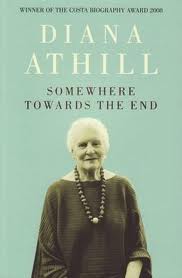
In the latest edition there is a wonderful interview with Diana Athill, what an inspiring woman she is, winning the Costa biography award at 91 with her book Somewhere Towards the End and still writing from her North London residential retirement home.  She says it how it is and cites Jean Rhys’ for teaching her this, she mines her own experiences for a story, and cautions against being cruel to others, “you can be ruthless about yourself, but not when writing about friends” – you can read an extract from the interview here.

athill“I have never understood how many writers moan and groan about how awful writing is. Absolute nonsense.” Diana Athill

Recently, they have been conducting mini-surveys of readers which are then incorporated into the lead articles and some of the smaller snippets of information found throughout the magazine. It is extremely readable, which I put down to the fact that there is a reasonable portion of bite-sized articles, such as letters, extracts from posts, emails, tweets, along with fun and short, contemporary submissions from writers under the headings of rants, raves, a week of tweets, monologue, pen portrait, how I keep going, four lines that rhyme, a poetry or book review. Something for everyone.

Each quarter there is a themed New Writing section, always an excellent writing prompt whether you are interested to submit or not, short narrative or story up to 2,200 words, prose or sometimes poetry, the successful entries appearing in a future edition. I have seen many women being published for the first time through these exercises.

There is an annual poetry and short story competition and in 2012 there was a children’s novel competition for unpublished women novelists.

In addition to all the wonderful information it lays at your fingertips, one of the things I love the most are the short bio’s of contributors, here is one from the 2009 poetry competition in which Pat Simmon’s touching poem ‘Jack discovers impermanence’ was a winner:

PAT SIMMONS, 64, was head of communications for ‘Send a Cow’, an African agricultural organisation, but has since retired. The conviction that whatever she writes will be rubbish stilts her creative progress, but an encouraging family keep her inspired and motivated. Finding writing by hand shackling, she works directly onto her laptop, a practice to which she wishes to dedicate more time. She was Blagdon’s 2005 Apple Wassail Queen – your guess is as good as ours – and on a trip to Rwanda was re-christened Munyanika: ‘As valuable as a cow.’

It is available online, but this is one publication that I like to have the physical magazine to read, there are so many gems and I return to back issues often. Oh and lets not forget the back page, always a delight to conclude with, ‘the bedside table‘, introduces an artist, author, intellectual or well-known personality who shares what’s currently on their nightstand, like gossip for book-lovers.

The next deadline of 18 March 2013 is for Issue 58: The Women’s Short Story Competition for stories up to 2,200 words on any topic. There are prizes for 1st, 2nd and 3rd and three other finalists will also be published in that issue of Mslexia. You don’t have to be   a subscriber to enter, just a woman.  Stories are accepted from any nationality and country.

Happy Writing!

Summer Reads

I’m not one for compiling lists of what I am going to read ahead of time, because I value too much the freedom and spontaneity of a vast sea of choices each time I finish a book, and often the reading experience will lead me on to the next thing.

Like reading Barbara Kingsolver’s ‘Prodigal Summer’ straight after ‘The Namesake’. How could I know that after listening to the group discussing the book I would have a conversation with a local poet about the beauty of sentences and Jhumpa Lahiri’s essay and that she would tell me I must read Kingsolver’s book.  It was sitting on the shelf unread and thus I abandoned all other reading ideas and jumped straight into it.

100 years on, Titanic Belfast Museum

But I do love looking at the lists, always feeding into the mental TBR list, noting books I might wish to read or to keep an eye out for.

I could say I have intentions for summer, like the two Titanic inspired books I bought on a recent visit to Titanic Belfast, the excellent museum opened in March this year.

‘A Night to Remember’ and ‘And the Band Played On’ also seem appropriate companions to Charlotte Rogan’s ‘The Lifeboat’ which I have on kindle.

To help you decide, I wanted to share this excellent flowchart designed by Teach.com to encourage students to find a book of their choice, there are 101 books shown, inviting readers to consider fiction versus non-fiction, classic or contemporary and many other options.  I keep coming across it and there’s something appealing about viewing images of covers rather than just a list of titles, so enjoy and I hope you find something for your own summer read!


So do you plan your reads or are you open to the spontaneous?
Summer Reading Flowchart

Via Teach.com and USC Rossier Online