Top Reads 2014

It’s tough to have to choose one, and all the books below have been excellent reads, but the one standout for me was Prayers for the Stolen, because I haven’t stopped thinking about it all year,  it’s always top of mind when anyone asks me about a good book I’ve read recently, just as I still recommend Caroline Smailes The Drowning of Arthur Braxton from 2013 and Eowyn Ivey’s The Snow Child from 2012, all outstanding reads.

The Stats

This year I read 57 books, basically one book a week, 79% of my reads were fiction, 16% non-fiction and 5% poetry. I managed to read books by authors from 18 different countries and this year 40% of what I read was translated from another language. 54% of the books I read were printed books and 46% I read on a kindle. 63% were written by a female author.

Outstanding Read of the Year 2014

Prayers For The Stolen by Jennifer Clement

prayers for the stolen This book had a huge impact on me at the time of reading,  a fictional account of a girl named Ladydi growing up in a part of Mexico where it is dangerous to be a girl, so the mother’s disguise them as boys, from the moment of their birth.

An insightful read, about a tragic issue, told with empathy and humour and helping to raise awareness of the plight of so many women and girls unable to speak out for themselves. A must read.


And in no particular order, My Top Reads for 2014!

Top Fiction

1.Eugene Onegin by Alexander Pushkin (translated from Russian by James E. Falen)

Eugene Onegin 7 8The epic book length poem Eugene Onegin was my surprise read of the year and pure delight. I avoided reading it for years and years thinking it would be inaccessible. It was hilarious and a riveting read.

I read it two chapters at a time in a read along and was thoroughly entertained by that cad Eugene Onegin and bemused by that reader of far too many romantic novels Tatiana, and broken-hearted at the fate of the poet. Absolutely brilliant and I would quite like to read another translation after some of the comparisons other readers made as we read, what turns out to be not quite the same version. More Pushkin definitely.

2. Nada by Carmen Laforet (translated from Spanish by Edith Grossman)
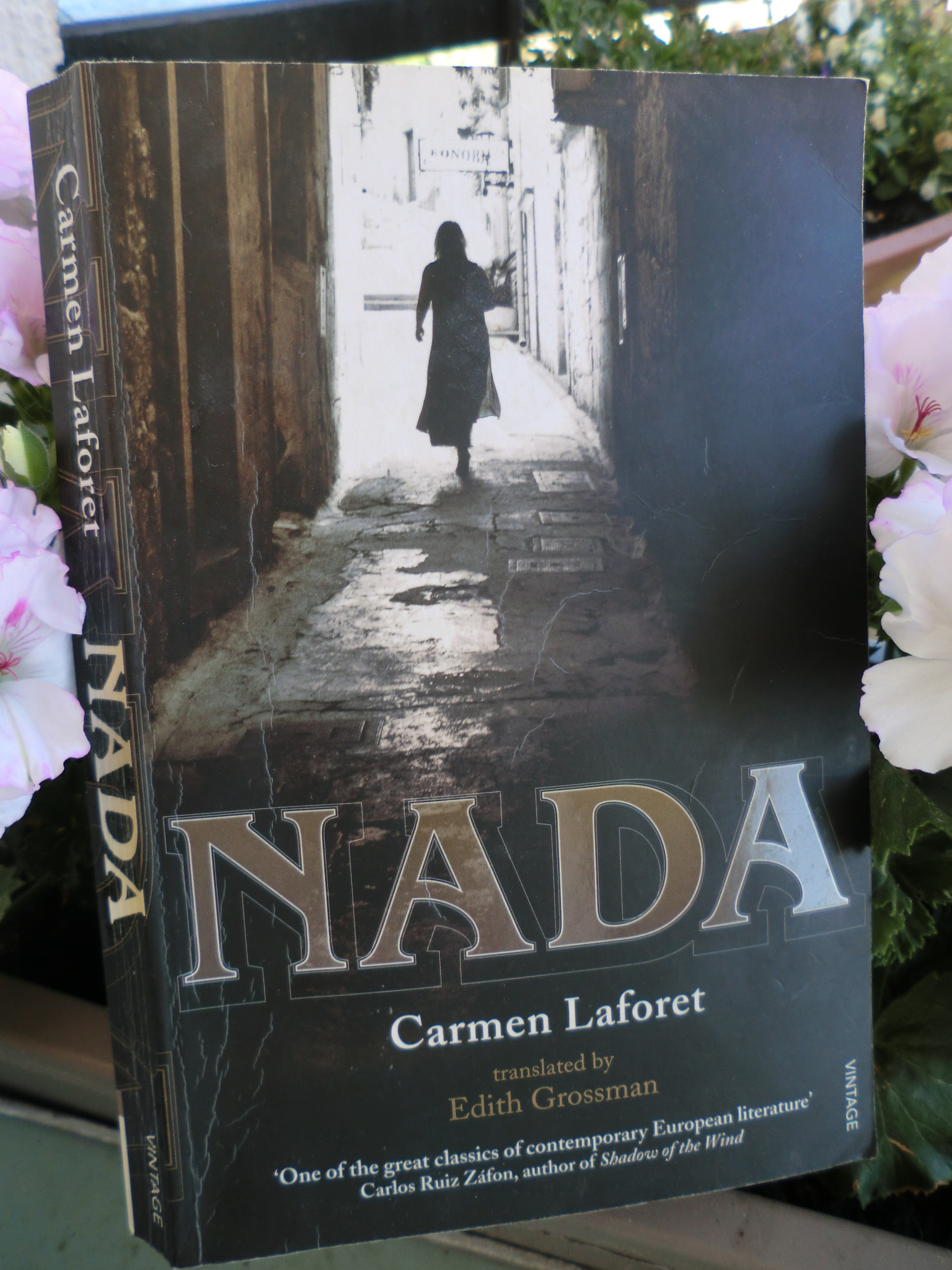
Nada (2)Nada was being passed around friends all exclaiming its wonder, a book written by the author when she was 23 years old and based on her own similar experience as a young woman moving to Barcelona to study. It takes place in the shadowy aftermath of a traumatic civil war, its effect hanging over her family. Andrea, now an orphan, arrives to stay with relatives, however her stay is not as she’d imagined it, the family are full of eccentricities and Andrea finds more refuge in the gloomy streets and with her new friends than in the oppressive atmosphere of the apartment among her strange relatives. A feverish, coming of age classic.

3. We That Are Left by Juliet Greenwood
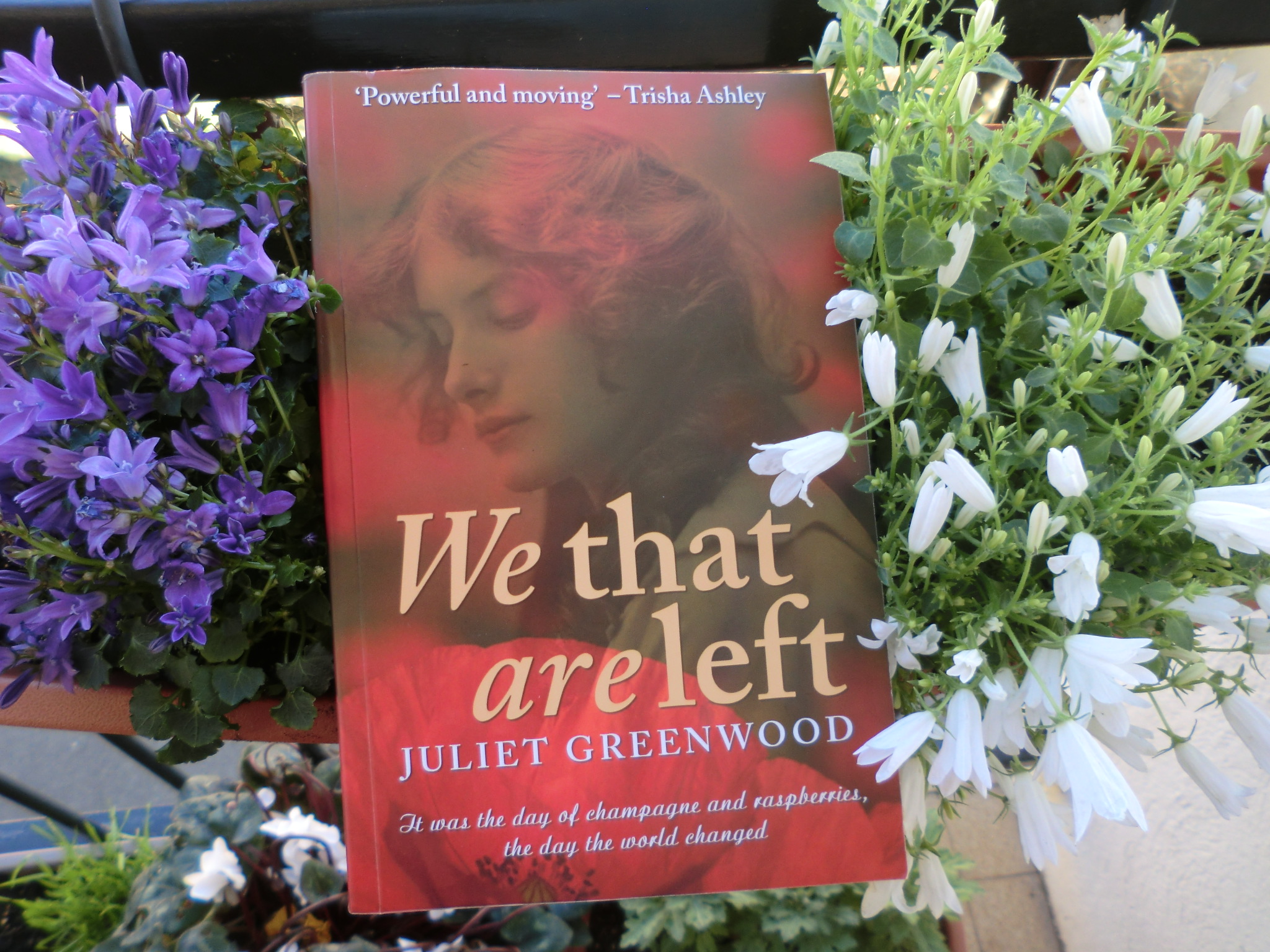
We That Are Left (2)A title I was waiting for, having loved Eden’s Garden and this promised to be just as good, set in World War One and featuring a cast of women characters who are changed by the war in ways that will continue long after.

From Cornwall to Wales to France, we follow Elin as her husband leaves for the war and she must assume responsibility for the family estate and is propelled into a dangerous mission to rescue her friend in the thick of fighting. It concerns the changes thrust upon women during the war and their refusal to go back to the more submissive role that was expected of them before the war. They prove they are just as capable of handling a crisis and if necessary will manage on their own. Brilliant, thrilling and unputdownable.

4.The True Deceiver by Tove Jansson (translated from Swedish by Thomas Teal)

True DeceiverThe True Deceiver is the first novel I have read by Tove Jansson, having read three collections of her short stories (The Summer Book,  A Winter Book and Art in Nature) all of which I enjoyed, so this was an interesting departure to stay with the same characters throughout and it is quite a thrilling read, clearly inspired in part by her own experience, facing up to the artist struggle.

It is the perfect winter read, set in the snow bound winter months, while they await the thaw. Anna is an aging artist who lives alone and is content for it to be that way, her contact with the outside world through the many letters from her fans. But someone in the village has other plans and slowly makes herself indispensable to the older woman, preying on her vulnerabilities. And the true deceiver? That is the question that reading the novel reveals.

4. My Brilliant Friend by Elena Ferrante (translated from Italian by Ann Goldstein)

My Brilliant FriendIf you haven’t yet succumbed to #FerranteFever keep an eye out for this book and the two that follow it, The Story of a New Name and Those Who Leave & Those Who Stay. They narrate a friendship between Elena and Lila, set in an impoverished neighbourhood of Naples, one tries to escape  her place in society via a university education and a marriage that will elevate her status while the other uses her intelligence in a relentless, fearless and  often ruthless quest to survive. The books are compelling and may be semi-autobiographical, however the author remains an enigma, using a pseudonym and not ready to own up to his/her identity – believing that if a book has any merit, it will find its audience.

5. The Dead Lake by Hamid Ismialov (translated from Russian by Andrew Bromfield)

The Dead Lake

This is why I wait until the end of the year before creating my list, because who knows what special book gems we might discover before the final curtain call. The Dead Lake is part of the Peirene Press coming-of-age series published in 2014 and tells the story of Yerzhan, a boy growing up at a remote railway siding in Kazakhstan, an area where atomic weapon testing is carried out.

There are only two communities where he lives and he adores the neighbour’s daughter and it is to impress her that he walks into that lake at 12-years-old and stops growing. It is a stunning and unforgettable novella and an insightful glimpse into a nomadic culture, that we are privileged to be able to read thanks to the passionate endeavours of our friends at Peirene Press.

6. The Bees by Laline Paull

Bees2

The Bees is an extraordinary feat of the imagination, narrated from the point of view of Flora 717 a sanitation worker bee. It is about life in an orchard hive and the threats both internal and external to the hive. Totally convincing, the Hive is like a cult and each bee knows its place, its role and responds by instinct and receives energy from the Hive Mind, the Queen and the collective conscience of the Hive. Flora is different and as we discover why, we begin to fear for her life. A stunning, original work, I was enthralled but the story and love that the author was inspired by a Bronze Age Minoan palace in translating a real beehive into a fictional landscape.


Top Non-Fiction

Ex Libris1. Ex Libris: Confessions of a Common Reader by Anne Fadiman

This was the very first book of the year I read and a special read for booklovers. It contains 18 bookish essays from the bibliophile Anne Fadiman, written over a period of four years, in which she talks about how she became so book obsessed and shares many often hilarious anecdotes. It was also recommended and gifted to me by the talented blogger and world-wide reader VishyThe Knight.

Arctic dreams2. Arctic Dreams by Barry Lopez

First published in 1986 and winner of the National Book Award for non-fiction in the US, Artic Dreams is a compilation of poetic nature essays written by a compassionate, scientific, nature loving mind, as he observes those creatures whose natural habitat is the arctic, whether they are polar bears, seals or Arctic people. Some of my best recommendations, as was the case with this book, come from Valorie at Books Can Save a Life.

Vera Brittain3. Testament of Youth by Vera Brittain

I planned to read this right from the beginning of 2014 when it was republished as an anniversary edition to commemorate the beginning of World War one. Vera Brittain was an intellect and despite it being seen as a waster of time by many ion the provinces where she came from she set of for Oxford to compete with the boys, whom most of her friends were.

One by one, her friends, her brother, her fiance went off to fight and not able to concentrate on something that seemed meaningless in the face of war, she volunteered as a nurse. Testament of Youth is taken from her journals and is an insightful, at times heartbreaking insight into a lost youth, and an attempt to understand humanity and to prevent us from repeating the same mistakes. A brilliant book, about to be released as a feature film.
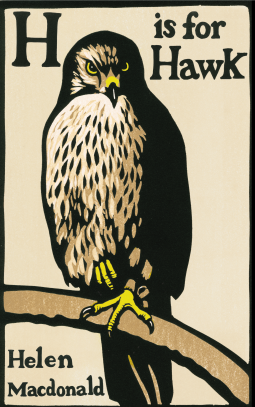
H is for Hawk4. H is for Hawk by Wendy Macdonald

There haven’t been so many non fiction titles that called out to me this year, but this one did immediately and I pushed it to the top of the pile to read and was riveted by Helen Macdonald’s grief stricken, obsessive encounter with Mebel, he Goshawk she raises, spurning human company and comfort in the aftermath of her father’s death. Great to see it then win the Samuel Johnson prize.


Brown Girl Dreaming5. Brown Girl Dreaming by Jacqueline Woodson

What a delightful memoir in free verse from a well-known children’s writer, writing of her childhood spent between South Carolina and Brooklyn, NY tales of family members, a new brother, her passion for words, being Jehovah Witness and making a great friend. Reminds me of the equally talented Margarita Engle and her collection of novels in verse.


Voila!

So what was your outstanding read(s) for 2014?

Brown Girl Dreaming by Jacqueline Woodson

Jacqueline Woodson was unknown to me, though she is a prolific writer, having already published 30 books and been shortlisted this year for the Hans Christian Andersen Award for her lasting contribution to children’s literature.

Brown Girl DreamingI saw it mentioned on twitter, as it recently won a National Book award in the US and it has the most beautiful, striking cover and when I read that it is a memoir of the author’s childhood, written in free verse, I just knew I had to read it. And I’m not the only one, of the seventeen books US President, Barack Obama bought on a recent book buying spree with his two daughters, this book was sitting on the top of the pile.

Brown Girl Dreaming is an easy reading collection of anecdotes in free verse, that tell of Woodson’s childhood growing up in the 1960’s and 1970’s in Greenville, South Carolina and Brooklyn , New York, not so much focused on herself, she paints a picture with words of all those around her, their inclinations and beliefs, the daily rituals that made up the ambiance within which she spent her early years.

She has something of both the North and South in her, moving comfortably between the two and she wouldn’t have it any other way. She collects aspects of her childhood that have stayed with her and that shaped who she is today and she discovers old stories that fill out her experience and deepen her roots and sense of belonging.

“When we ask our mother how long we’ll be here,

sometimes she says for a while and sometimes

she tells us not to ask anymore

because she doesn’t know how long we’ll stay

in the house where she grew up

on the land she’s always known.”

After her mother leaves her husband and Ohio behind, bringing three small children to her own childhood home, the children are drawn into their Grandmother’s ways, including regular attendance at the Kingdom Hall, where they become part of a Jehovah Witnesses community, which has a significant impact on their upbringing and keeps them out of trouble, though it also has its consequences and is something the author will eventually leave behind.

“Everyone else

has gone away.

And now coming back home

isn’t really coming back home

at all.”

Jacqueline, named after her father who wanted her to be Jack, observes the individual brilliance of each of her siblings, she acknowledges their talent and discovers her own, a love of words and despite the challenges they confront her with, she never loses sight of her dream to be a writer and to catch those words that sometimes eluded her on the page.

“I am not gifted. When I read, the words twist

Twirl across the page.

When they settle, it is too late.

The class has already moved on.

I want to catch words one day. I want to hold them

Then blow gently,

Watch them float

Right out of my hands”

I couldn’t help but recall the Cuban writer Margarita Engle’s exceptional The Wild Book, not just because it too is a brilliant volume of prose poetry written for both a young and adult audience, but because its subject also includes a child with a love and fear of words.

Jacqueline WoodsonBrown Girl Dreaming is a beautiful book and a compassionate collection of childhood, a celebration of all the author’s family and n its writing, it enabled her to reconnect with many of those whom she hadn’t seen for years and in doing so, to learn of and preserve more of the family’s stories that had been within the family for generations.

Her poems are like a giant tapestry and the members of her family, her neighbourhood and friends make up the complex colours and patterns, infused with story, emotion, excitement and foreboding, the fabric of her childhood.

By the time you get to the end, you feel like you know them all and to complete the experience the author has shared her collection of black and white family photos.

The Toga and the Rose by Sheighle Birdthistle

The Toga and The Rose is Sheighle Birdthistle’s latest collection of heartfelt poetry.

An Irish poet who founded the Poetry Corner in Aix-en-Provence, a group that meets monthly in the English bookshop, Book and Bar, Sheighle’s work is a wonder to read and arresting to listen to.

As I said to her after reading the collection the first time, there were moments when I realised I was holding my breath until the end of the poem, as if breath or movement would break the spell and silence might help ensure an ending I could cope with.

Her poems navigate the roller coaster of life’s events and emotions and she captures many of them with a choice of words that invoke powerful meaning and create suspense. From the darkest depths to the cusp of enlightened contentedness, it is a ride worth taking.

TogaFrom The Hand of God Gloved,

a life that should have been yellow, coloured grey’

to the desolation of Syria where

‘the falling leaves drop like huge tears of sorrow,

On the poppies scattered at their roots.’


and the absence of words in A Starry Night,

Words, stars, words blending

And rending us poets rigid with wonder

As we ponder.’


The poems of the Son and Daughters,

The Four Souls of My Body

‘we love each other, in different ways,

tempests and gentle torments,

Flowing like angels wings’

The Toga and The Rose

The Toga and The Rose

From family to humanity, we are affected by emotions both familiar and far from the hearth.


The Lady hostage of Burma,

Katrina of New Orleans


interspersed with many starry nights, sometimes bearers of hope, on other occasions harbingers of catastrophe, predictable only in their unpredictability.

Comedie de livreSheighle will be reading from The Toga and The Rose this weekend at La Comédie du Livre literature festival in Montpelier, where you can buy a copy of her book or via O’Mahony’s Booksellers and a range of online bookshops.

A grand weekend of literature of not just poetry, but also a focus this year on Scandinavian writers, including Jón Kalman Stefánsson, who the Shadow International Foreign Fiction Prize Team just voted as their choice for the top prize for his book The Sorrow of Angels.

Eugene Onegin – Chapters 7 & 8 Alexander Pushkin

Moscow, loved daughter of Russia,

where can we find your equal?

DMITRIEV

Eugene Onegin 7 8Chapter Seven

The beginning of Chapter 7 contains numerous quotes and I have noticed all through my reading of Eugene Onegin that the epigrams are a kind of clue to what will follow. So on reading the four quotes that adorn the first page of this chapter, it is clear that the action is going to take us to that great, revered city, Moscow.

A forlorn Tatyana remains in the countryside, nursing the remnant emotions of an unrequited love, like weeds that grow over the unvisited grave of the poet Lensky.

Dear Tatyana, lover of illusion:

Though there he’s no more to be found,

He’s left sad footprints on the ground.

We learn of the swift healing heart of Olga, wooed by another and whisked down the aisle, her tears dried up and replaced by a smile, abandoning her sister and confidant with not much of a glance behind. Tatyana bereft, walks unbidden, finds herself arriving at the country home of Eugene Onegin, his staff invite her in and show her round like a tourist visiting a noble home, the rooms where our hero entertained his solitary self.

At once Anisia came to greet her,

the doorway opened wide to meet her,

she went inside the empty shell,

in which our hero used to dwell.

Spying a collection of strange books she asks if she can return to read them, opening a window into his soul, one she is less sure of, the marks on the page don’t lie, revealing the thoughts of another reader. She comes to understand him via the page, though they are nothing like those she prefers to lose herself in.

The locals are not happy with her loveless state with no plans to marry, they advise her family to take her to Moscow, after a week of travelling they arrive to stay with family, where Tatyana will meet her cousins and slowly become drawn into their ways.

Moscow’s the place, the marriage-fair!

There’s vacancies in plenty there.

They make subtle changes to prepare her for the social activities and try to pry the secrets of her heart, she resists and even while attending the dance, thinks only of the woods, her flower garden and books .

But while she roams in thought, not caring

for dance, and din, and worldly ways,

a general of majestic bearing

has fixed on her a steady gaze.

Chapter Eight

The narrator expounds his poetic verse, carrying us forward, oft-times veering off course as if he were driving an open air carriage then taking his eye off the road to watch the clouds form or listen to birds and admire the wildflowers, then suddenly we are back in the ballroom, the driver his eyes back on the road and the events as we come to know them gradually unfold.

Tatyana is escorted to a ball and sitting quietly to the side, after all this time who does she spot but Eugene, just returned from travels and roaming, he arrives in the midst of this social whirlabout. Recognising her from a distance, though not sure, he asks the prince next to him, who she is:

Eugene Opera‘Can you say,

Prince, who in that dark-red beret,

just there, is talking to the Spanish

ambassador?’ In some surprise

the prince looks at him, and replies:

‘Wait, I’ll present you – but you banish

yourself too long from social life.’

‘But tell me who she is.’ ‘My wife.’

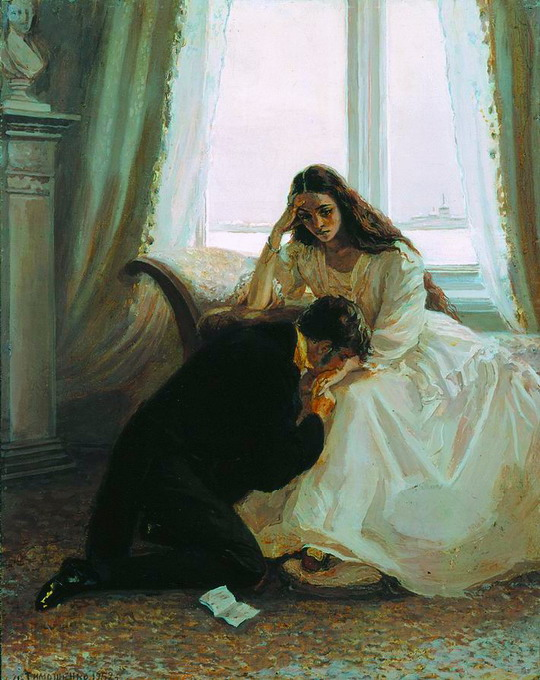
Two years have passed and time has not stood still, he is introduced to the princess and she is unmoved, he sees no trace of the Tatyana he knew and really isn’t sure if it is the same girl. The prince invites him to a soirée and uncharacteristically he responds in haste, eager to see Tatyana once more and is impatient for the evening to arrive. Tatyana playing the dutiful hostess is serene, Eugene falls for all that he has previously scorned, the madness of love. He finds no solace and surprise, surprise, what does he do, this lovesick fop, but write a letter!

Eugene 8No answer comes. Another letter

he sends, a second, then a third.

No answer comes. He goes, for better

or worse, to a soirée. Unheard

she appears before him, grim and frozen.

No look, no word for him: she’s chosen

to encase herself inside a layer

of Twelfth Night’s chilliest, iciest air.

He turns to his books and finds no reason and then as the seasons pass, one spring day he ventures out to see her, is given an audience with the women he can’t get out of his mind and finds the roles have switched, it is she who now lectures him, reminding him of his own behaviour in reprimanding her, she speaks of her love, but that she now belongs to another, to whom she will be true. She leaves the room and Eugene is thunder-struck – the husband arrives – and now we must leave them, this chase has gone on long enough.

The Verdict

Wow. I made it. A brilliant read-along and an entertaining read, although I am a somewhat cynical reader, in that I find it difficult to believe that Eugene Onegin could have become the man he ends up being, not just because of his character so firmly established, but surely after two years travelling he should have gained a kind of maturity that would have provoked a different outcome than this. Perhaps I should have read it 10 years ago when it was given to me!

Thanks to Marian at Tanglewood for organising the challenge, it’s been fabulous. I totally recommend you all give this classic epic poem a try!

Eugene Onegin Chapters Five & Six Alexander Pushkin

O, never know these frightful dreams,

thou, my Svetlana!

VASILY ZHUKOVSKY

Eugene Onegin5

Reading the epigram above and looking into its source, I discover how little I really know about this poem, because of my ignorance of Russian poets and folklore, for Vasily Zhukovsky, a prominent figure in Russian literature in the 1800’s and tutor to a Duchess and her son, the future Tsar-Liberator Alexander II, was highly esteemed by Pushkin. His heroine Tatyana is modelled in some way on the heroine Svetlana in Zhukovsky’s poem of the same name, where there are dreams of snowy nights, a hovel and a corpse who manifests into her beloved, just as there are in Chapter 5 of Pushkin’s poem.

Chapter Five

Vasily Zhukovsky_1815

Vasily Zhukovsky, 1815
Source: Wikipedia

Tatyana, who is prone to superstition and susceptible to clairvoyance, is plagued by dreams, of a snowstorm and a large bear stalking her, she can’t escape the sense of being pursued and will be taken by the bear to a gathering in a hovel, where she is reunited with her love Eugene Onegin, who feasts with bizarre creatures. Her happiness is short-lived as he embarrasses her in front of the audience gathered, only to claim her like a worthy hero, making her swoon in quickly forgiven ecstasy.

Tatyana is troubled by her dream and won’t speak of it to her sister, instead she descends into the safe passages of a book, with their trustworthy, predictable heroes.

January 25, her name day arrives and the mood changes as friends, family, neighbours, the local army Major and more descend upon the Larin household and word has it the regimental band is coming!

Dinner is served amid much excitement and the merriment rises in volume when the doors open to admit the latecomers Lensky the poet and his friend Eugene Onegin. Finally! Seated opposite Tatyana, who becomes a bundle of nerves, our hero isn’t impressed with her lovesick feminine display and mentally passes judgement on them all. I ask myself, is the man a psychopath, he displays zero empathy!

Fortunately no one notices, the gluttons, as more food arrives and flutes for champagne and cries of ‘Speech’ to toast the beautiful Tatyana who pulls herself together to respond to each guest individually, stumbling when she reaches Eugene, who seems to take pity, for his face shows something she interprets as tenderness – more fool her!

They move to the salon, tea and cards and the sound of the band arriving, the ball is underway, the Russian Waltz on display! And now the trouble starts as Eugene claims Olga, shocking the crowd in their stomping frenzy and outraging his friend! What is he up to this player of dangerous games! How will Lensky react?

He finds the shock beyond all bearing;

so, cursing women’s devious course,

he leaves the house, calls for his horse

and gallops. Pistols made for pairing

and just a double charge of shot

will in a flash decide his lot.

Chapter Six

Seeing his friend depart, Eugene becomes bored with his game and will leave alone. While bodies sprawl everywhere in sleep, Tatyana sits at her window and peers into the darkness, a coldness creeping over her heart.

We meet another landowner with a shady past, who delivers a message to Eugene, a letter from his friend Lensky, challenging him to a duel. He accepts, this manly hero, though on his own he laments his role.

With reason, too: for when he’d vetted

in secret judgement what he’d done,

he found too much that he regretted:

last night he’d erred in making fun,

so heartless and so detrimental,

of love so timorous and gentle.

Lensky wakes in anger like a raging bull intent on not seeing his love, but relents and is confused to find her as much in love as she ever was, his anger abates and he regrets his haste, but wants to teach his friend a lesson. No one spares a thought for our heroine. Lensky cleans his pistols and spends all night writing his last poem.

How did these two friends becomes foes and what madness have they entered into, to continue this game of death. Pistols ready, they march, they turn, a shot. Our poet holds his hand to his heart, inspired right up to his last seconds in this world, he departs.

Reader, whatever fate’s direction,

we weep for the young lover’s end,

the man of reveries and reflection,

the poet struck down by his friend!

Even the narrator stalls, he can not go on, he needs to pause. He will come back and tell us what will happen when he can face it.

Reactions

A.S.Pushkin

Alexander Pushkin by Vasily Tropinin
Source: Wikipedia

Since Tatyana and her sister rarely speak, the dream sequence helps us understand her state of mind, her fears and desires, her confusion and unwillingness to share it with anyone. It is like a premonition of what will come, the roller coaster of highs and lows on her name day, where even then the only high note she experiences in relation to her beloved is a look on his face that may or may not have been tenderness.

My opinion of Eugene Onegin has not changed, he has not a shed of empathy, neither for Tatyana or ever more tragically for his dear friend, the poet Lensky. How will he redeem himself from this pistol waving mess!

And the Narrator? I recall that this poem was written over several years and when the Narrator interjects and seems to need to pause, I find myself wondering if these pauses represent the intervening years. No doubt some scholar has the answer.

Brilliant. Loving this!

Click here to read the final follow up review of Eugene Onegin Chapters 7 & 8

What Do We Read?

Photo0652

Recently there has been discussion in the media, on twitter and on various blogs about how books written by women are represented with respect to published reviews and the #readwomen2014 campaign launched as a result.

The annual survey carried out by VIDA – The Count continues to show them as  being under represented in most of the major publications that provide reviews and in translated fiction.

It made me wonder what I do read. I don’t think I have a bias towards male or female authors, but I do have a preference for cross-cultural fiction and I like to read translations, so I decided to look back over the last year and see how I fared.  As you can see below, I definitely read more female than male authors and slightly more than 2012 when 62% of the books I read were by women.

Gender 2013

In total, during 2013 I read 70 books, slightly more than the one book a week I have as an intention and 10 books more than I read in 2012.

As those who read this blog may know, I like to read cross-cultural, contemporary literature, so I read more modern than classics and I like to read around the world. What I hadn’t realised was that last year I read books by authors from 22 countries! Check out this fabulous pie chart.

Country 2013

Compared to 2012 when I only read books from 17 countries! From the US and the UK, I read exactly the same number of books (19) and a visit to Istanbul in May prompted an increase in Turkish literature (5) and three books in December helped my French literature (4) to increase, but I hope that will improve in 2014.

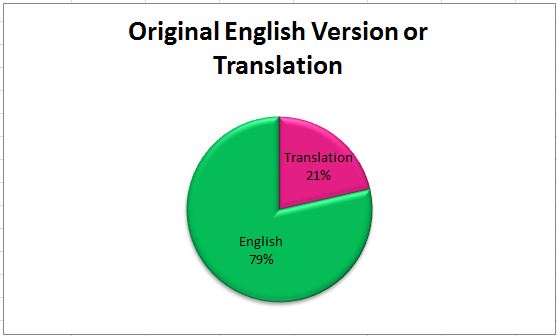
To read that widely, it is necessary to read translated work and 15 of the books I read or 21% were translated compared to only 10% in 2012. I’ve certainly travelled the world through books, I may have to start checking the globe to see which continents are missing.

Translation 2013

And what kind of books do I read? Well mostly fiction, a hefty 76% compared to 23% non-fiction and only 1% poetry, but less than 2012 when 82% of my reading was fiction and 16% non-fiction. I did read some excellent non-fiction in 2013 and hope to do the same this year.

Genre 2013

And lastly, how do I read? Yes, I have a kindle and in 2012 I read 25 books or 41% of them electronically. In 2013 that has increased to 46%, that’s 32 books on the kindle, almost half my reading! That’s thanks mostly to NetGalley who send me ARC’s (Advance Reader Copies) from the publishers that I request, which I am immensely grateful for.

E Book 2013

So now I know what I read and I think I shall just keep on doing the same, which is to be as spontaneous as possible, to engage with others who read for recommendations and keep reading around the world!

Eugene Onegin – Chapters Three & Four Alexander Pushkin

Elle était fille, elle était amoureuse.

Jacques-Charles-Louis Clinchamps de Malfilâtre

Tatyana Eugene Onegin

January 25 – The Feast of Tatiana

What better day to write about these chapters, January 25 being the feast day of Saint Tatiana in Russia, a symbol of women and celebrated as a student festival. Both the name and the day have become even more popular since Alexander Pushkin made her the love interest of his epic poem.

Chapters Three & Four

Eugene Onegin inquires as to how his friend the poet spends his evenings and thus finds himself invited to join him for a family evening at the home of Olga and Tatyana, where they receive warm, old-fashioned hospitality, though afterwards he cannot remember which girl was Olga and which Tatyana. While the evening failed to ignite significant interest in our hero, it did set tongues wagging among the locals.

Conjecture found unending matter:

there was a general furtive chatter,

and jokes and spiteful gossip ran

claiming Tatyana’s found her man;

The girl who spends her hours immersed in romantic novels let her imagination run wild and fell for the insinuations, if not the man himself, suffering from a love sickness of her own making, culminating in a letter (in French) to the imagined hero she has shaped from the form of Eugene Onegin. A baffled Onegin, clearly does not read the same literary genre.

Who taught her an address so tender,

such careless language of surrender?

Who taught her all this mad, slapdash,

heartfelt, imploring, touching trash

fraught with enticement and disaster?

I can’t help but laugh, it is perhaps the poetic form combined with the ignorance of the hero, this bringing together of polar beings, to create such a discordant clash of romantic versus pragmatic. And so we wait to learn what will pass, when by chance the two meet, and Tatyana must listen to the unfeeling hero speak from a detached but well intended heart, warning her against baring her soul so easily in future. Though it is true, he tolerates and listens easily to similarly themed devotions from his friend the poet, for whom such outpourings are his raison d’être.

But I was simply not intended

for happiness – that alien role.

Should your perfections be expended

in vain on my unworthy soul?

Saint TatianaAnd finally the long autumn and winter bore him and he agrees to a second visit, one that will fall on Tatyana’s name day celebration!

Impressions of Tatayana and Olga

Tatyana is distant and aloof socially, yet vulnerable to the roller coaster of emotions she reads and studies at length in her romantic novels. Her falling in love is not as such inspired by meeting Onegin or anything he says or does in their first encounter, it is by the idea of him inflamed by the wagging tongues of neighbours, that allow her, now that she has some distance from the man himself, to imagine herself in love. She has a need to express herself and because she hesitates to ever do so in person, pours her emotion into the written word – a letter.

Olga we only see through the eyes of the enraptured poet Lensky, he is always with her, walking with her, reading to her, writing poems about her, he gives and receives love easily and neither of them appear subject to the more tumultuous vagaries of passionate love.

Onegin’s Reaction to Tatyana?

An almost fatherly response, he was concerned that she should not respond in the same manner when next she looks for love, outwardly he shows little emotional response to her revelations, however there is a hint that the words may have affected him at a more sub-conscious level that has yet to make its way into his more intellectual self. Fortunately, he does show careful consideration for her feelings, by refraining at least from criticising her too harshly or outrightly rejecting her. Ironically, it is his constant boredom that will lead back to the warm hospitality of her family home.

Le Grand Meaulnes

Le Grand Meaulnes

How Does it Contrast With Another Classic Romantic Novel?

I can only compare it with the most recent classic romantic novel I have read, though it was written nearly 100 years later, Alain Fournier’s Le Grand Meaulnes whose male characters are more afflicted by romantic notions in the vein of Tatyana, than Eugene Onegin. In Fournier’s novel and in his own personal experience, it is the women who dole out the practical advice and suggest that the young man is too young, only for him to become completely obsessed with her.

Overall, these chapters are much more dramatic and throw us deep into the story, they entertain, they shock and delight. It is a pleasure to read and I am looking forward to what the next two chapters will bring.

Click here to read the follow up review of Eugene Onegin Chapters 5 & 6

Eugene Onegin Read Along – Chapter’s One & Two Alexander Pushkin

Eugene OneginWell, this is a first for me, a read along!

Alexander Pushkin’s Eugene Onegin has long been on my list of books to read, since it was gifted to me by husband many years ago. I don’t know why it seemed to intimidate me, since I loved long prose poems as a teenager, especially that other Alexander – Alexander Pope.

The book is a verse novel and I’m reading the Penguin Classic version translated by Charles Johnston with an introduction by the novelist and literary critic  John Bayley (husband of the late Iris Murdoch).

So I’m a little late finishing, but I have read the first two chapters and have a few basic impressions, though not much idea of the story, without reading outside the text.

So, I’ll follow Tanglewood’s lead (hosting this read-along) and try to answer her questions:

First impressions of Eugene?

A bit of a dandy? Son of a lavish spender who clearly didn’t instill much of a work ethic into his son. Then thanks to the legacy of a rich Uncle, he will spend more time in a dressing room, than any character I’ve ever read of.

Eugene turned countryman. He tasted

the total ownership of woods,

mills, lands and waters – he whose goods

till then had been dispersed and wasted –

and glad he was he’d thus arranged

for his old courses to be changed.

Not interested in history or politics or activism, he possesses a wealth of well polished stories to offer at the many social engagements he attends. Hates the Greek heros and prefers the theories of economics. Something of a chameleon, a charmer, dare I suggest, a manipulator, seducer? Prefers balls to ballet, the city to the countryside, yet tolerates boredom, cynicism suits him.

Chapter One introduces Eugene while chapter two introduces the characters he meets when he moves to the countryside, descriptions of Eugene are superficial, he lacks depth, something he may encounter soon perhaps.

What do you make of the narrator’s commentary?

I find the commentary more accessible than I thought, certainly it’s easier to interpret than Shakespeare and mildly humorous with its frequent drift into French words and an “I’ll write how I like” attitude, although it’s difficult to know when reading a translation, fortunately the French isn’t translated, so we have a better appreciation for the play with words intended.

Thoughts on the characters in Chapter 2?

Chapter Two begins to broaden the range of characters and they provide a welcome contrast to Onegin and the possibility of assisting him perhaps to see things through different eyes.  He is charmed by his friend, the poet Vladimir Lenksy and enjoys listening to his outpourings of emotion:

EugeneHe roamed the world, his lyre behind him;

Schiller and Goethe had refined him,

and theirs was the poetic flame

that fired his soul, to burn the same;

Olga, the subject of the poets verses since boyhood, the loved one and her elder sister Tatyana, the dreamer, the loner, living vicariously through her books.

I can see why it’s good to read and reread, even going back and reading earlier passages from yesterday seem to enlighten the story further. So forgive my ignorance as I trundle forward for the first time, slowly discovering what it is I am reading.

Click here to read the follow up review of Eugene Onegin Chapters 3 & 4

Seasonal Comfort Reads

Merry Christmas to you all, I hope you all have/had a wonderful, relaxing day spending it exactly as you wish.

tower-and-santa-336x280We had a unique Christmas Day, with a picnic lunch on the TGV (fast train) to Paris – delicious savoury canapés, no cooking required and no dishes to wash up afterward either.

I am looking forward to reading time, although I may not get much done, since there is so much to see and do here in Paris.

But first, some Christmas Book news!

Christmas DayThis season The Guardian ran a series on writers and readers’ favourite books to curl up with on biting winter nights.

As some of you might remember, as I mentioned and gave away a copy of this book last year, my seasonal comfort read is Paul Durcan’s book length poem Christmas Day.

Well, there might not have been any books under the tree this year, but having my review published by The Guardian on Christmas Day was the best gift of all!

Click here to read the review.

Joyeuses fêtes à tous!

joyeuses fete

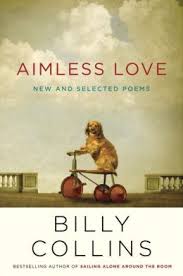
Aimless Love by Billy Collins

Aimless LoveI am a relative newcomer to the poetry of Billy Collins, but thanks to an admiring fan, I was lent a copy of his collection Sailing Alone Around the Room which was an extremely readable, entertaining and at times even hilarious read and so when I saw this new collection was coming out I requested it.

Who even knew that one could study for a PhD in Romantic Poetry? Does that make him of Doctor of Love I wonder?

His poems speak of ordinary things but steer clear of cliché, and Aimless Love as a title for this collection of collections as well as some new poems, seems perfectly apt for all manner of common things he appreciates and shares with us.

Aimless Love brings together selected poems from previous collections as well as some new poems

Here are a few extracts from moments of pure joy in reading Billy Collins Aimless Love:

The Country

I wondered about you

when you told me never to leave

a box of wooden, strike-

anywhere matches

lying around the house because

the mice

might get into them and start a fire.

But your face was absolutely

straight

when you twisted the lid down

on the round tin

where the matches, you said, are

always stowed.

Who could sleep that night?

Artwork by our Allia

Artwork by our Allia

Who could whisk away the thought

of the one unlikely mouse

padding along a cold water pipe

behind the floral wallpaper

gripping a single wooden match

between the needles of his teeth?

And who could not be tempted to read and understand more of this familiar relationship between the poet and his parents in:

No Time

In a rush this weekday morning,

I tap the horn as I speed past the

cemetery

where my parents lie buried

side by side under a smooth slab

of granite.

And this line from a poem called

Monday

Just think –

before the invention of the window,

the poets would have had to put on a jacket

and a winter hat to go outside

or remain indoors with only a

wall to stare at.

There are other fabulous poems like The Great American Poem, Horoscopes for the Dead, and Ode to a Desk Lamp.

But just as good as reading his poetry is listening to him read aloud, he has a melodic voice that lulls the listener into a kind of warm familial comfort, his words caress like a gentle tide of steaming bath water with the scent of Cedarwood. Well, perhaps if you close your eyes while listening, like I do.

Here he is reading just a few days ago, the title poem to this collection Aimless Love, so sit back, close your eyes, listen and be soothed:

Note: This book was an Advance Reader Copy, provided by the publisher via NetGalley.