Boulder is another portrait of a woman, the second of a triptych.
The narrator of Permafrost never quite cut the strings of family, choosing the path(s) of least resistance, while lamenting not having made more independent choices in her formative years.
Assured Prose Who Art in Metaphor
If the narrator of Permafrost is somewhat unsure, that of Boulder is more certain. The prose is assured, the narrative has pace, the protagonist moves towards what suits her, to freedom – until things change.
The avid descriptions and bold metaphors have me rereading and highlighting passages, like the creation of foam as a wave crashes on itself, they are as natural to the text as the paragraphs within which they roll.
An itinerant cook, she moves from place to place, island to ship, working in the kitchen. Life on the cargo ship suits her, she’s at home in turbulent seas, around those that neither desire nor reject her, a place where there was no need to pretend life had a structure. Rootless, drifting and free.
Freedom In Its Many Forms
I think I’ve discovered what happiness is: whistling the moment you wake up, not getting in anyone’s way, owing no explanations, and falling into bed at daybreak, body addled from exhaustion, and mind free of every last trace of bitterness and dust.
The boat sails up and down the coast of Chile, she rarely disembarks, the only temptation in Chaitén, for a hot shower, fresh linen, and a lurking lust for a lover. That’s where she meets Samsa.
I look at her and she fills every corner of me. My gaze is a rope that catches her and draws her in. She looks up, sees me. She knows.
They begin to see each other, though it is often months between visits. Her lover renames her Boulder.
She doesn’t like my name and gives me a new one. She says I’m like one of those large, solitary rocks in southern Patagonia, pieces of world left over after creation, isolated and exposed to every element. No one knows where they came from. Not even they understand why they are still standing and why they never break down. I tell her I’ve seen rocks like those in the middle of the ocean.
Compromise, Commitment, Cohabitation
Samsa leaves for Iceland and asks Boulder to join her, she says yes. Samsa makes decisions and Boulder adapts to them. She observes the island, the islanders, the things she doesn’t like, she finds work that gives her an escape. She observes the different way they love each other, the pull of the boats when she walks the dock alone at night.
There’s a restlessness. She starts her own business, a food truck, no boss, no employees, a small but significant and necessary freedom. Something of her own. A coping mechanism.
Then it happens. Samsa wants to have a baby, Boulder knows that refusing her will mean the end, so asks for more time.
The novel charts this turning point in the relationship, where one woman will become pregnant and give birth while the other tries to support and be part of something she does not feel.
It is an alternative navigation of an age old dilemma, seen through the lens of a queer relationship, a couple struggling with avoidance issues.
It’s not difficult to imagine where it is headed, or what might happen, when one person isn’t quite committed to the idea and desires freedom so strongly. Is the love of another enough sufficient when events propel their lives forward faster than the communication of important feelings around them?
Boulder’s observations and experience are like that of an outsider who can’t quite enter the familiar, of trying to overcome an obstacle of the mind, when the heart is resisting, when self destructive tendencies threaten to communicate what the voice has been unwilling or unable to.
“My protagonists are mirror images of myself, only more precise and always veiled. I try to discover who they are by writing, travelling to their darkest, most uncomfortable corners, which is like travelling to the darkest corners of myself, corners that are often repressed and at times denied wholesale. Being able to embark on this journey aboard a novel is as exciting as it is unsettling. It’s as if the novel had transformed into a caravel and the seas were vast but finite, teeming with monsters on the edge of the earth.” Eva Baltasar
On the back page in the first sentence that describes the author, it says Eva Baltasar has published ten volumes of poetry. Permafrost is her debut novel, the first in a triptych which aims to explore the universes of three different women in the first person. It clear from the beginning this is the prose of an assured poet.
I love the title, Permafrost. That deep, but necessary layer in the earth, cold and hard, it creates a foundation layer and stability, as long as conditions remain the same. Kathleen Jamie writes about it in her excellent essay collection Surfacing.
The narrator of Permafrost destabilises the reader on the opening page, with these opening lines…
It’s nice, up here. Finally. That’s the thing about heights: a hundred metres of vertical glass. I’ve settled on an edge, I live on this edge and wait for the moment when I’ll leave the edge, my temporary home.
Not only thinking about heights, but observing all the minutae that surrounds her. It seems like a suicide attempt, a theme that recurs throughout the 122 page novella, only she appears to be distracted by an ever present curiosity around the details of the new experience, something that seems incongruent with wishing to take a life.
I’ve settled on an edge, I live on this edge and wait for the moment when I’ll leave the edge, my temporary home.
Living On the Edge Creates Curiosity
The Thomas Bernhard epigram warns us ‘To be born is to be unhappy, he said, and as long as we live we reproduce this unhappiness.’
So I am surprised by the humour. Despite her melancholy nature and existential awareness, the living in the shadow of family, she makes us laugh.
She tells us her family all self-medicate. Not her, she prefers the edge.
Not for me though – best to keep moving wildly to the edge, and then decide. After a while, you’ll find that the edge gives you room to live, vertical as ever, brushing up against the void. Not only can you live on it, but there are even different ways of growing there. If surviving is what’s it all about, maybe resistance is the only way to live intensely. Now, on this edge, I feel alive, more alive than ever.
A promising child, her first crisis is graduation, after five years, there’s nowhere to go, few clues as to how to put this learning to use. So she lives in her Aunt’s apartment and rents out rooms to different women, providing herself an income and an effortless source of lovers. She spends her days reading, observing, pondering death, too curious to pursue it.
Her meandering is interrupted by her pregnant sister and her mother, their insistence to stay close, involved, drawing her back in, keeping her that person she was. The Aunt’s phone call, she’s selling the apartment.
An au pair in Scotland, a marriage proposal in Belgium, childhood memories, fantasies, churning through relationships, occasionally one that lasts a chapter, dialogue with the sister, the mother.
A mole grows and changes form, she makes a doctor’s appointment then cancels it for a year, then follows up.
Life Can Be Insistent
Each chapter is less than two pages, sometimes the narrative skips a chapter and picks up the thread again later on. It’s an inner voyage of discovery and an outer journey of experiences to unravel what was formed by others and discover the essence of, to know who she is. As that realisation occurs, life throws an even greater challenge and responsibility her way.
I’ve realised I know myself by heart…
It is a unique work, recognisably the work of a poet, unruly, impulsive, it makes light of heavy subjects, never quite proselytising, both giving into and resisting convention, forging a way through, trying different things on, breaking out and being pulled back in. One is left wondering if she is floating with the tide or pushing through it.
Permafrost received the 2018 Premi Llibreter from Catalan booksellers and was shortlisted for the Prix Médici for Best Foreign Book in France (2020).
Cold Enough for Snow is a 96 page literary fiction novella set in Japan, that can be read in an afternoon.
Mother Daughter Relationships
It is an intricate, observant story told by a daughter who has arranged to take her mother on holiday to Japan. She recounts their days and interactions and tries to anticipate what her mother might like, knowing that the intersection of their common interests is negligible.
Mother and daughter have been raised in different countries and cultures, additionally the mother was not raised in the same country as her parents, so both have grown up migrants, knowing little about what came before, except that it has influenced the way they would have been raised.
Do We Ever Really Know Our Mother?
There is a void, a vacuity, a kind of absence of understanding that is very present, in terms of the way the daughter tries to feel her way towards guessing what her mother might like, what to propose to her. The mother doesn’t have set ideas or desires regarding what they might do, she is like a stranger, a visitor to the holiday, not exhibiting the same kind of intentionality that the daughter possesses.
Earlier in the year, I had asked her to come with me on a trip to Japan. We did not live in the same city anymore, and had never been away together as adults, but I was beginning to feel it was important, for reasons I could not yet name. At first, she had been reluctant, but I had pushed, and eventually she had agreed, not in so many words, but by protesting slightly less, or hesitating over the phone when I asked her, and by those acts alone, I knew that she was finally signalling that she would come. I had chosen Japan because I had been there before, and although my mother had not, I thought she might be more at ease exploring another part of Asia. And perhaps I felt this would put us on equal footing in some way, to both be made strangers.
It was autumn and though pretty, there had been adverse weather warnings.
The daughter describes the minutiae of their every movement, of taking trains, changing platforms, the places they visit, the flora and fauna, occasionally flashing back to memories to when she travelled with her husband Laurie; wishing that the same excitement of discovery she’d had with him might be present with her mother.
She also recalls how difficult her younger sister was, growing up. Now a mother herself, she is dealing with difficult behaviours that have passed through to her own child, little understanding why she had been so troubled.
Ask Me No Questions, I Tell You No Lies
She tries to engage her mother in conversation, they talk; the daughter asks questions, the mother answers.
I thought about how vaguely familiar this scene was to me, especially with the smells of the restaurant around me, but strangely so, because it was not my childhood, but my mother’s childhood that I was thinking of, and from another country at that. And yet there was something about the subtropical feel, the smell of the steam and the tea and the rain…
It was strange at once to be so familiar and yet so separated. I wondered how I could feel so at home in a place that was not mine.
The daughter has had a particular education that influences the way she observes things, she wants to share that with her mother, she tries, mostly her mother smiles when she shares these perspectives, but it is impossible to tell if she agrees.
Whenever I’d asked her what she’d like to visit in Japan, she’d often said she would be happy with anything. The only question she’d asked once was whether, in winter, it was cold enough for snow, which she had never seen.
Existential Beliefs and Nothingness
One day the daughter desires to visit a church, reportedly a beautiful building designed by a famous architect, in a suburb near Osaka. Though she knew her mother did not believe in that religion, visiting that place was supposed to be a profound experience, it provoked and exchange between the two.
I asked my mother what she believed about the soul and she thought for a moment. Then, looking not at me but at the hard, white light before us, she said that she believed that we were all essentially nothing, just series of sensations and desires, none of it lasting. When she was growing up, she said that she had never thought of herself in isolation, but rather as inextricably linked to others. Nowadays, she said, people were hungry to know everything, thinking that they could understand it all, as if enlightenment were just around the corner. But, she said, in fact there was no control, and understanding would not lessen any pain. The best we could do in this life was to pass through it, like smoke through the branches, suffering, until we either reached a state of nothingness, or else suffered elsewhere.
The novella presents these two women and the things they do, snippets of their one sided conversations, their attempt to bond, to find a connection. They are transparent, one thing they have in common is the inability to pretend, there is no falseness, they are a product of those environments they’ve grown up trying to fit into, familiar yet unfamiliar, known, yet unknown, compelled by life’s circumstance to remain an enigma to each other.
It was an interesting read, that palpable desire to connect, the deep chasm between them, born of something outside their control, yet the human need to try and persevere, to find a way through anyway.
Jessica Au is a writer, editor and bookseller based in Melbourne, Australia.
Cold Enough for Snow won the inaugural Novel Prize in 2022, run by Giramondo, New Directions and Fitzcarraldo Editions, and is set to be published in eighteen countries. Au won both the 2023 Victorian Premier’s Prize for Literature and Victorian Premier’s Prize for Fiction for Cold Enough for Snow.
“Migration is probably the one through line of my family. My grandfather migrated from China to Malaysia, my mother migrated from Malaysia to Australia. So, that’s three generations of migration. When I was younger, I would take my mother’s language and refer to Malaysia as “home”. Where I was living, where I was born, was never “home”. Even after living in Australia for so many years, that idea of home being elsewhere is constant and present. I don’t have a sense of belonging anywhere.” Jessica Au, interview, Bomb Magazine
Brazilian author, Ana Paula Maia’sOf Cattle and Men, was an interesting and confronting story that in parts was hyper realistic in a visceral way, and fable-like in other ways. It is the fourth book I’ve read this year from the Charco Press Bundle 2023.
Set in a place where there is a one-man owned slaughter-house, not far away a hamburger processing plant, the author creates a small world that concerns men and their relationship to meat and their relationship to the beings who provide it.
Two enclosures, one for cattle and one for men, standing side by side. Sometimes the smell is familiar. Only the voices on one side and the mooing on the other distinguish the men from the ruminants.
Humanity has been able to consume meat in part because they are separated from the process of how to turn something sentient into something edible.
Man’s Need for Ritual
Here, we meet Edgar Wilson, stun operator, who has ritualised his occupation and believes that it has an effect on the animal.
Edgar picks up the mallet. The steer comes up close to him. Edgar looks into the animal’s eyes and caresses its forehead. The cow stomps one hoof, wags its tail and snorts. Edgar shushes the animal and its movements slow. There is something about this shushing that makes the cattle drowsy, it establishes a mutual trust. An intimate connection. With his thumb smeared in lime, Edgar Wilson makes the sign of the cross between the ruminant’s eyes and takes two steps back. This is his ritual as a stun operator.
He has a dark history and holds little compassion for men who are carelessly cruel. It brings out his own.
Milo decides to keep quiet. He knows Edgar Wilson’s loyalty, his methods, and he knows that Zeca really was useless. No one had reported him missing, and if anybody came looking for the boy, he would simply say he never showed up for work again. That he doesn’t know where he’s gone off to. Just as no one questions death in the slaughterhouse, the death of Zeca, whose rational faculties were on par with the ruminants, would surely be ignored. Senhor Milo knows cattlemen, he’s cut from the same cloth. No one goes unpunished. They’re men of cattle and blood.
Recently the animals waiting in the holding area have become unsettled and strange, unexplained happenings have been occurring. The men stay up into the night to investigate and try to find the suspected predator that is disturbing the animals and worse.
How Language Eviscerates and/or Exposes
I thought this novella was quite incredible and it evoked all kinds of memories and thoughts, that may not be like many other readers.
Firstly, the realism of the slaughter house. Although this novel concerns what seems like a small scale operation, the attention to detail in its execution and the evocation of all the senses in that environment immediately reminded me of memories I would rather forget.
When I was a university student, one summer I needed to find a job allied to the agricultural industry. I wrote to a family friend who was a ‘stock agent’ asking if he knew of an opportunity. He suggested a “freezing works” (an interesting choice of name used in New Zealand and Australia to describe a slaughterhouse at which animal carcasses are frozen for export) and so I began my summer working in this enterprise’s pay office, transferring data from daily timesheets into a ledger that would eventually be input into a computer to generate their pay. Far from the action, except that one of my roles was to go and collect those time sheets from the different departments. And that is where and how, I witnessed, with every one of my senses, everything.
Secondly, the question of what an animal intuits and feels. Being raised on a 1,600 acre sheep and cattle farm, I can acknowledge that as humans, we are conditioned to accept certain realities and often made to participate in them, until the age of free will. Within childhood, in my case, we occasionally had access to a ‘farm animal’ as a pet – the relationship building that can occur between the human and the animal is undeniable, but equally, not every human will allow that relationship to occur.
Our pet lambs (after the annual school pet day) were put back into the flock; my pet calf, I rescued from one fate (slaughter), to have her destined for another (to become the ‘house cow’), providing daily milk to the family; she could therefore keep her offspring for six months. There was on occasion, an attempt to ‘mother’ one newborn (orphan) onto another, an act that could result in the false mother killing the strange newborn, despite it being dressed in the skin of her own dead lamb.
There is indeed a knowing.
For a few moments, Edgar Wilson yields to the late afternoon sun that has not yet fully set, but that is rushing headlong into a moonless, starless night. He knows how to listen in silence, even when others are just sighing or snorting. Life in the country has made him like the ruminants, and being a cattleman, he is able to strike a perfect balance between the fears of irrational beings and the abominable reverie of those who dominate them. He sinks two fingers into the paint can and marks the foreheads of the four cornered cows.
In Of Cattle and Men, Ana Paula Maia shows man’s inhumanity to man and his denial that an other meat-producing species might have awareness, consciousness or feeling. So the men are confused by what is occurring and they look only towards what they know, that which man is capable of; therefore they suspect other men, each other. They disbelieve what is in front of them, what they see.
Because what if those animals had agency?
Certainly not my usual kind of read, but I read this novella in one sitting, intrigued by the premise and captivated by the writing. Brilliantly portrayed, evocative of place and confronting to humanity’s blindness, I’d definitely read more by Ana Paula Maia.
Ana Paula Maia, Author
Ana Paula Maia (Brazil, 1977) is an author and scriptwriter and has published several novels, including O habitante das falhas subterráneas (2003), De gados e homens (2013), and the trilogy A saga dos brudos, comprising Entre rinhas de cachorros e porcos abatidos (2009), O trabalho sujo dos outros (2009) and Carvão animal (2011). Her novel A guerra dos bastardos (2007) won praise in Germany as among the best foreign detective fiction.
As a scriptwriter she has worked on a wide range of projects for television, cinema and theatre. She won the São Paulo de Literatura Prize for Best Novel of the Year two years in a row: in 2018 for her novel Assim na Terra como embaixo da Terra, and in 2019 for Enterre Seus Mortos.
Having just read and loved Edna O’Brien’s trilogy The Country Girls, written a mere 5 years later than this novella, I thought I would easily get through this. They lived in the same country and both wrote in the English language, however they were worlds apart in their use of language, their choice of protagonist and place.
There is a 30 year difference in age, but while O’Brien writes with lucidity and frankness (too frank for many, thus her work was initially banned) Bowen writes with unfathomable verbiage that obfuscates the narrative and left me wondering what this had been about.
A World of Love? I think not.
War Changes Everything
A young man who would have owned a grand Anglo-Irish house, inconveniently dies in World War I, leaving a fiance Lilia, who sadly has no status having not yet married him, and a cousin Antonia, who will inherit the mansion. Needing a farm worker to run the place and perhaps feeling sorry for Lilia, Antonia brings these two together, they marry and have two girls, Jane and Maud.
One summer 20-year-old Jane pokes around the attic and discovers a bundle of letters folded into an old dress. There are a few conversations that circle the letters, though rarely address them – which is a little like the tone of the novel, people speak and avoid all the issues.
There is an annual festival, which should be a day of excitement, and for Jane it is, but it is the only community event the family ever participate in, they are isolated and out of touch with the everyday reality of other lives, living in the shadow of the past, of a future that never manifested.
Ultimately, we learn that this family, like the muslin dress and the letters folded away in it, are living a life suspended between the past and the present, one that Jane, who is in the peak of her youth, clearly wants to bust out of. Her finding the dress and the letters is a sign of much needed change, something that disrupts the stagnant air of an old house, arrested in time.
Times Pass, Youth Reinvents the Present
When Jane descends wearing the musty, antique dress, a symbol of the past, Antonia gestures for it to be taken away, while Jane insists the presence of the sachets suggest it was meant to be worn again.
‘No, on the contrary – no, it had had its funeral. Delicious hour for somebody, packing away her youth. Last looks at it, pangs, perhaps tears even. Then down with the lid!’
‘What, does youth really end with a bang, like that?’
‘It used to. Better if it still did.’
Antonia, as so often, spoke into nothing – for Jane, not awaiting the answer to her idle question, had got back up and gone to the looking-glass. There she stood, back turned to the bed, searching impersonally for the picture Antonia had failed to care to find or for the meaning of the picture, without which there could be no picture at all. ‘What egotists the dead seem to be,’ she said. ‘This summery lovely muslin not to be worn again, because she could not? Why not imagine me?’ She stepped back on to a flounce of the hem, which tore. ‘Who’d she have been? she wondered, roping the fullness round her to see the damage.
In the last two pages, there is the arrival of a guest at the airport, an indicator that change is afoot.
It has taken me a few days to sit with this novella and reflect on what it might have been about, to be able to write anything about it.
For me the characters were under developed, not much of note or intrigue happened, and though there was this theme of stagnation and the dying out of a breed versus the presence of youth that wants to break through all of that, there were too many unnecessary words used to describe that which does occur, that made for a frustrating reading experience.
The Rebel Protagonist
It reminded me a little of a similar feeling I had reading another Anglo-Irish novel set in a big house, Molly Keane’sGood Behaviour, it seems I don’t particularly enjoy reading novels about misanthropes sitting around in big manor houses.
The only downside in reading The Last Resort is that it was so short!
This is the novel I have been waiting for Jan Carson to write, for here is a writer who in her ordinary life as an arts facilitator has brought together people from opposite sides in their way of thinking, encouraging them to sit down and write little stories, enabling them to imagine from within the shoes of an(other) – teaching the practice of empathy.
Her novel The Fire Starters comes from that place of darkness and indifference, when there is no empathy. I found it disturbing. I’ve since realised gothic novels aren’t my thing.
Here, Carson digs deeper into the psyche of the many that make up their community and finds a common thread that connects them, something that both pushes them forward and holds them back and shows it in its many guises, through a kaleidoscope of colourful characters. Everyone has their own mini drama and troubling perspective, that coming together might create a shift away from.
Set in a fictional Seacliff caravan park in Ballycastle on the North Coast of Ireland, as the book opens we meet Pete, who now (reluctantly) runs the caravan park and Frankie, who has gathered a few friends for the 50th anniversary of Lynette, for whom they will place a memorial bench with a brass plaque at the top of the cliff.
A caravan on the North Coast was the height of luxury, somewhere you could escape to at the weekend. They felt safe here. Or they did until that bomb went off in the car park.
It’s the first day of the holiday season and most of these people have been coming here for years, though for some this may be their last visit. Not everyone is happy to be here, like Alma and her two siblings, especially when they wake up one morning to discover their phones and her iPad are missing.
Alma is into Agatha Christie and when she discovers they are not the only family that has something missing she decides to investigate, even if there hasn’t been a murder. Yet. No really, there’s no murder.
It’d be easy to push someone over that cliff. It’s so crumbly. You could make it look like an accident. I can think of at least three different times Agatha Christie killed somebody by shoving them off a cliff. If my iPad wasn’t gone I’d google to see if there were more. I’m raging about losing my iPad. Now I have to run my investigation the old-fashioned way. Snooping around. Observing suspects. Taking notes on my jotter. Maybe it’s better like this. Poirot never looked anything up on Wikipedia or checked suspects’ alibis on Facebook. If Poirot was here, he’d say, forget the iPad, Alma. Use your leetle grey cells. I’m doing my best. I’m watching everyone, even Mum. It’s always the person you least suspect.
Alma’s Mum Lois has a PhD in mythology and her thing is sea monsters. Monsters, wizards and demons, that’s her parents thing, Harry Potter is for kids, Alma likes the real world, way scarier.
Each chapter is narrated by one of 10 characters in the caravan park and about each family we learn what is holding them back, what consumes their minds. And while there is not a murder, no smoking gun, there is the cliff – and from the beginning you sense its ominous presence, the way it draws everyone to its apex.
We meet Alma again (my favourite character) as she trails around the caravan park interrogating her disapproving adult suspects. She’s brilliant.
Richard is a complete empath, hiding it from his family as if it were a sign of weakness, a position likely to be exposed given he has used his father’s caravan to house sixteen homeless men, many of them immigrants.
I couldn’t tell Dad about them. I’ve never really told him what I really do. He wouldn’t understand. In his world, you work hard, and you do well. There’s no reason to end up on the street, hawking The Big Issue, unless you’ve brought it on yourself.
Kathleen struggles to accept her daughter for who she is, because of societal expectations, but finds it hard to follow through with her disapproval because she desperately wants a relationship with her grandson Max. She finds Alma strange, intense and curious.
Lois answers all her questions. She talks to her weans like they’re adults. When she split up with her husband, Alma was fit to tell me the ins and outs of the whole divorce. She was only ten. You have to protect a child that age. They’re not old enough to know everything. Still, I have to say I envy them – calearied as they are – at least they talk to each other, really properly talk. We’re all adults in this caravan but we’ll spend the whole weekend talking about nothing. The weather. The baby. Whether or not to put the kettle on. Avoiding the elephant in the room because nobody wants to cause a scene.
So many great lines, so much humour, angst, regret, camaraderie as the story leads to its wild denouement on the seacliff, as the thing that’s been holding them all together, holding them back, demands to be released.
Jan Carson is a writer and community arts facilitator based in Belfast. Her debut novel Malcom Orange Disappears (2014) was published to critical acclaim, followed by a short-story collection, Children’s Children (2016), and two flash fiction anthologies Postcard Stories (2017) and Postcard Stories 2 (2020).
Her second novel The Fire Starters (2019) translated into French by Dominique Goy-Blanquet as Les Lanceurs de Feu, won the EU Prize for Literature, was shortlisted for two prestigious French literary awards the Prix Femina and Prix Médicis in 2021 and was also shortlisted for the Dalkey Novel of the Year Award.
Her third novel The Raptures was released in Jan 2022.
A totally delightful, kind-hearted, empathetic read.
Marzhan Mon Amour is a memoir-ish novel, collective history and a character study of a group of people living in and around a multi-storied communist-era plattenbau prefab apartment building in the working class quarter of Marzahn, East Berlin, told through the eyes and ears of a woman facing her middle years.
The middle years, when you’re neither young nor old, are fuzzy years. You can no longer see the shore you started from, but you can’t yet get a clear enough view of the shore you’re heading for. You spend these years thrashing about in the middle of a big lake, out of breath, flagging from the tedium of swimming. You pause, at a loss, and turn around in circles, again and again. Fear sets in, the fear of sinking halfway, without a sound, without a cause.
The narrator is a 45 year old woman (referred to in some articles as the author herself), whose partner is ill, requiring her to abandon her career as a writer and take up something else. She retrains as a chiropodist and joins Tiffy who offers beauty treatments and massage and Flocke who does nails, in a salon at the foot of an eighteen storey building.
If the opening paragraph quoted above, sounds melancholy, it represents a turning point. Leaving the writing studio for the salon, though initially motivated for financial reasons, provides both practitioner and patient an incredible sense of connection, community and perhaps even at some level, healing.
Many of the clients have lived there since the housing estate was built forty years ago,
…now bravely coming to the ends of their lives with their walking frames, their oxygen cylinders and their state pensions, sometimes spending whole days not speaking to another soul, pouring out their famished hearts to us when they come to the salon, gratefully absorbing every touch, happy for once not to be treated like imbeciles…
Fed up with rejections, she becomes part of this small team and larger community, seeing her regular clients, getting to know them, listening, observing, caring for them, being part of the fabric of a unique, idiosyncratic neighbourhood.
In each chapter, we meet another client, another character, a life, shared in an engaging and often humorous way, as she participates in the ritual of what is something between a pedicure and reflexology, an hour long treatment of the feet, listening to or being silent with the person who occupies that quiet hour, a temporary escape from their day to day lives.
A chronicler of their personal histories, we witness the humanity behind the monolith structures of these housing estates, the connections created between the three women and the warmth and familiarity they provide to those who cross their threshold.
And that one day of the year, when they close the salon and go together on an outing, described in a way that will make you almost feel like you are experiencing it yourself.
Superbly translated, Jo Heinrich, had this to say about the experience:
There are poignant sections, but it’s an ultimately life-affirming book; it’s funny and warm-hearted, the characters (mostly) feel like good friends and Katja’s writing is so well crafted that it was always a joy to retreat to.
I absolutely loved it, Katja Oskam has penned an ode to an unappreciated, disparaged area, its ageing population and the power of touch. If you’re looking for an uplifting, life-affirming afternoon read, look no further.
Highly recommended.
Katja Oskamp, Author
Katja Oskamp was born in 1970 in Leipzig and grew up in Berlin. After completing her degree in theatre studies, she worked as a playwright at the Volkstheater Rostock and went on to study at the German Literature Institute in Leipzig.
Her debut collection of stories Halbschwimmer was published in 2003. In 2007 she published her first novel Die Staubfängerin. Her book Marzahn, Mon Amour, published by Hanser with the subtitle ‘Stories of a Chiropodist’, was selected for the ‘Berlin Reads One Book’ campaign and thus literally became the talk of the town.
She is a member of PEN Centre Germany. Marzahn, Mon Amour is her first work to be translated into English, published in Feb 2022 by Peirene Press.
Claire Keegan is an Irish writer who writes atmospheric, slice of life novellas on an aspect of Irish life. I read her novella Foster some years ago, a touching and eerie story of a girl caught between two sets of parents, that is unsettling, though never quite reveals the source of this tension, that is left somewhat to the reader’s imagination.
Small Things Like These is set in an Irish town in 1985 in the lead up Christmas. Bill Furlong, a father of five daughters is a coal merchant, raised by a single mother who was a housemaid for an upper class woman who allowed her to keep her son with her. The story recalls an event that occurs at the nearby convent, when Bill is making his deliveries and we observe different members of the community’s reaction to that.
I admire the way Claire Keegan creates atmosphere and a sense of place, I could well imagine the small Irish town they lived, the cold, the workplace, the river – although I had to keep reminding myself it was the 1980’s and that there was electricity. Bill’s deliveries of wood and coal and the way the women made it feel like a much earlier era, though I don’t doubt it was freezing then as few could afford to heat their homes by other means.
The character of Bill Furlong was interesting and held potential, both due to the unique circumstance of his upbringing, which made him an empathetic character, and the fact that his wife and other women in the community had a different opinion or perception to his, regarding the situation that he will be confronted with.
The blow was cheap but it was the first he’d heard from her, in all their years together. Something small and hard gathered in his throat then which he tried but felt unable to say or swallow. In the finish, he could neither swallow it down nor find any words to ease what had come between them.
Furlong was one of very, very few babies born to a woman out out wedlock who got to stay with his mother, due to the generosity of his mother’s employer.
When we meet him he is a grown married man with daughters, with his own business, though still struggling and not able to imagine a time when that might change. There is something in him that is unsettled despite his circumstance, something slowly revealed that he seeks liberation from.
On making a delivery to the nearby convent, where his daughters are at school, he becomes aware of the fact there are other young women there, who work with the nuns and provide the community with laundry services.
It is a subtly consciousness raising novel yet somewhat ironic and convenient to this reader that the empathetic character is a working man with daughters. While the story conveniently sidesteps the significant issues, it takes a provocative stance in choosing to instill empathy in a character, who represents generally, the one we never look at – the boy involved, the father or brother who punished their daughter/sister, or the decision maker’s of the institutions (church and state) that carried out the punishment of these young women. In this respect, the premise of the novel feels totally unrealistic, a Disney-like fantasy. The reality is that it is very likely no one ever did was Bill purports to do here.
It made me recall another character, Albert, from the film Made in Dagenham, who was initially the only man who supported a group of female factory workers fighting for equal rights at the Ford Dagenham factory in 1968 – the reason he supported them was because he had been raised by a single mother – perhaps there is something to be said for the development of a deeper empathy in men who’ve been raised by single mothers.
One of the other things that did stand out was the prevalence and contribution of community gossip to the development of judgement and insinuation. He is warned by the woman running the café where his men eat lunch.
‘Tis no affair of mine, you understand, but you know you’d want to watch over what you’d say about what’s there?’
Those that listen to and contribute to gossip are of a different kind than those who respond to an injustice that was right in front of them, despite it being none of their business. Bill was of the latter.
Overall, I felt like this novel had only just begun and then it was over; it left me with too many questions and felt like it was set in a time that was decades earlier than the 1985. It read more like a promising beginning, than a complete novel. Deliberately provocative perhaps.
N.B. Thank you to the publisher for providing an ARC via NetGalley.
Warning: Likely to trigger adoptees or any woman coerced by society, to give up a child to adoption.
What Were The Magdalene Laundries?
From the foundation of the Irish Free State in 1922 until 1996, at least 10,000 girls and women were imprisoned, forced to carry out unpaid labour and subjected to severe psychological and physical maltreatment in Ireland’s Magdalene Institutions. These were carceral, punitive institutions that ran commercial and for-profit businesses primarily laundries and needlework.
After 1922, the Magdalene Laundries were operated by four religious orders (The Sisters of Mercy, The Sisters of Our Lady of Charity, the Sisters of Charity, and the Good Shepherd Sisters) in ten different locations around Ireland. The last Magdalene Laundry ceased operating on 25th October, 1996.
The women and girls who suffered in the Magdalene Laundries included those who were perceived to be ‘promiscuous’, unmarried mothers, the daughters of unmarried mothers, those who were considered a burden on their families or the State, those who had been sexually abused, or had grown up in the care of the Church and State.
Confined for decades on end – and isolated from their families and society at large – many of these women became institutionalised over time and therefore became utterly dependent on the relevant convents and were thus unfit to re-enter society unaided.
Book: Ireland and the Magdalene Laundries: A Campaign For Justice by Katherine O’Donnell – Sept 2021 – a devastating and vital account of life behind the high walls of Ireland’s institutions, featuring original research and testimony + the continued campaign for justice for victims and to advance public knowledge and research.
I read Hadji Murad because it was referenced in the last pages of Leila Aboulela’s excellent The Kindness of Enemies and is set in the same location as the historical part of her book, 1850’s Caucasus. Aboulela’s book centres on the kidnap of A Russian Princess and her time in captivity under the protection of the Highlander Shamil Imam. He wishes to trade her for his son, help captive by the Russians for more than ten years.
Tolstoy was in the Russian army for a time and clearly witnessed many missions. One of the events he had knowledge of and wrote about, though this novella was published post-humously by his wife, was the defection to Russia and subsequent killing of one of Shamil Khan’s chieftans, another Highlander, Hadji Murad.
Though I’m not a huge fan of the classics, there are some exceptions and I did enjoy Anna Karenina, however having read Aboulela’s version which really brings the characters alive and highlights their dilemmas so openly, I found it hard to connect with Tolstoy’s tale, which rarely touches on lives other than the soldiers and noble decision makers.
The opening scene though is brilliant, the ploughed field, bereft of life, everything turned over, leaves only one sturdy thistle, half destroyed but for that one stalk still standing tall, the flower head emitting its bold crimson colour.
The land was well tilled and nowhere was there a blade of grass or any kind of plant to be seen; it was all black. “Ah, what a destructive creature is man… How many different plant lives he destroys to support his own experience!” thought I, involuntarily looking round for some living thing in this lifeless black field.
It is the scene that brings back the memory of this man Hadji Murad and compels him to write out those pages, perhaps purging himself of a ghastly memory.
“What energy!” I thought. “Man has conquered everything, and destroyed millions of plants, yet this one won’t submit.” And I remembered a Caucasian episode of years ago, which I had partly seen myself, partly heard of from eye-witnesses, and in part imagined.
It does make me think that he had intended not to publish it, that perhaps it was written for another purpose altogether. Particularly as, at the time he wrote it (1896-1903)
he was spending most of his time writing his virulent tracts against the art of fiction and denouncing some of the best writers in the world, including Shakespeare.
In conclusion, it highlights to me the importance of reading various perspectives of history, not just one side or the other, but also across gender. It is refreshing to read a female historian’s fictional version of an age old conflict, inhabiting characters who observe from positions of lesser power, of oppression, for their powers of observation are that much stronger than the privileged, it being one of their necessary survival instincts.
A French novella that I read in an afternoon, we accompany our Parisian protagonist Anne, on a train journey towards Lake Baikal, in Southern Siberia, a journey she makes on a local train, having spontaneously decided to find out why her friend Gyl is no longer responding to her letters.
For the first six months he had written often, telling me he had time to go fishing for omul in the lake and make kites for children.
And then, silence.
Once on the train and it’s a long journey, she has time to think and recall their friendship, they were lovers many years ago and while she holds no flame for him, the journey allows her to reflect on the highs and lows of their union.
I knew that the return trip is the real journey, when it floods the days that follow, so much so that it creates the prolonged sensation of one time getting lost in another, of one space losing itself in another. Images are superimposed on one another – a secret alchemy, a depth of field in which our shadows seem more real than ourselves. That is where the truth of the voyage lies.
Get To Know Your Neighbour
What she does spend time thinking of, is her recent past and another spontaneous decision, to knock on the door of a neighbour whom she has never seen, an elderly woman.
I had never run into her in the lobby of the building, not on the stairs. I knew all the other people who lived there, or at least their names and faces, but Clémence Barrot remained a mystery. No sounds would ever reach me when I walked by her door, and if I asked questions about her, all I got were laconic answers and knowing looks…A character!
The door is opened by a young girl and peering inside she sees the older woman sitting on a red sofa by a window. As an excuse for her curiosity she mentions there might be noise as she has people coming for dinner that evening. The woman asks her a favour in return for the anticipated inconvenience.
With a big smile, she retorted that she would rather we proceeded differently: for all past dinners, for this one and the next ones, she would only ask in exchange that I occasionally read to her a little, if I had the time.
Passionate French Women Who Faced Death Unflinchingly
And so we meet some bold French female heroines of the past, sadly a number of whom for their feminist inclinations in the wrong era, lose their lives at the guillotine.
“Tell me about that gutsy girl again,” Clémence Barrot would sometimes ask about Marion de Faouët and her army of brigands. She had, just as I did, a real affection for that child who had not grown up to become a lady’s companion despite all the efforts of the Jaffré sisters. No, she became a leader of men instead, an avenger of Brittany which had been starved during the 1740’s.
A wild beauty, faithful to her village, her loves and her ideals, Marion had been imprisoned several times before dying on the gallows at the age of thirty-eight.
While these stream of consciousness thoughts pass through her mind, various locals enter and exit the train. She is happy to be immersed in the languages of the area and in two books she has brought with her, Dostoevsky’sWar and Peace and a book by the philosopher Jankélévitch.
Travel To Exotic Destinations Through Story
Becoming particularly interested in one man whom she can’t communicate with – Igor – she imagines things about him from the little she observes and seeks him out more than one time when he disappears.
I had just read ‘There are encounters with people completely unknown to us who trigger our interest at first sight, suddenly, before a word has even been said…”
It’s an engaging read considering not much happens, but there is just the right mix of action and reflection and indeed, by the end a build up to a couple of dramas and quiet resolution.
I really enjoyed the read and was surprised at how captivated I was by the journey. I do love long train journey’s and hers was such an indulgent whim, that the suspension of what she will encounter is enough to keep the reader interested, and the relationship with her elderly neighbour provides a brilliant counterpoint and empathic adjunct, becoming the more significant event to the ‘thousands of miles’ distraction.
N.B. This was one of the many Seagull Books offered weekly to readers during the period of confinement.


 It is an intricate, observant story told by a daughter who has arranged to take her mother on holiday to Japan. She recounts their days and interactions and tries to anticipate what her mother might like, knowing that the intersection of their common interests is negligible.

 Brazilian author, Ana Paula Maia’s Of Cattle and Men, was an interesting and confronting story that in parts was hyper realistic in a visceral way, and fable-like in other ways. It is the fourth book I’ve read this year from the
 Having just read and loved Edna O’Brien’s trilogy


 This is the novel I have been waiting for Jan Carson to write, for here is a writer who in her ordinary life as an arts facilitator has brought together people from opposite sides in their way of thinking, encouraging them to sit down and write little stories, enabling them to imagine from within the shoes of an(other) – teaching the practice of empathy.


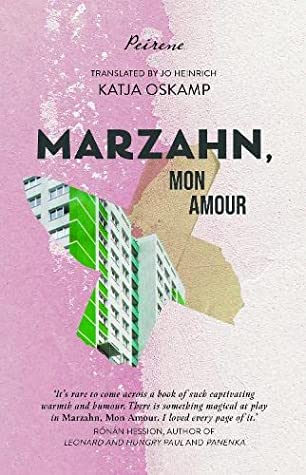 Marzhan Mon Amour is a memoir-ish novel, collective history and a character study of a group of people living in and around a multi-storied communist-era plattenbau prefab apartment building in the working class quarter of Marzahn, East Berlin, told through the eyes and ears of a woman facing her middle years.

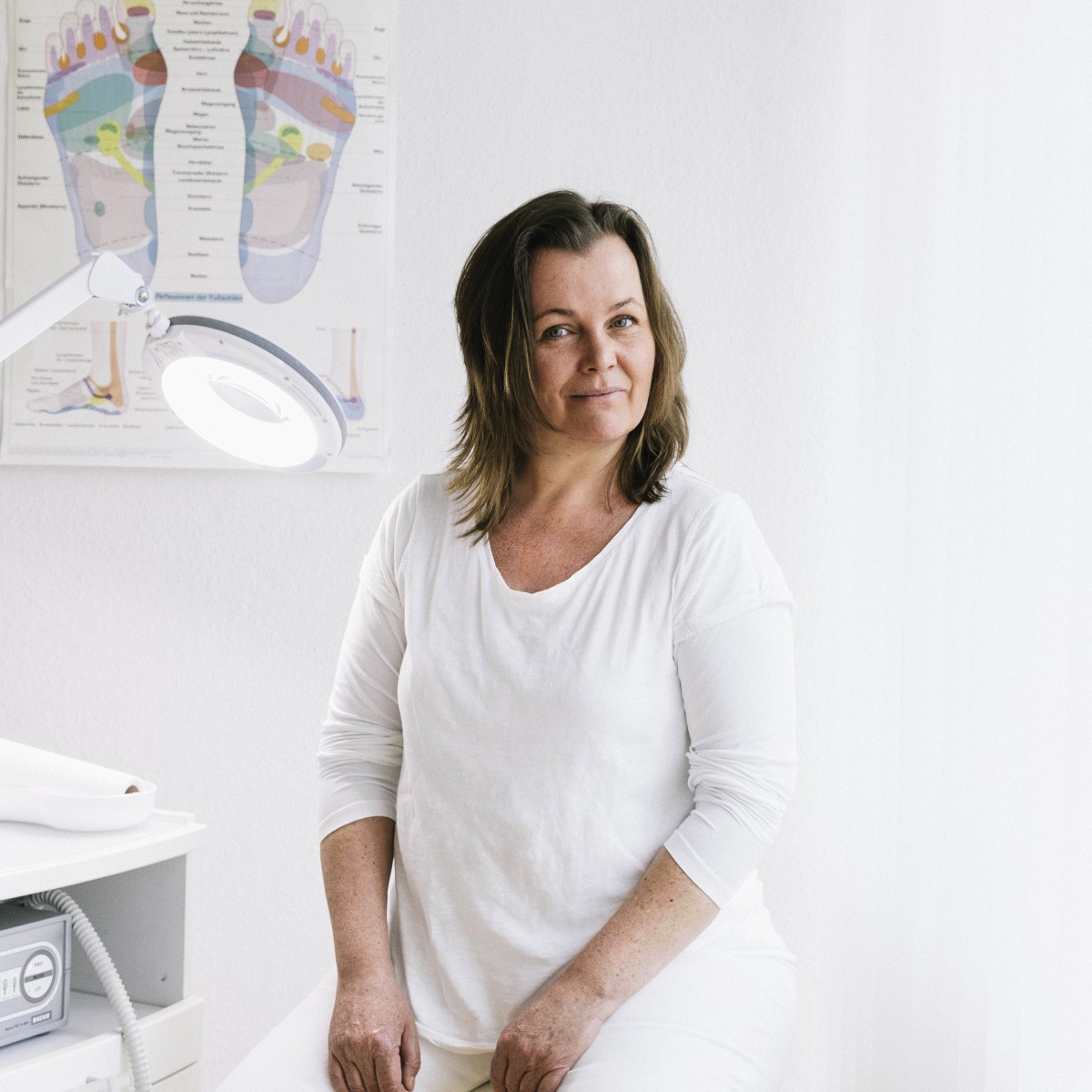 Katja Oskamp was born in 1970 in Leipzig and grew up in Berlin. After completing her degree in theatre studies, she worked as a playwright at the Volkstheater Rostock and went on to study at the German Literature Institute in Leipzig.
 I admire the way Claire Keegan creates atmosphere and a sense of place, I could well imagine the small Irish town they lived, the cold, the workplace, the river – although I had to keep reminding myself it was the 1980’s and that there was electricity. Bill’s deliveries of wood and coal and the way the women made it feel like a much earlier era, though I don’t doubt it was freezing then as few could afford to heat their homes by other means.
 It made me recall another character, Albert, from the film
  From the foundation of the Irish Free State in 1922 until 1996, at least 10,000 girls and women were imprisoned, forced to carry out unpaid labour and subjected to severe psychological and physical maltreatment in Ireland’s Magdalene Institutions. These were carceral, punitive institutions that ran commercial and for-profit businesses primarily laundries and needlework.
 I read Hadji Murad because it was referenced in the last pages of Leila Aboulela’s excellent
 Passionate French Women Who Faced Death Unflinchingly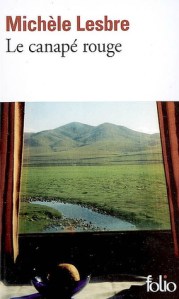
 Word by Word