
 Mention the name Alexandre Dumas and many will associate it with the classic stories as well-known now through their film adaptations, The Count of Monte Cristo, The Three Musketeers, The Black Tulip and La Reine Margot (Marguerite de Valois) as they are through the novels.
In France the novelist referred to as Alexandre Père Dumas, had a son Alexandre, also a well-known playwright. Less is known about the novelist’s father General Alexandre ‘Alex’ Dumas, born in 1762, the son of Marie Cessette Dumas, a black slave from Saint-Domingue (modern-day Haiti) and a French nobleman Alexandre Antoine Davy, the Marquis de Pailleterie, who was from a family of provincial aristocrats with a more impressive coat of arms and title than fortune to their name.
 Tom Reiss has researched the life of General Alex Dumas and takes us from the French sugar plantations of Saint-Domingue to the battlefields of the French revolution and to a dark dungeon on an island in the Mediterranean, in recapturing the spirit of this extraordinary man, living in an unforgettable era, that we are all the better off for being reminded of.
Antoine was the eldest of three brothers, required to go out in the world and seek their fortunes, which they initially pursue in the army before Antoine followed his brother Charles to Saint-Domingue. At the time the world’s largest sugar exporter, it generated vast wealth using slave labour, as depicted so vividly by Isabelle Allende in her excellent novel Beneath the Sea.
Charles married into money and established himself as a planter so Antoine joined him, though without the same work ethic or ambition, content to live off his brother, until an altercation caused him to flee with a couple of slaves and his slave mistress. The brothers never saw each other again and the family lost track of the eldest brother believing him to be dead. As the eldest, Antoine was heir to the title and the ancestral estate of Bielleville, however it was passed to a nephew in the belief of his demise, until his sudden and unexpected return to France.
Antoine had fled across the mountains to Jérémie, a coffee plantation area where he settled with a woman named Marie-Cessette and had four children with, including a son born on March 25, 1762 whom they named Thomas-Alexandre.

Bielleville, the family estate
He eventually returned to France, and learning of the death of his parents attempted to claim his title which had passed to the nephew, Comte Léon de Maulde, who employed a detective to investigate the returning heir’s mysterious island interlude and return.
Chauvinault then reported on Antoine’s having bought, in the late 1750’s, the beautiful black woman named Marie-Cessette, for whom he’d paid that “exorbitant price” – implying some unusual interest in her. Before Antoine’s return to France, Chauvinault reported, he had sold three of his children, as well as Marie-Cessette herself.
The detective also brought the interesting news that Antoine’s fourth child, a boy who was said to be his favourite, had not been sold along with the others. This boy was “a young mulatto who, it is said, was sold at Port-au-Prince,” Chauvinaluth wrote, “conditionally, with the right of redemption, to Captain Langlois, for 800 livres.”
On arrival in France Antoine sends for his son and thus begins a different life for the adolescent Alex Dumas Davy de la Pailleterie. His father pawned the family estate and moved them to the rich and fast growing Saint-Germain-en-Laye, on the western side of Paris. Dumas received a superior education, expensive clothes, training in fine manners, riding, baroque dancing and duelling among other equally refined activities. After a falling out with his father, he enlisted as a horseman in the service of the queen just as the French revolution was gaining ascendancy, which resulted in him being promoted through the ranks rapidly, rising to command entire divisions.
Up until the reign of Napoleon Bonaparte, nothing seemed to phase Dumas, he was respected by all, he was fair, he introduced many improvements in the armies beneath him and challenged any wrongdoings of others, whilst keeping his head – not so easy during the reign of terror.

General Alex Dumas
Alex Dumas was a consummate warrior but also a man of great conviction and moral courage. He was renowned for his strength, his swordsmanship, his bravery, and his knack for pulling victory out of the toughest situations. But he was known, too, for his profane back talk and his problems with authority.
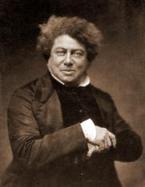
Alexandre Pere Dumas, Novelist
He was the inspiration behind the hero of his son’s novel ‘The Count of Monte Cristo‘, the story of the young sailor Edmond Dantes who, on the verge of a promising career and life, is locked away without witness or trial in the dungeon of the island fortress Château d’If.
An island dungeon is where Alex Dumas, finds himself after the failed French invasion of Egypt, when he is almost shipwrecked on his return, the ship limping into the south of Italy, which in the meantime has become an enemy of France and sadly Dumas’ influence with Bonaparte has diminished and he is all but forgotten.

Les Fers brisés, Paris
The story is rich in detail and reads more like a novel than the historical account that it is. Tom Reiss has excelled in researching both the vast volume of documentation, which from his account, sounds as if the Generals sent letters at an equivalent rate to which people send email today as well as visiting all of the battle sites and physical locations the General and his family were based.
Reiss encounters his own difficulties in pursuing the research, all of which contribute to making this a most compelling and entertaining read, but above all, one can’t help but admire the man, who lived in an extraordinary period of history, who was born into slavery, witnessed its emancipation, then both saw and experienced it tragically being rescinded. He deserves his rightful place in the historical annals of France, as a role model, a hero and a man of the people.
Note: This book was an Advanced Reader Copy (ARC) kindly made available by the publisher via NetGalley.
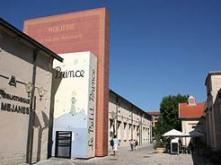


 writers become future classics. Perhaps books are going to become more of an interactive experience?
 Now she has turned her pen and research skills towards the diary and letters of a Victorian lady, Mrs Isabella Robinson, an impulsive, intellectual woman, widowed young and remarried to an uninterested man who seemed to require nothing more of her than to keep house and children in order, a role she fulfilled, but was not content to be limited to and thus her attentions strayed towards the happily married Dr Edward Lane.
 I discovered Red Dust Road after reading a feature about




 Born in 1968, clearly intelligent and showing she had potential from a young age, ironically – getting married at the age of 19 was something of a rebellious act. Nineteen, an age of youthful idealism, where if not wary, we risk being fooled into taking the intensity of our feelings seriously and wind up wed. Or am I being just a tad cynical?
 The death of her mother at 45, knocked her off her straight and wedded course setting her on a side road to self-destruction, though fortunately something inside, perhaps the ever-present loving spirit of her mother (and a few of her sensible genes) mapped out an escape route from her self-destructive self by planning to hike the Pacific Crest Trail (PCT).


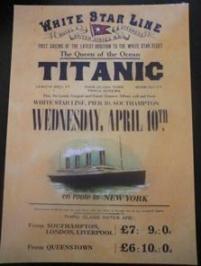 There are so many untold tales and now 100 years on from the Titanic tragedy, stories continue to be retold and others narrated for the first time, linked to the events that unfolded in the wake of the tragedy. Not only do we read accounts of those who were on the boat, but the event is used in fiction, a convenient device for eliminating a character such as the loss of the cousin and heir in Julian Fellowes Downton Abbey series, this event triggering the inheritance crisis that is at the centre of this drama. I read that if all the characters from fictional novels were indeed on the Titanic, it would more than triple the number of passengers she carried and sink it for sure.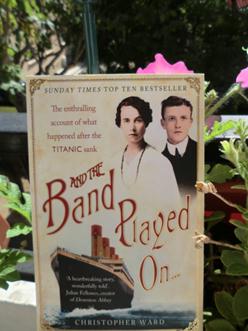
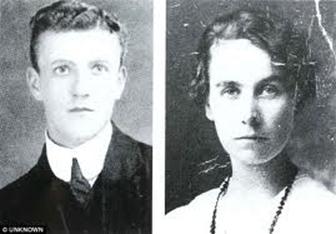
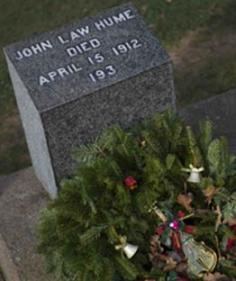 When it was no longer possible to stand, they strapped their instruments to their chests and jumped into the freezing cold waters together. None of the band members survived, however two of their bodies were recovered, Band Master Wallace Hartley (his violin case still strapped to him) and Jock Hume. Hours after the Titanic sank, White Star Line commissioned the Mackay-Bennett to recover the bodies of victims. Of the 209 bodies they brought back, 150 were laid to rest at three Halifax cemeteries. Jock Hume was buried in the Fairview cemetery, a site where visitors still pay their respects today.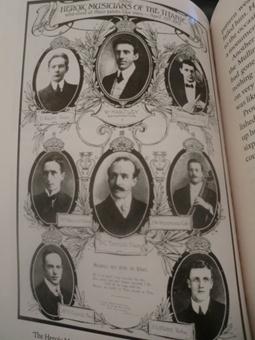
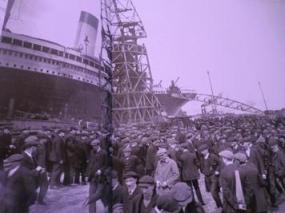 The significance of the Titanic continues to intrigue, or I should say has begun to intrigue me more since a visit to Belfast, Northern Ireland, the city in which it was built, a city which itself grew on the back of the growing shipyards and connected industries associated with it. Between 1851 and 1901 the city’s population increased from 87,000 to 350,000 and was the fastest growing city in the British Empire during that time.
 Turning the last pages of Walter Lord’s ‘A Night to Remember’ I read in the end chapter Facts About the Titanic that she was launched at the Belfast shipyards of Harland and Wolff on 31 May 1911. The date rings a bell and I look in my diary and see that my daughter and I arrived in Belfast on 31 May 2012, exactly 101 years on from that auspicious date.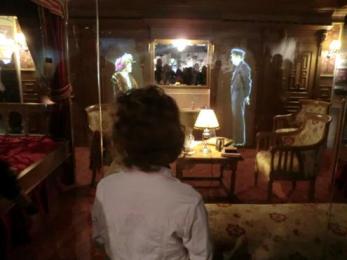





 Word by Word