Madame Sosostris & the Festival for the Broken-Hearted by Ben Okri

I haven’t read a Ben Okri novel for a long time. He is well known for his third novel, the 1991 Booker Prize winning The Famished Road, the story of Azaro, a spirit child around the time of Nigerian independence; a challenging novel to read as it slips in and out of reality, and one the writer recalls being spooked by, as those spirits he wrote about crashed into his dreams.

There were times, writing at night, when the story I was telling would spook me. Those where nights when I feared for my sanity. I couldn’t shake the feeling that when people read the novel they’d think something was wrong with me. It must have taken a species of madness to write The Famished Road. It certainly took a stronger psyche than I realised I had to work on that taboo-breaking material, and to withstand the horrors involved. Writing about the spirit world at night, for a long period, is dangerous if you come from a land that believes in them. Spirit children, born several times to the same mother, have a special mythology about them, part dread, part magic.

Booker Prize Winner 1991 for The Famished Road Ben Okri Madame Sosostris homage to T.S. Eliot The Waste Land she  can be perceived as the central consciousness of the tale

There is something alluring about Ben Okri’s work, the way he seeks to portray a cultural inner authenticity that embraces the ordinary, the mythical, the poetic and the mysterious. It can feel slightly beyond reach, and then there are moments of universal resonance. A wonderful, considered author, who embraces all literature and forms.

For some time I had known that there is no objective reality that is true for everyone. There is only the reality perceived through culture, traditions, education, consciousness. We don’t see what is there. We see what we are taught to see. Our reality is a product of culture and consciousness. 

After the challenge of The Famished Road, I remember picking up the slimmer Astonishing the Gods, a beautiful fable-like story about being invisible and having the courage to go forth anyway; a man finds himself among invisible beings who live by one principle ‘to repeat or suffer every incident until we experience it properly or fully’ – the sort of book that was ideal to read in youth, one I loved for its magical element and transformative power when I read it in my 20’s.

Madame So So Sad, Sorceress or Alter Ego

ASo where does Madame Sosostris and the Festival for the Broken-Hearted fit? More along the lines of Astonishing the Gods for sure, with a nod in homage to T.S. Eliot’s (1888-1965) character in his epic poem The Waste Land, who may be perceived as this tale’s central consciousness. She comes from the first phase of that poem ‘The Burial of the Dead’, with its themes of sorrow and disappointment, of April and the cruelty in the coming of Spring. Eliot too, is said to have been referencing a character from Aldous Huxley’s Crome Yellow.

Madame Sosostris, famous clairvoyante,

Had a bad cold, nevertheless

Is known to be the wisest woman in Europe,

With a wicked pack of cards. 

The Novel

Okri’s Madame Sosostris is a modern fable, with a touch of cynisism and humour, it is about two upper-class power couples, one of the women has the idea to create a festival for those who have suffered loss but are never acknowledged, the brokenhearted. It has been 20 years since her own major heartbreak.

A Touch of Theatre

Much of this novella length story is dialogue and I couldn’t help but feel like I was watching a play, even the voices seemed louder as if projected out to an audience more so than to each other. We get the feeling that these people don’t much like each other and have long ago left their more authentic aspects of themselves behind.

We spend our lives trying to become ourselves. Few people ever succeed.

Photo by G. PITOIS Pexels.com

The festival will be a masked, costumed event, an idea they hope will allow people to reconnect with something more authentic, since no one will know who they are. This will prove strange to Viv, a member of the House of Lords, who is not used to being encountered by people who do not who she is or the position she holds in society.

But she soon realised that the things they were saying were genuine, that they wanted nothing from her, and had no idea who she was. This was disquieting and charming in equal measure. Disquieting because she was used to people reacting to her because of her money. She was used to the influence of her position in society, the power it gave her. Being liked without that power was new to her. But it did not alter her anxiety.

A Sacred Space in Nature to Unmask

A sacred forest in the south of France, Sainte Baume

It will be for one night only, abroad, in a sacred forest in the south of France. The special invitee is Madame Sosostris, whom they have come across once in the House of Lords (where one of the women works) who will do readings for each guest.

They had come to her weighed down with the dark burdens of their unendurable agonies. They left with a streak of light in their eyes. They were people who had chewed their innards and devoured their own hearts. They were locked in the narrow space of their beings. They were imprisoned for long periods of time in the hell of their own minds, turning over their agonies till they grew and filled their world. What most of them needed was a glimpse beyond themselves, a glimpse of something real, something with the texture of dry bone, the fragrance of a dead beetle, the roughness of a cement wall.

When plans go awry, it becomes necessary to adapt and step out of comfort zones. Some will rise to the occasion, others will be destabilised by it. Ultimately, the couples all experience moments of consciousness raising and are changed in some way by their encounter.

The novel explores identity and personality and how society reinforces these constructs which move further and further away from the authentic, creating a mirage masking the true self. It demonstrates how a shift in perspective and stepping outside oneself can be beneficial to the psyche.

It’s an entertaining read, that plays around with what is real, what is seen and unseen, thought provoking in a theatrical sense and ready for the stage in my humble opinion.

Further Reading/Listening

An Interview: Ben Okri – How The Famished Road was Written on a Magic Tide of Freedom

Listen To: Ben Okri Talking About T.S. ELiot and The Waste Land (16mins)

Guardian: Madame Sosostris & the Festival for the Broken-Hearted by Ben Okri review – a slender fable

Ben Okri, Author

Sir Ben Okri was born in Minna, Nigeria. His childhood was divided between Nigeria, where he saw first-hand the consequences of war, and London.

His writing has used magic realism to convey the social and political chaos in the country of his birth, however no two books are the same exploring themes of reality, unreality, society, storytelling, freedom, magic, consciousness, history, politics, justice.

His books include The Last Gift of the Master Artists (2022), The Freedom Artist (2019); the short story collection Prayer for the Living (2019); the prose-poetry hybrids Tales of Freedom (2009) and A Time for New Dreams (2011); the long poem Mental Fight (1999); the essay collection A Way of Being Free (1997); the poetry collection An African Elegy (1992); and the Booker Prize-winning novel The Famished Road (Anchor, 1991).

He has won many awards over the years, including the Booker Prize for Fiction and is also an acclaimed essayist, playwright, and poet. In 2019 Astonishing the Gods was named as one of the BBC’s 100 Novels That Shaped the World. In June 2023 he was awarded a knighthood in the King’s official birthday honours.

Booker Prize 2025

The longlist for the Booker Prize 2025 will be announced on Tuesday, 29 July 2025. The shortlist of six books will be announced on 23 September and the winner will be announced on 10 November.

Have you read any Ben Okri books? Let us know in the comments below?

N.B. This book was an ARC (Advance Reader Copy) kindly provided by the publisher via NetGalley.

Second-class Citizen by Buchi Emecheta

I read Buchi Emecheta’s Joys of Motherhood (1979) in 2019, it is such a great novel, one of my all time favorites, not yet reviewed here. I have been looking forward to reading more of her work since then, I picked up Second-class Citizen (1974) knowing it was likely to be equally good. She is known for her themes confronting girls and women, of motherhood, female independence and freedom through education.

A Girl Determined to Realise a Dream

Adah is a fabulous, determined character, a girl who when her father dies, her mother is inherited by his brother. Like many girl-orphans (fatherless), Adah was sent to live with her mother’s elder brother to work as a servant; any money her father left would be used for her brother Boy’s education.

Even if she was sent to school, it was very doubtful whether it would be wise to let her stay long. ‘A year or two would do, as long as she can write her name and count. Then she will learn how to sew.’ Adah had heard her mother say this many many times to her friends.

Determined to get an education herself, having already been punished for taking herself off to school without permission, the family decide to let her go, not for her own benefit, but because they recognise how it might benefit themselves. If Adah gets more schooling, the dowry that her future husband will have to pay them will be even bigger.

Adah wants more than just school, she wants a higher education, however she does not have the money to pay for the entry examination, let alone the other costs.

She was aware that nobody was interested in her since Pa died. Even if she had failed, she would have accepted it as one of the hurdles of life. But she did not fail. She not only passed the entrance examination, but she got a scholarship with full board.

My Struggles Become My Strength

The combination of hard work for the household and an education made Adah strongly responsible for herself and strategic in ensuring she stayed in education and succeeded enough to get a scholarship with full board. But to go even further with her studies, she needed a home, she would need to marry.

Her plan is to get to the UK but now she has a husband and in-laws and her good job not only supports them all, but makes many dependant on her and less inclined to be independent.

A New Motivation, I Do This Not Just for Myself

1960’s England is not what she expects, the challenges are even greater because now she has a woman’s body whose reproductive rights are not under her control and a partner who is no longer how he was in their home country, he seems invested in keeping her from shining.

He lifted his hand as if to slap her, but thought better of it. There would be plenty of time for that, if Adah was going to start telling him what to do. This scared Adah a little. He would not have dreamt of hitting her at home because his mother and father would not have allowed it. To them, Adah was like the goose that laid the golden eggs. It seemed that in England, Francis didn’t care whether she laid the golden egg or not. He was free at last from his parents, he was free to do what he liked, and not even hundreds of Adahs were going to curtail that new freedom. The ugly glare he gave Adah made that clear.

However, taking responsibility is what she knows best, she is determined to provide for her growing family and negotiate the mounting injustices she faces, in pursuit of achieving her dreams and caring for her children.

She was going to live, to survive, to exist through it all. Some day, help would come from somewhere.She had been groping for that help as if she were in the dark. Some day her fingers would touch something solid that would help her pull herself out. She was becoming aware of that Presence again – the Presence that had directed her through childhood. She went nearer to It in her prayers.

An inspirational story of the girl that never gives up, written by the woman who lived much of that experience, raising her own five children on her own in a foreign country and becoming a successful author.

Total inspiration and still relevant today. Highly recommended.

Further Reading

Review Guardian: Second-Class Citizen by Buchi Emecheta review – fresh and timeless by John Self, Oct 2021

Article: My mother, the pioneer: how Buchi Emecheta captured immigrant life in 1970s London by Sylvester Onwordi, 2021

Author, Buchi Emecheta

Buchi Emecheta OBE (1944 – 2017) was born in Lagos, Nigeria and moved to London with her student husband when she was eighteen. After her marriage broke up at the age of twenty-two, and while raising five children, she began writing and also obtained a degree in sociology from London University.

As well as writing numerous novels, she wrote plays for television and radio, and worked as a librarian, teacher, youth worker and sociologist, and community worker. She was one of Granta’s Best of Young British Novelists in 1983. Following her success as an author, Emecheta travelled widely as a visiting professor and lecturer.

She published over 20 books, including In the Ditch (1972), Second-Class Citizen (1974), The Bride Price (1976), The Slave Girl (1977) and The Joys of Motherhood (1979).

Her themes of child slavery, motherhood, female independence and freedom through education won her considerable critical acclaim. Emecheta once described her stories as “stories of the world…[where]… women face the universal problems of poverty and oppression, and the longer they stay, no matter where they have come from originally, the more the problems become identical.”

The Girl With the Louding Voice by Abi Daré

Back in September 2024, I visited the small Provençal village of Ansouis for their annual vide grenier which included a corner of tables where the local French library sell second hand books in French and English. I like to donate a couple of boxes of books and try not to be too tempted by what I find.

Nigerian Literature and Storytelling

The Girl With the Louding Voice was one of the titles that jumped out at me that I couldn’t resist picking up.

I enjoy Nigerian literature and storytelling, all more so because I visited Lagos for a friend’s wedding many years ago and writing like Abi Daré’s evokes all the senses that bring back memories of being in that place and time.

Not only the location, but the descriptions of people’s lives sounded familiar, those that have been educated outside and come back, the self-made women entrepreneurs who just get on and create businesses as well as raise families and those that you know have never been outside of their country, trying to make their way.

Loss of a Mother Changes Everything

A young girl from a Nigerian village whose life changes multiple times, but a desire for an education, never

14 year old Adunni’s life changes after the death of her mother, who had been keeping the family afloat. Despite the husband having made promises to his dying wife not to marry off his only daughter, he’s unable to keep up with paying the rent and soon his daughter has been promised as the 3rd wife of a much older man.

Why will Morufu pay our community rent? What was he wanting? Or is he owing Papa money from before in the past? I look my papa, my eyes filling with hope that it is not the thing I am thinking. ‘Papa?’

‘Yes.’ Papa, wait, swallow spit and wipe his front head sweat. ‘The rent money is … is among your owo-ori.’

‘My owo-ori? You mean my bride price?’ My heart is starting to break because I am only fourteen years going on fifteen and I am not marrying any foolish stupid old man because I am wanting to go back to school and learn teacher work and become a adult woman and have moneys to be driving car and living in fine house with cushion sofa and be helping my papa and my two brothers.

Marrying Morofu puts Adunni into an environment where a woman’s value is defined by her ability to bear male babies and one where she is in competition with other wives. Adunni doesn’t wish to bring more children into the world with no chance at an education, or voice.

Education is Key

Adunni has held aspirations of continuing her education ever since it was cut short and it is one element of belief and resilience that carries her through the challenges that confront her when a sudden tragedy causes her to flee her situation.

When she finds herself in the busy city of Lagos, working for the self-made Big Madam, she hopes her luck might change. She manages to steal time in the library where she comes across a dictionary and a book of Nigerian facts, in which are written things like:

Fact: Nigerians are known for their love of parties and events. In 2012 alone, Nigerians spent over $59 million on champagne.

Cover of the girl with the louding voice against a blue winter sku

Adunni learns facts about her country, dictionary definitions and new vocabulary and tries to keep herself safe and true to her ideal. Fortunately she also meets one or two characters who look out for her, however Big Madam seems intent on crushing her spirit.

As the novel ends, it feels like a new chapter of her life is beginning and that we may not have heard the last of Adunni.

It’s an excellent read that is very evocative of place, the descriptions of Lagos put you right there, as were the descriptions of the contrasting lives of the haves and the have nots. It highlights that fact that despite the patriarchal society, many households and entrepreneurial businesses are run by women and much of the fragment of society is kept together by their determined contribution and drive.

‘My mama say education will give me a voice. I want more than just a voice, Ms Tia. I want a louding voice,’ I say. ‘I want to enter a room and people will hear me even before I open mout to be speaking. I want to live in this life and help many people so that when I grow old and die, I will still be living through the people I am helping.’

Highly Recommended.

If You Like This Book

Reading The Girl With the Louding Voice reminded me of the equally excellent novels Nervous Conditions (my review here) (the first in a trilogy) by Tsitsi Dangarembga (Zimbabwe) and The Son of the House (reviewed here) by Cheluchi Onyemelukwe-Onuobia (Nigerian/Canadian), which was shortlisted for the Scotiabank Giller Prize (2021).

Author, Abi Daré

Abimbola (Abi) Daré grew up in Lagos, Nigeria and has lived in the UK for eighteen years. She studied law at the University of Wolverhampton and has an M.Sc. in International Project Management from Glasgow Caledonian University as well as an MA in Creative Writing at Birkbeck University of London.

The Girl with the Louding Voice won The Bath Novel Award for unpublished manuscripts in 2018 and was selected as a finalist in 2018 The Literary Consultancy Pen Factor competition. It has been translated into 20 languages.

Her second novel And So I Roar follows Adunni’s and Ms Tia’s journey and was published in 2024. Listen here to Abi Daré talk about the new novel and some of the interesting people who reached out to her after reading her debut, in this 90 second summary of And So I Roar.

In 2023, she established the Louding Voice Educational and Empowerment Foundation in Nigeria, a nonprofit dedicated to providing scholarships to young girls in rural Nigeria.  It exists as a testament to the belief that education and empowerment can be a beacon of change for girls trapped in the shadows of domestic labor and gender-based violence in Nigeria.

Abi lives in Essex with her husband and two daughters, who inspired her to write her debut novel.

The Son of the House by Cheluchi Onyemelukwe-Onuobia

Described as a compelling novel about two women caught in a constricting web of tradition, class, gender, and motherhood and set in Nigeria, I requested this novel via NetGalley earlier this year immediately attracted by the premise and the setting.

Scotiabank Giller Prize 2021, Canada’s Literary Award

Scotiabank Giller Prize shortlist Nigerian literary fictionCoincidentally, the day I started reading it, I became aware it was one of the five shortlisted novels for the Canadian literary award, the Scotiabank Giller Prize on the same day the winner was to be announced.

It didn’t win – that award went to journalist/novelist Omar El Akkad for What Strange Paradise, a novel that examines the current refugee crisis and the lengths to which people will go to find home, safety and belonging – however The Son of the House is already an award winning novel and one that addresses important contemporary issues and one I highly recommend reading.

Review

I really enjoyed The Son of the House right from the opening pages; the intrigue set up by the fact that two women have just been kidnapped from within their car on a residential street, we know nothing about who they are or why this has happened. However, it is not the drama that takes centre stage, it is the lives of the characters, who we will come to know.

These two do know this kind of thing can happen and the woman who drove castigates herself for having taken that particular road.

We did not entertain the idea that the police might save us, guns blazing, as happened in the movies. The police themselves, people said, would sometimes tell the family of kidnapped persons to go pay the ransom so that harm would not come to their loved one. They had neither the resources nor the serious desire to pursue kidnappers. There was even speculation that the police might be complicit in some kidnappings. So our only hope, like many kidnapping victims in this country, was that our people would come up with the money.

Since they are going to be spending time together, they decide to share their stories. And thus the reader must wait while getting to know these two women and the circumstances that lead to this intersection of their lives.

Their lives are very different, and both equally fascinating and riveting to read about.

Nwabulu, Orphan, Housemaid, Mother

gender women expectations motherhood The Son of the House

Photo by Breston Kenya on Pexels.com

Nwabulu, lost her mother when she was born and her father remarried soon after.

From that day, the peace and joy of our home moved somewhere else; peace and joy could not stay in the same room as Mama Nkemdilim’s jealousy.

Her stepmother resents her and at the first offer, sends her away to serve for a family. Innocent, yet she seems to go from one terrible situation to another, no adult looking out for her, she is vulnerable to the outside world, even within the supposed confines of an employer’s home.

I had been a housemaid for nearly half my life when I met Urenna. My first sojourn as a housemaid began when I was ten.

She finds a situation finally that suits her, only to be disgraced and sent back again to the village. The situation that occurs is the first instance we become aware of the presence and significance of ‘the son of the house’.

I was a housemaid. He was the son of the house. He would not really know what it was like to work in a place and live and sleep there but still know that it was not home. He would not know and I could not put it into words.

Back in the village, an older woman who has lost her son, appears to offer solace to Nwabulu, but her life too revolves around this traditional symbol, and the lengths to which she will go to fulfill it are devastating.

Although this is a story of women, it is also about the intersection of women and the importance, presence and success of this symbol, ‘the son of the house’ to their society and how it impacts their lives as girls, sisters, young women, and as mothers.

Julie, Sister, Unmarried daughter, Second wife

parental authority expectations gender The Son of the House

Photo by Monstera on Pexels.com

The second woman Julie is single and contentedly having an affair with a married man. She has one brother and he is supposed to be the example and support of his family, according to how their father has raised them.

“By joining the church and getting an education,” he continued, “I brought light to my family. It is the duty of each new person in the line to bring something good to the family, to keep the family going.”

However, due to her brother’s problems, her father makes this her responsibility, on his death bed, that she will work to ensure the success of her brother in meeting his familial duties – here again we realise that these stories, these women’s lives revolve in some way around maintaining the tradition, the status of the patriarchy, in the elevation of and presence of ‘the son of the house’.

I would make a better son of the house, I sometimes thought. But what fell to me was not carrying on the family name but ensuring that the one who was to do so succeeded.

Unexpected Friendships, Synchronicity’s

Cheluchi OnyeMelukwe Onubia Europa Editions UKAs their stories unfold, we also discover the importance of these women’s friendships, both of them have been helped by their best female friend at a turning point in their lives and the mystery gradually unfolds as to what has brought these unexpected allies together.

It’s a riveting read and an insight into Nigerian culture and classism, into how two very different women navigate a traditional patriarchal society and not only survive, but the lengths to which they will go to both meet those cultural/societal expectations, to develop resilience, how they find ways to rise beyond it.

I loved the book and thought the characters were realistic and intriguing and the sense of place evocative.

Here’s the fabulous UK cover version, it was published in the UK by my favourite publisher, Europa Editions in May 2021. Highly Recommended.

Further Reading

Review, Brittle Paper: Cheluchi Onyemelukwe-Onuobia’s The Son of the House reviewed by Ikhide Ikheloa

Interview, Olongo Africa: I am a child of the 80’s an interview with Uchechukwu Umezurike

Cheluchi Onyemelukwe-Onuobia, Author

The Son of the House Nigerian LiteratureCheluchi Onyemelukwe-Onuobia is a Nigerian-Canadian lawyer, academic and writer.

She holds a doctorate in law from Dalhousie University and works in the areas of health, gender, and violence against women and children.

Cheluchi divides her time between Lagos and Halifax.

The Son of the House was shortlisted for Canada’s Scotiabank Giller Prize 2021, winner of the Nigeria Prize for Literature 2021, and winner of the Best International Fiction Book Award, Sharjah International Book Fair 2019.

The Death of Vivek Oji by Akwaeke Emezi

Emezi’s Freshwater was an incredible read and a real insight into a cultural perspective, taking you inside it and experiencing it, so I was very much looking forward to this next work.

Akwaeke Emezi trans literatureThough we learn that Vivek is dead from the cover and in the opening pages, the novel is in a sense a mystery as the details around the death are not revealed until the end. The novel is set in Nigeria, in a community of mostly mixed race families.
The narrative is multi perspective, told through the voice of Vivek, his cousin and close friend Osita and a third-person omniscient narrator. The first chapter is one sentence:

They burned down the market on the day Vivek Oji died.

The market burning down provides a beginning, a middle and an ending, it features in exactly those places, here as a marker or a clue, in the middle as an observation by a previously unknown character whose wife runs a stall in the middle of the market and at the end, when Vivek’s final day is shared.

The first half of the book we get to know the families, Chika, his brother Ekene, married to Mary, then later Chika’s Indian wife Kavita, mother to Vivek. The narrative tells the story of their marriage, of how they try to raise their only child. Kavita is part of a group of women referred to as the Nigerwives.

She had learned to cook Nigerian food from her friends – a group of women, foreign like her, who were married to Nigerian men and were aunties to each other’s children. They belonged to an organisation called Nigerwives, which helped them assimilate into these new lives so far away from the countries they’d come from. They weren’t wealthy expats, at least not the ones we knew. They didn’t come to work for oil companies; they simply came for their husbands, for their families.

The Death of Vivek Oji Awaeke Emezi

Photo by Taryn Elliott on Pexels.com

Through the friendships of the mothers, Osita and Vivek become friends with JuJu and Elisabeth. Among themselves, away from school or family and outside of society, they are already a group who is different, and with each other, they are accepting, able to express themselves, though they have each inherited varying degrees of conditioning from their mixed parentage.

Vivek is sent away to school, about which we learn very little, we know he is unhappy and bears scars.

The narrative explores the development of their friendships and sexuality, interspersed with the present day obsession of Kavita, determined to find out how her son’s body mysteriously turned up on their front veranda wrapped in a fabric.

Chika didn’t want to ask any question. Kavita, though, was made of nothing but questions, hungry questions bending her into a shape that was starving for answers.

Maybe it was intentional, but in creating the element of mystery, much about the character of Vivek is held back, perhaps to recreate the effect of what the parent might have experienced, but for me personally, I found it disappointing that the character of Vivek was compromised and an opportunity missed to inhabit that character more.

The deliberate obscuring heightens the effect of the reveal, but sacrifices the opportunity to share something more profound with readers. It’s difficult to develop empathy for a character, when so much is held back and when the potential is clearly there.

That was why they’d kept it from their parents, to protect Vivek from those who didn’t understand him. They barely understood him themselves, but they loved him, and that had been enough.

It’s a novel of secrets and lies and the debate of truth versus respect, in that belief that the two can’t coexist. And the safety inherent within a fear of judgement by some, versus the danger of a lack of fear in others. A theme that is likely to continue to be explored by Emezi.

“Look,” she said, “eventually all secrets come out. It’s just a matter of time. And the longer it takes, the worse it is in the end.”

As I read, I can feel what I am bringing to the narrative, where I want the author to go and by the end they do go some of the way, but not all. And that is on me, it is asking an already courageous writer to go further, to places that us readers, like sports fans, might never go ourselves, but from the benches we shout in encouragement. So I leave the last words to the author, as a reminder to us all of what this is.

I had to remember why I was making this work. I wasn’t making it for institutional validation. I was making this work for specific people — all the people living in these realities feeling lonely and wanting to die because they’re like, this world thinks I’m crazy and I don’t belong here. All the little trans babies who are just like, there is no world in which my parents will love me and accept me. There’s a mission to all of this. Akwaeke Emezi

Further Reading

My review of Freshwater by Awaeke Emezi

N.B. This book was an ARC (advance reader copy) kindly provided by the publisher via Netgalley.

Stay With Me by Ayobami Adebayo #BaileysPrize

Stay With Me is the meaning of the Yoruba, Nigerian first name Rotimi, which in itself is the short version of Oluwarotimi.

“Still they named her Rotimi, a name that implied she was an Abiku child who had come into the world intending to die as soon as she could. Rotimi – stay with me.”

I’m guessing that Ayobami Adebayo uses it as the title to her novel, because it relates to the twin desires of the main characters in the book, Yejide in her yearning to become pregnant and to keep a child, to be the mother she was denied, having been raised by less than kind stepmothers after her mother died in childbirth; and her husband Akin, in his desire to try to keep his wife happy and with him, despite succumbing to the pressures of the stepmothers and his own family, he being the first-born son of the first wife, to produce a son and heir.

“Before I got married I believed love could do anything. I learned soon enough it couldn’t bear the weight of four years without children. If the burden is too much and stays too long, even love bends, cracks, comes close to breaking and sometimes does break. But even when it’s in a thousand pieces around your feet, that doesn’t mean it’s no longer love.”

Torn between the love of his wife and meeting the expectations of his family, for two years he would resist their suggestions, until the day they came knocking at his door, to inform Yejide that matters had been taken into their hands, that there was nothing she could do but accept it, suggesting it may even help.

“For a while, I did not accept the fact that I had become a first wife, an iyale. Iya Martha was my father’s first wife. When I was a child, I believed she was the unhappiest wife in the family. My opinion did not change as I grew older. At my father’s funeral, she stood beside the freshly dug grave with her narrow eyes narrowed even further and showered curses on every woman my father had made his wife after he had married her. She had begun as always with my long-dead mother, since she was the second woman he had married, the one who had made Iya Martha a first among not-so-equals.”

The narrative is split into five parts and moves between a present in 2008 when Yejide is returning to her husbands hometown for the funeral of his father, and the past which traverses the various stages of their marriage and their attempts to create a family and the effect of the secrets, lies, interferences and silences on their relationship.

The narrative voice moves from first person accounts of both Yejide and Akin, ensuring the reader gains twin perspectives on what is happening (and making us a little unsure of reality) and the more intimate second person narrative in the present day, as each character addresses the other with that more personal “you” voice, they are not in each other’s presence, but they carry on a conversation in their minds, addressing each other, asking questions that will not be answered, wondering what the coming together after all these years will reveal.
The portrayal of the pressures on this couple to meet expectations and the effect of the past on the present are brilliantly conveyed in this engaging novel, which provides a rare insight into a culture and people who live simultaneously in a modern world that hasn’t yet let go of its patriarchal traditions. Denial plays a lead part and when the knowledge it suppresses is at risk of being exposed, violence erupts.

Simultaneously the country is in the midst of a military coup, which also threatens to destabilise the country and puts its citizens in fear for their lives.

The novel also addresses the significant presence of the sickle-cell gene on people’s lives, something that is perhaps little known in the West, but in Nigeria with a population of 112 million people, 25% of adults have or carry the sickle-cell trait, which can cause high infant mortality and problems in later life. It is a genetic blood disorder that affects the haemoglobin within the red blood cells and the recurring pain and complications caused by the disease (for which there is no cure) can interfere with many aspects of a person’s life.

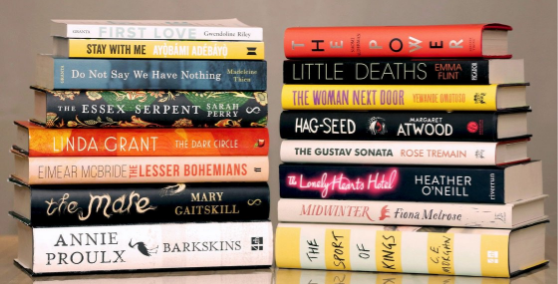
Stay With Me has been longlisted for the Baileys Women’s Prize for Fiction 2017, a worthy contender in my opinion and a unique social perspective on issues that are both universal to us all illustrating how in particular they impact the Nigerian culture.

Buy A Copy of Stay With Me via Book Depository


Americanah by Chimamanda Ngozi Adichie

My big fat summer read and it was just what I like, to get lost within pages that will attempt to navigate the slightly messy lives of flawed characters that feel like they could be real. And most of them here come close to attaining that reality.

Americanah (2)Ifemula and Obinze are university sweethearts who slip into a relationship that seems to have it all, though they have yet to conquer the career survival path of their simple lives thus they are separated in Nigeria during their studies and then by the continents of  North America and Europe as they try to establish their careers. Hardship is the one thing they seem not able to share and it drives them apart like the distance of the ocean that separates them, spanning a distance they seem unable to traverse.

Just as many young people have been doing so and continue to today, they eventually return to their home country and their roots and will re encounter each other.  Although they find their way home, will  they be able to ignore those untravelled waters they did not share? This is one of the themes the book explores.

“Somewhere in a faraway part of her mind, she wanted to lose weight before she saw Obinze again. She had not called him; she would wait until she was back to her slender self.”

I loved the book for many reasons, firstly because I remember reading and enjoying her first book Purple Hibiscus, enhanced by seeing her speak in person at a Readers Festival in Auckland where she talked about the next book she was planning to write, about a subject few at the time seemed to want to talk about – the Biafran War – that research and effort to understand a chapter in Nigerian history manifested in her Orange prize-winning novel Half of a Yellow Sun, which has since been made into a film (not yet released). Since then I have looked forward to reading her other work and interviews, as she is more than just a writer of stories.

Secondly, having a good friend from Nigeria, who made the move back after a similar number of years living abroad, who did so successfully and visiting there, participating in her marriage ceremony makes me even more curious to read the work of those who have attempted the same. There is something universal about the experience and yet unique at the same time.

Chimamanda Nogozi Adichie easily engages an audience with her observations, insights and view of the world and with Americanah it is as if she sends out another version of herself, Ifemulu, a young woman who grows up in urban Nigeria and through her studies has an opportunity to live, work and study in America.

Ifemulu’s disappointments distance her from her closest relationship because she doesn’t share them. In an effort to be heard she writes an anonymous blog and shares her experiences and observations both in America and again on her initial return to Nigeria.

She tries to remain an impartial observer, though those who know she is the author challenge her and she discovers that life often finds a way to throw at us, that which we condemn in others. But therein the greatest lessons lie and Ifemulu will do much soul-searching on her journey to fulfillment. The blog posts are interesting to read and provocative and it is great to see the form being represented in a novel, and a WordPress blog at that.

In a Lagos cafe

In a Lagos cafe

For me, books whose characters cross cultures are always interesting, just as travelling in another country and witnessing the different ways people live and interact and perceive is interesting. Whilst I could never begin to know what it would be like for a young Nigerian woman to move to live in America, I enjoyed the experience of inhabiting Adichie’s imagination, viewing Ifemulu’s life and how she tries to interpret the foreign culture she and many others have long dreamed of.

My visit to Nigeria was too short to gain any real perspective about what it might be like to live there, but the challenges are undoubtedly equally great, though completely different in nature.

It doesn’t matter which country we grow up in to think of as our own, almost any other country we immigrate to or spend time living in will invoke a feeling of strangeness, of being an outsider.

“The only reason you say that race was not an issue is because you wish it was not. We all wish it was not. But it’s a lie. I came from a country where race was not an issue; I did not think of myself as black and I only became black when I came to America.”

Twice whilst reading this novel, I felt tears well up, surprising myself at how deeply this character got under my skin, some of the burdens she carries, only gaining full recognition in the moment they are healed and those moments are powerful when they come off the page. Surprising and brilliant.

Related Reads

Stay With Me by Ayobami Adebayo

Under the Udala Trees by Chinelo Okparanta

Freshwater by Akwaeke Emezi

Red Dust Road by Jackie Kay