The Body Where I Was Born by Guadalupe Nettel tr. J.T.Lichtenstein #WITMonth

Feeling a little uninspired by recent reads, I decided to check my shelves for what I had in translation, August is WIT Month and my shelves are looking a little depleted in that regard!

I spotted Guadalupe Nettel’s novel The Body Where I Was Born and remembered how much I adored Still Born (my review here) in 2023, a book that was shortlisted for the International Booker Prize 2023. It’s a compelling exploration by two women into the question of whether or not to have children and how their ideas can change as life happens and circumstances arise that can awaken feelings not born of the mind.

Why Did I Do It, Doctor?
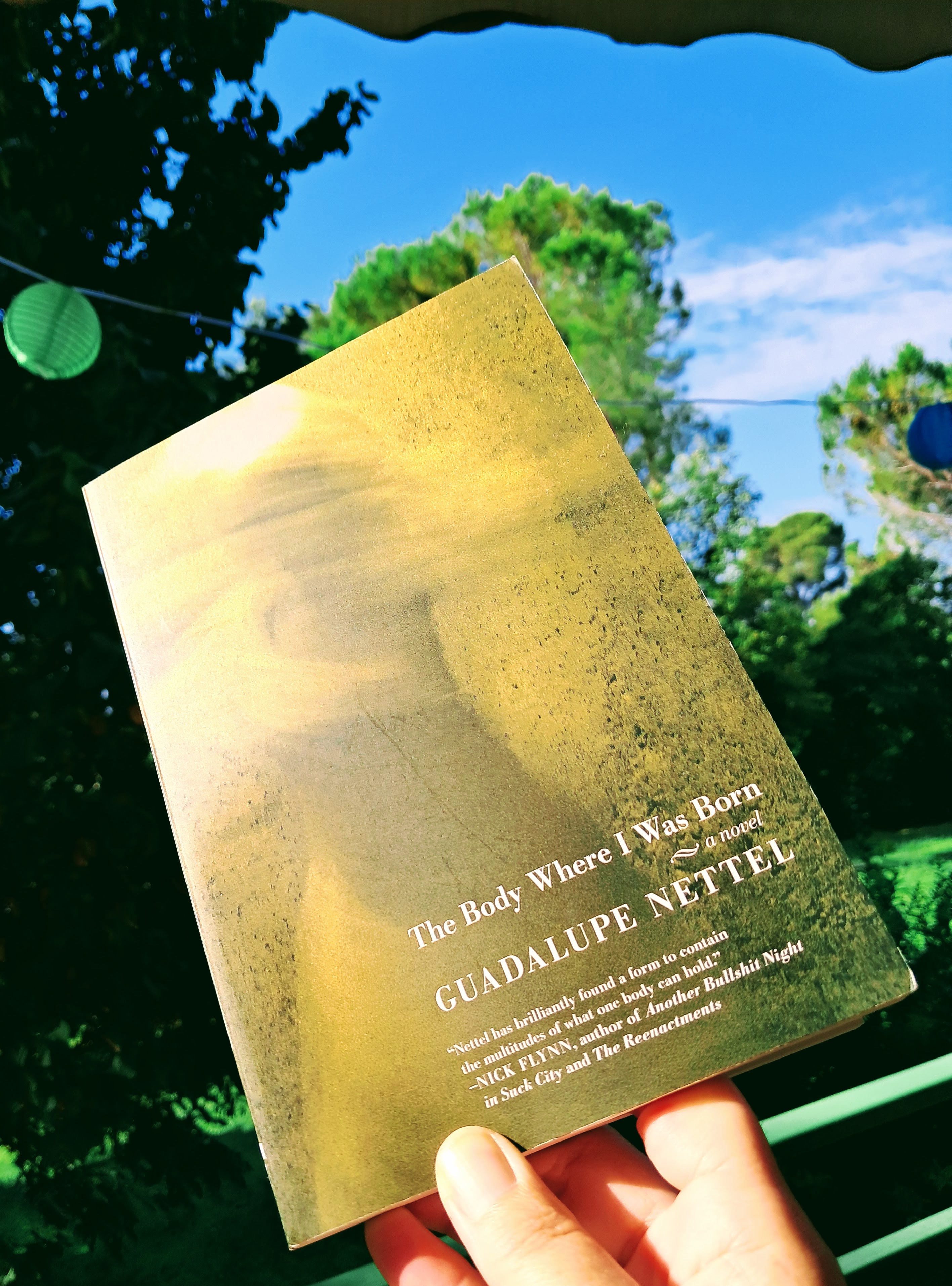
women in translation an autobiographical novel set in Mexico and Aix en Provence

It was the compelling style that made me want to read something else by Nettel and as I began to read The Body Where I Was Born I realised it is semi-autobiographical.

The novel is narrated from the psychotherapist’s chair and so occasionally there will an interruption where the narrator asks a question having recounted yet another episode of their childhood.

The novel is written in five parts, segmenting different parts of childhood and it is effectively a form of coming-of-age, albeit recounted to a therapist.

A Marked Childhood

As with her previous novel and writing style, I was immediately drawn into the narrative, which begins with the author recounting the consequence of having been born with a birthmark covering part of her eye.

The only advice the doctors could give my parents was to wait: by the time their daughter finished growing, medicine would surely have advanced enough to offer the solution they now lacked. In the meantime, they advised subjecting me to a series of annoying exercises to develop, as much as possible, the defective eye.

As a result, school became even more of an inhospitable environment and those measures marking her out for unwanted attention.

Condition and Correct, A Parental Institution

But sight was not my family’s only obsession. My parents seemed to think of childhood as the preparatory phase in which they had to correct all the manufacturing defects one enters the world with, and they took this job very seriously.

Our narrator ponders the harm of parental regimes and how we perpetuate onto the next generation the neuroses of our forebears, wounds we continue to inflict on ourselves.

In addition to these corrections, her parents were keen to adopt some of the prevailing ideas of the time (the seventies) about education, a Montessori school in Mexico City and a sexual education free of taboos and encouraging candid conversations.

Rather than clarifying things, this policy often made things more confusing and distressing for the children and was likely the cause of the rupture of the adults when they adopted a practice much in fashion at the time, the then-famous ‘open-relationship’.

During all the preparatory conversations I had worn the mask of the understanding daughter who reasons instead of reacts, and who would cut off a finger before aggravating her already aggravated parents. Why did I do it, Doctor? Explain it to me? Why didn’t I tell them what I was really feeling?

Separation and Abandonment

After the marriage separation their mother is interested for a while in community living, subjecting the children to another experiment, and later still sinks into a deep depression that affects them all.

Finally, in a burst of desperate willpower, she decided to exile herself. Hers was not political, but an exile of love. The pretext was getting a doctorate in urban and regional planning in the south of France.

But before they were sent to France, there was a period where their maternal grandmother – who much favoured her brother- came to live with and look after them. Full of questions about why their parents left them in this situation, the grandmother gave her usual cryptic response:

‘Since when do ducks shoot rifles?’ she’d say, meaning that children should not demand accountability from adults.

Heightened Observations, Humorous Occasions
Part II narrates the period with grandmother in charge, made all the more challenging for being in their own home, one that had held so many previously fond memories.

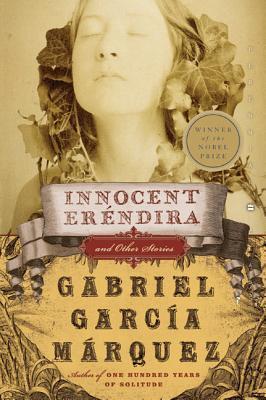
Reading was frowned upon, but the discovery of Gabriel Marcia Marquez’s The Incredible and Sad Tale of Innocent Erendira and her Heartless Grandmother cheered her up and provided a kind of solace.

Doctor, this discovery, as exaggerated as it sounds, was like meeting a guardian angel, or at least a friend I could trust, which was, in those days, equally unlikely. The book understood me better than anyone else in the world and, if that was not enough, made it possible for me to speak about things that were hard to admit to myself, like the undeniable urge to kill someone in my family.

From Mexico City to Aix-en-Provence

As I began part III, I was surprised to find the two young children following their mother to the south of France, to the Jas de Bouffan quartier of Aix en Provence near the musée Vasarely.

If I was already engaged in the novel, now I was riveted. I know the quartier well and the schools she and her brother are sent to, it awakened my own memories of being an outsider at the school gate, waiting for children to exit from the well regulated school environment.

Vasarely Musée, Aix en Provence

I have no doubt that my mother sought in Aix the institution that most resembled our school in Mexico. The percentage of atypical beings was equal, or maybe even higher. But still… everything there seemed strange to me.

From From the public Freinet education at La Mareschalé to the local middle school, Collège au Jas de Bouffan, a mix of children from multiple origins, North African, Indian, Asian, Caribbean and French.

To survive in this climate, I had to adapt my vocabulary to the local argot – a mix of Arabic and Southern French – that was spoken around me, and my mannerisms to those of the lords of the cantine.
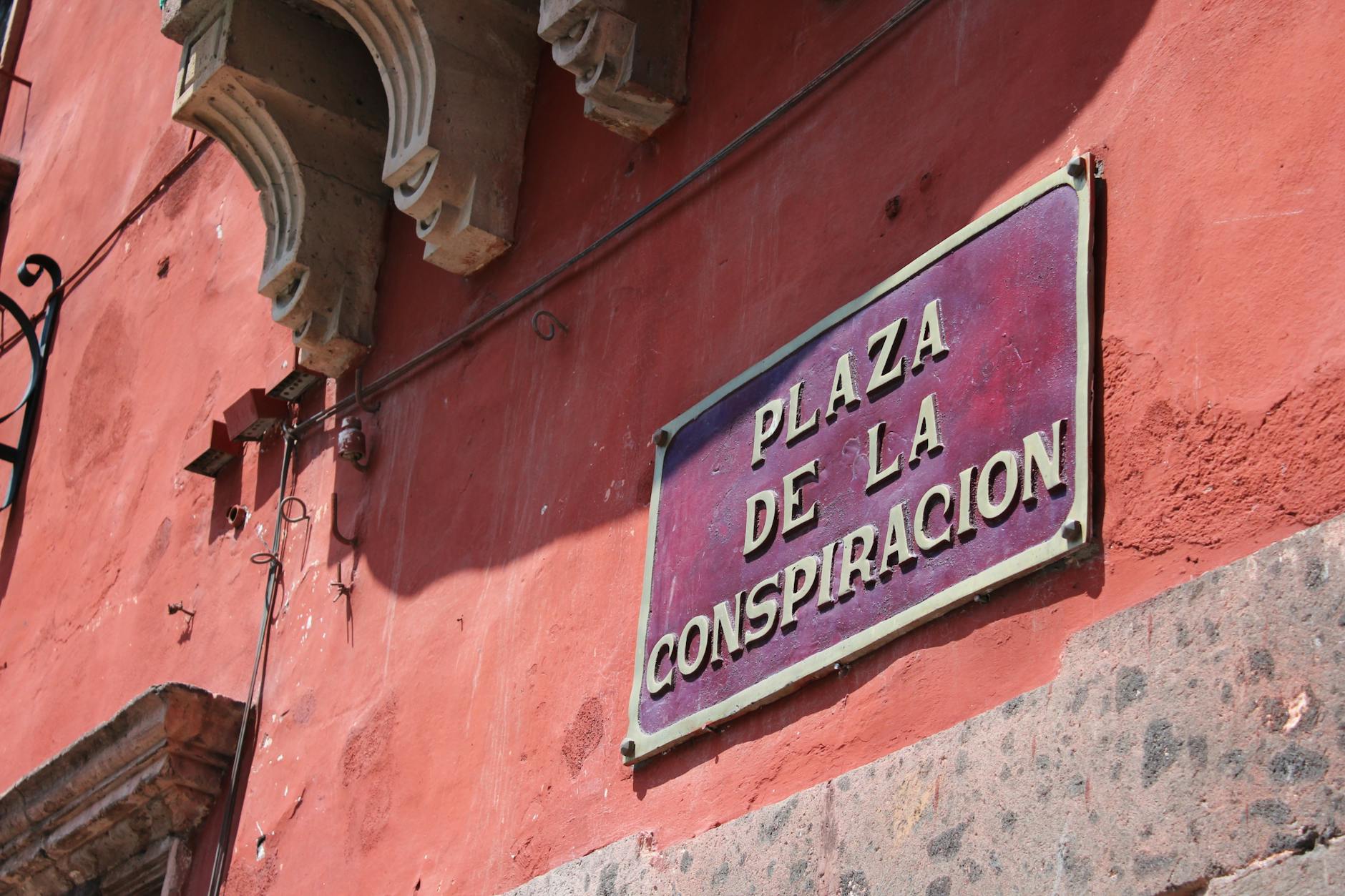
Photo by Fernando G Pexels.com

In Part IV there is a visit back to Mexico, before Part V where they are sent off to a the infamous French institution, the colonie de vacances; supervised holiday camps organised according to interests or specialities, full of young people employed as ‘camp animateurs‘ an idealised form of first employment, being paid to be on holiday, looking after tweens and emerging teens.

The French experience is so well depicted, and gives an insight into the child’s perspective of being an uncommon foreigner among a population of more common second or third generation immigrants. When it ends back in Mexico City, I find myself wishing there were a follow up novel, to find out more about a life that started in this unusual way and had all these experiences in their formative years.

The novel is so engaging, a fascinating insight into a life that delves beneath the surface of events and happenings in a family that is culturally fascinating, as it moves between Mexico City and Aix en Provence, traversing childhood and adolescence, the relationships between a girl, her peers at different ages, her parents and her grandmother.

And then there are the layers of literary references, including the reference to the title, but those I leave the prospective reader to discover for themselves.

I loved it! Highly Recommended.

Author, Guadalupe Nettel

Guadalupe Nettel (born 1973) is a Mexican writer. She was born in Mexico City and obtained a PhD in linguistics from the École des Hautes Études en Sciences Sociales in Paris. She has published in several genres, both fiction and non-fiction.

The New York Times described Nettel’s acclaimed English-language debut, Natural Histories as “five flawless stories”. A Bogota 39 author and Granta “Best Untranslated Writer” The Body Where I Was Born was her first novel to appear in English. Her work has since been translated into more than twenty languages and adapted for theatre and film. Still Born, her most recent novel, was shortlisted for the 2023 International Booker Prize and her latest collection of short stories The Accidentals tr. Rosalind Harvey was published in April 2025.

She has edited cultural and literary magazines such as Número Cero and Revista de la Universidad de México. She lives in Paris as a writer in residence at the Columbia University Institute for Ideas and Imagination.

Still Born by Guadalupe Nettel tr. Rosalind Harvey

Shortlisted for the International Booker Prize 2023, Still Born is the fourth novel by Mexican writer Guadalupe Nettel, and one that stood out for me to read. It was a book that once I turned the very first page, I was unable to put it down. A fiercely compelling narrative around a highly emotional subject, told in a neutral linguistic style that demands attention.

To Be or Not to Be

The story covers a short period in the lives of two independent and career-driven women, Laura and Alina, friends who have initially declared they do not wish to have children.

My friends, for instance, could be divided into two groups of equal size: those who considered relinquishing their freedom and sacrificing themselves for the sake of the species, and those who were prepared to accept the disgrace heaped on them by society and family as long as they could preserve their autonomy. Each one justified their position with arguments of substance. Naturally, I got along better with the second group, which included Alina.

Mexican literatureLater, Laura, to ensure pregnancy doesn’t occur accidentally, takes the drastic measure of having her tubes tied, forever removing that risk.
It’s not that kids annoy me altogether. I might even find it entertaining watching them play in the park or tearing each other apart over some toy in the sandpit. They are living examples of how we would be as humans if the rules of etiquette and civility did not exist.

Alina changes her mind, now in a committed relationship, she becomes pregnant.

What follows each of these decisions is not what either woman expects.

Of Fledglings and Changelings

Guadalupe Nettel Still Born

Photo by Kati Tuomaala on Pexels.com

Laura finds herself increasingly involved with the care and in the company of her depressed neighbour’s son, surprised by the awakening of a protective and nurturing aspect.

Alina is given all kinds of dire expectations from medical specialists who pronounce on her unborn baby, a genetic condition they say will not allow it to live. This causes her and her partner great distress, without reckoning on the will of a tiny life-form that desires against all prediction and preparation otherwise – to exist.

There is a word to describe someone who loses their spouse, and a word for children who are left without parents. There is no word, however, for a parent who loses their child.

The descriptions of the medical encounters are delivered in such a black and white, scientific manner, that we feel profoundly that which is unspoken; the confusion and emotional turmoil of two people who should be feeling ecstatic, being crushed by words delivered as if they were already true. Devastation. Probabilities delivered as facts. In hindsight, lies.

The style of language employed by the writer, in mimicry to the attitudes of the medical staff is neutral, impersonal. Presented as objective, it avoids any personal opinion or emotion. Doctors. Highly trained in precise linguistic delivery, the reader experiences acutely how inhumane it is.

The narrative is so straightforwardly delivered and was so familiar to something I have experienced first-hand, that it felt like I was reading nonfiction. I am sure that any woman who has spent weeks in a post-natal ward will read this and feel a similar sense of deja-vu. I am sure there must be a personal experience(s) wrapped behind this text somewhere.

Brood Parasites

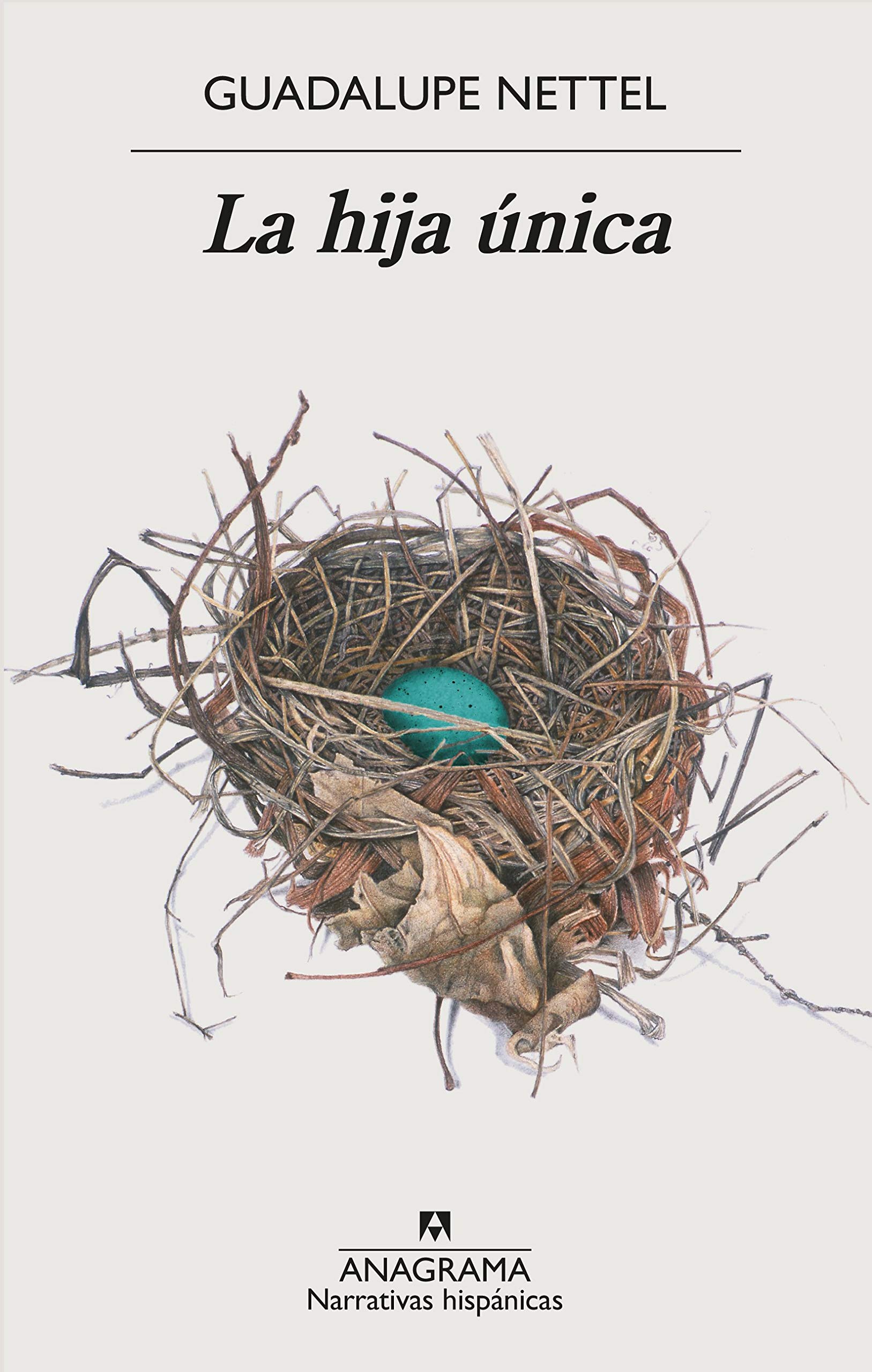
La hija unica Mexican literary fictionMeanwhile, outside Laura’s apartment a pair of pigeons with two eggs in their nest (a refuge she tried to destroy without success), appear to have been subject to a brood parasite.
Brood parasitic birds such as the cuckoo, lay their eggs in the nests of others, sparing themselves the inconvenience of rearing their own young.

Alina too brings in a young woman as a nanny to help with the needs of her newborn daughter, a woman whose role at times usurps the natural mother, giving rise to both appreciation and resentment.

It is a story of the complexity of birthing and raising offspring and the unconventionality that certain circumstances bring about, that can potentially create hybrid parenting situations, where one steps in for the other. It also highlights the little explored experience of a pregnancy that doesn’t follow expected patterns, that delivers an anomaly, something few imagine or are ever prepared for.

Maternal Instinct & Survival

Choosing Laura as the narrator of the story, one who is often at a distance from the more turbulent and harrowing events that Alina is going through, is another way that the author softens the impact of her experience. We are not close enough to be brought down by it and the urgency of her own situation, from which she is also one step removed, keeps the reader from dwelling too long on any on situation. It is like the maternal, survival instinct. The mother keeps busy and active to avoid the slippery slopes of sadness or despair.

I found this novel stunning, shocking, brilliant and in many ways familiar. It was a riveting read, a visceral encounter of all that surrounds the decision or not to become a mother, a carer and how the most insistent of intentions can mould, evolve and change according to our nature and circumstances.

Highly Recommended.

Guadalupe Nettel, Author

Still Born La hija única

Guadalupe Nettel ©Lisbeth Salas_slice

Guadalupe Nettel was born in Mexico and grew up ‘between Mexico and France’.

She is the author of the international award-winning novels The Body Where I Was Born (2011), After the Winter (2014, Herralde Novel Prize) and Still Born (2020). She has also written three collections of short stories. Nettel’s work has been translated into more than 15 languages and has appeared in publications such as Granta, the White Review, El País, the New York Times, La Repubblica and La Stampa. She currently lives in Mexico City.

Rosalind Harvey is a literary translator and educator from Bristol, now based in Coventry in the West Midlands, UK.

‘Many demands weigh on mothers. They are always compared to an unattainable stereotype, one that has made women feel inadequate. Not to mention those who decide to remain childless, who are rarely represented in literature up to now. To me, Still Born is a novel which affirms female choices and which challenges patriarchal ideas of motherhood and maternal instinct.

‘I would like this novel to help readers realise that human diversity – especially that of children with neurological conditions and women of all kinds – is always beautiful and interesting and that there is no reason to fear or reject it.’ Guadalupe Nettel

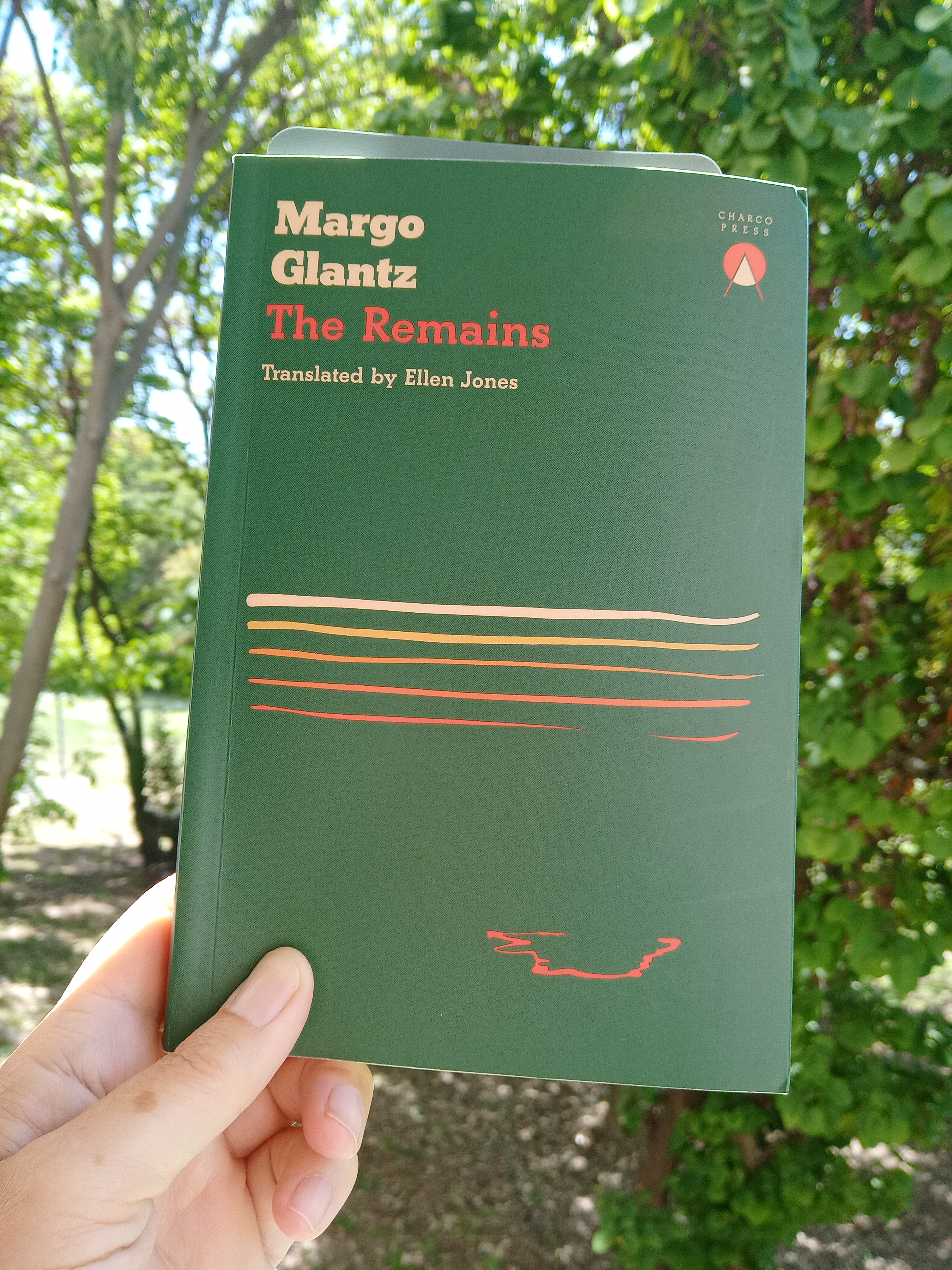
The Remains by Margo Glantz tr. Ellen Jones

How to describe this incredible literary masterpiece. A lyrical elegy of tempo rubato.

A Symphony of Reluctant Grief

Translated Allen Jones Mexican Jewish literatureA divorced woman, Nora Garcia (a cellist), returns for her deceased ex-husband Juan’s, (a pianist and composer) funeral; back to a Mexican village from her past, through the art and music they played and navigated together.
A lyrical and rhythmic form of elegy that, rather than speak about the person who has passed, we experience something of a past version of that person; they are almost present, seen through the distorted lens of a reluctant, grieving ex. We can almost hear his continuous and relentless explanations to his often-time audience of one.

It felt like listening to a symphony in words, as like with music, thoughts and conversations repeat with slight changes over time.

Revelatory thoughts of the woman who knew a man best, observing the body, imagining the isolation and neglect of a heart, that brought this death about. The incantation going into detail of the functions and dysfunctions of the heart, both as the pump that irrigates the body and the metaphor for feelings of love and neglect.

The heart has impulses that reason doesn’t know.

A Different Kind of Garden Party

El rastro Margot GlantzThe novel is set in the present, on the afternoon that the body is displayed in the coffin in a room, and our narrator is a guest like many others, who aren’t sure to whom, they ought to offer condolences. She overhears snippets of conversations, adding to the cacophony of her own reflections.
Its not like death goes around whispering in our ear, though, does it? It just arrives, suddenly, when we least expect it. Silence falls and I move away – he’s right, I think, death doesn’t whisper in our ear, it just arrives, alone, without warning us in advance. I don’t care how simple dying or anything else is for that matter, even if it was that simplicity that made his heart explode, made it shatter into pieces (mine too), yes, life, the absurd wound that is life, yes, it’s true, the heart is only a muscle that irrigates the body, keeping it alive, a muscle that one day fails us.

Bach, Beethoven, Gould & Open Heart Surgery

Margot Glantz The Remains

Photo by Gimmeges on Pexels.com

Scenes and topics of conversation from the past circulate through her mind as she observes all around her. Much of it is about music, about their preferences, their differences told through how revered pianists played the music of Bach, Beethoven and more.

In her grief, she writes intense descriptions of a person talking to her, observing visual elements, lips moving, facial gestures, drifting off and away, out of her own body, hearing nothing of the tedious chatter. Her thoughts range from music, pianists, the genius castrati voices of eighteenth century Italian opera, to the intricacies and origins of open-heart surgery.

Grief arrives unbidden, tears overflow, the intellect refuses it, reprimands her, convinces her she doesn’t care. The body does not comply. She recalls evenings spent listening to great pianists, their heated arguments, wondering if it was due to their diametrically opposed ways of seeing the world.

Though I don’t profess to know too much about the world of classical music or the work of all the names mentioned – the way Glantz takes the reader on a voyage through these subjects, venturing into them in depth, returning again in brief, then jumping into subjects of the heart – was compelling to read, in a mesmerising way.

Her reassessing of her relationship, observing the many people come to farewell the man she doesn’t know whether she loved or despised, while in the throe of grief, bewilderment and loss, showing us how lives intersect and continue to have a presence in the mind of another, long after separation.

“Life is an absurd wound: I think I deserve to be given condolences.”

Margo Glantz, Author (1930- )

Margo Glantz fused Yiddish literature, Mexican culture, and French tradition to create experimental new works of literature.

Margot Glantz Author MexicanA prolific essayist, she is best known for her 1987 autobiography Las genealogías (The Family Tree), which blended her experiences of growing up Jewish in Catholic Mexico with her parents’ immigrant experiences. She also wrote fiction and nonfiction that shed new light on the seventeenth-century nun Sor Juana Inés de la Cruz. Among her many honors, she won the Magda Donato Prize for Las genealogías and received a Rockefeller Grant (1996) and a Guggenheim Fellowship (1998).
Glantz demonstrates tremendous versatility as an individual and as a writer in the creative ways in which she blends her multiple cultural, religious and literary affinities. She unabashedly resists classification or categorisation of any kind and therefore identifies herself neither as a Jewish writer nor as a composer of personal narrative, nor as a Sor Juanista, the term used to refer to those scholars who devote themselves to the study of Sor Juana Inés de la Cruz. Belonging to no single one of these groups or schools of thought, she is an enigmatic amalgam of all of them. Glantz’s multiplicity is what makes her unique, and failure to recognize any component of her being would diminish her diversity.

Despite being one of the most iconic figures in Latin American literature, her work is little known in English. Charco Press now bring her work to a new audience with this excellent translation by Ellen Jones.

The Remains was longlisted for the Warwick Prize for Women in Translation 2023.

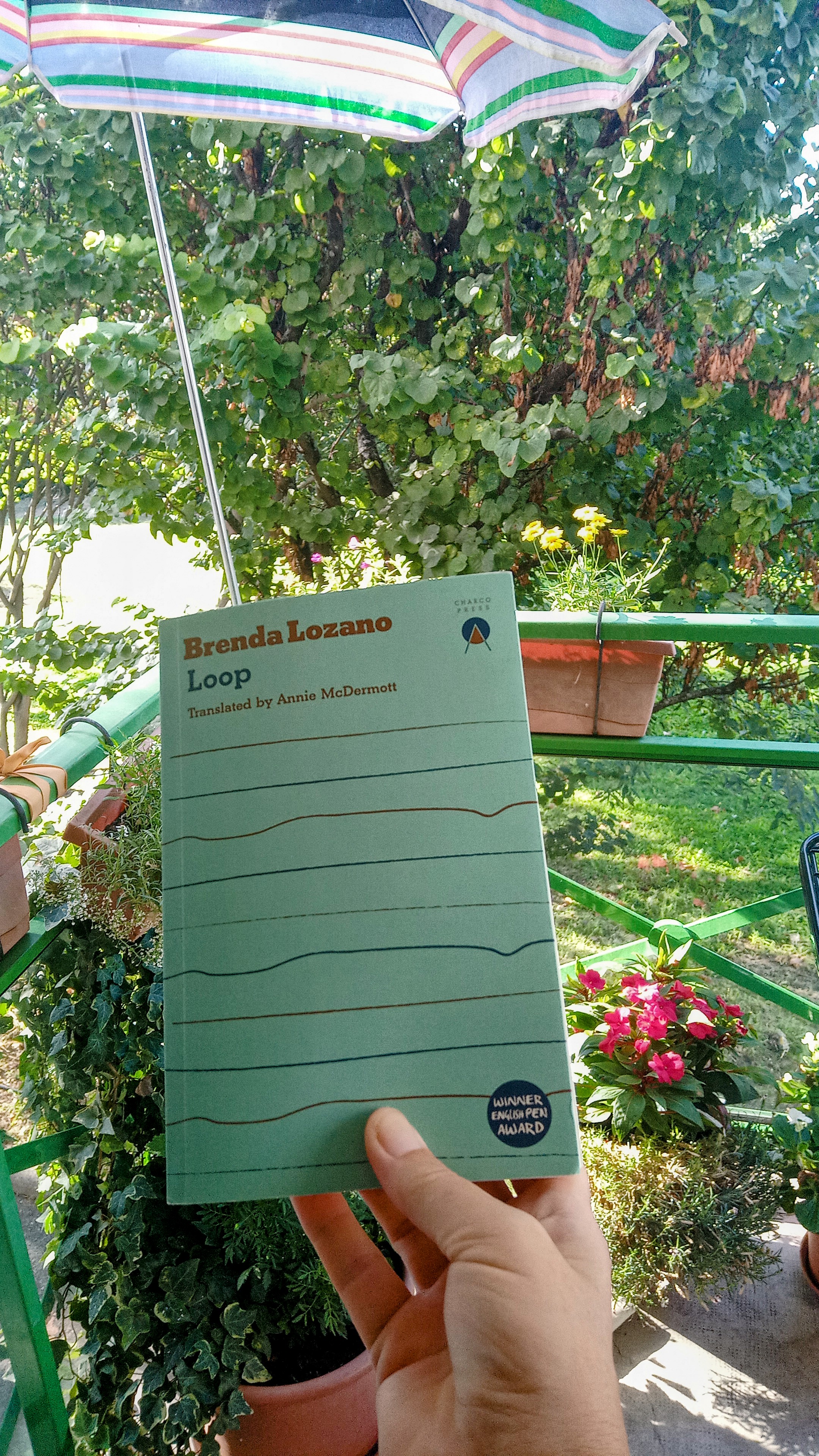
Loop by Brenda Lozano tr. Annie McDermott

wp-1629982535768..jpgI picked up Loop for WIT (Women in Translation) month and I loved it. I had few expectations going into reading it and was delightfully surprised by how much I enjoyed its unique, meandering, playful style.

It was also the first work of fiction I have read, after a nine week pause, while I have been working on my own writing project, so its style of short well spaced paragraphs, really suited me. I highlighted hundreds of passages, an indicative sign.

Change. Unlearning yourself is more important than knowing yourself.

It was helpful to listen to the recent Charco Press interview linked below to understand that it is a kind of anti-hero story, inspired by her thinking about The Odyssey’s Penelope while her lover Odysseus is off on his hero’s quest – of the inner journey of the one who waits, the way that quiet contemplation and observation also reveal understanding and epiphanies.

Odysseus, he of the many twists and turns. Penelope, she of the many twists and turns without moving from her armchair. Weaving the notebook by day, unravelling it by night.

Penelope and OdysseusThe narrator is waiting for the return of her boyfriend, who has travelled to Spain after the death of his mother.

His absence coincides with her recovery from an accident, so she has a double experience of waiting, a greater opportunity to observe the familiar and unfamiliar around her, to see patterns, imagine connections, dream and catastrophise.

Childhood is so uncertain, so distant. It’s almost like childhood is the origin of fiction: describing any past event over and over to see how far away you are getting from reality.

And then there is her quiet obsession with notebooks, with the ideal notebook, another subject that evolves in her pursuit of it. It’s thought provoking, funny, full of lots of literary and musical references, which I enjoyed listening to while reading and quite unlike anything else I’ve read. And a nod to Proust. The dude.

I was left with a scar. I think telling stories is a way of putting a scar into words. Since not all blows or falls leave marks, the words are there, ready to be put together in different ways, anywhere, anytime, in response to any fall, however serious or slight.

Random observations over time create patterns and themes, eliciting minor epiphanies.

Wild-Is-The-WindA celebration of the yin aspect of life, the jewel within. And that jewel of a song, sung by both David Bowie and Nina Simone, Wild is the Wind.

…the present is also, as its name suggests, a gift. It doesn’t suggest longing or loss. It’s just a present, a gift, a time with no strings attached which is totally ours, to use however we want, however we please. There are days when I find the future overwhelming, with all the bright lights and commotion.

I highly recommend it if you enjoy plotless narratives that make you think and see meaning in the ordinary. And relate to the little things.

Dwarf things. Small things. Little things in relation to the norm. Insignificant things. Things with different dimensions. Curiously, the stories I like the most are made up of trivialities. Details. Trifles. These days, people look to what’s big. The big picture, big sales figures, success. Bright lights, interviews, breaking news. Whatever’s famous. Importance judged by fame. Maybe small things are subversive. Living on a modest scale compared to the norm. Maybe the dwarf is the hero of our time.

Brenda Lozano Author LoopBrenda Lozano is a novelist, essayist and editor. She was born in Mexico in 1981.

Her novels include Todo nada (2009), Cuaderno ideal (2014) published in English as Loop and the storybook Cómo piensan las piedras (2017). Her most recent novel is Brujas (2020).

Brenda Lozano was recognized by Conaculta, Hay Festival and the British Council as one of the most important writers under 40 years of age in Mexico and named as one of the Bogotá 39, a selection of the best young writers in Latin America.  She also writes for the newspaper El País.

Further Information

On Charco Press’s Instagram IGTV page there is a video interview with Brenda Lozano for WIT Month where she speaks about the process of translation as a part of the art of writing, about her influences as she wrote Loop and about how she has taken the story of Penelope and Odysseus as inspiration.

Don’t be alarmed if this isn’t going anywhere. Don’t expect theories, reliable facts or conclusions. Don’t take any of this too seriously. That’s what universities are for, and theses, and academic studies. Personally, I like cafés, bars and living rooms. Not to mention comfortable cushions. So nice and cosy.

Dublin Literary Award Winner 2021

The winner of this prestigious award nominated by public library’s from around the world, has now been announced.

From an initial longlist of 49 books from 30 countries across 10 languages, they were narrowed down to a shortlist of six by a panel of expert judges and the winner, coming from Mexico, but nominated by the Bibliotecha Vila de Gràcia library of Barcelona is:

Lost Children Archive by Valeria Luiselli.

A road-trip novel of a family driving one summer from New York to Arizona, perspective and voices move from the parents to the children, witnesses, speaking and listening, seeing and observing, the subtle, yet dramatic shift. A story of what happens to the human spirit on a long road journey.

As their journey progresses, countless migrant children are making their way up from Central America to the US border, often alone, separated from their parents. A growing awareness of familial rupture enters the confined vehicle space, as they move closer towards an immigration crisis at the border, as their roads converge.

Lost Children Archive is a novel about the depths of childhood solitude, about children’s boundless imagination, the fragile intensity of familial ties, about tensions between history and fiction and the complex intersections of political circumstances and personal lives.

But more than anything Lost Children Archive is a novel about the process of making stories, of threading voices and ideas together in an attempt to better understand the world around us.” Valeria Luiselli

Valeria Luiselli

Born in Mexico, but raised and schooled in Costa Rica, South Korea, South Africa and India, she learned early on to inhabit a solitary, liminal and observant space, a childhood she attributes her decision to become a writer to, situated between cultures, spaces and their linguistic bridges or barriers.

Tell Me How It Ends, An Essay in 40 Questions

Tell Me How It Ends Valeria LuiselliIn preparation to read Lost Children Archive, I decided to read Valeria Luiselli’s nonfiction narrative essay Tell Me How It Ends which documents her experience as a volunteer translator, assisting child migrants who travelled alone from Latin America to the US, now facing deportation, to fill in the 40 question questionnaire they must respond to within 21 days of arrival.

It’s a sombre read as she and her niece become more and more despondent, discovering they are virtually helpless in terms of changing the outcome for these children, fleeing one bad situation and arriving into another.

I became involved with this kind of work while I was writing the novel, and what happened is I started using the novel as a space in which to pour all my angst and fury and political frustration and emotional sense of stalemate. But I slowly started to realize I wasn’t doing justice to the novel by trying to turn it into that kind of vehicle for my politics, and I wasn’t doing justice to the subject matter itself, either, because I was trying to thread it into this fictional narrative. So I stopped writing the novel. Then, John Freeman, whom I’d worked with as an editor in different projects, suggested I write a non-fiction piece on what I was witnessing in court.

Once I had done that, I was able to go back to the novel and not feel the responsibility of directly covering the crisis. I could focus on other issues and allow the novel to breathe with fictional lungs, so to speak.

Have you read Lost Children Archive or any of Valeria Luiselli’s essays or novels?

Further Reading

Interview : The Social Fabric – An Interview With Valeria Luiselli by Allan Vorda

Dublin Literary Award 2021 Longlist and the Six Shortlisted titles.

Sidewalks, Essays by Valeria Luiselli translated by Christina MacSweeney