Best Reads of 2025 Top Non-Fiction

Yesterday I shared my Top 9 Fiction Reads for 2025 along with the One Outstanding Read of 2025 and the runner up. So no surprise to see them here on my best non-fiction of 2025, as the first two titles mentioned here were my two outstanding reads of 2025.

In nonfiction, I like a really good memoir that shares more than just the personal experience, like a good nature writing memoir will increase knowledge of an aspect of nature and share something of a life that is also uplevelling in some way.

Top Non-Fiction

Mother Mary Comes to Me by Arundhati Roy (India)
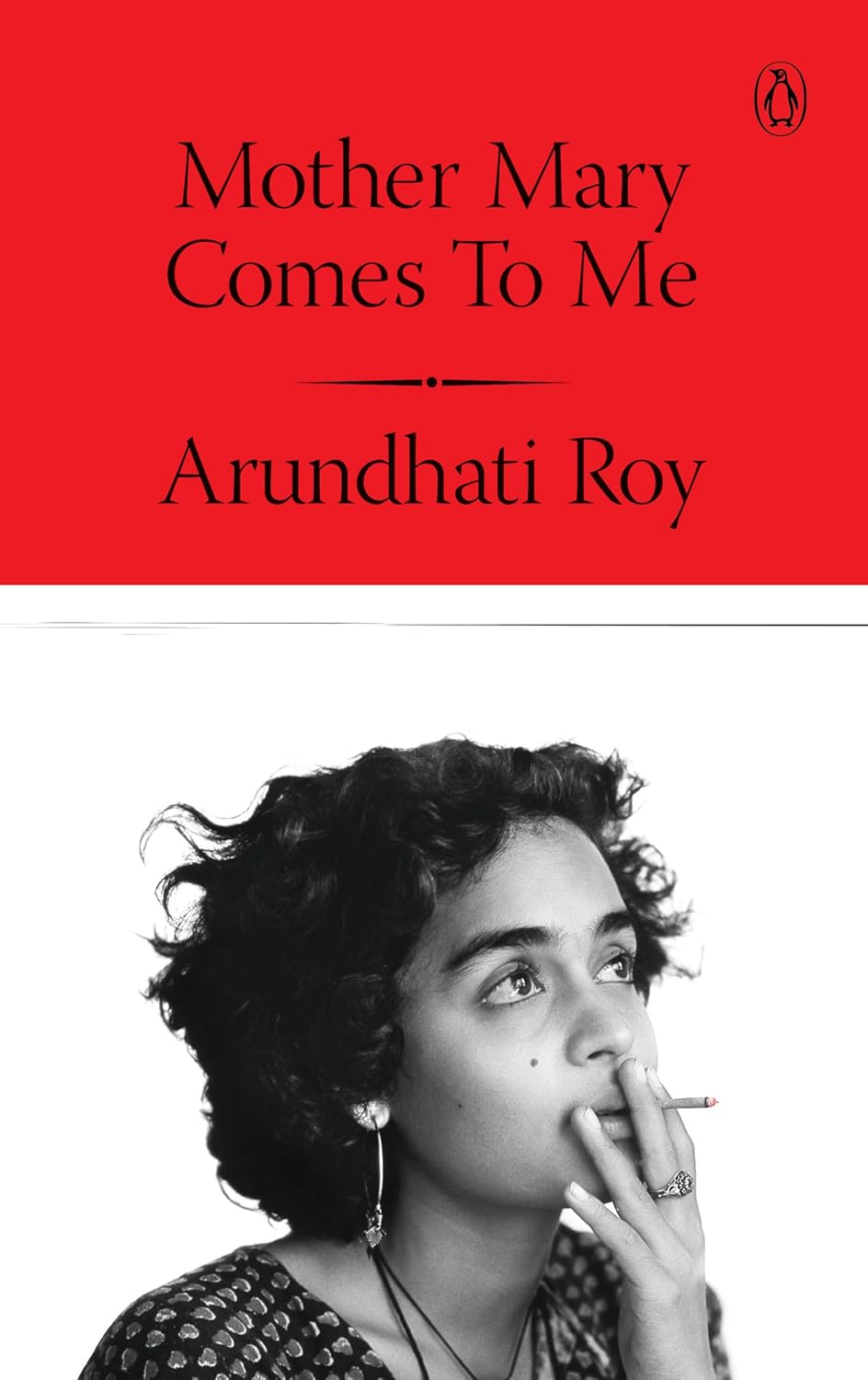
memoir by Arundhati Roy Mother Mary Comes to Me

– This was my Outstanding Read of 2025 and a book that takes a while to process, because these strong women it features, Arundhati Roy and her mother Mary Roy, have achieved incredible feats at a high cost to their basic humanity. They have both lived through situations that required them to fight back, they have lived in close proximity to and been decimated by cruelty and lifted up by personal achievement; they have been revered by an entourage and yet rarely found peace in their relationship to each other or in other close relationships. Intimate and inspirational.

The transparency and honesty with which Arundhati writes, as she walks the reader through childhood in Kerala, early adulthood in Delhi, through a dogged determination to live according to her own values making her both friends and enemies, and through it all that magnetising effect of the mother. Toxic bond or filial loyalty, I’m not entirely sure, but she chose to publish this work, one thinks respectfully, after the ruthless matriarch of steely perseverance let go of her last breath.

“I think I had a cool seraph watching over me. Especially each time I was at a crossroads and had to make a decision. My education, the class I came from, and, above all, the fact that I spoke English protected me and gave me options that millions of others did not have. Those were gifts bestowed on me by Mrs Roy. At no point, no matter how untenable my circumstance, did I ever forget that.”

Somebody is Walking On Your Grave: My Cemetery Journeys by Mariana Enriquez (Argentina) tr. Megan McDowell (Spanish)

– My runner up book for Outstanding Read of 2025 in part because I couldn’t stop telling people about the many different things I learned from reading this book. A memoir-like collection of essays, this really is like super-alternative, armchair travel, where you get to voyage briefly through 13 countries with an experienced, gothic guide to an underworld of 21 cemeteries.

Somebody is Walking On Your Grave My Cemetery Journeys Mariana Enriquez Argentina in translation

However, the focus isn’t just on the visit, you’re going to be there for a few days, so you’ll get to learn from the highly observant, well researched, perspective of an Argentinian writer (known for unconventional and sociopolitical stories of the macabre) about various cultures, odd behaviours and aspirations of various eras, in how humans have treated those they have revered, once passed. From Genoa to Prague, to Highgate to the Paris catacombs, from Rottnest Island in Australia to Bonaventure in Savannah, from Havana, Cuba to Peru, Mexico, Chile and Argentina, she uses cemeteries to reflect on history, culture, memory, and her own personal life. Outstanding!

Reading Edgar Allen Poe – and then with the years, I learned that also cemeteries have a lot to say about life, about the history of the people. And then Argentina in the ’70s, the decade where I was born, had a dictatorship that made a lot of bodies disappear. Therefore, there’s a generation of people that were killed by the government, and they don’t have a grave.

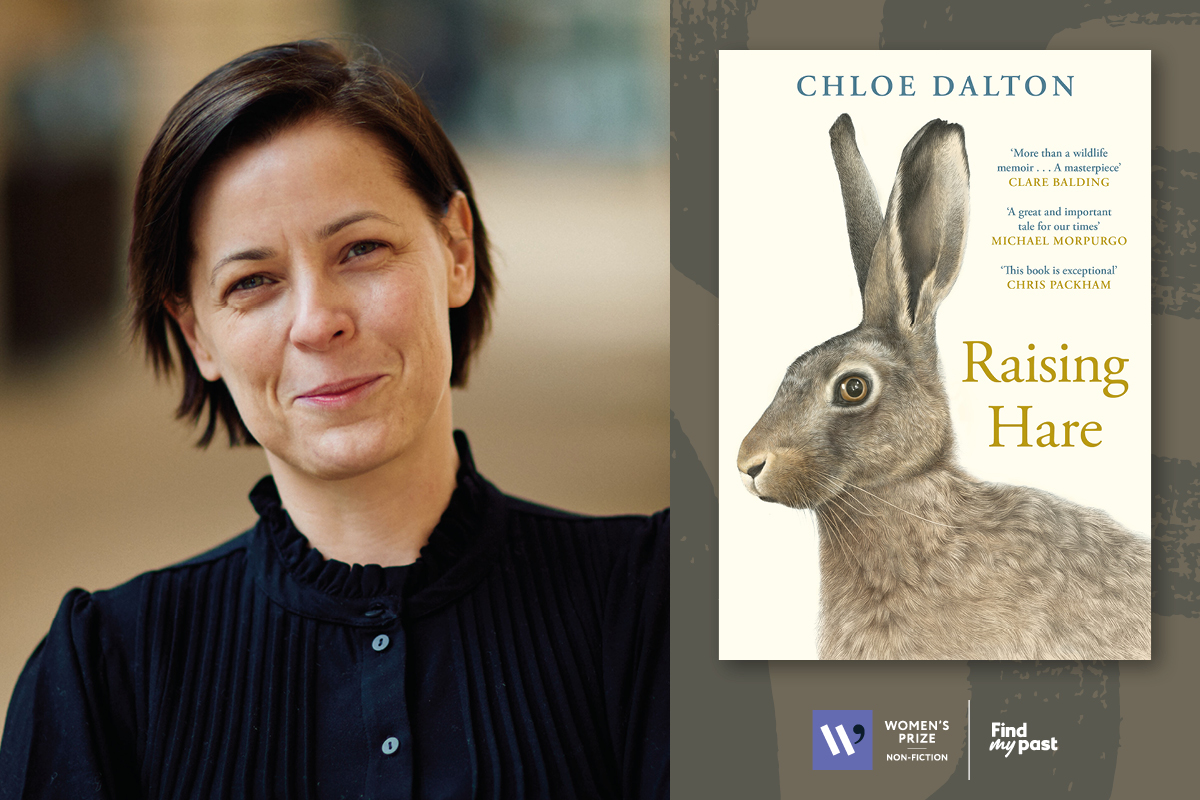
Raising Hare by Chloe Dalton (UK)
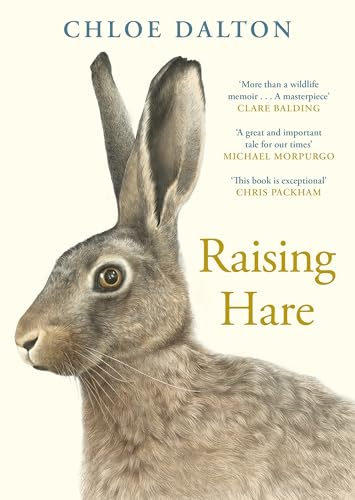
Raising Hare by Chloe Dalton shortlisted womens prize nonfiction winner Wainwright Prize 2025

Shortlisted for the Women’s Prize for Nonfiction, I became aware of this title early in the year but waited till the end having read enough reviews to be convinced it was going to be for me. Chloe Dalton hears a bark, stumbles across a leveret and wants to ignore it, but can’t and then lacking knowledge becomes something of an expert on hares and how to care for one, going deep into library archives and reading obscure, ancient texts as well as modern informative ones.

She bonds with the hare but facilitates it return to the wild and then turns her daytime political expertise sights on an outdated policy – Hares are the only game species which are not protected by a ‘close season’ in England and Wales: a period of the year during which they cannot be shot and killed – which I was pleased to read just yesterday, an article in the Guardian Saturday 20 Dec 2025 – Shooting hares in England to be banned for most of the year in sweeping changes to animal welfare law about to be announced in the UK. The new close season will ban hare hunting during the breeding months of February to October to protect mothers and the young.

I pondered the concept of ‘owning’ a living creature in any context. Interaction with animals nurtures the loving, empathetic, compassionate aspects of human nature. It taps into a primordial reverence towards the living world and a sense of the commonality and connectedness across species. It is a gateway, as I was discovering, into a state of greater respect for nature and the environment as a whole. We all too easily subordinate animals to our will, constraining or confining them to suit our purposes, needs and lifestyles.

Is A River Alive? by Robert Macfarlane (UK)

nature writing rivers naturalist perspective nonfiction poetic prose

– Another travelling memoir with nature and the environment at the forefront of his journeying, Robert Macfarlane is well known for his mapping of the Old Ways of the ancients, writing about landscapes as living, abundant, storied places and how humans interact with them. So he is very aware of how aspects of nature, such as rivers and streams are being compromised and endangered and killed by humanity, thus he sets out on these three journeys to understand his question, Is a River Alive?

He travels to a cloud-forest in Ecuador with a team of people all looking at nature from different perspectives, a fungi expert, a musician and a ‘Rights of Nature’ lawyer; then to India to find the source of its three rivers with a passionate teacher and advocate for waterways and finally to northern Canada to kayak down a river under threat from corporations wanting to dam it.

Ultimately, beyond his initial question, to which his young son gave him the answer before he even left home, he explores the idea and begins to see for himself, rivers and forests as moral and sentient beings rather than resources to be owned and exploited, shifting from a perspective of ownership to one of responsibility for their guardianship. If we begin to see rivers and the natural world as part of our shared way of living and protect them, we might live more simple and healthy lives.

Spinster, Making a Life of One’s Own by Kate Bolick (US)

Spinster Making a Life of Ones Own by Kate Bolick features columnist Neith Boyce, essayist Maeve Brennan, social visionary Charlotte Perkins Gilman, poet Edna St. Vincent Millay, and novelist Edith Wharton

– Not one I reviewed, but I came across this memoir while doing genealogical research. I discovered a female ancestor named Mary Stoyle, born in 1791 in Zeal Monachorum, Devon who had five children and on all the baptism certificates she was always the sole parent named. In the census registers, she was Head of Household.

Clearly a man contributed to the conception of her children, but equally it appears he was not part of her household. That made me curious about her Profession and initially under the heading Quality, Trade or Profession, in 1816 when her son George was born, it was listed as Spinster. When Joseph was born in 1831, her Profession had changed to Weaver, which suggested she was financially independent. Women worked at Spinning because it could be done at home, fitted around childcare, and required little capital. Weaving required greater technical skill. Mary was almost certainly a self-supporting handloom weaver, working from home, producing woollen cloth for the local / regional rural economy.

I wondered if anyone had looked into these non-married women from the early 1800’s, as I discovered it was more common than we might think, and that these matriarchs were well respected. So I read Kate Bolick’s book which was a little more modern than what I was looking for, (and focused on but equally fascinating as she explored a number of renowned women from the last century who had tried to live a life without marriage or children in order to pursue some other objective, creative or career.

She looked into the lives of American script writer and columnist Neith Boyce, Irish essayist Maeve Brennan, American social visionary Charlotte Perkins Gilman, poet Edna St. Vincent Millay, and novelist Edith Wharton. Some of these women did marry, but all of them sought ways to escape the traditional expectations of that contract to pursue their own personal ambitions. While it didn’t really help me with my own questions about Mary Stoyle, it was fascinating to read about these women and some of the changing statistics over time, in particular to learn that the institution of marriage was less prominent in the 18th century and reached its peak in the mid 20th century.

Special Mentions, Spiritual Well-Being Top Ups

I read a few books this year that come under the heading of spiritual well-being and two that were particularly good were Rebecca Campbell’s Your Soul Had a Dream, Your Life Is It regarding the cycle of transitions, of resonance and discernment, understanding grief, loss, separation, change. The benefit of going within, of being our own best support, to heal, grow and transmute feeling(s) into the next version of ourselves. To align more with soul purpose, tapping into our inner guidance system. Nothing really new, just good reminders to keep up the practice (s). I’ve read all her books, they’re good to dip in and out of.

spirit hacking shaman durek frequency vibration energy

The other one I read and listened to was Spirit Hacking (2019) by Shaman Durek, I particularly enjoy his Ancient Wisdom Today podcast pep talks while on a 5 km walk. He is spiritually and intellectually knowledgeable, very direct, often funny, he calls things out, and is deeply encouraging. He comes from a heart-centred background of immersion in Buddhist and Shamanic Philosophy, basically that your thoughts create your reality and the regular checking of what kind of energy you are bringing when responding to challenges and triggers, he gives great examples from personal experiences and admits to his own flaws. He comes to all this with an attitude that may be challenging to some, but I find him interesting to observe, listen to and learn from, filtering out what is useful or not.

* * * * * *

If you’ve read any of these non-fiction titles, or have another favourite for 2025, share them with us in the comments below.
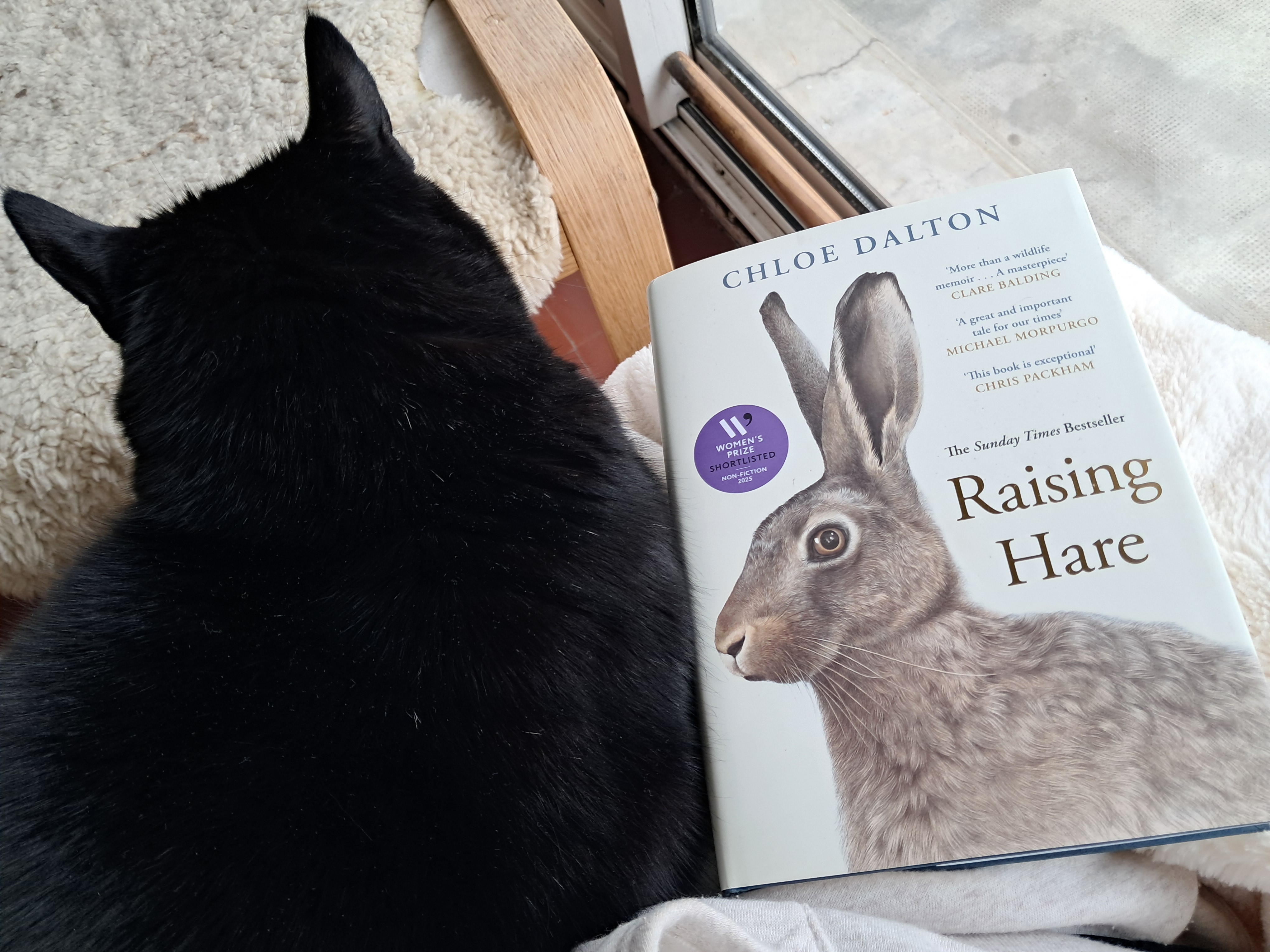
Raising Hare by Chloe Dalton

There is nothing quite like a thoughtful work of nature writing to end the year with, as we move from autumn into winter hibernation. I missed out on the Nonfiction November themed reads that many other bloggers participate in, however I seem to have been attracted to reading nonfiction in December.

Best Nature Writing of 2025

Raising Hare by Chloe Dalton shortlisted womens prize nonfiction winner Wainwright Prize 2025

I liked the sound of Raising Hare from the moment I heard of it, when it was longlisted and then shortlisted for the women’s prize for non-fiction. And in these last weeks of the year, it seems to be sustaining interest by readers, having won the Wainwright Prize for Nature Writing and Overall Book of the Year. The chair of judges, referring to it as a ‘soulful debut’ said,

“A whole new audience will be inspired by the intimate storytelling of Chloe Dalton. Raising Hare is a warm and welcoming book that invites readers to discover the joy and magic of the natural world. As gripping and poignant as a classic novel, there is little doubt this will be read for years and decades to come.”

Not a Typical Animal Rescuer

The author Chloe Dalton as we read in her short bio, does not have the typical profile of someone who might rescue an animal. She lived and worked in London as a political adviser and foreign policy specialist, something of a workaholic who travelled a lot and was always on hand when needed. So this story and transformation likely would not have happened, had there not been a lock down that sent her to her home in the English countryside and changed the way she lived and worked.

If I had an addiction, it was to the adrenaline rush of responding to events and crises, and to travel, which I often had to do, at a few hours notice.

It makes me wonder how many other unique experiences with nature and wildlife occurred during this time, when the world slowed down and people started noticing how we live and the detrimental impact we are having, even in a small acreage like this.

Born in a Pandemic

Photo by Pixabay on Pexels.com

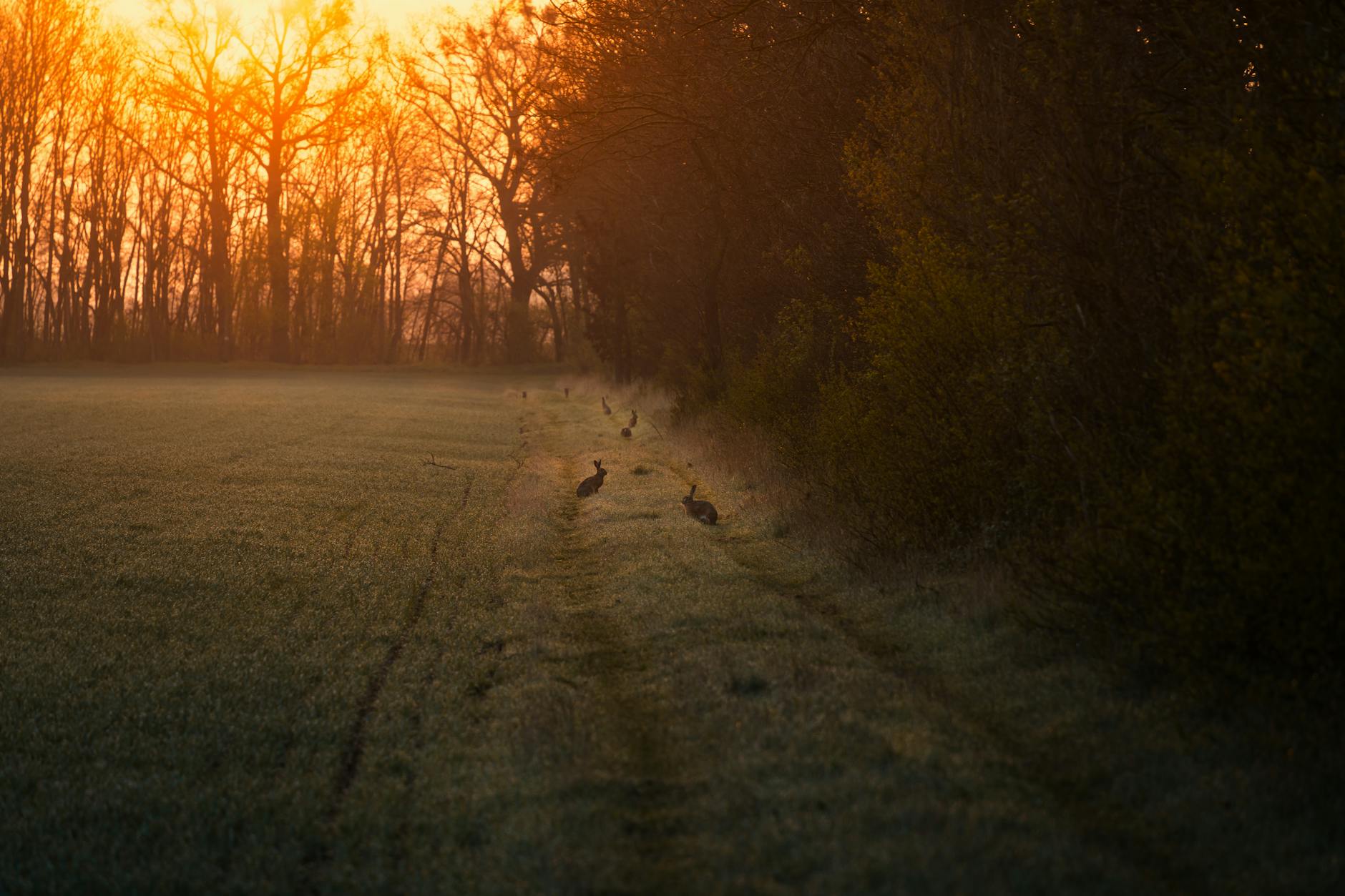
It’s the story of how a woman, living alone in the English countryside encounters a leveret after hearing a dog barking, clearly disturbing the nest. Initially ignoring it, then four hours later when it had not moved, she could not – the poor thing as small as the palm of her hand, frozen in the middle of a track leading directly to her house.

A call to a local conservationist dispelled any notion she had that she could return it to the field later, and further telling her hares could not be domesticated.

I felt embarrassed and worried. I had no intention of taming the hare, only of sheltering it, but it seemed that I had committed a bad error of judgement. I had taken a young animal from the wild – perhaps unnecessarily – without considering if and how I could care for it, and it would probably die as a result. My heart sank.

Overwhelmed and terrified she’d kill it by accident, she begged her sister, who lived with a menagerie of animals to take the leveret. After explaining how unsuitable that cacophonous environment would be for a baby hare, her sister told her ‘You’ll do fine’ and hung up.

Providing Care and Gaining an Education

Book cover Raising Hare by Chloe Dalton

We then observe where all that leads, not just into the care of a vulnerable animal, but how she educates herself all about leverets and hares, all the while focused on observing its every movement and behaviour, as they live alongside one another throughout the pandemic period and beyond.

I found it highly educational and loved the subtle transformation the author undergoes, as she learns to see her own environment through the purview of local wildlife and in effect provides an update to much existing research and knowledge about this breed, due to the unique opportunity of getting so close to living in proximity to a hare and her protege, while allowing it to stay wild so that it could continue to breed in the wild.

It is a gentle, enquiring, observational work of nature writing and a tender transformation of one human in her own ways, through the observation of the little known leveret, its home environment and habits. It is almost impossible not to be moved by the young hare, coming to know how sensitive the species is, and how it navigates this unorthodox contact with a female human.

I pondered the concept of ‘owning’ a living creature in any context. Interaction with animals nurtures the loving, empathetic, compassionate aspects of human nature. It taps into a primordial reverence towards the living world and a sense of the commonality and connectedness across species. It is a gateway, as I was discovering, into a state of greater respect for nature and the environment as a whole. We all too easily subordinate animals to our will, constraining or confining them to suit our purposes, needs and lifestyles.

Consciousness Raising Around Wildlife

Photo by Michael Pointner on Pexels.com

What a chance to have occurred, for someone interested in policy, to take an interest in a more local and domestic situation, pouring herself into the research, taking care of a vulnerable sentient being and starting to consider the changes that can be made, to enable all species, including human to coexist in a less destructive manner.

Hares are the only game species which are not protected by a ‘close season’ in England and Wales: a period of the year during which they cannot be shot and killed. Other ‘game’ species – such as deer, pheasants and partridges, to name a few – are all protected by a close season. Hares by contrast can be shot at any time of year, including during the crucial months of February to September, when they typically raise their young.

Scotland and the rest of Europe already protect hares in this way. Only in England and Wales does this anomaly persist.

Highly Recommended.

Further Reading

Women’s Prize Interview: In conversation with Chloe Dalton

Read a Sample – the opening pages of Raising Hare by Chloe Dalton

Author, Chloe Dalton

Chloe Dalton is a writer, political adviser and foreign policy specialist. She spent over a decade working in the UK Parliament and the Foreign and Commonwealth Office and has advised, and written for and with, numerous prominent figures. She divides her time between London and her home in the English countryside.

Her debut book, Raising Hare, was an instant Sunday Times and New York Times bestseller. It won the Wainwright Prize for Nature Writing and was shortlisted for the Women’s Prize for Non-Fiction, and was selected as a Waterstones Book of the Year and as the Hay Festival Book of the Year. It was a Critics Best Books pick for The Times, Financial Times, Guardian, Spectator and iNews and was a Waterstones Non-Fiction Book of the Month.

‘Imagine holding a baby hare and bottle feeding it. Imagine it living under your roof, drumming on your duvet to attract your attention. Imagine the adult hare, over two years later, sleeping in the house by day, running freely in the fields by night and raising leverets of its own in your garden. This happened to me.’  

A Truce That is Not Peace by Miriam Toews

Life and Death So Far, A Search for Meaning

“…we might remember the dead without being haunted by them, give to our lives a coherence that is not ‘closure,’ and learn to live with our memories, our families, and ourselves amid a truce that is not peace.” – Christian Wiman

A truce that is not peace Life and Death So Far memoir by Miriam Toews

I’ve been tempted but never read any of Miriam Toews novels, so this might not be the best place to start, this being the first time she has written about her own life in non-fiction (Swing Low: A Life she wrote about her father in 2000). Hoever, I was intrigued and it was available to read on Netgalley so I jumped in to learn more about the source(s) of her inspiration.

While her novels are not autobiographies, they address the emotional, spiritual, and political terrain of her life – her Mennonite upbringing and their lack of voice, her family’s struggles with mental illness and the burden of communal silence. 

A Truce That Is Not Peace makes those long-standing concerns fully explicit, acknowledging the reality behind those themes in her novels, exploring the writing life, family tragedies and day to day obsessions with grace, humour and bite.

Fragments of Memory, Flashes of Reality

The memoir is written in a fragmented journal entry style, one that continued to visit and revisit a number of current obsessions and memories she kept going back to, things from the past that haunted her, her father and sister’s suicides, their long periods of silence, their incessant need to write, her conversations and the questions asked by a Jungian therapist, who she reassures each visit that she is not suicidal (having read that is the greatest fear therapists have of their clients), though it is all she talks about.

It then switches into current desires, a wind museum idea, how to negotiate getting her royalties back from her ex-husband, and repeated attempts to answer the question Why Do I Write?, as the Conversación Comité who invited her to respond to that question, in anticipation of participating in a conversation in Mexico City, keeps rejecting her submissions as being not altogether what they were looking for, while attempts to rewrite it have her dreaming about her Wind Museum.

Creativity, the Messiness and Musings of Lives

Various quotes, letters, emails, dreams, nightmares; musings and memories litter the text as the author grapples with what presents itself in her life, and then the words of others arrive as if to provide validation or a way to get to that truce she seeks.

“Punishment, perhaps, or some contagion of fate, finds her here, her hair shorn, both wrists wrapped, her eyes open, pondering the parable of perfect silence.” – Christian Wiman

Photo by Mat Brown on Pexels.com

The text is interrupted by grandchildren activities, worries about biting habits, by questions she asks her mother, by the antics of family gatherings, of things falling apart in the house, the river that runs beneath it, a skunk with distemper that keeps trying to return to the now renovated back deck and falling into the window well. A close encounter with a plane in a blizzard on a highway, all while trying to find a way to navigate this life, this ‘truce that is not peace’.

It reminded me of reading Terry Tempest Williams When Women Were Birds: Fifty-four Variations on Voice, another memoir that circles a writer’s many obsessions as she struggles to find a connection. Her list of things she wrote of were: Great Salt Lake, Mother, Bear River Bird Refuge, Family, Flood, Cancer, Division of Wildlife Resources, Mormon Church, subjects that resided within her, evolving and changing shape like a murmuration.

When Miriam Toews makes her list she writes: Wind Museum, Deranged Skunk, North-west quadrant with ex, Conversacion in Mexico City, Neighbours.

I found the style confusing at first, but then because she returns to the same subjects, I started seeing the pattern. She mixes heavy subjects with the mundane of everyday life, and shares pockets of humour and tenderness amid the pain. The presence of children and noise and problems that need to be dealt with keep them all grounded and present and observant, there is inspiration everywhere, even in the most mundane.

While it may have helped had I read her other work, it is not necessary.

“When I started writing, the work was an act of rebellion. An act of subversiveness. But also a philosophical one. The humor, the writing, the taking note of absurdity. A rebelliousness against life. That’s how Camus felt too. That it is absurd. That there is no meaning. That there’s no reason to this crazy place of pain and ridiculousness. And yet, it’s what we have. So let’s be in it.” Miriam Toews

Further Reading

The Yale Review: Shakespeare & Company interview Miriam Toews on how writing resembles loss, Adam Biles

The Guardian: ‘My sister, my God. It’s a visceral pain that never goes away’: Miriam Toews on a memoir of suicide and silence by Hannah Kingsley-Ma

Author, Miriam Toews

Miriam Toews is a Canadian novelist and writer born in 1964 in Steinbach, Manitoba, a small, conservative Mennonite town that profoundly shaped her life and work.

Toews is best known for her darkly comic, deeply compassionate novels that explore themes of Mennonite culture, female autonomy, family bonds, mental illness, and the struggle for personal freedom. Her internationally acclaimed books include A Complicated Kindness (2004), All My Puny Sorrows (2014), and Women Talking (2018), the last of which was adapted into an Oscar-nominated film.

Much of Toews’s writing is informed by her own experiences, including the suicides of her father and sister, and her complicated relationship with the Mennonite community in which she was raised. Her memoir, A Truce That Is Not Peace, addresses these influences directly. She lives in Toronto.

“The book is about my attempt to find connection, to really meet my sister, in the spaces between words, in the silence. And my inability to do that, my reluctance to go there. There’s just such a huge abyss between the pain of the feelings and the articulation of that pain, whether it’s manifested in silence or whether it’s manifested in writing a story. It’s that time in between. I think that’s where I can maybe meet her in my mind.” interview with Adam Biles, Shakespeare & Company, Paris

N.B. This book was an ARC kindly provided by the publisher, 4th estate, via NetGalley.

Somebody Is Walking on Your Grave by Mariana Enriquez tr. Megan McDowell #RIPxx

My Cemetery Journeys

Someone is Walking On Your Grave My Cemetery Journeys Mariana Enriquez

Argentinian author Mariana Enríqeuz is known for unconventional and sociopolitical stories of the macabre, amid contemporary Argentina. Her stories are populated by unruly teenagers, crooked witches, homeless ghosts and hungry women walking the troubled line between urban realism and literary horror.

Though I’ve seen her Gothic titles on the International Booker shortlist, an overactive imagination has constrained my curiosity to venture further until now.

When I saw that Granta were publishing a memoir-like collection of essays that chronicle her travels through graveyards of the world, steeped in history, legend and local culture, I was more than intrigued, I wanted to take that journey with Mariana Enriquez as my guide.

One Woman’s Obsession and Another’s

This is not fiction, it’s a journalistic travel diary, beginning with her first teenage encounter in Genoa, Italy, spanning years of visits and curating the experiences that came with them, and a potted history of characters she momentarily became obsessed with while visiting 21 cemeteries across four continents.

I admit that I have my own obsession with cemeteries, though not to visit them or to seek out historical characters; my interest is in the words left behind, the clues that help me recreate a lineage.

I discovered that it is possible to do that online through ‘Find a Grave’, another way to find ancestors and fill in the gaps in a family tree, creating one’s own virtual cemeteries populated with the memorials of those who came before.

Lest we forget or should we never have known and have a compulsion to awaken our soul remembering. I visit these virtual creations, solve some of their mysteries and see into the lives of those forgotten, as if they were there, tapping me on the shoulder inviting me to come and witness how it was.

A Goth Flaneur Coming of Age

From that very first essay about her journey as a 25-year-old to Italy with her mother I was hooked. Mariana Enriquez described herself as a ‘goth‘ from about the age of six years old and in her book, travels to cities and obscure locations around the world with the aim of visiting a place of rest, unravelling stories as she goes.

In her gripping, journalistic style, she shares why each graveyard was important to visit, whether part of an interesting historical aspect, or because of a particular personality, or a rumour about the strange things that allegedly happen there. It surprised me initially that many of these places require security, some even have ticket offices, because strange things can happen in broad daylight as well as the dead of night.

Each essay gives the country and location of the cemetery and the year she visited and sometimes there is a photo of a particularly interesting sculpture. In an NPR interview with Ayesha Rascoe, she expanded on her youthful inclinations and inspiration in seeking out these places of rest.

Reading Edgar Allen Poe – and then with the years, I learned that also cemeteries have a lot to say about life, about the history of the people. And then Argentina in the ’70s, the decade where I was born, had a dictatorship that made a lot of bodies disappear. Therefore, there’s a generation of people that were killed by the government, and they don’t have a grave.

I realized that that trauma, that is very engraved in my life, somehow made me feel that a grave, a tombstone – it’s something of comfort. It’s a final thing in a good way.

Death and the Maiden, Staglieno

So it begins with Death and the Maiden, Monumental Cemetery of Staglieno, Genoa in 1997 and this essay is literally the initial seduction into the collection, Mariana’s mother had enough money to take her first trip to Europe and invited her daughter along.

Genoa wasn’t her priority; when read of the places in Italy that were, I’m drawn down literary, art and historical rabbit holes in delight. But Staglieno at least had graves that featured on the cover Joy Division‘s single Love Will Tear Us Apart, even if she had never liked them.

In a public square in Genoa is where she meets the perfect goth boy playing violin, an Italian Englishman, like a creature out of Mary Shelley or Byron. Someone to accompany her on her pilgrimage.

Enzo was the most beautiful creature I had ever seen. At least for me, for my idea of beauty, which is shadowy and pale and pliant, black and blue, a little moribund but happy, more dusk than night.

Welsh Immigrants in Patagonia

When Enriquez travels to Trevelin Cemetery in Chubut, Agentina, 2009, I learn about the Welsh who left their homeland to settle in Patagonia in 1865. Having been exploited and discriminated against in the United Kingdom and fearing losing their language and identity, 153 Welsh men, women and children boarded the ship Mimosa and arrived in a place that was something of a disappointment, but became the most significant Welsh colony in Argentine Patagonia.

I learn about characters from this group, the little known history that explains the proliferation of Jones, Thomas and Evans, the foreign words on the gravestones, in a place where many today still speak Welsh.

The Mountains of San Sebastian to Rottnest Island

From English soldiers buried in forest graves on a Basque mountain near San Sebastian in Spain, I read of more minor historical events and wonder about the meaning of the words on the chapel, “Every hour wounds; the last one kills.” So many stories and mystery among the remains.

In 2007, she accompanies her Australian boyfriend Paul who works as a bike mechanic on Rottnest Island, half an hour from Freemantle in Western Australia. A stable, long distance relationship that is headed towards marriage and an outsider’s view of a curious part of the world where the lead singer of AC/DC came of age, went to jail and is buried. She wants to see his grave.

The place has a booming real estate market, houses with yards full of healing crystals and fairies, collectors of all kinds who exhibit their cabinets of curiosities in the streets, artists, musicians, and a sparse but continuously fluctuation itinerant population linked to the port – people who can be unhinged, unstable and on occasion violent.

Weirded out by the hotel-asylum they’re staying in, she takes the ferry to the island, once inhabited by the Noongar Aborginal people, also used as a prison and visits the burial grounds, unearthing more story of post-colonial and indigenous poeples.

Savannah to New Orleans to Cuba to Edinburgh

I don’t wish this make this overly long, because I feel like I could write paragraphs on every essay; they are so interesting, quirky, incredible and speak so much to the different cultures they inhabit, from a very different perspective than what anyone would usually encounter visiting a foreign country.

If you came from New Orleans, I guess you would know about the vibrant characters that inhabit it, both the living and the dead. I did not know that it is the site of the second most visited grave in American after Elvis, that of the 19th century midwife, herbalist and philanthropic Voodoo practitioner of French, Spanish and African origins Marie Laveau.

Then there was the controversy surrounding the Pietro Gualdi marble sculpture of a seated woman in a robe holding a bouquet of flowers that Dennis Hopper and Peter Fonda requested permission from the Italian Society to use in the tomb scene of Easy Rider. Suffice to say all requests since then have been denied. And Nicholas Cage’s pyramid? A pharaonoic tomb waiting for a body.

Frankfurt was brief, Cuba was fascinating and macabre and sad after the friend who hosted her became the first close associate whom death claimed. Savannah was touristy and disappointing, I mean how could the book cover of John Berendt’s novel Midnight in the Garden of Good and Evil have caused such havoc and chaos to a place of rest?

Edinburgh was crowded, full of folklore; people visiting the graves of random names J.K.Rowling chose as characters for her Harry Potter books. Bizarre comes in so many different forms, real, imagined and just because.

Taphophilia Syndrome and the Magnificent Seven

I learn a new word. Taphophile, people who are passionate about cemeteries, memorials, and the history they hold. And Taphophilia syndrome? An abnormal attraction for graves. Who knew there were so many?

The visit to London’s Highgate cemetery fascinated me because I lived so close to it for some years, yet never had an inclination to visit. Audrey Niffenegger’s Her Fearful Symmetry, set in the cemetery sat unread on my shelf for years. To read about it here and what the author encountered there was like stepping into another realm, as all these places are, existing in the in-between.

Highgate and London’s Magnificent Seven created from 1833-1841 just demonstrated to me how little the living can be aware of the cult of the dead right next door.

Day of the Dead 1-2 November

Mexico seems to be the only country that retains a feeling of celebration around the departed. Though she visits and writes of its traditions, Enriquez has never been there for the Day of the Dead, when souls return and are welcomed to their family home to eat with their living relatives.

Here in France 1 November is the public holiday Toussaint (All Saint’s Day) and there is a mass visitation to cemeteries all over the country, when families visit, tidy up, pay their respects and bring chrysanthemum’s to family graves.

The Mexican anthropologist Alfonso Alfaro said, “We are a people who maintain a privileged relationship with death.” And the art critic Luis Cardoza y Aragon wrote:

Death is a universal theme of human expression. Mexico’s feeling toward death, the familiarity, tenderness and simplicity in its treatment of death, its obsession, which it sees as neither tragic nor funereal, but rather nuptial and natal, imbued with an immediate everydayness, an imperious and serene visibility, characterized more by cascading laughter than lamentation – it all harbours the unlearned wisdom of a cosmic and playful conceptualization, as if in perpetual amazement, that is particular to Mexico.

Prague to Paris to Eva Peron and the Disappeared

Prague has its legends but is overrun by tourists; Mariana resists and admits maybe it’s because she’s not a fan of Kafka.

In Paris, I hear of the fascinating history and grisly dilemma of 12th century Holy Innocents Cemetery in the Les Halles quarter that lead to the creation of the Montmartre catacombs. And a visit down there.

Eventually the journey comes full circle to Buenos Aires, Argentina, to the aristocratic Recoleta Cemetery, where Eva Peron is buried. Described once as ‘Venice without the canals’ it has ostentatious vaults like palaces along narrow streets, where everything is above ground, a way of showing off grandeur.

Peron’s journey there is an enthralling tale of body snatching, written about in Santa Evita by Tomas Eloy Martinez. A macabre story, it is one that Enriquez shares with freinds visiting the cemetery, one she told her husband Paul on their first date, that turned into a second date, though not everyone reacts that well she admits.

The Appartition of Marta Angélica

Part of the reason to write these stories came from reflections when her friend’s mother’s remains were identified after being found in a mass grave, having disappeared thirty-five years previously, kidnapped, disappeared and presumed killed, by the military dictatorship in Argentina.

“for someone like me who grew up in a dictatorship that had the peculiarity of making bodies disappear,” the idea of a tomb and of a cemetery was overshadowed by the political trauma.

The idea of no burial, no grave, no funeral rite, that’s what’s traumatic for me.”

Thank you for patiently reading, if you made it this far.

I absolutely loved and was riveted by this book of essays. I read it over the course of a month or so, it was too interesting and thought provoking and worldwide encompassing to read too quickly. It surprised me how compelling it was, with the right blend of personal story, characters met on her travels, fascinating known and unknown history and the insights into different cultural rituals and treatment of the subject of death, burial and even the movement and perceived ownership of or control over bodies. It gives even more meaning to those letters RIP.

Highly Recommended.

Further Reading

Mariana Enríquez Essay: Notes on Craft – on writing dark fiction

NPR Interview : ‘Somebody Is Walking on Your Grave’ – a journey to cemeteries across 4 continents

Author, Mariana Enríquez

Mariana Enríquez is an award-winning Argentine novelist and journalist, whose work has been translated into more than twenty languages.

She is the author of Things We Lost in the Fire and The Dangers of Smoking in Bed, which was shortlisted for the 2021 International Booker Prize. Our Share of Night was awarded the prestigious Premio Herralde de Novela.

“People often ask me why I like to write dark fiction. Horror. Weird tales… There is something about horror and dark fiction that is familiar and homely, and at the same time, always audacious. It’s with this language that I can explain myself and explain what I worry about.”

N.B. This book was an ARC (Advance Reader Copy) kindly provided by the publisher via NetGalley.

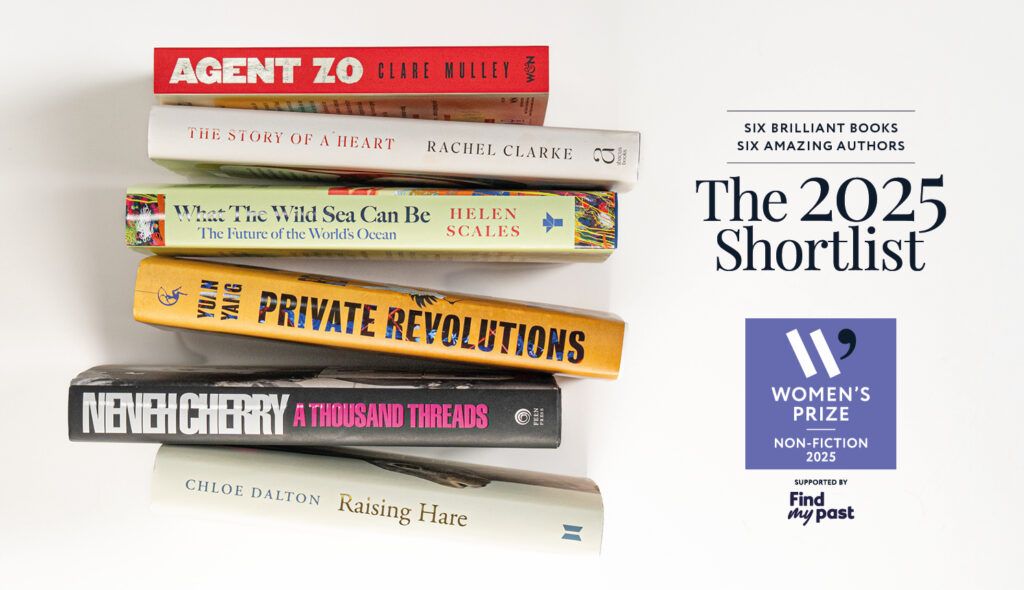
Women’s Prize for Non-Fiction Shortlist 2025

Now in it’s second year running, the Women’s Prize for Non-Fiction Shortlist has been announced. If you want a reminder, here are the 16 books that were on the longlist.

The six titles chosen range from history, science and nature, to current affairs and memoir, united by the power of hope and the necessity of resistance to initiate change.

Judge’s Comment

It’s an absolute pleasure to announce six books on our 2025 shortlist from across genres, that are united by an unforgettable voice, rigour, and unique insight. Included in our list are narratives that honour the natural world and its bond with humanity, meticulously researched stories of women challenging power, and books that illuminate complex subjects with authority, nuance and originality. These books will stay with you long after they have been read, for their outstanding prose, craftsmanship, and what they reveal about the human condition and our world. It was such a joy to embrace such an eclectic mix of narratives by such insightful women writers – we are thrilled and immensely proud of our final shortlist.

Kavita Puri, Chair of Judges

The Shortlist

Here are the six books chosen with a description, a short commentary by one of the judges and a link to a sample read or audio, if you’re interested to read/listen to a little of each title. Listening to the judges describe each book made them all sound really interesting to me.

I think I’m most interested by Agent Zo (after reading Madame Fourcade’s Secret War by Lynne Olson last year) and Private Revolutions because of its insight to another culture and those lives and stories that are so unlike our own. What do you think? Do any of these sound interesting to you?

Let me me know in the comments below.

Womens Prize for NonFiction Shortlist 2025

A Thousand Threads by Neneh Cherry (read a sample) (listen to audio)

Top of the Pops, December 1988. The world sat up as a young woman made her debut: gold bra, gold bomber jacket, and proudly, gloriously, seven months pregnant. This was no ordinary artist. This was Neneh Cherry.

But navigating fame and family wasn’t always simple. In this beautiful and deeply personal memoir, Cherry remembers the collaborations, the highs and lows, the friendships and loves, and the addictions and traumas that have shaped her as a woman and an artist. At the heart of it, always, is family: the extraordinary three generations of artists and musicians that are her inheritance and her legacy.

Musician. Songwriter. Collaborator. Activist. Mother. Daughter. Lover. Friend. Icon. This is her story.

A Thousand Threads by Neneh Cherry is the story of a remarkable life and the many threads that made it. Its about belonging, family, how we find our place in society, as well as music of course. The writing is exceptional and effortless. It’s a complex portrayal full of warmth, honesty and integrity and of how Neneh came to be who she is today.

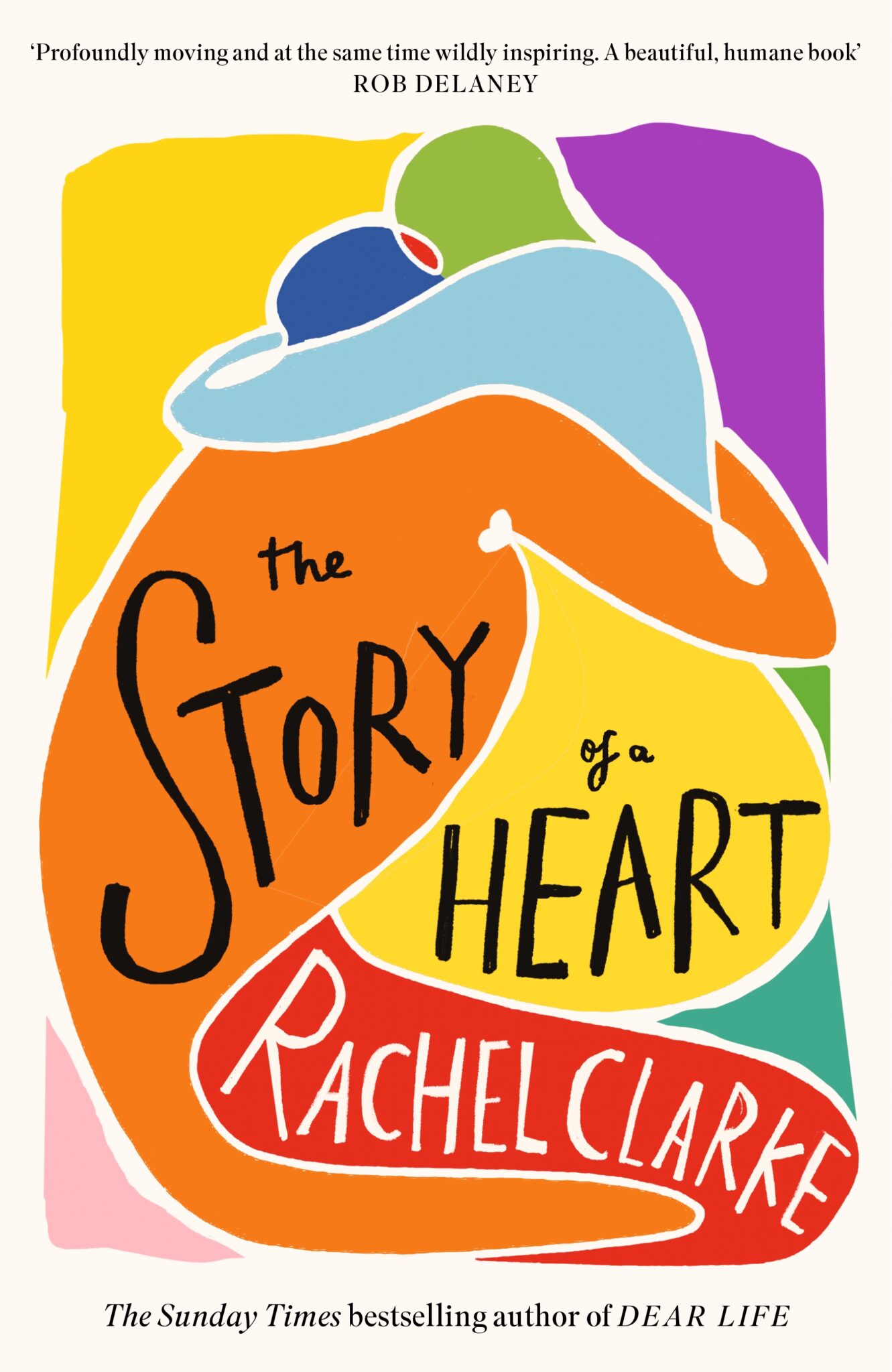
The Story of a Heart by Rachel Clarke (read a sample) (listen to audio)

The first of our organs to form, the last to die, the heart is both a simple pump and the symbol of all that makes us human: as long as it continues to beat, we hope.

One summer day, nine-year-old Keira suffered catastrophic injuries in a car accident. Though her brain and the rest of her body began to shut down, her heart continued to beat. In an act of extraordinary generosity, Keira’s parents and siblings agreed that she would have wanted to be an organ donor. Meanwhile nine-year-old Max had been hospitalised for nearly a year with a virus that was causing his young heart to fail. When Max’s parents received the call they had been hoping for, they knew it came at a terrible cost to another family.

This is the unforgettable story of how one family’s grief transformed into a lifesaving gift. With tremendous compassion and clarity, Dr Rachel Clarke relates the urgent journey of Keira’s heart and explores the history of the remarkable medical innovations that made it possible, stretching back over a century and involving the knowledge and dedication not just of surgeons but of countless physicians, immunologists, nurses and scientists.

The Story of a Heart is a testament to compassion for the dying, the many ways we honour our loved ones, and the tenacity of love.

The Story of a Heart by Rachel Clark is the tale of a boy, a girl and the heart they share. I like how the book combines the author’s expertise and the emotional resonance of the subject to bring together an extraordinary story. It moves effortlessly between disciplines and is meticulously researched and superbly written. I will find it impossible to forget.

Raising Hare by Chloe Dalton (read a sample) (listen to audio)

Imagine you could hold a baby hare and bottle-feed it. Imagine that it lived under your roof and lolloped around your bedroom at night, drumming on the duvet cover when it wanted your attention. Imagine that, over two years later, it still ran in from the fields when you called it and snoozed in your house for hours on end. This happened to me.

When lockdown led busy professional Chloe to leave the city and return to the countryside of her childhood, she never expected to find herself custodian of a newly born hare. Yet when she finds the creature, endangered, alone and no bigger than her palm, she is compelled to give it a chance at survival.

Raising Hare chronicles their journey together and the challenges of caring for the leveret and preparing for its return to the wild. We witness an extraordinary relationship between human and animal, rekindling our sense of awe towards nature and wildlife. This improbable bond of trust serves to remind us that the most remarkable experiences, inspiring the most hope, often arise when we least expect them.

Raising Hare by Chloe Dalton is a beautiful meditation on the interactions between the human and the more than human that takes you under its spell. I really like how the book opens up questions of wildness, how do we let the wild into our lives, what can we do in our spaces to cultivate wild living? This is a captivating book that really stayed with me.

Agent Zo: The Untold Story of Courageous WW2 Resistance Fighter Elżbieta Zawacka by Clare Mulley (read a sample) (listen to audio)

This is the incredible story of Elzbieta Zawacka, the WW2 resistance fighter known as ‘Zo’. The only woman to reach London from Warsaw during the Second World War as an emissary of the Polish Home Army command, Zo undertook two missions in the capital before secret SOE training in the British countryside. As the only female member of the Polish elite Special Forces – the SOE-affiliated ‘Silent Unseen’ – Zo became the only woman to parachute from Britain to Nazi German-occupied Poland. There, whilst being hunted by the Gestapo who arrested her entire family, she took a leading role in the Warsaw Uprising and the liberation of Poland.

After the war she was demobbed as one of the most highly decorated women in Polish history. Yet the Soviet-backed post-war Communist regime not only imprisoned her, but also ensured that her remarkable story remained hidden for over forty years. Now, through new archival research and exclusive interviews with people who knew and fought alongside Zo, Clare Mulley brings this forgotten heroine back to life, and also transforms how we see the history of women’s agency in the Second World War.

Agent Zo: The Untold Story of Courageous WW2 Resistance Fighter Elżbieta Zawacka by Clare Mulley is a masterfully written biography that brings Elżbieta’s extraordinary story to life in exceptional detail. Phenomenally well researched, it’s a window into World War 2 stories that aren’t often heard, told through the life of an inspiring and powerful protagonist. I loved how the book follows Elżbieta right into the twenty-first century, showing the complexity of post-war politics. This is a history that still resonates today.

What the Wild Sea Can Be: The Future of the World’s Ocean by Helen Scales (read a sample) (listen to audio)

No matter where we live, ‘we are all ocean people,’ Helen Scales observes in her bracing yet hopeful exploration of the future of the ocean. Beginning with its fascinating deep history, Scales links past to present to show how prehistoric ocean ecology holds lessons for the ocean of today.

In elegant, evocative prose, she takes us into the realms of animals that epitomize current increasingly challenging conditions, from emperor penguins to sharks and orcas. Yet despite these threats, many hopeful signs remain, in the form of highly protected reserves, the regeneration of seagrass meadows and giant kelp forests and efforts to protect coral reefs.

Offering innovative ideas for protecting coastlines and cleaning the toxic seas, Scales insists we need more ethical and sustainable fisheries and must prevent the other existential threat of deep-sea mining. Inspiring us all to maintain a sense of awe and wonder at the majesty beneath the waves, she urges us to fight for the better future that still exists for the ocean.

A heartfelt exploration of the deep sea from coral to whales to emperor penguins to kelp, the writing is urgent and spellbinding and gripping, showing how humans have accelerated climate change and how we can fight for a better future. I absolutely loved spending time with the marine biologist Helen Scales down in the brutal and beautiful depths of the ocean.

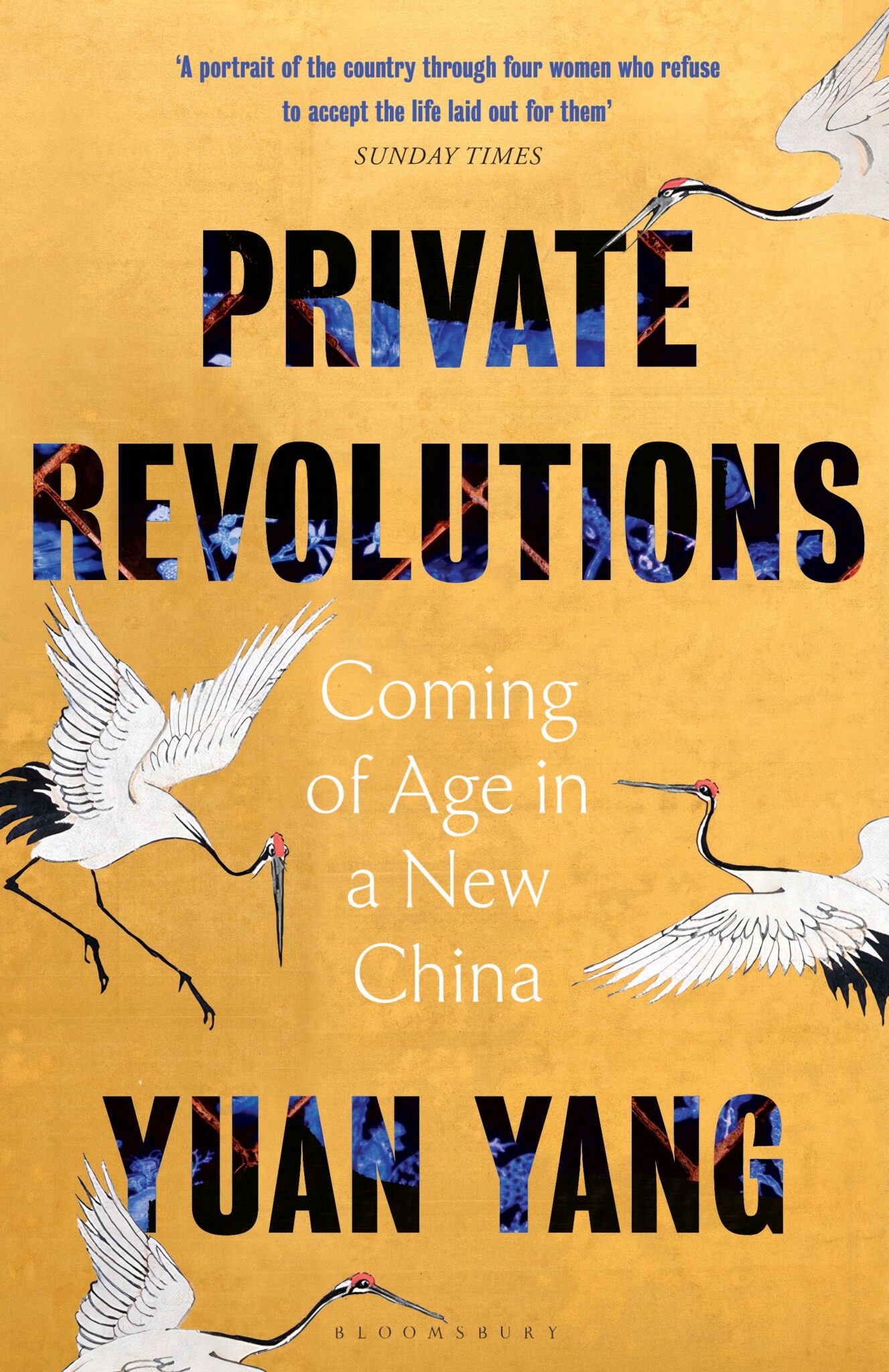
Private Revolutions: Coming of Age in a New China by Yuan Yang (read a sample) (listen to audio)

Yuan Yang, the first Chinese-born British MP, tells the stories of four Chinese women striving for a better future in an unequal society.

From June, who dreams of going to university rather than raising pigs, to Sam, forced into hiding as her activist peers are lifted from the streets, this is a singularly immersive portrait of a rapidly changing nation – and of the courage of those caught in the swell.

Private Revolutions: Coming of Age in a New China by Yuan Yang traces a moment of transition in China through the lives of four women who were growing up in the years after Tiananmen Square.These coming-of-age stories are ones you rarely hear of; individuals who want different lives from their parents who are battling the system.It’s eye-opening, beautifully written and carefully researched.

The Winner

The winner of the Women’s Prize for Non-Fiction will be announced on 12 June 2025, the same day as the winner for the Women’s Prize for Fiction, whose longlist you can view here. That shortlist will be announced on 2 April.

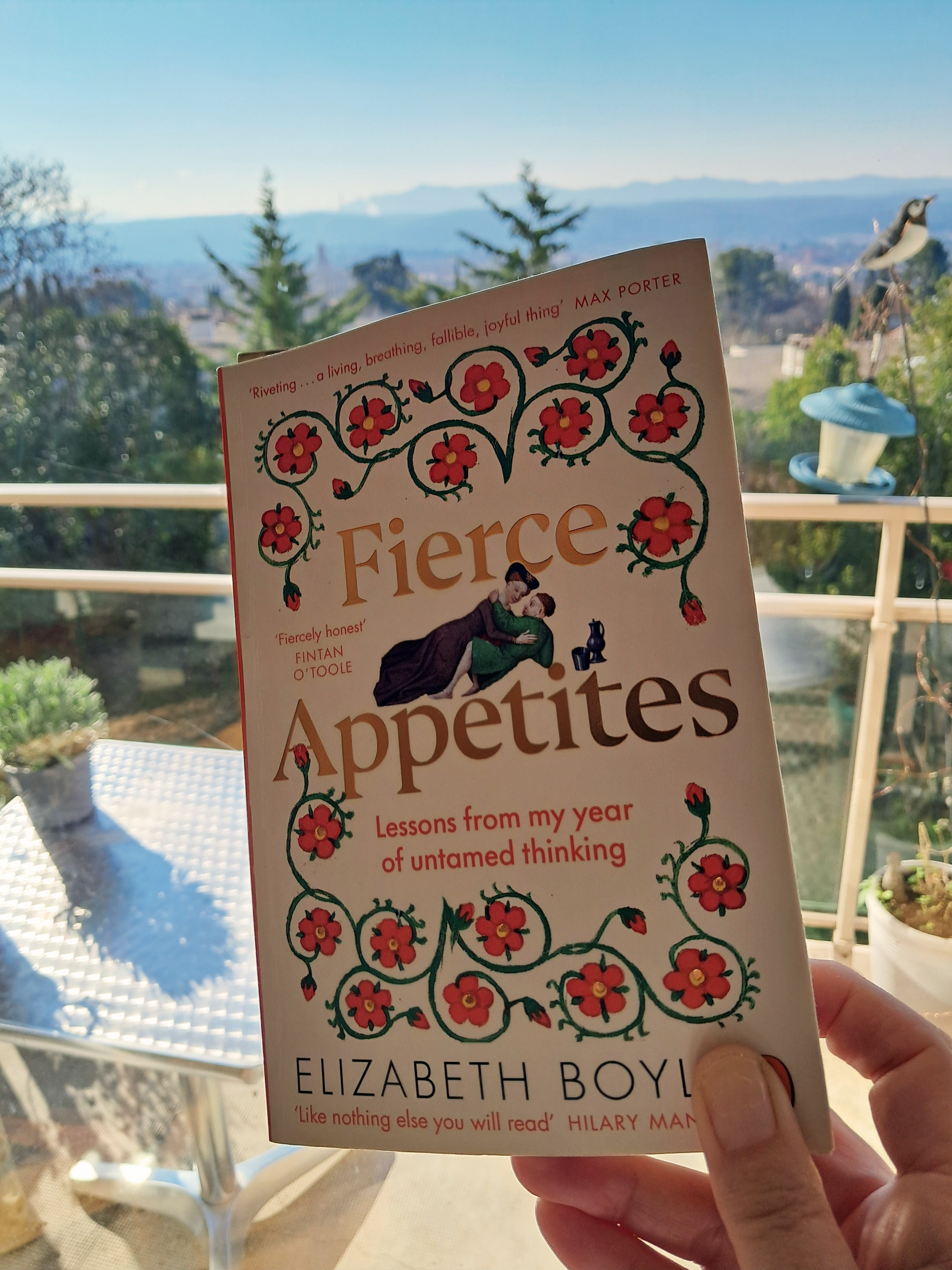
Fierce Appetites by Elizabeth Boyle

Fierce Appetites is my next read for Reading Ireland Month 2025, a nonfiction title I came across in 2022 when it was shortlisted for the Irish Book Awards Non Fiction Book of The Year. It didn’t win the award, that went to the excellent book I reviewed here, journalist Sally Hayden’s My Fourth Time We Drowned.

Lessons From My Year of Untamed Thinking

Fierce Appetites Elizabeth Boyle Medieval Irish literature The Táin Bó Cúailnge

Fierce Appetites is a hybrid memoir, written over the year following the death of the author’s father, which gives her cause to reflect on their relationship, her childhood, her role as a parent/mother, her academic profession and some of the decisions she has made over the years, both the well thought out and the impulsive, those she takes some pride in and others she regrets.

The bonds between different members of a family are explored and pondered and found in the ancient texts.

The world has always been full of stepmothers, foster-mothers, fathers who do the ‘mothering’, aunts and cousins and grandparents who take on primary caring responsibilities, adoptive mothers, institutions that rear children (for better or worse), and innumerable kinds of almost-mothers, surrogate mothers, ‘they-were-like-a-mother-to-me’s. I was reared by a stepmother who mothered me as best she could, even when I sometimes believed she was like the mythic wicked stepmother from a fairy tale, and treated her accordingly.

Writings of the Past

Alongside the memoir aspect, written in 12 chapters, months of the years, her reflections lead into a potted introduction to medieval literature, each chapter finding some connection between the personal narrative and something of the medieval history/literature texts that she is reminded of. In fact each chapter is an essay, but I read it more as an interconnected text.

There is a popular misconception that people in the Middle Ages didn’t grieve as much or as deeply as we do today. Perhaps because of the extremely high rates of infant mortality, and images in modern culture of the Middle Ages as a time of endemic warfare, people tend to think that societies became numbed to death. But the medieval literature of grief disproves that claim. People suffered from the loss of their loved ones then just as much as we do now.

Most of this was unfamiliar to me, as it would be to most people unless you had studied it in university, but that was what initially piqued my interest in the book and I found it fascinating to read about all these references and the translations of those texts and how the author demonstrates how they have something relevant to say today if you care to sit with them and interpret/reflect on their meaning or find a connection, which Elizabeth Boyle does so brilliantly.

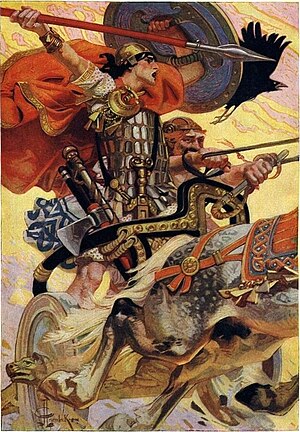
The things we fight for, and the reasons we fight for them, can be so elusive, so futile, and yet so deeply felt. Every year, I try to explain the emotional complexities of The Táin: From the Irish Epic Táin Bó Cúailnge to a new generation of students: Fer Diad and Cú Chulainn, fighting on opposite sides of a conflict and yet deeply bound by love for each other; Fergus’s divided loyalties; Medb’s myopic willingness to sacrifice her daughter for the sake of a bull.

They tell us through their stories and poems, how people lived, loved, coped and the scale of their imagination, and we reflect on how much things have or haven’t changed. Boyle not only shares her losses, she shares her excesses, yet this is not a transformational memoir, it is raw and unashamedly wicked, just like some of the characters in those ancient texts.

At the mortuary, we had been handed a NHS leaflet on dealing with grief. One of its sensible pieces of advice is not to make any major life changes in the first year of losing someone close to you. In medieval literature, characters are not given self-help pamphlets. When they suffer grief, they destroy mountains, raze kingdoms, tear their hair out and scorch the earth. I just sat numbly at the kitchen table, drinking gin and sending unwise WhatsApp messages to ex-lovers.

History Repeats

The book was written in 2020, which is also interesting because it was a year that gave many the opportunity to pursue projects like this, and also because of the political climate that gets occasionally referenced.

While Boyle lives in Ireland, she often travels to the UK to see her daughter and abroad to speak on her subject of expertise.

One of the main objections to travel in the Middle Ages was that it led to sin.

When she mentions the political situation, she does so from the point of view of a historian, and these points made from five years ago are interesting to reconsider today.

History is full of incremental improvements and revolutionary convulsions – often these are followed by reactionary backlashes in which rights are revoked, inequalities re-established.

There are so many interesting insights and observations, challenges and meandering trains of thought, I highlighted so many and could easily have spent many more hours looking up the references.

Highly Recommended, if you are curious about medieval literature and balancing family, career and personal interests.

Author, Elizabeth Boyle

Elizabeth Boyle was born in Dublin, grew up in Suffolk and returned to live in Dublin in 2013. She is a medieval historian specialising in the intellectual, literary and religious culture of Ireland and Britain. A former Leverhulme Early Career Fellow at the University of Cambridge, she now works in the Department of Early Irish at Maynooth University, where she was Head of Department for five years until 2020. 

Fierce Appetites is her debut collection of personal essays and was shortlisted for the Irish Book Awards Non Fiction Book of the Year 2022.

Reading Ireland Month 2025 Best Irish literature

The Woman’s Prize for Nonfiction longlist 2025

Today the Women’s Prize for Nonfiction longlist 2025 was announced.

16 books ranging in matter, style and genre, from agenda-setting reportage on contemporary issues alongside revisionist histories and myth-busting biographies; to memoirs of self-determination and intimate narratives that shine a light on ordinary people combine with real-life criminal cases, notorious and forgotten, whilst others defy genre-classification, weaving multiple disciplines into a compelling narrative work.

The authors nominated are from a range of professional areas and expertise, including a music icon, human rights lawyer, political adviser, marine biologist, NHS palliative care doctor and Pulitzer Prize winner.

What the Judges Said

What unites these diverse titles, that boast so many different disciplines and genres, is the accomplishment of the writing, the originality of the storytelling and the incisiveness of the research. Here are books that provoke debate and discussion, that offer insight into new experiences and perspectives, and that bring overlooked stories back to life and recognition. Amongst this stellar list, there are also reads that expertly steer us through the most pressing issues of our time, show the resilience of the human spirit, alongside others that elucidate the dangers of unchecked power, the consequence of oppression and the need for action and defiance.

Kavita Puri, Chair of Judges

The Longlist of 16 titles

Click on any title to read the longer description of the book on the Women’s Prize website.

Autocracy, Inc.: The Dictators Who Want to Run the World  (Political Science) by Anne Applebaum (Poland/US) – explains the world we live in today and how liberal democracy is currently under threat.

Embers of the Hands: Hidden Histories of the Viking Age (History) by Eleanor Barraclough (UK) – described as an accessible gateway into this period of time, it has great storytelling, it is told with extreme authority and very readable.

The Eagle and the Hart: The Tragedy of Richard II and Henry IV (History) by Helen Castor (UK) – this book is a timely study of political power focused on Kings Richard II and Henry IV who are vividly brought to life in astonishing detail. Not just a personal history but a glimpse into different music and performance.

A Thousand Threads (Memoir) by Neneh Cherry – (Sweden/Sierra Leone) – a unique portrait of a life lifved fully creatively.

The Story of a Heart (Medical Memoir) by Rachel Clarke (UK) – it tells how one family, in the midst of their grief gives the heart of their child so that another human being can survive. It is written with such compassion, it is storytelling at its best.

Raising Hare by Chloe Dalton (UK) – a charming and beguiling book that captures the unusual relationship between the author and the leveret (baby hare) that she rescues.

Ootlin (Memoir) by Jenni Fagan (UK) – moving, enlightening and at times harrowing, a read about growing up in a broke, UK care system, a memoir written like poetry.

Why Fish Don’t Exist: A Story of Loss, Love and the Hidden Order of Life (biography/memoir/science adventure) by Lulu Miller (US) – a book that defies category, combining a personal voyage of discovery with a taxonomy of fish.

Agent Zo: The Untold Story of Fearless WW2 Resistance Fighter Elżbieta Zawacka  (biography/history/WWII) by Clare Mulley (UK) – this is a masterclass of biographical writing, a gripping read, well-researched, about a woman we should know about.

By the Fire We Carry: The Generations-Long Fight for Justice on Native Land (History/True Crime/Social Justice) by Rebecca Nagle (US) – an eye-opening read, the book delves deep into a court case that reveals the forced removal of native Americans onto treaty lands in the nations earliest years.

Wild Thing: A Life of Paul Gauguin (Biography/Art History) by Sue Prideaux ( UK/Norway) – this deep dives into a phenomenal and artistic career, the pages come alive with colour and magic, with incredible storytelling.

What the Wild Sea Can Be: The Future of the World’s Ocean (science/climate/environment) by Helen Scales (UK) – a widely researched, deeply resonant account of our threatened oceans, which strikes a helpful balance between hope and pragmatism.

The Peepshow: The Murders at 10 Rillington Place (true crime/history) by Kate Summerscale (UK) – this is how history should be written, it is evocative, carefully researched and hard to put down.

Sister in Law: Fighting for Justice in a System Designed by Men (social justice/true crime) by Harriet Wistrich (UK) – this is both a harrowing and hopeful account of of Wistrich’s battles to fight injustices against women in the legal system.

Tracker (collective memoir/biography/oral history) by Alexis Wright (Australia) – explores new ways to write biography, challenging the expectations of form, whilst giving a unique glimpse into the life of someone from the stolen generation in Australia.

Private Revolutions: Coming of Age in a New China (history/biography/feminism) by Yuan Yang (China/UK) – a powerful and intimate portrait of life in modern China told through the stories of four young women.

Have You Read Any of These?

Let us know in the comments if you have any of these titles or if there are any that you are particularly looking forward to reading.

I haven’t read any, but I enjoyed Kate Summerscales’s The Suspicions of Mr Whicher, another true crime tale and Mrs Robinson’s Disgrace, so I’m sure her book will be an interesting read.

I like the sound of Private Revolutions, something new, to be delving into the modern lives of young women in today’s China and I can’t help but be interested in Agent Zo, the story of another woman in the resistance, after reading the excellent Madame Fourcade’s Secret War in 2024.

What do you think?

Unearthing (2023) by Kyo Maclear

A Story of Tangled Love and Family Secrets

“But what is the point of writing if not to unearth things… Annie Ernaux

I chose to read Unearthing because it was the overall favourite read of 2023 of Shagafta who I follow on Substack and because it ties in to a theme I have been researching, exploring separation, kinship and the discovery of one’s identity.

Of Changing Seasons and Evolving Stories

Unearthing is a memoir of twenty four sekki (節気) or “small seasons” that offers a different way of thinking about the ever changing ground of our personal stories.

Three months after Kyo Maclear’s father dies, looking to know him at a deeper level and curious about his mother’s side of the family, she takes a DNA test.

When my father died and I was his grieving and wondering daughter, I thought of a word. The word, yugen, or what the Japanese call a state of “dim” or “deep” mystery, evokes the unsettled feeling I had at various points growing up as an only child. Our family was a tiny unit with strange ways. My parents acted like criminals on the lam – loading up moving vans, changing house every few years. I was four years old when we left England, shedding backstory and friends overnight. What made a family behave this way, like people drawn to erasure? Why were we always leaving like this, unceremoniously? I did not know. Growing up, I assumed that everyone was shaped and suffused by what they could not perceive clearly, the invisible and voiceless things imparted atmospherically within families.
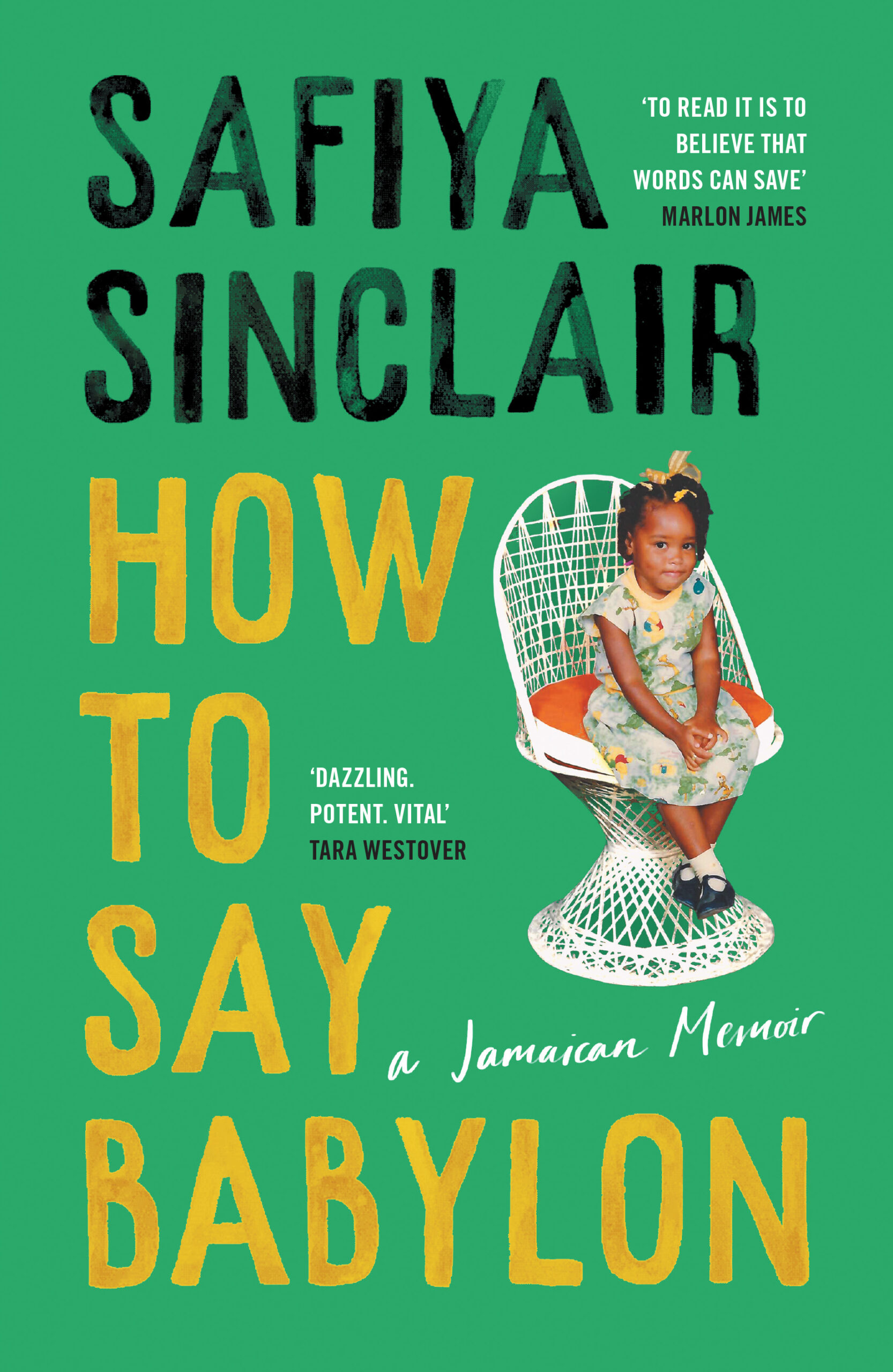
Ask Your Father

Shocked, when she receives the results she learns that she is not biologically related to her father and that her mother refuses to speak on the subject.

She repeated it three times. Talk to your Dad. As if his death had been a hoax; her voice no longer blurry but brisk with fear.

Though her mother does not wish to talk about it, her daughter perseveres. She will weather this storm, waiting for it to calm, listening between the lines of conversation, picking up on the cues.

When one person leaves, the old order collapses. That’s why we were speaking to each other carefully. We were a shapeshifting family, in the midst of recomposing ourselves. What is grief, if not the act of persisting and reconstituting oneself? What is its difficulty, if not the pressure to appear, once more, fully formed?

Solving the Mystery of Your Life

Photo K. Kaboompics Pexels.com

Becoming a detective in her own life, Kyo assembles the story of her lineage, tied to the seasons and the making of a garden.

Digging was my way out. An impulse born of stubbornness and bred in me by a culture that loves stories of people discovering the truth of their paternity; that champions the idea that concealment is destructive and truth is freeing.

The way the Kyo Maclear takes her time unveiling the truth of her story, the various paths she follows, the thoroughness of her pursuit to know, makes this a thrilling read.

There is something about the long, slow seasons and the process of tending the soil, not trying to rush the end result that resonates in her writing, yet never slows the narrative.

Her observations of her mother, the nuanced noticing, are so well depicted, you can feel the resolution of the mystery getting warmer and warmer, as she regains her mother’s trust and nurtures her into revealing more.

Something

It was all being pulled from some shadowy room. The details she remembered. The broken chain of events. What she spoke arrived in fragments. But there was something else, a hitch and hesitance, that made me alert.

I did not yet understand the need to hold on to an invented story, even a falsified past, at all costs. I did not recognize her dissembling. Usually impervious, I thought she seemed out of sorts. Maybe a little distraught.

She does not want to tell me something, I thought.

Along the way larger questions arise: What exactly is kinship? What does it mean to be family? What gets planted and nurtured? What gets buried and forgotten? Can tending a garden heal anything?

I thought this memoir was brilliant, I highlighted so many thoughtful and thought provoking passages. I admired the way the revelations came slowly and the characters of her family were explored, her search for herself made her realise how little she knew of her own parents. They too, were a mystery to unravel and motivations to explore, before even embarking on the second exploration, the unknown aspect that her DNA revealed.

It also celebrates those that helped, guided and accepted her along the way, new relationships and a deeper understanding of aspects of the self, while never losing her essence.

Highly Recommended.

Kyo Maclear, Author

Kyo Maclear was born in London, England, and moved to Toronto at the age of four. She holds a doctorate from York University in Environmental Humanities.

Her most recent book, the hybrid memoir, Birds Art Life, was published in seven territories and became a Canadian #1 bestseller. It was a finalist for the Hilary Weston Writers’ Trust Prize for Nonfiction and winner of the Trillium Book Award.

Unearthing was an instant bestseller in Canada and winner of the Governor General’s Literary Award for Nonfiction. Her short fiction, essays, and art criticism have been published in Orion MagazineAsia Art PacificLitHubBrickThe MillionsThe GuardianLion’s Roar, The Globe and Mail (Toronto) and elsewhere. She has been a national arts reviewer for Canadian Art and a monthly arts columnist for Toronto Life. She is also a children’s author, editor, and teacher.

She lives in Tkaronto/Toronto, on the traditional territories of the Mississaugas of the New Credit, the Haudenosaunee, Métis, and the Huron-Wendat.

Girl in the Tunnel: My Story of Love and Loss as a Survivor of the Magdalene Laundries by Maureen Sullivan (2023)

This excellent memoir for me, was the anti-dote to the shortcomings I had with Claire Keegan’s Small Things Like These.

My Story of Love and Loss as a Survivor of the Magdalene Laundries

Keegan’s novel does everything except go inside the establishment to find out who is in there, why and how they are being treated. Instead it focuses on one man who is portrayed as kindly and empathetic. That man will make a righteous action, whereas the author commits the sin of omission, maintaining a societal silence that continues to bind, in neglecting to shift the narrative gaze towards anything related to those unjustly incarcerated inside. Like standing to one side at the scene of a car accident, choosing to gaze at the sheep in the fields opposite.

Girl in the Tunnel is a memoir of childhood. Of a girl from a large blended family, who is removed from abuse and sent to one of Ireland’s notorious Magdalene laundries. Maureen Sullivan’s second paragraph of her Author’s Note in the front of the book speaks volumes.

It might surprise you, or it might not, to know that there are people still pushing me to stay silent. There are people who want this book kept from your hands. People who say to me in the street, ‘Would you not get over it?’ People who tell me to shut up about it – they defend men and they defend the Catholic Church.
But this is my story to tell and this is how I remember it.

Maureen was not even a teenager when she was taken from her school, from her family, from her loving Granny, without being told where she was going, only that she was to attend a new school and would have to live there. None of her questions were ever answered. She would be deposited at the Magdalene laundry in New Ross, County Wexford run by the Order of the Good Shepherd nuns. Stripped of her possessions including the new pencil case her mother bought her as she was leaving, she was thrown into forced labour, washing clothes, pressing linens and scrubbing floors, forbidden an education or contact with any of the children who attended the school there.

I changed most of the names in this book – my abuser, relatives, locals and the nuns – because I’m not out to hurt or for revenge. I wrote this book because I was silenced as a child when I was the victim of abuse and I was silenced by society when I left the laundry. I want people to know what happened. This is my history, but it’s also the history of this country.

Someone recently said to me that a great opening line of a book can foreshadow the entire story. When I go back and read the first line of Maureen’s memoir, I find so many of the reasons for what happened to her, there in that line.

I never knew my father, John L. Sullivan, but there was a photograph of him on the wall in my grandmother’s house.

Maureen’s mother was married, nineteen and pregnant with Maureen when her father died suddenly leaving two young sons and an unborn daughter. They lived with her Granny, her father’s mother, the only person in her life who ever spoke of the father she never knew. But her Granny was poor and her mother quickly married and created a new family with another man, Marty Murphy, who from very early on took out all his frustrations on the dead man’s children.

My brother’s and I were terrified of Marty from day one. He didn’t restrain himself and lost his temper in a second, sometimes for nothing you could place, and he would go for you, even in his boots, and his kicks would hurt for days. He really hated us. Or he hated himself, maybe, for what he couldn’t stop doing to us, but either way living with Marty was like living with the devil himself. We suffered every single day.

Photo T. Miroshnichenko Pexels.com

Maureen describes their lives in incredible and evocative detail. Being so poor and having so little, when she describes the few tender and joyous moments, they stand out in the narrative, as they clearly did in her mind as that child.

The way it is written is absolutely captivating, not because of the misery or injustices, but because of the emotional intelligence exhibited. It is so honest and evocative of the way a child would experience things, except that Maureen has grown up and is able to express the questions and thoughts she had as a child. But she does so, with an understanding of where her country and society is today and how it was then. Nevertheless, there is no excuse for the cruelty and lack of basic human rights she experienced. There is a lot that remains hidden and denied to this day.

It’s hard to imagine the reasons for people behaving as they did, given how fast Ireland has progressed, and it’s hard to imagine how my mother thought things through. I know now she had no choices – women were the property of their husbands. Their bodies belonged to the men they married, their children did too.

When Maureen responds to the kind voice of her favourite teacher at school and opens up to her questions, she believes that she is going to rescued, perhaps even go to live with her Granny. This idea of being with her Granny was so powerful, she told her everything.

So I told on him. I told on Marty. I sat there in that room with a chocolate in my mouth and an open heart and talked about it.

When her mother arrives after being called in by the school and sees Maureen sitting in the hallway, she asks her why she is not in class. And worse.

As she went by me, she turned and said, ‘Oh Maureen, what have you done?’ She knocked on the office door and disappeared through it.
What had I done?

That same day she would be removed and taken to the laundry. She would also be told that she had a new name. They all did.

For years I couldn’t figure out why our names were changed in the Magdalene laundries. What reason had they? A number would have made more sense to me if they wanted us to be nothing and nobody. But a number is a way to trace us, and it would have been unique. It would have been remembered and displayed somewhere. By changing our names they made sure, not that we struggled on the inside, but that on the outside we had no way to identify or find each other. And how could we stand as a witness to what went on there if there was nothing to say we had been there at all? We didn’t exist.

Magdalene laundries rosary factory
Photo Trac Vu on Pexels.com

Maureen describes all the work they do in the laundry by day and then the work they must do at night, in the tin boxes. It is revelatory and will not leave any reader unaffected.

Merely describing the day to day activities and routine of their lives, and who they were not – (at the time she was in New Ross none of the women there were pregnant), is captivating. A 1911 census referred to them as “inmates”, at New Ross they were referred to as penitents.

It means a person who seeks forgiveness for their sins. There were no sinners in New Ross. Just victims, victims of the patriarchy, victims of misogyny.

The tunnel was the long corridor that separated the sleeping area and the children’s school from the laundry. Every so often she would be locked in there. When the men in suits arrived.

Photo by R. Asmussen Pexels.com

Those men in suits were likely state inspectors. They were sent around to all of the Magdalene laundries in Ireland to check on conditions.

People like Maureen were not supposed to be in the laundry being used as child labour, so they were hidden.

Maureen’s story is an important record of the historical treatment of girls and young women in Ireland, and a testament to the proliferation of abuses in households and the historic risk of speaking out.

Sharing their stories can change things. Last year, one of the best books I read was another memoir Poor: Grit, courage, and the life-changing value of self-belief by Katriona O’Sullivan. That book has had and continues to have a significant impact in changing societal attitudes.

Perhaps more tellingly, as Justice for Magdalenes Research’s book notes, there were never any Magdalene laundries for men. There were no corresponding church-run rehabs for the men who abandoned their families, nor for those who put girls and women in those situations that landed them in institutions. RENÉ OSTBERG, National Catholic Reporter

Highly Recommended.

Further Reading

Book: Ireland and the Magdalene Laundries: A Campaign for Justice – the long battle for justice

Essays: A Dublin Magdalene Laundry: Donnybrook and Church-State Power in Ireland

Article: National Catholic Reporter: Book details long battle to get justice for Ireland’s Magdalene survivors by René Ostberg, April 30, 2022

Resources: Justice for Magdalene Research : A Resource for People Affected by and Interested in Ireland’s Magdalene Institutions

Resource: One In Four, Ending the Trauma of Childhood Sexual Abuse – Programs for Adult survivors

Women’s Prize Nonfiction Shortlist 2024

In 2024 The Women’s Prize created a new prize to raise the profile and awareness of women authors writing nonfiction.

They began with a list of 16 titles, from gripping memoirs and polemic narratives, to groundbreaking investigative journalism and revisionist history. It featured seven debut writers, two international bestsellers, two poets and five journalists. You can see the longlist here.

From Sixteen to Six Titles

The longlist has now been whittled down to six books covering a broad range of subjects – from life writing, religion, art and history, to AI, social media and online politics. What links them is an originality of voice and an ability to turn complex ideas and personal trauma into inventive, compelling and immersive prose.

“Our magnificent shortlist is made up of six powerful, impressive books that are characterised by the brilliance and beauty of their writing and which each offer a unique, original perspective. The readers of these books will never see the world – be it through art, history, landscape, politics, religion or technology – the same again.” Suzannah Lipscomb, Chair of Judges

The six titles shortlisted are:

Thunderclap: A Memoir of Art and Life and Sudden Death by Laura Cumming (UK) (Art History & Grief)

‘We see with everything that we are’

On the morning of 12 October 1654, a gunpowder explosion devastated the Dutch city of Delft. The thunderclap was heard over seventy miles away. Among the fatalities was the painter Carel Fabritius, dead at thirty-two, leaving only his haunting masterpiece The Goldfinch and barely a dozen known paintings. The explosion that killed him also buried his reputation, along with answers to the mysteries of his life and career.

What happened to Fabritius before and after this disaster is just one of the discoveries in a book that explores the relationship between art and life, interweaving the lives of Laura Cumming, her Scottish painter father, who also died too young, and the great artists of the Dutch Golden Age.

This is a book about what a picture may come to mean: how it can enter your life and change your thinking in a thunderclap.

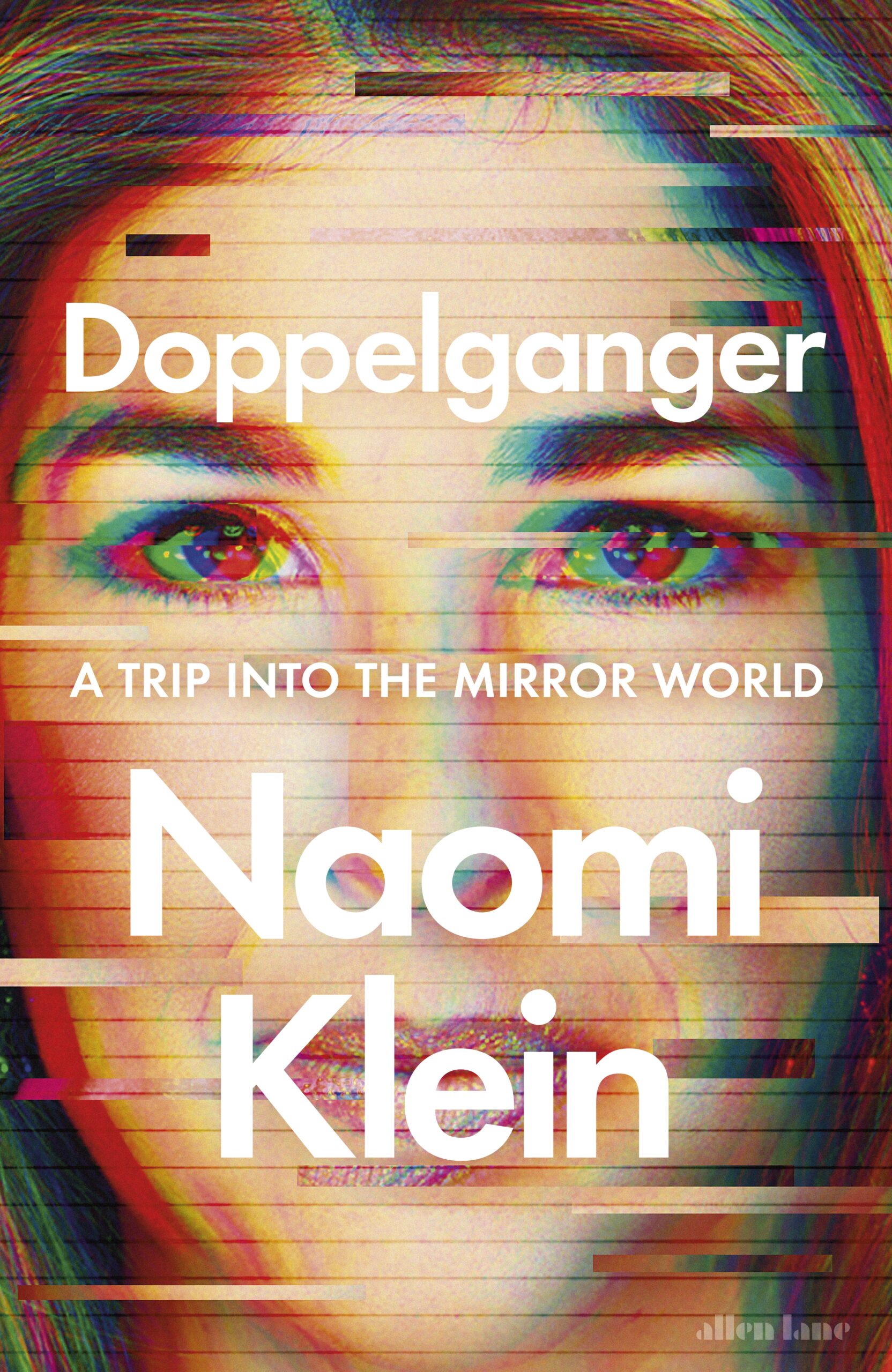
Doppelganger: A Trip Into the Mirror World by Naomi Klein (Canada) (Mistaken Identity)

– When Naomi Klein discovered that a woman who shared her first name, but had radically different, harmful views, was getting chronically mistaken for her, it seemed too ridiculous to take seriously. Then suddenly it wasn’t. She started to find herself grappling with a distorted sense of reality, becoming obsessed with reading the threats on social media, the endlessly scrolling insults from the followers of her doppelganger. Why had her shadowy other gone down such an extreme path? Why was identity – all we have to meet the world – so unstable?

To find out, Klein decided to follow her double into a bizarre, uncanny mirror world: one of conspiracy theories, anti-vaxxers and demagogue hucksters, where soft-focus wellness influencers make common cause with fire-breathing far right propagandists (all in the name of protecting ‘the children’). In doing so, she lifts the lid on our own culture during this surreal moment in history, as we turn ourselves into polished virtual brands, publicly shame our enemies, watch as deep fakes proliferate and whole nations flip from democracy to something far more sinister.

This is a book for our age and for all of us; a deadly serious dark comedy which invites us to view our reflections in the looking glass. It’s for anyone who has lost hours down an internet rabbit hole, who wonders why our politics has become so fatally warped, and who wants a way out of our collective vertigo and back to fighting for what really matters.

A Flat Place by Noreen Masud (Pakistan/UK) (Nature Writing Memoir)

– Noreen Masud has always loved flat landscapes – their stark beauty, their formidable calm, their refusal to cooperate with the human gaze. They reflect her inner world: the ‘flat place’ she carries inside herself, emotional numbness and memory loss as symptoms of childhood trauma. But as much as Britain’s landscapes provide solace for suffering, they are also uneasy places for a Scottish-Pakistani woman, representing both an inheritance and a dispossession.

Pursuing this paradox across the wide open plains that she loves, Noreen weaves her impressions of the natural world with the poetry, folklore and history of the land, and with recollections of her own early life, rendering a startlingly strange, vivid and intimate account of a post-traumatic, post-colonial landscape – a seemingly flat and motionless place which is nevertheless defiantly alive.

All That She Carried: The Journey of Ashley’s Sack, a Black Family Keepsake by Tiya Miles (US) (History)

– In 1850s South Carolina, Rose, an enslaved woman, faced a crisis: the imminent sale of her daughter Ashley. Thinking quickly, she packed a cotton bag with a few items. Soon after, the nine-year-old girl was separated from her mother and sold. Decades later, Ashley’s granddaughter Ruth embroidered this family history on the sack in spare, haunting language.

That, in itself, is a story. But it’s not the whole story. How does one uncover the lives of people who, in their day, were considered property? Harvard historian Tiya Miles carefully traces these women’s faint presence in archival records, and, where archives fall short, she turns to objects, art, and the environment to write a singular history of the experience of slavery, and the uncertain freedom afterward. All That She Carried gives us history as it was lived, a poignant story of resilience and love passed down against steep odds.

Code Dependent: Living in the Shadow of AI by Madhumita Murgia (India/UK) (Technology)

– What does it mean to be human in a world that is rapidly changing thanks to the development of artificial intelligence, of automated decision-making that both draws on and influences our behaviour?

Through the voices of ordinary people in places far removed from Silicon Valley, Code Dependent explores the impact of a set of powerful, flawed, and often exploitative technologies on individuals, communities, and our wider society. Madhumita Murgia, AI Editor at the FT, exposes how AI can strip away our collective and individual sense of agency – and shatter our illusion of free will.

AI is already changing what it means to be human, in ways large and small. In this compelling work, Murgia reveals what could happen if we fail to reclaim our humanity.

How to Say Babylon: A Jamaican Memoir by Safiya Sinclair (Jamaica) (Memoir)

There was more than one way to be lost, more than one way to be saved.

Born in Montego Bay, Jamaica, where luxury hotels line pristine white sand beaches, Safiya Sinclair grew up guarding herself against an ever-present threat. Her father, a volatile reggae musician and strict believer in a militant sect of Rastafari, railed against Babylon, the corrupting influence of the immoral Western world just beyond their gate. To protect the purity of the women in their family he forbade almost everything: nowhere but home and school, no friends but this family and no future but this path.

Her mother did what she could to bring joy to her children with books and poetry. But as Safiya’s imagination reached beyond its restrictive borders, her burgeoning independence brought with it ever greater clashes with her father. Soon she realised that if she was to live at all, she had to find some way to leave home. But how?

In seeking to understand the past of her family, Safiya Sinclair takes readers inside a world that is little understood by those outside it and offers an astonishing personal reckoning. How to Say Babylon is an unforgettable story of a young woman’s determination to live life on her own terms.

The Winner

The winner will be announced on the 13th of June 2024.

Have you read any of these titles? Anything here interest you? Leave a comment below letting us know if you have read or intend to read any of these titles.