An island of approximately 7 million people, it has a successful and supportive literary culture, including four nobel prize winners (George Bernard Shaw, William Butler Yeats, Samuel Beckett, Seamus Heaney) and six Booker Prize winners (Iris Murdoch, John Banville, Roddy Doyle, Anne Enright, Anna Burns, Paul Lynch), plus an honorable mention for William Trevor, who never won, but was shortlisted five times.
Language and Life Intertwined
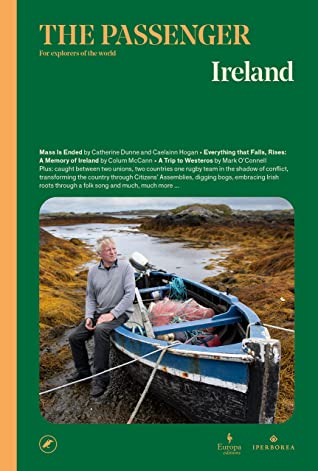
If you’re interested in a contemporary insight into Irish culture, literature and history, I highly recommend The Passenger – Ireland (reviewed here), which features long form essays, investigative journalism, literary reportage and visual narratives. It takes us beyond the familiar stereotypes to portray the country’s shifting culture and identity, public debates, sensibilities of its people, its burning issues, pleasures and pain. It was published by Europa Editions in March 2022.
One of the essays, An Ocean of Wisdom by Manchan Magnan, a man fascinated by the Irish language and its connection to fishing, tells of his travels to three Gaeltachtai (Irish speaking) areas uncovering local words and phrases that expressed aspects of the sea, weather and coastal life. He captured linguistic nuances that described a way of life fast disappearing and shared the complex reasons behind it.
More Ireland Island Literature, The Colony
My first book for reading Ireland 2025 is the excellent novel The Colony by Audrey Magee. This had rave reviews everywhere and I have long been wishing to read it. It did not disappoint, it has many thought provoking themes, yet can be read at quite a pace.
Mr Lloyd, an English man has come to an island, a rock three miles long and half a mile wide to paint the cliffs and have an authentic experience. He is trying to find inspiration and revive his career (and life).
We get to know his type immediately in the sardonic opening pages, which are illustrated on the cover of the copy I read. A man being rowed across the water to the rock where he will spend the summer, wants to recreate an authentic experience he’s seen a picture of somewhere. Reality, nothing like a still-life.
He looked down again, at his backpack, his easel, his chest of paints bound already to the journey across the sea in a handmade boat. He dropped his right leg, then his left, but clung to the ladder. self-portrait I: falling self-portrait II: drowning self-portrait III: disappearing self-portrait IV: under the water self-portrait V:the disappeared Let go, Mr Lloyd. I can’t. You’ll be grand.
The people on the island cater to his needs while fifteen-year-old James is curious about painting and drawing. He begins to learn, to practice, to observe what My Lloyd is incapable of seeing. The islanders have asked My Lloyd to respect certain privacy’s, lines he doesn’t take long to cross.
Rival outsiders on a mission
A while later, another man will arrive for the summer, Mr Jean-Pierre Masson, a Frenchman, returning for his fourth summer.
You speak the language Mr Masson? Yes, I study Irish, or Gaelic, as you prefer to call it. I have no preference. Then we’ll go with Irish. Masson drank from his cup. I’m a linguist, Mr Lloyd, and I specialise in languages threatened with extinction. And you’re here to save Gaelic?
The novel observes the effect these two outsiders have on the islanders, the rivalry and antagonism between them and the inability of the islanders to stop the change these two herald.
Lest We Forget
Interspersed between the chapters, single pages in short paragraphs, recount acts of terrorism, the names and details of those who are victims, targeted by different sides of the Irish divide. Thus the novel depicts the external colonising forces and the internal country conflict on the people.
Alexander Gore is a full-time member of the Ulster Defence Regiment standing outside his barracks on Belfast’s Malone Rod just after eleven on Wednesday morning, June 6th. He is twenty-three years of age, Protestant and has been married for four months. His nineteen-year-old wife is pregnant with their first child. A truck drives down the Malone Road towards the barracks. Two IRA men in the truck open fire and kill Alexander Gore.
In addition to the islanders, there is the ghostly presence of the three fishermen who drowned, their absence keeping some endlessly waiting, anchored to that rocky outcrop, as if expecting them still to return.
Three good men lost on an autumn day. My son-in-law, my grandson and my grand-daughter’s husband. Gone. Never to come home. Not even for their own funerals. That was a hard time, JP. But as I say, you get hard times wherever you are. They have a great way of following people. Though it took a long time for the island to recover.
The Painter and the Academic, neocolonialism at work
Both visitors have backstories that reveal more about them and question their motives. They discover they can take more than what they initially came for and neither hesitates to expand their remit, because it serves them, it takes them away from looking at themselves, at their own story.
The islanders see all, some stuck in their ways, others with more freedom to slip in and out of what is expected and others have the desire to rebel or seek opportunity. As the visitors time on the island comes to an end, true colours are revealed, change is challenged by the old order and young James weighs up his options.
I very much enjoyed the reading experience and the delving into the different motivations of all the characters. The dialogue was excellent, the humour biting, the prose sometimes poetic and spaced out on the page, other times fluid like the incoming and outgoing tides, occasionally dense when it delved into the political and linguistic aspects and violent when those extracts are shared.
Highly Recommended!
Have you read The Colony? Are you reading any Irish literature this month? Let me know in the comments below.
Audrey Magee was born in Ireland and lives in Wicklow. She worked for twelve years as a journalist.
Her first novel, The Undertaking, was shortlisted for the Women’s Prize for Fiction, for France’s Festival du Premier Roman and for the Irish Book Awards. It was also nominated for the Dublin Literary Award and the Water Scott Prize for Historical Fiction. The Undertaking has been translated into ten languages and is being adapted for film.
Her second novel, The Colony was longlisted for the Booker Prize 2022 and shortlisted for the Orwell Prize for Political Fiction (2022).
The International Booker Prize 2025 longlist has been announced by this years judging panel, made up of a novelist, a poet, a translator, a critic and a songwriter, all of whom cross boundaries into other art forms. In their various ways, they are steeped in the world of words.
These are the 13 books they have chosen in the first cut, from 154 books submitted – 11 novels and two collections of short stories, translated from 10 original languages representing 15 nationalities and 11 independent publishers:
The Book of Disappearance by Ibtisam Azem (Palestine) translated from (Arabic) by Sinan Antoon
– The shocking premise of Azem’s novel can be summed up in a sentence: what would happen if all the Palestinians in Israel suddenly disappeared?
Alaa is haunted by his grandmother’s memories of being displaced from Jaffa and becoming a refugee in her homeland after the Nakba. Ariel, Alaa’s neighbour and friend, is a liberal Zionist, critical of the military occupation of the West Bank and Gaza, yet faithful to the project of Israel. When he wakes up one morning to find that all Palestinians have suddenly vanished, Ariel begins searching for clues to the secret of their collective disappearance.
That search, and Ariel’s reactions to it, intimately reveal the fissures at the heart of the Palestinian question. Between the stories of Alaa and Ariel are the people of Jaffa and Tel Aviv – café patrons, radio commentators, flower-cutters – against whose ordinary lives these fissures and questions play out.
Spare yet evocative, intensely intelligent in its interplay of perspectives, The Book of Disappearance, critically acclaimed in its original Arabic edition, is an unforgettable glimpse into contemporary Palestine as it grapples with both the memory of loss and the loss of memory.
On the Calculation of Volume I by Solvej Balle (Denmark) translated by Barbara J Haveland
– a woman is trapped in a time loop, waking up each morning to find it’s the 18th of November, again and again.The first book of a planned septology. Five books have been published in Danish so far, with translations underway in over 20 countries.
She no longer expects to wake up to the 19th of November, and she no longer remembers the 17th of November as if it were yesterday. She comes to know the shape of the day like the back of her hand – the grey morning light in her Paris hotel; the moment a blackbird breaks into song; her husband’s surprise at seeing her return home unannounced.
But for everyone around her, this day is lived for the first and only time. They do not remember the other 18th’s of November, and they do not believe her when she tries to explain. As Tara approaches her 365th 18th of November, she can’t shake the feeling that somewhere underneath the surface of this day, there’s a way to escape.
There’s a Monster Behind the Door by Gaëlle Bélem (La Réunion) translated (French) by Karen Fleetwood & Laëtitia Saint-Loubert
– in 1980s La Réunion (an overseas department of France, in the Indian Ocean), a young girl with a zest for life rises up against her jaded, bitter parents.
La Réunion in the ’80s is a place of high unemployment and low expectations, the legacy of postcolonialism. Here, a little girl makes a bid for escape from her sadistic parents’ reign of terror and turns to school for salvation. The name Dessaintes is one to reckon with. A bombastic, violent and increasingly dangerous clan, little do they know that their downfall is being chronicled by one of their own.
Rich in the history of the island’s customs and superstition and driven by a wild, offbeat humour, this picaresque tale manages to satirise the very notion of freedom available in this French territory, and perhaps even the act of writing itself and where it might lead you.
Solenoid by Mircea Cărtărescu (Romania) translated by Sean Cotter
– partly inspired by the author’s years as a teacher in Romania, spiraling into a bizarre account of history, philosophy and mathematics, with flashes of nightmarish body horror. Said to have been written in a single draft, at 627 pages, the longest book on the list.
Grounded in the reality of communist Romania, the novel grapples with frightening health care, the absurdities of the education system and the struggles of family life, while investigating other universes and forking paths.
In a surreal journey like no other, we visit a tuberculosis preventorium, an anti-death protest movement, a society of dream investigators and a minuscule world of dust mites living on a microscope slide. Combining fiction and history with autobiography – the book is partly based on Cărtărescu’s experiences as a teacher – Solenoid searches for escape routes through the alternate dimensions of life and art, as various monstrous realities erupt within the present.
Reservoir Bitches (short stories) by Dahlia de la Cerda (Mexico) translated (Spanish) by Heather Cleary & Julia Sanches
– follows the efforts of 13 memorable Mexican woman, from the daughter of a cartel boss to a victim of transfemicide, to survive against the odds.
In the linked stories of Reservoir Bitches, 13 Mexican women prod the bitch that is Life as they fight, sew, cheat, cry and lie their way through their tangled circumstances. From the all-powerful daughter of a cartel boss to the victim of transfemicide, from a houseful of spinster seamstresses to a socialite who supports her politician husband by faking Indigenous roots, these women spit on their own reduction and invent new ways to survive, telling their stories in bold, unapologetic voices.
At once social critique and black comedy, Reservoir Bitches is a raucous debut from one of Mexico’s most thrilling new writers.
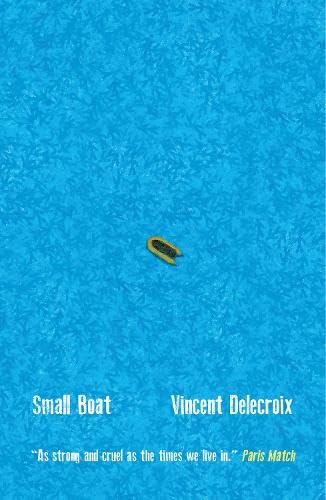
Small Boat by Vincent Delecroix (France) translated by Helen Stevenson
– the fictional account of a group of migrants’ attempt to cross the English Channel in an inflatable dinghy, which results in the deaths of 27 of those on board. Told from the point of view of a French woman who received, but rejected, their desperate calls for help.
Despite receiving numerous calls for help, the French authorities wrongly told the migrants they were in British waters and had to call the British authorities for help. By the time rescue vessels arrived on the scene, all but two of the migrants had died.
The narrator of Delecroix’s fictional account of the events is the woman who took the calls. Accused of failing in her duty, she refuses to be held more responsible than others for this disaster. Why should she be more responsible than the sea, than the war, than the crises behind these tragedies?
A shocking, moral tale of our times, Small Boat reminds us of the power of fiction to illuminate our darkest crimes.
Hunchbackby Saou Ichikawa (Japan) translated by Polly Barton
– an unflinching account of sexual desire and disability about a protagonist born with a congenital muscle disorder who uses an electric wheelchair and a ventilator. Hailed as one of Japan’s most important novels of the 21st century.
Within the limits of her care home, her life is lived online: she studies, she tweets indignantly, she posts outrageous stories on an erotica website. One day, a new male carer reveals he has read it all – the sex, the provocation, the dirt. Her response? An indecent proposal…
Written by the first disabled author to win Japan’s most prestigious literary award and acclaimed instantly as one of the most important Japanese novels of the 21st century, Hunchback is an extraordinary, thrilling glimpse into the desire and darkness of a woman placed at humanity’s edge.
Under the Eye of the Big Bird by Hiromi Kawakami (Japan) translated by Asa Yoneda
– leaps back and forth across thousands of years and finds humankind on the verge of extinction, but still clinging to the impulses that make us human.
In the distant future, humans are on the verge of extinction and have settled in small tribes across the planet under the observation and care of the Mothers. Some children are made in factories, from cells of rabbits and dolphins; some live by getting nutrients from water and light, like plants. The survival of the race depends on the interbreeding of these and other alien beings – but it is far from certain that connection, love, reproduction, and evolution will persist among the inhabitants of this faltering new world.
Unfolding over geological eons, Under the Eye of the Big Bird is at once an astonishing vision of the end of our species as we know it and a meditation on the qualities that, for better and worse, make us human.
Eurotrashby Christian Kracht (Germany) translated by Daniel Bowles
– a Swiss writer named Christian, embarks on a tragicomic road trip with his wealthy, elderly mother in this tragicomic and absurd semi-autobiographical novel.
Realising he and she are the very worst kind of people, a middle-aged man embarks on a dubious road trip through Switzerland with his 80-year-old mother, recently discharged from a mental institution. Traversing the country in a hired cab, they attempt to give away the wealth she has amassed from investing in the arms industry, but a fortune of such immensity is surprisingly hard to squander. Haunted in different ways by the figure of her father, an ardent supporter of Nazism, mother and son can no longer avoid delving into the darkest truths about their past.
Eurotrash is a bitterly funny, vertiginous mirror-cabinet of familial and historical reckoning. The pair’s tragicomic quest is punctuated by the tenderness and spite meted out between two people who cannot escape one another. Intensely personal and unsparingly critical, Eurotrash is a disorientingly brilliant novel by a writer at the pinnacle of his powers.
Perfectionby Vincenzo Latronico (Italy) translated by Sophie Hughes
– an expat couple attempt to live their dream in Berlin, but find themselves beset with the dissatisfaction and ennui of the modern world.
Millennial expat couple Anna and Tom are living the dream in Berlin – in a bright, plant-filled apartment in Neukölln. They are young digital creatives, freelancers without too many constraints. They have a passion for food, progressive politics, sexual experimentation and Berlin’s 24-hour party scene. Their ideal existence is also that of an entire generation, lived out on Instagram, but outside the images they create for themselves, dissatisfaction and ennui burgeon.
Their work as graphic designers becomes repetitive. Friends move back home, have children, grow up. An attempt at political activism during the refugee crisis proves fruitless. And in that picture-perfect life Anna and Tom feel increasingly trapped, yearning for an authenticity and a sense of purpose that seem perennially just out of their grasp.
With the stylistic mastery of Georges Perec and nihilism of Michel Houellebecq, Perfection is beautifully written and brilliantly scathing.
Heart Lamp (short stories) by Banu Mushtaq (Southern India) translated (Kannada) by Deepa Bhasthi
– the author, an activist and lawyer vividly captures the extraordinary everyday lives of Muslim women and girls in southern India, in 12 stories, originally published in Kannada between 1990 and 2023.
Praised for their dry and gentle humour, these portraits of family and community tensions testify to Mushtaq’s years as a journalist and lawyer, in which she tirelessly championed women’s rights and protested all forms of caste and religious oppression.
Written in a style at once witty, vivid, colloquial, moving and excoriating, it’s in her characters – the sparky children, the audacious grandmothers, the buffoonish maulvis and thug brothers, the oft-hapless husbands, and the mothers above all, surviving their feelings at great cost – that Mushtaq emerges as an astonishing writer and observer of human nature, building disconcerting emotional heights out of a rich spoken style. Her opus has garnered both censure from conservative quarters as well India’s most prestigious literary awards; this is a collection sure to be read for years to come.
On a Woman’s Madness by Astrid Roemer (Surinamese-Dutch), translated (Dutch) by Lucy Scott
– a classic of queer literature, as electrifying today as it was when it first appeared in 1982, tells of a courageous Black woman fleeing her abusive husband to embark a new life in the Surinamese capital.
When Noenka’s abusive husband of just nine days refuses her request for divorce, she flees her hometown in Suriname, on South America’s tropical northeastern coast, for the capital city of Paramaribo. Unsettled and unsupported, her life in this new place is illuminated by romance and new freedoms, but also forever haunted by her past and society’s expectations.
Amid tales of plantation-dwelling snakes, rare orchids, and star-crossed lovers, it is also a blistering meditation on the cruelties we inflict on those who disobey. Roemer, the first Surinamese winner of the prestigious Dutch Literature Prize, carves out postcolonial Suriname in barbed, resonant fragments. Who is Noenka? Roemer asks us. ‘I’m Noenka,’ she responds resolutely, ‘which means Never Again.’
A Leopard-Skin Hat by Anne Serre (France), translated by Mark Hutchinson
– captures the love and despair of an intense friendship between the book’s narrator and his best friend from childhood, who suffers from severe psychological disorders.
A series of short scenes paints the portrait of a strong-willed and tormented young woman battling many demons, and of the narrator’s loving and anguished attachment to her. Serre poignantly depicts the bewildering back and forth between hope and despair involved in such a relationship, while playfully calling into question the very form of the novel.
Written in the aftermath of the death of the author’s little sister, A Leopard-Skin Hat is both the celebration of a tragically foreshortened life and a valedictory farewell, written in her signature style.
Newbies, First Timers and a Classic Translated
Many of the books on the list are by authors being translated into English for the first time, which is a great sign for translated fiction, indicating that publishers and reading more widely and looking further than the already known. Not surprising I haven’t read any of these and only heard of one Solenoid, which won the Dublin Literary Award in 2024. It is not one I will be reading, way too long!
I like the sound of Heart Lamp and On a Woman’s Madness, not just for their premise, but for the language and locations they hail from! The Danish novel, The Calculation of Volume 1 sounds intriguing and something of a cult following, you’ve got to bat for someone who went ahead and self-published and is now being translated into over 20 languages.
Anything on the list tempting you? Let me know in the comments below.
The International Booker Shortlist and Winner 2025
The shortlist of six books will be announced on Tuesday, 8 April.
The winning title will be announced at a ceremony at London’s Tate Modern on Tuesday, 20 May.
A meandering story-line, spanning 3 years, the introspective excavating of a young British-Ghanaian man’s soul and the situations he will encounter and confront, as he matures and grows into a version of himself that he likes.
I highlighted SO many passages.
Moments of Bliss, Small Worlds
Small worlds describes the way Stephen has learned to see things. It is his way of identifying and capturing certain moments, especially the loving, the poignant, the fleeting, the good.
A coming-of-age story set mostly in Peckham, London, it follows Stephen as he navigates the period in his life when he is separating from friends and his parents, from all that he knows. Simultaneously, he is moving from letting things happen to him and suffering, towards sitting with what is, reflecting, rejecting, embracing, understanding. A journey the evolves over three years.
Introspective and sensitive, music plays a large role in his mood, his management of his emotions, his friendships and the collective memory of Ghana, a country he is connected to but did not grow up in, a place that separates him from his family as much as it is a part of them all.
The novel is set over three years, written in three parts, like a jazz trio of piano, bass and drummer.
Part One – Two Young People in the Summertime (2010)
The summer after Stephen and all his friends have finished school and they are deciding what comes next. Stephen and his long-known friend Del are both applying to study music. This summer they start to look at each in a different way, to feel something, they are light-footed, beach going, feeling like something good is coming.
When Stephen’s path changes course, he deals with isolation and separation, unable to even find solace in his instrument, the trumpet, or music. His emotions run deep and he withdraws from them.
Part Two – A Brief Intimacy (2011)
Stephen is working with his friend Nam, training to become a chef. The owner Femi has split allegiances, a Ghanaian mother and Nigerian father mean they serve Ghanaian food and play Nigerian music, and they all know about the 1983 Nigerian Presidential executive order, the mandate of Ghana Must Go that affected an estimated 2 million people living in the country.
Rhythm returns to his life and he feels it everywhere. The observations of bits of daily life, poetic, vibrant, rhythmic and upbeat.
Back in Peckham, it’s here too, this rhythm happening everywhere, as I take my time to wander home: in the dash of four boys dressed in black, trying to beat the bus round the curve, soft socks in sliders slapping the ground. The song of a passing car, distant bass finding a home in my ears, the low, slow rumble calling attention the way thunder might ask you to check the sky for rain. The haggling taking place at the butcher’s and the grocer’s, the disbelief that it’s now three plantain for a pound, not four. In the sadness as I pass the spot where Auntie Yaa’s shop used to be, where she would make sure everyone was looked after. In the joyful surprise when I run into Uncle T, his mouth full of gold like its own sunshine. The couple I pass in the park, holding each other close, her head turned away from his, a smile on his face even as he pleads with her, babe, I didn’t mean it. In the distance she holds him, to see if he’ll come closer, because sometimes it’s not enough to say it, you have to show it too. In the conviction I share with many that this stretch, from Rye Lane to Commercial Way, is where our small world begins and ends. There’s rhythm happening, everywhere; all of us like instruments, making our own music.
But expectations, old trauma and shame linger and until they can be addressed, they undermine relationships, cause rupture, rigidity and regret. So much still to recognise, dismantle, overcome and heal. And Stephen explores it all.
I’m slowly taking myself apart, so I might build myself up once more. And as part of this undoing, I want to ask him, why?And then there are those aspects of the outside world, not so far away, that seethe with unresolved anger and hatred, that threaten to close in on them. A raising of public consciousness and a shift in perception.
Stephen takes time off after the turn of events and pays a visit to Ghana. His trip heralds a reckoning.
Still, of late I’ve felt the urge for more. I’ve always had a decent grasp on who I am, or where I might find myself, but I’ve never really known where I’ve come from. This trip has started a shift. There are gaps which my father might fill, with his own story. I want him to tell me who he is, or who he was. I want to know who he was when he was twenty. I want to know what he dreams of, where he finds freedom.
Melody, discord, harmony and triumph – a story through music
As we read, there are songs Stephen chooses to accompany him. Often as I read, I stop to listen and look up the artist, reminding me of the enjoyment I had reading Bernice McFadden’sThe Book of Harlan (reviewed here). It can add so much more to the experience, when music with a cultural influence is present, calibrating the reader’s imagination with the mood of the story.
The way the story comes full circle, when by the end, Stephen’s father accepts his son’s invitation to come with him, to share a meal, to listen to ‘Abrentsie’ by Gyedu-Blay Ambrolley, the book morphed into scenes of a wonderful film that I was simultaneously watching and reading. I wished I weren’t on the last pages, because it felt so good to witness the transmutation of emotion into a new way forward, that was something like the old, but different; accepted, something they will be able to nourish and grow from.
Caleb Azumah Nelson is a British-Ghanaian writer and photographer living in south-east London.
His first novel, Open Water, won the Costa First Novel Award, Debut of the Year at the British Book Awards, and was a number-one Times bestseller. It was shortlisted for the Dylan Thomas Prize, the Sunday Times Young Writer of the Year Award, Waterstones Book of the Year, and longlisted for the Gordon Burn Prize and Desmond Elliott Prize. He was selected as a National Book Foundation ‘5 under 35’ honoree by Brit Bennett.
Small Worlds, his second novel won the Dylan Thomas Prize (2024) (a prize that celebrates exceptional literary talent aged 39 or under), cementing the 30-year-old British-Ghanaian author as a rising star in literary fiction. The judges had this to say:
“Amid a hugely impressive shortlist that showcased a breadth of genres and exciting new voices, we were unanimous in our praise for this viscerally moving, heartfelt novel. There is a musicality to Caleb Azumah Nelson’s writing, in a book equally designed to be read quietly and listened aloud. Images and ideas recur to beautiful effect, lending the symphonic nature of Small Worlds an anthemic quality, where the reader feels swept away by deeply realised characters as they traverse between Ghana and South London, trying to find some semblance of a home. Emotionally challenging yet exceptionally healing, Small Worlds feels like a balm: honest as it is about the riches and the immense difficulties of living away from your culture.”
I haven’t read much Japanese literature so when I saw Mieko Kawakami’s novel Breasts and Eggs at a booksale I picked it up, recalling it had caused much interest among readers at the time of its translation into English. It caused a significant reaction in Japan when originally published, a bestseller spurned by traditionalists.
It was a New York Times Notable Book of the Year and one of TIME’s Best 10 Books of 2020 and established the author as something of a feminist icon, exploring the inner lives of women through the ages.
A Woman’s Lot
Breasts and Eggs is set in two time periods eight years apart and centres around 30 year old woman Natsuko, a writer living in Tokyo and those two themes, Breasts and Eggs; or Appearance and Mothering.
I’m still in the same apartment with the slanted, peeling walls and the same overbearing afternoon sun, surviving off the same minimum wage job, working full time for not a whole lot more than 100,000 yen a month, and still writing and writing, with no idea whether it’s ever going to get me anywhere. My life was like a dusty shelf in an old book store, where every volume was exactly where it had been for ages, the only discernable change being that my body has aged another ten years.
Silence Speaks Volumes
In the first part of the book her sister Makiko comes to visit with her 12 year old daughter Midoriko, who has stopped speaking to her mother. She writes her responses, we read her perspective through a few journal entries, which has become the place where she has conversations she is missing elsewhere.
Unspoken Job Requirements
Makiko is an ageing hostess whose occupation demands certain expectations of looks and she has become obsessed with breast augmentation surgery to the neglect of all else. It has been the topic of conversation with her sister for the last three months. Natsuko realises she doesn’t want her advice, just a sounding board. Their mother died when the girls were teenagers from breast cancer.
…after all these years, at thirty-nine, she still works at a bar five nights a week, living pretty much the same life as our mum. Another single mother, working herself to death.
While her sister goes for a consultation Natsuko spends time with her niece and ponders women’s bodies, pains, expectations, grievances, self-judgments, societal judgments, obsessions. During the visit, the three women confront their issues, desires and frustrations, building to resolution.
When Time Is Running Out and All is On the Table
In Part Two, eight years have passed and now it is Natsuko who arrives at an age of obsession, only her focus is on eggs, or the desire to have a child and the dilemma of not being in a relationship when the age of becoming eggless is in sight.
A Making Children Medical Procedure
She begins to research alternative ways of conceiving, finding ways to learn more and to meet people she might be able to discuss her desire. In doing so she discovers there is more to the subject than just a woman’s desire, there are moral considerations she hasn’t considered, that might affect her decision.
“Neither the medical community, not the parents who undergo this type of treatment, have adequately considered how the children – and this is about the children – will eventually see themselves,” Aizawa said, in summary. “As for donors, most of them haven’t given much thought to these issues, either. For them, it’s something akin to giving blood. Legal reform has a long, long way to go, but recent attention to the child’s right to know had led more and more hospitals to suspend treatment entirely…”
The Child Who Grows Up Not Knowing Shares As an Adult
Her interest leads her to new connections that increase the depth of her understanding and options available to her. By the time she makes her decision, she will be significantly more informed and understand the situation from multiple perspectives.
I thought about what I had said, but couldn’t explain what I meant. What made me want to know this person? What did I think it meant to have me as a mother? Who, or what, exactly, was I expecting? I knew I wasn’t making any sense, but I was doing all I could to string the words together and convey that meeting this person, whoever they may wind up being, was absolutely crucial to me.
It is an interesting, thought-provoking look at the lives of women trying to find fulfillment while navigating the challenges of single motherhood, health, womanhood, reproductive rights and familial relationships in non-nuclear families.
“I try to write from the child’s perspective – how they see the world,” says Kawakami. “Coming to the realisation that you’re alive is such a shock. One day, we’re thrown into life with no warning. And at some point, every one of us will die. It’s very hard to comprehend.”
Author, Mieko Kawakami
Born in Osaka, Japan Kawakami made her literary debut as a poet in 2006 and in 2007 published her first novella My Ego, My Teeth, And the World. Heaven, translated by Sam Bett and David Boyd, was shortlisted for the 2022 International Booker Prize.
Known for their poetic qualities, their insights into the female body and their preoccupation with ethics and the modern society, her books have been translated into over twenty languages. Her most recent novel that has been translated into English is All the Lovers in the Night.
Kawakami’s literary awards include the Akutagawa Prize, the Tanizaki Prize, and the Murasaki Shikibu Prize. She lives in Tokyo, Japan.
It has been 10 years since The Spinning Heart (my review), and in this small town in rural Ireland, County Tipperary, not a lot seems to have changed, or maybe it has. Previously it was economic collapse, lack of employment, toxic masculinity and how the actions of one man affected a community.
In Donal Ryan’sheart, be at peace we meet many of the cast from the past, another 21 voices some years further on, with a new set of troubles affecting the community.
Some are faring rather well financially, but not everyone is happy about the activities they are involved in and their loved ones who might be affected. Suspicion, mistrust, grief, regret prevail and all manner of connections have been formed and remade.
Births, Deaths and Estrangements
One of the most intriguing characters that I could have happily read a novel on and one of the few characters that does stand out was Lily, described as a witch by training and a whore by inclination, estranged from her son, then made up over her granddaughter Millicent who turns up at her door one day.
Having the gift of insight, she can see her granddaughter will find little solace with the boy she’s seeing. When she asks her granny for a spell to bind him always to her for fear of losing him, she knows there will be trouble ahead.
I explained to her again that the spells weren’t real magic, that the power of them was already inside the people who wanted them, the spells just allowed them the use of it, that the magic was in their faith that the magic would work and she screamed at me then, That’s what I want, Granny, that’s what I want, to have faith that he’ll always love me, that he’ll never leave me. I can’t bear the thought of losing him, of some other bitch touching him. He’s MINE, Granny, he’s mine.
A Chorus of Voices
The way the novel is written with short chapters from multiple character viewpoints, we can only discern what happens next to some of those we meet along the way, as we imagine the implications of all that is revealed. It is a novel that might be better understood after multiple readings, as it takes some work to connect and reconnect the different voices. It’s a kind of fly-on-the-wall polyphonic chorus.
In a way, the novel reading experience is like being in the presence of a community but not really knowing them, observing for a while reveals some connections but not others.
Some men can lie with such ease that they quickly begin to believe themselves, and so in a way their lies become truth and their sin is expunged.
I have a few of Donal Ryan’s novels and I do recall having a little difficulty with his Booker longlisted debut mentioned above, and then absolutely loving All We Shall Know (reviewed here), then not being impressed at all by Strange Flowers. So a bit hit and miss for me, but one I’ll keep reading as he seems to have his finger on the pulse of contemporary community issues.
I enjoyed heart, be at peace and its themes, but it is a novel that is unlikely to stay with me due to the vast cast of character voices that too often became indiscernable for me.
Author, Donal Ryan
Donal Ryan is an award winning author from Nenagh, County Tipperary where this latest novel is set. His work has been published in over twenty languages to critical acclaim.
heart, be at peace won Novel of the Year and the Overall Grand Prize of Book of the Year at the An Irish Book Awards in 2024, described by the Irish Times an “absorbing, emphatic story of a community in trouble”
Maria Dickenson, Chair of the Judging Panel, said:
“Heart, Be at Peace was the unanimous choice of the judges from among the fantastic array of titles shortlisted this year. Donal Ryan’s writing has earned him a place among the greatest names in Irish literature and this lyrical novel speaks to the very heart of modern Irish society. Weaving twenty one voices together, Ryan portrays the passions, frailties and sorrows of one Irish town with compassion and clarity. Heart, Be at Peace is a masterful achievement and we congratulate Donal warmly on winning this award.”
Fresh Dirt From the Grave is another Charco Press title, this time from Bolivia. It is a collection of six stories that unsettle the reader, navigating paths outside the norm, revealing aspects of characters, of circumstances and inclinations that pierce like a wound, while evoking expressions of love, justice and hope.
Described as where contemporary horrors and ancient terrors meet, these short stories by Bolivian author Giovanna Rivero are not my usual fare, however I chose to read it for #WITMonth and discover what the boundaries of Gothic really means.
There are six stories and the first few were tales of macabre revenge that reminded me of Yoko Ogawa’s excellent collection Revenge.
Overall an interesting, dark collection that brings out a quiet consideration in each of the protagonists as they grapple with their challenging situations and must either make a decision or give in to one made by an other.
blessed are the meek
A young woman is violated. Everyone around her seems to be denying the gravity of it. The family moves away, until the opportunity arrives to bury their grief, literally…
It shouldn’t have been her family that had to leave. But they were the ones who left.
A man survives 100 days at sea, the young apprentice companion with him does not.
Now he is meeting the mother of that young boy. She feeds him tortillas, asking him to repeat again what happened out there.
Atoning for his loss, he will atone for hers.
Tell me more, she says, pushing the plate of tortillas towards him as if she were paying him to tell the tale with that warm, fragrant dough.
it looks human when it rains
A Japanese widow in Bolivia teaches origami to women prisoners in a jail. She is curious about these so-called murderers, until she teaches them how to make a snake – and observes in the eyes of one woman, something terrifying.
She was surprised to find that she was not appalled by their crimes, their mistakes, their unbridled passions, the gross misjudgements that had led them there. Who was she to ponder their failings.
Her own past comes back to haunt her, a young woman lodger helps her in the garden, things that were buried resurface in her mind, in her life. A sense of injustice, a prickle of rage. The year of the snake had been the worst, the part she had tried to bury. Origami was a path, a light, because it never resorted to twists or curves to fix a form.
No one who had been so fortunate as to find themselves among the group of émigrés that embarked on the voyage to Brazil and Peru in 1957 before settling in Bolivia, in the eastern rainforest of Yapacani, had returned to Japan carrying the wilting flowers of the fiasco on their backs.
Socorro
“Those boy’s aren’t your husbands” says a deranged Aunt in the opening lines.
I didn’t know in that moment, what shook me more: the mad woman’s barbed remark or the cackle she unleashed as she spoke those words, which felt like a reprimand.
A woman, her husband and twin boys visit her mother and Aunt. She is an expert in mental health but being around her Aunt unsettles her in ways that her professional self finds hard to deal with. The moments of lucidity among the madness, reach in to her own hidden aspect and threaten to overwhelm her.
Donkey Skin
Two children orphaned overnight are sent to live with their French Aunt in Winnipeg, Canada. When they get to 17 years old, they plan an escape, and their world gets turned upside down again.
The only blood uncle we had left in Santa Cruz, Papa’s brother, said that children were always better off being raised near a female voice, and so without saying a word, he signed all the migration papers needed for Dani and me to leave Bolivia and his life for good. Being Bolivian is a mental illness, he told us in that good-humoured way of his, which made us forgive him for everything, even for handing us over like pets to Aunt Anita, who, when the time came to appear at the juvenile court, despite all those breath mints she slotted between her teeth, still couldn’t disguise the stench of whiskey.
Intelligent but struggling financially, students sign up for medical trials that promise to cover their debts, but at what price.
The medicinal smell that rises from Joaquin’s body like an aura has taken over our bedroom. It’ll be gone in a few days, they told him.
They ignore the corpse of a dead animal outside their window, leaving it longer than they should to address. Like the strange mark on his back that shouldn’t be there, have they left that too late as well, will he pay the ultimate price?
Pay him double or I’m leaving, I say.
Author, Giovanna Rivero
Giovanna Rivero was born in the city of Montero, Santa Cruz, Bolivia in 1972 and is a writer of short stories and novels.
She holds a doctorate in Hispano-American literature. In 2004, she studied on the Iowa Writing Program and in 2006 was awarded a Fulbright scholarship, enabling her to take a masters in Latin American literature at the University of Florida. In 2014, she received her doctorate. In 2011, she was selected by the Guadalajara Book Fair as one of the 25 upcoming stars of Latin American literature.
She is the author of the books of short stories as well as children’s books. She has published four novels: Las camaleonas (2001), Tukzon (2008), Helena 2022 (2011) and 98 segundos sin sombra (2014). Her literary work, which moves between horror literature and science fiction, is regarded as a major contribution to the renewal of the Gothic and fantastic genres in Latin America.
I read Claudia Piñeiro’s latest novel for #WITMonth. It is from the Charco Bundle 2024, a subscription where they send you nine titles, the best of contemporary Latin American fiction they are publishing throughout the year. It’s one of my absolute favourite things, an annual literary gift to me, surprise books that I haven’t chosen myself. And they are so good!
Also, it’s August. Women in Translation month. So I’m prioritising books in that category, another of my favourite things. World travel and storytelling through literature.
Claudia Piñeiro is fast becoming one of my favourite Latin American authors. This is her third book I have read. Elena Knows was Shortlisted for the International Booker Prize 2022; it was intriguing, but the next one, A Little Luck was even better. More engaging emotionally, full of suspense, an immersive read.
Review
Time of the Flies has it all. The more I consider it, I find it is literary brilliance.
A past crime, a slow burning mystery, a complicated mother daughter relationship, a developing friendship between women who are used to not trusting anyone, unwanted motherhood, a dilemma that might be an opportunity or a trap. A sociological commentary on the lives, loves, wrath and resentments of women and thought provoking references to other works of literature, from classic mythology to contemporary feminism.
Female Friendships, Fumigations and Investigations
Inés, the mother of Laura ( a role she is trying now to deny) has been released from prison 15 years after killing her husband’s lover. She has set up a pest fumigation and private investigation business with fellow friend and ex inmate Manca.
FFF (flies, females and fumigations) a business run by women for women. Non-toxic pest control.
The two friends and business partners work separately but they consult each other when a case requires it, although Inés knows more about autopsies, fingerprints, and criminal profiles than Manca does about cockroaches.
A new client makes Inés an offer that might be an opportunity or a trap, she considers whether to pursue the opportunity and Manca, her friend and business partner investigates the client and becomes suspicious when she finds there is a connection between this woman and someone Inés knows.
She curses her fate and whatever recommendation or flyer that landed her at Susan Bonar’s house in the first place to be confronted by a part of her past that she does not deny but prefers to forget.
The Collective Voice, And Medea
Then there is a collective voice of feminist disharmony that enters the narrative every few chapters to opinionate on what just happened, if there is an issue that women might have an opinion on.
It’s never a consensus, it illustrates the difficulty of any collective voice that doesn’t resonate together, and demonstrates the aspects being considered on a topic. Other voices are quoted that challenge:
“There are many kinds of feminism in the world, many different political stances within the social movement and different critiques of our culture.” Marta Lamas Acoso. I don’t agree. Me neither. I do.
Each of these chapters begins with an epigram from Medea by Euripides (a Greek tragedy/play from 431 BC), that sets the tone for the theme that will be discussed. Like our protagonist Inés, Medea too, took vengeance against her philandering husband Jason, by murdering his new wife and worse, her own two sons.
This quote below precedes a discussion on the issue of one woman killing another woman, whether that is femicide. Equally interesting quotes from Rebecca Solnit and Toni Morrison are also referred to in the text.
Chorus:
‘Unhappy woman,
Feu, feu [Ah, ah] unhappy for your miseries.
Where will you turn? To what host for shelter?’
Once you realise what the collective voice is doing, it provides a pause in the narrative and allows other voices to engage with the reader. In case you missed that a significant issue had just appeared in the text you’re going to be confronted with it here. It doesn’t distract from the story (well, yes it does initially), however the chapters are only a couple of pages long. It adds depth to the narrative making this more of a literary novel, it pushes the reader to consider the issues, which some readers may not appreciate, but it is likely they will remember.
What About Those Flies
Inés sees a fly. In her eye. It comes and goes, it is a part of her. The doctor has checked it out and explained it away, but for her, it is significant. She understands the brain’s suppression mechanism that will make it disappear.
If she had to define it, she’d say it’s the feeling that there’s something fluttering around her head that she can’t catch, that there’s something right in front of her eyes that she can’t see. But it’s definitely not a fly.
Flies ascend in the narrative, they have a champion in Inés and we will even come across numerous literary references to them, some that hold them more in esteem than others. They are also that niggle that she feels, something that wants attention that she is not seeing.
Even Manca made a contribution to my literary education. IN her efforts to encourage me to write, she gave me a novel (I don’t read novels Manca); Like Flies from Afar, by one Kike Ferrari. Manca doesn’t read either, not even the instructions on how to use her appliances, but she went to the bookstore and asked for ‘one about flies’, and the bookseller said: ‘The fly as a methaphor, right? I’ll bring you one of the best crime novels of the year.’
(…) (…) The novel has its central mystery that is slowly unravelled, while it explores the complexity of the mother daughter relationship, the effect of abandonment and absence and the promise that a new generation can bring to old wounds. (…) (…) (…)
So, Those Ellipsis’s
Though it was a slow read for me, it really got me in its grip and there was so much to consider beyond the mystery, like the collective voice, which makes the reader consider issues from different points of view.
Then there are the ellipsis’s. The pause, things left out, the reader’s imagination engaged, what are they? Pause for thought indeed. Usually present when there is dialogue, they make the reader consider why they are there. Are parts of the dialogue unimportant? Are they an invitation to imagine what was said in between? Whatever the intention of the author, the effect is to awaken the reader to their presence and make you think about the why.
By the time I finished this, I absolutely loved it, for everything. For its central storytelling, its reflective invitation, the literary references, the collective voice and its ability to keep me entertained and interested and intrigued. A quirky, enticing, novel that praises flies and finds all these intriguing literary references to them. It is a cornucopia of elements amidst great storytelling.
Actualidad Literatura: The Time of the Flies <<El tiempo de las moscas>> reviewed by Juan Ortiz
Author, Claudia Piñeiro
Born in Burzaco, Buenos Aires in 1960, Claudia Piñeiro is a best-selling author, known internationally for her crime novels.
She has won numerous national and international prizes, including the Pepe Carvalho Prize, the LiBeraturpreis for Elena Knows and the prestigious Sor Juana Inés de la Cruz Prize for Las grietas de Jara (A Crack in the Wall). Many of her novels have been adapted for the big screen, including Elena Knows (Netflix).
Piñeiro is the third most translated Argentinean author after Jorge Luis Borges and Julio Cortázar. She’s also a playwright and scriptwriter (including popular Netflix series The Kingdom). Her novel Elena Knows was shortlisted for the 2022 International Booker Prize.
January is a slim novella, considered to be a revelatory, pioneering masterpiece about a short period in the life of a 16-year-old Argentine girl living in a rural area, whose life trajectory is radically changed in a day. Now, for the first time, translated from Spanish into English.
Breaking the Silence, Exploring the Consequence
With echoes of Edith Wharton’sSummer , this radical feminist novel broke the silence around abortion to reshape the way women’s bodies and rights were perceived in 20th-century Argentina.
A radical feminist text, January was the first Argentine novel to represent rape from the survivor’s perspective and to explore the life-threatening risks pregnancy posed, in a society where abortion was both outlawed and taboo.
They talk about the harvest but they don’t know that by then there’ll be no turning back, Nefer thinks. Everyone here and everyone else will know by then, and they won’t be able to stop talking about it. Her eyes cloud with worry; she slowly lowers her head and herds a small flock of crumbs across the worn oilcloth.
A 16 year old girl in a predicament, not of her own making discovers she is pregnant, but not by the young man she dreams of. She is the daughter of peasant farm workers and has limited options, but will pursue them all the same, in order to try and avoid the inevitable, forced outcome that awaits her once her secret becomes known.
She is just of an age where she begins to notice and feel something for someone around her, but her virtue is stolen by another. Instead of imagining love, she imagines death, and wonders if this might be when her will finally see her.
She no longer cares about anything besides this thing that consumes her days and nights, growing inside her like a dark mushroom, and she wonders if it shows in her eyes as they remain fixed on her worn-out espadrilles, two little gray boats on the tile floor, or in her hands crossed in her lap, or in her hair burned by the perm.
The novella follows her panic, her attempt to find resolution without support, her symptoms, her desperation to seek absolution, her confession, her realisation of the terrible consequence, the life sentence, the marriage plot.
This thought floods her with a tide of anxiety as she remembers her secret. A sense of impotence rises to her throat, as if time has become something solid and she can almost hear its unstoppable current conspiring with her own body, which has betrayed her, tossing her to the mercy of the days.
She lives in rural Argentina, a conservative catholic environment, an unruly place for a young girl.
What will happen to her in this place that reveres the cloth, that judges and shames girls regardless of their innocence?
The New Yorker: The Abortion Plot: A newly translated novel by the Argentinean writer Sara Gallardo provides a missing link in the history of abortion literature, by S. C. Cornell
it is perhaps her abiding concern for the ‘Other’ – marginalized, solitary characters, women, animals, monsters, even elements of nature – that gives Gallardo’s literature its most powerful political dimension…
Author, Sara Gallardo
Sara Gallardo was born in Argentina in 1931 to an aristocratic Catholic family. She became a journalist in 1950 and was twenty-seven years old when her powerful debut January was published in 1958.
She grew up in Buenos Aires in a family of men so famous there are streets named after them all over Argentina (all key figures in the constitution of the Argentine nation): her grandfather Ángel Gallardo was a civil engineer and politician; her great-grandfather Miguel Cané was a journalist, senator, and diplomat; and her great-great-grandfather Bartolomé Mitre was president of Argentina from 1862-1868.
By the time she died in 1988 she had published more than a dozen books, including collections of short stories and essays. Gallardo has been compared to Lucia Berlin or Shirley Jackson.
January is considered required reading across Argentina.
Starnone writes a work of fiction about the man his father was (we can assume it is autobiographical since his father’s name was Federico and he painted an artwork titled ‘The Drinkers’ which is in part featured on the cover). It is an attempt to tell the story of a man he spent his childhood in fear of and his adulthood trying not to be like.
Reconstructing a Life, Walking the Streets
In the novel, the narrator is the eldest son Mimi, who lives in Rome but has returned to Naples some time after the death of his father and is reconstructing memories, by walking the streets where they lived, visiting certain places to evoke other memories, like the hospital where his mother was when her husband could no longer deny her illness; the church where he made his first communion; the council offices, where he hopes to find some of his father’s paintings, including ‘The Drinkers’. Every location existed in service to his father’s existence and memories.
He was certain that both great and small events had a common thread: the mystery of his destiny. And he constantly tried to prove it to himself, his relatives, his friends, and to us children by weaving a vibrant pattern in which the only events that were true were the ones vitally connected to him. Consequently, all the names of cities and buildings and roads, all of geography, served merely to create a map of his needs, and this was how they were to be remembered.
Though the novel is about the man, the title refers to a street where they lived for a while and the use of street names rather than diary entries or even artworks, inscribes the neighbourhood into history, creating a different kind of legacy, one that will last longer than any man or work of art. A diary would be too intimate, a street map a kind of canvas.
Portrait of a Narcissist Father Via His Eldest Son
It is also about his own boyhood, however the character of the father overshadows the son, his wife, his wife’s family, in fact anyone in proximity to him. This is because he considers himself superior. According to himself. He makes it one of his main purposes in life to remind everyone around him of that fact. He can not be taken down or made to think he is anything less than how he perceives himself.
It’s true, he was lazy. He was arrogant. He was blowhard. He was all those things, and the first to admit it. He felt he had the right to be lazy, arrogant, and a blowhard – to anyone who busted his balls. He was born to be a painter, not a railroader.
The son walks familiar streets of Naples, streets he never strolled with his father – but knew intimately from his adolescence – as a way to navigate anecdotes about the way his father lived his life, the things he said (mostly insults about everyone else), the things he did (working for the railroad as a clerk, beating his wife, painting artworks) and his opinions about various matters. He walks and remembers. He walks and imagines anew.
Federi is passionate about art and believes he possesses great artistic talent, but the art world is full of shit people who nominate their friends for prizes, then their friends create prizes and nominate those friends, therefore keeping him out of these circles. He blames everyone for his lack of success that he continues to strive for. Beginning with his own father who refused to educate him, in fact his parents abandoned him at a young age and sent him to live with his grandmother.
He becomes a working class man, who sees the most beautiful woman who he takes for a wife, raises four sons and a daughter and spends his free time at home painting or pursuing opportunities to advance his art.
A Literary Triptych
The book is in three sections. The first section ‘The Peacock’ introduces the character and is the part of the book where you might abandon, because it isn’t yet clear why it might benefit any reader to be subject to this psychological demonstration of one of the most extreme versions of the societal system of domination at work. The patriarchy thrives under this system, as Riane Eisler showed in her work The Chalice and the Blade: Our History, Our Future and Nurturing Our Humanity: How Domination and Partnership Shape Our Brains, Lives, and Future and the portrait this novel creates shows how someone who lives according to this conditioning impacts those in his proximity. Cycles of trauma, neglect and narcissism eroding relationships in pursuit of validation, not love.
A Masterpiece Created at All Cost
Much of the source material is inspired by journals his father kept, which trigger memories and dates of events he participated in. The artworks themselves are a kind of journal, a record of themes in his life. Part Two ‘The Boy Pouring Water’ is the most compelling and significant section, it documents the process of creating the largest, most significant art work he would do. ‘The Drinkers’ required the son to pose as the boy pouring water, other members of the family sat for him and the local fruit and vegetable seller.
The anxiety the young son would feel when he realises that there is a problem in the image, between the character holding out the glass and where he is pouring from will cause contortions of magnitude in him, to try and avoid the disaster he sees coming. His father never sees it and we think for a moment that the drama has been averted, alas no – disaster arrives at the height of his short-lived pleasure.
So why do we want to read a novel about an egomaniac? And one that was originally published just over 20 years ago.
It is both a psychological example of the effect a man with no empathy and worse, a need to belittle, insult and induce fear in people, can have on a family. It is set against a backdrop of 1960’s Naples, post WWII, a place where allegiances often changed, both in the halls of power and on the street, depending on how ‘enemies or allies’ treated the people.
It is the historical context and the journey of a working class man trying to break into the establishment of artists, who despite his unruly personality, perseveres and participates as much as is possible for someone who won’t allow himself to be intimidated. Everything is a struggle, he will fight to the end. Art ‘wasn’t fun, it was war’.
Fortunately as the years passed, I developed a strategy for blocking out his words. Using this technique, which I perfected as a teenager, the angrier he grew when telling the stories of his life and the reasons for his actions, the thicker the fog grew in my head, allowing me to think about other things. It helped establish a distance between us. It curbed the desire to kill him.
Fatherhood in Another Era, Produce, Punish, Protect
In the final part ‘The Dancer’ the humiliation of the son comes full circle as he enters adolescence and tries to impress a girl Nunzia and his father gives him terrible advice about what to do with women. As if things couldn’t get any worse, we learn that young girl has been abused by an Uncle and the son lies waiting for his fathers verdict.
The book ends with a scene that makes the reader pause to reflect on how reliable the narrator is, like the father, he too has the ability to exaggerate, to curate anecdotes and perspective.
Once I got into this, which didn’t take very long, I found it both shocking and compelling to read, the dedication by a son to honoring the passage of a man who made his boyhood hell. Thus he provides a kind of validation beyond the grave, but doesn’t hold back from focusing on the many flaws alongside the talent. It is the many layers that make it something of a classic, the psychological profile and repeat patterns of the man, the making of an artist and the impact on family and the social history of a city.
Highly Recommended.
‘The House on Via Gemito is a marvellous novel of Naples and its environs during and after the Second World War. The prism for this exploration is the relationship between the narrator and his railway worker / artist father – an impossible man, filled with cowardice and boastfulness. His son’s attempt to understand and forgive him is compelling; we are held through the minutiae of each argument and explosion, each hope and almost-success.’ International Booker Judges
Domenico Starnone is an Italian writer, screenwriter and journalist. He was born in Naples and lives in Rome
He is the author of 13 works of fiction, including First Execution, Ties, a New York Times Editors Pick and Notable Book of the Year, and a Sunday Times and Kirkus Reviews Best Book of the Year, Trick, a Finalist for the 2018 National Book Award and the 2019 PEN Translation Prize, and Trust.
TheHouse on Via Gemito won Italy’s most prestigious literary prize, the Strega in 2001 and was longlisted for the International Booker Prize 2024.
The shortlist for the International Booker Prize 2024 has been decided. It features novels from six countries, (Argentina, Brazil, Germany, Netherlands, South Korea and Sweden), translated from Dutch, German, Korean, Portuguese, Spanish and Swedish.
Chair of judges Eleanor Wachtel said:
‘Our shortlist, while implicitly optimistic, engages with current realities of racism and oppression, global violence and ecological disaster’
Prize Administrator Fiammetta Rocco added:
‘The books cast a forensic eye on divided families and divided societies, revisiting pasts both recent and distant to help make sense of the present’
Read Around the World, Other Perspectives
The International Booker Prize introduces readers to the best novels and short story collections from around the globe that have been translated into English and published in the UK and/or Ireland. Recognising the vital work of translators, the £50,000 prize money is divided equally: £25,000 for the author and £25,000 for the translator(s).
The shortlist was chosen from a longlist of 13 titles announced in March, which was selected from 149 books published in the UK and/or Ireland between May 1, 2023 and April 30, 2024, submitted to the prize by publishers.
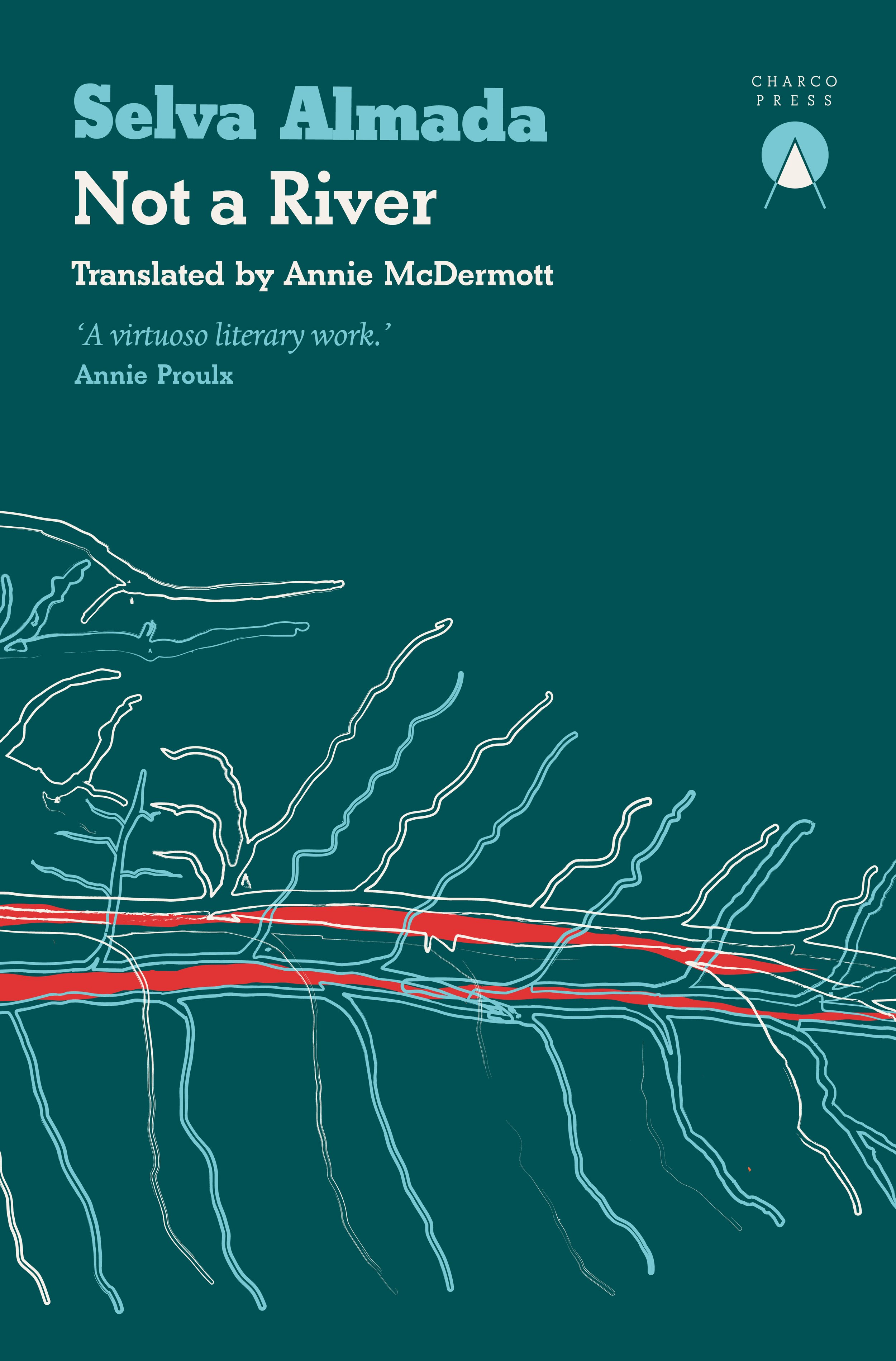
I have read one from the shortlist and it was excellent; Selva Almada’sNot a River (link to my review), the second of her novella’s I have read. Not having read any others on this list, I can’t really comment, but I would love to know what you thought if you have read any of these, or intend to. Brief summaries below.
Selva Almada’s novel is the finest expression yet of her compelling style and singular vision of rural Argentina.
Three men go out fishing, returning to a favourite spot on the river despite their memories of a terrible accident there years earlier. As a long, sultry day passes, they drink and cook and talk and dance, and try to overcome the ghosts of their past. But they are outsiders, and this intimate, peculiar moment also puts them at odds with the inhabitants of this watery universe, both human and otherwise. The forest presses close, and violence seems inevitable, but can another tragedy be avoided?
An epic, multi-generational tale that threads together a century of Korean history.
Centred on three generations of a family of rail workers and a laid-off factory worker staging a high-altitude sit-in, Mater 2-10 vividly depicts the lives of ordinary working Koreans, starting from the Japanese colonial era, continuing through Liberation, and right up to the twenty-first century.
A deeply moving exploration of grief, told in brief, precise vignettes and full of gentle melancholy and surprising humour.
What if one half of a pair of twins no longer wants to live? What if the other can’t live without them? This question lies at the heart of Jente Posthuma’s deceptively simple What I’d Rather Not Think About. The narrator is a twin whose brother has recently taken his own life. She looks back on their childhood, and tells of their adult lives: how her brother tried to find happiness, but lost himself in various men and the Bhagwan movement, though never completely.
A fascinating and gripping story about the lives of subsistence farmers in Brazil’s poorest region.
Deep in Brazil’s neglected Bahia hinterland, two sisters find an ancient knife beneath their grandmother’s bed and, momentarily mystified by its power, decide to taste its metal. The shuddering violence that follows marks their lives and binds them together forever.
An intimate and devastating story of the path of two lovers through the ruins of a relationship, set against the backdrop of a seismic period in European history.
Berlin. 11 July 1986. They meet by chance on a bus. She is a young student, he is older and married. Theirs is an intense and sudden attraction, fuelled by a shared passion for music and art, and heightened by the secrecy they must maintain. But when she strays for a single night he cannot forgive her and a dangerous crack forms between them, opening up a space for cruelty, punishment and the exertion of power. And the world around them is changing too: as the GDR begins to crumble, so too do all the old certainties and the old loyalties, ushering in a new era whose great gains also involve profound loss.
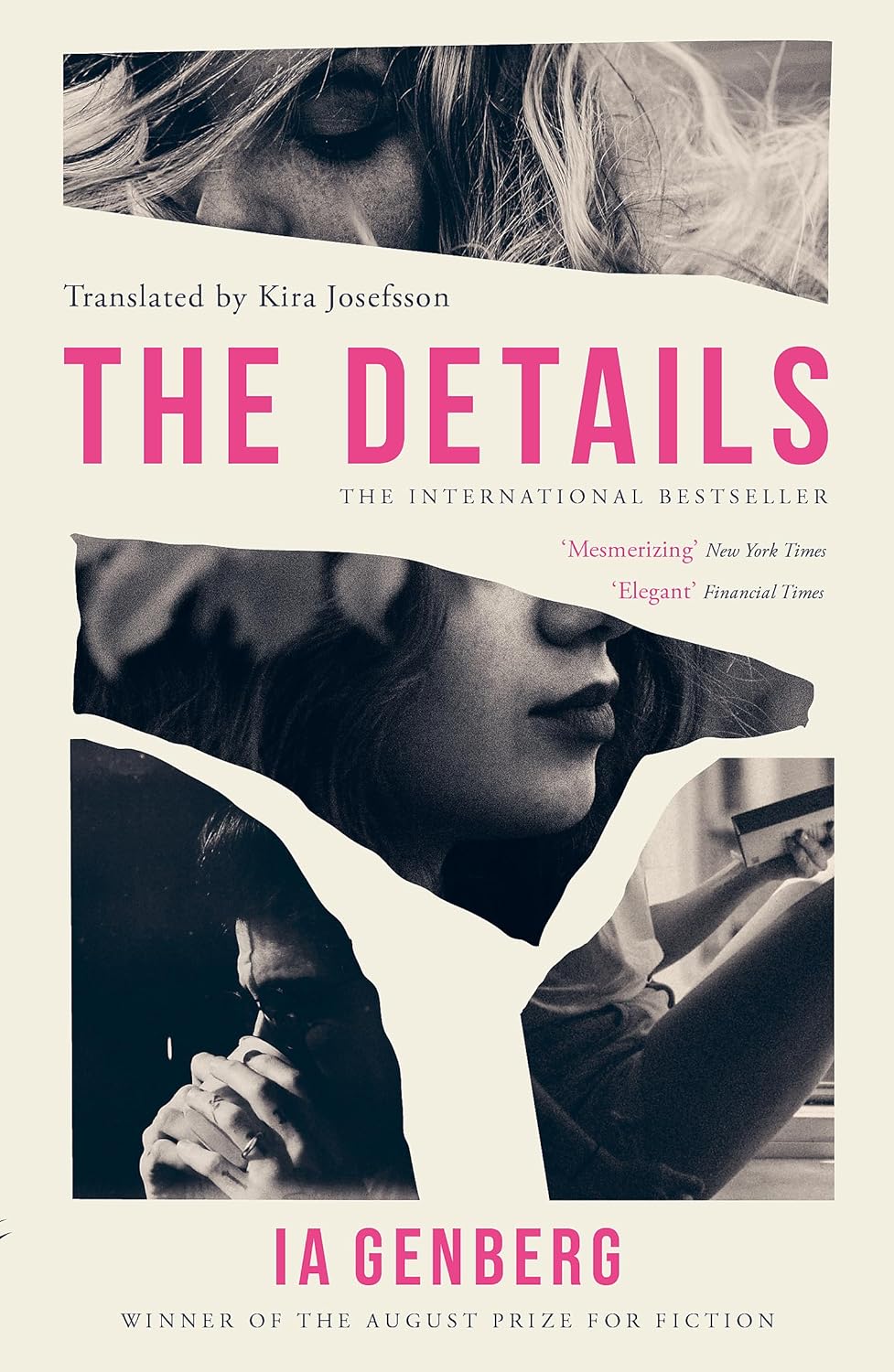
In exhilarating, provocative prose, Ia Genberg reveals an intimate and powerful celebration of what it means to be human.
A famous broadcaster writes a forgotten love letter; a friend abruptly disappears; a lover leaves something unexpected behind; a traumatised woman is consumed by her own anxiety. In the throes of a high fever, a woman lies bedridden. Suddenly, she is struck with an urge to revisit a particular novel from her past. Inside the book is an inscription: a message from an ex-girlfriend. Pages from her past begin to flip, full of things she cannot forget and people who cannot be forgotten. Johanna, that same ex-girlfriend, now a famous TV host. Niki, the friend who disappeared all those years ago. Alejandro, who appears like a storm in precisely the right moment. And Birgitte, whose elusive qualities shield a painful secret. Who is the real subject of a portrait, the person being painted or the one holding the brush?
The Winner
The International Booker Prize 2024 ceremony will take place from 7pm BST on Tuesday, 21 May. It is being held for the first time in the Turbine Hall at London’s Tate Modern.
Highlights from the event, including the announcement of the winning book for 2024, will be livestreamed on the Booker Prizes’ channels, presented by Jack Edwards.












 Word by Word