
The Rome Escape Line
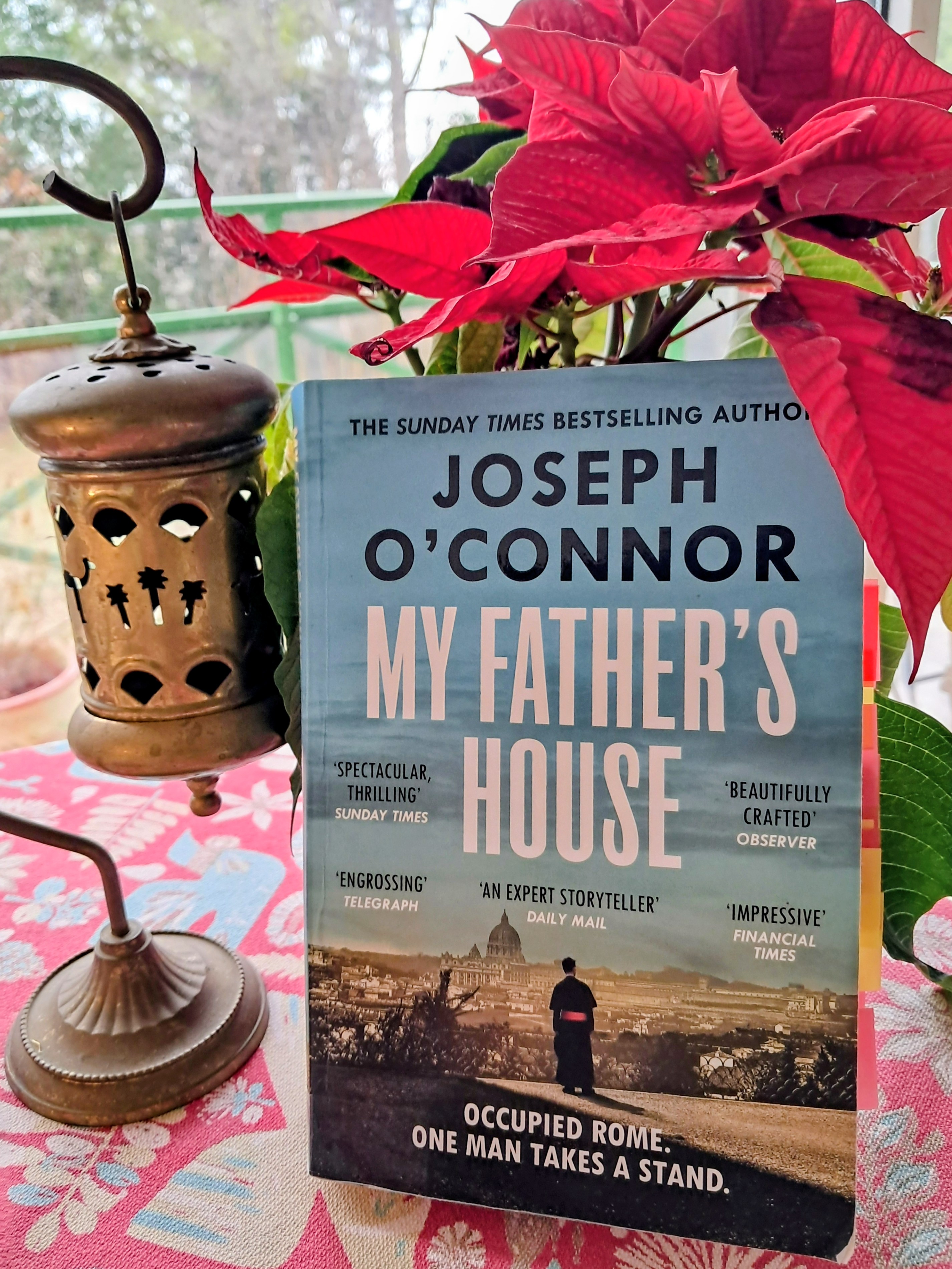
My Father’s House was a spontaneous library read, an historical thriller based on a true story and the first book in the Rome Escape Line Trilogy.
The second book The Ghosts of Rome (2025) continues the story of Irish priest Father Hugh O’Flagherty and the clandestine group known as ‘The Choir’ who smuggle thousands of escapees out of Nazi-occupied Rome via a secret route known as the Rome Escape Line.
Inspired by Real People and Events in Rome WWII
The first chapter begins:
Sunday 19th December 1943
10.49pm
119 hours and 11 minutes before the mission
A car is being driven in the streets of Rome with Delia Kiernan, a diplomat’s wife and an injured man in the back. The pace and elements of danger are set. The next chapter is her voice, in January 1963, from a transcipt of a BBC research interview, questions inaudible, conducted in White City, London.
In her interview, as the wife of the senior Irish diplomat to the Vatican, she answers questions about the young Irish of the city, many of them seminarians.
One or two were scarcely into long trousers and they staring down the barrel of priesthood. Some of them, you wondered had it maybe been more Mammy’s idea than their own.And, often enough, though some won’t like me saying it, a nun was the youngest daughter of a poor family, with no other prospects.
On Father Hugh O’Flagherty she said:
But this Monsignor fellow was different, down to earth. Affable. You get that with Kerry people, a sort of courtesy. Too many priests at the time saw themselves not as a sign of mercy but as grim little thin-lipped suburban magistrates. Hugh wasn’t too mad on authority.
A City of Hiding Places and Bridges
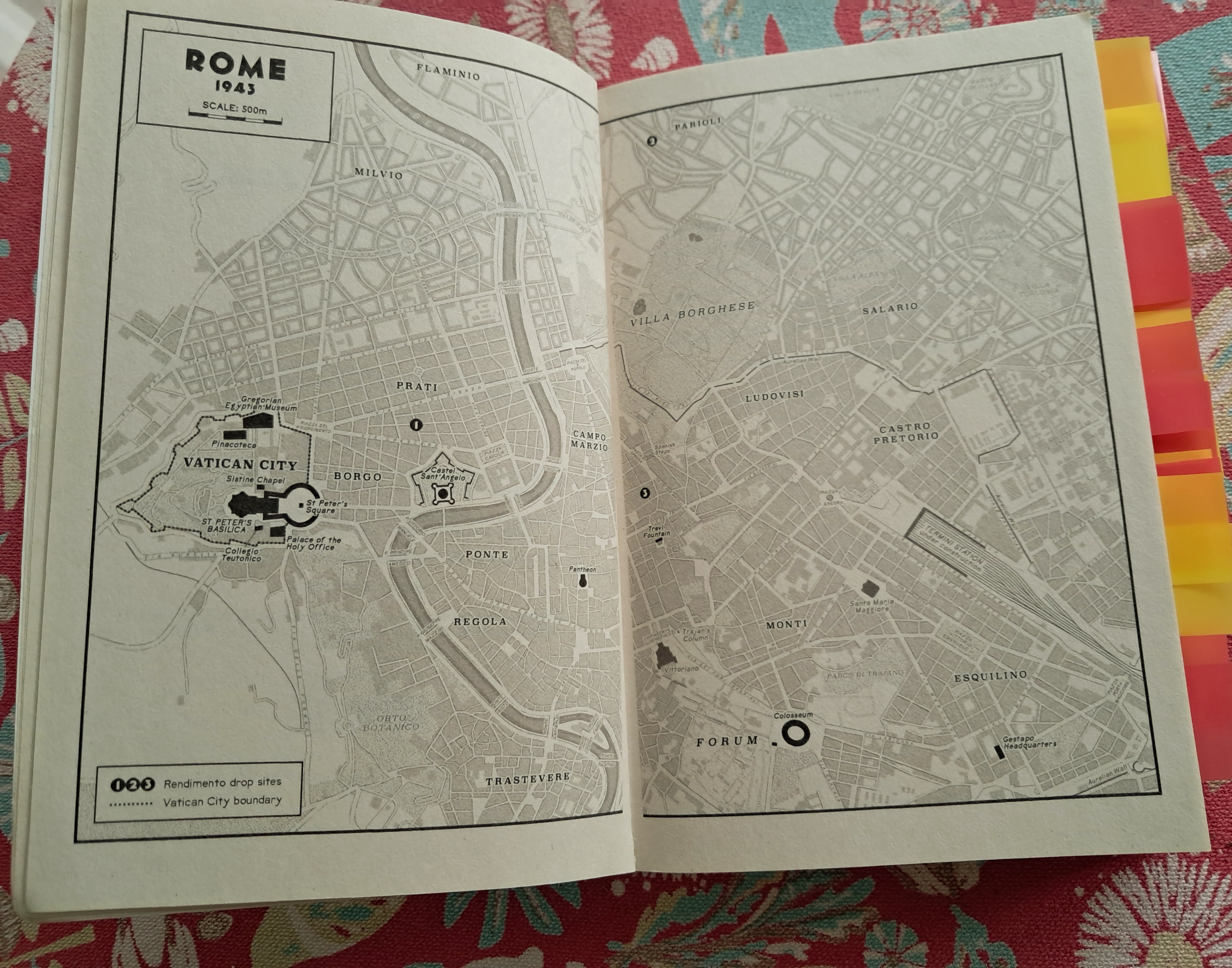
On the opening pages we also see a 1943 map of Rome and the boundaries of Vatican City, the only safe zone in the city during the war. In the narrative that continues, we observe and learn of its streets, alleys and underground tunnels and those who know them well, like a London cabbie used to know ‘The Knowledge’, crucial to the group during the event of 24 Dec 1943 that is to be carried out.
A Polyphonic Literary Thriller
Written like a literary thriller, as we read, are not exactly sure what the mission on Dec 24 is, like those involved, we too read on a need to know basis, and we begin to understand as an alternative thread of the story is told twenty years in the future in 1962 and 1963, by some of the participants in that mission. These chapters are given headings that tell us they are The Voice of… BBC transcript, research interviews, though again, we do not know what the purpose was for. But they give us another form of chorus, allowing multiple voices to perpetuate the wider moral and political considerations, each voice uniquely shaped and restrained.
So the evening unfolds and we feel the danger and the writing is a kind of lyrical realism with a sense of moral urgency. Short sentences are very descriptive, they act like a constant scan of the area every time a character moves. They must be able to detect without being detected. It creates taut, cinematic prose that at times I almost wanted to skip over, but eventually I got used to the style and it flowed better. While it is not melodramatic at all, it made me think of the shadow elements in a thriller, those not very well lit forms infused with creepy music that make the viewer uneasy. O’Connor succeeds through language to create this unease in the reader.
Father O’Flaherty writes his last will and testament that same night.
As for me, in those days, I saw all political systems as more or less the same, forms of foolishness, the prattling of apes, designed to keep the lesser chimps down. This was a shameful foolishness of my own. I have come to see that neutrality is the most extremist stance of all; without it, no tyranny can flourish.
Classic Theatrical Structure
A prolific writer of novels and Theatre/Spoken word, it is no surprise that the narrative is so propulsive, but it is done in a way that is not action oriented, as descriptive, it is written in a way that makes the reader pay attention to everything around them. The description is purposeful rather than decorative, it contributes to the sense of unease and provides cover, hiding places, makes us aware of danger.
The novel is structured into Act I: The Choir, Act II The Solo, Act III The Huntsman, and the final Act is Coda. So we meet all the characters, the mission is carried by one, supported by all the other characters, and then the one who really wants to capture him, has his moment.
Countdown To the Solo Act
The hours before the mission commences are narrated and then Hugh O’Flaherty is off on the night crusade, but one man is determined to catch him outside the neutral territory of Vatican city, SS Officer Paul Hauptmann, a man who rules with terror and is obsessed with stopping the one man who does not fear him. Within the walls of the Vatican no one can be touched, he is biding time, waiting for the priest to cross over into the occupied territory.
A Neutral Territory Within an Occupied City
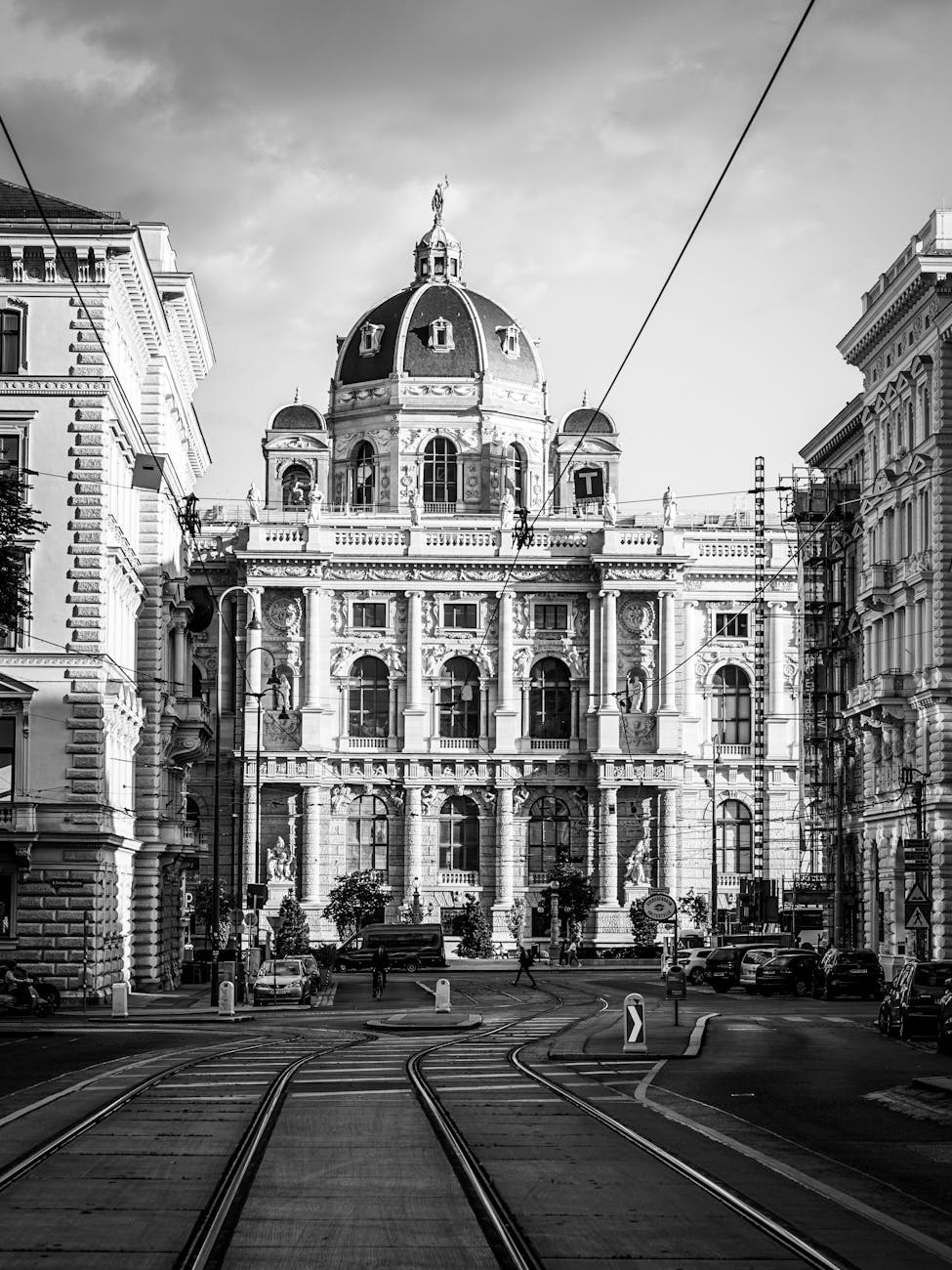
The way it’s written deftly portrays the dark, menacing shadow of occupation and the risk these people take and the incredible preparations they make and memorise should they be confronted. Ultimately, they are facilitating the continued funding of the Escape Line, in order that others can continue to help those whose lives are at greatest risk to find safe haven.
Written in such a propulsive and careful manner, that even as the reader, we are not entirely sure of the mission until it fully progresses, making one feel the risk of having too much knowledge and experience the tension and potential danger waiting around each corner.
Not at all my genre, I was intrigued to find out what the Rome Escape Line was all about and recalled that the sequel The Ghosts of Rome won the overall Book of The Year in all categories at the 2025 An Irish Book Awards as well as the Listener’s Choice Award.
Described by the Irish Times as an “extraordinary picture of Rome under Nazi control; brutal, chaotic, treacherous, decaying, wrecked and crumbling, and yet sometimes still bathed in glorious and unexpected light’
Highly Recommended if you are interested in WWII history of Rome and the Vatican. The third and final book in the trilogy is expected in 2027, though nothing has been announced yet.
Have you read either of the Rome Escape Line books? Share your thoughts with us below.
Further Reading
The Guardian: My Father’s House by Joseph O’Connor review – a literary thriller of the highest order
Author, Joseph O’Connor
Joseph O’Connor is a novelist, screenwriter, playwright and broadcaster from Dublin.
He is the author of eleven novels including ‘Star of the Sea’, ‘Ghost Light’ (Dublin One City One Book novel 2011) and ‘Shadowplay’.
Among his awards are the Prix Zepter for European Novel of the Year, France’s Prix Millepages, Italy’s Premio Acerbi, an American Library Association Award and the Irish Pen Award for Outstanding Achievement in Literature. His work has also been translated into forty languages and in 2014, he was appointed Frank McCourt Professor of Creative Writing at the University of Limerick.













 Word by Word