Episode 2: We are not living in France!

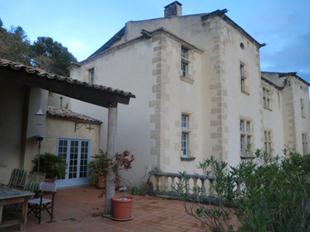
The leaves are starting to fall outside La Loubiere, the 16th century château where we are spending this last weekend of the autumn school holidays and with the kitchen door open early while everyone sleeps, I listen to the mesmerising sound of the wind in the trees and think about the change of the seasons. It does not seem so long ago that spring was here, when the bulbs that had lain dormant for the winter were poking their green stems through the surface.

Now we wait for the period of stillness and hibernation, something we know very well, because in a sense we too have been in a kind of perennial hibernation, waiting for our daughter’s voice to emerge in the classroom and speak for the first time in school.

Now our spring has come and just like the association of supportive parents Ouvrir La Voix, she has finally opened her voice after more than five years of silence. She now speaks to almost all her classmates and we have one hurdle left, level 10 in the book that has become my bible – to speak to a teacher or adult in school.

It is hard to believe it has been five years. It is hard to believe that for the first three years we didn’t know what we were dealing with, that it even had a name. Perhaps if we had lived in America or Great Britain, we may have discovered those words earlier – or maybe this condition would not have even manifested.

Here in the south of France, selective mutism is unknown and with our daughter in a French school where interventions to assist children are commonplace and often successful, we were happy to follow the advice and recommendations of the school psychologist (every school has one), an orthophoniste (speech therapist), a psychiatrist and our doctor, all of whom were willing to help and in the case of our doctor, advised and reassured us that it was just a matter of time.

Three years on, having made zero progress, it was all to change late one evening after a telephone call with my Uncle, when he mentioned that he had been speaking with a friend in Los Angeles whose daughter had the same thing as ours.

“What thing?” I said.

“You know” he said, “the not speaking in school thing.”

“It has a name?” I almost shout. “Call her back now and ask her what it is.”

He did and through his friend then passed on those two words selective mutism, or mutism selectif in French, two words that not one of those health professionals had known of or discovered to suggest to us.  We weren’t looking for a label, we were searching for a solution and we’d been looking in the wrong place.  Our programme of intervention was about to take a different path, one used successfully by parents in the know, only we would not have the same support, as to take this route was effectively to reject the existing system.

But to tell this story properly, it is necessary to go back even further, to understand events that lead up to this moment and because despite trying to change the title of this episode and make it shorter, my creative daughter who has already finished the artwork, is telling me to write this second part now and include her picture. So here’s the bit about not living in France!

We are not living in France!

*

When I was six months pregnant we came to France for a 2 week holiday from London. We were toying with the idea of moving here, at least I was, for my husband it would be a return.

My body was changing and the world around was about to change significantly. One afternoon I returned to the hotel in Marseille to rest and as I passed the reception, I noticed all the employees looking at the television, watching what looked like the demolition of a couple of council buildings. I thought it strange that all the staff were watching TV in the middle of the afternoon, so when I got to the room I too turned on the television. I couldn’t understand the words spoken in rapid French, but I could read the subtext. It wasn’t a couple of council buildings at all; it was the twin towers of the World Trade Centre in New York.

During that holiday, we looked at a couple of apartments and houses, I sat through long-winded appointments with real estate agents, tried to understand menus and the rapid-fire French coming from that TV, all on a roller coaster of emotions and hormones, understanding little beyond Bonjour and Au Revoir, two basic expressions I thought I could pronounce, but listening carefully, I realised I’d been giving their syllables way too much emphasis, goodbye sounded more like ‘of waa’ than the expression I’d learnt to say.

I became disillusioned with the idea of living in France, I had long ago discarded that child-like submission of accepting things the way they are, being secondary to decision-making. Making decisions and understanding what leads to them is not something one gives up and neither was I interested in putting it on hold while coming to terms with a new language. I freaked out. No way was I coming to live here, a new language, a new city, a new baby, all things where I would be required to start again from the beginning. Absolutely no way I told myself.

Returning to London, the queues were horrendous, airport security was tight and there was no other subject being discussed other than the events that had occurred in New York. And they were beginning to have a trickle-down effect. I was concerned because I worked in the travel industry which was sure to be impacted and sure enough, within two weeks of our return, I was advised that my job was no longer required at a time when I knew I had no chance of finding another, not with a very obvious baby protruding from my mid-section.

Next up: Episode 3: The Benefits of Contra-Indicated Essential Oils!

Click below to read Previous Episodes of A Silent Education: Our Quiet Challenge in Provence

Introduction

Episode 1 The Benefits of Insomnia

Episode 1: The Benefits of Insomnia

Episode 1: The Benefits of Insomnia

Emily tells me she only sleeps for two hours at a time at night. She is conditioned to wake up. The words still fresh in my mind from the young pregnant doctor in Mike Leigh’s thought-provoking film Another Year, I listen to them again as they spill from my lips.

‘Insomnia is not an illness, it is a symptom.’

Emily lived at sea on a forty-foot sail boat for six years, so I’m not surprised it’s taking her body a long while to readjust, that and the unfortunate hostage experience which ended it all, her life spared but not her boat.

Seize an Insomniac Moment

Not only am I not an insomniac, I rarely dream or recall them, something Emily tells me she practises every night in the constant presence of her mother, a woman who hasn’t lived for more than eleven years now. I think about that and conclude that my days are so filled with dealing with the ever demanding present, that my mind must spare me from such night journeys into a fabricated past or alternative future. I know that when I do remember a dream, it is often worth writing down, such is its novelty.

Uncharacteristically, I couldn’t sleep this morning so I was doing what I do when I’m neither dreaming nor sleeping, having wake-dreams, which aren’t really dreams because I am consciously imagining them, creating dream-like semi-realistic scenarios.

In this morning’s dream scenario, I was writing this story in my head and thinking how sad it is that I don’t have the time I had when I first arrived in France, to spend endless hours writing, reading and learning from them both.  And then I thought Insomnia! Wouldn’t it be great if instead of lying here thinking about it, I raised this dormant body and took it off to write.

The story has reached a significant turning point so we are sharing it while it remains in the present and is not relegated to a distant nostalgic past, when I will no longer be thinking about it in the same way and unlikely to be dreaming either.

And now my daughter is collaborating, depicting my not sleeping state seconds before seizing that opportunity of a rare insomniac moment.

Next up:

Episode 2: We are not living in France!

 of A Silent Education: Our Quiet Challenge in Provence

Previous Episodes:  Intro

A Silent Education: Our Quiet Challenge in Provence
Struggling with my latest read, I think about all those people starting out on the NanoWriMo trail and all those old stories gathering dust on the shelf, my finished and unfinished novels, the new one I would love to start and the words of my friend Bernadette, who suggested to me yesterday that I write a story directly into this blog.

It’s an idea with merit and one that will help me overcome another little dilemma, that of a 10-year-old girl who wants her own blog, whose little fingers have occasionally and so she says ‘accidentally’ found their way in here.

So this will be our collaboration, I will write the episodes and she will create the illustrations, which seems appropriate as this story is going to be about her, about an aspect of our journey together that is worth sharing, because I know our experience is already helping others going through something similar.

So, next up Episode One : The Benefits of Insomnia written by me and illustrated by my daughter.

Here is the cover she designed today, there is a colour version, but she wants me to put it up in black and white.

And just to clarify, that’s her on the left and me on the right. (She has used her artistic ability liberty to remove her curls and make herself as tall as me).

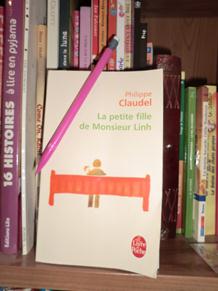
La petite fille de Monsieur Linh by Philippe Claudel tr. Euan Cameron

This month our bookclub chose a slim novella by the French author Philippe Claudel to read, La petite fille de Monsieur Linh; an interesting and somewhat ambiguous title because it can be interpreted in two different ways, already a dilemma for the translator no doubt, because petite fille is the expression used for grand-daughter, but it can also be read as petite ‘little’ and fille ‘girl’.
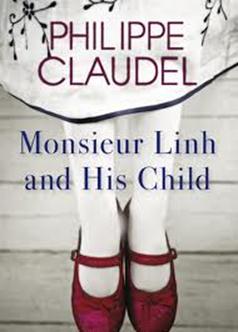
Something I have often wondered – why is it that there is only one word fille that means both girl and daughter, whereas there are two words for the male equivalent fils meaning son and garçon meaning boy?  The same thing happens with woman and wife, the French word is femme, whereas man is homme and husband is mari.

So did the English translation go with grand-daughter or little girl you might ask? Actually neither, the English title as shown is Monsieur Linh and His Child.  I’m not sure why they stay with Monsieur rather than Mr, I was not under the impression that he spoke in French.  It becomes clear how much of a task translating a novel must be, so many decisions to make or discard with the title alone, already certain ambiguities are lost while other insinuations are made.

Our English speaking bookclub has an international membership, so while we all read the book in French, the discussion is in English. For those of us reading French as a second language, the experience was quite different from reading a book in English.

We all went through a similar experience, starting out with a dictionary close at hand and looking words up, until we got fed up with that and decided to continue reading without stopping, some of us underlining words to come back to.

As you can see, I had my pencil ready and I also downloaded the English version to my kindle and started reading concurrent chapters, only to discover I really was just repeating myself and it wasn’t necessary to do that. But enough of the process, what a stunning novella!

Monsieur Linh has no choice but to flee his country of birth due to tragedy and destruction around him, war or some kind of tyrannical regime have made it impossible for him to stay, and so he takes a boat with his grand-daughter Sang diu, arriving as a refugee in a country across the water somewhere.

In the Shadow of the BanyanThe author does not say where he came from or where he arrives at, making this part of the reading experience, in fact we all had various impressions of where the story may have taken place, my own impression very much influenced by my recent reading of Vaddey Ratner’s novel In the Shadow of the Banyan and my own travels in that part of the world.

Monsieur Linh doesn’t leave the refugee dormitory at first, but when he does he befriends Monsieur Bark and so begins a regular coming together, a special friendship despite the incomprehension of each other’s language. In a sense we are as uninformed as Monsieur Linh, we follow him into the unknown, share his anxieties and fears for Sang diu and feel the deep and mutual appreciation of the gestures of new-found friendship.

Lorsque Monsieur Bark parle, Monsieur Linh l’écoute très  attentivement et le regarde, comme s’il comprenait tout et ne voulait rien perdre du sens des mots. Ce que sent le vieil homme, c’est que le ton de la voix de Monsieur Bark indique la tristesse, une mélancolie profonde, une sorte de blessure que la voix souligne, qu’elle accompagne au-delà des mots et du langage, quelque chose qui la traverse comme la sève traverse l’arbre sans qu’on la voie.

When  Monsieur Bark speaks, Monsieur Linh listens to him very attentively and looks at him, as if he understood everything and did not want to lose any of the meaning of the words.  What the old man senses is that the tone of Monsieur Bark’s voice denotes sadness, a deep melancholy, a sort of wound the voice accentuates, which accompanies it beyond words and language, something that infuses it just as the sap infuses a tree without one seeing it.

When I bought this book, another reader cautioned me against reading any reviews because there is a twist at the end of the book, so I did as mentioned and kept the reading experience pure. There is so much more I could share about how we invest ourselves in characters as readers, wishing things to happen and just as in life, ignoring the niggling instinct.

Irène Némirovsky’s Ida & La comédie bourgeoise

It is a beautiful story and I urge you to read it in English or in French, it is a testimony to kindness, tolerance, suffering and the small but heartfelt joys that friendship brings. Not just a wonderful story, but it has inspired me to be brave and try another short book in French. So I have my pencil ready loving that the novella form is so popular and inexpensive in France, so here is my next foray, – no rush mind you.

So do you read in a second language or like to read foreign fiction?

Black Count – Glory, Revolution, Betrayal and the Real Count of Monte Cristo by Tom Reiss

Mention the name Alexandre Dumas and many will associate it with the classic stories as well-known now through their film adaptations, The Count of Monte Cristo, The Three Musketeers, The Black Tulip and La Reine Margot (Marguerite de Valois) as they are through the novels.

In France the novelist referred to as Alexandre Père Dumas, had a son Alexandre, also a well-known playwright. Less is known about the novelist’s father General Alexandre ‘Alex’ Dumas, born in 1762, the son of Marie Cessette Dumas, a black slave from Saint-Domingue (modern-day Haiti) and a French nobleman Alexandre Antoine Davy, the Marquis de Pailleterie, who was from a family of provincial aristocrats with a more impressive coat of arms and title than fortune to their name.

Tom Reiss has researched the life of General Alex Dumas and takes us from the French sugar plantations of Saint-Domingue to the battlefields of the French revolution and to a dark dungeon on an island in the Mediterranean, in recapturing the spirit of this extraordinary man, living in an unforgettable era, that we are all the better off for being reminded of.

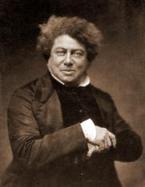
Antoine was the eldest of three brothers, required to go out in the world and seek their fortunes, which they initially pursue in the army before Antoine followed his brother Charles to Saint-Domingue. At the time the world’s largest sugar exporter, it generated vast wealth using slave labour, as depicted so vividly by Isabelle Allende in her excellent novel Beneath the Sea.

Charles married into money and established himself as a planter so Antoine joined him, though without the same work ethic or ambition, content to live off his brother, until an altercation caused him to flee with a couple of slaves and his slave mistress. The brothers never saw each other again and the family lost track of the eldest brother believing him to be dead. As the eldest, Antoine was heir to the title and the ancestral estate of Bielleville, however it was passed to a nephew in the belief of his demise, until his sudden and unexpected return to France.

Antoine had fled across the mountains to Jérémie, a coffee plantation area where he settled with a woman named Marie-Cessette and had four children with, including a son born on March 25, 1762 whom they named Thomas-Alexandre.

Bielleville, the family estate

He eventually returned to France, and learning of the death of his parents attempted to claim his title which had passed to the nephew, Comte Léon de Maulde, who employed a detective to investigate the returning heir’s mysterious island interlude and return.

Chauvinault then reported on Antoine’s having bought, in the late 1750’s, the beautiful black woman named Marie-Cessette, for whom he’d paid that “exorbitant price” – implying some unusual interest in her. Before Antoine’s return to France, Chauvinault reported, he had sold three of his children, as well as Marie-Cessette herself.

The detective also brought the interesting news that Antoine’s fourth child, a boy who was said to be his favourite, had not been sold along with the others. This boy was “a young mulatto who, it is said, was sold at Port-au-Prince,” Chauvinaluth wrote, “conditionally, with the right of redemption, to Captain Langlois, for 800 livres.”

On arrival in France Antoine sends for his son and thus begins a different life for the adolescent Alex Dumas Davy de la Pailleterie. His father pawned the family estate and moved them to the rich and fast growing Saint-Germain-en-Laye, on the western side of Paris. Dumas received a superior education, expensive clothes, training in fine manners, riding, baroque dancing and duelling among other equally refined activities. After a falling out with his father, he enlisted as a horseman in the service of the queen just as the French revolution was gaining ascendancy, which resulted in him being promoted through the ranks rapidly, rising to command entire divisions.

Up until the reign of Napoleon Bonaparte, nothing seemed to phase Dumas, he was respected by all, he was fair, he introduced many improvements in the armies beneath him and challenged any wrongdoings of others, whilst keeping his head – not so easy during the reign of terror.

General Alex Dumas

Alex Dumas was a consummate warrior but also a man of great conviction and moral courage. He was renowned for his strength, his swordsmanship, his bravery, and his knack for pulling victory out of the toughest situations. But he was known, too, for his profane back talk and his problems with authority.

Alexandre Pere Dumas, Novelist

He was the inspiration behind the hero of his son’s novel ‘The Count of Monte Cristo‘, the story of the young sailor Edmond Dantes who, on the verge of a promising career and life, is locked away without witness or trial in the dungeon of the island fortress Château d’If.

An island dungeon is where Alex Dumas, finds himself after the failed French invasion of Egypt, when he is almost shipwrecked on his return, the ship limping into the south of Italy, which in the meantime has become an enemy of France and sadly Dumas’ influence with Bonaparte has diminished and he is all but forgotten.

Les Fers brisés, Paris

The story is rich in detail and reads more like a novel than the historical account that it is. Tom Reiss has excelled in researching both the vast volume of documentation, which from his account, sounds as if the Generals sent letters at an equivalent rate to which people send email today as well as visiting all of the battle sites and physical locations the General and his family were based.

Reiss encounters his own difficulties in pursuing the research, all of which contribute to making this a most compelling and entertaining read, but above all, one can’t help but admire the man, who lived in an extraordinary period of history, who was born into slavery, witnessed its emancipation, then both saw and experienced it tragically being rescinded. He deserves his rightful place in the historical annals of France, as a role model, a hero and a man of the people.

Note: This book was an Advanced Reader Copy (ARC) kindly made available by the publisher via NetGalley.

City of Love

The immense and almighty Notre Dame de Paris

I have been busy retracing the many steps of the monuments of Paris these past few days, so not much time for reading, although I did manage to finish Barbara Kingsolver’s excellent ‘Prodigal Summer’ which I will write more of soon and following on from this glorious visit to Paris, I am now immersed in Hemingway’s ‘A Moveable Feast’ keeping me in Paris for a few more days yet, albeit the 1920’s.

If you need any more proof that Paris is indeed the city of love, check out this superb photo I took of that beautiful feminine monument ‘La Tour Eiffel’, is that not a beautiful heart shining down on the population?

We took an evening stroll up to the Sacre Cœur cathedral, two minutes from where we were staying.  In fact I was babysitting that evening while friends from New Zealand were at a Bruce Springsteen concert, I have to say it was the best night looking after 3 children ever, practicing french phrases during dinner and an impressive after dinner promenade to one of the city’s marvels.

Here is a detail from one of the tower walls of L’Arc de Triomphe. I love the dramatic detail of the sculptures and wall friezes.

Despite the beautiful blue skies you see, it did indeed rain every day I was in Paris, it reminded me a little of New Zealand, that rain, sun, rain, sun, beautiful green trees.

However, something that only Paris can offer, her history of monarchs, uprisings, revolutions and battles and 60,000 square metres of art works in one museum alone and then there’s the people watching, all chairs facing the street for the best view, it’s amazing what you observe and overhear during the downing of une noisette (small coffee with a dash of milk).

Now back in Aix-en-Provence where the temperatures are consistently hot and as I got out of the car, I am greeted by the incessant noise of the cicadas, who have long announced the debut of summer and witnessed the emergence of one of these gigantic insects from its chrysalis on the wall right next to me, the moment before he too joined that eternal cacophony of sound reminiscent of the season.

*

Au revoir Paris, je reviens bientôt.

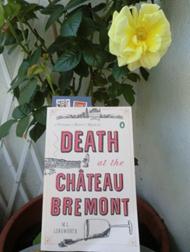
Death at the Château Bremont

There is a shelf in our local bookstore dedicated to books crossing numerous genres that have a connection with France, you will find nonfiction travelogues such as Sarah Turnbull’s ‘Almost French’ or David Sedaris’ vignettes in ‘Me Talk Pretty One Day’, funny, true, yet never denigrating the country that has become like a second home to him. You will also find English translations of popular French authors like Jean Giono and Michel Houellebecq and novels set in France.
Death at the Château Bremont fits into latter, not only set in France, but here in Aix-en-Provence. I first became aware of the title thanks to a review by Lynne at Aixcentric, an excellent and informative blog I read regularly to know what’s happening in and around the area where I live.

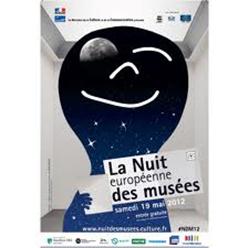
Just yesterday I read that tonight is the annual Nuit des Musées when the town’s museums are free and open from 8pm until 1am. We love this annual late night out.

Not long after that mention, the book-club that I read along with nominated it as their May read and the author M.L.Longworth who lives here in Aix-en-Provence, was invited to join us. So, a fascinating insight into the gestation of this, first in the ‘Verlaque and Bonnet Mystery’ series, which follows the lives, dramas and intrigues of Judge Antoine Verlaque and Professor Marine Bonnet, his sometime amoureuse.

It’s a mystery and in order to keep the mystery alive, I will only reveal that Étienne de Bremont falls to his death from a Château window, an investigation is requested and after some drama involving clandestine affairs, jealous siblings, polo players, Russian millionaires and a New York suicide, all will slowly be revealed.

What makes Longworth’s mystery unique is the journey. It is far from dark and gory, realms she has no apparent appetite for, however she will take you on a gastronomic excursion through the towns, vineyards and countryside of the region, visiting suspects while piecing together the connections and clues to the lives of those involved in this conspiracy. So not just a book for aficionados of mystery’s, but one for food and wine lovers and anyone who has ever dreamed of living and working in a city of culture and gastronomy in the South of France.

M.L.Longworth with Claire McAlpine

No tourist visit, this literary journey is the real thing and so agreed the group of eight women who were present to discuss the book, all sharing their favourite parts, confirming the locations the book visits and even suggesting others for the third book, which the author is working on, all suggestions were gratefully received and noted.

M.L. Longworth’s second book in the series, ‘Murder in the Rue Dumas’ will be published on 25 September 2012.

The Secret History of Joan of Arc

Such a seductive title ‘The Maid and the Queen’ – The Secret History of Joan of Arc and it is indeed an intriguing story, wrapped in faith, hope, superstition, manipulation, cruelty and ultimately the exoneration and beatification of a heroine (Joan of Arc was canonised in 1920).

 Joan of Arc is testimony to the transcendence of the human spirit….She remains an inspiration, not only to the citizens of France, but to oppressed people everywhere.

Ironically, it is due to the inquisition of Joan of Arc that much of the history of the era was documented and preserved, her testimony and the numerous depositions from the many eyewitnesses who knew her and who were in some way involved in the events of the Hundred Years war, that period of conflict between the Kingdoms of England and France and various other alliances from 1337 to 1453, as each sought to claim control of the French throne.

One of the insights that astounded me was the prolific negotiation of the female offspring of nobility to secure territorial alliances or peace between the realms. Daughters were auctioned off as young as 4 years, though depending on how power shifted and who survived into adulthood, those promises could alter.

Nancy Goldstone’s thoroughly researched oeuvre, takes a step back to look at the events, beliefs and susceptibilities of characters leading up the prominence of Joan of Arc, none more so than Charles VII, Yolande of Aragon’s (Queen of Sicily) son-in-law and the man who as a sensitive 11-year-old boy, she had taken into her home, nurturing and caring for him as her own, at a time when he was not destined for the throne (he had two older brothers). His propulsion into the role of King while the English were making inroads into the territory, King Henry having proclaimed himself King of England and France, and his reluctance to engage in battle, were significant risks to the Kingdom of France that required intervention.

Drawing inspiration from ‘The Story of Melusine’, commissioned in 1393 and written by Jean d’Arras (when Yolande was 12-years-old) a propaganda devised to address the political controversy surrounding the Duke of Berry’s appropriation of an ancient and imposing castle belonging to the aristocrat Lusignan family, Yolande of Aragon was able to usher Joan into an audience with the young King.

To Yolande of Aragon, the parallels to the story line of Melusine were obvious… there was just one element missing to turn this fiction into reality. The Queen of Sicily actively sought a Melusine as part of her strategy for reinstating the dauphin as the legitimate heir to the French throne.

That Joan was effectively recruited, is reinforced by a French historian who reported that in 1428 alone, twenty people, mostly women, claimed to have been chosen by God to deliver a message to the King. None of them were given the opportunity unique to Joan, whose faith and convictions aligned with what Yolande wanted to hear and would result in her leading an army to relinquish the city of Orleans. By speaking passionately to Charles inner most fears, in particular an obsession with his possible illegitimacy and by her knowledge of ‘his secret prayer’ to God which he cried out in his sleep, Joan materialised as a sign and a saviour.

Gentle dauphin, I am Joan the Maid, and the King of Heaven commands that through me you be anointed and crowned in the city of Reims as a lieutenant of the King of Heaven, who is King of France.

Having succeeded in turning the English back, Joan was eventually captured and no longer considered useful by her King or sponsor, was sold to the English who sought vengeance, and submitted her to a long inquisition hoping to rid themselves of her and the fervent following she inspired among the people. Though their interrogations were inconclusive, and their hopes to condemn her destroyed by a signed recantation, she was tricked into heresy and sentenced to be executed.

I found the book full of interesting facts and connected events surrounding Joan herself, but I admit it was not an easy read and slow going at times –perhaps by necessity– to comprehend all the characters, families, alliances and influences. I did find myself wishing at times that the author might have used more creative tools to inhabit the emotional life of some of the characters, something that makes reading well-researched historical fiction a real pleasure and certainly adds pace.

But for a factual account of how The Maid came to represent a significant turning point in France’s history, I can think of none better.

If it is accepted, as it is often said, that without Joan of Arc there would be no France, it is also true that without Yolande of Aragon, there would have been no Joan.

Note: This book was an Advanced Reader Copy (ARC), provided by the publisher via NetGalley.


A Love of Words and Music

I have been struggling a little to finish ‘The Maid and the Queen’, what with school holidays, the French presidential elections (which I voted in for the first time), working on promoting my Aromatherapy business and socialising more than usual, including attending an excellent concert of the cult singer/artist ‘Camille’ at Le Silo in Marseille on Friday.

Camille

No one song can possibly represent what a performance by this artist represents, she sings, uses her voice and body as an instrument, dances barefoot in her sacking dress and easily extracted volunteers from the audience to participate.  She is total inspiration, if you would like listen, here is a sample ‘Mars is no Fun’.

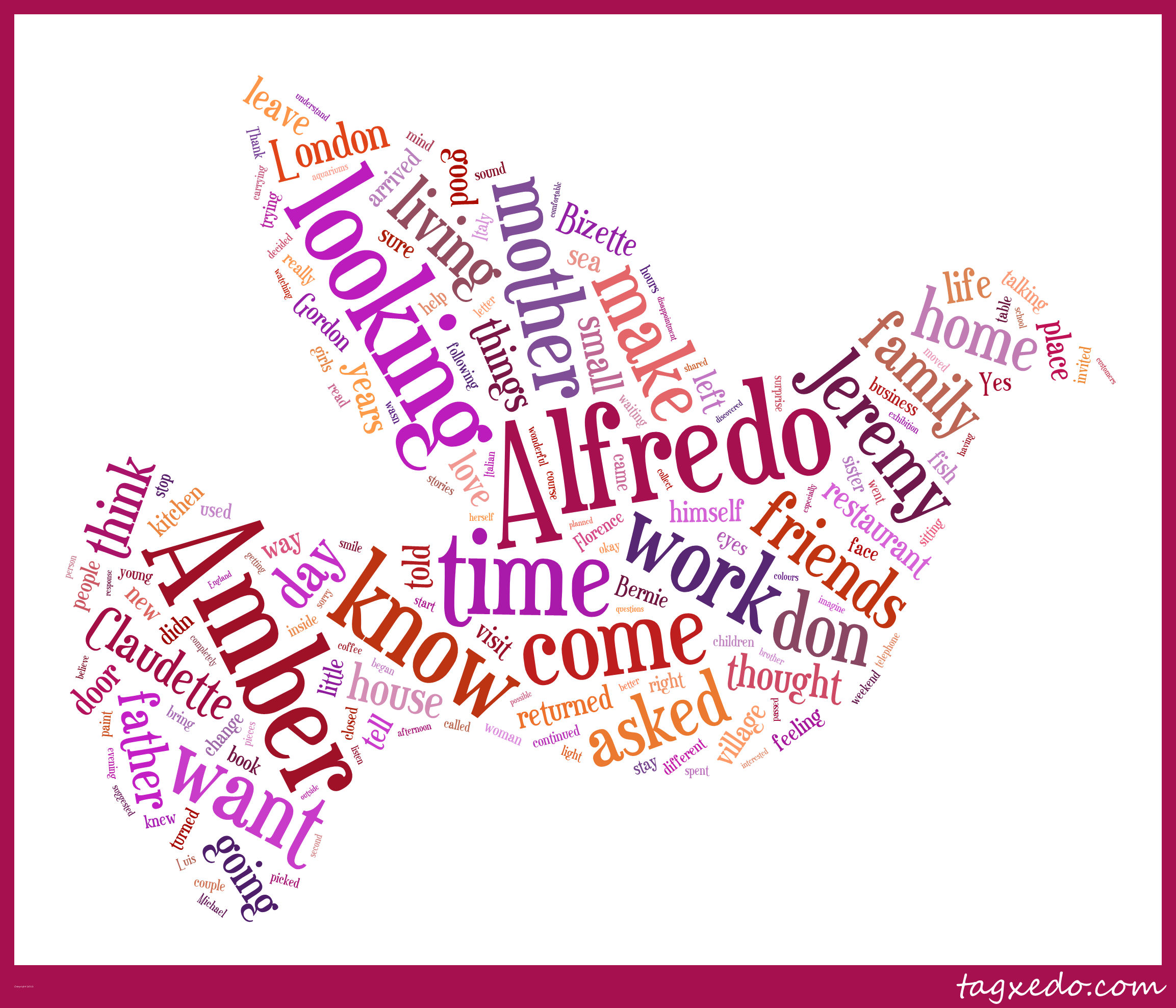
So no book chat today, instead I will share a fun word cloud tool that I discovered thanks to Elodie at  ‘Commuting Girl’ called Tagxedo into which you can copy any text or enter your blog or website name and the tool will analyse the content and show you which are the most popular words and how often they are used.

So Voila! For this blog ‘Word by Word’, here is an image of the most common words used and I am delighted that the word ‘Word’ is indeed such a dominant feature.

Intrigued, I decided to put the text of my ‘sitting on the shelf’ novel as I have always wondered which words I might be over using.  So I am not going to say anything more about the novel, except that it is called ‘A Piece of the Mosaic’ and here is a clue to what lies within.

So what does your blog, novel, poem,story look like?

Le Muguet – Becoming French

Au mois de mai, fais ce qu’il te plait.

In the month of May do what your heart fancies.

 Provencal proverb

So today I feel like sharing a little bit of French culture with you, the 1st of May is a public holiday in France for the Fête du Travail and the day you will find people offering Le Muguet (Lily of the Valley) to their friends, neighbours and acquaintances, a tradition that began during the Renaissance in 1561, when Charles IX offered them to his subjects as a symbol of porte-bonheur or good luck.

Now associated with the Fête du Travail on 1 May, anyone can sell the flower on the street without requiring a licence or permission. Today I walked into the centre-ville and came across many people who are spending their day, sharing the magic of Le Muguet with the public.

The first year I came to live in France, I learned of the tradition when my next door neighbour knocked on the door and presented me with this delightful flower, explaining its significance.

Six months into adapting to this life, language and culture, it was a welcome gesture and reminded me how important it is to reach out to others, even if they appear to be coping, we can all do with a little ‘porte-bonheur’ from time to time.

And in the spirit of acknowledgement and small celebrations, congratulations to Juliet Greenwood whose book Eden’s Garden’ has been named ‘Welsh Book of the Month’ for May 2012, a sprig of ‘Lily of the Valley’ for you Juliet. To celebrate she is giving away a free signed copy of her book, click here to enter.

Finally, with Spring emanating everywhere, I thought I’d share my recent discovery and purchase of a book of 12 stamps (un carnet de timbres), with its theme ‘the language of flowers’, I hope you can guess the English equivalent:

Le Langage des fleurs

Pensée / Affection

Coquelicot / Joie

Arum / Ardeur

Muguet / Bonheur

Tulipe / Amour

Violette / Modestie

Iris / Tendresse

Œillet / Fidélité

Rose / Passion

Pivione / Générosité

Marguerite / Attirance

Dahlia / Admiration

Bonne fête à tous!