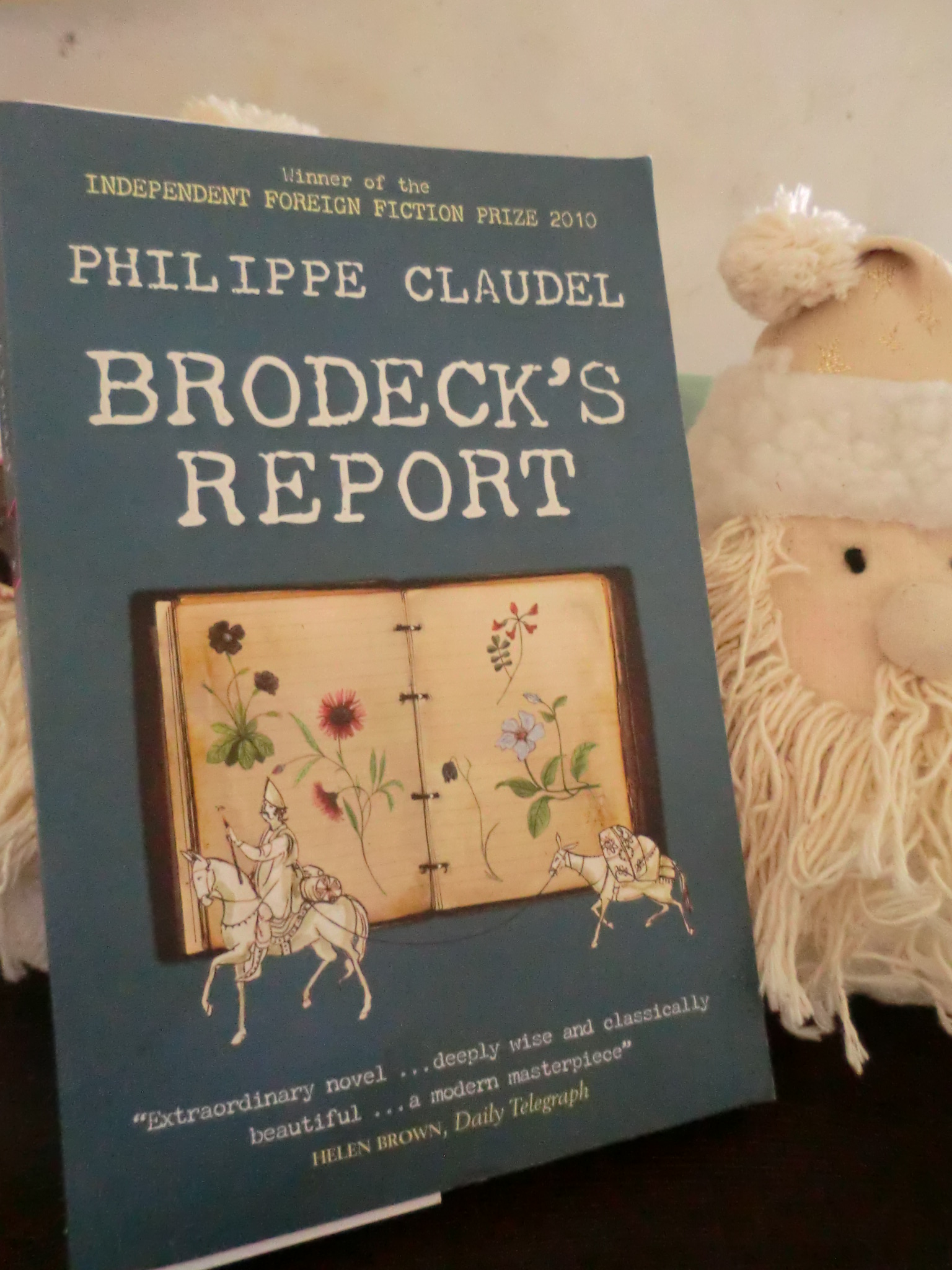
Brodeck’s Report by Philippe Claudel, tr. John Cullen

BrodeckThis book has been on my radar since I read Le Petite Fille de Monsieur Linh by Philippe Claudel last year. That was the first book I had read by Philippe Claudel and our book club decided we should read it in French. I remember at the time, one of my twitter followers mentioned Brodeck’s Report as being her favourite, and on a recent visit to West End Lane Bookshop in London, I found this copy.

Brodeck’s Report is the story of the young man Brodeck, who as a child arrived in a French village with an old woman who had taken pity on him, finding him sitting alone in the ruins of a house fire.

He becomes a protégé of the village, who save enough to send him to university with the intention of him making an important contribution to village life, as it was clear he had the capability. Their plans are thwarted by unrest in the city and Brodeck flees to the village with a young woman who will become his wife. The village soon becomes occupied, resistance is taught a harsh lesson and the community are encouraged to ‘cleanse the village’. Brodeck and one other who came from elsewhere are sent away.
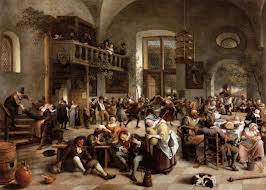
InnWhen the story begins, Brodeck is home, having survived the camp and after stepping out to find butter, stumbles into the midst of a village gathering at the Schloss Inn, where those grouped have decided he will write a report about the unknown, nameless stranger who came to visit, who had now met his end.

The novel is quiet, devastating and yet brilliant. Claudel takes one village which happens to be near the border – and what is a border but an imagined, even a painted line on paper – of an occupying country, and uses the village and its resident to portray humanity and its many inclinations, including its inability to learn from mistakes – which manifest when a stranger rides into town, installs himself at the local inn and goes about his business, without letting anyone know what that is. Many of the events portrayed in the novel are the result of illusory thought, of man’s inclination to create a story when there is none and to punish the outsider, the one who has inspired their dark imagination.
BrodeckBrodeck is tasked with writing an account of the events that do take place and as he does so, he simultaneously writes another account, his own narrative of what is occurring and what has happened in the recent past. He writes to try to make sense of it, as is his nature and to know what he must do.

Reading Primo Levi adds to an understanding of Claudel’s work and having read this novel so soon after Aminatta Forna’s The Hired Man, it illuminates something more of that work as well, it is as if they write about the same people, only Claudel dares to take the reader deeper into the heart of his villagers forcing us to open our eyes.

“It is a strange time of day. The streets are deserted, the encroaching darkness turns them into cold, grey blurs, and the houses become shifty silhouettes, full of menace and innuendo. Night has the curious power of changing the most everyday things, the simplest faces. And sometimes it does not so much change them as reveal them, as if bringing out the true natures of landscapes and people by shrouding them in black.”

Stunning.

Are Prize Winning Novels an Indication of Readership or a Nation’s Literary Heritage?

After the BBC’s journalist in Paris Hugh Schofield asked the question about Why French books don’t sell abroad, the Cultural Attaché to the US Embassy in New York, Laurence Marie responded with an extensive list and discussion of a list of French titles that are selling abroad. She also mentions how widely French literature is being translated into other languages and her article makes fascinating and insightful reading. I have collected book covers of some of the works mentioned, plus others, below.

Sometimes we hear about literature from another country when the author wins a major literary prize. However:

Are Prize Winning Novels Really Indicators of a Nation’s Readership?

French Books That Are Selling Abroad!

French Books That Are Selling Abroad!

I don’t think so.

Literary prizes usually have an agenda, if not multiple agendas.

In the case of the UK’s Booker Prize it was set up to try to bring more literary works into the mainstream.

It is known that the prize doesn’t actually influence the reading habits of avid readers. It is targeted at those for whom books are competing against other forms of entertainment.

I like the literary prize season, not so much in anticipation of a winner, but for the longlist, where we are more likely to find something new that might appeal to our taste, because of the variety offered and the number of works screened.

So what are the French literary prizes?

Le Prix Goncourt

I don’t know the French literary prizes well, and Schofield mentions in his article that there are over 2,000 of them, but the Le Prix Goncourt is well-known and has been around over 100 years since 1896.

The last recipient was Pierre Lemaitre, whose thriller Alex  (reviewed here by Savidge Reads who said of it: “a thriller that almost made ‘Gone Girl’ look tame”), was a bestseller last year and his prize-winning novel Au revoir là-haut looks set to be the same.

Nancy, a blogger in the Netherlands whom I admire enormously, tasked herself to read only French novels last year, as an interesting way to learn the language and not only has she succeeded in learning the language, but she has not given up, she continues to read novels in French. You can read her review (in English) of Le Maitre’s Au revoir là-haut here.

The prize was established by Edmond de Goncourt, a successful author, critic, and publisher, who bequeathed his estate to establish an academy and the prize was initially created to allow talented writers the opportunity to write a second book. The prize is seen as being SO prestigious, the prize money has not changed since the early 1900’s and remains something around €10.

Le Prix Femina

Leonora MianoTen members of the Goncourt academy are responsible for the judging of Le Prix Goncourt, and in protest against this all male jury, le Prix Femina was inaugurated, an equivalent literary prize open to all sexes, however the jury is all female.

This year the prize was won by Léonora Miano, a Cameroonian author who has lived in France since 1991, for her 7th novel La Saison de l’ombre (The Shadow Season).

There is also a Prix Femina étrangere for foreign books which was won in 2013 by Richard Ford for Canada and Le Prix Femina essai, a popular genre in France, the essay; this year won by father and son duo Jean-Paul Enthoven and Raphaël Enthoven for le Dictionnaire amoureux de Marcel Proust (Marcel Proust’s Love Dictionary).

2013 Pric FeminaThere are certainly no shortage of prizes here in France (other major literary prizes are the Grand Prix du Roman de l’Academie Francaise, the Prix Renaudot, the Prix Interallie and the Prix Medicis), and their lists make interesting reading, for their longevity and breadth and for that fact, that they are so little known by readers in the English language.

Although prize-winning literature might be translated into English, it may also create a false perception of readership, being skewed towards that overly intellectual perception of literature that Schofield refers to as being elitist, which can alienate the average English language reader (and perhaps also the average French reader).

Every nation is proud of their literary culture and achievements and like to endow their icons of that tradition with prestigious titles, however down here at the ordinary people reading level, there is a whole other canon of literature being read, whether it is in the English language or any other.

CIMG3882To know more about what ordinary readers are immersing themselves in, it is necessary to speak to people like us, those who don’t often have a voice in the media or on a jury, they are the voices that are worth hearing from, even if what they provide is anecdotal evidence.

I am speaking to some of the French people I encounter in everyday life who are passionate readers, to find out what they think about French literature and what they are reading, to be featured in future posts.  And to find out more about all that translated fiction they love to read here.

They’re Reading Thousands of Great Books Here, Cité du Livre – A Local French Cultural Centre and Library

Yesterday via a link on twitter, I read a provocative article in BBC News Magazine by Hugh Schofield entitled Why don’t French books sell abroad? It was an interesting, if superficial article, that made a few observations without going into any depth to understand the contemporary literary scene in France. It asked questions, reminded us of some old provocative stereotypes and did little to enlighten us on the subject of what excites French readers and why the English-speaking world aren’t more aware of their contemporary literary gems.

Kate from BooksKateRates, reads and blog about French literature and wrote an interesting blog post in response to the article and I have been scribbling notes since reading the original article. I plan to share them here, as it is a fascinating subject if one takes the time to research and understand it.

But firstly, I wanted to show you the library, as it offers a glimpse into  how the French absorb literature and culture and it’s one our favourite local hangouts.

Situated in what was a 14,500 sqm match factory, the library, La Bibliothèque Mèjanes, is part of the Cité du livre, a centre for the arts and culture which includes an auditorium for lectures and readings, rooms for more formal lectures, a small cinema showing themed films for 3 week periods (currently Humphrey Bogart films), a music and film lending room, adult and children’s libraries, a press room, an exhibition space (currently celebrating the centenary of Albert Camus), a café and plenty of space for research and study.

Library Press Room

Library Press Room

As we walk in through the enormous sculptures of the covers of Camus’s  L’etranger on one side and Saint-Exupéry’s Le Petit Prince and Molière on the other, we arrive in a long corridor and the reception area for borrowing and returning books.

Turn left and we head towards the reading library where outside the door is a display of books for adolescents. A quick glance at these books shows us that half of them are translated fiction, from South African, German and Hispanic authors.

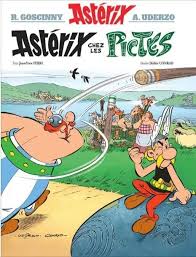
AsterixInside, we walk past displays of translated literature originating from South Africa, a tribute to Nelson Mandela, then the stacks of Bande Dessinée, the very popular hardcover graphic novels, which even today remain at the top of the French bestsellers list, right now its Asterix chez les Pictes, visiting the people of ancient Scotland!

And here are the novels, in French called romans. Rows and rows of books and you might notice something they all have in common, well, in fact, something they all lack. Colour.

Compare it to the shelf opposite which contains the English language novels. It certainly removes that whole likelihood of an impulse buy based on an intriguing cover.

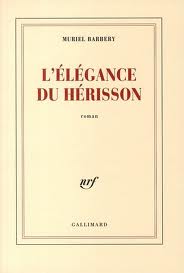
The Elegance of the Hedgehog

The Elegance of the Hedgehog

Most French literary novels are published without fancy colourful covers and while in the bookshop you might find first editions with promotional covers, there are many more with pale or cream covers without images and a black or red text title.

However, after looking around a little more, I discover that there is colour in some sections. Science Fiction and Fantasy are full of dark colours and the books covers in the section entitled Policiers (Crime) are mostly black. However, novels and poetry, even the section called American Literature pale into insignificance among a sea of white. It reminds me of one of the three principles of France l’égalitié and certainly here, all books have the same chance of being found, whether it’s from the library or in the bookshop, not just due to their bland covers, but also due to a government policy called le plan livre and the fixed price of books.

It costs €17.50 to join the library (adult) and its free for children, there is no cost for lending and no fees for late returns. 16 items (books and CD’s) and 3 DVD’s can be borrowed at any one time for a period of 3 weeks and the first renewal can be done online. The library is also full of computers providing free internet access to all members. My only complain is that its closed on Sunday and Monday. C’est la vie en France!

So what kind of books do French people read today? And is it true that nearly half of the fiction read is translated foreign fiction? And why don’t we see more books by French authors in English bookshops?  These questions and more I will talk about in the next post Reading Contemporary French literature.

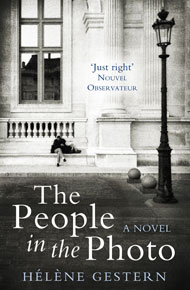
PeopleIn the meantime, if you want to know what’s popular in France and available now to read in English, check out Gallic Books, who offer the best of what’s available in French translated in English with new titles coming out every month.

I’m looking forward to reading The People in the Photo by Hélène Gestern due out in English in February 2014.  If you wish to read it in French, it’s already available with the title Eux sur la photo.

Hemingway’s Paris – A Moveable Feast

Hemingway makes me think of the debate streaming though comment threads on Goodreads.  The debate centres on the issue of discussing an author in book reviews, Goodreads suggesting that reviews focus only on the content of a book and not stray into opinions about the personality or character of the author. Hemingway

Being a book review site, it may not seem like an unreasonable request, except that the site has allowed five years of historical reviews to build up without comment, guidance or reprimand against reviews that may have crossed this line and in the meantime a strong community of reviewers has developed, spreading its roots and reviews deep into the site. Unsurprisingly, the community is now rebelling against wilful deletions of reviews. Some are threatening to abandon the Goodreads ship while its Captain is said to be sailing on oblivious to mutiny in its hold.

I think of Hemingway because in A Moveable Feast, he writes not just about himself, he reflects on writers he was acquainted with in Paris and about life in that city after the First World War. He shares exactly the kind of opinions that are forbidden to reviewers today. However, he is not writing a book review, he is writing about life.

Apart from the delightful short story A Clean Well-Lighted Place, I have not read Hemingway since the trauma of having to study The Old Man and The Sea at school. I am sorry to say that I detested this novel and although nothing of the prose has stayed with me, a kind of nausea, akin to sitting in a rocking boat with no means of rowing it, engulfs me when remembering it. I didn’t understand at the time why I reacted like this, worse than boredom, it was bereft of literary merit according to my 13-year-old standards.

Knowing now of Hemingway’s deliberate intention to strip his prose bare and understanding my love of the metaphor and habit to underline and admire the more descriptive linguistic passages, I see that we are not a good pair. But having met the writer again through the lives of Hadley Richardson in The Paris Wife and Zelda Fitzgerald in Z, I was intrigued to read his non-fiction account of life in Paris.

Ernest Hemingway,1923 Source: Wikipedia

Ernest Hemingway,1923 Source: Wikipedia

The chapters read like a series of vignettes, encapsulating the many aspects that made up his life during that time. He writes about the cafes he frequented and in particular the plight of two waiters, whom when the new management of the café decides it wants to attract a higher calibre of client, insists his employees shave their mustaches and wear a uniform. Hemingway and friend are poured overfull whiskeys by the waiter and they drink them in protest.

“They’re changing the management.” Evan said. “The new owners want to have a different clientele that will spend some money and they are going to put in an American bar. The waiters are going to be in white jackets, Hem, and they have been ordered to be ready to shave off their mustaches.”

“They can’t do that to André and Jean.”

“They shouldn’t be able to, but they will.”

Jean has had a mustache all his life. That’s a dragoon’s mustache. He served in a cavalry regiment.”

“He’s going to have to cut it off.”

He reflects on his habits as a writer and here we meet a man who was dedicated to his métier above all. He writes about his deliberate strategy to eliminate the adjective, to let the words stand alone without any qualifiers or modifiers, the naked verb. His aim is like the writing equivalent of meditation, de-cluttering the page instead of the mind. He would not have made a great meditator, as he was fearful of emptying the mind.

“I had learned already never to empty the well of my writing; but always to stop when there was still something there in the deep part of the well, and let it refill at night from the springs that fed it.”

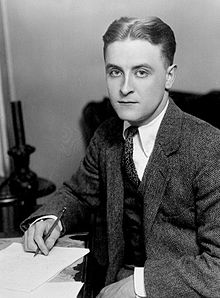
F.Scott.Fitzgerald,1921 Source: Wikipedia

F.Scott.Fitzgerald,1921 Source: Wikipedia

F.Scott Fitzgerald was a good friend. Both chapters that describe events with Fitzgerald show just how erratic his behaviour was and Hemingway suffers from having his writing discipline disrupted on a trip back to Paris from Lyon having recuperated a convertible car Scott and Zelda had abandoned due to the rain.

“I was getting tired of the literary life, if this was the literary life I was leading, and already I missed not working and I felt the death loneliness that comes at the end of every day that is wasted in your life.”

A Moveable Feast is an excellent read, sharing moments of life in Paris, we are introduced to some of Hemingway’s favourite cafés to write in, his conversations with Gertrude Stein and others about writing, up until he fell out of favour after publishing a mockery of another author’s work which she and others disapproved of, perceiving his act as disloyal to a fellow writer. He becomes a regular at the famous English bookshop Shakespeare & Co, where he is able to lend books, having no money to buy them and reads his way through Turgenev, D.H.Lawrence and Dostoevsky as well as striking up a friendship with the owner Sylvia Beach, a pleasant source of gossip as well as books.

Death in the Vines by M.L.Longworth

Death in VinesMystery, murder and mayhem among the vineyards of Rognes, a quiet Provençal village about 15 kilometres from Aix-en-Provence and one of the settings for this third in the Verlaque and Bonnet Provençal mystery series for M.L.Longworth, one time resident of Aix-en-Provence, who has herself decamped to one of the smaller villages of Provence, no doubt set to inspire more enticing destinations in future adventures of her detecting duo.

I reviewed her first mystery Death at the Château Bremont last year, when the author visited the book club I participate in. Since then there has been a second book Murder in the Rue Dumas and now we pick up with Judge Verlaque and his law professor amoureuse Marine Bonnet, in the third book, with as many gourmet references as we have come to expect previously.

CIMG3088

Château Paradis, Puy Sainte Reparade

The story begins in Rognes, with a wine theft and a missing persons report, a suspected walkabout. Some of the Bonnard winery’s best wines have disappeared, although the key to the cellar remains where it has always been and tensions are running high among family members, all of whom have become potential suspects.

Back in Aix, Madame Pauline d’Arras appears to have gone walkabout without her dog, most unusual according to her fretting husband Gilles, who has never gone a day in forty-two years of marriage without his wife preparing lunch for him by twelve-thirty. He is concerned as she has been exhibiting signs of possible early dementia.

In the village of Éguilles, a young woman leaves work early and is found later by a colleague in a bad state having been assaulted, she is taken to hospital and will soon become the subject of a suspected murder investigation.

Longworth has fun with not one, but three mysterious incidents and in particular some of the false leads which allow the Judge and us readers to go on various jaunts around the countryside, cross a famous bridge and dine in celebrated locations  he would otherwise have had to wait to indulge in his own time.

Knowing the routes they take, this book offers more than just a tale of mild suspense, it is like an invitation to explore more of Provence, to imagine sampling its wines, observe its pastimes (boules) and picture the lives of its villagers and long-established wine cultivating families.

TGVtrainJust as the region itself is changing, the TGV(train à grande vitesse or high-speed train) line attracting more Parisian commuters and foreigners wishing to invest in the continuation of artisan expertise in the French vineyards; so too is the city of Aix changing, an entire new quartier of modern buildings housing cultural centres of opera, dance, music, a new shopping area, an upgraded bus station with Europe’s longest living wall, showing off the architectural stamp of Kengo Kuma, a name more at home in Tokyo, New York or Beijing. This town is ensuring it will continue to attract visitors interested not just in its intriguing and ancient past, but that it can show itself worthy of contemporary interest also.

However the long-established, multi-generation residents don’t always embrace the new and Longworth allows her characters to despise the new developments in the way of a local population and national character that loves nothing more than a good long debate, although she doesn’t indulge them quite that far.

The Mayoress of aix en Provence  Maryse Joissains-Masini

The Mayoress of Aix-en-Provence
Maryse Joissains-Masini

The changes reflect a 21st century renewal and political statement, the creation of a legacy by a Mayoress who isn’t afraid to spend big on infrastructure during a recession and to court the popular vote. She spends with the frenzy of a woman who sees the finishing line in her sights. Will she survive the mayoral elections in 2014? It will be an interesting campaign to watch.

Overall, an entertaining and enjoyable light read that is all the better for allowing the reader to dwell among the vines and villages of a beautiful region.

Any book that allows one to travel when circumstances dictate that it not possible to physically go there, is the next best thing in my book.

Note: This book was an Advance Reader Copy (ARC) provided by the publisher via NetGalley.

Save The Rhinoceros #WorldRhinoDay

Today is World Rhino Day and to both learn more about the problem and to support the cause, we went to visit Wanza, Bela and Rimbo at Zoo Le Barben, our local zoo.

Wanza and Bela are the two females and Rimbo is the male and as well as visiting all the other animals in the zoo, we got to listen to the park biologist specialising in animal behaviour and learned about all the peculiarities of our local rhino friends. And my son asked what age he needed to be to get a job there. Only eight years to go! I am absolutely certain he will work with wildlife, he has been obsessed with animals since a very young age.

Population in Decline

Rhino_pop_map

The rhinoceros is said to have been around for 50 million years. Between the 19th and 20th centuries the population halved from a million to 500,000. Today there are only 29,000 left in the wild and a report on the news today mentions that 637 have already been killed for poaching purposes this year (compared to 668 for the whole of 2012).

What Are The Threats to the Rhino?

Data published by South African Department of Environmental Affairs (2013)

Data published by South African Department of Environmental Affairs (2013)

Poaching for Traditional Chinese Medicine – it is said to be an antidote for poison, to cure devil possession and keep away all evil spirits, sadly increasingly popular in Asia.

Habitat Loss – The clearance of land for human settlement and agricultural production has contributed to the loss of habitat as has deforestation. These countries have lost their rhino populations altogether: Burkina Faso, Ivory Coast, Ghana, Togo, Benin, Nigeria, Chad, Central African Republic, Sudan in Africa; and Pakistan, Bhutan, Bangladesh, Myanmar, Thailand, Cambodia, Laos and Sarawak in Asia.

Political Conflict – in war zones or where there is political instability, it has become easier for the poachers to kill rhinos and other endangered species e.g. Democratic Republic of Congo, Zimbabwe and Nepal.
Meet Wanza, Bela and Rimbo

Here are our local rhinos at Zoo Le Barben, near Solon de Provence.  Wanza and Bela are the two females who always stay in close proximity to each other and ape each others movements, while Rimbo stays a metre or two away and when the girls move, he walks around the perimeter marking his territory and checking that everything is as it should be, by sniffing and close inspection, as they can’t see very far.

We were fortunate to spend an hour listening to one of the park biologists, specialising in animal behaviour of large mammals, thanks to her, we now know a lot more about these magnificent creatures.

And Meet the New Baby Giraffe Djao

I couldn’t finish without celebrating the arrival of the new baby giraffe born on June 4th, one of the highlights of our visit, after the rhinos.

To support the rhino population from extinction, go and visit your nearest rhino, sign the petition to tell EU politicians to stop the rhino trade or click on Get Involved to find out how you can help.

Further Reading:

How To Get Involved

The Rhino Resource Centre

Save The Rhino

Sign The Petition – to suspend trade in rhino products!

CIMG4897

Two boys who now know a lot more about the threat of species extinction and are interested to help save them

The Cleaner of Chartres by Salley Vickers

Cleaner of ChartresI could not miss the opportunity to read Salley Vickers new book set in the region of Beauce in central France and the well-known town of Chartres with its famous cathedral, its mysterious labyrinth (which has inspired many authors to pen stories) and an intriguing blurb of the redemptive power of love and community in the famous French town.

Agnès is found as a baby wrapped in a basket by a peasant farmer, the only clue to the parentage of the young nursling, a single turquoise earring lying in the bottom of the basket. The farmer, unsure what to do with the infant, but knowing it beyond his capability to take care of a newborn, deposits her at a convent, leaving the nuns to take care of her. Which, in their own way they do, though it does not prevent her from being judged and misunderstood by the pious community, even though it might be inferred that it was they who made her vulnerable to the events that would follow.

“Agnès is the saint to whom young women pray for husbands, and, since Jean Dupère, who had found the baby, presumed the foundling’s mother had none, he named the anonymous woman’s daughter after the saint.”

chartres_labyrinthe

The labyrinth of Chartres

The story is narrated simultaneously during two different time periods in Agnès’ life, as a young girl during her various stays in mental health institutions and as an adult in the town of Chartres, where she lives an independent life cleaning the still famous Notre-Dame cathedral as well as various other local villagers homes, characters who bring the pages to life with their flaws, foibles and fantasies, whom Vickers just manages not to let fall into becoming cliché.

There is an underlying sadness to the story, as it seems that Agnes attracts bad luck and as a reader, we can’t help wishing for a lucky break or that people around her could just be kinder or more observant of who she is as a person and not to judge people on how they look or what has been said of them.  Like Deborah Batterman’s character Charlotte in her excellent short story, Crazy Charlotte, Vicker’s shows the potential destructive power of that evil tongue, community gossip.

“Agnès had no clear idea why she had fled to the crypt, but for her, unlike Father Bernard, it was the very opposite of the haunt of the diabolical. On the contrary, it had always seemed to her a hallowed place. Old and still and unjudging.  Unjudging was what she most craved.”

Chartres CathedralWhile The Cleaner of Chartres is no comedy, Vickers depiction of a French town/village reminded me a little of Julia Stuart’s delightful book The Matchmaker of Perigord, a fabulous light read that also excels in depicting the essence of local French villagers. Some of the most enjoyable moments in reading are in the simple narration of everyday life, the interactions between two people, in particular where those meetings bring about a small positive change. So many of Agnès’ interactions have the potential for this, the fact that so few of them eventuate, makes them all the sweeter when they do.

Overall, a pleasant read, although I was a little disappointed with the ending, which I felt should have revealed more than it did.

Note: This book was an ARC(Advance Reader Copy) kindly provided by the publisher via NetGalley.

London Literature Festival #londonlitfest

Late last week I was working in London and had a free Saturday to enjoy the delights of the city.

Providores

The Providores + Tapa Room

I was meeting a friend for brunch in Marylebone High Street, ironically it is London’s French quarter, many of the shops and cafés and boulangeries are very familiar; however we weren’t heading for a French café, we couldn’t help but be tempted by one of New Zealand’s greatest exports, chef Peter Gordon and his restaurant The Providores with its excellent downstairs Tapa Room, the all-day restaurant, café and wine bar.

London's South Bank Centre

London’s South Bank Centre

Before heading out, a quick google search “literary events London” informed me that the London Literature Festival was on, I couldn’t believe it!

So after a terrific brunch, off I went to the South Bank Centre and the Royal Festival Hall, always a hive of activity at the weekend, and hive  an apt metaphor, as the festival was using the image of a bee and honeycomb in its publicity.

Don’t you just love those sun loungers outside Foyles bookshop. Bliss!

To my delight and surprise, the American essayist and writer of non-fiction Rebecca Solnit, was speaking in the late afternoon, so I avoided the pull of Foyles to buy a ticket and then decided to check out The Spectacular Translation Machine, a collaborative attempt to translate an entire book from French into English.

CIMG4524The book On Les Aura! was the private diary of a French solider written in 1914 , which the renowned illustrator Barroux discovered and published in France, adding his line drawings to bring the story to life. It has never been translated into English, so each illustration along with the short paragraph of text was hung on a line around a room in the Royal Festival Hall and members of the public invited to choose an image and attempt the translation.

I chose an illustration of the solider lying in bed and a steaming cup of coffee beside him. The paragraph underneath the illustration read:

Je m’éveille après une bonne nuit de sommeil et je trouve un bol de café fument. Quel changement ! J’écris a ma chère femme pour la rassurer et lui envoyer mon adresse. Vers 10 heures, le Major passe la visite.

Along with children, a couple of students, a woman who could speak 15 languages and anyone else wanting to give it a go, we sat at the table and worked on our translations in a wonderful community approach. Such fun!

From there, a quick scout of the bookshop Foyles where I picked up a copy of Chinua Achebe’s Things Fall Apart and a copy of The Artist’s Way.

CIMG4528Then on to the Queen Elizabeth Hall for an inspiring talk by Rebecca Solnit, author of The Faraway Nearby, hosted by the literary critic Alex Clark. Solnit’s book was already on my list and downloaded to the kindle to read, but jumped to the top of the pile after an engaging talk about apricots, Alzheimer’s, Iceland and the significance of stories in our lives. A very poised and engaging speaker with scores of anecdotes and quotes that she repeats without hesitation.

It must be the season for book readings, because I am back in Aix and today we have had Jonathan Coe participating in an excellent and well hosted and translated discussion. More on that soon!

*

CIMG4522

Champ Harmonique MP2013

This poetic musical installation, entitled Harmonic Fields in English, came to my attention three months ago when I was searching for something interesting to write in the ‘To Do’ section of the destination guide on Marseilles I (used to) write for a magazine.

I knew it wouldn’t be too hard to find something spectacular, as Marseilles has been designated cultural capital of Europe for 2013, a prestigious event on the cultural calendar and one that has resulted in much-needed expenditure giving this seaside city something of a facelift.

I will save the wondrous changes in the city for another post, but yesterday my children and I drove into Marseilles and along the corniche to Les Goudes. I do love that word corniche , the English equivalent doesn’t evoke quite the same warm, exciting, air of anticipation feeling as corniche.

The village of Les Goudes, Marseilles

The village of Les Goudes, Marseilles

The corniche (roughly translated as ledge, more naturally translated as cliff road or coast road) winds its way from the centre of Marseilles, La Vieux Port past all the beaches and seaside restaurants, beach parks, cafes, cliff-front residences, joggers, sun-seekers and finishes in Les Goudes, which signals the beginning of Les Calanques, huge limestone cliff faces which make it nearly impossible to access the coastline between Marseilles and Cassis, except by boat or on foot. But the rewards for doing so are spectacular.

CIMG3832

The beginning of Les Calanques

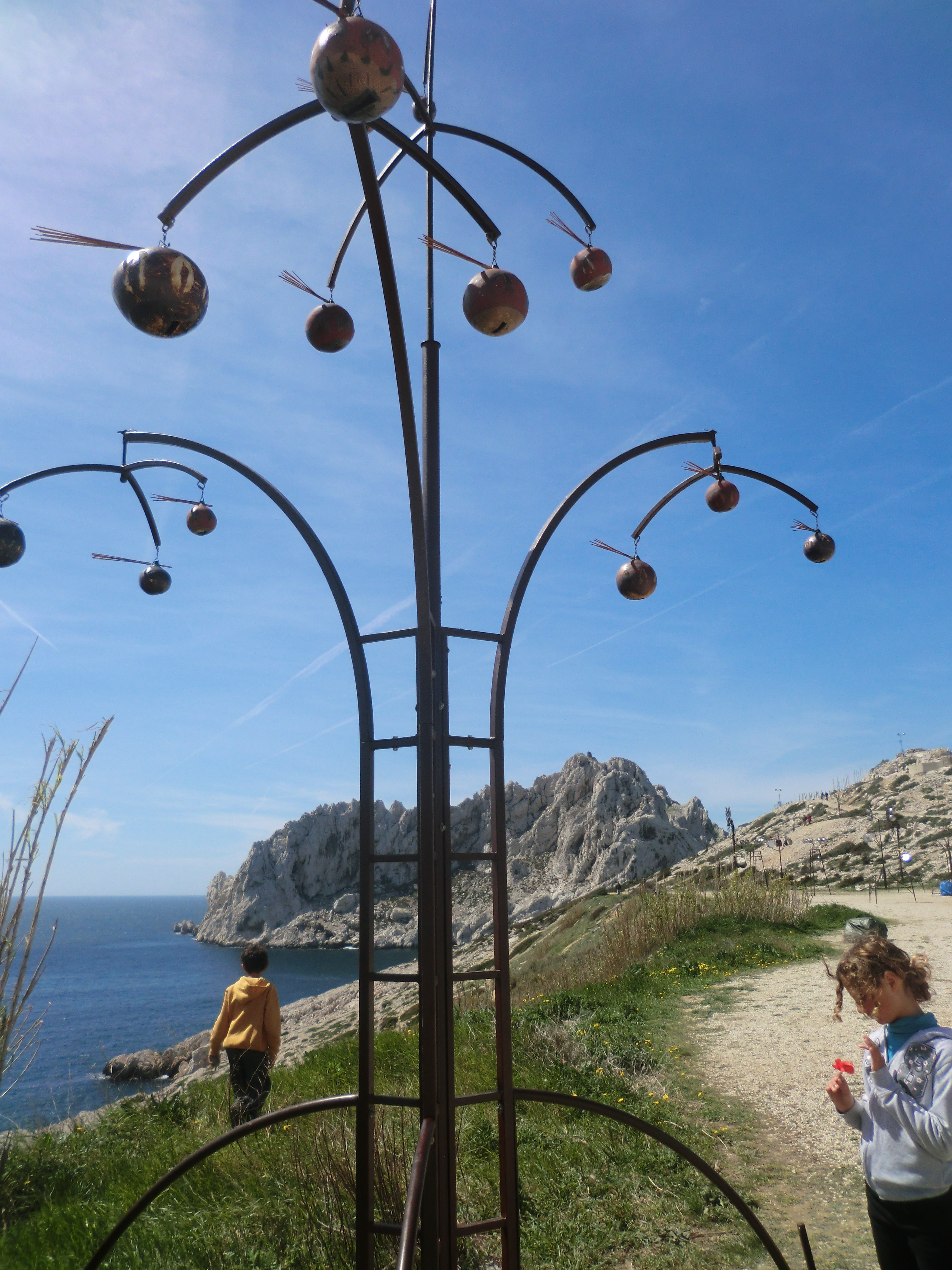
Champ Harmonique is the brainchild of Pierre Sauvageot, inspired by the wind and natural instruments of Indonesia, which require no player but the wind and can hang from trees or be placed in nature, allowing her to be playful, moody or melodramatic.

The coastline of Marseilles in the region of Provence could not be more perfect, natures favourite elements here are the sun and the wind, the one we know best from the north-east is the Mistral, but there are many others and yesterday we had a less dramatic, more playful wind, speeding up, then slowing down, her presence never more known and her subtleties never more appreciated than when given something like this spectacular installation to play with.

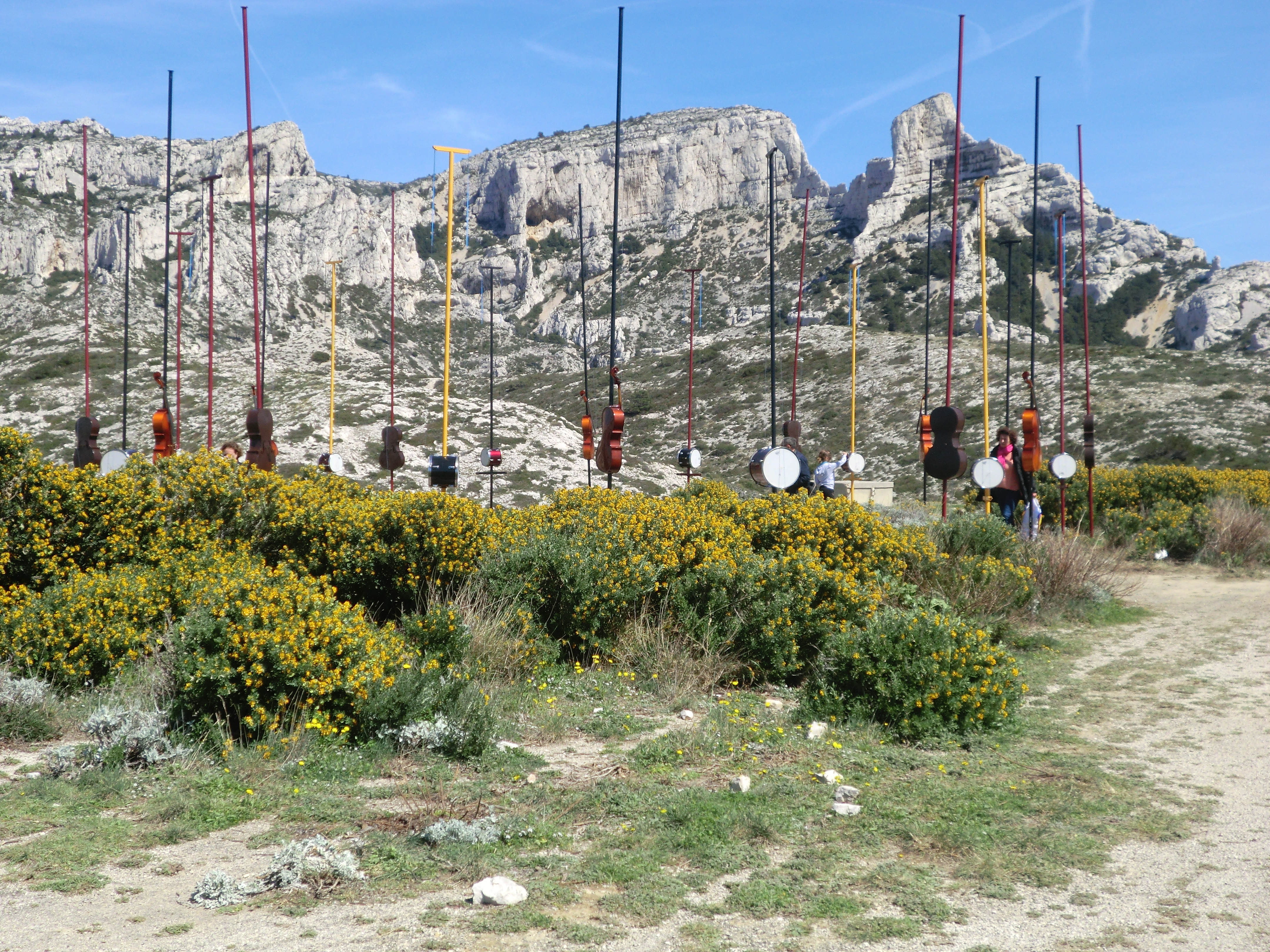
Nature gets to play here with cellos, drum shakers, glockenspiels, bamboo poles that sing, spinning music boxes, and a lot of other things I can’t even begin to translate like hélices-sirènesépouvantails balinais, tepees chromatiques, graals pentatoniques, arcs sonores, arbres à flûtes, cannes à pêche à lacrotale… 500 instruments in total.

It is a poetic symphony to experience and cannot (and should not says Pierre Sauvageot) be captured easily on film, but the stunning environment must be shared and if you have the occasion to visit the south of France during 2013, this is merely a taste of the events happening during the Marseilles Provence cultural capital celebrations.

CIMG3841Champ Harmonique is open until the 28th April in Les Goudes, Marseilles. It’s free to enter and the installation is supervised on Thursday, Friday and Saturdays and although it is open and accessible at all other times, some of the instruments are disabled during the unattended periods.

In true French style, (a sit down leisurely lunch remains a significant priority here for all), the installation is closed every day from 12–2pm.

And there will be a special open air concert on the evening of the 25th, the night of the full moon!

To imagine what the experience might have felt like and to see the view, here’s a three minute video, captured during the time it was open.

Ignorance

It was the book I read following Michéle Robert’s novel Ignorance that gave me something to reflect on regarding the meaning of that loaded word she uses as her title.

In Maya Angelou’s latest autobiography Mom & Me & Mom (review pending), she speaks of ignorance and quotes her mother:

She said, “Ignorance is a terrible thing. It causes families to lose their centre and causes people to lose their control. Ignorance knows no binds. Old people, young people, middle-aged, black, white can all be ignorant .

An apt epigram for this war-time novel set in occupied France.

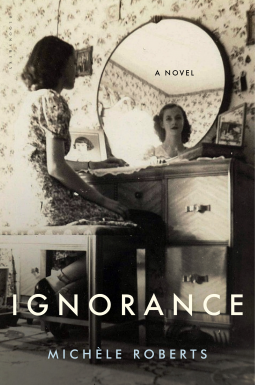
IgnoranceTwo young girls from a rural village are sent briefly to live in a local convent, Marie Angèle because her mother is about to have a baby and Jeanne, because her mother is unwell and in hospital. Marie Angle is the daughter of local middle class grocers, Catholic and raised with something of a sense of entitlement and superiority over her lesser friend Jeanne, whose mother, a widow converted to Catholicism when she married, but lives in a community that rarely allows her to forget her Jewish past. Marie Angèle expects to inherit half of her parent’s shop, she expects that the well-connected young Maurice, the man who can obtain anything during wartime will do the right thing by her.

I could hide my ignorance most of the time, because if he felt like talking he just wanted me to listen. One day, however, parked in the woods, he said : talk to me….I left Jeanne out of these tales. We’d been thrown together as children, purely by accident, we’d had a sort of friendship for a certain time, but we couldn’t mix now. I preferred to concentrate on positive things. That was how we were getting through the war.

Jeanne rarely thinks of her friend, she knows she is loved by her mother, observes their second class status in the way the nuns treat her compared to her friend, their quickness to judge and to listen to gossip as if it were fact. She is not ignorant of the activities that take place in the house where she works, but she like her mother is realistic about her opportunities, she doesn’t allow herself willingly to be taken advantage of, she learns from her past, though it will be insufficient to save her from the consequences of the misguided morals of her childhood friend.

Marie Angèle however, believes  that Jeanne, by working in such an establishment has thus become one of them, a common tart, she believes the village gossip, judges her former friend’s improved dress and appearance.  She portrays her own husband as a man unrecognisable as the same man Jeanne describes as one of the clients of that establishment. Even when confronted with an inkling of this truth, the wife’s inclination is not to question her husband, but to seek revenge against the bearer of the message, a penance that will continue to be paid into the next generation, as Marie Angèle manipulates control of Jeanne’s daughter Andrée and both their futures.

Womens prize logoThe novel is split into sections which view life in overlapping time periods from the perspectives of the two girls which couldn’t be more different, in particular on the part of Marie Angèle concerning not just her friend, but the plight of other families that must go into hiding. Towards the end there is also a section given to Andrée, Jeanne’s daughter and another from Dolly, one of the nuns, complicit in an act of betrayal.

The simple narrative structure exposes the ruinous attitudes, religious hypocrisy and shamelessly uninformed  morality of the ignorant and how it continues to be perpetuated by gossip, fed by jealousy and fueled by ill intention. It reveals that destructive instinct humanity sometimes imposes on the weak and those who are different from the rest. Devastating.

Ignorance is on the long list for the Women’s Prize for Fiction 2013. The short list will be announced on April 16. Will this title be on it I wonder?

Note:  This book was an Advance Reader Copy (ARC) provided by the publisher via NetGalley.