The Snow Child

I recognise in the first two paragraphs the allure of melodic sentences, the promise of picturesque phrases that almost make music as they fly off the page like dancing quavers to craft pictures in my mind of that breath-taking, wild and unforgiving Alaskan landscape.

“Mabel had known there would be silence.”

“She had imagined that in the Alaska wilderness silence would be peaceful, like snow falling at night, air filled with promise but no sound, but that was not what she found.”

Nature’s beauty and harshness leave me in a perpetual state of wonder with an undercurrent of fear and Eowyn Ivey doesn’t waste any time bringing both these sensations to the reader. A walk across the ice river bristles with tension and though I am sure Mabel will be safe, this is only the first chapter after all, I have to pause momentarily and put the book kindle down, my heart racing as I hear imagine that ominous crack.

Mabel and Jack have left the tame pastures of Pennsylvania and the close-knit support of their child filled families to try and make a success of ‘homesteading’ in the Alaska wilderness. The daughter of a literature professor, from a family of privilege, Mabel is finding her own self-imposed exile and the never-ending grief of a stillborn child that rendered them childless, almost too much to bear.

“We needed to do things for ourselves. Does that make any sense? To break your own ground and know it’s yours free and clear.”

    “Here at the world’s edge, far from everything familiar and safe, they would build a new home in the wilderness and do it as partners, out from the shadow of cultivated orchards and expectant generations.”

On a day when Mabel, a believer who often set fairy traps as a child, was near her lowest, she and her husband Jack build a beautiful snow girl from the first winter snow, lovingly sculpted with childlike features and dressed with a blue scarf and red mittens.

“Such delicate features, formed by his calloused hands, a glimpse at his longing.”

Wakened by the cold, Jack catches a glimpse of something passing through the trees on the edge of the forest, a glimpse of a blue scarf and long blond hair flying behind it, disappearing into the trees.

The next morning the snow child has been reduced to a pile of melting snow, the mittens and scarf are gone; footprints lead from the remnant of their powdery infant, across the yard into the trees.

This is no ghost story, but I couldn’t help but make comparisons with my recent read of Susan Hill’s ‘A Woman in Black’, another character who may or may not have been real, in this story there is a genuine intrigue that carries you through some of most beautiful passages of writing both in the depiction of characters and what they experience, as well as the incredible wilderness within which they live, as we try to grasp what she is, this child of the snow.

Red Fox by John Luke

“A red fox darted among the fallen trees. It disappeared for a minute but popped up again, closer to the forest, running with its fluffy red tail held low to the ground. It stopped and turned its head. For a moment its eyes locked with Jack’s, and there, in its narrowing golden irises, he saw the savagery of the place. Like he was staring wilderness itself straight in the eyes.”

For me this story is an exquisite depiction of humanity living alongside nature and the constant to-ing and fro-ing between the seasons, trying to make progress, the necessity of humanity respecting nature and understanding the nature of fellow human beings. When we cease paying attention to either, suffering will undoubtedly follow.

A magical story that unfolds like an extraordinary dream; a unique blend of the inescapable reality of life in the wilderness, beside the quiet affirming beauty of believing in the imagination and visualising life into being.

Note: This book was an Advanced Reader Copy (ARC), provided by the publisher via NetGalley.

State of the Nation or just A Dinner Party

Having come to the end of Sebastian Faulks ‘A Week in December’, a title reminiscent of Ian McEwan’s similarly named ‘Saturday’, I’m not convinced of its label as the ‘state of the nation’ novel of the 21st century, though it does provide an interesting glimpse into the media focus of the first decade.  It is the week before Sophie Topping is to hold a dinner party for her politician husband and during the days leading up to the event, we observe the lives of some of the guests and the issues confronting them, real and imagined.

Jenni Fortune isn’t one of the dinner party guests; she is a London underground train driver with a court case pending over a jumper (suicide) survivor, whose parents are claiming negligence. Representing her case, Gabriel is one of the few non-millionaire/billionaires attending the dinner party (not quite a typical dinner party then). Jenni spends her evenings in an online ‘parallel universe’, while Gabriel’s brother Adam lives in a psychiatric facility with what seem like very real voices, a remnant of his recreational drug induced schizophrenia.

John Veals is a fortunes trader living in another alternate universe, one that will have a greater impact on the world, though none of it traced back to him. He is a deal maker for the thrill of it and oblivious to much else that doesn’t impact on his game. Like the film ‘The Inside Job’, it is disturbing to absorb such blind obsession without heed for its devastating consequences. His reclusive son Finn is fine tuning his own fascination for gambling, participating in a fantasy football team, while his mother, more concerned with appearances, is reluctant to intrude on her son’s perceived need for privacy.

A second generation Pakistani family, their fortune made in lime pickle, will also be present; their son Hassan has been given everything but feels like an outsider. Searching for purity, he judges how others spend their lives and is disappointed with himself when he experiences reluctant joy in the same things. He finds solace with a group of young Muslim radicals, while Finn finds it with expensive drugs, reality TV and his football.

Through the lives of these dinner guests, we observe how people communicate and interact; many have lost their social graces and ability to openly and honestly connect or to even know each other. People live in different worlds, yet in the same world, disconnected. Similarly, global interconnectedness has become a complex mirage of companies, names, contracts and invisible links between banks, traders, importers, middle men, the many who work in the in-between world where nothing is actually made or produced, but where vast fortunes are skimmed off before the reality of this invisible transactional world is exposed, too late seen for the bluff that it was which will then be paid for by those in the real but mundane economy who will lose their jobs, pay higher taxes, while the government bails out those all-important ‘bonus winning’ gamblers bankers.

Ironically, just as I finished reading this, I hear on the news that HSBC, who has been fined £10 million by the FSA for mis-selling financial products to elderly and disabled clients, has decided to hit back on bonuses. One almost wonders if it is a public relations strategy, such little faith we have left in these grandiose institutions.

I haven’t mentioned the snarky book reviewer, indeed references to books abound and you will be endlessly entertained finding parallels between the worlds these characters inhabit. It offers an insight into a few not quite typical London characters, the makings of a terrorist and the arrogance of the financial markets.

And now, a welcome escape into magic realism and the snows of Alaska, watch this space for ‘The Snow Child’ coming soon…

The Woman in Black

Long awaited and much anticipated (by me), Susan Hill’s ghost story ‘The Woman in Black’, though first published in 1983, is experiencing something of a revival with the film premiering this month and the ghost story genre currently ‘à la mode’.
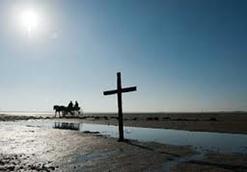
Adapted to the stage in 1987, the play has been running continuously since then (it is the second longest-running play in the history of the West End of London), thus I have been eager to discover what lies between the slim covers of this intriguing book myself, since reading ‘A Kind Man’ and ‘The Beacon’ last year and becoming a fan of her books.

Knowing that Susan Hill is one of those writer’s whose work and combination of words I like to savour, I take my time and let the language wash over me, as I come to know Arthur Kipps, while he sits by the fire on Christmas Eve listening to his stepchildren narrate ghost stories. Though it is a festive occasion, a grain of discomfort winds itself between the lines on the page and there is a flicker of an unwelcome presence, a glimmer of something he does not wish to recall, despite being far removed from his past now.

The story unfolds as we are taken back to his early days as a young solicitor, journeying to the cold, misty, windswept marshes of Crythin Gifford where he must wind up the affairs of the recently deceased Mrs Alice Drablow. Ever prosaic, he takes the responsibility in his stride and tries to ignore the reluctance of locals to engage with him or have anything to do with the matters of the deceased widow and the eerie Eel Marsh House.
While I very much doubt that I will be seeing the film, though I am sure it is excellent and well-made, utilising known techniques to ensure viewers experience ever heightened tension, heartstopping anticipation and chilling unease to elicit that emotionally wrung out feeling – I say this if like me, you have an acute sensitivity to music which accentuates all those senses (I succeed in scaring those who weren’t scared by the movie), I do love how Susan Hill uses details of nature and the physical environment to keep the reader and her protagonist grounded in reality.

There is no music accompanying the reading of this book and so I too hang on to that ambiguous reality. When Arthur visits Eel Marsh House and for practical purposes stays the night (yes, he is rather stubborn), he reassures himself and us by opening all the windows, understanding the layout of the house, going for a walk, venturing out in the dark against his better instinct only to be confronted with something that may or may not be able to be explained. And it’s not just him, even Spider the companionable dog responds to the lure of noises that sound familiar but could indeed be sinister.

It’s the perfect ghost story, because so much is left up to the interpretation of the reader, you can be a believer or a non-believer and regardless come away from this story feeling intrigued, satisfied and wanting to talk to someone about how you understood it. I am already looking forward to the next Susan Hill book that comes my way.

That Deadman Dance

Bobby Wabalanginy is a young Noongar Aborigine boy who loses his parents and thus spends more time than most among the ‘Horizon people’, those who came to his land on ships from somewhere beyond the horizon. A happy boy, his people believe that family includes the fish, birds and animal-life who communicate messages like the wind and the sky, all of whom they read with ease whilst the newcomers marvel at their abilities, as if it is by chance that they can predict the turning of the flames of a raging fire.

Bobby befriends Mr Cross who is trying to tame a piece of land in order to bring his wife and children to join him. Mr Cross teaches Bobby English and learns some of the protocols of respect between Aborigine people and begins to understand the logic of their ways. After his death, Bobby continues his lessons with Mrs Chaine and her twins, Christine and Christopher.

‘these men from the ocean horizon or wherever it is they come from, they do not leave even when the rains come and that wind blows across the water right into their camp.’

Kim Scott evokes the simplicity of Aboriginal life and their close affinity to nature and the environment, they are part of the natural habitat and leave little trace of their inhabitancy though they are adept trackers and can see things others can’t. The European’s bring a different way of being and a different relationship to the land, its climate and tendencies, they seek to tame it and turn it into something that resembles that which they are familiar with, thus they impose their will and their ways.

“we learned your words and songs and stories, and never knew you didn’t want to hear ours…”

Killer Whales by Badlydrawnstickman at behance.net

As the settlement grows, more people visit, interactions with itinerant whalers herald the beginning of their semi-dependency on the horizon people, who use their labour and reward them by trading food and goods, this becomes a turning point, because the whaling era comes to an end and the indigenous people are then without resources, they begin to resent that these people take their land as if they own it, use their animal brothers and then punish them for wanting to take a sheep or something else in return.

Tolerance degenerates into mistrust, laws are imposed and the European colonials assert their perceived superiority, enforcing these new rules by making an example of Bobby and others, throwing them in jail. They ensure his silence for anything he may have seen which would imply law breaking by the colonialists.

The old man snorted his contempt for Bobby’s song: those foreign words, that horizon people’s bleached and salty tongue and prickles of strange melodies. There are too many whales ashore, he said and too many people from all around, and do not greet us when they arrive or say goodbye when they leave. We are pressed by strangers from the sea now, and from inland too.”

It is a book that meanders, on plot and when it attempts to delve into a character, which it never really succeeds in doing, though Bobby is the common thread throughout. Some characters are memorable while others churn in a sea of names making the briefest of appearances. The story slows down and drifts aimlessly midway, seeming almost to lose its way, a reflection of what was happening to the population, lost in confusion.

Image courtesy of Nambassa Trust & Peter Terry

While not everyone may have the patience for this literary walk-about, Scott’s book touches something deep within, it is a window into the Aborigine people’s incredible relationship with the natural environment, how song and dance communicate knowledge and wisdom down the generations, something that if we ever knew it, has long been lost in our own western cultures, which have become less rooted in our landscape and surroundings as we seek to infuse each location we inhabit with known familiarity.

“he came alive in the Dead Man Dance and gathered together all the different selves. …It was like Bobby was them, was showing their very selves, inside their heads and singing their very sound and voices:…”

In my own virtual meanderings, I came across Cultural Survival and learned that it was only in 2007 that the United National General Assembly adopted the Declaration on the Rights of Indigenous Peoples which includes:

the right to live on and use their traditional territories; the right to self-determination; the right to free, prior, and informed consent before any outside project is undertaken on their land; the right to keep their languages, cultural practices, and sacred places; the right to full government services, and, perhaps most significant, the right to be recognized and treated as peoples.

It is sad it has taken this long for the hard work of many for this to become a Human Right, and there is much to do to continue to maintain it. I hope this book, quite apart from being an entertaining read, will help to increase awareness of the rights and cultural heritage of the many indigenous populations worldwide.

I am reminded in closing of the wonderful music of Yothu Yindi, an appropriate complement to the unique voices channelled by Kim Scott in this book ‘That Deadman Dance’ and winner of the Commonwealth Writer’s Prize for the South East Asia and Pacific region. Do click through and listen to the powerful and beautiful ‘Tribal Voice’

Note: This book was an Advanced Reader Copy (ARC), provided by the publisher via NetGalley.

All Our Worldly Goods by Irène Némirovsky

This is the second novel I picked up from the library, the first being ‘Fire in the Blood’ a tale of the consequence of indulging forbidden love. ‘All Our Worldly Goods’ has a similar theme but with different circumstances and this is more a story of what happened in the early 1990’s to those who preferred to make their own decisions regarding matrimony rather than follow the sage advice of their parents or in this case Grandfather. It is also a prelude to Némirovsky’s masterpiece ‘Suite Francaise’.

This is an era where marrying for love can be serious enough an outrage to find oneself disinherited. When there is only one son and heir and the family fortunes are dwindling, it is necessary that said son marries a woman with a significant and esteemed dowry. Pierre Hardelot follows his heart rather than his head and becomes estranged from his family just before being conscripted into the army to fight in the First World War.

Returning to the ruins of home © IWM (B7688)

With the onset of war, their families are forced to abandon the village, some fleeing by car, others on foot, only to eventually return to ruins, which they set about rebuilding in the hope that something as horrific and terrible as this war they have experienced can never be repeated.

However history has a habit of repeating itself, and so it does in both love and war. Another generation and an heiress banished by her family due to long standing interfamily resentments, and another son called up to war.  Fortunately death, destruction and shared traumatic experiences can provide the necessary ingredients for forgiveness, especially when strong, capable, male resources become a scarce commodity.

It is an interesting story depicting the lead up to the forced evacuations by families from the cities and provinces to find safety from the advancing invading armies, though it is dealt with lightly and there is nothing of the terror that one assumes must have consumed Némirovsky herself, knowing what her own family went through. In this story we are never confronted with the invaders and neither do we have a very real feeling for how war must have changed Pierre.

First published in 1947, five years after her death at Auschwitz, this book can now seen in context with the more recently published collection of Némirovsky’s works, unearthed by her biographers.

What the Dickens!

I couldn’t let the day pass without acknowledging that it is 200 years today since Charles Dickens, perhaps the greatest English novelist of the Victorian era, the second of eight children, was born on 7 February 1812 at Landport, near Portsmouth, Hampshire. So…
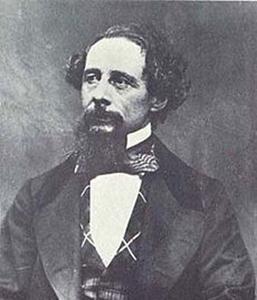
 

Happy Birthday Dickens!

Though not poor as such, the family went through difficult times and young Charles Dickens certainly experienced and saw hardship first-hand, images and memories that stayed with him and manifested themselves over and again through the pages of his life’s work.

Photo via wikipedia

I’ve yet to start one of his books this year, though I have plans to read his last novel ‘Our Mutual Friend’ and ‘David Copperfield’, the latter said to be close to his own childhood experiences and perhaps less painful for him to write than his abandoned attempt to write his own autobiography, which he found too distressing to continue.

It is a testament to his popularity that his works have never been out of print and continue to be read as much today as they did when they were serialised in publications in the 19th century.

To experience or learn more of Dickens world, there is Claire Tomalin’s recently published ‘Charles Dickens,  A Life’ , an exhibition at the Museum of London and a brilliant website where you can get completely lost in Dicken’s facts and memorabilia.

My favourite commemoration thus far, would have to be Dovegreyreaders scribbles in relation to his support and inspirational campaigning for England’s first children’s hospital, the great and wonderful GOSH, Great Ormond Street Hospital.

So, do you have a favourite Dickens novel or plan to read one this year?

Fire in the Blood by Irène Némirovsky

It is interesting that I should plunge straight into this story after reading Edith Wharton’s ‘Ethan Frome’. I picked this up in the library; Irène Némirovsky novels becoming a bit of a sensation after lost manuscripts hidden and deposited with friends during WWII resurfaced recently to be published to great acclaim, including the wonderful masterpiece ‘Suite Française’ which I very much enjoyed and also recommend.

I found a similarly themed story of the consequence of forbidden love, the bind of marriage and sacrifice, only this is a Ukrainian born French woman writer, so in accordance with cultural differences, as discussed in the recently reviewed ‘La Seduction’, in this story there is less holding back, the suffering occurs on account of having indulged the emotion rather than from refraining in following it through and burying it deep.

Moulin à Eau by Madeleine Merlin

The title ‘Fire in the Blood’ could be said to be an apt theme in both novels, though Ethan’s fire was dampened somewhat in its manifestation, through societal expectations and the cooling effect of a frigid New England winter.  It is a reference to youth and daring, the thing that can incite recklessness.

We enter the lives of a family in Issy-l’Evêque, a village where young women marry to escape their circumstances, where

everyone lives in his own house, on his own land, distrusts his neighbours, harvests his wheat, counts his money and doesn’t give a thought to the rest of the world.

The narrator Silvio, is a man who observes the young and recalls his own restless and chequered youth, he is reminded how little things change yet how impossible that was to accept back then, especially when one had fire running through the veins. He watches events unfold and resists involvement as slowly the implications of his own youthful behaviour are revealed.

Irène Némirovsky’s family fled the Russian revolution in 1918 when she was a teenager and she became a bestselling novelist in France until forced to hide out with her husband and two daughters in the village at the centre of this novel during the 1940 German occupation. She was arrested and deported to Auschwitz where she died in 1942. Her daughters remained in hiding and survived and it is thanks to them and the efforts of Némirovsky’s biographers, that her previously unpublished manuscripts are now being read.
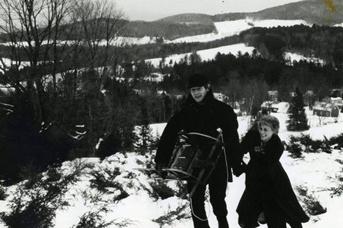
The story of Irène Némirovsky’s life and the gift of her manuscripts are as compelling as her fiction, now experiencing a deserving revival in French and in English.

Do you have a favourite French author?

Ethan Frome by Edith Wharton

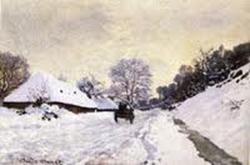
‘The Cart, Snow Covered Road at Honfleur’ by Claude Monet

In a year when many are commemorating Dicken’s for his 200th year anniversary, I was prompted by a Dovegreyreader post to do the same for Edith Wharton, in homage to 150 years since her birth on 24th January 1862. A perfect winter read, this slim volume with its enticing cover featuring Claude Monet’s painting was confirmed as my choice when I spotted it in Book in Bar’s annual 50% sale.

Sainte Claire du Vieux Château

So I am making it an ‘Edith Wharton’ year which seems appropriate for many reasons, she is a woman after all, she left her country of birth and came to France which interests me (and I have just learned she had a house here in the south of France at Ste. Claire du Vieux Château) and lastly due to the timely association between Wharton’s novels and the popular Downton Abbey series, which prompted an interesting article in the NY Times discussing the era of wealthy American heiresses marrying into the English aristocracy to save them from financial ruin, some of whom are said to have been associated with Edith Wharton.

‘Ethan Frome’ is narrated by a short stay passer-by in Starkfield whom Frome transports to his place of work during heavy snows and is subsequently invited to seek refuge from a blizzard one evening in his home, an abode no one has entered or been invited to for many years. Upon hearing of his invitation, one of the villagers curious to learn more from the visitor, opens up and reveals much of the story of Ethan’s past to him.
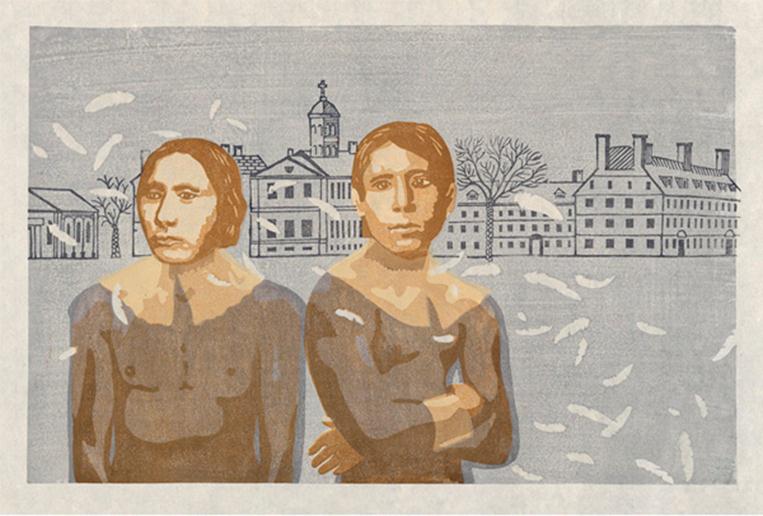
Thus we hear how three people’s lives were paralysed by past events, simple lives complicated by forbidden love and a desperate act. It is a story of its time, an era when people of certain classes were restrained in their behaviours, though not in the intensity of their feelings, endeavouring to suppress them for the sake of saving face or fortune.

I found it interesting how Wharton portrayed the angst of the young would be lovers, drawing the reader into sympathising with them, while portraying Ethan’s wife Zeena in a shifty, calculating way, when she would have been reacting to her natural instinct to want to separate the two. Perhaps in another version of the story it may have been possible to sympathise with Zeena had her perspective been portrayed, it is easy to be lured and swayed by a writer’s deceptive tools when there is more emphasis on one side of a story or on certain characters. I also found it interesting that she decided to portray a husband suffering for having fallen in love with another woman, rather than that of a woman who falls for another man.

I can imagine reading this again, I enjoyed the writing and Wharton’s use of metaphor to depict the landscape and the barren living conditions and I look forward to reading another of her works soon.

So, do you have an Edith Wharton favourite? Have you read any of her books?

Caleb’s Crossing by Geraldine Brooks

Caleb & Joel, Harvard College woodblock print by Annie Bissett

Geraldine Brooks delves into a period of history around 1665 combining fictional characters with the intriguing and real-life characters of two Wôpanâak tribe members, Caleb Cheeshahteaumauk and Joel Iacoombs, inhabitants of the 200sqkm island of Noepe, (Martha’s Vineyard) located south of Cape Cod in Massachusetts and the first Native Americans to attend Harvard College.

Thank you to Annie Bisset for allowing me to use her wonderful woodblock print of Caleb and Joel, click to learn more about these real life characters and to see Annie’s excellent artwork.

Bethia is the daughter of a Minister who has ambitions to convert the Wôpanâak people to Christianity. Though they live on the same island, it is not deemed proper that they mingle and Bethia believes she has sinned gravely when she develops a friendship with Cheeshahteaumauk, nicknamed Chuppi ‘the one who stands separate’ the young son of a Chieftain whom she names Caleb. He calls her ‘Storm Eyes’.

“to the extent that my spirit was roiled, so his seemed calm.”

Bethia and Caleb are like yin and yang, they contrast and yet complement each other, light within dark, dark within light, they attract and recoil from each other, moving through life with their separate belief systems, alien and yet understanding, their spirits connected in ways the intellect struggles to comprehend. But while he is able to suspend his beliefs to better understand the ways of the settler’s, something deemed necessary for their survival, she cannot do the same, she observes and feels something, but her fear of it convinces her it must be devil’s work. Caleb is elusive, we perceive him rather than know him, which makes him mysterious, left to the imagination to fill in the gaps. He appears not to have been corrupted and is “all seeing”, at least I imagine him as such.

The book is split into three periods in Bethia’s life, moments when she picked up the pen and looking back recorded certain events in her life, the first period when she was an adolescent on the island records her transformation from carefree girl within a stable family environment to young adult when a change in family fortune requires her to be indentured as a housemaid in a Cambridge school so her brother can continue his education.

I enjoyed this part the most, it touched both her joy and terror of discovering the new, her close relationship with nature, Caleb and the island and her desire to know more while fighting her puritan instinct to punish herself for those thoughts and stifle their continual unwelcome presence. It is the beginning of her repressed crush on the young Chieftan’s son, who appears comfortable in himself with his knowledge and harbours none of her fears of taking that knowledge to the next level.

Thus we find ourselves in the second part, in Cambridge where Bethia’s brother Makepeace and the two boys Caleb and Joel spend a preparatory year before sitting the exam that will allow them entry into Harvard. It was something of a shock in reading to suddenly be thrown into Cambridge, just as it must have been for the protagonist herself, I wasn’t ready to leave the island and wanted to dwell more on the years that were not recounted in the text, but alas, it was not I steering this ship and so reluctantly I let go of that disappointment to await Bethia’s fate. Bethia desires intellectual knowledge or at least to be in the proximity of it, so despite her lot, she is content to be within an educational institution and this attraction forms the basis of future decisions she will make.

An enjoyable read, although the cut off between the three sections always left me wondering and craving a little more for what happened next, never quite reaching fulfillment. The introduction of the characters of Caleb and Joel left this reader wanting more and I was disappointed that we don’t learn more of their experience, which I understand would have required great steps in the imagination, as little details of their time at Harvard are actually known or recorded. But ever thankful to have been enlightened on the achievements of these two young men and their place in the story of America and another great read from Geraldine Brooks.

The Tiger’s Wife by Téa Obreht

Although I live in France, speak the language and love to read, I confess I don’t read nearly enough in French and admit I am holding any intent in that direction in abeyance for a while, comfortable with the certain knowledge that I will indulge the desire eventually. The last novel I bought in French was a translation of The Life of Pi’ by Yann Martel, a gift for my friend B, so she could read it in her ‘langue maternelle‘. It is serendipitous then, that she bought me ‘The Tiger’s Wife’ for Christmas, another novel with an unforgettable feline presence. We will share the experience of our respective tigers soon, the discussion sure to cross both languages.

And so to Téa Obreht’s debut novel and Orange prize winning ‘The Tiger’s Wife’.

I do enjoy traversing cultures and storytelling whose origins are unfamiliar, requiring an open mind and suspension of judgement. Obreht brings us to a land that has been split in two, where crossing a border causes suspicion and having the wrong accent or name can be dangerous.

Natalia is a young doctor who travels with her friend Zora across a hostile border to bring medicine to an orphanage. On her way she learns that her dying Grandfather has followed her and passed away in a neighbouring village. His personal effects, including his copy of ‘The Jungle Book’ that he always keeps with him are missing; Natalia takes a detour during her visit to retrieve them, enabling her family to render their funereal rituals in peace.

A  simple story, there is little depth to the living characters, we don’t spend much time with or get to know Natalia’s mother, grandmother or her travelling companion Zora. The contemporary story outline is a frame within which to retell stories and reflect on memories the grandfather shared with Natalia, presented as flashbacks.

However, this is where Obreht’s narrative really shines, when the deathless man appeared everything came into focus and I was hooked. The grandfather’s encounters and conversations with the deathless man are curious and engaging. We meet the equally legendary villagers of Galina where he grew up and in a fable-like manner, we learn how the background of these characters led to their subsequent behaviour and the role of the Tiger’s wife.

We encounter village rumour, superstition, stories and incidents where truth and the imagination make equal contribution to the version passed on or ‘dug up’ in the present day. The stories often feature a well-intended, admirable type such as Luka, the butcher’s son and Dariša the bear hunter, transformed by events which see their nature change, the humble youngster becoming a wife-beater, the caring turning brutal, the compassionate victimised.

Framing stories within another story can be distracting, particularly when we have a preference for one over the other and when the narrative voice changes; it reminds me of the Rumi scholar and novelist Elif Shafak’s book The Forty Rules of Love’ which I adored for the most part, the fable like story of the dervish Shams unfolds like an exotic journey; the contemporary story within which it was framed didn’t work so well, though I do recommend the book.
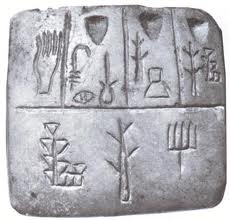
I hope more novelists succeed in crossing cultures and bringing into the light their stories, myths and family legends with creative inspiration.

Lest we forget.