The Memory of Love by Aminatta Forna

When I was gifted my kindle by my kind, book-loving Aunt,  Aminatta Forna’s The Memory of Love was one of the preloaded titles I looked forward to reading.

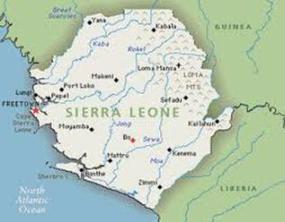
Aminatta Forna was born in Scotland and raised in Sierra Leone, the country where most of this story takes place. She is the daughter of a former Sierra Leonean cabinet minister and dissident, murdered by the state in 1975. She has written the story of three men, whose lives intersect briefly, and who come into contact with each other at the Freetown Central Hospital.

Dr Adrian Lockhart, recently arrived from London has responded to a request to an overseas posting for a government-sponsored psychologist specialising in PTSD (post-traumatic stress disorder), his thoughts and actions suggesting he may be in the midst of a midlife crisis, needing some distance from his life to see it for what it really is. Life in Sierra Leone may allow but doesn’t appreciate such self-centred indulgences and Dr Kai Mansaray, a young local surgeon gives him an honest portrayal of just how people like him are perceived, lacking sufficient equanimity to see it for himself. Despite the frankness, the two become friends and seek out each other’s company with increasing frequency.

Both men experience love and its aftermath, its vulnerability, its brief joy, its destruction and the memory of it, as if it were real, even when it no longer exists.

 For death takes everything, leaves behind no possibilities, save one – which is to remember. He cannot believe with what intensity one can continue to love a person who is dead. Only fools, he believes, think that love is for the living alone.

In addition to his post at the hospital, Adrian helps out at the mental hospital and recognises Agnes, one of his former patients (one visit patients – they visit once and never return).

The people his colleagues sent to him were outpatients mostly, the ones with whom the doctors could find nothing wrong. And afterwards each of his new patients made the same request for medicines, to which Adrian explained he was not that sort of doctor. A nod of acceptance, rather than understanding. None of them ever returned.

Agnes is discharged before Adrian sees her and he becomes intent on trying to resolve the cause of her illness, a fugue, or temporary amnesia, and in doing so he will come too close to the sick, ugliness of the country’s past conflict where sometimes amnesia may be the only respite one has from a brutal reality.

We also meet Professor Elias Cole, an old history professor who taught at Freetown university before and after the 1969 coup, his position afterwards, somewhat elevated than it was previously. He has an obsessive fixation on Saffia, the wife of another Professor, whom he befriends and becomes caught up with unknowingly, leading to an interrogation and a spell in prison, which will change both their lives. He encounters Adrian in the hospital, near the end of his life, seeking an audience to share his story before it is too late. Adrian listens and realises there is more to Professor Cole’s story than he is letting on.
This is a multi-layered story that reveals itself with each encounter, that hints at the traumatic events and psychological destruction of a nation, depicting the constant struggle for survival in a post-war era and the love it’s citizens have for their country despite the difficulties and horrors of the past. There is sacrifice in staying and pain in leaving; there is no real escape, both will suffer, albeit in different ways.

The author, Aminatta Forna

I really enjoyed this book, it was a pleasure to read and consider its characters and what they represented, I loved it for the questions it posed in the mind of the reader, leaving us to come to our own conclusions, for every question could have had an equally valid, if opposite answer, such is life and the characters who inhabit our own reality, there are those who will stand up even it means they will be sacrificed and those who will remain quiet and flourish.

It is as if there are no answers, there are just the decisions we make, that both we and the generations that follow then need to live with and understand.

I recommend listening to this powerful discussion between the BBC’s Bola Masuor and Aminatta Forna on the BBC World Service talking about both The Memory of Love and The Devil that Danced on the Water, the book she wrote about her search for the truth of her father’s fate after he was seized by secret police and later killed.

When you do nothing, what do your children inherit?

*

The plain fact of the matter is that any group will remain potentially conscienceless and evil until such a time as each and every individual holds himself or herself directly responsible for the behaviour of the whole group – the organism of which he or she is part. We have not yet begun to arrive at that point. – from the work of M. Scott Peck, People of the Lie

Buy The Memory of Love via Book Depository


Dinah, her Mothers and a woman named Ruth

Aix Yoga Center Teachers

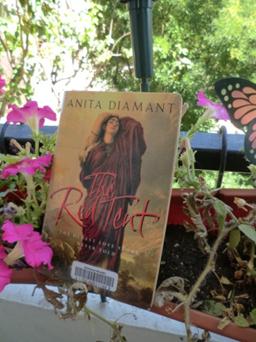
‘The Red Tent’ was published nearly 15 years ago but only came to my attention a couple of weeks ago through one of those wonderful connections that sometimes occur out of the blue when you are least expecting it.

The hilltop village of Villeneuve

Recently I met Jaci, an Aix Yoga Centre teacher, who organised a day at her home in Villeneuve, two hours of yoga in the morning, a shared lunch and aromatherapy massage in the afternoon. The first lady who came to see me for a treatment wasn’t doing yoga, she arrived with her well-used hiking poles, out of the hills of Forcalquier, having decided that a 90 minute walk before a 90 minute massage would be a good idea.

Yoga in a Mongolian yurt in Villeneuve

And so I met Ruth, a wonderful free-spirited woman with long flowing blonde dreadlocks, originally from Tuscon, Arizona, living in a farmhouse up in the fertile hills of Provence, where she lives with her French husband and two daughters.

As I worked away, I casually mentioned my very dear friend and book buddy CKC, who also comes from Tuscon and had she by any chance read Nancy E. Turner’s excellent trilogy ‘These is My Words’, a story about the author’s grandmother Sarah Prine, pioneer woman from the same area?

Well, from there we traded book titles and discovered we loved the same books and both went away with a “you MUST read” recommendation, mine to her being Sandra Gulland’s trilogy on the life and sorrows of Josephine Bonaparte and hers to me, Anita Diamant’s ‘The Red Tent’, “My daughters and I loved that book” she said.

The Red Tent

Dinah is the only daughter of Jacob, who fathered 12 sons by four wives who were sisters. It is from her perspective that we are told her mother Leah’s stories, her own story in the land of her birth and her exile in Egypt.

 “If you want to understand any woman, you must first ask about her mother and then listen carefully. Stories about food show a strong connection. Wistful silences demonstrate unfinished business.”

Aromatherapy Massage in ‘The White Tent’

And in ‘The Red Tent’, that place set aside for women to inhabit during their monthly cycle, secrets of womanhood were shared and passed down the generations, the clan of Jacob.

The book is epic, taking us through the joys and sorrows of births, miscarriages, barrenness, jealousies, betrayals, the vivid and revelatory dreams of sisters seeking insight and forgiveness.

We meet Rachel, whose presence was as powerful as the moon; it was her beauty that lured Jacob into the family fold, her body emitting the scent of fresh water, filling the dusty hills where they live with the promise of life and wealth.

Leah, Dinah’s mother and herself mother to seven sons, her twin coloured eyes, generous height and fertile womb giving her unique status.

Zilpah, daughter of an Egyptian slave, a few months younger than Leah, milk-sisters and playmates since childhood, who said she remembered everything that happened to her, including her own birth.

Bilhah, last born of the sisters, another daughter of a slave who ran off when she was young – tiny, dark, the silent one.

It is the women we come to know and understand and whose stories we follow, as they navigate life, love, marriage, heartbreak, living in a caravan of tents with a father they no longer respect, now creating their own large family, trying to better themselves until one tragic episode arrives to undo it all.

And for that, if you haven’t done so already, you will just have to find a copy of this ambitious, riveting tale of the lives of these women living in ancient times.

“If you sit on the bank of a river, you see only a small part of its surface. And yet, the water before your eyes is proof of unknowable depths. My heart brims with thanks for the kindness you have shown me by sitting on the banks of this river, by visiting the echoes of my name.”

Thomas Jefferson – Lessons from a Secret Buddha

This is a delightful and simple novella that views the life and achievements of one of America’s great role models through the principles of Buddhist thought, a man who wished only to be remembered for three achievements, author of the Declaration of American Independence, of the statute of Virginia for Religious Freedom and Father of the University of Virginia. He was President from March 1801 – March 1809.

Suneel Dhand has created a Buddhist guru whom he connects to Jefferson’s mother, and who then begins to correspond with the young man when he is a discontented, overweight child. The letters introduce him to seven ancient principles of Buddhism and the Eastern way of life and we then witness Jefferson’s own lifestyle change as he becomes vegetarian, more interested in books and develops a greater awareness of how thoughts, actions and behaviours position a man.

When we take an in-depth look at all of his lifestyle practices we see that Tom practiced very Eastern ways of living, different from his fellow countrymen. In many ways he was a well-being guru, centuries ahead of his time.

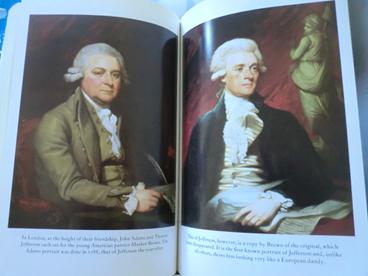
Most of my knowledge of the role Thomas Jefferson played in American society comes from having seen the excellent HBO TV series ‘John Adams’ and the awe with which he was regarded by both John Adams and Benjamin Franklin as they encouraged him to pen the Declaration of American Independence.

Portraits of John Adams and Thomas Jefferson by American painter Mather Brown 1788

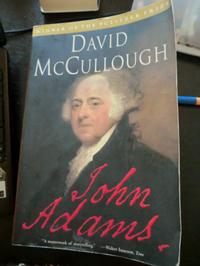
The series is based on David McCullough’s Pulitzer prize-winning biography ‘John Adams’, a volume I have on the shelf and will one day set to and read as well.

As Abigail Adams would confide to Jefferson, there had seldom been anyone in her husband’s life with whom he could associate with “such perfect freedom and unreserve” and this meant the world to her.  If you haven’t seen the series, here are some of Jefferson’s greatest moments played by the British actor Stephen Dillane.

A surprising little book, one that is full of good sense and relevant to today while reminding us of the extraordinary man Thomas Jefferson was and the major contributions he made not just to American history but also to humanity.

Today millions continue to be inspired by Thomas Jefferson, the genius who galvanized his people to freedom. A truly enlightened soul indeed – and that, without ever requiring any lessons from a Secret Buddha.

Note: This is an Advance Reader Copy (ARC) provided by the publisher via NetGalley.

The Coward’s Tale

Laddy Merridew comes to spend time with his Gran in an old Welsh mining town in Vanessa Gebbie’s ‘A Coward’s Tale’. Not happy with his lot, lost in the in-between, here where he doesn’t feel like he belongs so starts skipping school and there, the home he has come from that is breaking apart and will never be as it was and what’s worse, is requiring him to make decisions he feels incapable of making.

Laddy comes to the town statue outside the public library to listen to the local beggar Ianto Jenkins tell and trade stories for a coffee or a bite to eat and this part of his day passes pleasantly for hearing and learning about the descendants and ancestors of the town, all of whom have in some way been touched by the tragedy at the Kindly Light coalmine one September morning back then.

 ‘We’re meant to be doing coal mines in history.’

‘History, now, is it?’

‘They make it boring though. Not like your stories. You make it like it is still happening, in your head anyway.’

And the beggar shakes that head. ‘It is. And sometimes Maggot, I wish it wasn’t.’

Ianto Passchendaele Jenkins narrates the stories that link present day inhabitants back to their ancestors, two generations previous, showing that one is rarely ever completely free of the past and the sins of the fathers are often witnessed albeit in a new form, in the actions of those living today. From Baker Bowen to the Woodwork Teacher, Halfwit and the Deputy Bank Manager, the Deputy Librarian and the Undertaker and the Piano Tuner, Ianto shares their tales with warmth and compassion until finally one of his characters, the Collier, Peter Edwards share’s the beggar’s story, ‘The Coward’s Tale’.

Like young Laddy who no longer knows whether what his parents say is true or not, so too with the beggar’s tales, which captivate cinemagoers waiting in the queue, keeping him talking by topping up his coffee supply, the author making use of the words may and will to imagine what people may do and if so what that means they will do. Only Laddy searches for clarification, the others are happy to be mesmerised and encourage him with edible gifts.

‘For my breakfast? I will tell a story for breakfast? An egg. How about a nice egg?’

Once I got into the tales and understood the framework, I enjoyed the book, but I admit it took three attempts before the stories managed to carry me away with their rhythmic, poetic prose. However they are splendid tales and told with a unique captivating voice that puts the reader right in that square with all the other listeners, empathizing with each of the characters that the adored Ianto Jenkins brings to life for them.

Finally I am reminded of another set of tales of life in a small French village in Julia Stuart’s The Matchmaker of Perigord, which was a favourite a few years back, which I also recommend as a compelling, humorous summer read.

Note:This book was an Advanced Reader Copy (ARC), provided by the publisher via NetGalley.

Frieda’s Unlikely Inheritance

Suzanne Joinson’s A Lady Cyclist’s Guide to Kashgar, is a novel that intertwines the lives and stories of Frieda, in modern-day London and Eva, part of a missionary group with her sister Lizzie and their companion Millicent in 1920’s Kashgar, in the western part of China.

“Why do you want to bring it?” Lizzie asked, but I don’t think I answered her. I did not tell her that it was my shield and my method of escape; or that since the first time I pedaled and felt the freedom of cycling, I’ve known that it is the closest I can get to flying.

Eva has taken her bicycle and is penning a guide to cycling which seems to interest her more than missionary activities, excerpts of which grace the beginning of each Kashgar chapter and whose meanings could be interpreted to have wider meaning than just cycling.

What the Bicycle Does: Mounted on a wheel, you feel at once the keenest sense of responsibility. You are there to do as you will within reasonable limits; you are continually called upon to judge and to determine points that before have not needed your consideration, and consequently you become alert, active, quick-sighted and keenly alive, as well to the rights of others as to what is due yourself.

Eva and her companions have travelled to the ancient Silk route city of Kashgar in the hope of converting lost souls, but seem to find only trouble, not helped by the questionable motivations of each of the individuals that make up the group. Tolerated but unwelcome, they find themselves ostracized and seen as bringing bad luck during a time of political and religious unrest.

In London Frieda lives a solitary existence, her work demanding her to travel constantly which keeps her from becoming too involved in any social sense when she is at home – that and her choice of relationship which assists in putting a halt on her progression. But two things occur that may offer not just distraction, but a divergence in her life, with which she has a growing frustration and sense of wanting to change. The arrival of a young Yemeni artist on her doorstep with skills in drawing birds like the long-tailed variety he draws on her wall and the arrival of a letter informing her of her responsibilities regarding the death of a person who has named her next of kin.

The letter prompts her to consider making contact with her mother whom she has not seen since she was seven years old and Tayeb, the young artist is able to help her decipher the Arabic script in a notebook she finds that now belongs to her. He also knows how to take care of an owl that seems to have fallen into her care.

The book wasn’t quite what I was expecting, perhaps due to the title and the mention of the Silk Road, these things are mere markers which entice our interest while the story takes us on another journey altogether, the bicycle more of a metaphor for a journey and the things one is likely to encounter and is required to consider. I enjoyed the story and in particular the contemporary story which provides the framework.

Here the birds’ journey ends, our journey, the journey of words, and after us there will be a horizon for new birds. – extract from Mahmoud Darwish’s poem ‘Here the Birds’ Journey Ends’.


Note: This book was an Advanced Reader Copy (ARC), provided by the publisher via NetGalley.

Lucretia and the Kroons

Unsure quite I was pre-approved to read Lucretia and the Kroons’, published in July 2012, I was however curious to read Victor Lavalle’s novella, described by Gary Shteyngart as a master of literary horror.

After reading an audio transcript of an interview between Lavalle and Amy Minton on Narrative Voice, I decided to download his book and find out what it was all about, it being good to read outside what one would ordinarily choose.

It’s an adolescent literary horror of the tame kind and might even be considered magic realism depending on how you interpret it.  The world Lucretia enters can be seen as a metaphor for that which we either witness as an observer or experience as one who is mortally ill – that place somewhere between the living and the dead. Lavalle’s flourishing imagination takes two girls to a place that may or may not exist on an adventure of a zombie-ish kind.

Lucretia celebrated her 12th birthday without her best friend Sunny because she was too ill to attend. Lucretia is determined to spend time with her friend to make up for it and so arranges with much difficulty for Sunny to spend an afternoon with her, convincing her mother to leave them unsupervised for two hours.

Just before Sunny’s imminent arrival, Lucretia’s brother Louis tells her a story about the Kroons, the people who used to live two floors up and relishes warning her, as only older brothers can do, of the horrors that can happen to children. Lucretia is afraid for herself and especially for Sunny, who lives one floor up, so decides to take matters into her own hands with the intention of rescuing her friend.

The experience of reading Victor Lavalle is a little like Murakami for teenagers, unique multi-layered interpretations of reality or non-reality which require the reader to let go and read with an open mind. I found myself looking for and finding many parallel meanings, not necessarily those the author intended, but that is the magic of the book, that her entrance into this other worldly place can be interpreted in different ways. It did leave questions which a successfully written magic realism story inevitably does about what really did happen and the answer I find is always best when left to the reader’s interpretation rather than dictated by the author.

The author does offer an alternative interpretation in the final pages of the book, which really I almost prefer to ignore, because it was not required and added nothing to the story and might only serve to confuse younger readers and make it less likely to be something they could relate to.

The Tragedy of Lucretia Sandro Botticelli ca.1500-1501 via Wikipedia

I think this book and others like Neil Gaiman’s Coraline are interesting for young people who are drawn towards the much more imaginative, often dark, transformational kind of oeuvres. It is not what I read as a child, but it is what my daughter likes to read and create (graphic novels included) characters that are different from the norm, semi-gothic at times, avant-garde (not even sure of an apt word to describe it) and wonderful in a kind of ghoulish way, though the troubles they must overcome are no different to many others, who might read about them in a more conventional way. I think Lavalle is onto a good thing.

Note: This book was an Advanced Reader Copy (ARC), provided by the publisher via NetGalley.

Man Booker Prize Longlist

Originally known as the Booker, it used to have just one criterion – that the prize would be for ‘the best novel in the opinion of the judges’. That remains one of the criteria and we know there have been some off years, it is a unique award, not what you would call popular fiction, it is what the organisers refer to as quality fiction to attract ‘the intelligent general audience’ – sounds a little book snobbish to me, but then  judging book prizes is subjective and often sparks a great debate and sometimes even bad behaviour.
The aim of today’s prize is said to be to promote the finest in literary fiction by rewarding the best novel of the year written by a citizen of the United Kingdom, the Commonwealth or the Republic of Ireland.

Last year’s winner was Julian Barne’s Sense of an Endingwhich I admit that I have not read yet, Barnes’ being a novelist I’ve started and stopped a couple of times, but will persevere and read before too long.
As an aside, I saw recently that the 2002 winner Yann Martel’s Life of Pi is being made into a film, directed by Ang Lee and today the film trailer has come out and it looks promising indeed.

And so, the Man Booker long list, announced by the judges today, from 147 submitted, the 12 novels are:

Nicola Barker, The Yips

Ned Beauman, The Teleportation Accident

André Brink, Philida

Tan Twan Eng, The Garden of Evening Mists

Michael Frayn, Skios

Rachel Joyce, The Unlikely Pilgrimage of Harold Fry

Deborah Levy, Swimming Home

Hilary Mantel, Bring Up the Bodies

Alison Moore, The Lighthouse

Will Self, Umbrella

Jeet Thayil, Narcopolis

Sam Thompson, Communion Town

Life of Pi

Six novels will be shortlisted and announced on 11 September and the winner on 16 October 2012.

So have you read any on the list yet, any predictions for the shortlist?

Happy Reading!

Buzzard

Friday Fictioneers is the brainchild of Madison Woods who posts a photo prompt each Friday to inspire followers to write a piece of flash fiction. After observing Rich participate I decided before I read his work, to see if anything was lurking in the depths of my imagination that wanted out, and Voila here it is, slightly longer at 150 words, but I’m ok with that.


A Man’s Best Friend

What’s she called?
Buzzard.

Buzzard? As in bird?
Yeh mate, Buzzard.

Bit strange for a dog don’t you think?

If I thought it was strange I’d have called her Bud, wouldn’t I?

Yeh, I guess.
Come on then, you gonna give me a hand or not. You get the front and take it slow down them stairs, I got the back. And no chat, I don’t want nosy neighbours asking stuff ‘ll give us more to do.

The two men lifted the long rectangular box off the table and walked towards the front door of the near empty apartment. Descending the stairs, they kept the deadweight container level until they got outside then slid it into the back of the waiting yute.

But where did you get Buzzard from?

Easy, wasn’t it. Last thing I saw before I picked up the body. That and the dog. So you gonna drive or me?

Prodigal Summer

Animal nature, human nature, bugs and insects, forest life, their dependence and interdependence, habits good and bad and how the balance is affected when death, destruction or any kind of change is introduced; how species adapt, how human beings cope – or don’t – all of this we find in the juxtaposition of creatures assembled from the thoughtful poetic pen of Barbara Kingsolver in Prodigal Summer as she weaves three stories variously referred to in three alternating chapter titles, Predators, Moth Love and Old Chestnuts.

It may be due to the sound of the cicadas screeching outside while I read, or the richness of Kingsolver’s prose, but this book exudes the heat of summer and its associated sensations. It places you deep in the forest on the mountainside, heightening all the senses and bringing attention to every sound and movement, witness to the presence of all manner of wildlife pulsing just beyond what the eye can see.

Predators – Essentially the story revolves around three female characters, Deanna, the wildlife biologist living in a forest cabin working as her kind of conservationist, destabilised by the presence of a young hunter in her territory and her preoccupation with guarding a young coyote family that have returned to the forest wilderness.

She shares her environment with a snake, another predator and a metaphor for man, the snake is natural to the habitat and will expose Deanna for what she really is – not just a qualified biologist tending nature, keeping man and his hunting instinct out – but a woman with a suppressed but natural maternal instinct, depicted by her attachment to a family of chickadees. When the fledglings fall prematurely out of the nest, she puts them back, justifying her intervention in nature’s way, trying to alter the otherwise harsh survival odds nature has given the little birds, more in their favour. She succeeds in keeping them all alive, only to discover on her return from a walk, four telling bulges in the coil of the sleeping black serpent.

When the snake finally leaves she feels something shift inside her body – relief, it felt like, enormous and settled, like a pile of stones on a steep slope suddenly shifting and tumbling slightly into the angle of repose.

Moth Love by Nusio21

Moth Love – Lusa is a bug scientist, now local farmer’s wife, though still perceived as an outsider with her mixed cultural background and continued use of her foreign sounding maiden name. She is trying to adapt to her new role and changed circumstances while staying true to her beliefs and recognising her not so traditional, but well-founded knowledge and approach to farming.

In the summer after … Lusa discovered lawn-mower therapy. The engine’s vibrations roaring through her body and its thunderous noise in her ears seemed to bully all human language from her head, chasing away the complexities of regret and recrimination. It was a blessing to ride over the grass for an hour or two as a speechless thing, floating through a universe of vibratory sensation. By accident, she had found her way to the mind-set of an insect.

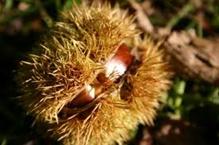
Chestnuts

Old Chestnuts – The third character(s) are the elderly and persistent Nannie Rawley and her equally aged, cantankerous, fixed in his ideas neighbour, the widower Garnett. They trade insults and unappreciated advice across their boundaries, but can’t seem to keep away from each other despite their polar opposite views.

Halal Goat

Not that it detracted from the reading of the book, but I did ponder the similarity in conviction of the three female characters, it is not clear whether or not they know each other for much of the book, but with such similar attitudes in their various fields, in a real community I would have expected them to have discovered each other and had some kind of interaction or at least knowledge of each other from the beginning. Sometimes this is a deliberate tactic by the writer to keep the connections between people vague until the end, to shape some kind of revelation. It just seemed like a bit of a coincidence that three such characters living in a traditional farming community had such little awareness of each other.

As much a study of nature, as a story of that which passes between these characters during this one summer, Prodigal Summer is indulgence of the satisfying, learned kind; it is compelling reading and a lesson in the wonder, beauty and balance of nature and humanity.

City of Love

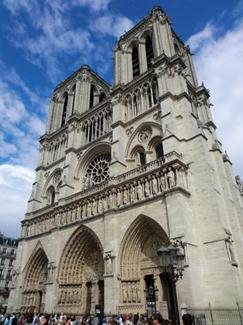
The immense and almighty Notre Dame de Paris

I have been busy retracing the many steps of the monuments of Paris these past few days, so not much time for reading, although I did manage to finish Barbara Kingsolver’s excellent ‘Prodigal Summer’ which I will write more of soon and following on from this glorious visit to Paris, I am now immersed in Hemingway’s ‘A Moveable Feast’ keeping me in Paris for a few more days yet, albeit the 1920’s.

If you need any more proof that Paris is indeed the city of love, check out this superb photo I took of that beautiful feminine monument ‘La Tour Eiffel’, is that not a beautiful heart shining down on the population?

We took an evening stroll up to the Sacre Cœur cathedral, two minutes from where we were staying.  In fact I was babysitting that evening while friends from New Zealand were at a Bruce Springsteen concert, I have to say it was the best night looking after 3 children ever, practicing french phrases during dinner and an impressive after dinner promenade to one of the city’s marvels.

Here is a detail from one of the tower walls of L’Arc de Triomphe. I love the dramatic detail of the sculptures and wall friezes.

Despite the beautiful blue skies you see, it did indeed rain every day I was in Paris, it reminded me a little of New Zealand, that rain, sun, rain, sun, beautiful green trees.

However, something that only Paris can offer, her history of monarchs, uprisings, revolutions and battles and 60,000 square metres of art works in one museum alone and then there’s the people watching, all chairs facing the street for the best view, it’s amazing what you observe and overhear during the downing of une noisette (small coffee with a dash of milk).

Now back in Aix-en-Provence where the temperatures are consistently hot and as I got out of the car, I am greeted by the incessant noise of the cicadas, who have long announced the debut of summer and witnessed the emergence of one of these gigantic insects from its chrysalis on the wall right next to me, the moment before he too joined that eternal cacophony of sound reminiscent of the season.

*

Au revoir Paris, je reviens bientôt.