An Auspicious Ascendancy – The Luminaries, Eleanor Catton

LuminariesEleanor Catton’s The Luminaries is an engaging, avant-garde novel, not to be read with the traditional expectations of the form, for it will entertain, intrigue, provoke, infuriate and keep you thinking about why it works, when certain aspects we know and love about stories, suggest that it shouldn’t. The allure of the new.

The Luminaries is a 19th century narrative, set in the gold –digging community of Hokitika ‘place of return‘, on the west coast of New Zealand’s South Island.

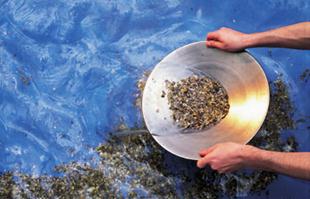
In 1866, when the story takes place, it was a thriving community, expanding in the golden glint of its anticipated resource and one of the most populous towns in New Zealand, a far cry from it’s just over 3,000 inhabitants today. While it remains possible for visitors to try their luck at gold panning today, they are more likely to be cycling the West Coast wilderness trail or to taking a helicopter over the Fox and Franz Joseph glaciers.

Hokitika township 1870s

Hokitika township 1870s – source Wikipedia

The story focuses on a group of people living in Hokitika, attracted by the prospects of finding gold or its associated business opportunities. It opens with the newest arrival, a distressed Thomas Moody, who has just disembarked from the barque Godspeed and after checking into the Crown Hotel, happens upon a gathering of 12 men in a bar of the hotel that had been closed for the evening. Already in the hotel, he had not been prevented from entering the room and thus becomes witness to a discussion of events that had occurred two weeks prior, the death of the hermit Crosbie Wells, the disappearance of the gold prospector Emery Staines, the arrest of a whore Anna Wetherell and the discovery of a cache of retorted gold bars.

As any 12 prominent men summoned to a room for a discussion might attempt to garner attention, so too does Catton give over chapters which allow those men to stand in their own limelight and this gathering will invoke a long and divergent narrative of stories, encounters and sharing of perspectives by each of the men present.

Their stories span the first half of the book, introducing a structural device Catton uses to divide the book into 12 parts, each successive part half the length of that before it, where the sequence of events moves about so that we reach the end only to discover we are at the beginning. We realise this is not a plot heading towards its climax, nor a beginning working towards its end, it is a series of revelations that unmask illusions of our own imagination as well as that of the characters portrayed and by the time we reach those last pages, the actual dramatic events that unfold will occupy fewer lines on the pages of this book than the mass of 400 plus ages that has allowed this community of men to discuss, analyse, reveal, conceal and pontificate on what might have occurred.
110611_1523_TheForestfo1.jpgAs fast as one mystery unravels, there arises another as Catton introduces one twist after another and slowly reveals the encounters and connections between characters, including those not present at the meeting.

The use of an omniscient narrator means that no one character plays a lead role, just as the lack of a detective precludes it from unravelling like a conventional mystery. Instead, it reads almost as a series of dramatic episodes, where the various interactions and focus on certain characters help the viewer/reader understand their ambitions and motivations, though like a jigsaw, the whole picture will not become clear until all the missing pieces are joined together.

The IdiotI was reminded at times of reading Dostoevsky’s The Idiot, a novel that is without comparison when it comes to penetrating character analysis, itself a complex web of relationships and associations. Catton’s insights into her characters perhaps owe more to her reading of Jung than Dostoevsky, as she penetrates the psychological depths of each character using lyrical prose. While these insights make pleasant reading, it is the actual interactions and actions of the characters that more ably create a lasting impression. As a consequence, we perceive the entire cast at a slight distance and may yearn for something more from some of them.

Much has been written elsewhere about the astrological structure and intention behind Catton’s writing, and it would be easy to turn this into as essay and begin to analyse twin hemispheres, yin and yang, predestined forces and those luminaries that represent our innermost and outermost selves whom she literalises in characters, however I have chosen to write more on the experience of reading the book, without focusing on the forces at play in their interactions. It is possible to listen to Eleanor Catton speak more on this at the Southbank reading here and in numerous articles in The Guardian and elsewhere.

It is an entertaining read, that despite its length I never wanted to put down and actually found myself wondering about other members of the community that don’t appear in the book, like the families of these characters and other inhabitants of this gold loving town. Perhaps we might get to meet them in a future TV adaptation, since I hear the rights have already been bought by a British production company.

Luminaries Cloud

and the Man Booker Prize winner is…

Catton2

The Luminaries by Eleanor Catton

I have just put it aside on page 508 to watch the presentation and I could not be more pleased!

Congratulations to our young and so talented novelist, from whom we will no doubt see much more.

The book is still alive and rather than cower under the threat of the alternative entertainment available to people today, they are taking the book to the masses.

According to the Man Booker Prize website, there is to be a free event at London’s Regent Street Apple Store, where Eleanor Catton will discuss her book and what it means to win the prize.

I hope Apple are offering the books for sale and not just their own devices to read them.

Ok, a big event is about to take place in the book too, so I’m off back there to find out what’s happening.

#ManBookerLive at the SouthBank Centre

Listening to Six Shortlisted Authors Read

Last night the six shortlisted authors of the Man Booker Prize came together at the SouthBank Centre in London’s Royal Festival Hall and thanks to seeing a tweet from someone present I discovered that it was streaming live from the Man Booker website.

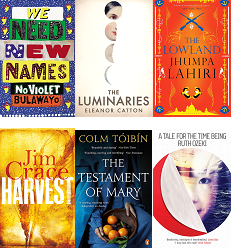
So instead of reading another 200 pages of Eleanor Catton’s The Luminaries, I listened to her, NoViolet Bulawayo, Jim Crace, Jhumpha Lahiri, Ruth Ozeki and Colm Tóibín read from their books and answer questions from the host Mark Lawson and the audience.

2013

It was a wonderful evening and risks making us want to read all the books, to see the writers presenting their works and sharing their private anecdotes about the journey to publication.

Today the live event has been uploaded to YouTube, so if you are interested to hear more about these excellent books, before tomorrow evenings announcement of the winner, here is the link to watch it yourself.

The event starts at 28 minutes 20 seconds.

Don’t expect it to help you decide, I think they are all winners and have no idea who the judges will choose. The bookmakers and the BBC are backing  Jim Crace, the quintessential English vote.

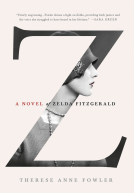
Z: A Novel of Zelda Fitzgerald by Therese Anne Fowler

Zelda_Fitzgerald_portrait

Zelda Sayre

Born with an exotic name that lent itself to bright lights and a spirit that loved nothing more than to dwell under them, it is not surprising that Zelda Sayre’s life was illuminated and became of interest to so many who were less daring themselves but fascinated with her life and antics.

But just as light cannot exist without shadow, she would discover the darker underside of a life lived in the shadow of her husband, when she dared to pursue her own desire to be recognised as a professional in her own right.

ZZ: A Novel of Zelda is an excellent companion novel to The Paris Wife and one of an expanding collection that gathers around that group of artists, writers, wives and hangers-on of the “lost generation“, a term coined by a young French mechanic who was reprimanded for giving insufficient priority to repairs on Gertrude Stein’s Model T Ford and thus complained to his patron that they were all a “generation perdue“, those young people who served in the war, respected little and indulged themselves to immoderate excesses.

Hemingway’s A Moveable Feast is a logical follow on read, having now read the fictionalised accounts of the two wives of these well-known writers and great friends who were in the midst of that post WWI group that sought a kind of writing utopia in Paris.

scott and zelda

Zelda and F.Scott Fitzgerald

While the utopia may have eluded them, their experiences would provide rich material for their writing, even if at the expense of some of their friends and loved ones. It is interesting to note that while their output during those early years was largely even, the Hemingways‘ lived quite frugally with an awareness of their financial struggle, while the Fitzgeralds‘ lived hedonistically in complete denial of theirs.

Zelda was reluctant to be lured away from Montgomery, Alabama by a complete dreamer and in the early days of their courtship actually threatened to dump F.Scott Fitzgerald unless he proved himself worthy and obtained his first serious publishing contract.

“I was so sure of our love then, so determined to prove to Mama and Daddy that we weren’t doing things wrong, just differently. There was no way to know that certainty  would one day become a luxury too.”

save me the waltzWhen Fitzgerald succeeds in getting that commitment  from his publisher to publish This Side of Paradise, she is ready to join him in New York and their life of adventure will begin.

From New York to Paris and the south of France, where Zelda throws herself into her own professional dance ambitions and is rewarded with an offer, which makes this reader wonder, what might have happened if…

“Scott and I both were awed by how cultured all these folks appeared to be, how intact they all were. For a change, Scott listened more than he talked. They spoke of painting and music and dance – their own work as well as other artists’ – with knowledge and candor and passion. If they felt rivalries, they expressed the situations as challenges, not jealousies.”

I came to this novel with no idea about Zelda or the role she played among the writing set of Paris and while much has been written in personal letters and hospital records documenting her mental health challenges and treatments, I find Therese Anne Fowler’s depiction of the character Zelda to be both realistic and sensitive  and portrayed in a way that is compelling to read. It has made me interested to read more about Zelda Fitzgerald and that period in history she was a part of; she was one of, if not the first young women referred to as a “flapper” of the 1920’s, a kind of “it girl” whose rise in society came about alongside a public contempt for prohibition and was described by Dr. R. Murray-Leslie, who criticized

“the social butterfly type… the frivolous, scantily clad, jazzing flapper, irresponsible and undisciplined, to whom a dance, a new hat, or a man with a car, were of more importance than the fate of nations.” Times 5 Feb 1920, p 9

They were a significant step away from accepting the lives of their mothers before them and while they accepted the lesser role in support of their husbands and were not quite suffragettes, they developed an awareness that women could be more outgoing and present in the relationship and even pursue a career, something that usually required marriage to be forfeited for.

highland hospitalThe sad truth was that all that freedom and lack of  meaningful purpose was not good for their mental health and whereas today one might be prescribed medication for depression, bi-polar disorder or spend time in rehab, in the 1920’s/1930’s it was off to the psychiatric asylum for electric shock treatments and a prognosis of hysteria or even worse schizophrenia, if  one showed signs or symptoms of not coping with it all.

If you enjoyed The Paris Wife or A Moveable Feast, this book should certainly be on your list to read. A riveting read and a thought-provoking insight into an exciting and turbulent period of cultural history.

Note: This book was an Advance Reader Copy (ARC) kindly provided by the publisher via NetGalley.

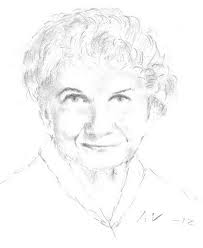
Alice Munro wins Nobel Prize for Literature

Alice MunroShe was a favourite to win the prize, but appears not to have been aware of being nominated, no doubt she has been enjoying her retirement from writing fiction announced earlier this year.

Alice Munro is the 13th women to have won the Nobel Prize for Literature, news to which according to the Guardian, she is said to have responded “Can this be possible? Really? It seems dreadful there’s only 13 of us.”

Not just a resounding win for a short but growing list of women writers finally being recognised, but a victory for readers and writers of the short story, Munroe’s strength and preference.

Could it be a sign that the short story is making a comeback? It is something I wonder about in one of my very first blog posts entitled Why People Don’t Read Short Stories which is a tribute to the form and a reminder of the joy short story collections can bring.

short stories

Alice Munro

aliceBorn: July 10 1931, Wingham, Ontario, Canada

Educated: 1949-51 University of Western Ontario

Books:     1968 Dance of the Happy Shades

1971 Lives of Girls and Women

1974 Something I’ve Been Meaning to Tell You

1978 Who Do You Think You Are?

1983 The Moons of Jupiter

1986 The Progress of Love

1990 Friend of My Youth

1994 Open Secrets

1996 Selected Stories

1998 The Love of a Good Woman

2001 Hateship, Friendship, Courtship, Loveship, Marriage

2004 Runaway

2006 The View from Castle Rock

2009 Too Much Happiness

2012 Dear Life

Further Reading:

Feature Article Alice Munro: Riches of a double life, the Master of the contemporary Short Story, Guardian 2003

Death in the Vines by M.L.Longworth

Death in VinesMystery, murder and mayhem among the vineyards of Rognes, a quiet Provençal village about 15 kilometres from Aix-en-Provence and one of the settings for this third in the Verlaque and Bonnet Provençal mystery series for M.L.Longworth, one time resident of Aix-en-Provence, who has herself decamped to one of the smaller villages of Provence, no doubt set to inspire more enticing destinations in future adventures of her detecting duo.

I reviewed her first mystery Death at the Château Bremont last year, when the author visited the book club I participate in. Since then there has been a second book Murder in the Rue Dumas and now we pick up with Judge Verlaque and his law professor amoureuse Marine Bonnet, in the third book, with as many gourmet references as we have come to expect previously.

CIMG3088

Château Paradis, Puy Sainte Reparade

The story begins in Rognes, with a wine theft and a missing persons report, a suspected walkabout. Some of the Bonnard winery’s best wines have disappeared, although the key to the cellar remains where it has always been and tensions are running high among family members, all of whom have become potential suspects.

Back in Aix, Madame Pauline d’Arras appears to have gone walkabout without her dog, most unusual according to her fretting husband Gilles, who has never gone a day in forty-two years of marriage without his wife preparing lunch for him by twelve-thirty. He is concerned as she has been exhibiting signs of possible early dementia.

In the village of Éguilles, a young woman leaves work early and is found later by a colleague in a bad state having been assaulted, she is taken to hospital and will soon become the subject of a suspected murder investigation.

Longworth has fun with not one, but three mysterious incidents and in particular some of the false leads which allow the Judge and us readers to go on various jaunts around the countryside, cross a famous bridge and dine in celebrated locations  he would otherwise have had to wait to indulge in his own time.

Knowing the routes they take, this book offers more than just a tale of mild suspense, it is like an invitation to explore more of Provence, to imagine sampling its wines, observe its pastimes (boules) and picture the lives of its villagers and long-established wine cultivating families.

TGVtrainJust as the region itself is changing, the TGV(train à grande vitesse or high-speed train) line attracting more Parisian commuters and foreigners wishing to invest in the continuation of artisan expertise in the French vineyards; so too is the city of Aix changing, an entire new quartier of modern buildings housing cultural centres of opera, dance, music, a new shopping area, an upgraded bus station with Europe’s longest living wall, showing off the architectural stamp of Kengo Kuma, a name more at home in Tokyo, New York or Beijing. This town is ensuring it will continue to attract visitors interested not just in its intriguing and ancient past, but that it can show itself worthy of contemporary interest also.

However the long-established, multi-generation residents don’t always embrace the new and Longworth allows her characters to despise the new developments in the way of a local population and national character that loves nothing more than a good long debate, although she doesn’t indulge them quite that far.

The Mayoress of aix en Provence  Maryse Joissains-Masini

The Mayoress of Aix-en-Provence
Maryse Joissains-Masini

The changes reflect a 21st century renewal and political statement, the creation of a legacy by a Mayoress who isn’t afraid to spend big on infrastructure during a recession and to court the popular vote. She spends with the frenzy of a woman who sees the finishing line in her sights. Will she survive the mayoral elections in 2014? It will be an interesting campaign to watch.

Overall, an entertaining and enjoyable light read that is all the better for allowing the reader to dwell among the vines and villages of a beautiful region.

Any book that allows one to travel when circumstances dictate that it not possible to physically go there, is the next best thing in my book.

Note: This book was an Advance Reader Copy (ARC) provided by the publisher via NetGalley.

A Monster Calls by Patrick Ness

I read a wonderful review of The Crane Wife by Patrick Ness over at Annabel’s House of Books and I asked if it was YA(Young Adult) fiction, a genre I admit to being a little reluctant to read, not because there aren’t excellent books, but because part of the joy for me in reading is to be exposed to and learn, uncommon new words, adding to my private lexicon, words that would seem pretentious in teen fiction.

The_Crane_Wife__pentaptych_by_Crooty

There are always exceptions however, recently I loved Margarita Engle’s novel-in-verse The Wild Book and when a book sounds like it has qualities that intrigue me, a review by any blogger on my reading wavelength is sufficient for it to lodge in my mind and be called off a shelf when I spot it.  Annabel replied telling me that this was Ness’ first adult novel and recommended his YA trilogy Chaos Walking for a thought-provoking dystopian adventure and described A Monster Calls as phenomenal. That one lodged itself immediately in my mind.

On Saturday I went looking for the original version (French) of Ru by Kim Thuy at the library after reading an excellent interview by BookDragon only to discover that all copies were out.

A Monster CallsNaturally I couldn’t leave without a quick glance at the English language bookshelves and there it was, the beautiful hardback, fully illustrated copy of Patrick Ness’ A Monster Calls. I picked it up and headed for the exit, so as not to be tempted by more, since I have too much to read already, but as I left, my eye caught the display shelf where I spotted Quelques Minutes Apres Minuit, a familiar book cover in the same colours, yes, the same book with its French title and cover. As you can see, I brought them both home.

The idea for A Monster Calls came from the writer Siobhan Dowd, who was unable to complete the book tragically due to a terminal illness. Patrick Ness was asked to write the story, a remarkable challenge that somehow he managed to achieve without, ironically, the shadow of expectation or any other writerly monster hanging over or haunting him.

Conor O’Malley is thirteen-years-old and lives with his mother; his parents are divorced and his father remarried and now lives in America with his wife and baby daughter. Conor’s mother is in the latter stages of a terminal illness and Conor is coping with doing more things on his own, while becoming distant from his school-friends and attracting the attention of a school bully. On top of all this, his life is complicated by the nightly appearance of a tree monster, who doesn’t really scare him, as he tells it, he’s seen worse.

The monster wants something from him and Conor can’t or won’t offer it and yet he won’t be left alone until he does.

It is as if the extraordinary circumstance that brought this book about, invoked something magical that inspired Patrick Ness beyond what he might otherwise be capable of, because the book transcends the usual storytelling and creates a dialogue someplace between a brutal reality that is, and the unwanted but unstoppable future that will be, where an apparition takes on the role of enticing the traumatised teenager towards that excruciating path he must follow.

The entrance to the wonderful Mejanes Library in Aix-en-Provence

The entrance to the wonderful Mejanes Library in Aix-en-Provence

It is a breathtakingly raw journey that the author maps out, navigated with the extraordinary insight that only a vivid, courageous and mature imagination could channel.

It will leave you in awe.

Stunned.

A rare 5 stars from me.

Recommended for all ages.

The Summer Book by Tove Jansson

I promised myself to read this in summer, after a series of other seasonal reads like Susan Hill’s In the Springtime of the Year,  Tove Jansson’s A Winter Bookand Edith Wharton’s Ethan Frome. I seem to have skipped autumn, so perhaps that will next, maybe Irene Nemirovsky’s Snow in Autumn or Albert Camus’ Fall.

The Summer BookThe Summer Book is a novel that reads more like non-fiction, an invocation of the spirit of its author Tove Jansson, who like the Grandmother and Sophia the grand-daughter in her book, spent all her summers on the small family island off the coast of Finland, doing just the kind of things young Sophia does and eventually feeling the constraints of the older woman, so that she herself comes of age (at 77) and no longer has the strength nor confidence to brace the unpredictable sea after a storm destroys their boat, she sensibly retires to the mainland for the rest of her days.

Esther Freud writes a captivating foreword, including sharing parts of her own visit to the island to meet the real life Sophia, who is Tove Jansson’s niece. She visits both the island of Jansson’s childhood and Klovharun, a place of pilgrimage today (see the video below), the island she later moved to with her partner when their own island became too crowded with relatives and friends.  Freud ponders:

“What kind of person could live here? Someone so fuelled by their imagination, so stimulated by the sea, so richly creative that they could find solace and inspiration in what to others might seem a barren rock.”

This short video clip helps us imagine just what it might be like.  As for me, I could well imagine living like this for the summer.  And you?

In the book, we meet Sophia, who has prematurely lost her mother and so with her father will spend spring and summer on the island with her grandmother. While the father is present, whenever he is mentioned, even when in the same room, he is working or busy and so given background status, though in reality on such a small island, his existence would no doubt be more noticeable, however in the story he is a reassuring but not interfering presence, just like the island itself.

Sophia on the island with her grandmother (Tove's mother) in 1968

Sophia on the island with her grandmother (Tove’s mother) in 1968

The pages turn like days of summer, governed by the moods of the elements, the creatures that inhabit its shores and the occasional visitor. Underneath or implicit within all that passes is the perplexity of death, that absence, prematurely confronted by a young girl and sensitively explained by her older companion. The chapter entitled Playing Venice is especially poignant, the loss of the hand-made palace necessitates Grandmother staying up all night to replace it, Sophia unable to cope with another loss of something so special and close to her heart, even if it is only a small sculpture.

In both the chapter Berenice, which is about Sophia’s friend who comes to stay for a while and The Cat, Sophia has to deal with the paradox of really wanting something, then discovers she no longer does and finally must learn to appreciate both her friend and the cat, just as they are.

“If only she were a little bigger, Grandmother thought. Preferably a good deal bigger, so I could tell her that I understand how awful it is. Here you come, head-long into a tight group of people who have always lived together, who have the habit of moving around each other on land they know and own and understand, and every threat to what they’re used to only makes them more compact and self-assured.

An island can be dreadful for someone from the outside. Everything is complete, and everyone has his obstinate, sure and self-sufficient place. Within their shores, everything functions according to rituals that are hard as rock from repetition, and as the same time they amble through their days as whimsically and casually as if the world ended at the horizon.”

Like A Winter Book, this is not a volume to be rushed, it is best savoured and enjoyed slowly, it reminds us of the joy of simple things, that there is value even in those things that sometimes irritate us and above all that we ought to respect and pay attention to natures elements. This is one you’ll want to gift to another or even read again. A literary gem.

Further Reading:

A Biographical Essay on Tove Jansson

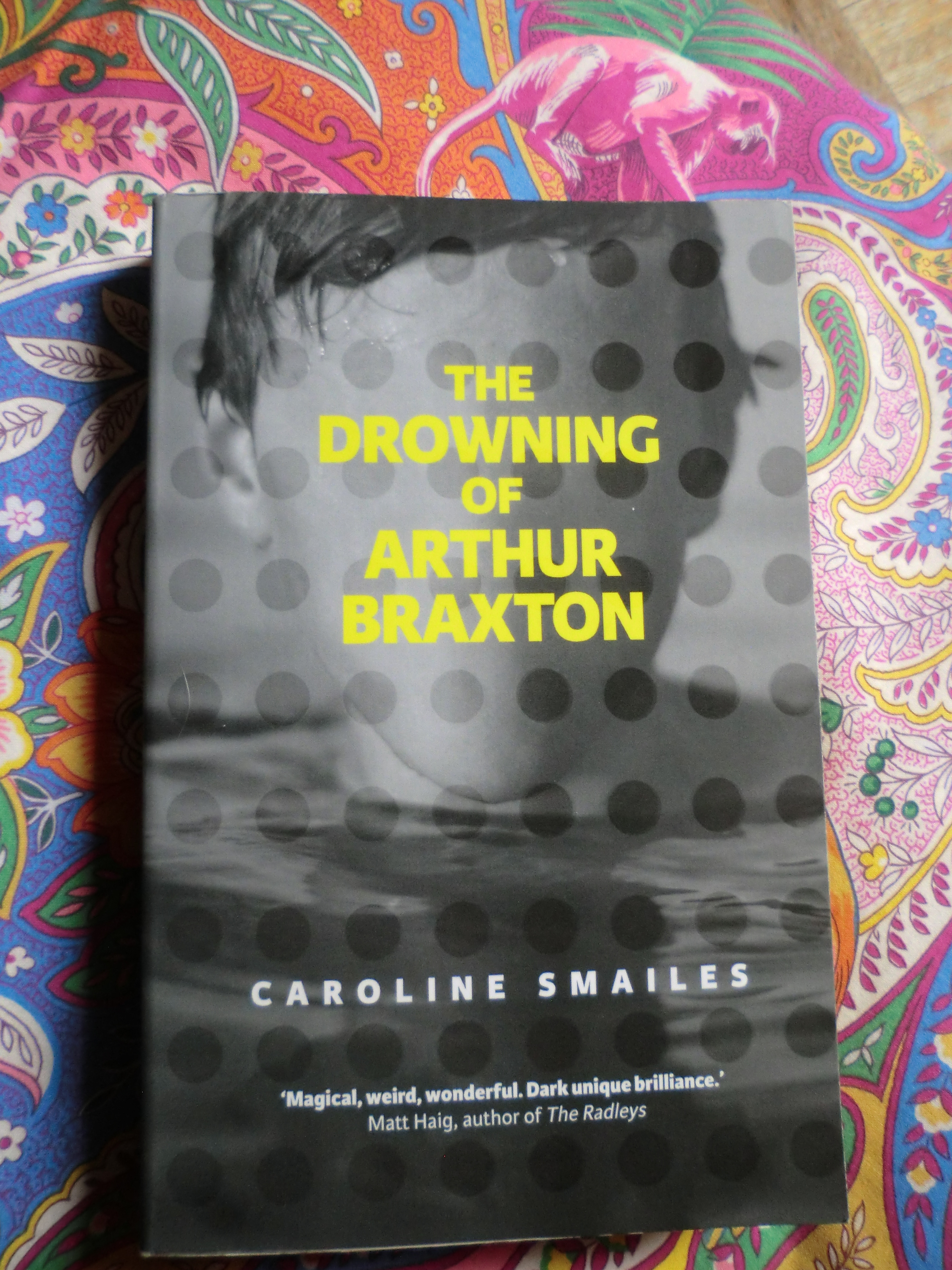
The Drowning of Arthur Braxton by Caroline Smailes

Completely off the wall, a sliver of magic realism, a stunningly original voice, Caroline Smailes The Drowning of Arthur Braxton is the best work of fiction I have read so far this year.

Arthur BraxtonRight from the beginning it hooked me and I couldn’t wait to get back to it every time I put it down, because I could not guess what the author was going to do next and somehow she made me very interested to want to know.

I’m still not quite sure how she managed that, but at a guess I would say it is a combination of an incredible imagination and a very close observance of reality. That might sound hypocritical, and that those two things should really negate each other, however she uses a sprinkle of magic realism firmly rooted in the mundane world, just as Eowyn Ivey did in The Snow Child, making the reader question whether they are reading fantasy or realistic fiction without alienating them in the process.

The protagonist Arthur Braxton can’t quite make out what is going on either and we are right there with him, going back for more to try and make the unexplained logical – and to find out more about that girl in the pool.

Arthur Braxton lives in a town in the North of England, so if you have never been there or known any young people from up that way, be warned about the vernacular and remember he is a teenager, so many of the things he says and does are appropriate to his age and the area he comes from. I don’t know whether that makes him authentic, but it makes his voice unique and his story compelling to read.

Victoria Baths

Victoria Baths, Manchester

Arthur’s Mum left he and his father for another bloke and neither of them have heard from her since, although she continues to support them financially, so they’re not making a fuss, on the contrary they are keeping a very low profile. Arthur’s Dad isn’t taking it all very well, so Arthur is parenting himself and almost at his wit’s end when he is drawn towards the old abandoned swimming baths, fenced off and due for demolition. And what he finds there keeps drawing him back repeatedly. If you choose to read the book, you’ll also be intrigued to follow him and find out.

“And that’s why I’m now pushing a shopping trolley, with my dad in it, up the hill and away from the sea front in the twatting rain. Dad’s huffing and puffing, like he’s a fucked-up steam train, and I don’t know why ’cause it’s me breaking my back trying to get the fucker up the hill. The wind’s not helping, the rain’s not helping and mainly I’m wondering what the fuck I was thinking. I mean, like owt can cure my dad. I’ve told him I’m taking him to his doctor’s appointment, he has to have a review every couple of months to see if he’s still ill. Usually the doctor takes one look at him and then, no shit, Sherlock, says that Dad’s unfit for work. Dad never even has to speak, which mainly pisses me off, ’cause I can’t remember the last time I heard him talk. I miss his voice.”

I am happy to know there is a bit of a backlist, that Caroline Smailes has written other novels and though some deal with dark subjects, her writing has an allure and originality that I am keen to explore further.

At the end of the book, the author mentions that the inspiration for this novel started with a place – Victoria Baths in Manchester, opened in 1906 and a proud icon of that city and its people. The council decided to close it in 1993 and a campaign to prevent its closure ‘Friends of Victoria Baths’ became a charitable trust and managed to save and restore the building, a venue all the public can visit today, though it does not look like any swimming takes place there.

Victoria Baths

Victoria Baths

Looking at their website today, I discovered serendipitously that this weekend 13 – 15 September 2013 the pool is open and for the first time in many years, full of water to mark the 10th anniversary since the Victoria Baths won the BBC Restoration Project.  Since then more than £5m has been spent restoring the front of the building, stained glass windows and the roof of the gala pool.

A well-known synchronised swimming group Aquabatix entertained the supportive crowd with a spectacular performance Arthur Braxton would have been proud of! Learn more at www.victoriabaths.org.uk

An Interesting Fact: The pools were divided up for first class males, second class males and females. Men in the first class pool had the pleasure of swimming in the water first before it would be drained into the other two pools.

CIMG4752

The Magic of Water

Note: Thank you The Friday Project, an imprint of Harper Collins for sending me a copy of the book.

Never Let Me Go by Kazuo Ishiguro

IshiguroI find Kazuo Ishiguro unpredictable, which could be why I am always intrigued to read his work, I loved his recent collection of short stories Nocturnes: Five Stories of Music and Nightfall, yet I could not finish and had to abandon The Unconsoled and sadly I feel ambivalent about Never Let Me Go, though I do want to see how it was put to film.

It is not a book to share much about the plot, as virtually anything said might spoil the reading experience, but it is effectively a coming of age story centred around the character of Kathy, from her teenage into young adult years, from the last year she and others lived in a boarding school until the early days of her first job as a carer.  She looks back and analyses that time in an effort to understand the significance of minor details and events in their lives and her friendships with Ruth and Tommy.

I think my ambivalence stems from what seemed like restraint from delving into the depths of the characters, which could be a consequence of both the plot and the narrative form, however in my opinion, this constituted a weakness and I remained far too conscious of this lack all the way through reading. The repetitive nature of the narrative style also contributed to this and I found it annoying, it was a tool that could have intrigued, but when it didn’t succeed to do that for this reader, it became frustrating.

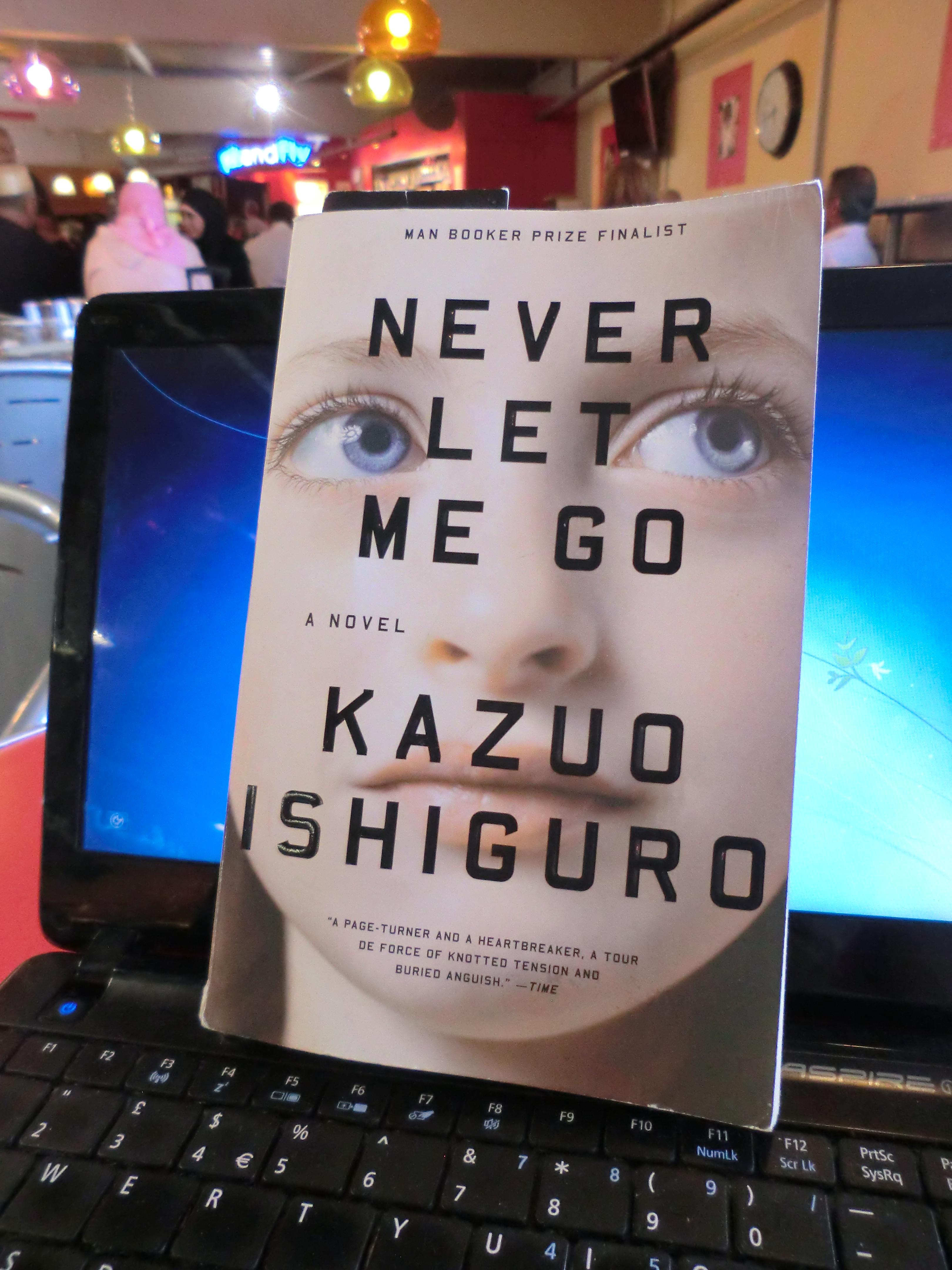
It is telling that I did not highlight any paragraphs or phrases as I read and that it took two weeks to read it. As you can see from the photo above, taken at the airport in Marseille, I finally finished it during a two-hour flight!

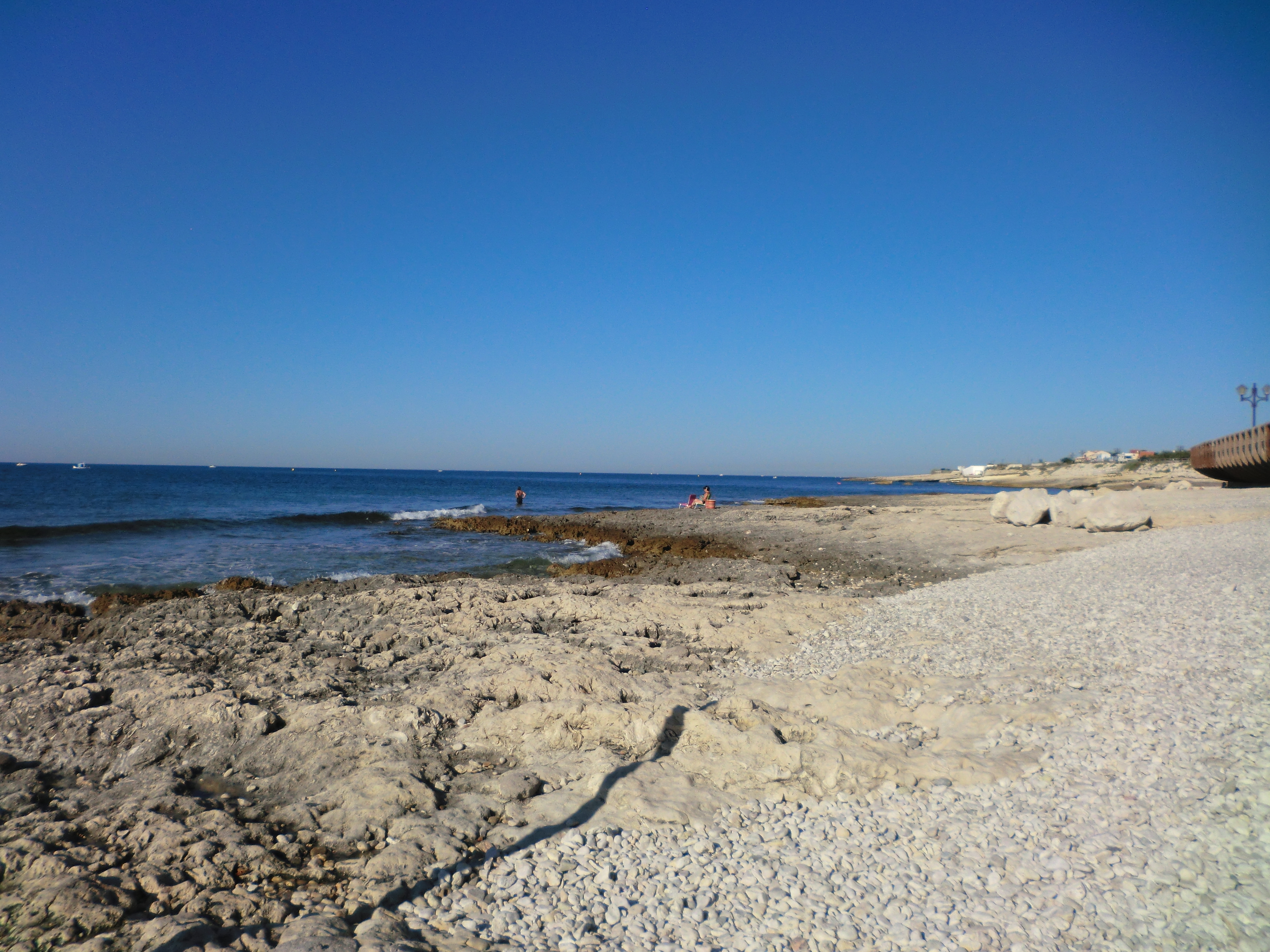
Just Dive In - My early morning dip at Sausset-les-Pins this summer

Just Dive In – My early morning dip at Sausset-les-Pins this summer

However, do not let me put you off. I recommend if you are a fan of Ishiguro that you just dive in and read it without referring to any reviews and remember that the majority of readers who have already read this book, rate it highly. I am an anomaly. I am looking forward to his next work and still have fond memories of that short story collection and am reassured in the knowledge that he is capable of work that is much more my kind of thing.