
Brian Moore 100
2021 is the centenary year of his birth for Northern Irish writer Brian Moore (1921-1999), academically celebrated at Brian Moore 100 and by interested readers in the year long Brian Moore ReadAlong. I have read and reviewed two titles, Lies of Silence (1990) and The Lonely Passion of Judith Hearne (1955) and I have The Magician’s Wife (1997) plus No Other Life (1993) still on the shelf.
A Distrustful Reader
 I enjoyed Lies of Silence, however was completely wound up by his treatment of the character in The Lonely Passion of Judith Hearne, a feeling of indignation in his treatment of the female protagonist that was expounded on by Colm Tóibín who admitted:
“that Moore clearly knew that you could achieve certain effects by writing about a woman in the Ireland of his time which you could not achieve in writing about a man, the same behaviour would not bring disgrace, pity perhaps, tolerance certainly, humour most likely, incarceration – never”
I came to The Doctor’s Wife, another novel in which Moore again takes on the voice and attempts to get into the mind of a female protagonist, with significant caution and a not unreasonable dose of distrust.
The Plot: Awaiting her husband’s arrival on holiday in France, Sheila Redden, quiet, middle-aged doctor’s wife from Northern Ireland, suddenly finds herself caught up in an illicit affair with a young American ten years her junior.
The novel was shortlisted for the Booker Prize in 1976.
To Prelude or Not

Photo by cottonbro on Pexels.com
In a short prelude to the first chapter, Shelia’s brother arrives in Paris and from what we glean Shelia has disappeared and there is a letter waiting for her at a friend Peg’s apartment, from a T. Lowry in the US. Shelia’s brother phones this man in America; he says is he is sorry, he can’t help.
The prelude creates an element of intrigue, an unnecessary addition reading it in 2021, though it may have affected readers differently in 1976, by what it implied. That no one knows where she is. That we know where she is not.
Backing Up to the Beginning
Due to his commitments as a Doctor, Shelia’s husband delays his departure for their holiday, they are returning to the Mediterranean where they honeymooned sixteen years ago. Sheila travels on alone to Paris.
Staying in Paris with her friend Peg, Sheila’s emotions are overwhelmed by the mix of frustration at her husband and the nervous excitement of being in the city with her confident friend, who introduces Ivo, her lover four years younger than herself. Sheila is in awe of Peg’s way of life, the result of having continued her education, pursued a career, travel.
She lives like a man, free, having affairs, travelling, always in big cities, whereas, look at me, stuck all these years at home, my M.A. a waste. I don’t think I could even support myself anymore. ‘You know’, she said to Peg, ‘it’s working and travelling that keeps a person young. It’s sitting at home doing nothing that makes you middle-aged in your mind. I was just thinking about it the other day. It’s as if the only part of my life that I look forward to now is my holidays. There’s something terribly wrong about that.’
It is through Ivo she becomes acquainted with Tom, the two keep each company while waiting for Peg. Tom is taking a year after his Anglo-Irish Lit studies at Trinity in Dublin to think about his next step. Sheila enjoys being able to talk with Tom on a subject she is virtually forbidden to elsewhere; speaking animatedly about literature to a man at a party has being the cause of reprimand by her husband in the past. Trying to engage with her husband in conversation fails every time these days.
While initially petulant and annoyed with her husband for putting his work ahead of their holiday, at a certain point Sheila begins to will him not to come. The distance and solitude heightens her feelings towards everything. She is at the beginning of developing a kind of resistance, even if that shows itself through what appears to be recklessness. Eventually she will embrace it, learn from it and change.
Before anything is even hinted at with this young man, while still in that isolated wonder of being alone in Paris, with her friend, engaging in a social life, and interesting conversation, she asks herself:
What about those men you read about in newspaper stories who walk out of their homes saying they are going down to the corner to buy cigarettes and are never heard from again? This is Paris. I am here. What if I never go back? page 42
Looking back at this now, it is clear that this thought indicated a turning point for Sheila, who throughout the novel is referred to as Mrs Redden, unless represented in dialogue when she is Sheila. From here she departs Paris to Cap Ferrat, knowing she has at least a few days until her husband may or may not join her. As she gets out of the hotel bath, the telephone rings.
The Objectification of a Man

Photo by Andrew Neel on Pexels.com
The rest of the story portrays Sheila’s continued attempts to resist what is occurring, until she doesn’t. The focus is always on her, on her thoughts, her decisions, her mind. It is not a novel that looks into the mind of a 27 year old man.
Ironically, the young man is objectified, something more common to woman characters, but here Brian Moore diverges and flips the coin, reducing HIM to an object of sexual pleasure and gratification. Though he doesn’t go so far as to emasculate him, he risks the character of Tom being perceived as inauthentic, for the very reasons Tóibín above, referred to.
Men too, were expected to behave in certain ways, even while conducting illicit affairs. However, Tom is a post-war baby, a baby boomer, he is of a different generation and from another culture, it is quite normal that his behaviour will be perceived by some as childish, ill-considered, unrealistic. Personally, I could believe it. Sheila was born before the war, she was indeed a Traditionalist. In a sense then, her behaviour and responses are the more radical.
Moore however is clear, he elicits only her thoughts, provoking her to express them aloud, to hear herself speak. What she has to say is far more interesting.
‘I don’t know’ she said. ‘Some people never want to go outside the place they were born in. And others seem to want to run away from the day they’re old enough to walk.’
‘And which are you?’
‘A runaway.’
‘But you didn’t leave, did you?’
When it becomes clear what Sheila is contemplating, the men in her life, her husband and her brother will resort to the kind of tools that men in power, medical men were able to use to exercise control over what they considered a wayward woman. There’s a history of mental illness in Sheila’s family, something her husband doesn’t hesitate to consider using to his advantage. It is a scary moment.
Understanding Women
It is to his credit, that Brian Moore takes a different approach twenty years after writing about Judith Hearne. This time he pursues other perspectives, making thought provoking choices that engage the reader.

Photo by Jill Wellington on Pexels.com
It reads like a kind of thriller because she acts so out of convention and the longer she does so, the more likely it seems there is a possibility she might indeed be upending her life. The reader can feel she is hovering between two choices. The detail with which her encounters are shared and the response of her family to them, increase this duality.
I really enjoyed this, perhaps because I did read it with that level of distrust and was therefore surprised to see how much the author’s perception of a woman character had developed. Although, here too, I had a sense of the author almost writing this in collaboration, I imagined him discussing and arguing this premise with his women friends, or was he reflecting on his own doomed affair? Who knows, but he left me wanting to know more, wanting to pursue Sheila further in her adventure towards liberation.
This one I definitely recommend!
Have you read any Brian Moore this year?
 An Immigrant Story


 The book is about Theo, a widower and astrophysicist, raising his nine year old son Robin alone, two years after the death of his wife.
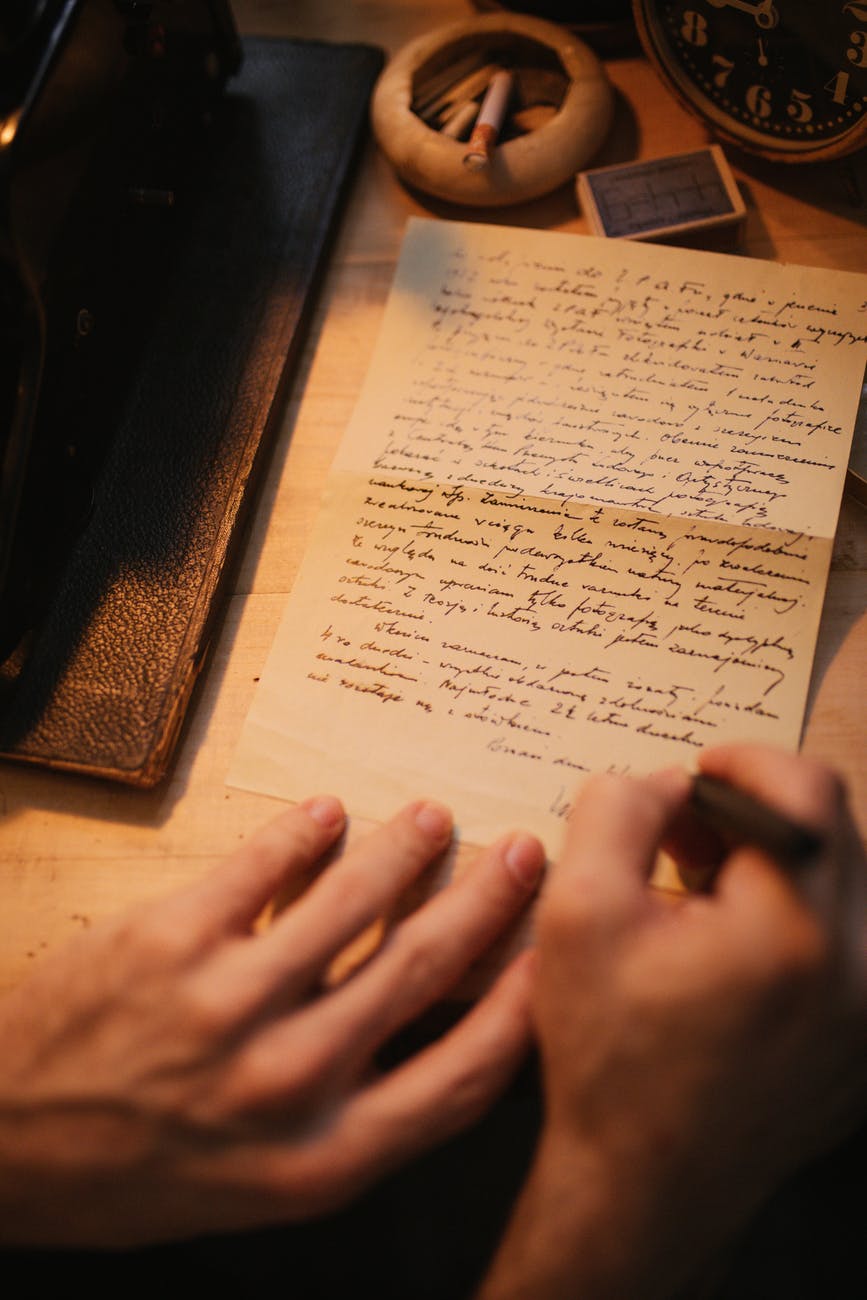
 Written in three parts, this award winning novel by Lebanese author Hada Barakat, is composed of a series of six letters written in a stream of consciousness narrative that are interlinked. The letters are read, but not by their intended recipient, found between the pages of a book, dug out of a bin or otherwise encountered. They prompt the finder to write their own letter.
 Hoda Barakat was born in Beirut in 1952. She has worked in teaching and journalism and lives in France. She has published six novels, two plays, a book of short stories and a book of memoirs, as well as contributing to books written in French. Her work has been translated into a number of languages.
 I loved how this historical novel focuses on the lives of these women, Rue her mother May Belle and grandmother Ma Doe and the community within which they live, without allowing the narrative to stray over too far into the lives and homes of those who diminished their lives.
 In May Belle’s time, one of the ways to effect a conjure was to make a doll that bore a resemblance to the person and if possible to access strands of hair to entwine with whatever material was used. Varina has porcelain dolls that Rue admires and is envious of, when she discovers her mother is making a doll that faintly resembles her, she pretends not to notice she has discovered it, and will mask even further her disappointment when she misreads its purpose.
 Fantasy isn’t a genre I read very often, but one I have a nostalgic feeling for, having loved it when I was a child. The problem usually being that it becomes harder to evoke the magical feeling that a child’s imagination is capable of creating. However I was willing to try and decided to read it on a day I’d have few interruptions.
 Despite Piranesi’s scientific status, he is developing a connection to the World within he lives, in which he is able to ask questions and intuit answers.
 Winter Flowers (Les Fleurs d’hiver) by Angélique Villenueuve, translated by Adriana Hunter is published Oct 7 by

 Pearl has promised the Reverend to welcome this newcomer, but she wasn’t expecting the shock of seeing Sugar’s face and who it reminds her of, nor the sudden flurry of visitors who want to sit in her kitchen in case they get a peek at this unwelcome new resident, whom they’re so inquisitive of.
 Bernice L. McFadden is the author of ten critically acclaimed novels including Sugar, Loving Donovan, Nowhere Is a Place, The Warmest December, Gathering of Waters (a New York Times Editors’ Choice and one of the 100 Notable Books of 2012), and Glorious, which was featured in O, The Oprah Magazine and was a finalist for the NAACP Image Award.

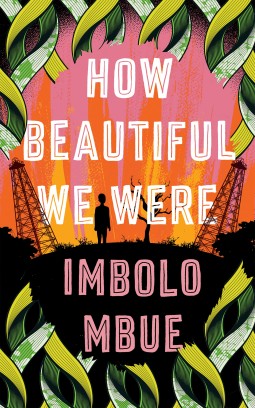 Imbolo Mbue takes you back to the fictional African village, Kosawa in the 1980’s. It could be in any number of countries, a fact acknowledged by naming her characters after real towns and cities.
 Word by Word