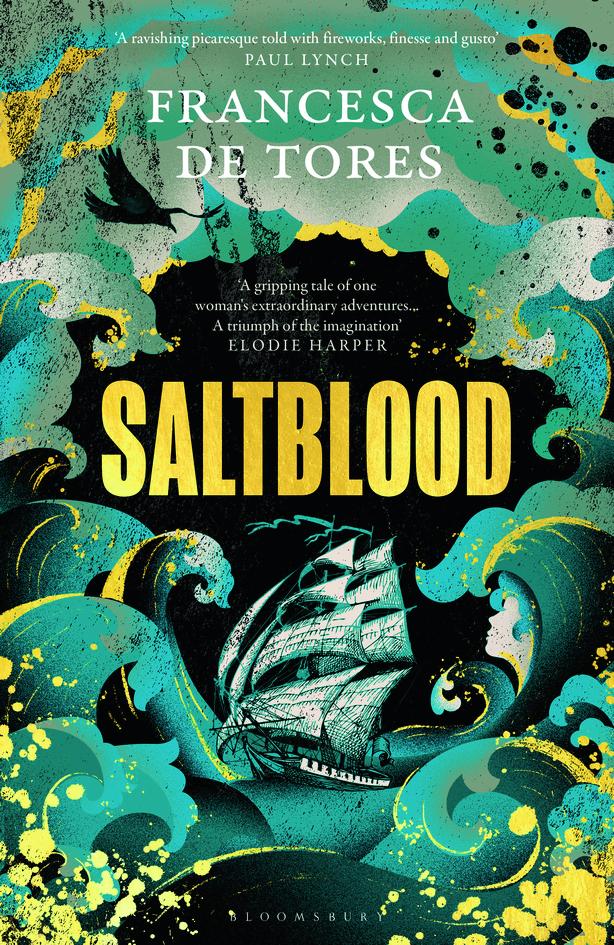
Saltblood by Francesca de Tores

In a rented room outside Plymouth in 1685, a daughter is born as her half-brother is dying. Her mother makes a decision: Mary will become Mark, and Ma will continue to collect his inheritance money.

Girls Initially Raised as Boys

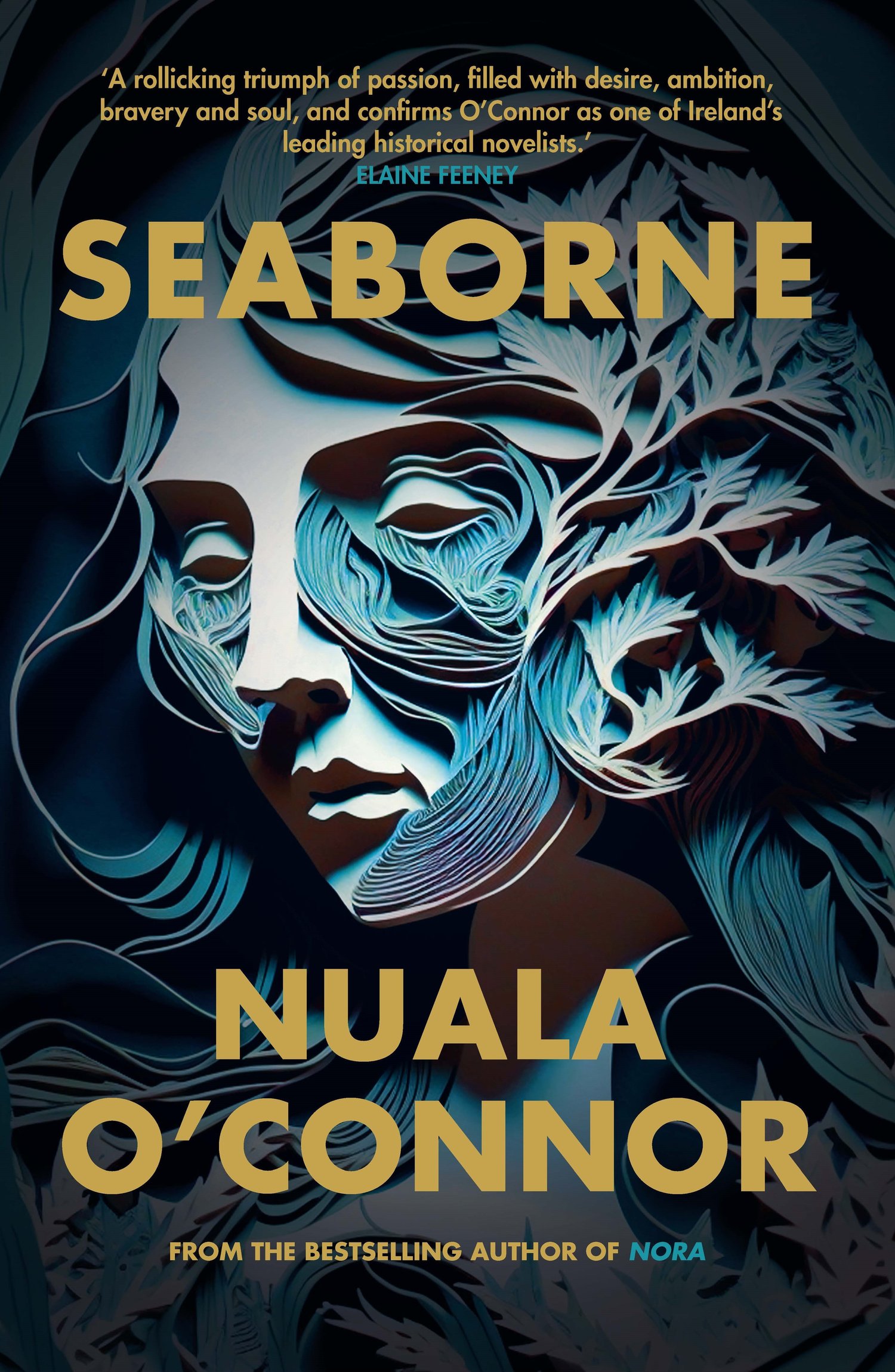
As I began to read about Mary Read in Saltblood by Tasmanian author Francesca de Tores, I had a sense of deja vu. I paused reading and revisited my review of Irish author Nuala O’Connor’s Seaborne, another work of historical fiction, but focused on Kinsale born Anne Bonny.

Stories of Real Female Pirates

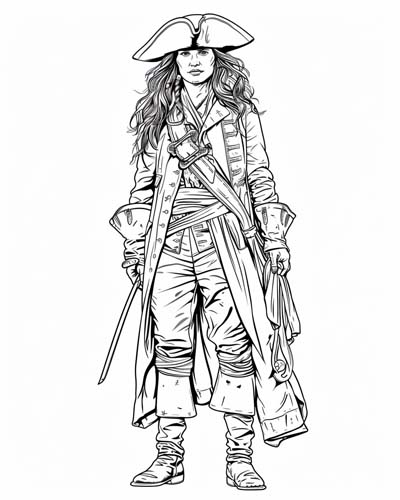
In Saltblood, we meet Mary Read (true historical figure), raised by her mother as Mark, a practical solution to poverty, inheritance laws and social restrictions.

After such a beginning, perhaps not surprisingly, Mary preferred for some years to live as Mark, due to opportunity and freedom. Working in service in a grand house as a man led to her/him enlisting in the Navy, then as the battles moved to land, joining the Army.

From the Military to Piracy

Settling for a short period as a married woman, she would then return to the sea after a tragic loss.

I went to sea a girl dressed as a boy, and I come back as something else entirely. I come back sea-seasoned: watchful of winds, and with an eye on the tides. I do not know if I have come back wiser, or better or perhaps madder. But I am not the same. What the sea takes, it does not return.

Initially working as crew for a privateer ship (authority sanctioned raiders); when they are raided by pirates, she elects to jump ship to escape the overly attentive Captain Payton and joins pirate Captain Jack Rackman. Although in her earlier years in the navy and army she was disguised, her later years at sea she presents as a woman, but is accepted as one of the crew due to her experience and abilities.

Pirating Protocols

Most pirates know the rules: go in fierce and fast, and the captains will beg for quarter, just as Payton did, and the Spaniards now do too.

One of the things the novel does well is really give you an idea of how pirating and raids work, for a start each member of the crew is made to sign a contract ‘articles of conduct’ that state policies around behaviour, pirate behavior (such as drunkenness, fighting, and interaction with women) and disciplinary action should a code be violated. Failing to honour the Articles could get a pirate marooned, whipped, even executed. It was the Captain’s way to maintain order and avoid dissent and ensure loyalty. The articles stated how gains would be shared.

There was a lot less fighting than we might imagine. Pirates preferred their target acquiesce. A black flag signaled to a vessel that they were about to be attacked, but that “quarter” would be given. This meant the pirates would not kill everyone on board if they cooperated and handed over any cargo. Seeing the black flag instilled fear and alerted ships to what was about to happen. If crew members did not fight, they might save their lives, but not their cargo.  Crew sometimes elected to join the pirate ship as Mary did.

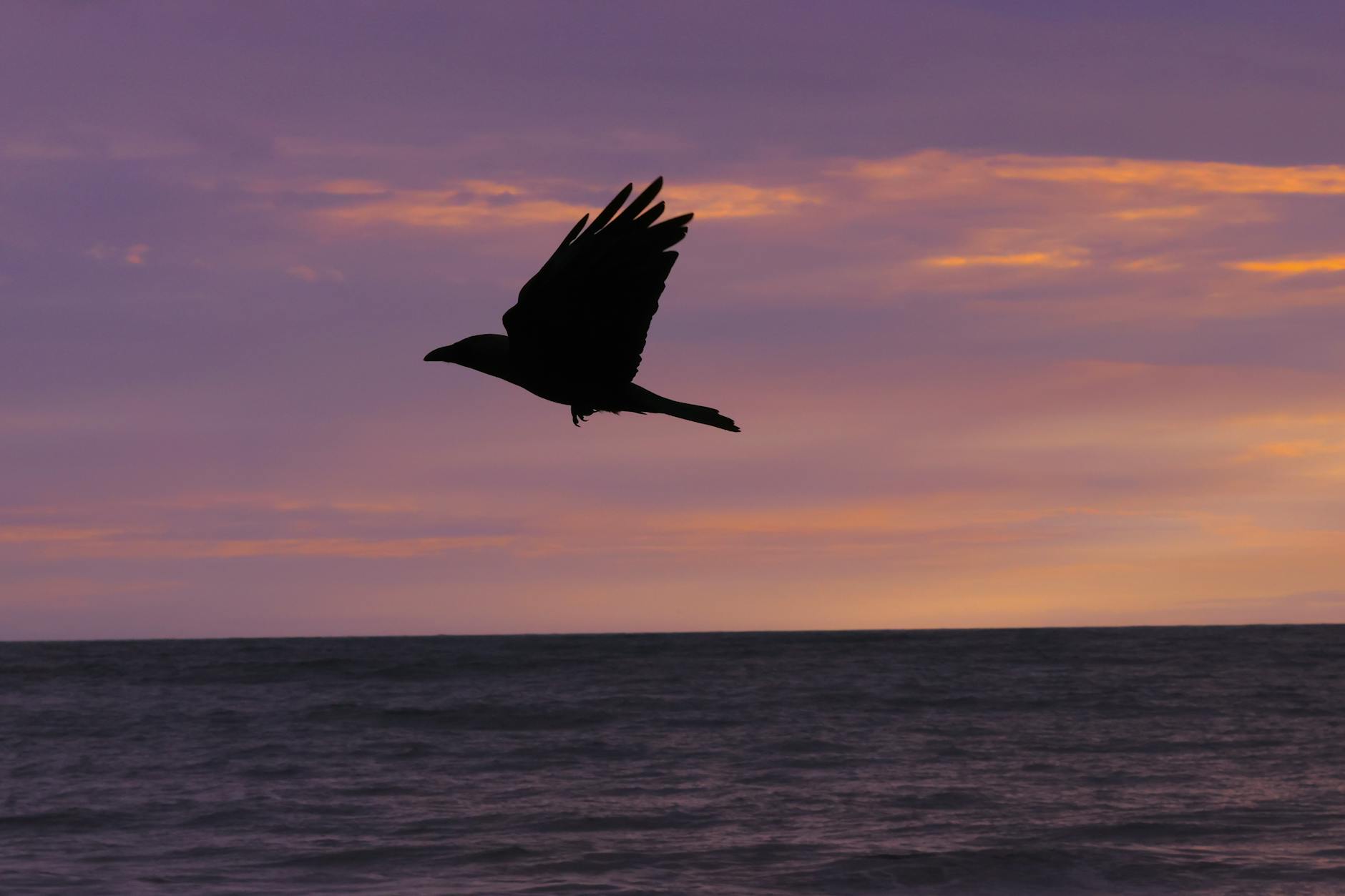
A Companion Crow

Photo by Alex Jaison on Pexels.com

One of the interesting fictional elements in de Tore’s version of Mary Read’s life is the appearance of a crow that follows Mary on land and out to sea. The crows presence acts as a warning to the men, it is not a good sign to them, but for Mary, it’s presence is reassuring.

A bird that can pounce from the top of the mainmast to skewer a sardine in the water, or snatch a crab from under rock and find out its soft parts, is a bird that sees well, and clear. It counts, this witnessing. To live your life under the vigilance of a crow is a kind of covenant.

A Pirate Nest in the Bahamas

Nassau became the base for English privateers, many of whom became lawless pirates over time. The Bahamas were ideal as a base for pirates as its waters were too shallow for a large man-of-war but deep enough for the fast, shallow vessels favoured by pirates.

It was here that Mary Read eventually met and befriended the much younger (by 15 years), emboldened Anne Bonny, encountered in Seaborne by Nuala O’Connor. The two women became fast friends, though opposite personalities.

Anne falls for Captain Jack and decides to join the crew, deepening her relationship with Mary simultaneously.

Photo by Pixabay on Pexels.com

Next to Anne Bonny, so bold and notorious, I had thought myself meek and colourless, and my story of little note. Yet she never tires of asking me about my years in the navy, and the army. Even my years on the Walcheren, which to me seem largely drab, fascinate Anne.

A Governor on a Mission

Saltblood continues to narrate the scrapes and adventures these two embark on and the efforts of Captain Rackham to avoid Governor Rogers, an English sea captain, privateer and colonial administrator who governed the Bahamas from 1718 to 1721 and again from 1728 to 1732. He aimed to rid the colony of pirates.

Initially I started then put this aside due to that feeling of having read something too similar, it starts off slowly and didn’t really pull me in, but more recently I picked it up again and continued only to find it much more engaging, as Mary is indeed quite a different character to Anne, and I enjoyed her land adventures as much as those at sea and the way their piracy days end is unforgettable.

After reading this I noticed I had another pirate book on my shelf, a work of history, The Stolen Village: Baltimore and the Barbary Pirates by Des Ekin, review coming soon.

Further Reading

Reviewed by Lisa at ANZ LitLovers

Author, Francesca de Tores

Francesca de Tores is a novelist, poet and academic. She is the author of five previous novels, published in over 20 languages, including Saltblood, which won the 2024 Wilbur Smith Adventure Writing Prize.

In addition to a collection of poems, her poetry is published widely in journals and anthologies. She grew up in Lutruwita/Tasmania and, after fifteen years in England, is now living in Naarm/Melbourne.

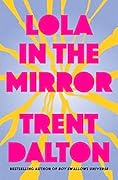
Lola in the Mirror by Trent Dalton

In 2024 I was recommended a book by a family member, who went to an event and heard the author tell the story of his childhood and this novel he wrote called Boy Swallows Universe. Barely a week after this conversation, a friend arrived in my hometown of Aix en Provence, from Australia, pressed this book into my hands and said “You have GOT to read this!”.

Yes, you guessed right, it was Boy Swallows Universe by Trent Dalton and I reviewed it here.

That book was published in 2018. I then saw there was another book about to be published called Lola in the Mirror, which some reviewers described as being even better than the debut novel. On reading about the inspiration for the novel, I decided to get a copy.

Love Stories and a Typewriter

Trent Dalton spent 17 years writing social affairs journalism across Australia. He had his own troubled childhood and upbringing, but he also witnessed and wrote about the situations of so many others, driven by the question; how was it that 120,000 people slept rough every night in one of the brightest, most fortunate countries in the world?

It is this question and the stories shared by the many people he has met over those years, that inspired him to create this latest story Lola in the Mirror.

Frank and Heartfelt

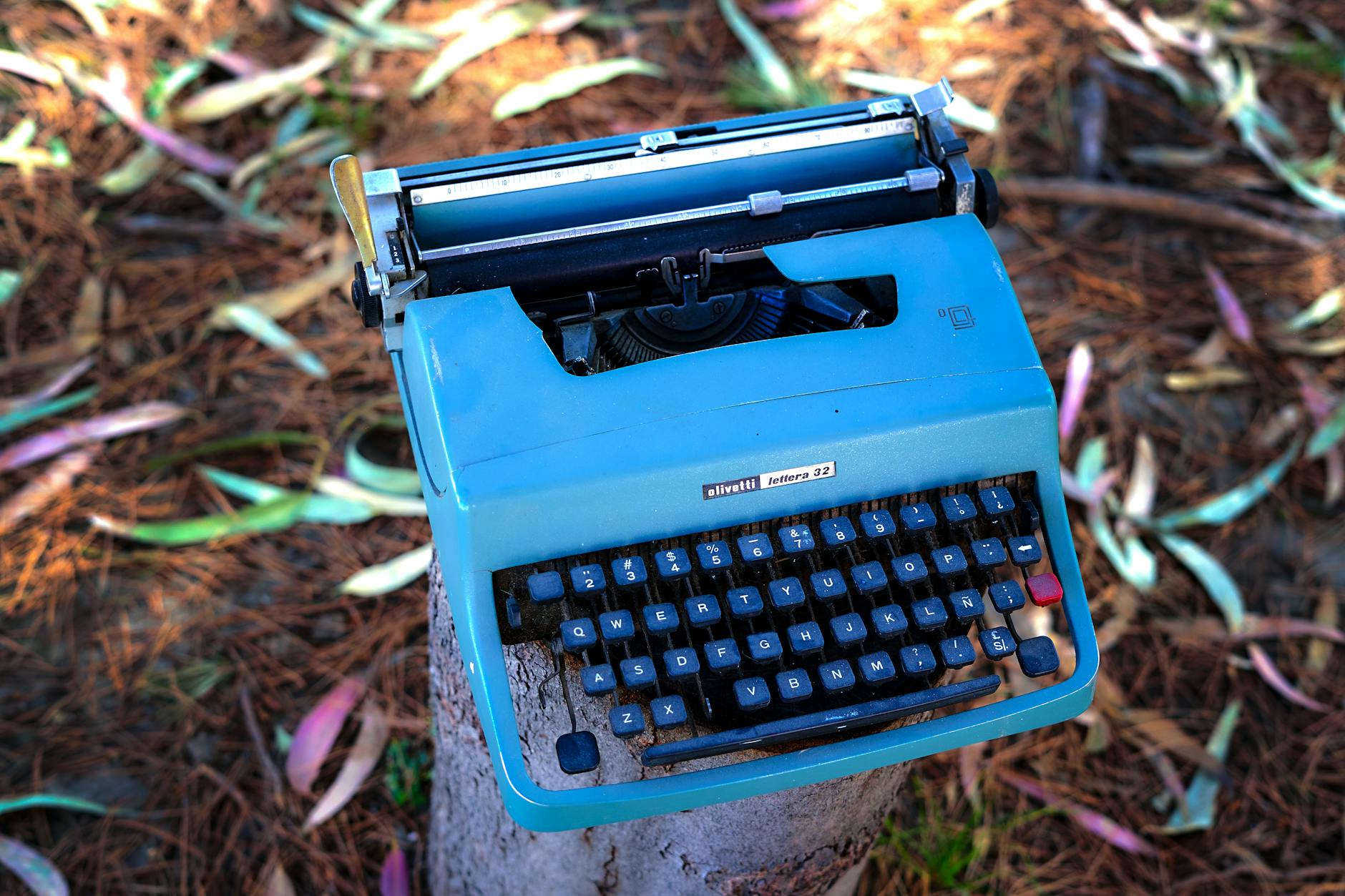
One of the people he was inspired by and wrote about, was Kathleen Kelly, the mother of a friend of his, who passed away on Christmas Day 2020. His book Love Stories is dedicated to her and prefaced with a letter written to her, typed on the sky blue Studio 44 Olivetti typewriter she bequeathed him.

In a letter to Kath, he writes of her memorial service:

Photo by Adriel Macedo Pexels.com

Greg spoke of you and your beloved Olivetti Studio 44 typewriter, the sky-blue one that you’d been tapping on since the early 1970’s, writing fiery letters about woman’s rights and human rights and doing life right to politicians and principals and popes. He spoke about the letter you wrote to the Catholic Leader in 1970, railing against Canon Law demanding the covering of women’s heads in church. You were furious and brilliant.

After the service, Greg tells Trent that his Mum cut out all the stories he wrote and made scrapbooks that documented her life and all that was important to her and that she wanted him to have her typewriter. Being the honour that it was, Dalton wanted to do something special with it, to write something filled with love and depth and truth and frankness and heart because that’s how Kath was.

I told Greg I wanted to walk through the streets of Brisbane’s CBD (central business district) for two months asking random strangers to tell me love stories. I told him I then wanted to sit two for weeks straight with the Olivetti on the corner of Adelaide and Albert streets, on the edge of King George Square, and ask random strangers to stop and tell me more love stories, and then I wanted to write about all those love stories on your beautiful Olivetti.

Those two months of listening to people tell their stories of love, loss and belonging were research for this story of Lola, frank, fearless and full of heart.

Lola in the Mirror

Lola in the Mirror is a riveting, page turning novel that gripped me from the opening pages and never let go. It is a whirlwind of risk and adventure, an exploration of friendship, loss, perseverance and the resilience of the human spirit to not give up on a dream. It is a challenging coming-of-age story of an innocent girl who desperately wants to know who she is and rise above her situation.

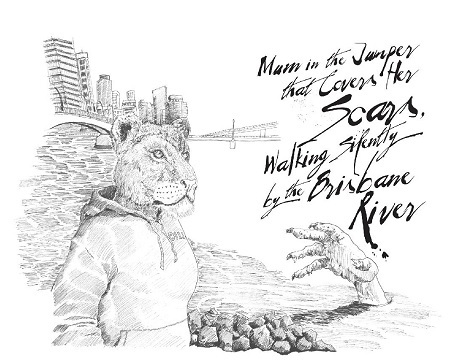
The novel opens with a black and white illustration entitled ‘Escaping the Tyrannosaurus Waltz‘, the dance of mothers and their monsters, or the dark shadow of domestic violence, something Dalton recalled about his own mother, who often had to choose between homelessness or ‘the monster’, a terrible choice faced by many women in Australia, for whom domestic and family violence is one of the leading causes of homelessness.

The artist is a 16-year-old girl, she and her mother are on the run, they have been for all her life. The girl does not know her own name, because it’s too dangerous, but her mother promises to reveal things to her soon, when she turns 18, because then she will be free to make her own choices.

Houseless not homeless

The girl does not describe herself as homeless, the two live in a van with four flat tyres parked in a scrapyard by the banks of the Brisbane River. There is a community of friends who live in similar circumstances, who look out for each other and this girl has a dream of a future life that will be different to how she lives now. For now that scrapyard home is her sanctuary, where she can dream up the best version of herself.

For a start, I ain’t homeless, I’m just houseless. Those two things are about as different as resting your head on a silk pillowcase and resting your head on a brick.

As this girl navigates her life in search of who she is, she comes across a mirror that she takes home, and after a period when the mirror cracks, something magical happens, half the mirror shows her legs and the other shows a dressed up woman in different world cities, who converses with her.

She wants to see her face, but she always has her back to her. She calls her Lola. Lola’s presence keeps her curious, keeps her coming back and looking in the mirror, gives her reason to keep dreaming. She is like a pulse on her mood, on her self-belief.

“Mirror, mirror, on the grass, what’s my future? What’s my past? … Mirror, mirror, please don’t lie. Tell me who you are. Tell me, who am I?”

The storytelling is incredible, the characters are fully formed, and the depiction of the city, the river, the bridges is visionary. You cannot read this book and not care about what happens to this girl or get hooked into wanting to know how she gets in and out of various situations. It is mystery, adventure, crime, psychological suspense and love story rolled into one. The best kind of holiday read ever.

When Life Connects With Art

Photo by Samantha Samantha Gilmore on Pexels.com

I took this book on holiday with me to Australia, figuring I would read it there and leave it behind. It is set in Brisbane which is where I flew into, although I was staying much further South. On the day I started reading, my son was due to fly back to France. I sat in the passenger seat of the car as we drove to the airport. This time, we took a different route and suddenly we were driving alongside the CBD and there were all these bridges and a glimpse of Victoria Park and the mighty river.

When I got back to my book later in the day, on page 45, I read descriptions of exactly the same places we had just driven past. It was surreal, to move from the imagined place to these live flashes of what I had just seen. It brought the story to life and for the rest of the novel, those images kept recurring. I have always been a fan of reading works set in the places I travel to, and I’m glad I read this one in situ as well.

The Artwork

Throughout the novel are a number of superb illustrations, which both tell parts of the story and also suggest a future life of the girl artist. Each drawing is followed by an imagined art critic review in a black box, as if it were being displayed at an exhibition at the Metropolitan Museum of Art, the commentary describing what the artist is representing in the illustration.

Of course, I became curious about the actual artwork and skipped to the back of the book to look up the story behind it. It’s a good one.

Trent Dalton, Author

Trent Dalton is a two-time Walkley Award-winning journalist and the international bestselling author of Boy Swallows Universe, All Our Shimmering Skies, and Lola in the Mirror. His books have sold over 1.3 million copies in Australia alone. He lives in Brisbane, Australia, with his wife and two daughters.

Lola in the Mirror is for anyone who ever felt like they were going to collapse under the weight of sorrow. The book is also for all those beautiful souls who help us carry that weight. It’s an art story. It’s a crime story. It’s a mystery novel. And it’s a life story. I hope people will read this, get to the end and realise why I wrote Love Stories and sat on a Brisbane street corner watching people and asking them about love, loss and belonging for three months.

Boy Swallows Universe (2018) by Trent Dalton

Boy Swallows Universe is the debut novel of Australian author and journalist Trent Dalton, who shared with audiences during the promotional tour of his novel (now a 7 episode Netflix series) that the book was semi-autobiographical, 50/50 fact and fiction.

Eli “does a lot of what I would have [done if I could]. It was all wishful thinking.”

While much of what occurs is true, it reads like a crime, suspense and thriller novel, with unforgettable characters. It is set in a suburb of Brisbane in 1985 and follows a boy through dark, dangerous and at times magical teenage years, intent on changing his family’s lives.

Coming of Age Amid Drug Wars, Corruption and Crim’s

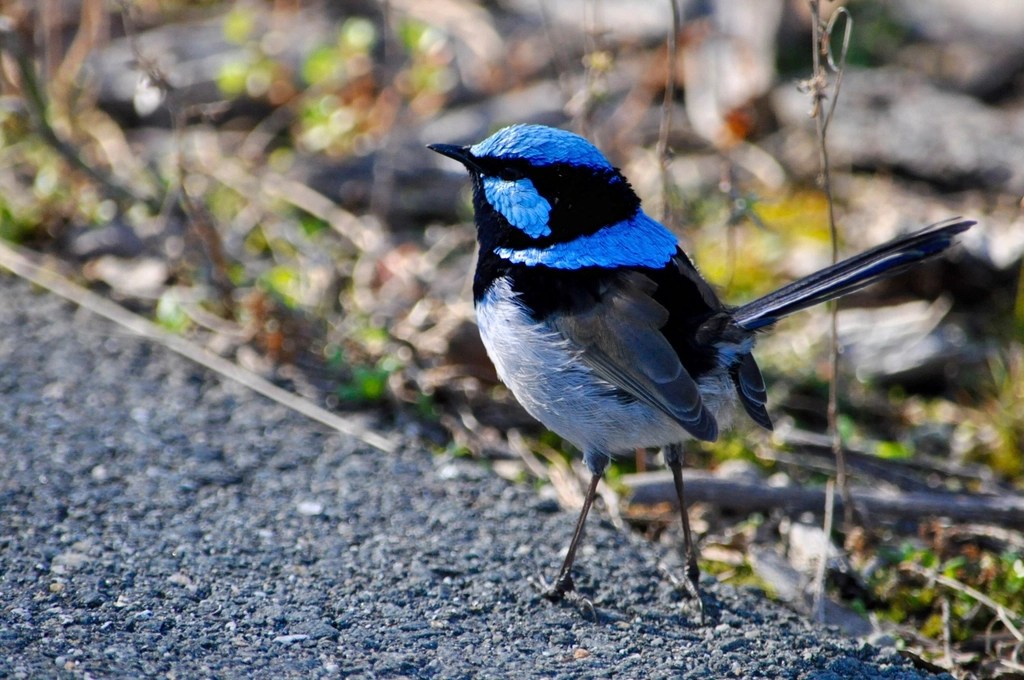
Your end is a dead blue wren.

Boy Swallows Universe Trent Dalton debut novel semi autobiographical 7 part Netflix series based on true story of the authors life growing up in Brisbane Australia

Boys Swallows Universe begins with this cryptic opening line, one of many that appear throughout the text, clues that are eventually resolved in this unique family saviour mystery.

Eli Bell is the main character, he is 13 years old; his brother August, a year older does not talk, he spells words in the air with his finger. He has not spoken since something happened in the past that Eli doesn’t remember. To do with their father. Who he also does not remember.

I can see my brother, August, through the crack in the windscreen. He sits on our brown brick fence writing his life story in fluid cursive with his right forefinger, etching words into thin air.

Finding Meaning and Escape in the Details

Their occasional babysitter Slim, a man who spent a quarter century in jail for the alleged murder of a taxi driver, has taught Eli the importance of details. It’s how he survived the hole. Creating double meanings for here (in the jail) and there (the boundless universe in his head and heart).

When he grows up Eli wants to be a crime reporter for the local newspaper. Slim writes lots of letters to his mates still in prison (using a false name) and suggests Eli can practice by writing letters as well. He has a penpal Alexander Bermudez, once sergeant-at-arms of the Rebels outlaw motorcycle gang.

Slim says a good way for me to remember the small details of my life is to associate moments and visions with things on my person or things in my regular waking life that I see and smell and touch often. Body things, bedroom things, kitchen things. This way I will have two reminders of any given detail for the price of one.

A Stupid Plan, A Secret Plan and a Well Meaning Busybody

The boys live with their mother Frankie Bell and her boyfriend Lyle. The boys get on with Lyle, although Eli has not forgiven him for getting his mother addicted to heroin. Lyle wants to save them all and has a fast track, risky idea about how to do it.

When Lyle’s plan backfires, Eli and August are thrust into survival mode and Eli takes this further with his own big secret plan by going into full on rescue mode, investigative detective, naive peacemaker, all with the aim of trying to get his family back together and his future career on track. Ironically for all the calculated risks it requires, it is his schoolteacher getting too interested in their welfare that worries him.

Mrs Birkbeck leans in closer across her desk. There’s something pious in the way she sits.

‘What I’m trying to say, Eli, is that trauma and the effects of trauma can change the way people think. Sometimes it can make us believe things that are not true. Sometimes it can alter the way we look at the world. Sometimes it can make us do things we normally would not do.’

Sly Mrs Birkbeck. Woman wants to suck me dry. She wants me to throw her a bone about my missing bone.

‘Yeah, trauma is pretty weird, I guess,’ I say.

Eli’s experience of trauma results in him having a highly intuitive subconscious, that combined with a fearless instinct for asking straight up questions push him forward on his quest. The red telephone in the secret dugout room of Lyle’s house is something of an enigma, why does it always ring when he is in there and who is the voice that responds?

A Funny, Thoughtful, Hair-Raising Life Adventure

Boy Swallows Universe is an exceptionally well told tale of a young boy Eli Bell surviving a tumultuous childhood, exposed to the effect of adults involved in drug dealing, of violent school mates, an unusual babysitter and some other hopeful, inspirational characters that make it all worthwhile.

“All of me is in here. Everything I’ve ever seen. Everything I’ve ever done. Every girl I ever kissed on a wagged school day, every punch I ever threw, every tooth I ever lost in a Housing Commission street scrap and every flawed, conflicted, sometimes even dangerous Queenslander I’ve ever come across, as the son of two of the most incredible and beautiful and sometimes troubled parents a kid could ever be born to.” Trent Dalton

This is no story of misery, it is about solidarity between brothers and the tenacity of a boy who won’t accept the way things are, he questions everything and everyone, asking forbidden questions, training himself in observing the details and taking action. Never giving up.

He is trying to save his mother, his mute brother August and himself from the terrible trauma cycles they are all stuck in. He is determined to grow up and become a crime reporter for a local newspaper and to meet the enigmatic Caitlyn Spies.

“The key characters all draw on the people I love most in the world. The most beautiful and complex people I’ve ever known, and I never even had to walk out the door of my house to find them. I just wanted to give the world a story. To turn all these crazy and sad and tragic and beautiful things I’ve seen into a crazy, sad, tragic and beautiful story.”

Brilliantly told, unforgettable characters, a wonderful balance between grounded in the dark reality of a dysfunctional family, a seedy underworld and the ethereal escape of two boys with an ability to dream and imagine their way through the darkest moments of an unsettling childhood.

So many highlighted passages, one of the reading highlights of 2024 for me. Highly Recommended.

I am looking forward to reading his nonfiction book of short stories Love Stories, created when he sat on a busy street corner with a sky-blue Olivetti typewriter and asked the world a simple question: Can you please tell me a love story?

Further Reading

New York Times review: ‘Boy Follows Universe’ follows a Gritty Coming-of-Age in 1980’s Australia by Amelia Lester, May 2019

Trent Dalton on : Why I Wrote ‘Boy Swallows Universe’ Harper Collins

This book is for the never believers and the believers and the dreamers.  This book is for anyone around the world who has been 13 years old. This book is for a generation of Australians who were promised by their parents they would be told all the answers as soon as they were old enough. Well, now you’re old enough.

Here are my answers:

  1. Every lost soul can be found again. Fates can be changed. Bad can become good.
  2. True love conquers all.
  3. There is a fine line between magic and madness and all should be encouraged in moderation.
  4. Australian suburbia is a dark and brutal place.
  5. Australian suburbia is a beautiful and magical place.
  6. Home is always the first and final poem.

Author, Trent Dalton

Trent Dalton Australia author journalist Boy Swallows Universe Lola in the Mirror Love Stories

Trent Dalton is a two-time Walkley Award-winning journalist and the international bestselling author of Boy Swallows Universe, All Our Shimmering Skies, Love Stories and Lola in the Mirror.

His books have sold over 1.3 million copies in Australia alone. He lives in Brisbane, Australia, with his wife and two daughters.

Nine Perfect Strangers by Liane Moriarty #20booksofsummer23

Liane Moriarty is the author of the bestselling Big Little Lies and a number of other novels that fit into that easy, holiday reading category.

This is on my #20BooksofSummer23 list of titles taking up space on the bookshelf, and was in the category of ‘Other People’s Reads’, books passed on to me. This one is a hardback, I got to it early because it takes up almost three times as much space as many other good books I want on the shelf!

Nine people attend a remote health spa, somewhere north of Sydney, Australia. They have all responded to an enticing promotional offer to change their lives in ten days, so we get to know each of the characters and their backstory that lead them to want to do so (even though some instantly regret it once they’ve paid).

The novel opens in a corporate work environment, where an overworked, demanding woman is having some kind of attack, setting up an element of intrigue in the minds of readers, as it seems unrelated to the events that follow.

A romance novelist Frances, is one of the guests who thought it was a good idea to sign up at the time, well, she was coming of the back of a duplicitous online relationship, that she couldn’t believe she fell for, and now has the feeling she might have too impulsive, yet again…

The TripAdvisor reviews of Tranquillum House, which she’d looked at after she’d paid her nonrefundable fee, had been noticeably mixed. It was either the best, most incredible experience people had ever had, they wished they could give it more than five stars, they were evangelical about the food, the hot springs, the staff, or it was the worst experience of their entire lives, there was talk of legal action, post-traumatic stress, and dire warnings of “enter at your own peril”.

Photo by Prasanth Inturi on Pexels.com

The owner of the retreat centre has decided to change things up a little, disappointed to discover that a good proportion of those who had attended in the past, looked as unhealthy on their 2nd or 3rd visits, as they had on their first. It’s clear that Masha has something in mind that might go beyond what this new batch of residents expects. There are some serious boundary issues about to be breached.

It’s an entertaining, light hearted read, with plenty of humorous elements, with the plot neatly tied up. It reads a little like a television series, with its episodic nature and cast of characters, but the interaction between the different personalities is also what keeps the pace humming along.

There is something a little sad about the way it inevitably mocks a well intended industry that didn’t sit comfortably with me, but it’s not a novel that’s going to stay with me for long, so I’ll let that one go.

Ideal holiday read, unless you are going on a well-being retreat.


Cold Enough for Snow by Jessica Au

Cold Enough for Snow is a 96 page literary fiction novella set in Japan, that can be read in an afternoon.

Mother Daughter Relationships

literary fiction set in Japan Australian literatureIt is an intricate, observant story told by a daughter who has arranged to take her mother on holiday to Japan. She recounts their days and interactions and tries to anticipate what her mother might like, knowing that the intersection of their common interests is negligible.

Mother and daughter have been raised in different countries and cultures, additionally the mother was not raised in the same country as her parents, so both have grown up migrants, knowing little about what came before, except that it has influenced the way they would have been raised.

Do We Ever Really Know Our Mother?

There is a void, a vacuity, a kind of absence of understanding that is very present, in terms of the way the daughter tries to feel her way towards guessing what her mother might like, what to propose to her. The mother doesn’t have set ideas or desires regarding what they might do, she is like a stranger, a visitor to the holiday, not exhibiting the same kind of intentionality that the daughter possesses.

Earlier in the year, I had asked her to come with me on a trip to Japan. We did not live in the same city anymore, and had never been away together as adults, but I was beginning to feel it was important, for reasons I could not yet name. At first, she had been reluctant, but I had pushed, and eventually she had agreed, not in so many words, but by protesting slightly less, or hesitating over the phone when I asked her, and by those acts alone, I knew that she was finally signalling that she would come. I had chosen Japan because I had been there before, and although my mother had not, I thought she might be more at ease exploring another part of Asia. And perhaps I felt this would put us on equal footing in some way, to both be made strangers.

mt fuji Cold Enough for Snow Jessica Au

Photo by Tomu0e on Pexels.com

It was autumn and though pretty, there had been adverse weather warnings.

The daughter describes the minutiae of their every movement, of taking trains, changing platforms, the places they visit, the flora and fauna, occasionally flashing back to memories to when she travelled with her husband Laurie; wishing that the same excitement of discovery she’d had with him might be present with her mother.

She also recalls how difficult her younger sister was, growing up. Now a mother herself, she is dealing with difficult behaviours that have passed through to her own child, little understanding why she had been so troubled.

Ask Me No Questions, I Tell You No Lies

She tries to engage her mother in conversation, they talk; the daughter asks questions, the mother answers.

I thought about how vaguely familiar this scene was to me, especially with the smells of the restaurant around me, but strangely so, because it was not my childhood, but my mother’s childhood that I was thinking of, and from another country at that. And yet there was something about the subtropical feel, the smell of the steam and the tea and the rain…

It was strange at once to be so familiar and yet so separated. I wondered how I could feel so at home in a place that was not mine.

light soul

Photo by Pixabay on Pexels.com

The daughter has had a particular education that influences the way she observes things, she wants to share that with her mother, she tries, mostly her mother smiles when she shares these perspectives, but it is impossible to tell if she agrees.

Whenever I’d asked her what she’d like to visit in Japan, she’d often said she would be happy with anything. The only question she’d asked once was whether, in winter, it was cold enough for snow, which she had never seen.

Existential Beliefs and Nothingness

One day the daughter desires to visit a church, reportedly a beautiful building designed by a famous architect, in a suburb near Osaka. Though she knew her mother did not believe in that religion, visiting that place was supposed to be a profound experience, it provoked and exchange between the two.

I asked my mother what she believed about the soul and she thought for a moment. Then, looking not at me but at the hard, white light before us, she said that she believed that we were all essentially nothing, just series of sensations and desires, none of it lasting. When she was growing up, she said that she had never thought of herself in isolation, but rather as inextricably linked to others. Nowadays, she said, people were hungry to know everything, thinking that they could understand it all, as if enlightenment were just around the corner. But, she said, in fact there was no control, and understanding would not lessen any pain. The best we could do in this life was to pass through it, like smoke through the branches, suffering, until we either reached a state of nothingness, or else suffered elsewhere.

The novella presents these two women and the things they do, snippets of their one sided conversations, their attempt to bond, to find a connection. They are transparent, one thing they have in common is the inability to pretend, there is no falseness, they are a product of those environments they’ve grown up trying to fit into, familiar yet unfamiliar, known, yet unknown, compelled by life’s circumstance to remain an enigma to each other.

It was an interesting read, that palpable desire to connect, the deep chasm between them, born of something outside their control, yet the human need to try and persevere, to find a way through anyway.

Further Reading:

Interview Bomb magazine: Chasing the Echoes of Belonging: Jessica Au Interviewed by Madelaine Lucas

Review, the guardian: a graceful novella about how we pay attention

Jessica Au, Author

Jessica Au is a writer, editor and bookseller based in Melbourne, Australia.

Cold Enough for Snow won the inaugural Novel Prize in 2022, run by Giramondo, New Directions and Fitzcarraldo Editions, and is set to be published in eighteen countries. Au won both the 2023 Victorian Premier’s Prize for Literature and Victorian Premier’s Prize for Fiction for Cold Enough for Snow.

“Migration is probably the one through line of my family. My grandfather migrated from China to Malaysia, my mother migrated from Malaysia to Australia. So, that’s three generations of migration. When I was younger, I would take my mother’s language and refer to Malaysia as “home”. Where I was living, where I was born, was never “home”. Even after living in Australia for so many years, that idea of home being elsewhere is constant and present. I don’t have a sense of belonging anywhere.” Jessica Au, interview, Bomb Magazine

My Place by Sally Morgan

Originally published in 1987, this nonfiction title is both a mini biography (of Sally Morgan’s Great Uncle Arthur, her mother Gladys and her Nan, Daisy) and part memoir.

Sally Morgan, an Australian of Aboriginal descent, begins the book writing about her childhood from the perspective of not knowing her own identity. Thus the reader too, reads from this perspective as Sally recounts events in her life as they happen and as a child would, refrains from analysing or questioning them. Until she finds out.

autobiography memoir australia indigenousThe children at school ask about her skin colour and ethnic origin.
One day, I tackled Mum about it as she washed the dishes.

‘What do you mean “Where do we come from?” ‘

‘I mean what country. The kids at school want to know what country we come from. They reckon we’re not Aussies. Are we Aussies Mum?’

Mum was silent. Nan grunted in a cross sort of way, then got up from the table and walked outside.

‘Come on Mum, what are we?’

‘What do the kids at school say?’

‘Anything. Italian, Greek, Indian.’

‘Tell them you’re Indian.’

‘I got really excited then. ‘Are we really? Indian!’ It sounded so exotic.

‘When did we come here?’ I added.

‘A long time ago’, Mum replied. ‘Now no more questions. You just tell them you’re Indian.’

It was good to finally have an answer and it satisfied our playmates. They could well believe we were Indian, they just didn’t want us pretending we were Aussies when we weren’t.

At home, they live with their mother Gladys and father Bill, who is unwell and sometimes dangerous. He is a WWII war veteran of able body, suffering from what today would be diagnosed as PTSD.

Bill was a strange man, he wasn’t prejudiced against other groups, just Aboriginals. He never liked us having our people to the house. We had to cut ourselves off. I think it was his upbringing.

Bill had spent a lot of his childhood in country towns. I think that moulded his attitudes to Aboriginal people. Down South, Aboriginals were really looked down upon. Bill would have been brought up with that.

Sally Morgan My Place

Photo by Dan on Pexels.com

During those difficult years with her Dad, one of the few things Sally enjoyed about school were the Wednesday afternoon stories, listening to Winnie the Pooh, a character who lived in a world of his own and believed in magic, just like she did. While Pooh was obsessed with honey, Sally was obsessed with drawing.

My drawings were very personal. I hated anyone watching me draw. I didn’t even like people seeing my drawings when they were finished. I drew for myself, not anyone else. One day, Mum asked me why I always drew sad things. I hadn’t realised until then that my drawings were sad. I was shocked to see my feelings glaring up at me from the page. I became even more secretive about anything I drew after that.

Nan also lives with them and as Sally gets to know Nan’s brother Arthur, she learns that they are not Indian, they are of Aboriginal origin. Confronting her grandmother elicits no information at all, she refuses to speak of her past, nor of who her father was and suggests Sally forget about it.

Arthur agrees to tell his story and over a period of 3 months, in his 90’s, she records their conversations and learns about his life and a little more about his sister’s, her Nan. They are the children of an Aboriginal woman and the white stationmaster whose farm they lived and worked on.

They grew up in an era referred to as “living under the Act” when Australia had laws that not only dispossessed Aboriginal people of their land, culture and traditions, but forcibly removed their children from them, did not allow them to raise their children, in effect owned them and treated them similar to slaves. People like Nan grew up under this Act and lived their lives under the effect of the trauma it brought about. The only way they could see to protect their children was to lie about who they were and withhold their heritage from their children and grandchildren.

My Place Indigenous Voices Australia Aboriginal Heritage

Heritage by Sally Morgan (1990)

This story is Sally’s persistent endeavour to find that lineage, those lost family members and that heritage and to find out the story of her grandmother who was too scared to tell it and said she would take her secrets to the grave. To understand what it meant to belong to a heritage.

What did it really mean to be Aboriginal? I’d never lived off the land and been a hunter or gatherer. I’ve never participated in corroborees or heard stories of the Dreamtime. I’d lived all my life in suburbia  and told everyone I was Indian. I hardly knew any Aboriginal people. What did it mean for someone like me?

I absolutely loved every word of it, the way it is told, the close connection this family has to each other, the evidence of a spiritual connection to their ancestry and the spirits, even though they have not been raised with this knowledge.

The real life characters are vividly drawn, the dialogue authentic and the story’s of Arthur, Gladys and Daisy (Nan) beautifully recollected. Though it tells of a terrible time in Australia’s past, of children taken from their mothers, of slavery, abuse, fear and judgement because of skin colour, it is also a legacy for this family, a gift to the Australian nation and the world at large, to be given the opportunity to gain insight into a period of history, little known or heard from this important perspective.

Highly Recommended.

Sally Morgan, Author, Painter

Sally Morgan Indigenous Aboriginal AuthorSally Morgan is one of Australia’s best-known Aboriginal artists and writers.
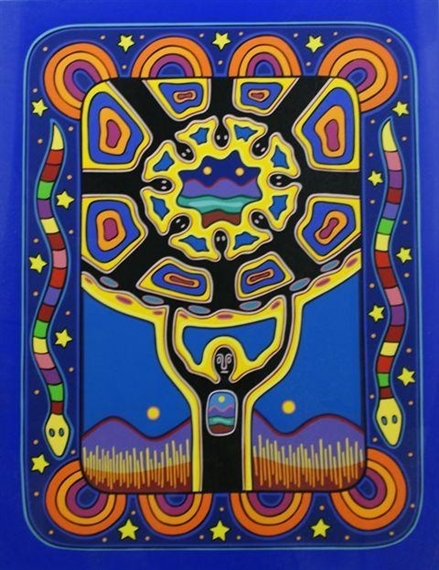
For as long as she can remember, Sally wanted to paint and write but at school she was discouraged from expressing herself through her art because her teachers failed to see the promise in her individual style. It was not until she researched her family history and discovered her Aboriginal identity that she found meaning in her images and gained the confidence to pick up her paints again.

Sally’s widely-acclaimed first book, My Place, has sold over half a million copies in Australia. Sally Morgan’s second book, Wanamurraganya, was a biography of her grandfather.

My Place won the Human Rights and Equal Opportunity Commission humanitarian award in 1987, the Western Australia Week literary award for non-fiction in 1988, and the 1990 Order of Australia Book Prize.

In 1993, international art historians selected Morgan’s print Outback, as one of 30 paintings and sculptures for reproduction on a stamp, celebrating the Universal Declaration of Human Rights.

Her children’s picture story books include Little Piggies and Hurry Up Oscar. She has collaborated with artist and illustrator Bronwyn Bancroft on several picture books including Dan’s Grampa. Curly and the Fent was written by Sally in collaboration with her children Ambelin, Blaze and Ezekiel.

Sally is the Director at the Centre for Indigenous History and the Arts at the University of Western Australia and lives in Perth.

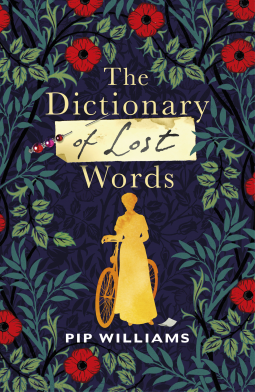
The Dictionary of Lost Words by Pip Williams

A historical fiction novel about words both entices and because of its popularity also made me hesitate.

Background

Scottish lexicographer Dr James Murray was the primary editor of the Oxford English Dictionary, published in 1884. The only word Dr Murray ever conceded had been overlooked was “bondmaid”, meaning a girl bound to serve without wages.

When author Pip Williams discovered this omission, the idea for her debut novel, The Dictionary of Lost Words, was born. Jenny Valentish, Guardian

Pip Williams Language Words DictionaryAnd so I dive in and find myself often using the dictionary feature on the kindle – yes there are a lot of lost words, or words that are no longer in common use, and one of the main words, and locations, the scriptorium had me confused right from the start – a tin shed where a few learned, self-important men are compiling the first edition of the Oxford dictionary? Even as I write these words, the spellcheck has underlined that word in red.
We are introduced to this place and the main character Esme as she is crawling around beneath the table in this scriptorium, we don’t understand a lot about why she is there, as her father appears to be raising her alone without childcare.

A slow build up in the early years, the pace picks up finally when Esme is old enough to go to town and meet a few unconventional women and hears new to her ears, ancient popular but unknown words, and when she meets Tilda, an actor and suffragette her vocabularly and life experience widen even further.

It is the late 1880’s, an era of slow progress, both on the dictionary and on the rights of women.

black and white book business close up

Photo by Pixabay on Pexels.com

Esme grows up and begins to work with her father, collecting “slips” and the necessary quotations, that give words the right to be part of this grand dictionary.

The problem being that much of a women’s world is left out, words that have existed, often for centuries, but have either not been written in any notable works or are deemed not appropriate for polite society. 

Esme has found her calling.

It’s an interesting journey through a particular period of history, though I found the character of Esme to be a little two-dimensional compared to some of the secondary characters and one of the characters appears mostly through letters, which rather than illuminate some of the mysteries in Esme’s life, just had me asking why this one character if she was so important to her life, wasn’t present. The story seemed to lose pace towards the end or perhaps just went on too long, as I began to lose interest.

There are moments of humour, but also predictability – in Esme’s 30’s her like of words pertaining to women and the poor are discovered by the villainous Dankworth, as the slips flutter to the floor, who should arrive but her literary knight (not yet in armour) Gareth, the compositeur. She ponders the words “manhandled, pillock and git”.

A slow consciousness raising and cast of characters across the class divine in Oxford, with the controlled compilation of the Dictionary at the centre of it.

Further Reading

Guardian Books: All words are not equal’: the debut novelist who’s become a lockdown sensation by Jenny Valentish

Lisa’s Review at ANZLitLover’s – a more passionate take on the history and the bias resulting from it being a virtually male endeavour

Guardian Review: A Gentle Hopeful Story 


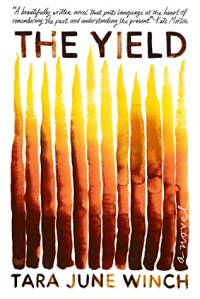
The Yield by Tara June Winch

yield, bend the feet, tread, as in walking, also long, tall – baayanha Yield itself is a funny word – yield in English is the reaping, the things that man can take from land, the things he’s waited for and gets to claim. A wheat yield. In my language it’s the things you give to, the movement, the space between things. It’s also the action made by Baiame, because sorrow, old age and pain bend and yield. The bodies of the ones that had passed were buried with every joint bent, even if the bones had to be broken. I think it was a bend in humiliation, just like we bend at our knees and bow our heads. Bend, yield – baayanha.

Review

Indigenous Literature Aboriginal Australia

Though it took a little while to fall into the rhythm of the book, once I did and realised what it was doing, preserving a language and sharing a culture, while telling the story of one who returns, having been separated from it through travel (and a non-inclusive education), I thought it was brilliant.

The Wiradjuri Aboriginal people, of which the author is a descendant, are a people and a culture that have been dispossessed, yet in some respects and from an alternate perspective, can also be said to have thrived despite the setback of colonialization.

The Yield is an acknowledgement of what was, a perspective on what it is to straddle dual cultures and a powerful reclaiming of Indigenous language, storytelling and cultural identity, one that will endure.

Known as the people of the three rivers, Wiradjuri people have inhabited modern-day New South Wales, Australia for more than 60,000 years. At the time of European colonization, there were an estimated 3,000 Wiradjuri living in the region, representing the largest cultural footprint in the state.

A Triple Narrative, Of Voice, Time and Style

The story is told through three voices, in three narrative styles, across three time periods, that I have come to think of metaphorically as the past, present and future of Aboriginal culture.

The Future, reclaiming one’s culture

Brolga, Australian Crane, Photo by Luke Shelley

The first person narrative is the voice of Albert (Poppy), the grandfather of the fictional Gondiwindi family. He is no longer living when we read his granddaughter August’s account of her return from England to Australia, he is the reason she returns, for his funeral.

He has written down important words that populate and are interspersed throughout the entire novel, the mystery of them revealed as the narrative moves forward.

English changed their tongues, the formation of their minds, August thought – she’d drifted in and out of herself all that time. The language was the poem she had looked for, communicating what English failed to say. Her poppy used to say the words were paramount. That they were like icebergs floating, melting, that there were ocean depths to them that they couldn’t have talked about.

Nothing like your average dictionary, Poppy’s entries are an accessible rendering of words in his indigenous language, his descriptions or meanings are anecdotal stories of an oral tradition, ensuring we understand. More than mere words, they preserve a culture, they are evidence of a civilisation. They are the future, a key to the longevity and respect of his people’s lineage.

ashamed, have shame – giyal-dhuray I’m done with this word. I’d leave it out completely but I can’t. It’s become part of the dictionary we think we should carry. We mustn’t anymore. See, pain travels through our family tree like a songline. We’ve been singing our pain into a solid thing. The old ones, the young ones too, are ready to heal. We don’t have to be giyal-dhuray anymore, we don’t have to pass that down to anyone.

The Present, a return to one’s culture

The Yield Tara June Winch Wiradjuri

Photo by Catarina Sousa on Pexels.com

The second person narrative is the present day account of August’s return, of her discovery that her grandmother Elsie is being forced to leave the family property because of a mining company claim and the way it has been presented to them, is as if they have no right to or compensation for the land or buildings.

Elsie isn’t prepared to fight, but August becomes aware of her grandfather’s project, of what is required to potentially save the land and reinstate their existence. It is a time of reckoning as she allows events of the past to rise, and rather than run from them, can make amends.

There is also the presence of outsiders, activists on the hill, ready to intervene if necessary. These people are something of an enigma to August and her family. In challenging one of them, she highlights that aspect of humanity – that there is always someone whose call is to agitate and prick the social conscious of the other, that it’s often not those to whom the injustice is being done.  When Mandy warns August to be careful and to conceal herself, she tells her she’s nobody anyway.

“You are somebody. But these days we can’t do anything as somebody, we can only do something as nobody. The nobody of everybody.”

August thought for a moment. “I don’t get it.”

“When something is important enough that it’s personal to everyone,” Mandy added.

The Past, overriding one culture with another

old handwritten letters

Photo by Pixabay on Pexels.com

A third epistolary narrative, is a series of letters written by a British/German Reverend Ferdinand Greenleaf who lived in the area in the late 1800’s and wrote an account of his attempt to build a mission. His few letters are spread across the novel, recording his intentions, his observations and his responses to all that he witnessed.

It is here we read of the past treatment of people, the struggles, the behaviours, the results, the small successes, the failures and the reminder that anyone can become a future victim when the allegiances of a nation turn.

respect – yindyamarra I think I’ve come to realise that with some things, you cannot receive them unless you give them too. Unless you’ve even got the opportunity to give and receive. Only equals can share respect, otherwise it’s a game of masters and slaves – someone always has the upper hand when they are demanding respect. But yindyamarra is another thing too, it’s a way of life – a life of kindness, gentleness, and respect at once. That seems like a good thing to share, our yindyamarra.

The Many Ways to Preserve a Cultural Heritage

The entire novel is a monumental endeavour, encompassing as it does, this one language of the hundreds that existed and have either become extinct, or are under threat of becoming so.

The way the words and language create a bridge of understanding of a way of life and thinking is indeed a celebration. The thought of one man spending his latter years in pursuit of this, of sharing all that he knew, so he could pass it on, in the way of the coloniser – using the written word and not the oral stories of the past that risk dying out – is remarkable and uplifting.

It’s Never to Late to Be An Inspiration

One of the inspirations for the book was the work of Wiradjuri elder Mr Stan Grant Senior, whose contribution has since earned him an honory doctorate for his life’s work to reclaim the Wiradjuri language.

With an anthropologist, John Rudder, Mr. Grant has breathed new life into the language. They worked together on a revision of a long-neglected Wiradjuri dictionary, “A New Wiradjuri Dictionary,” almost 600 pages in length, as well as a collection of small grammar books. – extract, New York Times

I love that stories like this are being written, helping to preserve a much wronged culture and people, and that a new generation of writers are using literature to further develop empathy and understanding.

Highly Recommended, a future classic!

“I was told when you revive a lost language, you give it back to all mankind,” he said, sitting in his kitchen, not far from where the kingfishers darted across the Murrumbidgee.

“We were a nothing people for a long time. And it is a big movement now, learning Wiradjuri. I’ve done all that work. I’ve done all I can.” Stan Grant Sr

About the Author, Tara June Winch

Tara June Winch is a Wiradjuri author, born in Australia in 1983 and based in France. Her first novel, Swallow the Air was critically acclaimed. She was named a Sydney Morning Herald Best Young Australian Novelist, and has won numerous literary awards for Swallow the Air. The novel has been on the HSC syllabus for Standard and Advanced English since 2009 and a 10th-anniversary edition was published in 2016.

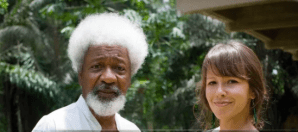
In 2008, she won a prestigious mentoring scheme and was mentored by Nobel Prize winner Wole Soyinka who introduced her to a whole new world of reading; for the first time, she began making links between Greek tragedies, biblical myth and Indigenous dreaming stories.

There’s a wonderful video interview of the two of them in Nigeria available online.

Soyinka chose Winch to be his protégée because of her “sure hand [and] observant eye”.

The Yield, was first published in 2019, to commercial and critical success and took out four prizes including Book of the Year at the NSW Premier’s Literary Awards, the Miles Franklin Literary Award, the Voss Prize, and the Prime Minister’s Literary Award. It was shortlisted for The Stella Prize.

Further Reading

The Guardian Interview: I had to be manic’: Tara June Winch on her unmissable new novel – and surviving Andrew Bolt by Sian Cain

Article New York Times: An Heir to a Tribe’s Culture Ensures Its Language Is Not Forgotten by Michelle Innis

ABC News: January 26 is a reminder that Australia still hasn’t reckoned with its original sin by Stan Grant, 27 Jan 2021

N.B. Thank you to Harper Via, an imprint of Harper Collins dedicated to publishing extraordinary international voices for an ARC (advance reader copy) provided via Netgalley.

Purchase A Copy at an Independent BookStore (US)

Purchase A Copy at an Independent BookStore (UK)

The Rain Heron by Robbie Arnott

I enjoy fable-like stories or those that reference them and when I saw this title, I was captivated and intrigued by the image and concept of a rain heron. It reminded me of reading Patrick Ness’s The Crane Wife and so I thought why not, see what this eco-fable was about.

Tales of Imaginary Birds and Nature

Eco fable The Rain HeronThe first chapter tells what I imagined was the original fable of the rain heron and the unlucky farmer, and from what I can gather, the author has made this story up as well. It’s a story of a woman running a farm, the daughter of generations of farmers, but one who struggles for many reasons no matter what methods she tries.

Until one day a big storm comes and destroys nearly everything; at the end of which she is found curiously draped over the branches of an old oak tree.

Even more surprising was the large heron that rose out of the floodwaters, leaving not a ripple behind it, that landed on the branch beside her. The birds blue grey feathers were so light, they were near transparent. When it flew off, water fell from its wings like rain. Its appearance changed the fortune of the unlucky farmer, until the neighbour’s jealous son’s envy caused her bad luck to return.

What is A Fable?

So is it a fable? It’s a tale of someone who has bad luck, who for a period their luck changes, but as with life, good luck causes jealously in others, who have destructive tendencies. And so the bad luck continues.

“I just set out to write a story where real characters or characters that felt real had their lives intertwined with the nature fable.”

Arnott then begins a new story in four parts, in which we meet Ren, a woman who has left her home after a military coup and gone to live in the mountains. She is virtually self-sufficient apart from occasional exchanges with a man named Barlow and his son. The outdoor scenes are vivid and believable, Ren is a really interesting character I wish we’d spent more time with.

The Rain Heron Robbie Arnott Crane

Photo by Josh Sorenson on Pexels.com

We don’t know exactly why she fled or what the coup was about, but the man alerts her to the presence of soldiers searching the mountainside for something, a group of four lead by a young woman referred to as Harker. They are in search of evidence of a myth and they will make Ren suffer until she divulges what she knows and leads them to its source.

In the second part, we go back in time to a seaside settlement on the South  coast and meet Zoe and her Aunt, just as the girl is being initiated into the village tradition of squid ink gathering, a secret trade that is shared with no one. An ambitious Northener arrives seeking knowledge for his ideas and is spurned, he turns towards destructive means and with everything that follows Zoe leaves. This community and environment are really brought alive and I was disappointed when this part ended.

The story returns to Harker and her troops and their journey, here I felt the story waned, a few connections had been made and the interwoven nature of the parts revealed, but neither the landscape nor the characters gain traction, Harker is determined in her mission, but self-destructive in her nature and has lost whatever empathy she ever had. Her previous actions are hard to understand, her transformation(s) not entirely believable.

A Man Writing Women Characters

The Rain Heron A trap

Photo by Pixabay on Pexels.com

Most of Arnott’s characters are women and I did find myself pausing early on and wondering why he chose to inhabit so many lead female characters, the unlucky farmer, the woman surviving in the mountain, the leader of the army group. I made a note when this thought arose, because these women were all acting in ways often attributed to men, and I wondered if anyone else had noted this. Harker uses brutal tactics to change Ren’s mind; Ren has abandoned her son.

In an interview Arnott says it made more sense for him to portray those characters as women, because it required them to demonstrate resilience, something he considered more of a female trait within this story.

Because they were spending a lot of time in the wilderness, he thought writing them as male characters would come across as cliché, referring to woman as having:

“that gentle, firm, methodical way of dealing with problems as opposed to letting anger and frustration rise to the surface”

The author says he wasn’t trying to convey a particular message, but the situations he puts his characters in and the familiarity of some of the climatic events that occur make it a thought provoking story, and I think it’s all the better for not coming to any conclusion or moral, for it exists as a catalyst for discussion of those various controversial situations that arise.

The Anti-Hero

My favourite character and the one we spend too little time with was the rain heron, who spends most of the book hidden away, but listening to Arnott talk about his inspiration behind the bird, who he first imagined as a storm, manifest into a bird that had magical qualities and was a kind of anti-hero, made me wish that the heron had more of a presence.

His point here was that in nature, birds and animals are really not interested in humanity, not in the way humans are interested in them, acting from instinct not from consideration or desire. That said, he has created a creature that readers are indeed likely to be fascinated with!

The Rain Heron (2020) was Tasmanian author Robbie Arnott’s second novel, his debut Flames was published in 2018.

The Enlightenment of the Greengage Tree by Shokoofeh Azar

In yesterday’s post I mentioned I had just finished reading this book, a wonderful, if challenging work of translated fiction by the Iranian author Shokoofeh Azar, who lives in exile in Australia. This novel was shortlisted for the Stella Prize in 2018 (a literary award that celebrates Australian women’s writing and an organisation promoting cultural change).

I was very quickly pulled into this book and for the most part seamlessly travelled between the realistic part of the story and parts where the author shifted into the character’s imagination.

Azar uses the lyrical magic realism style of classical Persian storytelling to tell the story of a family of five in the period immediately after the 1979 Islamic revolution and the story is narrated by the spirit of the 13 year old daughter. When fire takes their daughter and much that have till then valued, the family flees Tehran in search of a place as far away as possible from conflict and interference, making their home on a hill above the sleepy village of Razan.

One day Beeta tells Bahar: ‘When life is so deficient and mundane, why shouldn’t imagination supplement reality to liven it up?’

The story shifts between the quiet lulls where it appears they have realised such a utopia and flights of the imagination, where we are temporarily protected from exposure to the harshness and brutality of reality, just as this family attempts to do to preserve their way of life and life itself.

Azar says she wrote the story, in an attempt to answer this question:

Can we survive without passion and hope in a religious dictatorial system?

By letting go of the need to have all of the story narrated in the realistic voice, we hang loosely onto the storyline and then detach, like a kite being given more length of string, flying high above, sometimes so high we no longer recognise where we are, before being pulled back to ground.

I managed to stay with the narrative until Beeta’s metamorphosis around page 178, where I felt my mind spinning, trying to stay with it, wondering what was happening. I almost felt defeated, and then arrived that wonderful moment of clarification, when without giving anything away, the father is forced by the dictatorship to write a statement, and as readers we are given insight into the reality we have been protected from and how the imagination has carried us through it. And though we might question what was real and what wasn’t, it no longer matters, because we have been made to understand why.  As if the universe is making a point here, this realisation ironically appears on page 222.

Dad wrote everything again. This time he cut out all the parts he had realized were incomprehensible to their stale minds, and embellished here and there to make it thoroughly believable.

This made me very curious to understand more about the Persian style of storytelling, whether this was the author’s imagination or something that was inherent in the culture she came from. And this is one of the reasons I love reading translated fiction, because of the gift of this kind of insight into another culture’s storytelling and way of thinking, how they cope with the often harsh reality of life.

Asked in an interview with the LARB (LA Review of Books) about her use of magical realism, Azar said:

Magical realism comes from an old or ancient deep-seated insight. It is more than a literary style that you can learn at university or from the books. I did not learn it only by reading magic realism modern fictions, but I also learned from mythic texts, Persian classic texts, and my own people’s culture. People of old or ancient cultures sometimes seek the metaphysical solution for realistic problems. And it has nothing to do with superstition or religion. If you learn to look at these beliefs in the right way and deeply, you can find the roots of myths, and important and beautiful meanings in these beliefs.

I highlighted many passages, too numerous to include, but leave you with this one:

Persian Greengage Plum Tree

I looked at the eyes of the ghosts sitting around the fire and at Beeta, and suddenly I realized that we dead are the sorrowful part of life, while the living are the joyful side of death. And yet, Beeta was not joyful and it was the sad side of life that she didn’t even know she should be joyful in life because there was nothing else she could do. I wanted to tell her this, but was afraid of bringing her damaged spirit down even further. Fortunately, she herself eventually spoke and said, “It seems that from among you, I am the more fortunate because nobody killed me. But I don’t feel happy at all.”

She looked at we who had died. The dead who had been the first to meet her in the world of the living outside Razan. An old man in the group responded, “This is because you don’t yet realize how beautiful, young, and healthy you are.” Beeta smiled and her cheeks reddened by the light of the fire in silent emotion; and all of us who were dead saw how good the smile looked on her. But as she recalled dark memories, her smile faded and she said, “But the man who loved me simply turned his back on me and married a young girl.” The middle-aged man said, “All the better! It means you were lovable enough but he wasn’t smart enough to realize it.”

This is one of those books that demands perseverance, for which we are warmly rewarded when we do so. I am pleased to read that she is at work on a second novel in a similar style asking the question:

Can true love exist in a religious dictatorship in which the body and love are censored? When you are not allowed to love your body and mind, can you truly be in love with another’s body and mind?

Further Reading:

Deep Into the Heart: An Interview With Shokoofeh Azar by Robert Wood, LARB

The Stella Interview: where she discusses the experiences that informed the novel, the writers that inspire her work and how writing is a means of resistance

Thank you to Daniela at Europa Editions for sending me a review copy.