A Season in Rihata by Maryse Condé (Guadeloupe) tr. Richard Philcox #WITMonth

Marysé Conde is a Guadeloupean writer I came across in 2015 when she was nominated for the Man Booker International Prize, at a time when it was a two yearly prize for a lifetime’s work.

It has now evolved into an annual prize split between the author and translator for a book translated into English that year and in 2016 it was awarded to Han Kang (South Korea) and Deborah Smith (translator) for the novel The Vegetarian.

Maryse Condé didn’t win the prize back in 2015, but was the author on the list who most appealed to me.

Since reading about her at that time, I followed her own recommendations in terms of what to read to be introduced to her work, starting with a collection of vignettes in Tales from the Heart: True Stories from my Childhood, then Victoire: My Mother’s Mother and finally, the grand masterpiece and novel she is most well-known for, especially in academic circles, as it is widely studied and recognised as an important work of historical fiction set in the African Kingdom during a significant period of change: Segu.

I’ve wanted to read more of her work, so tracked down a couple more books that have been translated into English and was fortunate enough to have listened to her speak at our local library earlier this year – though she lived in France for many years, she is now retired and has returned to her native Guadeloupe to live, though still active in literary circles.

A Season in Rihata – reviewSeason in Rihata

Zek and his Guadeloupean wife Marie-Hélène live in a small fictitious African town of Rihata, with their six children and another due any day. It is far from Paris where they met and lived in very different way and far removed from the kind of life Marie-Hélène’s remembers on the island home of her childhood.

Like all men of his ethnic group, Zek had been brought up with a kind of fear and contempt of woman – malevolent creatures whose dark instincts had to be mastered. Love had taken him by surprise. He had difficulty accepting the power Marie-Hélène held over him and was convinced that no other man except him had undergone such humiliation.

Neither are happy; Zek has never been able to get over the feeling of being looked down on by his father, even though he is long dead, and remains resentful of his younger brother Madou, who found favour without having to do anything and who was the cause of him having to relocate his family due to the unwanted attentions of his brother towards his wife.

Influenced by a father who made no pretence of his preferences, Madou had soon considered Zek as a person of limited ability and in all ways inferior; although this did not exclude a certain brotherly affection.

Now Madou is coming to Rihata, he is a political Minister coming to conduct negotiations, his presence causing many to feel uneasy, a disruption in the sleepy town where not much usually happens.

It is a novel of discontent, of the effects of selfish behaviour, which none are immune to or able to rise above. Contentedness is within their reach, but so is temptation and the effect of indulging it ricochets through all members of the extended family and the rulers of the country.

While it doesn’t reach the heights of her other work I’ve read, it’s a worthy contribution to her body of literature and I look forward to reading more.

To Buy A Novel by Maryse Condé Click here (Book Depository Affiliate Link)

Segu by Maryse Condé tr. by Barbara Bray

As I have been on something of a reading journey through Maryse Condé, I want to capture a little background leading up to how she came to write this masterpiece of historical fiction, set in a time of major change in this part of Africa where her ancestors came from.

Background

 Maryse Condé grew up in a large black bourgeoise family in Guadeloupe, well-educated, with regular family visits to Paris, in fact her parents felt French and were surprised when people they deemed of a lesser status than they, (like Parisian cafe waiters) commented on how well they spoke French, in a patronising way.
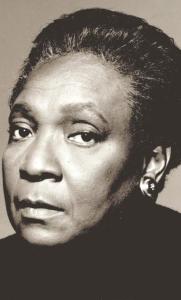
Maryse Condé

Maryse Condé

Maryse Condé was the youngest of eight children, her mother married an older, financially and professionally stable man, she was a formidable teacher, a staunch, authoritative force to be reckoned with.

She died when Maryse was 14 and it wasn’t until years later that Condé began to question why her mother had been the way she had been with her and others, wondering what unseen forces had been pushing from within. this led her to research her grandmothers story, which she published as the novel Victoire, My Mother’s Mother (reviewed here).

Her own childhood she writes about in the beautiful set of vignettes, autobiographical essays collected in Tales of the Heart, Stories from My Childhood (reviewed here).

What she discovered in researching her mother and grandmother’s lives was a history of struggle, of single, compromised women, forced by the abuses inflicted upon them – for which they were harshly judged, though little more was expected of them – to raise their children alone and make do as best they could.

While Condé’s mother was fortunate to have been gifted the opportunity to acquire an education, it was a favour she wanted little or nothing to do with, never sharing the reasons  or people behind it, for her mother Victoire, had been the open mistress of her employer, a friend of his wife, a situation her daughter detested and determined to remove herself far from.

Embarking on her own education, the young Maryse Condé, discovered that though she’d had the best education possible, enabling her to find success in France and Guadeloupe, she learned little about her own history or that of  her people. It was a gap in her education she couldn’t live with, that she wished to fill and it sent her off on a historical pursuit to understand both her maternal history and the voyage of her ancestors.

HeremakhononHer novel Heremakhonon(1976), which I’ve not yet read, is a semi-autobiographical story of a sophisticated Caribbean woman, teaching in Paris, who travels to West Africa in search of her roots and an aspect of her identity she has no connection with.

It is an insightful and somewhat disappointing experience, however for Maryse Condé personally, it was a springboard to the research and work that would follow, as her subsequent novels explore issues of race, gender and culture in a variety of historical periods and locations.

From this context, we come to what is considered a significant and radiant accomplishment, Segu (1984), set in the 19th century Kingdom of Segu (contemporary Mali), entering the soul of the African continent, at a point of prophetic enlightenment, as multiple forces and influences enter into the lives of those, who until now have known great spiritual power and authority.

Review

SeguIn 1797, the kingdom of Segu is thriving, its noblemen are prospering, its warriors are prominent and powerful, at their peak. 

Their people, the Bambara are guided by story-telling griots and divining priests, their lives ruled by the elements and tradition. However their visions fall short in preparing their followers for what is to come.

From the East, religion revolutions have spread Islam across two-thirds of West Africa; from the West, despite laws passed to stop it, the slave trade continues to flourish, and from within merchants make new demands for tropical goods, developing legitimate commerce.

Segu follows the life and descendants of Dousika Traore. He is the king’s most trusted advisor and the fate of his four sons epitomise the challenges that threaten to tear their family and society apart, in this historical turning point of African history. 

Dousika falls out of favour with the King and his son’s each go off in search of adventure outside the kingdom, where they discover quite a different perception of their people and their race.

Tiekoro, renounces his people’s religion, travels North to become a religious scholar and embraces Islam. He is by turn revered, scorned, returns to his home and becomes respected. However his position is always in flux and the balance of power between peoples and their associated beliefs are continuously challenged, he falls in and out of favour.

Siga, initially accompanies his brother and must survive in the same town, but without the introductions his brother has received to help him, he retains his belief in the Bambara gods, defending tradition and becomes a merchant. Although he was born on the same day as Tiekoro, his mother was a slave, so he must accept a less ambitious, less well-connected future.

Naba, is snatched by slave traders and sold and somehow ends up as a slave on a plantation in Brazil. He escapes, only to live on another plantation, a kind of free slave, to be near the woman he loves, whose children will reconnect with the family through a series of coincidences.

Malobali, the youngest, could no longer bear to listen to his older prodigal brother preaching, storms off one day in contempt, never to return. He becomes a mercenary, spending a period of time in a makeshift army, eventually converting to Christianity to improve his chances and has an encounter with the spirit of one of his brothers.

Based on actual events, Segu transports the reader to a fascinating time in history, capturing the earthy spirituality, religious fervour, and violent nature of a people and a growing nation trying to cope with jihads, national, tribal and family rivalries, racism and suspicion, amid the vagaries of commerce.

It shines a light on the impact of cross tribal marriage and partnership, of slavery, both that perpetuated by the Europeans and from within the African continent. The role of the son and the daughter, the rules of marriage, the perceptions of religion, the rise of Islam, the practices of fetishists and superstitions of their followers. The importance of relaying history through the storytelling griots, an inherited role, passed down from family member to family member.
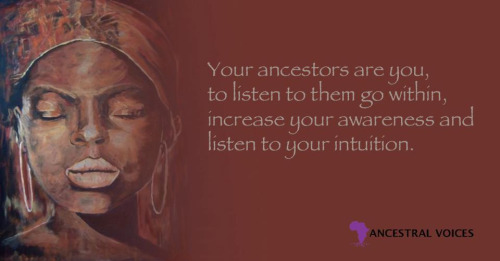
Intuition

Just as with Condé’s previous work, here too there is communication and connections between family members not present, whether alive or manifesting as departed ancestors, they enter via dreams, intuition, providing guidance and reassurance. The presence and guiding voice of ancestors and the reincarnation of souls is important, as is the effect of love/lust on each of them.

As with the best of historical fiction, Segu takes us through a period of significant change, by engaging the reader with a family and its members, its traditions and those who wish to rebel against them, the will to modernise, to make their way forward in a world that is rapidly changing.

It engagingly portrays the balance of power and perceptions between people from different ethnic groups, where one is judged on everything except character. We encounter historic family feuds, feuds between peoples, religion and the rise of Islam, fetish priests, slaves, concubines and nobles, a complex society.

It was a deliberately slow read for me, but at the same time riveting, a book that scratches at the surface of a significant and fascinating subject and does wonders to assist in helping that era and people become more understood.

Buy Segu by Maryse Condé via Book Depository

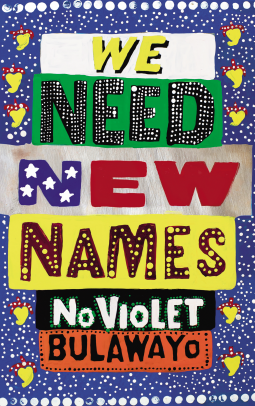
We Need New Names by NoViolet Bulawayo

I came across this title by NoViolet Bulawayo when it made the long list for the Man Booker Prize 2013.  A new voice and it comes across as fresh, bold and unique. Though I was disappointed not to see Americanah on the list, I was curious to read this book, as it had been suggested it had a similar premise, narrated from a younger character’s point of view and a different country, the protagonist, Darling, is from a rural Zimbabwean village (Ifemulu came from the Nigerian city of Lagos in Adchie’s book).

NoVioletIf there are similarities, it is that they both describe a life before and after they traverse an ocean to live in the new land, however in Darling’s case, her overstaying means that unlike Ifemulu in Americanah, she will not return, for to return having broken the rules is to limit one’s future options – all this despite the grand sacrifices that will be made, in order to live in the land of dreams, they refer to as Paradise.

Their styles are very different though, the only similarity being that geographic shift and the associated perception of another culture as an outsider.  In terms of the reading experience, I find something more in common between the voices Donal Ryan channels in The Spinning Heart and NoViolet Bulawayo’s voice of Darling.  They both have a way of portraying their characters that invokes a feeling  like someone standing too close to your face, they make you feel like you need to step back to get a better view, somewhat difficult when reading for the first time.


Review

We meet Darling with her friends as they are heading over to Budapest (a wealthier neighbourhood) to pick guavas, to relieve a few trees from the burden of their fruit, to steal.  The first half of the book follows this group of friends and their daily life in a small village, where they now live in much rougher conditions despite the promises of independence, due to the destruction of homes by a government set on destroying what is deemed unsightly or was it an act of revenge against the tide of discontent. Either way, their home is now one room, their father is absent but they have each other.

“If you’re stealing something it’s better if it’s small and hideable or something you can eat quickly and be done with, like guavas. That way, people can’t see you with the thing to be reminded that you are a shameless thief and that you stole it from them, so I don’t know what the white people were trying to do, stealing not just a tiny piece but a whole country. Who can ever forget you stole something like that?”

Running alongside the events of the children’s’ lives are the undercurrents of a changing political situation, an increasing frustration with the democratic process, the heightened anger of communities and mobs; eventually Darling is sent to America to live with her Aunt.

“When things fall apart, the children of the land scurry and scatter like birds escaping a burning sky. They flee their own wretched land so their hunger may be pacified in foreign lands, their tears wiped away in strange lands, the wounds of their despair bandaged in faraway lands, their blistered prayers muttered in the darkness of queer lands.”

zimbabwe mapAn American Dream?

America isn’t what she expects, her cousin is not like her friends, the snow and coldness are not like the village, the sky is not like the sky, her thin Aunt pacing the room exercising in front of the TV is not like her mother and her Uncle who comes home, watches sport and shouts Touchdown, unlike her father or the men from the village either.

They are  invited to a wedding, a day that might be a metaphor for the entire immigrant and cultural experience, all the misunderstandings and reminders of a past life wrapped up in one anecdote after the other, they manifest in the drive there, the interactions with guests, and those unspoken rules of engagement in a foreign culture, which Darling will be reminded of before the night is over.

Darling misses her friends and family and wishes to visit them, a topic that her Aunt either avoids or addresses in a vague manner. She will come to understand what she couldn’t know when she left, that it is unlikely she will ever return home. She consoles herself by calling.

“Well, what is happening over here is that your mother is finishing cooking istshwala and macimbis, and Sbho is standing there watching her and eating a guava. When Chipo announces this, I get a strange ache in my heart. My throat goes dry; my tongue salivates. I am remembering the taste of all these things, but remembering is not tasting, and it is painful. I feel tears start to come to my eyes and I don’t wipe them off.”

BulawayoNoViolet Bulawayo creates an unforgettable voice in her protagonist, a lens through which we witness part of what feels like an at times frightening and yet exhilarating childhood, with a naive awareness of the greater political events that will affect their futures.

The life they live is not an easy one, and it may never be as appreciated as it will become through the act of leaving it all behind, as so many do, believing they are heading towards Paradise.  But even in America, when there is a lack of guidance and care, something similar occurs, the only difference being the kinds of activities unsupervised teenagers get up to in a modern city compared to a rural town or village.

Raw and in your face, each chapter is like a scene playing out as you read from the branch of a tree,  just out of danger.  Bulawayo invokes fear and dread in the reader as we encounter each episode and in the end, we are unsure which is preferable, a half lived life in  Not Really Paradise or that volatile, explosive community, still trying to find itself in Zimbabwe.

Further Reading

Interview NoViolet Bulawayo talks to Irenosen Okojie about being a writer in diaspora, her writer’s process and the importance of the Caine Prize.

My Reviews of Zimbabwean Literature

Nervous Conditions by Tsitsi Dangarembga

The Book of Not by Tsitsi Dangarembga

This Mournable Body by Tsitsi Dangarembga

House of Stone by Novuyo Rosa Tshuma

Note:  This book was an ARC (Advance Reader Copy) provided by the publisher via NetGalley.

Americanah by Chimamanda Ngozi Adichie

My big fat summer read and it was just what I like, to get lost within pages that will attempt to navigate the slightly messy lives of flawed characters that feel like they could be real. And most of them here come close to attaining that reality.

Americanah (2)Ifemula and Obinze are university sweethearts who slip into a relationship that seems to have it all, though they have yet to conquer the career survival path of their simple lives thus they are separated in Nigeria during their studies and then by the continents of  North America and Europe as they try to establish their careers. Hardship is the one thing they seem not able to share and it drives them apart like the distance of the ocean that separates them, spanning a distance they seem unable to traverse.

Just as many young people have been doing so and continue to today, they eventually return to their home country and their roots and will re encounter each other.  Although they find their way home, will  they be able to ignore those untravelled waters they did not share? This is one of the themes the book explores.

“Somewhere in a faraway part of her mind, she wanted to lose weight before she saw Obinze again. She had not called him; she would wait until she was back to her slender self.”

I loved the book for many reasons, firstly because I remember reading and enjoying her first book Purple Hibiscus, enhanced by seeing her speak in person at a Readers Festival in Auckland where she talked about the next book she was planning to write, about a subject few at the time seemed to want to talk about – the Biafran War – that research and effort to understand a chapter in Nigerian history manifested in her Orange prize-winning novel Half of a Yellow Sun, which has since been made into a film (not yet released). Since then I have looked forward to reading her other work and interviews, as she is more than just a writer of stories.

Secondly, having a good friend from Nigeria, who made the move back after a similar number of years living abroad, who did so successfully and visiting there, participating in her marriage ceremony makes me even more curious to read the work of those who have attempted the same. There is something universal about the experience and yet unique at the same time.

Chimamanda Nogozi Adichie easily engages an audience with her observations, insights and view of the world and with Americanah it is as if she sends out another version of herself, Ifemulu, a young woman who grows up in urban Nigeria and through her studies has an opportunity to live, work and study in America.

Ifemulu’s disappointments distance her from her closest relationship because she doesn’t share them. In an effort to be heard she writes an anonymous blog and shares her experiences and observations both in America and again on her initial return to Nigeria.

She tries to remain an impartial observer, though those who know she is the author challenge her and she discovers that life often finds a way to throw at us, that which we condemn in others. But therein the greatest lessons lie and Ifemulu will do much soul-searching on her journey to fulfillment. The blog posts are interesting to read and provocative and it is great to see the form being represented in a novel, and a WordPress blog at that.

In a Lagos cafe

In a Lagos cafe

For me, books whose characters cross cultures are always interesting, just as travelling in another country and witnessing the different ways people live and interact and perceive is interesting. Whilst I could never begin to know what it would be like for a young Nigerian woman to move to live in America, I enjoyed the experience of inhabiting Adichie’s imagination, viewing Ifemulu’s life and how she tries to interpret the foreign culture she and many others have long dreamed of.

My visit to Nigeria was too short to gain any real perspective about what it might be like to live there, but the challenges are undoubtedly equally great, though completely different in nature.

It doesn’t matter which country we grow up in to think of as our own, almost any other country we immigrate to or spend time living in will invoke a feeling of strangeness, of being an outsider.

“The only reason you say that race was not an issue is because you wish it was not. We all wish it was not. But it’s a lie. I came from a country where race was not an issue; I did not think of myself as black and I only became black when I came to America.”

Twice whilst reading this novel, I felt tears well up, surprising myself at how deeply this character got under my skin, some of the burdens she carries, only gaining full recognition in the moment they are healed and those moments are powerful when they come off the page. Surprising and brilliant.

Related Reads

Stay With Me by Ayobami Adebayo

Under the Udala Trees by Chinelo Okparanta

Freshwater by Akwaeke Emezi

Red Dust Road by Jackie Kay