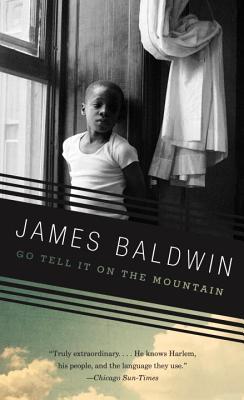
Go Tell It On The Mountain by James Baldwin

James Baldwin’s Go Tell It On The Mountain (1953) was his debut novel, a semi-autobiographical story (inspired by his own childhood in Harlem and his troubled relationship with his father), that narrates a day in the life of 14 year old John, who is the son of a fiery Pentecostal preacher Gabriel, and his second wife Elizabeth.

The Initiation
semi autobiographical novel

It is a coming-of-age story that depicts a range of thoughts, emotions and actions of this boy, while sharing the back stories of his family, culminating in a frenzied religious experience that appears to have set him on his true path.

The story is told in three parts, and though it follows the events of that one day, the three parts focus on the pasts of different characters connected to John’s family. 

Part One, The Seventh Day, is about John, it is his fourteenth birthday and he spends the day thinking about the expectations the family has of him to follow in his father’s footsteps and that he is no longer a child.

He begins to worry that he doesn’t have the same conviction as young Elisha, he feels not only unseen by his father, he feels his wrath and returns it full force in his mind – it enters his dream-life with even greater violence than the looks of disapproval he receives daily. 

The opening chapters are full of biblical language, religious fear and fervour, making it quite intense to begin with, though saved by the dialogue that brings us back to the present day.

“His father’s face, always awful, became more awful now; his father’s daily anger was transformed into prophetic wrath. His mother, her eyes raised to heaven, hands arced before her, moving, made real for John that patience, that endurance, that long suffering, which he had read of in the Bible and found so hard to imagine.”

An Act of Resistance

His mother gives him money and he uses it to attend the cinema. He begins to question his faith, and his father, noticing a rising desire for things he ought not to be thinking of:

Photo by Yuting Gao on Pexels.com
Broadway: the way that lead to death was broad, and many could be found thereon; but narrow was the way that lead to life eternal, and few there were who found it. But he did not long for the narrow way, where all his people walked; where the houses did not rise, piercing, as it seemed, the unchanging clouds, but huddled, flat, ignoble, close to the filthy ground, where the streets and the hallways and the rooms were dark, and where the unconquerable odor was of dust, and sweat, and urine, and homemade gin. In the narrow way, the way of the cross, there awaited him only humiliation forever; there awaited him, one day, a house like his father’s house, and a church like his father’s, and a job like his father’s, where he would grow old and black with hunger and toil.”

The Sins of the Father

Photo by Brett Sayles on Pexels.com

Part Two, The Prayer’s of the Saints is told in 3 parts entitled Florence’s Prayer, Gabriel’s Prayer and Elizabeth’s Prayer.

This section focuses on the past, on Gabriel’s upbringing and life, his sister Florence, her escape North and marriage, a young woman Gabriel worked with named Esther, whose life would be forever changed by their encounter. We learn of Elizabeth’s past, how she meets Richard and also travels North, their tragic story and her meeting Florence, a turning point in her life.

“And this became Florence’s deep ambition: to walk out one morning through the cabin door, never to return. Her father, whom she scarcely remembered, had departed that way one morning not many months after the birth of Gabriel.”

Everything we read here begins to explain the depth of feeling John has, often driven by events he is not aware of, including his own being, his true identity, that he does not yet know. All that has been withheld from him, the secrets people have kept, impact the lives of everyone in this extended family, often without their knowledge.

In the final part, The Threshing Floor, John has a religious experience with terrifying hallucinations, but it is an event that appears to have propelled him out of childhood and towards his calling.

Love/Hate of Parents, Escaping Reality, Awaiting the Calling

Photo by Valdemaras D. on Pexels.com

This is the third book written by Baldwin I have read and while quite different from the others, it is equally compelling. The two I have read I have linked to my reviews below, also highly recommended.

It personifies the common experience of a confused adolescent, whose situation is magnified by the love/hate he feels from one or other parent and the guilt he takes on for it, the emotional roller coaster of new exciting friendship, and the desire to escape into another reality.

The stories of the secondary characters are informative and revelatory, as they contributed to my growing understanding of the unease of the young man.

John’s narrative was convincingly portrayed to the point of it feeling like you were in his shoes and in his mind, the relentless worrying, his paranoid and angry emotions that seemed to take over him, until they culminate in his heightened ‘salvation’ experience.

These heights are a reference to the mountain, a symbol of the ascent and descent through he must pass to move closer to his God, to his own salvation, to his becoming a worthy man.

He thought of the mountaintop, where he longed to be, where the sun would cover him like a cloth of gold, would cover his head like a crown of fire, and in his hands he would hold a living rod.

Life Informs Art

In The Fire Next Time, Baldwin’s essay that first appeared in the New Yorker as Letter from a Region of My Mind, talked of his developing self-awareness as he entered adolescence and the choice he made to seek both refuge and revenge by going into the Church.

“Shortly after I joined the church, I became a preacher – a Young Minister – and I remained in the pulpit for more than three years. My youth quickly made me a much bigger drawing card than my father. I pushed this advantage ruthlessly, for it was the most effective means I had found of breaking his hold over me. That was the most frightening time of my life, and quite the most dishonest, and the resulting hysteria lent great passion to my sermons – for a while. I relished the attention and the relative immunity from punishment that my new status gave me, and I relished, above all, the sudden right to privacy.James Baldwin

Further Reading

If Beale Street Could Talk by James Baldwin

The Fire Next Time by James Baldwin

Thank you to Liz Dexter who blogs at Adventures in running, reading and working from home for the invitation to read this at the time time she was. You can read Liz’s review here.

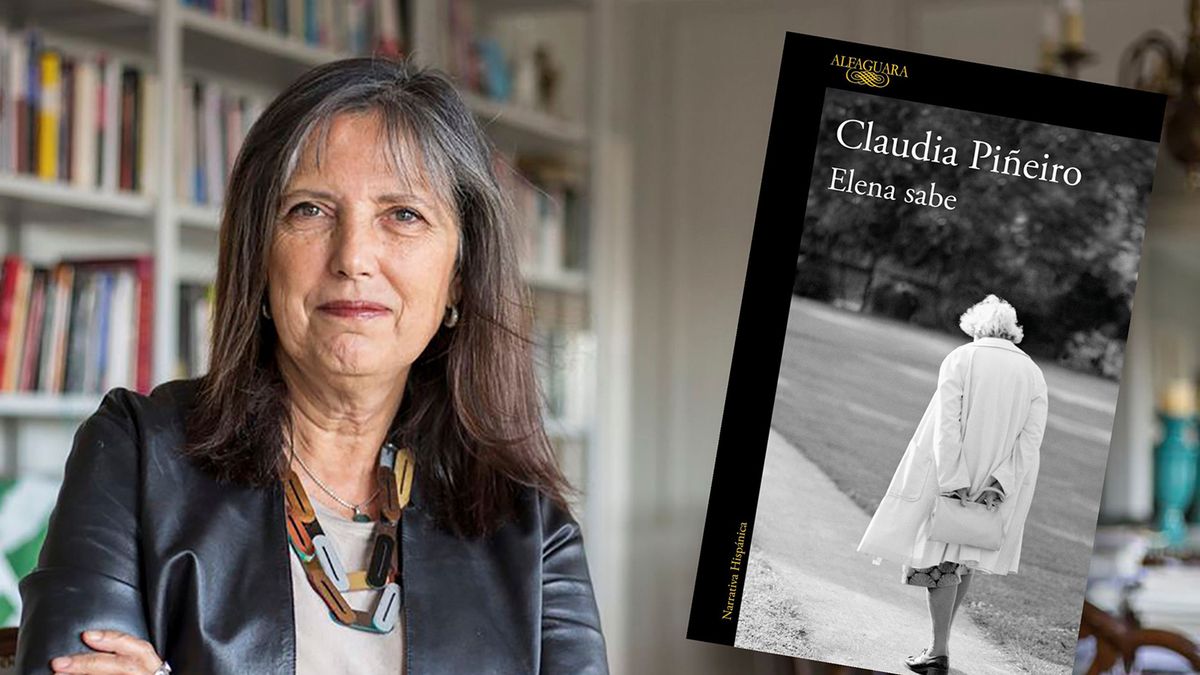
Elena Knows by Claudia Piñeiro tr. Frances Riddle

With A Little Luck now available in English, I’m catching up by reading the word of mouth sensation Elena Knows, which was shortlisted for the International Booker Prize in 2022 and won the Premio Pepe Carvalho Prize for crime fiction in 2019. According to the newspaper La Nación, Claudia Piñeiro is the third most translated Argentinean author, after Borges and Cortázar.

Claudia Piñeiro does seem like an interesting author to watch, taking the convention crime fiction genre and giving it a shake up by focusing on social issues and ethical questions, in particular related to the way women’s bodies have been and are used and abused.

Also reading this for #20booksofsummer23 and getting a head start on August’s #WITMonth, reading women in translation, because that’s my favourite corner of the reading world to be looking for literary gems!

What Does Elena Know That No One Else Seems to?

Elena has just learned her daughter Rita is dead. That it occurred on the same afternoon she booked Elena into her boyfriend’s mother’s salon for “the works”.

It was a rainy afternoon and this is the main reason Elena knows there was foul play. Because her daughter was afraid of lightning and because a mother just knows.

No one knows as much about her daughter as she does, because she’s her mother, or was her mother. Motherhood, Elena thinks, comes with certain things, a mother knows her child, a mother knows, a mother loves.That’s what they say, that’s how it is.

A Rigid Point of View

We see everything from her ‘eyes cast downward’ viewpoint, as she heads out one day to get answers from someone she hasn’t seen in 20 years.

Elena’s body is debilitated by Parkinson’s, so in between pills, she can move more easily.

Photo by RAFAEL QUATY on Pexels.com

Rita was there when he first explained the disease. Rita, who’s now dead. He told them that Parkinson’s was degradation of the cells of the nervous system. And both she and her daughter disliked that word. Degradation.And Dr Benegas must’ve noticed, because he quickly tried to explain. And he said, an illness of the central nervous system that degrades, or mutates, or changes, or modifies the nerve cells in such a way that they stop producing dopamine. And then Elena learned that when her brain orders her feet to move, for example, the order only reaches her feet if the dopamine takes it there. Like a messenger, she thought that day. So Parkinson’s is Herself and dopamine is the messenger.

The novel is told over the course of one day, in three sections: Morning (second pill), Afternoon (third pill) and Evening (fourth pill). The absence of the first pill in the narrative is a reminder as to how dependent she is on the medication and how controlling it is over her every movement, how it restricts her freedom, her vision, her ability to do anything. She is enslaved to those pills and that body.

As the pill begins to wear off, the risk of her becoming stuck increases, as her body becomes less manageable, there is no room for error or miscalculated judgement, if she is to make the journey she has planned. There are moments when she has to wait for the pill to take effect, these must be carefully timed.

Proprietary Attitudes Over Humans

She is off to get help in her attempt to investigate her daughter’s death, thinking she can use the ‘able body’ of someone she sets out on this day to meet. There is a reason why she believes that this person will help her, where no other can, and she will go to all kinds of lengths, despite the debilitating obstacles of her own body, in order to have an audience with them.

She won’t be able to do it by herself because she doesn’t have a body. Not now that the dethroned king and Herself are in charge. Even if she uses all the tricks in the book, she won’t be able to uncover the truth unless she recruits another body to help her. A different body that can act in her place. That can investigate, ask questions, walk, look directly into people’s eyes. A body that will obey Elena’s orders.

The novel explores this idea of how people impose or claim agency over another’s body and what they sentence them to, in so doing; or how they believe they “know” another just because they gave birth to or mothered them, or that God gave them some kind of right to be so knowing.

Elena’s body is in the end stages, but in her mind, she is still coming-of-age.

Claudia Piñeiro, Author

Claudia Piñeiro is best known for her crime novels, which are bestsellers in Argentina, Latin America and around the world. Four of her novels have been adapted and made into films.

As an author and scriptwriter for television, Piñeiro has already won numerous national and international prizes, among them the renowned German LiBeraturpreis for Elena Knows and the prestigious Sor Juana Inés de la Cruz Prize for Las grietas de Jara (A Crack in the Wall).

Her 8 episode series The Kingdom (2021) currently showing on Netflix, sparked controversy in 2021 for its portrayal of the Evangelical church in Argentina.

More recently, Piñeiro has become a very active figure in the fight for the legalisation of abortion in Argentina and for the legal recognition of writers as workers. Her fiction stems from the detective novel but has recently turned increasingly political, taking a broader, more critical gaze at corruption, injustice, community divisions and other dysfunctions of contemporary society. 

Further Reading

What’s On My Bookshelf: Claudia Piñeiro talks of books that inspired her career including The Little Virtues by Natalia Ginzburg, Fierce Attachments by Vivian Gornick, The Story of a Shipwrecked Sailor by Gabriel García Márquez, To the End of the Land by David Grossman, A Room of One’s Own by Virginia Woolf and The Buenos Aires Affair by Manuel Puig.

International Booker Prize Interview: Claudia Piñeiro, ‘I’ve always been very rebellious’

“I always begin writing my books with an image that acts like a trigger. I allow this image to steep in my mind, the characters then begin to speak, to reveal their conflicts. It’s like a tangled ball of wool that I unwind bit by bit. In the case of Elena Knows this image was a woman, a woman in her kitchen at home, sitting bent over in a chair waiting for the pill she’s taken to take effect so she can get up. This was the trigger image. I should also acknowledge that this diseased body of the character Elena is inspired by the body of my mother, who suffered from the same illness, Parkinson’s.  Claudia Piñeiro

Boulder by Eva Baltasar tr. Julia Sanches

Boulder is another portrait of a woman, the second of a triptych.

The narrator of Permafrost never quite cut the strings of family, choosing the path(s) of least resistance, while lamenting not having made more independent choices in her formative years.

Assured Prose Who Art in Metaphor

If the narrator of Permafrost is somewhat unsure, that of Boulder is more certain. The prose is assured, the narrative has pace, the protagonist moves towards what suits her, to freedom – until things change.

The avid descriptions and bold metaphors have me rereading and highlighting passages, like the creation of foam as a wave crashes on itself, they are as natural to the text as the paragraphs within which they roll.

An itinerant cook, she moves from place to place, island to ship, working in the kitchen. Life on the cargo ship suits her, she’s at home in turbulent seas, around those that neither desire nor reject her, a place where there was no need to pretend life had a structure. Rootless, drifting and free.

Freedom In Its Many Forms

I think I’ve discovered what happiness is: whistling the moment you wake up, not getting in anyone’s way, owing no explanations, and falling into bed at daybreak, body addled from exhaustion, and mind free of every last trace of bitterness and dust.

The boat sails up and down the coast of Chile, she rarely disembarks, the only temptation in Chaitén, for a hot shower, fresh linen, and a lurking lust for a lover. That’s where she meets Samsa.

I look at her and she fills every corner of me. My gaze is a rope that catches her and draws her in. She looks up, sees me. She knows.

They begin to see each other, though it is often months between visits. Her lover renames her Boulder.

Photo by Bren Pintelos on Pexels.com
She doesn’t like my name and gives me a new one. She says I’m like one of those large, solitary rocks in southern Patagonia, pieces of world left over after creation, isolated and exposed to every element. No one knows where they came from. Not even they understand why they are still standing and why they never break down. I tell her I’ve seen rocks like those in the middle of the ocean.

Compromise, Commitment, Cohabitation

Samsa leaves for Iceland and asks Boulder to join her, she says yes. Samsa makes decisions and Boulder adapts to them. She observes the island, the islanders, the things she doesn’t like, she finds work that gives her an escape. She observes the different way they love each other, the pull of the boats when she walks the dock alone at night.

There’s a restlessness. She starts her own business, a food truck, no boss, no employees, a small but significant and necessary freedom. Something of her own. A coping mechanism.

It’s Not An Elephant in the Room

Photo by Sindre Fs on Pexels.com

Then it happens. Samsa wants to have a baby, Boulder knows that refusing her will mean the end, so asks for more time.

The novel charts this turning point in the relationship, where one woman will become pregnant and give birth while the other tries to support and be part of something she does not feel.

It is an alternative navigation of an age old dilemma, seen through the lens of a queer relationship, a couple struggling with avoidance issues.

It’s not difficult to imagine where it is headed, or what might happen, when one person isn’t quite committed to the idea and desires freedom so strongly. Is the love of another enough sufficient when events propel their lives forward faster than the communication of important feelings around them?

Boulder’s observations and experience are like that of an outsider who can’t quite enter the familiar, of trying to overcome an obstacle of the mind, when the heart is resisting, when self destructive tendencies threaten to communicate what the voice has been unwilling or unable to.

Boulder was shortlisted for the International Booker Prize 2023.

Further Reading

Read an Extract from ‘Boulder’

Eva Baltasar International Booker Prize interview: ‘I wrote three versions of Boulder and deleted two’

“My protagonists are mirror images of myself, only more precise and always veiled. I try to discover who they are by writing, travelling to their darkest, most uncomfortable corners, which is like travelling to the darkest corners of myself, corners that are often repressed and at times denied wholesale. Being able to embark on this journey aboard a novel is as exciting as it is unsettling. It’s as if the novel had transformed into a caravel and the seas were vast but finite, teeming with monsters on the edge of the earth.” Eva Baltasar

Permafrost by Eva Baltasar tr. Julia Sanches

A Poet’s Prose

On the back page in the first sentence that describes the author, it says Eva Baltasar has published ten volumes of poetry. Permafrost is her debut novel, the first in a triptych which aims to explore the universes of three different women in the first person. It clear from the beginning this is the prose of an assured poet.

Julia Sanches triptic #1 catalan translation

I love the title, Permafrost. That deep, but necessary layer in the earth, cold and hard, it creates a foundation layer and stability, as long as conditions remain the same. Kathleen Jamie writes about it in her excellent essay collection Surfacing.

The narrator of Permafrost destabilises the reader on the opening page, with these opening lines…

It’s nice, up here. Finally. That’s the thing about heights: a hundred metres of vertical glass. I’ve settled on an edge, I live on this edge and wait for the moment when I’ll leave the edge, my temporary home.

Not only thinking about heights, but observing all the minutae that surrounds her. It seems like a suicide attempt, a theme that recurs throughout the 122 page novella, only she appears to be distracted by an ever present curiosity around the details of the new experience, something that seems incongruent with wishing to take a life.

I’ve settled on an edge, I live on this edge and wait for the moment when I’ll leave the edge, my temporary home.

Living On the Edge Creates Curiosity

The Thomas Bernhard epigram warns us ‘To be born is to be unhappy, he said, and as long as we live we reproduce this unhappiness.’

So I am surprised by the humour. Despite her melancholy nature and existential awareness, the living in the shadow of family, she makes us laugh.

She tells us her family all self-medicate. Not her, she prefers the edge.

Not for me though – best to keep moving wildly to the edge, and then decide. After a while, you’ll find that the edge gives you room to live, vertical as ever, brushing up against the void. Not only can you live on it, but there are even different ways of growing there. If surviving is what’s it all about, maybe resistance is the only way to live intensely. Now, on this edge, I feel alive, more alive than ever.

A promising child, her first crisis is graduation, after five years, there’s nowhere to go, few clues as to how to put this learning to use. So she lives in her Aunt’s apartment and rents out rooms to different women, providing herself an income and an effortless source of lovers. She spends her days reading, observing, pondering death, too curious to pursue it.

Birth and Children are Grounding

Photo by Pixabay on Pexels.com

Her meandering is interrupted by her pregnant sister and her mother, their insistence to stay close, involved, drawing her back in, keeping her that person she was. The Aunt’s phone call, she’s selling the apartment.

An au pair in Scotland, a marriage proposal in Belgium, childhood memories, fantasies, churning through relationships, occasionally one that lasts a chapter, dialogue with the sister, the mother.

A mole grows and changes form, she makes a doctor’s appointment then cancels it for a year, then follows up.

Life Can Be Insistent

Each chapter is less than two pages, sometimes the narrative skips a chapter and picks up the thread again later on. It’s an inner voyage of discovery and an outer journey of experiences to unravel what was formed by others and discover the essence of, to know who she is. As that realisation occurs, life throws an even greater challenge and responsibility her way.

I’ve realised I know myself by heart…

It is a unique work, recognisably the work of a poet, unruly, impulsive, it makes light of heavy subjects, never quite proselytising, both giving into and resisting convention, forging a way through, trying different things on, breaking out and being pulled back in. One is left wondering if she is floating with the tide or pushing through it.

Permafrost received the 2018 Premi Llibreter from Catalan booksellers and was shortlisted for the Prix Médici for Best Foreign Book in France (2020).

Next up, book 2 in the triptych, Boulder, which was recently shortlisted for the International Booker Prize 2023.

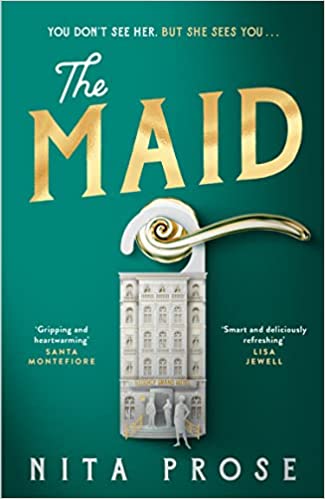
The Maid by Nita Prose #20booksofsummer23

Another #20booksofsummer23 read for me, this was an airport purchase, left with me by a friend. I was intrigued that it won the Goodreads Mystery of the Year 2022, a genre I rarely read, but decided I would do so, to see what mystery readers are currently appreciating.

This is popular locked-room mystery fiction, featuring badly behaved hotel guests, errant staff and one young woman who appears to only see good in everyone.

Canadian literature mystery

It quickly became obvious that this is another novel that centres around a character that doesn’t pick up too well on social cues and is not able to interpret subtle meaning – it feels demeaning to use that term “on the spectrum”, however it seems that creating a character that has certain quirks, allows an author to create situations that wouldn’t otherwise seem realistic.

The truth is, I often have trouble with social situations; it’s as though everyone is playing an elaborate game with complex rules they all know, but I’m always playing for the first time. I make etiquette mistakes with alarming regularity, offend when I mean to compliment, misread body language, say the wrong thing at the wrong time.

So now, we can add The Maid to that group that includes Eleanor Oliphant Is Completely FineBig Girl, Small Town and Lessons in Chemistry.

Molly the Maid is possibly the least perceptive in terms of judging other human’s intentions of all these characters, but her obsession with cleanliness, in part thanks to her Grandmother’s habits, and her observation skills and recall are second to none.

Gran used to say, ‘If you love your job, you’ll never work a day in your life.’ And she’s right. Every day of work is a joy to me. I was born to do this job. I love cleaning, I love my maid’s trolley, and I love my uniform.

Photo by Martin Pu00e9chy on Pexels.com

25 year old Molly works in a posh hotel, as a maid and is excellent at her job, she has recently lost her grandmother and now she has discovered a dead body in one of the hotel rooms. It becomes clear that whoever is involved is trying to frame her and she is at a bit of a loss as to how to shift blame away from her. She needs to upskill quickly in discerning who she can trust and who is undermining her, before she finds herself on the wrong side of the law.

…existing in plain sight while remaining largely invisible. That’s what I’ve learned being a maid. You can be so important, so crucial to the fabric of things and yet be entirely overlooked. It’s a truth that applies to maids and to others as well, so it seems.

Photo by Pixabay on Pexels.com

One of the best parts I liked about the book, was that whenever Molly felt alone or unsure, one of her grandmother’s sayings would pop into her head, and it was always pertinent advice. It might have been a little cliché, but it was also reassuring, given her still present grief and lack of trustworthy colleagues or friends.

‘Gran,’ I say to the empty room, ‘I think I’m in trouble.’ I arrange the photos on top of the curio cabinet. I polish each of Gran’s treasures and stow them safely behind the glass. I stand in front of the cabinet looking at everything inside. I don’t know what to do.
You’re never alone as long as you have a friend.
I’ve been managing alone though all of this, but perhaps it really is time to call for help.

When she begins to ask for help, she discovers who really is there for her and how connecting with these people also helps her continue to learn and grow.

As I finished this, I saw that there is a Molly the Maid #2 sequel coming out soon, a famous mystery writer drops dead in the Grand Hotel tea room and Molly appears to have known them previously!

People are a mystery that can never be solved.

A very light-hearted, easy read with a rewarding conclusion, not too many twists. Ideal summer read if you like a cosy mystery.

The Tea Girl of Hummingbird Lane by Lisa See

This was a title from my list of 20 Books of Summer 2023 by the author Lisa See, whose previous and more recent historical fiction set on the Korean island of Jeju, I very much enjoyed.

The Island of Sea Women was a novel about the haeyno women, a female diving collective, their history and how their lineage was changed by societal events happening around them. A stunning, unforgettable work of fiction that drew on a fascinating history.

In The Tea Girl of Hummingbird Lane, a girl named Li-yan from an Akha hill tribe in China learns everything in childhood from her mother, she is subject to the tribes rituals, beliefs, traditions. However, some of the events she witnesses mark her in a way that make her determined to avoid being subject to them.

The novel begins in the 1980’s and although Li-yan had little exposure to the outside world, she is less accepting of old ways that are cruel and barbaric. She is part of a consciousness raising, yet in some ways still tied to traditional expectations. The novel follows her through life up until present day 2016 (when it was written).

Young love feels invincible but can create a trap, so when Li-yan finds herself in a compromising situation, she and her mother do what they can to deal with it less harshly than what custom dictates. She crosses a line that no matter which way she turns will have devastating consequences, so makes the decision she can best live with, keeping it a secret from everyone else.

Her life continues after this event, and through her we witness aspects of Chinese life for this young woman who has a chance to be more formally educated and become knowledgeable about all things to do with Pu’er tea, about all kinds of tea trees, with the additional connection of coming from a land where her lineage has been long connected to these ancient trees.

“The colour of the brew is rich and dark with mystery. The first flavour is peppery, but that fades to divine sweetness. The history of my people shimmers in my bones. With every sip, it’s as if I’m wordlessly reciting my lineage. I’m at once merged with my ancestors and with those who’ll come after me. I grew up believing that rice was to nourish and that tea was to heal. Now I understand that tea is also to connect and to dream.”
Photo by Angela Roma on Pexels.com

In addition to her own personal secret, she shares with her mother, the secret location of one particular ancient tea tree, one she has inherited by birth and in a location that must continue to be hidden, due to superstition.

“Is this my land?” I ask.
“When I went to you a-ba in marriage, the old traditions were supposed to be over. No more buying and selling of women into slavery or marriage. No more dowries either. But it doesn’t matter what the government says. This land belongs to the women in our line. It is ours alone to control. It was given to me as my dowry as it will one day go to you with marriage.”

As the tea industry develops and booms and people begin to pay crazy prices for what perceive is precious, many in the village leave their old ways behind, following the allure of money and wealth. This too challenges relationships, friendships and threatens the long held bonds within the village.

The Tea Girl of Hummingbird Lane Lisa See
Photo by Quang Nguyen Vinh on Pexels.com

Simultaneously to the narrative set in China, the story dips in and out of the life of an adoptee, Haley Davis in America. It is a less profound exploration of a complex subject within the novel, and at times an uncomfortable exposure of the significant issue of intra-country adoption.

Overall, an engrossing, eye opening, well researched historical novel, that will make you think about tea in ways you may never have done before.

Nine Perfect Strangers by Liane Moriarty #20booksofsummer23

Liane Moriarty is the author of the bestselling Big Little Lies and a number of other novels that fit into that easy, holiday reading category.

This is on my #20BooksofSummer23 list of titles taking up space on the bookshelf, and was in the category of ‘Other People’s Reads’, books passed on to me. This one is a hardback, I got to it early because it takes up almost three times as much space as many other good books I want on the shelf!

Nine people attend a remote health spa, somewhere north of Sydney, Australia. They have all responded to an enticing promotional offer to change their lives in ten days, so we get to know each of the characters and their backstory that lead them to want to do so (even though some instantly regret it once they’ve paid).

The novel opens in a corporate work environment, where an overworked, demanding woman is having some kind of attack, setting up an element of intrigue in the minds of readers, as it seems unrelated to the events that follow.

A romance novelist Frances, is one of the guests who thought it was a good idea to sign up at the time, well, she was coming of the back of a duplicitous online relationship, that she couldn’t believe she fell for, and now has the feeling she might have too impulsive, yet again…

The TripAdvisor reviews of Tranquillum House, which she’d looked at after she’d paid her nonrefundable fee, had been noticeably mixed. It was either the best, most incredible experience people had ever had, they wished they could give it more than five stars, they were evangelical about the food, the hot springs, the staff, or it was the worst experience of their entire lives, there was talk of legal action, post-traumatic stress, and dire warnings of “enter at your own peril”.

Photo by Prasanth Inturi on Pexels.com

The owner of the retreat centre has decided to change things up a little, disappointed to discover that a good proportion of those who had attended in the past, looked as unhealthy on their 2nd or 3rd visits, as they had on their first. It’s clear that Masha has something in mind that might go beyond what this new batch of residents expects. There are some serious boundary issues about to be breached.

It’s an entertaining, light hearted read, with plenty of humorous elements, with the plot neatly tied up. It reads a little like a television series, with its episodic nature and cast of characters, but the interaction between the different personalities is also what keeps the pace humming along.

There is something a little sad about the way it inevitably mocks a well intended industry that didn’t sit comfortably with me, but it’s not a novel that’s going to stay with me for long, so I’ll let that one go.

Ideal holiday read, unless you are going on a well-being retreat.


Lessons in Chemistry by Bonnie Garmus

I admit that I likely wouldn’t have read this if it hadn’t been pressed on to me to read by 3 people. I’ve seen it rise up the reading charts, and in reading it, I recognise that quality that makes some books become the one that goes beyond avid and even occasional readers, to reach those that rarely if ever read at all. And boom, it’s a worldwide bestseller.

Lessons in Chemistry centres around a young woman scientist/chemist Elizabeth Zott. It’s set in America between 1952 and the early 1960’s and Elizabeth has forged a path into science, and in the opinion of some has gone too far down that path. Her academic career is eventually upended by one man who decides to take matters in his own hands to stop her, though with her Masters complete, she is still able to find work in a lab.

Despite continued setbacks, prejudices, sexism, attempts to discredit or steal her work, she perseveres with her research. One day she meets her equally young, revered, male colleague Calvin Evans, helping herself to his stocks of beakers and it signals the beginning of a meeting of minds, a chemistry, between the two, that changes their lives.

Elizabeth is one of those quirky characters, like Eleanor in Eleanor Oliphant Is Completely Fine and Majella in Michelle Gallen’s Big Girl, Small Town, she lacks a filter, is not overly sensitive to bad behaviour, innuendo and discrimination – rather she responds to it neutrally, factually, in a straight up, unemotional manner.

As we read, we realise how unusual that is, because every woman of a certain age, will recognise these workplace dynamics and recall themselves or someone in this situation and will remember how it was – and the pressure to dismiss it, to sweep it under the carpet, to not challenge it – because of the consequences (and lack of).

Photo by Polina Tankilevitch on Pexels.com

Elizabeth too receives the consequences of the relentless, ever-present misogyny, she gets kicked out out university, she’ll get fired, however she continues to bounce back, challenging the status quo.

She perseveres, because she is logical, because she had a different upbringing and wasn’t groomed and conditioned in the way many girls were to accept what she was encountering. It’s not because she has an attitude, it’s because of who she is, at her core. It is humorous because she perseveres, because she takes charge and continues to make her own decisions, never becoming the victim. She is never silenced.

Some describe this as funny. In my opinion, it is not. It is very real – but it is highly unusual to encounter a person, even in fiction, who exposes these aspects of society, and rises – and then finds a way – as she does with her new role, presenting cooking lessons on midday television as science lessons to housewives – starting a mini revolution.

“That’s why I wanted to use ‘Supper st Six’ to teach chemistry. Because when women understand chemistry, they begin to understand how things work.”
Roth looked confused.
“I’m referring to atoms and molecules , Roth, she explained. “The real rules that govern the physical world. When women understand these basic concepts, they can begin to see the false limits you create for them.”
“You mean by men?”
“I mean by artificial cultural and religious policies that put men in the highly unnatural role of single-sex leadership. Even a basic understanding of chemistry reveals the danger of such a lopsided approach.”

I won’t share the quote, because reading it for the first time is too good in the context of the story, but when the rowing coach complains to Elizabeth about how his wife has been influenced by her show, was one of my favourite laugh out loud moments in the book.

Photo by Julissa Helmuth on Pexels.com

Elizabeth slowly gathers around her a supportive, small inner circle of people (and a dog) who get her, the relief of having such people in her life is palpable to the reader. Her friend Walter Pine, articulates in a moment, when he recalls the effect of first meeting her, a day she came to challenge him over his daughter stealing her daughter’s lunches.

She’d stormed past his secretaries in her white lab coat, hair pulled back, voice clear. He remembered feeling stunned by her. Yes, she was attractive, but it was only now that he realised it had little to do with how she looked. No, it was her confidence, the certainty of who she was. She sowed it like a seed until it took root in others.

The writing is pitch perfect, the story hums along at pace and like all greats summer reads, it gives the reader a sense of satisfaction. I would call this ‘magical satire’, because there is a wonderful dog character named Six-Thirty, whom Elizabeth assumes is intelligent, so teaches him a vast vocabulary, although she gives him what might be construed as superpowers, but he is a great character, going through his own coming-of-age, as he leaves an abusive environment to join their quirky family community.

Ultimately, perhaps it is merely about how in all aspects of life,even those deemed more masculine, women bring something different, something complementary and when we can work in partnership, alongside others, the result can be to empower and uplift and improve everyone’s lives, not just those in power, who want to dominate, or those beneath them who continue to support that model.

Perfect relaxing, holiday reading, highly recommended.

Bonnie Garmus, Author

Bonnie Garmus is a copywriter and creative director who has worked widely in the fields of technology, medicine, and education. She is an open-water swimmer, a rower, and mother to two daughters. Born in California and most recently from Seattle, she currently lives in London with her husband and her dog, 99.

Lessons in Chemistry is her debut novel, it was nominated by many bookstores as their Book of The Year and was the Goodreads Best Debut of 2022.

Whale by Cheon Myeong-Kwan tr. Chi-Young Kim

Whale is a clever satirical novel that is written in a fable-like way, using an all-seeing, all-knowing omniscient narrative voice, along with occasional interjections by the author, as he pauses the narrative and talks to the reader.

International Booker Prize shortlist 2023

Set in a remote village in South Korea, it follows the interconnected lives of a series of unfortunate women, who go through various highs and lows, having experiences that the author tells us depict certain universal laws.

What is supposed to come always ends up coming, even without a harbinger. This was the law of fate.

It begins with Chunhui, a female brickmaker who learned her profession from her stepfather. She could also communicate with an insightful elephant. We learn that a fire burned the brickyard to the ground killing eight hundred souls and that she was charged with arson, imprisoned and tortured. She has just been freed and returned to the derelict site as the story begins.

Photo by Pixabay on Pexels.com
Cocooned by the morning fog, the town faintly reveled its shape, mike a once prosperous ancient city fallen into ruin. Even at a distance she could see the remnants of the movie theatre looming up among the buildings, resembling a large whale breaching the surface for a breath. This whale-inspired theatre had been designed by Geumbok, Chunhui’s mother.

In effect, we start at the end and the novel then goes back in time, to how the brickyard came to be, starting with a woman who sold her daughter to a passing beekeeper for two jars of honey, another who built a cinema in the shape of a whale and the many reinventions of their lives as they embrace and discard different people, occupations and places, in pursuit of their desires.

Geumbok has a knack for spotting an opportunity, for seeing business potential and no fear of taking risks. Every idea she has makes her and those around her wealthy, until it doesn’t.

Geumbok’s understanding of ideology was very simplistic, but her convictions were firm, as most people’s are. This was the law of ideology.

A satire on Korean history and society, and perceived by some as ‘magical’, I found the relentless abuses and sexism towards the female characters wore me down and slowed the pace of reading. Perhaps it was the ‘knowing’ that things rarely ever come right, that any overcoming of obstacles or even resilience is eventually met with yet another example of tragedy, betrayal, seduction or disappointment.

I did enjoy the novel for the most part and I understand why it might have been a bestseller in Korea in the day (published 20 years ago), however it didn’t fit right for me, reading it in 2023, and had me craving for signs of social justice, improvement or anything that might leave the reader believing in some aspect of humanity.

Photo by Sora Shimazaki on Pexels.com

I think that narratives are beginning to challenge that historical status quo of abuses towards women, the down-trodden and the poor and I find I have less tolerance and patience towards those that do little to redeem it.

Whale was shortlisted for the International Booker Prize 2023.

‘The characters have the power of archetypes – they’ll haunt your dreams. Geumbok, the protagonist, is an irrepressible entrepreneur and individualist, but with contradictions – she is sly and gullible, loving and violent, dedicated and treacherous. You can’t take your eyes off her. The story, however, really belongs to Chunhui, her daughter, who is a tragic saint and a survivor.’ International BookerJudges

Further Reading

Read an Extract from the book

N.B. Thank you to the publisher Europa Editions for providing me a copy of the book to read.