
The winner of this prestigious award nominated by public library’s from around the world, has now been announced.
From an initial longlist of 49 books from 30 countries across 10 languages, they were narrowed down to a shortlist of six by a panel of expert judges and the winner, coming from Mexico, but nominated by the Bibliotecha Vila de Gràcia library of Barcelona is:
Lost Children Archive by Valeria Luiselli.


A road-trip novel of a family driving one summer from New York to Arizona, perspective and voices move from the parents to the children, witnesses, speaking and listening, seeing and observing, the subtle, yet dramatic shift. A story of what happens to the human spirit on a long road journey.
As their journey progresses, countless migrant children are making their way up from Central America to the US border, often alone, separated from their parents. A growing awareness of familial rupture enters the confined vehicle space, as they move closer towards an immigration crisis at the border, as their roads converge.
“Lost Children Archive is a novel about the depths of childhood solitude, about children’s boundless imagination, the fragile intensity of familial ties, about tensions between history and fiction and the complex intersections of political circumstances and personal lives.
But more than anything Lost Children Archive is a novel about the process of making stories, of threading voices and ideas together in an attempt to better understand the world around us.” Valeria Luiselli
Valeria Luiselli
Born in Mexico, but raised and schooled in Costa Rica, South Korea, South Africa and India, she learned early on to inhabit a solitary, liminal and observant space, a childhood she attributes her decision to become a writer to, situated between cultures, spaces and their linguistic bridges or barriers.
Tell Me How It Ends, An Essay in 40 Questions
 In preparation to read Lost Children Archive, I decided to read Valeria Luiselli’s nonfiction narrative essay Tell Me How It Ends which documents her experience as a volunteer translator, assisting child migrants who travelled alone from Latin America to the US, now facing deportation, to fill in the 40 question questionnaire they must respond to within 21 days of arrival.
It’s a sombre read as she and her niece become more and more despondent, discovering they are virtually helpless in terms of changing the outcome for these children, fleeing one bad situation and arriving into another.
I became involved with this kind of work while I was writing the novel, and what happened is I started using the novel as a space in which to pour all my angst and fury and political frustration and emotional sense of stalemate. But I slowly started to realize I wasn’t doing justice to the novel by trying to turn it into that kind of vehicle for my politics, and I wasn’t doing justice to the subject matter itself, either, because I was trying to thread it into this fictional narrative. So I stopped writing the novel. Then, John Freeman, whom I’d worked with as an editor in different projects, suggested I write a non-fiction piece on what I was witnessing in court.
Once I had done that, I was able to go back to the novel and not feel the responsibility of directly covering the crisis. I could focus on other issues and allow the novel to breathe with fictional lungs, so to speak.
Have you read Lost Children Archive or any of Valeria Luiselli’s essays or novels?
Further Reading
Interview : The Social Fabric – An Interview With Valeria Luiselli by Allan Vorda
Dublin Literary Award 2021 Longlist and the Six Shortlisted titles.
Sidewalks, Essays by Valeria Luiselli translated by Christina MacSweeney

 “Two journeys—one of countless migrant children making their way up from Central America and Mexico to the US border, and another of a fragile young family taking a road trip down from New York to the Mexican border—come together in this imaginative, heartfelt, and entirely original novel.
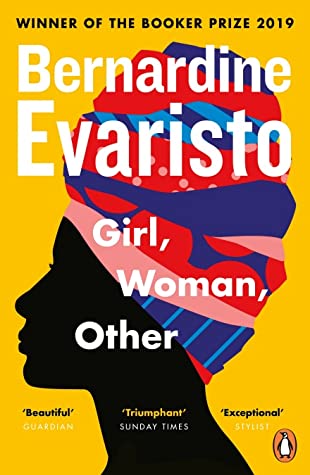 “A magnificent book fuelled by its own unique energy – one which catapults the novel form into an original, exhilarating direction. Twelve women’s lives are vigorously revealed, each character given an individual chapter of their own. And yet within these chapters Evaristo skilfully weaves all of their worlds together.
 “Fernanda Melchor’s Hurricane Season is a ferocious novel that challenges and astonishes in equal measure. It portrays the most painful margins of a Mexican underworld of poverty and corruption, a universe dominated by a merciless violence that is deeply embedded in the community and in the actions and thoughts of its inhabitants, almost obscuring ant trace of empathy and humanity.
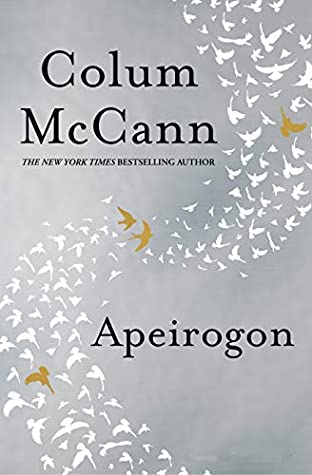 “They were so close that, after a while, Rami felt that they could finish each other’s stories”— Exploring Rami Elhanan and Bassam Aramin’s friendship and peace activism after the killings of their young daughters, Colin McCann’s novel Apeirogon, true to its title, ambitiously presents “a countably infinite number of sides” in its expansive exploration of injustice, loss, relationality and resilience.
 “Ocean Vuong’s stunning debut novel, On Earth We’re Briefly Gorgeous is characterised by the same lyricality and powerful use of language he employs in his poetry. The novel takes the form of an extended letter.
 “Colson Whitehead’s emerged as a leading chronicler of African-American experience with The Underground Railroad in 2016. Where The Underground Railroad was expansive in its imagination, The Nickel Boys returns to the traumas of African-American history with a very different literary style. Set in a juvenile institution in Florida – the ‘Nickel Academy’ – in 1960s, Whitehead here writes with a pared-down narrative and prose style, tracing the scars of the past in the lives of the present. The writing is spare, clean, and direct; and the result is a novel that not only casts light on a dark moment of African-American history, but also speaks to stories of institutional abuse everywhere.”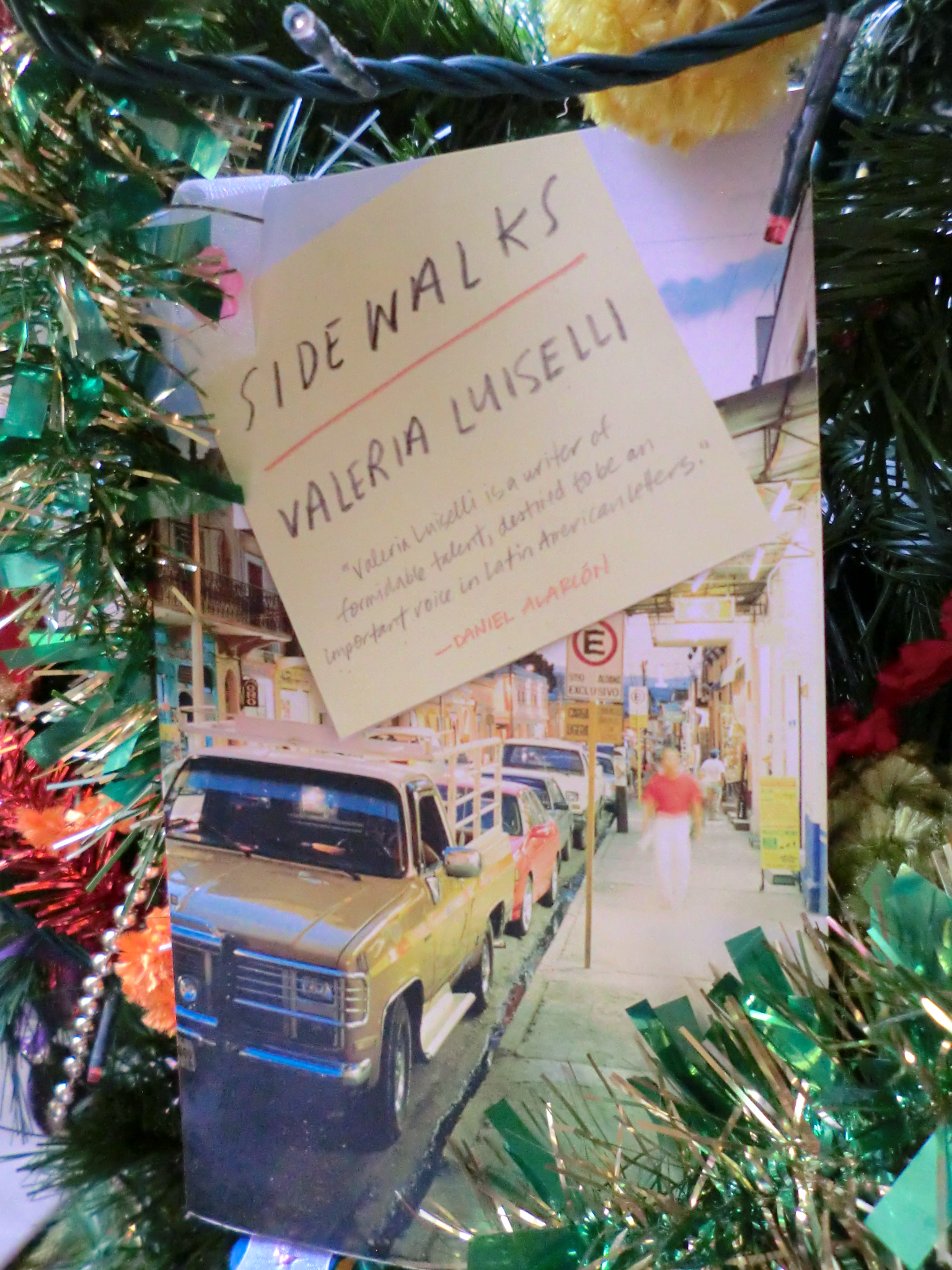


 Word by Word