What We Expect When We Don’t Expect Much From Love: Stories by Ludmilla Petrushevskaya

LudmillaThere Once Lived A Girl Who Seduced Her Sister’s Husband, And He Hanged Himself. The title itself is intriguing, though if you have read the author before, you will recognise the tendency, she is the bestselling author of There Once Lived A Woman Who Tried To Kill Her Neighbour’s Baby.

I took the book with me on a recent visit to London, as my alternative to the kindle, since I have been caught out a couple of times with that little machine dying on me even though the battery wasn’t run down. I have since discovered the 20 second rule. When the kindle fails to come to life when it should, hold it in the on position for 20 seconds to reboot it. Like many gadgets today I’m not sure these things are designed to last, not as long an old-fashioned book anyway. And I have Penguin to thank for sending me a bona-fide book!

The blurbs quote Chekov, Poe, Beckett, Tolstoy and various others to entice you in, making promises that will no doubt encourage dissent; it is a tall order to be compared to literary greats. I haven’t read all those greats, but there is one collection I am reminded of, not because she writes like him, but because the voice is clear from story to story and at the end I am left with the notion that “there is consistency in that voice” and “she says it how it is”.

Carver LoveIf Ludmilla Petrushevskaya reminds me of any writer, it is Raymond Carver and his collection what we talk about when we talk about love. Ironically, when pulling this volume off the shelf, I also find tucked in its last page, a boarding card for a flight from Marseille to London, dated June 2008.

So back to the book.

Seventeen episodes of attempts at love or connection with another, in all their dysfunction, set within the context of post revolutionary Russia when private ownership of housing was forbidden and many family apartments were divided and sub-divided and the space people came to occupy diminished, along with many of their hopes and expectations of each other.

By 1972, when Petrushevskaya published her first story, Moscow was ringed with concrete buildings containing these overcrowded units where the majority of these love stories take place.

Born in 1938 in Moscow, Ludmilla Petrushevskaya never knew family life. Evacuated with her mother to Kuibyshev during the war, she was left there in the care of her aunt and grandmother while her mother returned to Moscow to attend college. Members of the family of “an enemy of the people”, they were treated as pariahs – and were slowly starving. At age eight, Petrushevskaya began to run away from her temporary home and spend summers as a street beggar. Her mother returned after four years and brought her back to Moscow, where they were officially homeless. As a young girl there, Petrushevskaya and her mother lived under a desk in her insane grandfather’s room, while occasionally renting cots in nearby communal apartments. It was an unsettled, unhappy childhood, one experienced without the consolation of siblings.” Extract from Introduction by translator Anna Summers

The stories are collected into four sections, the first A Murky Fate contains stories of characters who consider entering relationships that are flawed or doomed, in readiness for a chance at that diminished flutter of something that may resemble love. It is not to be moved by these circumstances that we read these stories, it is to bear witness to another’s reality. They are uncomfortable, fatalistic and near-true.

She’ll wait for his long-distance call in a phone booth at the post office. For ten prepaid minutes they’ll become one soul again, as they did over the twenty-four prepaid days of their vacation. They’ll shout and cry across thousands of miles, deceived by the promise of eternal summer, seduced and abandoned.

As we read the stories, our own expectations are so low for these women, that it is possible to experience our own small pleasure in expecting nothing and finding delight in an obscure change in their fortune, even if only for a short period.

I mentioned to a friend that it was as if I was sitting across the table from the writer listening to an oral narration of people she knew, that it reminded me of other tables I have sat at, listening to stories of other women from different cultures and how they found themselves living in this or that country or city, so often lead by the allure of love or the promise of an improved lifestyle.

dollsEach community, era, culture has its stories to share, it disappointments to shed and its eternal hope for future generations, that they may do better. Reading these stories is like reading another chapter in the evolution of humanity and reminds us that we have a long way to go before arriving near any kind of nirvana.

…the day is burning its last, and Milgrom, eternal Milgrom, sits in her little pensioner’s room like a guard at the museum of her own life, where there is nothing at all but a timid love.

Note: This book was kindly made available by the publisher.

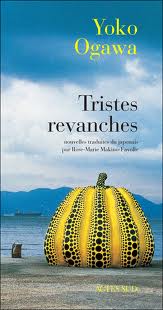
Revenge by Yoko Ogawa (Japan) – Eleven Dark Tales

RevengeWow! Those of you who have been reading this blog long enough to remember my post on Why People Don’t Read Short Stories may remember that they are something I usually savour, rarely devouring an entire collection in one sitting, but Yoko Ogawa breaks the mould and her newly published book Revenge is full of hooks and devices that stopped me putting it aside and saw me instead ploughing on to read one after the after.

Like a curious sea creature taking the glistening bait, after reading the first story, I dove into the next, caught in the deft grip of Ogawa’s clever and haunting narration, each story carrying the slimmest thread into the next, sufficient to keep the reader interested and more than that, inquisitive to continue and see what she would come up with next.

I first read Yoko Ogawa last year, attracted by her slim collection of three stories contained within The Diving Pool and then her novella The Housekeeper + The Professor, they are very different books, so I was interested in how this collection would compare.

tristes revancesShe has written prolifically over the years and much of her work has been translated into French, very little thus far in English, though perhaps that will change as her short stories are increasingly appearing in contemporary English language publications. The Nobel Prize winning author Kenzaburō Ōe when speaking about her work said:

‘Yoko Ogawa is able to give expression to the most subtle workings of human psychology in prose that is gentle yet penetrating.’

Revenge is an apt title, there are traces of it in every story, calculated revenge, obsessive revenge, inexplicable revenge and cold-blooded revenge. Each story exists on its own, but I read it like a novel, not wanting to pause between titles and feeling right from the end of the first story a tightness in the solar plexus and realisation that I had been holding my breath.

It’s not just the story, it’s awe at how she can write in such an engaging way, where very little actually happens, but we begin to understand more about what is going on in the mind of the character from all the little details she gives, creating a growing image in our own minds, just before she delivers the final blow. And even when we don’t know much about a particular character, someone on the periphery perhaps, not important to the story, chances are we are about to find out more about them in the next story. And so we read on to find out if we guessed right or if she will insert some other connection.

I share this from the blurb, which encapsulates something of these stories in a more concise manner than I ever could:

An aspiring writer moves into a new apartment and discovers that her landlady has murdered her husband. Years later, the writer’s stepson reflects upon his stepmother and the strange stories she used to tell him. Meanwhile, a surgeon’s lover vows to kill him if he does not leave his wife. Before she can follow-through on her crime of passion, though, the surgeon will cross paths with another remarkable woman, a cabaret singer whose heart beats delicately outside of her body. But when the surgeon promises to repair her condition, he sparks the jealousy of another man who would like to preserve the heart in a custom tailored bag. Murderers and mourners, mothers and children, lovers and innocent bystanders—their fates converge in a darkly beautiful web that they are each powerless to escape.

Ogawa is certainly not the first writer to do this, to infuse stories with their subtle threads and connections, Alice Hoffman does it with Blackbird House, Colum McCann did it with Let The Great World Spin and I believe Cloud Atlas (which I have not read) has something that makes it too, more like vaguely connected stories than a novel.

jigsawRevenge isn’t a complicated kind of clever though, there’s no need to question or ponder too deeply over it, the links are clear, but it will leave you wondering how she does it, how she maps out those stories and creates those links. It’s like a jigsaw puzzle with multiple subjects, the letters R E V E N G E scratched across the surface.

Note: This book was an Advance Reader Copy (ARC) provided by the publisher via NetGalley.

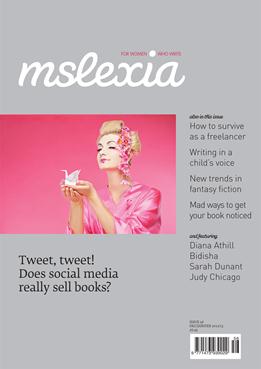
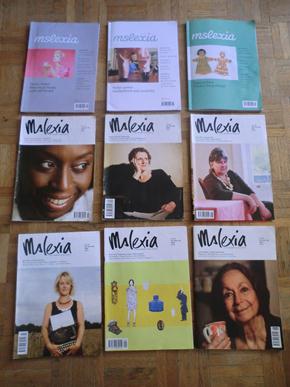
mslexia – for women who write

I’ve been subscribing to mslexia magazine for a few years now and since it is both a great stimulant to the writing process as well as an excellent source of reading recommendations and a directory of sorts, I thought I’d share a little about it.

Mostly I like it, because it doesn’t feel in any way elitist, this is a kind-hearted, generous resource, contributed to and read by ordinary women who like to write, including many who like me, don’t participate in this activity as a job, but manage to scribble away for a few hours each week – read this and you realise you are part of a large, like-minded community of women who believe in making the impossible possible.

It might be published in the United Kingdom, but it has a very international flavour and inclusive attitude, important when you live outside your country of birth and don’t write in the language of your country of residence and want to participate.

mslexia (ms = woman, lexia =words) is a quarterly publication with feature articles on some aspect of writing (and open to idea submissions), an interview with a published writer, featured short stories or poetry written to the issue theme, or winning entries from the regular competitions they run.

It was Issue 48 in Jan/Feb/Mar 2011 that introduced me to the writer Susan Hill, just as her short novel A Kind Man was being released and I’ve since read three more of her books.

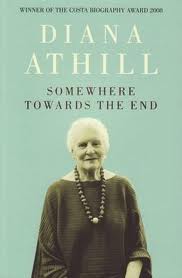
In the latest edition there is a wonderful interview with Diana Athill, what an inspiring woman she is, winning the Costa biography award at 91 with her book Somewhere Towards the End and still writing from her North London residential retirement home.  She says it how it is and cites Jean Rhys’ for teaching her this, she mines her own experiences for a story, and cautions against being cruel to others, “you can be ruthless about yourself, but not when writing about friends” – you can read an extract from the interview here.

athill“I have never understood how many writers moan and groan about how awful writing is. Absolute nonsense.” Diana Athill

Recently, they have been conducting mini-surveys of readers which are then incorporated into the lead articles and some of the smaller snippets of information found throughout the magazine. It is extremely readable, which I put down to the fact that there is a reasonable portion of bite-sized articles, such as letters, extracts from posts, emails, tweets, along with fun and short, contemporary submissions from writers under the headings of rants, raves, a week of tweets, monologue, pen portrait, how I keep going, four lines that rhyme, a poetry or book review. Something for everyone.

Each quarter there is a themed New Writing section, always an excellent writing prompt whether you are interested to submit or not, short narrative or story up to 2,200 words, prose or sometimes poetry, the successful entries appearing in a future edition. I have seen many women being published for the first time through these exercises.

There is an annual poetry and short story competition and in 2012 there was a children’s novel competition for unpublished women novelists.

In addition to all the wonderful information it lays at your fingertips, one of the things I love the most are the short bio’s of contributors, here is one from the 2009 poetry competition in which Pat Simmon’s touching poem ‘Jack discovers impermanence’ was a winner:

PAT SIMMONS, 64, was head of communications for ‘Send a Cow’, an African agricultural organisation, but has since retired. The conviction that whatever she writes will be rubbish stilts her creative progress, but an encouraging family keep her inspired and motivated. Finding writing by hand shackling, she works directly onto her laptop, a practice to which she wishes to dedicate more time. She was Blagdon’s 2005 Apple Wassail Queen – your guess is as good as ours – and on a trip to Rwanda was re-christened Munyanika: ‘As valuable as a cow.’

It is available online, but this is one publication that I like to have the physical magazine to read, there are so many gems and I return to back issues often. Oh and lets not forget the back page, always a delight to conclude with, ‘the bedside table‘, introduces an artist, author, intellectual or well-known personality who shares what’s currently on their nightstand, like gossip for book-lovers.

The next deadline of 18 March 2013 is for Issue 58: The Women’s Short Story Competition for stories up to 2,200 words on any topic. There are prizes for 1st, 2nd and 3rd and three other finalists will also be published in that issue of Mslexia. You don’t have to be   a subscriber to enter, just a woman.  Stories are accepted from any nationality and country.

Happy Writing!

Summer Reads

I’m not one for compiling lists of what I am going to read ahead of time, because I value too much the freedom and spontaneity of a vast sea of choices each time I finish a book, and often the reading experience will lead me on to the next thing.

Like reading Barbara Kingsolver’s ‘Prodigal Summer’ straight after ‘The Namesake’. How could I know that after listening to the group discussing the book I would have a conversation with a local poet about the beauty of sentences and Jhumpa Lahiri’s essay and that she would tell me I must read Kingsolver’s book.  It was sitting on the shelf unread and thus I abandoned all other reading ideas and jumped straight into it.

100 years on, Titanic Belfast Museum

But I do love looking at the lists, always feeding into the mental TBR list, noting books I might wish to read or to keep an eye out for.

I could say I have intentions for summer, like the two Titanic inspired books I bought on a recent visit to Titanic Belfast, the excellent museum opened in March this year.

‘A Night to Remember’ and ‘And the Band Played On’ also seem appropriate companions to Charlotte Rogan’s ‘The Lifeboat’ which I have on kindle.

To help you decide, I wanted to share this excellent flowchart designed by Teach.com to encourage students to find a book of their choice, there are 101 books shown, inviting readers to consider fiction versus non-fiction, classic or contemporary and many other options.  I keep coming across it and there’s something appealing about viewing images of covers rather than just a list of titles, so enjoy and I hope you find something for your own summer read!


So do you plan your reads or are you open to the spontaneous?
Summer Reading Flowchart

Via Teach.com and USC Rossier Online

The Smile by Ray Bradbury

A Short Story Set in the Future

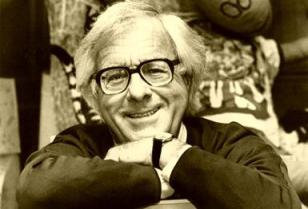
He wrote more than 27 novels and over 600 short stories and somehow his work has never crossed my path.

As I read the Culture and Book pages of The Guardian daily, I have been reading some wonderful tributes to the writer Ray Bradbury who died recently at the age of 91. ‘Margaret Atwood on Ray Bradbury: the tale-teller who tapped into the gothic core of America’ was interesting, Atwood celebrates the author, known for his science fiction but who has shown remarkable scope and influence throughout his career. He was a story-teller; he had an active and far-reaching imagination and rejected the limitation of labels.
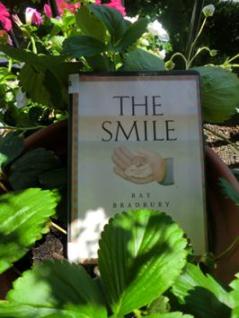
After a quick trip to our local French library yesterday, I stopped at a display table honouring Ray Bradbury and came home with his prophetic short story ‘The Smile’ the only English language work left on the display.

Set in 2061, the story is set in a square in Rome, where the boy Tom waits with an angry crowd to view the ‘Mona Lisa’. Joy has vanished from this world and people are filled with hate for everything that represents the past. Except Tom. He remembers. He represents hope. Perhaps love. Certainly appreciation.

Tom stood before the painting and looked at it for a long time.

The woman in the painting smiled serenely, secretly, at Tom, and he looked back at her, his heart beating, a kind of music in his ears.

Wild Horses and Flash Fiction

Its National Flash Fiction Day today in the United Kingdom, celebrating the short, short form of fiction, the art of telling a story in less than 1,000 words and more often only 150 words.

David Gaffney shares his experience of writing and being published in the form and offers these tips:

  1. Start in the middle
  2. Don’t use too many characters
  3. Make sure the ending isn’t at the end
  4. Sweat your title
  5. Make your last line ring like a bell
  6. Write long, then go short

He goes on to explain each tip, click here to reveal his words of wisdom.

And here is my attempt to tell a story in 150 words, word by word.

*

The Muster

*

I ride bareback with just a halter and lead into the midst of the herd, gently coaxing them out from under the trees. My mount quivers beneath me; fear pervades the damp atmosphere and I exhale deeply to expel it.

The sound of a gunshot spooks the stallion and the horses move. Bright sunlight extinguishes shadows as they bolt, branches cracking beneath the drum of hooves.

My father is in position. The herd veers to the right. At the river bank there is a two metre drop into the water and we do not hesitate. I grip hard with my knees and feel muscle ripple beneath me bracing itself for the jump. Something knocks my shoulder and I cry out as we plunge head first into the torrent.

“Wake up son, we’re mustering that herd of wild horses today” my father says as I open my eyes.

Time Passes, Reality Bites – A Visit from the Goon Squad

‘A Visit from the Goon Squad’ by Jennifer Egan (winner of the Pulitzer prize for fiction 2011) was recommended in a comment on my post ‘Why People don’t read short stories’ and I then had the good fortune to swap books with a book buddy and was delighted to discover that this was the treasure she was trading.

There has been much discussion already about the title; what exactly is a ‘goon’ and is this even a relevant question? I decided not to search for an answer and instead to come up with my instinctive response at the end, I prefer to hazard a wild guess although the cynic in me did wonder if it wasn’t just a gimmick.

A novel or a set of stories, each chapter is separate yet connected by the barest of threads to the previous, sufficient to surmise a pattern, although like many creations, the complete picture does not become clear until the work is finished. It reminds me of six degrees of separation, that we are all connected and that even when we are, there are gaps in history’s, we only ever know part of a person’s story.
It is a testament to Egan’s writing  and one of its strengths that her book reads like a novel because we are immediately drawn into and engaged within the world of her well cast characters, mentioned briefly in one chapter, discovered in depth in the next, it is not like starting a completely different story, more like starting an abstract jigsaw puzzle in opposite corners knowing that eventually the pieces should add up. We read and make the connections, searching for them, perhaps even creating them ourselves. I wonder, is that my imagination at work or the writer’s – or both working in unison?

We encounter this in Italo Calvino’s ‘If on a Winter Night a Traveller’ and also in Alice Hoffman’s ‘Blackbird House’, a slim thread enough to spur the reader on in the quest for enlightenment.

In Egan’s novel we meet Sacha who works for Bennie in the music industry, Bennie himself, his wife Stephanie, her ex-convict journalist brother Jules, Dolly who used to be Stephanie’s boss, Ted, Sacha’s Uncle and others whose lives have interacted at some point. We meet them at different periods in time, during particular episodes in their lives where even the young seem to have already lived numerous lives and carry a burdensome past that haunts their present. There is an underlying dissatisfaction with how things have turned out, the inevitability of time passing and taking with it something vital and essential.

Which reminds me, the goon squad; as Bosco says on page 134 ‘Time’s a goon, right?’ and so too I believe that a visit from the goon squad is just this, time passing and the oft harshness of reality.

Why People Don’t Read Short Stories

Publishers have difficulty persuading readers to buy short story collections.  Many readers love them, but more readers avoid them, preferring the novel.  Why is this?  Fiction writer Tessa Hadley suggests it is because in our culture, readers have grown used to the habit of the novel, we can pick up a novel and put it down time after time, when it opens we re-enter its world, escaping our own for a while.  There’s something discontinuous about our reading relationship with short stories.  At the end of each story we are thrown out of that world created by the chosen words of the author enhanced by our imagination, back into our surroundings without leaving a thread; we then enter another story and begin to build a new picture of characters, place and situations.

Reflecting on this now, I wonder if that is why I liked Alice Hoffman’s ‘Blackbird House’ so much, because of the subtle connection between the stories which kept me wanting to go back for more.  Or was it the writer’s style? I love this book, a unique set of short stories that traces the lives of various occupants of an old Massachusetts house over a span of 200 years, witnessing change in each family through their loved ones and the lives they live inside Blackbird House.

I like reading short stories, especially in between reading novels or other more lengthy works of non-fiction.  There are some short stories in particular that I adore, like the Italian writer Italo Calvino’s ‘The Enchanted Garden’ from his collection of short stories ‘Difficult Loves’.  Giovannino and Serenella discover an opening in a hedge leading them into a quiet garden of flower beds, eucalyptus trees and gravel paths, it’s like a mini version of Frances Hodgson Burnett’s ‘The Secret Garden, still a favourite today.  And then there’s A.S.Byatt’sStone Woman’ from her ‘Little Black Book of Stories’ the haunting tale of a woman witnessing her own gradual metamorphosis into stone; befriending an Icelandic stone carver she returns to East Iceland, the place that will become her final resting place.

Mini-gateaux, Bechard, Aix en Provence by Maki

For me, an avid reader, short stories are like the contents  of extravagant chocolate boxes or the pick n mix gâteaux at Béchard on the Cours Mirabeau here in Aix en Provence.  When I’m into reading short stories, I don’t just take one collection, I take three or four and then read a story or two from each collection, so I sample more than one writer at a time.

Why do I do this?  Well firstly, because for me short story collections are like ‘1001 Nights’, I don’t want the collections to end, so I slow down the process to savour the stories.  Secondly, I like to sample writers from different countries, so today I might read from Nigerian writer Ben Okri’s collection Stars of the New Curfew’ set in the teeming street of Lagos, or ‘Sandpiper’ Egyptian writer Adhaf Soueif’s collection about women finding themselves in countries other than their own, where language, culture and love create confusion.

The collection I have now remind me that I love to travel through books both to foreign destinations and through the minds of writers from different countries and cultures as well as returning to the familiar vernacular of my country of birth.

In addition to those mentioned I might dip into Elliot Perlman’s (Australian) ‘the reasons I won’t be coming’, Alice Munro’s (Canadian) ‘Friend of my Youth’; Janet Frame’s ‘The Lagoon’, Keri Hulme’s ‘Stonefishand ‘The Stories of Frank Sargeson’ (New Zealand writers), Indian writer Chitra Banerjee Divakaruni’s ‘Arranged Marriage’ and Jhumpa Lahiri’s ‘Unaccustomed Earth’ or Raymond Carver’s ‘What we talk about when we talk about love’ which reminds me I want to read the Japanese writer Haruki Murikami’s ‘What I talk about when I talk about running’. Then there are the slim classics Dubliners’ by James Joyce who needs no introduction and Grace Paley’s ‘The Little Disturbances of Man’.  And I’m happy to say, I’ve almost managed not to finish any of them – except Hoffmann’s ‘Blackbird House’ which reviewers describe as “not quite a novel and not quite a short story collection’ so I guess that one doesn’t count.  And I plan to read it again anyway.

In this time pressed world, one would think that short story collections are poised for a revival; after all, what better antidote for the tired, overworked individual who remembers nostalgically the enjoyment they used to get from a good book – short stories are perfect!

As writer Jonathan Falla said “Good stories are not literary fast food, made on the cheap; they are intense with a flavour that expands to fill the mind.”  The short story allows us in a short space of time to understand and consider momentous things, grand dilemmas.  Short stories pull us into their world and shake us up.

Do you read short stories?  What’s your favourite collection?

www.theshortstory.org.uk

http://www.americanshortfiction.org/